Question Hound, One of Us: The Painful Journey of Human Existence
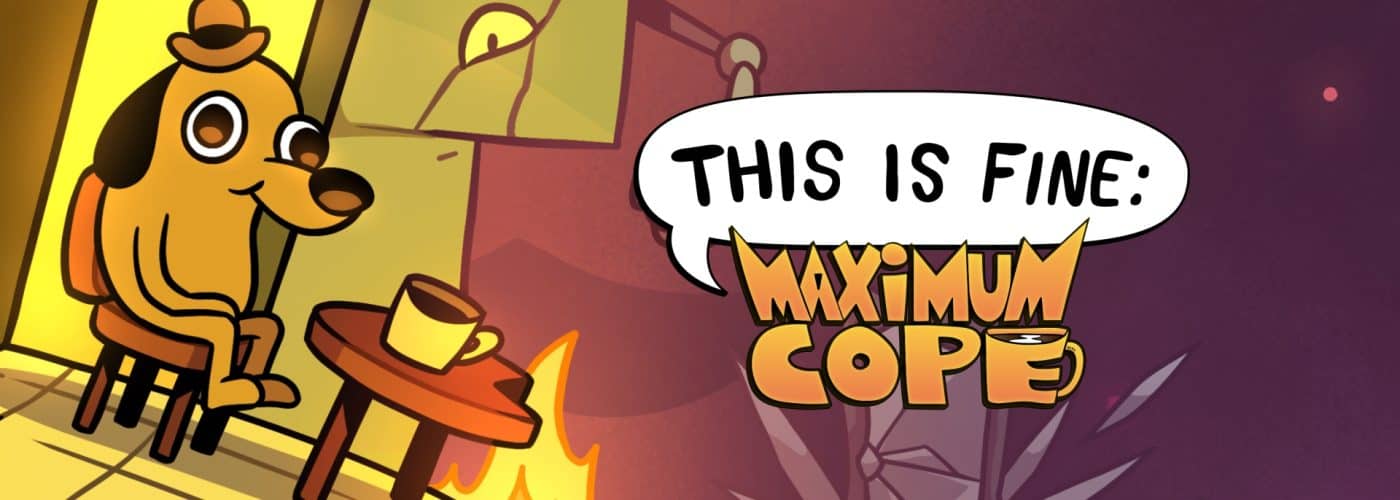
In our previous coverage of This Is Fine: Maximum Cope – first the genesis of the project, then our impressions of the demo – we left Question Hound halfway through his first world, Humiliation, with the promise that Fear, Failure, Loss, and Regret would bring plenty of baggage. On May 1, 2026, Hero Concept’s full game, which Numskull Games published, arrived on PC, PlayStation, Xbox, and Switch, and now we’re ready to share our take on this bizarre product.
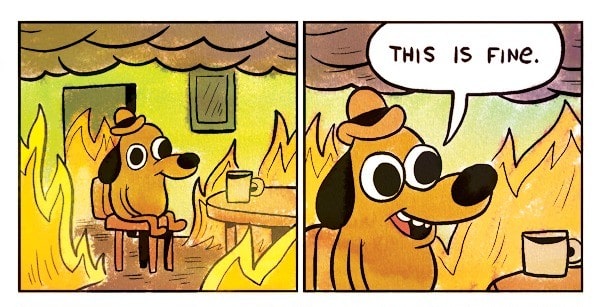
I won’t repeat the project’s origin here – we’ve already covered it, and anyone who’s followed us for a while knows that Maximum Cope grew out of a 2024 Kickstarter that raised just over $51,000, clearing the minimum goal by a hair on the very last day. One detail, though, deserves a mention, since it says a lot about the whole operation: KC Green, the original comic’s author, let the game find its own path and deliberately kept himself at the margins of development. In an interview, he admitted he feared his own creative instinct would push him to torment Question Hound even further, punishing him even more.
That fear says something important about what it means today to manage a character who’s become a viral meme: Green himself has talked about the discomfort of watching political parties of every stripe use his dog to comment on current events. Maximum Cope instead tries to give its icon back some narrative dignity, moving it into more controlled territory, one that belongs to it more fully.
Five Ways to Feel Bad
The structure matches what we glimpsed in the preview, but now it’s complete: five emotional realms, each with its own aesthetic and its own internal logic, plus a finale that brings them all together.
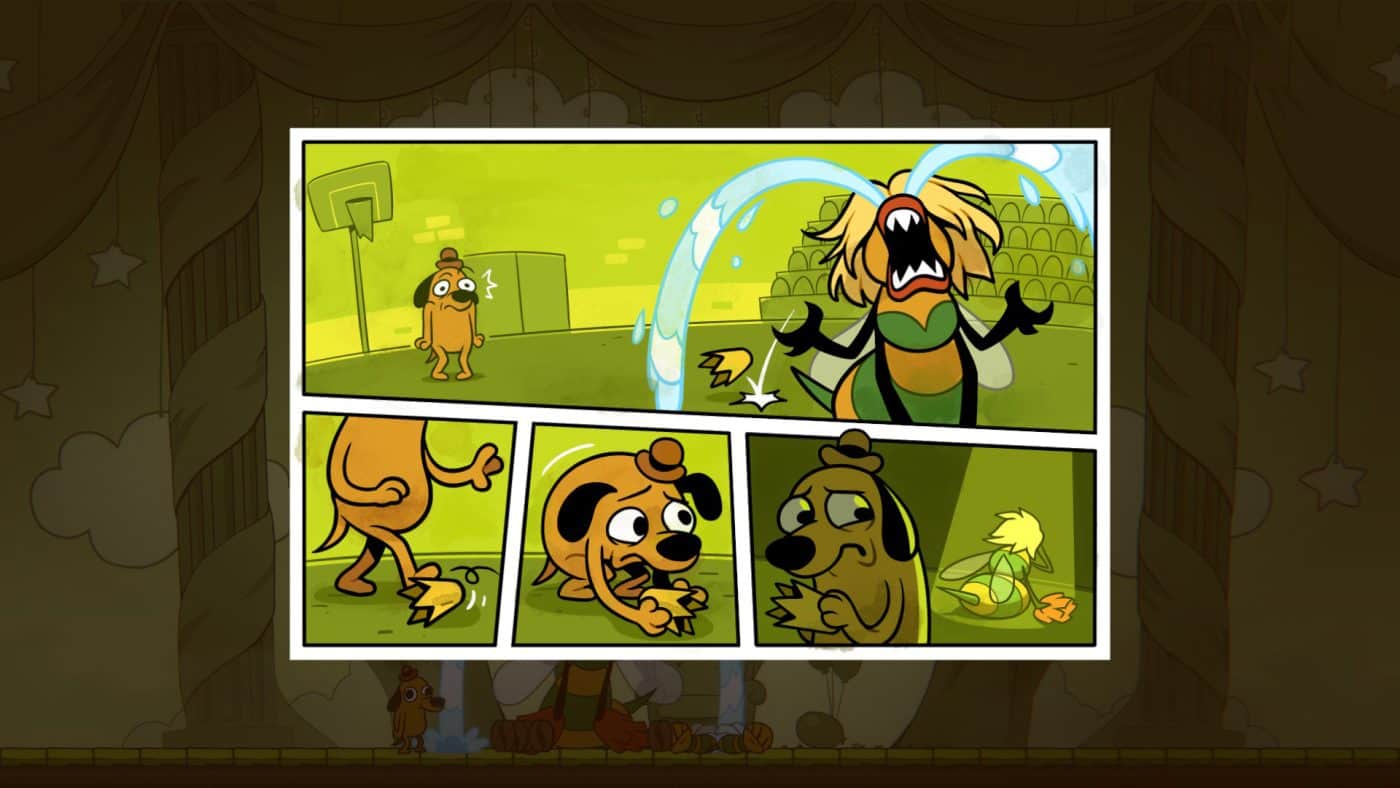
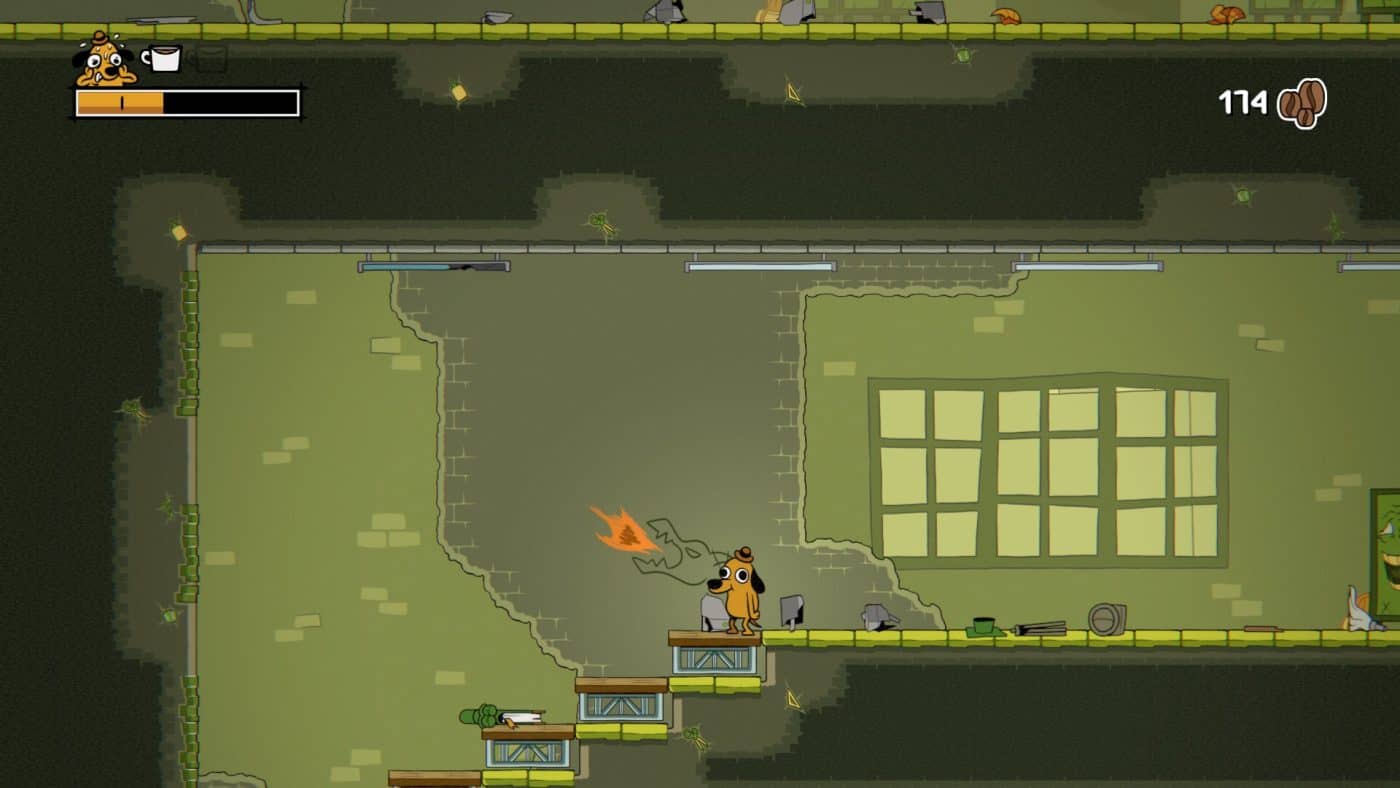
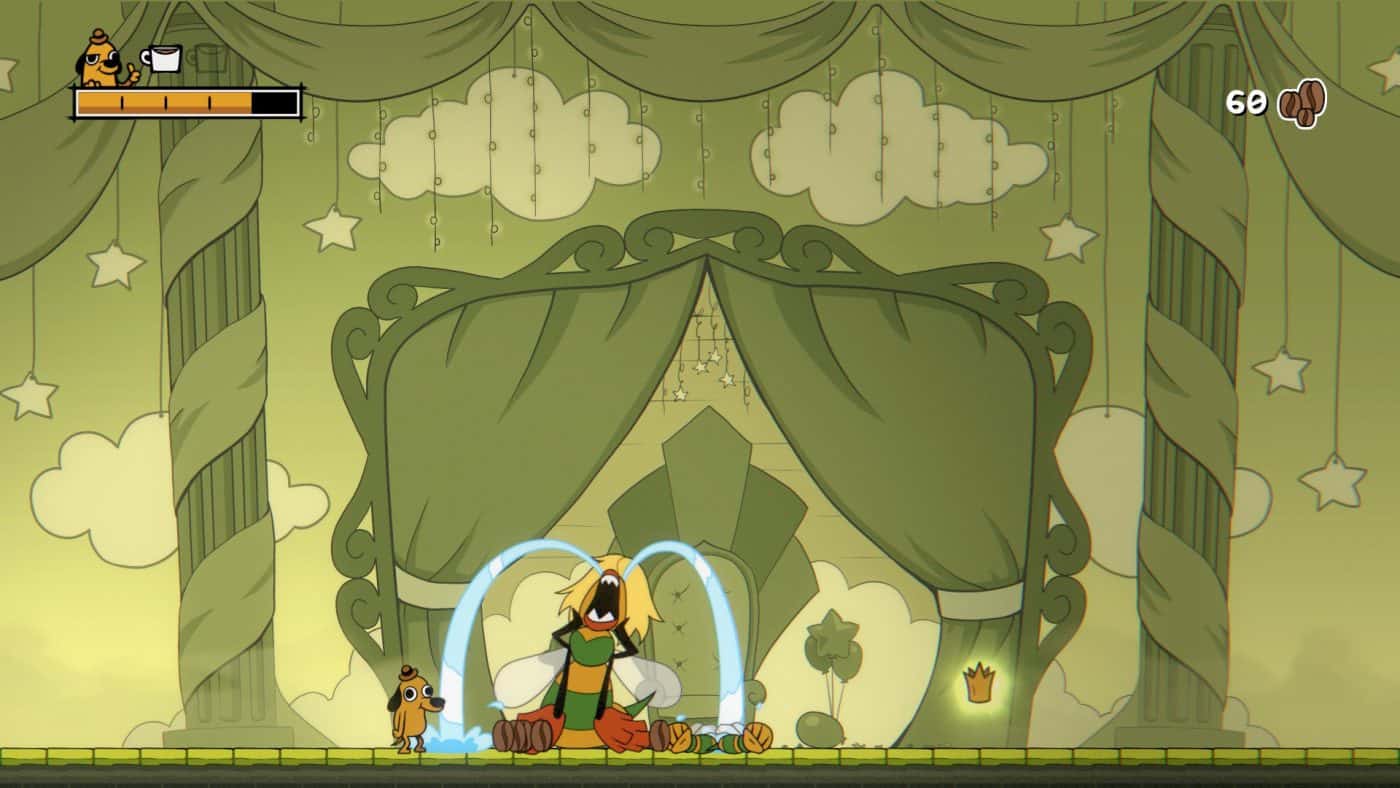
Humiliation still centers on school: gym, hallway, dance hall, pool, classroom. Here the boss fight pits you against the prom queen, a full-fledged queen bee, and victory unlocks the ability to crouch down inside a felt shell.
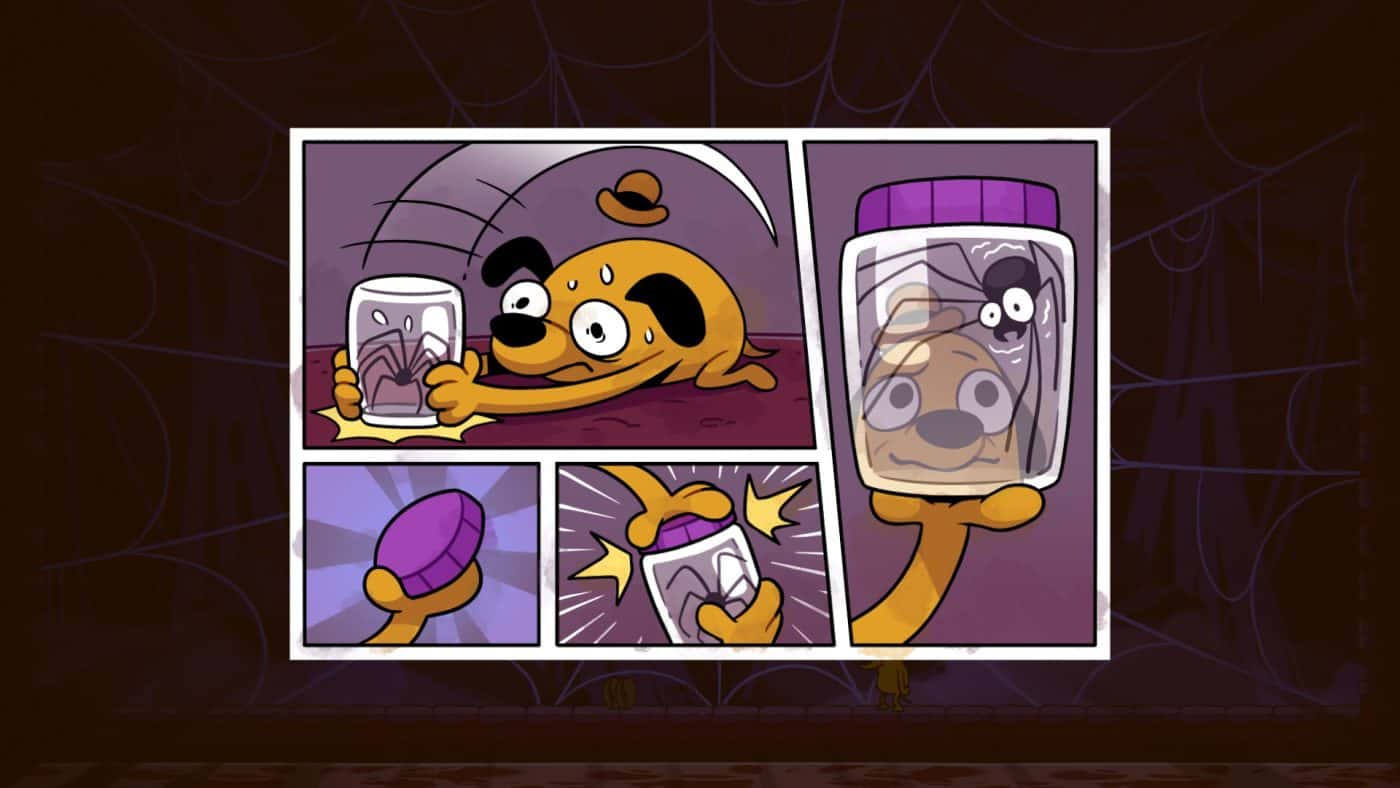
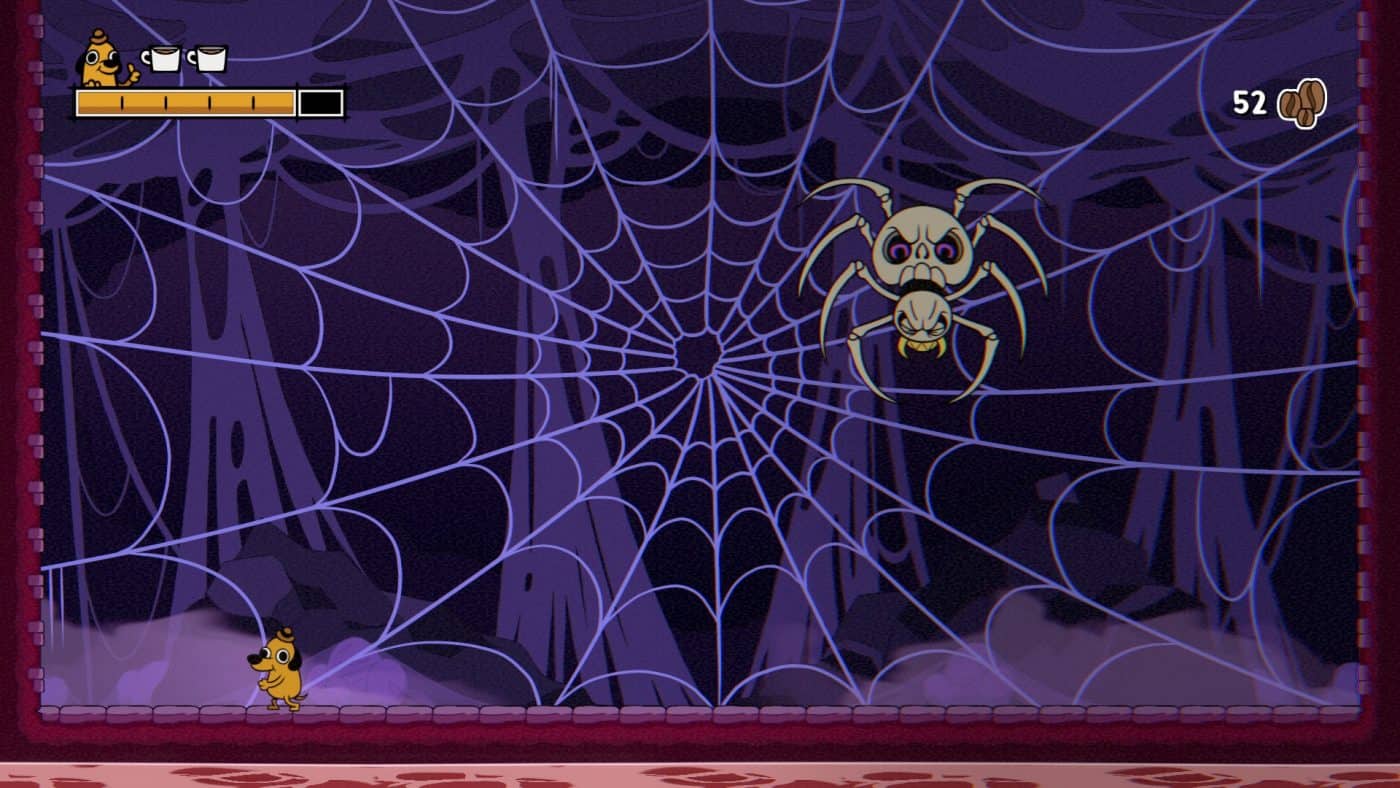
Fear shifts registers completely: graveyard, attic, dungeon, slaughterhouse, tower. Dolls, clowns, the specific iconography of a certain horror imagery. Here the level design starts to get more elaborate – the spring puzzle, for instance, already sits a notch above the first world’s language puzzle (the tutorial interface, at this point, lingers on screen longer than it should: a possible bug worth watching). The boss is a Spider, and the reward lets you turn your hat into a little boat for sailing.
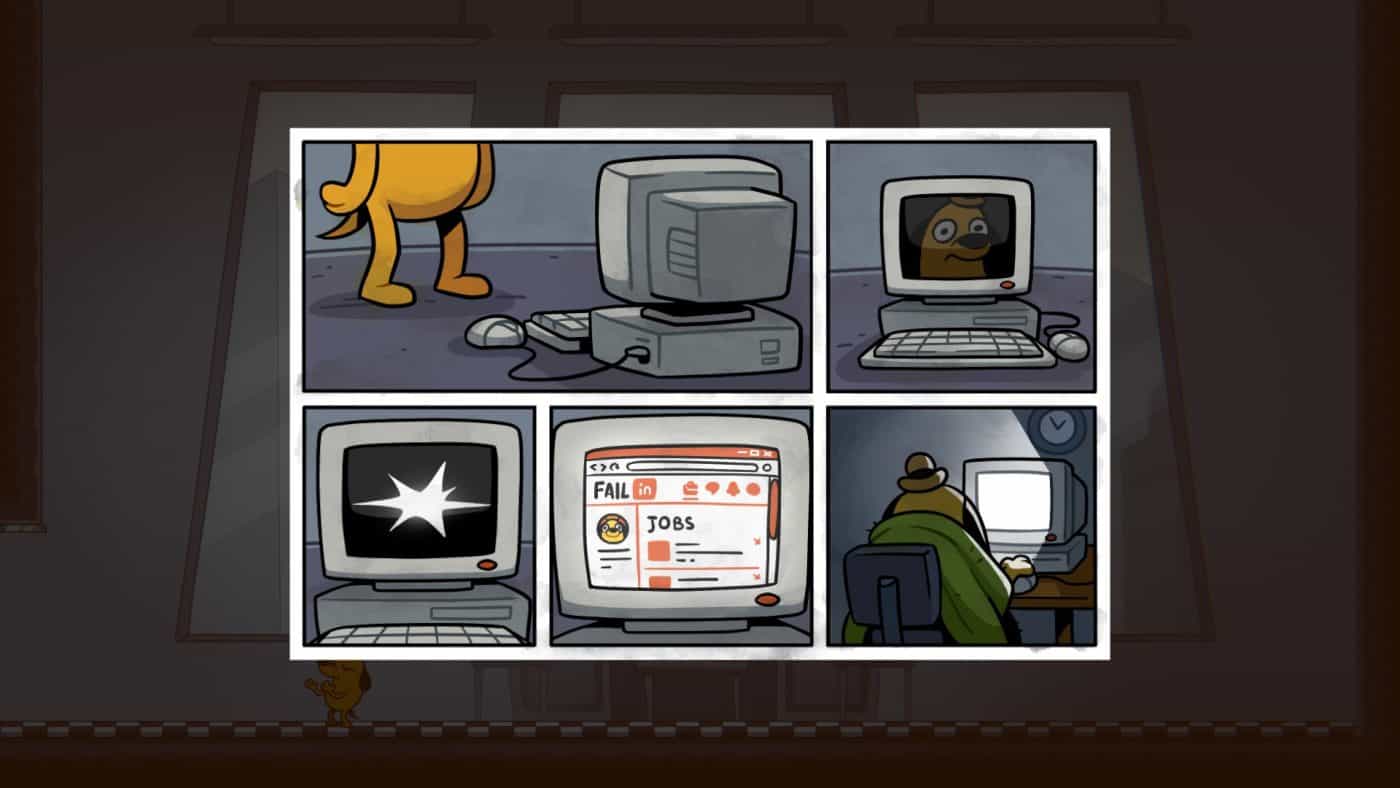
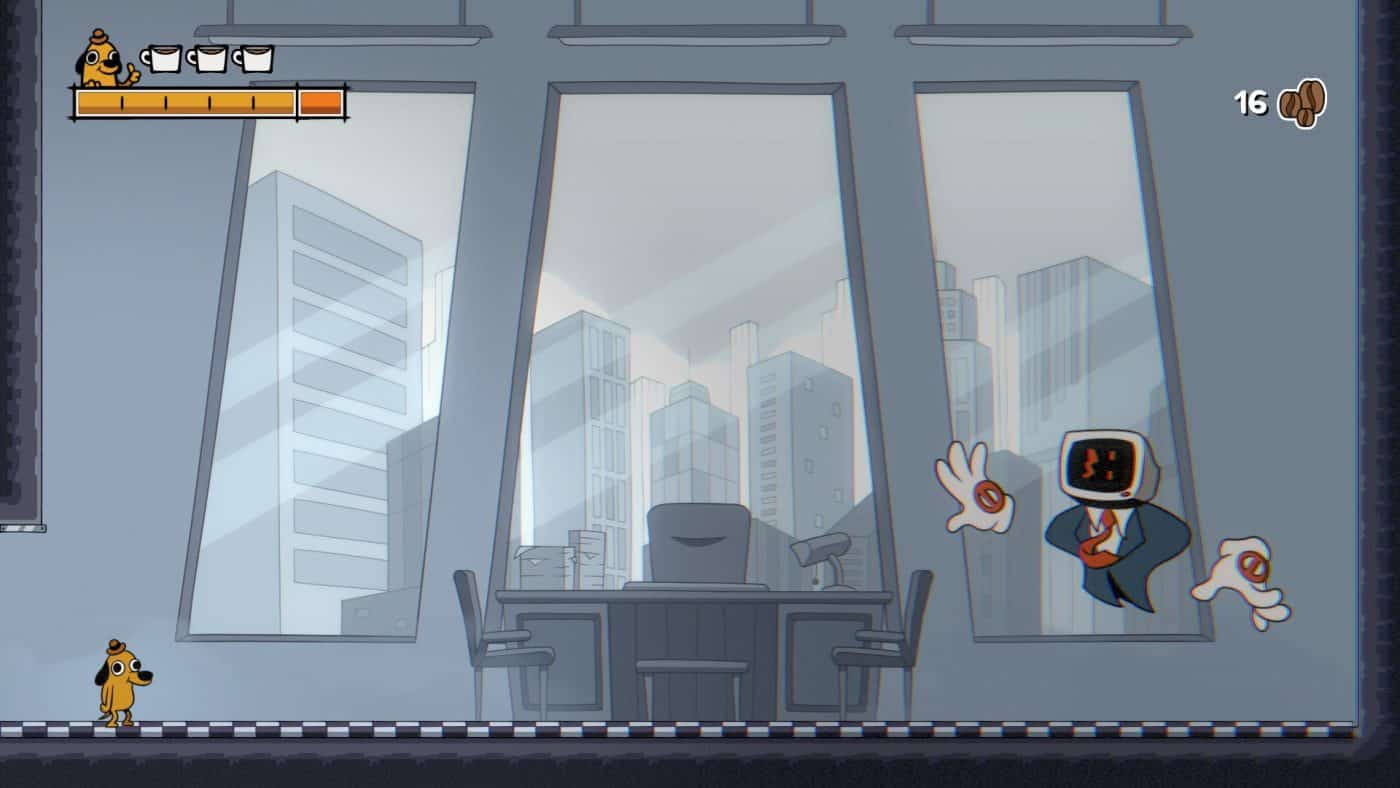
Failure is the office, with everything that entails: reception, surveillance, archives, cubicles arranged in a deliberately liminal loop, meeting rooms. Workplace bullying ranks as the least of the problems facing anyone who works in there. Filing cabinets and computer windows turn into platforms, the pace turns frantic, and you face the final boss – the Mobber – right in his own office. This world unlocks wall-climbing.
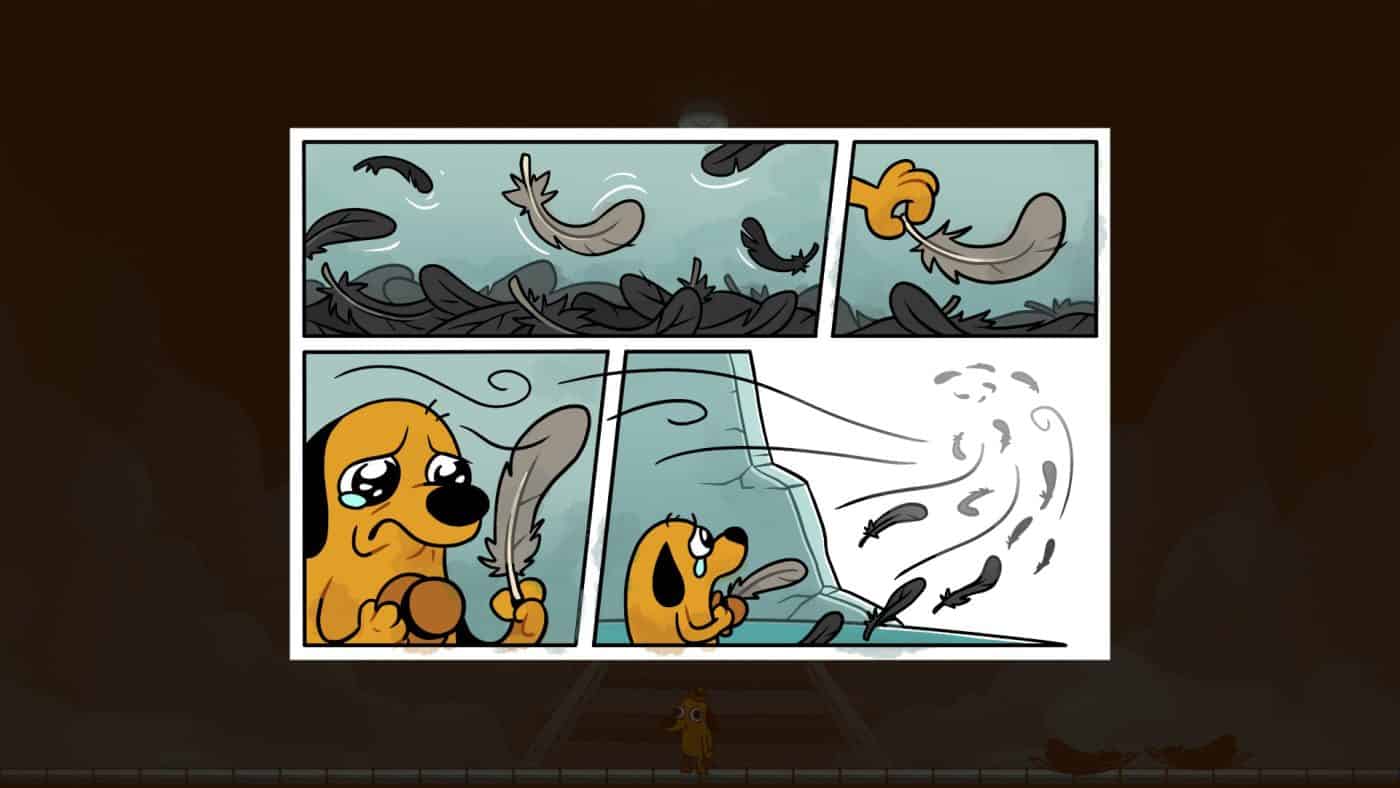
With Loss, the tone changes for real: ER, lab, operating room, morgue. Melancholic music, a cold palette. The boss takes the shape of a Reaper-crow, and the reward – the double jump – arrives just as the game almost entirely drops the jokes.
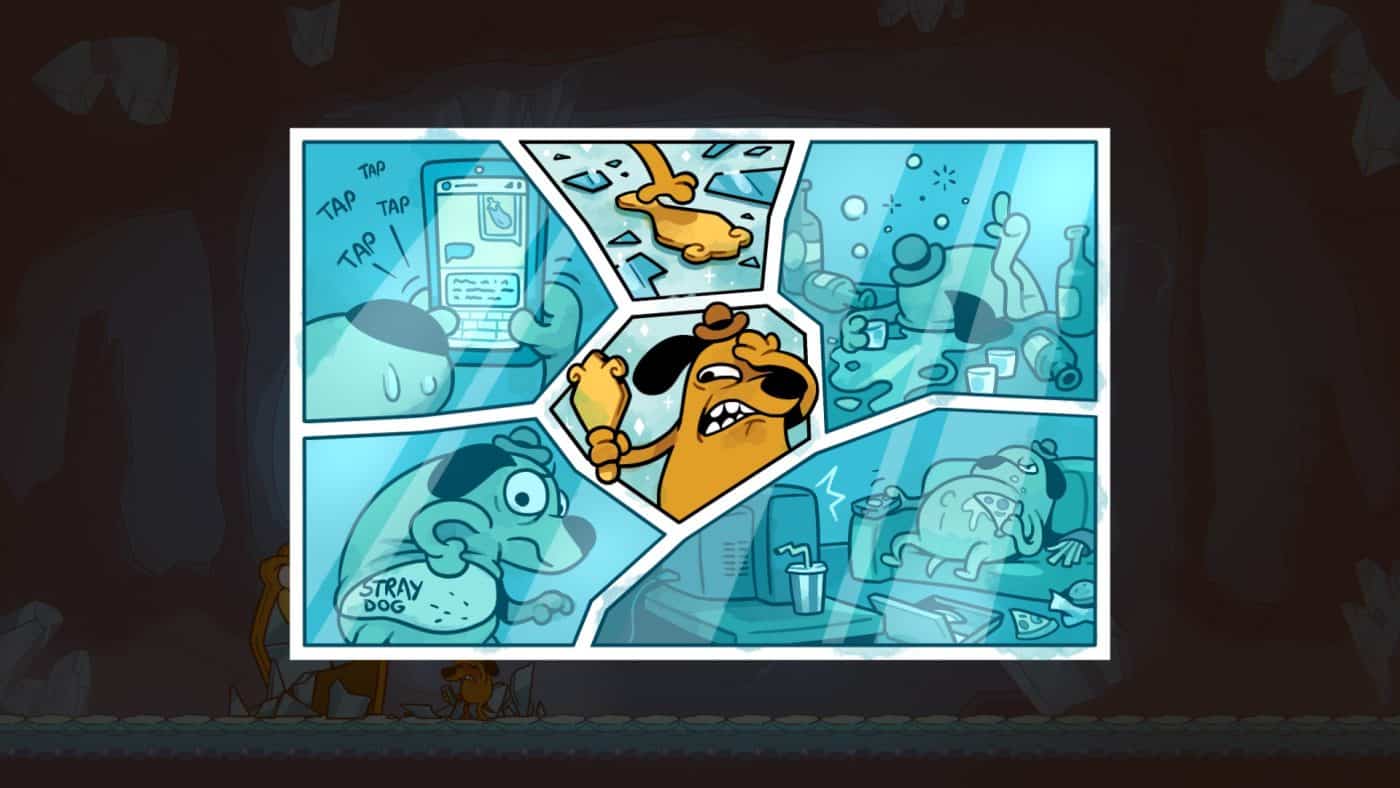
Regret closes the circle with the most intimate area: a bar, a slot machine, a wall of text devoted to failed relationships, a room full of memories. Gambling addiction and alcoholism take literal enemy form – the tattoo-machine scorpion, the cannon-bottle – and the final fight pits you against a mirror, meaning against yourself. This world unlocks a short flight, a helicopter spin made with your own tail.
The Grand Finale is nearly all silence: the little angel on Question Hound’s shoulder goes offline, and the little devil takes over, becoming the final super-boss.
Coffee as a Game Economy
Beneath its thematic surface, Maximum Cope runs on classic metroidvania logic, but with a backbone all its own: coffee beans serve as the currency, you collect them by killing enemies or breaking sacks scattered around the levels, and you spend them both on buying perks and on refilling your cup, which acts as your only healing resource. It’s a simple system, but it fits the imagery well: Question Hound literally survives on caffeine, just like in the original strip.
The game’s six bosses each correspond to an unlockable ability, following the genre’s most predictable but also safest formula. Around this backbone orbit 27 perks and about thirty hidden collectibles, enough to give completionists an extra reason to push past the main story progression, without turning the game into an exhausting backtracking exercise, as we’ll see shortly when we look at the map structure.
A Stripped-Down Style
Visually, the game doesn’t try to dazzle you with graphical power, and it doesn’t need to: hand-drawn animation is its true strength, one that makes every scene feel like a living comic panel, true to the character’s comic-strip roots. Other classic-cartoon-inspired platformers have used this same stylistic choice to become memorable, and it works well here precisely because it never betrays the tone of the source strip, not even when the level design turns darker.
Compared with many metroidvanias, Maximum Cope unlocks the abilities you need to progress fairly quickly, which lets you clear the map in almost chronological order, without the genre’s typical long backward treks. Each level wraps up in reasonable time, and fast travel becomes available from the very first checkpoint – the break room, where you sit down for a coffee while everything around you burns.
A few cleared areas on the map stay a bit too sparse on detail, and enemies respawn with each new level, though not after a save – a design choice that makes sense once you think about it. Totem Challenges, scattered throughout the game world, hand out collectibles to reward anyone willing to go beyond the main path.
One note for anyone who, like this writer, would have liked to see it: bosses don’t carry a visible health bar. This doesn’t ruin the experience, but it does take away that immediate read on the state of a fight.
The Humor Holds Up As Long As the Pain Stays Real
The thing Maximum Cope does best, even in its full version, is hold lightness and substance together without letting one collapse into the other. Toward the end, with Loss and Regret, the tone grows steadily less playful, and this shift clashes a little with the more lighthearted nature of the original idea – but it’s also where the game dares the most. Question Hound, after all, is a perfectly tragic character even though he began life as a meme, and memes usually just make you laugh lightly, without asking for anything more.
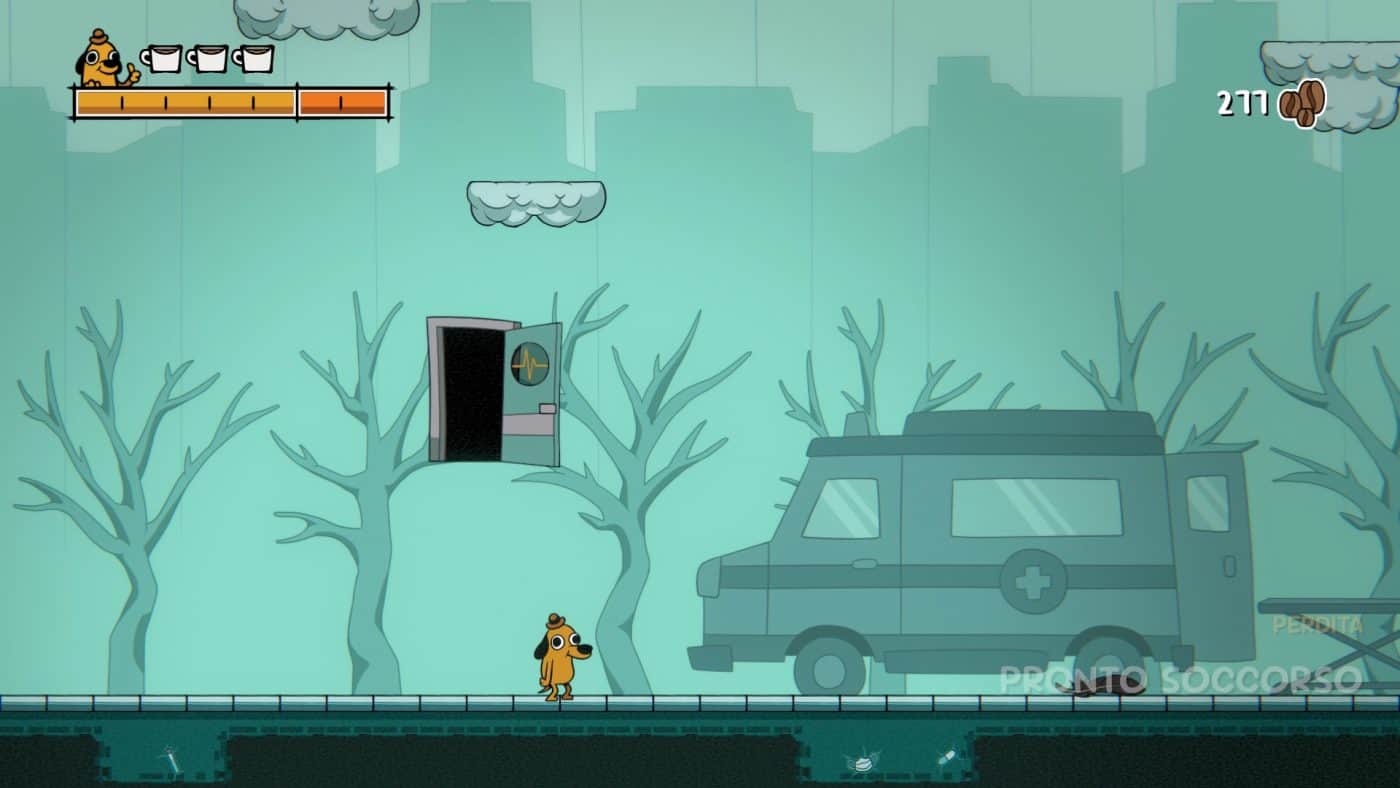
The team took an iconic figure, one that anyone who’s spent time online over the last decade will recognize, and built on top of it a story that belongs to plenty of people: anyone who’s felt out of place since childhood and grew up inside total dysfunction, learning to live with it, coffee cup in hand.
Conclusions
This Is Fine: Maximum Cope is enjoyable, runs the right length, and wouldn’t have gained anything from stretching on longer than necessary. It isn’t the most ambitious metroidvania out there – international critics, it’s worth saying, haven’t hesitated to point that out – and a handful of technical rough edges, combined with combat that reinvents nothing, keep reminding us that this project grew out of a Kickstarter and a meme.
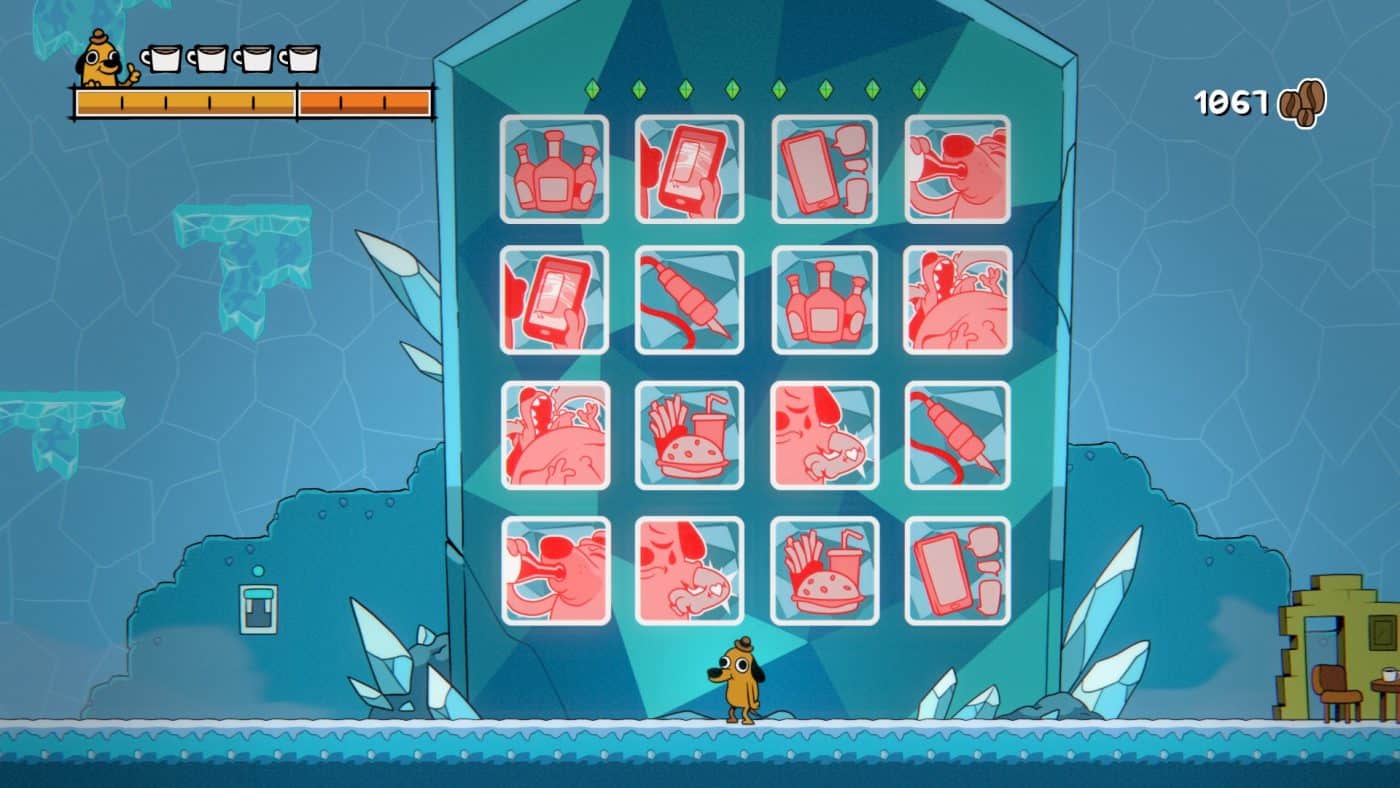
But the honesty with which it tackles delicate themes, without ever turning heavy-handed or preachy, is exactly what this kind of operation needed to work. And given where it started, the fact that it does work was far from a given.
For this review, special thanks go to Press Engine for providing us with the PC code.
 7.5/10