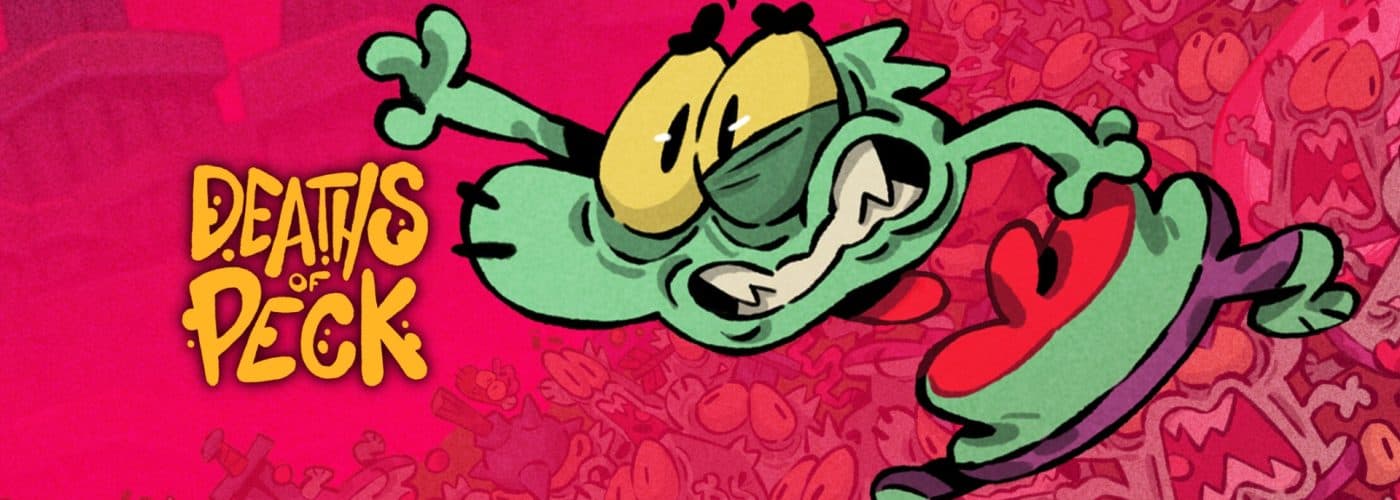
In Deaths of Peck, the question isn’t “How do I avoid dying?” It’s “Which horrible death do I need this time?”
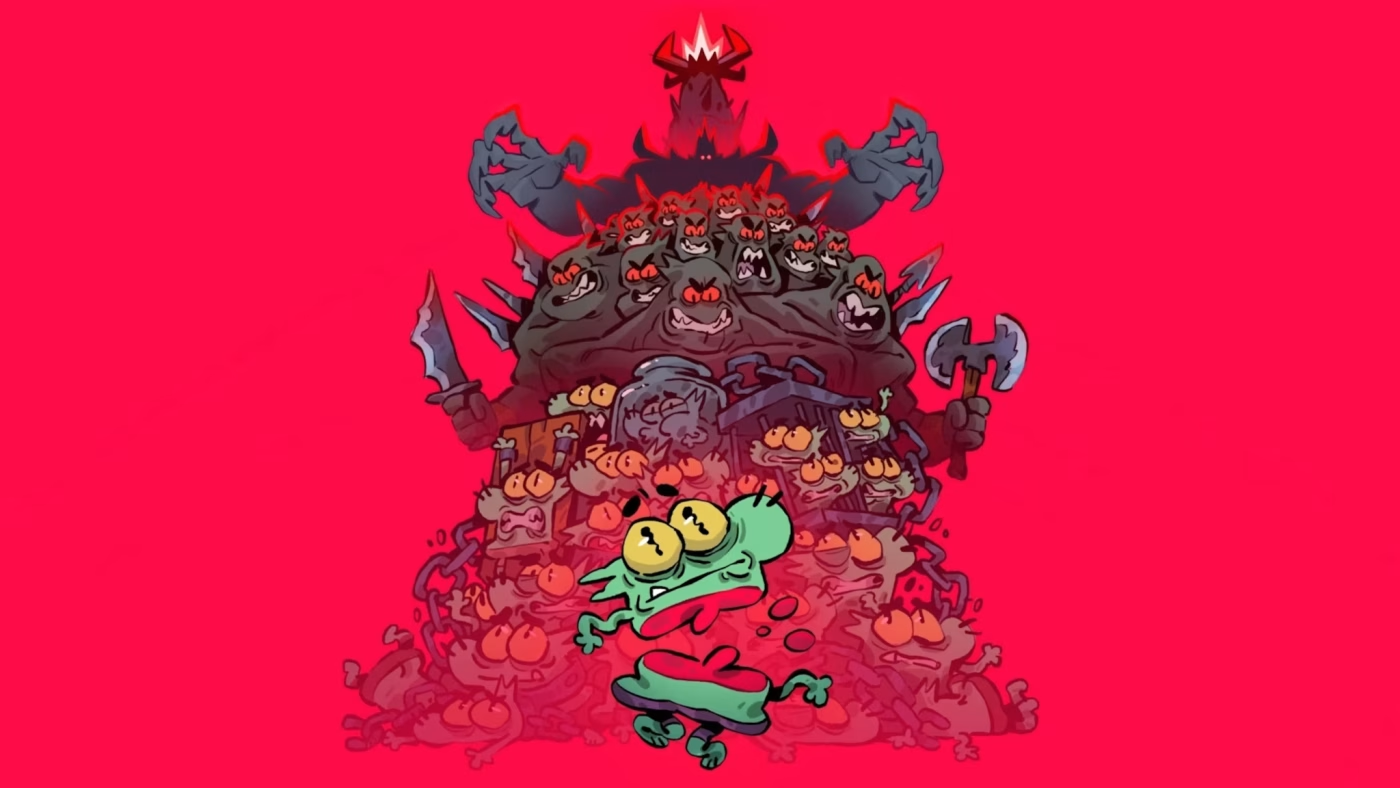
What if, for once, everything we thought we knew about death in video games was wrong?
It is a deceptively simple question, but one that becomes surprisingly difficult to dismiss once you stop and consider just how deeply the medium has conditioned us to fear failure. From our earliest adventures to the most demanding modern platformers, games have taught us to protect our health, preserve our lives and treat every encounter with danger as something to overcome.
We watch a health bar slowly disappear and instinctively panic. We save the last remaining life for the moment it truly matters. We approach a trap cautiously, study an enemy’s movements and repeat the same jump until muscle memory finally takes over.
And when we fail, the message is usually unmistakable: game Over. Try again. Do better next time. It is one of the oldest rules in interactive entertainment. If you want to reach the end, you have to stay alive.
We rarely question it because it feels fundamental to the language of games themselves. Falling means we mistimed a jump. Taking damage means we failed to react quickly enough. Triggering a trap means we misunderstood the environment.
Being defeated by an enemy means there is something we still need to learn before attempting the encounter again. Even games that deliberately embrace failure usually frame death as a lesson. You die, you understand what went wrong, and you return determined not to make the same mistake twice. Death teaches us. But death still means we lost. So what happens when a game removes that final distinction? What happens when dying isn’t the mistake? What happens when dying is the solution?
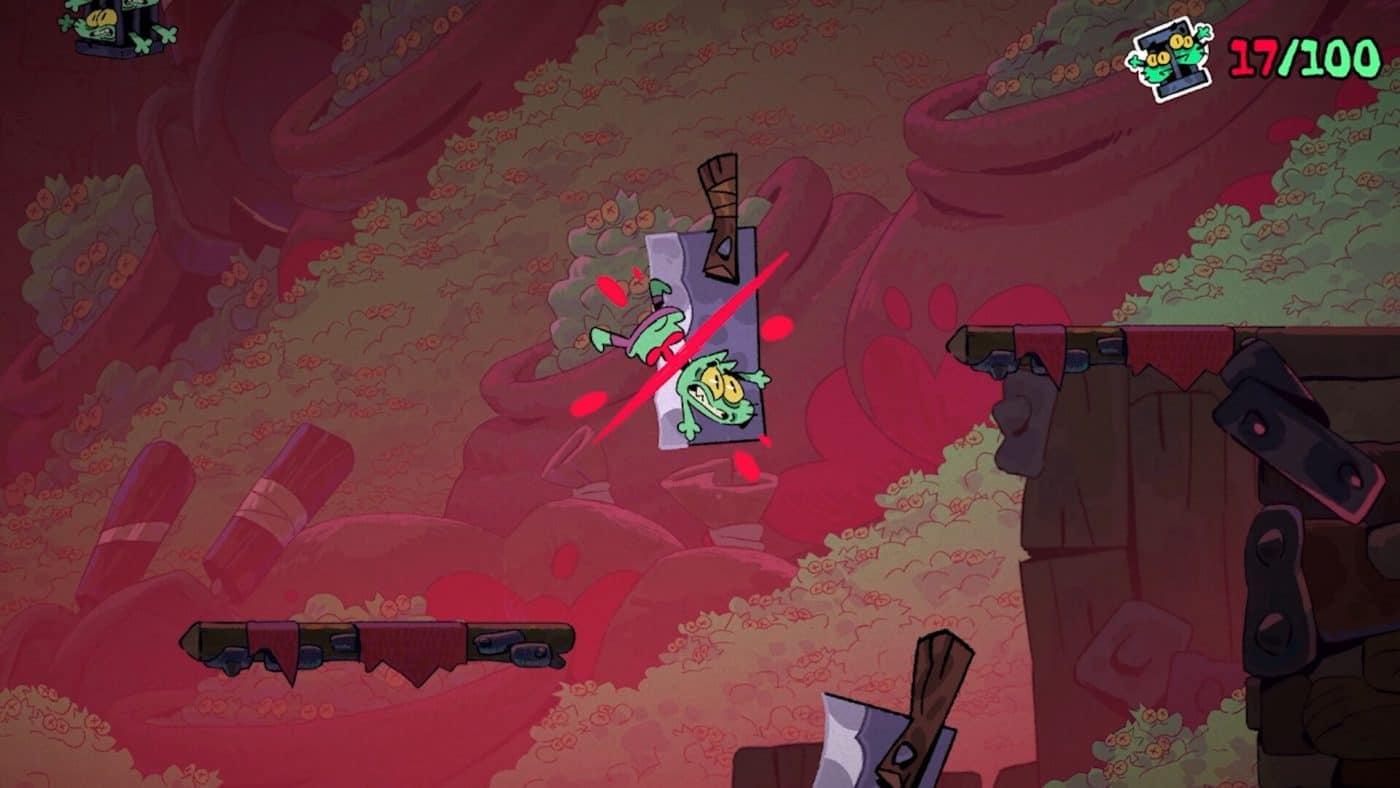
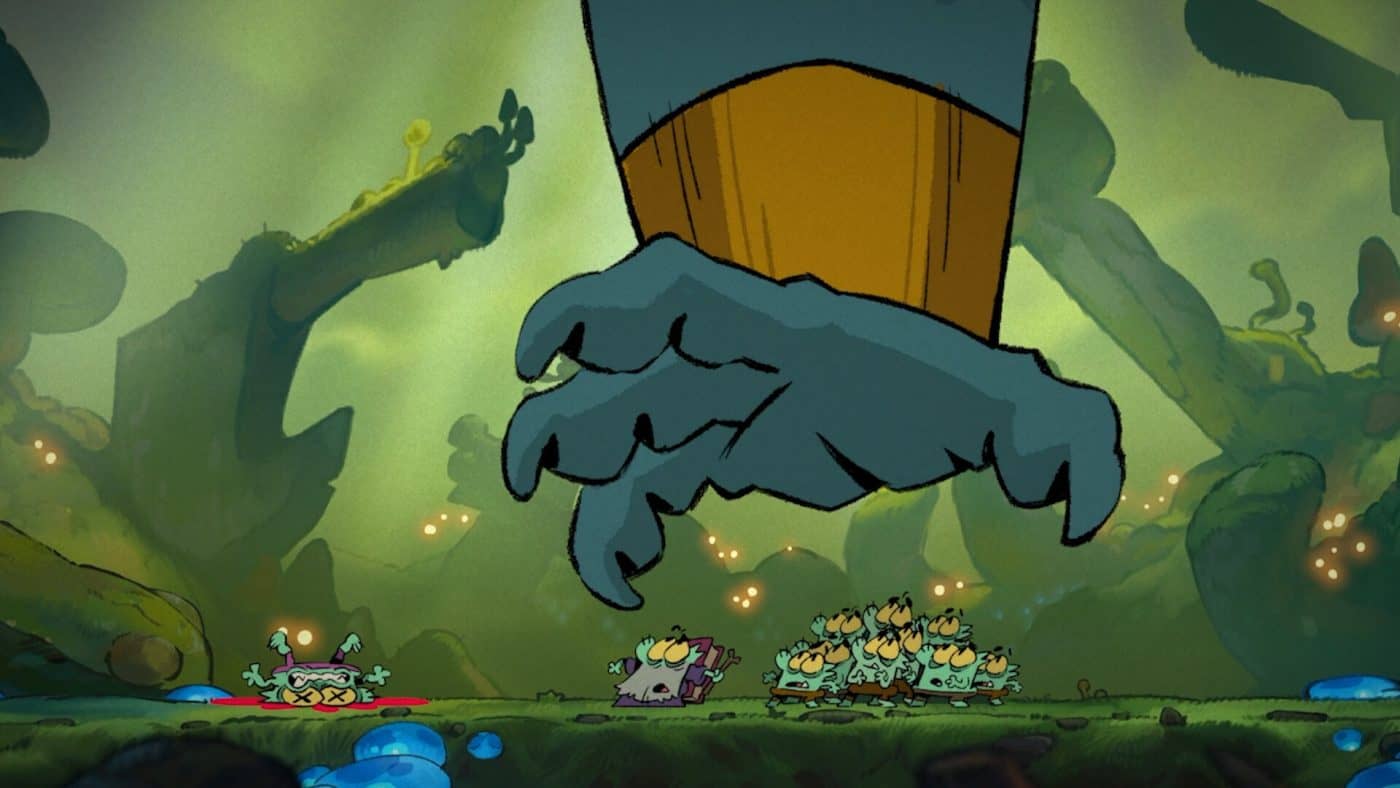
Imagine approaching a blade not as something to dodge, but as something you desperately need to reach. Imagine looking at a bottomless pit and wondering whether falling into it might actually take you closer to your objective. Imagine seeing a gigantic hammer swinging toward your character and thinking, “Good. That’s exactly what I was looking for”. It sounds ridiculous.
It sounds completely backwards. And that is precisely why Deaths of Peck immediately stands out. Developed by Juan Pedro Arroyo, Deaths of Peck takes one of the most fundamental conventions of platforming and turns it upside down. Rather than treating death as the punishment for making a mistake, it makes death an essential part of the game’s progression system.
This isn’t simply a platformer where the protagonist dies a lot. It isn’t a deliberately sadistic challenge built around seeing how long a player can tolerate failure. The idea is considerably more elegant than that. Death is a mechanic. Death is a resource. Death is progression. And the entire concept can be distilled into one wonderfully absurd sentence: To win, you have to die.
That line might initially sound like little more than a clever marketing hook. But the further you look into Deaths of Peck, the clearer it becomes that the entire experience has been designed around making that contradiction work.
Because the real question isn’t simply “how do I survive? “ It becomes: “How can I use my own death to move forward?” That is where the game’s relationship with its environment begins to change. A trap isn’t necessarily an obstacle. A hazard isn’t necessarily something to avoid. An enemy isn’t necessarily something standing between you and your objective.
Sometimes, the thing trying to kill you is exactly what you need. And at the heart of this strange philosophy is Peck, a tiny goblin who seems almost comically unsuited to the nightmare awaiting him. His greatest advantage is also his strangest curse: Peck is immortal. In another game, immortality would be the ultimate power fantasy. No limited lives. No permanent game over.
No reason to fear the next mistake because, sooner or later, you will always come back. But Deaths of Peck takes that familiar fantasy and gives it a wonderfully twisted interpretation. Because immortality doesn’t mean Peck can’t suffer. It doesn’t mean he can’t fall. It doesn’t mean he can’t be crushed, burned, sliced apart or otherwise subjected to an almost absurd catalogue of cartoonishly violent deaths. It simply means that he always gets back up. And he has plenty of reasons to do so.
When orcs kidnap his friends, Peck is forced to embark on a seemingly impossible ascent through a gigantic vertical tower. Unfortunately, this is not exactly the kind of tower designed to welcome visitors. Quite the opposite.
Everything about it seems determined to make Peck’s journey as short, and as painful, as possible. Sharp blades. Massive hammers. Fire. Environmental hazards. Deadly drops. Every floor introduces another opportunity for Peck to meet his end, and the sheer creativity behind those deaths becomes part of the game’s charm. The tower feels less like a conventional level and more like a gigantic machine designed to invent increasingly ridiculous ways of killing one very unlucky goblin.
But there is a crucial difference. Peck isn’t necessarily trying to escape the machine. He is learning how to exploit it. And this is where Deaths of Peck moves beyond its initial gimmick and begins to reveal a much more thoughtful gameplay structure.
Death doesn’t simply reset the player. It can change Peck. A blade can slice him in half and grant him the ability to perform a double jump, allowing his dismembered form to become the very tool he needs to reach higher platforms. A gigantic hammer can crush him into a soft, malleable state, giving him the ability to cling to nails and bars that would otherwise be impossible to use.
Fire, meanwhile, can become an offensive tool, allowing Peck to burn through obstacles and even take on the orcs standing in his way. The central idea is wonderfully simple: What kills you can make you stronger. But Deaths of Peck doesn’t stop there.
The game appears to structure its progression around a deliberate and highly distinctive gameplay loop: DIE → HEAL → DIE. You die to obtain a new ability. You use that ability to progress. You heal when the transformation is no longer useful. Then you find another way to die. The cycle repeats. But the important point is that the player cannot simply throw themselves into every hazard and expect the game to solve itself. Death has to be deliberate. Not every death gives you what you need. Not every transformation is useful in every situation. And not every hazard should be approached in the same way.
The real skill lies in understanding which death is useful, when it is useful and what it allows you to do afterwards. That changes the way you read the entire level. A blade becomes more than a blade. A hammer becomes more than a hammer. Fire becomes more than fire. And a seemingly impossible obstacle can suddenly become a puzzle whose solution is not hidden somewhere beyond it, but inside the danger itself. This is where the concept becomes genuinely compelling.
The player is no longer simply navigating a level. They are learning to read the language of death. And that creates a fascinating reversal of the traditional platforming mindset. In most games, mastery means learning how to avoid danger. Here, mastery may mean knowing precisely when to stop avoiding it. That is a subtle distinction, but one capable of changing the player’s relationship with failure. Because if death is part of the solution, then failure is no longer necessarily wasted effort.
A failed jump might reveal the limits of a particular transformation. A poorly chosen death might teach you that you need a different ability. An apparently disastrous mistake might eventually become the key to understanding the section. Failure becomes information; every setback adds another piece to the puzzle. And it is precisely here that Deaths of Peck begins to reveal a surprisingly thoughtful emotional layer beneath its cartoon violence and deliberately absurd premise.
Because Peck himself is never presented as an unstoppable hero. He is small, often ridiculous, and seemingly ill-equipped for the challenge ahead. He does not enter the tower with all the answers, nor does he possess some overwhelming strength that allows him to force his way through every obstacle. Instead, he has to learn as he goes. He experiments, makes mistakes, adapts to new situations, gets killed in increasingly spectacular fashion – and then, inevitably, gets back up and tries again.
There is something relatable about that cycle. Not because Deaths of Peck appears interested in delivering a heavy-handed life lesson, but because its central mechanic taps into something we already understand: sometimes progress begins with accepting that you got something wrong. The game doesn’t need to tell us that failure is valuable. It simply lets us experience it. We watch Peck get crushed by a hammer, sliced apart by a blade or thrown into the abyss, and instead of immediately thinking “I failed”, we begin to wonder: “What did that death give me?” That is a very different question. And it may be the most important question in the entire game. Naturally, none of this means Deaths of Peck is going to be easy. Quite the opposite.
Behind the colourful presentation lies a precision platformer that appears intent on demanding genuine skill. Timing matters. Movement matters. Positioning matters. Reading the environment matters. And while Peck may be immortal, gravity remains undefeated. A missed jump can send him tumbling down the tower. A poorly timed movement can undo several minutes of progress. A wrong decision about which death power to use can force the player to rethink an entire section.

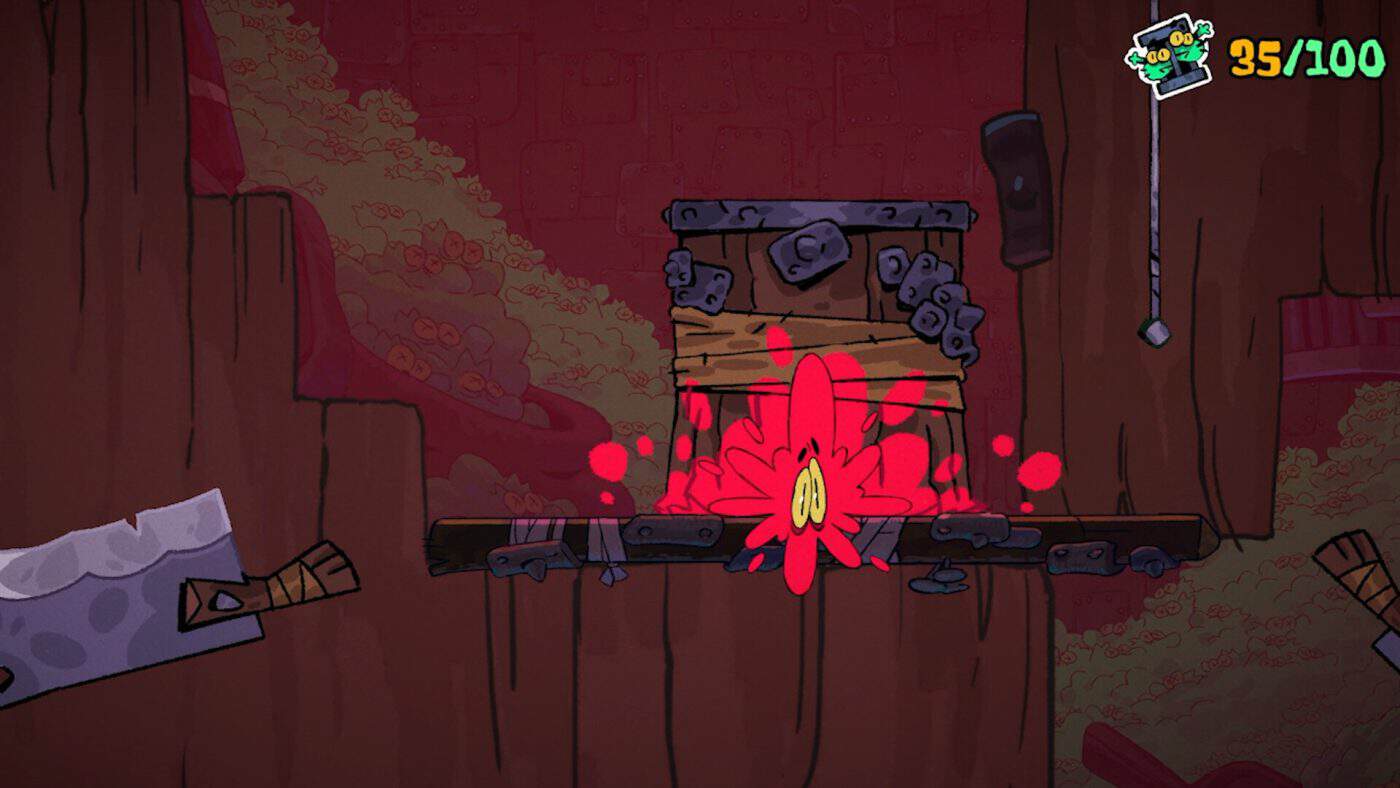
This is where the game’s design potentially finds its most interesting balance. Death is powerful. But execution still matters. Knowing what to do and being capable of doing it are two very different things. You may understand exactly which transformation you need. You may know precisely where you have to go. You may even have figured out the correct route. But then comes the jump. You miss it. Peck falls. And suddenly you are back at the bottom. Again. That tension between frustration and discovery is fundamental to the appeal of precision platformers, and Deaths of Peck appears to embrace it rather than attempting to remove it.
The difference is that here, failure has another layer. You aren’t simply asking: “Why did I die?” You are asking: “Was that death useful?” And that question could become the game’s greatest strength. The same philosophy extends to its visual presentation.
Deaths of Peck is built around a distinctly hand-drawn aesthetic that draws on the warmth, exaggeration and expressive physical comedy of classic animated cartoons. Its visual language gives the world a playful quality that can feel almost nostalgic, even as it subjects its unfortunate protagonist to increasingly elaborate – and often spectacularly ridiculous – forms of destruction.
There is something wonderfully absurd about watching an endearing little goblin get flattened by a hammer, swallowed by flames or sliced apart, only for him to bounce back moments later into a world that feels as though it has stepped straight out of a Saturday-morning cartoon. The violence is exaggerated to the point of slapstick; the deaths are grotesque without ever becoming truly grim; and the humour may be macabre, but it remains consistently playful. The world can be surprisingly brutal without ever losing its warmth, and it is precisely this tension between charm and carnage that gives the game such a distinctive personality.
On one side, there is Peck: tiny, charming and almost impossible not to root for. On the other, there is a tower that seems to have dedicated its entire existence to finding new ways to destroy him. There are bright colours, expressive animation and cartoon humour. Then there are blades, fire, hammers, deadly falls and precision platforming that promises to punish even the smallest mistake. That collision between innocence and brutality isn’t merely an aesthetic flourish. It is the game’s identity.
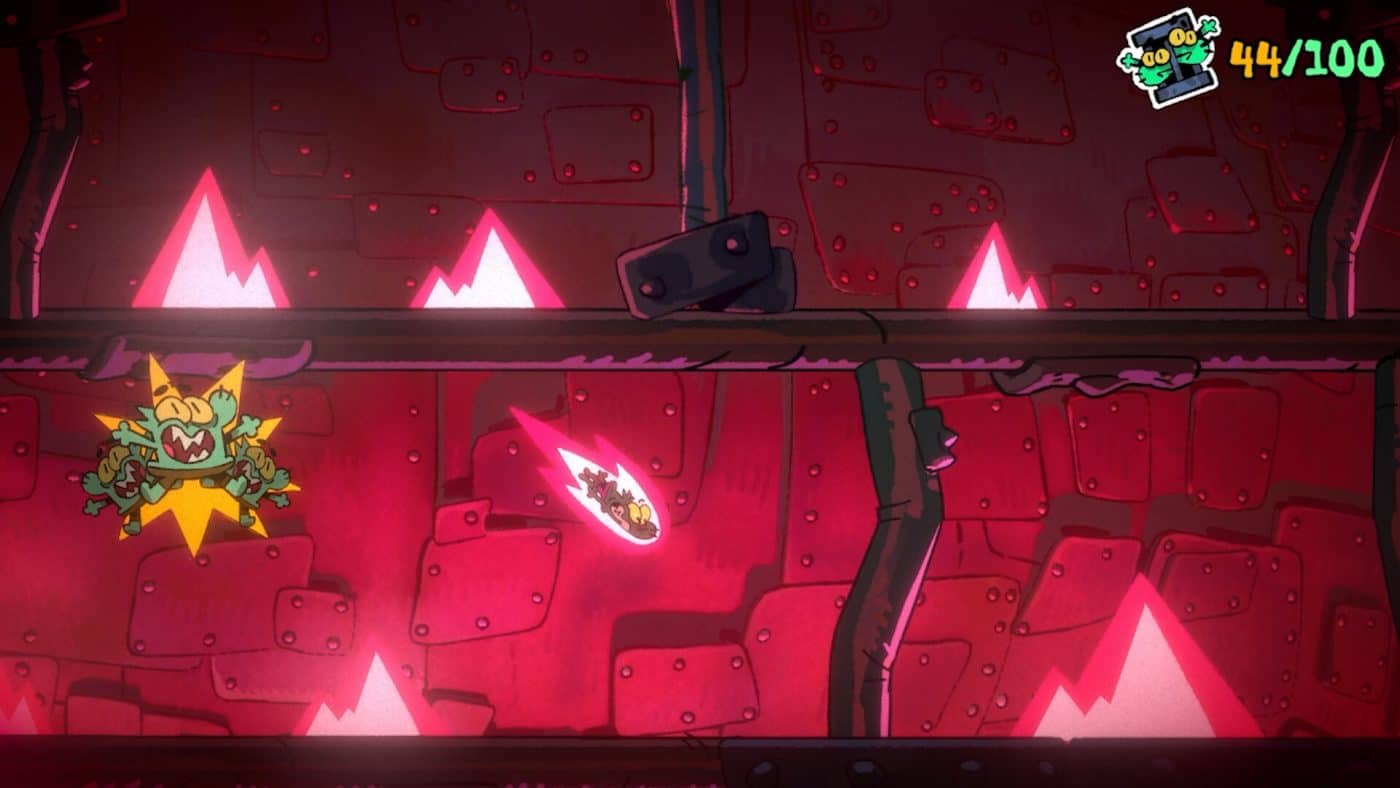
And it is what makes Deaths of Peck so immediately intriguing. Because beneath the blood, slapstick violence and deliberately ridiculous premise is a surprisingly coherent design philosophy. The game isn’t asking us to become better at avoiding death.
It is asking us to become better at understanding it. It asks us to look at the hazard we have been trained to fear and consider whether it might actually be the answer. It asks us to stop treating failure as a dead end and start treating it as another piece of information. And, most importantly, it asks us to reconsider one of the most deeply rooted assumptions in gaming: that winning means staying alive. Perhaps it doesn’t. Perhaps sometimes the fastest route forward is the one that kills you.
Perhaps some traps are not obstacles at all, but opportunities waiting for the player to understand them. Perhaps some deaths aren’t endings. Perhaps they’re doors. And that is where the apparent madness of Deaths of Peck starts to reveal something much more deliberate. Behind its absurd premise, the game seems to be exploring a surprisingly universal idea: we cannot avoid every mistake. We cannot control every fall. We cannot anticipate every obstacle. We cannot reach the end of every journey without getting something wrong along the way. What we can control is what happens afterwards.
We can get back up. We can change our approach. We can take what we learned from the previous attempt and use it to make the next one better. And Peck does exactly that. Except his version of learning from failure is considerably more literal. He dies. Then he gets stronger. He tries again. And he dies differently. That is the beautiful absurdity at the heart of Deaths of Peck.
It takes one of the most familiar mechanics in video games – death – and asks us to look at it from the opposite direction. Not as punishment. Not as a reset. Not as the end of an attempt. But as a possibility. A chance to learn, adapt, experiment and discover a new way forward. Because eventually, we are going to fail. Probably more times than we would like. We will miss a jump, misjudge a trap, choose the wrong transformation or simply lose control at the worst possible moment. Instead, it asks a much more interesting question: What if failure is exactly what we need to succeed?
That paradox lies at the very heart of Arroyo’s design philosophy: a platformer conceived to make us laugh, catch us off guard and continually surprise us, while demanding precision, sharp reflexes and a healthy measure of patience – and, quite possibly, killing us an embarrassing number of times along the way. Yet beneath its cartoonish violence, irreverent humour and deliberately absurd premise lies a surprisingly thoughtful approach to failure.
Deaths of Peck understands that a setback does not necessarily mean moving backwards; sometimes, the most valuable failures are those that teach us something new, force us to reconsider our approach and ultimately bring us closer to success.

Who Is Behind Deaths of Peck?
From the moment Deaths of Peck first crossed our radar, one question kept resurfacing whenever we returned to the project. It was not, as one might expect, a question about the game itself. We were not trying to understand what Deaths of Peck was, how it worked, or even why anyone would build an entire game around such a gloriously strange premise. Before any of those questions came into focus, there was a simpler one, and perhaps a more revealing one: who?
Who looks at a blank page and decides to turn it into a stage for a tiny, irresistibly endearing character, only to subject him to an almost endless parade of spectacular misfortunes? Who makes Peck so charming and immediately recognisable, only to turn every one of his deaths into another meticulously timed display of physical comedy and visual ingenuity? And, perhaps most importantly, who takes one of gaming’s most familiar symbols of failure and reimagines it as the very reason to keep playing?
Because beneath the apparent absurdity of Deaths of Peck lies something considerably more deliberate. The game’s eccentricity is not accidental, nor is its humour simply the product of a particularly wild premise. There is a distinct artistic sensibility at work: one grounded in an intuitive understanding of movement, expression, rhythm, and visual timing.
It is the ability to recognise how a character moves, how a fleeting expression can communicate more than a line of dialogue, how a precisely placed pause can sharpen a joke, and how a single gesture, executed at exactly the right moment, can turn a simple interaction into something genuinely memorable. There is an artist at the heart of Deaths of Peck before there is a designer.
Someone whose instincts are rooted in visual storytelling; someone who understands that character is not merely something drawn on screen, but something conveyed through silhouette, movement, expression and timing.
That artist is Juan Pedro Arroyo. And if Deaths of Peck feels so distinctive – so strangely funny, visually expressive, and confident in its own eccentricity – then perhaps the best place to begin understanding its identity is with Arroyo himself. Because behind Peck’s endless parade of increasingly inventive deaths lies a very deliberate creative philosophy: one that turns failure into performance, repetition into anticipation, and a character’s inevitable demise into the defining language of the game itself.
How Peck Came to Life
Long before he became the creative mind behind this small piece of madness, Arroyo was, first and foremost, an animator, director, and visual developer – an artist whose work has consistently revolved around a deceptively simple question: how do you bring something to life when, on paper, it has none? For Arroyo, the answer began to take shape at an early age.
As a child, he was fascinated by anyone who could draw or animate, by the ability to make something static appear to breathe, move, and express itself. Disney animation became one of his earliest and most enduring influences, instilling an appreciation for the expressive possibilities of movement and the remarkable ability of animation to make the impossible feel entirely believable.
That influence becomes particularly interesting when viewed through the lens of Deaths of Peck. Much of the game’s personality comes from precisely that principle: an absurd idea can feel completely natural when movement, timing, weight, and expression are handled with conviction. A character can tumble into an elaborate trap, suffer an outrageous demise, or react to an impossible situation, and yet the moment still feels coherent because the animation gives the absurdity its own internal logic.
What began as a childhood fascination gradually evolved into a clear professional calling. Arroyo pursued his Fine Arts education first at the Alonso Cano Faculty of Fine Arts in Granada and later at the Polytechnic University of Valencia, where his early passion for animation developed into a rigorous and increasingly defined artistic practice. It was during this period that drawing and animation ceased to be simply things he enjoyed and became the foundation of the career he would ultimately build.
Yet there is another aspect of Arroyo’s philosophy that may be even more revealing when it comes to understanding his work: the audience’s reaction. For him, the creative process does not end when an image is drawn or a character appears on screen. There is a crucial final step – the moment someone encounters it and gives it meaning through their own reaction. Laughter, surprise, even disbelief can become part of the reward of creation. And that belief sits at the very heart of Deaths of Peck.
Because despite its premise, this is not merely a game about death. It is a game about what death makes us feel. Peck’s reaction when a trap closes around him. The player’s surprise when an apparently harmless situation suddenly turns catastrophic. The laugh that follows an especially elaborate demise. The curiosity that immediately replaces it: What happens if I try that again?
That is the paradox of Deaths of Peck :the game turns failure from a punishment into a reason to keep playing. Arroyo finds new and increasingly inventive ways for Peck to die, while the player keeps playing for the simplest possible reason: to see what happens next. And in that exchange between creation and reaction, death stops being the end of the experience. It becomes the joke, the spectacle, and – most importantly – the invitation to try again.
The Animation Roots of Deaths of Peck
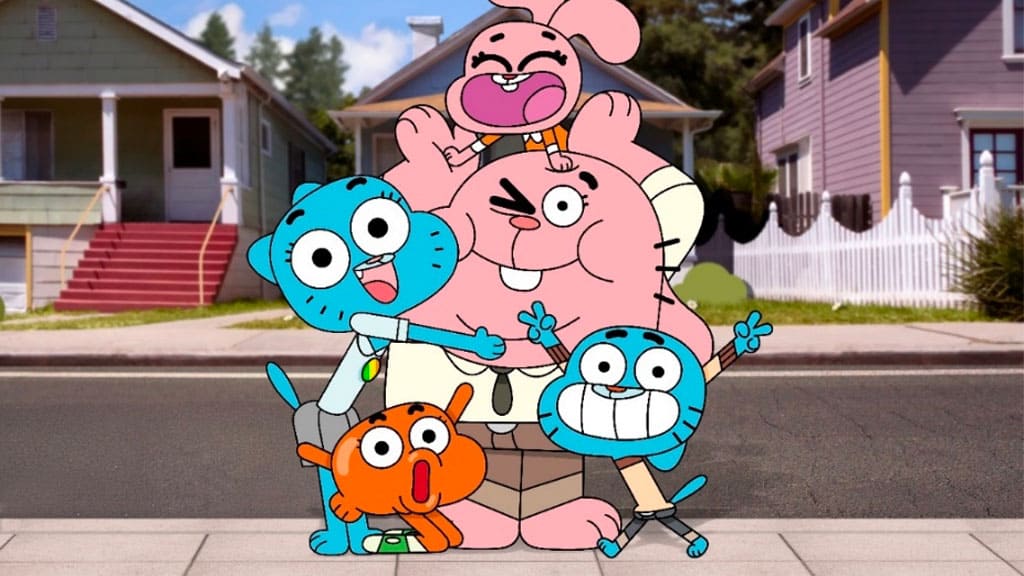
Long before Peck entered the picture, Arroyo had already spent years working in environments that would prove instrumental in shaping the visual language he would eventually bring to his own game. Among the most significant chapters of that career was his work on The Amazing World of Gumball, one of Cartoon Network’s most distinctive series. Arroyo joined the production during its third season and remained involved through the following seasons, taking on increasingly senior responsibilities. He worked as a 2D animator on the fourth and fifth seasons before stepping into the role of 2D Animation Supervisor for the sixth, where he helped oversee a team of animators and contributed to the show’s broader animation direction.
For anyone familiar with Gumball, the connection to Deaths of Peck is hard to ignore. Not because the two projects look or play alike, but because they share an instinctive disregard for conventional physicality.
Both understand that animation can bend the rules of reality without sacrificing coherence. In Gumball, characters stretch beyond recognition, collapse under impossible forces, explode, flatten, distort, and rebound from situations that would make no physical sense in the real world. Yet the absurdity remains convincing because every movement is governed by an internal visual logic. The joke is not simply what happens; it is how the body moves when it happens.
That same principle feels central to Deaths of Peck. Peck is not simply an avatar whose purpose is to navigate the player from one point to another. He is a character who exists within the world and reacts to it. The way he runs, stumbles, recoils, gets struck, tumbles through the environment, or meets his latest spectacular demise is inseparable from the character himself.
This is where Arroyo’s background as an animator becomes particularly revealing. A designer can devise a trap. A programmer can determine what happens when the player activates it. An animator decides what that moment actually looks and feels like. How long should the death last? How should Peck’s body react? Where should his eyes go? How far can the movement be pushed before it becomes unreadable? At what point does violence give way to comedy? And what tiny gesture, expression, or pause can turn a routine failure into something genuinely memorable? In a game whose entire premise revolves around dying, these are not secondary considerations. They are part of the design itself.
Death as a Language
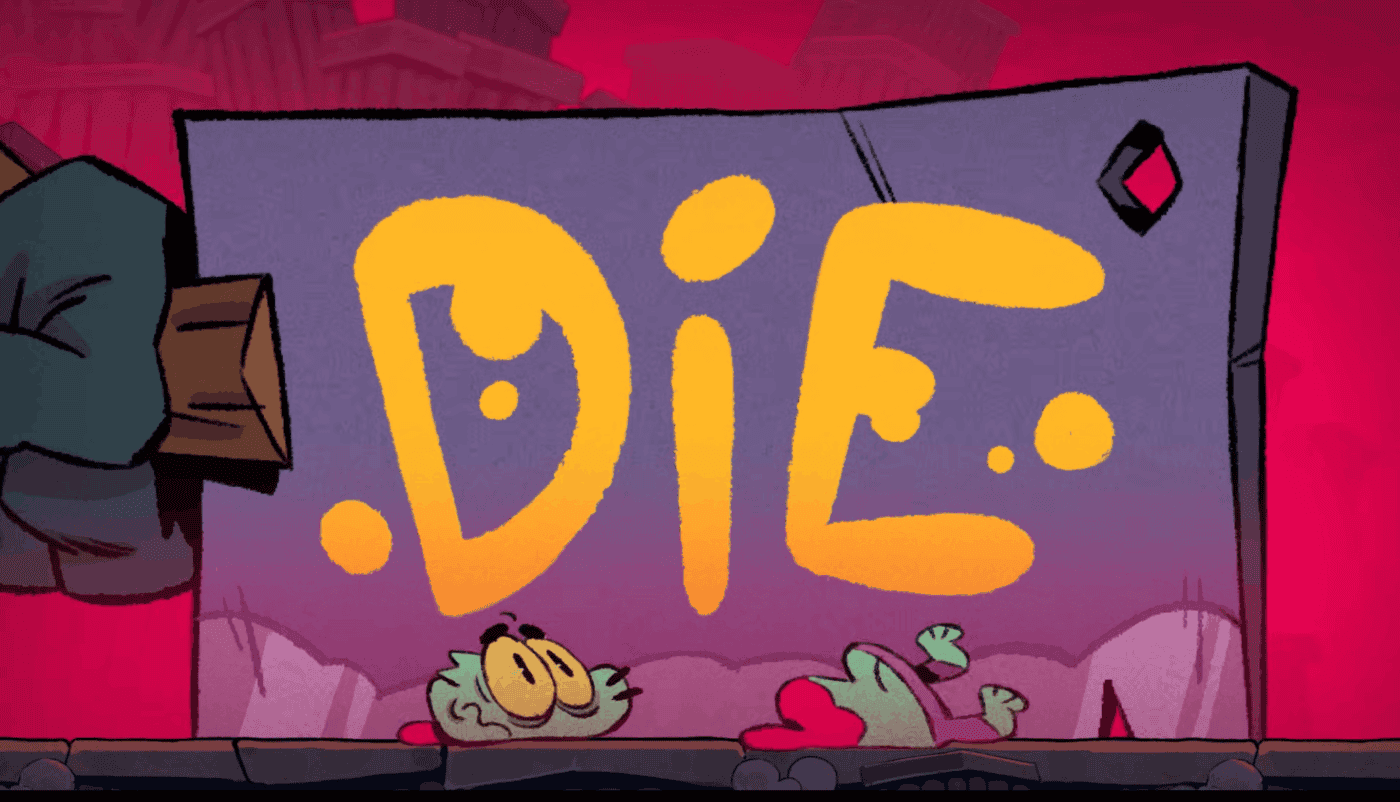
And perhaps this is the most revealing idea at the heart of Deaths of Peck. Death is not simply a game-over state; it has become part of the game’s artistic vocabulary. Each demise communicates something different, whether it is the consequence of a mistake, an unexpected twist, a deliberate punishment, or a carefully timed visual gag.
At its best, a death almost becomes a miniature animated performance: a sequence of movement, timing and expression that the player happens to trigger, sometimes simply by making the wrong decision at exactly the right moment.
That perspective fundamentally changes the role of failure. In most videogames, death is designed to frustrate. We have lost, the game stops us in our tracks, and we are sent back to try again, ideally with a better understanding of what went wrong. Deaths of Peck takes that familiar relationship with failure and turns it on its head, posing a deceptively simple question: what if losing could be fun? The idea is easy to describe, but remarkably difficult to execute.
For failure to become something a player genuinely wants to experience again, it must have value beyond its function as a setback. A death needs to be readable enough to make its cause clear, entertaining enough to make the failure rewarding, and unpredictable enough to sustain the curiosity that drives another attempt. The objective is therefore not merely to find new ways to kill Peck, but to make every death feel like a moment worth witnessing.
That is where Arroyo’s expertise becomes particularly significant. His work is not simply about making Peck look appealing or ensuring that his movements are technically convincing. It is about giving movement meaning – using posture, timing, expression, weight and physical reaction to communicate character without relying on dialogue.
A stumble can reveal vulnerability. A pause can establish anticipation. A glance can turn an otherwise ordinary interaction into a joke. Even the way Peck hits the ground can tell us something about who he is.
It is a subtle distinction, but one that lies at the heart of the game’s visual identity. A well-designed character can capture attention; a well-animated character can inspire attachment. Peck works because the animation gives his endless misfortune a sense of personality. His deaths are not interchangeable failures; they are performances, each one revealing a little more about the character and giving the player another reason to watch, laugh, and, almost inevitably, try again.


Born to Die, Made to Live
And perhaps that is the most compelling paradox at the heart of Deaths of Peck: the more we watch Peck die, the more we appreciate just how much work has gone into making him feel alive. Every expression is carefully considered. Every exaggerated deformation must remain instantly readable. Even the most absurd moments require precision. What appears to be chaos is, in fact, anything but. The madness of Deaths of Peck is meticulously choreographed.
That may be the key to understanding Arroyo’s artistic sensibility. On the surface, the game feels instinctive and almost anarchic. Yet beneath that apparent disorder lies the discipline of an artist who has spent years studying animation and learning how movement can communicate character, emotion and comedy without relying on explanation. The apparent simplicity is deceptive: behind every reaction, every pause and every physical gag is an understanding of timing, rhythm, weight and expression.
It is also what gives the game its warmth. For all its deliberately cruel premise, Deaths of Peck never feels genuinely malicious towards its protagonist. Because to make a character’s suffering funny, you first have to make the character worth caring about. You need to understand how he moves, how his expressions change and how long a comedic beat should last. More importantly, you need to know how far you can push him without losing the qualities that make him endearing in the first place.
Peck can be crushed, launched, flattened, thrown into elaborate traps or subjected to increasingly inventive forms of animated misfortune, yet he never disappears beneath the joke. There is always a recognisable character underneath the spectacle. His personality survives every impact, every deformation and every spectacular failure, expressed through the smallest details: a glance, a gesture, a pause, the way his body reacts a fraction of a second before – or after – the inevitable happens.
That is what makes his deaths more than punchlines. They become moments of character. We laugh because Peck is charming; we care because he feels alive; and we keep playing because, no matter how many times we watch him die, we still want to see what happens when he gets back up.
Between Animation and Interactivity
Deaths of Peck feels as though it was born at the intersection of two creative disciplines that have always shared a natural affinity, yet rarely merge quite so completely: animation and videogames. On one side is the animator’s instinct for movement, expression, rhythm and timing, the ability to make a character feel alive through the smallest physical detail. On the other is the defining quality of the videogame as a medium: interactivity, and the player’s power to determine what happens next.
What makes that relationship particularly compelling is that the player is not merely watching the joke unfold. We are responsible for it. We move Peck. We make him jump. We misjudge the timing of a platform. We trigger the trap. We make the mistake. And, ultimately, we are the ones who send him to his next spectacular demise. Yet the game never frames that responsibility as something to feel guilty about. Instead, it transforms our mistakes into an essential part of the comedy.
When Peck is crushed, flattened, launched, mangled, or dispatched through some increasingly inventive piece of animated misfortune, his death becomes more than the consequence of a failed attempt. It becomes a moment created at the intersection of authorial intent and player agency. Arroyo establishes the world, defines its rules, designs its hazards, and animates the countless possibilities that exist within them. The player is the one who brings those possibilities to life.
That distinction matters. In animation, the artist controls every element of a gag: its setup, timing, escalation and punchline. In Deaths of Peck, that control is deliberately shared. Arroyo creates the circumstances; the player determines when they collide. The developer builds the stage and populates it with possibilities, but the player decides which disaster will actually happen.
The result is a particularly compelling form of interactive physical comedy, in which failure becomes a collaboration rather than a mere consequence. Every death is meticulously authored, yet no two deaths need feel quite the same, because each one is shaped by the circumstances of the player’s actions. Arroyo creates the joke; the player completes it. And that may be one of Deaths of Peck’s most elegant ideas: the game does not merely invite us to watch Peck suffer. It gives us control over the circumstances of his demise – and then turns our own mistakes into the punchline.
The Unexpected Warmth of Failure
And then there is Peck. He deserves a closer look, because it would be easy to see him simply as the unfortunate victim at the centre of our increasingly disastrous experiments. The longer we spend with him, however, the more apparent it becomes that Peck is far more than the target of the joke: he is the emotional heart of the experience.
There is something deeply relatable in Peck’s persistence. He falls, dies, starts over, and inevitably finds another way to die, only to get back up and try again. And so do we. Beneath the slapstick and the escalating absurdity lies a cycle that feels unmistakably human: we try, we fail, we learn, we get back up, and we try again.
Peck simply happens to live, or die, through that process under exceptionally unforgiving conditions. His world seems almost designed to find new and increasingly elaborate ways to bring him down, yet he keeps moving forward. That determination makes him surprisingly easy to empathise with. What initially appears to be little more than physical comedy gradually reveals something more familiar beneath the surface: the player and the character are both learning through failure.
We are discovering the rules of the world, testing its boundaries, misjudging hazards and gradually learning from our mistakes. Peck is doing the same thing, only with considerably higher stakes. Every failed experiment has a physical consequence for him; every mistake becomes another spectacular demise. There is, of course, one crucial difference.
We can miss a jump, make the wrong decision and simply press a button to begin again. Peck has to endure the consequences of every decision we make. Our mistakes are temporary; his are spectacularly fatal.
And yet that is precisely where Deaths of Peck finds its unexpected warmth. Deaths of Peck is cruel without feeling cruel-spirited, absurd without becoming hollow, and relentlessly funny without ever losing its affection for the character at its heart.
We laugh at Peck’s misfortune, but we also root for his persistence. Every death becomes another setback, another lesson and another reason to try again. In that sense, Peck is not simply a character we control. He is our partner in failure. We are learning the game together, one mistake – and one increasingly ridiculous death – at a time.
From the Drawing Board to the Game
For that reason, any attempt to understand Deaths of Peck without understanding Juan Pedro Arroyo would miss a fundamental part of what makes the project distinctive. This is not simply the story of a developer who came up with an unusual premise and turned it into a game. It is the product of an artistic journey: one that began with drawing, developed through animation, expanded across years of professional work, and eventually found its most personal expression in a project entirely of his own.
What makes that journey particularly significant is that Arroyo’s artistic background is not merely reflected in Deaths of Peck; it is embedded in the very way the game communicates. His understanding of movement becomes gameplay. His instinct for expression becomes characterisation. His sense of timing becomes comedy. The principles of animation that once existed within the boundaries of the screen are now handed to the player, transformed into something interactive and unpredictable.
That makes Deaths of Peck fascinating long before we consider its mechanics in the conventional sense. Before asking how difficult it is, how precise its controls feel, or how effectively its platforming works, there is a more interesting question to consider: what happens when an animator takes the visual language he has spent years refining and gives the player control over it?
In Arroyo’s hands, the answer is remarkably cohesive. His experience with animation does not feel like something left behind when he entered game development; it feels like the foundation upon which Deaths of Peck has been built. Movement, anticipation, reaction, timing and physical comedy are not simply aesthetic touches. They are part of the game’s vocabulary.
And perhaps that is what makes the project so compelling. Not the sheer number of ways Peck can die, nor the cruelty of the traps, nor the escalating absurdity of the situations into which we inevitably put him. What truly matters is that behind every death and every meticulously timed gag is an artist who first had to imagine Peck alive. Because for a character to be this entertaining to destroy, he first has to be worth caring about. That is ultimately the significance of Arroyo’s contribution.
Beneath the slapstick and the seemingly endless succession of spectacular failures lies an artist bringing years of experience to a new medium, translating the principles of animation into something the player can actively influence and reshape. Peck’s deaths may be the game’s central joke, but the real achievement lies in making Peck feel alive enough for those deaths to matter.
And with that in mind, it is time to move beyond the artist and turn our attention to the work itself – to see what happens when Arroyo’s ideas leave the drawing board and are placed in the player’s hands, and what Deaths of Peck truly becomes once we step into its wonderfully chaotic, deceptively dangerous world.
What Doesn’t Kill You Makes You Stronger
Before we reach the conclusion – and, of course, reveal when and where Deaths of Peck will eventually be available – it is worth putting its wonderfully absurd premise to one side for a moment and looking more closely at the game beneath it.
Saying that “you have to die to win” is undoubtedly the quickest way to explain Deaths of Peck. It is catchy, immediately understandable and perfectly suited to a game built around such an unusual idea.
But that premise only scratches the surface of what Deaths of Peck is trying to achieve. Beneath the deliberately absurd idea of turning death into a path to victory lies a carefully designed 2D precision platformer, one built around movement, experimentation, exploration and the player’s ability to adapt to an environment that constantly changes the rules beneath their feet. And this is precisely where Deaths of Peck becomes more than an amusing curiosity.
Once the initial shock of seeing poor Peck repeatedly crushed, sliced, burned or otherwise dispatched begins to settle, a much more considered design philosophy starts to emerge. At its core is a remarkably simple principle: Every obstacle can become an opportunity, provided you are willing to pay the price required to turn it into one. For Peck, that price is usually death.
His journey takes place inside a gigantic vertical tower, a hostile and increasingly unpredictable structure that stands between the young goblin and his kidnapped friends. Orcs have taken them away, leaving Peck with the unenviable task of climbing towards the summit through a gauntlet of traps, enemies and environmental hazards. Yet the tower is not simply a sequence of platforms arranged one above another. It feels much closer to a giant interactive puzzle box, one in which every element of the environment can potentially interact with Peck’s unusual abilities. The tower does not simply ask the player to reach its highest point. It asks them to understand how it works. And understanding it means learning to look at danger differently.
Blades, flames, hammers, traps and hostile creatures are not merely obstacles placed in Peck’s path. They can become tools. A blade that would ordinarily represent an immediate threat can instead provide a new ability. A hammer capable of flattening Peck can transform him into a more malleable form, allowing him to interact with surfaces that would otherwise be inaccessible. Fire, meanwhile, can become something more than a hazard, potentially turning into an offensive or traversal tool.
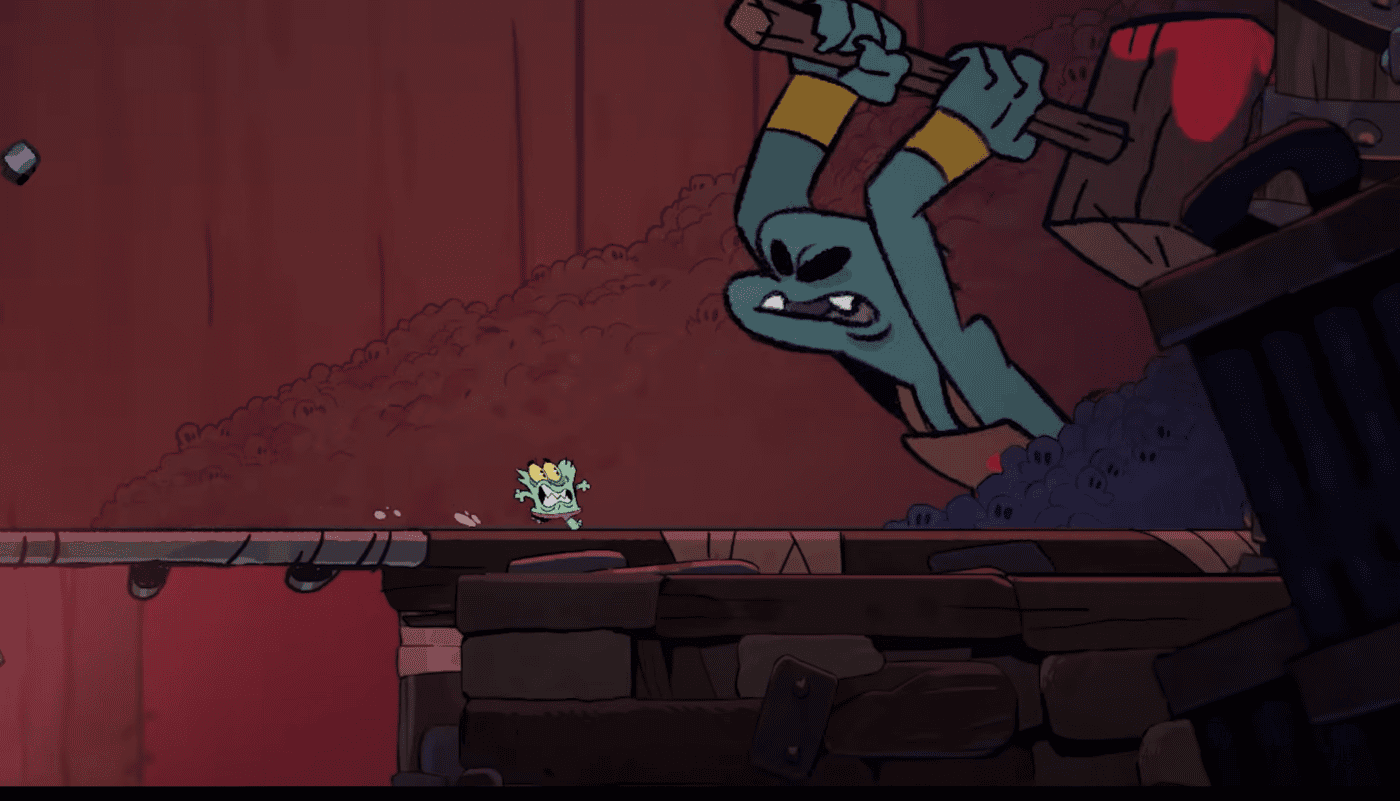
It is a wonderfully strange way of approaching level design because it changes the question the player asks. In a conventional platformer, a blade tells us to find a way around it. A gap tells us to calculate the correct jump. A trap tells us to wait, observe its pattern and pass through at the safest possible moment. In Deaths of Peck, the instinctive question may instead become: “What if I need to get hit by this?” That single change in perspective has significant implications.
Peck’s immortality is not simply a convenient excuse for an unlimited number of attempts. It appears to be the foundation upon which the entire gameplay loop is built. Death does not necessarily erase progress. It can create it.
Take the blade, for example. Being cut in half can grant Peck the ability to double-jump, potentially opening access to platforms that were previously beyond his reach. The joke is obvious – and wonderfully grotesque – but the underlying idea is considerably more sophisticated. The protagonist’s body becomes part of the level design. His physical state determines where he can go, what he can interact with and which routes are available to him. A death therefore does more than punish the player.
It changes the way the player navigates the world. The same philosophy applies to the hammer. Being crushed is not simply another elaborate way to kill Peck. It can alter his physical properties, allowing him to adhere to nails, bars and other surfaces that would otherwise be impossible to use. Suddenly, the thing that killed us becomes the thing that allows us to progress.
And this is where Deaths of Peck begins to blur the line between exploration and experimentation. The player is not simply searching for the safest route through each section. They are searching for the correct state in which to approach it.
Perhaps a platform appears impossibly high. Perhaps the obvious route is blocked. Perhaps the solution is not another jump, but another death. That is what makes the game’s central mechanic potentially so compelling. Death becomes a form of traversal.
But there is an important caveat. Not every death is useful. And that distinction could ultimately determine whether Deaths of Peck‘s central idea becomes a genuinely engaging system or merely an entertaining gimmick.
It is not enough to die. You have to die for a reason. If every death automatically provided a beneficial ability, the mechanic would quickly lose its strategic value. Instead, the player appears to be encouraged to understand which hazard produces which transformation, and more importantly, when that transformation is actually useful.
A particular ability might be exactly what we need for one section and a significant disadvantage in another. That creates a fascinating relationship between experimentation and memory. The player is learning from failure, but not simply learning how to avoid repeating it. They are learning when to deliberately repeat it.
Imagine spending several minutes climbing a particularly demanding section of the tower. You finally reach a point that previously seemed completely inaccessible, only to mistime a jump and watch Peck tumble helplessly back towards the bottom.
In another platformer, that moment would be pure frustration. Here, it might be a discovery. Perhaps the fall reveals a hidden platform. Perhaps it exposes a different route. Perhaps it teaches you that a particular transformation can be used in a way you had not previously considered. Peck falls. The player learns. That relationship between character and player may ultimately prove to be one of the game’s most interesting qualities. Because Deaths of Peck is not simply asking us to become better at avoiding mistakes. It is asking us to become better at understanding them.
That does not mean, however, that Deaths of Peck is interested in making the road to the top any easier. Quite the opposite. Beneath its colorful, hand-drawn aesthetic and deliberately playful sense of humor lies a platformer that appears to demand genuine precision, impeccable timing and a willingness to embrace failure rather than simply endure it.
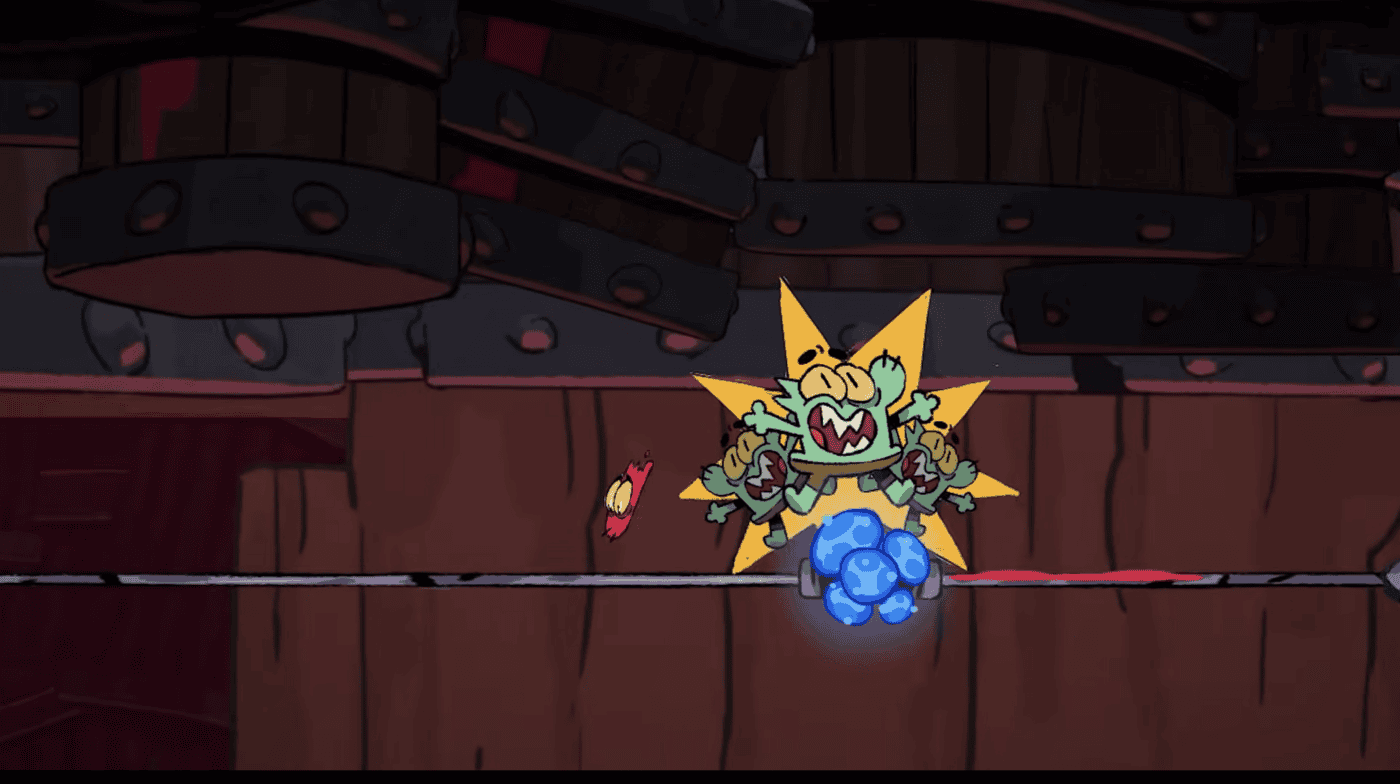
The challenge is not only to avoid dying, but to maintain concentration when something inevitably goes wrong. To understand why a jump failed. To recognise what the environment was trying to teach you. And then, crucially, to have the patience to try again.
It is a philosophy that sits comfortably within the traditions of precision platforming: failure, repetition and gradual mastery. But Deaths of Peck introduces an unusual twist. Death is not where that process ends. It is where another attempt begins.
The resulting DIE → HEAL → DIE rhythm could become the defining cadence of the experience. Die to acquire an ability. Use it to overcome a particular obstacle. Restore Peck to his original form when that ability is no longer useful. Then, sooner or later, die again to obtain something else. It is almost a form of choreography. A strange, violent and frequently hilarious dance between Peck, the environment and the player, with each death gradually revealing another piece of the tower’s underlying logic.
Even healing, however, is not necessarily straightforward. Certain environmental elements, including mushrooms, can restore Peck to his normal state simply by coming into contact with them. Ordinarily, that would be something worth celebrating.
Here, it can be a problem. Healing means losing the ability acquired through the previous death. In Deaths of Peck, even getting better at the wrong moment can be a mistake. It is a small but revealing detail, because it encapsulates what makes the game’s design philosophy so unusual. Deaths of Peck repeatedly asks us to question instincts that other games have spent decades reinforcing. The thing we normally avoid can become useful. The thing we normally seek can become inconvenient. And the thing we normally fear most – death – can become the key to moving forward.
That constant reversal of expectations gives Deaths of Peck an identity that extends well beyond its central gimmick. The visual direction reinforces it beautifully. With its hand-drawn aesthetic, expressive characters and deliberately exaggerated animation, the game embraces the language of classic cartoons while pushing it into decidedly more chaotic territory. One moment, the world can look almost charming and innocent; the next, it can descend into complete physical absurdity. Peck is small. Peck is almost impossibly endearing. And then a hammer lands on him. A blade tears through him. Or he simply disappears into the abyss.
Yet these moments are not presented with the weight of conventional violence. Instead, Deaths of Peck appears to treat them as cartoon slapstick, exaggerating the physical consequences until they become almost theatrical.
The result is a particularly distinctive form of humour: the game’s violence is not designed to make us uncomfortable. It is designed to make us laugh. And that is where Juan Pedro Arroyo’s animation background becomes particularly important.
The exaggerated movements, physical transformations and expressive reactions are not merely cosmetic flourishes. They are fundamental to how the game communicates its tone. Peck’s body becomes a storytelling device, capable of delivering a joke, communicating an emotion or explaining a mechanic without requiring a single line of dialogue.
The game does not simply tell us that Peck has died. It turns his death into a performance. That distinction is important because it prevents the visual identity from feeling like decoration placed over the mechanics. Animation is not merely supporting the gameplay here. Animation is part of the gameplay’s language. And perhaps that is why Deaths of Peck manages to maintain such a warm personality despite being, at least on paper, a game about repeatedly murdering its own protagonist.
Because Peck is not simply an avatar. He is someone we are encouraged to care about. We watch him fall. We watch him struggle. We watch him fail. And then we watch him get back up. His immortality creates an unusual emotional dynamic. We know he will return, but that does not make his misfortunes meaningless. If anything, it makes them strangely endearing. We begin to root for him not because we are afraid that his journey will end, but because we genuinely want to see him make it a little further.
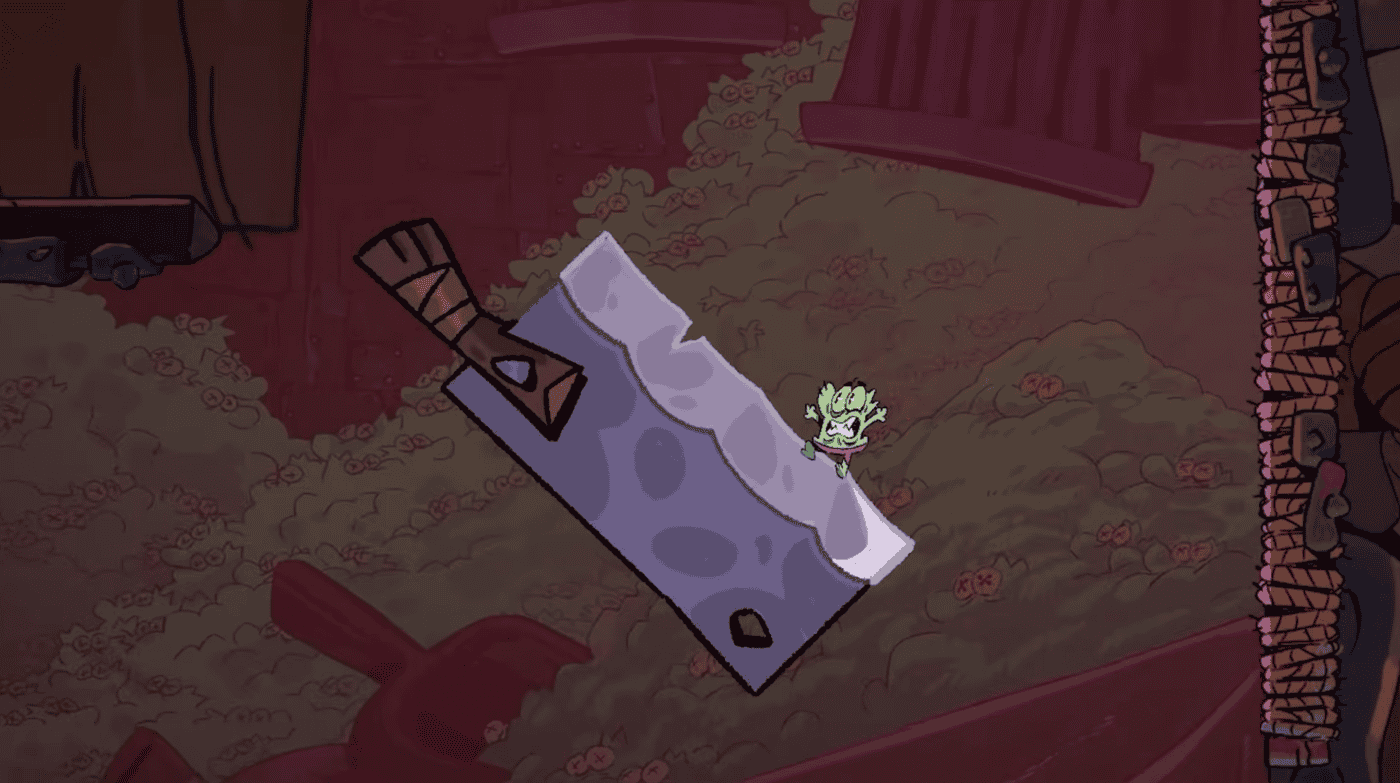
That may ultimately be where Deaths of Peck finds its heart. Not in the simplistic idea that “death makes you stronger,” but in transforming that concept into a relationship between the player, the character and the world.
Every death teaches something. Every failure reveals something. Every transformation creates another possibility. And, inevitably, some of those possibilities will end with Peck once again scattered across the floor. But that is fine.
Because this time, we know something we did not know before. And we can try again. Then again. And again. Until the trap that killed us ten times becomes the very tool that allows us to progress. That, perhaps, is the most compelling promise of Deaths of Peck: the possibility of turning failure from a setback into a form of discovery. Sometimes, losing does not mean going backwards. Sometimes, it means finding a route you could not see before. And when Peck finally reaches the top of that tower, perhaps we will discover that the real challenge was never learning how to survive. It was learning when it was worth dying.
When Will Peck’s Wild Climb Finally Begin?
Deaths of Peck is currently in development for PC via Steam, although neither a release date nor a definitive launch window has been announced yet. For now, players will have to wait a little longer before they can step into Peck’s wonderfully bizarre world, take on its deadly vertical tower and discover firsthand whether death really is the ultimate path to victory.
Until then, those interested in following the project’s development can keep an eye on Juan Pedro Arroyo’s official social channels, where he shares development updates, artwork and new glimpses into the creative process behind Deaths of Peck.
We’ll certainly be keeping an eye on Peck’s increasingly unfortunate journey, so stay tuned for more coverage as Deaths of Peck moves closer to release. For now, that’s all from us. Until next time – and, in Peck’s case, until the next death.