

Tripwire Interactive delivers a satisfying co-op horde shooter with solid gunplay and engaging maps, but an overly familiar structure, uneven balance, and squandered potential keep Killing Floor 3 from becoming the evolution the series deserved.

Killing Floor 3 arrives with a clear and, on the surface, perfectly reasonable ambition: take the co-op horde-shooter formula that has defined the franchise for years and bring it forward without sacrificing the identity that made it distinctive in the first place. It is an approach that makes sense for a series so closely tied to a specific style of play. The difficulty, as Killing Floor 3 ultimately demonstrates, lies in knowing where preservation should end and evolution should begin.
At its best, the game is a reminder of why this formula worked in the first place. Tripwire Interactive has built a responsive, weighty shooting experience that makes every encounter feel appropriately visceral. The localized damage system adds a satisfying layer of precision to combat, rewarding players who aim for specific body parts rather than simply unloading magazines into whatever moves. The maps, meanwhile, are among the game’s more understated strengths, offering chokepoints, alternate routes, and enough environmental structure to make positioning an important part of surviving the later waves.
And then there is the co-op. This remains where Killing Floor 3 is most convincing. A well-coordinated team can turn an apparently hopeless situation into a manageable one through communication, positioning, resource management, and a willingness to adapt when a defensive line inevitably collapses. There is a particular satisfaction in watching a chaotic encounter gradually come back under control, and the game is at its strongest when it allows those moments to emerge naturally.
The trouble is that these strengths are rarely pushed beyond what the series has already established. Killing Floor 3 refines the familiar structure, but too often mistakes expansion for evolution. Progression places considerable emphasis on accumulation and grind, while the enormous selection of weapons can feel more like a catalogue than a meaningful toolkit.
Having more options is not necessarily the same as having more depth, and the game’s approach to equipment occasionally makes preparation feel unnecessarily cluttered rather than strategically engaging.
Balance is another persistent concern. The experience can become increasingly punishing as the waves progress, with certain encounters placing disproportionate pressure on the player. This is particularly noticeable during boss fights, where the speed and damage output of some enemies can clash awkwardly with the relatively limited mobility of the player character. What should feel like a dramatic escalation can instead become an exercise in simply trying to survive overwhelming damage.
Yet even those mechanical shortcomings are not what ultimately leave the strongest impression. The greater disappointment is how much of Killing Floor 3‘s world remains unexplored. There is considerably more substance to this universe than the game itself allows players to experience. Its grotesque creatures and exaggerated blend of horror and science fiction provide the ingredients for a compelling B-movie-inspired setting. The comics add valuable context to the broader lore, while the environments themselves occasionally tell fragments of stories through their architecture, visual details, and surrounding world.
All of this suggests a world with considerably more to say than the game ever allows it to. Yet Killing Floor 3 never fully commits to exploring that potential. Its single-player offering largely reproduces the same wave-based structure that defines its multiplayer, rather than using the opportunity to build a focused narrative experience around the world and characters it has established.
That feels like a particularly missed opportunity. A short, tightly paced campaign would not have needed to alter the identity of Killing Floor 3. Even a few carefully structured hours could have provided meaningful context, introduced players to its setting, and given the environments a stronger narrative purpose before transitioning into the long-term rhythm of cooperative play.
Instead, the single-player component feels less like an alternative way of experiencing Killing Floor 3 and more like a solitary version of the same core loop. For a game with such a distinctive visual identity and a surprisingly expansive lore, that decision leaves the world feeling considerably less consequential than it could have been.
Instead, the game leaves much of that material on the table. That is what makes Killing Floor 3 such a frustrating experience to assess. There is a good shooter here. In the right circumstances it can be remarkably entertaining. The shooting feels good and the maps provide enough tactical possibilities to keep individual encounters interesting. But the longer the experience goes on, the more apparent the gap becomes between the game that exists and the game it could have been.
Killing Floor 3 does not stumble because its core formula is fundamentally flawed. If anything, the opposite is true: the underlying gameplay remains as effective as it has ever been. The problem is that the sequel never fully capitalizes on everything that formula could have made possible. Rather than using its established strengths as a springboard for meaningful change, Killing Floor 3 too often settles for refinement where reinvention was needed. It expands systems without always adding greater depth, introduces more content without consistently creating more meaningful choices, and hints at a larger, more compelling world without ever allowing that world to become an integral part of the experience.
Ultimately, Killing Floor 3 is a competent and enjoyable co-op shooter that understands its strengths remarkably well – but not quite what to do with them next. And that may be its greatest missed opportunity: the game is good enough to make you wish it had been brave enough to become something more.
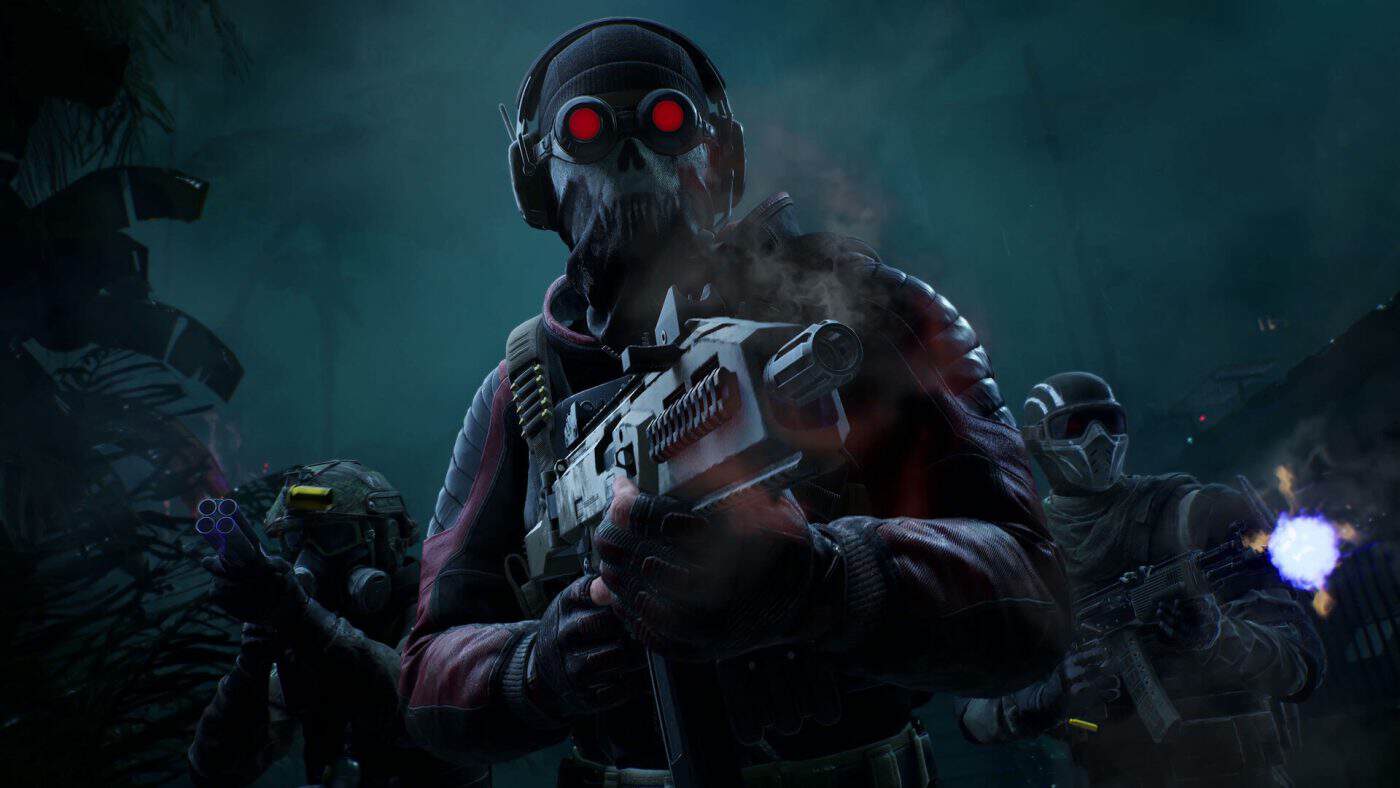
Back to the Horde
The Horde remains the beating heart of Killing Floor 3, and it is here that Tripwire Interactive’s formula feels most assured. At its best, the mode understands that surviving an overwhelming number of enemies is not simply a matter of having enough firepower. It is about controlling space, reading the battlefield, coordinating with teammates, and knowing when to hold a position – and when to abandon it before the situation becomes impossible to recover.
The premise is deliberately simple. Waves grow progressively more aggressive, forcing players to constantly reassess their surroundings, prioritize targets, manage their resources, and find the safest route through an increasingly hostile battlefield. What initially appears to be little more than an exercise in shooting everything that moves gradually becomes a game of positioning and pressure management. A strong defensive position can turn a seemingly impossible wave into a manageable encounter; remain there for too long, however, and that same position can quickly become a trap.
This is where the design of Killing Floor 3‘s maps becomes particularly important. They are not merely backdrops for combat, but spaces that encourage players to think about how enemies approach and where an escape route might remain available. Chokepoints can be exploited to control the flow of a horde, narrow passages can buy precious seconds, and open areas can provide room to maneuver when a defensive line begins to collapse. Learning these spaces – and understanding when their advantages become liabilities – is an important part of the experience.
There is genuine satisfaction in getting this right. When a team communicates effectively and everyone understands their role, the Horde can produce some remarkably tense and rewarding encounters. A chaotic firefight can suddenly become a carefully coordinated retreat; a seemingly lost position can be recovered through smart movement. These moments capture the appeal of Killing Floor at its best: controlled chaos in which cooperation is not merely encouraged, but essential to survival.
The difficulty is that the formula begins to reveal its limitations once the novelty wears off. For all the variety offered by its maps, weapons, and enemy encounters, the broader structure remains largely unchanged from one run to the next. Survive a wave, replenish and upgrade your equipment, then prepare for the next. The individual encounters can certainly vary in intensity, and the arsenal provides enough options to support different playstyles, but the underlying loop rarely develops in a meaningful way. What feels focused during the opening hours can gradually become predictable as the same rhythm repeats itself.
Playing with friends helps considerably. Human teammates introduce an element of unpredictability that the underlying systems cannot always provide on their own. Different approaches to positioning, resource management, and enemy prioritization can create emergent moments that make familiar encounters feel fresh again. Communication also gives the Horde a stronger sense of purpose: surviving is no longer simply about keeping yourself alive, but about maintaining the cohesion of the entire team.
Solo play exposes the limitations much more quickly.That distinction matters because Killing Floor 3 is unmistakably built around the idea of cooperation. The co-op foundation itself is sound, but the systems surrounding it do not always provide enough depth to make one run feel different from the next. Once players have learned the maps and settled into their preferred loadouts, much of the experience depends on how willing they are to engage with the same fundamental loop again and again.
And that is where Killing Floor 3 begins to feel less like an evolution and more like a refinement of something already familiar. The Horde is still capable of producing satisfying, occasionally thrilling firefights, but the game does not always give those encounters enough mechanical or structural variation to sustain that excitement over the long term.
The formula works. The problem is that, after enough waves, you begin to wonder how much more it has to offer.


A Strong Combat System With Some Rough Edges
Combat is arguably Killing Floor 3‘s most successful component. At its best, the game delivers shooting that feels immediate, controlled, and satisfyingly physical, particularly when using assault rifles and handguns. Weapons generally respond as expected, hits carry a convincing sense of impact, and accurate aim is consistently rewarded. There is a straightforward reliability to the gunplay that makes even the most familiar encounters enjoyable on a moment-to-moment basis.
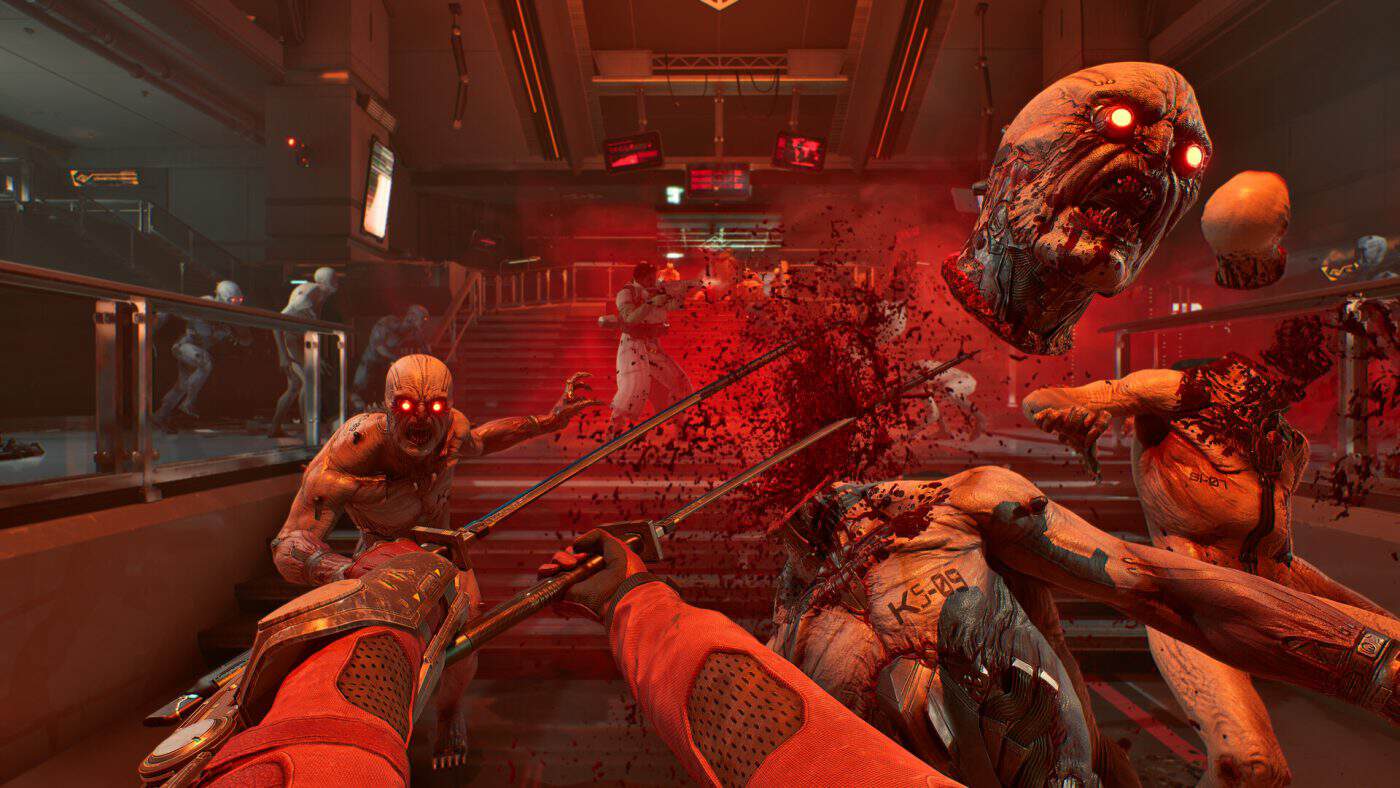
The localized damage system strengthens that foundation. Different body parts respond differently to incoming fire, giving players a reason to think about where they are placing their shots rather than simply aiming at the largest available target. Shooting an enemy in the legs can hinder its movement, while headshots provide a much more efficient way of eliminating priority threats. Dismemberment complements this system particularly well, making damage feel tangible while reinforcing the deliberately excessive brutality that has long been part of Killing Floor‘s identity.
The consistency does not extend across the entire arsenal, however. Some of the game’s more powerful weapons can feel unexpectedly awkward to handle once the pressure begins to build. Their theoretical firepower is impressive, but their effectiveness can become less reliable when the player is surrounded, forced to reposition, or attempting to deal with several threats simultaneously. Shotguns are the clearest example. They should be among the most dependable options at close range, yet their performance can feel surprisingly inconsistent, requiring more careful handling than their role would suggest.
That inconsistency becomes more apparent because Killing Floor 3 rarely gives players much reason to embrace close-quarters combat in the first place. Melee attacks have their uses, particularly when an enemy reaches the team unexpectedly or ammunition becomes scarce, but they never develop into a meaningful alternative to ranged weapons.
Enemies close the gap quickly, their attacks can inflict substantial damage, and the margin for error at close range is extremely narrow. Deliberately engaging a horde up close therefore tends to feel less like a viable combat strategy and more like a desperate response to a situation that has already gone wrong.
There is nothing inherently problematic about making melee dangerous. In a game built around surviving overwhelming numbers, keeping enemies at a distance is a perfectly logical part of the design. The issue is that Killing Floor 3 does little to reward players for taking the risk. There are few meaningful advantages to building a close-range playstyle when ranged combat is generally safer, more consistent, and better suited to controlling the battlefield.
That ultimately shapes the way most encounters are approached. The safest and most effective strategy is usually to maintain distance, exploit the geometry of the environment, control enemy movement, and eliminate threats before they can reach the group. When this works, the combat loop can be remarkably satisfying. There is a clear rhythm to identifying the most dangerous targets, managing the advancing horde, and keeping enough space between yourself and the enemy to survive another wave.
Yet that same clarity also reveals the system’s limitations. Killing Floor 3 offers a respectable range of weapons and combat options, but its balance does not always give those options equal weight. The gunplay itself is strong enough to carry the experience; what it lacks is the broader combat ecosystem that would make experimenting with different approaches feel genuinely worthwhile.
Resources, Risk, and the Difficulty Curve
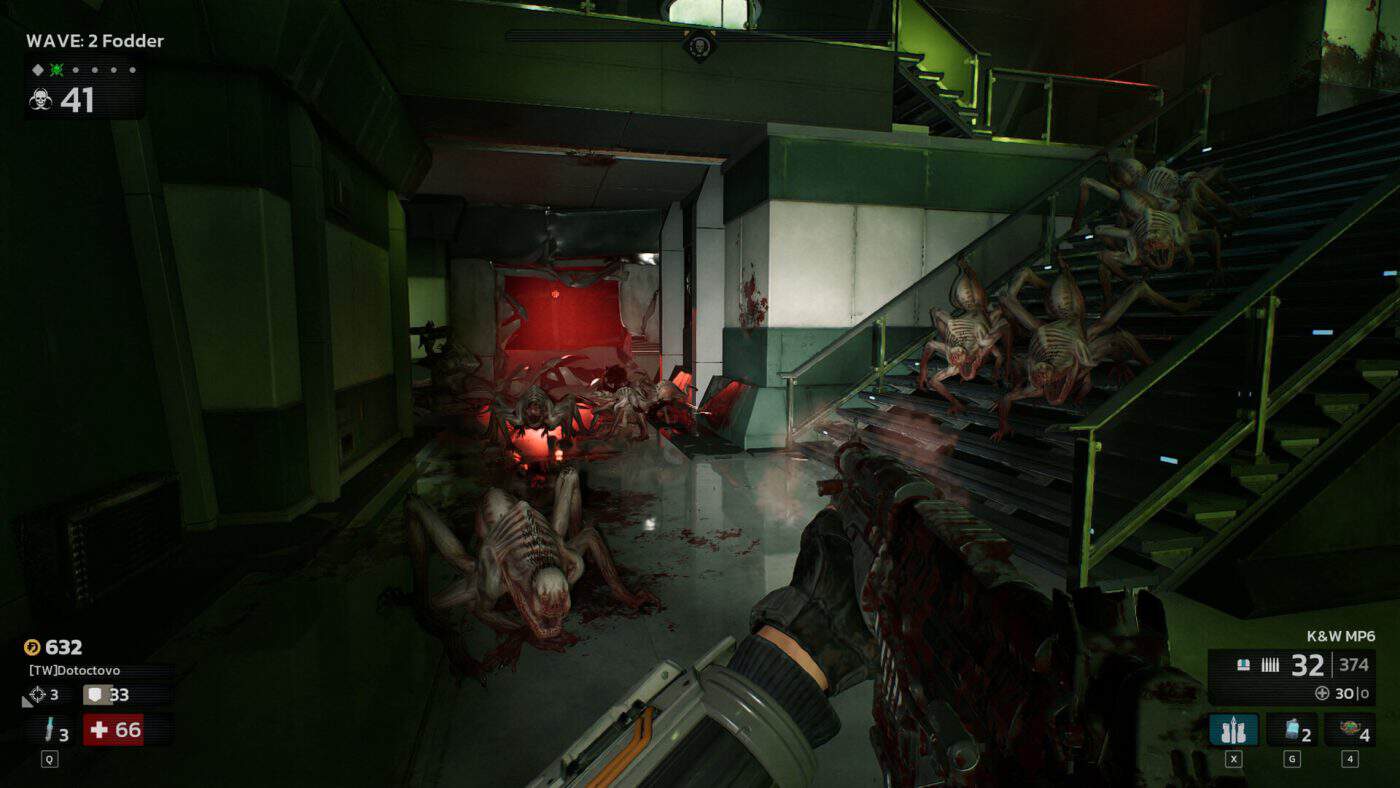
Resource management is one of the main sources of tension during Killing Floor 3‘s opening hours. Ammunition and healing supplies are deliberately limited, forcing players to think carefully about what they carry, what they spend, and whether a particular engagement is worth the cost. It is a sound idea in principle. Scarcity gives otherwise routine decisions greater consequence, discouraging players from simply holding down the trigger and expecting the next supply cache to solve every problem.
Every magazine matters. Every healing item carries a degree of opportunity cost. When resources are managed well, that pressure reinforces the game’s survival-oriented design and makes each wave feel like part of a larger battle for control.
The problem is that Killing Floor 3 does not always maintain that balance. As the number of enemies increases and encounters become more chaotic, resource consumption can escalate rapidly. Ammunition and healing supplies can disappear simply because the game is throwing too many threats at the player too quickly, rather than because the player has necessarily made poor decisions. What begins as an interesting exercise in restraint can therefore become frustratingly punitive, particularly when surviving an encounter requires spending resources at a rate that the surrounding environment does not consistently replenish.
There is a degree of adaptation involved. The longer you play, the better you become at reading the maps, recognizing enemy patterns, anticipating difficult encounters, and deciding when to conserve resources rather than commit to a fight. Experience can smooth over some of the system’s rougher edges, and players who learn the game’s rhythms will naturally become more efficient.
But that also exposes an important distinction: learning a system is not the same as fixing its balance. A skilled player can certainly mitigate many of Killing Floor 3‘s resource problems through familiarity and better decision-making.
There is, however, one aspect of the game’s difficulty that becomes considerably harder to explain away through experience alone – and it represents a far more significant problem for the overall balance of the experience.
No Room for Error
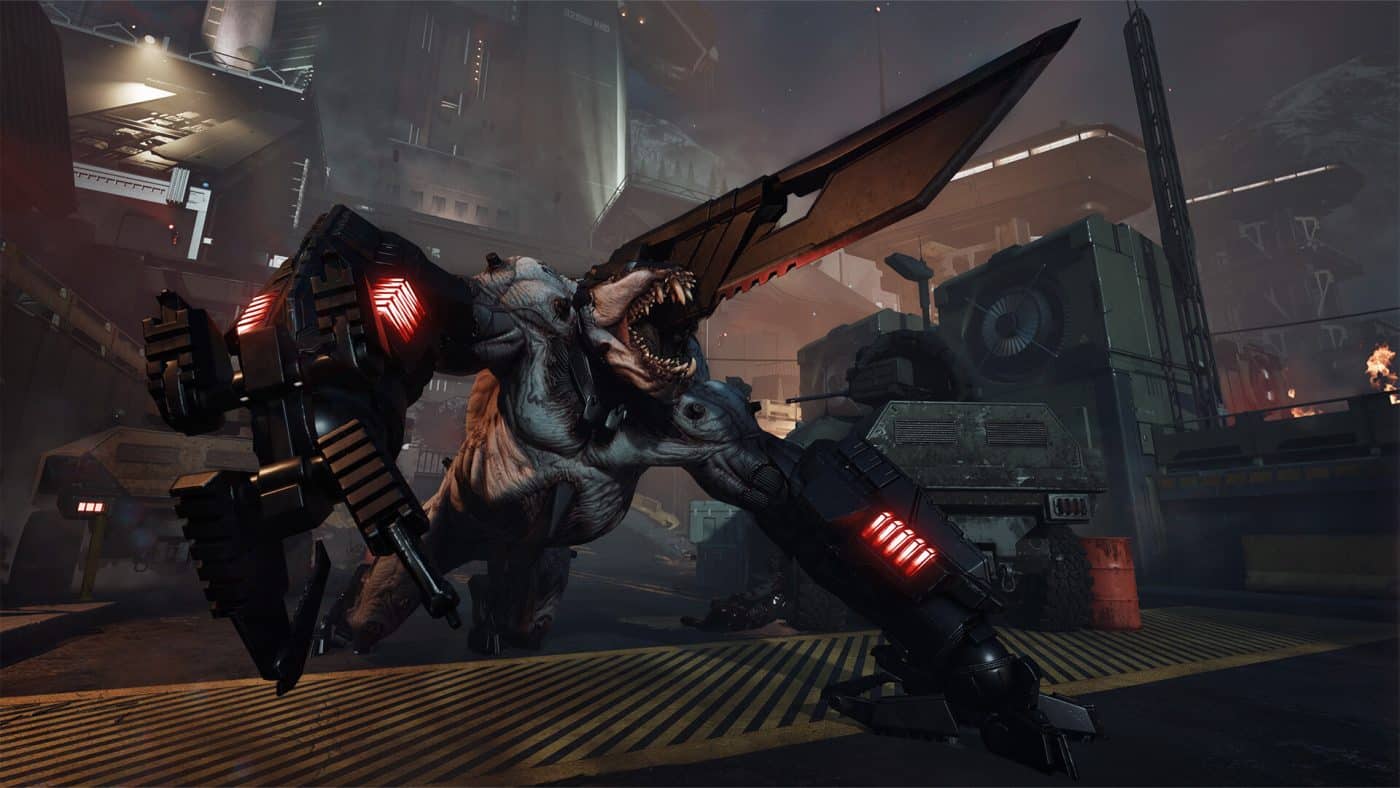
Boss encounters are, without question, one of Killing Floor 3‘s weakest areas. The intent behind them is clear. These fights are meant to serve as the crescendo of a session: larger enemies, more imposing arenas, greater spectacle, and a significant escalation from the regular waves. On paper, that is exactly what a horde shooter needs from its bosses.
The problem is that Killing Floor 3 too often confuses intensity with effective encounter design. The central issue is the disparity between the player’s mobility and the movement speed of certain bosses.
The player character is relatively limited in how quickly and consistently they can reposition, while some bosses are capable of crossing significant portions of an arena with remarkable speed. That imbalance becomes particularly punishing when combined with their high damage output, leaving players with very little room to recover once an encounter begins to spiral.
Crucially, this is not simply an issue reserved for the game’s highest difficulty settings. Even on Normal, some boss encounters can feel disproportionately punishing. Their pressure is so constant that the player is often given little opportunity to establish a rhythm, assess the battlefield, or execute a deliberate plan. Instead, survival becomes the primary objective.
Players are encouraged to keep moving, avoid incoming attacks, look for brief windows in which to deal damage, and reposition before the arena becomes completely compromised. At the same time, additional enemies can continue to enter the fight, further reducing the amount of space available and turning what should be a structured encounter into an increasingly frantic scramble for survival. There is certainly spectacle in that chaos. The problem is that spectacle is not the same thing as depth.
The strongest boss encounters in a game like Killing Floor 3 should force players to rethink the fundamentals they have relied upon throughout the preceding waves. They should reward positioning, communication, resource management, and an understanding of the boss’s behavior. Difficulty should emerge from the decisions the player is forced to make, rather than simply from how much pressure the game can apply simultaneously. Killing Floor 3 does not always make that distinction.
The underlying ambition is perfectly valid: bosses should feel dangerous, disruptive, and capable of turning a comfortable run into a desperate fight for survival. But the execution would have benefited from considerably more careful balancing, particularly in terms of movement speed, damage output, arena control, and the amount of breathing room available to the player.
More Options, Fewer Meaningful Choices
Equipment management could have been one of the systems capable of elevating Killing Floor 3 beyond the conventions of a traditional horde shooter. The game offers a sizeable arsenal, alongside a broad selection of modifications, upgrades, and gear, designed to give players greater freedom in shaping their loadouts and experimenting with different approaches to combat.
Yet the sheer breadth of the system often works against it. Between waves, players are confronted with a substantial catalogue of weapons, modifications, equipment, and upgrades. The intention is understandable: progression should provide a reason to keep playing, unlock new possibilities, revisit missions, and gradually refine a preferred loadout. In theory, this creates a satisfying long-term loop in which experimentation becomes part of mastering the game.
The problem is that Killing Floor 3 occasionally confuses quantity with depth. A more focused arsenal could have produced a far more meaningful progression system. With fewer weapons, but clearer distinctions between their roles, strengths, and tactical applications, each new acquisition could have carried greater significance.
Instead, the sheer number of options can make the loadout process feel more cumbersome than strategic, particularly when several weapons offer relatively incremental differences rather than fundamentally altering how an encounter is approached.
There is also an underlying sense that the progression system has been structured to extend engagement as much as to deepen the experience. Unlocking new equipment provides a reason to return, but the constant pursuit of additional options can gradually turn progression into a grind in its own right. The player is frequently given something new to work toward, without that reward necessarily feeling transformative. This is the central contradiction at the heart of Killing Floor 3‘s arsenal: it offers an impressive amount of choice, but not always enough reason to care about those choices.
A more disciplined approach could have made the entire system clearer, more purposeful, and ultimately more rewarding. Instead, the arsenal often feels like a catalogue designed to sustain the loop rather than a collection designed to deepen it.
A Visual Identity at Odds With Itself
The game’s visual presentation also becomes less convincing when it comes to the way equipment and progression are presented. The interface adopts an intentionally aggressive visual language, making extensive use of purple accents, oversized graphic elements, and layers of information that constantly compete for the player’s attention.
The problem is not the choice of purple itself. Color can be an effective tool for establishing hierarchy and communicating function, particularly in a game built around weapons, upgrades, and constant preparation between waves. The issue is that Killing Floor 3 often uses these elements with too little restraint. Menus can become visually busy, with weapons, upgrades, statistics, and other information competing for prominence rather than being organized into a clear and intuitive hierarchy.
That approach is particularly noticeable during loadout management, where the sheer amount of visual information can make the process feel more cumbersome than it needs to be. What should be a straightforward opportunity to prepare for the next wave can instead become an exercise in navigating a presentation that seems determined to make every available option feel equally important.
The equipment itself suffers from a similar lack of restraint. Several armor designs lean heavily into a familiar futuristic military aesthetic, drawing on visual language that has become increasingly common across contemporary action games. There is nothing inherently wrong with taking inspiration from established genre conventions, but Killing Floor 3 rarely pushes those influences far enough to transform them into something that feels unmistakably its own.
The result is a visual identity that is certainly distinctive in places, but not always cohesive. The game frequently wants to be loud, immediately recognizable, and visually striking, yet that ambition can come at the expense of originality. A more disciplined approach to both interface design and equipment aesthetics could have given Killing Floor 3 a much stronger visual voice.
Killing Floor 3’s Biggest Missed Opportunity
This is where Killing Floor 3‘s most significant weakness becomes impossible to ignore. The game is full of ideas that, on paper, could have expanded its identity well beyond the traditional horde-shooter framework. Yet again and again, those ideas are introduced without being developed to their full potential. Nowhere is that gap more apparent than in the game’s single-player offering. Killing Floor 3 can be played solo, but there is no dedicated single-player campaign in the conventional sense.
Instead, the experience largely retains the same structure built around multiplayer: players move through the game’s maps, confront successive waves of enemies, upgrade their equipment, and repeat the cycle. The systems function as intended, but the solo experience rarely feels as though it has been designed to offer something distinct.
That is understandable from a purely structural perspective. Killing Floor has always been fundamentally rooted in cooperative survival, and there is no reason the series should suddenly attempt to become a conventional story-driven shooter. But in the context of Killing Floor 3, the decision feels like a particularly significant missed opportunity.
The game did not need a sprawling twenty- or thirty-hour campaign. It did not even need to abandon the mechanics that make the series what it is. A short, tightly authored single-player experience could have been enough – a focused few hours capable of introducing players to the setting, establishing its characters and conflicts, and giving the environments a stronger narrative purpose before opening the door to the long-term cooperative loop.
That distinction matters. A dedicated campaign could have transformed Killing Floor 3‘s maps from functional combat arenas into places with context and narrative purpose. It could have introduced players to the game’s world at a deliberate pace, established the stakes behind its conflict, and given its grotesque blend of horror and science fiction a stronger sense of identity and cohesion.
Instead, the solo experience largely feels like the multiplayer framework with the social dimension removed. It is functional, and there is nothing inherently wrong with playing through the Horde alone, but it does little to reveal what Killing Floor 3 could have achieved if its world had been treated as more than a backdrop for the next wave of enemies. And that is ultimately the frustrating part. The game already has many of the ingredients required to tell a compelling story. It simply never brings them together.
Restraint Over Spectacle
Technically, Killing Floor 3 is a notably restrained production. It does not attempt to distinguish itself through cutting-edge visuals, photorealistic rendering, or an especially ambitious use of hardware. That may sound like a limitation on paper, but in the context of a game built around large-scale horde encounters, it is arguably the right priority.
A horde shooter places very different demands on its technology. When dozens of enemies are occupying the screen at once, with explosions, muzzle flashes, particle effects, dismemberment, blood, and projectiles all competing for attention, maintaining consistent performance becomes far more important than adding another layer of graphical detail. The action needs to remain responsive and, crucially, readable even when the battlefield descends into chaos.
On Xbox Series S, Killing Floor 3 handles those demands with a commendable degree of consistency. Performance remains largely stable, with a generally smooth and responsive feel even when encounters become especially crowded. At its most chaotic, the sheer amount of activity on screen can occasionally compromise visual clarity, but this is primarily a consequence of the game’s encounter design rather than a significant technical shortcoming.
The visuals themselves are perfectly competent. Environments offer enough detail to establish their character, weapons and enemy models are suitably elaborate, and the various effects provide the expected weight and spectacle during combat.
What they do not provide is a genuine technical showcase. Killing Floor 3 is unlikely to leave a lasting impression because of its rendering technology alone. That, ultimately, is not where the game needs to succeed.
For a shooter whose entire structure revolves around rapid target acquisition, positioning, reaction time, and maintaining control while the battlefield is overwhelmed by enemies, consistency is considerably more valuable than visual excess. Killing Floor 3 understands that distinction. Its presentation may be technically modest, but the decision to prioritize stability and gameplay readability over spectacle is one of the more sensible choices in its overall design.
The Final Verdict
Killing Floor 3 is not a bad game. Far from it. To dismiss it as such would overlook what it gets right. At its best, it is an enjoyable and often satisfying cooperative shooter, particularly when experienced as intended: with friends, alongside a coordinated team capable of communicating, adapting, and making the most of the tools at its disposal.
The problem is that moment-to-moment enjoyment can only carry a game so far, especially when its entire structure is built around long-term replayability. The repetition becomes apparent sooner than it should.
The expansive arsenal can make progression feel unnecessarily cluttered rather than meaningfully deeper. Resource management occasionally crosses the line from tension into frustration. And, more importantly, there is little beyond the core loop to give the experience a stronger sense of direction or purpose. That ultimately leaves Killing Floor 3 in an awkward position.
It is a good game, but it is not the evolution the series could – and arguably should – have delivered. The fundamental formula remains effective. The shooting works. The Horde encounters can still generate genuine excitement, particularly when a well-coordinated team manages to survive an increasingly chaotic battlefield.
But too much of the sequel feels content with refining what already existed rather than asking what could come next. Its systems are expanded without always becoming deeper, its world is established without being meaningfully explored, and its ideas are introduced without consistently being given the space to develop. That is what makes Killing Floor 3 so frustrating. Its greatest weakness is not a lack of ideas, but a lack of follow-through. The potential for something broader, richer, and more distinctive is clearly visible throughout the experience, yet the game repeatedly stops short of realizing it.
There is a genuinely compelling version of Killing Floor 3 hidden within the one we have been given. The foundations are strong, the formula remains fun, and the ingredients for a more ambitious sequel are all present. What is missing is the final step – the willingness to push beyond refinement and into genuine evolution. And for a sequel with this much potential, that is the real disappointment.
 7/10
7/10