
They could have done more – and should have.

Halo: Campaign Evolved carries a responsibility few video games can afford to take on: reworking one of the titles that helped define an entire console generation and, more broadly, set new standards for first-person shooter development. Remaking Halo: Combat Evolved doesn’t simply mean updating textures, lighting, and polygon models. It means facing a work that, decades later, still earns study for the quality of its level design, for the balance of its sandbox, and for its ability to turn a seemingly simple arsenal into an extremely readable and deep game system.
That’s exactly why Campaign Evolved is a project as fascinating as it is problematic. On one hand, the reconstruction work stands out clearly. Modern technology reimagines Installation 04, the direction pushes for a more pronounced cinematic spectacle, and some of the saga’s most iconic settings gain a scale the original game, naturally, could never have reached. On the other hand, though, problems surface that have nothing to do with technology and everything to do with design philosophy. The new Halo seems to know the look of Combat Evolved very well.
The remake understands far less convincingly what made it Combat Evolved. And that’s a fundamental difference. Because when a team decides to remake a classic, the question shouldn’t only be “how can we make it more modern?”, but above all “which elements must we absolutely not lose?”
Campaign Evolved doesn’t always find a convincing answer to that second question.
Halo isn’t just an FPS
To fully understand the remake’s strengths and limits, you have to start from the original work. Halo: Combat Evolved didn’t become a historical touchstone simply because it was a well-made shooter. Its importance comes from Bungie’s ability to build a system in which every component seemed to exist to support the others.
The gunplay, for example, didn’t rest solely on precision. It rested on perception. Every weapon had a distinct character. The Magnum carried an immediately recognizable weight and brutality. The assault rifle, with its iconic 60-round magazine and generous ammo reserve, offered a completely different tool. The shotgun turned distance into a critical variable, while Covenant weapons introduced an entirely different grammar, built on distinct energy properties, fire rates, and uses.
Players didn’t just pick up weapons. They learned to understand them. That distinction sits at the core of the game. The Combat Evolved system worked because every weapon shaped decisions. Switching weapons meant switching approach. Choosing when to throw a grenade or when to try taking down an Elite carried real consequences for how a fight played out.
On top of that came the health and shield system. Shield recharge wasn’t just a convenience for the player. It was an element around which Bungie built the rhythm of the entire combat loop. Players could absorb a certain amount of damage, but once the shield dropped, they had to change their behavior, find cover, and carefully weigh whether taking a risk made sense. It was a simple system. But not simplistic at all.

Bungie’s sandbox
The Combat Evolved revolution emerged, though, once all these elements came together. Covenant enemies weren’t simply different models with different stats. They were different functions on the battlefield.
The Elites posed a mobile, aggressive threat, capable of exploiting their shields and shifting behavior on the fly. The Grunts added numbers and unpredictability to encounters, sometimes even fleeing in a panic. The Jackals forced players to watch their sightlines and their positioning.
It was a system that let the same arena generate different situations each time. That’s one of the reasons Halo never needed to build overly complex fights. Complexity emerged from the interaction between simple systems. And then there were the Marines. By today’s technical standards, they’re inevitably limited too. But within the original context, they delivered something extremely important: unpredictability.
They could mess up. Enemies could overwhelm them. They could catch you off guard. They could survive a situation that looked hopeless, or die in the most absurd way possible. That imperfection made the battlefield feel credible.
And that’s exactly one of the things the remake struggles most to recreate.
The Warthog as a design philosophy
The Warthog is perhaps the clearest example of Bungie’s philosophy. It wasn’t just a vehicle. It was an extension of the level design. The wide-open outdoor areas of Halo and The Silent Cartographer let players move through spaces large enough to invite different approaches, but never so large that they lost meaning.
The driver, passenger, and gunner positions also brought a cooperative dimension into the single-player campaign. The vehicle could become a weapon. An escape route. A mobile platform. And, above all, a constant source of emergent moments. Players didn’t have to follow a single solution. They had to read the level.
That’s the word Campaign Evolved seems to forget far too often: interpretation.
The new missions in Campaign Evolved
The idea of expanding Combat Evolved with new missions was, in theory, excellent. In fact, it was probably the most interesting direction the project could have taken. An extra campaign could have retold the events of Installation 04 from another perspective, explored areas never seen before, dug deeper into the UNSC-Covenant conflict, or built a more organic narrative bridge toward Halo 2. It could have been the ideal proving ground for the new team’s ability to write original material without disrupting the structure of the historic game.
Instead, the result is a mini-campaign that rarely manages to justify its own existence. The three missions carry the weight of an extremely linear structure, a progression that tends to repeat itself, and a freedom of approach well below what the original campaign’s best sections offered. The problem isn’t linearity itself.
Combat Evolved has plenty of linear sections. The problem is the absence of possibility within that linearity. A good linear level can still offer several solutions. Here, though, the path frequently feels predetermined. You advance, you fight, you clear enemies, you cross another corridor, you fight again. The structure becomes predictable. And predictability hurts especially hard in a game that’s supposed to build its identity on its sandbox.

When the enemy becomes just a bag of hit points
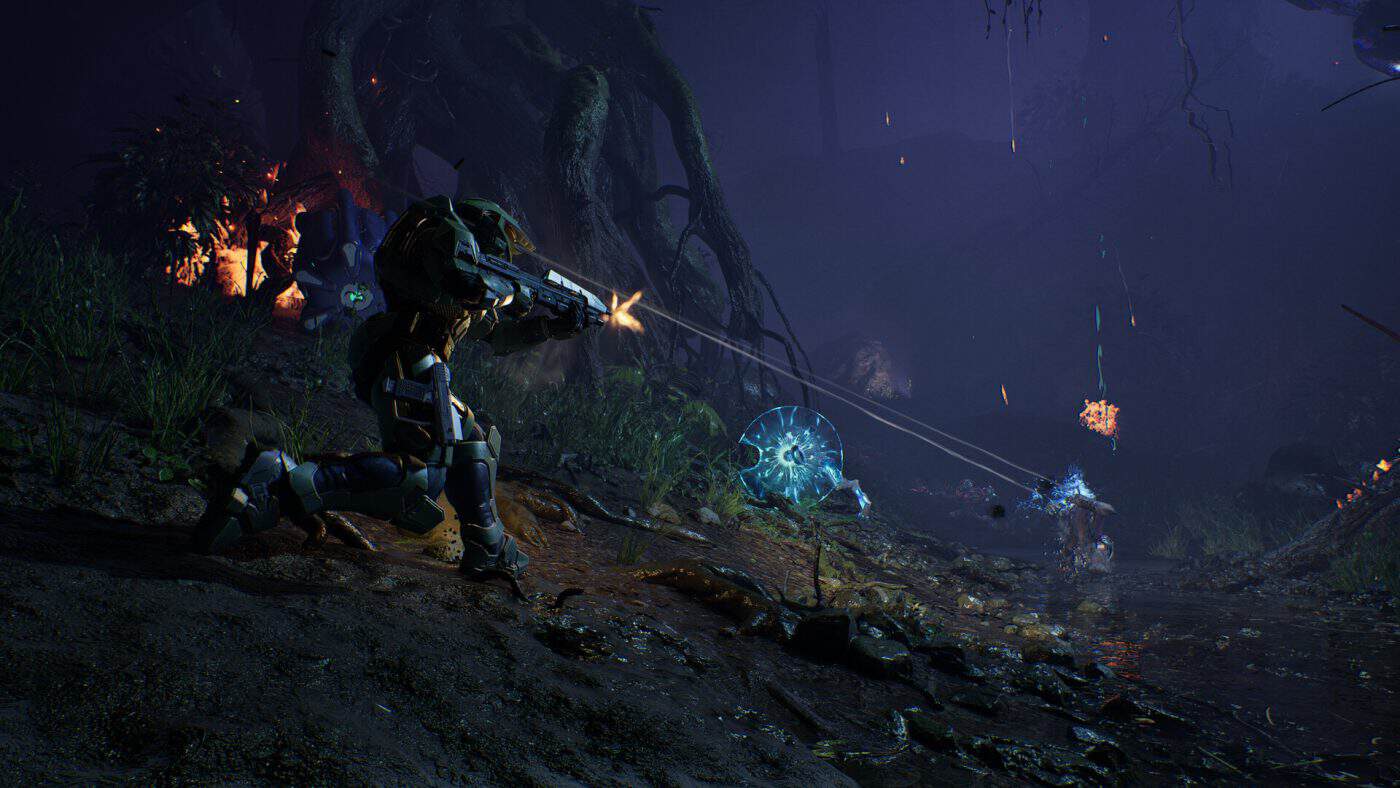
The Brutes make the problem even more obvious. Their introduction into the saga helped reshape the grammar of combat, especially in later entries. In Campaign Evolved, though, their most obvious trait is often sheer durability. The “bullet sponge” complaint isn’t just a gripe about balance. It’s a problem of encounter design. A tough enemy should force players to think. It should raise a question.
“Which weapon should I use?” “How do I isolate it from the others?” “Should I use the environment?” “Is retreating the smarter move?” When the answer to all these questions boils down to “keep shooting,” the system loses depth. The fight drags on longer, but it doesn’t necessarily get better. And that’s exactly what happens far too often.
Johnson, one of the few remaining links to the original identity
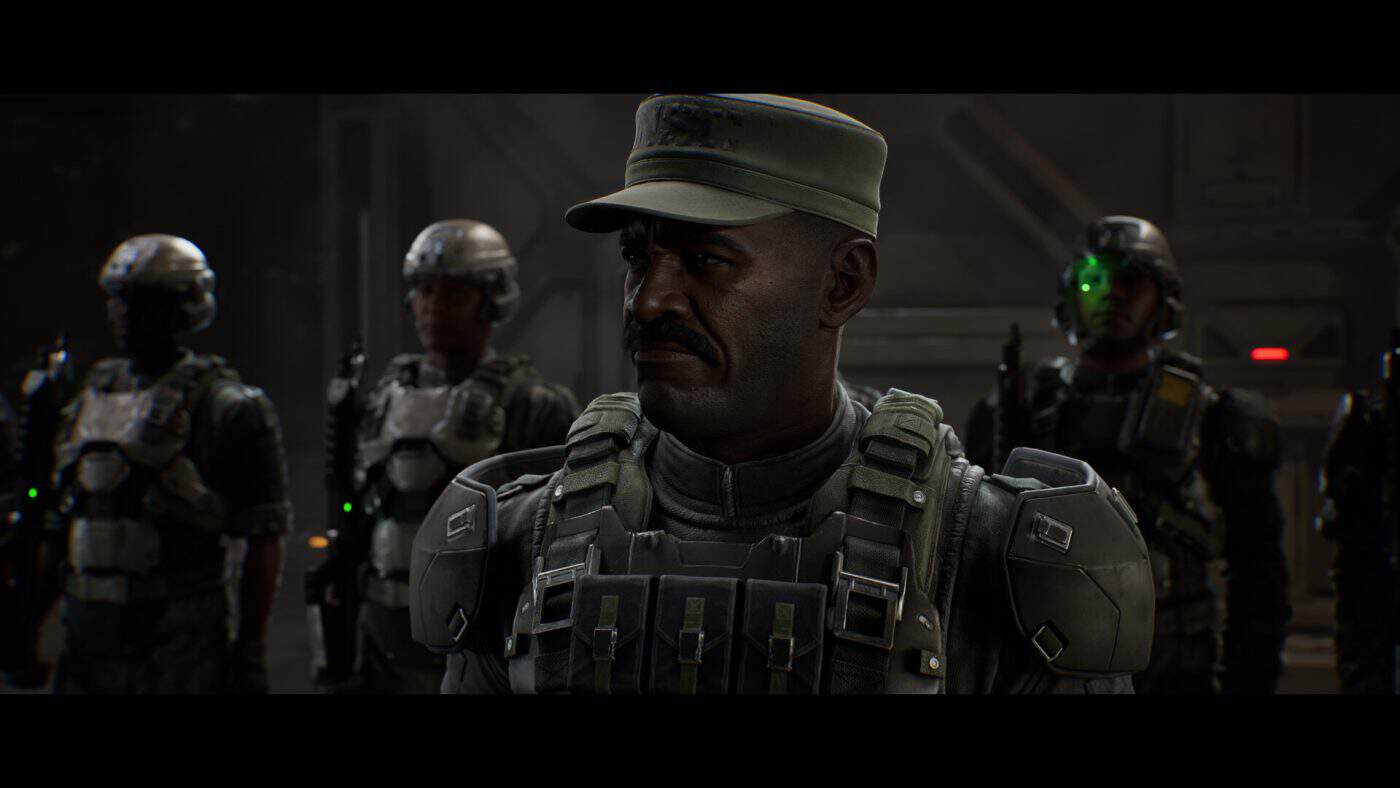
Johnson should have carried one of the narrative pillars of the new campaign. And, at least in terms of screen presence, he does. The character keeps that combination of authority, irony, and familiarity that made him one of the series’ most recognizable figures. The problem shows up once the narrative has to translate into gameplay.
Johnson’s AI is surprisingly unconvincing. His behavior in combat doesn’t give you the feeling of having a soldier beside you who actually reads the battlefield.
That’s especially frustrating because technology should have counted as one of the remake’s biggest advantages. After more than twenty years, you’d expect an AI-controlled companion to offer a more dynamic presence than the Marines of 2001. Instead, more than once, the opposite happens.
Williams and a new protagonist who leaves no mark
Williams could have been a valuable character. An ODST dropped into a story set during the events of Combat Evolved lets the writers shift perspective without necessarily altering the franchise’s identity.
But weak writing holds the character back, making her more declarative than genuinely developed. Her lines frequently try to tell the player who she is, instead of letting behavior define her.
It’s a subtle distinction, but an important one. Halo’s best characters don’t need to keep explaining who they are. They build their identity through dialogue, actions, silences, and interactions. Williams, on the other hand, struggles to find a real voice of her own. And missions that give her too little room to grow only make the problem worse.

An interface that falls far short of convincing
One of the remake’s most significant mistakes is also one of its least visible: the interface. Campaign Evolved seems to feel a constant need to inform the player. Where to go. Where the threat is. Which direction to take.
The result is an experience where players continuously receive information that the original instead asked them to gather from the environment. That changes the relationship with the level design. In Combat Evolved, part of the enjoyment came from finding your own bearings. Players learned to read spaces. They recognized structures. They interpreted the terrain. They listened for sounds. They watched how enemies moved. Campaign Evolved makes all of that less necessary. And when a remake makes observing your surroundings less necessary, it inevitably weakens the level design too.
The gunplay: when fidelity comes down to feel
The hardest problem to explain, but also one of the most important, concerns the gunplay. The Magnum hits hard again, and that choice brings back at least part of one of the original’s most iconic traits.
But raw power isn’t enough. Halo‘s gunplay was also a matter of feel. The sound of the shot. The target’s reaction. The recoil. The animation. The speed at which players registered the impact. All these elements built an immediate sensory response. In Campaign Evolved the result feels more modern, but not necessarily more satisfying.
And this is one of the project’s most interesting paradoxes. The remake runs on vastly superior technology, yet it doesn’t always manage to reproduce the physical sensation Bungie achieved with far more limited tools. It proves that feel doesn’t depend on technology. It depends on design.
A structural change that shifts the identity of combat
The survival system also drifts away from the original’s philosophy. Combat Evolved built part of its rhythm around managing health and shields. Players had to distinguish between absorbed damage and damage they’d actually taken.
Losing the shield changed the situation. Medkits turned health into a resource to manage carefully. Campaign Evolved opts for a structure closer to the series’ later tradition, with a recovery system that lightens the weight of resource management. It’s a more immediate solution. But also a less distinctive one. And once again, the fundamental question returns: are we truly modernizing Combat Evolved, or are we turning it into another Halo?

The Silent Cartographer: when the remake finally clicks
It’s almost ironic that the most effective mission is one of the original’s most famous. The Silent Cartographer shows what Campaign Evolved can become once it stops trying to steer the player and simply gives them room.
The beach. The valleys. The buildings. The Warthog. The range of movement. The scale of the environments. Everything comes together to recreate a feeling that belongs immediately to Halo. And this is exactly where modern technology finds its purpose.
Unreal Engine 5 isn’t just there to make the textures prettier. It rebuilds the scale. It deepens the environments. It adds density to the settings. It creates vistas capable of conveying the sheer size of Installation 04.
For stretches, the result is genuinely striking. The same holds for the Warthog section of the Halo mission. The vehicle keeps part of its magic. Driving through open spaces still feels great. The terrain becomes a variable. Players can choose their own line. Combat turns systemic again.
This is where the remake suddenly remembers why the first Halo mattered so much.
But the Warthog loses something too
Even here, though, significant differences emerge. The Marines show up with less personality. They talk less. They react less. They interact less. The gunner, meanwhile, feels overly accurate. Every shot seems to land with an almost artificial consistency. His ability to survive fights is also unusually high.
From a purely functional standpoint, the system works. But once again, it lacks the unpredictability that made the original so memorable. In the 2001 Combat Evolved, a Warthog ride could turn into anything. A bad jump. A Marine losing control. An enemy catching the group off guard. These were small events that built stories. And those emergent stories are exactly what Campaign Evolved struggles to generate.
Performance and stability
The technical side isn’t the game’s biggest problem, but it’s not a completely negligible one either. Overall stability holds up reasonably well and load times stay quick enough. A few frame-rate drops persist, though, especially when missions start and during specific high-complexity moments. Hardware load can also spike on certain levels, driving fan noise up. These issues don’t ruin the experience, but they’re hard to overlook in a production of this scale. And this is where one last missed opportunity comes into view.
The remake could have turned some of the original’s small quirks into genuine tributes to the saga’s history. The Marines who accidentally fell off the bridge during testing, for instance, could have become a small treat for longtime fans. Instead of simply fixing the imperfection, the team could have celebrated it. Because the memory of a video game doesn’t come only from its best sequences. It also comes from its accidents.
The core problem: a remake can modernize without losing itself
And this is exactly where one of Halo: Campaign Evolved‘s biggest weaknesses comes into play. The problem isn’t change itself. A remake has to change. Technology differs. Audience expectations differ. Accessibility needs differ. Even the way people design an FPS has changed. But reworking a piece of art necessarily means choosing what to preserve.
And a remake’s value often hinges on the ability to tell apart what belongs to the surface and what belongs to the structure. The surface of Combat Evolved consists of textures, models, animations, and settings. The structure consists of pacing, shooting, sandbox, AI, resource management, level design, and freedom.
Campaign Evolved excels mostly on the surface. The problems start with the structure. And that makes the project particularly frustrating. Because when it works, it proves it has everything it needs to be a great remake. When it fails, though, it fails exactly where it shouldn’t have let itself.
The final verdict
Halo: Campaign Evolved is an ambitious, technically interesting project, capable of delivering some genuinely high-level moments visually. But it’s also a remake that seems to have spent more time asking how to make Halo than asking what made Halo modern back in 2001. That difference matters enormously.
Combat Evolved wasn’t a masterpiece because it had a complex system. It was a masterpiece because its systems talked to each other. The gunplay talked to the AI. The AI talked to the level design. The level design talked to the vehicles. The vehicles talked to the sandbox. The sandbox talked to the campaign’s pacing.
Everything revolved around one idea: give players simple tools and let them generate complex situations. Campaign Evolved breaks that chain far too often. The shooting feels less satisfying. Enemies are frequently tougher rather than more interesting. The companion AI doesn’t convince. The new campaign leaves little room for experimentation. The interface talks too much. And the voice acting doesn’t fully recapture the vocal personality of the classic characters. Yet despite all that, calling the project a complete failure would be unfair.
When Campaign Evolved opens up its sandbox, its potential shows through. The Silent Cartographer stands as concrete proof of what the remake could have been. The Warthog section of the Halo mission works. The direction often shines. The cutscenes show off high-level production values. These elements keep the game from collapsing completely.
But they’re not enough. Because the job of a Combat Evolved remake isn’t simply to produce a prettier version of the game. It’s to remind players why that game became a classic. And Campaign Evolved doesn’t always manage that. Its biggest contradiction, then, is also its biggest weakness: it evolved the technology but didn’t always preserve the philosophy. It’s not a disaster. It’s not without merit either.
It’s something more frustrating than that: a project that clearly has the tools to celebrate Halo, yet can’t quite wield them with the precision Bungie brought to the original. The result is an experience that can impress you with a single image, a cutscene, or a vista, but rarely manages to recreate that feeling of standing inside a living system, where every choice you make can reshape how a fight unfolds. And when you pick up the remake of one of the most influential FPS games in history, that feeling is exactly what should stay untouchable.
 6.5/10