
In short
Castlevania: Belmont’s Curse, the action Metroidvania developed by Evil Empire under Konami’s supervision for the series’ fortieth anniversary, convinces above all thanks to level design of great quality, a fast and responsive combat system, and a tarot and Arcana system that renews without betraying the saga’s legacy. Daniel ASADI’s soundtrack and an RPG component slimmer than Symphony of the Night remain the weakest points, but the return to Paris in 1499 with Rose Belmont proves a convincing chapter, capable of building an identity of its own.
Castlevania returns to its origins with a new 2D Metroidvania action game developed by Evil Empire under Konami’s supervision. A chapter that takes up the legacy of one of the most important sagas in video game history, seeking to renew its spirit without betraying its identity.
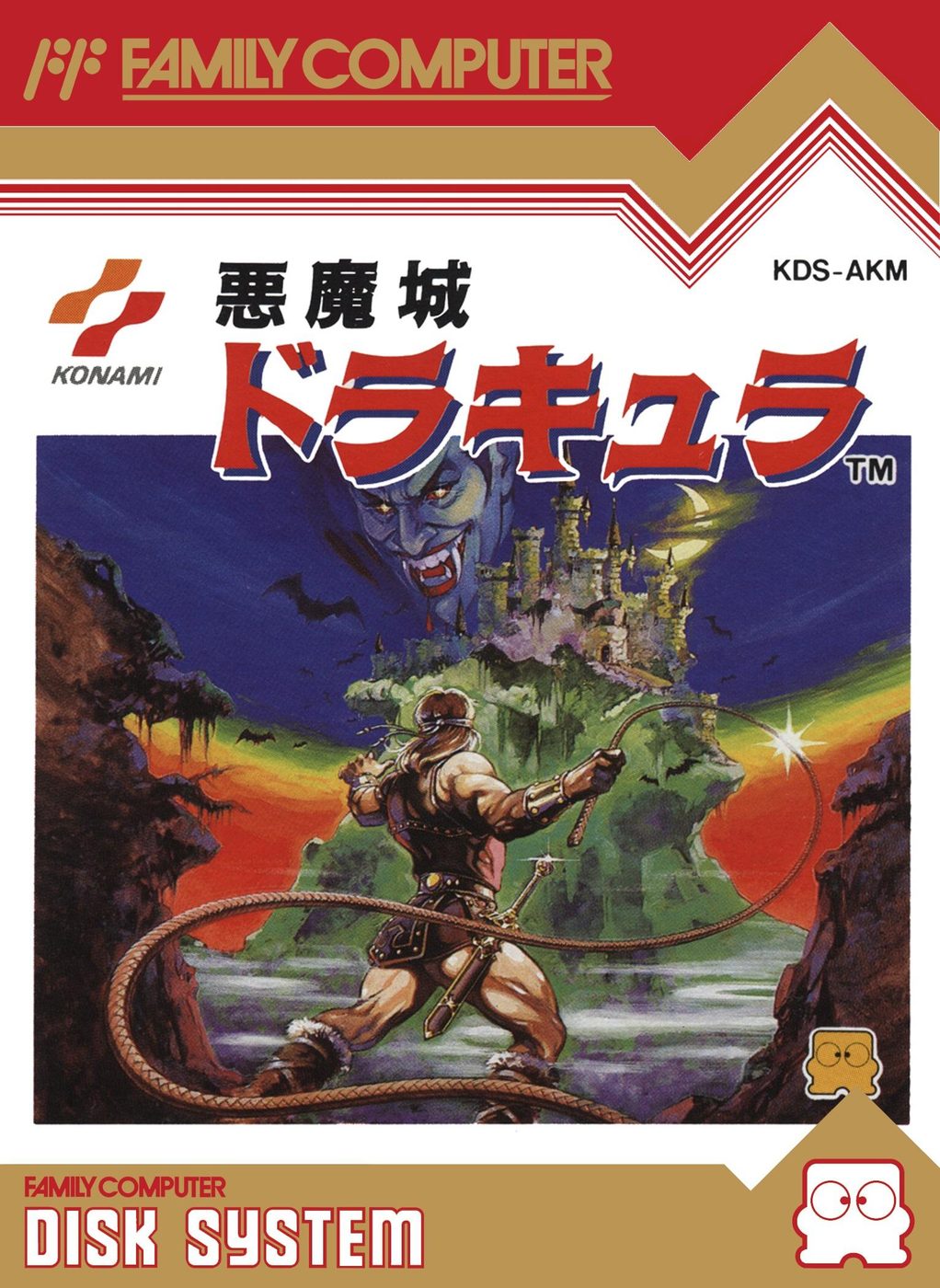
It was September 26, 1986 when Konami released Akumajō Dracula in Japan, the first chapter of a saga destined to leave an indelible mark on video game history. Initially released on the Famicom Disk System, the game later arrived in the West between 1987 and 1988, under the name everyone knows: Castlevania.
Over the years, the saga evolved, experimented with new solutions, and reached one of its highest points with Castlevania: Symphony of the Night. A title that made, and still makes, a lasting impression, becoming a reference point for anyone attempting to create a Metroidvania.
Right in 2026, for the series’ fortieth anniversary, a new chapter arrives that once again sees the Belmont family ready to face the threat of Dracula. Castlevania: Belmont’s Curse attempts to carry forward the legacy of the saga and its protagonists. It is easy to imagine how challenging it can be to confront such a legacy: a milestone beloved by generations of gamers, inevitably quick to compare the new chapter with its predecessors and to question any potential weakness.
Under Evil Empire’s development, has Castlevania: Belmont’s Curse managed to gather and handle such a heavy legacy?
Let’s start by saying that Castlevania: Belmont’s Curse cannot and should not be directly compared to Symphony of the Night. Not because it would come out defeated, but because Evil Empire’s work represents a conscious synthesis of the saga’s strengths, which takes some interpretive liberties and adopts different solutions, some excellent, others less successful.

Let’s take a look at it together.
The Story Continues
Set in Paris in 1499, twenty-three years after the events of Castlevania III: Dracula’s Curse, Castlevania: Belmont’s Curse takes us to a city plunged into chaos. Demonic creatures have set the French capital ablaze, leaving it on its last legs. To face this new threat, Trevor Belmont, the hero who managed to defeat Dracula, answers the Bishop of Paris’s call for help and sets off with his daughter Rose.
It is precisely Rose who becomes the protagonist of the adventure. Daughter of Trevor and Sypha Belnades, Rose grew up following in her parents’ footsteps and preparing to take up the Belmont family legacy. Unfortunately, this legacy also manifests itself in the tragic fate of her mother, who died because of Dracula’s curse. The same curse continues to manifest itself in the young hunter’s right arm, as a warning of her destiny.
Together with the tarot cards, the last legacy left by her mother, Rose prepares to shed light on the tragedy that struck the French capital. Behind the attacks probably hides a dark conspiracy, tied to the return of the forces Trevor once defeated.


Aesthetics and Music
This is one of the most heavily debated aspects when discussing Castlevania: Belmont’s Curse. The visual style and soundtrack are, for obvious reasons, divisive elements of the work, on which in reality no one can be entirely right. Aesthetic taste is not an absolute, objective value, nor can it alone compromise the quality of a work. At the same time, we have every right to criticize an art direction on its merits. And I will try to do so in this review.
It should be noted that during the game I experienced minor freezes and occasional stutters. Nothing that compromises the experience, though I understand the annoyance it can cause. The animations are also smooth, and the feel of the hits and the speed is convincing.
The soundtrack, on the other hand, shows several weaknesses, partly due to the chosen stylistic approach. In my opinion, the compositional style is rather weak when paired with the aesthetic framework of Castlevania: Belmont’s Curse. The choice to lean on electronics has less impact in certain moments. In my opinion, deviating from the old conventions did not pay off this time as much as the aesthetic choice did. Unfortunately, it fails to do justice to some well-crafted boss fights, risking to feel like a loop that goes nowhere.
The Aesthetics and Visual Impact
The aesthetic imprint given to the title is very strong and, in a sense, bold. One of the aspects that helped make Castlevania: Symphony of the Night a series landmark is undoubtedly its artistic identity: a highly alluring gothic imagery, with dark settings and creatures inspired by classic horror. The castle is a key element of the narrative, a living entity that acts directly during the adventure. Symphony of the Night relies on pixel art and Ayami Kojima’s illustrations, giving life to a noble and decadent, almost mannerist imagery that recalls the horror of bygone days. An artistic choice that, despite the limits of its era, has aged remarkably well.
Evil Empire abandons traditional pixel art in favor of a style that combines two-dimensional and three-dimensional elements. The result is a more modern visual design, characterized by detailed backgrounds, vivid colors, and a greater sense of depth in the environments. The character design also recalls, at least in part, that of the Netflix animated series, especially as far as animations and the rendering of the protagonists are concerned. Evocative and well-crafted moments are not lacking, still evoking part of the Castlevania stylistic legacy. The choice helps give Belmont’s Curse an identity of its own, while moving away from the gothic, more traditional elegance of Symphony of the Night.
Music and Soundtrack
The soundtrack of Symphony of the Night, composed by Michiru Yamane, still stands today as one of the highest points of Konami’s entire output. Her music contributed significantly to defining the game’s identity. There are pieces capable of accompanying exploration of the castle with melodies that alternate more melancholic moments with decidedly more driving ones.
For Belmont’s Curse, however, the soundtrack was entrusted to Daniel ASADI, previously the composer of The Rogue Prince of Persia. The composer chooses not to simply reprise the sounds of earlier chapters, instead seeking to offering his own interpretation of the saga’s musical identity.
The difference between the two approaches is fairly obvious. Where in Symphony of the Night Yamane’s compositions managed to leave their mark thanks to particularly recognizable melodies, in Belmont’s Curse the stylistic and compositional choice sometimes does not work and struggles to reach its intended goal. It often gets lost in loops that can feel repetitive and risk failing to enhance the gameplay situations. In this case, the synthesis attempted does not achieve the desired result.


A Work of Synthesis
The synthesis work done by Evil Empire on Castlevania: Belmont’s Curse also shows in the gameplay and level design. I’ll say it right away: the level design is excellent, it takes the series’ stylistic trademarks and reinterprets them. Despite some limitations, especially on the equipment and RPG side, Evil Empire does not disappoint and delivers a good product.
Let’s look at the various aspects of the title.
Level Design
In Castlevania: Belmont’s Curse we do not only get the castle to explore. The Parisian setting led the developers to create complex and well-structured macro-areas. Each area has its own secrets and its own exploration gimmick. You have to carefully read the clues scattered around in order to “solve” all the puzzles an area contains. Naturally, the upgrades we gradually acquire will allow us to go back and complete the exploration of the map.
The adventure unfolds well also thanks to shortcuts and connections between zones, as well as genuinely well-placed save points. Fast travel, on the other hand, is not always up to the level design. It can sometimes be awkward to use, though the backtracking is satisfying and never boring.
Evil Empire fully respects the Metroidvania formula, which creates some truly remarkable moments. They also distribute the quests well throughout the map, thanks to a clever idea. The tarot cards, important both in terms of gameplay and progression, allow you to gather clues scattered across the game world. Wandering spirits, inscriptions, and paintings can give us valuable hints on how to proceed with the adventure or uncover secrets and a boss’s vulnerabilities.
Nods to the Series
In this regard, Castlevania: Belmont’s Curse presents all the series’ clichés. Breakable walls, secret passages, traps and puzzles are present in large numbers in the various rooms.
Although the map is smaller than Symphony of the Night‘s, these elements are truly numerous and challenging.
Their density is considerable, and the choice to focus on platforming challenges with nods to environmental puzzles works. It is all expressed through the use of the whip, an essential element to master. Usable together with the primary weapon, it can be used to latch onto enemies and reach them quickly. Furthermore, with the right timing, it allows you to perform a special maneuver unique to each weapon. Even more useful is its use for moving around the map, creating interesting maneuvers thanks to grappling points scattered everywhere.
Naturally, the layout of the optional zones always rewards you with useful items, such as relics, weapons, or stat upgrades. Castlevania: Belmont’s Curse pushes down on the platforming accelerator from the very start, creating decidedly demanding moments.


Progression and Equipment
On this front, Castlevania: Belmont’s Curse seems to have disappointed part of the long-time fanbase. I am not among them personally, but at the same time I cannot deny the “reduction” of certain dynamics.
The absence of loot and the reduction of equipment compared to Symphony of the Night are evident, but this is where Evil Empire‘s hand shows. Their vision of progression and character equipment fully embodies their way of understanding 2D action. The progression, though streamlined, has its own solidity and strength. You feel the weight of leveling up and of the improvements tied to weapons and relics.
Progression develops through the acquisition of new weapons, relics and abilities, alongside the growth of the protagonist’s stats via items hidden throughout the map. A system that offers a good variety of options and that allows you to customize your approach without overly weighing down the experience. The ability to combine equipment and Arcana also adds a strategic component to combat, making Rose’s preparation as important as her ability to take on enemies.
Weapons and Relics
Rose can use several types of weapons, each characterized by its own style, specific abilities, and a dedicated moveset. This makes it possible to vary your approach to combat, alternating fast, close-range attacks with heavier ones or those capable of striking at a distance. The classic weapons will be there, along with a few nice surprises. As you progress through the game you will find higher tiers of the same weapons. Evil Empire often ties their discovery, especially for legendary-tier ones, to puzzles or optional areas.
Cestus, the classic whip and other iconic weapons of the series enable different approaches. Here you can see the developers’ care in making each weapon unique, giving it its own style and special moves.
To these are added the relics, which offer further options both on the offensive and defensive front. Equippable up to three at a time, they allow you to build not only offensive setups, but also defensive ones or sets useful for exploration. Though limited and different from the series’ classic hallmarks, this is solid, carefully crafted work.
Tarot Cards and Arcana
One of the most interesting novelties is represented by the tarot cards, tied to the Arcana system. By defeating some of the main bosses, Rose can obtain their souls and turn them into new abilities to use during the adventure. These are powers and spells that expand combat options and that, in some cases, can also prove useful during exploration.
We can equip one card at a time. The cards also introduce an interesting system: that of the Works of Mercy. This is an achievement system that has a concrete impact on gameplay. We will upgrade our Arcana by completing certain challenges, making them more effective.
Also interesting is the use of the tarot cards as a tool for getting to know the surrounding world and obtaining hints about the bosses.
The tarot cards are not limited to being spells or simple exploration abilities. For example, equipping the right card in the right area of interest can lead to discoveries and secrets. Their impact is not limited to combat and exploration, but also extends to reaching 100% completion and the true ending of the story.


Combat and Bosses
An unavoidable topic in games of this genre, Castlevania: Belmont’s Curse does not miss the mark. Evil Empire‘s care for the combat phase is of a very high level, as is their custom. The combat is fast, responsive, and the enemies are aggressive and intelligently placed. The bosses themselves are iconic and have very interesting combat design ideas. Do not expect the quantity of Symphony of the Night, though the nods to the classic titles are evident and made with care. Here as well the synthesis work is well done, though it may leave a sense of “lack” in long-time fans.
In this area, the whip and the resulting platforming phase are an integral part of combat. The player is prompted both to learn the patterns and to make use of Rose’s mobility to overcome encounters. The Arcana and relics also have their own weight. The right choice at the right moment can turn the tide and make simple an encounter that was previously complex.
The very choice of weapons, thanks to their different approaches, can make the difference. Every creature can be approached differently depending on the weapon you wield, and the same goes for bosses.
Some choices, such as the dodge without invincibility frames and the parry obtainable later, deviate from the old conventions. The same goes for the choice of limited healing potions that recharge at checkpoints. A controversial choice for some, but one that at the same time reinterprets the saga in a modern key, leaving behind solid and well-crafted gameplay.


My Two Cents
Castlevania: Belmont’s Curse is a return I appreciated, especially for its ability to take up the legacy of a historic saga without simply rehashing its formulas and mechanics. Evil Empire’s work shows a good awareness of what made the franchise great, but also the courage to introduce different solutions, capable of giving the gameplay an identity of its own.
The level design is probably one of the most successful aspects of the entire production. The structure of the areas, the backtracking, the secrets and the use of the whip during exploration deliver that sense of discovery one expects from a Metroidvania. Add to this a solid, fast and responsive combat system, in which Rose’s mobility, the variety of weapons and the use of Arcana and relics contribute to making encounters dynamic and interesting. The bosses too, though without reaching the quantity and variety of Symphony of the Night, put forward convincing combat design solutions.
Naturally, some omissions and choices could raise eyebrows among fans more attached to tradition. The RPG component and the handling of equipment are more contained than in some historic chapters, while the soundtrack, though adequately accompanying the adventure, does not always manage to leave a mark. Even some combat and healing mechanics mark a distance from the classic conventions, but they represent a reinterpretation that, on the whole, I found coherent with the direction taken.
Belmont’s Curse is not Symphony of the Night and, fortunately, it does not try to be. It is a chapter that looks to the past with respect, but tries to build an identity of its own through a good balance of exploration, combat and interpretive freedom. Not every choice is necessarily agreeable, but the result is a convincing return, capable of demonstrating that the saga still has something to tell.
 8.5/10