

In short
Echo Weaver proves that sometimes the most meaningful upgrade is a better understanding of the world around you. By combining knowledge-driven progression, intricate time loops, and rewarding exploration, Moonlight Kids creates a Metroidvania with a distinctive identity and plenty of memorable ideas. Not every mechanic works equally well, but its most inspired moments make for a genuinely satisfying adventure.
Moonlight Kids blends side-scrolling exploration, environmental puzzles, and temporal anomalies into an adventure where the greatest breakthroughs happen in the player’s head.
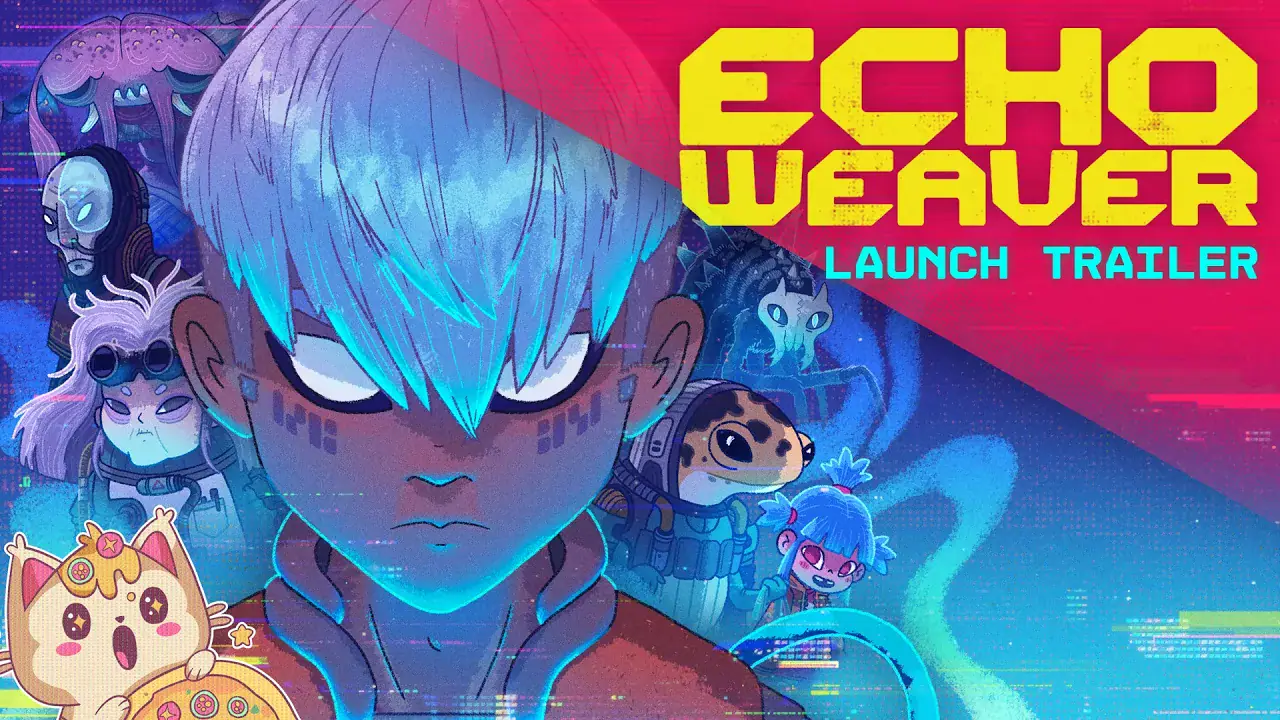
Echo Weaver is an independent adventure that reimagines the Metroidvania formula through an unconventional combination of time loops, environmental puzzles, and knowledge-driven progression. Described by its developers as a Metroidbrainia, it moves beyond the genre’s traditional reliance on ability upgrades and equipment, placing the emphasis instead on the player’s capacity to understand the world, uncover its underlying logic, and connect clues that gradually reveal new possibilities. Set in Provenance, a futuristic colony devastated by a cataclysmic event known as the Collapse, the game follows the last surviving member of the Weavers, who finds themselves caught in an apparently endless time loop.
Each cycle provides a finite window in which to explore the ruins, encounter the colony’s remaining inhabitants, and venture into previously inaccessible areas before time runs out. But resetting is not simply a consequence of failure, nor is it a narrative device for repeating the same sequence of events. It is the very mechanic around which the experience takes shape.
Although the world returns to its previous state with each new cycle, the player retains the knowledge gained along the way. Familiar environments can therefore be approached from a different perspective, overlooked routes become apparent, and obstacles that once seemed impossible gradually reveal their solutions. This approach allows Echo Weaver to challenge some of the genre’s most familiar conventions. Rather than locking progression behind a succession of upgrades, the game makes most of the protagonist’s abilities available from the very beginning. The real challenge lies in understanding their potential and learning when and how to use them.
This applies in particular to the mysterious glaive, whose abilities become increasingly important as players discover how to interact with the temporal anomalies scattered throughout Provenance.
Time, meanwhile, is a resource in its own right. Every excursion demands a degree of planning, as players must decide which areas to investigate, which encounters to pursue, and how best to use the limited time available before the cycle begins again. Progress is consequently measured not by how much stronger the protagonist becomes, but by how much more efficiently the player can navigate an increasingly familiar world.
Beneath this unusual progression system lies a blend of 2D exploration, platforming, environmental puzzles, and narrative discovery. The hand-drawn art direction gives Provenance a distinctive visual identity, while its science-fiction setting and decidedly eccentric cast of characters lend the adventure a personality of its own. Exploration is closely tied to the gradual unravelling of the colony’s history, with the world and its inhabitants providing pieces of a larger picture that players must learn to put together.
Ultimately, Echo Weaver builds its identity around a compelling distinction: the world is condemned to repeat itself, but the player is not. By making observation, deduction, and memory the driving forces behind progression, Moonlight Kids delivers an adventure in which understanding is every bit as valuable as any conventional ability or upgrade. The greatest reward is not what the protagonist acquires, but what the player discovers.


Beyond the Loop: The Creative Minds Behind Echo Weaver
Behind Echo Weaver is Moonlight Kids, an independent game development studio with a small, remotely based team spread across several US cities, including Portland, Atlanta, and Spokane. Built around a collaborative approach to development, the studio has pursued a creative direction centred on distinctive artistic identities and ideas that challenge familiar gameplay conventions. That ethos is particularly evident in Echo Weaver, a project whose unusual design premise required considerable experimentation, especially in finding a way to make its time-loop structure work as the foundation of an entire adventure.
Moonlight Kids first came to prominence with The Wild at Heart, released in 2021. Drawing clear inspiration from Pikmin and Luigi’s Mansion, the game combined exploration, environmental puzzles, combat, and resource management within a colourful, storybook-inspired world.
Its small companion creatures played a central role in both traversal and puzzle-solving, giving the adventure much of its mechanical identity. While Echo Weaver is a considerably different undertaking, the two projects share some recognisable design sensibilities: a careful approach to world-building, an emphasis on exploration, and an interest in mechanics that encourage players to engage with their surroundings in unexpected ways.
Where The Wild at Heart embraced a more whimsical atmosphere, however, the studio’s latest release ventures into darker science-fiction territory, pairing a more intricate narrative with a considerably more unconventional approach to progression.
That shift in ambition brought its own set of development challenges. At the heart of Echo Weaver is a world that must repeatedly return to an earlier state without making the player’s discoveries feel inconsequential. Certain events and environmental conditions reset with each cycle, while the knowledge acquired through exploration carries over, allowing players to approach familiar situations with new information. Making these two layers work together consistently proved one of the project’s central technical challenges.
The world had to respond coherently to each reset, with its characters, environments, and interconnected systems behaving according to the rules established by the time loop. This required careful consideration across programming and level design, particularly for a relatively small team working on a game whose central mechanic touches almost every aspect of its structure.
Moonlight Kids partnered with Akupara Games, an independent publisher based in Los Angeles, to bring the project to market. The publisher has developed a varied catalogue of independent games, including Rain World, Cryptmaster, and Astrea: Six-Sided Oracles, with a portfolio that spans distinctive visual styles and unconventional gameplay concepts.
Its involvement in Echo Weaver reflects an interest in projects that pursue a clear creative identity rather than simply adhering to established genre conventions. For Moonlight Kids, the partnership also provided publishing support across the game’s release, including its promotion, communications, and distribution. The collaboration came to fruition with the release of Echo Weaver on 8 October 2026, bringing Moonlight Kids’ latest project to PC and consoles.


The Last Weaver’s Race Against Time
Set on Provenance, a space colony once envisioned as a new beginning for humanity, Echo Weaver follows the aftermath of a catastrophe known as the Collapse, which has left its settlements in ruins and its inhabitants struggling to survive. At the heart of the story is the last surviving member of the Weavers, an ancient order with the ability to manipulate time.
Upon awakening, the protagonist discovers that they are trapped in a temporal loop, forced to relive the same brief stretch of time as the world around them repeats its predetermined sequence of events. Once the countdown reaches zero, the cycle begins again, restoring the environment to an earlier state and forcing the protagonist to retrace their steps.
The journey begins in Assembly, a research facility that the protagonist must escape before the current cycle expires. During this opening section, they encounter a mysterious glaive, an alien weapon intrinsically connected to their existence and capable of interacting with the surrounding environment in extraordinary ways. Escaping Assembly marks the first step towards understanding the fate of Provenance. Beyond the facility, the protagonist reaches the colony’s outer settlements, where the few remaining inhabitants provide the first pieces of a much larger puzzle. Their accounts, along with the clues scattered throughout the environment, gradually reveal the circumstances that led to the Collapse.
Despite the devastation, Provenance is far from devoid of life. Its settlements are inhabited by an eccentric assortment of survivors, each trying to preserve some semblance of normality in an increasingly desperate situation. Among them is a refugee community under the protection of a determined leader, an enigmatic preacher named Verrik, and several other characters who offer information, assign tasks, and direct the protagonist towards new discoveries.
Perhaps the most unexpected encounter is a cat who runs a pizzeria, becoming one of the more unusual recurring characters along the way. These interactions are more than occasional diversions: conversations and requests provide valuable clues, gradually expanding the player’s understanding of the colony while establishing new leads to pursue in future cycles.
Exploration extends across a network of interconnected environments, including Lake Elymere, its pumping station, an ancient religious complex, a quarry, and several underground facilities. Each location introduces new obstacles and pieces of the wider mystery, often requiring the protagonist to restore abandoned systems, recover information, or locate specific energy nodes scattered throughout the colony. The glaive becomes an increasingly important tool in this process, allowing players to overcome environmental barriers, manipulate elements of the world, and reach areas that initially appear inaccessible. At the same time, the investigation gradually brings the Congregation, the organisation responsible for overseeing the colony, into sharper focus, revealing further details about its history and its connection to the events preceding the Collapse.
As the various threads of the narrative begin to converge, the journey leads into some of Provenance’s most significant and secluded structures. The Cathedral, the prison block, and a series of installations associated with the Great Loom become central to the final stages of the adventure. This vast mechanism is directly connected to the temporal cycle, and understanding its purpose is essential to bringing the story towards its conclusion. The protagonist must locate and connect three key nodes, completing a series of operations that gradually unlock the path forward.
What follows is a particularly demanding final cycle, in which the player must draw upon everything learned throughout the adventure. Familiar routes, previously uncovered information, and a thorough understanding of the world’s interconnected systems all become crucial to overcoming the remaining obstacles and reaching the mechanism at the heart of Provenance.
The final sequence ultimately leads to a decision that determines the protagonist’s fate. Echo Weaver offers multiple possible endings, leaving players to decide how the story should conclude once they reach the end of the cycle. It is a fitting culmination to an adventure built around the relationship between time and knowledge, bringing the protagonist’s journey through Provenance to a close while giving the player the final say in what comes next.


An Endless Cycle of Meetings and Partings
One of Echo Weaver‘s most interesting achievements is the extent to which its storytelling is woven into the fabric of its gameplay. Rather than relying on lengthy cutscenes or extended conversations to convey its plot, Moonlight Kids allows the world to do much of the talking. Its history emerges gradually through exploration, character interactions, and the discovery of details whose significance often becomes clear only much later.
Players are left to connect the dots, reconsider earlier encounters, and piece together the events that shaped Provenance. It is a particularly fitting approach for an adventure built around temporal loops: just as the Weaver must learn to understand the mechanisms governing each cycle, players must make sense of the world through their own observations and discoveries.
This approach is particularly effective in its exploration of memory and identity. Although each cycle restores the world to an earlier state, the Weaver retains everything learned along the way. The people they encounter, by contrast, do not necessarily remember previous interactions, creating a fundamental imbalance between the protagonist’s growing awareness and the experiences of those around them. The Weaver moves forward, but everyone else remains caught in the same moment. Relationships consequently take on an unusual dimension.
Getting to know the inhabitants of Provenance means learning their routines, understanding their motivations, and recognising what they need, often using information gathered during previous cycles. Familiarity becomes a one-sided experience, raising an interesting question about the nature of human connection when memories and experiences are not shared.
Much of the game’s appeal also rests on the strength of its supporting cast. Provenance is populated by an assortment of eccentric characters, each with their own personality, concerns, and reasons for carrying on after the Collapse. Moonlight Kids gives them room to exist beyond their immediate usefulness to the player, avoiding the familiar tendency to reduce supporting characters to quest-givers or convenient sources of exposition. Their conversations and personal stories gradually reveal the character of the surviving community, making the colony feel like a place shaped by individual lives rather than simply a backdrop for the central mystery.
The Intermind complements this approach, providing a means of collecting clues and organising information as the various narrative threads begin to converge. The writing also strikes a welcome balance between melancholy and humour. Some of the inhabitants are genuinely eccentric, and their occasional absurdity brings a degree of levity to an otherwise desolate setting without undermining its underlying sense of loss.
Loneliness runs through the story as more than a consequence of the colony’s isolation. It is also rooted in the peculiar circumstances of someone who remembers experiences that nobody else can share. The Weaver repeatedly returns to the same places and encounters the same people, becoming increasingly familiar with their lives while remaining unable to rely on the same continuity in return. There is an understated sadness to this dynamic, particularly as seemingly insignificant interactions acquire greater meaning through repetition.
Yet the game does not dwell exclusively on isolation. Hope and solidarity are equally important to its portrayal of Provenance, where the surviving inhabitants continue to find ways to support one another and imagine a future beyond the catastrophe. Their determination gives the setting an emotional dimension that extends beyond its ruined landscapes: this is not simply a world waiting to be explored, but a community still struggling to find reasons to exist.
The story also develops a compelling connection between knowledge and personal agency. At first, the temporal loop appears to be an inescapable predicament, trapping the Weaver in a sequence of events that offers little room for meaningful intervention.
Gradually, however, familiarity with its rules changes the nature of that predicament. Repetition becomes an opportunity to experiment, anticipate outcomes, and approach previously insurmountable situations from a different perspective.
This idea mirrors the game’s approach to progression, in which advancement depends less on acquiring new equipment or abilities than on recognising patterns and understanding how the world works. A detail that initially seems insignificant can fundamentally alter the meaning of an earlier encounter, opening up possibilities that were previously overlooked.
Understanding becomes a form of freedom, but also a responsibility: the more the Weaver learns about the people and systems of Provenance, the more consequential their decisions become.
Ultimately, Echo Weaver‘s writing stands out for its ability to make the narrative feel like an extension of the experience rather than something unfolding alongside it. The game does not constantly chase dramatic twists or rely on revelations for their own sake. Instead, it builds its mystery through small discoveries, gradually giving greater significance to characters, conversations, and events that might initially appear incidental. Its storytelling occasionally demands considerable attention, and not every connection is immediately apparent, particularly when so much information must be carried from one cycle to the next.
Nevertheless, this complexity is also central to its appeal. The satisfaction comes not simply from discovering what happened, but from understanding why it happened and recognising how the pieces fit together. Moonlight Kids uses its unusual temporal framework to explore memory, identity, loneliness, solidarity, and the possibility of change, giving these themes a meaningful place within both the story and the mechanics that bring it to life.


A World Drawn in More Than Two Dimensions
Running on Unity 6, Echo Weaver delivers a detailed and visually distinctive 2D experience, combining intricately illustrated environments with multiple layers of scenery and a wealth of on-screen detail. The technical work behind this presentation is particularly noteworthy given the structure of Provenance, an interconnected world comprising numerous locations that must remain consistent throughout the game’s recurring temporal cycles. Each reset requires the underlying systems to account for changes in the player’s progress, the repetition of events, transitions between areas, and the persistence of previously acquired information. Ensuring that all these elements function reliably within a world designed to be explored repeatedly represents a considerable undertaking, especially for a small independent team.
Moonlight Kids has approached these demands through a series of dedicated optimisations, including custom tools for scene management, progressive loading, and graphical batching. These techniques help streamline the rendering process and reduce the overhead associated with displaying the game’s numerous visual assets. Their importance becomes particularly apparent in an adventure where familiar locations are constantly revisited, but where the circumstances surrounding each visit can change considerably. The underlying systems must accommodate this repetition without compromising the consistency of the environment or the continuity of the player’s experience.
The extensive use of hand-drawn artwork introduces a further layer of technical complexity. Echo Weaver relies on a substantial collection of illustrated assets, many featuring intricate detailing, distinctive shapes, and carefully composed colour palettes. While this approach is central to the game’s visual identity, it also places additional demands on memory and rendering performance, particularly when multiple layers and elaborate images are displayed simultaneously.
Moonlight Kids has addressed these challenges through the optimisation of textures, sprite atlases, and environmental assets, preserving the detail of the original artwork while keeping its technical demands under control. The lighting system was also revised during development, reducing the number of layers required without compromising the consistency of the game’s illustrated aesthetic.
It is ultimately the art direction that gives Echo Weaver its strongest visual identity. Provenance is rendered as a colourful, unconventional science-fiction world in which futuristic architecture, abandoned industrial facilities, overgrown vegetation, and technological structures coexist within a cohesive artistic framework. Its environments have a distinct sense of place, with individual areas defined by their own architectural features, visual motifs, and colour schemes.
This variety helps sustain the appeal of exploration even when players return to previously visited locations, while the contrast between open landscapes, industrial complexes, underground installations, and more natural settings gives the colony a convincing geographical diversity. The environments are also rich in smaller visual details, some of which conceal routes or points of interest that reward closer inspection.
Character design is another particularly successful aspect of the presentation. The Weaver has a relatively restrained but immediately recognisable appearance, providing a visual counterpoint to the more eccentric inhabitants of Provenance. The supporting cast encompasses a wide range of silhouettes, proportions, and physical characteristics, from recognisably humanoid figures to distinctly alien and occasionally bizarre creations. This diversity helps establish the colony as a community of individuals rather than a collection of interchangeable background characters.
The animation work reinforces that impression, with expressive movements, facial expressions, and subtle gestures giving encounters additional personality. Despite the variety of its designs, the game maintains a consistent hand-drawn style across its characters, creatures, and environments, ensuring that everything feels part of the same visual world.
The two-dimensional presentation is also put to particularly effective use through the game’s handling of depth and environmental composition. Foreground elements and overlapping layers frequently obscure passages, shortcuts, and alternative routes, encouraging players to look beyond the most immediately visible parts of each environment.
This arrangement serves a clear purpose within the level design: what initially appears to be an ordinary wall or decorative feature may conceal an opening, a platform, or a connection to another section of the map. The visual layering therefore contributes directly to the exploration, turning environmental composition into a functional part of the game’s design rather than a purely decorative consideration. It also reinforces one of Echo Weaver‘s central ideas: progression often depends on learning to recognise possibilities that were already present but had previously gone unnoticed.
Taken as a whole, Echo Weaver‘s technical and artistic presentation is among its most convincing achievements. Its visual identity rests not on graphical spectacle, but on the consistency of its hand-drawn artwork, the variety of its environments, and the thoughtful integration of visual composition into the exploration itself. Moonlight Kids has created a world that is distinctive without sacrificing coherence, with an art direction that remains closely connected to the underlying mechanics. The result is a 2D adventure in which the visual design does considerably more than establish an appealing aesthetic: it actively shapes how the world is perceived, explored, and understood.


The Last Song of Provenance
Sound plays a defining role in Echo Weaver‘s atmosphere, giving an unmistakable identity to a world steeped in melancholy, mystery, and decay. The soundtrack is not merely there to accompany exploration; it helps establish the emotional character of Provenance, reflecting the unease and uncertainty that permeate its recurring cycles. Much of the score draws on delicate, almost fairytale-like melodies, with music-box-inspired arrangements that lend even its gentler passages a faintly unsettling quality. There is a curious tension in this contrast: the music often sounds fragile and reassuring, yet carries an underlying sense that something is not quite right.
That balance is one of the soundtrack’s greatest strengths. Its melancholic tone never becomes relentlessly sombre, allowing quieter moments of introspection to sit alongside a more persistent feeling of unease. The compositions shift between restrained, contemplative passages and more expansive, emotionally charged arrangements, responding to the changing environments and the course of the adventure. Rather than constantly pushing for dramatic impact, the music knows when to step back, giving the world room to speak for itself. This restraint makes its more pronounced moments all the more effective.
The musical identity also changes from one area to another, helping give Provenance a stronger sense of geographical and emotional variety. The gentler tones associated with the Lake contrast with the broader, more evocative soundscapes of the open areas, while the Cathedral adopts a distinctly more solemn and unsettling character. These differences do more than distinguish individual locations: they give each environment an atmosphere of its own, while maintaining a consistent musical language across a world united by the same underlying tragedy.
Perhaps the most striking aspect of the audio design is the way it reflects the game’s treatment of time. The recurring loops are mirrored in a soundscape where delicate melodies give way to electronic interference, distorted textures, and fragmented ambient noises.
Together, these elements evoke a world still bearing the scars of the Collapse, as though the very fabric of Provenance had been left fractured by the catastrophe. There is a persistent sense that something lies beneath the apparent stillness of its environments, with traces of the past continuing to seep into the present. Sound therefore becomes an integral part of the environmental storytelling, conveying not only the desolation of a civilisation in ruins, but also the lingering presence of everything that has survived its downfall.
The sound effects are equally important in bringing the environments to life. The audio accompanying movement, exploration, and interactions with the surroundings gives the world a greater sense of physical presence, complementing the visual detail without competing for attention. Subtle environmental cues help preserve the stillness of quieter locations, while metallic noises, electronic distortions, and more disquieting effects lend a different character to areas marked by greater uncertainty. The contrast is handled with care, allowing the soundscape to evolve alongside the player’s discoveries rather than relying on conspicuous effects to signal every change in atmosphere.
Ultimately, Echo Weaver‘s audio succeeds because it feels like an extension of the world rather than a layer placed on top of it. The soundtrack establishes its emotional register, the regional variations give individual locations a distinctive character, and the sound effects reinforce the sense of a reality still bearing the scars of the Collapse.
Moonlight Kids avoids overstatement in favour of a more measured approach, allowing music and ambient sound to work together in shaping the experience. It is a cohesive and carefully considered soundscape, one that makes Provenance feel as distinctive to listen to as it is to explore, and ensures that the echoes of its past remain present throughout every cycle.


Think Outside the Loop
Provenance is one of Echo Weaver‘s greatest strengths. Rather than dividing the adventure into a succession of self-contained levels, Moonlight Kids has created a vast, interconnected world whose geography gradually unfolds through exploration. Hidden passages, concealed shortcuts, and locations that only reveal their true significance over time give the colony a strong sense of cohesion. In the wake of the Collapse, its environments range from natural landscapes and settlements occupied by the survivors to abandoned industrial facilities and imposing religious structures, each offering a different perspective on the world and the civilisation that once inhabited it.
Exploration, however, is about more than mapping out the colony. The world itself is a central part of the storytelling, with its history emerging through environmental details, encounters, and discoveries scattered across its many locations. Rather than interrupting the experience with lengthy explanations, Moonlight Kids allows players to piece together the events surrounding the Collapse and the relationships that have shaped the surviving community. Details that initially seem incidental can acquire new meaning as the adventure progresses, encouraging players to reconsider what they have seen and gradually assemble a broader picture of Provenance.
At its core, Echo Weaver retains many of the defining characteristics of a 2D Metroidvania. Its interconnected map, platforming challenges, environmental puzzles, and network of alternative routes will feel familiar to anyone accustomed to the genre. What sets it apart is the philosophy underpinning its progression. Moonlight Kids describes the game as a Metroidbrainia, a variation on the traditional formula that shifts the emphasis away from acquiring new abilities and towards developing a deeper understanding of the world.
In most Metroidvanias, returning to a previously explored location with a new ability is often the key to reaching areas that were once inaccessible. Echo Weaver turns this convention on its head. The answer is not necessarily to find a new ability, but to recognise what can already be done with the tools at your disposal. An apparently impassable obstacle may have a solution that has been available all along, provided players can identify the relevant property of their weapon or the environment. Progression consequently relies on observation, experimentation, and deduction, with each discovery potentially changing the way an entire area is approached. It is a subtle but significant shift: instead of steadily expanding the protagonist’s capabilities, the game challenges players to expand their own understanding.
This philosophy is embodied by the glaive, a weapon whose importance extends well beyond combat. Its ability to interact with the environment makes it an essential tool for navigating Provenance, overcoming obstacles, and uncovering new routes. However, understanding its full range of applications requires a willingness to experiment. The game rarely reduces these interactions to straightforward instructions, instead encouraging players to recognise patterns, test possibilities, and connect their findings with information gathered elsewhere. The level design follows the same principles. Passages can be concealed within the scenery, while other routes only become apparent once players learn to look at familiar surroundings differently. What matters is not simply where you look, but what you have learned to recognise.
This makes the act of discovery unusually rewarding. Progression is measured by the player’s growing understanding, not by the number of abilities acquired. An insight that seems relatively minor can transform a previously frustrating section into an accessible route, or reveal an entirely new way of interacting with the environment. The satisfaction comes from making that connection independently, recognising that the solution was not locked behind an upgrade but hidden in plain sight. It is a design approach that gives exploration a more intellectual dimension, placing curiosity and problem-solving at the centre of the experience.
The other defining element is the time-loop system, which provides the structure for both exploration and progression. Every cycle begins with just one minute on the clock, although players can extend their available time by collecting specific resources. These same resources can also be used to restore health and interact with certain elements of the environment, introducing a layer of resource management that gives each decision greater weight.
Spending them on one purpose inevitably means having less available for another. Time, in this respect, is more than a constraint imposed on the player: it becomes a currency that must be spent wisely. Understanding the layout of an area, identifying efficient routes, and deciding which objectives deserve priority are all essential to making each cycle count.
As players become more familiar with Provenance, the initial pressure of the countdown gives way to a more considered approach. The most important distinction, however, is what happens when the available time runs out. The world resets, but the player’s knowledge does not. The protagonist retains everything learned during previous attempts, making it possible to revisit familiar locations with a clearer idea of how they work and what needs to be done.
The same sequence of events can therefore lead to entirely different outcomes, simply because players now understand something they did not know before. This is the foundation of Echo Weaver‘s progression system: the world may repeatedly return to the beginning, but the player is never quite starting from scratch.
The map and its tools for recording discoveries help keep this intricate structure manageable, particularly as the number of interconnected locations and possible routes increases. They provide a useful reference point for tracking explored areas and identifying passages that may warrant another visit. More importantly, they reinforce the sense that each cycle contributes to a larger process of discovery. Repetition is not an interruption to progression; it is the means through which progression takes place. What initially feels like a race against the clock gradually becomes an exercise in planning, experimentation, and increasingly precise execution.
That said, Echo Weaver‘s commitment to this philosophy can occasionally test the player’s patience. Its emphasis on independent discovery sometimes leaves too much room for uncertainty, particularly when a solution depends on noticing a subtle environmental clue or making an unexpected connection. The countdown can make these moments more frustrating, especially during demanding platforming sections where a mistake or an inefficient route can cost valuable time. Having to repeat a substantial portion of an attempt is not always as compelling as the design intends it to be. The game also expects players to maintain a considerable amount of information across multiple cycles, which can make certain objectives difficult to follow.
These are meaningful limitations, even if they stem from the same design principles that make the experience distinctive. Echo Weaver is not especially interested in holding the player’s hand; it expects curiosity, persistence, and a willingness to learn through trial and error.
Ultimately, it is the way Echo Weaver brings its world and mechanics together that gives the adventure its identity. Provenance is both a place to explore and a puzzle to understand, with its interconnected environments, hidden routes, and inhabitants gradually revealing the logic behind the colony. The Metroidbrainia approach gives the familiar Metroidvania framework a compelling new direction, replacing the traditional accumulation of abilities with a more personal sense of intellectual progression. Its demands can occasionally lead to frustration, but its best moments offer a particularly satisfying form of discovery. There is no new power to unlock, no arbitrary upgrade to collect: sometimes, all it takes to move forward is to realise that you finally understand the world a little better.


A Refreshing Take on a Familiar Formula
Echo Weaver deserves recognition for the way it takes an established genre and challenges some of its most familiar conventions. Rather than building its progression around the steady acquisition of new abilities and equipment, Moonlight Kids has devised an adventure in which knowledge itself becomes the primary means of advancement.
Exploring environments, overcoming obstacles, and uncovering new areas are only part of the experience; players must also learn to recognise the rules governing Provenance and understand how its various systems interact. It is an ambitious departure from the traditional Metroidvania formula, and one that gives the game a personality of its own.
The greatest achievement lies in the satisfaction of discovery. Few things are quite as rewarding as finally understanding how a particular mechanic works, uncovering a shortcut that has remained hidden for hours, or reaching a location that once appeared completely inaccessible. Echo Weaver consistently finds ways to make these breakthroughs feel earned, often revealing that the solution was available all along. What players lacked was not another ability or upgrade, but the insight needed to recognise the possibilities already within reach.
The time-loop mechanic is particularly well suited to this approach, giving every attempt a purpose beyond simply trying again. Each cycle offers an opportunity to refine routes, reconsider previous decisions, and make more effective use of available resources. When these systems work in tandem, the game delivers a deeply satisfying form of progression, one driven as much by the player’s growing understanding as by anything happening on screen.
The strength of this concept is matched by a richly conceived setting, distinctive art direction, and a narrative that gives exploration a deeper sense of purpose. Provenance feels like a place with a history of its own, rather than a succession of environments designed merely to accommodate gameplay challenges. Its eccentric inhabitants, remnants of a lost civilisation, and scattered clues surrounding the Collapse gradually give shape to a world that rewards closer attention.
The contrast between its science-fiction setting, underlying melancholy, and occasional bursts of absurd humour also lends the adventure a welcome tonal variety. This identity is reinforced by the audiovisual presentation, whose hand-drawn aesthetic and carefully considered soundtrack help make the colony memorable well beyond its individual locations.
Yet the very design choices that distinguish Echo Weaver also expose some of its most significant weaknesses. A progression system built around observation and deduction places considerable demands on the player, and the game does not always provide the clarity needed to meet them. Some clues are too obscure, while certain obstacles can bring exploration to a standstill simply because the reasoning behind their solutions is difficult to identify. The distinction between a genuinely challenging puzzle and an insufficiently communicated one is important, and Echo Weaver does not always get the balance right. Its refusal to dictate how players should approach every situation is admirable, but greater attention to signposting would have made the experience considerably more accessible without diminishing the pleasure of independent discovery.
The time-loop system is similarly effective in principle, but less consistent in execution. Repetition is central to the game’s identity, and revisiting familiar locations is essential to putting newly acquired knowledge into practice. However, when players cannot work out how to proceed, retracing the same routes can quickly become tedious. The countdown, rather than encouraging more considered decisions, occasionally creates pressure that works against the curiosity and experimentation on which the adventure depends. This is particularly noticeable when exploring unfamiliar areas or attempting more demanding sequences, where the limited time available can make it difficult to investigate every possibility at a comfortable pace.
The platforming presents a further obstacle. Some sequences demand a degree of precision that the movement and jumping mechanics do not always accommodate convincingly, making certain challenges more frustrating than rewarding. A poorly judged jump or a mistake during a demanding section can also have consequences beyond the immediate encounter, potentially forcing players to repeat a substantial part of their progress in a subsequent cycle. Combat, meanwhile, remains firmly secondary to exploration and puzzle-solving.
Although it fulfils its role within the broader experience, it lacks the same degree of depth and refinement as the game’s more distinctive mechanics. Occasional technical issues have also been reported by some reviewers, adding another potential source of frustration, although these reports should not be taken as indicative of every player’s experience.
These shortcomings do not, however, overshadow what Moonlight Kids has achieved. Echo Weaver is an inventive and thoughtfully conceived adventure that demonstrates how much creative potential remains within a genre whose conventions are already well established. Its ideas are not always executed with the same degree of confidence, and a more consistent approach to guidance, pacing, and movement would have made the experience stronger.
Nevertheless, the game has a clear understanding of what makes its central concept compelling, and its finest moments deliver precisely the kind of satisfaction that its unconventional design promises. Few experiences are as rewarding as returning to an obstacle that once seemed impossible and realising that the answer was there all along.
Ultimately, Echo Weaver is best suited to players who enjoy getting lost in interconnected worlds, experimenting with unfamiliar mechanics, and piecing together solutions without being constantly directed towards them. Those looking for a more immediate, streamlined, or heavily guided adventure may find its demands less appealing. Its greatest strength is also its defining gamble: progression does not come from learning what the protagonist can do, but from discovering what the player is capable of understanding.


 8/10