
The deeper you go, the less reality feels like something you can trust.
There are video games that entertain for a few hours, occasionally surprise, and sometimes even impress, only to eventually dissolve into the background noise of an increasingly fast-paced, overcrowded industry. They are experiences consumed in moments, leaving behind fragments of imagery, scattered ideas, and memories that slowly fade with time.
And then there are works that refuse to disappear. Games that are not merely played, but absorbed – etched into memory and carried long after the experience ends. Experiences that linger well beyond the credits roll, resurfacing in fragments of sensation, echoes of place, and details that resist easy forgetting. Luna Abyss belongs in this second category.
Kwalee Labs’ latest project is not simply a first-person shooter built around fast-paced, bullet-hell combat. Beneath its relentless momentum and the apparent chaos of flying projectiles and hostile forms lies something far more unsettling: a gradual descent into a collapsing civilization, eroded by blind faith and an obsession that perhaps should never have been uncovered.
Yet the true strength of Luna Abyss does not lie in its premise or execution. It lies in its ability to fully absorb the player, drawing them into an oppressive yet hypnotic world that never relies on cheap shocks or contrived narrative twists. Instead, it sustains tension through restraint – through silence, through distant echoes reverberating across vast, decaying structures, and through the persistent feeling that something profoundly wrong is always just beyond the next corridor.
This sustained sense of unease is what elevates Luna Abyss beyond any surface-level reading. It is not merely a game that demands attention, but one that slowly claims it – mission after mission – quietly embedding itself in the player’s memory until curiosity hardens into compulsion: the need to understand what truly lies at the heart of its Abyss.

Narrative Depth at the Core of Luna Abyss
One of the most striking aspects of Luna Abyss is the quality of its writing. In a market where many shooters still treat narrative as little more than functional scaffolding for action, Luna Abyss instead places storytelling at the very core of its experience, unfolding a layered, dark, and unexpectedly nuanced narrative rich in subtext.
The protagonist is a prisoner held within the lunar penal colony of Luna, condemned for a specific genetic anomaly: her red eyes. A trait deemed dangerous by an authoritarian regime shaped by fanaticism, paranoia, and ideological control.
The premise is introduced in deliberately restrained, almost minimalist terms. Yet this simplicity becomes the foundation for a far more ambitious thematic framework. The game gradually expands its focus toward questions of otherness, dehumanisation, and the erosion of individual identity under oppressive structures.
The player is sent on so-called suicide missions into the depths of the Abyss, inhabiting a Scout – a synthetic body deployed into the long-abandoned sectors of the lunar colony. Each descent offers the possibility of reducing the prisoner’s sentence by nine thousand days, while also acting as a fragment in the reconstruction of the truth behind the facility’s collapse.
It is here, more than anywhere else, that Luna Abyss begins to reveal the full scope of its ambition.
Environmental Storytelling as a Vessel for Psychological Unease
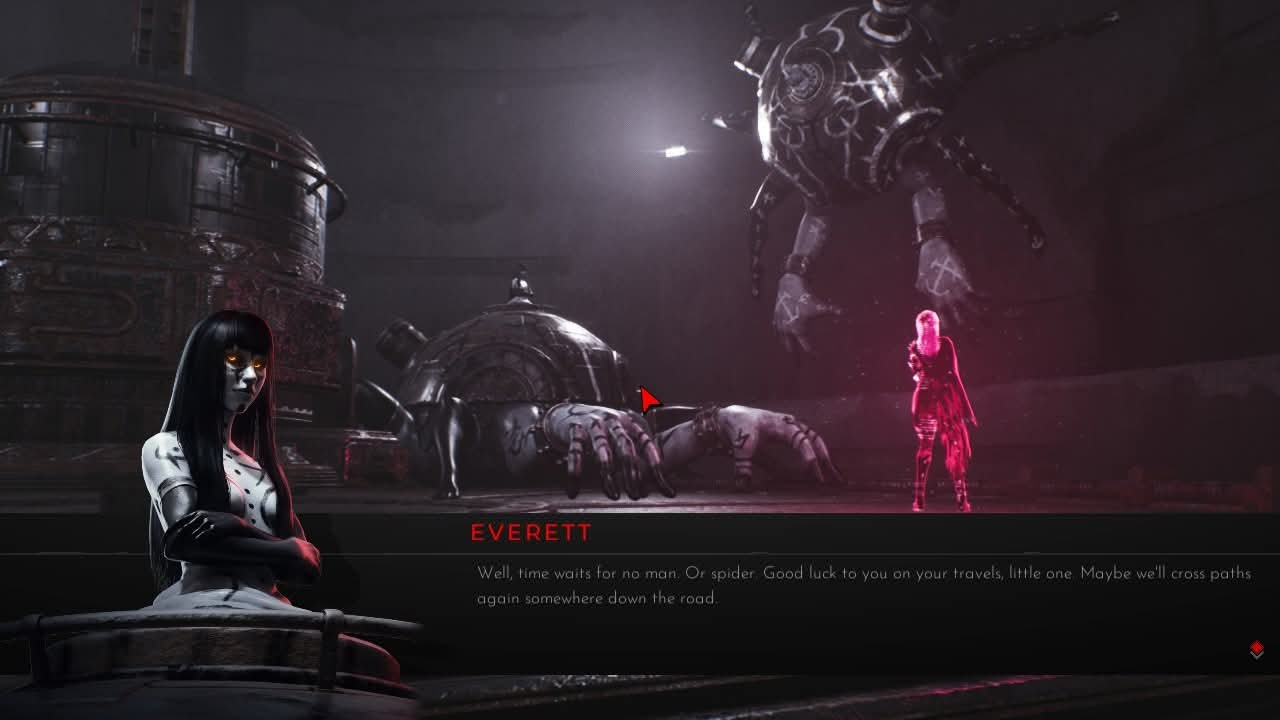
The narrative of Luna Abyss rarely relies on direct exposition or extended explanatory sequences. Instead, it builds its world with remarkable precision through restrained environmental storytelling, allowing its spaces to communicate what is deliberately left unspoken. Each area preserves fragments of history that collectively shape the world’s narrative identity.
Towering structures evoke the oppressive weight of religious doctrine and systemic control, while abandoned environments stand as silent records of the colony’s gradual psychological deterioration. Distorted audio logs, scattered documents, and subtle spatial anomalies that appear to distort perception are interwoven into a tightly composed narrative mosaic, sustaining a persistent and pervasive sense of unease throughout the experience.
Luna Abyss demands attention and rewards it through a deliberately layered narrative structure. It encourages close observation, interpretation, and the synthesis of details that may initially appear incidental, gradually forming a more coherent yet increasingly disquieting vision of its world. The result is the impression of confronting the remnants of a civilisation that collapsed under the weight of its own obsessions, unable to maintain any clear distinction between faith, devotion, and madness.
Here, the Abyss ceases to function as a purely physical space and instead emerges as a broader symbolic construct: a manifestation of corrupted belief systems, collective descent, and humanity’s failure to recognise its limits before collapse.
Believable Character Arcs and Understated Dialogue Work
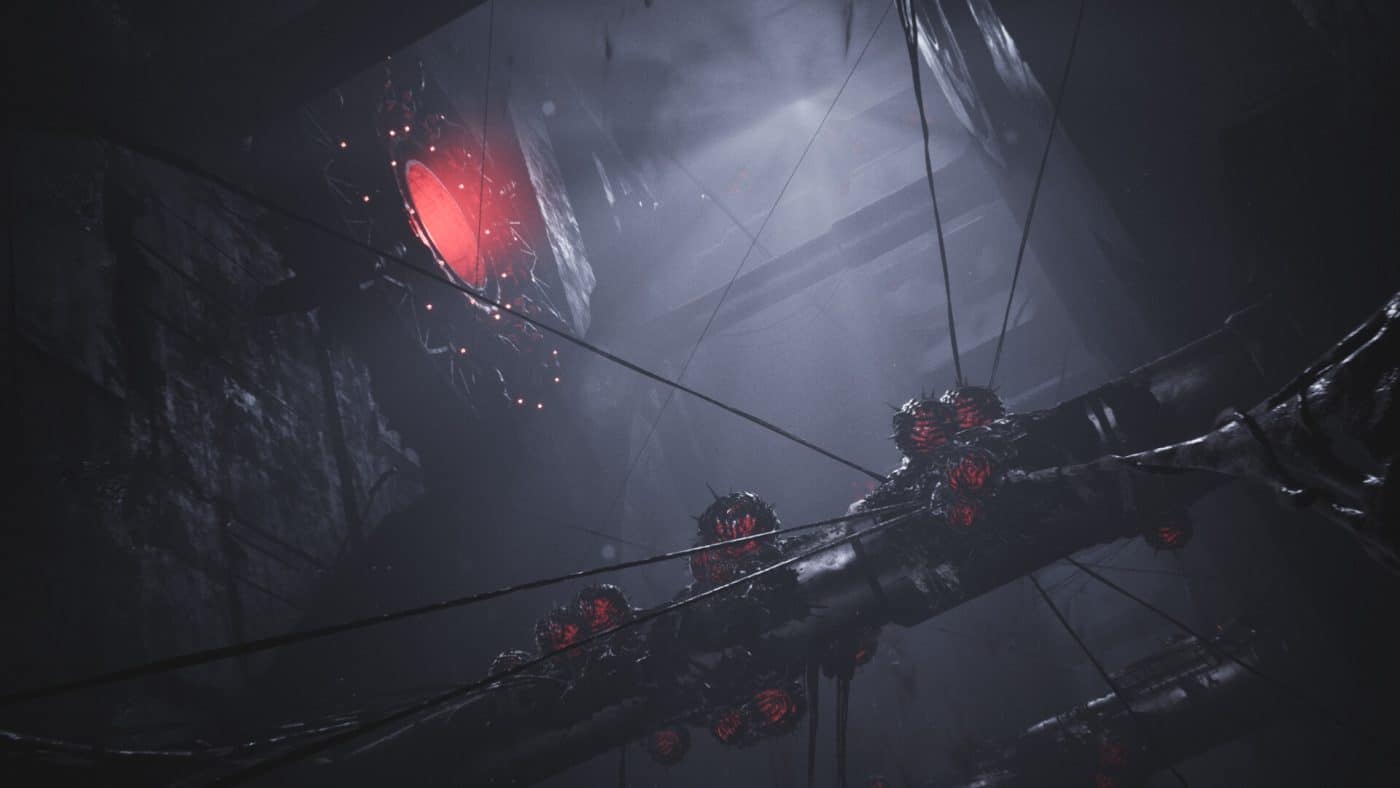
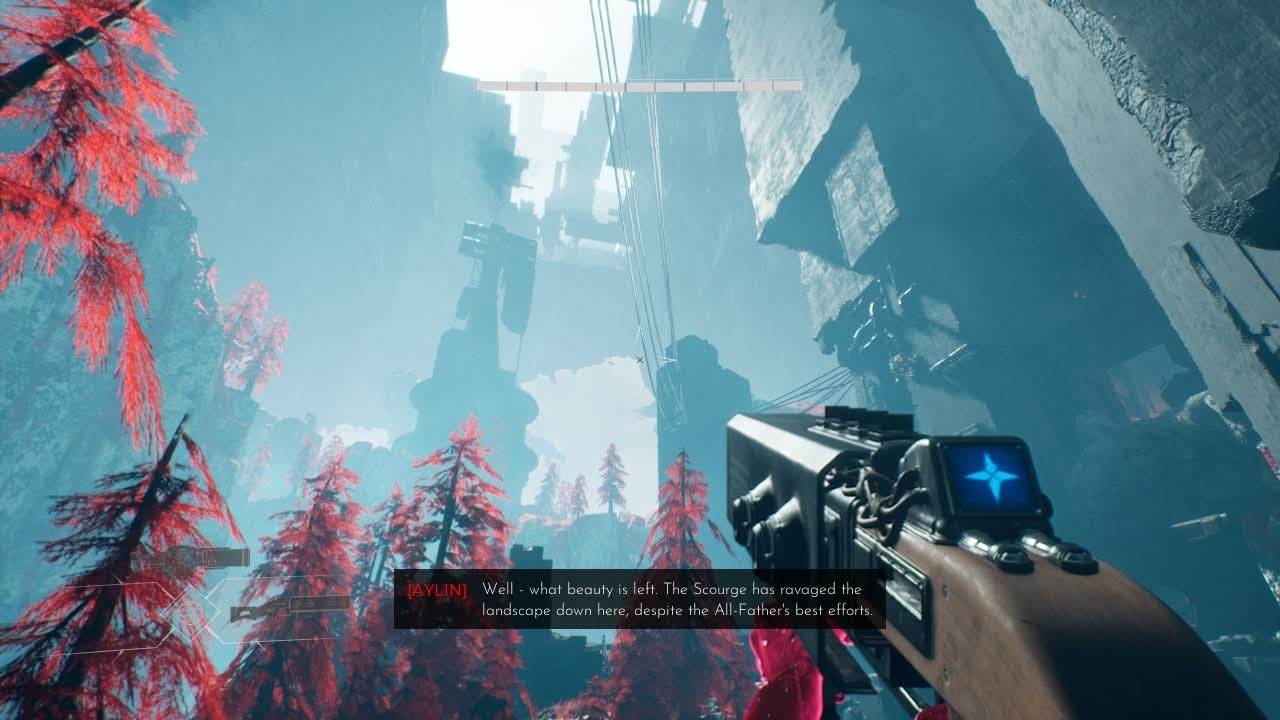
Characterisation is one of Luna Abyss’s most accomplished strengths. Eylen, initially introduced as a supporting presence, gradually emerges as one of the emotional anchors of the entire experience. Her relationship with the protagonist unfolds with striking naturalness, carefully avoiding both contrived melodrama and overtly expository or didactic dialogue.
Conversations remain grounded, restrained, and consistently rich in emotional subtext. As the hours progress, the tonal register of dialogue shifts organically: early emotional distance gradually gives way to doubt, fear, and increasingly exposed vulnerability. This is further reinforced by a strong English voice cast, which lends weight and credibility to key narrative moments without ever tipping into excess. The performances convey with notable subtlety the progressive psychological strain of the characters, reinforcing immersion in a way that feels cohesive, restrained, and consistently sustained.
A Combat Loop Built on Reflexes and Awareness
If the narrative serves as the emotional core of Luna Abyss, then its gameplay functions as the experience’s true mechanical heartbeat. In this respect, the work carried out by Kwalee Labs is genuinely impressive.
Translating the intensity of bullet hell design into a first-person shooter could easily have resulted in an experience that felt visually overwhelming, imbalanced, or simply exhausting to engage with. Instead, Luna Abyss achieves a remarkably refined balance between visual intensity and combat readability, without ever compromising player agency or control. The combat system immediately establishes a sense of precision and responsiveness. Movement, dashes, evasive manoeuvres, jumps, and weapon management are integrated into a gameplay loop that feels fluid, reactive, and consistently rewarding.
Even during the most visually dense encounters, when the screen fills with projectiles, enemies, and overlapping effects, the player retains a strong awareness of spatial positioning and combat flow, preserving the feeling that the chaos can still be read, reacted to, and mastered. It is precisely here that Luna Abyss reaches one of its most notable achievements. Despite its relentless pace and overwhelming visual density, the game rarely descends into incomprehensible chaos.
Every mistake remains legible, every well-timed dodge reinforces a tangible sense of control, and every victory feels earned through reflexes, awareness, and disciplined decision-making under pressure.

Tactical Decision-Making Through Weapon Design
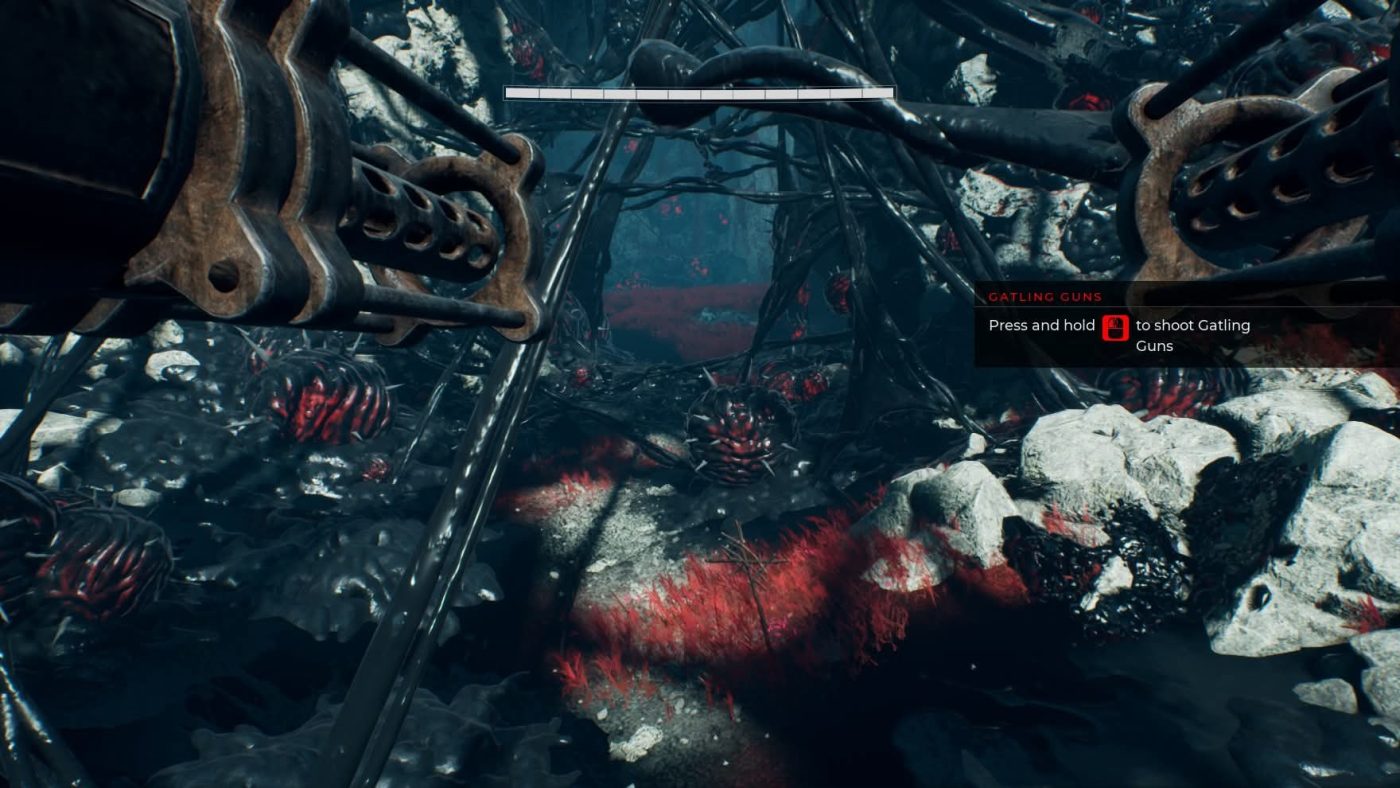
Weapons in Luna Abyss extend beyond simple variations on a shared offensive framework, reflecting instead a deliberate design philosophy in which each weapon serves a distinct tactical function and carries its own weight within combat.
The assault rifle provides reliable consistency against standard enemies, helping to sustain momentum even in the most chaotic encounters, while the precision rifle becomes essential against armoured targets and specific energy shield types, demanding a more deliberate and exacting approach. The result is a combat system built around constant adaptation.
Every arena reshapes tactical priorities, every encounter demands careful reading of space, distance, and enemy behaviour, and every weapon occupies a clearly defined place within the broader combat loop. It is this clarity of purpose that keeps repetition at bay, ensuring that combat remains fluid and consistently varied even in the later stages of the experience.
Strong and Consistently Varied Enemy Design
One of Luna Abyss’ defining strengths lies in the quality of its enemy design. The game introduces a roster of increasingly aggressive, unsettling, and unpredictable creatures, each built around clearly readable attack patterns and behavioural frameworks that shape the rhythm and pacing of every encounter. That variety is not simply visual, but mechanical at its core. Each enemy type demands a distinct response: some force constant mobility, others punish static positioning within specific areas of the arena, while others require precise execution and disciplined target prioritisation.
The result is a combat system in constant motion, one that avoids simple numerical escalation in favour of a more deliberate structure built on variety, clarity, and sustained tactical adaptation.
Massive, Unrelenting Boss Encounters
Boss fights stand as the pinnacle of Luna Abyss’s gameplay framework. Each one is designed as a full-scale set piece: massive in scale, highly cinematic, and often unsettling in both visual and conceptual terms. These encounters blend bullet-hell patterns, platforming mechanics, and combat readability with notable precision, turning every encounter into a sustained test of focus, adaptability, and composure under pressure. At their peak, they deliver a level of visual spectacle that is genuinely striking.
Not every encounter is equally refined. Two of the later battles are slightly less readable than the otherwise consistently high standard established by the game. Even so, these remain minor imperfections within a combat system that is, for the most part, exceptionally well executed.
A Surprisingly Strong Platforming System
One of the most unexpected strengths of Luna Abyss lies in its platforming. In many contemporary FPS games, movement is reduced to a transitional tool between combat arenas; here, however, it is fully integrated into the core experience.
Jumps, aerial dashes, chained movement sequences, and increasingly vertical level design create a sustained sense of fluidity that runs throughout the entire game. This is reinforced by an exceptionally precise control scheme, which remains responsive and highly readable even during the most demanding traversal sections.
Mistakes feel fair and clearly attributable rather than arbitrary, while each sequence deepens the player’s sense of control and strengthens mastery of the game’s movement systems.
An Atmospheric and Visually Oppressive Sci-Fi Universe
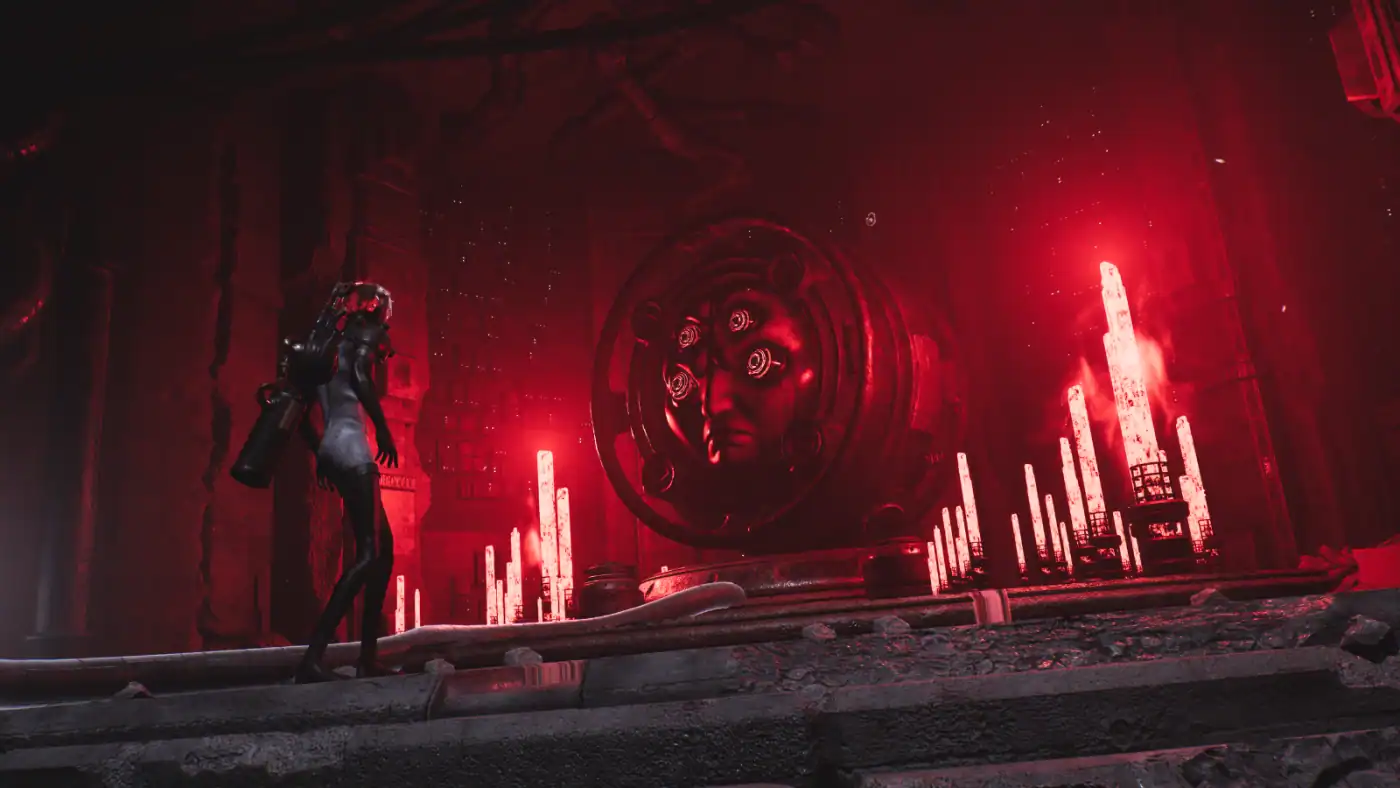
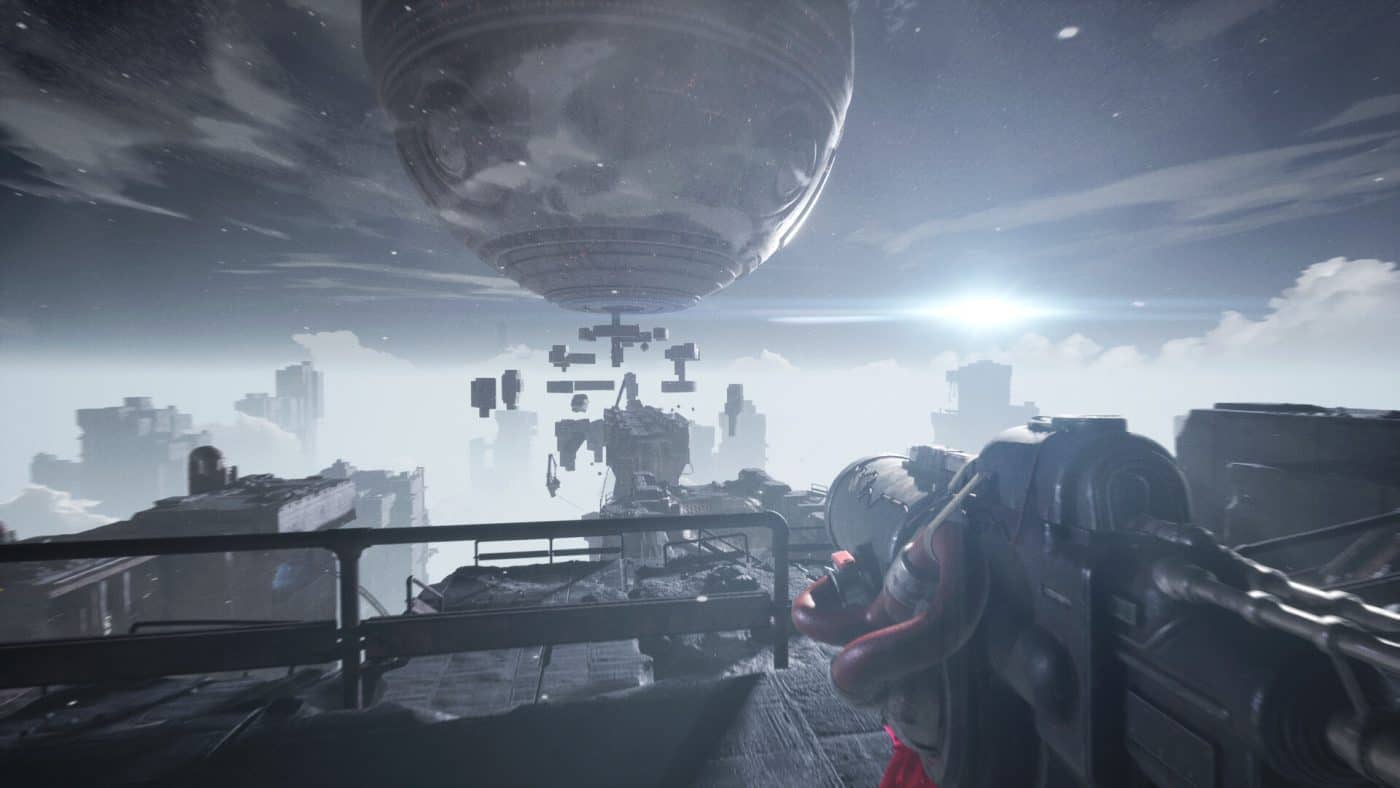
From an artistic standpoint, Luna Abyss establishes its identity almost immediately through a striking and unmistakable visual direction, built upon a carefully controlled fusion of industrial science fiction, religious iconography, and cosmic horror. Its environments consistently evoke both awe and unease. Colossal industrial structures are interwoven with distorted sacred architecture and oppressive shadowed spaces, creating a world suspended between spirituality, decay, and madness.
Every area retains its own visual identity, yet all remain bound together by a cohesive atmosphere that feels oppressive, coherent, and relentlessly unsettling. Lighting and colour design play a central role in shaping the game’s atmosphere.

Cold, artificial tones give way to increasingly abstract and alien environments, yet a strong sense of stylistic coherence is preserved throughout. Rather than relying on spectacle alone, the art direction uses scale, spatial composition, and lighting to reinforce a persistent feeling of isolation, existential dread, and decay. Sound design proves equally essential in sustaining psychological tension. Distant metallic reverberations, faint distorted voices, and abrupt stretches of near-total silence follow the player throughout the experience, turning audio into a fully integrated narrative device rather than a mere support layer.
An Abyss Worth Returning To
Luna Abyss stands as a powerful reminder of what video games can still achieve as an artistic medium. Not merely entertainment, nor spectacle alone, but a fully authored experience capable of leaving a lasting psychological and emotional imprint. Kwalee Labs delivers a shooter that unsettles, absorbs, and resonates with remarkable confidence, supported by striking art direction, an unusually mature narrative, and gameplay that remains cohesive, precise, and assured in its identity.
While the experience intentionally leaves certain questions unresolved and suffers from occasional readability issues in a small number of late-game boss encounters, these remain minor shortcomings within an otherwise remarkable achievement.
Luna Abyss is a dark, oppressive, and deeply evocative descent into a world consumed by faith, decay, and obsession – an experience that gradually pulls the player deeper into its depths until nothing remains except the Abyss itself. And when the credits finally roll, the feeling that remains is immediate and unmistakable: the urge to descend once more.
 9/10
9/10