
Steal forms, reshape yourself, and survive a world that won’t stop changing.
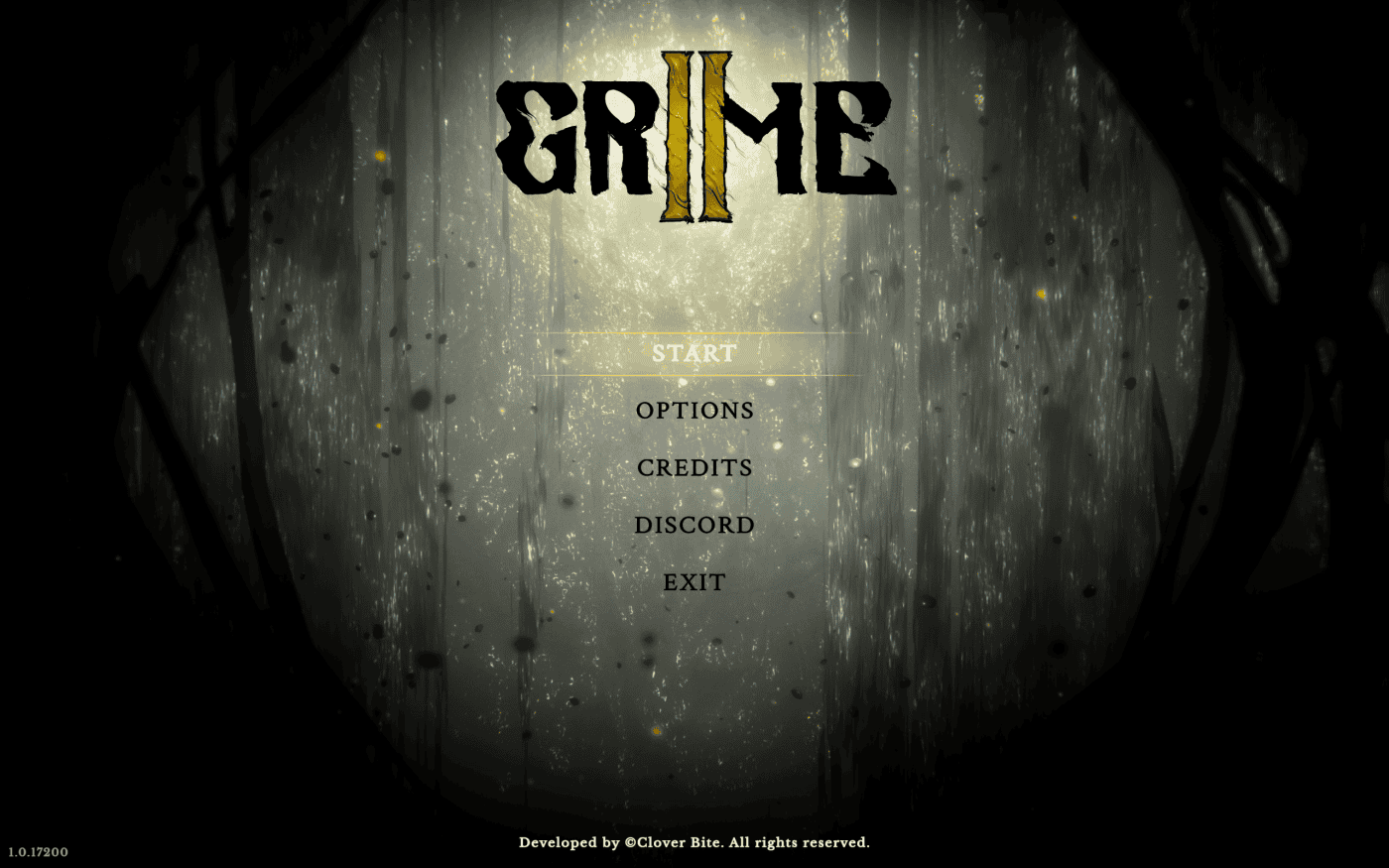
Have you ever stopped, even briefly, not out of habit or obligation but from a quieter, more deeply felt need, to ask yourself what art really is? Not as an academic definition. Not as a cultural label. Not as an aesthetic category to be neatly placed within established frameworks. But as something more intimate. Closer. More exposed.
Something that reveals itself unexpectedly, without warning, in the moment an image, a sound, a form – anything, really – strikes us in a way that feels imprecise yet undeniable. Something that resists immediate explanation. Something that simply lingers. So what is art, when it stops being theory and becomes experience?
Is it a human gesture taking shape through matter? A fragile yet necessary attempt to give voice to what cannot be fully expressed? A way to impose – even if only temporarily – a sense of order onto the chaos that surrounds us? Or – perhaps more unsettlingly, more demandingly – is it something that does not seek to be understood, but to be lived? A threshold. A point of passage. An invisible space where what we observe and what we are begin, slowly, to merge.
Because, when you truly reflect on it, art rarely remains still. It does not stay outside. It acts. It enters us without permission, settles into a space we struggle to define, and from there begins to work – silently, persistently – on the way we perceive everything else. It does not merely change what we see. It reshapes how we see it. And almost without noticing, our perspective shifts. We are no longer the ones observing art. It is art that, gradually, reorganizes our gaze.
It is a subtle movement, difficult to grasp as it unfolds, yet deeply transformative in its consequences. A process that never imposes itself, and precisely for that reason, takes root more profoundly.
It is within this uncertain, unstable, yet remarkably fertile space that GRIME II finds its place. Not as a conventional video game. Not as a collection of systems, levels, or mechanics. But as an experience that takes this concept – art as a living force, as a process – and pushes it to its furthest extremes. Art not as representation, but as substance. As an active principle that generates the world even as it keeps it in a constant state of transformation.

From its very first moments, GRIME II offers no certainties.
There is no immediate key to interpretation, no stable foothold to cling to. Instead, there is a pervasive sensation – difficult to define, yet impossible to ignore – of being inside something that is never entirely still.
It is not merely atmosphere. Not just artistic direction. Not simply world-building. It is density. Presence. Something that seems to emerge not from the surface of what you see, but from what the world contains, compresses, and holds just beneath it.
Matter is never merely matter. Forms are never truly complete. Spaces are never definitively stable. Everything vibrates with a constant internal tension, as if each element exists suspended between what it is and what it might become in the very next moment. It is a viscous world, yes – but not in the most immediate, superficial sense of the word.
It is viscous because it resists. Because it refuses to be fully grasped. Because every time you think you understand it, it has already shifted – if only slightly. And yet, what truly surprises is not this instability, but its coherence.
Because GRIME II is never random. Never arbitrary. Every element seems to respond to a deeper, invisible logic – one that is constantly felt, even if never fully explained. A kind of grammar that does not describe the world, but constructs it as it transforms it. A grammar of mutation. Not of chaos. Not of destruction. But of change as a fundamental condition of existence.
And it is here that something shifts. Because, at a certain point, you realize that you are no longer simply exploring a world – you are learning how to inhabit it. A world where nothing is final. Where nothing is ever truly separate. Where everything exists in transition. Every form is temporary. Every creature is a phase. Every existence is a passage.
And within this system, even the simplest action takes on a different meaning.
Absorbing a creature is not merely a gameplay mechanic. It is an act of transformation. It is the moment something that existed outside of you ceases to be external. It becomes part of how you act – but also how you interpret the world. You are not simply acquiring an ability. You are internalizing a possibility. Carrying within you a trace of that world.
And that trace remains. It accumulates. It stratifies. And, slowly, it begins to reshape the way you see everything else. Because, without realizing it, you are no longer outside. You are within. And once you are within, everything changes.
You no longer seek stability. You no longer look for fixed points. Instead, you learn to read change. To follow transformations. To recognize transitions, tensions, variations. You no longer interpret the world for what it is – you observe it for what it is becoming.
It is in this quiet, gradual, almost inevitable shift that GRIME II reveals its most authentic depth. It is not merely showing you something. It is changing the way you see. At this point, to speak of “art” as an aesthetic layer becomes reductive. Because here, art is not decoration. Not a separate language. Not representation. It is condition.
It is what prevents matter from ever settling. What makes every form temporary. What transforms every element into an active part of an ongoing process. Art does not describe the world – it makes it possible, even as it reshapes it.
And the further you go, the more this idea ceases to be something to understand and becomes something to feel. You perceive it in the environments. You recognize it in the creatures. You experience it through the very rules of the game. Everything contributes to building a system where stability is never an endpoint, but only a fleeting balance between forces in tension.
And so, almost inevitably, the experience itself begins to change. It is no longer just a game. It becomes a mental space. A place where you learn to exist within instability – without trying to halt it, simplify it, or betray it. A place that does not simply invite observation, but reshapes the very act of observing. And at that point, the question no longer concerns GRIME II alone.
It concerns you. What does it mean to inhabit a system where transformation is not the exception, but the rule? What does it mean to accept that nothing is final, that every form is temporary, that every identity is, ultimately, a phase?
Because GRIME II never truly leaves you outside. Every act of understanding is already a form of involvement. Every interpretation is already a transformation. And within this continuous exchange – between you and the world you traverse, between perception and matter, between form and mutation – something rarer begins to take shape: a work in which art is not a theme. It is the very structure of reality. And yet, one question remains.
A necessary question – one that becomes increasingly clear the closer you move toward the heart of the experience: can such an ambitious, radical vision – one that places art as a living, transformative principle – truly sustain itself to the very end? Can it preserve the tension between what it promises and what it ultimately delivers?
Or, somewhere along the passage from idea to form, does something begin to fracture?
To find out, there is only one thing left to do: keep reading.

Beneath the Skin of GRIME II
The question that, more than any other, gradually took hold – quietly, almost imperceptibly, through a process as organic as it was inevitable – only came into focus once we began to grasp the deeper nature of GRIME II. Its apparent simplicity is deceptive, for it already contains the full weight, complexity, and, in certain respects, the fragile core of what this work ultimately represents.
How do you build a video game in which art is no longer a function, but a foundation? No longer ornament. No longer one expressive register among many. No longer an aesthetic applied from the outside. But a generative principle.
A force that does not accompany the experience, but produces it. One that does not merely define what is seen, but reshapes the conditions through which it is perceived, navigated, and internalized. A presence so pervasive it becomes structural – embedded across systems, mechanics, and design choices – until it forms the work’s true, invisible architecture.
Faced with such a premise, it became immediately clear that direct experience alone would not suffice. However intense, layered, or even disorienting that experience might be, it remains, by definition, a point of arrival. What emerged instead was the need to reverse direction – to trace the process back, beyond the finished form, toward its point of origin. What we had played was not enough. What we had observed was not enough. Not even what we had glimpsed, fleetingly, through the fractures of a world defined by its own internal, almost stubborn coherence.
Something more was required. A closer proximity. A willingness to abandon distance altogether. To engage with the work not as observers, but as participants willing to meet it on its own terms. To go beneath the surface of GRIME II. To follow its creative fabric back to that fragile, often imperceptible threshold where an idea is not yet form, but already tension. Not yet language, but already necessity. Not yet a world, but already an emotional trajectory – instinctive, unresolved, and unmistakably human. The moment in which something exists solely because someone has chosen to believe in it enough to begin shaping it.
This is where our “investigation” begins – not as a simple act of research, but as a process of reconstruction and close listening. We gathered materials, studied documentation, followed interviews, and assembled fragments that at first seemed disconnected, only to see them gradually form a broader, more coherent – and, crucially, more human – picture. And yet, the clearer that picture became, the more one limitation stood out: it remained external. And GRIME II, by its very nature, resists external interpretation. It does not lend itself to reduction. It demands proximity. Engagement. Attention.
From that realization, our approach shifted. Observation gave way to dialogue. The focus moved toward those who shaped the project over time – through iteration, uncertainty, sudden insight, necessary failure, and that often-overlooked form of creative persistence that quietly sustains the entire process.
That path led us to Clover Bite. A studio whose origins are, in themselves, telling. Founded in 2014 within the Tiltan School of Design and Visual Communication, Clover Bite did not emerge simply as a development team, but as a hybrid creative environment where education and production coexist in constant exchange.
It is a space in which students, emerging creatives, and experienced developers work within the same framework, sharing not only resources but also risk, responsibility, and the ongoing challenge of turning intuition into form. A compact yet dynamic laboratory, where art and learning remain inseparable, and where growth unfolds alongside creation.
No account of this process would be complete without acknowledging the figure who most clearly embodies the continuity of GRIME: Yarden Weissbrot. Game Director, Producer, and widely regarded as the driving force behind the series – though any single label feels inevitably reductive. In GRIME, and even more so in GRIME II, his role extends beyond authorship. It is structural, almost foundational. He stands at the point where artistic sensibility and creative direction meet, the thread that holds the project’s tensions together and the emotional coherence that keeps its world from fragmenting under its own weight.


Through his perspective, something more fundamental begins to surface: origin. The story of a creative impulse that predates formal structure – of a childhood spent drawing creatures and worlds not as pastime, but as necessity. A language that emerged not through deliberate choice, but through an almost instinctive compulsion. And alongside it, a persistent undercurrent of doubt: that such a deeply personal language might struggle to find a place within the constraints of reality.
It is within this tension – between identity and possibility, imagination and material reality – that a key to understanding GRIME can be found. Because the trajectory that led to this universe is not purely creative. It is reconciliatory. A negotiation between what has always been felt and what can ultimately be realized. Between imagination and its translation into a playable form. Between desire and its capacity to exist, to be shared, to be experienced.
Its influences are present – recognizable, yet never directly reproduced: the visual and conceptual language of early-2000s video games, the dense, tactile atmospheres of works such as Legacy of Kain: Soul Reaver, and a broader fascination with worlds governed by their own internal logic, detached from the stability of the real. Yet what ultimately defines this process is not influence, but transformation. The act of internalizing references to the point of dissolution, allowing them to re-emerge as something autonomous. A vision that no longer points outward, but sustains itself from within.
The original GRIME stands as a clear expression of this approach: a project developed by a small, relatively inexperienced team, yet driven by a strong unity of intent. A work that did not attempt to conceal its limitations, but instead leveraged them to establish a distinct and recognizable voice. GRIME II builds directly from that foundation – not as a simple continuation, but as a necessary expansion. An effort to extend what was previously implied, to deepen what was only partially explored.
The project grows across every dimension – scope, structure, ambition – but most significantly in its willingness to take on greater expressive risk. In particular, its expanded narrative and conceptual scope marks a decisive shift – one that demands exposure, vulnerability, and a willingness to confront the gap between intention and execution.
It is a delicate balance. Because to articulate more is also to risk more – to risk incompleteness, misalignment, even failure. Yet it is also, inevitably, a path toward growth. And in this sense, GRIME II can be understood precisely as that: a forward step. An attempt. An act of trust – not only in the project itself, but in the collective effort behind it.
Because behind every system, every world, every layered structure, there are not just ideas, but people. Processes. Uncertainty. Iteration. Persistence. And perhaps to truly understand GRIME II – before analysing it – means first acknowledging that human foundation, and making room to engage with it, rather than merely interpret it.
A Formless Being Driven by Hunger for Art and Flesh
Before delving into the narrative of GRIME II, it is necessary to take a small but essential step back. Not to slow the pace of analysis, but to more precisely frame the nature of the experience the game is attempting to build, and the way it chooses to tell its story. Although presented under the label of an action RPG, GRIME II ultimately finds its identity elsewhere: in the hybrid space between Metroidvania-style world-building and the fragmented, environmental storytelling typical of Souls-like games.
This must be made clear from the outset, because GRIME II does not “tell” its story in the traditional sense. It does not guide, it does not explain, it does not explicitly present its narrative. Instead, it suggests.
What unfolds throughout the experience is not a linear, orderly plot designed to be fully understood in its entirety, but rather a fragmented, scattered, and deliberately incomplete narrative system. Understanding is neither immediate nor guaranteed; it is something that emerges over time, through attention, curiosity, and a willingness to engage with what is left unsaid.
Environmental storytelling therefore becomes the true backbone of the experience. Objects, lore fragments, item descriptions, NPC dialogues, architectural elements, and even the spatial arrangement itself all contribute to a world that is never fully revealed at once. Instead, it must be reconstructed – piece by piece – by those willing to read between its surfaces.

However, in order to preserve the integrity of the experience and avoid any form of spoiler, we will limit our focus to what can be considered the true “zero point” of the narrative: its origin.
GRIME II opens within a space suspended between cosmic abstraction and undefined reality – a place that resists temporal and spatial categorisation. Here, a distant, almost ritualistic voice introduces the birth of the protagonist. Yet even the notion of “birth” feels insufficient. What is presented is not emergence in a natural sense, but creation: deliberate, structured, intentional.
A constructed act, almost artisanal in its precision, in which every element appears purposefully designed despite its initial opacity. The protagonist’s body itself – its form, its composition, its presence – immediately suggests design over accident. This is a being forged with intent, though the purpose of that intent remains concealed.
At this stage, the protagonist exists as an embryonic consciousness – an unformed presence still in the process of becoming. It is here that one of the game’s central concepts emerges – growth through absorption. In the role of the so-called “Formless,” the player does not simply advance through predefined systems of progression, but actively participates in the construction of identity itself through acquisition, incorporation, and transformation. What is absorbed does not remain external; it becomes embedded, reshaping both capability and perception. Each act of absorption therefore transcends mechanical progression, functioning instead as a narrative gesture – an incremental step toward a form that is never definitive, but perpetually in flux.
This principle extends seamlessly into the fabric of the world itself, which appears to be shaped by a higher yet ultimately incomprehensible order. It is a universe inhabited by entities born from the fusion of organic and artificial principles, where metamorphosis is not an anomaly but a fundamental condition of existence. Environments reinforce this sense of instability. Biomes oscillate between lush, alien growth and oppressive, decaying structures, often marked by anatomical elements – limbs, bone-like formations, organic protrusions – that invade space as if matter itself were in a constant state of becoming.
Yet what is most striking is not the strangeness of this world, but its internal consistency. Within its logic, nothing appears abnormal. There is no shock, no sense of disbelief from its inhabitants – only acceptance. What is alien to the player is, within the system of the world, entirely ordinary. This inversion of perception is one of the narrative’s most effective achievements.

Compared to its predecessor, GRIME II also shows a clearer and more deliberate shift toward explicit storytelling. NPCs are more present and more actively involved in communicating information about past events, factional structures, and the broader dynamics shaping the world. This expansion undeniably enriches the narrative fabric, making the world more legible and detailed.
At the same time, however, this increased narrative density occasionally affects pacing. Dialogue sequences can become extended, sometimes bordering on redundancy, creating moments where exposition risks overwhelming the otherwise restrained rhythm of the experience. In these instances, the tension between storytelling and gameplay becomes more visible.
Structurally, the narrative remains largely linear and cohesive. The protagonist’s journey follows a defined arc without radical ruptures or major structural deviations. Yet this does not necessarily constitute a limitation. GRIME II is not a game that relies on narrative disruption or plot-driven revelation as its primary source of impact.
Its strength lies elsewhere: in the construction of a world that exists independently of the story being told within it. A world that is meant to be interpreted rather than fully understood; suggested rather than explicitly explained. In this sense, narrative functions less as a driving force and more as connective tissue – present, essential, but never dominant.
The most compelling aspects of its storytelling emerge elsewhere – in environmental design, biome variation, and the presence of its characters. NPCs in particular contribute significantly to the world’s texture, each offering distinct perspectives that reinforce the sense of a layered, internally consistent universe. Even the protagonist, despite limited dialogue, maintains a strong and assertive presence that prevents them from becoming a purely passive vessel.


It is precisely within this tension that the narrative achieves its most stable balance. It consistently reinforces the game’s core idea of art as a generative principle embedded within the world, while resisting any attempt to become a closed system of meaning. Its structure remains deliberately incomplete.
And perhaps this is its defining quality: not the presentation of a closed narrative, but the construction of an open system of meaning – one that is continually assembled, questioned, and reinterpreted through the act of play.
It is within this fragile, ambiguous, yet profoundly human space that GRIME II ultimately defines itself.
Explore, Fight, Absorb, Become: The Art of Survival in GRIME II
If GRIME II’s narrative exists in a deliberate state of suspension – hovering between suggestion and omission – it is through gameplay that the experience finds its most immediate, concrete, and, in a sense, most revealing form. Here, abstraction gives way to action. What is implied elsewhere becomes fully embodied in movement, combat, and the world’s own resistance.
At its core, GRIME II is built on the framework of a 2D action RPG, but it reshapes that foundation through a distinctly “Soulsvania” sensibility – one that recalibrates pacing, progression, and player agency. Combat, exploration, and platforming are not separate pillars so much as interlocking systems, each feeding into the other as part of a coherent design language.

Combat is the heart of the experience. Its philosophy is clear: slow the player down to restore weight, impose limits to give actions meaning, and punish mistakes to encourage learning. Even the most ordinary encounters become compact exercises in timing, positioning, and restraint. There are no easy answers here, no universal strategy to fall back on. Success depends on observation, adaptation, and mastery. It is a demanding system, but one that rewards patience with a strong sense of control.
The core moveset – dodging, parrying, light and heavy attacks, and aerial variations – only scratches the surface of a far more layered system. At its centre is Force, a shared resource that governs both offense and defence. Its presence creates a constant tension between aggression and restraint: spend it carelessly, and vulnerability follows; manage it well, and power builds. Every encounter becomes a careful negotiation between risk and control.
Enemy design reinforces this philosophy with remarkable consistency. Creatures are visually distinctive and mechanically readable, yet never simplistic. Their patterns demand attention rather than reflex alone, and boss encounters push that logic to its limit, unfolding across multiple phases and asking the player to learn before they can overcome. Limited healing heightens the pressure further, ensuring that survival depends on understanding the system rather than trying to bypass it.


Weapon variety adds further depth. From swords and axes to spears, war hammers, and ranged options, each category offers its own rhythm and tactical identity. While base movesets remain structured and occasionally conservative, it is through special abilities that weapons truly differentiate themselves. By building charge in combat, players can unleash impactful techniques – area attacks, rapid thrusts, vertical strikes, elemental effects – that reshape the flow of battle. Passive traits and contextual modifiers further expand these possibilities, encouraging experimentation and the development of distinct playstyles.
At the core of the experience lies the absorption mechanic. The Formless does not merely defeat enemies – it assimilates them, folding their essence into its own. This is both a mechanical system and a thematic statement.
Each acquired ability becomes part of an evolving identity, expanding the player’s toolkit in meaningful ways. With dozens of skills tied to specific enemy types – spanning offense, defense, and spatial control – the system offers considerable flexibility. The ability to equip multiple powers simultaneously, alongside a temporary absorption-based skill, opens up a wide range of build configurations, making experimentation central to progression.
This is further reinforced by the Molds – temporary summons obtained from weakened enemies. Far from being a marginal addition, they act as a natural extension of the combat system, able to attack or support the player depending on the creature summoned. Their inclusion adds meaningful tactical depth without disrupting the game’s underlying balance.
The grappling hook is another notable addition, enhancing both combat and traversal. By allowing the Formless to latch onto enemies and environmental surfaces, it broadens mobility while introducing new tactical possibilities.

Exploration follows the metroidvania tradition closely, offering a world that is broad, layered, and highly interconnected. Yet this ambition is not always matched by execution. Environmental readability can be inconsistent, with overly large spaces, underwhelming dead ends, and moments of disorientation that do not always lead to meaningful discovery. A sparse checkpoint system, with respawn points often placed far apart, occasionally makes backtracking more frustrating than it needs to be.
Even so, the world retains a strong sense of cohesion and appeal. Its scale, biome variety, and density of content sustain a compelling exploratory drive, and backtracking is often made worthwhile by the number of secrets on offer – new weapons, upgrades, materials, and shortcuts that encourage the player to revisit and re-read previously explored spaces.
Platforming integrates seamlessly into the game’s broader structure, offering sequences that demand precision, control, and measured movement without ever becoming overly punitive. In later stages, these sections grow more inventive, even repurposing combat mechanics such as parrying to broaden traversal possibilities.
A Breathing World of Art, Carried by Sound
Before moving to a final verdict, it is worth pausing on what ultimately defines GRIME II more than any other element: its art direction and sound design. This is where the experience shifts – where the game stops being something you simply play and becomes something you actively feel. Visuals and audio are not secondary layers, but structural elements that shape perception, grounding the player in a world that is as tactile as it is unsettling.

Clover Bite’s visual design is built around density, materiality, and an ever-present sense of transformation. Environments feel unstable, almost alive, as if the world itself were a living entity in a perpetual state of flux. Surfaces drip, stretch, and pulse, while lighting is used not just to illuminate, but to define space – cutting through forms, revealing detail, and occasionally obscuring it. The colour palette is striking and deliberate, shifting between harsh, corroded tones and moments of subdued warmth, sustaining a persistent visual tension that never fully resolves.
This visual identity finds its most striking expression in the boss encounters. These are not merely mechanical challenges, but carefully staged confrontations in which form and function converge. Enemy designs draw from a distinctly grotesque, almost biological vocabulary, often resisting immediate interpretation and withholding their meaning at first glance. Yet, despite their excess and unpredictability, they maintain a strong internal coherence: every detail feels intentional, as though governed by an underlying logic that is unfamiliar, but consistently self-contained.


Equally integral is the sound design, which stands as one of the game’s most accomplished and defining strengths. Every detail –footsteps striking different surfaces, the sharp force of impacts, and the reverberations that linger in the environment –contributes to a remarkably tangible sense of space and presence. Sound is never reduced to a simple accompaniment of on-screen action; instead, it actively shapes it, lending weight, texture, and physicality to every movement and collision.
Creatures, in particular, are defined as much by sound as by form. Their audio signatures – wet fractures, low vibrations, distorted organic noises – extend their physical presence and reinforce the game’s unsettling tone. In many cases, sound acts as the primary cue for danger, anticipating visual information and shaping the player’s response with notable precision.
The soundtrack, composed by Alex Roe, proves consistently effective in supporting the game’s overall atmosphere without ever overpowering it. Its restrained, often minimal compositions are carefully designed to blend organically with the environmental soundscape, to the point where music and ambient audio frequently blur into one cohesive sonic layer.
There are moments, however, where this restraint works against the experience. In certain sections, the score fades too far into the background, leaving sequences that might have benefited from a stronger musical presence feeling slightly underdeveloped.
 9/10
9/10