
Yes, you can fight wielding a giant ice cream or a lobotomized lollipop. No, that’s not even the weirdest thing you’ll see.

Absurd. Unhinged. Fragmented. Excessive to the point of apparent collapse. At first glance, Into The Unwell feels less like a game than a system in open revolt against itself: a volatile convergence of visual distortion, unpredictability and tonal dissonance that seems perpetually on the verge of buckling under the weight of its own excess. It calls to mind a living organism growing too quickly for its own structure to contain it – expanding beyond every reasonable limit, mutating faster than it can stabilise, stretching itself toward a breaking point that feels not hypothetical, but imminent.
It is all strain. A body under impossible pressure, twisting and contorting against itself, forever suggesting rupture. And yet it never breaks. Against all expectation, it holds. It remains upright, sustained by some invisible internal logic that allows collapse to be felt without ever letting it fully occur. Every visual flourish, every mechanical swerve, every tonal rupture appears to edge the experience closer to implosion, and yet Into The Unwell never loses its footing. Instead, it draws strength from that instability, turning apparent disorder into the very foundation of its identity.
That contradiction defines the experience from the outset. From the very first moment, Into The Unwell gives the impression of something barely containing itself – and it is precisely within that tension that it finds its most complete form. Because beneath this deliberately unruly exterior – beneath the noise, the exaggeration, the grotesque elasticity of its visual language – there is an extraordinary degree of discipline. The deeper one ventures into its world, the clearer this becomes.
What initially reads as anarchic soon reveals itself to be exacting. What first appears excessive begins, over time, to disclose an almost surgical precision. A quiet authority runs through every distortion – a subtle but unmistakable sense of authorship that never asserts itself directly, yet becomes increasingly impossible to ignore. Nothing here feels arbitrary. Its excesses are measured. Its imbalances, calculated. Its eccentricities, precise. What first reads as chaos slowly resolves into design.
And this is what makes the game’s opening impact so disorienting. The first encounter with Into The Unwell is not an introduction. It is a collision. The game does not gradually orient the player, nor does it offer the familiar critical distance from which one might comfortably observe, interpret, and classify what is unfolding. It arrives all at once – immediate, intrusive, disorienting. It does not invite engagement so much as impose it.
Before any analytical footing can be established, before any familiar framework has time to take shape, the experience is already in motion – advancing with a speed and confidence that denies the player the comfort of detached observation. And in doing so, it fundamentally overturns the relationship between observer and object.
You are no longer simply looking at Into The Unwell. You are inside it. Absorbed into its logic before that logic has made itself readable. Immersed in its systems before their structure can be meaningfully understood. Understanding arrives later – often much later – and even then, not as a whole. It emerges in fragments – glimpsed retrospectively, assembled slowly from sensations and impressions that only reveal their coherence after the fact.
For much of the experience, thought remains in pursuit of sensation. Interpretation lags behind reaction. The mind is left in a continuous state of catch-up, attempting to impose structure on something that resists stable definition. And it is precisely within this friction – between what unfolds and our effort to make sense of it – that Into The Unwell enacts its most radical gesture: it abolishes distance. There is no threshold to consciously cross. No clear beginning. No neutral vantage point from which to safely observe or interpret what is happening. You do not enter Into The Unwell in any conventional sense.
You simply realise, often with a quiet disorientation, that you were already there.
This is why conventional analysis begins to fracture almost immediately. The categories we instinctively reach for prove insufficient the moment they are applied. Yes, the descriptors hold: roguelite, cooperative action, 1930s-inspired surrealist animation. Technically, all are accurate. Yet each feels curiously incomplete – less like explanation than approximation.
They function as provisional coordinates across unstable terrain: sufficient for initial orientation, but ultimately incapable of accounting for the full scope of what the game is doing.
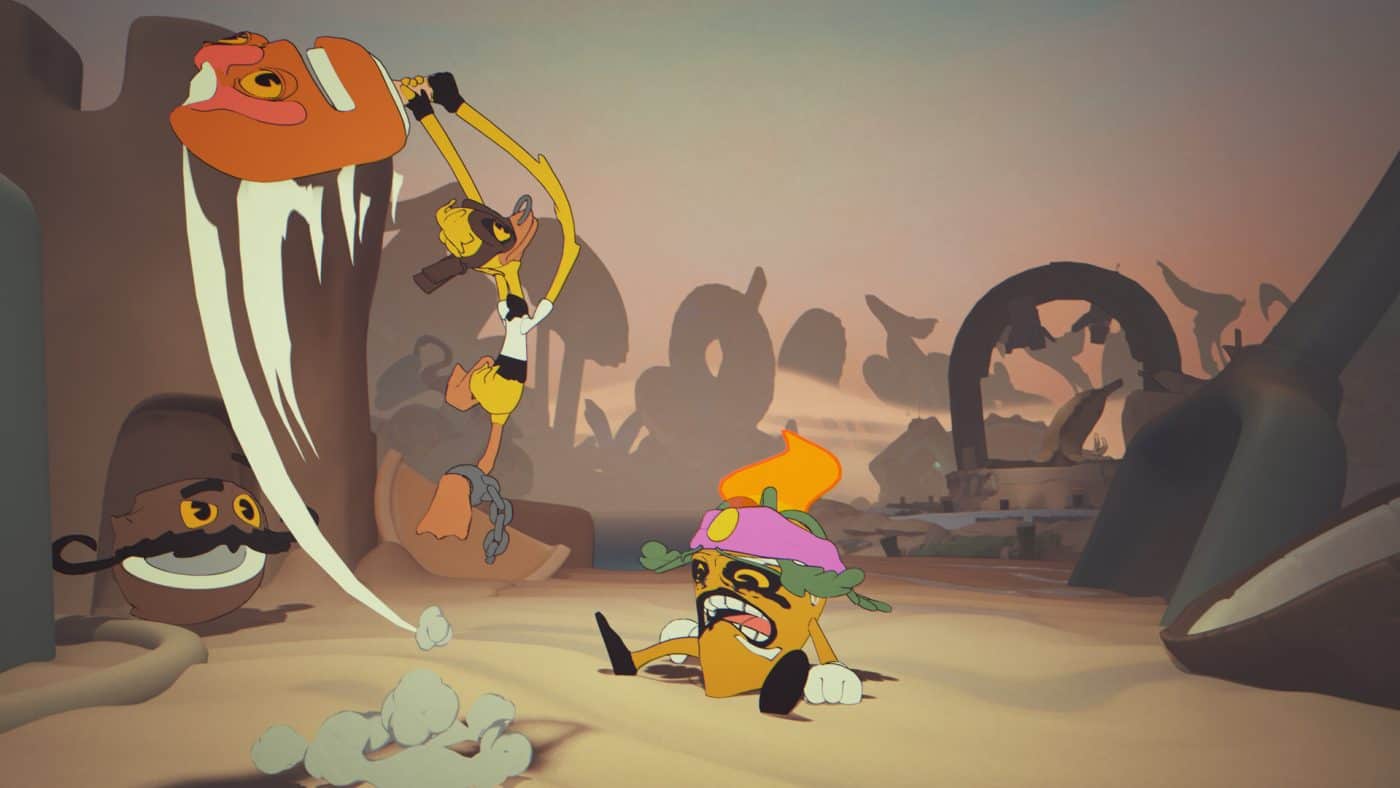
Because Into The Unwell is not interested in merely synthesising recognisable influences into a coherent hybrid. It is engaged in something stranger and more deliberate. It takes inherited forms – mechanical conventions, aesthetic reference points, tonal expectations – and subjects them to sustained internal pressure until they begin to deform from within.
The familiar is never discarded. It is destabilised. Bent. Stretched. Warped toward rupture without ever fully breaking. What emerges occupies an uneasy liminal state: close enough to memory to trigger recognition, distant enough to deny comfort.
It is within that unstable threshold that the game finds its truest identity. This is not a system to be decoded or mastered in conventional terms. It feels alive – less an apparatus than an organism, less a structure than a process – in which everything remains in a state of subtle, continuous mutation, calibrated just enough to keep certainty permanently out of reach.
As a result, the player’s role changes. This is no longer simple play. It becomes negotiation. Adaptation. A continuous recalibration of perception itself. The eye searches for stability, briefly finds it, loses it again, and reconstructs it once more – repeatedly, almost compulsively. From that repetition, something unexpected begins to surface: a rhythm, a coherence, a hidden architecture pulsing beneath the disorder like a buried heartbeat. It is here that the chaos begins to change its nature.
Not by diminishing. Not by softening. Not by becoming easier. But by becoming legible on its own terms. The absurd begins to organise itself. Excess takes on form. Noise develops cadence. What initially feels abrasive – even hostile – gradually reveals something unexpectedly intimate. Because beneath its distortion, beneath its tonal unease, beneath a surface that often seems determined to overwhelm, Into The Unwell shelters something remarkably restrained.
Something fragile. Something profoundly human. It never foregrounds this. It never explains itself. It refuses the comfort of overstatement or tidy thematic resolution. It simply allows that fragility to remain present, unresolved and exposed.
And perhaps this is where the project reveals its most compelling strength: not in any attempt to tame chaos, but in its disciplined commitment to inhabiting it fully – preserving ambiguity rather than resolving it, sustaining uncertainty rather than flattening it, and keeping open the fragile space in which questions are allowed to remain unresolved.
What lingers afterwards is neither explanation nor closure, but a sensation: subtle, persistent, difficult to define, yet impossible to dismiss. A slow recognition takes hold that all of its apparent disorder – every distortion, every moment of excess – was never the destination, only the surface, only the visible turbulence of something quieter and far deeper moving beneath.
And this, ultimately, is Into The Unwell’s quiet demand of the player: not immediate comprehension, not mastery, not certainty, but patience. A willingness to remain. To sit within its friction without resisting it. To move through its noise without rushing to translate it. To stay long enough for what first registers as pure chaos to gradually change shape. Until, almost imperceptibly, what once sounded like disorder ceases to be noise at all – and begins, slowly, deliberately, unmistakably, to speak.
The Beautiful Madness Behind Into The Unwell
Before discussing Into The Unwell in the conventional terms typically reserved for a videogame – its mechanics, its design philosophy, its strengths, its limitations, and the ambitions it carries with it – there is a necessary detour to make. Not as preamble, nor as biographical courtesy. And certainly not as the kind of introductory framing routinely afforded to developers before attention inevitably shifts back to the work itself. In this case, it is something more essential: a prerequisite for understanding.
Because some games can be understood at first glance. They yield to familiar critical tools: systems analysis, influence mapping, genre classification, production lineage. They fit, more or less comfortably, into existing frameworks of reading.
And then there are works like Into The Unwell. Projects that resist this kind of immediate classification with unusual stubbornness. Experiences that seem, at least initially, to evade the reassuring clarity of easy definitions. Works that demand not simply observation, but interrogation. And in interrogating them, the focus shifts almost inevitably elsewhere.
Not to the game itself – not at first. But to the people who conceived it. Because the first meaningful question Into The Unwell raises is not what it is. It is how it came to be. And, perhaps more importantly, why.
How does a vision like this emerge? At what point does an unformed intuition begin to take shape – acquiring direction, structure, and material form? When does fascination become obsession? And when does obsession evolve into creative language?
Most importantly, what kind of developers are willing to absorb the creative, technical, financial, and emotional risks required to pursue an idea like this to its fullest and most unpredictable conclusion?

These are questions that speak less to the specifics of game design than to a particular creative disposition – a way of approaching artistic work defined by persistence, uncertainty, and an almost irrational willingness to follow instinct into uncharted territory, sustained only by the conviction that what emerges will be unmistakably, uncompromisingly its own.
To answer those questions, it is necessary to go back. Far back. Back before trailers, press kits, marketing language, or the early compression of ideas into sellable form. Before the project could be summarised, positioned, or even properly named. Back to the point where Into The Unwell did not yet exist as a product, a pitch, or even a concept. It existed only as potential – as a kind of unresolved creative pressure, a visual and conceptual impulse still searching for the right conditions to take form. A state of suspension more than existence. Something not yet declared, but already insisting on becoming.
And it is precisely here, in this fragile in-between, that the story begins to converge with She Was Such A Good Horse. Even the name alone introduces an immediate tonal displacement. It does more than identify a studio – it evokes one. It lingers in the air a fraction longer than expected, resisting the clean resolution of interpretation, as if meaning were deliberately left open-ended.
There is something at once surreal and faintly melancholic about She Was Such A Good Horse. It feels like a fragment lifted from a larger, unseen narrative – a line torn from its context, yet still charged with the emotional residue of everything that comes before and after it. A trace of a story we are never fully allowed to enter, but can still perceive in outline, like a memory hovering just beyond recall: elusive, familiar, and impossible to entirely forget.
It is the kind of name that makes you pause. A name that interrupts passive reading long enough for curiosity to take over. And almost immediately, the question arises: what is behind it? An improbable anecdote? An internal joke? A deliberately opaque reference? Or simply a refined taste for the absurd? Most likely, some combination of all of the above.
Whatever its origin, it is difficult to imagine a more fitting name for a studio that appears to have embraced divergence not merely as an aesthetic preference, but as a creative methodology.
Founded in Malmö, within one of Europe’s most active independent development ecosystems, She Was Such A Good Horse is a five-person collective drawn from markedly different backgrounds, yet held together by an unusually coherent creative sensibility. A sensibility shaped not only by videogames, but also by traditional animation, illustration, caricature, grotesque exaggeration, and broader currents of surrealism grounded in distortion, instability, and deliberate visual excess.
Above all, it is defined by a resistance to anything linear, rigidly structured, or predictably ordered. The team itself distills this ethos into a phrase that reads like a manifesto disguised as a joke: “murderously creative veterans.”
The wording is intentionally playful. But beneath the humour lies something revealing. Because it captures a truth that becomes increasingly evident across their work: creativity here is not ornamental. It is not decoration, nor expression for its own sake.
It is friction. A destabilising force that challenges assumptions, breaks internal logic, and forces constant re-evaluation of what a system – or an idea – is allowed to be. Those familiar with the project’s development describe a process that does not resemble linear production. It is iterative in the strictest sense: experimental, unstable, frequently self-correcting, and always in motion. It is from this environment that Into The Unwell emerged. Not as the execution of a fixed plan. But as the byproduct of an obsession.
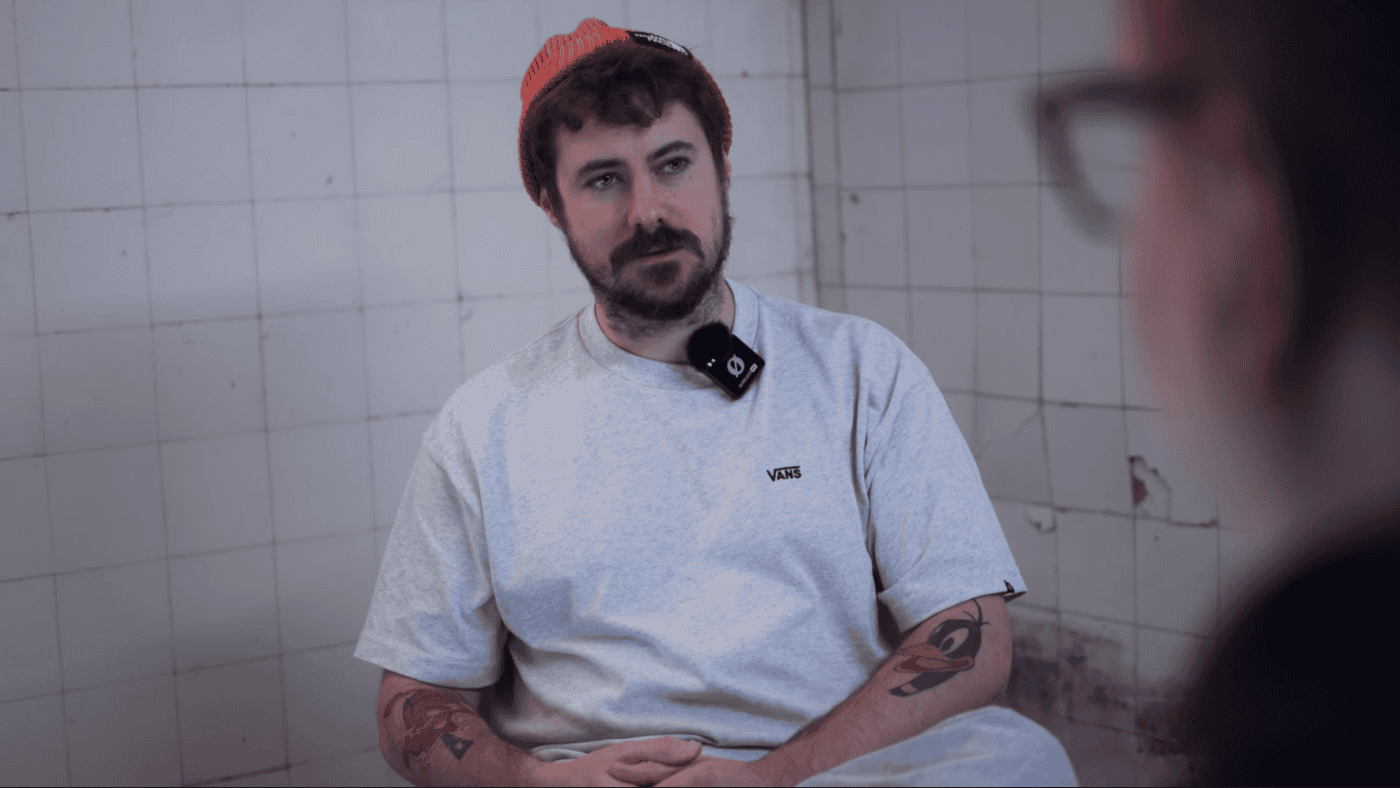
A word that recurs consistently in accounts of the project’s origins – and one that art director Felix Vaubert De Puiseau uses with unusual clarity when describing its beginnings. That obsession initially had a point of focus: Cuphead.
Like many developers, Felix was deeply struck by Studio MDHR’s work. But his response extended well beyond admiration. It became something closer to a creative rupture. What resonated was not merely the technical brilliance of the animation, impressive though it was, but the underlying visual logic that made it possible.
The elastic, unstable physicality of rubber hose animation: bodies that stretch, collapse, rebound, liquefy, and reassemble according to laws that seem at once self-contained and gloriously indifferent to conventional physics. In its purest form, rubber hose animation carries a paradoxical duality – playful yet unsettling, nostalgic yet deeply disorienting.
It entertains even as it quietly destabilises perception. The more Felix studied its principles, the more something familiar began to surface within it. This was not admiration from a distance. It was recognition – the sense of encountering a visual language that already spoke, in some immediate and instinctive way, in a voice he seemed to understand.
What began as aesthetic fascination soon shifted into rigorous experimentation: frame-by-frame analysis, technical prototyping, and sustained research into whether that language could be meaningfully translated into an entirely different dimensional space. At its core, the question was deceptively simple: could rubber hose survive in 3D? Could an aesthetic built on the freedom of two-dimensional deformation retain its identity within a volumetric, interactive space?
This was never merely a technical challenge. It was a question of movement, rhythm, spatial logic, and perceptual coherence – of whether controlled impossibility could survive the structural constraints of three-dimensional design.
The first answer took shape as No Country For Old Hen – a prototype that would go on to lay the conceptual and technical groundwork for Into The Unwell. Part experiment, part proof of concept, it served as a testing ground for an idea that might easily have remained an intriguing impossibility. Instead, once shared online, it sparked an immediate and curious response.
The response suggested that audiences were recognising something distinctly their own – an unusual creative energy that, while still rough and embryonic, already felt unmistakably singular. It was the point at which the project stopped existing as a private obsession, and began to exist in relation to the outside world.
Felix began assembling collaborators capable not merely of executing the concept, but of expanding it – developers willing to inhabit the anomaly itself, rather than smooth it into familiarity. That search ultimately led to the formation of She Was Such A Good Horse, marking the true beginning of development.

What followed was not conventional production, but sustained creative turbulence: cycles of iteration and collapse, discarded prototypes that fed later revisions, recovered ideas resurfacing in altered form, reversed decisions that re-entered the pipeline, and moments in which failure ceased to be a setback and instead became raw material.
Within this process, technical constraints gradually shifted into aesthetic instruments. Errors were reinterpreted as expressive outcomes. Instability, rather than being resolved, was absorbed into the structure of the work itself.
This evolution was further shaped by the involvement of Coffee Stain Publishing, whose contribution appears less as authorial direction and more as preservation – a deliberate effort to protect the project’s irregular identity from being streamlined in the pursuit of clarity or accessibility. Because for works of this kind, the primary risk is rarely outright failure. It is normalisation. The slow erosion of specificity in exchange for readability. Into The Unwell appears to have avoided that fate.
And that may ultimately be what makes it so compelling. It carries the unmistakable sense of a work in which little exists by convention. Every distortion, every eccentric flourish, every apparently excessive creative decision bears the trace of genuine process – examined, contested, refined, and ultimately defended.
It is the result of five developers choosing to pursue an unusual idea with enough persistence to make it real.
This World Seems Somewhat Unwell
And so, at last, we arrive at the question that has been deliberately held in suspension. It is the question that has lingered since the opening lines – quietly deferred as we moved through the project’s origins, its obsessions, and the creative process that shaped the captivating, defiant vision pulsing through every frame of Into The Unwell.
Because once you have stepped behind the scenes of a work like this – once you have grasped the language that sustains it and the sensibility that drives it – asking what Into The Unwell actually is can no longer be reduced to a technical definition.
It is not enough to name the genre. It is not enough to list the mechanics. It is not enough to place it within a familiar design template. What matters is how that vision – that obsession, that creative anomaly, that stubborn refusal of convention – becomes playable experience. In other words: once the controller is in hand, what actually happens when you enter the world imagined by She Was Such A Good Horse? The most immediate answer, though far from the most complete, is that Into The Unwell is a cooperative action roguelite, playable either solo or with up to two other players online.
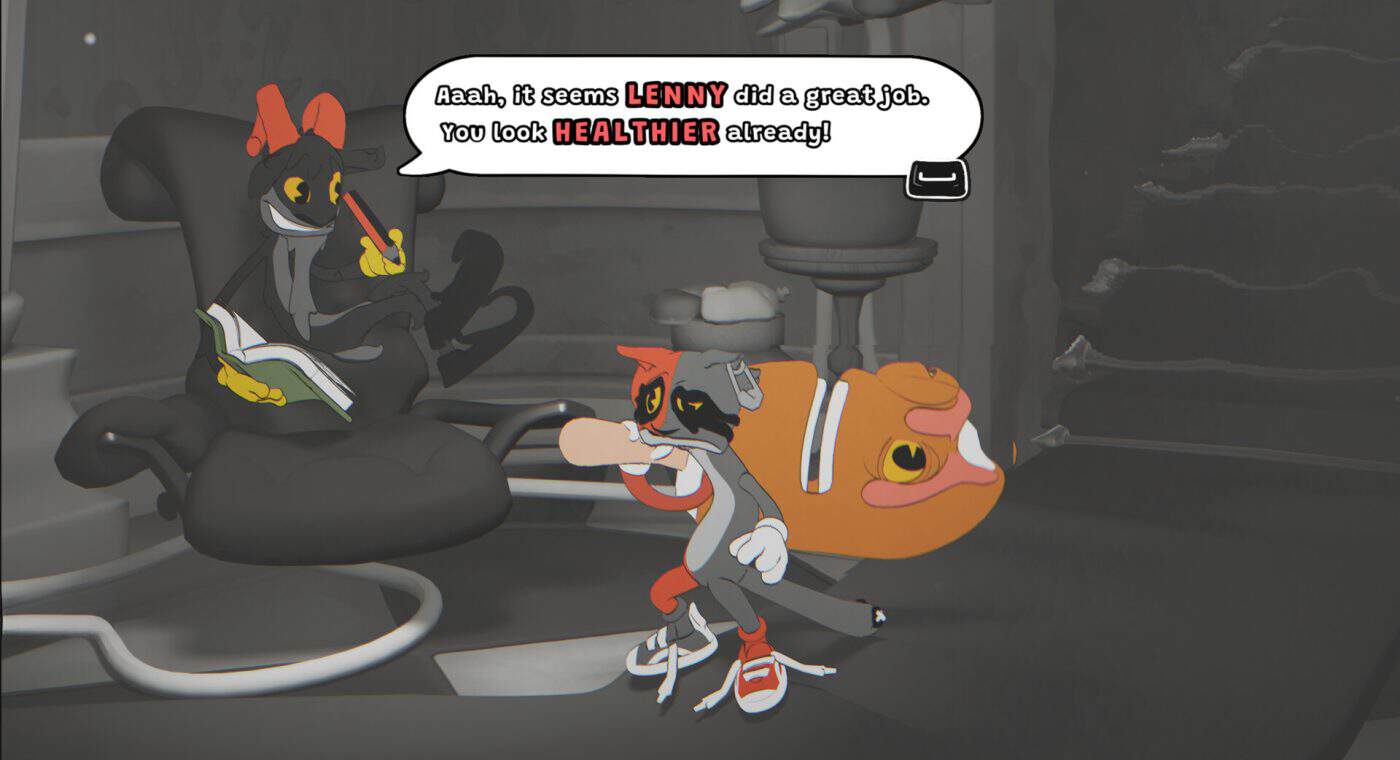
On paper, this places it within a well-established framework: runs, incremental progression, death, learning, restart. Over the past few years, the roguelite format has been iterated on so frequently that it has become one of the most crowded spaces in contemporary game design, and one of the hardest in which to stand out. Yet from the first footage alone, it is clear that Into The Unwell has no interest in simply reproducing a proven formula.
The team defines its approach as “whack’n’slash” – a term that may read as playful shorthand, but in practice encapsulates a clear design philosophy. This is combat that rejects elegance. It is not refined, not restrained, not concerned with visual or mechanical purity. It is crooked, exaggerated, unstable. As if each encounter emerged from the collision between a 1930s rubber-hose cartoon and a nervous breakdown. That sense of controlled instability is central to the game’s identity. Every system appears calibrated to communicate distortion, impact, and imbalance – not as aesthetic flourish, but as structural intent.
The narrative premise fits this framework with striking precision. You step into the role of one of the outcasts who inhabit this universe – characters who seem to have drifted beyond any meaningful sense of balance or redemption. Their lives have been worn down by repetition and enclosed within routines that have long since stopped offering any real escape. The protagonist shown so far embodies that condition in full: hollowed out, exhausted, and spending his evenings at the bottom of a glass.
Each night unfolds identically. The same bar. The same seat. The same glass, emptied and refilled in an endless loop. Until, abruptly, reality fractures — and it does so in a manner entirely consistent with the internal logic of the world.
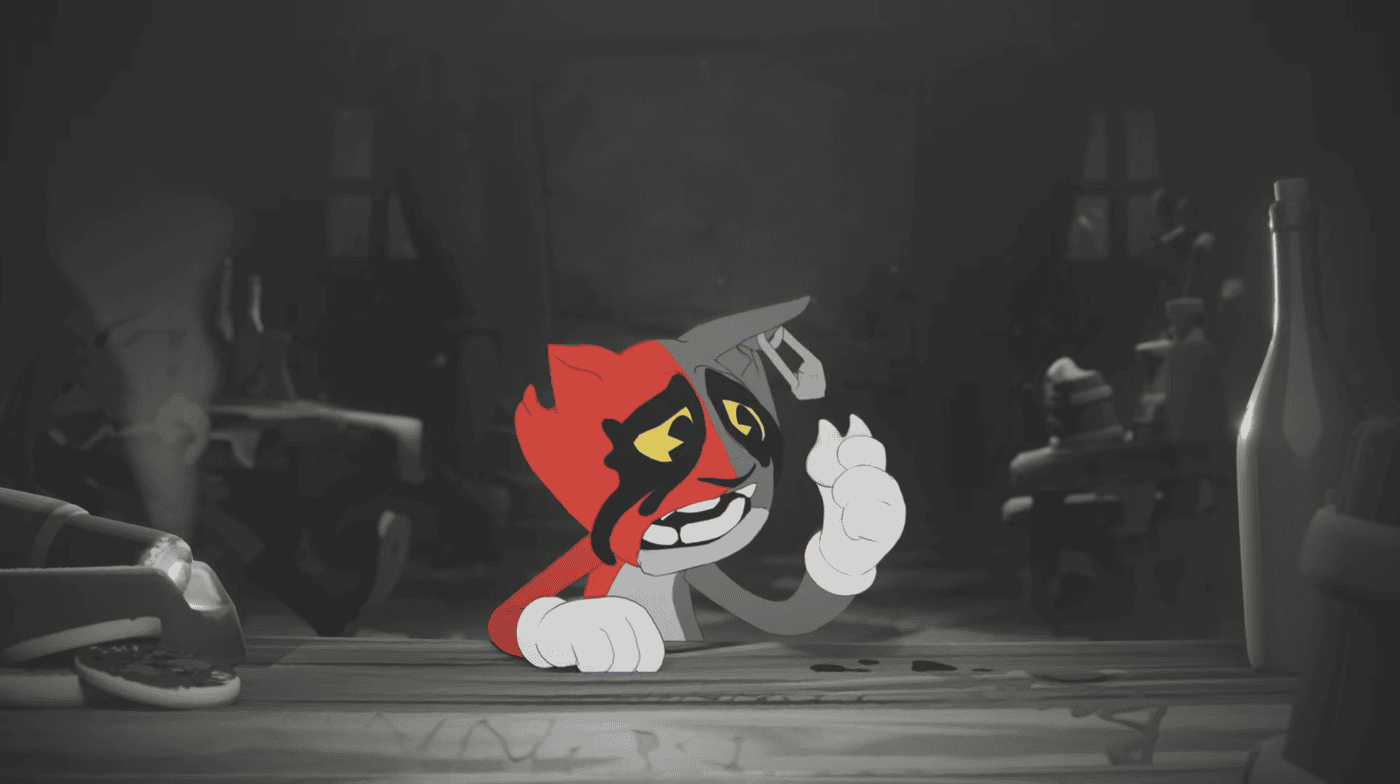
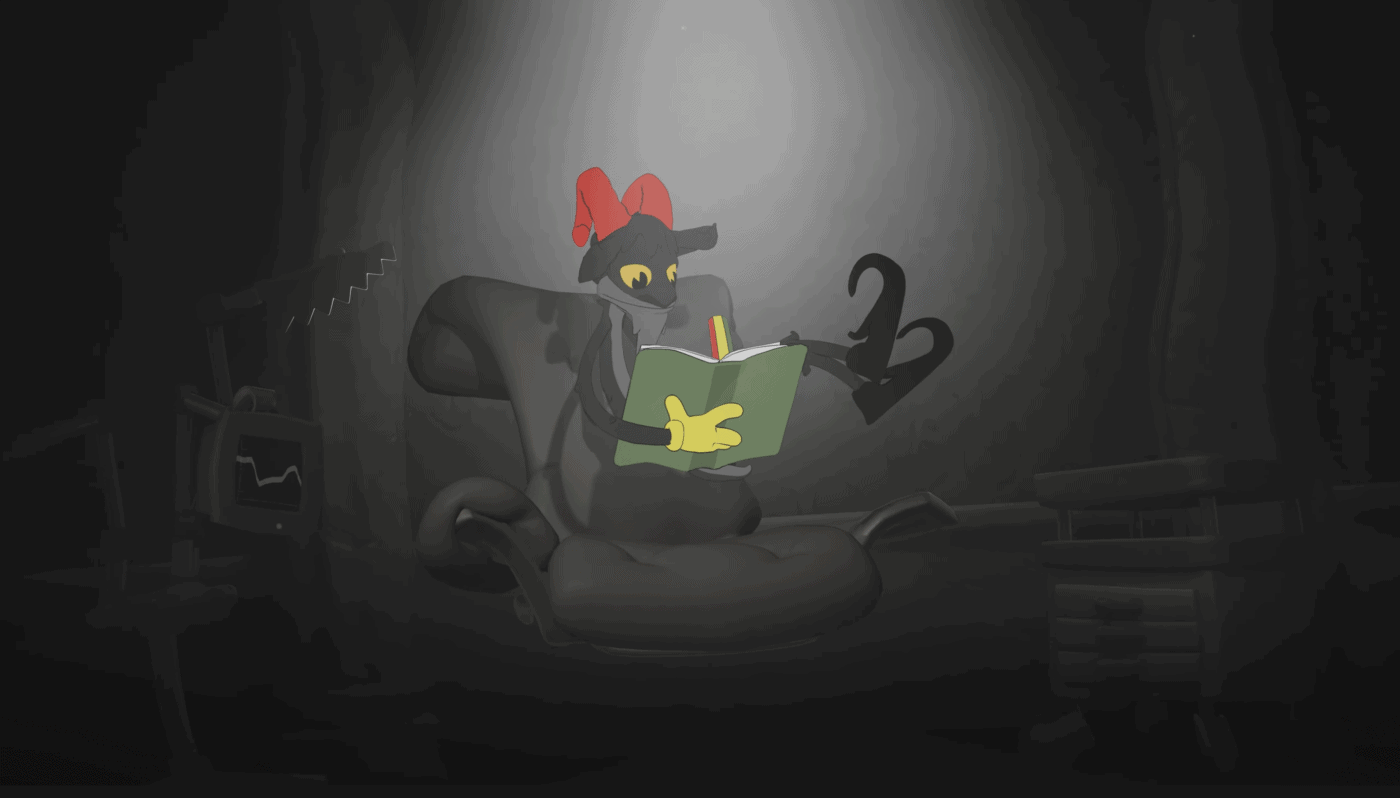
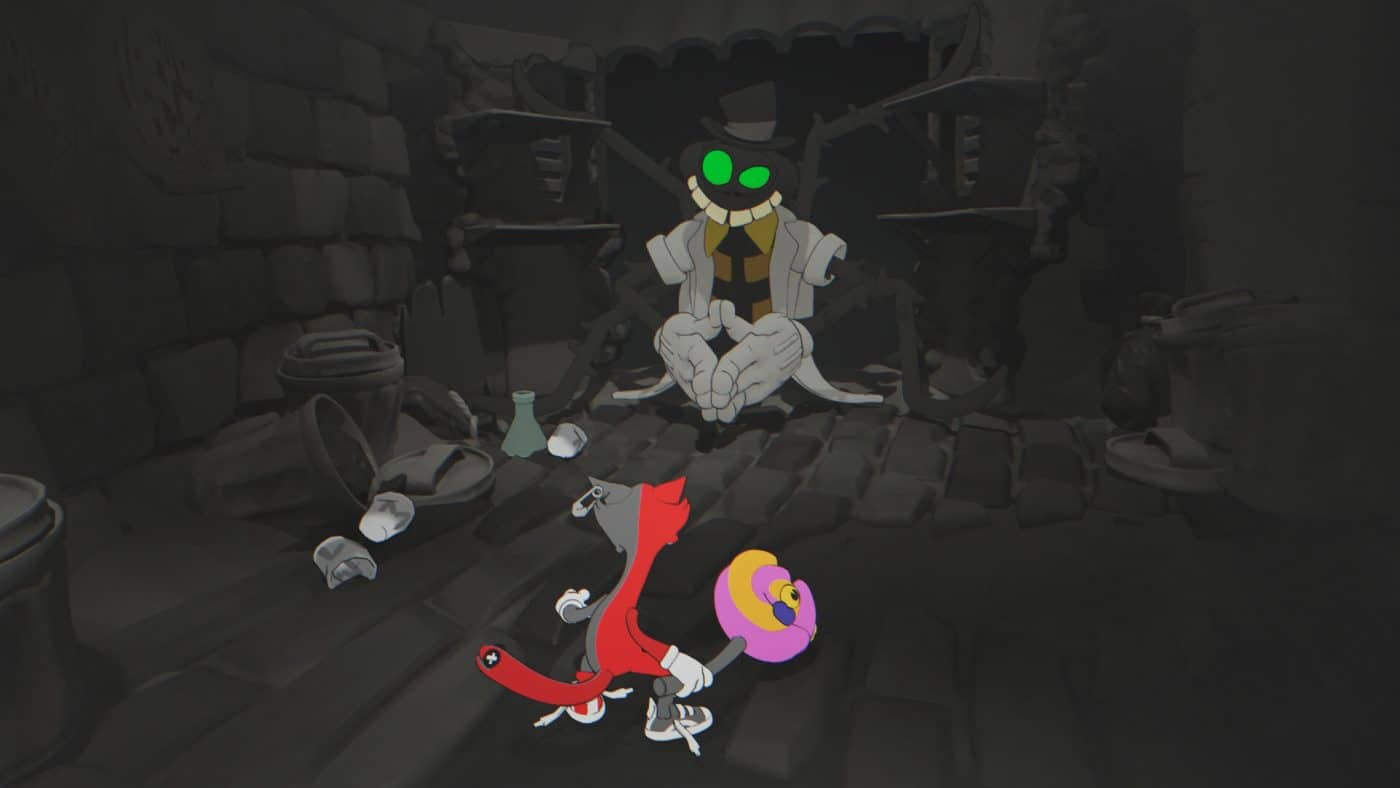
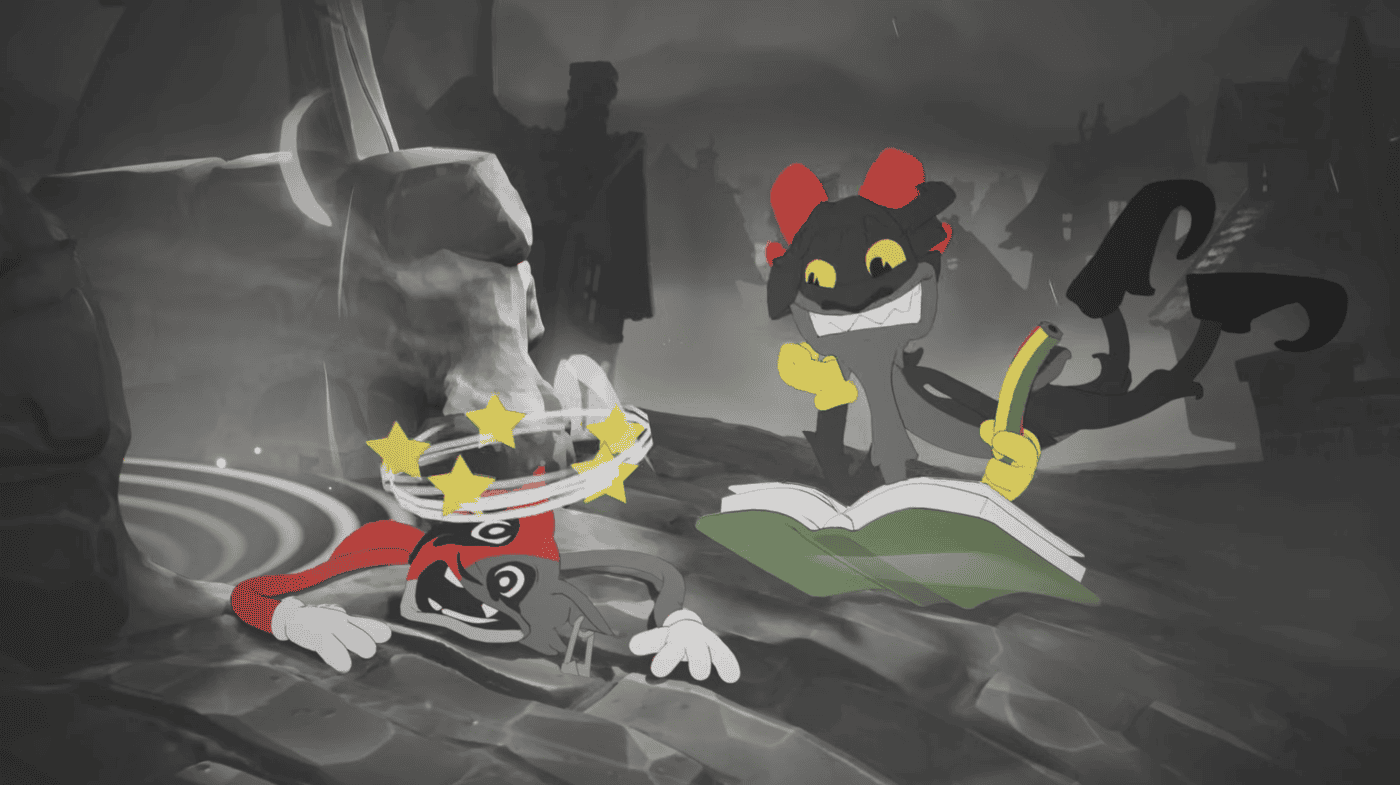
A grotesque, caricatured devil figure emerges – not a conventional demonic threat, but something stranger, more elusive, and more ambiguous. It is this entity that draws the protagonist, still dulled by alcohol and incapable of mounting any real resistance, into a diabolical pact and a dimensional spiral that hurls him into the heart of the Unwell. That is where the game truly begins: not in a place, but in a condition. A materialized state of mind. An unstable inner world rendered as interactive space. A reality shaped by anxiety, dependency, compulsion, and imbalance, translated into impossible landscapes and delirious creatures.
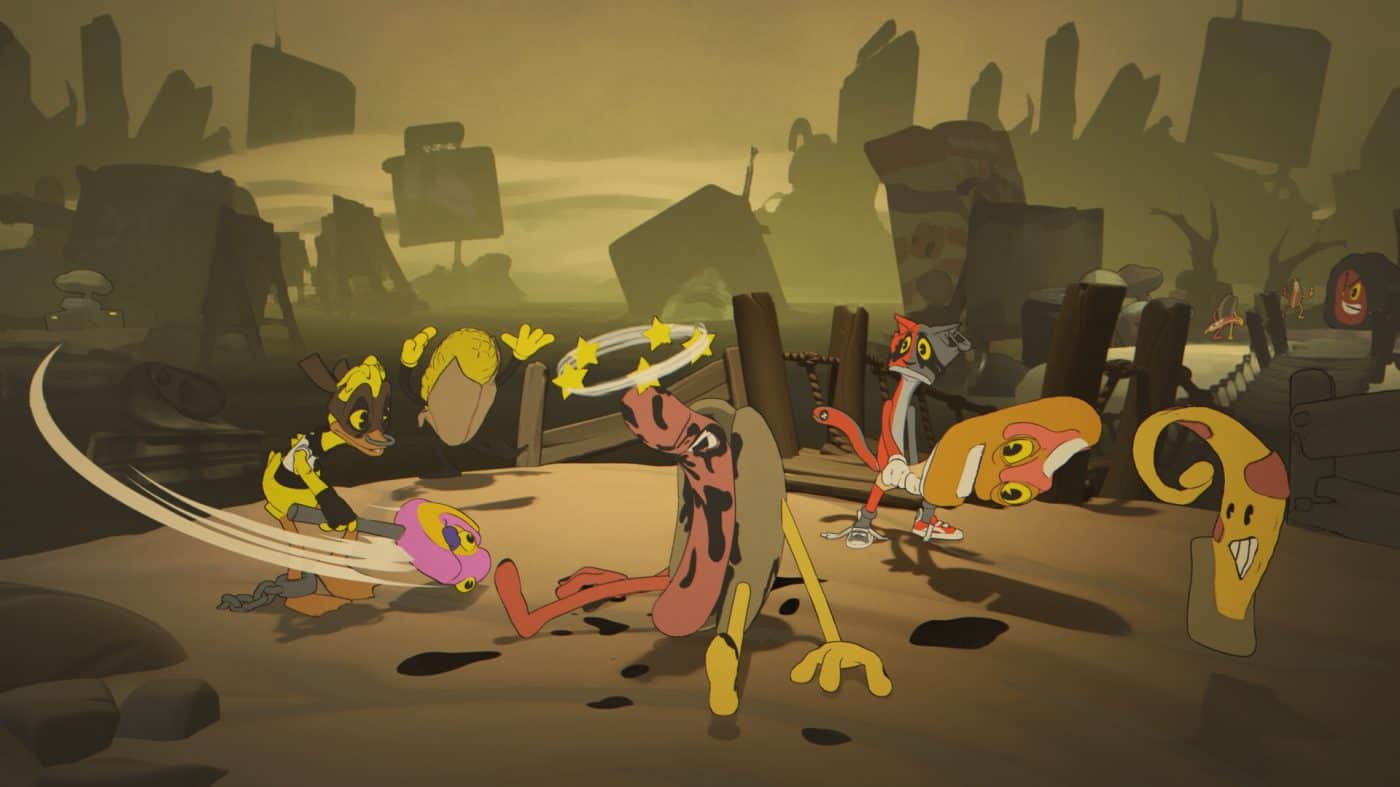
Imagine a classic rubber-hose cartoon swallowed by a panic attack and re-emerging as a video game. The result is a world where every corner seems on the verge of folding in on itself. Space bends. Physics feels provisional. Everything suggests that the entire scene could collapse at any moment. Populating this world is a bestiary that perfectly embodies its absurdist spirit: sentient tires, aggressive hot dogs, rampaging pizza, hostile anthropomorphic entities determined to tear you apart.
These enemies are more than obstacles. They are instruments of disorientation, designed to unsettle perception before they challenge skill. They force the player to tune in to the delirious frequency of this universe.
And it is within that surreal ecosystem that the actual gameplay loop unfolds.
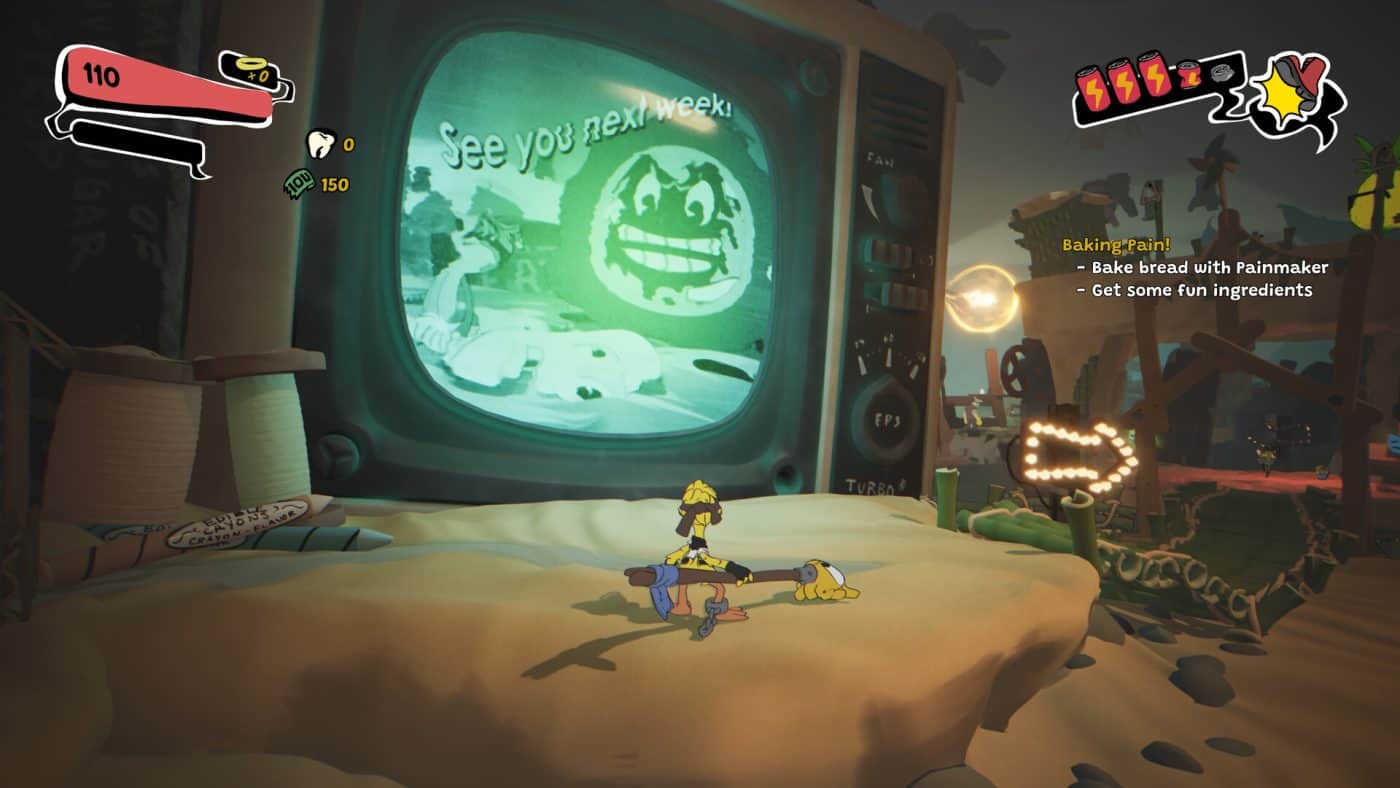
The roguelite structure appears to revolve around successive expeditions through levels that combine frantic combat, platforming, and resource collection. Each run seems built to encourage experimentation – not only in how players manage risk and resources, but also in how they interact with an arsenal of offensive tools that reflects the game’s own creative absurdity.
Forget legendary swords, futuristic rifles, or familiar military archetypes. Here, weapons are direct extensions of the game’s nonsense-driven imagination. Giant ice-cream cones used as crushing clubs. Lobotomized lollipops. Innocent-looking objects transformed into instruments of destruction. Every weapon appears to carry its own rhythm, weight, and logic. The result suggests a combat system that may be far more layered than its playful surface first implies. Progression is built around collecting Talent Stars, which can be used to unlock upgrades, abilities, and mutations that alter each run in meaningful ways. Complementing this, the Anvil allows for direct weapon enhancement, expanding the strategic possibilities available to the player.
As with any game of this kind, the challenge lies in preserving the balance between chaos and readability. Yet the material shown so far makes the team’s intent unmistakably clear: to turn delirium into structure, and to ensure that madness never resolves into mere noise. Every excess appears to serve a purpose. Every distortion seems tied to a deliberate design choice.
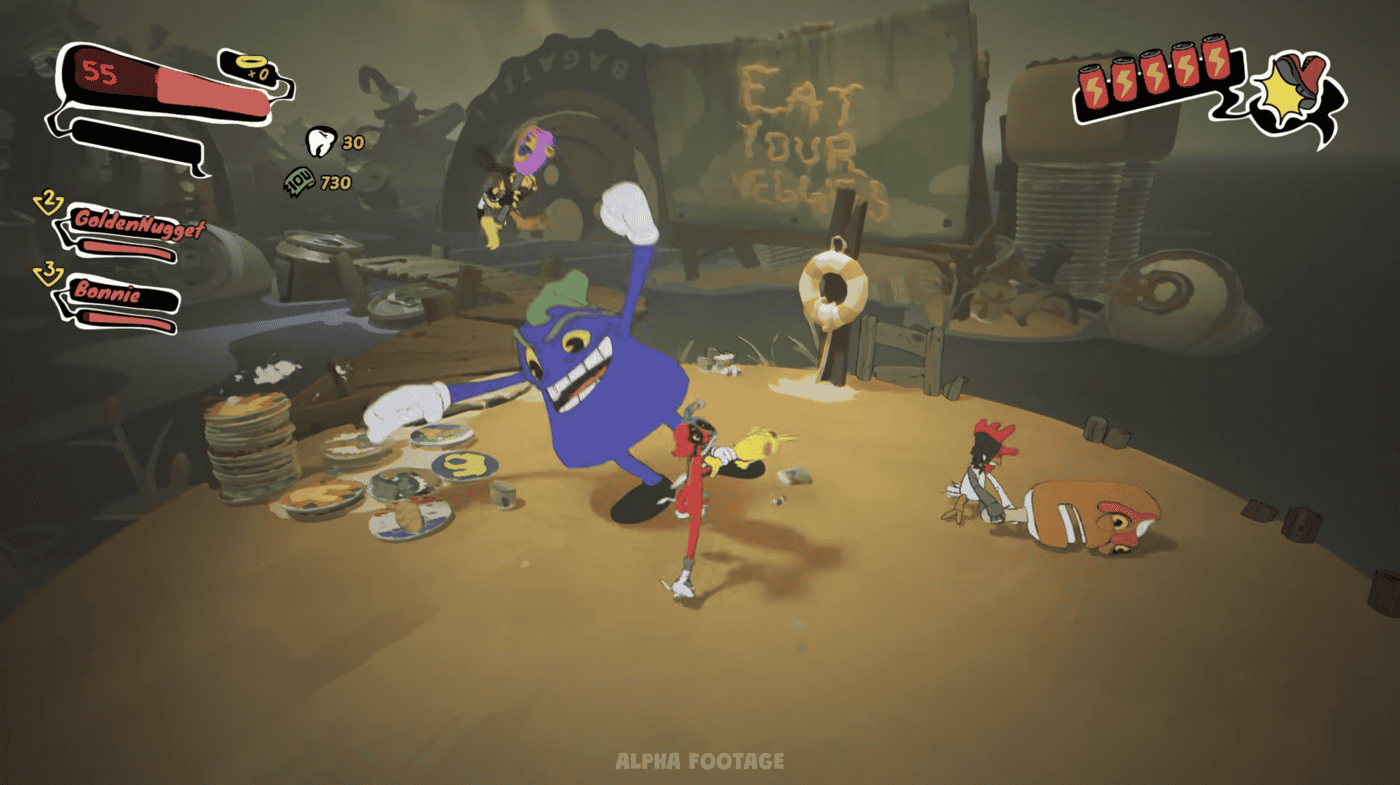
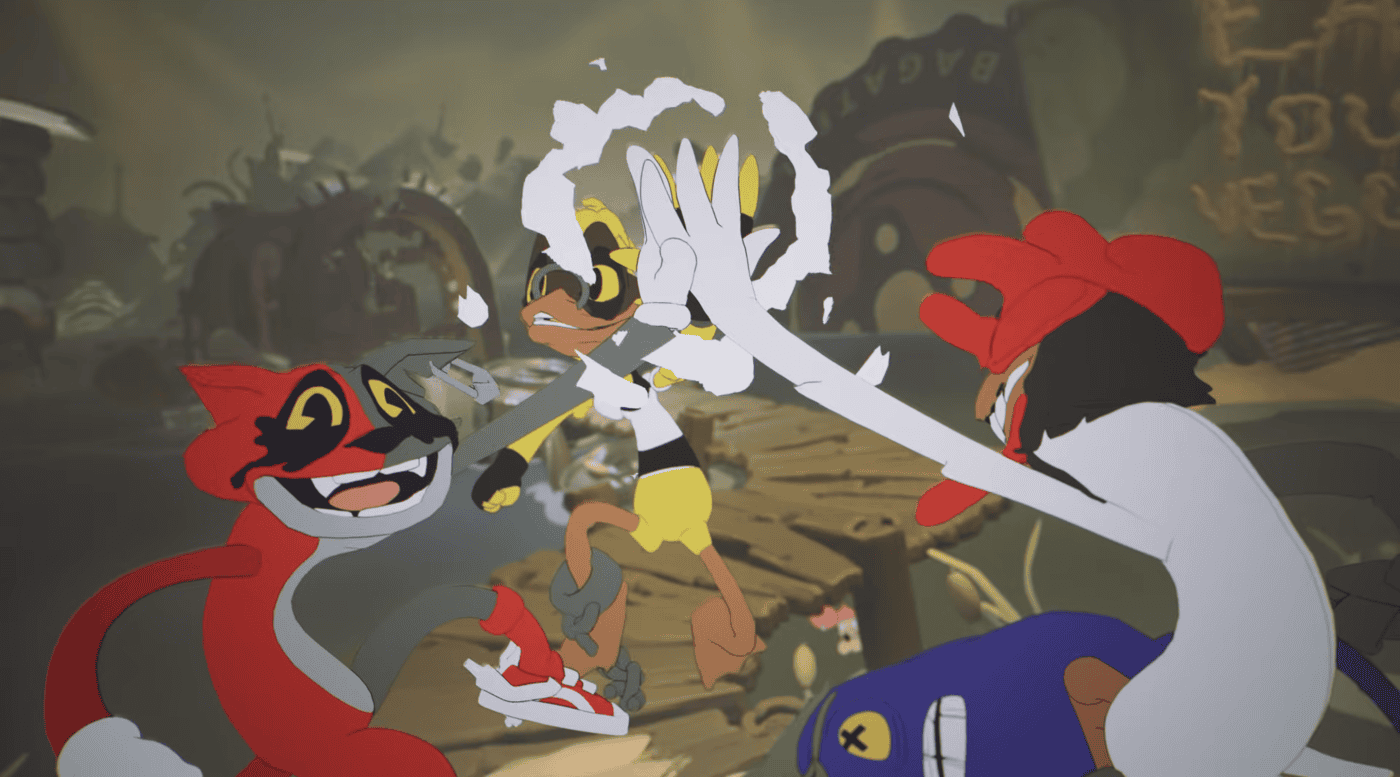
The co-op mode is one of the game’s most promising features. The option to take on the experience with up to three players does not read like a bolt-on addition, but as something integral to the design itself. The idea of moving through a psychedelic hellscape alongside other social outcasts – confronting inner demons in what is, essentially, an absurd group therapy session — has a narrative logic that is almost too neat to ignore. It is ridiculous, certainly, but also unexpectedly human: a darkly comic premise that works precisely because it recognises the emotional truth beneath the absurdity.
Perhaps most compelling, though, is the way gameplay, art direction, and worldbuilding appear to fuse into a single, living whole. The visual design does not merely frame the experience; it animates it. It sets the rhythm. It shifts perception. Every animation, every distortion, every elastic snap of a character seems to reinforce the same underlying sense of instability. The music only heightens that effect, layering the world with a soundtrack that intensifies unease rather than simply accompanying it.
The result is an experience that does not merely depict chaos. It attempts to make you feel it.
And that is where Into The Unwell reveals its strongest promise. It does not feel like a game using strangeness as a decorative veneer. It feels like a game intent on turning instability itself into a language.
Of course, only time will tell whether it can sustain that ambition. The combat loop, build variety, progression, and resistance to repetition are all questions that only the finished game will answer. But even now, one thing is already difficult to overlook: Into The Unwell has something that cannot be manufactured through market logic or assembled from best practices alone.
It has personality – loud, skewed, gloriously unhinged. And in a landscape increasingly crowded with technically polished games that often feel creatively interchangeable, that is already more than enough.
When and Where Will Into The Unwell Be Released?
If your next question is when – and on which platforms – Into The Unwell will be available, the answer comes with one confirmed detail and one still missing piece. On the positive side, the game is currently scheduled for 2026 and will launch in Early Access on PC via Steam. On the other hand, She Was Such A Good Horse has not yet announced a specific release date.
If the project has already caught your attention, you can add it to your Steam wishlist and follow the studio’s official channels for updates, insights, and behind-the-scenes glimpses from development.
That’s all for now. Until next time!