
A unique adventure that makes the player feel emotionally responsible for another life.
In the modern gaming landscape, genuinely surprising experiences have become increasingly uncommon. Not merely original concepts or productions built around a technological novelty, but games that actively attempt to challenge and redefine the very language of player interaction. At a time when the industry is dominated by familiar formulas, blockbuster sequels and increasingly standardized design philosophies, creating something that feels truly distinct is an exceptionally difficult undertaking.
Whispers from the Star, the ambitious project developed by Anuttacon, belongs precisely to that small group of games willing to take meaningful creative risks in pursuit of a different kind of interactive experience.
From the moment it was first unveiled, the project immediately drew attention thanks to a concept that appeared deceptively simple, yet carried remarkably ambitious implications. Rather than directly controlling the protagonist, players guide her entirely through their voice, becoming a constant presence throughout her struggle for survival on an unknown alien planet.
At first glance, the premise could easily have been dismissed as little more than a technological experiment built around voice recognition and artificial intelligence. Yet the deeper the experience unfolds, the more apparent it becomes that Whispers from the Star is aiming for something far more more layered, thoughtful and emotionally ambitious.
Because this is not merely an AI showcase or a tech demo designed to highlight procedural interaction systems. What Anuttacon attempts here is considerably more interesting: a reimagining of the relationship between player and character itself. The game abandons the traditional power fantasy typically associated with interactive entertainment and instead builds its entire structure around communication and psychological presence. Conversation is no longer treated as a secondary mechanic used to deliver exposition or branching dialogue choices. Instead, it becomes the foundation upon which the entire experience is built.
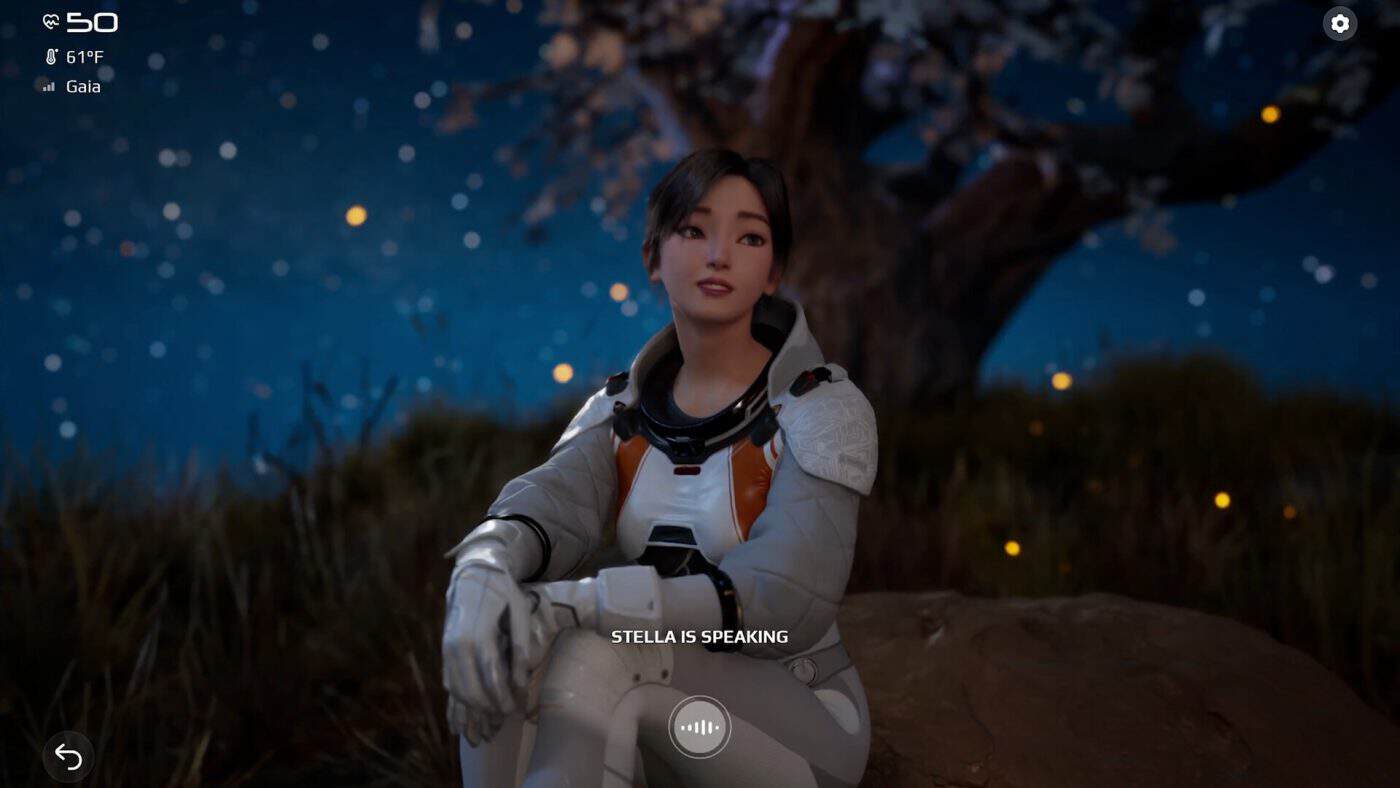
It is through Stella – an astronaut stranded on a hostile and unfamiliar world – that the game finds its strongest identity. As the experience progresses, the relationship that develops between player and protagonist gradually becomes its true driving force. The game slowly stops feeling like a conventional survival adventure and begins to evolve into something significantly more intimate and psychologically engaging. Every hesitation in Stella’s voice, every request for reassurance and every moment of fear contributes to a growing sense of emotional responsibility that very few games manage to create with such consistency.
And that is ultimately where Whispers from the Star proves most fascinating. Despite the inevitable imperfections that come with such an experimental framework, the game succeeds in delivering something increasingly uncommon within the modern industry: the feeling of encountering a genuinely new form of interaction. Not through mechanical complexity or spectacle, but through its ability to create emotional tension, intimacy and human connection in a way that feels surprisingly authentic. The result is an experience that may well divide audiences, yet remains compelling precisely because of its willingness to experiment.

A New Way to Be Inside the Story
To fully appreciate what makes Whispers from the Star so distinctive, one has to start with its structural foundation. Perspective has always been central to video game design, shaping not only how players see a world, but how they relate to it.
First-person systems place the player directly inside the protagonist’s viewpoint, while third-person approaches create a more cinematic and observational relationship with the character on screen. Anuttacon’s project, by contrast, moves in a far less common direction – one that can be described as an interactive form of second-person perspective.
Here, the player does not inhabit the protagonist in any conventional sense. There is no direct traversal of the world through movement, combat, or traditional input-based mechanics. Instead, the player occupies an external yet essential role – an unseen presence that communicates with, guides, reassures, and subtly shapes the protagonist from beyond her immediate reality.
While the concept recalls earlier experimental ideas in the medium’s history – from unrealised projects such as Project Milo to more abstract systems of remote assistance and observational control – Whispers from the Star extends the idea significantly further, embedding it at the very core of both its gameplay and narrative design.
The crucial distinction lies in how naturally this framework is implemented. It is never presented as a technological novelty or as an experimental layer placed on top of conventional design. Instead, it forms the very backbone of the experience. Every element in Whispers from the Star is built around the evolving relationship between the player and Stella.
Each exchange, each pause, and each moment of uncertainty is deliberately shaped to reinforce that connection, increasing its emotional weight and sense of intimacy. Ultimately, this is what defines the game’s identity: the player is no longer simply controlling a character, but actively learning to interpret, support, and understand a fragile human presence struggling to survive.
Stella: A Surprisingly Human-Like Protagonist
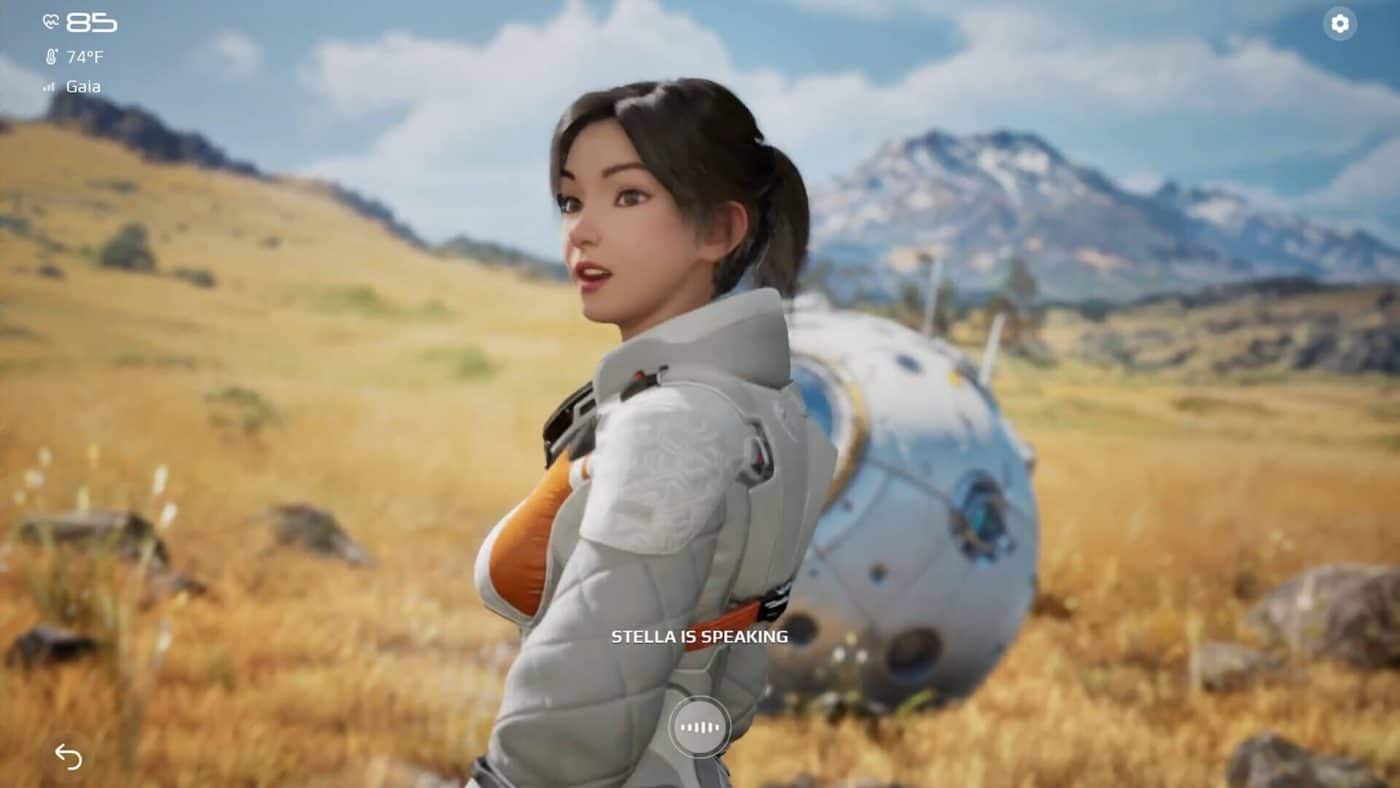
The true emotional core of the entire experience is undoubtedly Stella, an astronaut left stranded on an alien planet following a mysterious incident. Every aspect of the game ultimately revolves around her presence, and it is largely through the strength of her characterisation that the project fully realises its ambitions. Anuttacon brings Stella to life through an AI-driven system designed to make her reactions feel dynamic, spontaneous, and convincingly human.
What stands out most is not simply the technical quality of her facial expressions and animations, but the way Stella conveys subtle emotional nuance, from vulnerability and fear to curiosity and trust. Her presence works because it does not rely on visual spectacle alone, but on the credibility of her reactions, which consistently sustain a sense of emotional authenticity.
Throughout the experience, Stella is in almost constant dialogue with the player. She reacts to her surroundings, expresses uncertainty, fear, doubt, and occasional irony, and never quite feels reduced to a set of pre-recorded lines. Instead, the game sustains the convincing illusion of interacting with someone who is actively listening, processing, and responding in real time. It is here that the project reveals its most compelling strength: the gradual formation of an emotional bond.
As the experience unfolds, Stella’s behaviour subtly evolves according to the relationship established with the player. She grows more trusting, emotionally open, and increasingly willing to confide during moments of vulnerability, while also meeting moments of extreme tension with greater composure. The result is an attachment that forms almost naturally, encouraging the player to feel a genuine need to protect her and making every threat feel deeply personal.
Survival, Psychology, and Communication at the Core of Gameplay
From a gameplay perspective, Whispers from the Star adopts a design philosophy that stands apart from contemporary conventions. The microphone is not an auxiliary input, but the game’s primary interface.
The player’s voice becomes the primary instrument of interaction. Progress depends entirely on spoken communication with Stella: guiding her across an unknown planet, helping her navigate environmental hazards, suggesting actions, calming her during moments of emotional distress, and supporting her through situations that can quicly become life-threatening. In this framework, dialogue is stripped of its purely narrative function and redefined as an active survival mechanic.
What makes the system particularly effective is its consistency across shifting tones and scenarios. At times, the experience settles into a slower, almost contemplative rhythm: vast alien landscapes, extended silences, and intimate exchanges that allow the relationship with Stella to develop organically. These sequences establish a strong atmospheric identity, leaving room for reflection and moments of unexpected warmth. Yet the tone never remains fixed.
When the environment turns hostile, Whispers from the Star becomes a far more tense and anxiety-driven experience. Navigating uncharted caves, crossing fog-choked valleys, or attempting to traverse an unforgiving alien landscape creates sustained pressure, heightened by the complete absence of direct control. The tension stems precisely from this lack of agency. Physical intervention is never an option. The player can only speak – attempting to maintain Stella’s composure, guide her through uncertainty, and trust that their instructions are understood and correctly executed.
The Emotional Thread Between Player and Protagonist
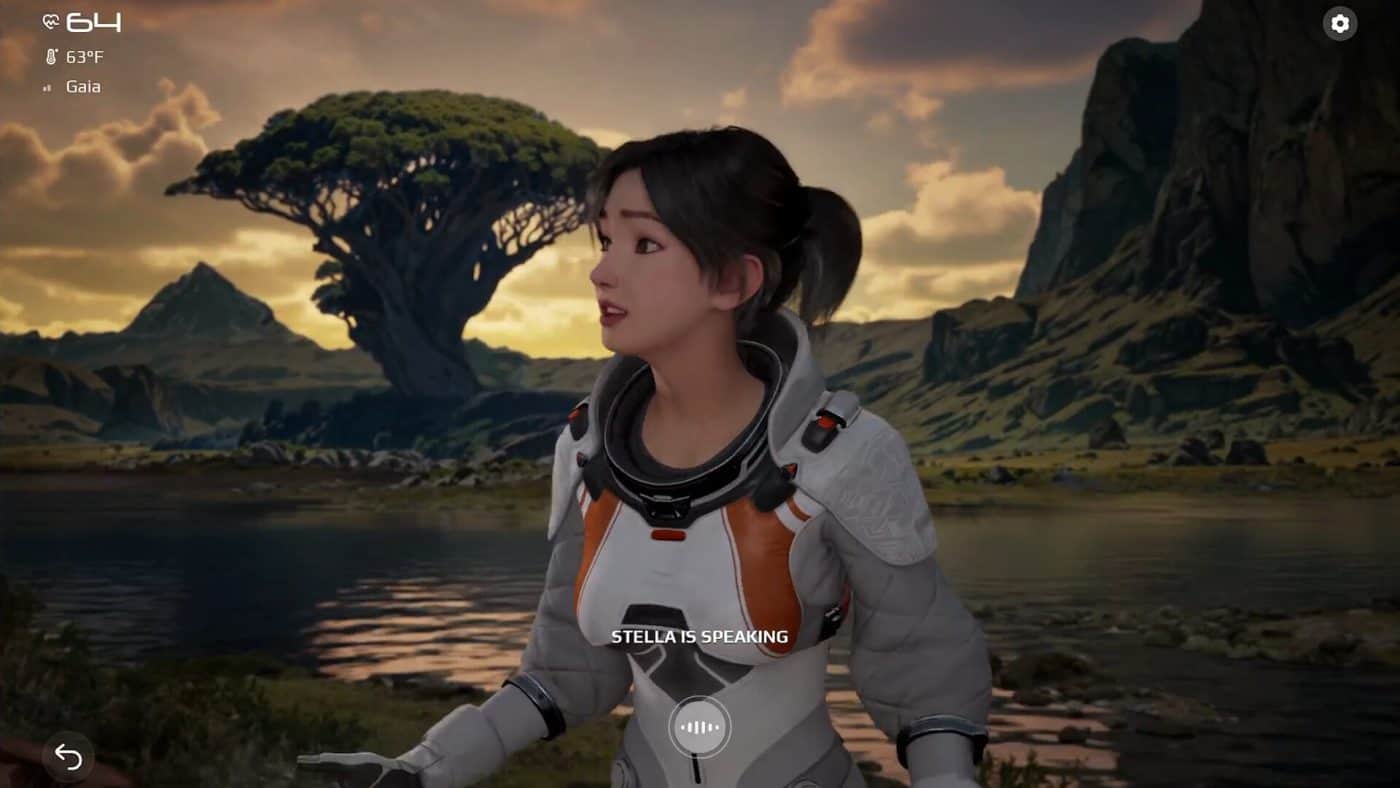
The true strength of Whispers from the Star lies not merely in its survival systems or in the technology that enables them, important as both aspects are. Its most compelling quality emerges from the relationship that gradually develops between the player and the protagonist. Over time, the experience moves beyond the framework of a conventional game experiment, taking on something far more intimate, personal, and emotionally immediate. Stella ceases to feel like a simple objective to guide toward survival and instead becomes a fragile presence to accompany, protect, and ultimately understand.
What is most striking is how effectively this connection develops without relying on the traditional narrative tools typically associated with the medium. There are no elaborate cinematic sequences designed to force emotion, nor lenghty monologues designed to manufacture empathy. Instead, it is conveyed through the continuity of interaction: the inflection of Stella’s voice, her hesitations, requests for reassurance, and, above all, the gradual trust that slowly develops between player and character.
The result is a form of immersion that diverges from traditional expectations. It is not built on graphical realism or spectacle, but on the sustained sense of communicating with another presence. This emotional credibility gives the most intense moments their weight. When Stella panics, when her heartbeat rises, or when the planet turns hostile, the tension becomes immediate and tangible. In those moments, the player is no longer avoiding failure, but protecting someone they have come to care about.
Tension as a Constant Under Current
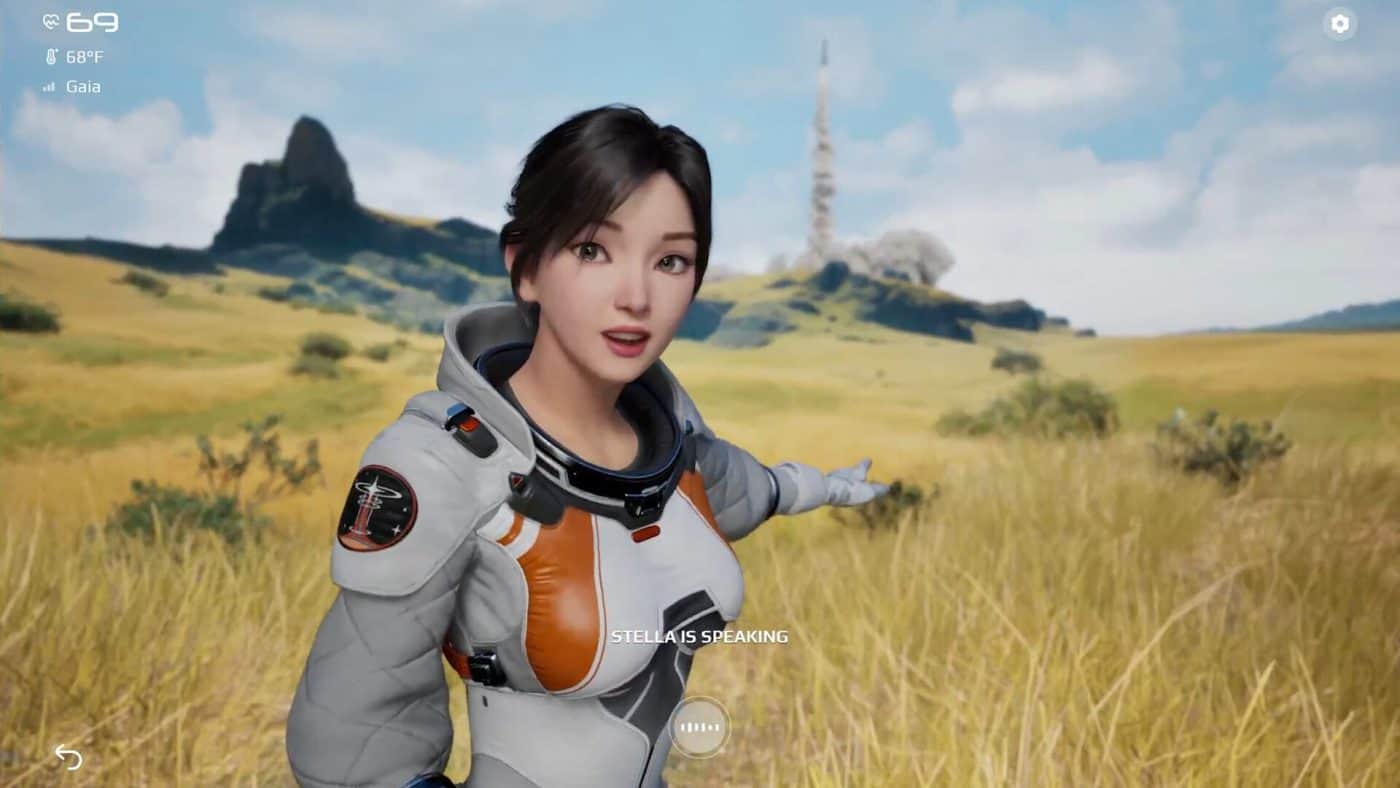
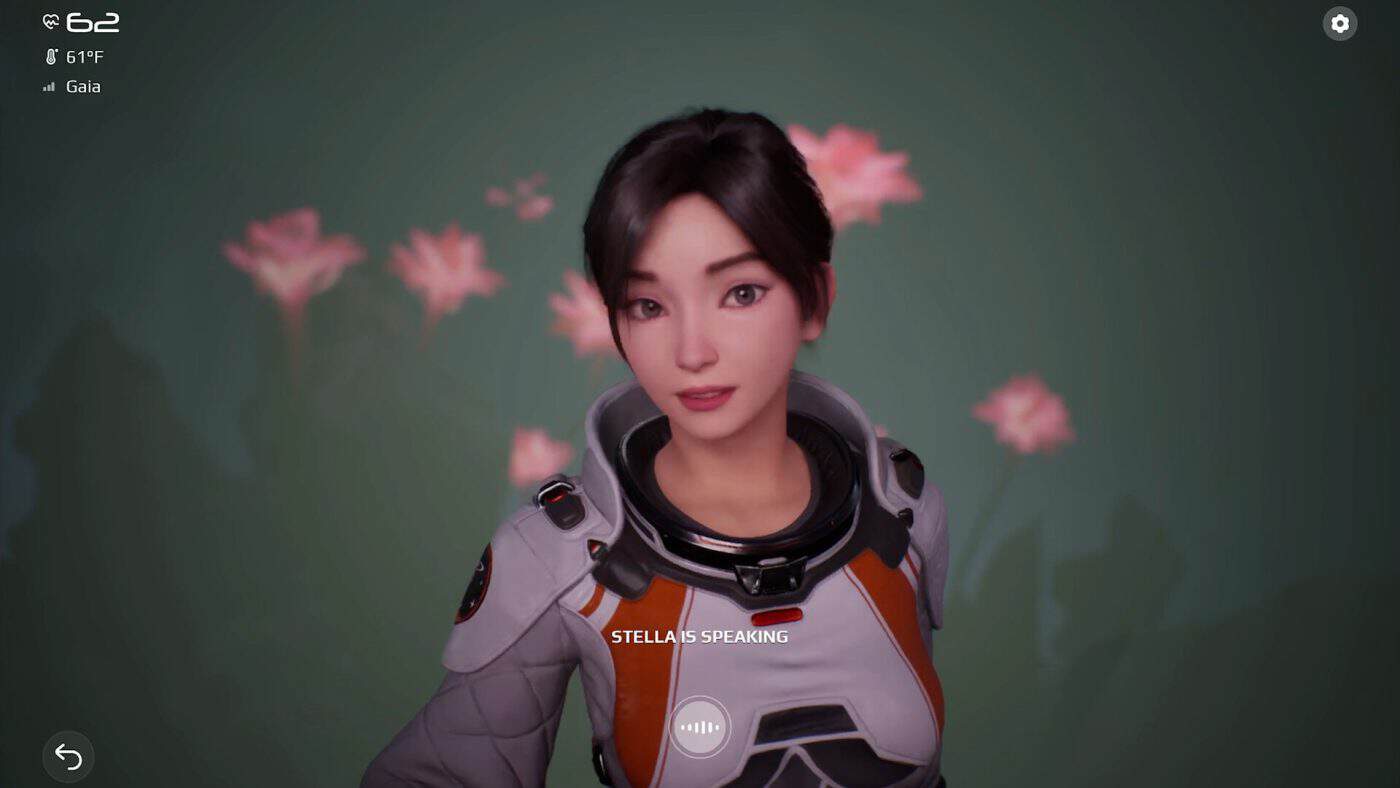
One of the most striking aspects of the games is its ability to sustain psychological tension without relying on constant action. Whispers from the Star instead places a deliberate emphasis on atmosphere and uncertainty, with the unknown functioning as a continuous, almost oppressive presence throughout the experience. The alien planet is visually striking yet deeply unsettling, and the game effectively reinforces a sense of vulnerability through the player’s lack of control over unfolding events.
Several sequences become particularly oppressive precisely through the isolation they convey. This is most evident in the sections set within the planet’s darker, more enigmatic environments, where sound design, silence, and fragmented communication with Stella converge to sustain a constant undercurrent of tension. Here, the game reveals a confident sense of pacing, shifting between contemplative stillness and sudden spikes of emotional intensity with measured precision.
The now well-documented cave sequence stands out as one of the experience’s key highlights: a moment in which anxiety, immersion, and emotional investment converge into a sequence that feels both meticulously crafted and genuinely memorable.
Strong Visual Presentation, Tempered by Some Technical Constraints
From a technical standpoint, the game reflects a distinctly ambitious design philosophy. Built on a proprietary engine and supported by content-streaming technology, it delivers a consistently high standard of visual fidelity throughout.
The environments are evocative, richly detailed, and often genuinely striking, reinforcing the atmosphere of isolation and mystery that defines the experience. Stella’s facial animations stand out as one of the production’s most accomplished elements, offering a level of expressiveness that gives the character genuine presence. That said, the project is not without its limitations. Voice recognition does not always interpret player input with complete accuracy, occasionally resulting in moments of levity. At times, Stella may also respond imprecisely to commands, causing brief but noticeable disruptions to immersion.
These issues are largely understandable given the project’s experimental scope and technical complexity. More disruptive are the rare disconnections, which can break the emotional continuity of the experience at its most delicate moments.
Is Whispers from the Star Worth It?
Whispers from the Star is a project that resists easy categorisation. It is neither a straightforward narrative adventure nor a conventional survival game, and certainly more than a mere technological experiment. Instead, it takes shape as a hybrid interactive experience that seeks to redefine the relationship between player and digital character, shifting the emphasis away from action and toward emotional connection. That is where its greatest strength lies.
Despite a few unavoidable technical shortcomings – most notably in voice recognition and in the handling of certain interactions – Whispers from the Star nevertheless delivers a distinct sense of novelty. Not through the depth of its mechanics, but through the way it builds emotional investment, presence, and a feeling of relational responsibility.
Beyond its technological experimentation, gameplay mechanics, and ambitious scope, Whispers from the Star achieves something increasingly rare in contemporary game design: it places the player in a position of emotional responsibility for another life. And it is this feeling – simple in form yet deeply human in substance – that stands as its most significant achievement.
 8/10
8/10