A heartfelt sci-fi adventure that blends exploration, suspense, and emotional storytelling, reminding us that even at the edge of the universe, it is people who truly make the difference.

In the video game landscape of recent years, science fiction has often tried to impress through grandiose scenarios, interplanetary wars, and increasingly spectacular technologies. Aphelion, however, takes a different path. While it sets its story in deep space and builds an imaginary rich in scientific fascination, the title concentrates most of its narrative strength on the human being, on their emotions, and on the delicate relationship between survival, exploration, and discovery. It’s an adventure that uses the immensity of the cosmos not so much as a mere spectacular backdrop, but as a tool for telling a deeply intimate story.
From the very first minutes, Aphelion clearly communicates its own identity. This isn’t a frantic action game or an experience centered on constant combat. The pace stays more reflective and leaves room for exploration, atmosphere-building, and the gradual discovery of the game world. The developers choose to guide the player through a journey that alternates moments of tension with more contemplative phases, aiming to keep alive the sense of wonder that accompanies every new discovery.
The setting stands as one of the most fascinating elements of the production. The planet where most of the adventure takes place feels immediately hostile, yet incredibly evocative. Icy expanses, towering rock formations, atmospheric phenomena, and landscapes that seem to belong to a truly alien world combine to create a strong sense of isolation. Nature becomes a constant presence, as fascinating as it is threatening, continually reminding the player how fragile human beings are in the face of a completely unknown environment.
The strongly cinematic approach the development team adopts makes the experience even more engaging. The narrative sequences, the camera direction, and the pacing of progression often recall the language of contemporary cinematic science fiction, without turning the game into a mere interactive movie. Interactivity continues to hold a central role, while the narrative component blends naturally into the exploration.
Another element that emerges from the very first hours concerns the attention paid to the credibility of the narrative universe. Although it’s a work of science fiction, Aphelion avoids many of the genre’s typical excesses and builds a context that looks relatively plausible from a scientific standpoint. The technologies used, the mission dynamics, and the depiction of space exploration show a pursuit of consistency that makes the immersion even more effective.
Exploration forms the true common thread running through the entire experience. Every new area invites the player to observe the surrounding environment closely, not only to find the correct path, but also to better understand the world they’re moving through. This approach fosters a slower, more deliberate kind of engagement, rewarding curiosity rather than simple linear progression.
The audiovisual side also plays a fundamental role right from the start. The settings manage to convey a constant sense of wonder, while the sound design effectively accompanies every phase of the adventure without ever feeling intrusive. The combination of images and sound helps build an atmosphere that can convey serenity, melancholy, and tension all at once, depending on the moments the player lives through during the journey.
Naturally, Aphelion isn’t a title designed to satisfy players looking purely for adrenaline or nonstop action. Its structure favors emotional engagement and atmosphere-building, and it asks players to embrace the narrative’s own pace. This deliberate choice defines the work’s identity and sets it apart from many science fiction productions more oriented toward spectacle. Rather than telling the story of humanity’s conquest of space, the game puts at its center what it means to face the unknown, turning the journey through an alien world into an experience that speaks above all about the people who live it.
This attention to the human dimension, combined with artwork of great impact, makes the game a compelling proposal within the landscape of modern narrative adventures.


DON’T NOD
To fully understand the nature of Aphelion, we need to start with the team that guided its development, DON’T NOD, which has built a distinct creative identity over the years, showing a particular sensitivity in crafting strongly cinematic narrative adventures. This wealth of experience clearly emerges in Aphelion too, which picks up many of the distinctive traits of the developer’s previous productions while trying to evolve them within a completely new context: that of space science fiction.
One of the most striking aspects when we look at the team’s work is their determination to always put storytelling at the center of the experience. At a time when many games try to win over audiences through mechanical complexity or sheer volume of content, the developers once again choose to concentrate most of their resources on building credible characters, natural dialogue, and emotionally engaging situations.
Naturally, tackling a production set in space brings challenges very different from those of other projects. Building spectacular settings isn’t enough: the universe also needs credibility, and even though it belongs to science fiction, it has to stay coherent within its own rules. From this point of view, the developers’ work looks particularly meticulous. They present the game world with great attention to detail, avoiding turning space exploration into a mere scenic pretext and instead making it an integral part of the narrative experience.
The collaboration with scientific consultants and organizations specializing in astronomy outreach also plays an important role. This choice shows up in the depiction of numerous technological elements and in the construction of the space mission, which stays relatively credible without giving up the needs of the narrative. The result is a convincing balance between scientific rigor and creative freedom, one that makes Aphelion‘s universe accessible even to those without particular knowledge of astronomy.
From a production standpoint, the game represents one of the most ambitious projects the team has tackled. The larger scenario scale, the greater complexity of the direction, and the overall quality of the presentation all point to clear growth compared to previous work. While it keeps a linear narrative structure, Aphelion shows a superior level of polish in many respects, a sign of a more mature production process and greater resources. In a market where productions increasingly favor online services and multiplayer, choosing to release a strongly story-driven experience demonstrates confidence in an audience that still values this kind of work.
Another element worth attention concerns the quality of the direction. The team clearly devoted great care to building the narrative sequences, alternating spectacular moments with more intimate scenes without ever losing sight of the protagonists’ emotional engagement. The framing, camera movements, and editing often recall cinematic language, but without compromising player control or turning the experience into an interactive movie.
From a technical standpoint, the developers also show a good ability to exploit the most modern technologies to enhance the visual side. The lighting, the quality of the facial animations, and the richness of the environments testify to a significant evolution in the studio’s skills, especially in handling complex natural scenarios and expressive characters. Even when the game favors quieter moments, the quality of the staging helps keep immersion high.
It’s interesting to note how the team avoided losing its own identity even while tackling a completely different setting from its past work. Aphelion introduces new elements tied to space exploration, but it preserves that particular attention to human relationships and character-building that already defined the studio’s previous work. This balance between continuity and innovation probably ranks among the most successful aspects of the entire production.


A Story Built Around Humanity
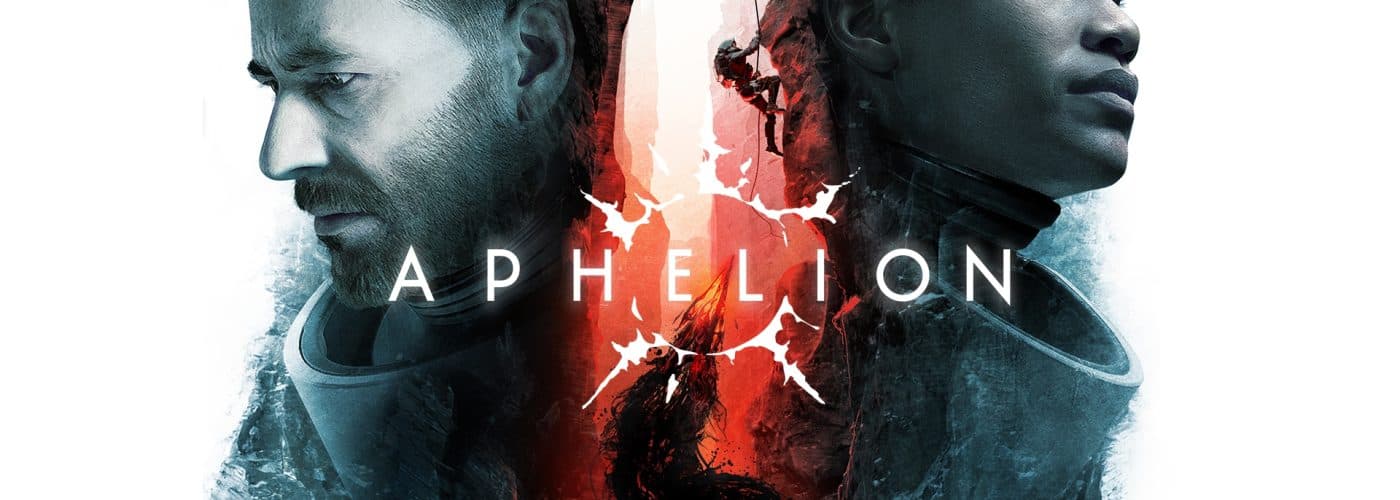
The story of Aphelion takes off in a future where humanity has to look beyond the boundaries of the Solar System to find any hope of survival. After years of astronomical studies and observations, scientists identify a potentially habitable planet, Persephone, a discovery that marks a decisive turning point for the fate of the human species. For this reason, they organize a scientific mission of fundamental importance, aiming to reach the new world, analyze its characteristics, and assess the possibility of future colonization.
Two highly qualified astronauts, Ariane and Thomas, lead the expedition. The mission picks them not only for their technical skills, but also for their ability to face a journey as long as it is unpredictable. The mission, at least in its early stages, goes according to plan, conveying that sense of order and control typical of major space operations. However, as often happens in the best science fiction, a single unforeseen event is enough to shatter every certainty in an instant.
During the approach to the planet, an accident seriously compromises the mission. It separates the protagonists, and the original plan crumbles within moments. From that point on, survival replaces mission success as the priority. The player ends up exploring a completely unknown environment, trying to reconstruct what happened and, above all, to find their mission partner again.
The narrative progression follows a linear but well-paced structure. Exploring the planet lets the player gradually piece together the events that follow the accident, alternating calm moments with more tense situations. A sense of isolation constantly accompanies the player, who has to find their way through a hostile environment where every step brings a new unknown. The difficulties come not only from the planet’s natural conditions, but also from the uncertainty surrounding the fate of the other crew member. One of the plot’s most successful elements lies precisely in how the search for the missing companion becomes the driving force of the entire adventure.
Naturally, the planet hides much more than it seems at first glance. Over the course of the journey, anomalies emerge, along with hard-to-explain phenomena and situations that keep calling into question what initially looked like a simple scientific mission. Without resorting to overly forced plot twists, the story progressively broadens its scope, introducing new elements that enrich the plot and make the exploration increasingly interesting.
The narrative also manages to strike a good balance between spectacle and more intimate moments. Action sequences don’t come up especially often, but when they do, they serve the story well and help build tension. At the same time, the game devotes plenty of space to quieter phases, during which the player can absorb the information gathered and prepare for the next stage of the journey.
The overall pacing feels well calibrated. The story moves forward steadily, without unnecessary slowdowns, guiding the player along a path that keeps their interest alive until the conclusion. Even though it follows a fairly linear structure, the story manages to avoid predictability thanks to good suspense management and an effective distribution of information.


A Surprisingly Deep and Well-Crafted Adventure
If Aphelion‘s plot forms the common thread of the adventure, the quality of its narrative gives that thread depth and meaning. The game doesn’t just tell the story of a simple space mission gone wrong; it uses that premise to build a story centered on human relationships, the protagonists’ emotions, and how a person reacts when they lose every point of reference. This focus on the emotional component is exactly what sets Aphelion apart from many other science fiction productions, which often concentrate more on the genre’s technological or spectacular aspects.
One of the writing’s greatest strengths lies in how it characterizes the protagonists. Even though they’re highly trained astronauts used to facing extreme situations, the game avoids turning them into flawless heroic figures. Instead, it presents them as believable people who have to face fear, doubt, and a sense of responsibility under exceptional circumstances. This choice makes the player’s engagement feel much more natural, and from the first hours, players manage to form a bond with the characters and their struggles.
One of the work’s central themes is undoubtedly survival, which the game frames not just as a struggle against a hostile environment, but also as a psychological challenge. Isolation, uncertainty, and the need to make decisions under extreme conditions constantly test the protagonists, showing just how thin the line is between professional training and human vulnerability.
Alongside this, the theme of exploration also comes through strongly. The game celebrates humanity’s natural curiosity and the desire to push beyond the limits of the known. It presents the alien planet not just as a place to pass through, but as an environment to understand, observe, and respect. Every new discovery feeds that sense of wonder that has always accompanied the best science fiction, reminding us that the unknown can be as fascinating as it is dangerous.
Another element very present in the narrative concerns the relationship between humans and nature. Even though the setting is extraterrestrial, the game builds a fairly clear reflection on how fragile human beings are in the face of forces immensely larger than themselves. The planet never comes across as a simple backdrop to conquer, but as an autonomous ecosystem that follows its own rules and constantly forces the protagonists to adapt. This approach conveys a sense of humility rarely found in more action-oriented science fiction productions.
The theme of trust also takes a starring role, because throughout the adventure, the characters have to rely on one another even when circumstances seem to rule out any certainty. Trust thus becomes one of the story’s fundamental elements, functioning not just as a survival tool but also as a driving force behind the protagonists’ emotional growth. The dialogue generally conveys this bond naturally, avoiding melodramatic excess.
Connected to trust is the theme of sacrifice. Without resorting to rhetoric or easy heroics, Aphelion shows how every space mission inevitably brings personal sacrifice, enormous responsibility, and difficult decisions. A strong sense of duty motivates almost every choice the protagonists make, but the script never forgets to show its emotional weight too.
In short, Aphelion‘s narrative stands as one of the most successful aspects of the whole production. While it tells a story of space exploration, the game chooses to focus above all on the people who go through that journey and on the emotional consequences of their experiences. It’s measured writing, capable of alternating spectacle and introspection without tipping too far toward either extreme. The result is an engaging story that uses science fiction as a tool to talk about courage, trust, responsibility, and the deep human desire to keep pushing beyond one’s own limits.


A Consistently High-Quality Experience
Aphelion also means visual quality. From the very first minutes, it’s clear that DON’T NOD devoted a significant part of its resources to building a credible, spectacular universe, one that conveys both the fascination of space exploration and the sense of vulnerability that comes with every step on an unknown planet. The technical and artistic sides work constantly in sync, creating an experience that impresses not so much through excess as through an extremely coherent visual direction.
The element that stands out most strongly is undoubtedly the setting. The planet explored during the adventure never comes across as a mere sequence of spectacular backdrops, but as an ecosystem built with care and personality. The vast icy expanses, the mountains fading into the horizon, the deep natural gorges, and the distinctive rock formations combine to create a world that constantly conveys the feeling of being in a truly alien place. Even though some landscapes recall earthly ones, every environment carries details that emphasize its foreignness, avoiding that “Earth with a different filter” feeling that sometimes marks less inspired science fiction.
The art direction also shows notable maturity in handling the color palette. Cool tones dominate, with shades of white, blue, and gray that reinforce the planet’s hostile nature. However, the developers cleverly introduce warmer color elements at specific narrative moments, creating visual contrasts that naturally guide the player’s eye and help highlight the most important sequences. This choice avoids monotony and gives the scenarios great variety without betraying the work’s aesthetic identity.
The work on lighting is also particularly successful. Light doesn’t just serve to highlight graphical detail; it becomes a genuine narrative tool. Different atmospheric conditions deeply change the look of the environments, moving from bright, almost contemplative landscapes to situations where storms, fog, and darkness completely transform the perception of space. This constant visual evolution helps keep immersion high and keeps the scenarios from feeling repetitive.
From a technical standpoint, Aphelion generally delivers solid results. The protagonists’ polygon models look detailed, and the facial animations effectively convey emotion during the many narrative sequences. The quality of the expressions also marks an important step toward greater character credibility, especially in the more intimate dialogues, where small facial movements help strengthen emotional engagement.
The animations during gameplay come across as convincing and natural. The astronauts’ movements convey a good sense of weight, while the climbing, traversal, and environment-interaction sequences generally flow smoothly. Even though the game doesn’t introduce particular innovations in procedural animation, it maintains a consistent quality level that supports immersion and limits artificial or unconvincing movements.
The particle effects also deserve a positive mention. Snow whipped up by the wind, storms that drastically cut visibility, ice particles, and the many atmospheric phenomena all help bring the planet to life. These details don’t just serve an aesthetic purpose; they continually reinforce the feeling of being inside a hostile, constantly changing environment.
When it comes to level design, the developers choose a mostly linear structure, yet still manage to avoid the feeling of walking through simple corridors. The environments naturally suggest the main path while leaving room for short detours, scenic viewpoints, and secondary areas that enrich exploration. This approach keeps a good balance between freedom and control over the narrative pace.
On a purely technical level, the game performs convincingly. Throughout the adventure, the frame rate generally stays stable, and loading times remain short. The handling of lighting effects and the vast environments also looks well optimized, letting players enjoy the experience without major performance issues. Any imperfections that crop up during play stay occasional and don’t significantly affect the overall quality of the production.
Naturally, not everything reaches absolute excellence. Some secondary textures show lower definition than the main elements, and some environmental animations feel less polished than the work done on the protagonists. Still, these are marginal details that rarely affect the overall experience, especially given the high quality of the art direction.


Sound as a Narrative Tool
In an adventure so strongly centered on exploration and narrative like Aphelion, the sound design carries an importance equal to, if not greater than, the graphics. The game builds much of its atmosphere through a skillful use of music, ambient effects, and sound design, elements that accompany the player through every phase of the adventure without ever feeling intrusive. The result is an acoustic experience extremely consistent with the production’s tone, one that amplifies the sense of isolation, wonder, and tension that defines the journey across the alien planet.
One of the most successful aspects has to do precisely with the handling of silence. The developers clearly understand that, in a remote, almost completely uninhabited environment, the absence of noise can carry as much meaning as the presence of music. Throughout many exploration sections, only the wind, the sound of footsteps on snow or rock, and the noises of the space equipment accompany the player. This choice conveys an extremely believable sense of solitude, letting players feel the full immensity and indifference of the planet toward its protagonists.
When the soundtrack does step in, it always does so with great restraint. The musical compositions avoid overly emphatic tones and favor delicate orchestral arrangements, paired with electronic sounds that recall the tradition of modern cinematic science fiction. The melodies never try to overpower the action; they simply lend emotional support to the different situations, adapting naturally to the story’s shifts in pace. This is a soundtrack that aims more for atmosphere than for memorable individual themes, and it works particularly well precisely because of how perfectly it blends into the experience.
The environmental sound design deserves special praise. Every area carries its own well-defined sonic identity. Gusts of wind accompany the storms, progressively drowning out other sounds, while the more open zones convey a feeling of near-total emptiness. In narrower passages or inside artificial structures, the reverb changes noticeably, reinforcing the sense of space and further boosting immersion. Players might miss these details during a distracted playthrough, but they show the care the team put into building the entire soundscape. The sound effects tied to the protagonists’ actions also come across convincingly. The sound of boots on different surfaces, the rustle of the spacesuit, the movements of the equipment, and the many environmental interactions all deliver a pleasing sense of physicality. Nothing feels artificial or out of place; every sound helps reinforce the illusion of really being inside a space mission, increasing engagement during the exploration phases.
The voice acting also plays a fundamental role. The protagonists’ performances feel believable and effectively convey the emotions each narrative situation calls for. The conversations keep a natural tone, avoiding both dramatic excess and excessive coldness, while pauses, vocal inflections, and moments of silence help make the relationship between the characters feel more authentic. This work further elevates an already well-built script, increasing the emotional weight of the most important sequences.
Also very interesting is how the audio accompanies the narrative progression. In the tenser moments, the music gradually builds without ever becoming intrusive, while during the more contemplative phases it steps back and leaves room for ambient sound alone. This alternation avoids any sense of monotony and lets the player feel shifts in atmosphere more intensely. The team clearly worked to keep every sound component tightly linked to the events unfolding during the adventure.
Naturally, the sound design isn’t entirely free of small limitations. Some ambient effects tend to repeat over the course of exploration, and the soundtrack, precisely because of its extremely understated nature, might feel less memorable than that of other major productions in the genre. Still, these are marginal observations that rarely affect the overall quality of the work.


Gameplay and World-Building Working as One
One of the aspects that best defines Aphelion‘s identity is how world building and gameplay support each other, since every design choice seems crafted to strengthen the credibility of the narrative universe, making the planet’s exploration and the player’s progression an integral part of the story. This approach favors immersion over spectacle and helps keep the adventure coherent from beginning to end. The world building stands out above all for its ability to build a planet that feels alive and plausible. Even though it’s an alien environment, the developers avoid constantly reaching for bizarre or overly fanciful elements. Every area seems to follow a precise natural logic, with ecosystems, atmospheric phenomena, and geological formations that suggest a world existing independently of the protagonists’ presence. This attention to environmental consistency significantly boosts the sense of immersion and makes exploration far more engaging.
The setting constantly communicates information without resorting to explicit explanations. Remains of the mission, technological structures, natural anomalies, and numerous details scattered along the way let the player gradually piece together the context of the expedition. This form of environmental storytelling proves particularly effective, since it sparks curiosity and rewards observation without interrupting the adventure’s pace with long expository sequences.
From a gameplay perspective, Aphelion works mainly as a third-person narrative adventure. Exploration makes up the dominant component of the experience and serves as the main way the player interacts with the game world. Players move through the different areas by alternating walking, climbing, crossing natural obstacles, and using the available equipment, always keeping a good balance between gameplay engagement and narrative development. The exploration sections generally feel well built. The level design guides the player naturally, suggesting the correct path without leaning too heavily on intrusive markers. At the same time, small detours let players dig deeper into the game world through documents, environmental observations, or simple scenic viewpoints. Although the structure stays mostly linear, these openings make the journey feel less guided than it might initially appear.
The climbing and movement sections form an important part of the gameplay. The game frequently uses the planet’s rugged terrain to build paths that require attention and precision, without turning the experience into a demanding platformer. The animations flow smoothly, and the control system responds with good precision, letting players tackle the various sections without much frustration.
Puzzles also find their place within the progression. Their complexity stays generally accessible, and their main goal isn’t to test the player’s logical skills so much as to break up the exploration rhythm and highlight interaction with the environment. Fortunately, the puzzles fit well into the narrative context and rarely feel like something the developers artificially added just to stretch out the adventure’s length.
Also quite interesting is how the gameplay uses the tools available to the protagonists. The space equipment isn’t just an aesthetic element; it actively takes part in the exploration, letting players tackle different situations and overcome specific environmental obstacles. The developers avoid turning these tools into mere gameplay gimmicks, instead weaving them naturally into the scientific mission the story tells.
The overall pacing of the experience feels well calibrated. The developers alternate quieter exploration phases with more tense moments and narrative sequences that keep interest alive without excessively interrupting player control. This alternation lets the adventure avoid both monotony and excessive fragmentation, building a progression that flows steadily through to the conclusion.
Naturally, some limitations remain. Players looking for particularly deep systems or a strong action component might find the gameplay relatively simple. The developers build the mechanics introduced during the adventure with consistency, but they rarely evolve significantly. The challenge level also stays fairly contained, a choice the developers clearly made on purpose, to keep difficulty from interfering with the narrative pace. However, judging Aphelion solely on the complexity of its mechanics would be reductive. The game doesn’t set out to offer constant gameplay challenge, but rather to guide the player through a strongly narrative, atmospheric journey. Seen this way, the gameplay does its job perfectly, supporting the world-building without ever overshadowing it.


A Rewarding Experience With a Few Rough Edges
By the end of Aphelion, the developers’ goal comes through pretty clearly: to create a narrative adventure that puts the human experience at the center, even before science fiction spectacle. In this sense, the game hits most of the marks it sets for itself, offering an engaging journey that’s visually striking and narratively solid. At the same time, though, certain design choices give it a well-defined identity, with clear strengths but also limitations that might not satisfy every type of player.
Aphelion‘s first great merit lies in building a precise identity. In a landscape where many science fiction productions mainly bet on action, combat, or spectacle, the title deliberately takes a more measured path. Exploration, narrative, and the protagonists’ growth become the core of the whole experience, while everything else takes shape to support these elements. This choice shows remarkable authorial consistency and lets the game stand out without chasing current trends.
From a narrative standpoint, the script wins us over above all through how it builds the relationship between the protagonists. The writing avoids overly contrived dialogue and prefers to develop the characters through believable situations, letting the bond between them emerge gradually. Even in the most dramatic moments, the story keeps a certain restraint, without falling into rhetoric or excessive emphasis. This quality grows increasingly rare in modern narrative productions, which often tend to force emotions rather than build them patiently.
The depiction of the environment also comes across as very convincing. The planet explored during the adventure isn’t just a spectacular backdrop; it becomes a genuine protagonist of the story. The sense of isolation, nature’s constant hostility, and the fascination of discovery accompany the player throughout the whole experience, helping build steady immersion. The audiovisual side proves just as convincing, standing as one of the production’s most obvious strengths. Graphics, lighting, soundtrack, and sound design work together effectively to build a credible, engaging atmosphere. This isn’t simply a good-looking game; it’s a work that uses images and sound to tell part of its own story and continually strengthen the player’s emotional engagement.
However, it’s precisely on the purely gameplay level that the work’s main limitations show up. The gameplay always serves the narrative, but it rarely surprises. The exploration, climbing, and puzzle-solving mechanics do their job correctly, without evolving significantly over the course of the adventure. Players used to productions that constantly introduce new ideas or more complex systems might notice a certain repetitiveness in the game’s central stretches. The strongly linear structure also stands as an element that could divide the audience, inevitably reducing the sense of freedom during exploration. The detours present feel pleasant and well made, but they don’t really change the adventure’s progression. This is a design philosophy consistent with the work’s cinematic nature, even though some players might wish for greater ability to influence how events unfold.
The challenge level is another aspect worth some reflection. Aphelion prefers to almost never put the player in serious difficulty, favoring an accessible, strongly guided experience. This choice keeps attention focused on the story, but it also reduces the sense of danger and conquest that could have made exploring the planet even more memorable. Some situations resolve with relative ease, at times leaving the impression that the gameplay could have dared a bit more.
Still, it’s worth recognizing that these limitations stem directly from the work’s philosophy and not from any lack of care in development. Aphelion never tries to be an extreme survival game, a spectacular action title, or a role-playing game packed with complex systems. Its goal is to tell a story through interaction, and the developers calibrate every design choice to support that vision. Everything seems built to guide the player through an emotional journey that finds its strengths in restraint and credibility. It’s therefore more accurate to talk about design trade-offs than real flaws.


 7.5/10