A refreshing and effective take on the creature-collecting formula.

For years, the monster-collecting genre has been defined by a single dominant force: Pokémon. Its influence extends well beyond video games, shaping animation, merchandising, and a cultural legacy that has endured across generations. Over time, numerous developers have attempted to enter this space, offering interpretations that range from faithful imitations to more experimental approaches. Yet only a handful have succeeded in establishing a lasting identity of their own.
It has rarely been a question of ideas. On the contrary, the genre has consistently delivered projects with strong creative concepts and promising mechanical foundations. The real challenge has always been execution – specifically, the ability to translate those ideas into a cohesive and recognisable identity. Too often, however, the genre has remained anchored to the framework established by Game Freak, rather than meaningfully questioning or rethinking its core design principles.
At the same time, the audience for monster-collecting games has evolved significantly. It has become older and considerably more demanding. Players now expect deeper systems, more deliberate pacing, and stronger alignment between narrative and gameplay. Relying on familiar formulas without meaningful evolution in storytelling, or gameplay inevitably risks stagnation.
While The Pokémon Company continues to dominate the space with the authority of an industry giant, and Palworld approaches its full 1.0 release in an attempt to redefine the boundaries between creature collection and survival-driven open worlds, a new contender is quietly carving out its place within an increasingly competitive landscape.
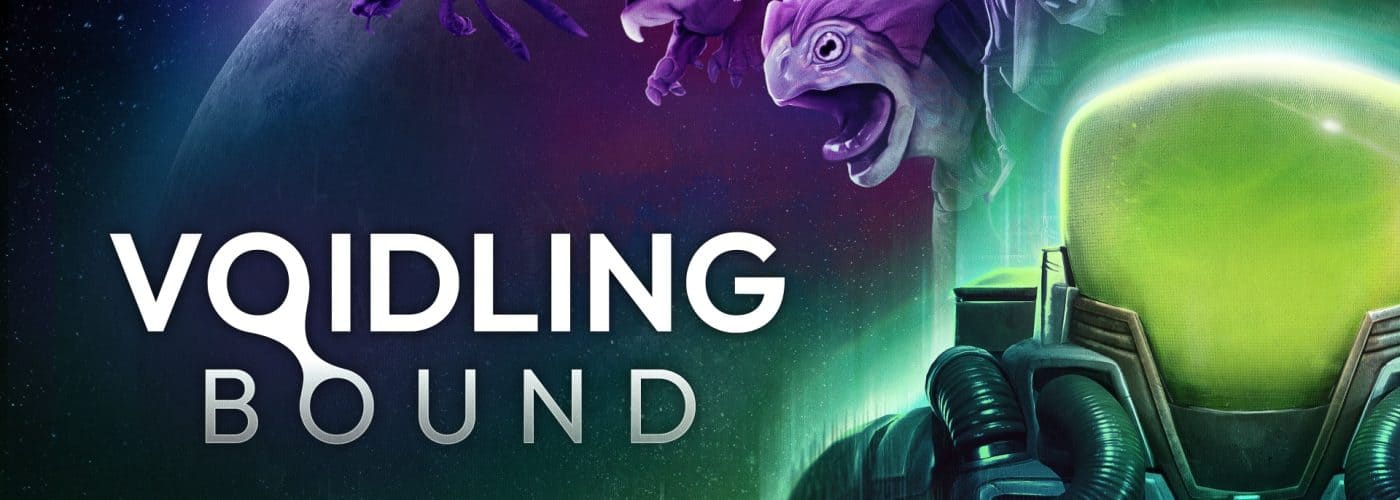
That contender is Voidling Bound. What stands out immediately is not simply the quality of its execution, but the clarity of its creative intent. From its earliest hours, it is clear this is a project built by a team with a deep understanding of the genre – its strengths, its limitations, and, most importantly, the potential it has yet to fully explore.
Voidling Bound does not position itself as a replacement for Pokémon, nor as a direct rival to Palworld, nor as an attempt to inherit the legacy of Digimon. Instead, its ambition is more focused and, in many ways, more mature: to establish a distinct identity, define a recognisable creative voice, and deliver its own interpretation of the monster-collecting formula. That clarity of purpose, and the self-awareness behind it, stands as its most defining strength at this stage.

Storytelling at the Core of the Experience
One of the most striking aspects of Voidling Bound lies in its narrative. In the monster-collecting genre, storytelling has traditionally played a secondary role, often reduced to a functional scaffold for exploration and creature collection.
Here, however, it is treated as a core pillar of the experience rather than a narrative afterthought. The development team shows clear intent in its approach to worldbuilding and character design. Conversations are consistently purposeful, adding texture and context to a setting that gradually reveals greater depth the more time is spent within it.
At the heart of the experience lies the ship’s crew, which serves as its emotional and narrative anchor. The scientists, driven by an almost obsessive commitment to their research, draw on familiar science-fiction archetypes, yet are handled with enough nuance, restraint, and humanity to avoid ever slipping into caricature.
Equally compelling is the portrayal of the expedition’s captain, arguably one of the most fully realised characters in the entire game: authoritative and pragmatic, yet defined by a distinct presence that clearly sets her apart from more conventional genre leadership roles. The protagonist also plays a more active narrative role than is typically expected within the genre. Rather than functioning as a silent proxy for the player, they act as a connective thread between the Voidlings and the world itself, gradually becoming drawn into the broader mysteries that unfold throughout the adventure.
Main missions maintain a steady sense of discovery and narrative momentum, while side content performs a more demanding function than it initially appears: expanding the game’s lore without descending into filler or structural padding.

A Stronger and More Cohesive Gameplay Loop
If the narrative comes as a pleasant surprise, it is in the gameplay that Voidling Bound finds its clearest confirmation. Those familiar with the earlier demo will likely recall several shortcomings, including unfocused exploration, imprecise platforming, and a general roughness in the underlying mechanics. The current build addresses a substantial portion of these issues.
It is clear that the development team has taken community feedback seriously, delivering meaningful changes across multiple layers of the experience. Rather than isolated tweaks, the improvements suggest a broader re-evaluation of the game’s core systems. The combat system stands out as one of the most accomplished elements of the package. Encounters are readable and consistently satisfying, reinforced by strong visual and audio feedback that clearly communicates the weight and impact of each action. The pacing remains brisk but controlled, keeping combat engaging without ever tipping into chaos or visual clutter.
In overall feel, the system recalss the responsiveness and precision of modern action RPGs, grounded in an “easy to learn, hard to master” philosophy that also reflects the team’s experience on Skylanders, a project with which parts of the studio are historically associated. The result is a combat model that strikes a strong balance between accessibility and depth, with a progression curve that naturally rewards increasing mastery.
For newcomers, the system is immediately approachable and intuitive. For more experienced players, however, it opens the door to deeper experimentation, encouraging the exploration of synergies and more complex buildcraft.


Exploration as a Core Driver of Progression
Exploration is not merely a complementary activity in Voidling Bound; it is one of the driving forces behind its progression. The planets that make up its universe are more than visually distinct destinations designed to frame the adventure.
They function as living ecosystems, each defined by exclusive resources, hidden secrets, and unique opportunities that reward curiosity and encourage players to engage with the world beyond the critical path. Every new environment expands the sense of possibility, cultivating the persistent feeling that there is always something worth uncovering just out of sight.
Elemental spheres stand among the most compelling incentives to explore. These resources enable players to further specialise their Voidlings, directly influencing their elemental affinities and, consequently, their effectiveness in combat.
Equally important are the eggs scattered throughout the world. More than simple collectibles, they introduce the possibility of discovering rare and exceptionally powerful creatures, reinforcing one of the monster-collecting genre’s defining strengths: the thrill of the unexpected and the excitement of never quite knowing what the next discovery might bring.
The improvements made to the level design are equally deserving of praise. One of the demo’s most noticeable weaknesses was its tendency to leave players without a clear sense of direction, often making progression feel unfocused rather than exploratory. The introduction of a contextual guidance system successfully alleviates much of that friction, improving the rhythm and readability of the adventure without compromising the satisfaction that comes from discovery.

A Deep and Flexible Progression System
More than any other feature, Voidling Bound’s progression systems set it apart from its peers. Voidlings are not simply captured and added to an expanding roster; instead, they evolve through a layered progression framework that feels both intricate and unusually flexible, turning each creature into a reflection of the player’s choices rather than a fixed archetype.
By defeating enemies, harvesting environmental resources, and completing specific objectives, players earn points that can be invested across an extensive skill tree. Each allocation carries tangible weight, allowing for the reinforcement of a Voidling’s innate strengths or the mitigation of its weaknesses. Progression extends beyond numerical growth and becomes a process of shaping identity, defining the role each creature plays within the broader composition of a team.
This is complemented by an elemental progression system built around distinct affinities that further shape development. Fire, Ice, and the other elemental paths are not mere variations, but deliberate routes that guide evolution towards increasingly specialised forms. Each level gained strengthens core attributes such as vitality, resilience, and offensive power, while also awarding points that can be distributed according to individual playstyle preferences.
The result is a notable degree of flexibility. Two Voidlings of the same species can develop in markedly different directions, encouraging experimentation, rewarding long-term investment, and strengthening the sense of ownership over each companion.
The system’s main limitation lies in its occasional reliance on grinding. At certain points in the adventure, progression requires investment in creatures that players may have little intention of using in their active party. While not severe enough to undermine the experience, it can briefly disrupt pacing and weaken the otherwise steady sense of momentum. It remains a minor flaw, but one that is nonetheless noticeable within an otherwise carefully constructed system.
The system’s primary limitation lies in its occasional reliance on grinding. At certain points in the adventure, progression requires investment in creatures that players may have little intention of using in their active party. While not significant enough to undermine the experience, it can briefly disrupt pacing and weaken the otherwise steady sense of momentum.


A Noticeably Sharpened Technical Execution
The current build of Voidling Bound marks a substantial improvement over the demo we previously experienced. Early versions exhibited several of the performance-related shortcomings commonly associated with Unreal Engine 5 projects, including abrupt frame-rate dips, inconsistent resource allocation, and a broader sense of instability that occasionally undermined the overall quality of the experience. The progress made in the months since is immediately apparent.
The optimisation work carried out by the developers now stands out as one of the game’s most notable strengths. Performance is significantly more stable, overall fluidity has improved across the board, and even ageing hardware configurations are now capable of delivering a smooth, reliable, and consistently enjoyable experience. A handful of technical imperfections remain, most notably during certain scene transitions and specific Voidling bonding sequences. Even so, these issues are rare and limited in scope, and rarely detract from the overall experience in any meaningful way.

A Standout New Entry in the Monster-Collecting Genre
Voidling Bound is one of the most compelling and unexpected surprises the monster-collecting genre has seen in years. It is a game that successfully carves out its own identity through a richly realised world, a memorable cast of characters, an engaging combat system, and a progression framework that offers considerable strategic depth.
Equally noteworthy is the development team’s responsiveness to community feedback, with the improvements made since the early builds demonstrating a clear commitment to refining and strengthening the experience.
The experience is not without its flaws. Certain sections still lean too heavily on mandatory grinding, and a few minor technical issues remain. Even so, these shortcomings do little to overshadow the game’s many strengths. What ultimately sets Voidling Bound apart is something many of its contemporaries struggle to achieve: a clear creative identity, a strong sense of personality, and the unmistakable impression of a world with the potential to grow far beyond its current form.
Should post-launch support continue at the current pace, and should the developers successfully build on the foundations already in place, Voidling Bound may ultimately be remembered as more than one of the strongest monster-collecting games of 2026. It carries the potential to become a future benchmark for the genre, as well as the first chapter of a major new franchise.
 8.5/10