
Lunarium Game Studios makes its debut with a surprising first title. Mature and measured, although not without some imperfections. An ARPG that does not disappoint.
Making your debut in the world of ARPGs with souls-like influences is certainly a minefield for any inexperienced developer. In this case, inexperience and the desire to show off one’s capabilities can often lead to biting off more than you can chew.
Fortunately, Lunarium Game Studios has avoided this trap. It has indeed borrowed some mechanics from souls-like games, but it has integrated them without taking them to extremes. A common mistake is to exaggerate and misunderstand strengths and weaknesses, ultimately creating an imperfect and unconvincing clone.
As we will see throughout the review, however, the development team has managed to combine these elements with its own vision for the game it was creating. In fact, Lunarium has a stylistic and gameplay vision that is enviable compared to many debut titles, even if it is not without its flaws.
A special mention should go to the development team itself: Lunarium Game Studios. According to what was reported in one of our previous articles, the studio consists of around nine people, none of whom have experience working on AAA titles. Let alone professional video game development.
With that in mind, let’s take a look at the various aspects of the game, along with its strengths and weaknesses.
Two Heroines Bound by Fate
The story of Lunarium revolves around the relationship and cooperation between two heroines: Ave and Lune.
The former is a young knight who awakens in the woods surrounding her village without having a clear idea of what is happening. Trained by Theodore (also important from a gameplay perspective), the young knight takes it upon herself to protect the village from wandering beasts.
It soon becomes clear, however, that the problem is much bigger: a corruption called Nihilus is corrupting both the environment and living creatures. Shortly after a confrontation with a corrupted creature, Ave appears to succumb. Fortunately, the knight awakens in the ruined sanctuary of Lune, where she is healed and meets the mystical creature.
Lune is a Starfarer: a mystical creature with magical abilities that, when combined with those of Ave, can counter this plague and its consequences. From here, their adventure begins as they seek to discover where the Nihilus comes from and how to defeat it.
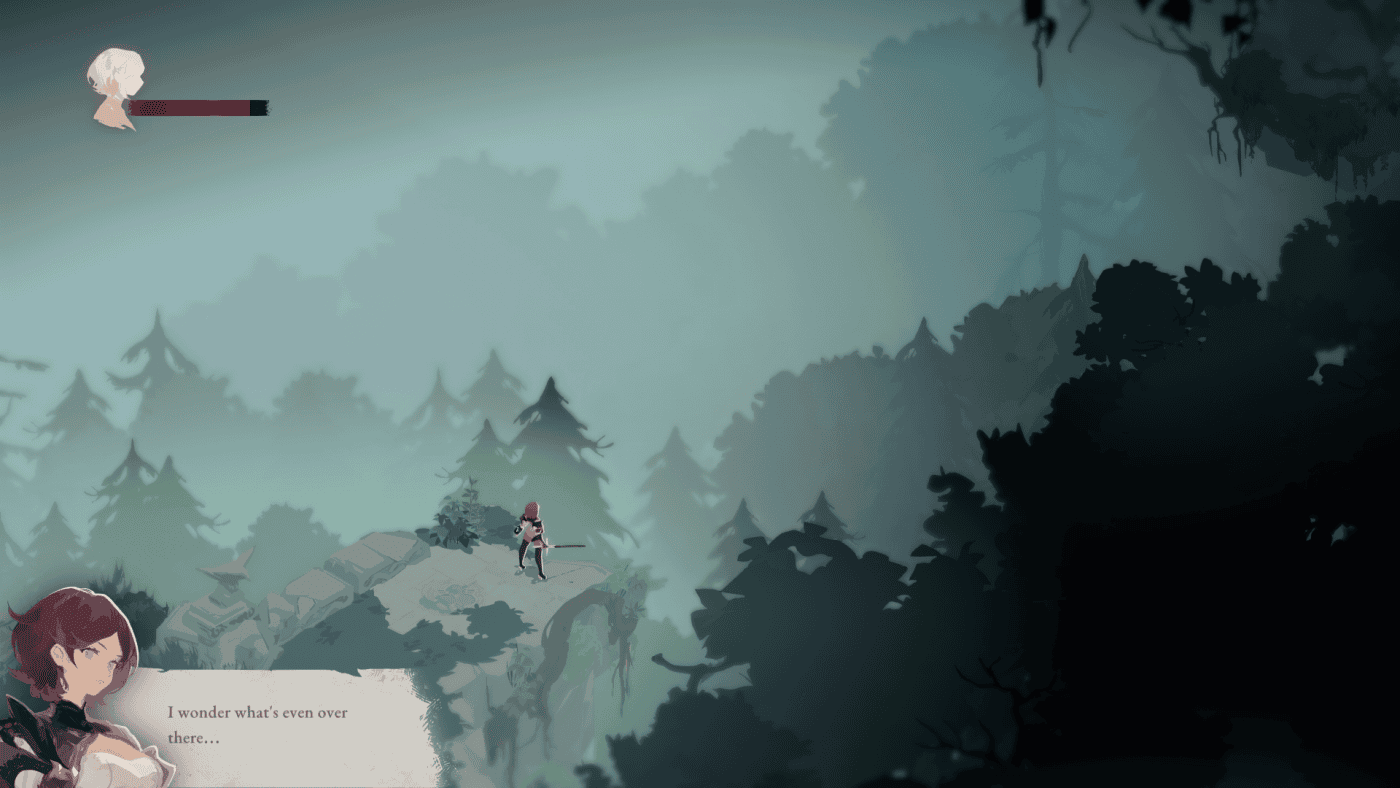
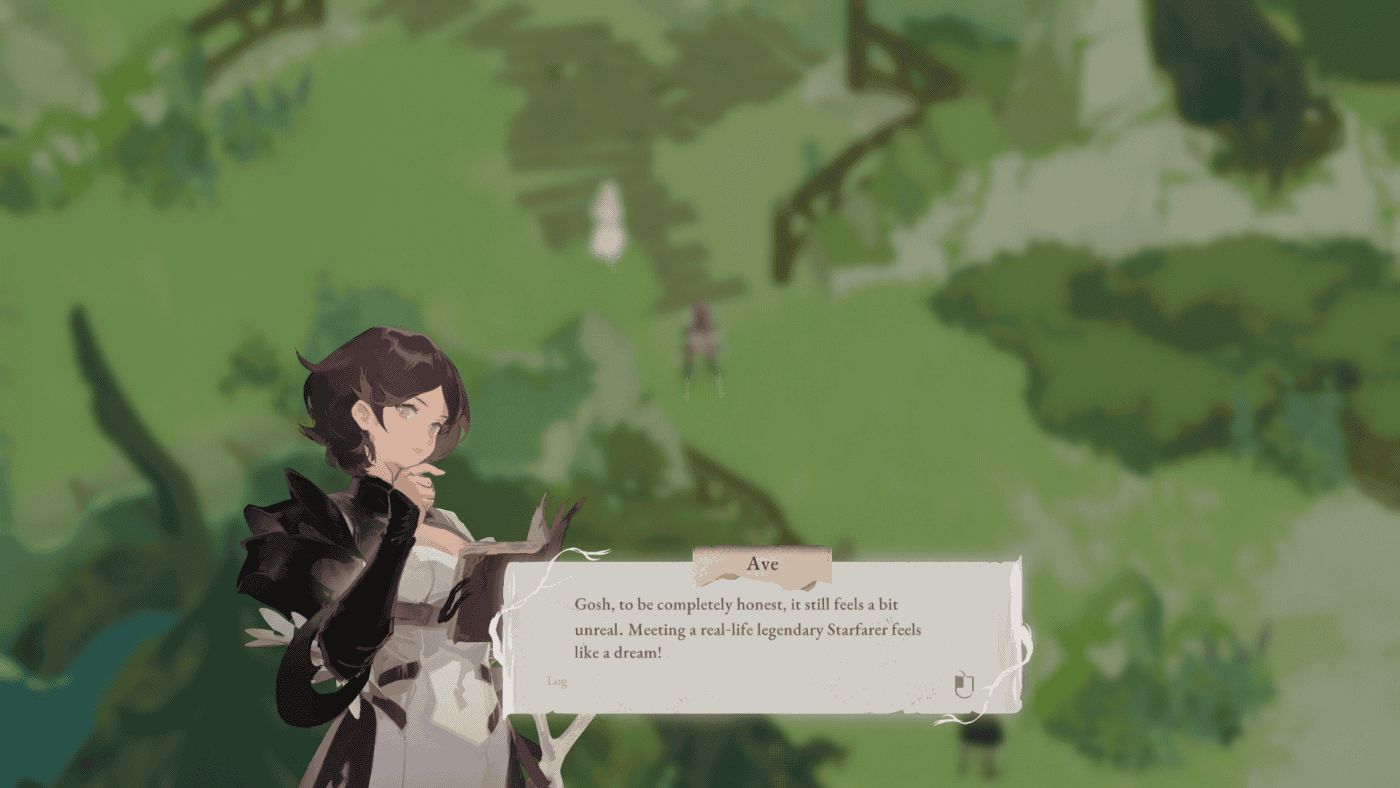
The relationship between the two protagonists is one of equals and resembles that of two sisters. It is interesting to see how the older sister/younger sister dynamic shifts between the two protagonists. Lune is certainly the wiser of the two, while Ave tends to be impulsive and sometimes naive.
Fortunately, Lunarium handles the development of their relationship and interactions well, creating an equal bond that grows stronger and more complete as the adventure progresses. There will be plenty of funny interactions as well as much more serious moments, where both Ave and Lune gain credibility in the eyes of the player.
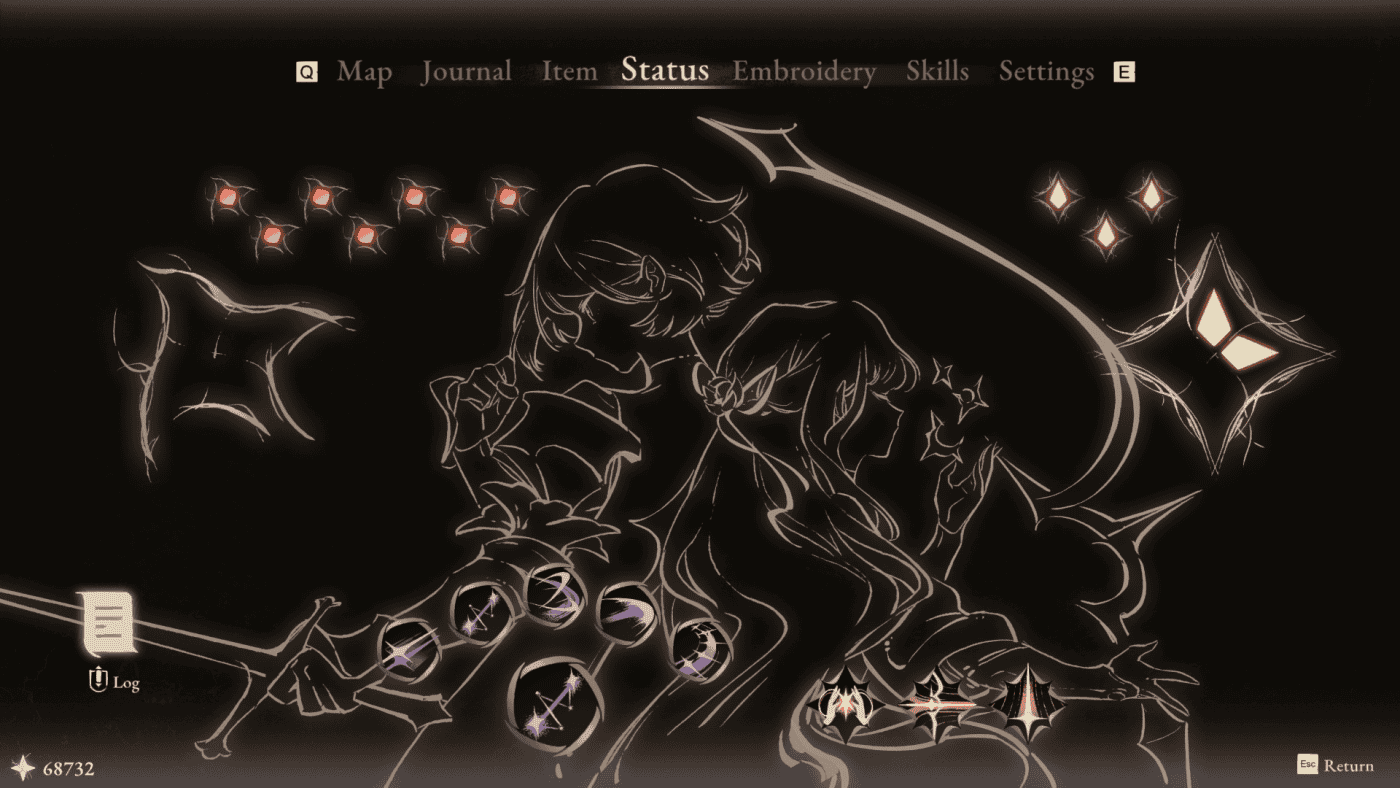
All of this is also reflected in the gameplay mechanics, where we control both characters simultaneously.
World Building, Lore and World Design
When it comes to these aspects, Lunarium does a good job. Taking inspiration from Souls, we discover a great deal of lore about the world by exploring and collecting items. Everything we pick up adds information about the world, which can later be consulted in our character’s journal. Other relics, which serve purely as collectibles, have their own descriptions, following the tradition of environmental storytelling. As in Souls, Talk to the NPCs, return to them after resting or completing certain actions. Alternatively, buy all of their merchandise to make them move or trigger specific events.
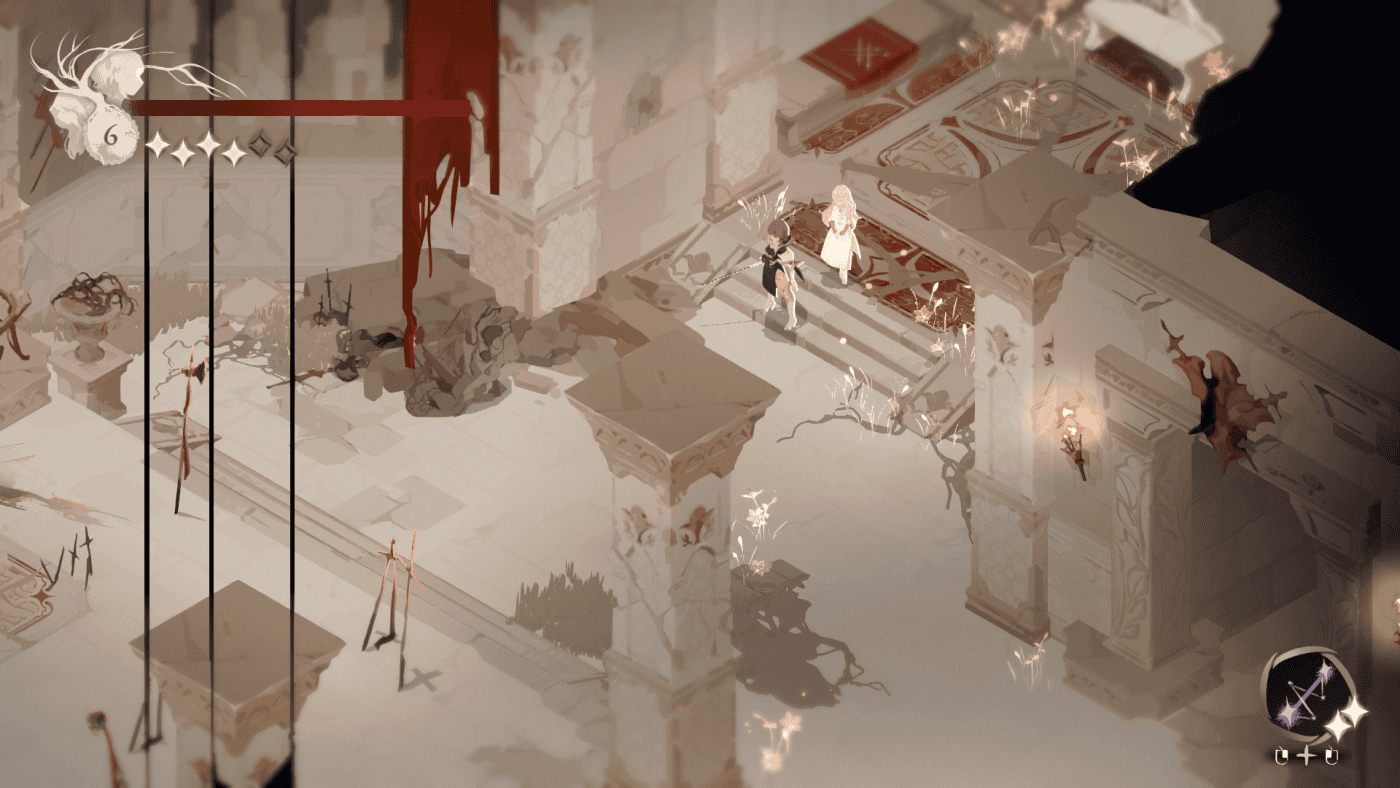
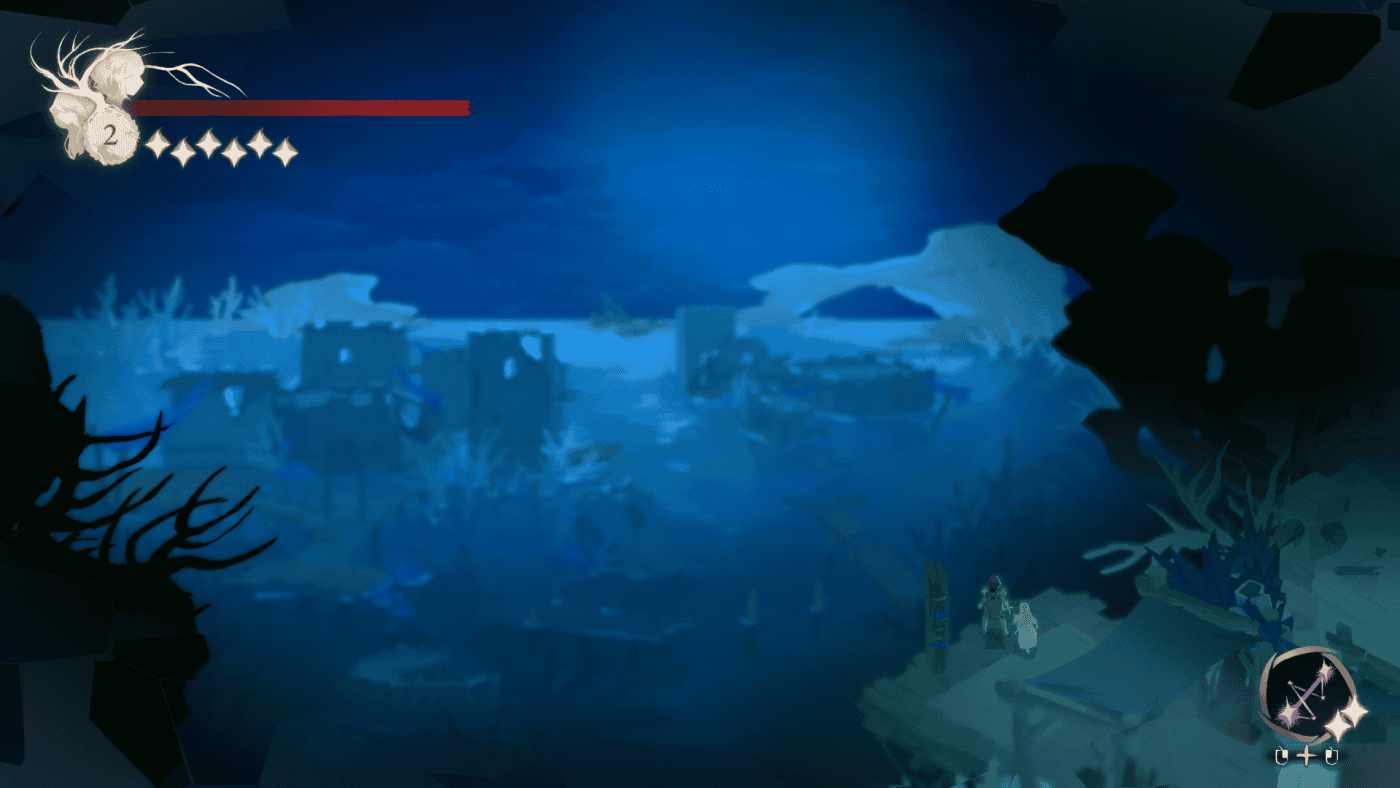
The world of Lunarium is divided into several large areas or biomes: they are fairly vast, but can be traversed quite easily thanks to the intelligent use of shortcuts. The attention to detail and aesthetics, especially considering that this is an independent production, is almost obsessive and tells a story to those who know how to observe the area around them. The sound tracks are effective and contextualized to the events and atmosphere we experience.
The handling of paths and secret areas is also good: they are fairly easy to spot and always ready to reward curiosity. Several NPCs are scattered throughout the map, giving you quests that are gradually updated in Ave’s journal. Be careful, because it is up to you to read and understand where to go and what to do: there are no quest markers.
The only exception is a red dot and main quest indicators on the map, designed to prevent the player from becoming completely disoriented.
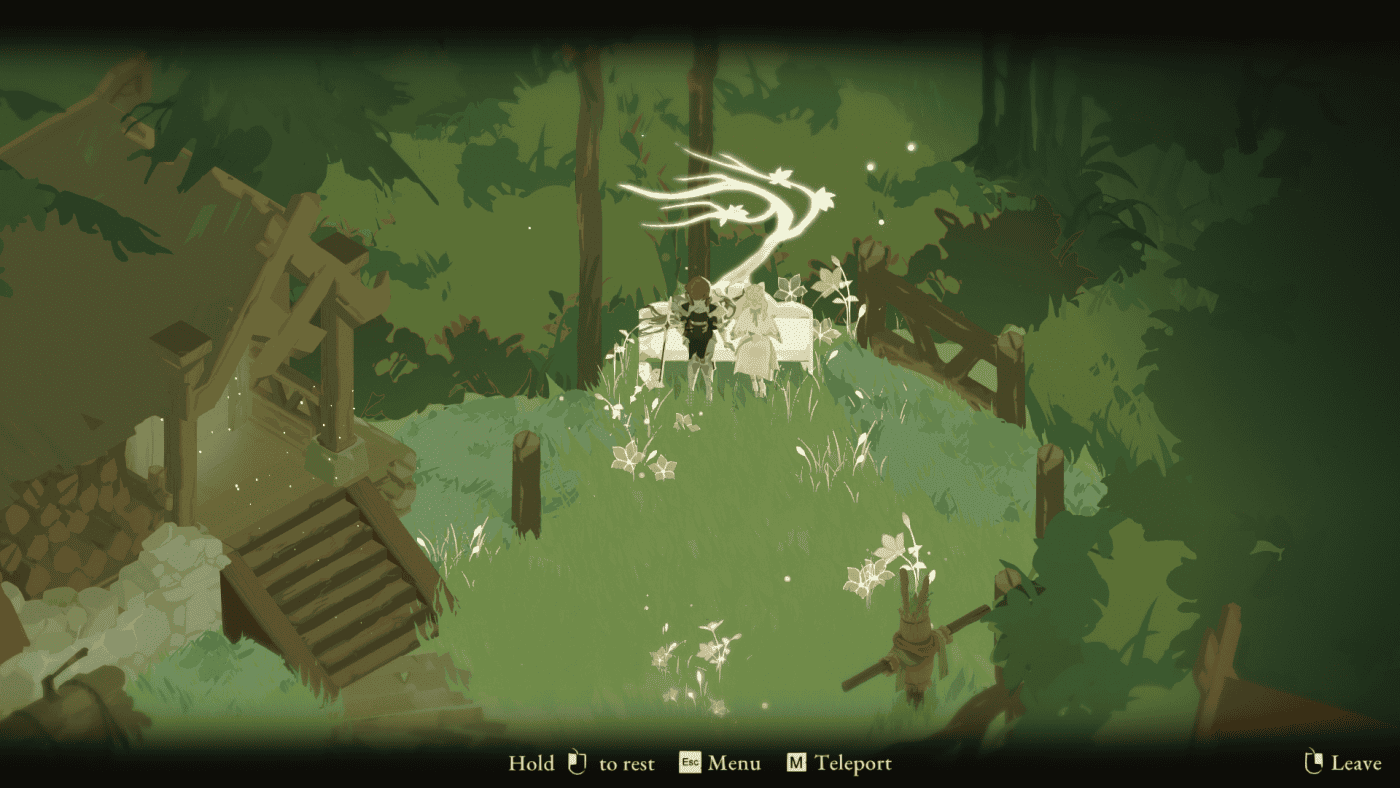
In this game world, there are two safe zones: Lune’s sanctuary and Ave’s village. Here we can upgrade ourselves, craft new items, and they serve as the only safe areas.
The save system is based on benches where we can save our progress. Keep in mind that there is no corpse run mechanic.
Obviously, resting causes defeated enemies to respawn, except for certain elites which, once defeated, provide a unique reward and do not return. In my opinion, implementing fast travel from the early stages was the right choice, considering how the developers decided to divide the game into large areas.
Enemies, Positioning and Bosses
The placement of enemies and ambushes seems to recall that of the first Dark Souls. This makes encounters fairly clear and readable, while the occasional ambushes not only test the player but also help them understand where secret areas or hidden passages might be located. In the later areas, the level construction becomes more complex but, at the same time, more cumbersome, tending to confuse the player somewhat, especially during the optional backtracking that can be done for story and lore completion.
The same applies to enemy positioning: there is a higher density of enemies compared to the areas we have to traverse. At least for me, this choice encouraged me to rush through areas after clearing them at least once. I was able to do so partly thanks to the AI, which has some shortcomings, and the aggro that resets when changing areas.
The enemy design is well-crafted and inspired, and the boss fights are no exception. There are creatures of different sizes, with elaborate movesets developed across multiple phases. Bosses, in particular, base their encounters around parrying, a mechanic I will discuss later, creating a worthy challenge for the player.
In this regard, Lunarium can sometimes be inconsistent when it comes to encounter balancing. While many boss fights are well-designed and force the player to adopt a precise strategy to win, others are not. This becomes apparent during the second half of the adventure, where we encounter fights that are extremely simple before suddenly hitting considerable spikes in difficulty and damage. The final boss itself is genuinely tough and raises the bar in a way that feels jarring compared to the encounters that came before it.
I consider these to be the growing pains of a team working on its first major project, especially one that continues to regularly update and patch the title.
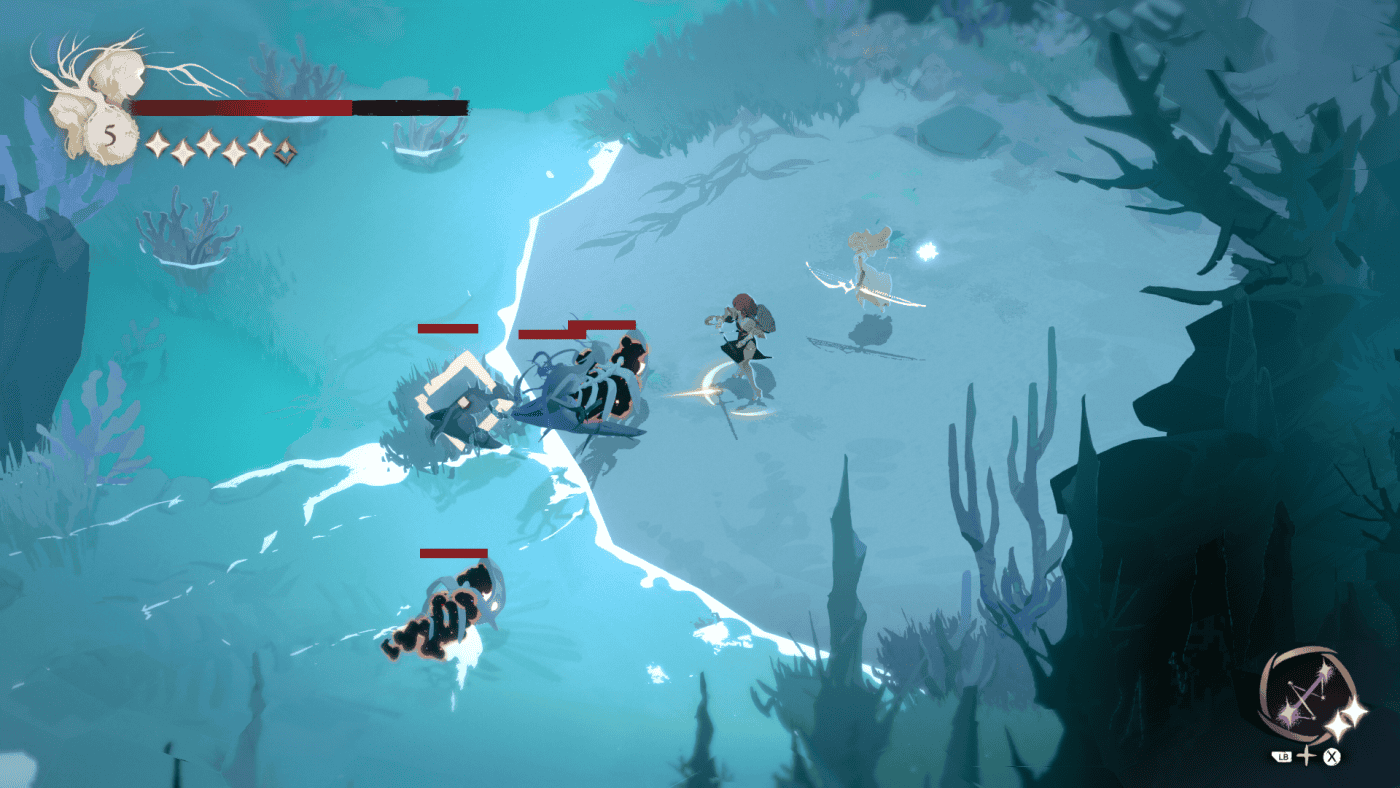
Ave and Lune: Between Souls-like, Sekiro, and More ARPG
As mentioned earlier, Lunarium borrows several souls-like dynamics, along with those of Sekiro and classic ARPGs.
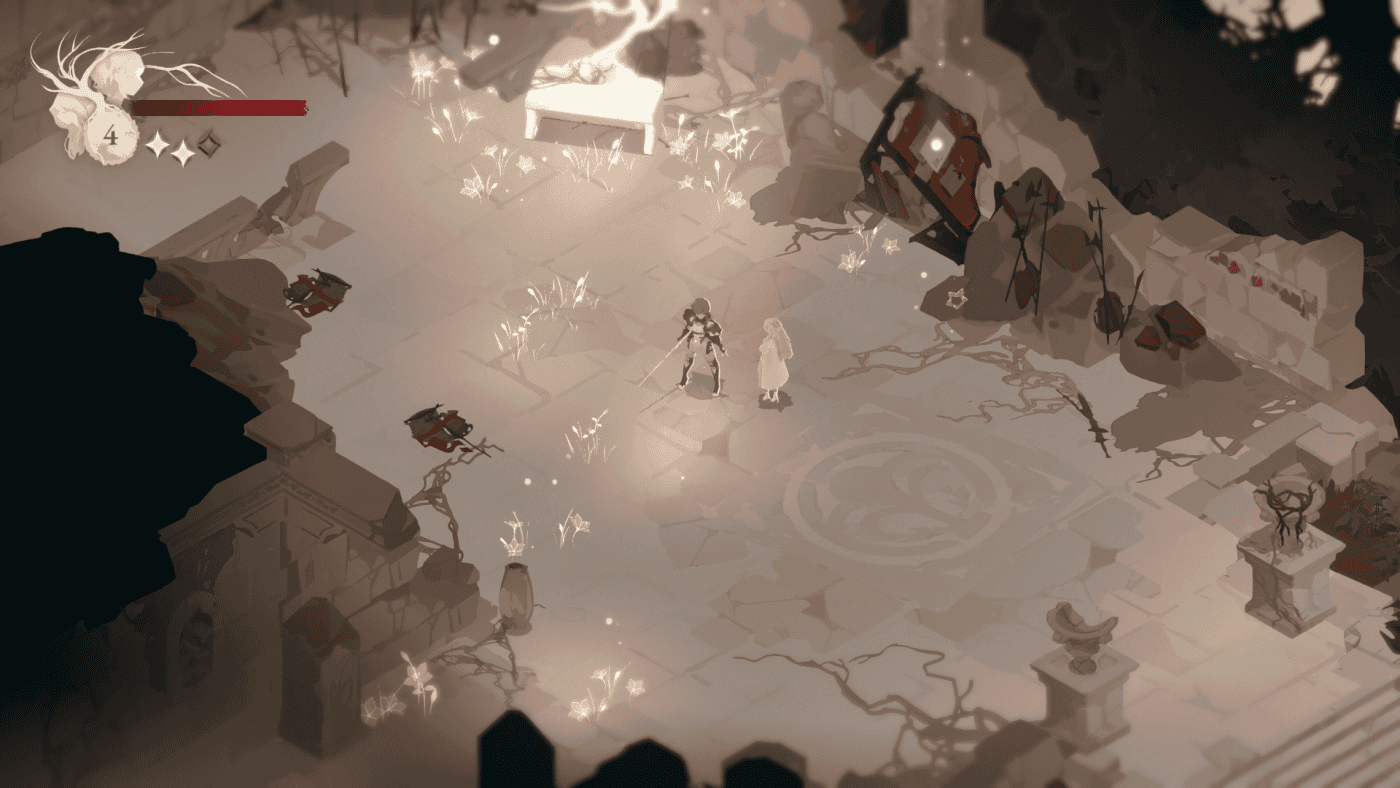
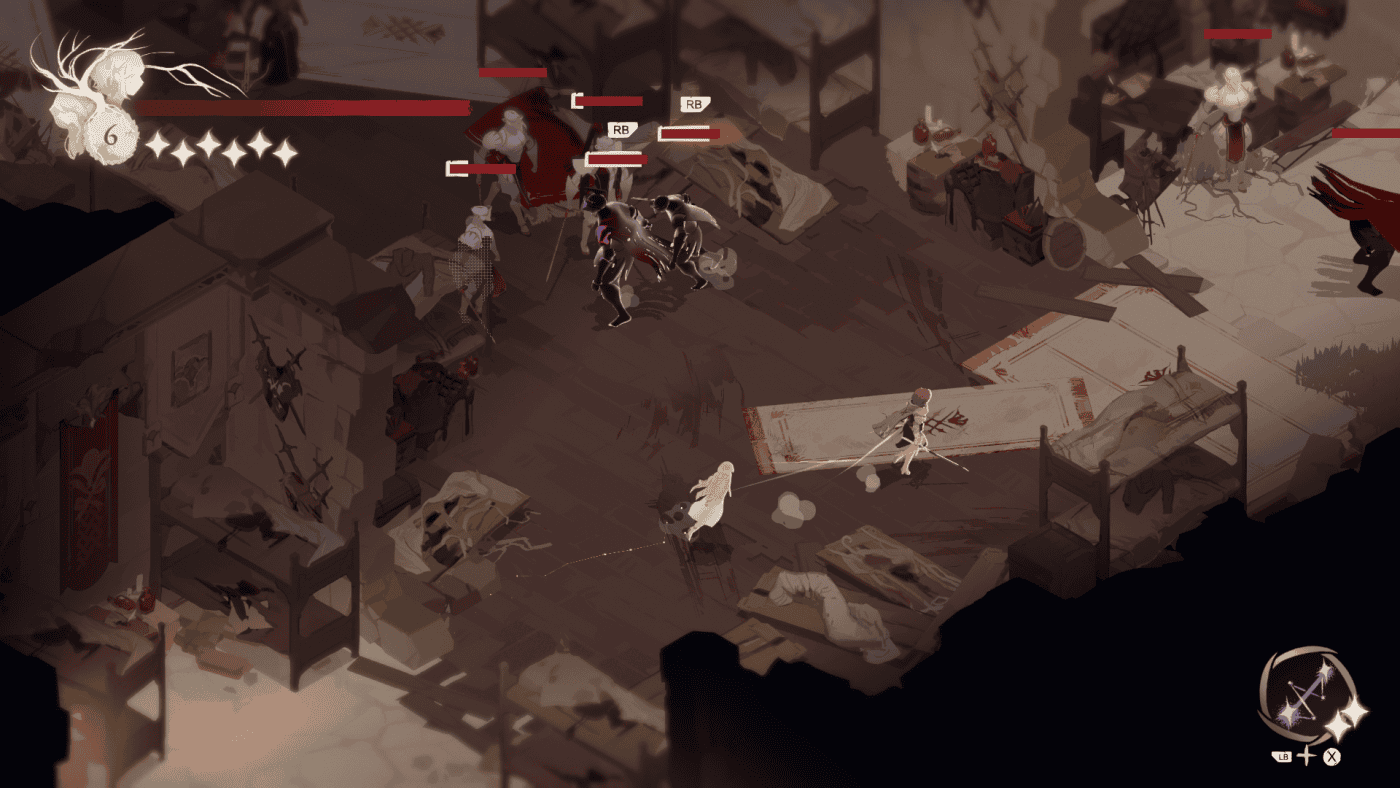
The relationship between and simultaneous control of two characters is particularly interesting, bringing titles such as Soulstice to mind. Only Ave has a health bar; Lune accompanies us and must be controlled by the player simultaneously. This mechanic, with the necessary differences, reminded me of the use of PODs in NIER Automata.
Let’s start with Ave and her sword, Junonia: she has a light attack, a heavy attack, a dodge with invincibility frames, and a parry. I recommend going into the options and enabling the setting that allows Ave to run by holding down a button. The protagonist can only jump when approaching certain ledges, where the corresponding button prompt will appear. Running toward these ledges will automatically trigger the jump.
Ave’s parry is a fundamental mechanic in the game. Successfully parrying enemy attacks fills a stagger meter which, once it reaches its limit, leaves the opponent at the mercy of our attacks. Holding down the heavy attack while the enemy is incapacitated triggers an execution animation.
Our ally Lune is no less important. Wielding the power of Lumina and armed with a bow made of light, she has two main tasks: helping us in battle and clearing a path through the Nihilus. Thanks to her powers, we can use prayers, which are useful for restoring our health. By spending Resonance Points, she can fire charged arrows at enemies to increase their stagger meter. When the enemy’s stagger meter is almost full, Lune can deliver a finishing blow, leaving the opponent defenseless.
Although she does not deal “real” damage, Lune’s abilities are essential for victory. Lunarium’s combat system relies heavily, especially during boss fights, on its stagger mechanic.
Characters Progression
When it comes to character progression and development, Lunarium has some genuinely clever ideas. They are not original, but they are well-contextualized and deeply integrated into the game’s lore.
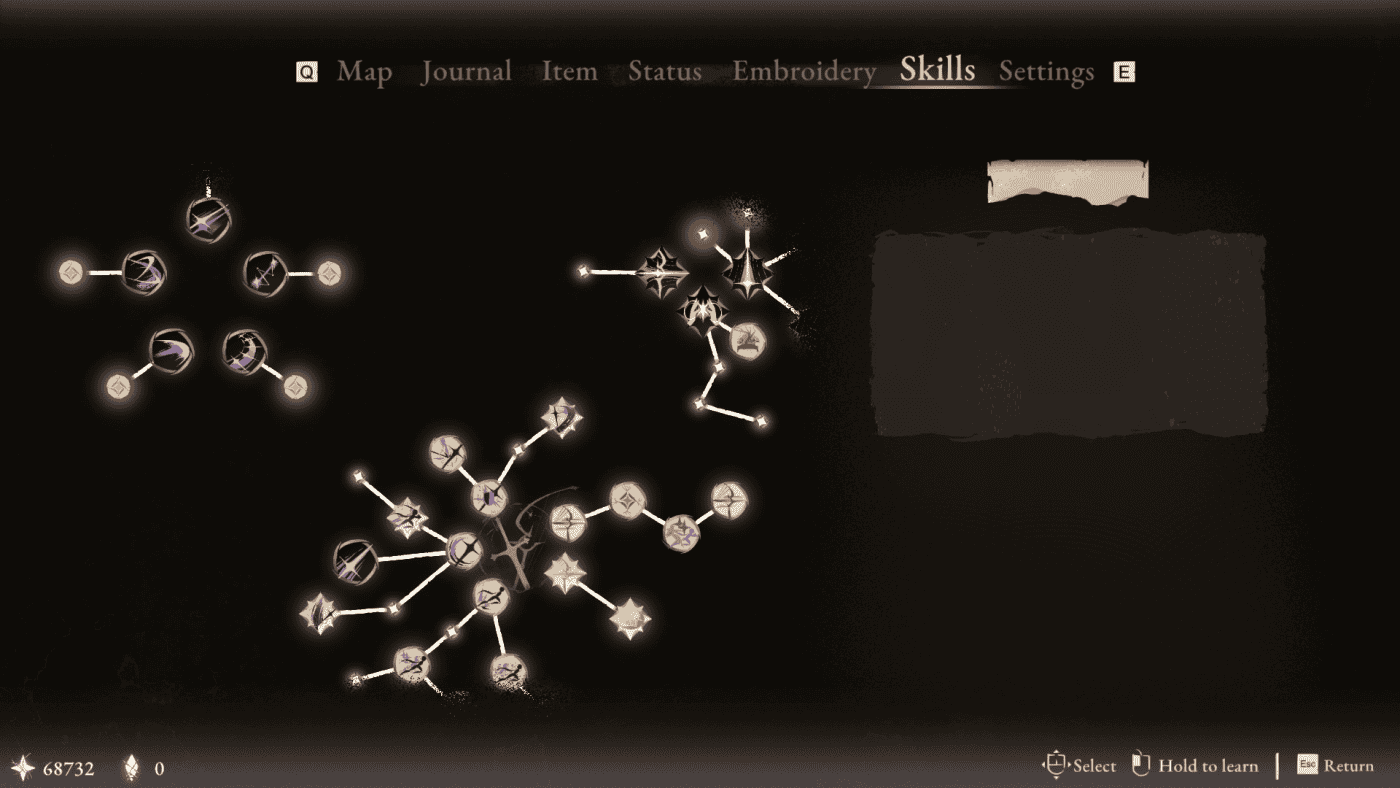
There are no levels. Instead, Lumina points, earned throughout the adventure, can be spent to acquire abilities. These can be chosen from different branches: some exclusive to Ave and others to Lume. Obviously, the abilities are designed to synergize between the two protagonists. Lune can also expand and increase the available skill branches by offering rare soul fragments to a receptacle.
The only real disappointment is that, again during the second half of the game, almost everything had already been unlocked, leaving me with a large amount of Lumina and nothing to spend it on. Perhaps a poorly calculated progression system.
Other upgrades involve collecting consumables, often well-hidden or awarded as rewards for side quests, which are used to increase Ave’s health and Lune’s Resonance Points.
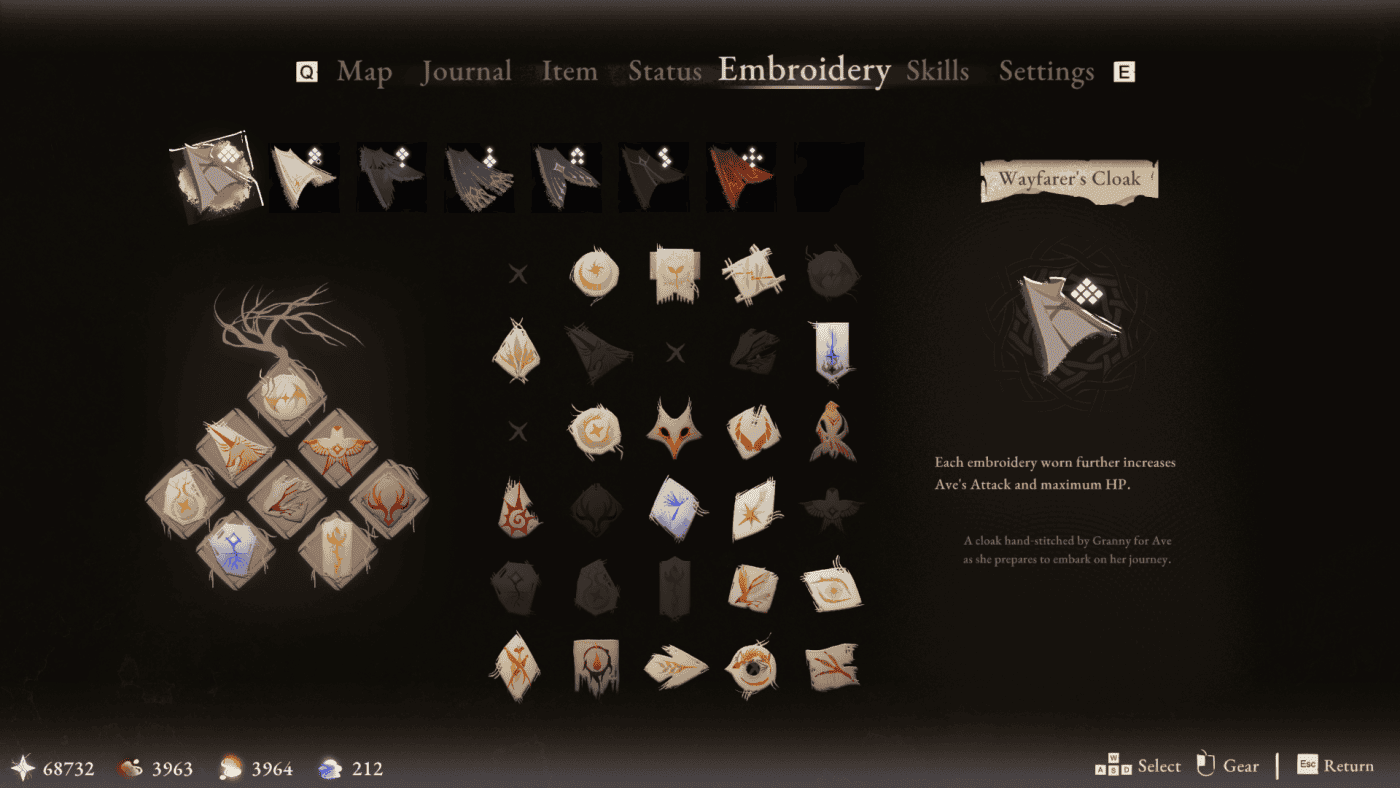
The best upgrade system, in my opinion, is the one involving cloaks: upgradeable items with passive abilities and slots for inserting ornaments. As the cloak’s level increases, so do its passive effect and the number of available slots.
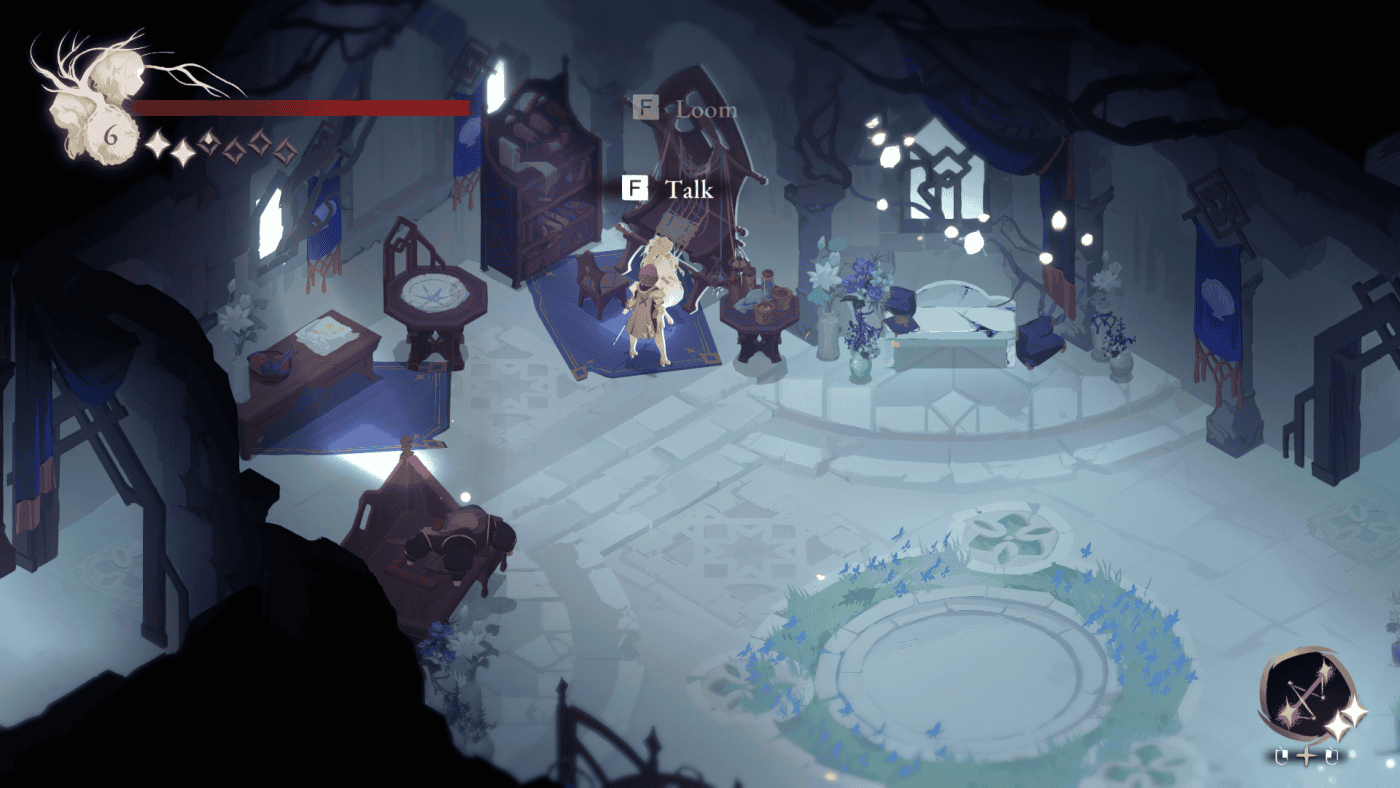
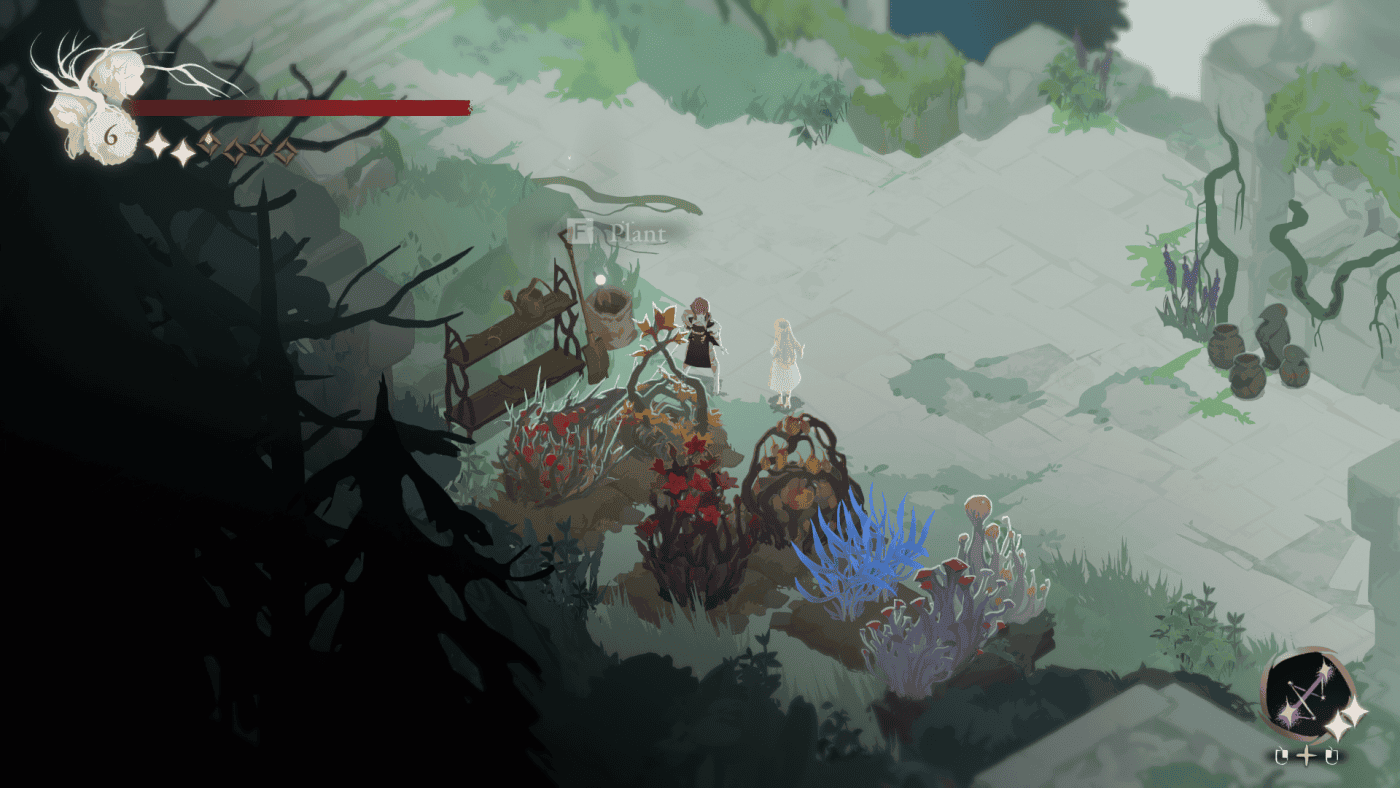
This is where the sanctuary area comes into play, allowing us to grow seeds that we find throughout the adventure. We can use them as dyes and materials to create ornaments from the blueprints we discover. Each ornament adds abilities that often synergize with the cloak’s main passive. Lune simply has to sit at the loom to weave these garments. Ave can use her sword to collect rocks and minerals, which can also be used to improve the sanctuary and unlock new possibilities.
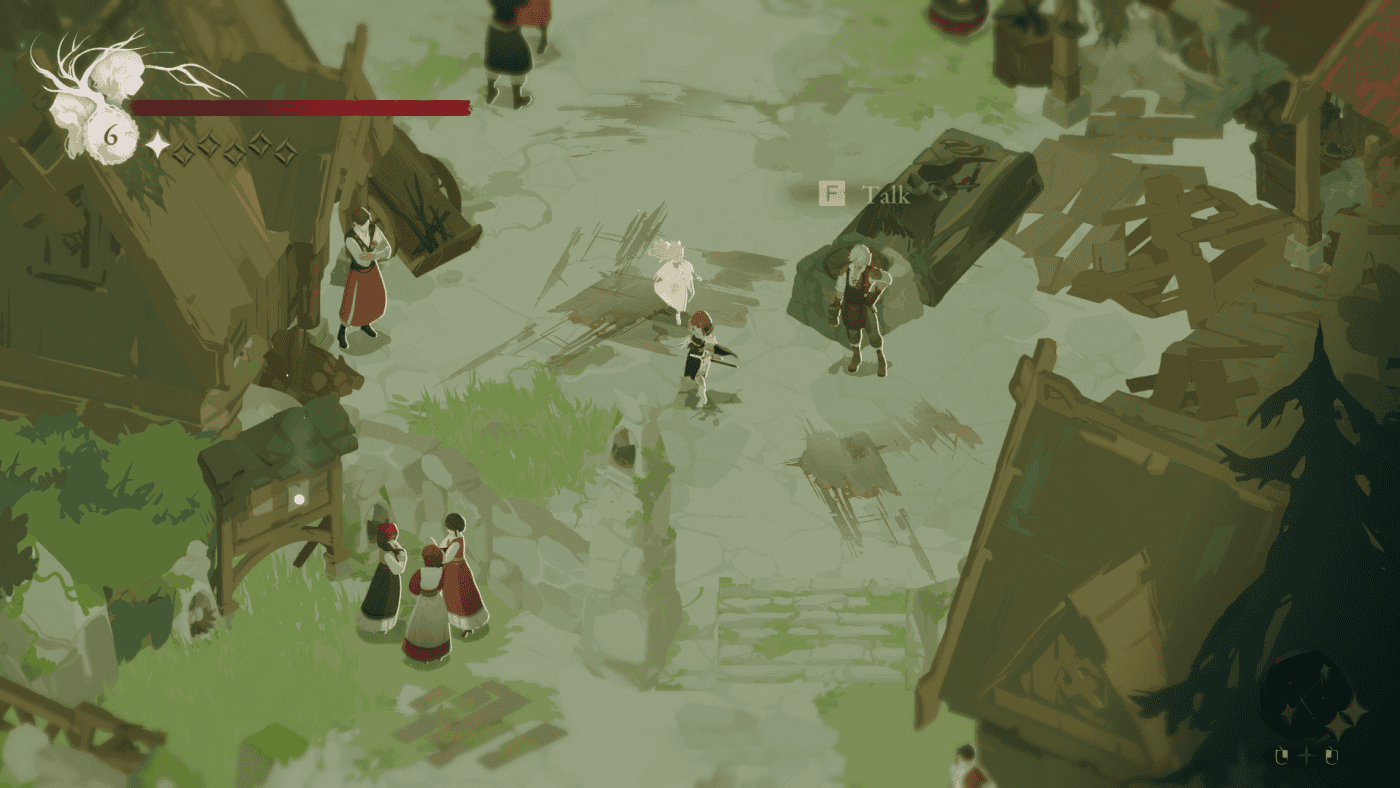
In the village, alongside some quests I won’t mention to avoid spoilers, we meet Theodor. By bringing him specific ore fragments, he will upgrade our Junonia. I assure you that the difference in power is immediately noticeable and very tangible.
My Two Cents
Lunarium is one of those debut titles that deserves attention and, above all, to be played. Not because it is a revolutionary ARPG or because it manages to reinvent the genre, but because it demonstrates a surprising level of maturity for a team working on its first major project. Its influences are evident, particularly when it draws from the world of souls-like games, Sekiro, and more traditional ARPGs, without falling into the trap of approximation or artificially inflating the difficulty.
One of its greatest strengths is undoubtedly the relationship between Ave and Lune, which is not confined to the narrative but becomes an integral part of the gameplay. The stagger-based combat system, simultaneous control of the two protagonists, and a progression system rich in options give the game a well-defined personality.
On the other hand, Lunarium still shows some of the limitations of a debut project. Encounter balance is inconsistent, as is the pacing during the second half, which tends to lose some of its momentum. The progression system also reaches its limits a little too early. These shortcomings become more noticeable precisely because the rest of the game works so well.
Ultimately, Lunarium is not a masterpiece, but it is a genuinely strong game. It is an excellent calling card for Lunarium Game Studios and a solid foundation on which to build something even more ambitious. If this is the starting point, it will be interesting to see where the team can go with its next project. I am confident it will not go unnoticed among fans of the genre.
 8.2/10