When the soundtrack outgrows the game: an enhanced comic between music, nostalgia, and mystery
There is a question at the heart of 1997 RELOADED that is genuinely worth asking: what would rock music have looked like if grunge had never existed? It is the kind of counterfactual that music lovers argue about over drinks, and Gaigo Studio – a small independent team based in Genoa, Italy – has turned it into the foundation of an entire fictional universe. The Roxyverse is an alternate version of the 1990s in which Los Angeles, not Seattle, was the epicenter of alt-rock, and in which a set of artists who never existed left behind a legacy that feels, against all odds, real.
That ambition alone is enough to make 1997 RELOADED worth your attention. Whether it is also worth the player’s time is a more complicated question.

Gaigo Studio: An Italian Voice in the Visual Novel Landscape
Gaigo Studio did not arrive at 1997 RELOADED by accident. The Genoa-based team has spent years working at the intersection of literature, visual art, and music – first with Casscomics, an experimental “comic and cassette” project, then with the sonic graphic novels of Infinite Plot. 1997 RELOADED was originally conceived as a graphic novel with a soundtrack, and only in 2023 did the team begin developing it as a visual novel, recognizing the format as the right vehicle for the kind of layered, musically centered experience they had in mind.
The result is a project that wears its Italian identity openly. The game is in English – by necessity, given both its setting in Hove, England, and its ambition to reach a global audience – but it does not pretend to be anything other than what it is: a story told by Italians, about Italians abroad, with all the cultural friction that entails. That friction, as we will see, is one of the most interesting things about the project.
The 1990s That Never Were
Before talking about what 1997 RELOADED does or does not achieve as a game, it is worth spending a moment on what it is trying to do culturally – because the Roxyverse is not simply a backdrop. It is a thesis.
The 1990s had a particular relationship with music, one built on physicality and presence. Record stores were not simply retail spaces: they were social infrastructure. Concerts were not content; they were events with a weight, a smell, the sense that something unrepeatable was happening. The cassette tape, the vinyl record, the answering machine – these were objects that held time inside them. When the tape ran out, it ran out. When the record skipped, it skipped in the same place every time, until that skip became part of the song.
The Roxyverse understands this. It builds on the premise that the emotional texture of that decade – the way music carried weight, before everything became a stream, before every song was instantly and infinitely available – can be reconstructed, even for a generation that never lived it. The counterfactual element (no grunge, Los Angeles instead of Seattle, a different pantheon) is almost secondary to this larger project of sensory archaeology. The game does not ask you to mourn Kurt Cobain but to mourn the idea that music could matter the way it mattered then.
Whether you lived those years firsthand or know them only through older siblings and documentaries, 1997 RELOADED works on the same nerve: the nostalgia for a density of experience that feels increasingly difficult to reach.

The Soundtrack of a Reimagined Era
If the Roxyverse is the thesis, the soundtrack is the proof.
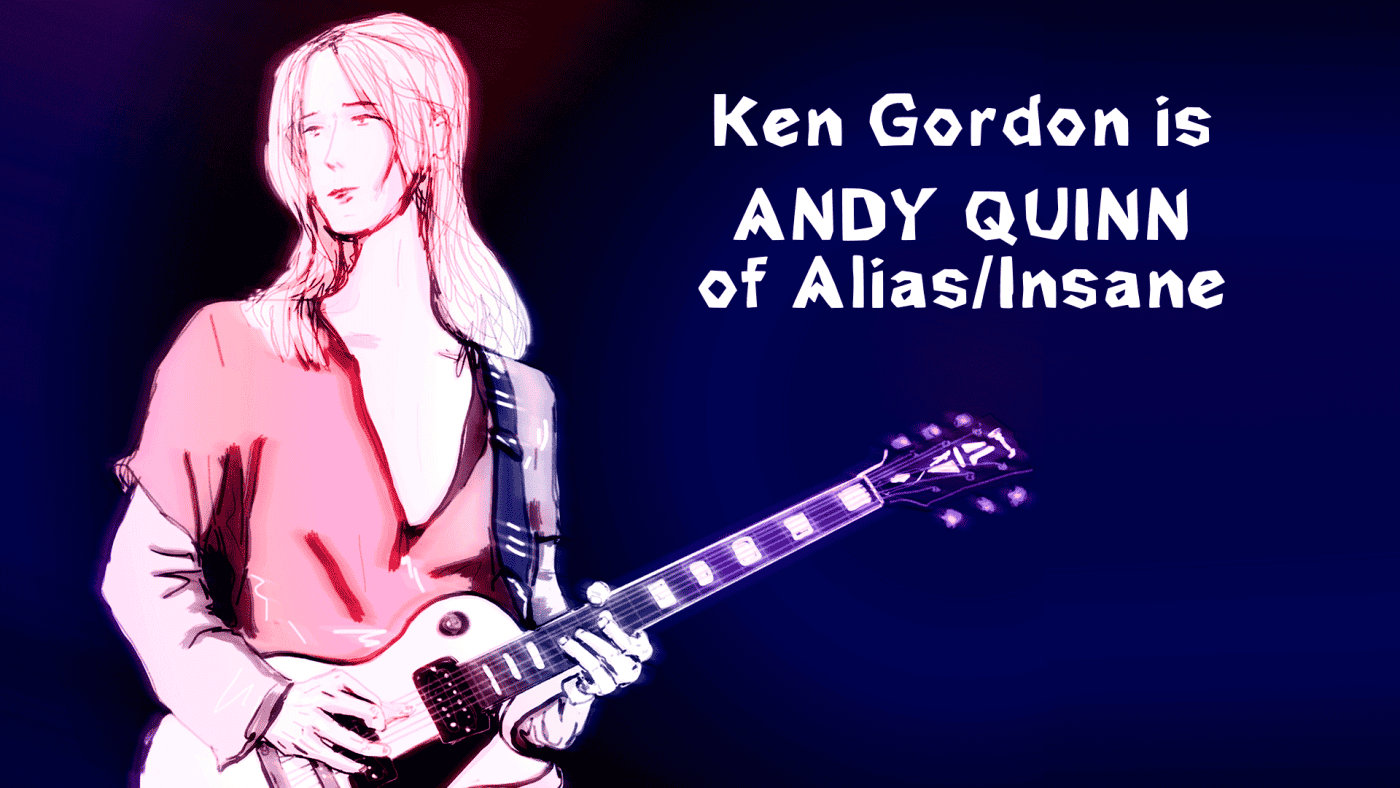
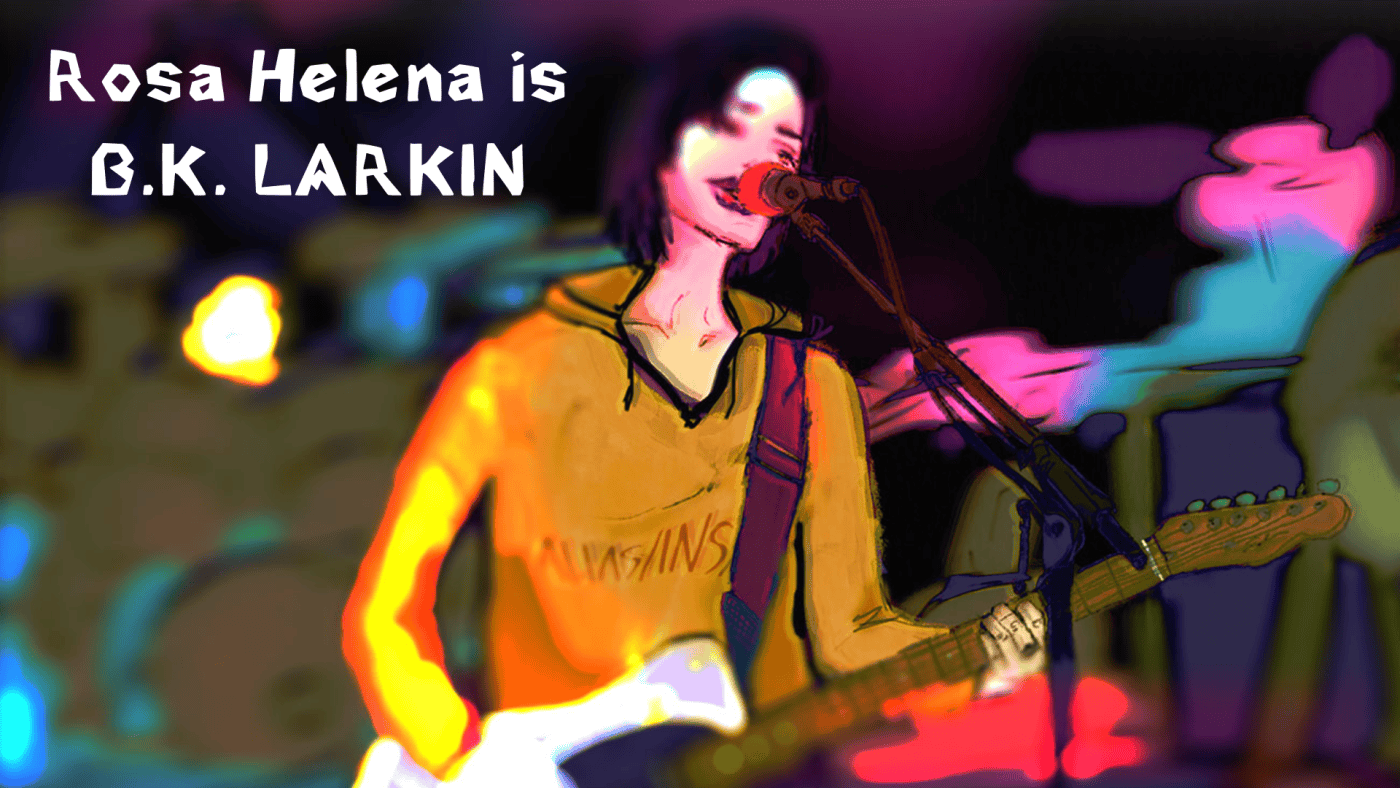
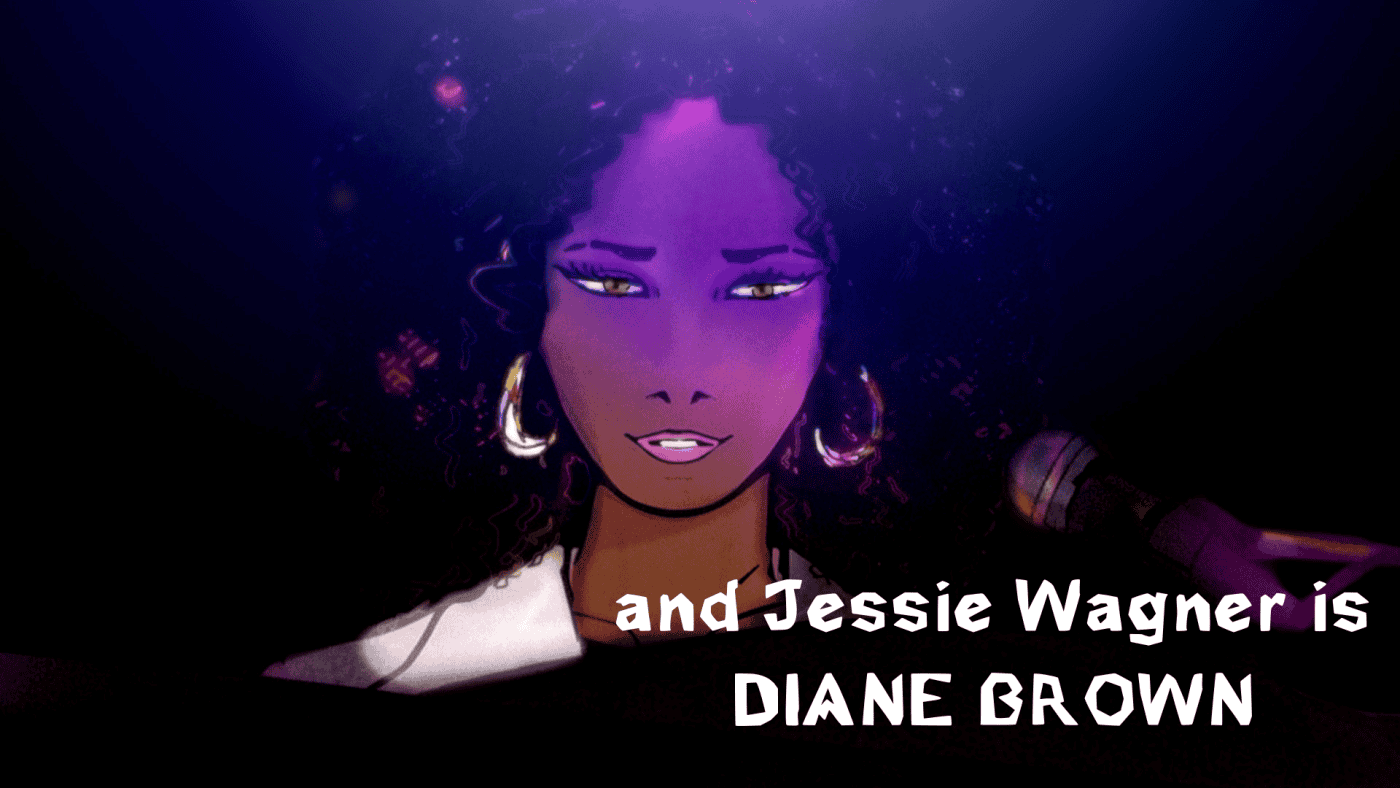
Gaigo Studio does not make the mistake of treating music as atmosphere. The original soundtrack of 1997 RELOADED is the work of real professional vocalists performing as fictional artists – figures who exist only within the game’s universe but carry the full biographical weight of the story. Ken Gordon voices Andy Quinn, the tormented frontman of Alias/Insane whose disappearance in 1997 is the cold case at the center of the mystery. Rosa Helena voices B.K. Larkin, the poetically laconic soul of the scene. Jessie Wagner – who has sung with Lenny Kravitz, Chic, and Duran Duran – is Diane Brown, the pop powerhouse of the East Coast scene.

The distinction matters. These are not session musicians lending their voices to a video game. They are performers inhabiting characters, and the music they perform – original tracks spanning alt-rock, pop, folk, and blues – is written as the actual discographic output of those characters. When you hear Fire or Sun Setting Over Trees, you are not hearing a soundtrack cue. You are hearing a record that Andy Quinn or B.K. Larkin would have made, in a decade that could have existed.
The result is something rare: music in a video game that genuinely earns the description of worldbuilding. The Roxyverse feels inhabited because its artists seem to have had careers, feuds, fans, and regrets before the player arrived. The tracklist reads like the catalog of a label that folded in 1998, leaving behind only these recordings and a mythology the internet is still piecing together.
This is the part of 1997 RELOADED that works without reservation.
A Cold Case, a Vintage Answering Machine, and a Summer in Hove
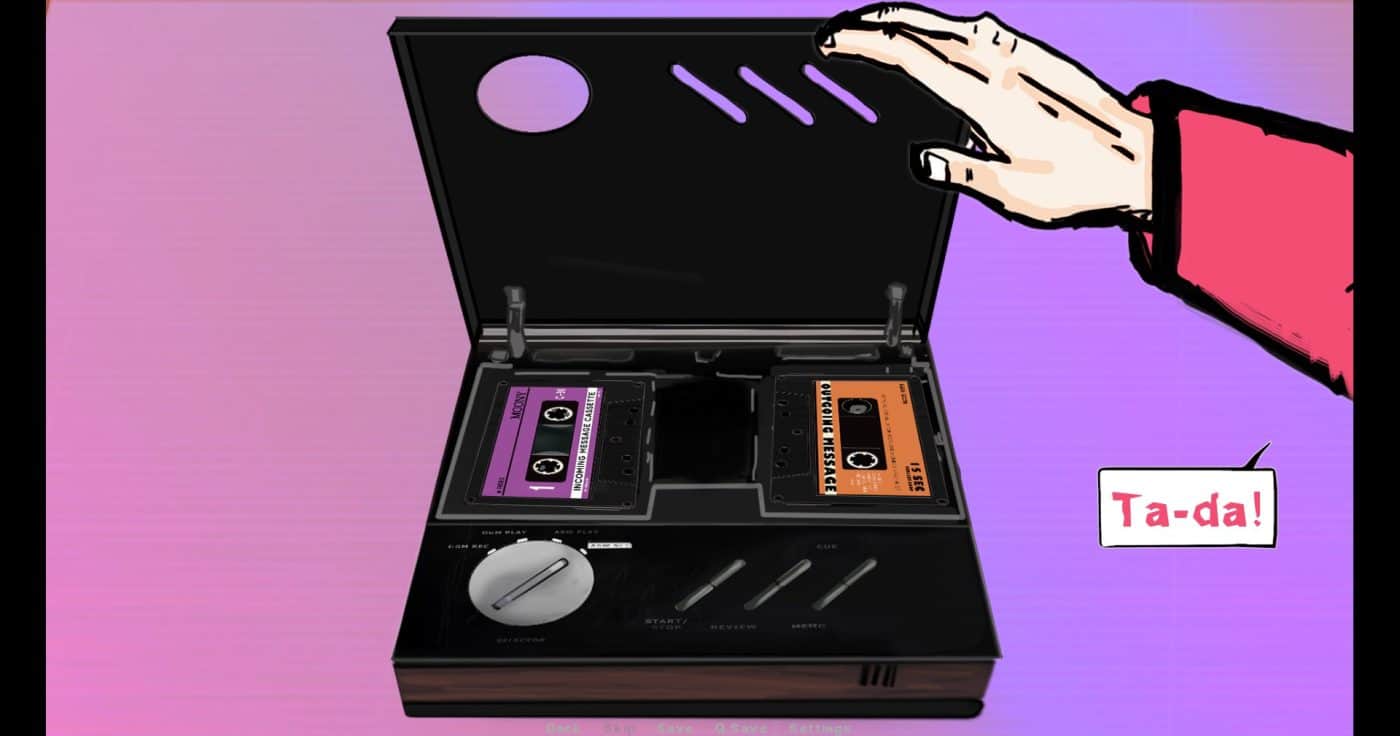
The story begins in June 2023, in Hove, England. Marco and Federico – two sixteen-year-old Italian best friends – spend the summer on an intensive English language course, staying with the family of Shirley, a pink-haired girl who becomes the third point of their triangle. Their days are, by their own account, defined by seaside air and teenage boredom – until a visit to a local flea market produces an object that changes everything: a vintage answering machine, still loaded with tapes.
The recording inside is a voice from 1997: Andy Quinn, frontman of Alias/Insane, calling a friend in England to report what he witnessed – a murder that nobody ever classified as such. Quinn died shortly after, his death ruled a suicide. The machine, with its British plug, sat in a flea market in Hove for twenty-six years.
It is a strong narrative hook. The analog object as vessel for buried truth, the gap between what officially happened and what actually happened, the teenagers as accidental inheritors of a cold case that adults stopped investigating long ago – these are solid foundations. The investigation that follows takes the trio from the English coast to New York and then to Los Angeles, through the neon mythology of the Roxyverse and toward whatever truth Andy Quinn was trying to preserve.
The Writing
This is where the reservations begin.
1997 RELOADED is a kinetic visual novel – no branching paths, no choices that alter the outcome, no puzzles worth mentioning outside one section late in the game. You click to advance. The story moves forward. It is a legitimate format, one that transfers the entire weight of the experience onto the quality of the writing.
That weight is not evenly distributed.
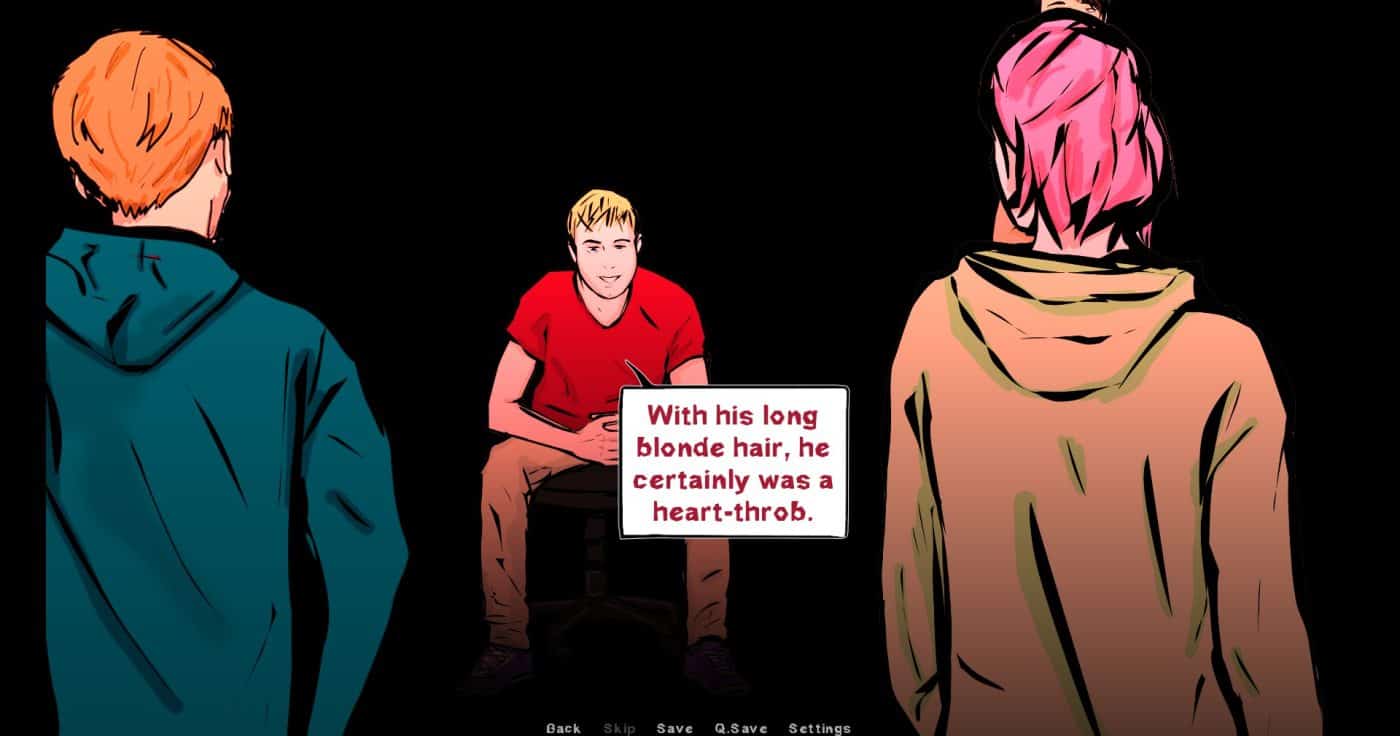
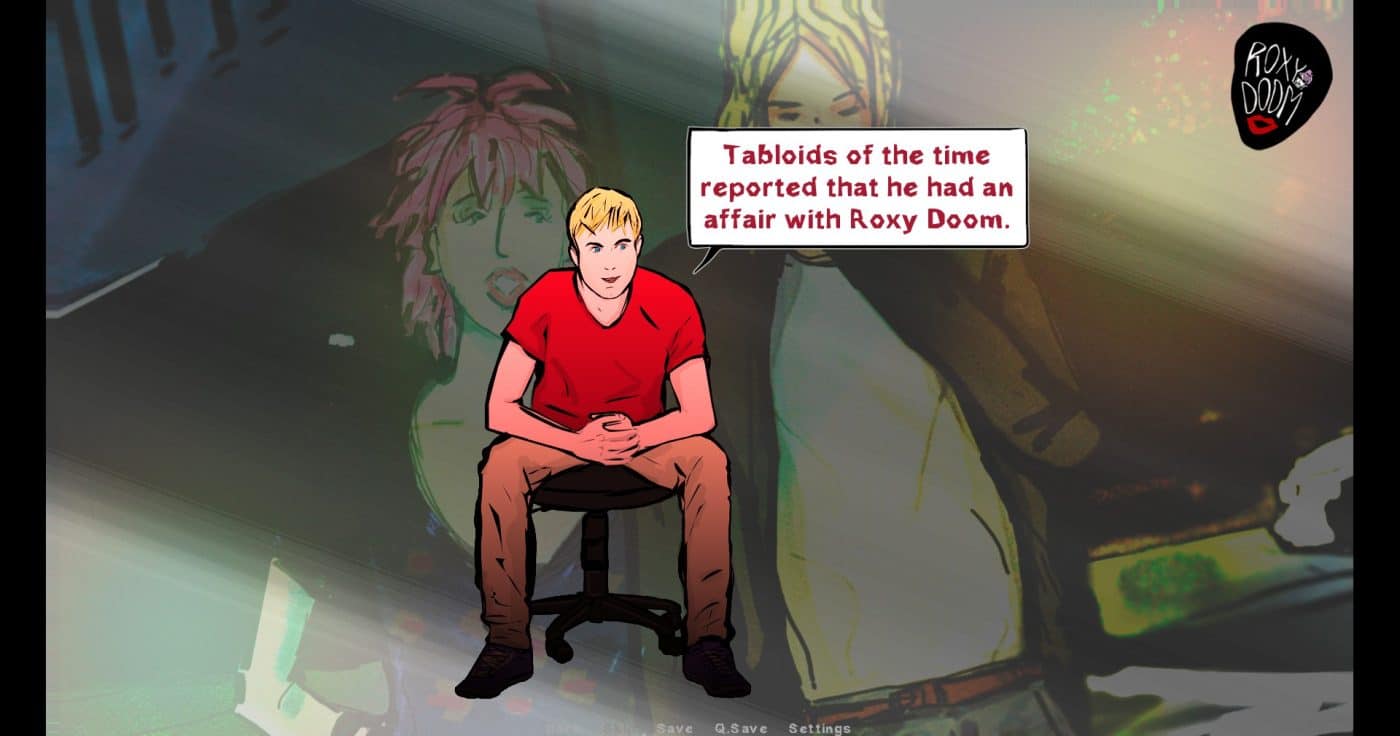
The dialogue has a persistent habit of telling you what it should be showing. Characters reconstruct the cold case out loud in the manner of a police briefing, not a conversation between teenagers. “The machine has a UK plug” lands as a deductive revelation; “sadly closed down in 2016” lands as a footnote inserted into an adolescent’s mouth. There is a gap between the sophistication of the concept and the scene-by-scene execution that the game never fully closes.
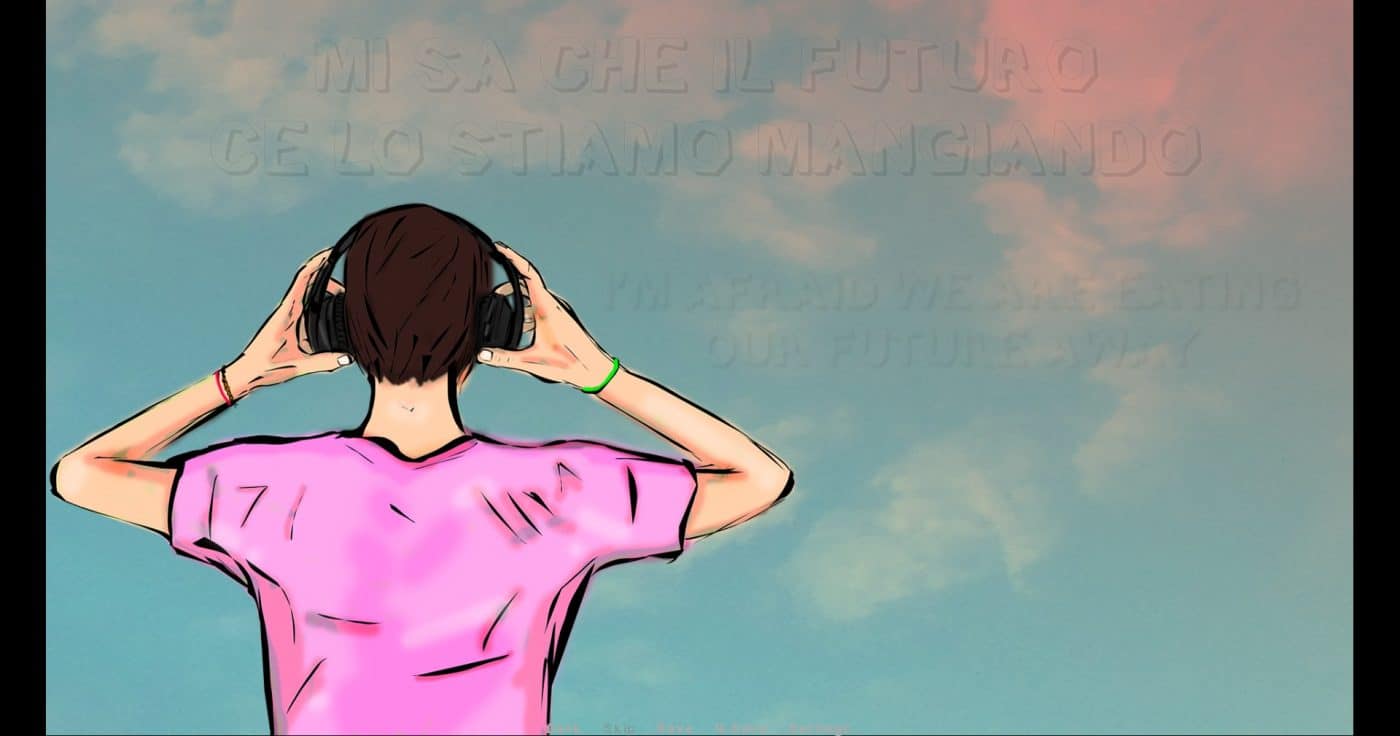
The notable exception is the bilingual element. The choice to have Federico – the more reserved of the two Italian protagonists – speak primarily in Italian, with Marco interpreting for Shirley’s benefit, is the most narratively alive decision in the entire script. It gives Federico an opacity the other characters lack. It makes present in the text, rather than merely stating, what it means to be a foreigner – to navigate a language and a culture that is not entirely your own. When Federico slips into Italian in a moment of frustration or intimacy, the writing comes closest to showing rather than telling.
The Art
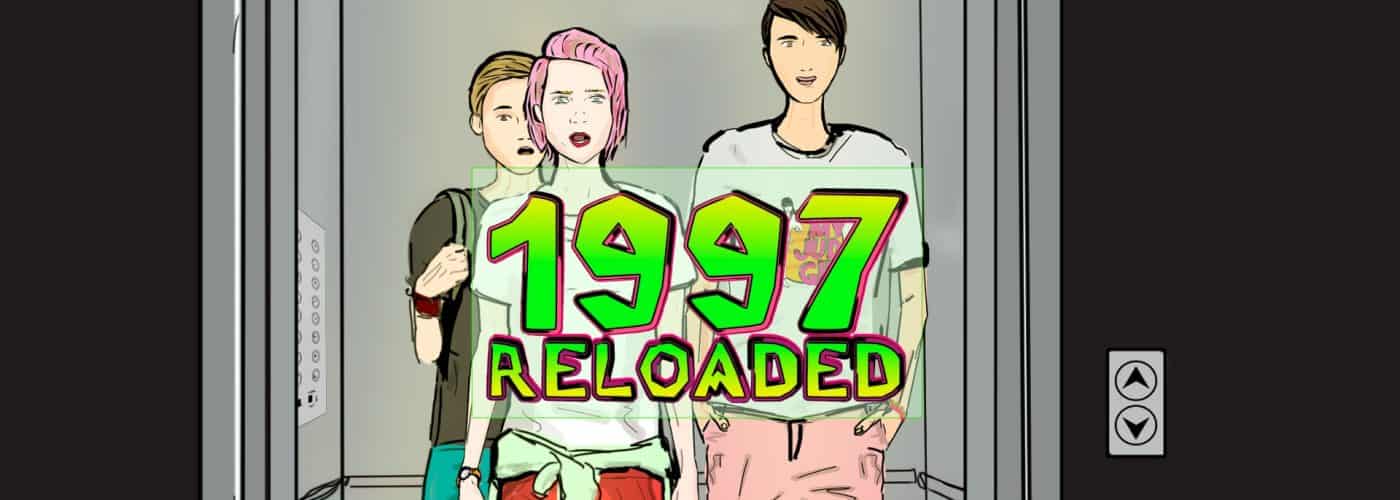
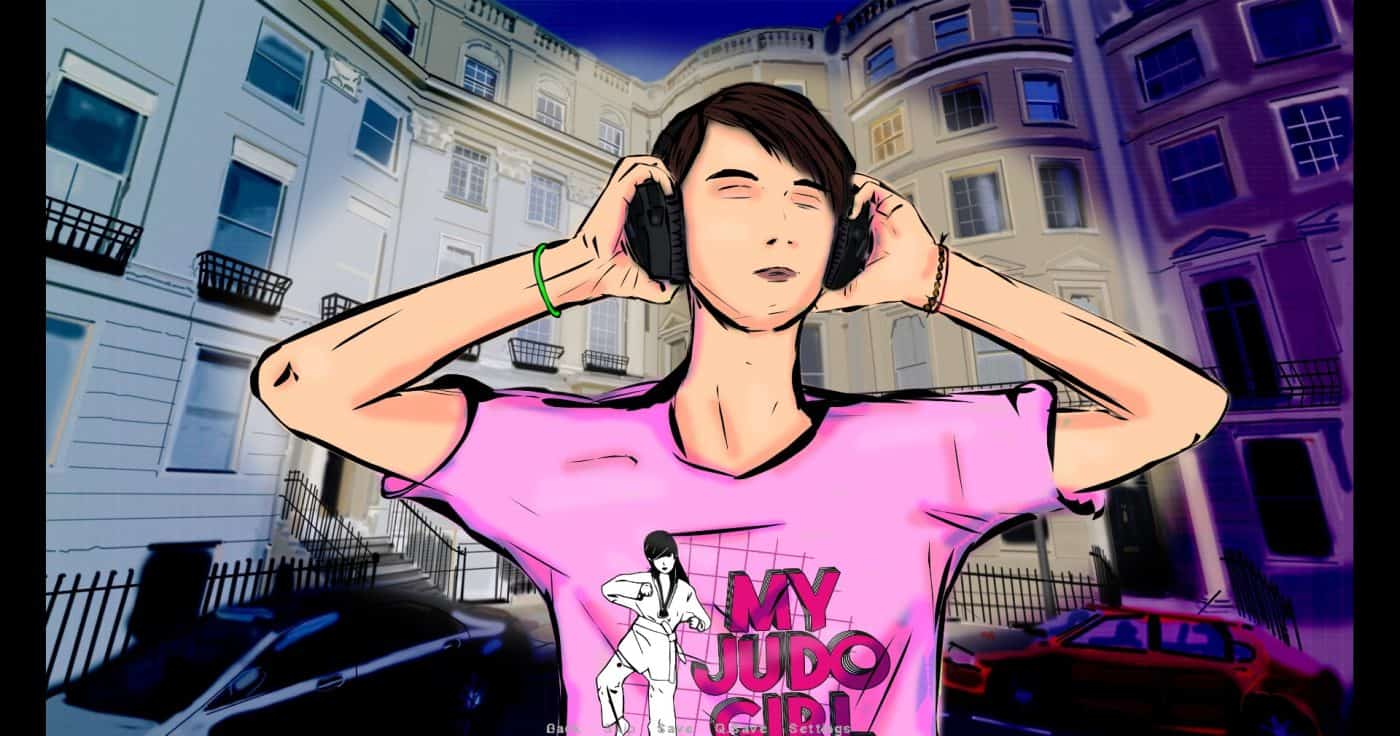
The illustrations of 1997 RELOADED are entirely hand-drawn – over two thousand frames, according to the studio, produced without AI assistance. That commitment deserves acknowledgment, both as a creative choice and as a statement of intent at a moment when the question of what is and is not made by human hands has become anything but neutral.
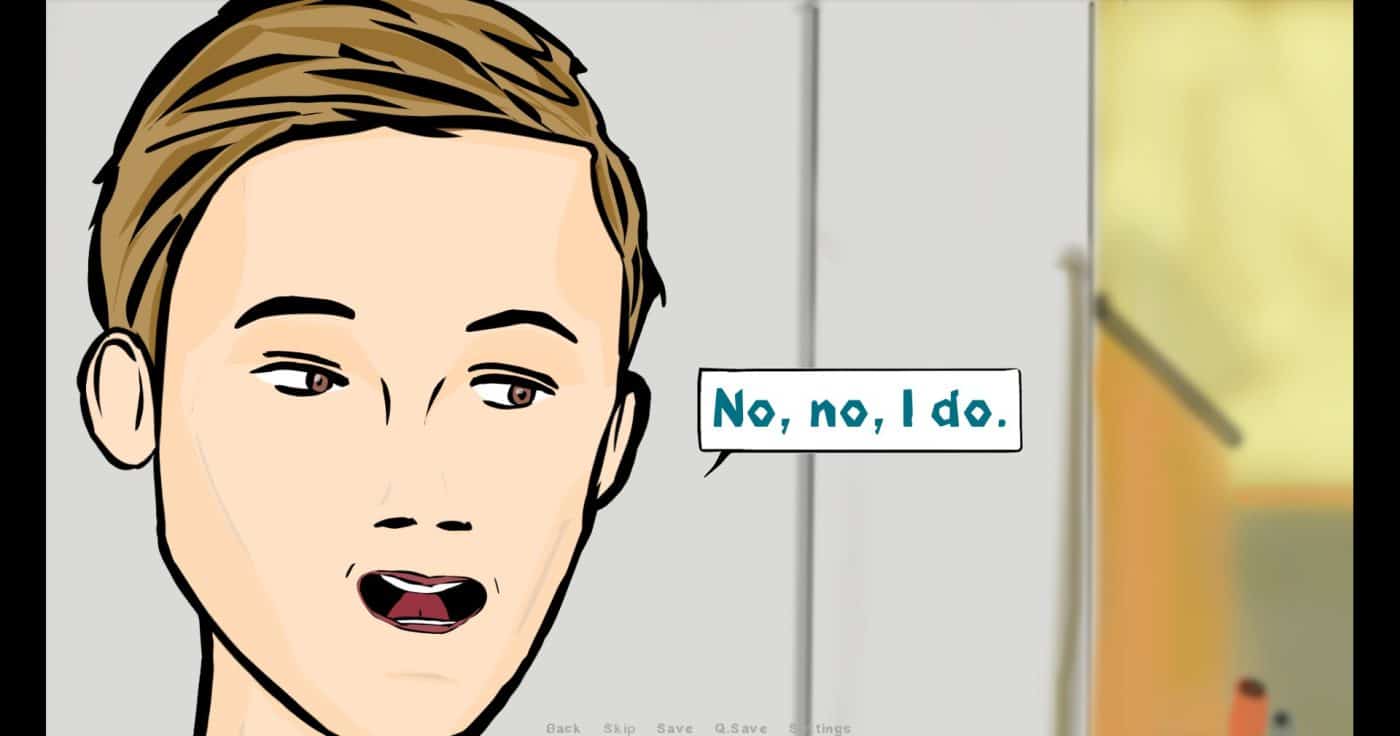
The results are uneven. The character designs have personality – Shirley in particular, with her pink hair and green hoodie, is visually the most consistent and expressive figure in the game. Federico, despite a deliberately androgynous design that can initially mislead, maintains a visual identity that holds across scenes. The compositions that work best are those set against dark backgrounds, where the drawn figures do not compete with photographic environments: in those moments, the style finds its own coherence.
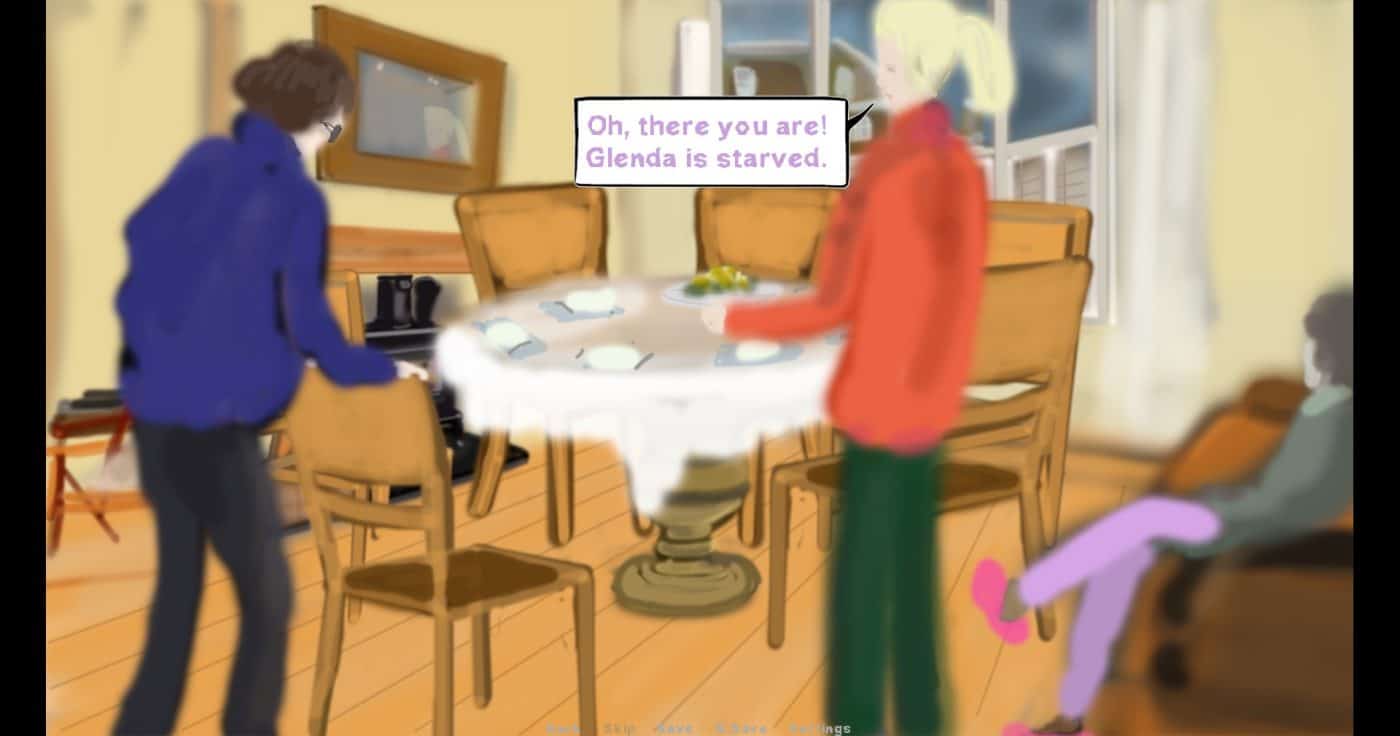
The difficulty appears in close-up. When the camera moves in on a face, the drawing does not always hold the detail it needs. The more significant issue is the contrast between the hand-drawn characters and the blurred photographic backgrounds used for interiors and exteriors: the two visual registers sit uneasily together, and the friction between them does not read as intentional.
Some frames in 1997 RELOADED work. More of them almost work. The gap between the two is not consistent enough to read as a decision.
A Kinetic Novel: Limitation or Choice?
The absence of gameplay in 1997 RELOADED is not, in itself, a problem. The kinetic visual novel has a legitimate tradition, and the studio has been transparent about what they are making. The question is not whether the format is valid, but whether the execution earns it.
A kinetic novel lives or dies on its prose. When the writing is strong enough – when the characters speak with enough specificity, when the scenes carry enough weight, when the pacing moves with enough intention – the absence of interactivity disappears. The reader leans forward anyway.
1997 RELOADED has that quality in its better moments. It does not have it consistently enough.
Conclusions
The Roxyverse deserves to exist. The idea of building a counterfactual musical mythology – complete with original recordings, fictional biographies, and a cold case reaching back into an era that never quite happened – is genuinely original, and Gaigo Studio pursues it with a seriousness of purpose evident in every track on the soundtrack.
1997 RELOADED is at its best when it trusts the music to carry the story. It is at its worst when the writing steps in to explain what the music has already said.
For players who approach the game primarily as a musical experience – who will sit with the tracklist, read the fictional liner notes, and let the Roxyverse exist as an object of nostalgia for a decade that never quite was – there is something unusual and worthwhile here. For players who come to it as a narrative experience, the gap between the ambition of the concept and the execution of the prose will be harder to ignore.
The Roxyverse is a world worth visiting. 1997 RELOADED is not always the best guide through it.
If you want to know more:
 6.3/10