In short
The First Bite demo of Stupid Never Dies, GPTRACK50’s roguelite action RPG coming October 21 to PC and PlayStation 5, confirms over two hours of play what the trailers only hinted at: the Time Limit governing every dungeon descent, biting Cores as the core of the combat system, the roguelite structure with its Mall hub, and writing that gives depth to Davy, a zombie despised by monsters and a deserter among his own kind.
From the musical teaser at The Game Awards 2025 to the March gameplay trailer, Stupid Never Dies has been revealing itself piece by piece. Then came the launch window confirmed for the fall. Now the game shows us its essence in an explosive demo.
I finally had the chance to get hands-on with the preview of this sparkling, psychedelic and exhilarating title from GPTRACK50. My expectations were high, and I can say I came out of the experience more than satisfied. Stupid Never Dies has kept us holding our breath. Over these months it has given us small pieces of itself, building up our curiosity. It has never fully revealed itself.
The First Bite demo is available from early September on PlayStation 5 and Steam, and it stays playable until the October 21 launch. It gave the final kick to my enthusiasm. It left me surprised even where I was convinced I had a clear picture. That was true of the game’s aesthetic presentation, but not only there.

There are two aspects that the playable prologue brings to light. Press releases and trailers had left them in the shadows. The first is narrative in substance: the title declares its irony and leans on a scatological register in some lines. Behind that surface, the demo tells the story of a character built on a double marginality. He is a zombie among monsters, and a deserter even among zombies. This double marginality gives the project depth. The second is technical: systems like the dungeon’s Time Limit, the recoverable damage tied to parries, or the logic behind absorbing Styles.
In this article I will try to dig as deeply as possible into all these aspects. They emerged during play, but the previous material had only hinted at them.
IF YOU SEE A ZOMBIE, HEADSHOT!!!
The demo opens with an introductory cutscene that immediately establishes the eclectic and expressive nature of the visual choice. It tells the origin of the world of Stupid Never Dies through a collage of pastel and marker drawings layered over real photographs. This visual blend conveys the game’s punk soul, energetic but also imbued with an almost childlike purity.
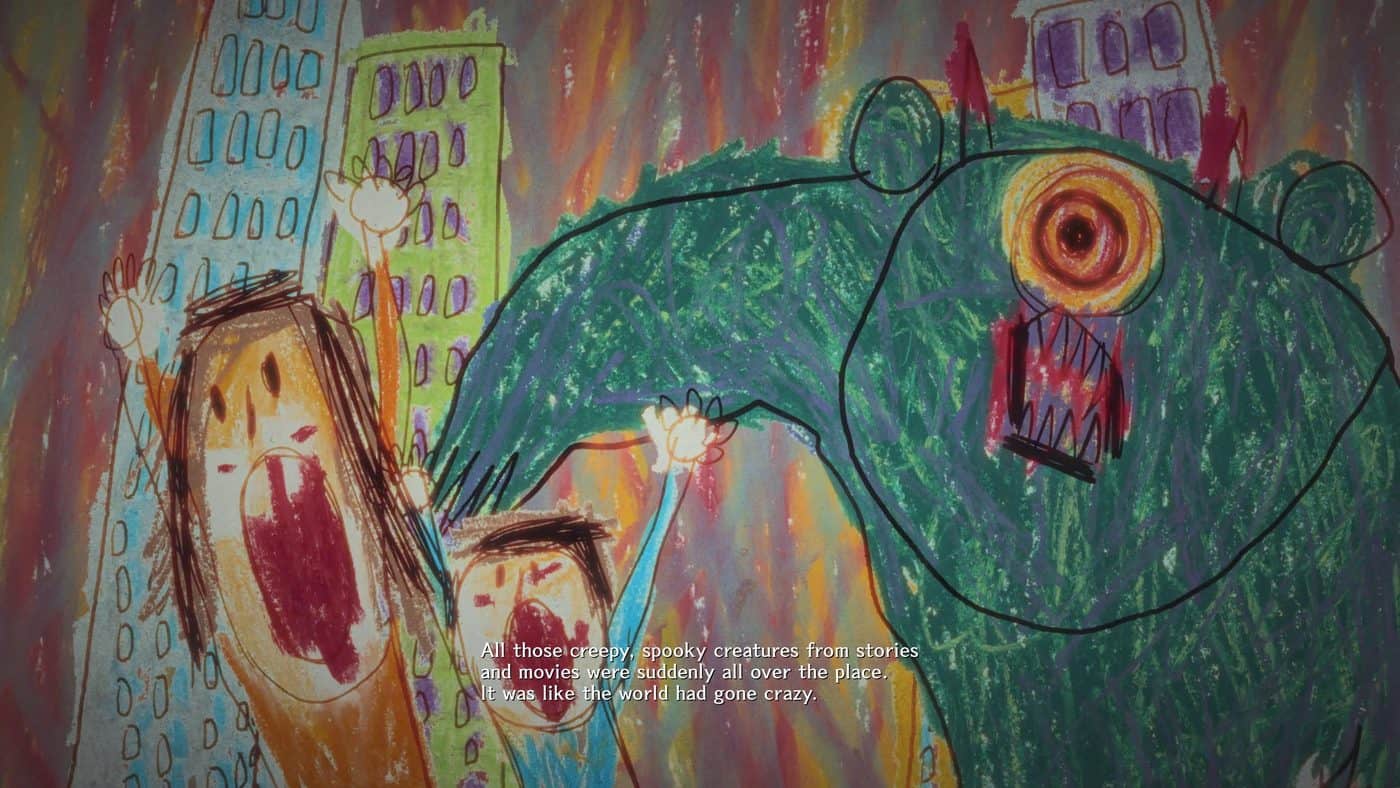
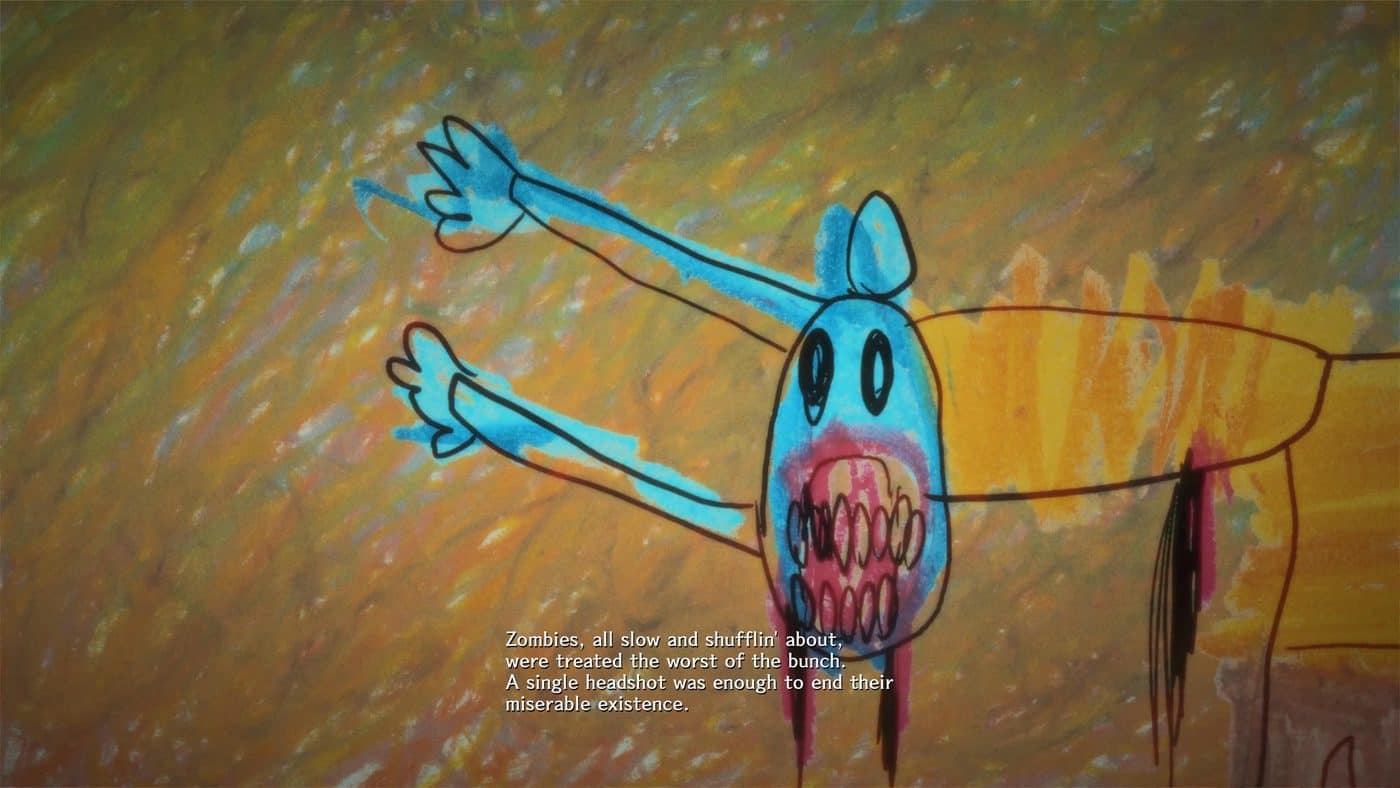
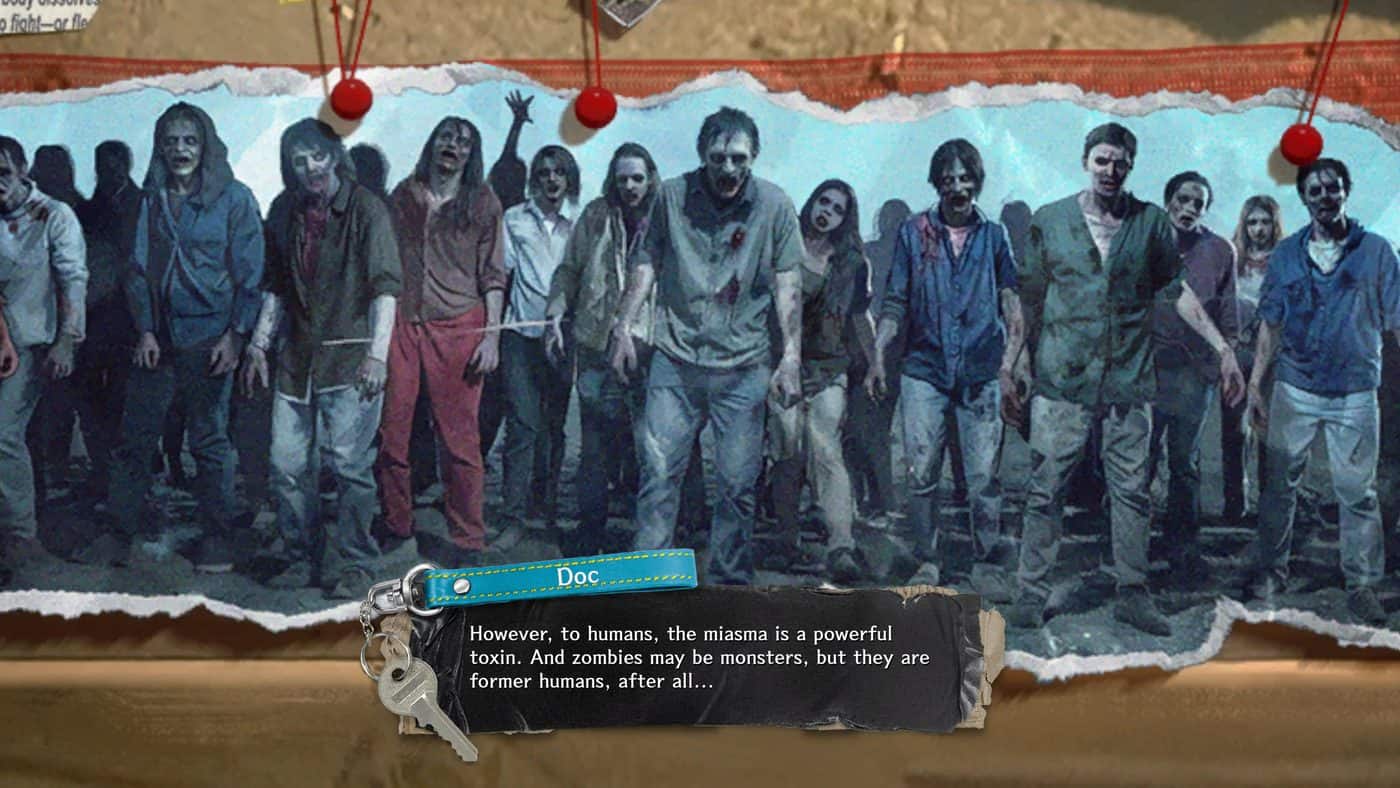
The war between humanity and the monsters led by KOM lasts a month. It wipes out 98% of human beings. Then the monsters disappear from the surface without explanation, only to return later. During the assault, KOM did not limit itself to decimating the population. It also absorbed all human knowledge, taking it with it into the depths where it would then vanish. The images accompanying this passage abandon the action register of the rest of the game. They show colorful Mexican skulls stacked in a desert, overturned coffins, and a horde of hand-drawn monsters. These include wolves, giant insects, and indistinct figures, silhouetted against a blinding dawn as the narrator recounts what happened.
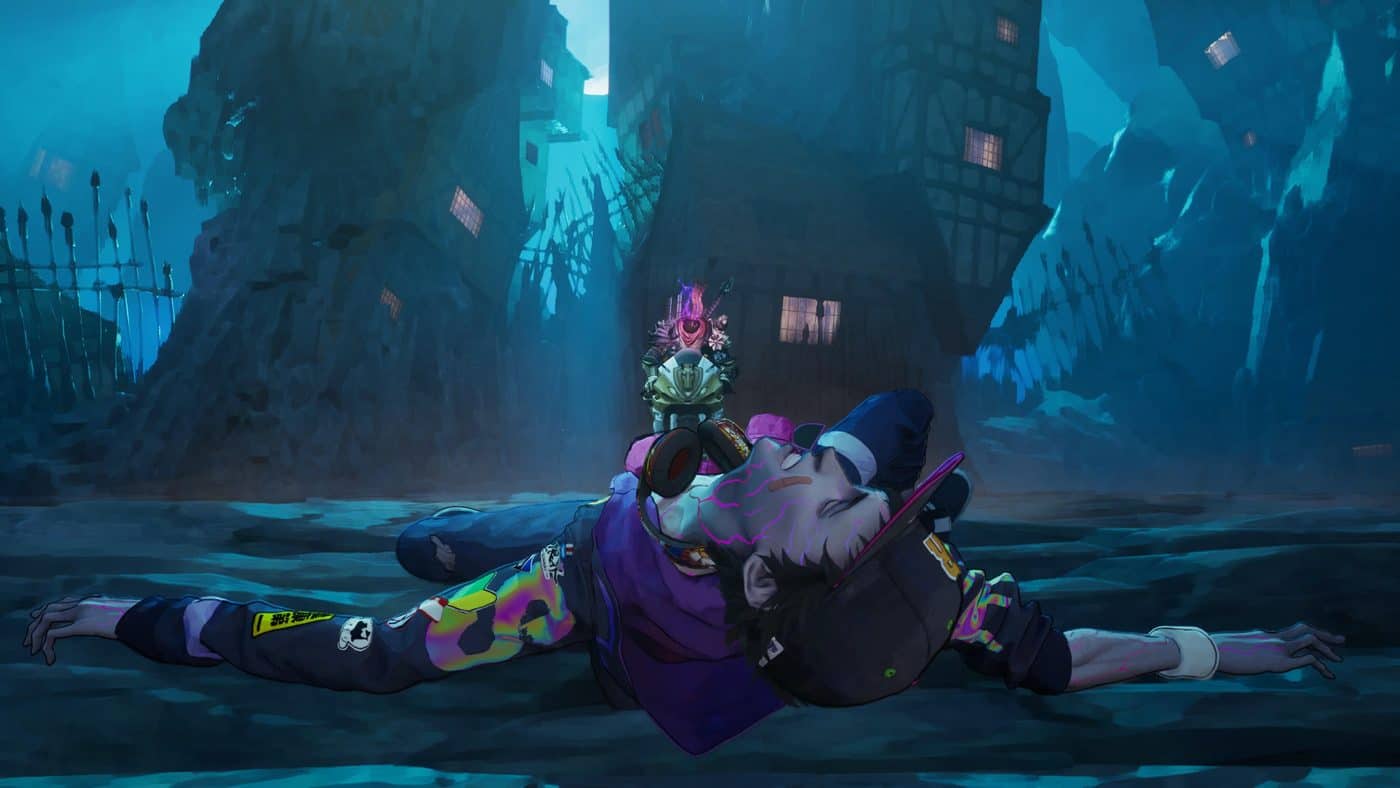
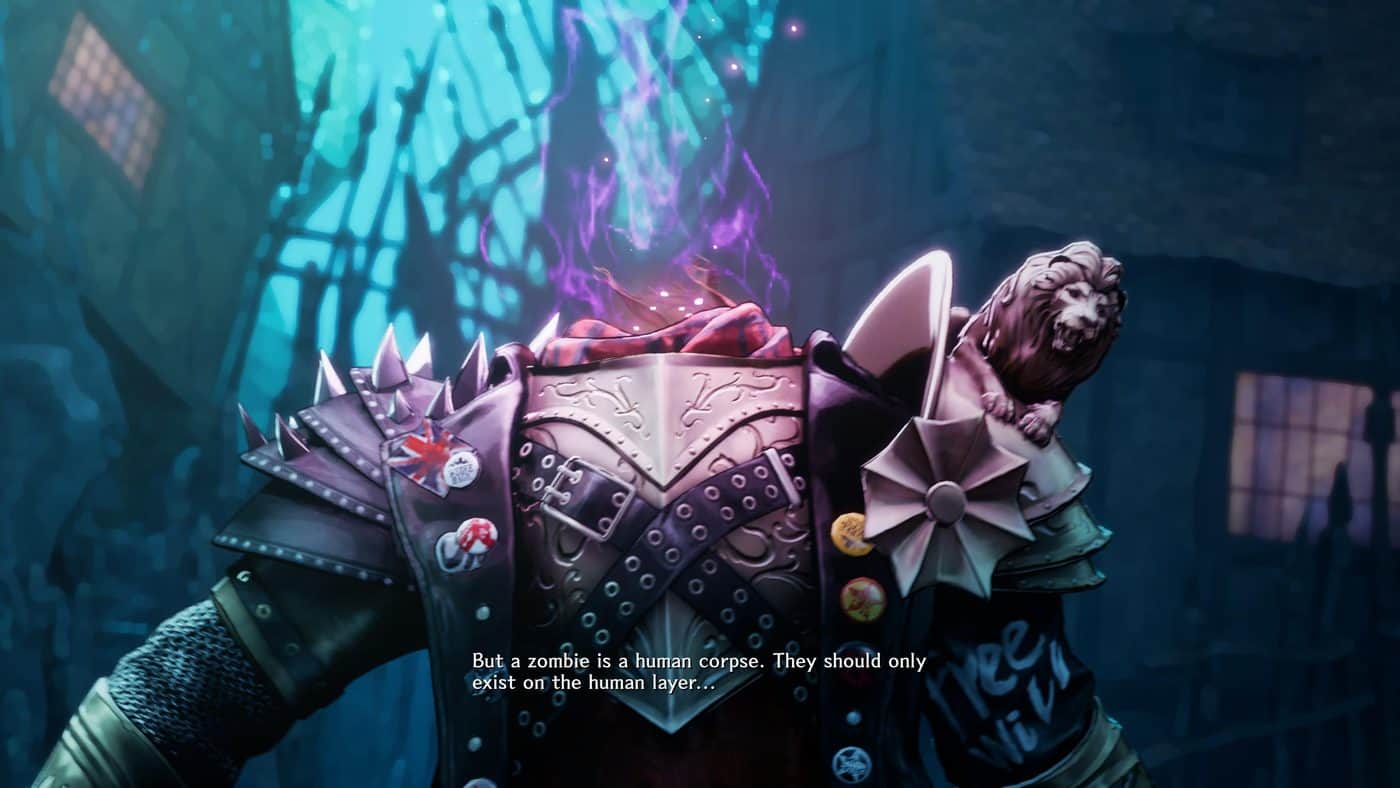
Shortly after, the same voice dwells on zombies in particular, describing them as the most despised category even among monsters: “Treated worse than all the others. A single shot to the head was enough to end their miserable existence”. Not only do zombies occupy the lowest rung of the monstrous hierarchy. The game also normalizes their elimination to the point of making it a public warning, almost a road sign.

It is in this prologue that the game lays out the premise of Davy’s marginality: being a zombie, in the world of Stupid Never Dies, means starting from the lowest possible rung. That is true not only compared to humans, but compared to the monsters themselves.
A deserter among the despised
If in the prologue we understand that being a zombie means starting from the bottom of the monstrous hierarchy, with Davy we see a second level of that marginality. It stems from a choice: our protagonist’s refusal to eat human flesh.
Why on earth would a zombie make such a reckless and “unnatural” choice? Why, for love, of course.
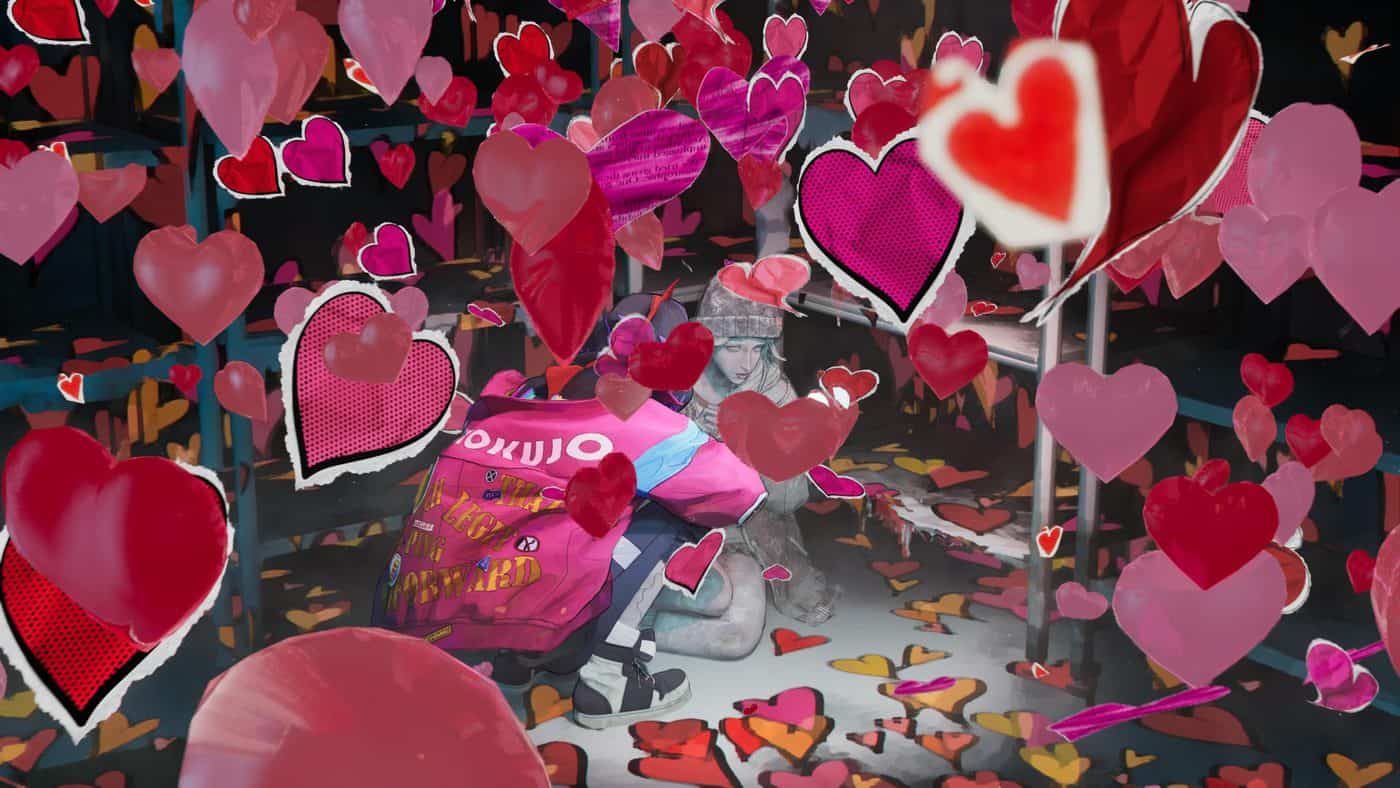
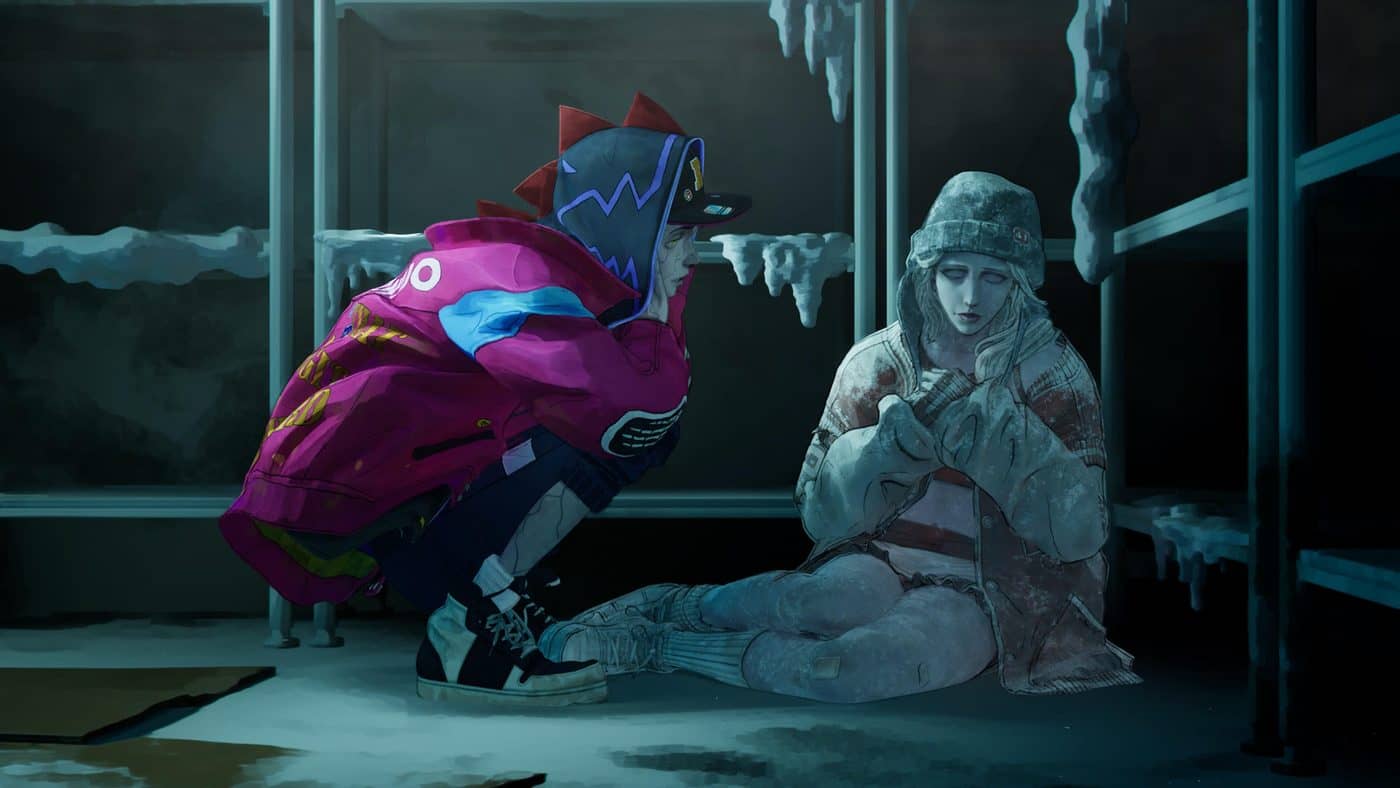
The constant irony that runs through Stupid Never Dies is very much present in this moment too. A poor, young zombie, shy and awkward, loses his head over a girl who locked herself in a walk-in freezer to avoid ending up as monster food, and as a consequence ended up freezing. The situation is comical, but it also expresses a great deal of tenderness.
Davy’s naivety characterizes him to the point that it becomes hard to feel annoyed when he expresses his dissent in caricatured fashion. The same goes for his reluctance toward combat, violence, or any kind of danger. His protests and fear, at the first opportunity, turn into exhilaration and euphoria. They also turn into impatience to return to the dungeons and fight monsters, a category he himself belongs to.
Davy is a controversial character. Personally, I adore him. The style with which GPTRACK50 characterizes him aesthetically is perfect and makes him downright charming. But at the same time he gets on my nerves.
He gets on my nerves because his cowardice is stubborn, almost irritating. Yet every exaggerated, caricatured reaction of his is nonetheless consistent with his nature as a zombie and a clueless young adult.
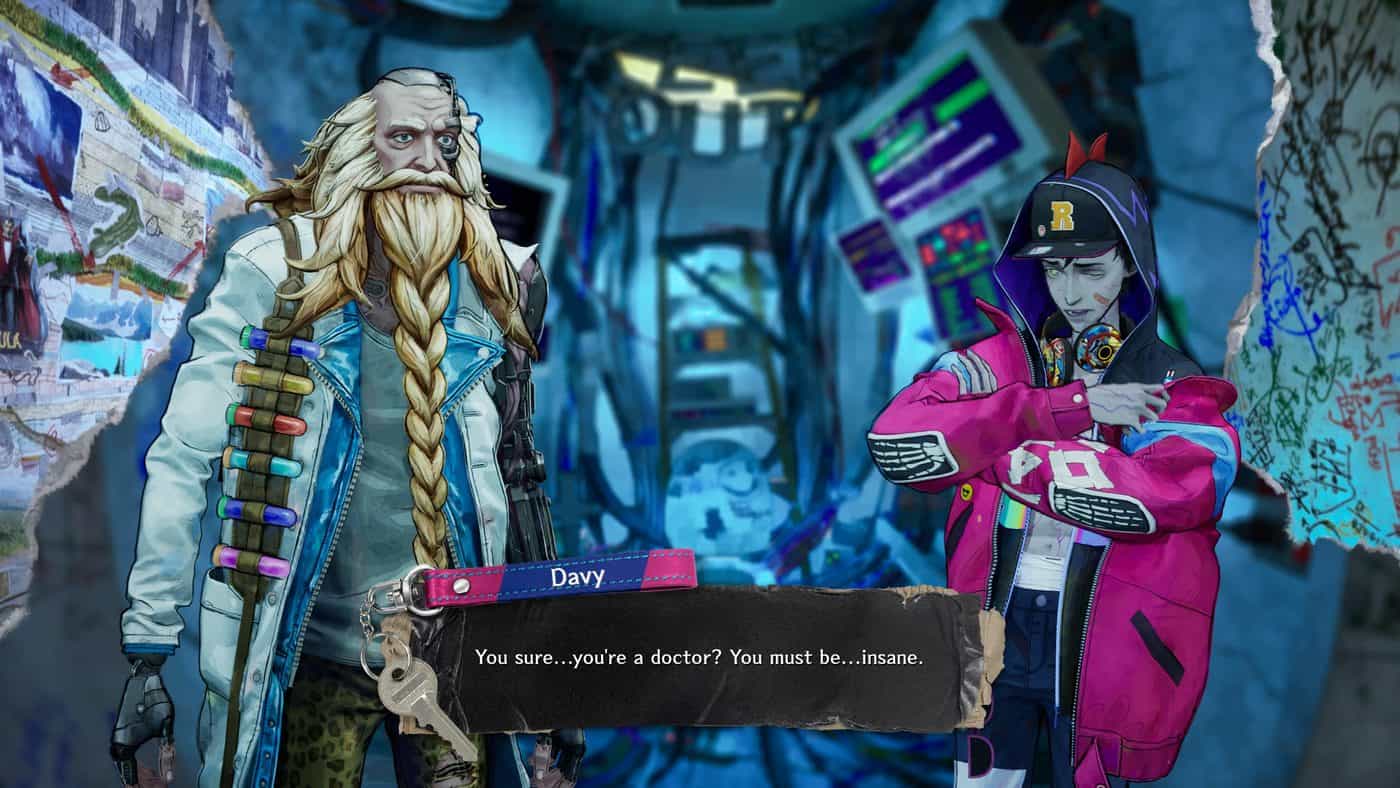
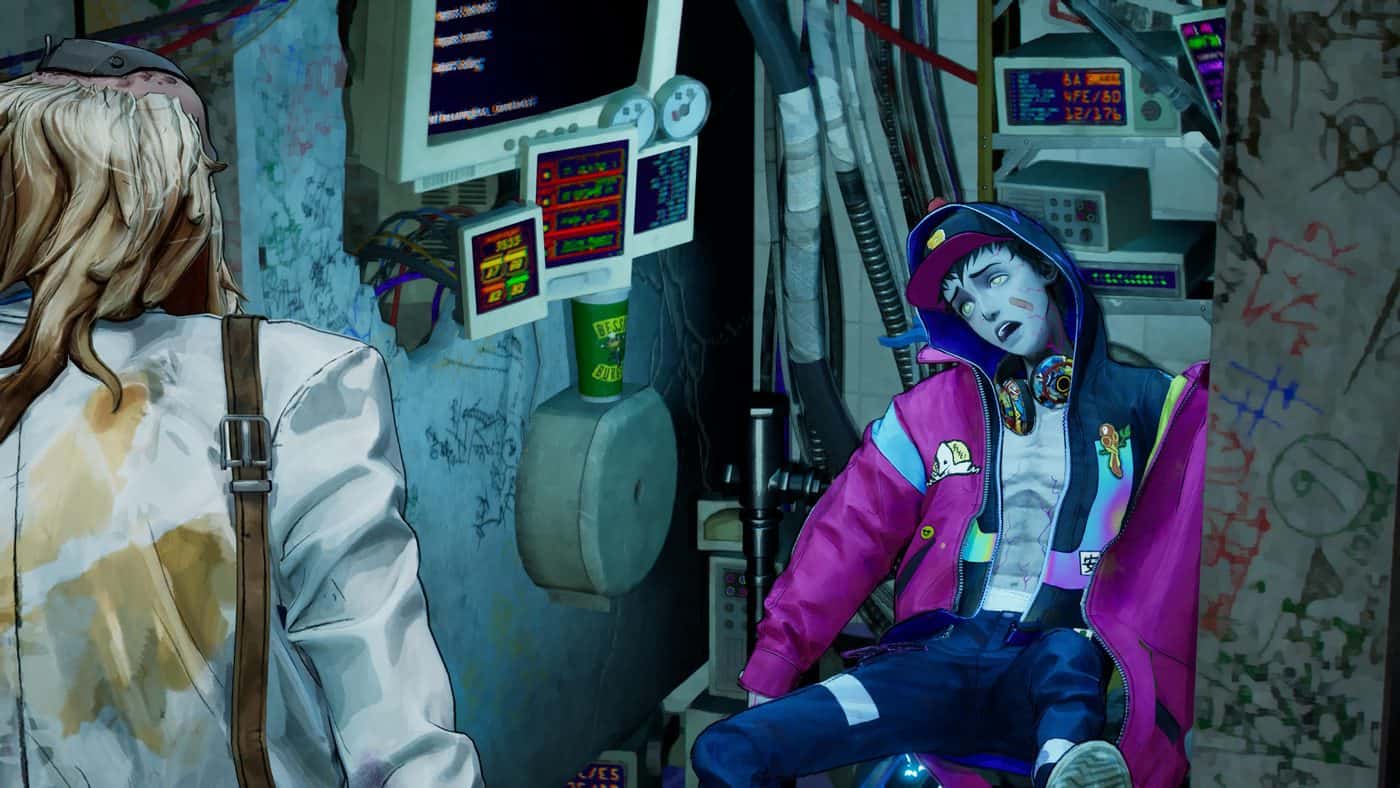
Everything begins in an abandoned shopping mall, where Davy wanders around looking for food. There he ends up running into two things that will change his life. The first is what he himself describes as “a weird egg“. In reality, as emerges later with a certain taste for self-deprecation, it was not an egg at all. It was a large piece of excrement, taken without permission from doctor Frank Steiner, who was studying it. The second is Julia, the girl found frozen in the freezer of an ice cream shop: an immediate lightning strike. From that moment on, Davy never leaves her side, not even mentally. He drifts between fantasies of car trips, sunsets, and drinks sipped together with a girl who, technically, is a lifeless block of ice.
Some time passes before Doc, doctor Frank, shows up to collect payment for what Davy ate without permission.
At first the encounter is anything but friendly: Doc reprimands Davy for the theft. The reprimand doesn’t last long, because the old scientist already has something bigger in mind. He explains that that egg was a fragment of power capable of awakening hidden abilities in a zombie’s monstrous cells. Davy, without knowing it, has just acquired it for himself.
Davy, however, does not remotely care about the scientific potential of the discovery. Doc asks him to put himself out there and take on the monsters of the dungeon. Faced with this request, Davy’s first reaction is a flat refusal: he wants no responsibility and doesn’t want to risk his life.
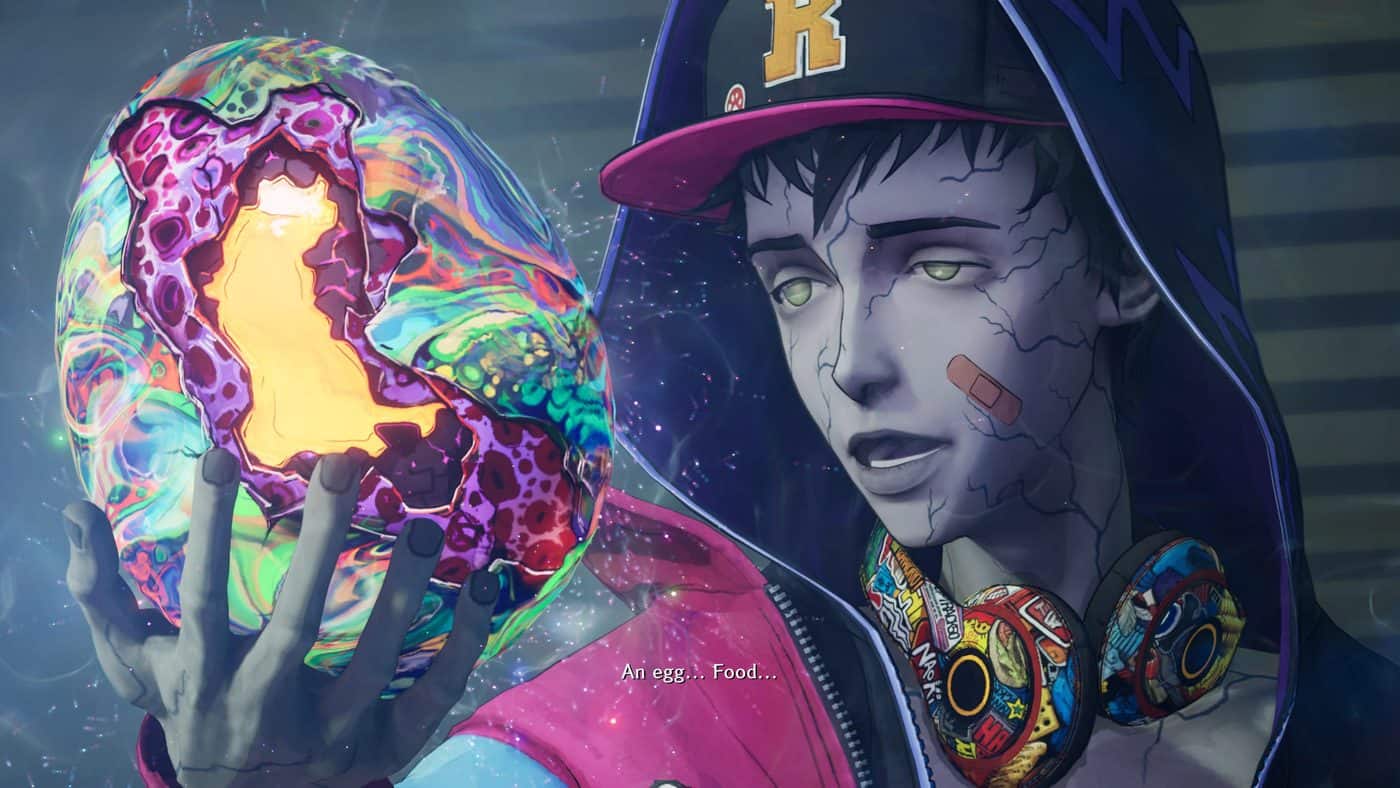
What makes him change his mind is not a speech about duty or the fate of humanity. It is the discovery that Davy can still save Julia. Doc reveals that the walk-in freezer where he keeps her will not hold forever. The only concrete chance of bringing her back to life lies in defeating KOM, in the depths of the dungeon. It is at that point, and only at that point, that Davy accepts. He realizes there is something worth more than his own fear.
The journey to the dungeon, once again, has the purpose of humiliating and ridiculing Davy: through a toilet’s drain pipe. Without spelling out the obvious metaphor, here begins the heroic mission of the refuse of the refuse.


A love frozen in time
Julia is not just the girl who gives Davy a reason to face the dungeon. She also has a story of her own, a three-dimensionality of her own, however lightly sketched.
Before the world took its ugly turn, she was a university student. She was in the shopping mall when the Great War kicked off the ruthless hunt for humans.
In an attempt to find shelter from the monsters, Julia locks herself in that walk-in freezer. It will become her tomb.
Julia’s personality comes to us through video testimonials and writings from her previous life. Davy consults and jealously keeps them every time he returns to the hub. That hub is his safe place, right next to his beloved.


Julia never learned how the war would end. She also never learned that zombies would inherit the world. She remained, literally, frozen at the exact moment when everything changed.
For Davy, that frozen body is the beginning of everything. The lightning strike is immediate and total. From that moment he doesn’t just stay by her side. He begins to build, in his head, an entire relationship made of car trips, sunsets watched together, drinks sipped side by side. It is the whole repertoire of a first crush, projected onto a girl who cannot answer. She cannot move, and cannot even know that he exists.
It is an image that could come across as simply unsettling. The game avoids this by telling it with the same clumsy tenderness that characterizes every other aspect of Davy. There is no morbidity in the way the game stages this fixation. Rather, it is the naivety of someone who has never had anything else in life. He clings to the first person who made his heart beat – so to speak – regardless of the fact that this person is, in every practical sense, unreachable.

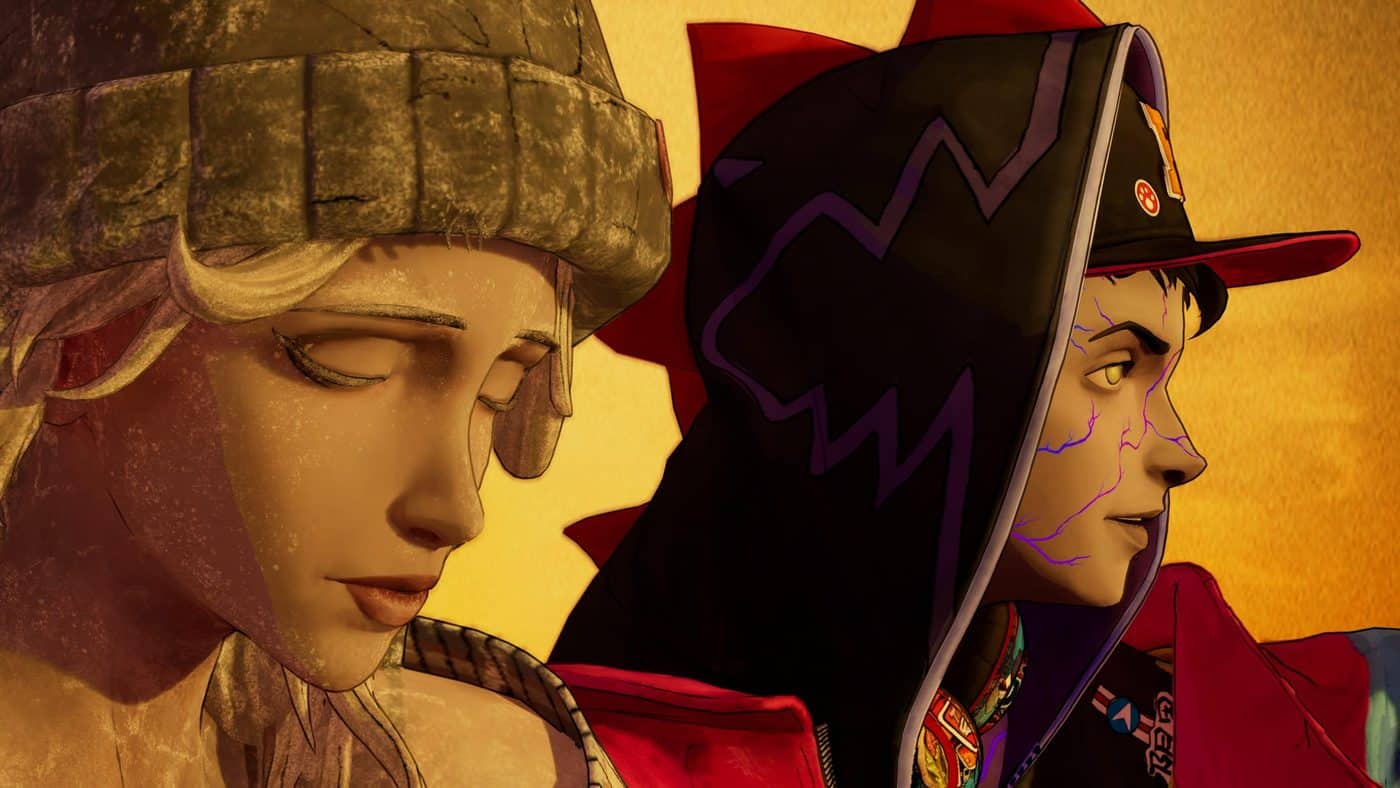
And it is precisely this unbridgeable distance that gives weight to everything that happens afterward. Julia is not only the object of Davy’s affection. In the way the game builds her, she is also a term with an expiration date. The mall’s energy preserves her body, but not forever. It is this urgency, more than any speech about the fate of the world, that pushes Davy toward the dungeon.
The Mall: the base of operations for a humanity that is no more
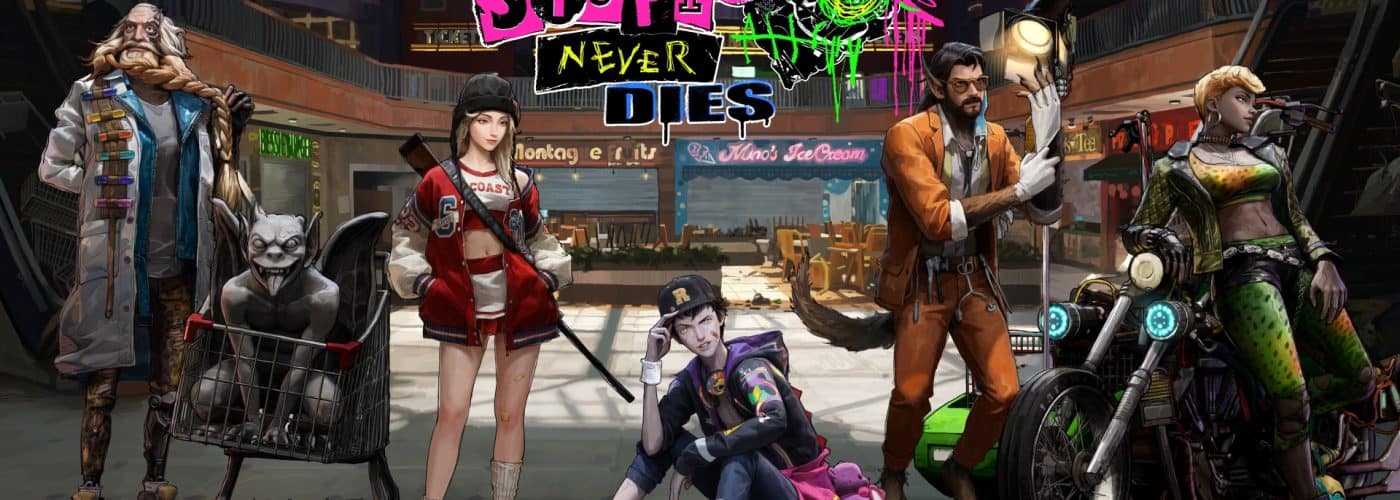
If the dungeon is the place of fear and forced growth, the abandoned shopping mall Davy returns to after each dive is its exact opposite. It is a space to breathe, populated by a cast of characters as unhinged as they are, in their own way, dependable. It is here that the demo takes the time to build the world around Davy: every shop in the Mall has a character to run it, and every character a precise role to play.
Davy gets from one end of this space, which gradually reveals itself to be larger than one would expect from a simple hub, by using Frank Steiner’s Modified Cleaner. It is a small vehicle, adapted from a repurposed cleaning robot, that allows him to move around quickly without having to cross every corridor on foot. This matters because outside the dungeon he is extremely slow.
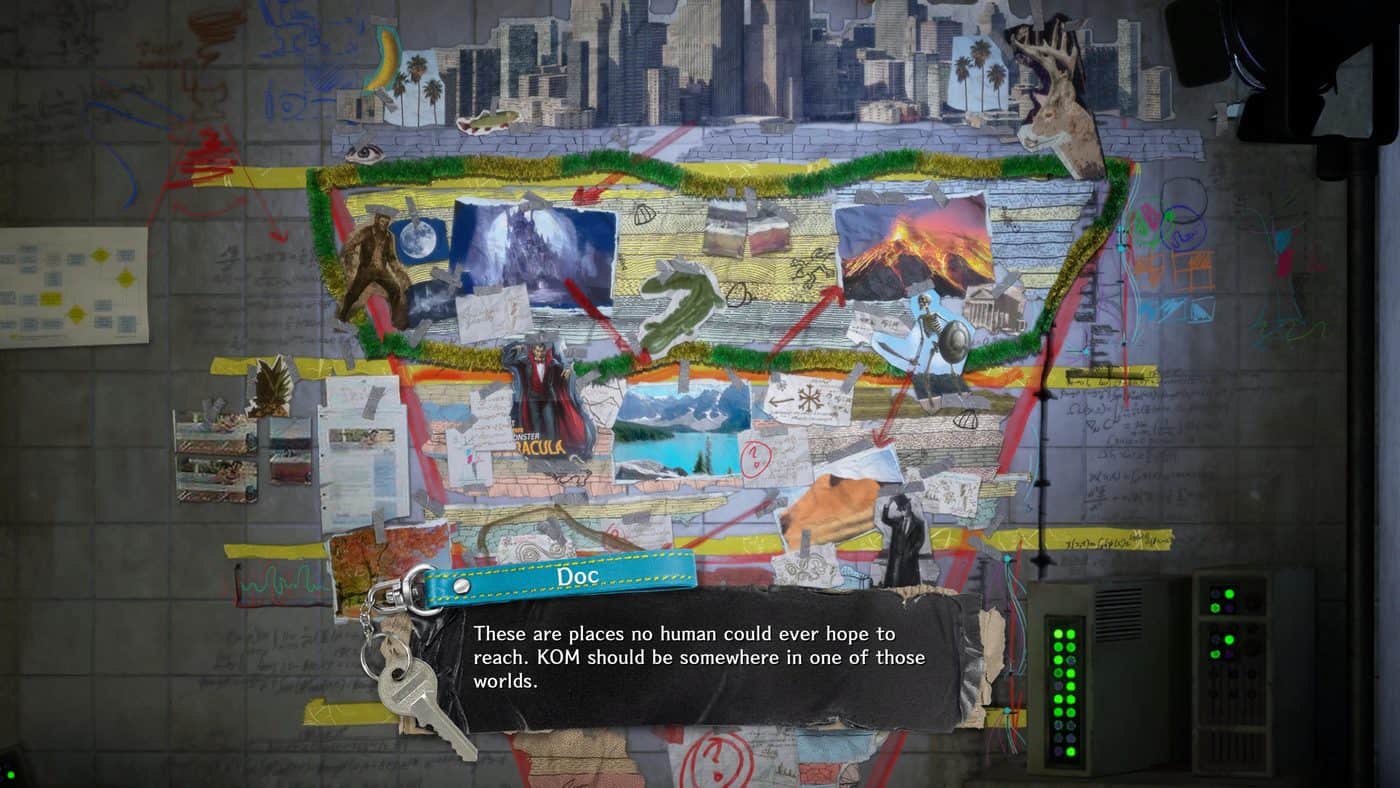

At the center of it all is Frank Steiner himself – Doc – the scientist with grafted robotic parts, with the appearance of an anachronistic Viking in a lab coat. It would be reductive to call him just Davy’s mentor. He describes himself, without a shred of modesty, as “the supreme intellect of humanity”. He is more interested in his own project of restoring what little remains of humanity than in the personal wellbeing of his zombie apprentice. It is he who keeps the Frank Database, accessible at the Jupiter Target, an electronics store converted into an archive. Here the Frank Database tracks the Styles obtained, along with defeated enemies and explored layers. It also lets you redeem statues, pins, badges and stickers based on progress made in the dungeon.
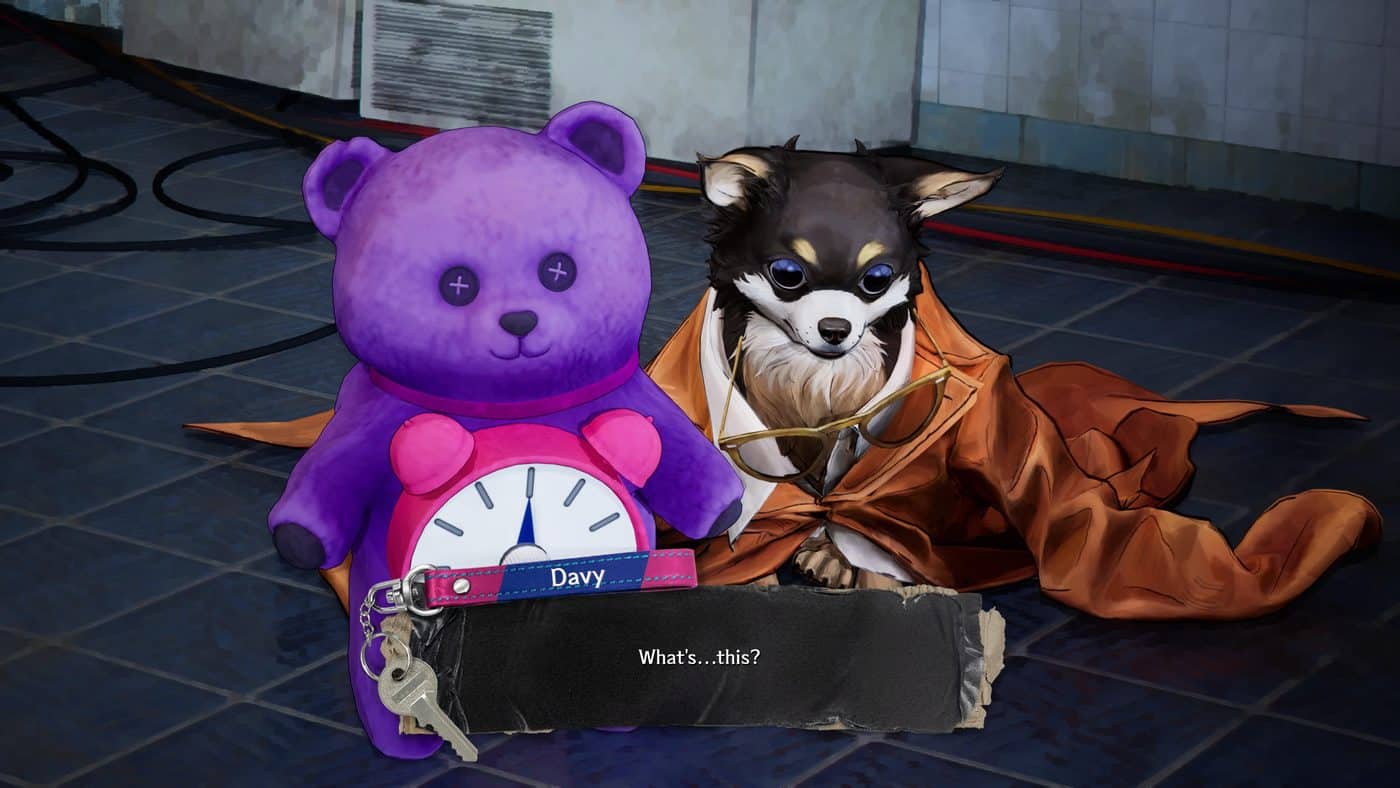
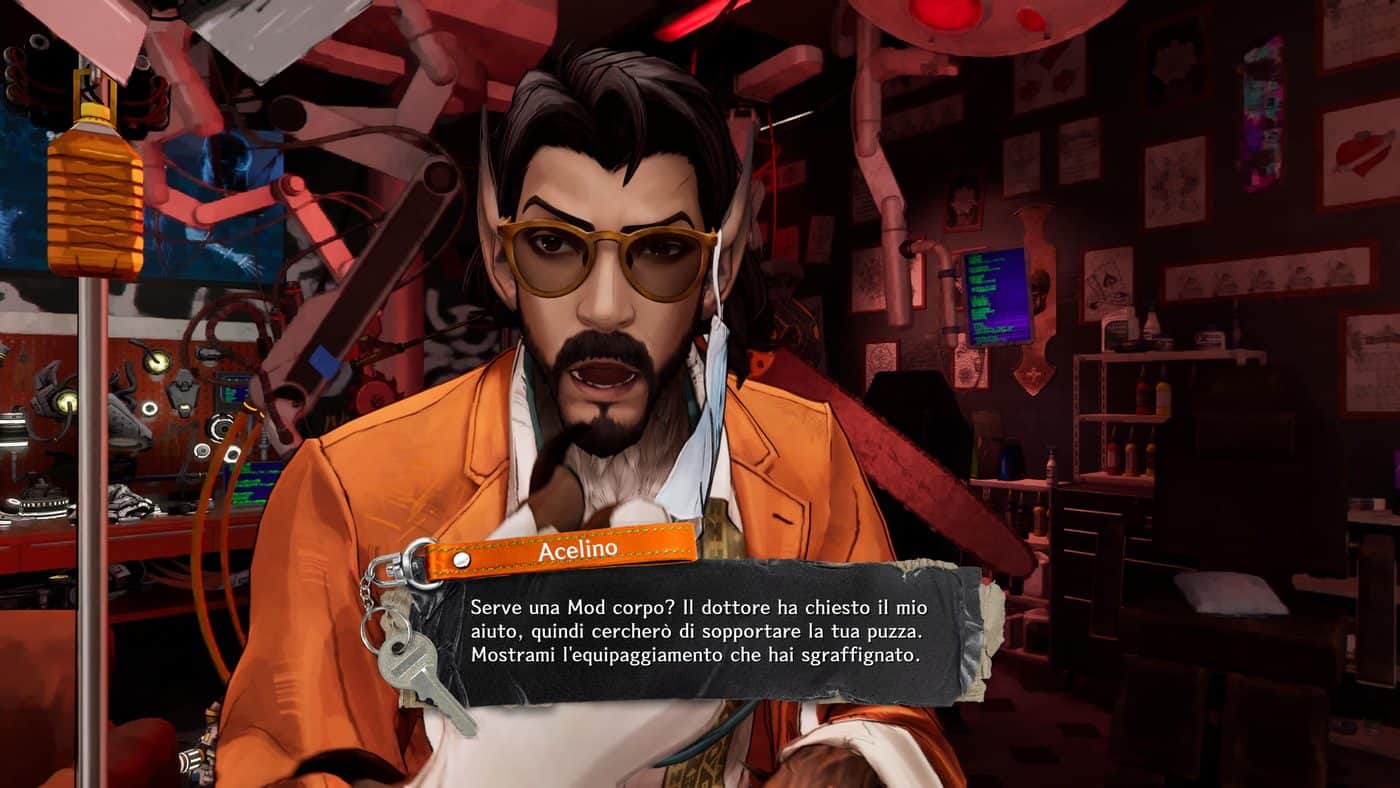
At his side is Acelino, a chihuahua-man, a brilliant mind and self-declared playboy, as well as Doc’s longtime right-hand man. His kingdom is Ink on the Brain, a tattoo shop that actually works as the workshop for the Body Hack. It is here that Davy brings the Over-Technology recovered in the dungeon to have it installed. These mechanical grafts upgrade his arms, head and legs.
Bessie, on the other hand, is the first to give a different face to the very concept of zombie in this game. She is a biker with a tough streak, and she won’t tolerate anyone getting between her and the open road, be they cops or mobsters. In the demo, a flashback shows her at work in the fast food joint Davy used to order from when he was alive. Her role in the Mall is broader, though: she runs Bessie Burger, where Davy trades the monster parts he collects in the dungeon to unlock new Zombie Skills. She is also the one who brings Davy back to the surface every time a run ends, aboard her motorbike.
Finally there is Goyle, perhaps the most unusual character of the group: a stone gargoyle, incapable of moving on his own, but endowed with clairvoyance and the ability to hear from kilometers away. He is placed in a shopping cart in the Security Room. From there, he keeps track of everything Davy does in the dungeon and serves as the analytical center of the runs. He also acts as the archive of the materials needed for Bessie’s orders and the Frank Database’s rewards.

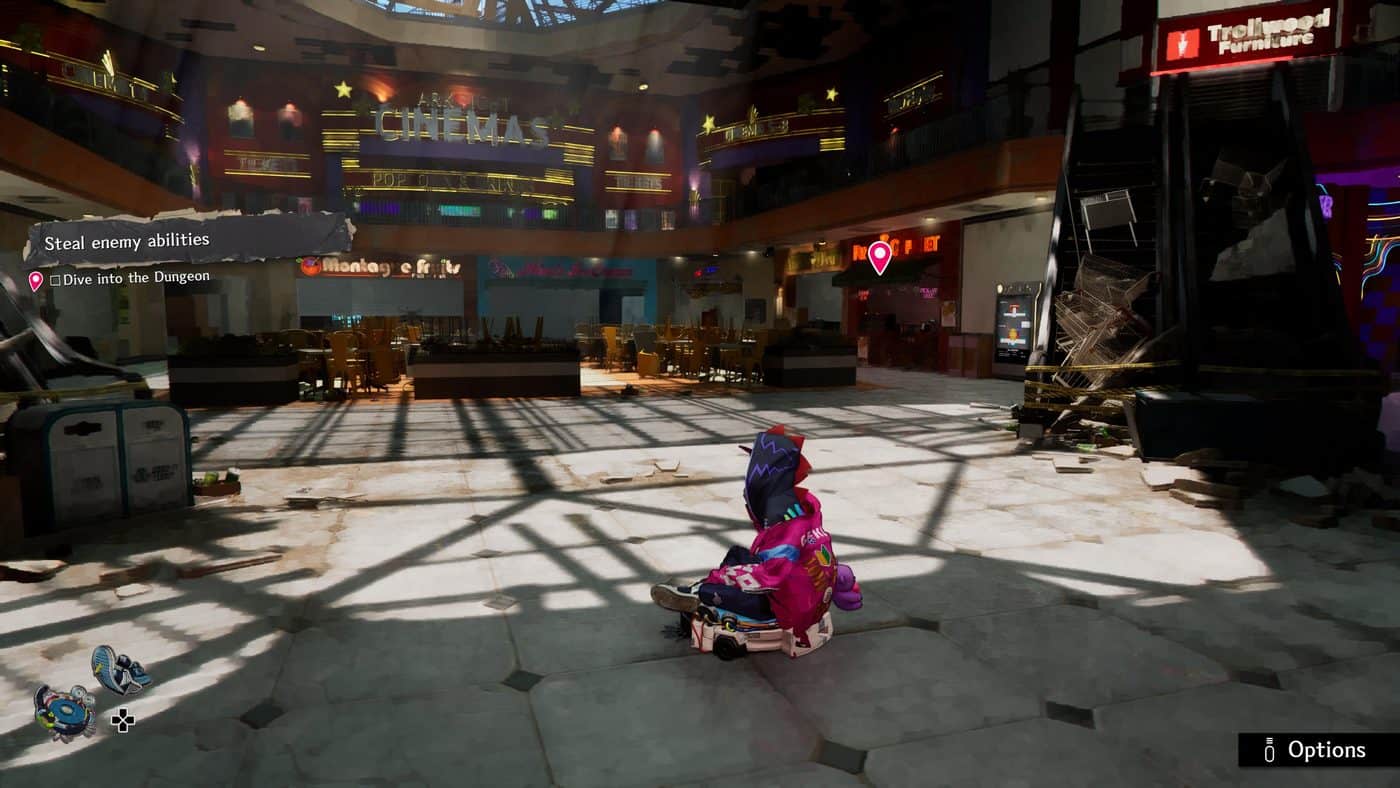
It is a cast that, put together, tells the spirit of the game well: none of these characters is entirely normal, yet each has a specific and coherent role in the game’s economy. Before long the Mall becomes home for Davy. It is a place of belonging, with a group to belong to. That was something he had never had until that moment.
A race against the clock
The time Davy can spend in the dungeon has a hard cap. Beyond that cap he enters a state of weakness so severe as to make him vulnerable to any attack. This turns every descent into a constant management of the seconds available rather than an exploration at a free pace.
Earning time depends on three different situations. Reaching a Landing Area, one of the rest areas scattered along the route, extends it automatically. Biting the Core of an enemy right after a Stupid Impact restores more of it, in addition to healing Davy and earning him experience. A Stupid Impact is the counterattack that opens up after successfully parrying a particularly dangerous attack. Collecting a Timer Cell, scattered throughout the levels, adds minutes to the counter.
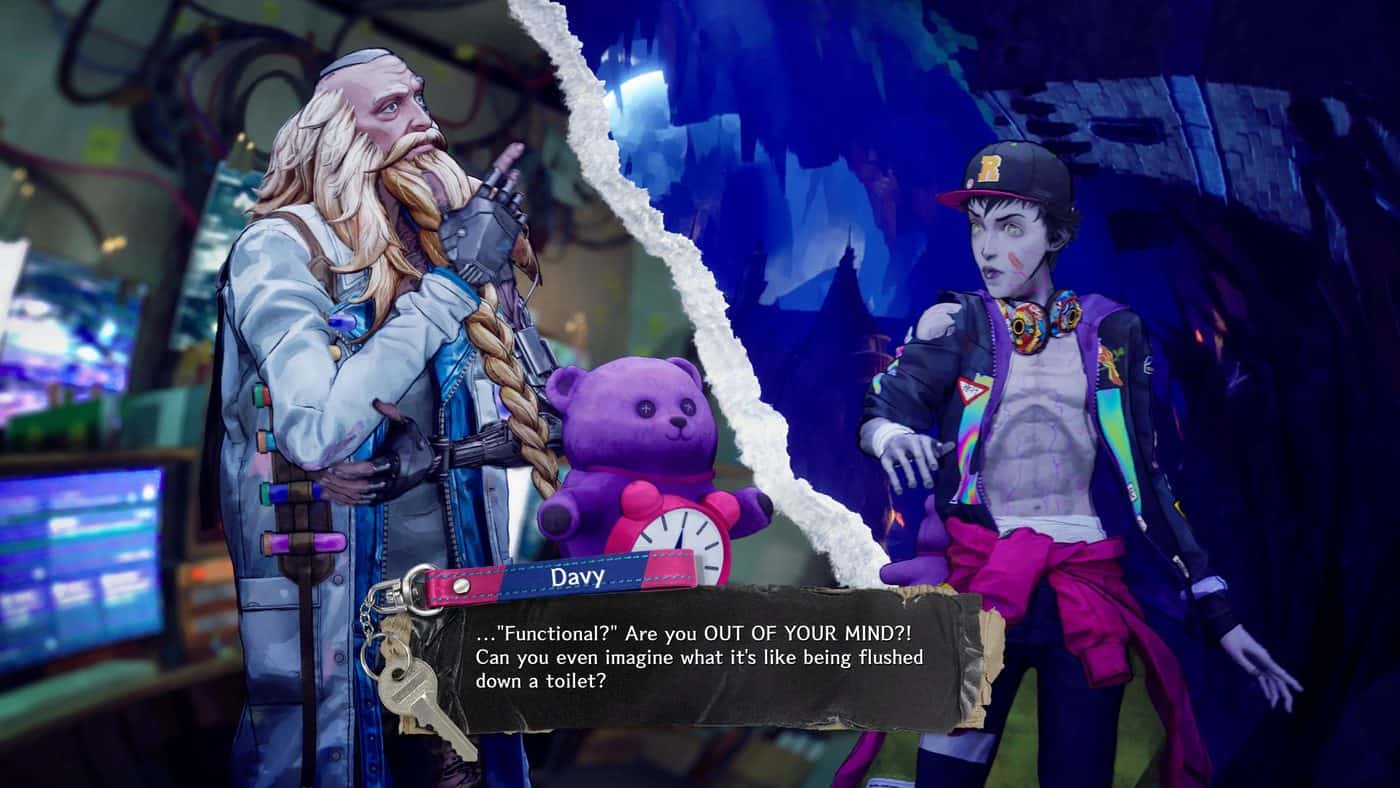

The Landing Areas, however, count for more than the time they give. They are the point where the game’s roguelite structure takes concrete shape. It is there that Davy changes his OT equipment, recovers health and Bite gauge, and obtains temporary bonuses that last for the rest of the run. When he dies or collapses from running out of time, he loses everything he collected or upgraded during that dive. That includes the Styles he obtained, the bonuses, and the levels he gained. Currencies and crafting materials, however, remain his. They accumulate run after run even when he loses everything else.
Biting to survive
If there is one gesture that sums up all of Stupid Never Dies, it is the bite. The very name of the demo – First Bite – declares it from the title, and every combat system ends up revolving around that action.
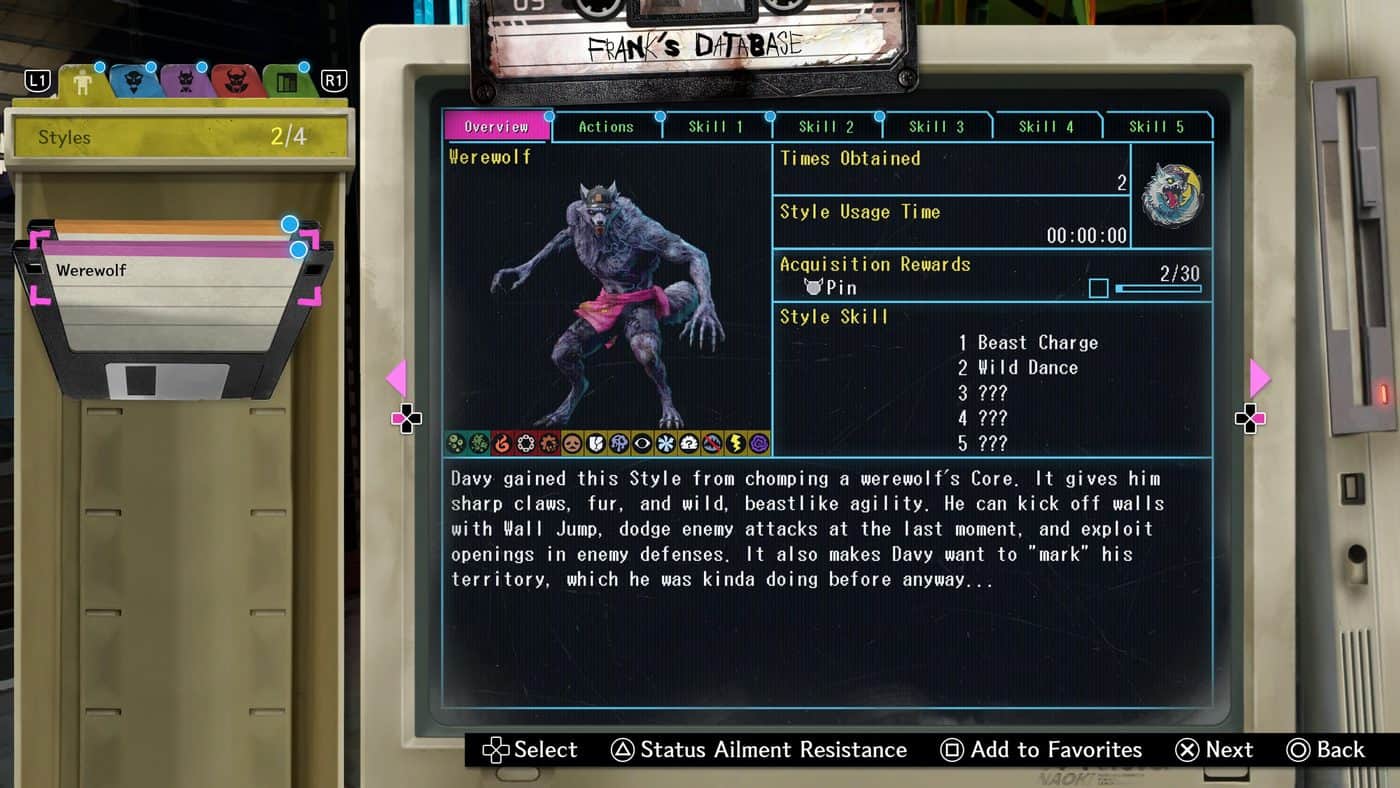
Davy has seven offensive modes – basic attack, special attack, bite, Style Skill, Instant Skill, Davy Burst, OT Active Skill – but the first six all intertwine around a single element: the Core. This sprouts from an enemy’s body when Davy inflicts enough damage, and once exposed, Davy can bite it. Biting a common Core restores recoverable health and a single-use Instant Skill, upgradeable by biting other Cores of the same species. Biting the Core of an Elite enemy, on the other hand, opens up the possibility of transforming into its very Style. Davy takes on its form and abilities for a limited number of floors, although the Zombie Style, his basic one, always remains available.

Elite Cores, however, are not as easy to bite as common ones. You must first stun or knock down the enemy to expose them, and this is where the game introduces an interesting tactical choice. Completing the bite without killing the enemy grants full health recovery, extra time on the dungeon’s countdown, and enough experience to gain an entire level. This makes it worthwhile to spare an opponent rather than simply cut them down.
Every Style obtained comes with a Style Limit that decreases floor by floor. Even possessing a transformation is therefore subject to the same time pressure that governs the entire descent. Meanwhile, the Sync Level grows every time Davy re-obtains the same Style, increasing the associated stat bonuses. These bonuses, called Style Bonus, activate simply by placing them in the corresponding slot. Davy does not have to select the Style at that moment. He can carry the advantages of one transformation while using another or staying in his base form.
The level design, for its part, takes all of this into account: some areas become accessible only through actions tied to a specific Style, such as the Wall Jump granted by the Werewolf form. Behind those passages hide shortcuts or chests that would otherwise remain out of reach.
On the defensive front, the only option always available is the Stupid Parry. It does not cancel the damage taken but converts it into recoverable damage: the health bar never drops to zero during a successful parry. However, that damage becomes real over time if Davy doesn’t bite enemies to recover it. This closes the circle around the action that gives the entire system its name, a body that rots if it isn’t fed. Successfully parrying a Heat Attack, recognizable by its yellow color, also opens the window for the already mentioned Stupid Impact. This comes with the possibility of counterattacking.
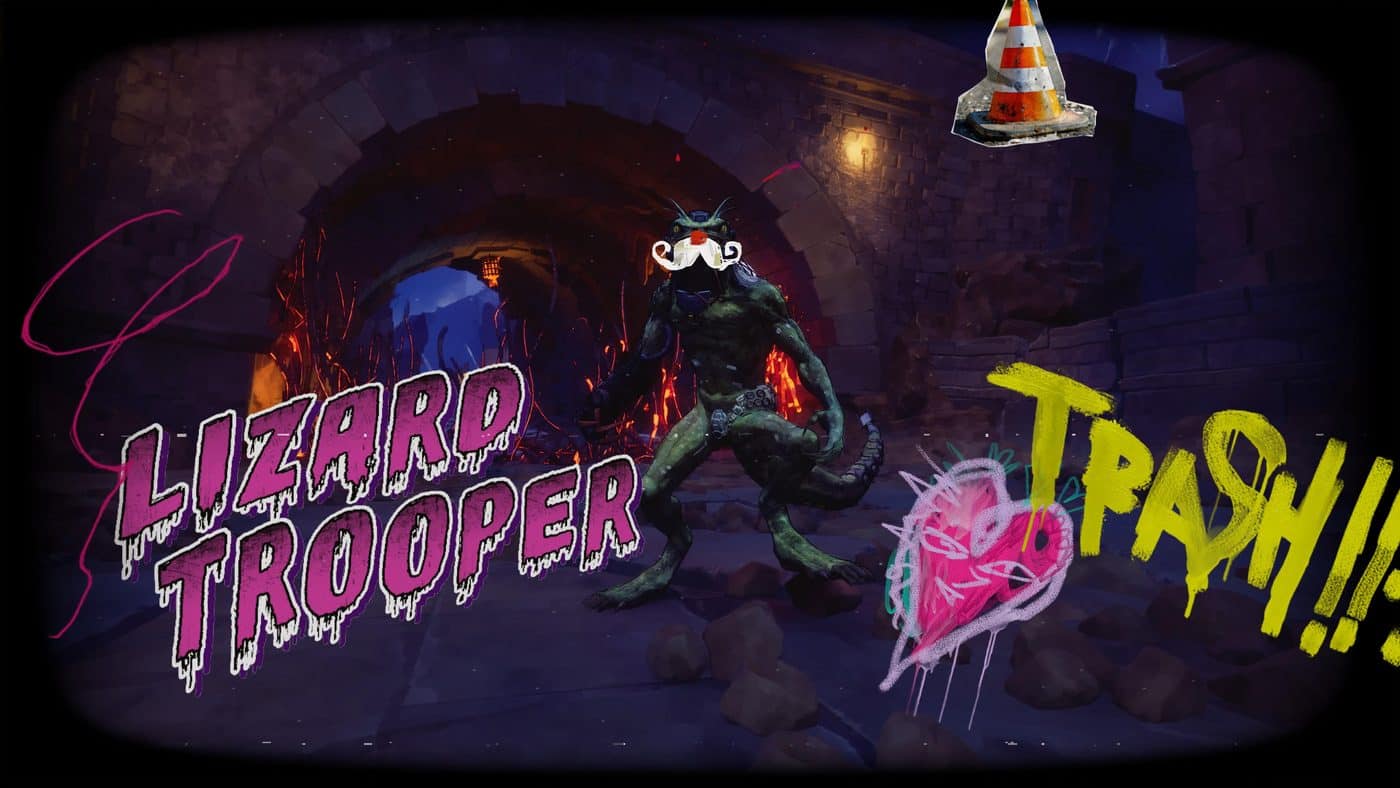
The absence of a lock-on system remains the most evident limitation of this structure. It forces you to manually aim at every target. That makes itself felt especially against flying enemies or ones scattered across multiple areas of the same encounter. A problem the developers seem to have taken seriously: an update released after the demo’s launch introduced an optional Combat Camera Assist. It also made it easier to hit enemies on the ground and in the air. These changes will also carry over into the full version of the game.
KOM and his followers
In the dungeon, every monster seems to find its place in a precise hierarchy, built around the figure of KOM. The Four Generals already covered in the article on the launch window are the clearest example. Surtr R.S. bound himself to KOM after being defeated by him, believing only in brute force. Dragul agreed to serve him in exchange for the promise that vampires will one day be able to live under the sun. Takiyasha-Hime obeys under the weight of a paternal curse she hopes KOM can break. Wolfgang bowed his own pride before a power he recognized as superior. Four different stories, but a single direction: each of them is with KOM because they received something from him, or because they fear his strength.

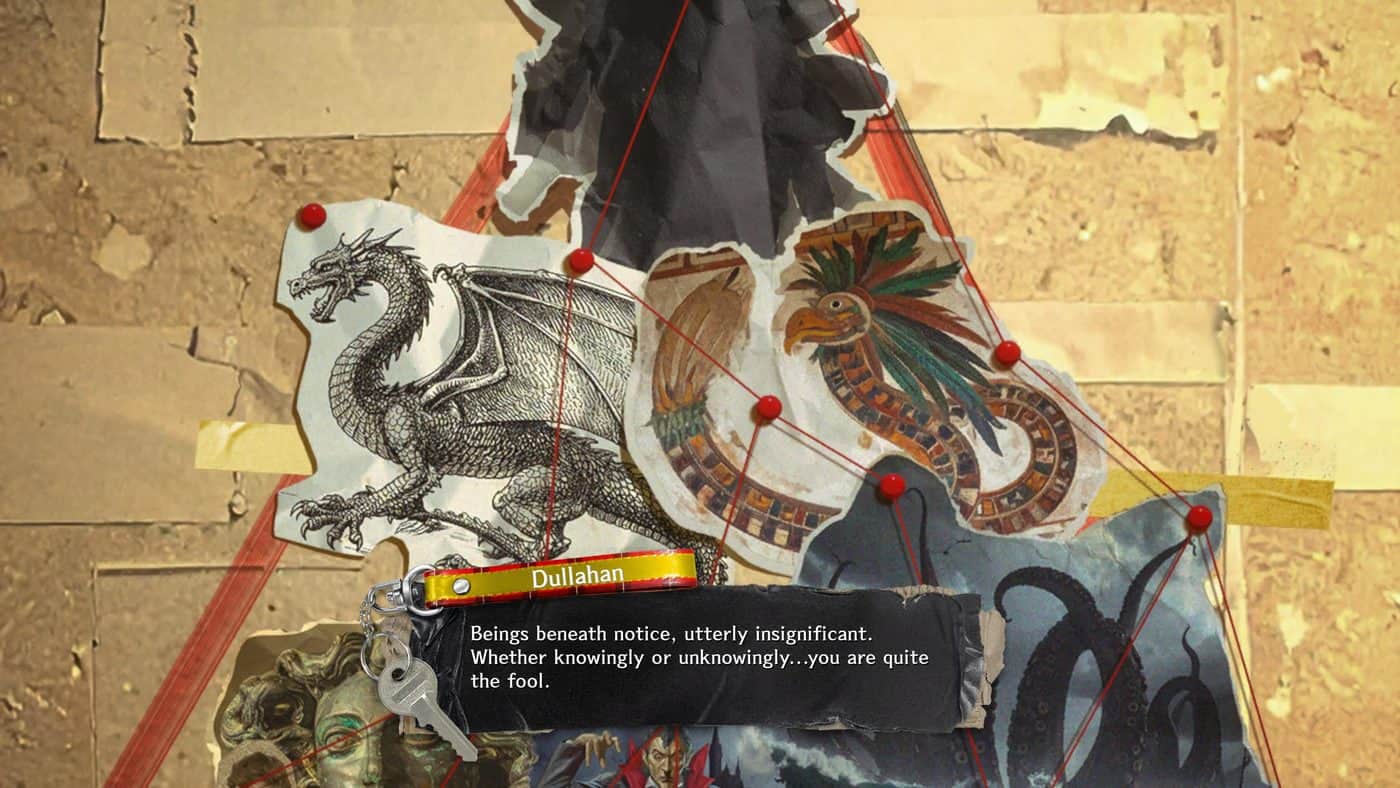
Dullahan breaks this pattern. He is the first enemy the demo characterizes with care. The game tells us about a romantic obsession: “It’s all about a woman, for him. She left long ago, and yet she has remained in his head.”. Before the fight, he dismisses Davy with an almost philosophical contempt. He asks him why a corpse should beg for its own life. His defeat opens access to a further playable Style.
There are two proper boss fights in First Bite. The first is against Afreet, who would prove his loyalty to KOM by literally drinking the flames of hell. The second is against Phoenix Zaza Hotfeathers. His nature remains deliberately ambiguous regarding a possible alliance or friendship with Davy.
Zombies and punk: style at its peak
What strikes me about Stupid Never Dies is its coherence. It holds together visual registers that are wildly different from one another.
The origin lies in two words written on a sheet of paper at the beginning of development, zombie and punk. Art director Genseki Tanaka and the rest of the team listed every component for each of them. For the former, that meant the clothing, the pins, the badges, and the attitude. For the latter, they listed the equivalent traits. Then they mixed the two lists to see what would come out of it.
Director Eiichiro Sasaki places the origin of the visual technique in an even more specific place, that of punk rock record covers, from which derives the collage that permeates the entire visual design. On the visual front, the result is exactly what Tanaka says he was aiming for: making players think “what on earth is this stuff?”, betting on the game’s energy before the horror of its monsters.

There is also a production detail that explains why every character seems to have an idea of their own, instead of being a variation on a theme seen elsewhere: when development began, GPTRACK50 was still too small a studio to have a dedicated art department, so the team built the story and characters first, letting the drawing come only afterward, as a consequence of the writing. Tanaka recounts that for each character he looked for a small deviation capable of making the eye stop: Doc has the look one would expect from a video game scientist, white lab coat included, until you notice the braided beard.
This philosophy is also reflected in the fundamental technical choice, that same 2D streak inside a 3D framework that in the demo proves even more pronounced, in some ways closer to the most experimental contemporary animation. The engine is Unreal Engine 5, used however with a gameplay-first approach uncommon for a project with this visual ambition, where game systems are built before aesthetics. Color fills every frame, character silhouettes remain deliberately exaggerated, and the developers have covered the environments in graffiti and stickers that stay legible despite the crowding – a density the developers admit they had to contain several times, when ideas threatened to drift too far from concrete playability.
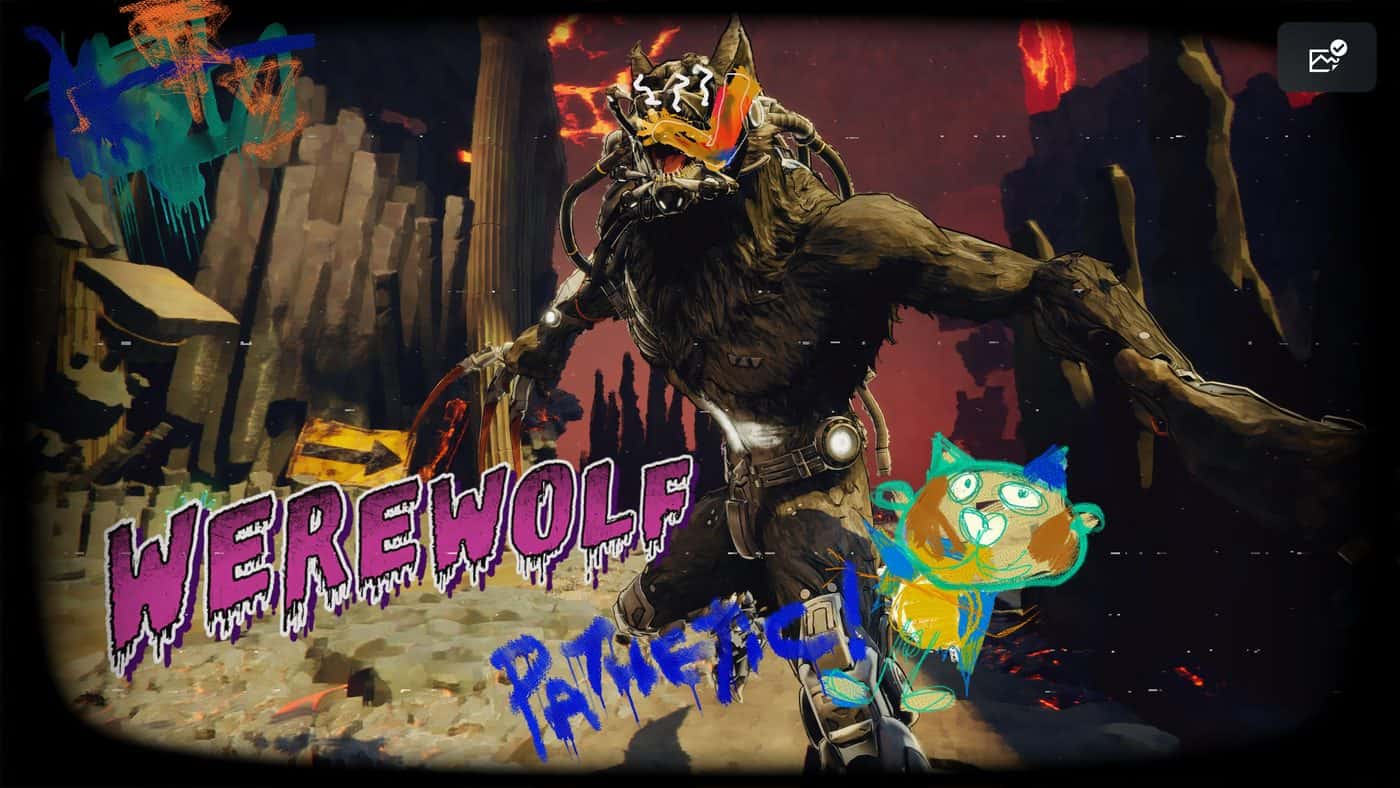
The style that comes out of it refuses any assimilation to what has already been seen elsewhere, and played hands-on rather than observed in a trailer it shows itself to be even more layered than the promotional materials had suggested.
The first bite of a fine meal
At the end of these two hours I thought back to the previous articles I had written, and I realized how much those pieces, built on the trailers, only told the surface of what First Bite then confirmed in the field. Style Eat works exactly as promised in March, Body Hack and Davy Burst are present from the first runs, even though the latter only arrives toward the end of the two playable hours, when the rhythm has already settled in.
What the trailers could not show, however, is everything else. The Time Limit that turns every descent into a constant management of seconds, the relationship between recoverable damage and Stupid Parry that binds defense and survival to the same gesture of the bite, the roguelite structure that holds the entire framework together through Landing Areas and the Mall: these are all systems I had only sensed from the press releases, and which, played hands-on, reveal themselves to be interlocked with a precision the promotional materials gave no hint of.
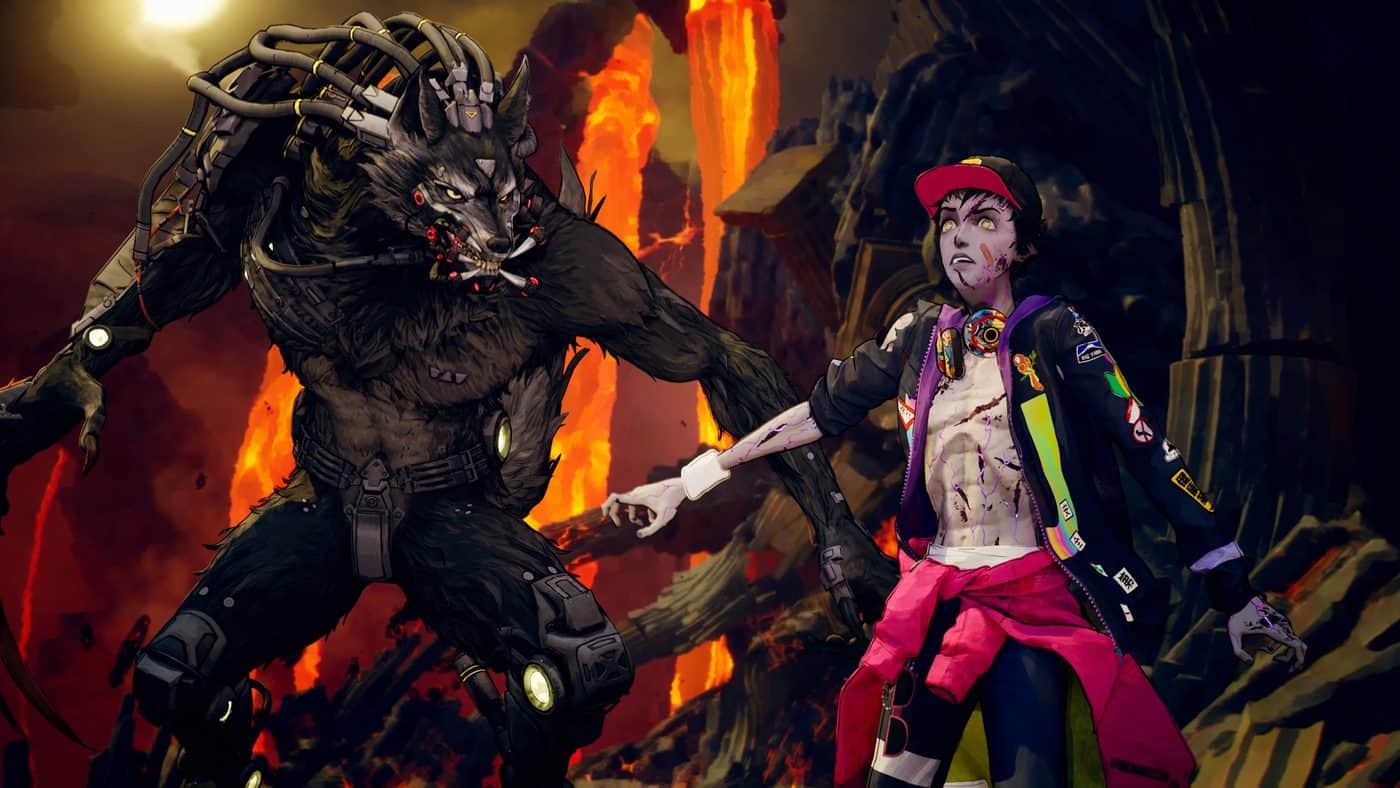
And then there is everything that goes beyond pure gameplay, which is perhaps the biggest surprise of this demo. The music, above all: an accompaniment coherent with the pop-punk energy declared from the very first teaser, capable of shifting register between the dark prologue and the more lighthearted action without ever losing coherence. The graphic style, that punk collage rebuilt from scratch starting from two words on a sheet of paper, with a fresh and memorable visual impact. And the narration, which behind the scatology declared in the title hides writing more careful than one would expect, capable of portraying Davy as a character with a double layer of marginality, a despised zombie among monsters and a deserter rejected even by his own kind, as clumsy as he is irresistible, with that caricatured shyness that creates an almost sadistic desire to see him grappling with challenges bigger than himself.
Stupid Never Dies arrives on October 21 on PC and PlayStation 5, one day before the Japanese version, and the First Bite save carries over automatically to the final version. For anyone still in doubt, there is the most concrete verification of all: downloading the demo, and discovering firsthand how much there is to love in a zombie capable of working perfectly both as a character and as an aesthetic symbol of a more than fitting visual choice.