In short
The demo of The Doll Shop, the hand-drawn narrative game by Atelier Sentô coming to Steam on October 12, 2026, introduces a young doll craftsman in a rural Japanese village where a girl has disappeared. The preview explores the atmosphere between love story and horror, the watercolor art direction built on the French duo’s travels in Japan, and their path from comics to their first commercial title, after the 2018 free prototype and the cameo in Death Stranding 2 requested by Hideo Kojima.
From a winter spent in Niigata to their first commercial game. The French duo’s demo opens the doors of a doll shop. All of it in a village where a little girl has just vanished
A snow-covered village, a shop full of dolls and a young, solitary craftsman who lets us into his small world of habitual gestures and comfortable places: these are the ingredients that make up the premise of The Doll Shop, a hand-drawn narrative game set in the Japanese countryside. The setting seems frozen in a slow-flowing time. This rhythm lets us soak in the nostalgic, picturesque atmosphere of ancient and unchanging traditions.

The game bears the signature of Atelier Sentô, the French comic book duo formed by Cécile Brun and Olivier Pichard. It will be released on Steam on 12 October 2026. The demo lasts about half an hour and cuts off just as the story changes tone. It is too early to judge the gameplay, which I will revisit once I have tried the full version. In this preview, then, we will talk about first impressions and what it is reasonable to expect from The Doll Shop. We will visit the village the two authors have drawn and look at the path that took them from comics to video games.
Mrs Fujimoto’s doll
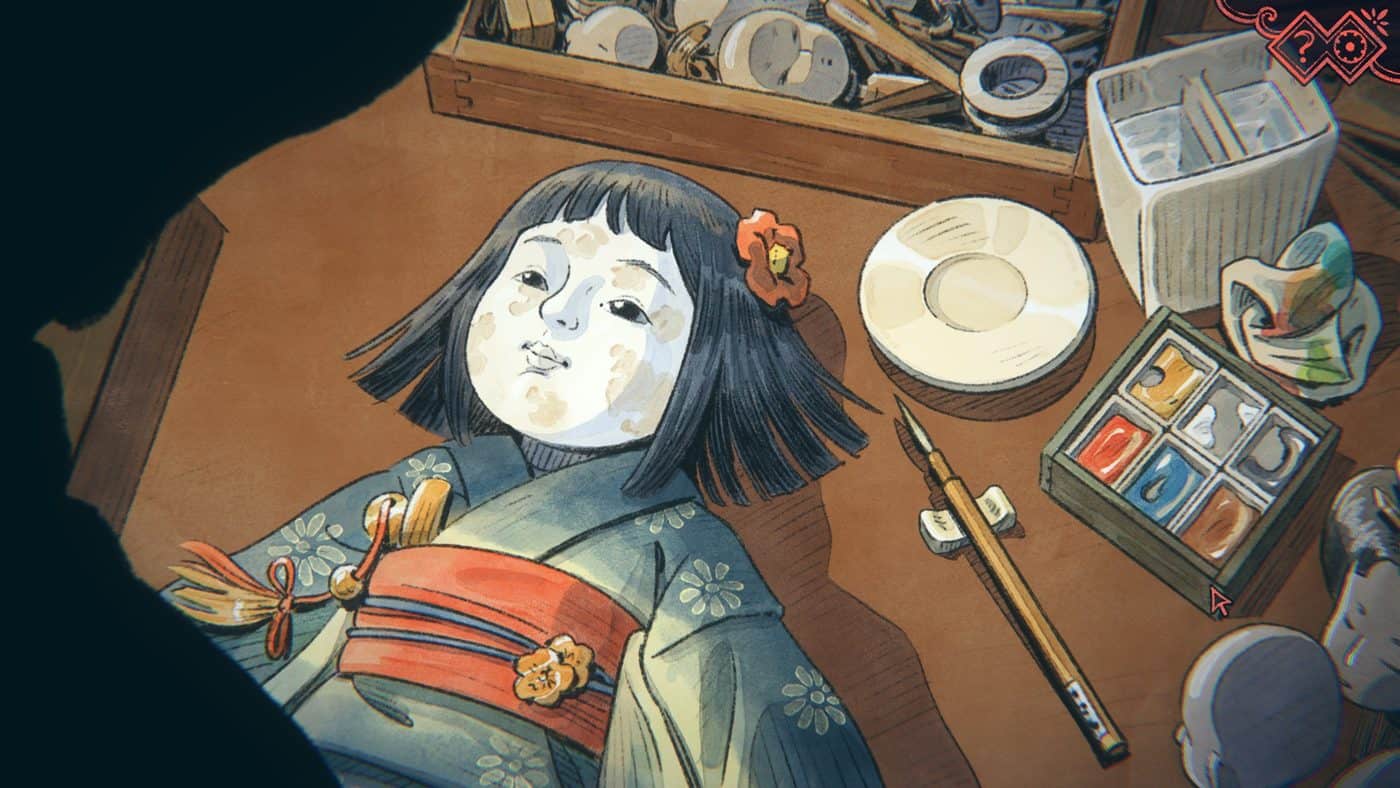
The demo of The Doll Shop begins with a piece of workshop work. On the table lies a doll with a black bob and a floral kimono, its white face blotched with stains. The scene is framed from above, over the protagonist’s shoulder, whose dark silhouette occupies the edge of the image. Next to the doll wait a box of watercolours and a brush resting on its holder. The young craftsman explains that a customer, Mrs Fujimoto, asked him to restore it. The first task the game gives the player consists of repainting that face, one touch of colour at a time.
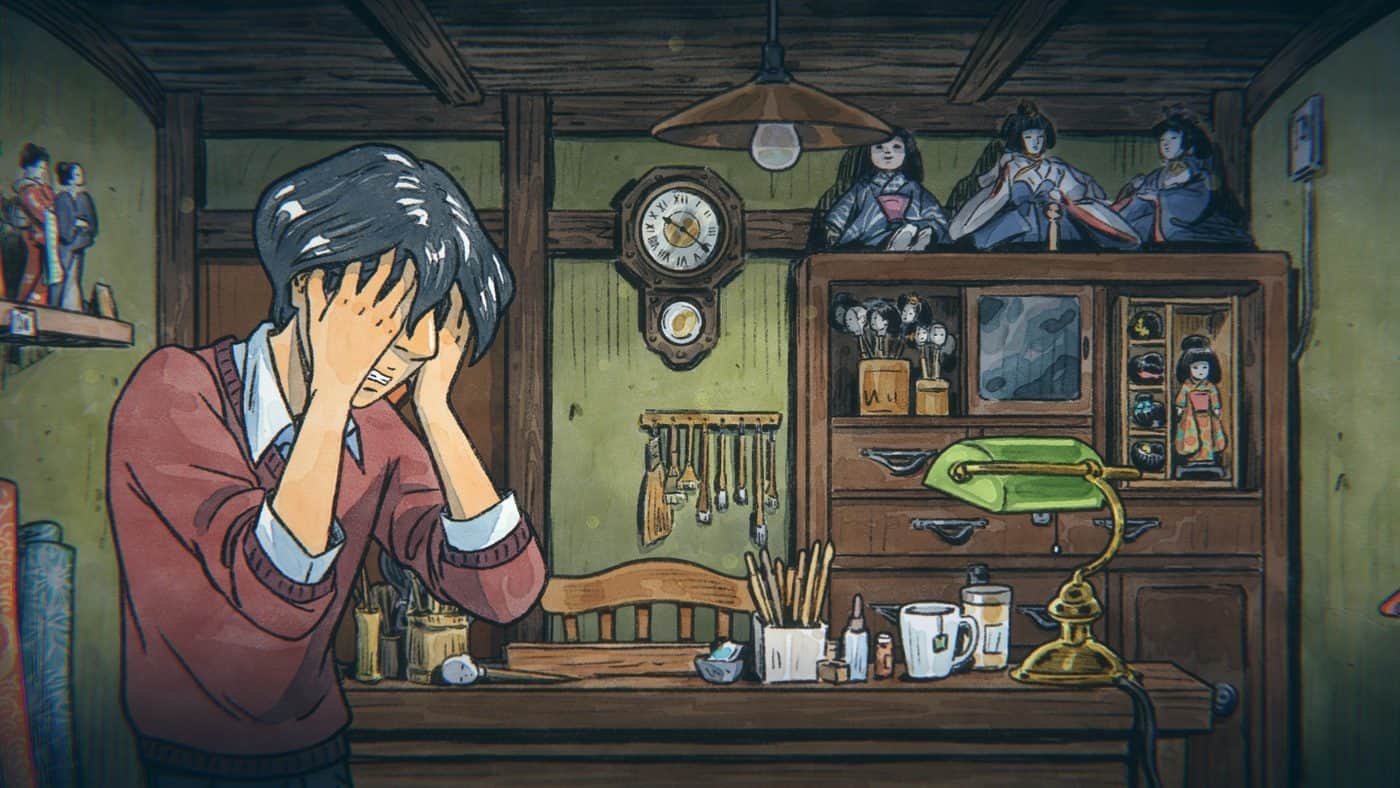
That workbench is the centre of his life. The protagonist rarely sees the other villagers. He feels isolated and buried under a winter that seems never to end, and he prefers the company of his dolls. He is particularly fond of the one he keeps hidden at the back of the shop. His routine begins to crack when a little girl goes missing in the village. Right around that time, a childhood friend returns from the city. After many years apart, she would like to reconnect with him.
This return gives rise to the romantic side of a game that Atelier Sentô describes as half love story and half horror. The protagonist will have to choose between his dolls and the possibility of a new life beside his rediscovered friend. The official presentation closes by asking the player whether he will have the courage to confess his secret to her. The demo says nothing about that secret, though it leaves room for more than one suspicion. What suggests it is the flyer for the missing girl, hanging among the dolls in the shop.
A village under the snow
When he steps out of the shop, the protagonist finds himself in a snow-covered village that he crosses entirely on foot. Every place is a short walk from the next. In the first outings, the only real difficulty concerns orientation: it takes a few minutes to work out how the streets connect. The village remains small, however, and never turns into a maze. Its reduced size gives it the familiarity of small towns, where everyone knows everyone and reaches every destination without hurry. The snow covering roofs and streets adds an almost fairy-tale tone.
The demo concentrates nearly all interactions in the ramen restaurant and the public bath. The rest of the village is explored by observing: a small eye-shaped icon marks the objects to examine.


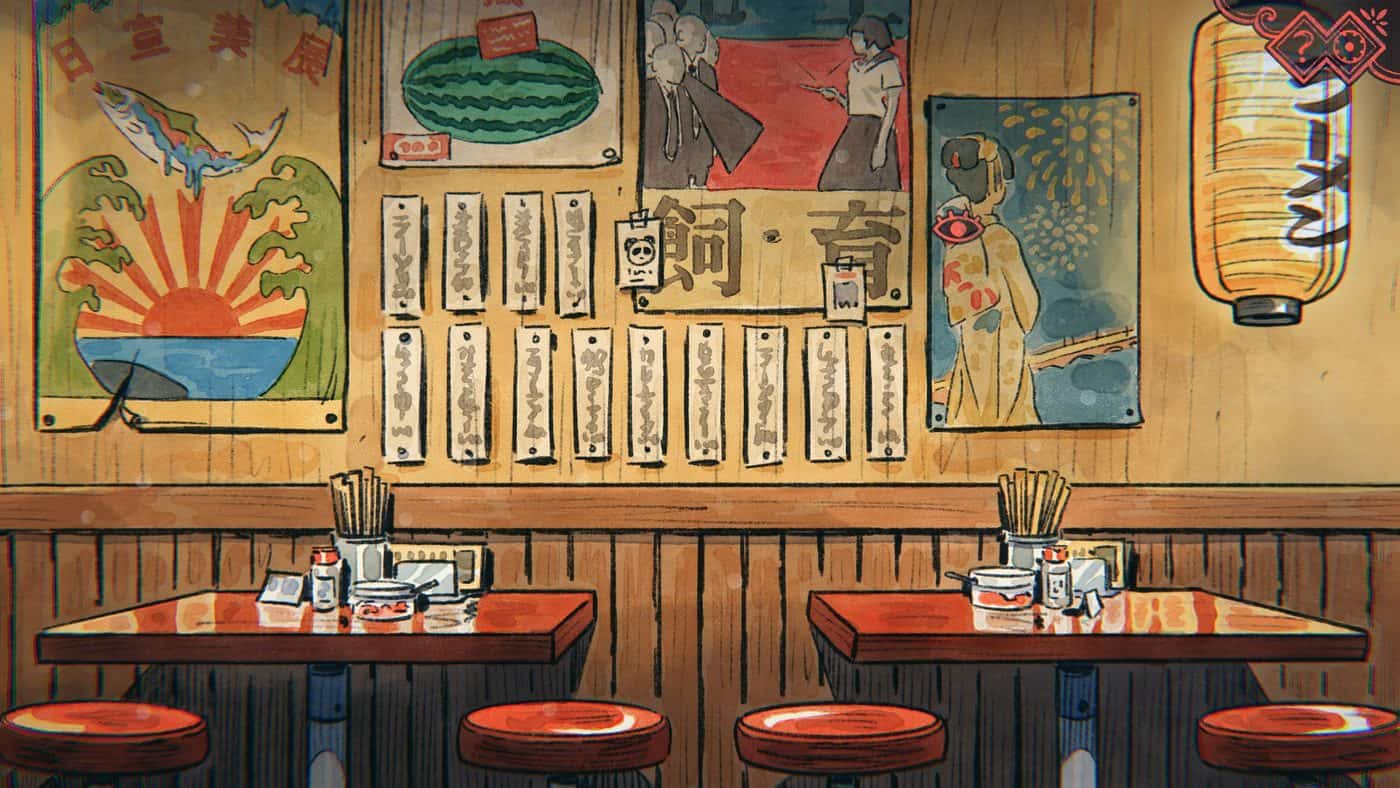
Through the protagonist’s comments, his family history gradually takes shape. On the restaurant walls, papered with vintage posters, he finds the advertisement for the curry brand his mother always cooked for him. Beside it is the poster of a yakuza film they watched together. The maneki-neko sits in a corner of the restaurant, a gift from his father to the owner on opening day. Its gaze draws out of him the admission that his father was far better than him at being around people. Another poster, this one for a film for young audiences he loved as a child, reminds him that the village still had a cinema back then. The town’s decline also surfaces in the words of a resident. In a kitchen, she remarks on how hard it must be for a young person to live in a dying village.
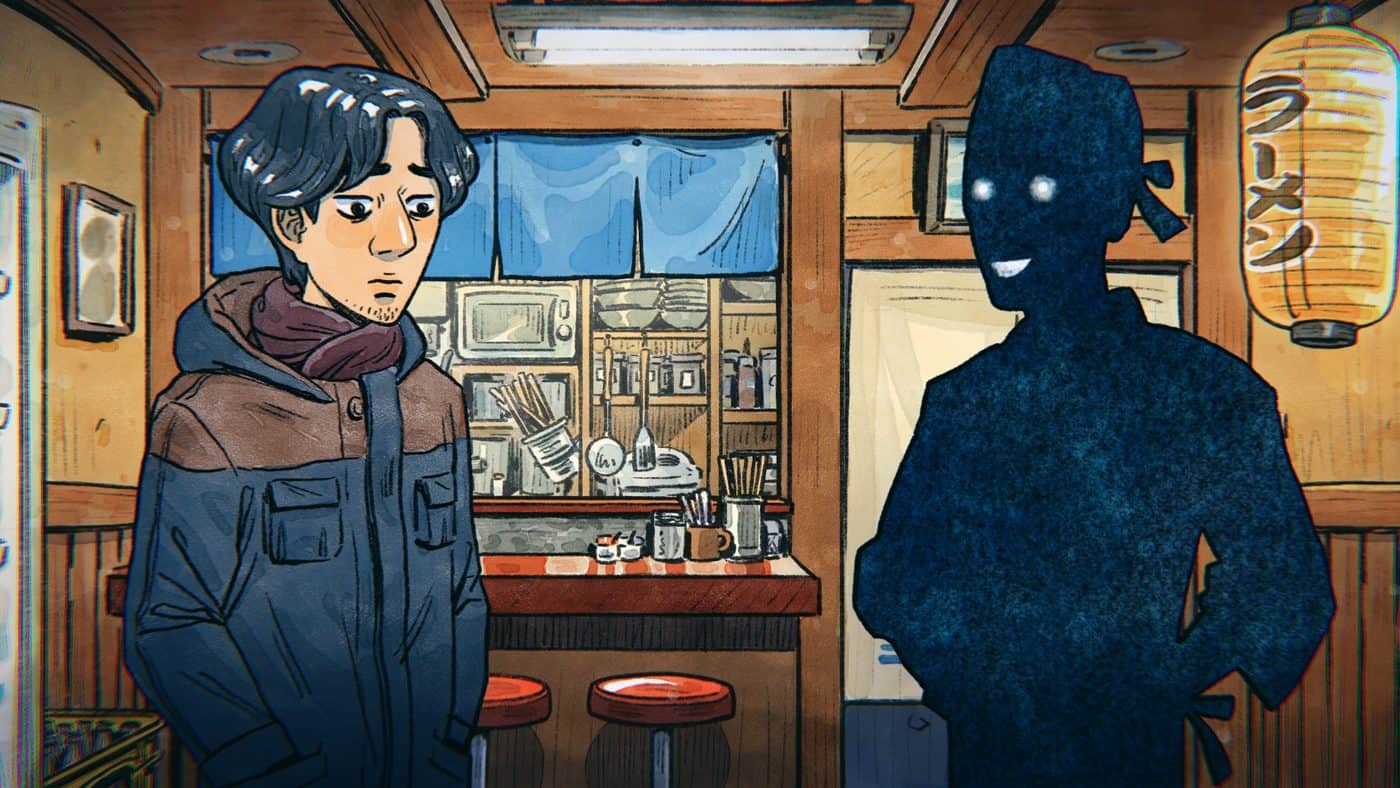
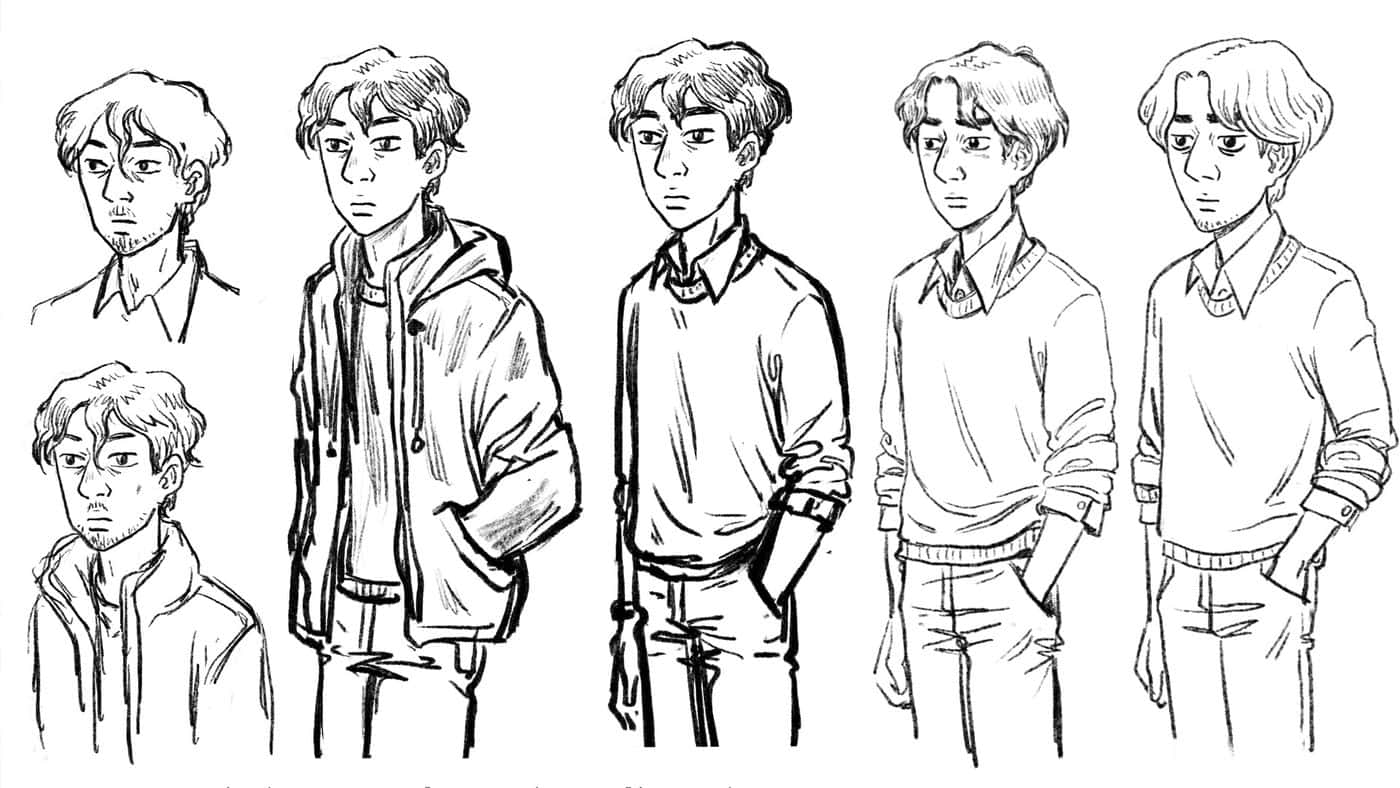
The villagers, however, have no faces. Everyone except the protagonist appears as featureless silhouettes, with two or three points of light in place of eyes. He is the only character with a recognisable face, and ends up seeming separated from the others on screen as well.
The mystery that gives the plot its substance takes shape in front of the flyer hanging in the shop among the dolls. The missing girl is called Yamamura Hikari, she is six years old, with a black bob and a very pale complexion. These are the same features as the dolls the protagonist restores and keeps.
Ink and watercolour
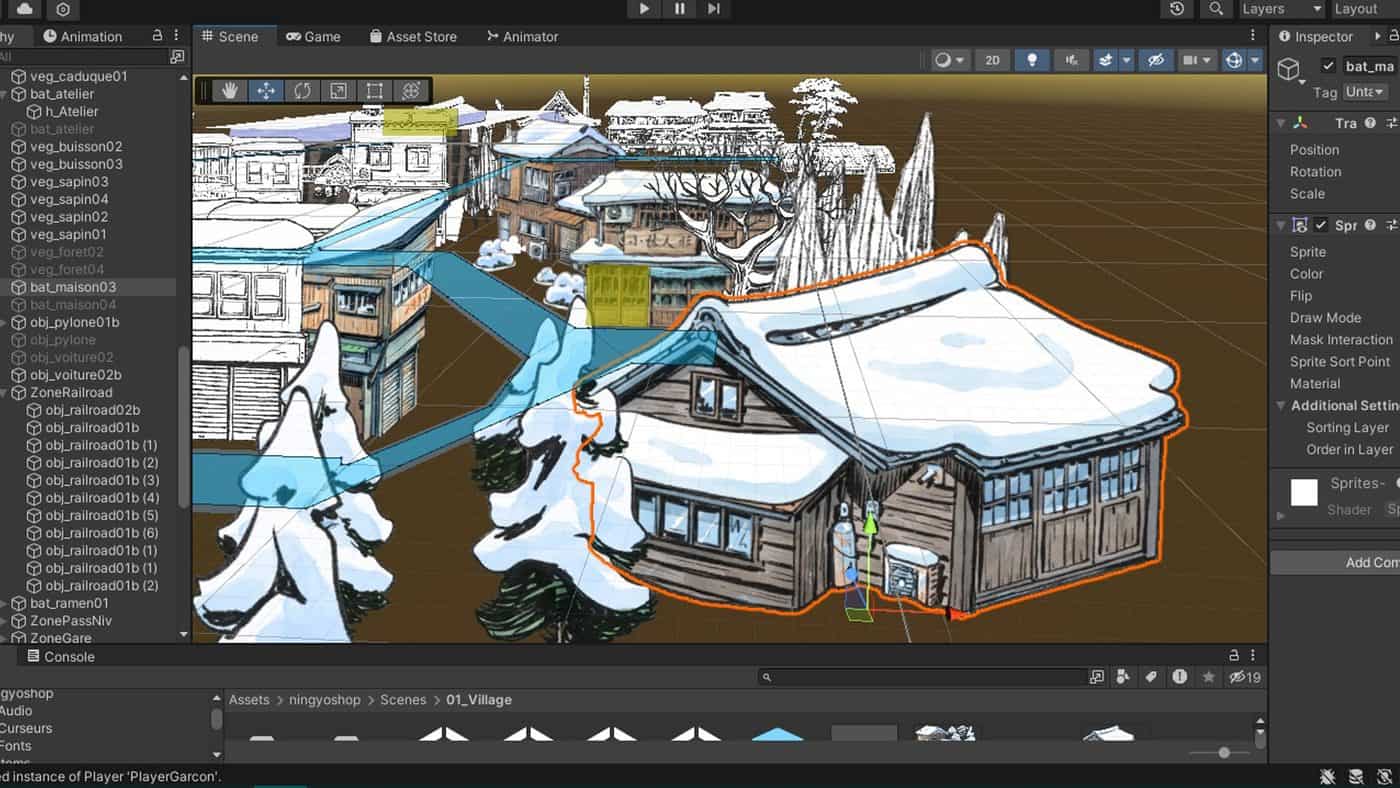
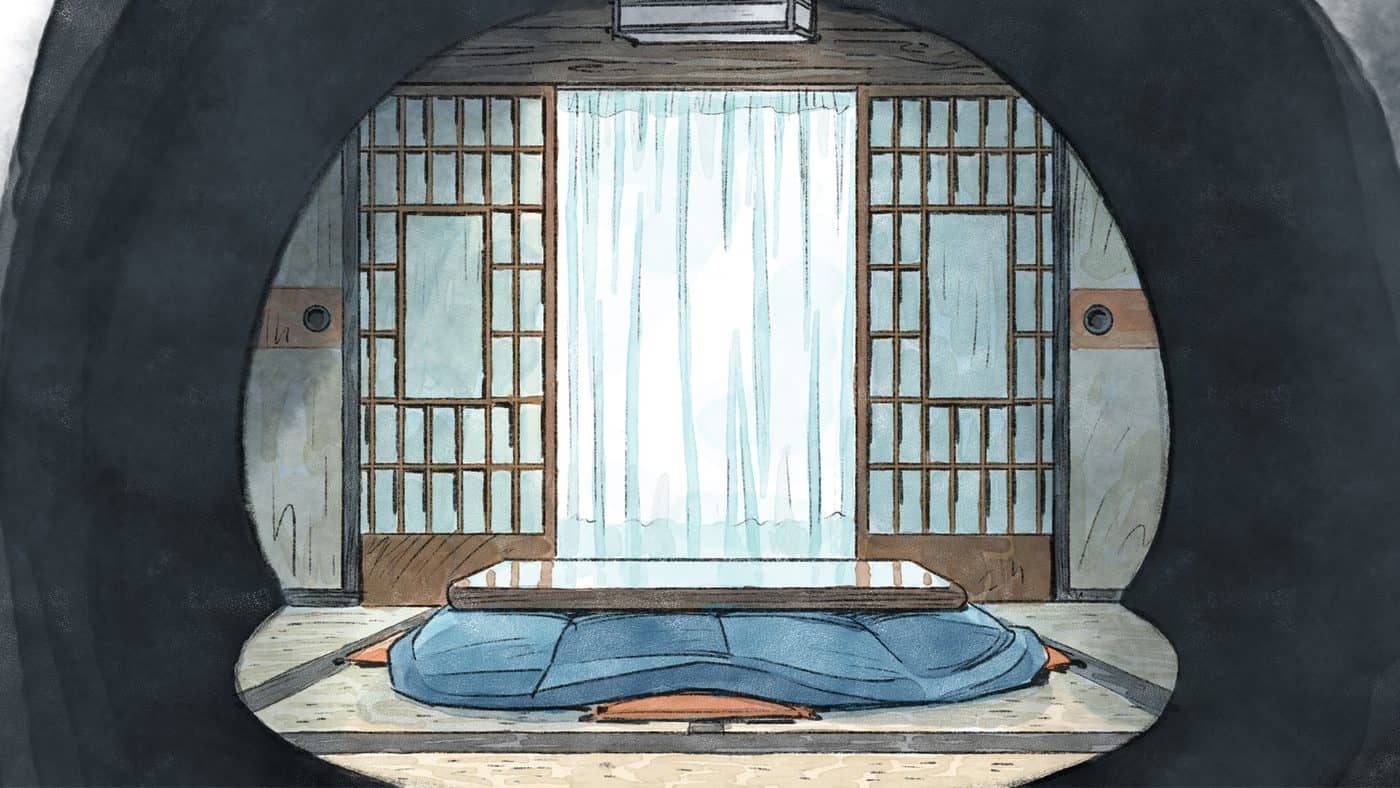
Every element of the game is hand-drawn on iPad, and Atelier Sentô built the backdrops and characters from the sketches and photographs collected during their trips to Japan. This method shows in the precision with which the environments are rendered, from the ceiling beams to the drawers of old sideboards. The black, confident ink line thickens with hatching on the grain of the wood and the folds of the fabrics. Colour, meanwhile, is laid down with a watercolour effect that leaves irregular edges and at times spills beyond the outline, as happens when pigment spreads across wet paper. The level of detail stays the same even for the most everyday objects. The ramen bowl served at the counter receives the same hatching and the same translucent washes reserved for the dolls, with the slices of chashu and the sheet of dark green nori.
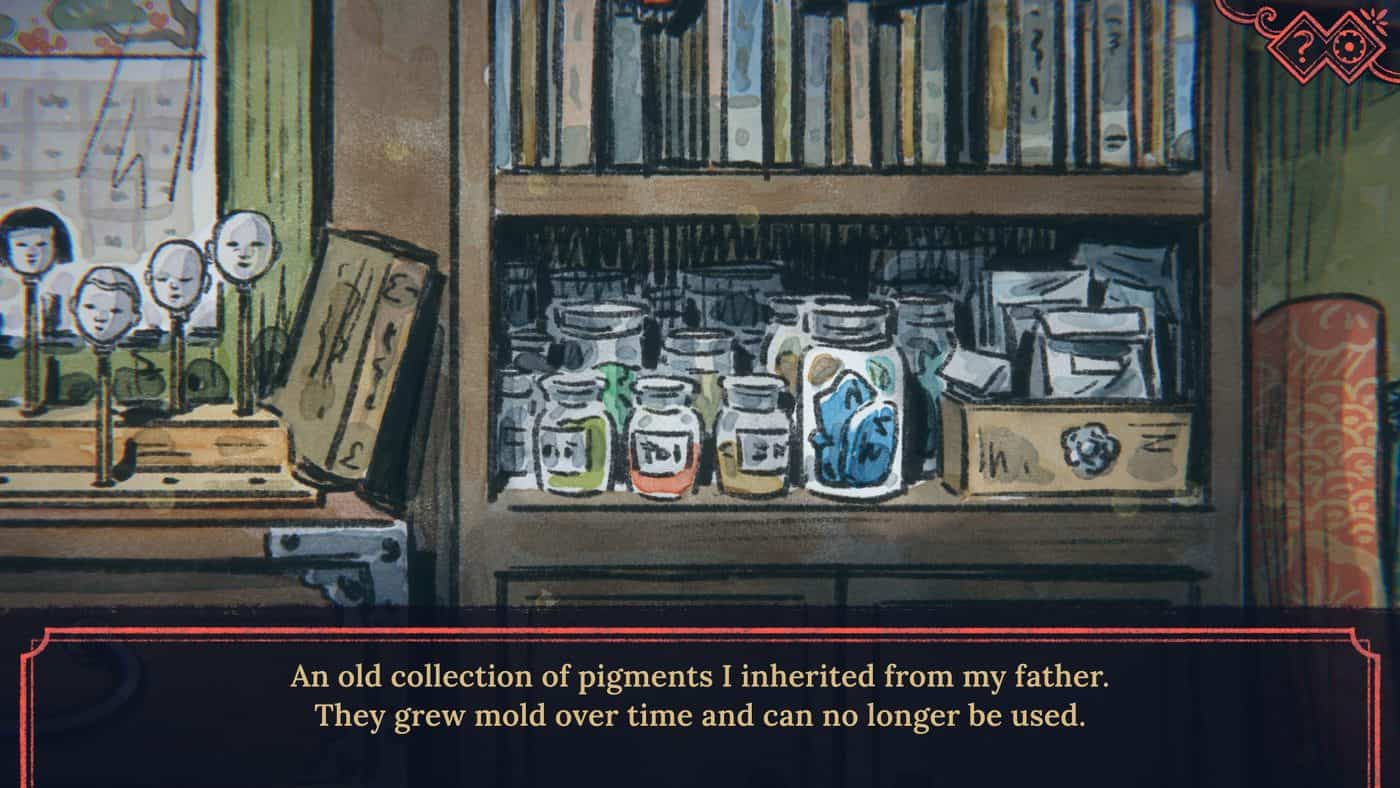
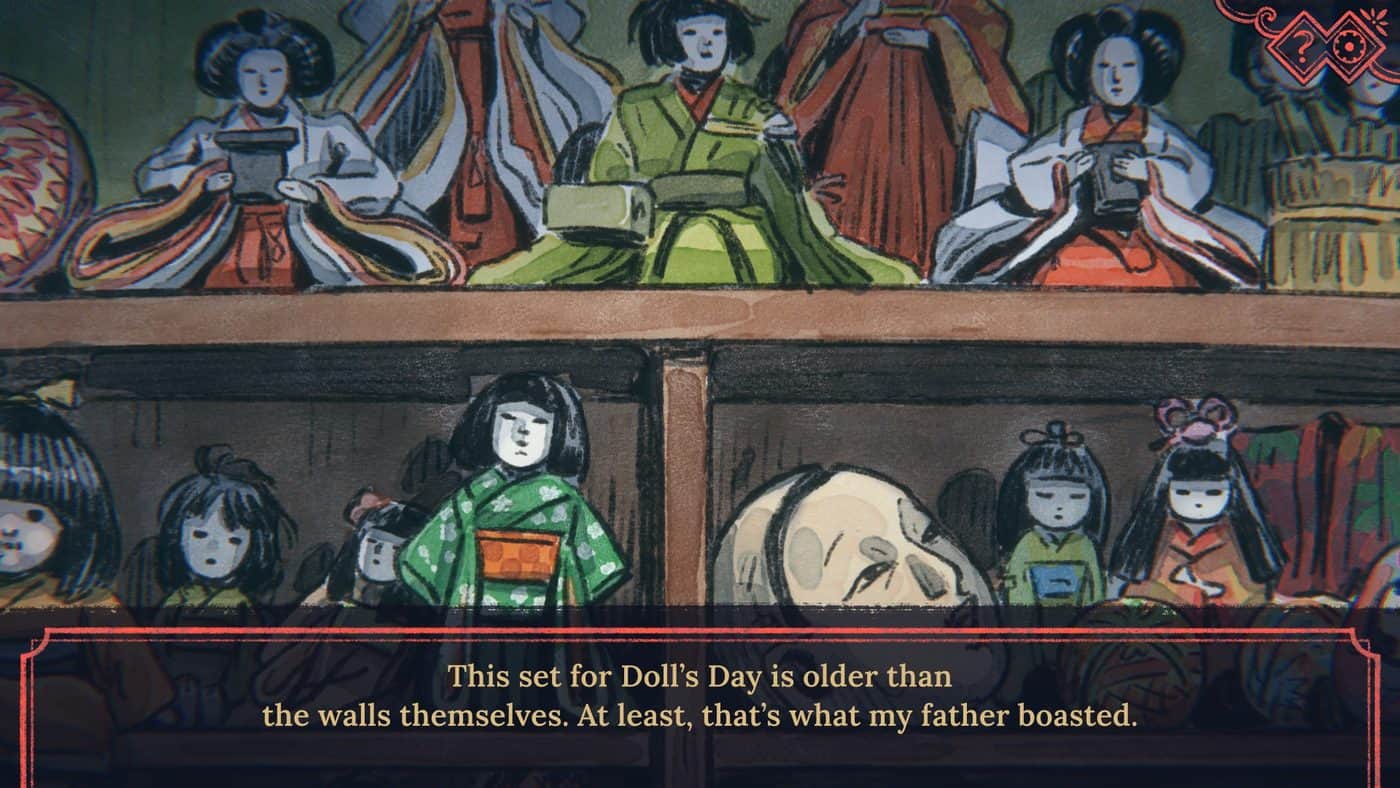
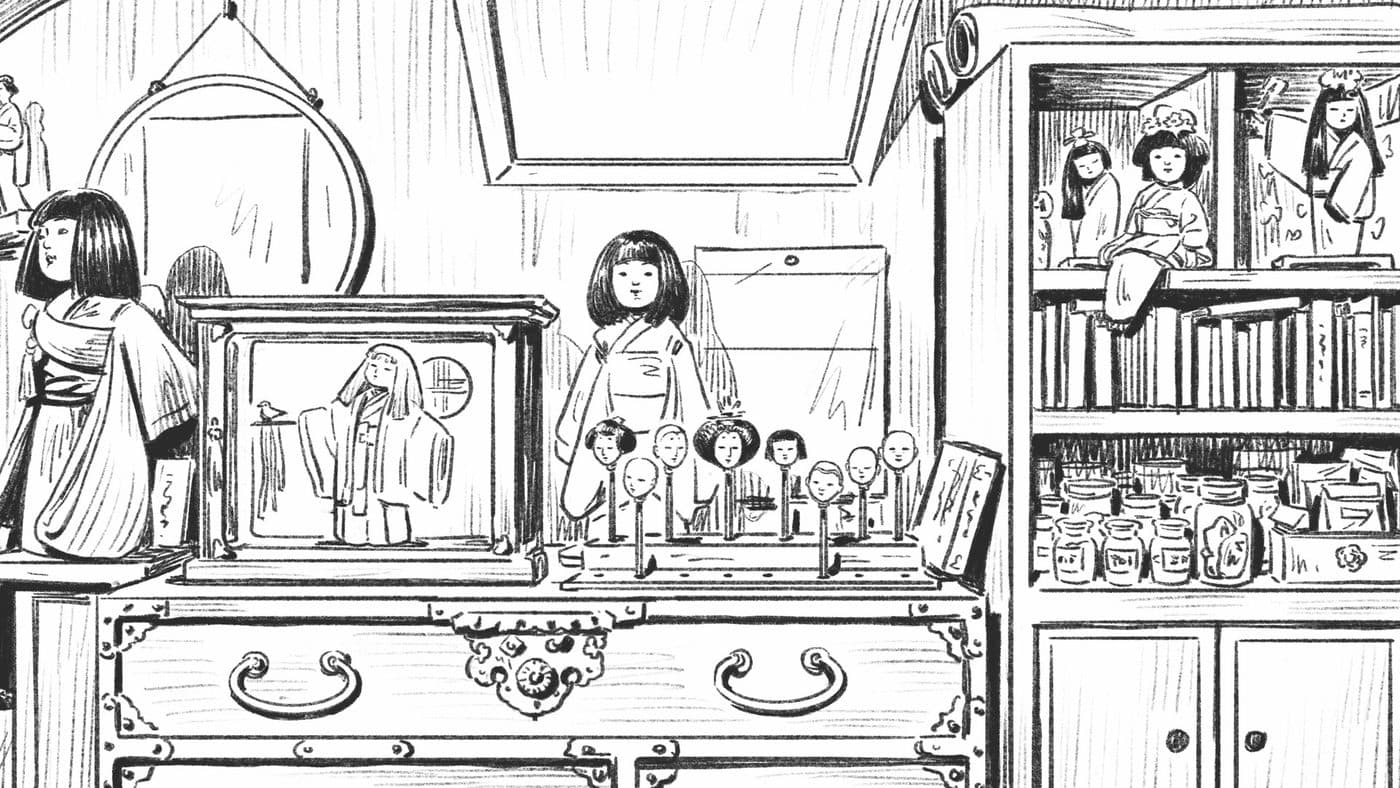
The dolls are in fact the subject the authors have drawn with the greatest variety. On the shop shelves, the ichimatsu dolls with their bobs and kimono stand next to the set for the Doll Festival. That set is older than the walls of the house. In another corner, instead, a row of heads still without bodies is threaded onto wooden stands. Not far away sit the jars of pigments his father left him, long since made unusable by mould. The faces are almost always white and still, with thin eyes and tiny mouths. Amid the vivid colours of the kimono, they remain the coldest part of every frame.
The warm palette stems from a deliberate choice. The authors gave up on dark graphics in order to build a contrast with what the story tells. The interiors are dominated by olive greens and the browns of wood, brightened by the yellow light of lamps and lanterns. The sense of comfort they convey seems at first to clash with the project’s horror intentions. During the demo, however, I came to appreciate this contrast. The warmth of the interiors lowers the player’s defences and makes it far more disorienting when, at the end, those colours disappear. Over the drawing, a discreet post-production adds a chromatic aberration to the edges of the screen that slightly doubles the outlines. To this are added a fine grain and a vignette. A suspended dust, like snow falling inside the rooms, gives the image the texture of an old television set.
The posters papering the restaurant, collected, according to the protagonist, by an owner passionate about vintage graphic design, deserve a close look. The most striking one, with a fish leaping between stylised waves in front of a rising sun, carries the header of the Nissenbi. These are the exhibitions of the Japanese advertising designers’ association, active until 1970. Another poster reproduces a Bon Curry advertisement, a historic brand of instant curry. Beside them appears the poster of Mizu no Tabibito: Samurai Kids, a 1993 film for young audiences.
Next to it is also the poster of a film about a high school girl leading a yakuza gang. It recalls Sailor Suit and Machine Gun but carries the title 飼育, “breeding”. It is the same title as a film by Nagisa Ōshima. Placed side by side on the same wall, objects from different decades make up a small archive of late twentieth-century Japanese popular culture. The village seems to have kept it frozen in the years when the protagonist was a child.
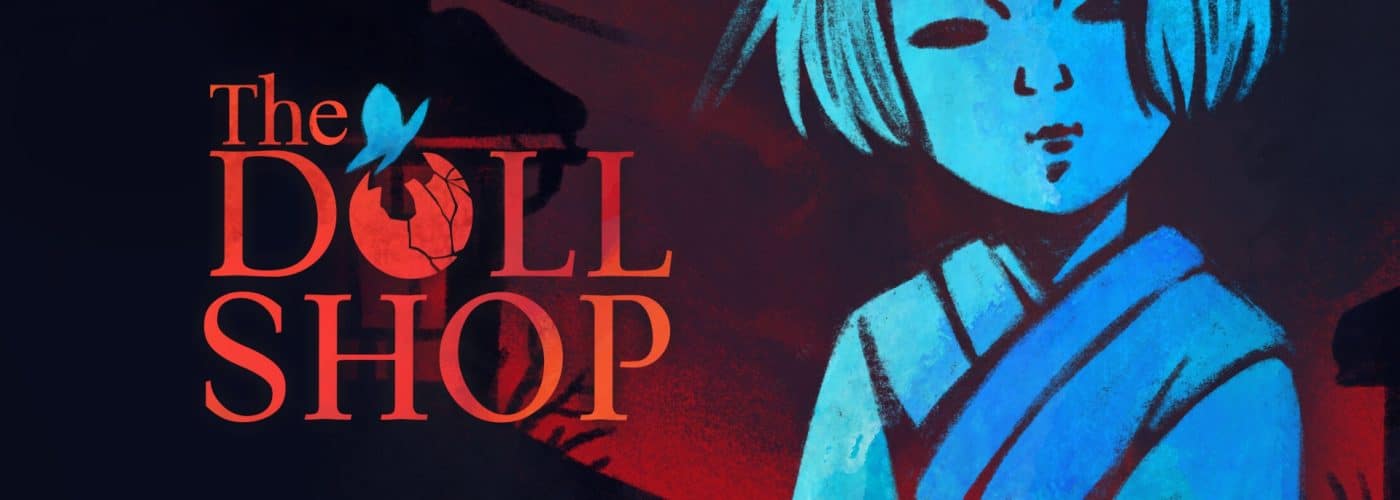
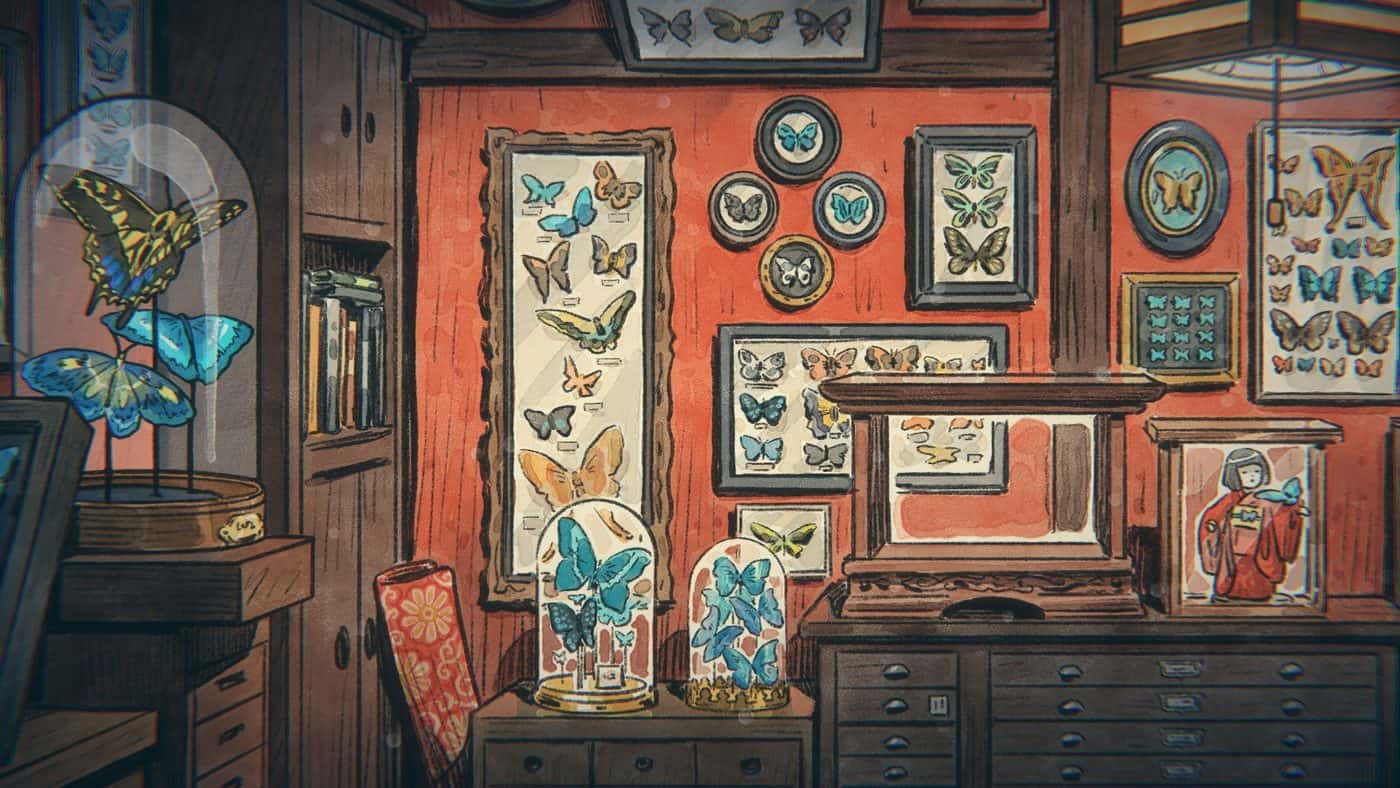
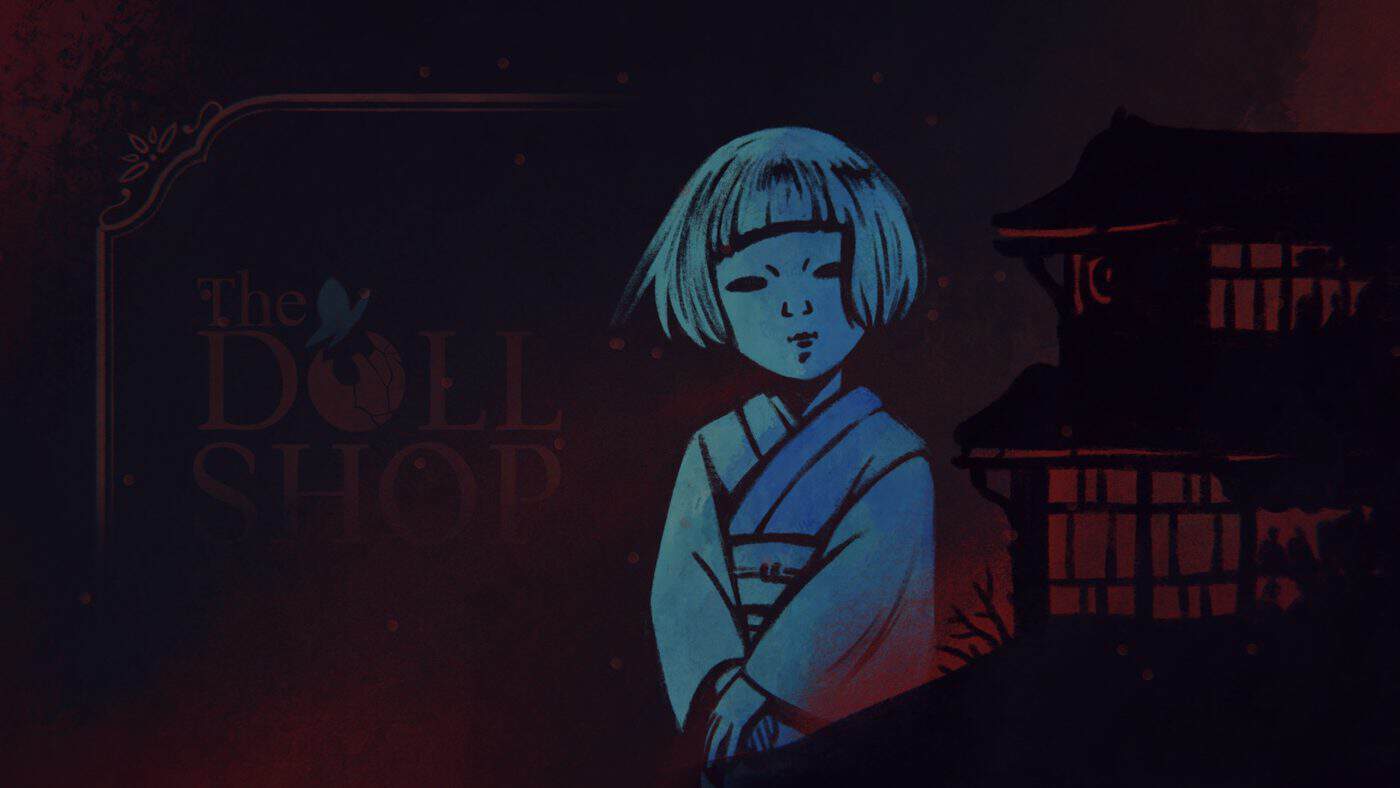
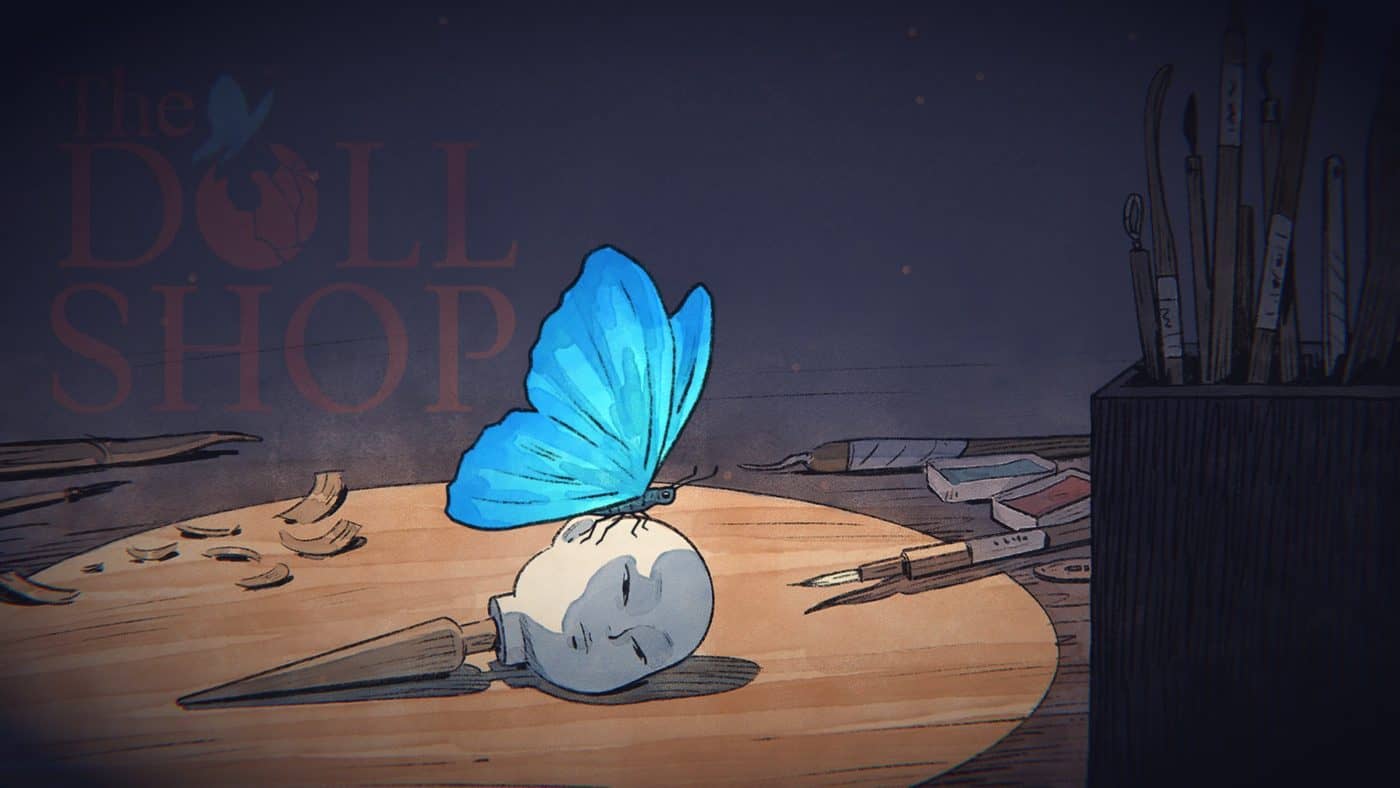
The colour treatment changes only once, in the final moments of the demo. A black-haired doll appears in close-up, its face shifted to blue against an orange-red background, its outlines doubled by the chromatic aberration. Behind the doll, you can glimpse butterflies in frames and under a glass bell. It is the same butterfly that in the game’s logo rests on the “O” of Doll, drawn as a cracked doll’s head. For the first time since the demo began, the warm colours of the interiors vanish completely.
Atelier Sentô, from paper to screen
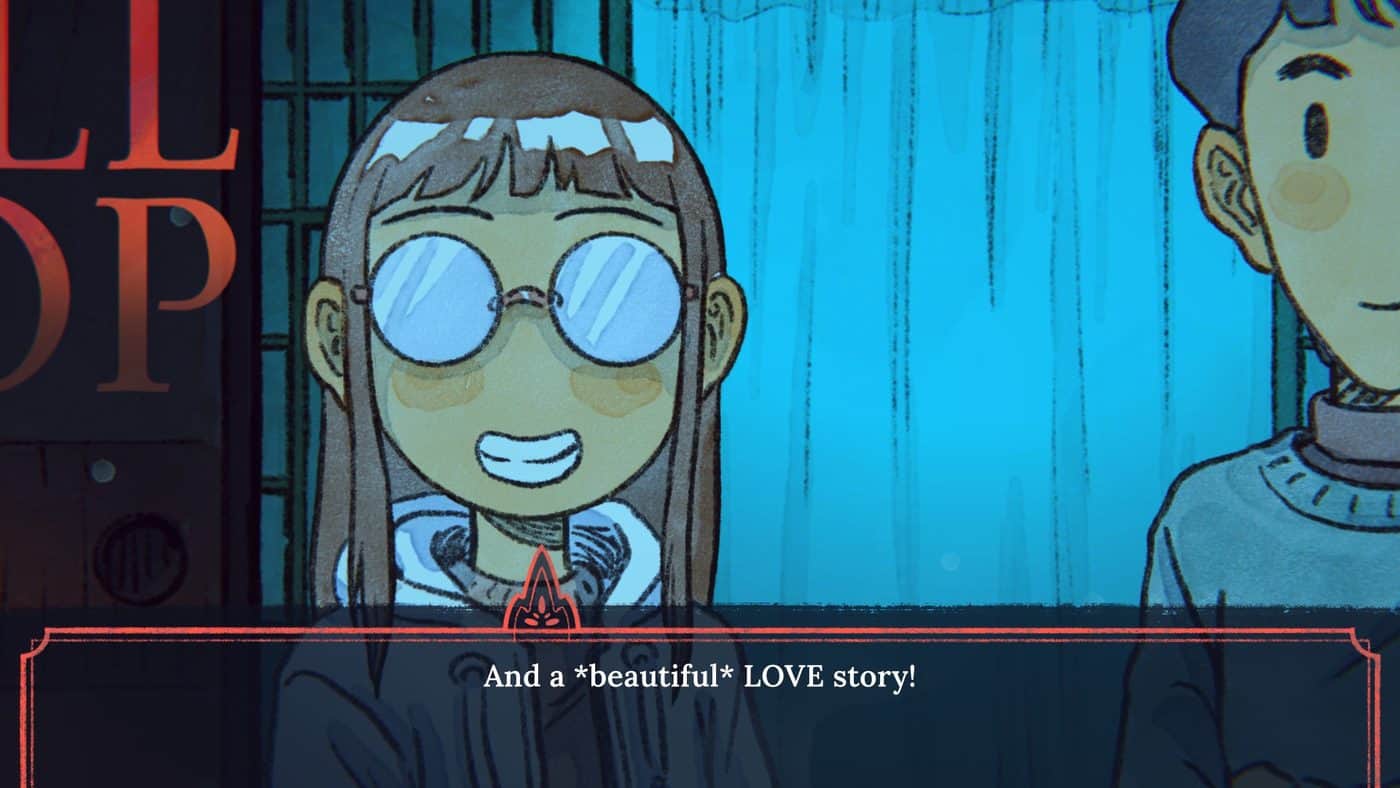
Right after the doll’s appearance, the demo takes its leave with an unexpected scene: the two authors appear as characters. They are drawn in the same style as the game. They stand in front of a door lit in blue, next to a kerosene stove. The stove reddens the corner of the room. Cécile wears round glasses and holds a steaming cup in her hands. Olivier stands with his arms crossed, a notebook under his arm. After thanking those who played, they recount in a few lines where the story comes from. They specify that they made every part of the game themselves.
Before saying goodbye, they also preview what the full version will contain. Cécile promises a love story and Olivier assures there will be more horror. All in time for Halloween. In the corner of the screen their logo appears, a small card with the symbol of the thermal baths. It recalls the duo’s name: Atelier Sentô comes from the sentō, the Japanese public baths. The same ones the protagonist visits in the game.
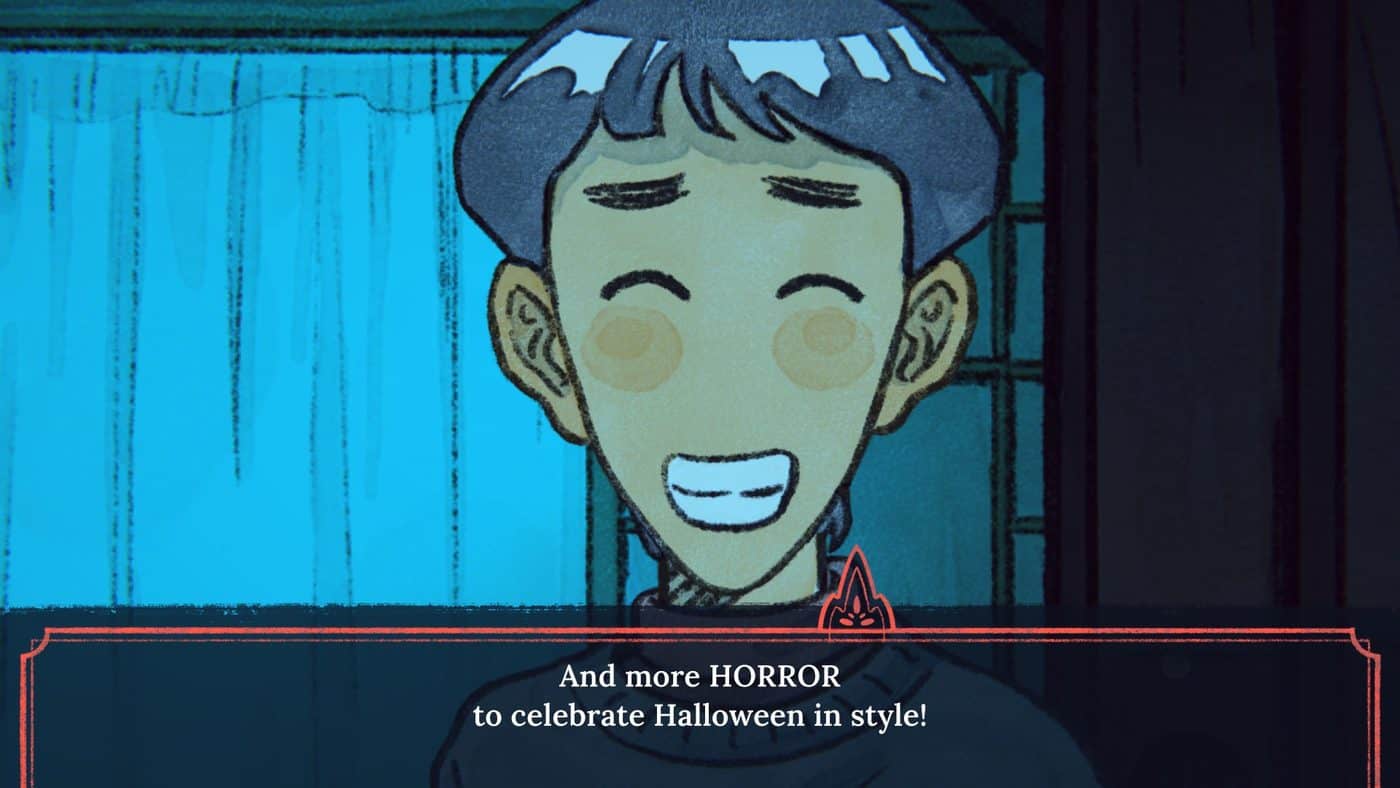
That story begins with the year Cécile Brun and Olivier Pichard spent in Niigata. It is a rural and very cold area of northern Japan, where Cécile attended university to study Japanese. During the long winter the two painted many watercolours and met a collector of antiques. He is the Mr Sasagawa mentioned in the epilogue, who showed them his collection of antique dolls. The faces of those figures and their decorated garments stayed in the duo’s memory for years. They became the starting point of the game.
The first version of The Doll Shop dates back to 2018, when the duo made it as a free prototype during a masterclass with a group of students. Published on itch.io, it surpassed 50,000 downloads. That result convinced the two to rebuild the game from scratch, with new artwork, characters, dialogue and music. The version coming out in October will be their first commercial title. Before that, they had made the free games After School, from 2016, and Sango – Tales from the Coral Cave and Yûrei Station, released the following year. Development remains in the couple’s hands. The artwork carries both their signatures, while Olivier writes and programs and Cécile composes the music. Only the translations are entrusted to external collaborators: Josh Tierney for English and Mizuka Yagi for Japanese, with Jay Wong handling simplified Chinese.

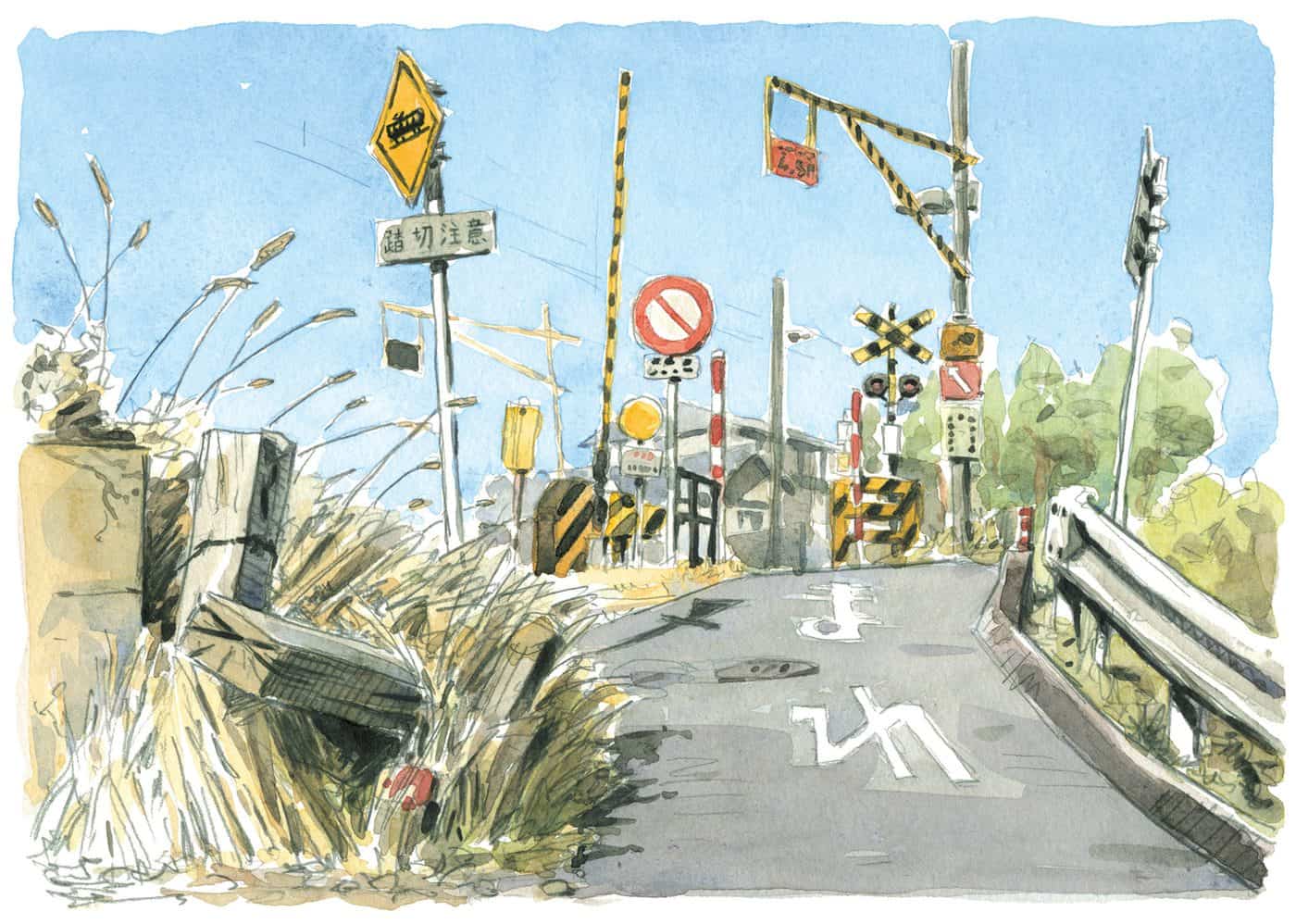
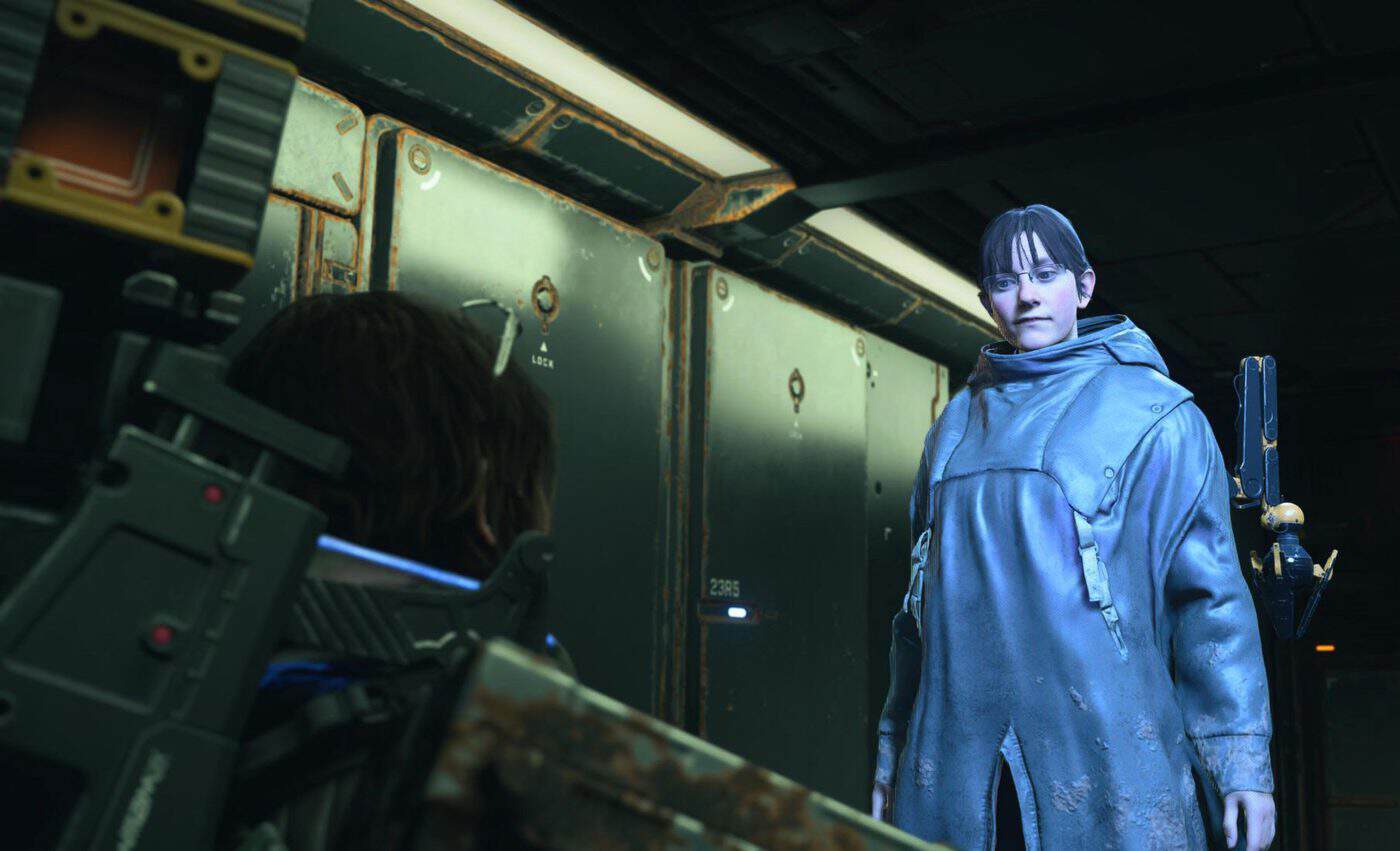
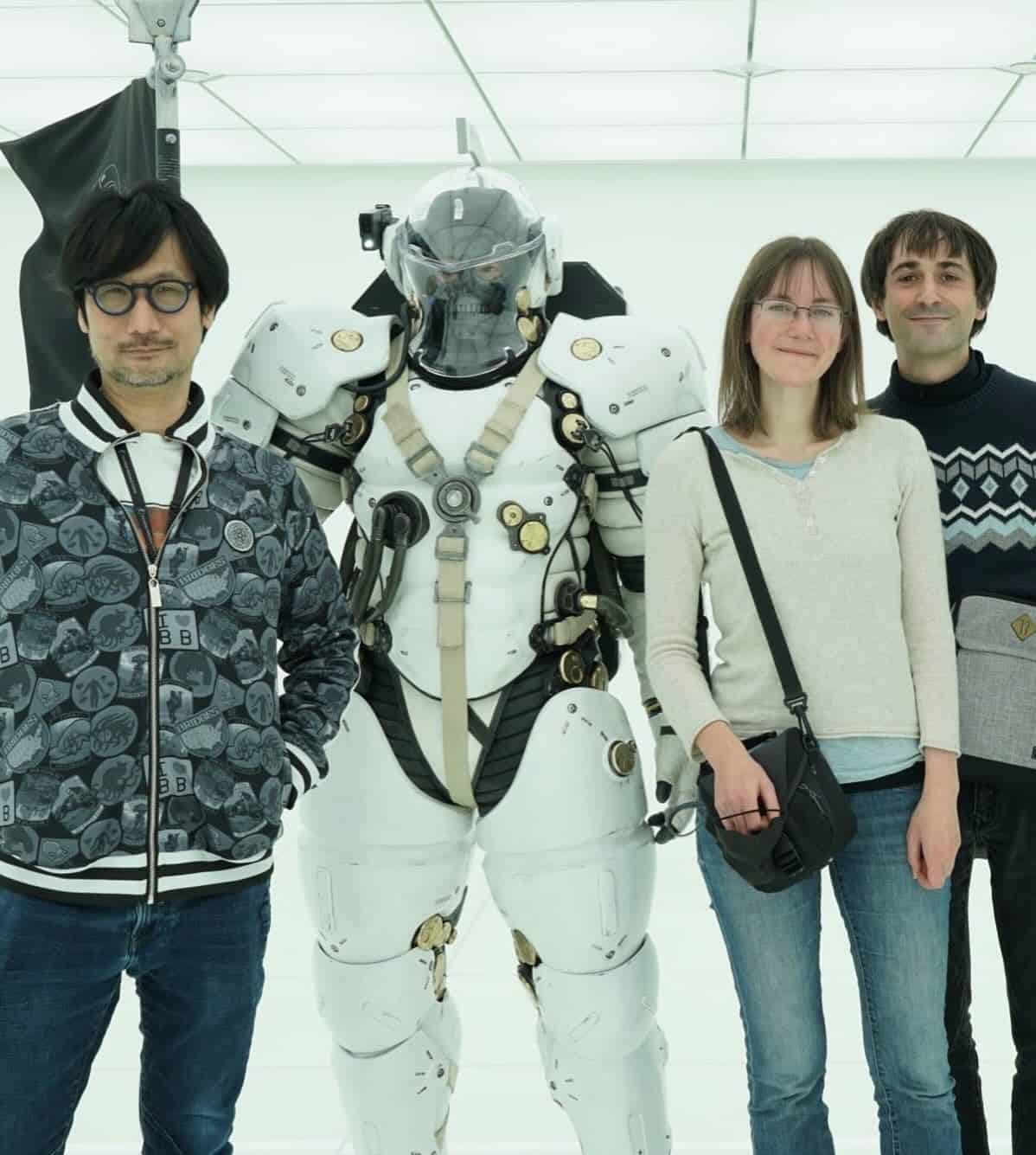
Before arriving at video games, Atelier Sentô built its career in comics. The graphic novel ONIBI (2018) received the Silver Award of the Japan International Manga Award. Alongside it sit Festival of Shadows (2023) and Tokyo Mystery Café, published in 2024 by Dupuis. Then come the art book Dreams of Japan (2019) and Dreams of Future Past, a series of retro-futurist ukiyo-e prints produced with Tokyo’s traditional workshop Mokuhankan. From ONIBI also came the episode that links the duo to Hideo Kojima. The game director found the Japanese edition in a Tokyo bookshop and shared it on social media. Some time later he invited the two authors to the offices of Kojima Productions. Here they were scanned and turned into non-playable characters in Death Stranding 2. For the game’s release, the duo then drew the webcomic A Prepper’s Life together with the studio.
The French school and the dialogue with manga
Cécile and Olivier come from a country where bande dessinée has had an adult readership and a solid industry for decades. In France and neighbouring Belgium, this industry revolves around an event like the Angoulême festival and historic publishers such as Dupuis. The same publisher that brought the adventures of Spirou to bookshops and, in 2024, their Tokyo Mystery Café. Alongside this tradition, France has become one of the largest manga markets outside Japan. Already in the early 2000s, Frédéric Boilet had tried to bring French and Japanese authors together under the Nouvelle Manga label.
The duo’s work moves within this meeting ground, and the award received by ONIBI confirms it. The Japan International Manga Award is the recognition with which Japan’s Ministry of Foreign Affairs highlights foreign comic authors. The subtitle of the French edition, Carnets du Japon invisible, points to the carnets de voyage. These are illustrated travel journals that many French authors practise as a genre of their own, made of sketches drawn from life and notes gathered along the way. The Doll Shop was born from the same method. The sketches and photographs brought back from Japan become backdrops drawn with the clean line of European comics. In these backdrops, every object retains a realistic and authentic look.
If the art style looks to Europe, the horror comes from Japan and from cinema. Among their influences the authors cite the films of Kiyoshi Kurosawa and the J-horror wave. These films place unease in everyday, seemingly reassuring settings. It is the same logic that The Doll Shop applies with its warm palette. The authors also cite the anime Serial Experiments Lain and Junji Ito’s manga. They further state that they have scattered the game with small visual and musical references to classics such as Suspiria and The Texas Chain Saw Massacre. Finally, they say they drew on some of the darkest true crime cases in Japanese history.
Towards 12 October
The demo cuts off at the moment horror first appears, with the doll addressing the protagonist. It leaves unresolved the nature of the threat hanging over the village. We do not yet know whether the game will go towards the supernatural or towards psychological horror. For now, the demo limits itself to a few hints. We only have the mention of a doll kept hidden at the back of the shop. And a protagonist who may be less innocent than he believes. He would be forced into moral choices capable of leading even to a bad ending.
Jump scares are hard to expect in this dark, surreal atmosphere, in which violence stays off screen. For those who, like me, do not care for these somewhat worn strategies, it is a great point in its favour.
In the full version, the free exploration inherited from graphic adventures will alternate with the dialogue choices typical of the visual novel. The player’s decisions will lead to one of three endings. Reaching them all will unlock a hidden post-game that tells the story from a new point of view. Along the way it will also be possible to collect six bonus scenes. Between one conversation and the next, there will also be room to repair other dolls to return to their owners. And to taste every recipe at the ramen restaurant.
The Doll Shop is released on 12 October 2026 on Steam for PC, and I hope to write about it again very soon.
If you want to find out more: