In short
Our review of Lost & Found: A This Bed We Made Story, the Lowbirth Games DLC available from August 5, 2026 on Steam, judges this short appendix favourably (111 minutes in our playthrough) that takes Sophie Roy from the 1950s hotel to the Orpheus ocean liner in 1964, dealing with a series of thefts to solve. The article examines its environmental writing, multiple endings, continuity with This Bed We Made and the queer representation of the relationship between Sophie and Beth, rounded off by a solid technical side and a memorable final musical track.
A new mystery aboard the Orpheus, with thefts to solve and echoes of what happened in the previous chapter.
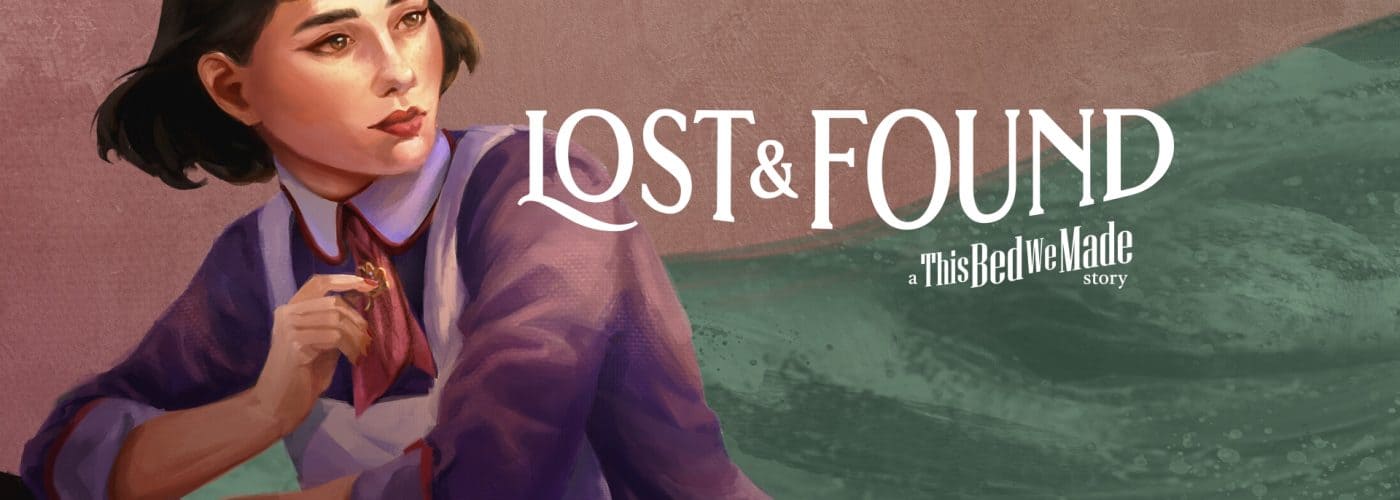
Lowbirth Games brings Sophie Roy back to the stage just a few years after the events of This Bed We Made. With Lost & Found: A This Bed We Made Story, available from August 5, 2026 on Steam, the Montreal studio moves the setting from the 1950s hotel to the Ocean liner Orpheus, in 1964. Sophie has left her old life behind for a new job as a stewardess, but her nosy instincts soon resurface: when passengers’ and colleagues’ personal belongings start disappearing, it falls to her – at her boss Gary’s explicit request, no less – to poke around the cabins and find out who the thief is.

The DLC targets accessibility even for those who never played the original chapter: Lowbirth Games explicitly presents it as a standalone story, playable without any prerequisites. Those coming from This Bed We Made will find some past choices reflected in the experience, though subtly – a detail I can only half confirm, since I have no way of knowing how much the game changes for players starting from assumptions different from mine.
The studio behind Sophie Roy
Lowbirth Games is the independent studio from Montreal that debuted in 2023 with This Bed We Made, which quickly became a small success story: nearly 250,000 copies sold, viral attention on social media, and coverage from outlets and content creators around the world. The team, made up of women, queer people and allies, has twice earned recognition from GamesIndustry.biz as one of the best places to work in Canada, and its stated mission remains telling stories about complex characters, written by and for underrepresented people.
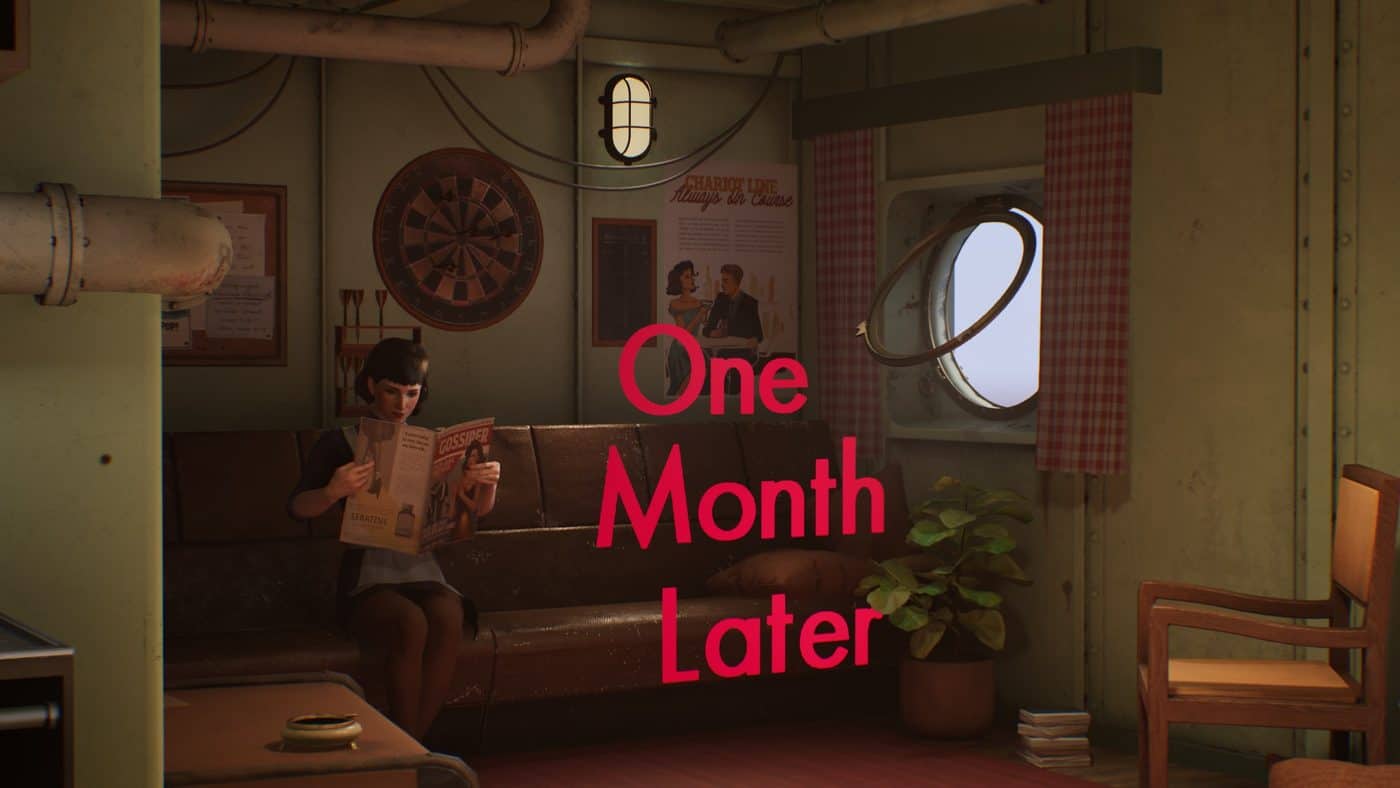
Lost & Found was born explicitly as a response to fans who, after the first game, kept asking for more material about Sophie. It is not a full-fledged sequel, but rather a self-contained episode designed for an hour and a half, maybe two, of play – the same timeframe Lowbirth Games had already announced in its press release, and which in my playthrough translated into exactly 111 minutes.
From the hotel to the ocean liner: plot and setting
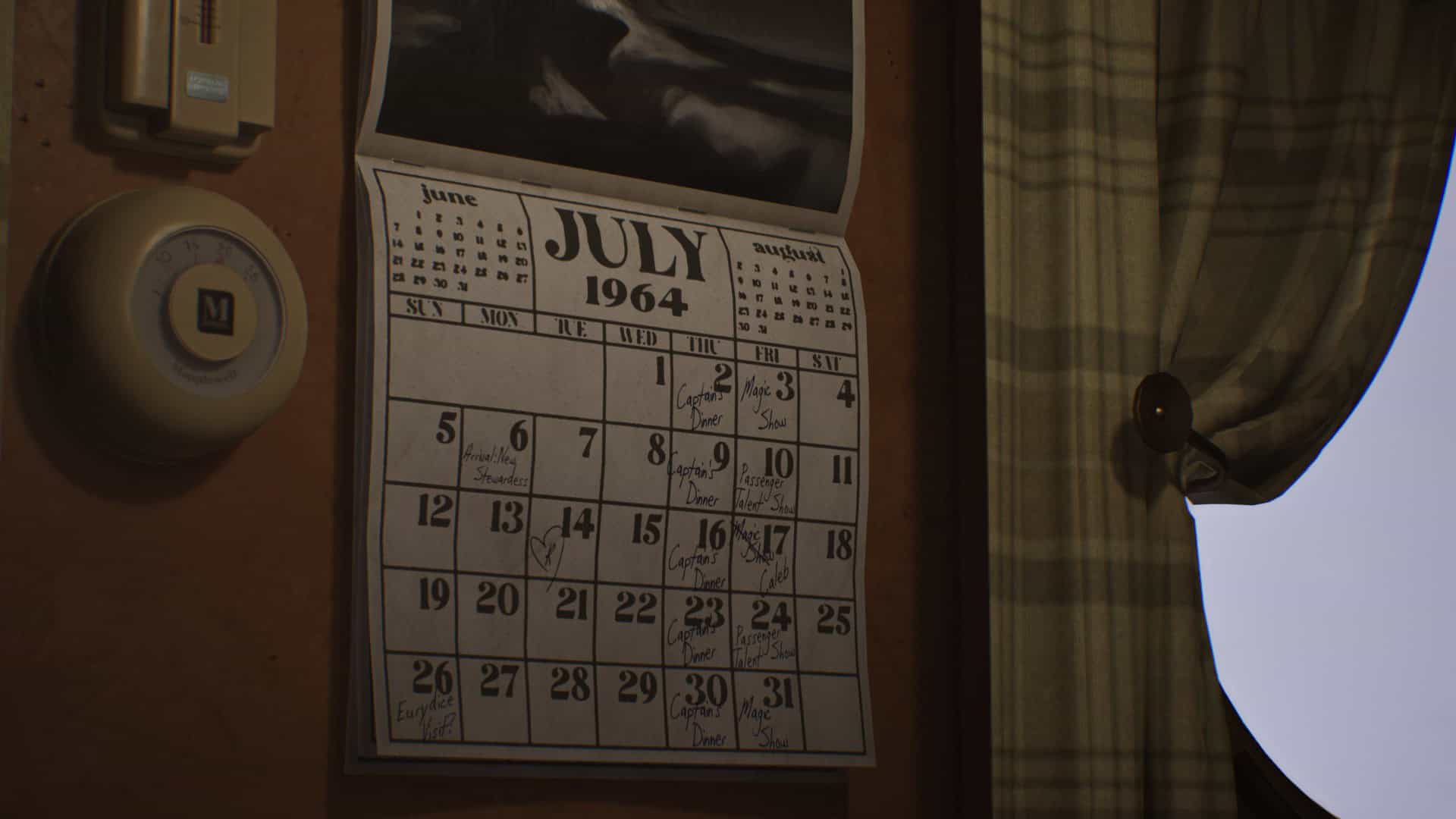
The change of setting is probably the DLC’s smartest choice. The closed, dusty hotel of the first chapter gives way to the open spaces of the Orpheus, an ocean liner that in 1964 connects Canada to Europe. Sophie has left Montreal, her mother and the life she knew to reinvent herself as a crew member, and the game builds from the very start a sharp contrast between the routine of the job – cleaning cabins, making beds, handling passenger complaints – and the sense of discovery that traveling from one continent to another gives her.
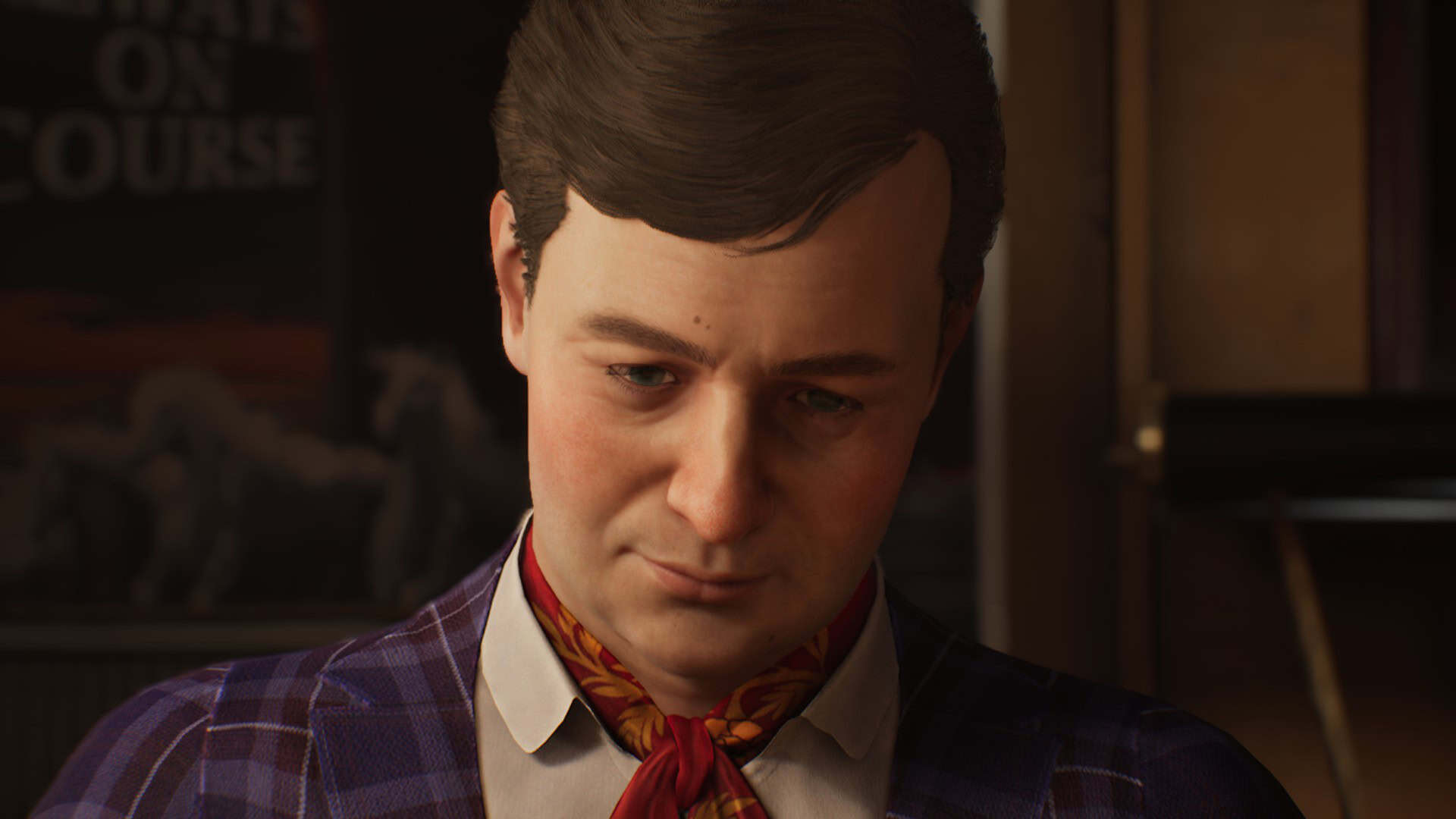
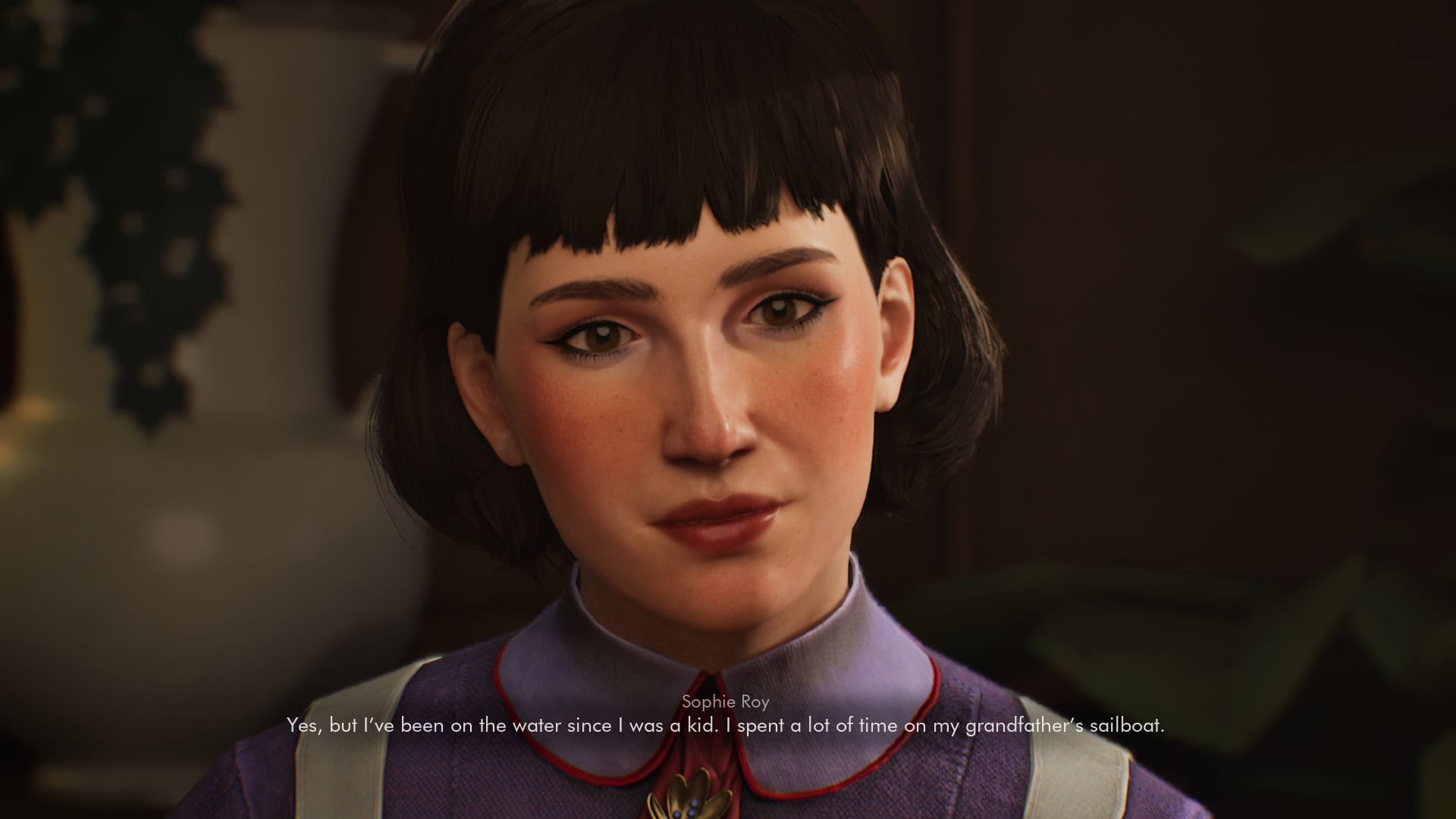
The mystery that sets the plot in motion is, on paper, smaller than the one in the base game: there is no murder to solve, but rather a series of thefts on board, including that of a rosary belonging to Caleb Lyons, the ship’s pianist with whom Sophie struck up a friendship during the crossing (he is the one who teaches her to play piano). Gary Hamelin, her superior, asks her to keep her eyes open during the cleaning rounds, effectively giving her an official excuse to do what she does best: rummaging through other people’s belongings.
Diaries, letters and newspaper clippings: environmental writing
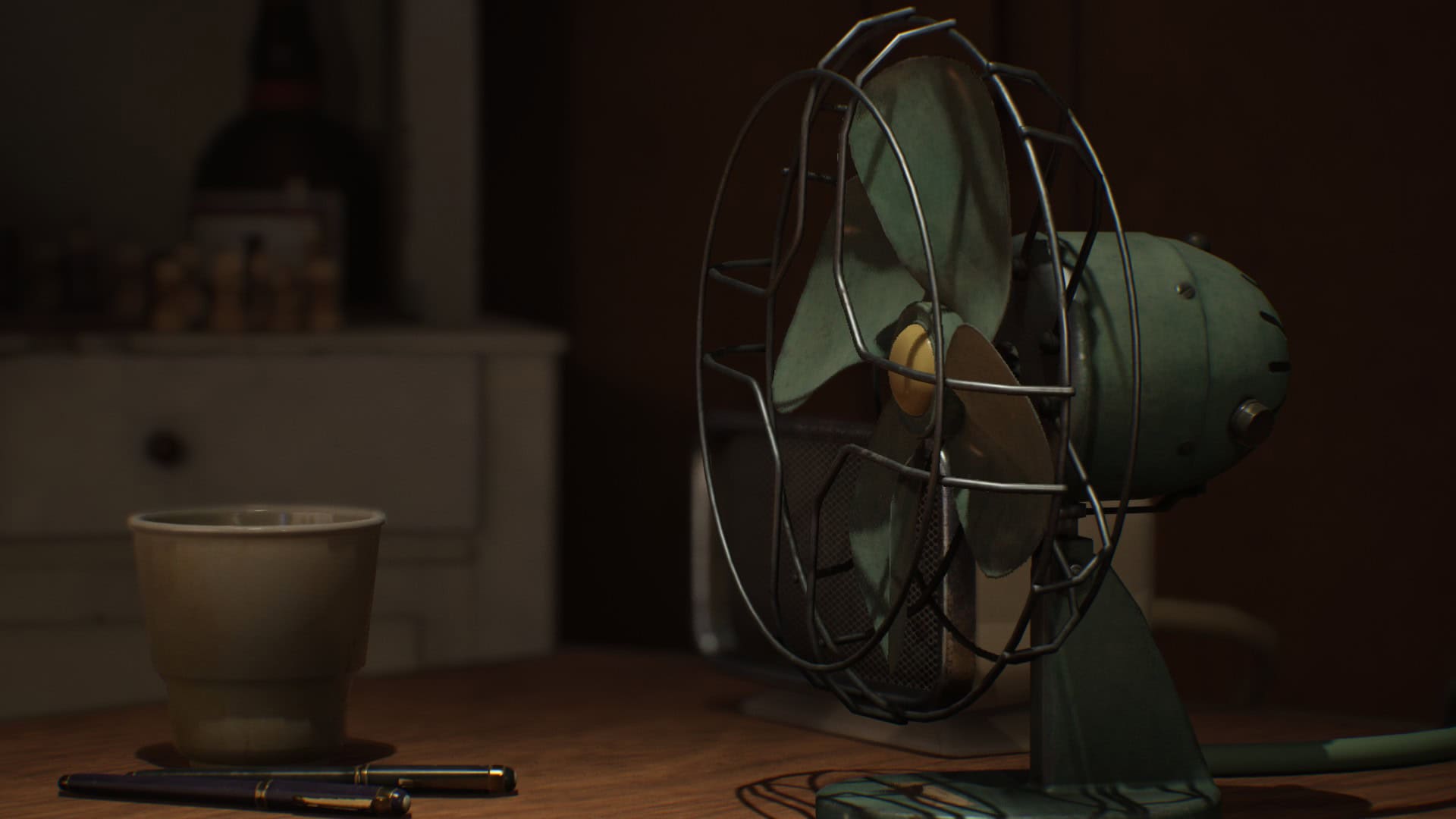
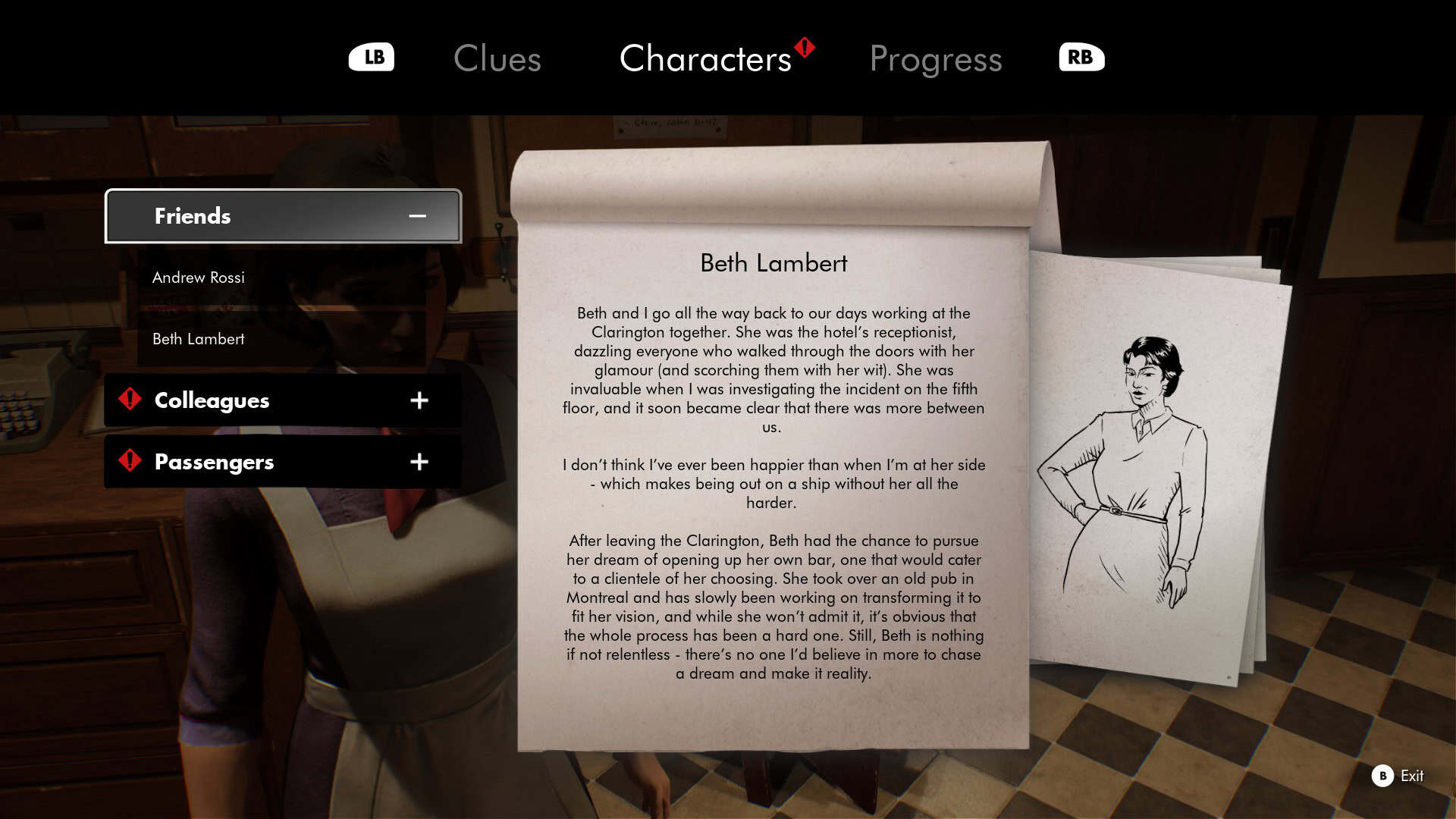
As in the first chapter, much of the characterization comes through texts found around the environment, and here too they remain the game’s strongest point. Sophie’s diary follows her adjustment to her new life: in the first entry, titled New Horizons, she writes that she bought a new notebook before boarding and finally feels free from the weight of Montreal and her mother, while still missing her friend (and, as emerges later, partner) Beth. In Bons baisers de Paris she recounts with genuine enthusiasm her first visit to Paris, thanks to an Orpheus stopover in France: the Eiffel Tower, the Louvre, the solemnity of a cathedral. In Turning a Corner she faces the approach of her twenty-eighth birthday in the middle of the Atlantic, in a melancholy but never whiny tone, recalling the elaborate celebrations Beth used to organize for her in Montreal – an exhibition, a dinner at an unknown little restaurant, a drink in a speakeasy, and finally coffee and butterscotch cake at Harry’s Diner.
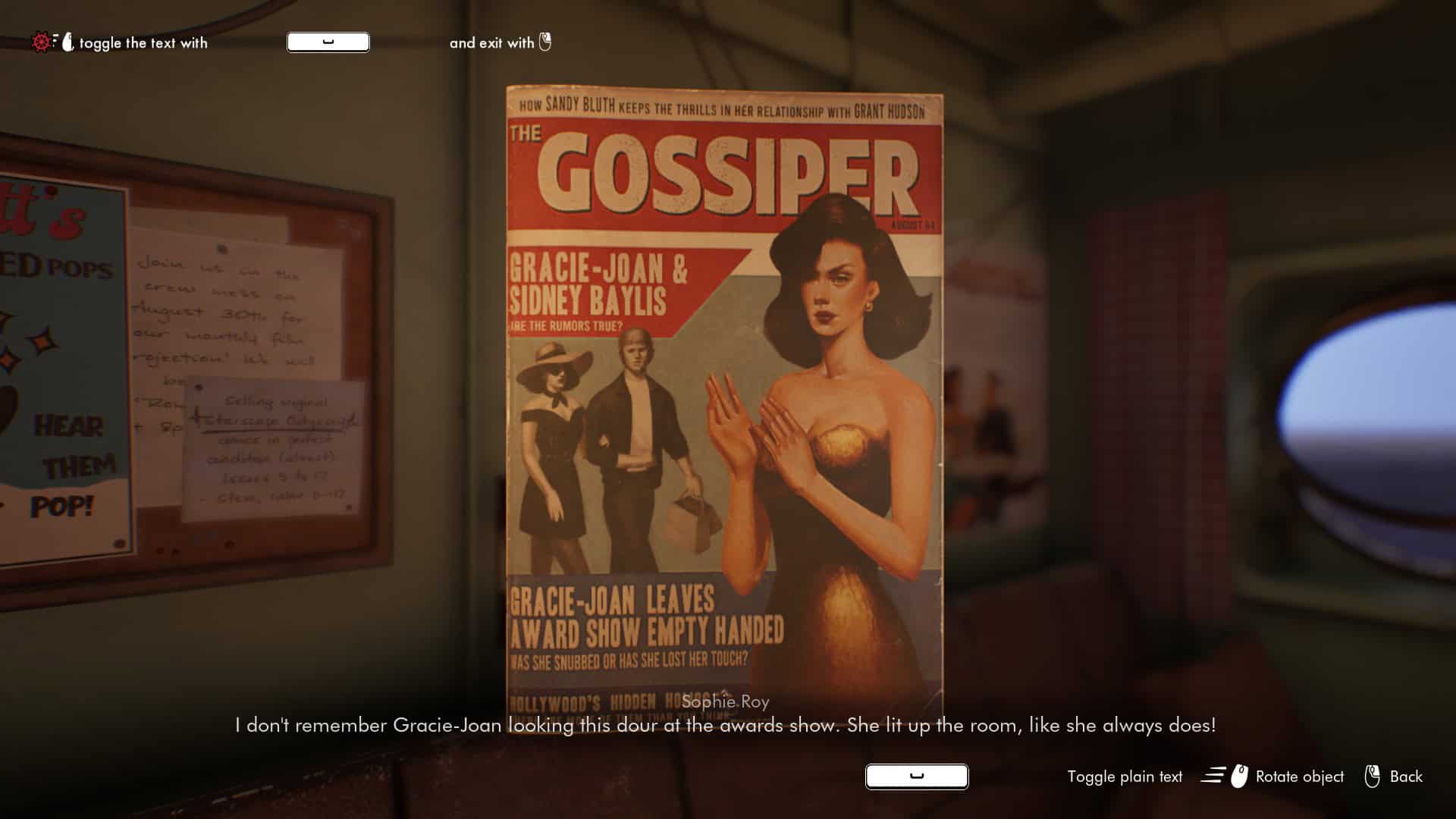
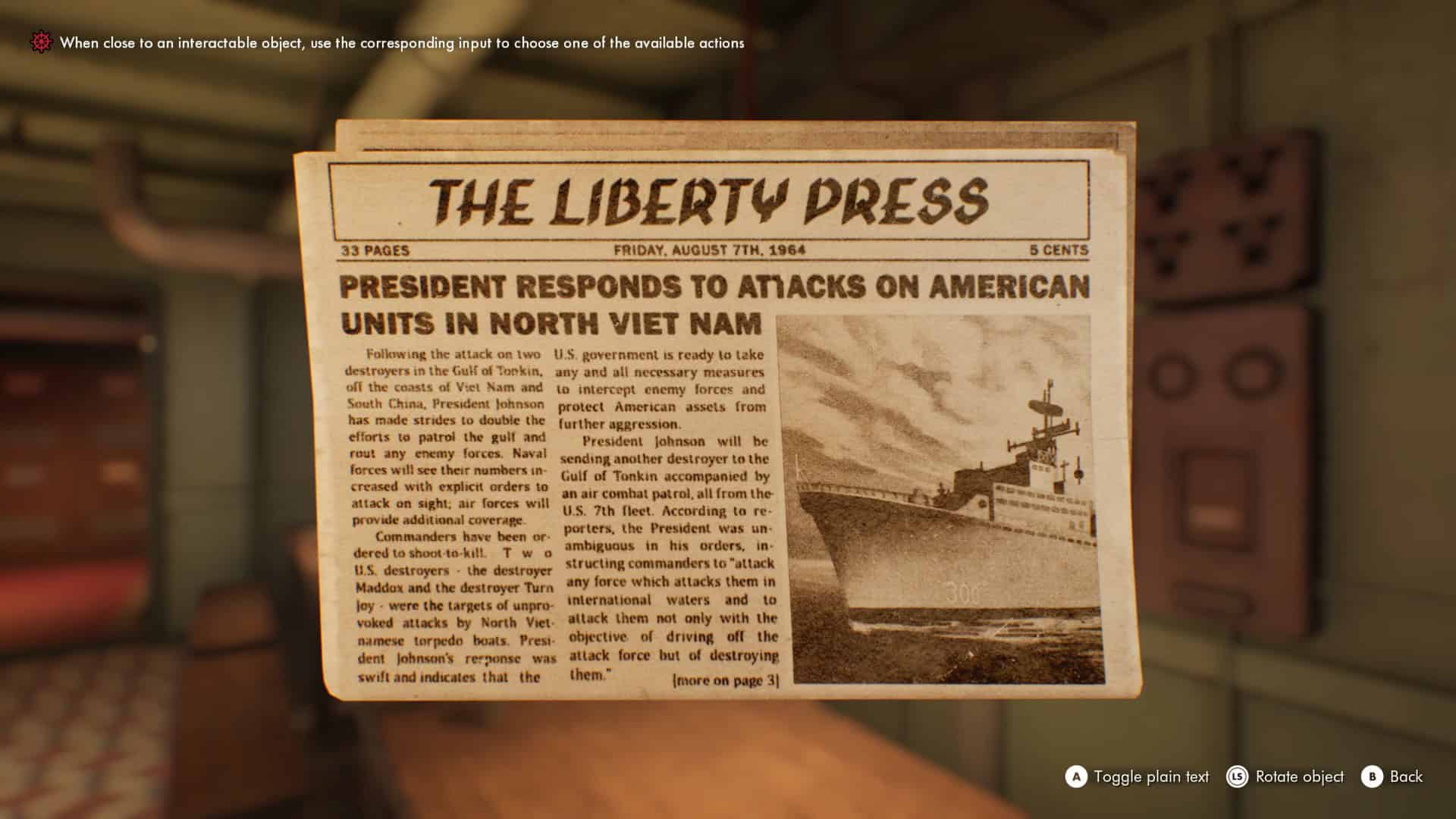
Providing the historical counterpoint are clippings from the ship’s newspaper, The Liberty Press: an issue from August 7, 1964 reports on President Johnson’s response to the attacks in the Gulf of Tonkin, another covers the Harlem riots as the consequence of decades of unresolved social tensions, citing an NYU sociologist and the case of James Powell’s shooting. The game does not stop to explain these events; it simply leaves them in the background, much as the first chapter did with the social context of the 1950s: an elegant way to anchor the story to its time without turning it into a history lesson.
The theme of loss
Beneath the surface of the theft mystery, Lost & Found also works on a more intimate register: that of loss. Sophie’s mother died recently, a bereavement the game never confronts head-on but that lingers in the background of much of the story – including, in ways best not spoiled here, the thread connecting Sophie to one of the people she meets on board.
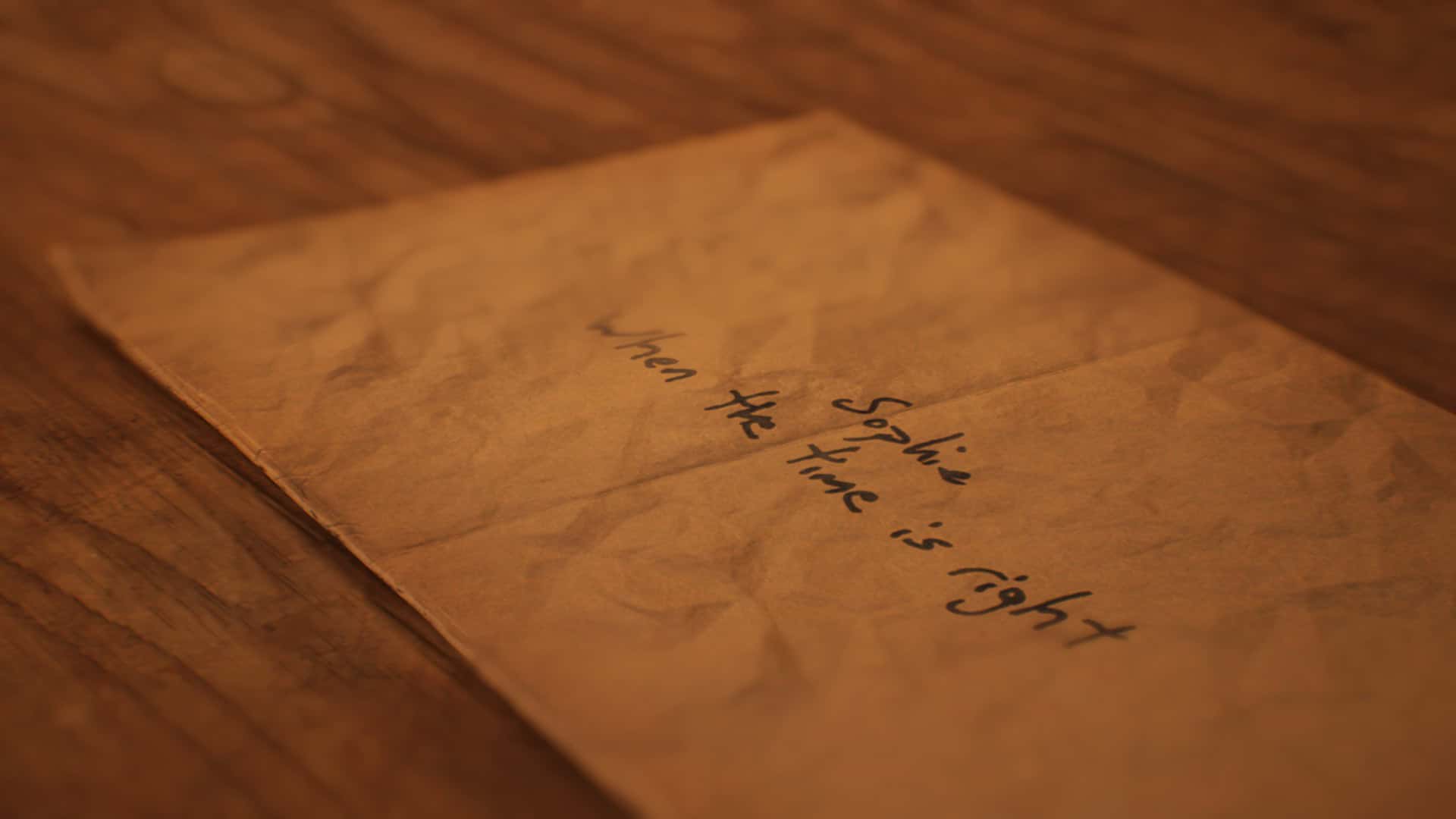
The moment this theme emerges most forcefully is when Sophie reads the letter her mother wrote to her before dying, which the game instructs her to open “when the time is right”. The content depends, at least in part, on the choices imported from the base game: in my playthrough, in which Sophie stayed with Beth, the mother devotes much of the letter to exactly that, writing about how happy it makes her to see her daughter happy. It is a moment that completes, from an unexpected direction, the discourse on representation begun in the previous chapter: here the affirmation comes from the person who mattered more than anyone else in Sophie’s life.
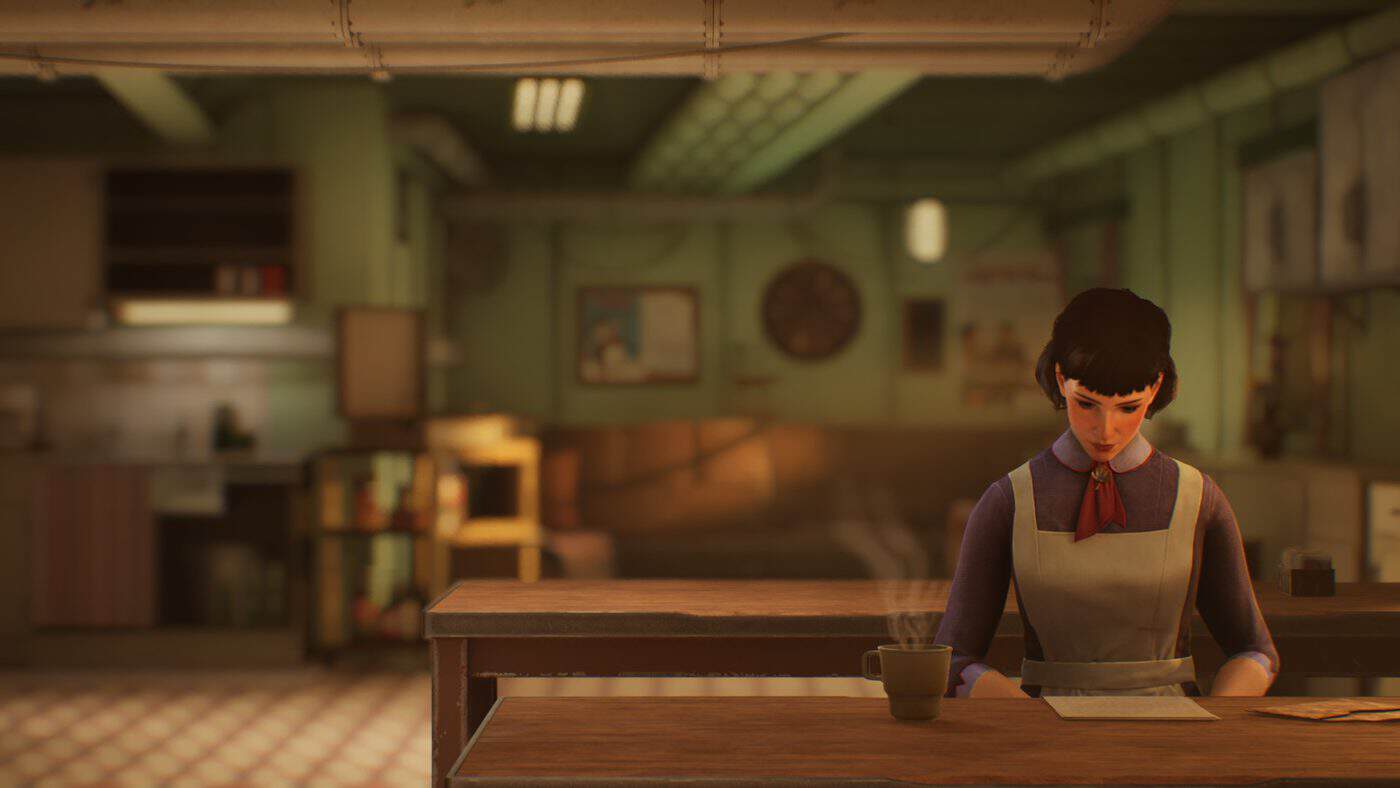
I don’t know whether or how this passage changes for those importing a different ending from mine, but the very fact that the game makes it depend on past choices makes this letter one of the best-calibrated moments in the entire DLC.
Sophie’s empathy and ability to listen
If there is one trait that ties Sophie’s character across the two chapters, it is her ability to listen – the same one that in the base game allowed her to earn the trust of the hotel’s guests and, with it, their secrets. In Lost & Found this trait becomes central again, but this time expressed through friendship rather than investigation.
The relationship with Caleb Lyons, the ship’s pianist, is the most explicit case: in the page Sophie dedicates to him in her diary, she recounts how he came to understand the nature of her relationship with Beth simply from how much she talks about it – a sign of how much she trusts him, and of how well he listens to her in turn.
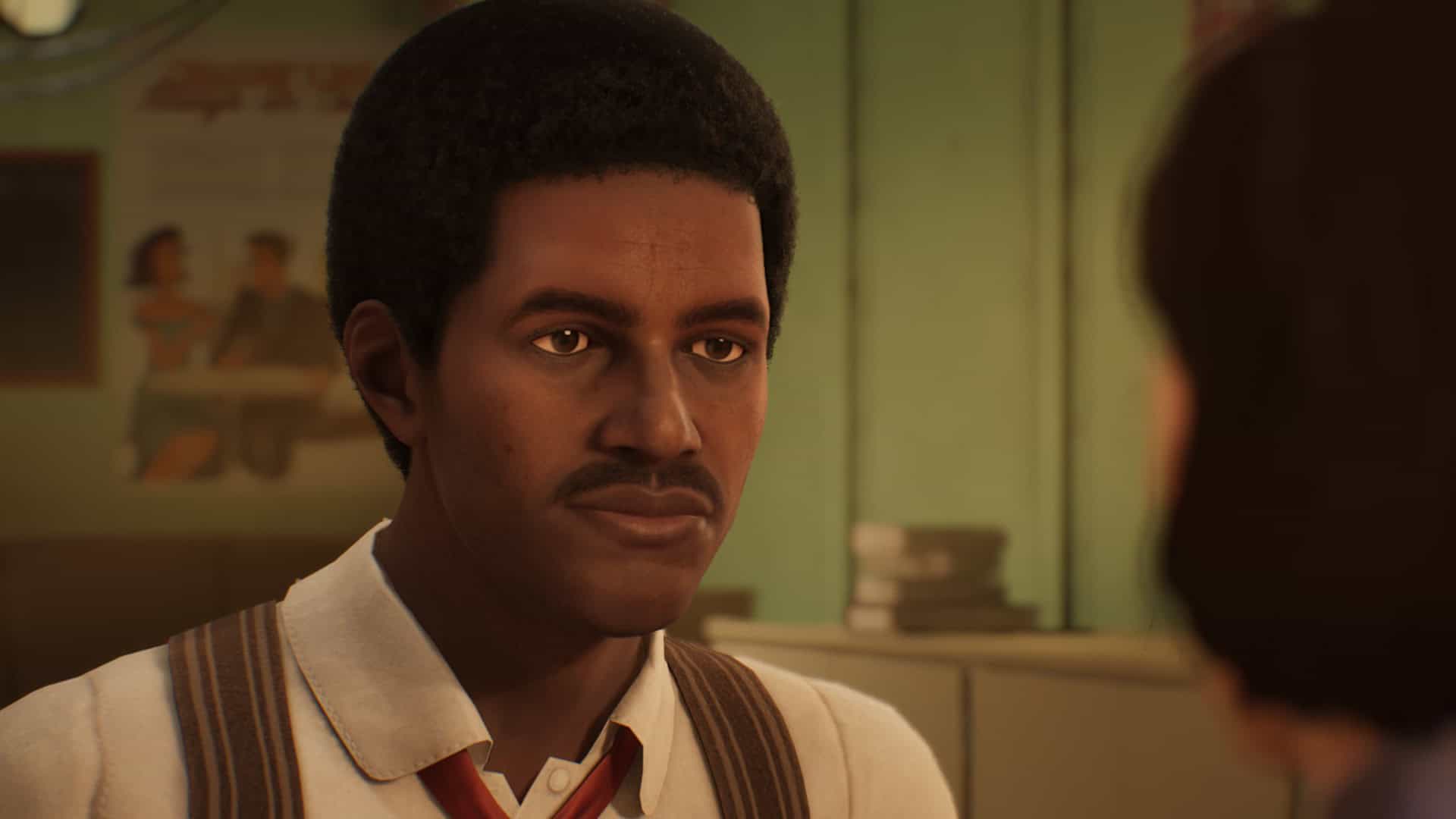
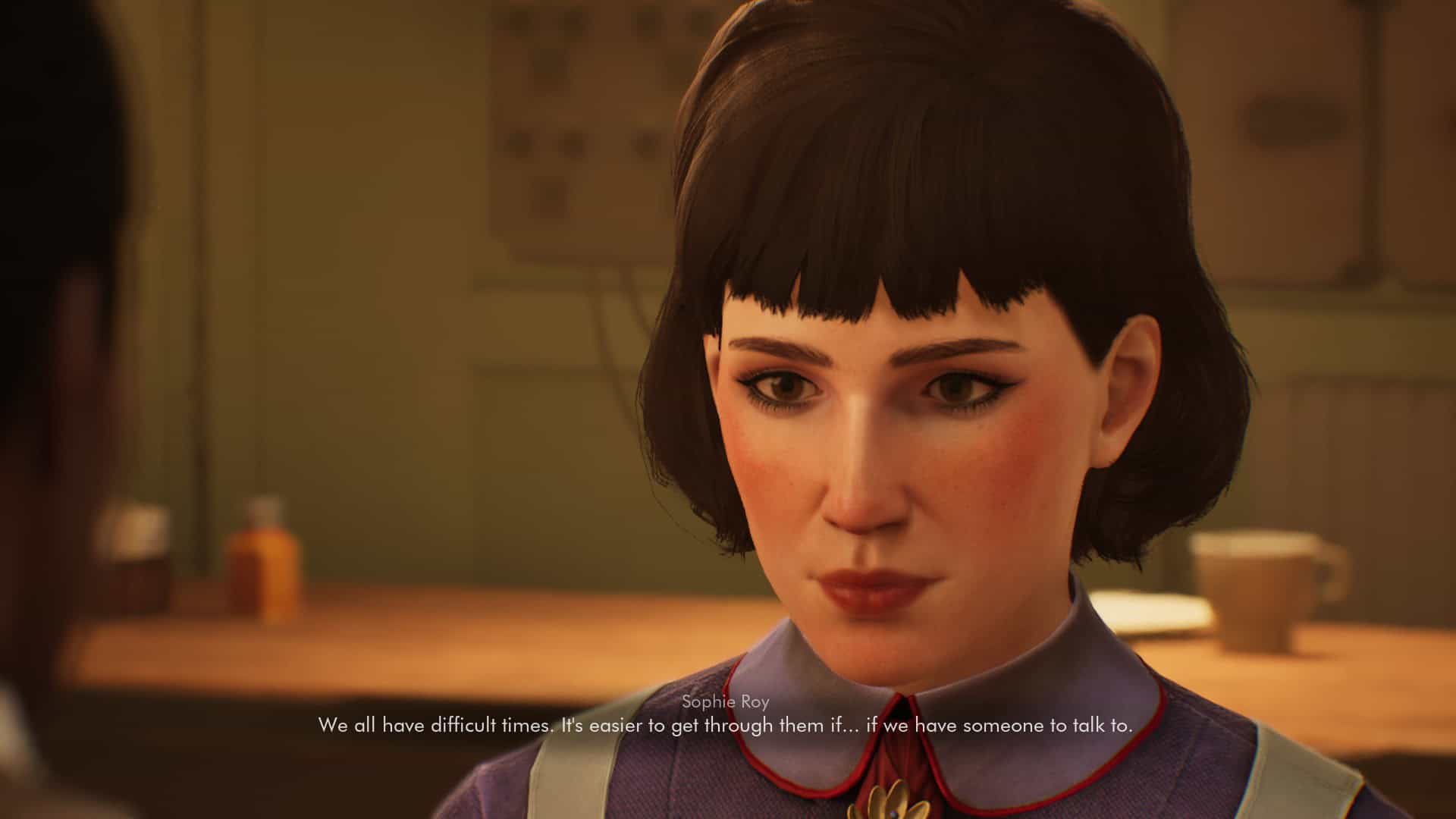
The same thread runs through the way Sophie interacts with the passengers. In my playthrough I particularly bonded with two of them, reaching a relationship that went beyond the simple professional courtesy her role required – without saying more, so as not to spoil one of the DLC’s best surprises for readers.
It is this theme, more than the theft investigation itself, that ends up justifying the time spent aboard the Orpheus with Sophie: not so much solving a mystery as watching how she builds bonds with those around her.
Sophie and Beth: representation brought to completion
The DLC’s best piece of writing, for me, remains the letter Beth writes to Sophie on August 2, 1964. Beth – the free-spirited colleague from the first game, here explicitly Sophie’s partner – signs off as “XO, Beth” and leaves a lipstick mark on the paper, opening with a pet name, “Bean”, that on its own conveys more intimacy than any explanatory dialogue could. The tone is lighthearted: she ironically calls herself “the lonely wife of the sailor”, writes about looking at Sophie’s photo in front of the Eiffel Tower on bad days, and jokingly threatens to take her to the bar to liven things up. Beneath the humor, however, Beth’s concrete difficulties also emerge, as she deals with a venue that is leaking water “literally and figuratively” and with her determination to keep it afloat anyway, waiting for her next date with Sophie.
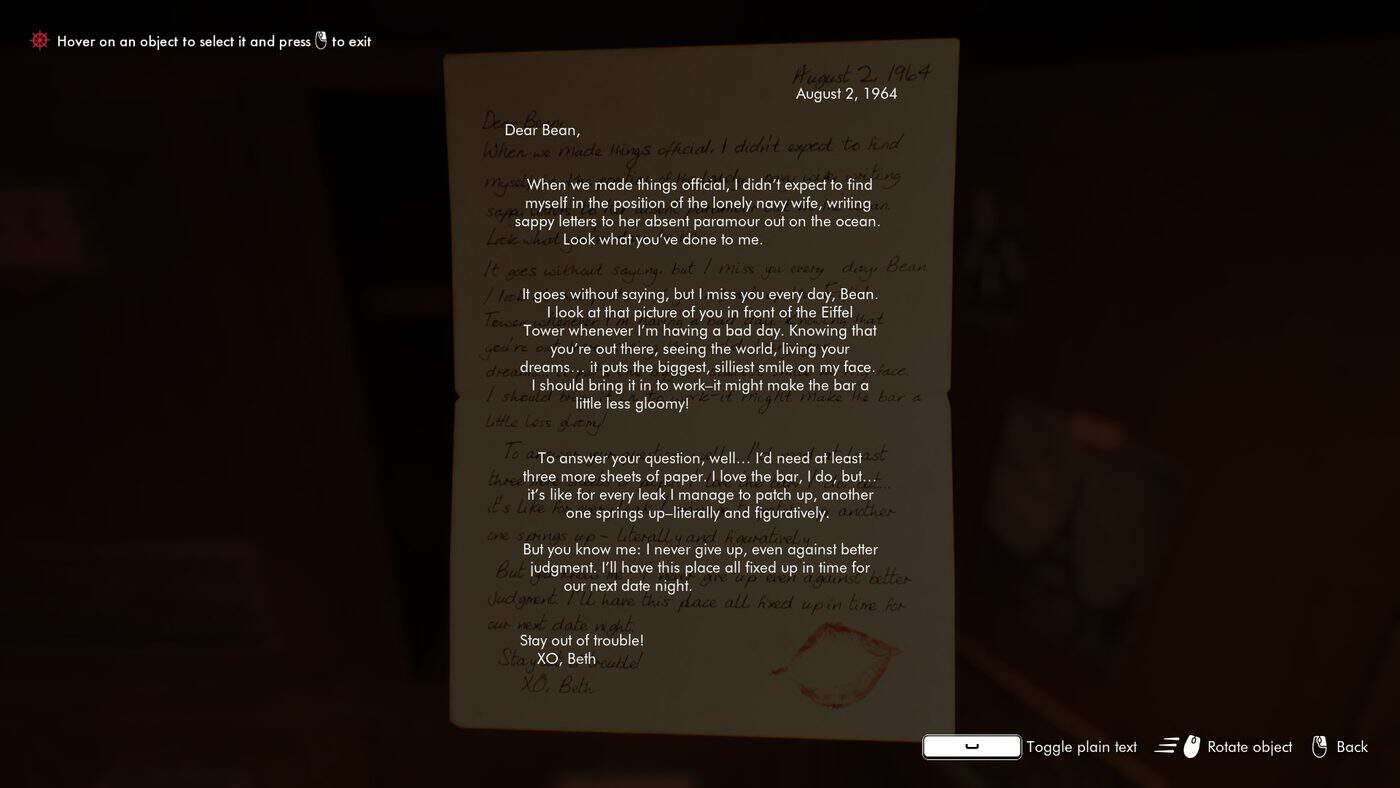
In my review of the base game I appreciated how Lowbirth Games handled female and queer representation while staying clear of the era’s stereotypes, though without ever making it fully explicit within the plot. In Lost & Found Lowbirth Games tells that same relationship in broad daylight, without ambiguity and without needing to be decoded: it seems to me the natural continuation – almost the retrospective confirmation – of that writing work, and it is perhaps the main reason why, on its own, this appendix justifies its existence.
The thief on board: gameplay and structure
On the gameplay front, Lowbirth Games does not stray from the formula that made This Bed We Made recognizable: you explore environments, collect objects and clues, observe details to reconstruct what happened, all disguised as entirely plausible room service tasks. Compared to the first game, the stakes are lower – here we are talking about thefts, not a violent mystery – and the pacing reflects this too: relatively little happens, and those looking for a tightly wound narrative progression may find it somewhat unsatisfying.
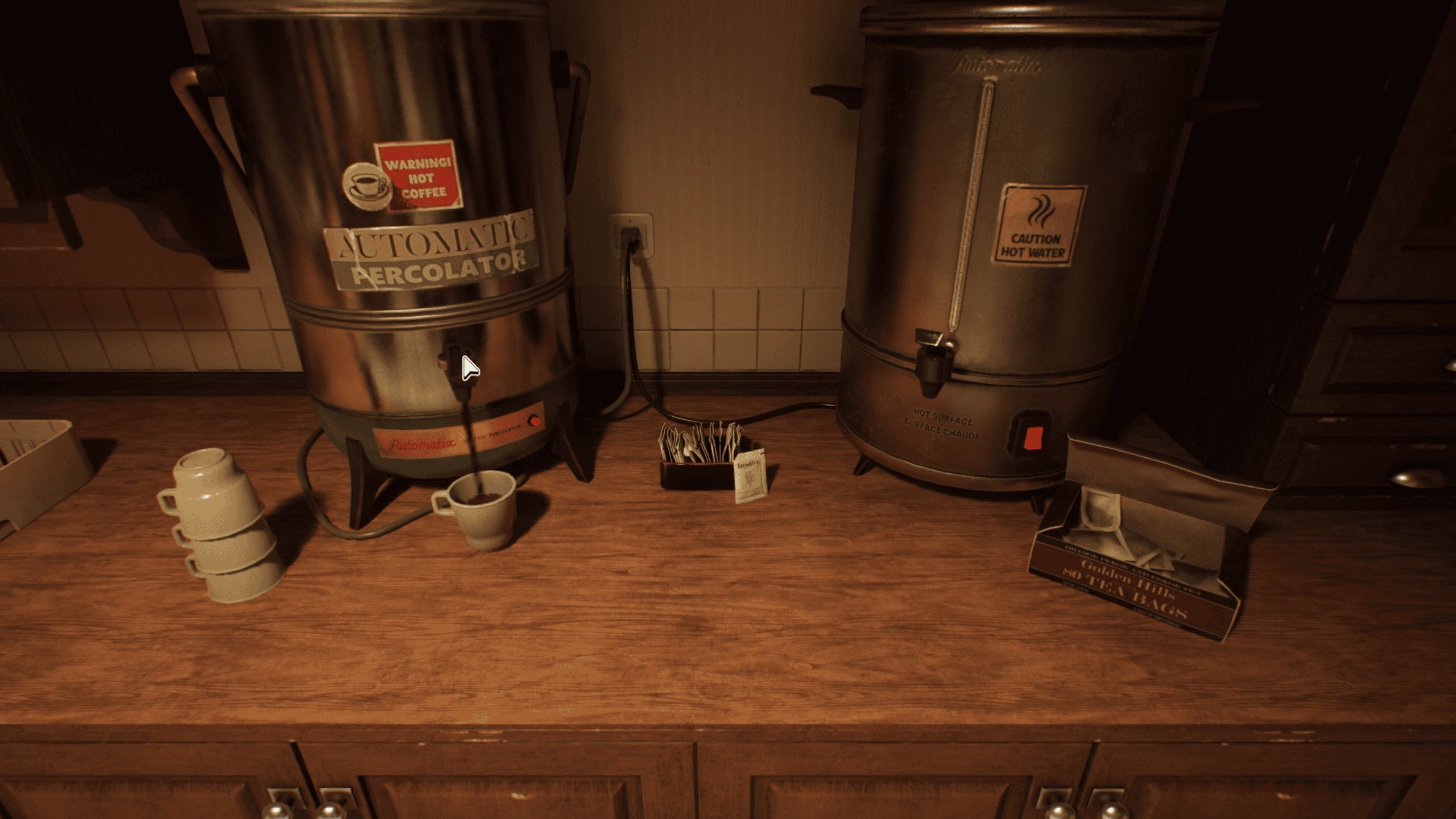
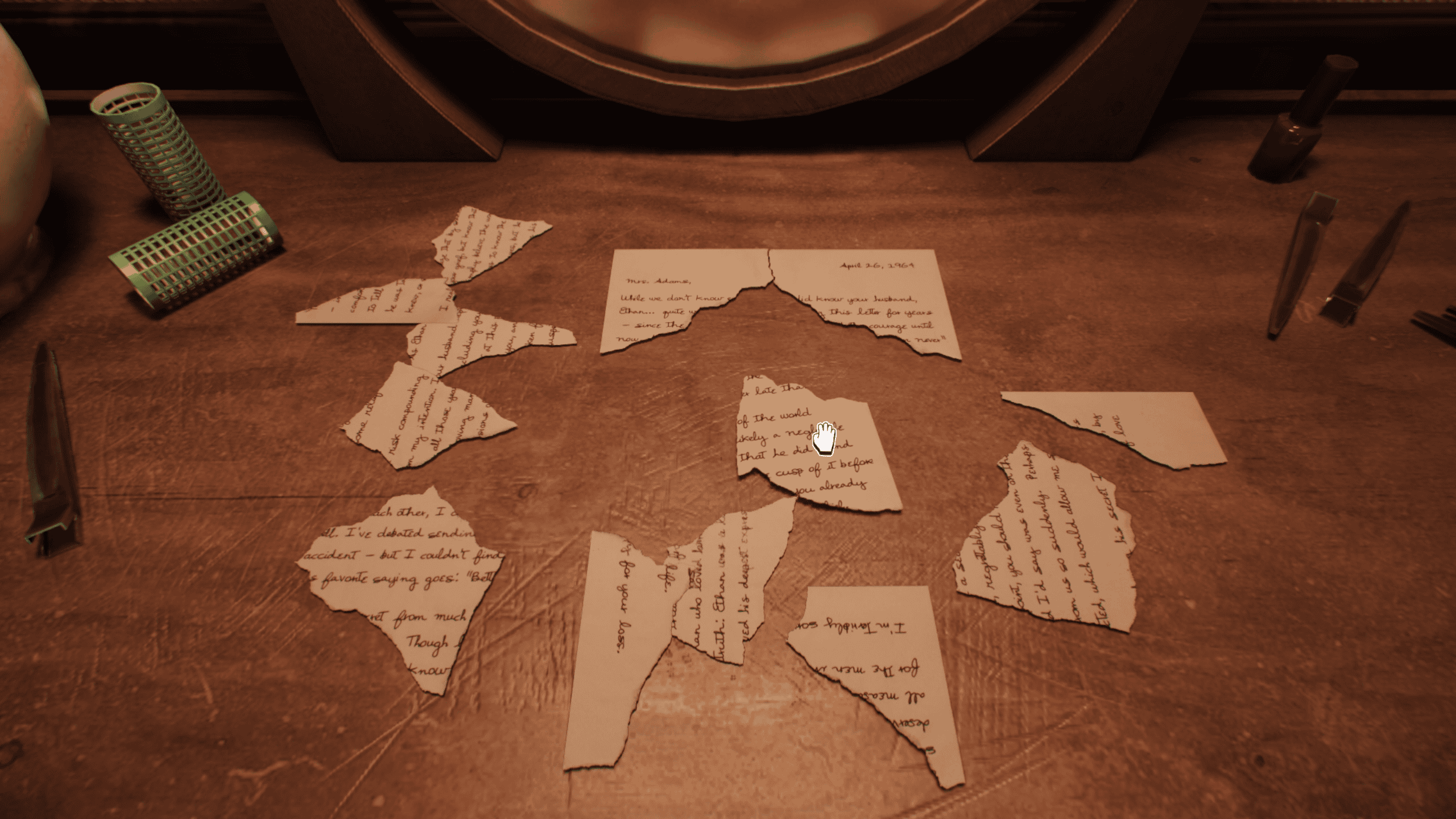
In my case, the quality of the writing and the care put into fleshing out Sophie still made the experience enjoyable, even without memorable high points comparable to those of the base game. This is an appendix that Lowbirth Games designed for those who want to spend another couple of hours in the company of these characters, rather than an adventure capable of standing entirely on its own in terms of plot.
Multiple endings and past choices
Two different levels need to be kept separate here. The first concerns the base game: This Bed We Made has choices and multiple endings, and Lost & Found opens by explicitly asking the player to reconstruct how their previous playthrough went – two direct questions, whether Sophie had a relationship and whether or not she ended up in prison – to adapt some references in the new episode accordingly. In my playthrough of the base game, Sophie stayed with Beth and managed to avoid prison: it is this starting state that defined the tone of Beth’s letters described above. I have no way of knowing how much the references change for those importing a different outcome – a relationship with another character, or a Sophie in trouble with the law – but the very fact that the game asks explicitly at startup is a good way of rewarding those coming from the previous chapter without excluding new players.
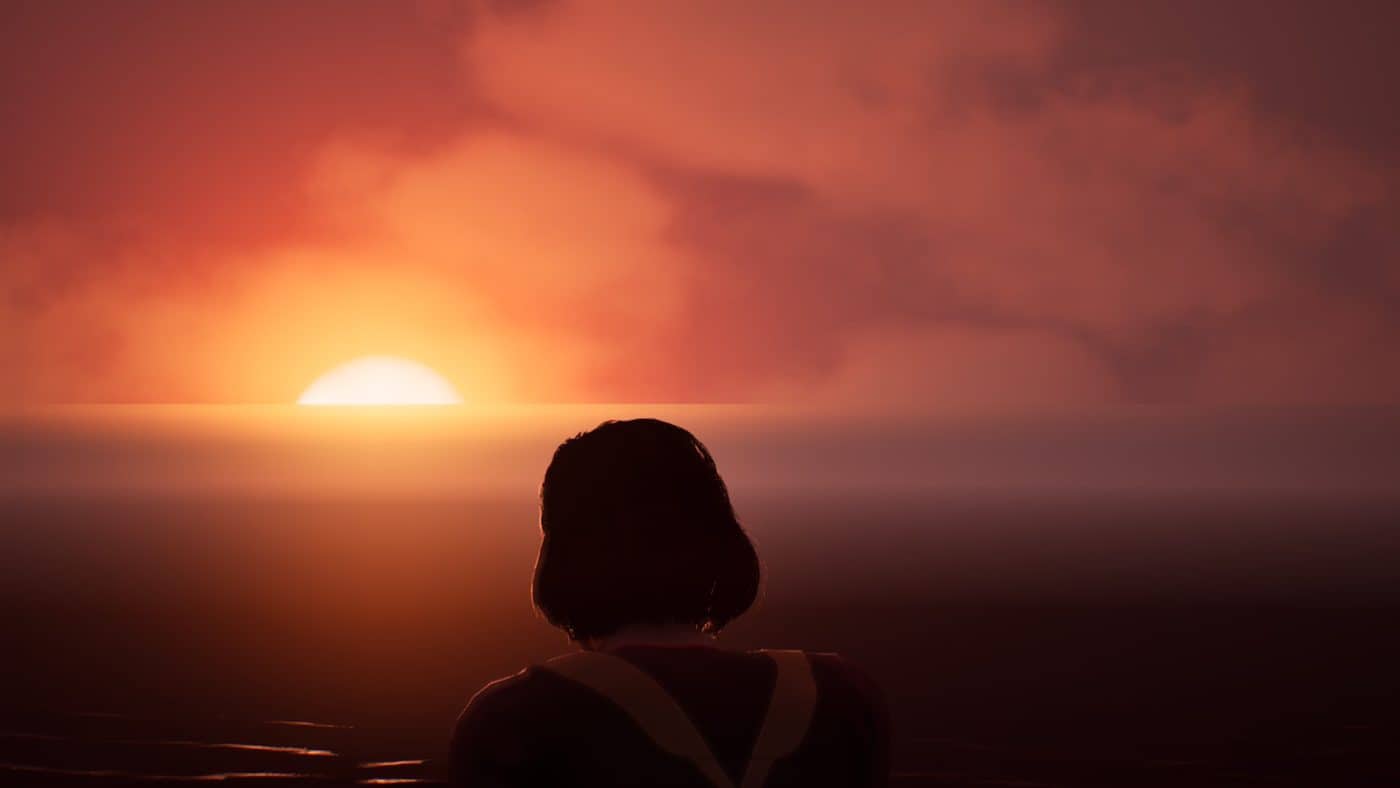
The second level concerns Lost & Found’s own ending, which depends on how the theft investigation is resolved: returning the stolen items to their rightful owners unlocks the “A Job Well Done” epilogue, while delivering them to the wrong recipients leads to “Failing Upwards“. In my playthrough I reached the former, which felt consistent with the methodical approach the investigation requires throughout.
Technical side: graphics and soundtrack
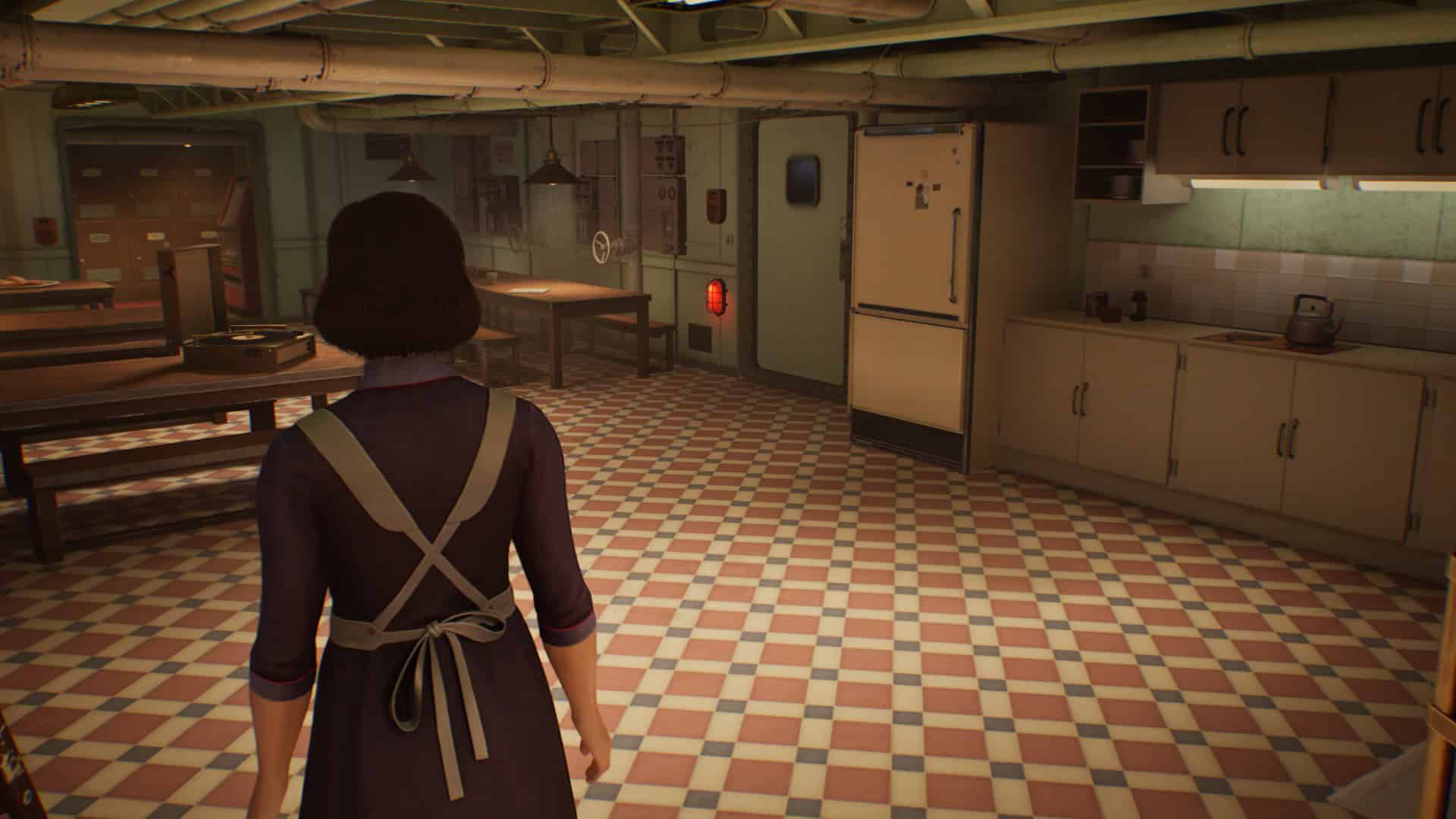
On the technical front as well, the DLC maintains the standard of the base chapter: the Orpheus environments are rich in detail, from props to the small characterization elements scattered through the cabins, and the move from the hotel to the ship loses nothing in terms of visual coherence. The soundtrack accompanies the general atmosphere well, but it is above all the piece that closes the game that leaves a mark: given the short duration of the experience, I expected something more forgettable, and instead it lingers well beyond the end credits.
Final thoughts
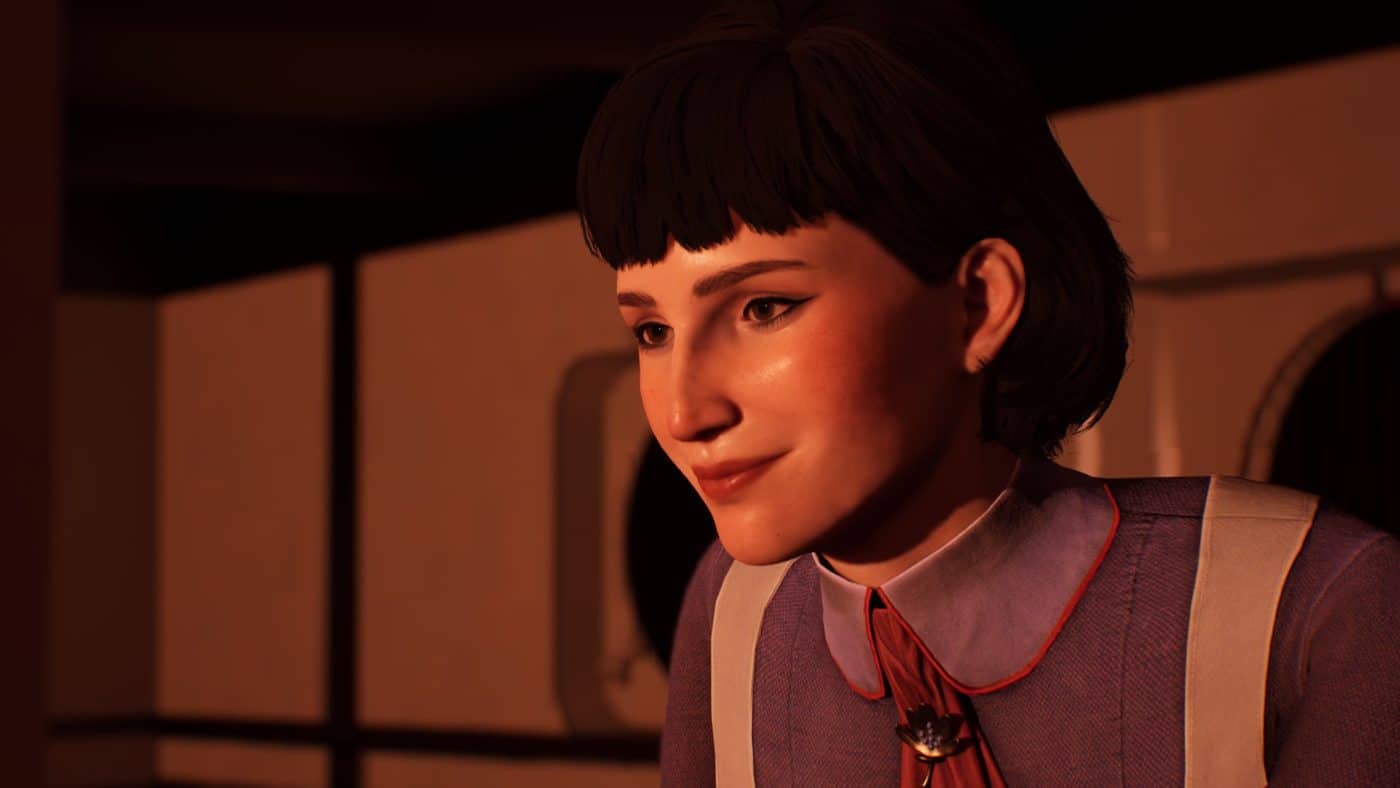
Lost & Found: A This Bed We Made Story does not try to replicate the impact of the game that preceded it, and it is right not to: it remains a short, low-intensity episode, built more to deepen Sophie and Beth than to surprise the player. Those coming from This Bed We Made expecting a mystery of the same scale may be disappointed by the reduced scope of the story; those attached to the characters, however, will find in its just-under-two-hours of play a carefully written closing of the circle, supported by a solid technical presentation and a musical finale worth waiting for.
 7.8/10