A surprisingly rich demo that blends meme culture, classic metroidvania design, and a surreal aesthetic that laughs straight in anxiety’s face
Stepping into the This Is Fine: Maximum Cope demo (our previous coverage here) means diving into a structured yet uneasy representation of Question Hound’s mind, where anxieties, memories, and insecurities take concrete form and shape the entire experience. The original meme’s stillness and passive resignation disappear completely; everything moves, shifts, and invites interpretation.
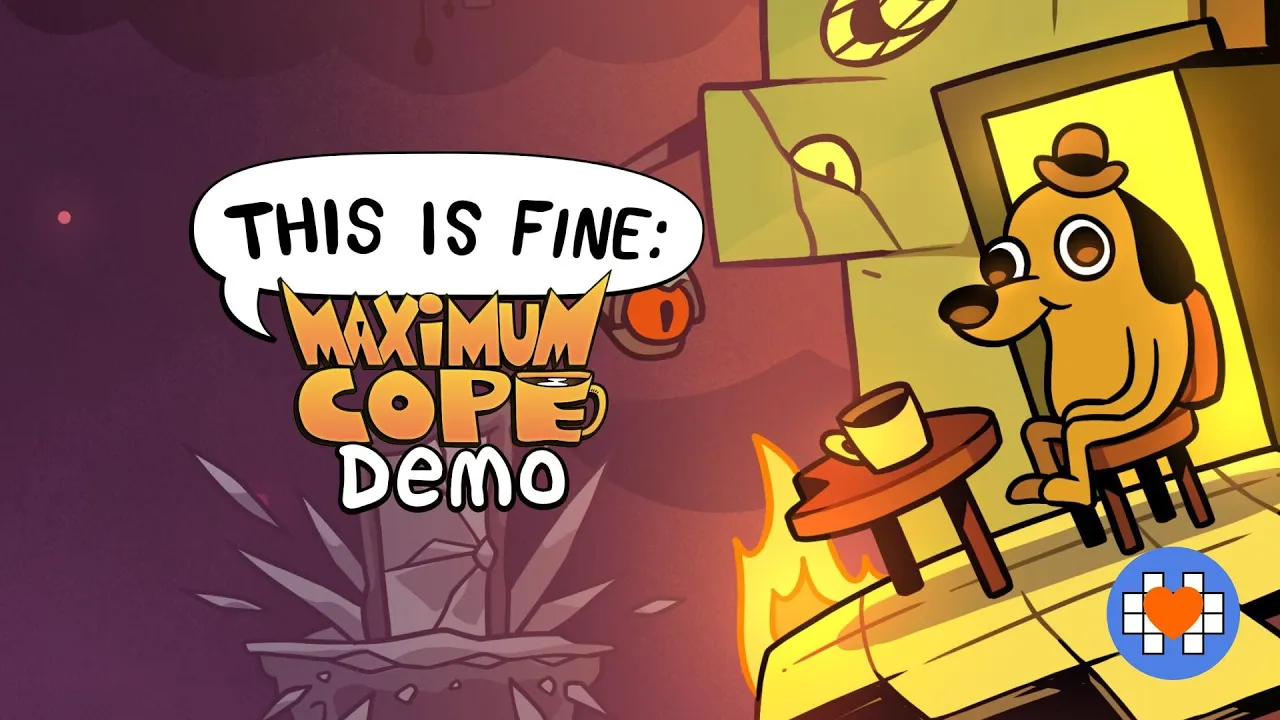
Question Hound no longer sits calmly in the flames. He steps into the role of an active protagonist inside a polished and surprisingly meticulous metroidvania, where each area mirrors a specific aspect of his inner world. Emotions gain form, obstacles grow from familiar fears, and even high-school humiliations turn into real enemies he must face to move forward. The result mixes design, atmosphere, and introspection with a level of coherence rarely seen in games born from web icons.
On paper, the idea sounds wild, yet it works. And the demo shows it clearly.

A caffeine-fueled trip through an adolescent nightmare
The demo throws players into Humiliation, one of the five emotional realms shaping Question Hound’s collapsing mind: Humiliation, Fear, Failure, Loss, and Regret. This emotional geography drags you into a psychological dimension that would keep a good therapist occupied for weeks.
Visually, the impact hits fast and hard: saturated colors, soft outlines, fluid animations, and a level of polish in the character design that perfectly channels KC Green’s style — and he isn’t “just the meme guy”. His work carries a strong visual identity built on cartoon expressiveness and finely tuned chaos.
This continuity comes straight from Green’s involvement. He joined the project from the beginning, shaping the aesthetic direction, the underlying humor, and even portions of the dialogue, as he explains in the official interview. His narrative and comedic voice flows through every moment, while the Turkish studio Hero Concept (creators of Doughlings) adapts that style to a full videogame without twisting it out of shape.
The result: a world that feels recognizable, surreal, and oddly believable in its madness.

Platforming, puzzles, humor, and childhood scars: short demo, huge density
The demo strikes immediately with its rhythm. No heavy tutorials — the game lets the level design speak. The platforming feels clean and responsive, with soft physics that nod to retro titles without drifting into slippery territory.
Then the brightest idea shows up: linguistic puzzles.
One of them asks you to compose a sentence by literally jumping on the correct words, as if you walked across a deconstructed comic panel. It works as both a narrative gimmick and a functional mechanic, and adds charm without breaking the pace.
Combat keeps things straightforward.
Question Hound doesn’t fight like a classic hero; he throws blows with his hat, embracing a slapstick-cartoon identity that still maintains clarity, timing, and impact. Attacks feel good, hitboxes land exactly where expected, and enemies telegraph their patterns cleanly. This isn’t Hollow Knight, of course, but the demo shows a clear goal: offer a clever spin on a genre that often takes itself a bit too seriously.


The boss fight? A wonderfully chaotic fever dream
The demo ends with a showdown against a cheerleader–queen-bee hybrid, a vivid incarnation of teenage embarrassment and high-school social hierarchies.
The fight turns into a visual trip.
The boss jumps between exaggerated attacks, surreal projectiles — including a giant, taunting laugh spelled out in block letters — and rhythmic patterns that blend silliness and tension.
Winning grants Question Hound a new ability: he flattens himself and slips through tight spaces, straight out of a 1930s cartoon. KC Green confirmed this direction in the interview: every ability draws from cartoon logic and comedic timing. And it works — it’s consistent, charming, and opens up interesting backtracking paths.

A sharp, engaging soundtrack
The music instantly stood out. I loved it.
It carries the pace, shapes the world’s personality, and balances surreal energy, dissonance, irony, and emotional tension. This soundtrack doesn’t just fill space; it defines mood and movement.
The connection to The Living Tombstone also adds an extra layer of character. Even though their main contribution appears in a separate music video, their early involvement during the Kickstarter aligns perfectly with the game’s tone.
In short: the demo sounds as good as it plays.
Rest Points, Perks, Coffee Beans: a metroidvania structure done right
One of the biggest surprises comes from the solid metroidvania framework, which builds a meaningful progression loop rather than relying on simple backtracking.
- Rest Points. They save progress, restore health, and create short narrative pauses — a sip of coffee before diving back into the burning chaos.
- Coffee Beans. The in-game currency. You collect them through exploration and combat, then spend them on perks or to refill the healing coffee cup. Funny idea, smart integration.
- 27 unlockable perks. The demo only hints at a few, but the dedicated menu already suggests a deep system.
- 28 collectibles. Not simple trinkets: they represent fragments of Question Hound’s emotional identity.
This metroidvania stays accessible, yet never hollow. The rhythm and structure already show a strong foundation.


Humor works because it grows from pain, not because it avoids it
What struck me most is the honesty.
The demo looks playful, surreal, colorful, but underneath it carries something real. KC Green put it perfectly:
“The main point of “this is fine” is ignoring your problems and pushing them down in your psyche”.
The entire demo reflects that idea. Every enemy echoes anxiety, shame, or self-criticism. Every level turns personal wounds into decayed amusement-park architecture. Every exchange between the Angel and Devil on Question Hound’s shoulders comments on the way we handle our own issues.
Humor doesn’t erase the weight — it frames it.
And the game laughs with you, never at you.

Does this demo deserve attention? Absolutely.
Technically, the project already stands on firm ground: smooth, readable animations; tight hitboxes; well-paced structure; accessible difficulty that still rewards attention.
This isn’t a meme-game thrown together for a quick laugh.
It grows from a meme, sure — but it evolves into a genuine videogame with intent, design, and personality.
The This Is Fine meme dominated the internet as a symbol of quiet resignation.
Maximum Cope flips that narrative and turns it into a journey of confrontation and growth.
The demo delivers creativity, polish, humor, and a strong emotional identity.
And honestly?
I can’t wait to play the full release. If Humiliation sets the tone, the worlds of Fear, Failure, Loss, and Regret hold enormous potential.

If you wanto to try the demo: This is Fine: Maximum Cope Steam page.