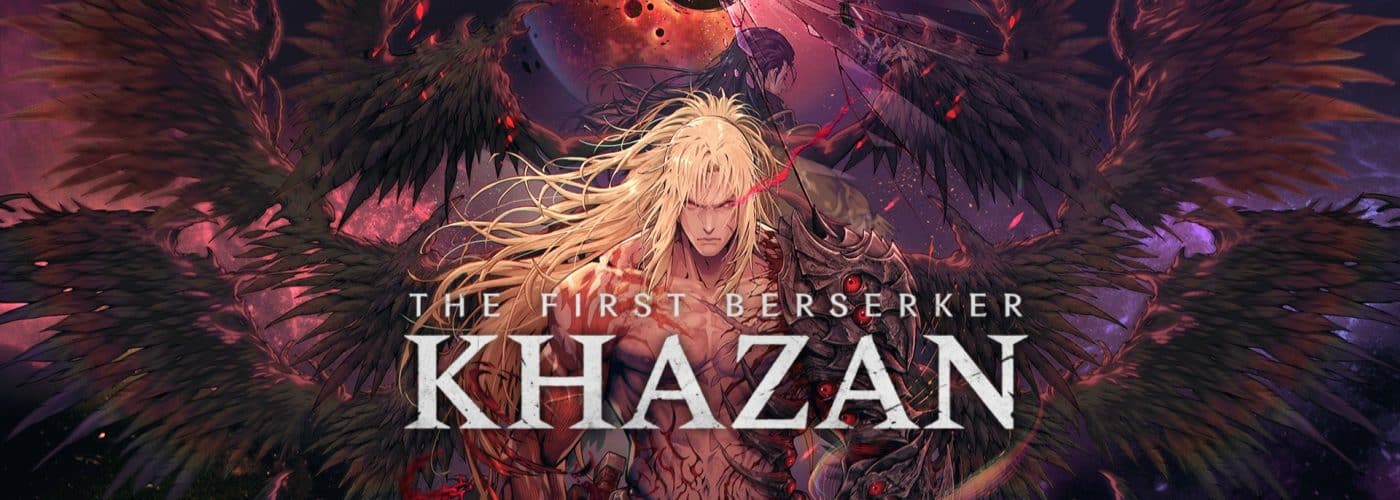
A combat-first soulslike that knows exactly what it wants to be and, just as importantly, what it doesn’t.

Within the soulslike landscape, The First Berserker: Khazan stands out as one of the most interesting entries of recent years from a studio that had never tackled the genre directly before this project.
The game unfolds in the Dungeon & Fighter universe and tells a story set roughly 800 years before the known events of the main series. Despite belonging to an already established narrative universe, the game works mainly as a standalone experience, one that can also speak to players who don’t know the original saga in depth. At the heart of the experience stands Khazan, a legendary general whom a tale of downfall and revenge drags along. The protagonist makes his way across the continent of Arad, a place defined by grim settings, monstrous creatures, and extremely demanding combat.
The game officially bills itself as a hardcore action RPG, and that label fits the overall approach quite well: combat sits at the center of the experience and demands attention, precision, and adaptability from the player, especially during boss fights.
The structure borrows several by-now-recognizable elements of the soulslike genre but combines them with traits from other action RPGs. The adventure unfolds through separate missions and levels instead of one large interconnected map, while the equipment system leans heavily into collecting and customizing gear. Weapons, armor, and accessories combine into different configurations, letting players tailor Khazan to their own preferences. Combat, however, forms the true heart of the production.
Fights demand that players learn enemy movement patterns, exploit dodges and parries, and recognize the right moment to counterattack. The game therefore doesn’t simply throw enemies with huge health pools at the player; it builds many of its battles around the need to understand opponent patterns. This philosophy comes through most clearly in the boss fights, with encounters that test reflexes, timing, and knowledge of the different options the combat system offers.
The art direction also makes the game instantly recognizable. The First Berserker: Khazan uses 3D cel-shaded visuals, combining characters and settings that look almost like an animated production with more realistic textures. This choice produces a distinctive visual result, one that steers clear of photorealism while still holding onto a grim, violent atmosphere.
The game also pushes fairly rich progression. Beyond developing Khazan’s abilities, players can modify their equipment and experiment with different combinations, while the option to redistribute skill points lets them change builds without necessarily restarting the adventure. On top of this come post-campaign contents, including New Game+ and modes designed to further test the skills players have acquired. The result is an experience that leans above all on the satisfaction of player improvement: failing, understanding mistakes, adjusting one’s approach, and finally overcoming a particularly tough opponent make up some of the fundamental steps of the adventure.
This very philosophy defines the identity of The First Berserker: Khazan from the earliest moments, a game that takes an already established formula and reworks it through a more mission-oriented structure and a particularly aggressive, technical combat.


The East in the West
Behind The First Berserker: Khazan stands Neople, a South Korean studio that belongs to NEXON and is best known for developing Dungeon & Fighter, the universe this spin-off springs from.
Handing Neople the job of building a project so different from the series’ traditional gameplay carries real significance: Khazan represents an attempt to bring the Dungeon & Fighter universe to an international audience and, above all, to the console market. NEXON has presented the game as one of the first steps in its own strategy to expand the franchise globally.
Neople, then, isn’t a studio unfamiliar with the source material. Its experience with the world of Dungeon & Fighter lets the team build a game that keeps recognizable elements of the original universe while radically changing how it tells and delivers them. The First Berserker: Khazan drops the online structure and the traditional hack-and-slash approach of the main series to focus on a single-player hardcore action RPG experience, built around General Khazan’s story and a far more technical combat system.
The decision to take on the soulslike genre probably represents the project’s most ambitious aspect. Neople doesn’t simply turn an already-known character into the protagonist of an offline adventure; it builds around him a combat system in which timing, parries, dodges, and knowledge of enemy patterns take on fundamental importance. Difficulty therefore becomes an integral part of the game’s identity, while character progression lets players experiment with different equipment and builds.
Art direction also plays an important role. The team chooses visuals that let Khazan hold onto a visual connection with anime aesthetics and with Dungeon & Fighter’s roots, while adapting them to a far darker and more violent three-dimensional action RPG. NEXON explicitly lists the cel-shaded style among the production’s distinctive elements, confirming just how central the team considered the artistic component when building the game’s identity.
The story’s time period also shows Neople’s intent to use its own universe more broadly. The plot takes place roughly 800 years before the events of Dungeon & Fighter, allowing the team to tell a much earlier chapter of Arad’s history. This choice gives the team greater creative freedom, since it lets them build a self-contained story without having to directly retread the events of the main series.
On the publishing side, NEXON serves as publisher and uses The First Berserker: Khazan as one of the productions carrying the Dungeon & Fighter brand beyond the markets where the series has historically found its biggest success. The game launches on PC, PlayStation 5, and Xbox Series X|S, a choice that clearly signals the intent to reach the western console audience too.
The result, then, reflects a significant investment in turning an IP mostly known for its online component into a single-player experience with international reach. Neople keeps some characteristic elements of the source universe while building around them a product with different rules, pacing, and structure.
The team’s work stands out precisely because of the project’s ambition. Neople shows a clear desire to widen the boundaries of its own series, while NEXON uses the project to introduce the franchise to a broader international audience. The collaboration between developer and publisher therefore forms one of the foundations the entire game’s identity rests on.


A Story of Revenge
The story takes place in the 89th year of the Pell Los Empire, roughly eight hundred years before the events of Dungeon & Fighter. At its center stands Khazan, once celebrated as one of the Empire’s greatest generals and hailed as a hero after helping defeat the fearsome dragon Berserk. His standing changes radically, though, once accusers charge him with treason and a court sentences him to exile. The punishment inflicted on the general turns out to be particularly brutal: torturers work over Khazan and sever the tendons in both his arms before guards march him into the snowy mountains to cast him out of the Empire for good. During the transfer, however, an avalanche overwhelms the convoy and lets the protagonist survive the sentence. Badly wounded and nearly out of strength, Khazan finds himself in a wild, hostile region, completely cut off from the life he once led.
The situation shifts further when Khazan crosses paths with the Blade Phantom, a spirit from the Underworld searching for a body powerful enough to hold its own essence. The Phantom identifies the general as the ideal potential vessel, while Khazan, now set on uncovering the truth behind his downfall, needs the Phantom’s powers to recover his lost physical abilities. After their first clash, the two strike a deal and set out on the journey together.
The Blade Phantom’s presence therefore accompanies Khazan throughout the entire adventure, as the protagonist crosses different regions of the Pell Los Empire hunting down the people responsible for his ruin. Along the way he meets numerous characters and faces creatures and warriors who stand in his path. Among the figures who take on an important role in the story is Ozma, once his comrade and likewise regarded as a hero of the Empire. Khazan’s story and Ozma’s turn out to be closely tied to the events that preceded the situation the game tells.
The protagonist’s path, though, doesn’t consist solely of reaching a single goal through a series of fights. As Khazan advances, new information about the circumstances of his downfall and about the events shaking the Empire keeps surfacing. The main missions guide the protagonist through different settings and let players gradually piece together the events behind his sentence.
Alongside the hunt for those responsible for his ruin, Khazan also has to work with the Blade Phantom to deal with a situation touching both the world of the living and the Underworld. The spirit reveals that it has its own mission and needs Khazan’s help to complete it. The two storylines therefore run in parallel, until Khazan’s goals and the Phantom’s begin to converge.
Over the course of the journey, the protagonist steadily regains his own abilities and faces increasingly dangerous opponents. The information gathered along the way eventually leads Khazan to the top of the Empire and to the people directly involved in his fall. The story reaches its peak when the general finally confronts Ozma, turning the clash between the two into one of the central, epic elements of the adventure’s final stretch.
The story also offers multiple endings, determined by the player’s choices and by completing specific optional content. This lets the final act play out in different ways and dig deeper into the events tied to Khazan and Ozma, so the adventure doesn’t simply wrap up the moment players reach the final confrontation.
The plot of The First Berserker: Khazan therefore builds a linear but event-packed path, starting from the general’s fall and following him through a long journey in search of the truth and of those responsible for his sentence. The story uses Khazan’s tale as an entry point into the Dungeon & Fighter universe, managing to tell a self-contained story that doesn’t necessarily require deep knowledge of the original series’ events.


Revenge and the Hero’s Redemption
The narrative starts from a very simple but potentially effective premise: that of a great warrior who loses everything and sets out on a path marked by revenge. The game builds a personal story around Khazan, set inside the Dungeon & Fighter universe but self-contained enough for players unfamiliar with the original series to follow. This more intimate dimension is exactly what makes the writing most interesting.
The most obvious theme, naturally, is revenge. Khazan doesn’t fight to become a hero or simply to save the world: he fights because he wants to uncover the truth about his own fall and punish those he holds responsible. This motivation drives practically every stage of his arc and becomes the story’s main engine. Revenge shows up at every turn, though the writing doesn’t always explore it with the same depth it uses it as a narrative driver.
What proves more interesting, instead, is the relationship between Khazan and the Blade Phantom, probably one of the best-realized elements of the characterization. The two characters have to cooperate despite pursuing different goals and interests. The Phantom remains a constant presence in the protagonist’s mind and journey, working at once as a source of power and as a sparring partner Khazan must reckon with. Their dialogues build a dynamic that goes beyond a simple protagonist-and-travel-companion relationship, bringing in moments of conflict, distrust, and gradually growing mutual understanding.
The relationship between the two also lets the game tackle the theme of identity. Khazan is a warrior who has lost his status, his body, and his place in the world, while the Blade Phantom is an entity that needs a human body to pursue its own goals. Both, then, share a condition of incompleteness. Their alliance turns into a forced coexistence in which the boundary between the protagonist’s power and that of the entity accompanying him gradually blurs.
Another important thread concerns lost honor. Khazan was a celebrated general before the Empire branded him a traitor. His quest, then, isn’t only about punishing his enemies but also about trying to reclaim his identity and prove his innocence. This aspect could have formed one of the deepest cores of the entire script, since it questions the value of reputation and the way other people’s judgment can completely reshape a person.
The narrative also touches on the relationship between power and corruption, mainly through Khazan’s position within the Empire and the circumstances that lead to his fall. The game suggests how fame and prestige can quickly turn into a threat once they clash with the interests of those who hold power. It’s an interesting angle, even if the writing doesn’t always develop it with enough depth.
On the characterization front, though, the result feels more uneven. Khazan has a recognizable personality, but he often stays deliberately closed-off and undemonstrative, while some secondary characters don’t get enough room to become truly memorable. Several pieces of lore land better for players who already know Dungeon & Fighter, while those approaching the game without prior knowledge of the universe may find some information thinly explained.
The narrative structure adds to this impression. Part of the story comes through brief sequences and dialogue that accompany the transition between missions, while some deeper material sits in optional content. This lets interested players dig further into the lore, but it also risks softening the impact of certain moments in the main story.


Gorgeous and Efficient
On the technical and artistic side, The First Berserker: Khazan takes a fairly distinctive path. In a genre where many titles lean on realistic, dark, photorealistic settings, Neople opts for a visual direction built on 3D cel shading, one that combines anime-styled models with more realistic textures and materials. This choice ranks among the elements that let the game stand out immediately, giving it a recognizable visual identity. Cel shading works especially well on the characters.
Khazan, his allies, and above all the numerous bosses show off carefully crafted models, marked by sharp silhouettes, expressive faces, and animations that heighten the spectacle of combat. The final effect recalls a three-dimensional anime without turning the game world into a full-blown cartoon. Neople keeps a real focus on materials, lighting, and surface detail, striking an interesting balance between stylization and realism.
This art direction hits its high points during boss fights and cutscenes. Attack animations show a lot of craft and keep even very fast movements readable, a crucial trait in a game where reading an opponent’s moves in time can decide the difference between victory and defeat. Particle effects, explosions, and ability animations further help make fights spectacular without sacrificing visual clarity.
Color-wise, many of the areas Khazan crosses share a fairly dark palette that leans toward grays and browns. Ruins, mines, caves, and devastated territories do an effective job of conveying the adventure’s grim atmosphere. These are still detailed environments, built to play up verticality and depth. Snow, in particular, delivers some interesting environmental effects, while lighting, particle work, and terrain deformation help sell certain situations. The game doesn’t set a new benchmark for modern graphics, but it achieves remarkable results without sacrificing fluidity.
The graphics engine matters here too. Even though some early reports linked the project to Unreal Engine 5, the released version runs on Unreal Engine 4, a choice that let Neople focus more on stability and optimization rather than on Epic Games’ newest engine technologies. As a result, the game lacks certain UE5 features like Nanite and Lumen but benefits from generally efficient resource management. The First Berserker: Khazan shows how an engine developers already know well can still deliver convincing results when put to proper use. PC performance generally holds up well, and the game keeps remarkable smoothness even at high graphics settings.
The animations also deserve special mention. Khazan’s movement feels precise and responsive, while the different weapons carry specific animations that make the various combat styles instantly recognizable. This attention to detail isn’t just cosmetic: it feeds directly into gameplay quality, since it lets players read both the protagonist’s and the enemies’ actions with greater precision.
The technical side of The First Berserker: Khazan, then, comes across as solid and well-optimized, while the art design probably stands as the whole production’s most distinctive trait. The game doesn’t try to impress through photorealism; instead it builds its own identity through cel shading, well-crafted character models, and spectacular animations. Some settings feel too dark and lack variety, but that limitation doesn’t erase the overall quality of Neople’s work. The result is a visually recognizable, technically reliable game, one that especially shines in moments where the spectacle of combat takes center stage.


Sound That Matches the Technical Side
The sound design stands as one of the whole production’s best-realized elements, mainly because it does real work supporting the combat system. In an action RPG where the weight of attacks, the precision of parries, and reading animations all matter, audio doesn’t play a purely decorative role: every hit, every impact, and every movement helps deliver a precise sense of power and danger. Neople’s work nails exactly this, making fights feel far more physical and satisfying.
One of the most convincing aspects lies in how the sound effects land during combat. The clash of blades, the crunch of heavy attacks, and the effects tied to abilities all give real weight to the protagonist’s actions. Players don’t perceive a well-timed parry only through the on-screen animation but also through a sharp, punchy sound that instantly signals success. The same goes for perfect dodges and counterattacks, which come paired with effects that underline the timing the game demands from the player. It’s a detail that might seem minor, but over dozens of hours of play it adds enormously to the feeling of control.
The sound design also does a solid job telling different weapon types apart. Swords, spears, and greatswords each produce different sounds and deliver specific sensations depending on their speed and weight. The strongest attacks land especially well, pairing the impact noise with deeper, more violent effects. This choice makes the difference between a fast strike and a slower but devastating maneuver immediately perceptible.
Equally important work goes into the environmental side. Footstep sounds shift depending on the surface underfoot, letting players tell snow, wood, stone, and other materials apart. These are small details that a first playthrough won’t necessarily notice, but they help make the settings feel more believable. Enemy noises, too, often let players pinpoint a threat’s location before even spotting it, offering another useful cue during exploration and combat.
The soundtrack, meanwhile, takes on a particularly important role during boss fights. The compositions grow more intense and dramatic exactly when the game wants to ramp up pressure on the player, leaning on percussion, choirs, and orchestral arrangements. The music raises the stakes of the toughest fights this way, turning them into genuine cinematic sequences. Several compositions from the adventure’s later stretches also do an especially good job underlining the emotional weight of certain confrontations.
The music doesn’t stick to battles alone, though. During exploration the game also leans on quieter, more sparse soundscapes, often making room for ambient noise. This back-and-forth between musically richer moments and sections dominated by ambient sound keeps the soundtrack from becoming overbearing and lets the most important situations land with greater impact.
The voice acting also plays a positive role. The main characters’ performances generally come across as convincing and add to the characterization, especially in the more dramatic scenes. The Blade Phantom’s voice stands out in particular, giving the creature an unsettling, instantly recognizable presence. The vocal work went through specific direction and an elaborate recording process, necessary to capture the character’s different shades of personality too.
The audio side doesn’t necessarily try to reinvent how music and sound effects work in a soulslike, but it puts them to great use. Sound design, attack effects, ambient sound, voice acting, and soundtrack all work together to make every fight hit harder and exploration feel more engaging. If the music doesn’t always stay equally memorable and some compositions feel more conventional, the quality of the sound effects and the precision with which they follow the gameplay still stand out as a clear strength. This is a department that doesn’t just accompany the experience – it actively makes it more intense and rewarding.


Gameplay with Huge Range, and Immersive World-Building
The relationship between world-building and gameplay stands as one of The First Berserker: Khazan‘s more distinctive traits, mainly because Neople chooses to build the experience around a mission-based structure instead of adopting the classic interconnected map typical of many soulslikes. Players therefore uncover the game world gradually through a series of separate levels, linked to a central hub called The Crevice, from which they can access main missions, side activities, and various progression-related services.
This setup pushes the adventure closer to a mission-based action RPG than a traditional soulslike. Each level has its own structure, with generally linear paths enriched by detours, hidden items, shortcuts, and checkpoints. Players advance through bounded settings, taking on groups of enemies until they reach the closing boss. It’s a formula that works well mainly because it lets the developers focus their attention on the quality of the fights, even though it inevitably reduces the sense of discovery and interconnection that defines other entries in the genre.
Combat, without question, forms the heart of the experience. Khazan can use three main weapon categories: the axe-and-sword combo, the greatsword, and the spear. Each carries different traits, movesets, and skill trees, letting players build fairly distinct playstyles. The greatsword favors power and the ability to break enemy posture, while the spear leans more on speed and reach; the dual-wield weapon sits in between, offering faster attacks.
What makes the system particularly compelling is above all stamina management. Every action drains part of the bar, from attacks to dodges to defensive moves. Running it dry leaves Khazan temporarily exposed, forcing players to avoid attacking without any restraint. At the same time, enemies also carry their own stamina bar, one that attacks and parries can gradually wear down. Once it runs out, the opponent enters a vulnerable state that opens the door to a powerful Brutal Attack.
This mechanic noticeably reshapes the pace of fights. Players don’t just need to avoid damage; they need to control the rhythm of battle, alternating attacks and defense to wear down the opponent’s stamina. Perfect parries therefore carry real weight, as does the ability to read enemy patterns. The result is a particularly technical combat system, one that rewards learning and precision above all.
The Spirit system also stands out, letting players trigger weapons’ special abilities without spending stamina. This adds another layer of resource management, since players need to figure out when to rely on normal attacks and when to spend accumulated Spirit on more powerful combos. As players progressively unlock abilities, they can build particularly elaborate offensive sequences, adding real depth to the combat system.
The equipment system further expands the RPG side of things. Players earn weapons, armor, and accessories through exploration, chests, and defeated enemies, and these can carry different stats and attributes. Gear belonging to the same set also grants specific bonuses when worn together, pushing players toward building coherent loadouts instead of simply equipping whatever has the highest numbers.
The world-building, while not especially complex, still makes good use of this structure through varied settings. Devastated villages, snowy zones, castles, desert areas, and other regions keep the scenery changing often, keeping the whole adventure from feeling visually uniform. That said, level design stays generally quite linear and doesn’t offer the exploratory freedom many players now associate with the genre. Some reviews have specifically criticized the limited verticality and the small number of secrets and alternate paths.
Side missions form another contested element. These activities let players earn gear, materials, and other upgrades, but they often reuse already-visited areas, even from different entry points, by rearranging enemies or bringing back bosses players have already fought. This choice helps pad out the available content but can also breed a certain sense of repetition, especially in the later stages.
Even so, this is a game that builds its gameplay around extremely polished combat, while world-building and level design take on a more functional role. The mission-based structure keeps the adventure tidy and accessible but at the same time limits the sense of discovery typical of more exploration-heavy soulslikes.
It’s a system, then, that works best when players want to fight, refine their build, and take on increasingly demanding bosses, while it convinces less when the goal is getting lost in a complex world full of secrets. And this very choice of priorities defines Khazan’s identity: an action RPG where combat stays constantly at the heart of the experience.


Depends on Your Point of View
The First Berserker: Khazan makes both its strengths and its limits clear. Neople has built a soulslike that finds its defining trait in combat, and for exactly that reason it lands far more convincingly when it puts players in front of an opponent to study rather than simply asking them to cross one of its areas. Critics have generally recognized this: overall reception has landed positive, and many reviews single out the boss fights and combat system as the production’s main strengths.
The combat system stands as the main reason Khazan leaves a mark. The need to juggle attacks, dodges, parries, and reflexes demands constant engagement and rules out approaching enemies passively. Against bosses especially, learning patterns becomes a necessity: strong gear or piled-up levels alone won’t cut it, because sooner or later players have to actually learn to read the opponent’s moves. It’s a philosophy that recalls some of the best precision-based action games, and several reviews point to it as the title’s true point of excellence.
The boss fights are probably the experience’s best-realized element. Main opponents carry elaborate movesets, varied attacks, and patterns that force players to keep adjusting their approach. The satisfaction comes especially from the moment when something that initially seems impossible starts becoming readable: an attack that once meant certain death gets recognized, the parry lands at the right moment, and an offensive window players previously ignored suddenly becomes exploitable. This learning process is exactly what makes the adventure most rewarding.
That said, difficulty also stands as one of the game’s most obvious traits, for some players. Khazan doesn’t just stay challenging: at points it demands extremely high precision, especially during the main fights. Taking heavy damage from just a few mistakes, combined with very tight parry windows, can turn some battles into genuine endurance tests. The issue isn’t so much the presence of high difficulty itself as how the game distributes it across the adventure.
The difficulty curve comes across as fairly uneven. Levels and common enemies don’t always prepare players adequately for the boss fights that follow. Some regular enemies quickly become fairly predictable, while bosses suddenly demand a much deeper grasp of the mechanics. This creates a kind of gap between exploration sections and main fights: the game seems to undertrain players before asking them to master its combat system perfectly.
Level design also ranks among the more criticizable points. Areas generally do their job and let players reach fights without much trouble, but they sometimes lack the complexity and the capacity to surprise that define the genre’s best entries. Maps stay fairly linear and rarely convey the feeling of standing inside one big interconnected environment.
Side missions partly reinforce this impression. Reusing certain settings and certain bosses helps pad out the amount of content but also introduces a degree of repetition. Players who also tackle the optional activities may therefore get the sense that the game keeps recycling the same resources instead of offering genuinely new situations. It’s an understandable choice from a production standpoint but a less convincing one from the standpoint of variety.
Another issue concerns the loot and equipment-management system. The sheer amount of obtainable gear runs high and lets players build different setups, but the abundance of equipment can occasionally turn inventory management into a fairly cumbersome task.
The narrative component, meanwhile, probably remains the least convincing aspect. Khazan’s story has an interesting premise, and the voice cast manages to elevate some characters, but the writing doesn’t always reach the same level as the gameplay. The tale of revenge and the protagonist’s fall often follows fairly predictable beats, and for players unfamiliar with the Dungeon & Fighter universe, some information can feel less immediate.
In the end, though, let’s not forget what genre we’re dealing with, and it’s precisely the combat system that lets The First Berserker: Khazan rise above its own flaws. The moment it puts a boss in front of the player, the game shows off surprising confidence. It’s a game that understands exactly where its strength lies and that, at its best moments, builds around that strength an extremely satisfying experience.
The overall verdict, then, can’t be either fully glowing or harsh. Khazan is an imperfect but highly competent soulslike, one with a clear gap between what works brilliantly and what simply feels adequate. Combat and boss fights form the beating heart of the experience; level design, narrative, enemy variety, and some progression elements are the areas where Neople could have pushed further and polished more. For players who judge an action RPG mainly on the quality of its combat system, these flaws stay easy to live with; for players chasing exploration, world-building, and variety above all, they become far more noticeable.


 8.3/10