In short
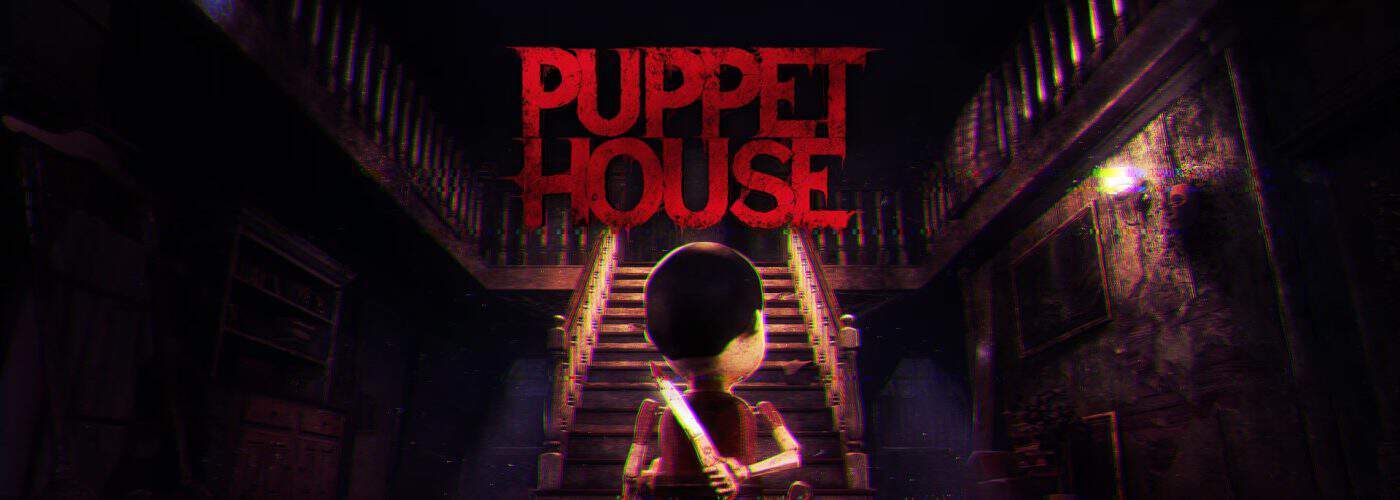
An abandoned villa. A forgotten ventriloquist. A puppet that has learned to move on its own. Puppet House turns these familiar horror ingredients into a focused adventure of exploration, puzzles, and creeping tension. Its atmosphere is consistently effective, but its short runtime and restrained design leave some of its most intriguing ideas underdeveloped. Still, once you step inside, there is enough lurking in the darkness to keep you searching for answers.
An atmospheric horror adventure with a memorable setting and strong atmosphere, held back by straightforward puzzles, linear progression, and largely scripted encounters.

Horror does not always need darkness, blood, or something waiting to lunge from the shadows. Sometimes, all it needs is a house that has been left untouched for too long. Dust-covered rooms. Poorly lit corridors. The quiet remnants of a life that once unfolded behind closed doors.
In Puppet House, that life belonged to a man who devoted himself to the strange and fascinating art of ventriloquism: a profession that, in the right setting, can feel almost indistinguishable from something supernatural. It is within this unsettling premise that Puppet House introduces us to Rick, a detective investigating the mysterious disappearance of several residents of Field Town.
His search eventually leads him to an old house once inhabited by a renowned ventriloquist, now dead. The man’s past, however, appears to be far from buried, and the further Rick investigates, the clearer it becomes that the house may hold the key to understanding the disturbing events surrounding the town. Crossing its threshold marks the point at which the investigation begins to change shape. What initially appears to be a search for answers gradually becomes something far more uncomfortable, as the history of the house starts to reveal itself through its rooms, its objects, and the clues scattered throughout the environment. And then there is the puppet.
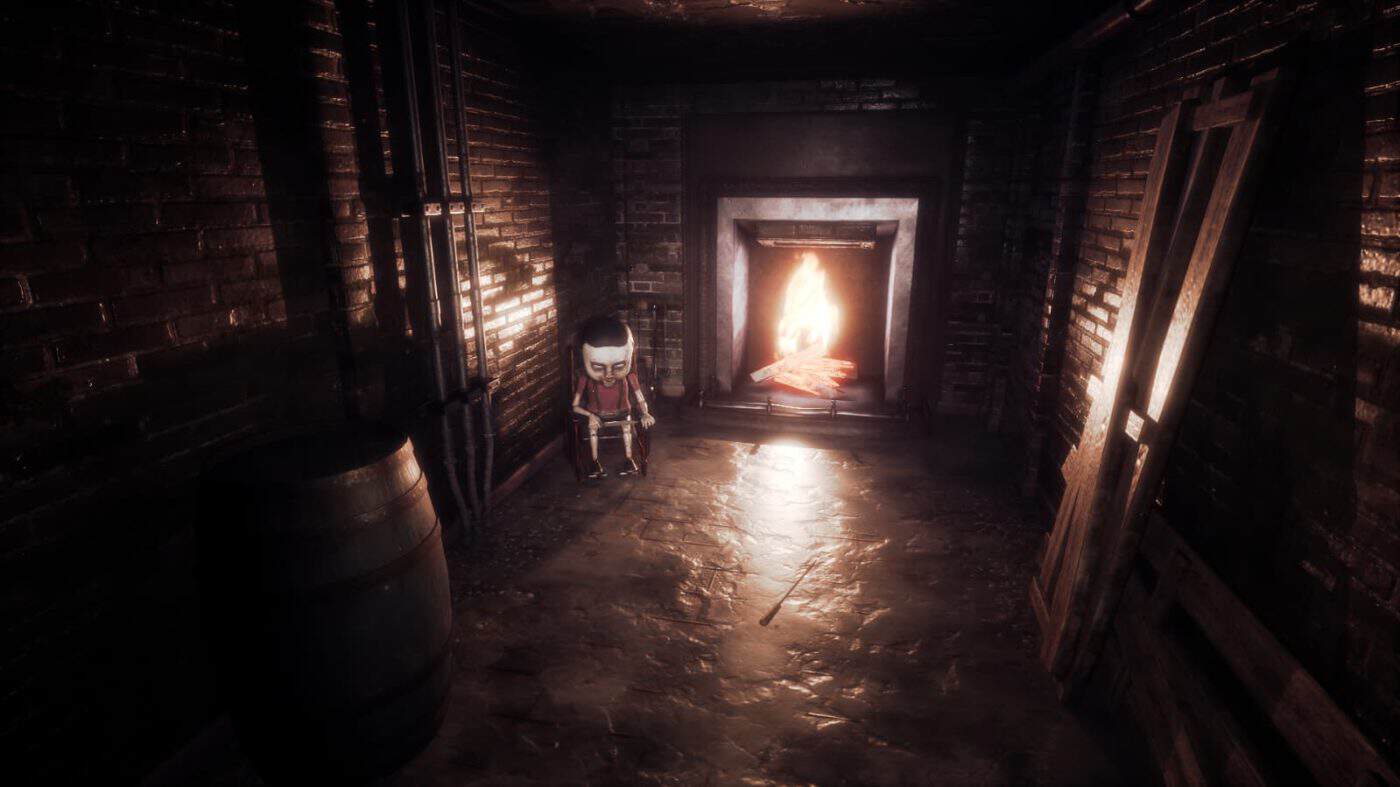
Tied directly to the history of the house’s former owner, this disturbing figure becomes one of the defining elements of Rick’s journey. Its presence fundamentally changes the way we approach the environment. A room that might otherwise be nothing more than another location to investigate can suddenly feel threatening; a moment of quiet exploration can become something considerably more tense simply because we know that danger may be waiting somewhere beyond our immediate field of view. This is particularly important because Puppet House does not build its horror around traditional combat. There is no emphasis on turning Rick into an action hero.
Instead, the game places investigation, observation, and environmental interaction at the heart of the experience. To make progress, we must understand the house rather than simply survive it.
Locked doors, combinations, objects to recover, mechanisms to activate, and information hidden throughout the environment gradually transform the building into one interconnected puzzle. The solutions are often tied to what surrounds us, making careful observation an essential part of progression. Something encountered in one room may become relevant much later, while an apparently insignificant detail can suddenly provide the missing piece needed to move forward.
Puppet House frequently approaches the structure of an escape room. The difference is that its puzzles are never completely isolated from the horror surrounding them. Even when the immediate objective is simply to find a combination or activate a mechanism, the atmosphere continues to insist that we are somewhere we should not necessarily feel comfortable being.
That focused approach is reinforced by the game’s deliberately compact campaign. The adventure lasts approximately three to four hours, depending on the player’s pace, their willingness to search the environment, and the time required to solve its puzzles. It is not a lengthy horror experience, nor does it attempt to be one.
Instead, its relatively brief runtime allows Puppet House to keep its central ideas concentrated. There is little opportunity for the experience to lose sight of its premise. The house remains the heart of the investigation, the puzzles consistently serve the progression, and the puppet remains closely tied to the sense of danger surrounding Rick.
The result is a straightforward gameplay rhythm: enter the house, investigate, gather information, solve puzzles, unlock new areas, and react when something threatens to interrupt the process. It is a simple structure, but one that benefits from the game’s commitment to it.
The puppet, in particular, prevents exploration from ever becoming completely routine. Its presence introduces an element of unpredictability into what could otherwise become a purely methodical sequence of environmental puzzles. Certain encounters also rely on QTE sequences, demanding an immediate response and briefly replacing deliberate investigation with instinct.
What makes the formula work, then, is not mechanical complexity but concentration. Puppet House understands exactly what kind of experience it wants to deliver and builds almost everything around that idea. The house is not simply a backdrop for the story: it is the puzzle, the investigation, and much of the horror itself. The further we progress, the more the domestic spaces of the house lose their familiarity and become part of something far more unsettling.
There is an appealing simplicity to that design philosophy. Puppet House does not attempt to overwhelm the player with an abundance of mechanics or systems.
Instead, it takes a relatively contained premise and follows it through to its natural conclusion: a detective enters an apparently abandoned house to uncover the truth, only to discover that the house itself may be hiding more than its walls initially suggest.
That focus is ultimately both the game’s greatest strength and the source of its limitations. The experience is linear, compact, and deliberately accessible, with almost everything built around a small number of clearly defined ideas. But rather than diluting those ideas with unnecessary additions, Puppet House keeps returning to them: investigation, puzzles, atmosphere, and the unsettling presence of its puppet.
It is a modest formula, but there is something effective about its restraint. Puppet House does not need the house to be enormous, nor does it need every room to become a spectacle. It simply needs us to keep opening the next door, following the next clue, and wondering whether the thing waiting on the other side is another piece of the mystery, or something that was never meant to be found.
Who’s Pulling the Strings Behind Puppet House?
Behind Puppet House is Gaming Factory, the Polish publisher and developer whose work is largely rooted in the independent games space. Released on October 24, 2024, the game is built around a remarkably clear proposition: combine first-person horror with the structure of an escape-room game, and let exploration and puzzles carry much of the experience. It is a relatively contained concept, but one that gives the project a strong sense of direction from the outset.
Vecube Studio is one of the key development teams behind the project, helping shape an experience defined by a clear set of priorities: atmosphere, environmental storytelling, and a carefully crafted space where every detail is designed to keep the player on edge.
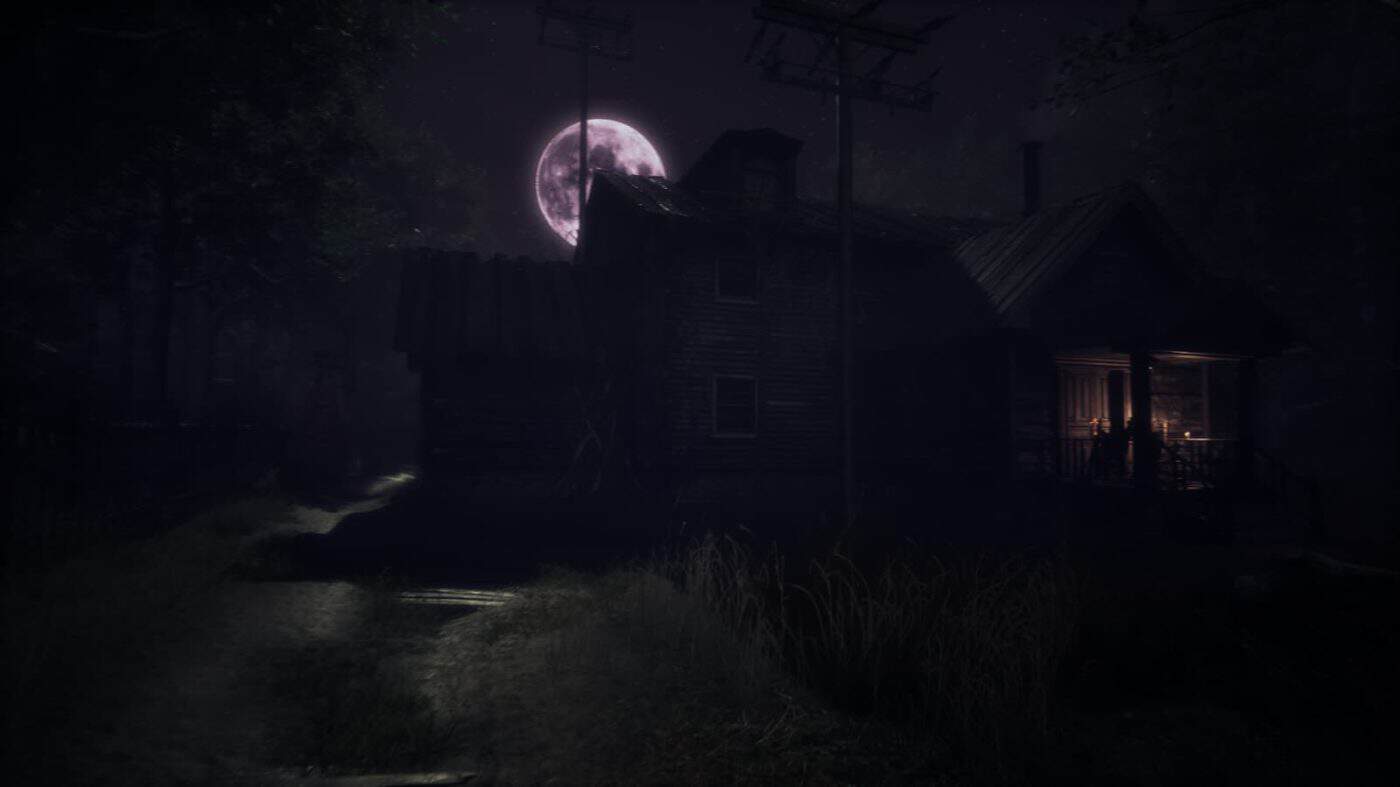
That focus is largely dictated by the setting itself. Much of Puppet House unfolds inside an old residence, giving the developers a tightly controlled environment in which to concentrate their efforts. The architecture of the rooms, the lighting, and the details scattered throughout the house all become part of the game’s design language. Instead of relying on scale, Puppet House attempts to make a relatively small space feel meaningful, and, more importantly, worth paying attention to.
This is not a production built around an abundance of systems. Its philosophy is far more focused: take a small set of ideas and push them as far as they can go. The house sits at the heart of that approach, serving simultaneously as the story’s setting, the player’s puzzle box, the framework for progression, and one of the game’s most effective sources of tension. The deeper we look, the more its spaces begin to feel deliberately composed, with objects, obstacles, and clues gradually revealing how closely every part of the environment is connected.
Spirit Games Studio is also involved in the game’s development, working alongside Vecube Studio on the various elements that shape the final experience. The result retains the unmistakable scale of an indie production, but there is a deliberate effort to give that limited scope a coherent identity.
Puppet House does not try to compensate for its size by throwing increasingly elaborate mechanics at the player. Its vocabulary remains intentionally restrained: explorable spaces, environmental puzzles, objects to find and use, and encounters with the threat that lies at the heart of the story. That restraint is perhaps the most revealing aspect of the game’s production. Puppet House is not chasing technical spectacle, nor is it attempting to compete through sheer volume.
Its ambitions are narrower and, in many respects, more practical: build a horror experience around a confined setting, keep the progression largely linear, and use puzzles to turn the act of exploring the house into the game’s primary form of interaction.
There is a meaningful difference between a game being small and a game feeling unfinished. In Puppet House, the limited scope is clearly part of the design. By keeping the experience concentrated, the developers can place greater emphasis on the elements that actually define it: atmosphere, environmental exploration, puzzle-solving, and the unmistakable presence of its ventriloquist puppet. There is little interest in mechanical excess for its own sake; the experience instead tries to ensure that its individual components reinforce the same central idea.
The collaboration between Vecube Studio and Spirit Games Studio, with Gaming Factory handling publishing, ultimately gives Puppet House a production identity that feels remarkably clear about its ambitions. This is a compact, purposefully focused piece of independent horror, built around a carefully defined set of ideas rather than an excess of mechanics or content. At its heart is an immediately recognisable image – the ventriloquist’s puppet – while the house itself becomes far more than a backdrop, functioning as both the setting and the central gameplay space through an escape-room structure that ties exploration, puzzle-solving, and progression together.
What makes that approach interesting is the degree to which the game’s identity comes from what it chooses not to do. There is no attempt to inflate the experience with unnecessary systems or broaden its scope simply for the sake of appearing larger. Instead, the developers keep returning to the same foundations and refine them within the boundaries of a relatively short adventure.
That makes Puppet House a particularly clear example of how an independent horror production can use focus as a creative advantage. The game does not need dozens of mechanics to establish its identity. It needs a house, a mystery, a handful of carefully placed puzzles, and a puppet capable of turning an otherwise ordinary room into something far less comfortable.
What Happened Inside Peter Hill’s House?
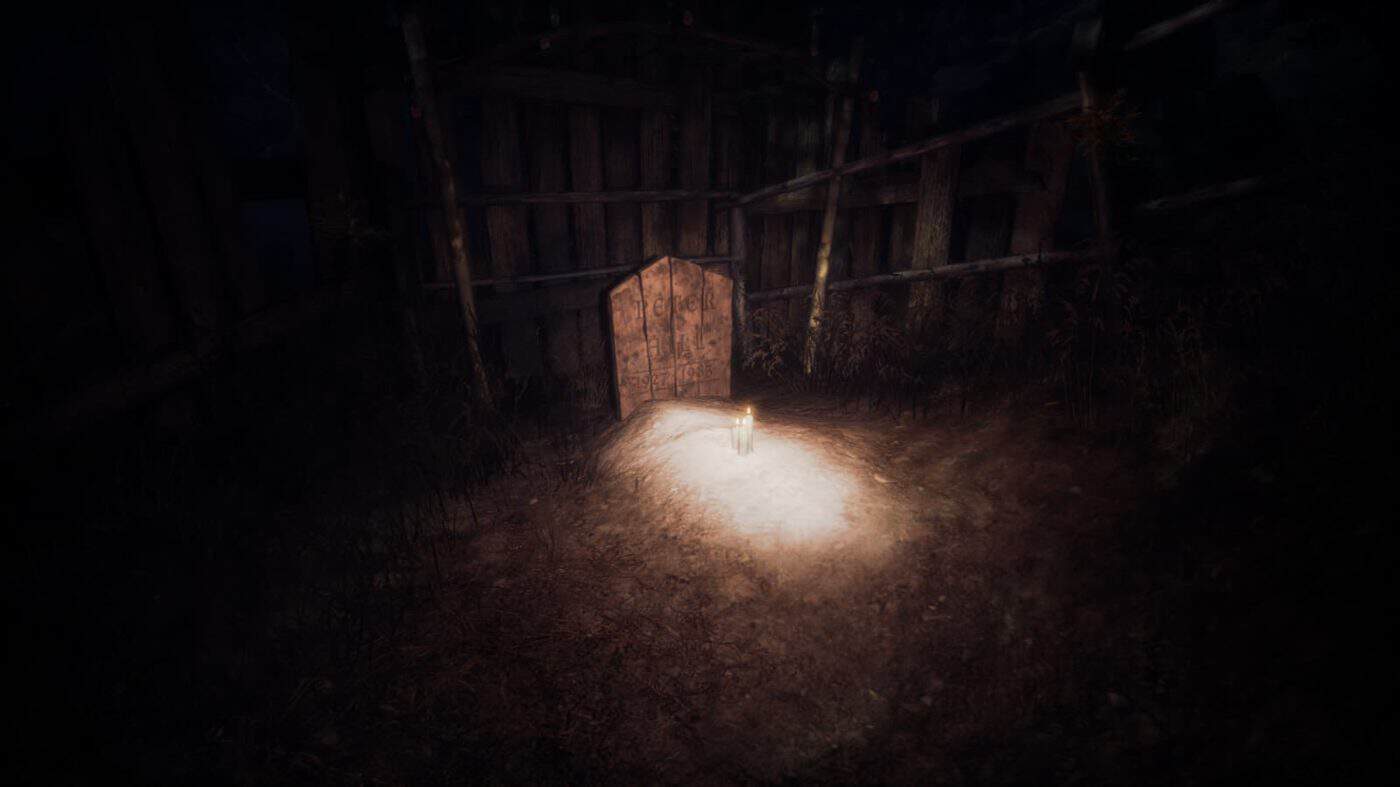
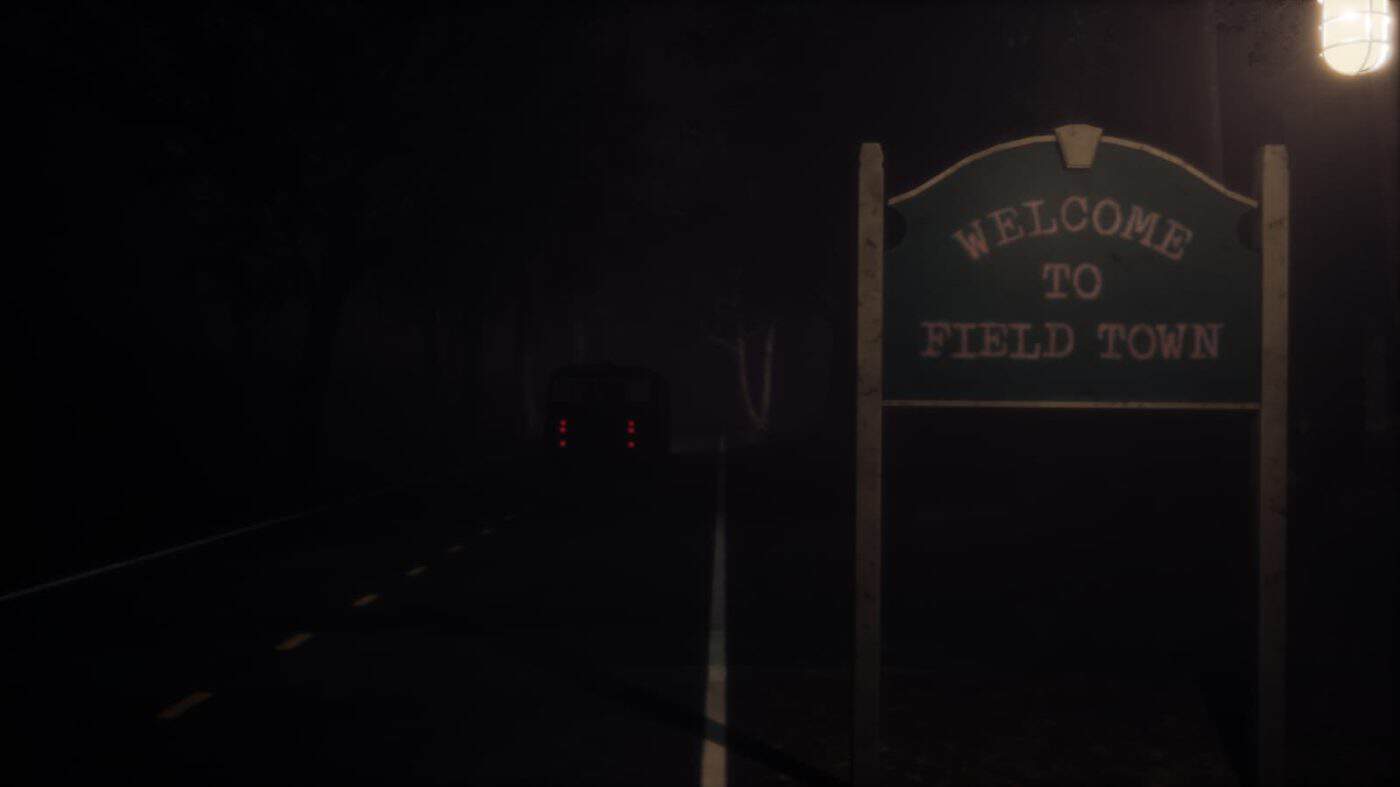
The mystery at the heart of Puppet House begins in Field Town, where several residents have disappeared without explanation. The case eventually falls to detective Rick, whose investigation leads him away from the town and towards an abandoned property with a particularly unsettling history. The house once belonged to Peter Hill, a ventriloquist who had built a reputation through his work and is now dead. The evidence suggests that the property may hold a connection to the disappearances, leaving Rick with little choice but to step inside and find out what happened.
What begins as a search for evidence, however, quickly becomes something far more sinister. Inside the house, Rick searches through its rooms for documents, objects, and traces of its former occupant. Peter Hill’s presence is still deeply embedded within the property, with remnants of his life and his work scattered throughout the environment. Yet the house does not simply surrender its secrets. Doors stand locked, mechanisms block access to new areas, and seemingly ordinary objects can become crucial pieces of a much larger puzzle.
As a result, investigating the property means learning how to read it. Rick must examine his surroundings, recognise significant details, connect the clues he discovers, and determine how individual objects can be used to overcome the obstacles in his path. Progress is built around a continuous loop of discovery and deduction: an item leads to a clue, the clue points towards a solution, and the solution opens another part of the house.
The deeper Rick ventures, the more the building begins to feel less like a location and more like an investigation in its own right. Each room adds another fragment to Peter Hill’s story, while the layout of the property gradually turns exploration into a carefully structured journey through the remains of its former owner’s life. Then Rick finds the puppet.
Hidden within the house is the old puppet once used by Peter Hill, apparently connected to a ritual performed in the past. Whatever occurred during that ritual changes the nature of the investigation entirely. The puppet comes to life, becoming an aggressive supernatural presence that turns the abandoned house into an active threat. From that moment on, Rick is no longer simply searching for the truth. He is searching for it while trying to stay alive.
The puppet moves through the house, patrolling its rooms and attacking anyone who ventures inside. Its presence changes the meaning of exploration: the same spaces Rick once approached as sources of evidence now have to be treated as potential danger zones. A quiet room is no longer necessarily safe, and the simple act of moving from one clue to the next can carry the risk of an encounter.
Yet the horror never completely overtakes the investigation. Rick must continue examining the house and its surrounding areas, uncovering further evidence connected to Peter Hill and the events that preceded his death. The objects he discovers are not merely atmospheric details; many become essential tools for progression. Observation is therefore as important as action, requiring the player to recognise connections between clues and use the right objects at the right moment.
This creates a deliberately clear progression: explore, discover, interpret, solve, and move forward. Every puzzle overcome provides access to another section of the property, while every newly accessible space offers further information about the mystery. The narrative and gameplay consequently remain closely intertwined, with the house functioning simultaneously as setting, puzzle box, and narrative device.
As the investigation advances, the puppet makes the house increasingly difficult to navigate safely. Rick must balance his need to search for answers with the constant possibility of encountering the creature. The property, initially little more than a place where evidence might be found, gradually becomes the entire stage on which the investigation unfolds: a confined environment where discovery and danger are inseparable.
Rick’s journey consequently takes him from room to room, collecting what he needs, solving the obstacles placed before him, and gradually establishing the connection between the missing residents, Peter Hill, and the puppet. The further the investigation progresses, the more these apparently separate elements begin to form a single picture.
Eventually, Rick reaches the answers he has been searching for and is able to reconstruct the events surrounding the house and the presence of the puppet. The narrative remains firmly anchored to the property itself, revealing its story through the environments Rick explores, the objects he encounters, and the clues he gradually pieces together.
That gives Puppet House a focused and predominantly linear narrative structure. The story begins with the disappearances in Field Town, narrows towards Peter Hill’s abandoned residence, and ultimately finds its answers within the same walls that concealed them. Rather than expanding into a broader mythology, the game keeps its mystery deliberately contained, allowing the house to remain the heart of both the investigation and the horror.
At its core, Puppet House is built around a deceptively simple progression: Rick enters the house in search of answers, follows a trail of evidence deeper into its secrets, and gradually discovers that every step forward brings him closer to danger. The clues point the way, the puzzles unlock what lies beyond, and the puppet turns the search for the truth into a constant struggle for survival.
It is a compact mystery confined to a single location, yet that limitation gives the narrative a remarkably clear sense of direction. Almost every discovery Rick makes ultimately circles back to Peter Hill, his troubled past, the missing residents of Field Town, and the puppet at the heart of the house’s darkest secret. What begins as a straightforward investigation gradually becomes something far more intimate: a descent into the remnants of one man’s life, where every answer uncovered only draws Rick deeper into a place seemingly determined to keep its secrets buried.
Between Performance and Nightmare
At the heart of the game lies a remarkably simple idea: the relationship between a ventriloquist and his puppet. It is an image deeply rooted in horror, precisely because a puppet exists as an extension of someone else’s will. Its movements are controlled, its voice is borrowed, and its identity is, by definition, constructed by the performer behind it. The unease begins when that fundamental relationship breaks down. When the puppet no longer needs the person holding the strings, something designed to imitate life becomes something capable of claiming a life of its own.
Puppet House takes that reversal and makes it the foundation of its horror. The game’s official premise establishes the puppet as the product of a strange ritual that brings it to life and transforms it into a murderous creature. What matters, however, is not simply that an inanimate object becomes dangerous. It is the collapse of the boundary between the one who controls and the thing being controlled. The puppet was created to obey; instead, it develops a presence of its own. Something designed to imitate life becomes capable of acting without its creator.
That idea gives ventriloquism an unusually important place within the game’s thematic framework. The entire art form depends upon an illusion: the performer speaks, while the audience perceives the voice as belonging to the puppet. Human voice and artificial body are deliberately separated, creating the impression that the object possesses an identity of its own. Puppet House takes that illusion and turns it inside out. Voice, body, and identity cease to belong neatly to the same person, leaving the puppet occupying an increasingly ambiguous space between instrument and individual. The result is a question that quietly sits beneath the horror: who is actually in control?
That question is echoed by the setting. Peter Hill’s home functions not simply as the location in which the story takes place, but as the physical remains of a life that has already ended. Its rooms preserve fragments of the ventriloquist’s existence, allowing Rick to reconstruct aspects of his past through what he left behind rather than relying entirely on direct exposition.
Photographs, personal possessions, theatrical paraphernalia, and documents give the property a sense of accumulated history. They turn exploration into a form of archaeological reading: the player examines what remains, identifies what matters, and gradually builds a picture of the person who once lived there. In this respect, Puppet House makes meaningful use of environmental storytelling, allowing the setting itself to carry part of the narrative burden.
It also means that exploration and investigation become inseparable. A room is not merely somewhere to search for the next item; it is another fragment of the larger mystery. An object can provide context as well as progression, while a puzzle can require the player to recognise a connection between pieces of information gathered elsewhere. The escape-room structure consequently works as a narrative framework as much as a gameplay one, keeping the player’s physical actions tied to the gradual reconstruction of the story.
The puppet gives that reconstruction an additional layer of unease. Its significance comes precisely from what it was supposed to be: a tool of control. A ventriloquist manipulates an inanimate figure, providing the movement and voice that make the performance possible. The ritual reverses that hierarchy. The instrument becomes autonomous; the performer is no longer the sole source of movement; the object ceases to be merely an object.
In other words, the puppet stops performing and starts acting. That transformation is central to the game’s horror because it corrupts something inherently familiar. A puppet is associated with entertainment, performance, and the harmless artificiality of a stage. Here, those same associations become uncomfortable reminders of what the creature once was. The house amplifies the effect by surrounding the player with traces of Peter Hill’s profession, creating an almost continuous visual connection between theatrical performance and supernatural threat.
The mystery of the missing residents of Field Town provides the other half of the narrative equation. Rick enters the property pursuing an investigation that initially appears grounded in evidence and cause-and-effect. Yet the further he follows that trail, the more his search brings him into contact with something that exists outside conventional logic.
Puppet House therefore occupies an interesting space between detective story and supernatural horror. Rick searches for explanations, while the house continually presents him with things that resist ordinary explanation. The result is a narrative tension between the desire to understand and the realisation that not everything encountered inside the property can be approached rationally.
For much of the experience, that tension helps sustain the mystery. The player is encouraged to examine the environment, connect fragments of information, and work towards an understanding of what happened, even as the supernatural presence within the house makes the investigation increasingly dangerous. The narrative remains relatively focused, but its central ideas are clear enough to give the setting and its antagonist a distinct thematic identity.
The game’s short runtime, however, inevitably places limits on how extensively those ideas can develop. Keeping the story centred on a single house, one central mystery, and a clearly defined supernatural threat gives Puppet House a strong sense of focus.
There is little room for the narrative to become distracted from its central premise, and the confined setting allows its major elements to remain closely connected. At the same time, some of those elements feel as though they could have benefited from greater depth.
The relationship between Peter Hill and his puppet, the history embedded within the house, and the fate of the missing residents all hint at a larger narrative than Puppet House ultimately has the time or scope to develop. Rather than fully unpacking every thread it introduces, the game often works through implication rather than exposition, allowing certain elements of its mythology to remain deliberately obscure and just beyond the player’s reach.
That restraint can leave the narrative feeling deliberately pared back, but it also fits the game’s compact design. Puppet House is not trying to build an expansive mythology around its central creature or turn its premise into an elaborate horror saga. Instead, it keeps its scope tightly contained, drawing on a small but clearly defined set of ideas and allowing environmental storytelling and the uneasy bond between performer and puppet to carry much of the weight.
Atmosphere Over Spectacle
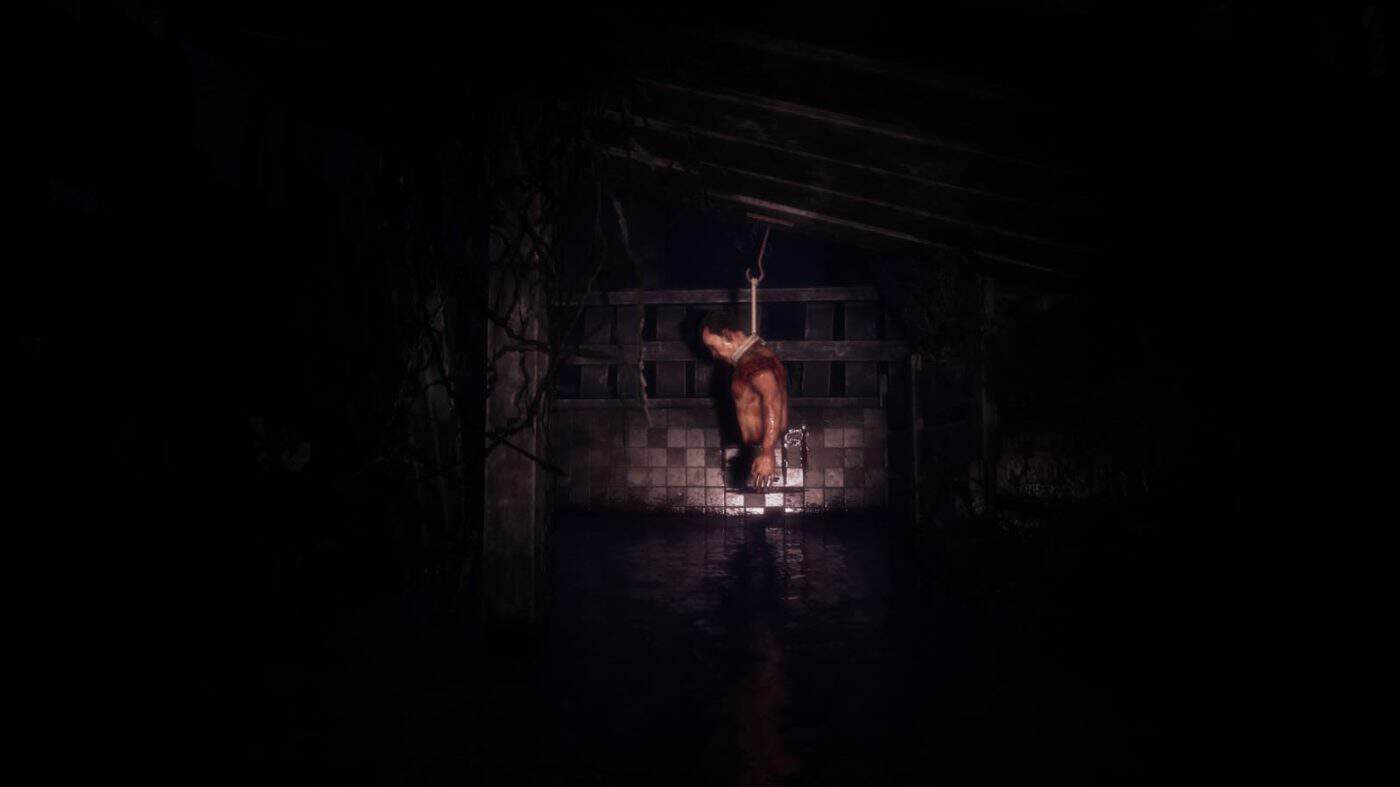
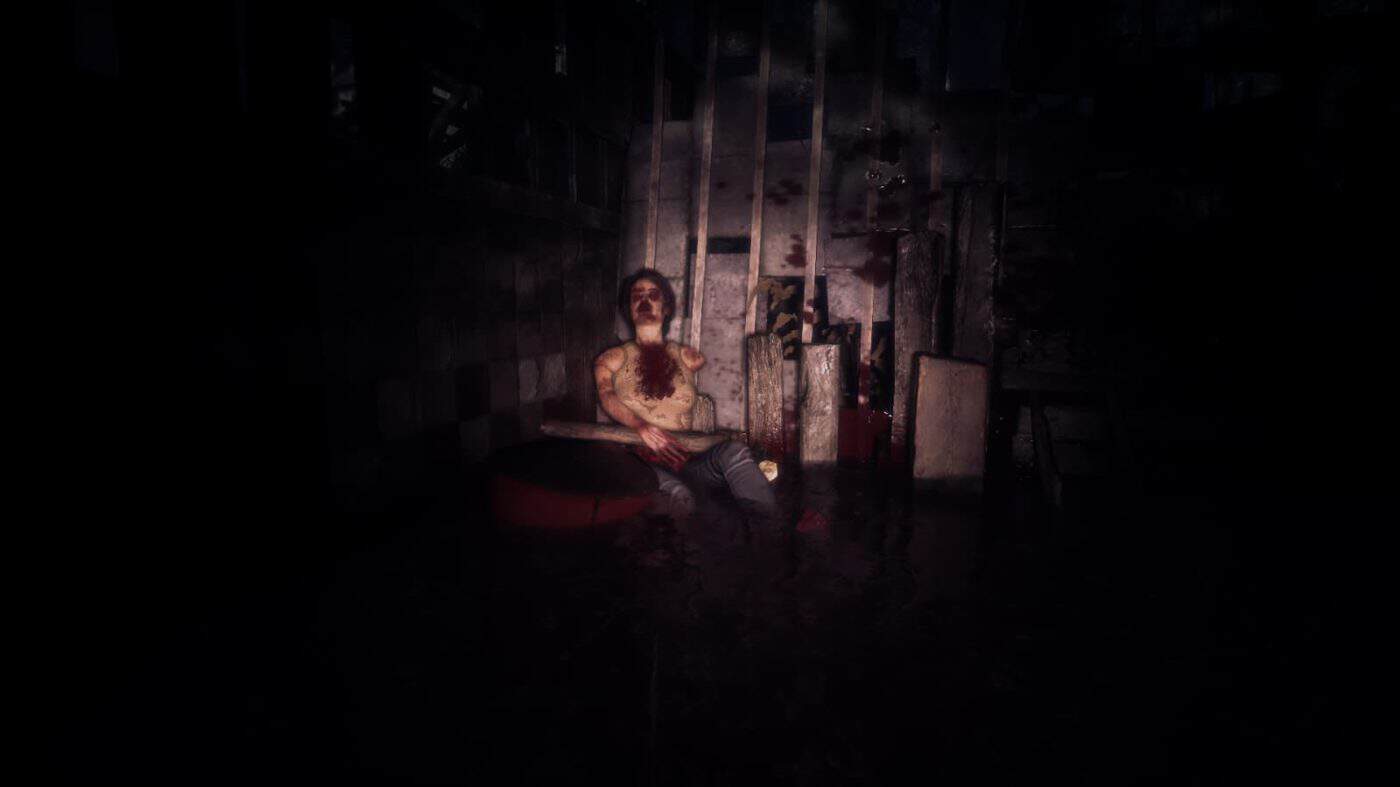
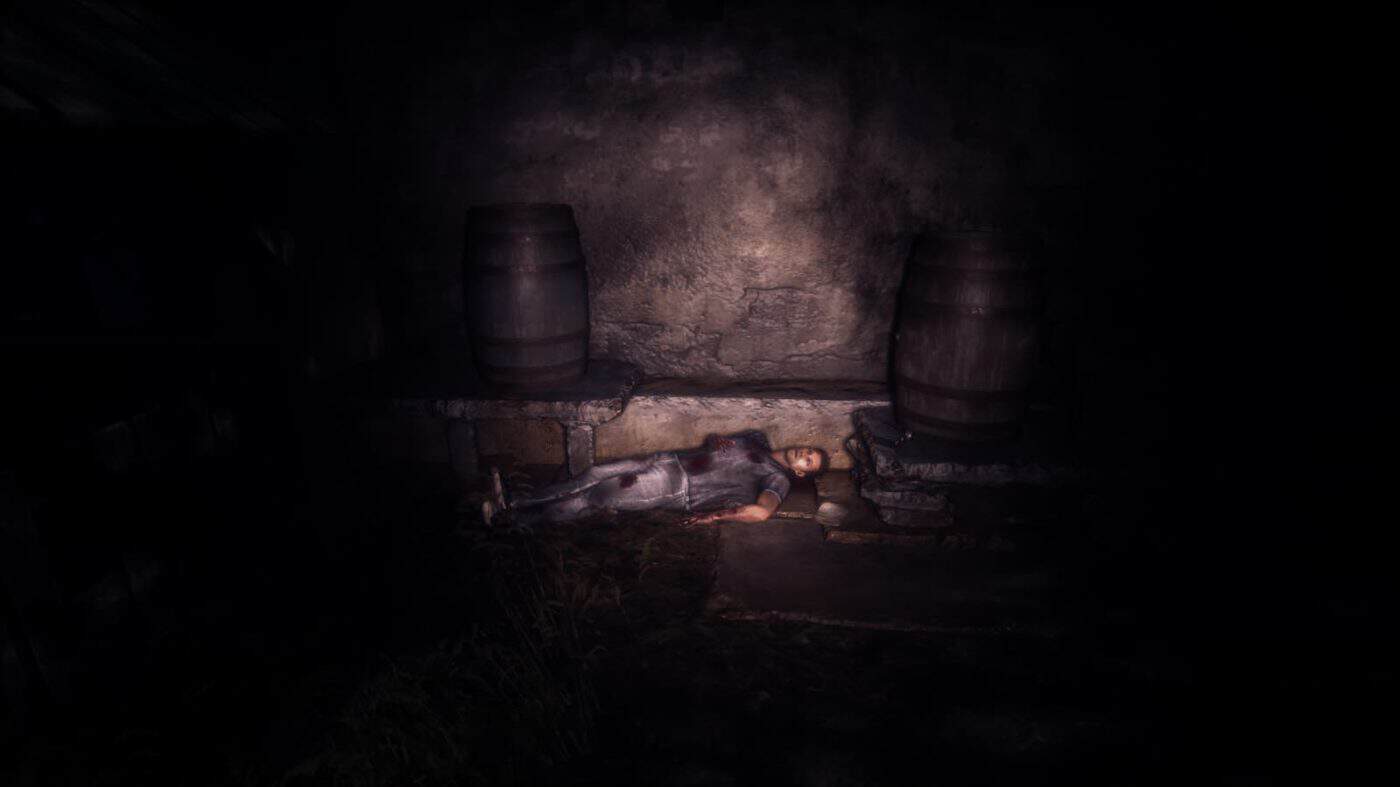
From a technical and visual standpoint, Puppet House is a game that understands the strengths and limitations of its independent scope. Rather than pursuing graphical spectacle it cannot, and does not need to, sustain, it channels its resources into the elements that matter most to this particular experience: the construction of its environments, the careful use of lighting, and the atmosphere that emerges from their interplay. It is not a technical showcase, nor does it attempt to rival the visual fidelity of larger horror productions. Its strengths lie elsewhere.
Within its deliberately contained framework, Puppet House gives its central setting enough detail, character, and visual cohesion to make the house feel like a convincingly realised place rather than a mere succession of rooms designed to accommodate puzzles and scares.
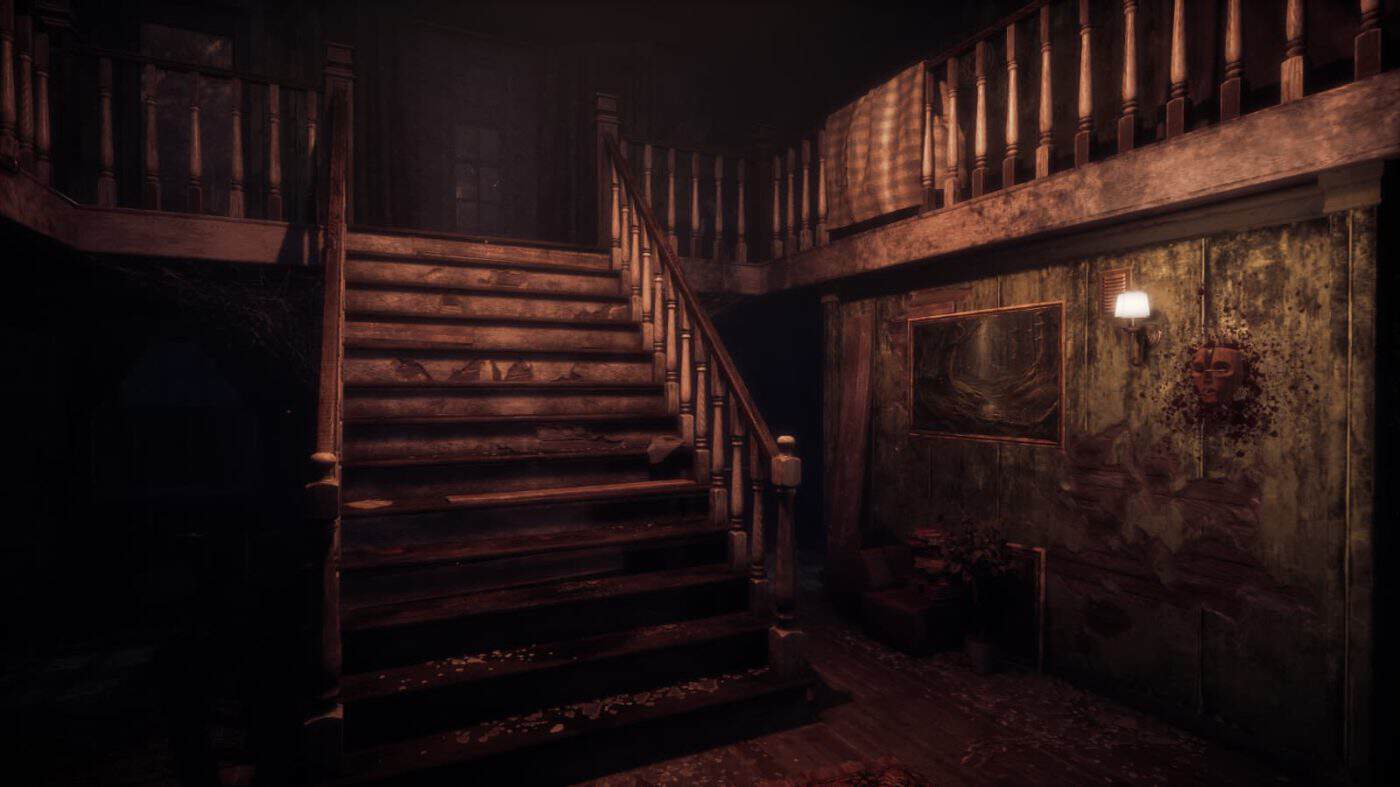
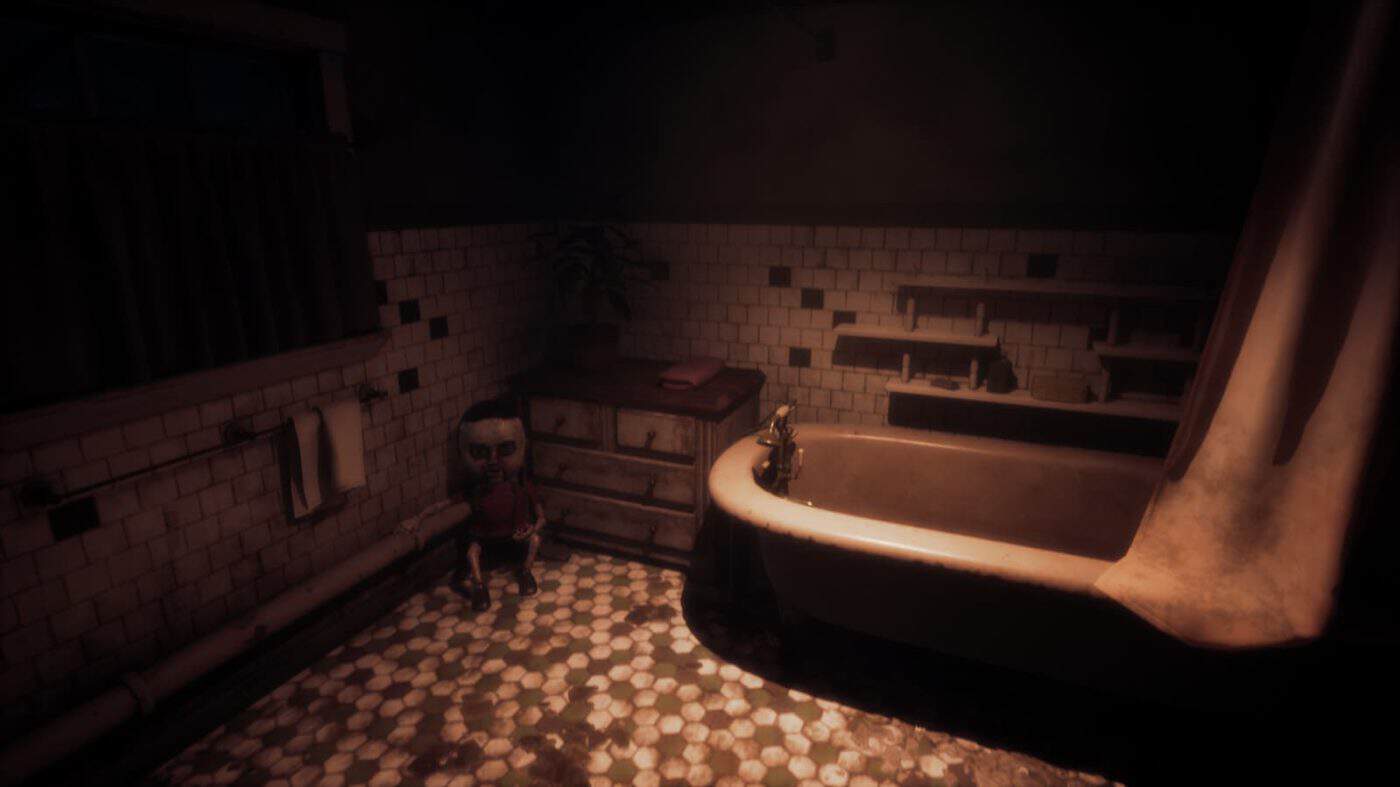
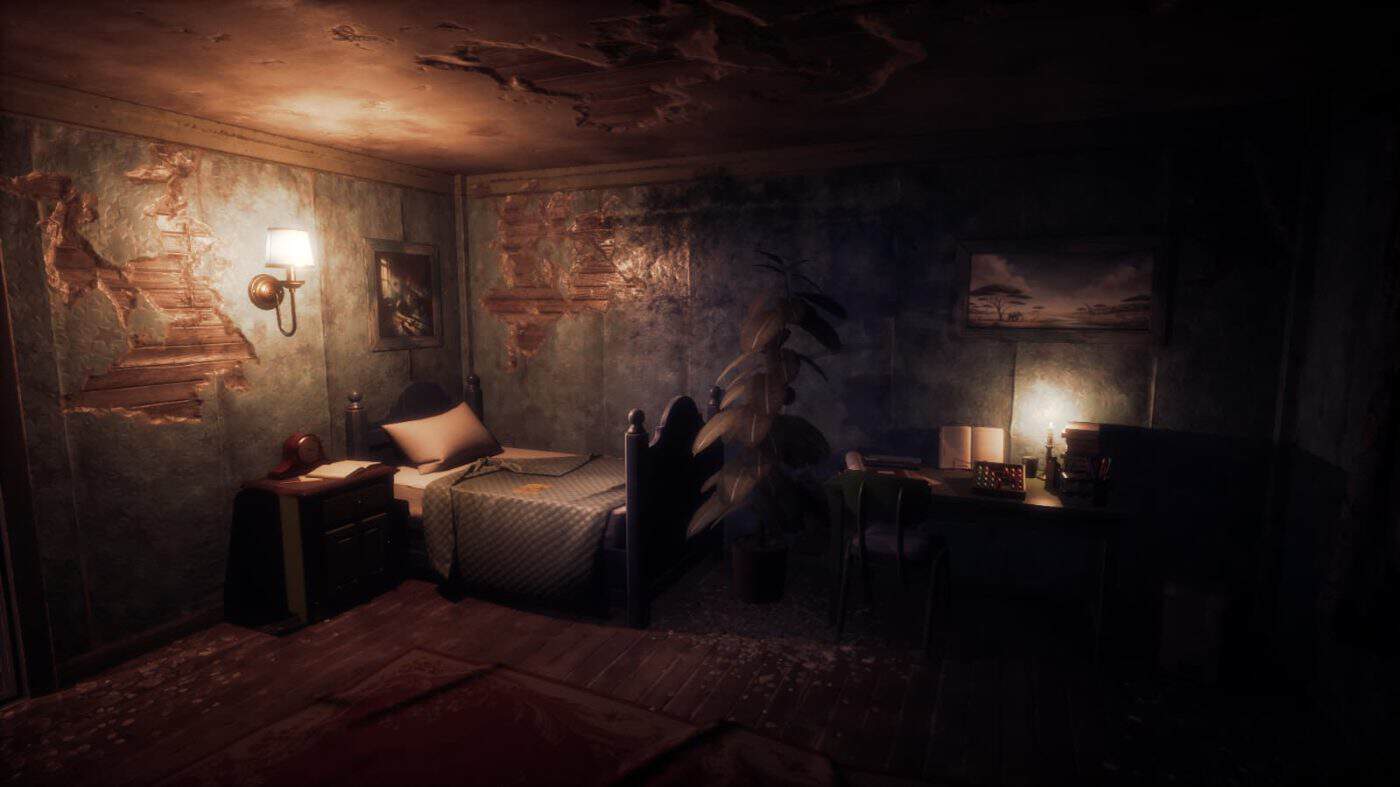
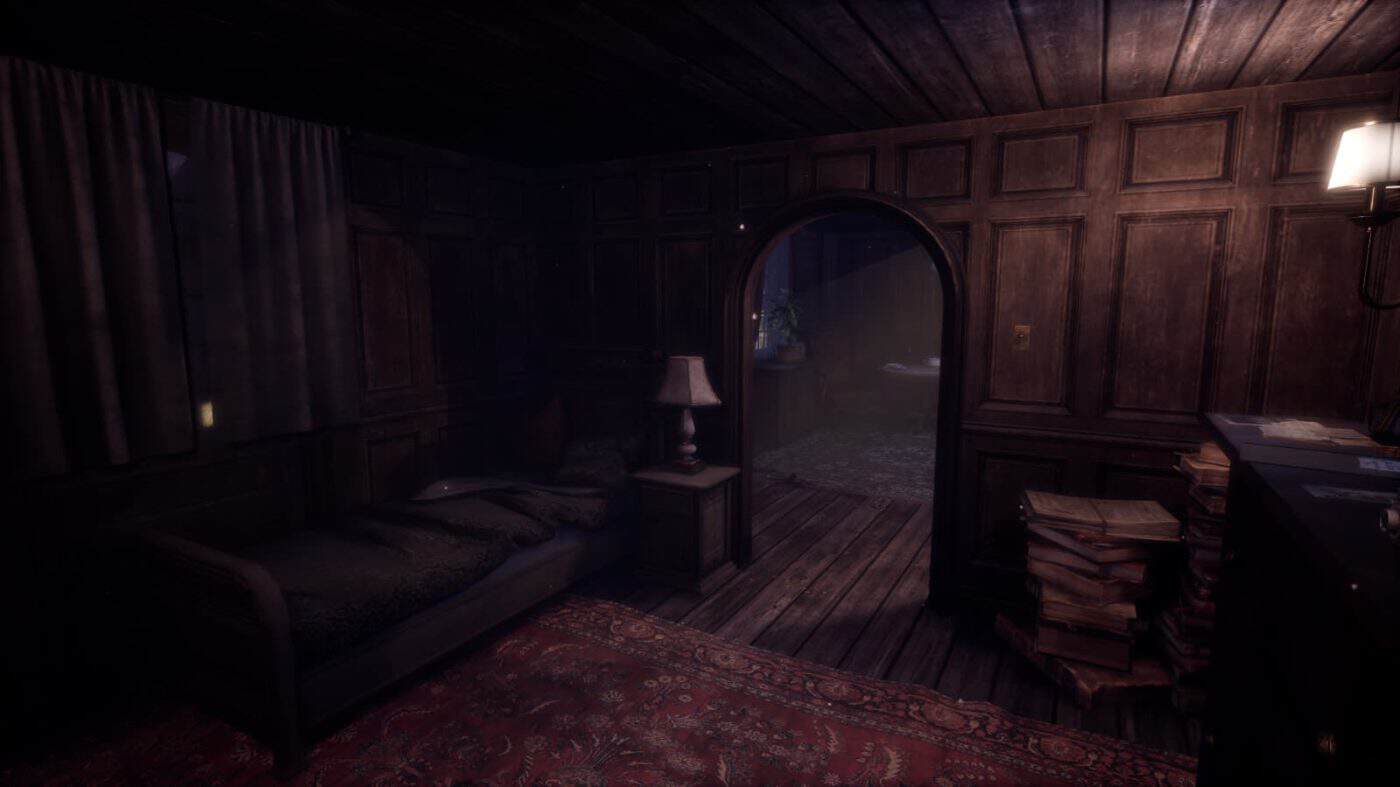
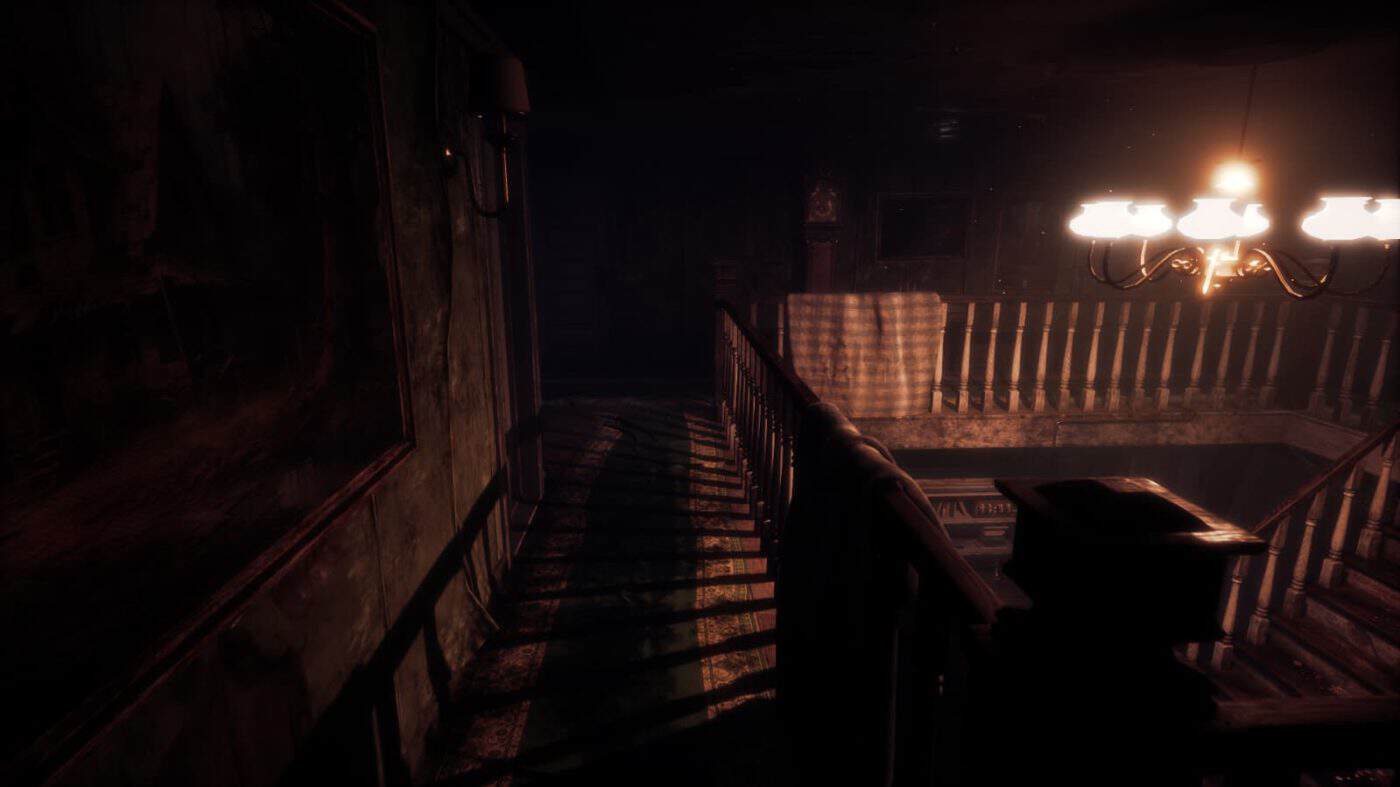
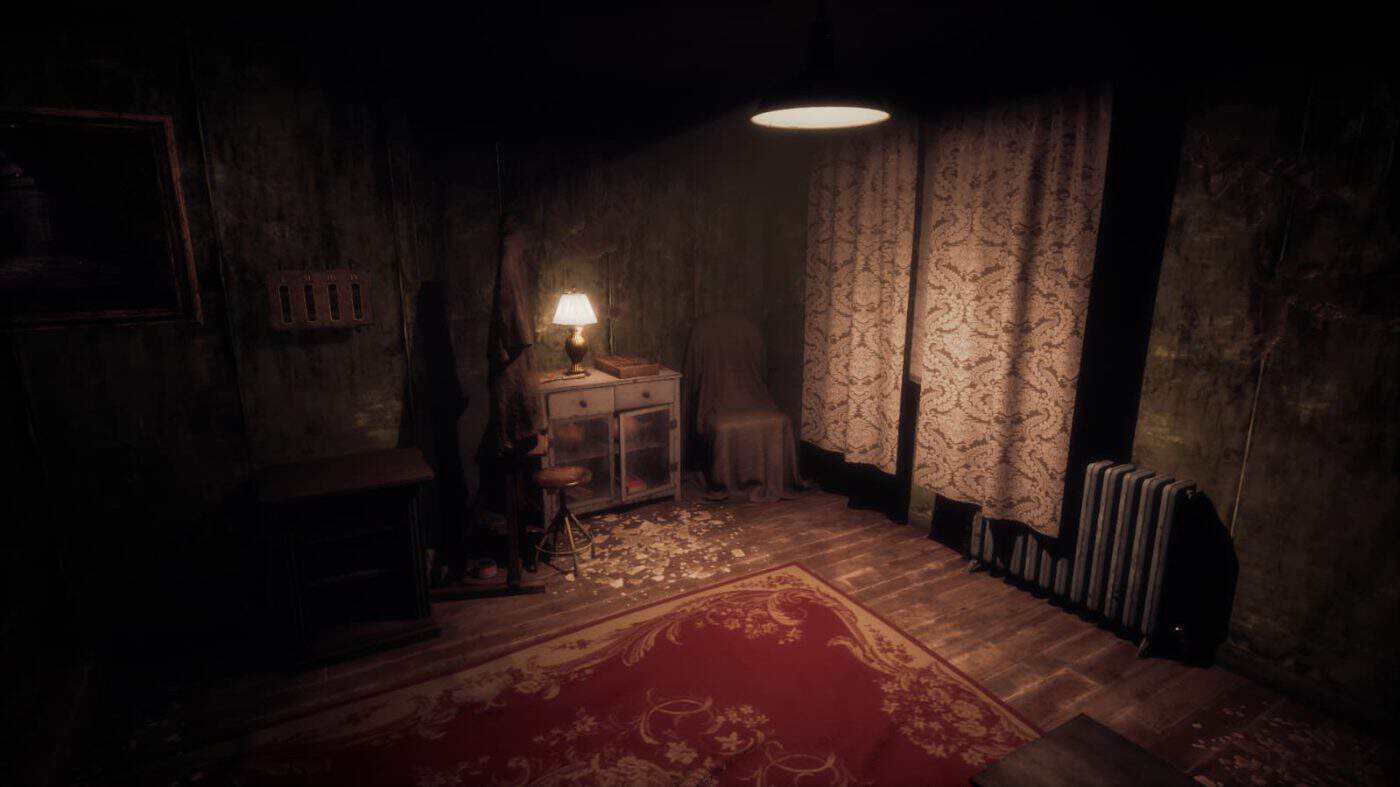
That distinction becomes particularly important because the ventriloquist’s house is effectively the game’s visual centre of gravity. Its interiors are shaped by ageing furniture, accumulated belongings, deteriorating walls, worn floors, and a wealth of smaller decorative details that gradually establish the impression of a home removed from ordinary life. Nothing about the environment suggests a space that has been emptied purely for the player’s convenience. Instead, the rooms retain traces of the life that once occupied them, allowing the setting to communicate something about its former inhabitant even when no explicit explanation is being offered.
There is consequently a pleasing sense of environmental continuity throughout the property. The house feels neglected, but not anonymous. Different rooms introduce their own combinations of objects, textures, furnishings, and visual details, giving exploration enough variation to prevent the setting from collapsing into a repetitive sequence of corridors and puzzle chambers.
This is particularly effective within a game whose structure is so tightly focused: when the physical boundaries of the experience are deliberately narrow, the environment has to carry a greater share of the burden, and Puppet House generally understands that principle.
The strongest part of that approach is arguably its use of light and darkness. The visual identity is built around a predominantly muted, desaturated palette, with colder tones and extensive areas of shadow establishing an atmosphere that feels subdued rather than theatrically oppressive. Light is rarely neutral. It directs the eye, defines the character of individual spaces, and determines how much information the player is given at any particular moment.
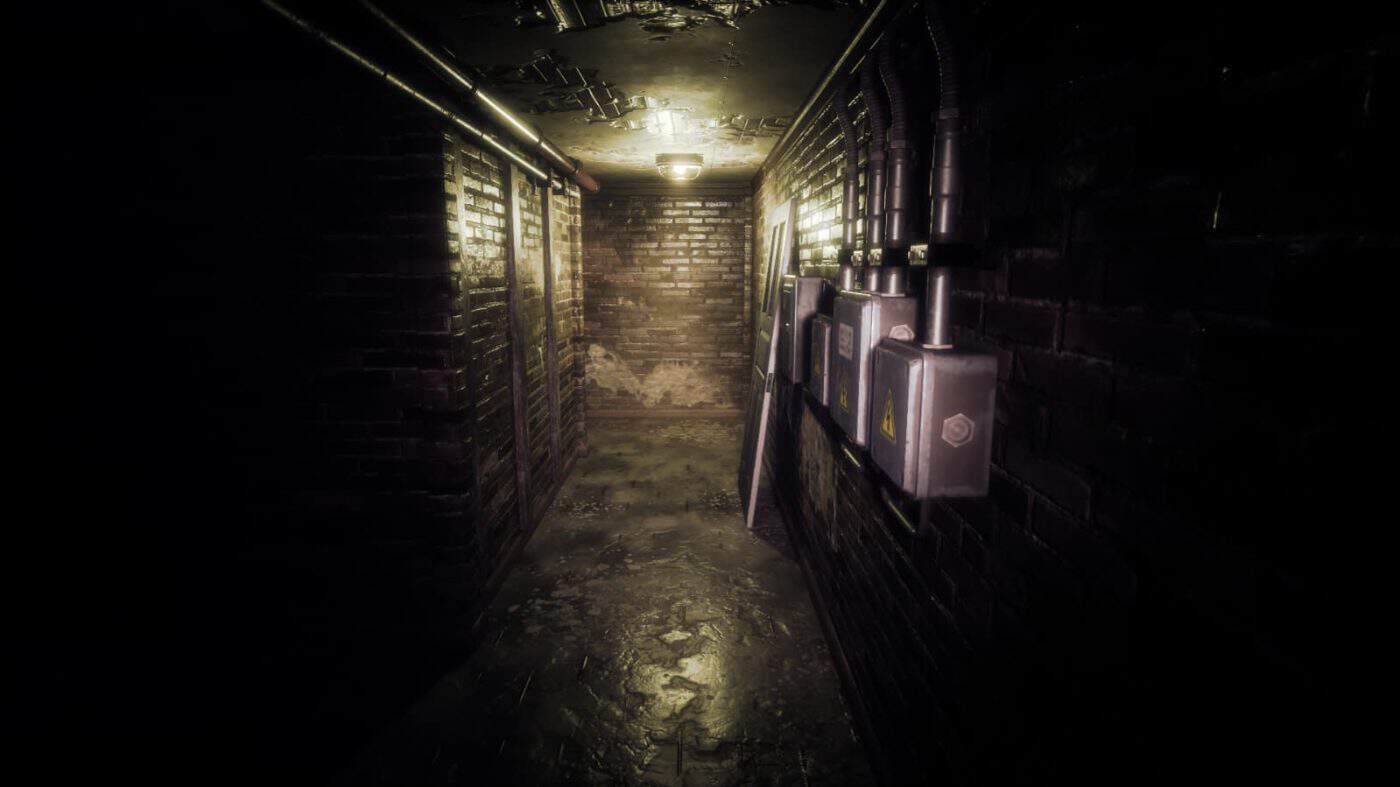
Many areas are intentionally left only partially illuminated, allowing corridors to dissolve into shadow, corners to remain uncertain, and secondary rooms to recede into near-total darkness until the player brings them into view. The flashlight sharpens this tension between visibility and uncertainty, reducing the player’s immediate field of awareness to a narrow cone of light while everything beyond it remains indistinct. What lies outside that fragile boundary becomes almost as important as what falls within it, turning limited visibility into a constant source of unease.
The technique itself is hardly sophisticated, but Puppet House uses it with enough restraint to make it effective. By controlling how much of each space the player can actually perceive, the lighting becomes an integral part of the horror rather than simply a tool for navigating the environment.
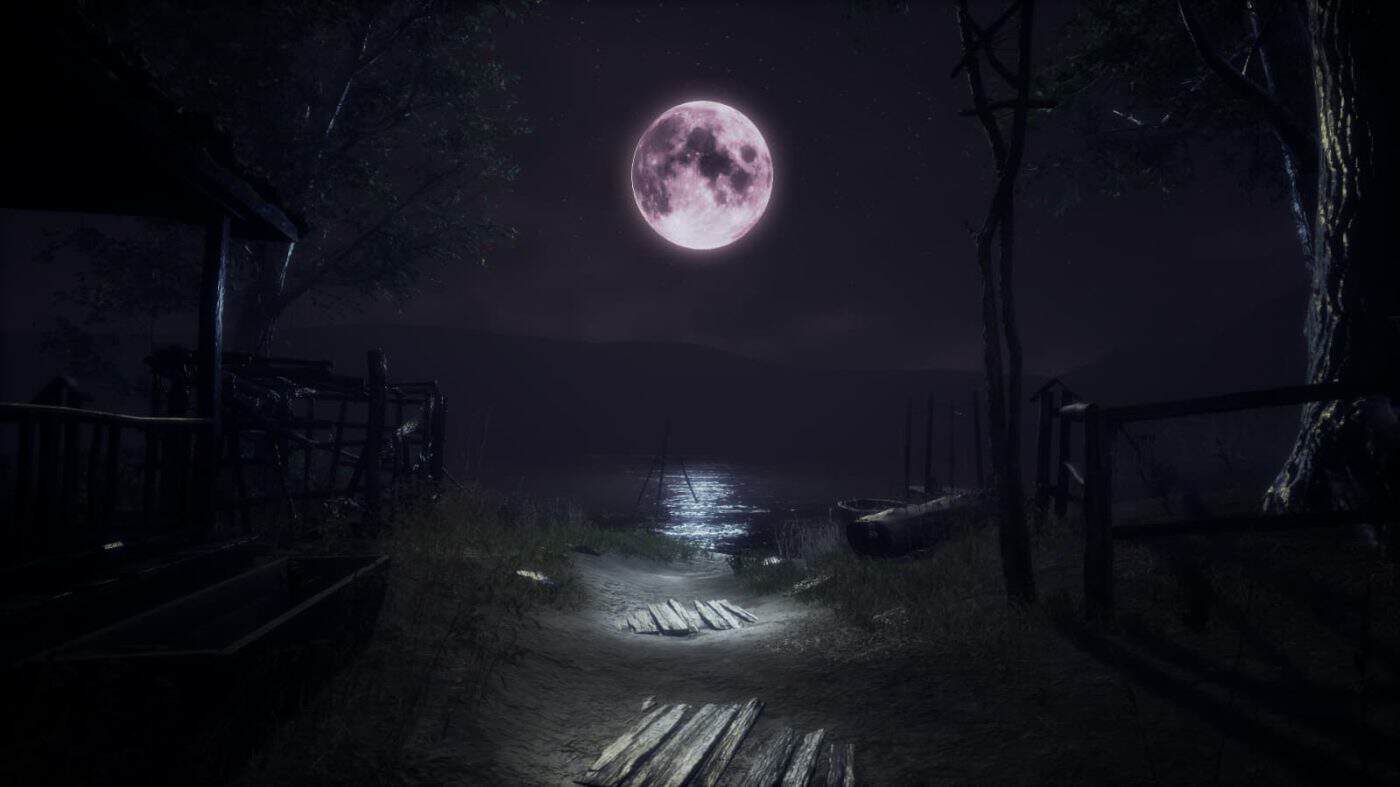
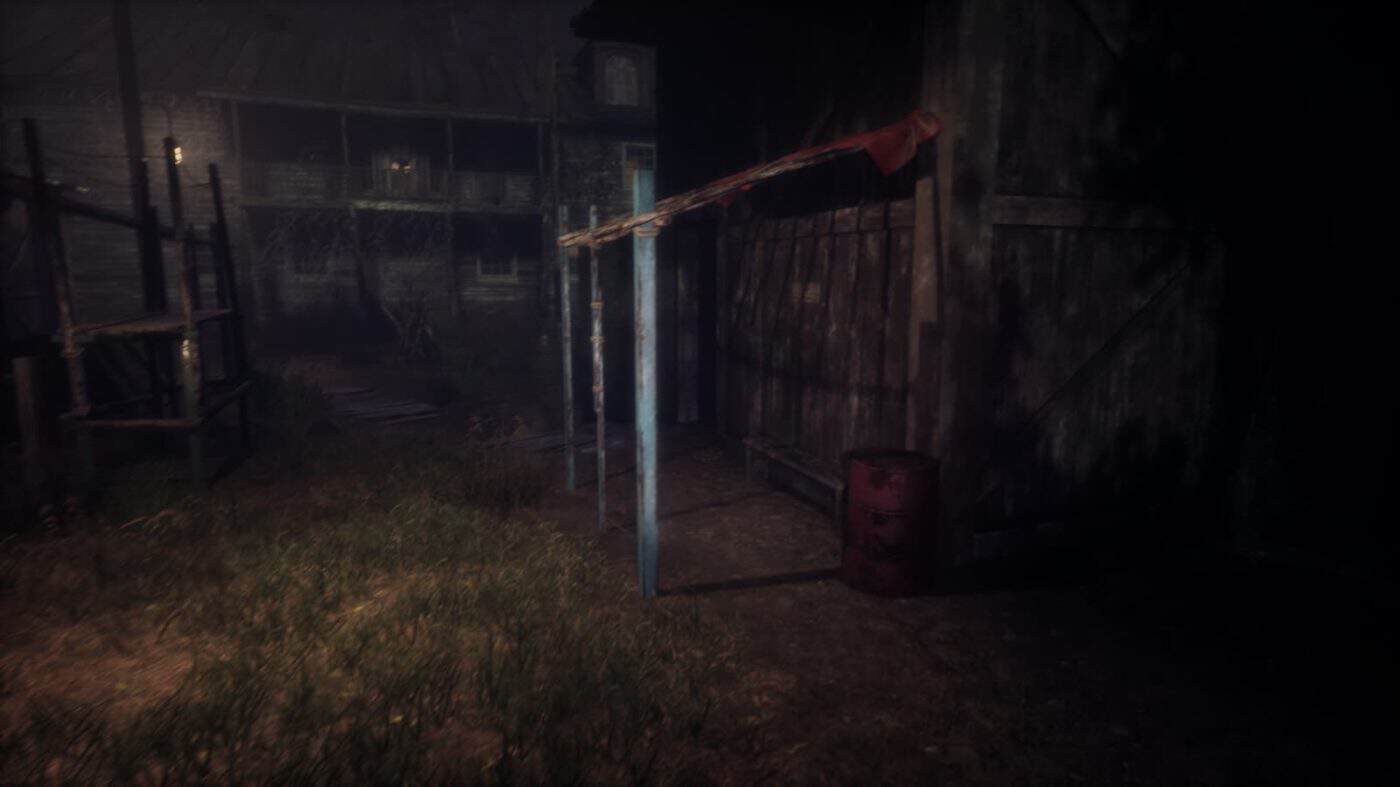
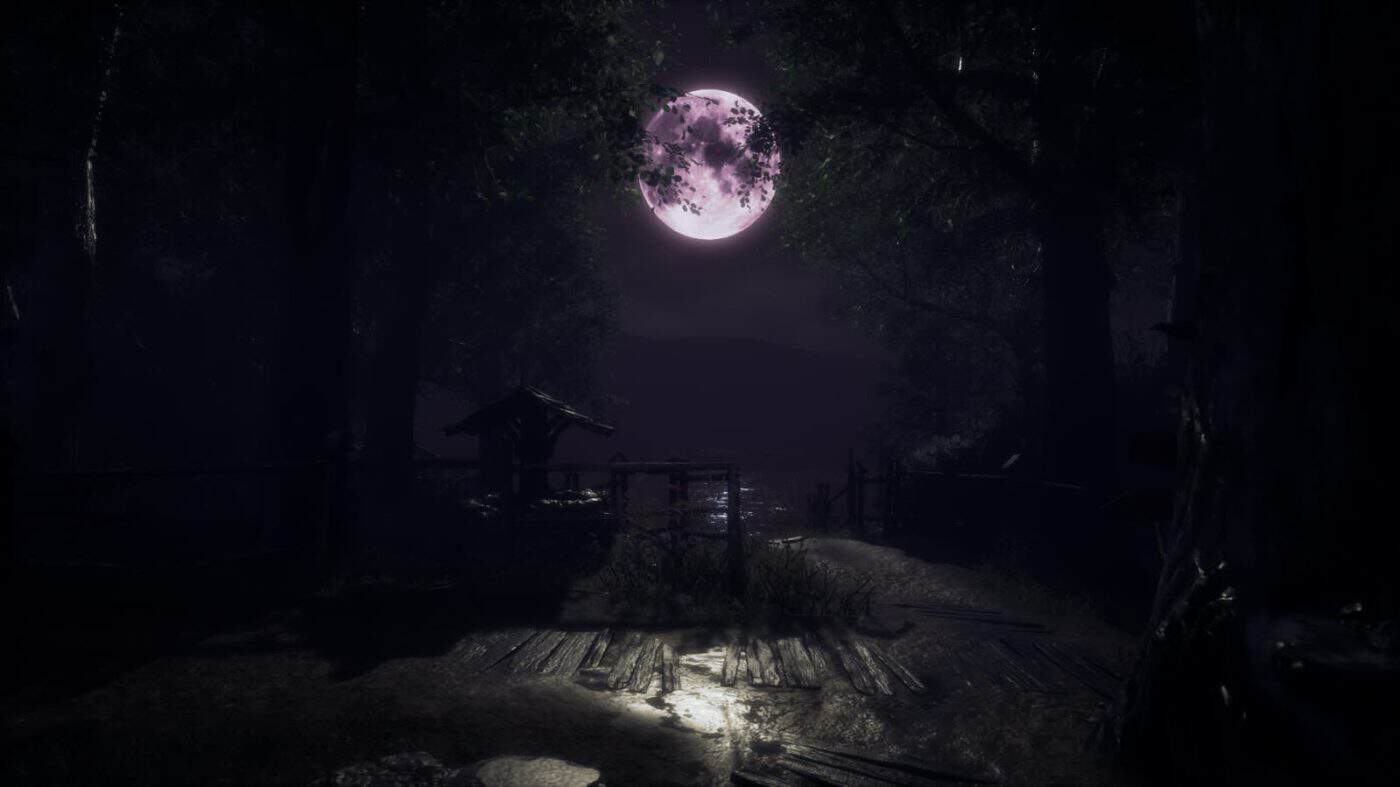
The exterior spaces serve a complementary purpose. The terrain surrounding the villa, together with vegetation, abandoned structures, and other elements scattered throughout the property, prevents the setting from feeling entirely enclosed within a sequence of interior rooms. The house remains the unmistakable focal point, but the surrounding environment gives the player a broader sense of place while introducing modest shifts in colour, texture, and visual composition.
More importantly, the interiors and exteriors speak the same artistic language. Everything points towards the same idea of decay and separation: a neglected property that feels increasingly disconnected from the ordinary world beyond its boundaries. That coherence matters more here than raw visual fidelity. Puppet House rarely attempts to impress simply for the sake of doing so; instead, its visual choices consistently serve the mood it is trying to establish.
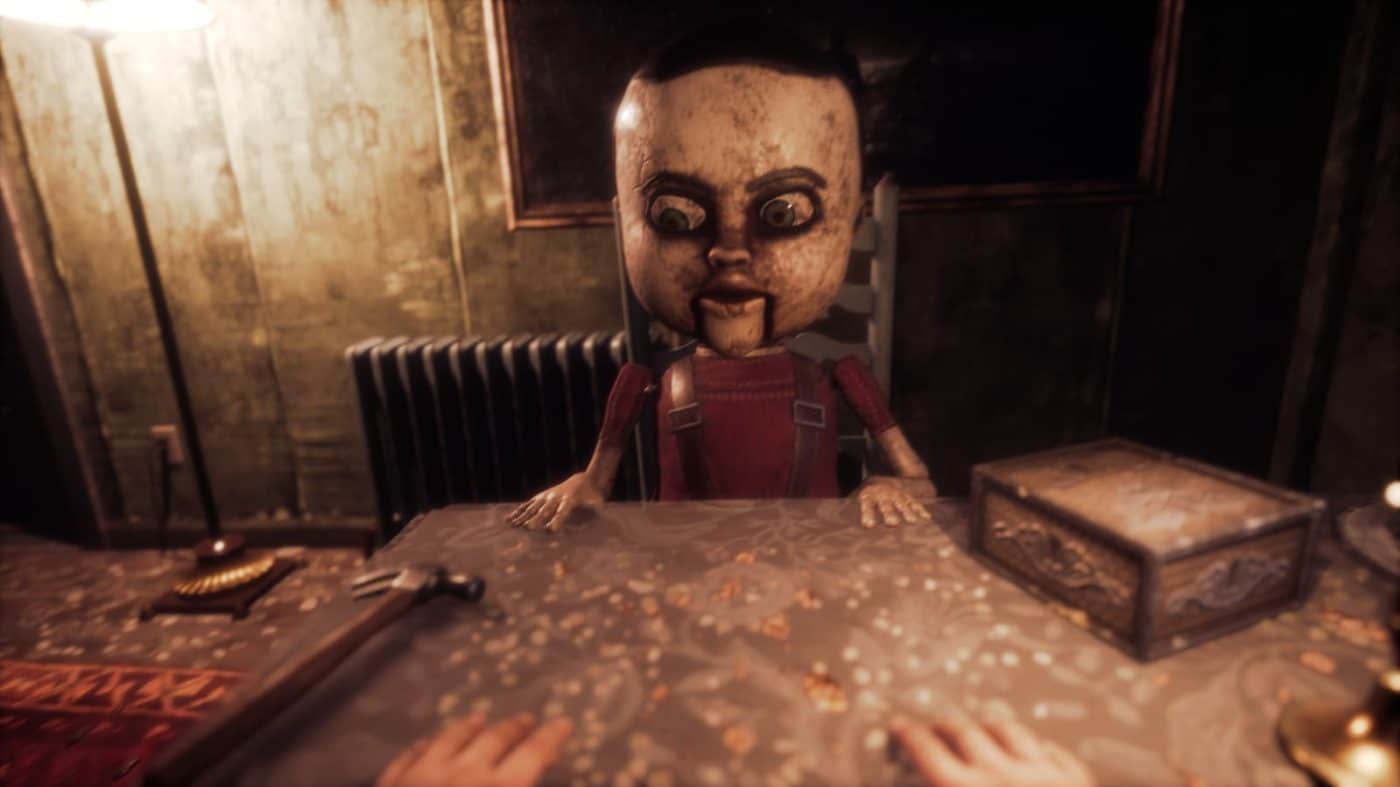
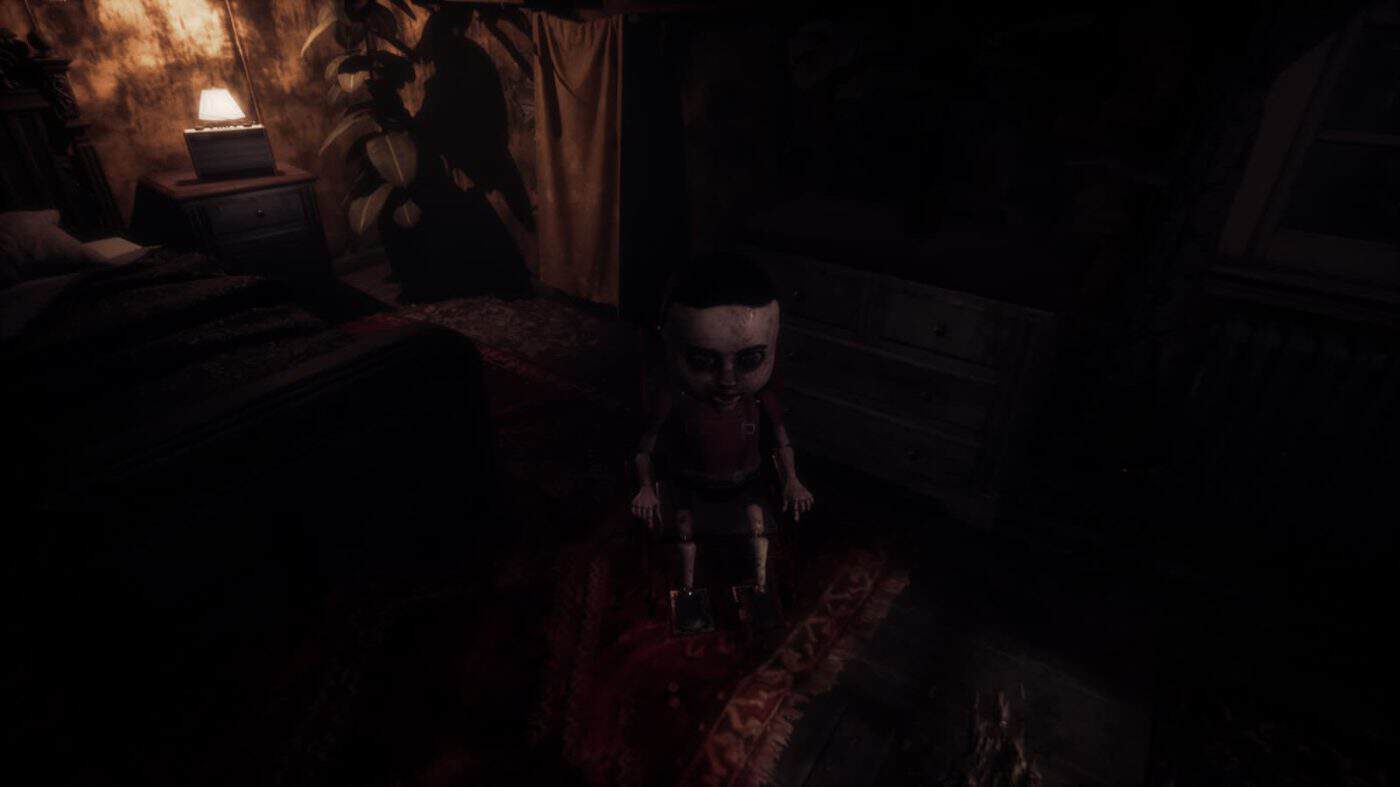
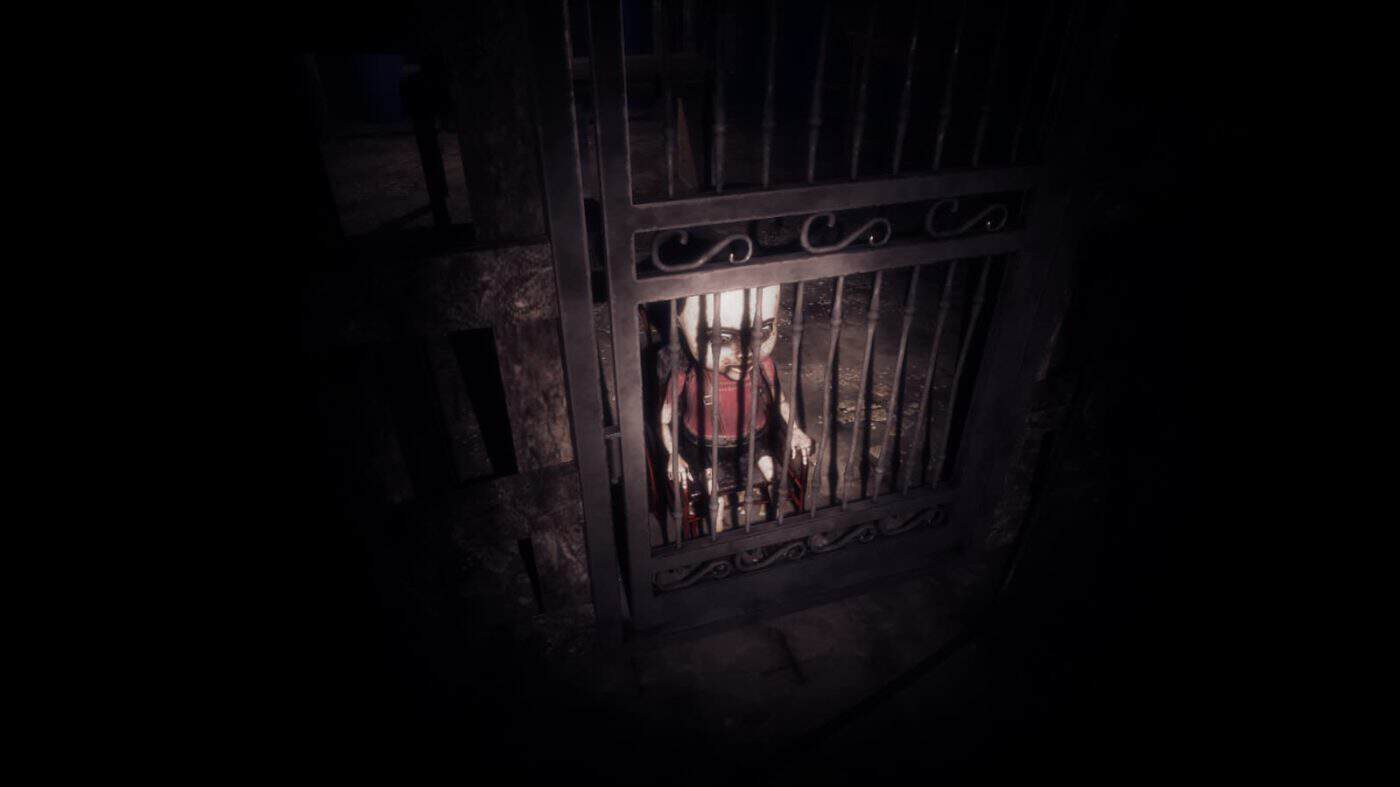
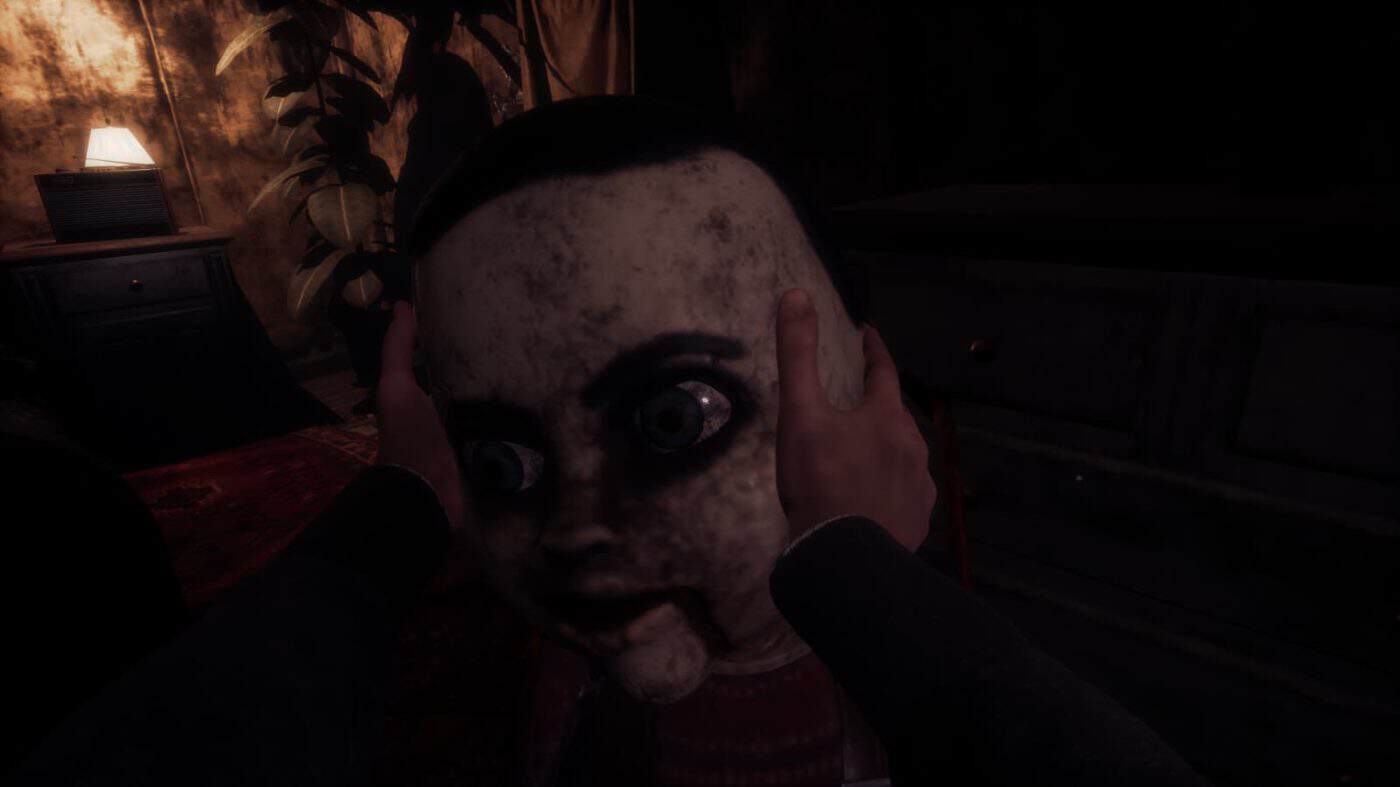
And then there is the puppet. Visually, it is the production’s defining image, and the design makes a conscious effort to ensure that it is difficult to look at without feeling that something is fundamentally wrong. Its exaggerated physical proportions, oversized head, pronounced features, and deliberately artificial appearance transform what should be an object of entertainment into something deeply unsettling. The design does not need elaborate visual complexity to achieve that effect. Its effectiveness comes from the contradiction at its core: a figure created to entertain suddenly occupying the visual language of a threat.
Texture work is similarly functional rather than extravagant. For an independent production, the environments generally provide enough surface detail to maintain the illusion of a house that was once inhabited and has since been left to deteriorate. Wooden surfaces, walls, floors, and furnishings exhibit different degrees of wear, helping the property feel accumulated rather than freshly assembled. These details are rarely spectacular in isolation, but together they contribute significantly to the sense of neglect that defines the setting.
There are, naturally, moments where the limitations of the project become visible. Some assets are less refined than others, and the consistency of the visual finish is not absolute. Those shortcomings are noticeable precisely because the stronger elements establish a clear artistic standard for the rest of the environment. Nevertheless, they rarely compromise the overall presentation. The important thing is that the visual language remains coherent, even when individual components fall short of the same level of polish.
That is ultimately where Puppet House‘s art direction proves most successful. It does not attempt to compensate for its limited scale with visual excess, nor does it constantly reinvent its environments in search of spectacle. Instead, it builds a very specific identity around the ventriloquist’s house and allows that identity to develop through repetition and consistency.
The result is a horror experience whose visual strength lies less in what it can afford to show than in how effectively it controls the space around the player. Puppet House may not have the technical ambition of a large-scale production, but it understands something far more valuable for this kind of horror: a convincing atmosphere does not necessarily require a spectacular world. Sometimes, all it needs is a house that looks as though something went terribly wrong inside it, and enough darkness to make the player wonder what remains hidden.
A Soundscape Built on Uncertainty
If the visual design gives Puppet House its physical character, the soundscape gives that character a sense of life. Audio is one of the game’s most important atmospheric tools, capable of making even visually uneventful moments feel quietly threatening.
Music, environmental ambience, sound effects, and positional cues work together to keep the player attentive throughout the exploration of the villa. This is particularly effective within a game whose tension often comes from moving through relatively quiet spaces, searching for clues and objects rather than constantly confronting an obvious threat. When the environment is otherwise subdued, even the slightest disturbance can suddenly demand attention.
The environmental sound design is especially successful in establishing the villa as a tangible, ageing space. Doors creak, floorboards respond to footsteps, furniture groans, electrical fixtures hum, and seemingly insignificant objects contribute their own small noises to the surrounding atmosphere.
These sounds are rarely spectacular in isolation, nor do they need to be. Their purpose is cumulative: they make the house feel old, inhabited by its own acoustic rhythms, and just unstable enough to remain uncomfortable. The creaking wood beneath Rick’s footsteps is particularly effective because it gives physical weight to his movement, making the act of simply walking through the house feel inseparable from the condition of the building itself.
The soundscape takes on a different weight whenever the puppet is close. Its presence is not reserved for what the player can see; its movements can often be heard before the creature itself comes into view, turning sound into an early warning of danger. Its small, unmistakable footsteps are particularly effective because they reveal just enough to make the player uneasy, without ever fully revealing where the threat is.
A sound from somewhere beyond the player’s immediate view is enough to suggest movement without necessarily revealing its location, forcing the player to reconstruct the surrounding space through listening. The threat consequently exists not only in what can be seen, but in what might be moving just beyond the edge of perception.
That interplay between hearing and visibility is particularly valuable in the darker sections of the villa. When the flashlight reveals only a limited portion of the environment, audio effectively becomes an extension of the player’s awareness. The hum of a light, a door opening or closing, or an unexplained noise from another room can all suggest activity outside the player’s immediate field of view. The house therefore has two distinct layers of presence: the physical spaces that can be observed and the unseen spaces that are nevertheless audible.
Music is handled with a similarly measured approach. The score follows a clear horror sensibility, but it is not constantly pushed to the foreground. Instead, the game allows environmental sounds to occupy the space where a more intrusive soundtrack might otherwise sit. This restraint prevents the music from becoming a permanent emotional cue and gives its appearances greater significance. When the score does surface, it can reshape the atmosphere of a scene or suggest that the situation is about to change without having to underline every moment of tension.
That makes silence itself an important part of the composition. In a constantly scored horror game, the player can quickly become accustomed to the musical language of danger. Here, the relative absence of music gives ordinary sounds considerably more room to resonate.
A quiet corridor interrupted by a sudden creak, an unexplained noise from another room, or the sound of movement somewhere nearby can feel disproportionately significant precisely because the surrounding soundscape has left space for it. Puppet House does not always need to manufacture fear through a dramatic musical crescendo. Sometimes, all it has to do is let the house fall quiet and wait for something to break that silence.
The voice acting adds another layer to the game’s auditory identity. Rick speaks throughout the investigation, commenting on what he encounters and maintaining a consistent vocal presence even when he is alone. His deliberately deep, weary delivery draws upon the familiar archetype of the disillusioned detective, giving the protagonist a recognisable characterisation through voice alone. It also helps prevent extended periods of solitary exploration from feeling completely devoid of human presence.
Taken together, these elements make sound one of Puppet House‘s most effective tools for sustaining atmosphere. The game does not depend on a continuously imposing score or elaborate audio spectacle. Instead, it builds tension through accumulation and contrast: the creak of old floorboards, the hum of electricity, the movement of doors, footsteps travelling through the house, the sounds associated with the puppet, and the sudden arrival, or absence, of music.
What makes the approach work is its understanding of anticipation. Horror does not always begin when the threat appears; sometimes it begins when the player hears something that cannot yet be explained. A noise from an adjacent room, footsteps somewhere in the darkness, or an unexpected shift in the music can transform an ordinary stretch of exploration into a moment of suspicion.
Puppet House uses that uncertainty to make its soundscape feel like more than background accompaniment. It becomes another way of seeing: one that occasionally tells you something is there long before the game is willing to show you what it is.
A Focused Horror Experience With Puzzles at Its Core
The foundation of Puppet House is remarkably clear: exploration, environmental observation, and puzzle-solving, all framed through an escape-room-inspired structure. Rather than using the old ventriloquist’s residence merely as a backdrop for Rick’s investigation, the game gradually turns the house into the investigation itself. Its rooms, corridors, adjoining spaces, and exterior areas are not simply locations through which the protagonist passes; they form a contained network of obstacles, clues, and mechanisms that must be understood before the mystery can move forward.
Rick’s journey is largely linear, but the villa nevertheless provides a tangible sense of progression. Locked doors and inaccessible passages constantly interrupt his route, creating small barriers that transform movement through the house into a process of discovery. Finding the right object, recognising the significance of a particular detail, or understanding how two seemingly unrelated clues connect is what allows the player to cross those boundaries. The game rarely asks where to go next without also giving the environment a role in answering that question.
This is where Puppet House‘s approach to world building becomes particularly significant. The game does not attempt to construct a large world or offer broad freedom of exploration. Its scope is deliberately concentrated around the villa and the spaces immediately connected to it, allowing the production to invest its attention in a relatively small number of environments. That limitation gives the setting a stronger structural identity: rather than constantly introducing new locations, Puppet House encourages the player to become increasingly familiar with the spaces already available.
Every room contributes something to that process. Furniture, documents, personal belongings, decorative elements, and smaller environmental details help establish the character of the house while simultaneously providing potential clues. The distinction between scenery and gameplay object is deliberately blurred. Something that initially appears to exist simply to make a room feel lived-in may later reveal information relevant to a puzzle, meaning that careful observation becomes just as important as searching for collectible items.
The villa consequently functions almost like one enormous escape room. Each solved problem opens the possibility of another; each newly accessible area expands the player’s understanding of the space; and every object has the potential to become relevant to progression. It is a compact design philosophy, but one that gives the environment a clear purpose beyond simply providing an appropriately unsettling setting for a horror game.
Learning to Read the House
Exploration itself remains intentionally straightforward. Rick can collect objects, examine the clues he discovers, and consult information recorded in his notebook. The latter becomes particularly useful because clues can be automatically photographed, allowing important information to remain available without forcing the player to memorise codes, combinations, symbols, or configurations.
It is a small quality-of-life decision, but an appropriate one for a game so heavily dependent on environmental information. Once a note or clue containing a solution has been discovered, the player can return to it whenever necessary rather than having to rely on memory or external notes. Considering how frequently puzzles appear throughout the house, that convenience prevents the investigative side of the experience from becoming unnecessarily cumbersome.
The result is a deliberately readable gameplay loop: observe the environment, identify something significant, find what is required, understand its purpose, and use it to open the next layer of the house. The game does not attempt to make exploration mechanically elaborate. Instead, it makes attention itself the principal tool available to the player.
That distinction works particularly well within the game’s limited scale. There is always something worth examining, even if not everything ultimately proves essential. Many rooms contain at least one puzzle or piece of information that can influence progression, encouraging the player to develop a habit of looking before moving on.
Puzzle Design Built Around Momentum
Puzzle-solving is unquestionably the central gameplay mechanic. Locks, numerical codes, safes, levers, control panels, valves, fuses, and other mechanisms form the backbone of progression. Most follow a familiar principle: the player must first determine what is needed and then understand where, and in what manner, it should be used.
There is some variation in the demands placed on the player. Certain challenges are straightforward exercises in object placement, requiring little more than finding the appropriate item and recognising its intended location. Others ask for a little more attention, whether that means interpreting a sequence, reading a clue correctly, or connecting information discovered in different parts of the house.
The relative accessibility of these puzzles is both one of Puppet House‘s most practical strengths and one of its more noticeable limitations. Their moderate difficulty keeps the campaign moving and makes it unlikely that progression will grind to a halt because of a single obstacle. For a short horror adventure, that sense of momentum is valuable: the game can maintain its atmosphere without repeatedly forcing the player out of it through prolonged trial and error.
For experienced puzzle players, however, the same design philosophy can make certain solutions feel overly transparent. Puppet House frequently provides the necessary information relatively close to the puzzle it belongs to, meaning that the intended relationship can sometimes be identified almost immediately. The game generally favours recognition over deduction, asking the player to notice and connect rather than forcing them to work through particularly elaborate chains of logic.
There are still moments that reward greater attentiveness. An overlooked item can require a return to a previously explored room, while some clues only become meaningful once another piece of information has been found elsewhere. These instances prevent the experience from becoming entirely automatic, even if the overall puzzle design remains firmly on the accessible side of the spectrum.
A Threat Without a Weapon
The quiet pace of investigation is periodically disrupted by the puppet’s presence, which introduces a different kind of interaction into the otherwise puzzle-driven structure. There is no conventional combat system, and Rick is never equipped to confront the creature directly. Instead, encounters are largely scripted, with brief sequences requiring the player to react quickly when the situation suddenly turns against them.
Quick-time events are therefore among the few moments when Puppet House temporarily abandons its investigative cadence. After spending time examining rooms and deciphering clues, the player may suddenly be required to respond immediately, creating a short burst of urgency that contrasts with the otherwise measured pace of exploration.
The absence of combat feels entirely consistent with the game’s design. Rick has no arsenal, no ammunition to manage, and no progression system built around weapons or upgrades. There is consequently no attempt to transform the horror into an action-oriented power fantasy. The player’s tools remain observation, exploration, understanding, and reaction.
As the adventure progresses, environmental hazards and traps introduce additional forms of danger. They broaden the game’s relatively simple threat structure without fundamentally changing it. The player must remain aware not only of where the puppet might be, but also of what the surrounding environment may demand. Mistakes can return Rick to a previous checkpoint, although the punishment remains sufficiently light to preserve the game’s generally accessible approach.
Designed to Stay in Motion
All of this feeds into a deliberately fast and predominantly linear pace. The campaign can be completed within a few hours, with the exact duration depending largely on the player’s familiarity with this kind of puzzle and how thoroughly they investigate the available environments. That compactness is fundamental to the experience: it keeps the formula concentrated, but it also places clear limits on how far the villa’s structure can evolve.
There are enough different environments and enough puzzles to sustain the adventure without making it feel completely bare, yet Puppet House rarely gives the player genuine freedom over the route ahead. Getting lost is seldom the point. Neither is deciding which part of the property to investigate first. The design instead establishes a controlled sequence in which one discovery naturally creates the conditions for the next.
That may sound restrictive, but it is also what allows the game to maintain such a consistent identity. Its world is small because its design is built around depth of attention rather than breadth of space. The villa and its surrounding areas make up almost the entire playable environment, but their limited scope is never entirely passive: the house itself becomes the backbone of progression, with its rooms, locked passages, hidden details, and interconnected spaces gradually revealing how the player is meant to move forward.
A House Full of Clues, and a Few Missed Opportunities
There is an interesting contradiction at the heart of Puppet House. It is a game with a remarkably clear sense of identity, yet one that occasionally feels constrained by how carefully that identity has been contained. Its abandoned villa, escape-room structure, environmental investigation, and murderous puppet fit together neatly, creating a focused horror experience that knows what it wants to accomplish. But that same focus repeatedly raises another question: what might Puppet House have become if some of those ideas had been given more room to develop?
The answer begins with the house itself. Peter Hill’s former home is easily the game’s most successful piece of world-building. It does not need grand architecture or extravagant visual detail to establish a convincing sense of place. Its character comes from accumulation: ageing furniture, personal belongings, documents, theatrical objects, worn surfaces, subdued lighting, and the countless small traces of a life that has been interrupted and left behind. The result is a setting that feels inhabited by memory even when its rooms are empty.
That distinction is important because Puppet House understands that an abandoned building becomes frightening not simply when it is dark, but when it still bears evidence of the people who once occupied it. The house constantly suggests that something happened here before Rick arrived. The player is therefore not merely moving through an old property; they are reading its remains.
Lighting deepens that unease considerably. Darkness is used less as a visual flourish than as a restriction on knowledge. Rick’s flashlight illuminates only a fraction of the surrounding space, leaving corridors, corners, and adjoining rooms unresolved until the player approaches them. The darkness does not simply hide things from view; it creates the possibility that there is something worth hiding. Combined with the sound of creaking floorboards, distant movement, electrical hums, doors, and other environmental disturbances, it gives the villa an uneasy physical presence.
This is where the game’s atmosphere becomes more than window dressing. The house is simultaneously setting, storytelling device, and puzzle box.
Exploration has a practical purpose at almost every turn. Objects need to be found, clues interpreted, mechanisms understood, and connections made between details discovered in different parts of the property. A room may contain the solution to a problem elsewhere, while an apparently insignificant object can become the missing piece in a later sequence. The environment therefore encourages the player to look closely rather than simply pass through it.
The escape-room design is consequently one of Puppet House’s most coherent ideas. Its progression feels embedded in the architecture of the villa. Locks, combinations, keys, levers, valves, panels, and other mechanisms are not particularly novel individually, but together they establish a satisfying rhythm: investigate, notice, understand, unlock, move forward. The house continually presents itself as something that must be deciphered.
The weakness lies not in the presence of puzzles, but in their ambition. For a game of this size, Puppet House contains a respectable amount of puzzle-solving. The issue is that many of its challenges are designed primarily to maintain momentum rather than to test the player’s reasoning. Relevant information is often placed close to the obstacle it solves, and notes, codes, objects, and environmental clues tend to make their intended relationships relatively easy to identify.
That decision makes sense. A short horror game cannot afford to let a single obscure combination halt its momentum for half an hour. Keeping solutions accessible allows the atmosphere to remain uninterrupted and ensures that the player continues moving through the house rather than spending most of the experience staring at one locked mechanism.
But there is a trade-off. The best escape-room puzzles produce that brief moment of revelation in which several pieces of information suddenly form a coherent whole. Puppet House reaches for that feeling, but rarely sustains the complexity required to make it truly satisfying. More often, the player is recognising the answer than discovering it. That accessibility will be welcome to some players and disappointing to others. The game is consistently readable, but it is seldom demanding.
The same philosophy extends to the structure of the villa itself. Puppet House presents a connected environment, but it does not particularly encourage the player to inhabit it on their own terms. Its progression is deliberately linear. Locked doors establish the boundaries of the current area; solving a puzzle reveals the next route; the newly accessible space then provides the next objective.
There is an efficiency to this design that keeps the adventure moving, but it also creates an intriguing disconnect between presentation and interaction. The house looks like somewhere you should be able to get lost in. The game rarely lets you.
That is perhaps the clearest limitation of its world-building. The villa has enough personality to make exploration interesting, yet the structure underneath it remains tightly controlled. There are few moments when the player has to decide which lead deserves attention, where to search next, or whether an apparently insignificant room might contain something important. The environment invites curiosity; the progression largely dictates where that curiosity should go. The puppet presents an even more obvious example of unrealised potential.
Visually, it is Puppet House’s defining image. Its exaggerated proportions and artificial features immediately evoke the uncanny nature of a ventriloquist’s dummy, while its transformation from performance object into murderous presence gives the game’s central concept a strong visual hook. Whenever it appears, it has an almost immediate ability to alter the mood of the scene.
As a gameplay threat, however, the puppet is considerably less interesting than it is as an image. Its appearances are predominantly scripted, with encounters occurring at predetermined moments rather than emerging organically from the player’s movement through the house. The absence of a genuinely dynamic pursuit system means that routine exploration rarely carries the possibility of an unexpected confrontation. When the puppet becomes dangerous, the game generally makes that transition on its own terms, with encounters leading into escapes and brief quick-time sequences.
The result is a creature that looks like something that should be hunting the player more often than it actually does. A more unpredictable presence could have transformed the entire rhythm of exploration. Imagine the same house with the knowledge that the puppet might appear in any previously visited room, interrupt an investigation, or force the player to reconsider a route they had already taken. That kind of uncertainty would have allowed the antagonist to become part of the house’s underlying ecology rather than simply another component of its progression.
Instead, the puppet remains most effective when it is being anticipated. And that distinction says a great deal about the horror as a whole. Puppet House is fundamentally a game of unease rather than sustained terror. It understands the ingredients of horror – darkness, isolation, silence, strange noises, unsettling objects, and the suggestion of something moving beyond the player’s field of vision – but it rarely pushes those ingredients toward prolonged psychological pressure.
The strongest moments often occur before anything actually happens. A corridor disappearing into darkness. Footsteps somewhere nearby. A room that suddenly feels different because the soundscape has changed. The possibility that the puppet may be close. These are effective because the game gives the player space to anticipate danger.
What it lacks is escalation. The tension seldom compounds into the sort of sustained vulnerability that makes a horror game genuinely oppressive. The game knows how to make a player uncomfortable; it is less interested in making them feel powerless. Again, that is a matter of design rather than an outright failure. Players looking for an accessible horror adventure may find this restraint appealing. Those expecting the premise of a murderous ventriloquist’s puppet to deliver a more aggressive or psychologically demanding experience may find themselves wanting more. That desire for more becomes particularly apparent when considering the game’s length.
Playtime can vary considerably depending on puzzle familiarity and how thoroughly the player investigates the environment, with reported experiences ranging from under two hours to roughly three or four. Whatever the exact figure, Puppet House is undeniably compact.
There is nothing inherently wrong with that. A horror game does not become better simply by becoming longer. In fact, stretching a tightly designed premise beyond its natural lifespan can dilute precisely the atmosphere that made it effective in the first place.
The problem is that Puppet House has a setting and premise that seem capable of supporting more. Peter Hill’s history, the disappearances in Field Town, the house’s accumulated secrets, and the puppet’s transformation all point toward possibilities that the finished experience only partially explores. Additional rooms could have expanded the house’s personality. More elaborate puzzles could have made its investigative side more rewarding. A more persistent and unpredictable puppet could have turned routine exploration into a genuine source of anxiety.
None of that required Puppet House to become a sprawling horror epic. It simply needed to let its strongest ideas breathe for a little longer. The same sense of restraint can be seen in the technical presentation. For an independent production of this scale, the game is sufficiently polished to preserve its atmosphere and visual coherence. Its environmental design and lighting do much of the heavy lifting, while texture quality and asset refinement are somewhat less consistent. Those limitations are visible, but they rarely become disruptive.
More importantly, they reinforce the nature of the project. Puppet House is not trying to win through technological spectacle. Its production priorities are clearly elsewhere: atmosphere, setting, environmental interaction, and the horror concept. And those priorities are largely sound.
The game works because its individual components understand one another. The house provides the puzzles. The puzzles encourage observation. Observation reveals the history of the setting. The darkness limits what the player can perceive. The soundscape makes that uncertainty tangible. The puppet then interrupts the relative safety of exploration.
There is a genuine design logic holding all of this together. What prevents that logic from becoming something more memorable is the limited ambition within each individual component. The puzzles rarely push beyond familiar territory. The villa is more linear than its presentation initially suggests. The puppet’s behaviour is largely predetermined. The horror favours atmosphere over escalation. The runtime leaves several narrative and mechanical possibilities only partially explored.
Taken individually, none of these shortcomings is particularly damaging. Together, however, they reveal the same underlying limitation: the game is almost always one step away from becoming more ambitious than it ultimately allows itself to be.
That is why Puppet House is more interesting to assess than its modest scale might initially suggest. It is not an unsuccessful experiment that fails to understand what it wants to be. Quite the opposite. It has a clear identity, a coherent visual language, a memorable central image, and a gameplay formula that remains consistent with its setting.
Its limitation is more frustrating precisely because the foundation is there. The house works. The puppet works. The atmosphere works. The puzzles work. What is missing is the extra layer that would have made those elements resonate beyond the immediate experience.
In the end, Puppet House feels less like a game that ran out of ideas than one that stopped developing them just as they became most interesting. Its best qualities are visible from the beginning, but so is the possibility of something larger behind them.
And perhaps that is the game’s greatest irony: the thing left haunting Puppet House is not the ghost of its past, but the shadow of what it could have been.
What remains is nevertheless a solid, focused independent horror experience: one that understands the value of atmosphere, gives its environment a genuine gameplay function, and delivers its premise without unnecessary excess. It will not redefine the genre, nor does it need to. Its appeal lies in something considerably simpler: a strange house, an unsettling puppet, a series of puzzles, and just enough darkness to make the journey worthwhile.
But when the final door closes, Puppet House leaves behind one particularly persistent thought: there was always another room waiting to be opened.
 7/10
7/10