A narrative investigation shaped by noir atmosphere and player responsibility
Although I am not an expert in investigative games, I have always felt drawn to the genre. I approached Obsidian Moon without particular expectations regarding my own deductive skills. The demo, released on January 12 during Steam Detective Fest, immediately caught my attention for one precise reason: its writing.
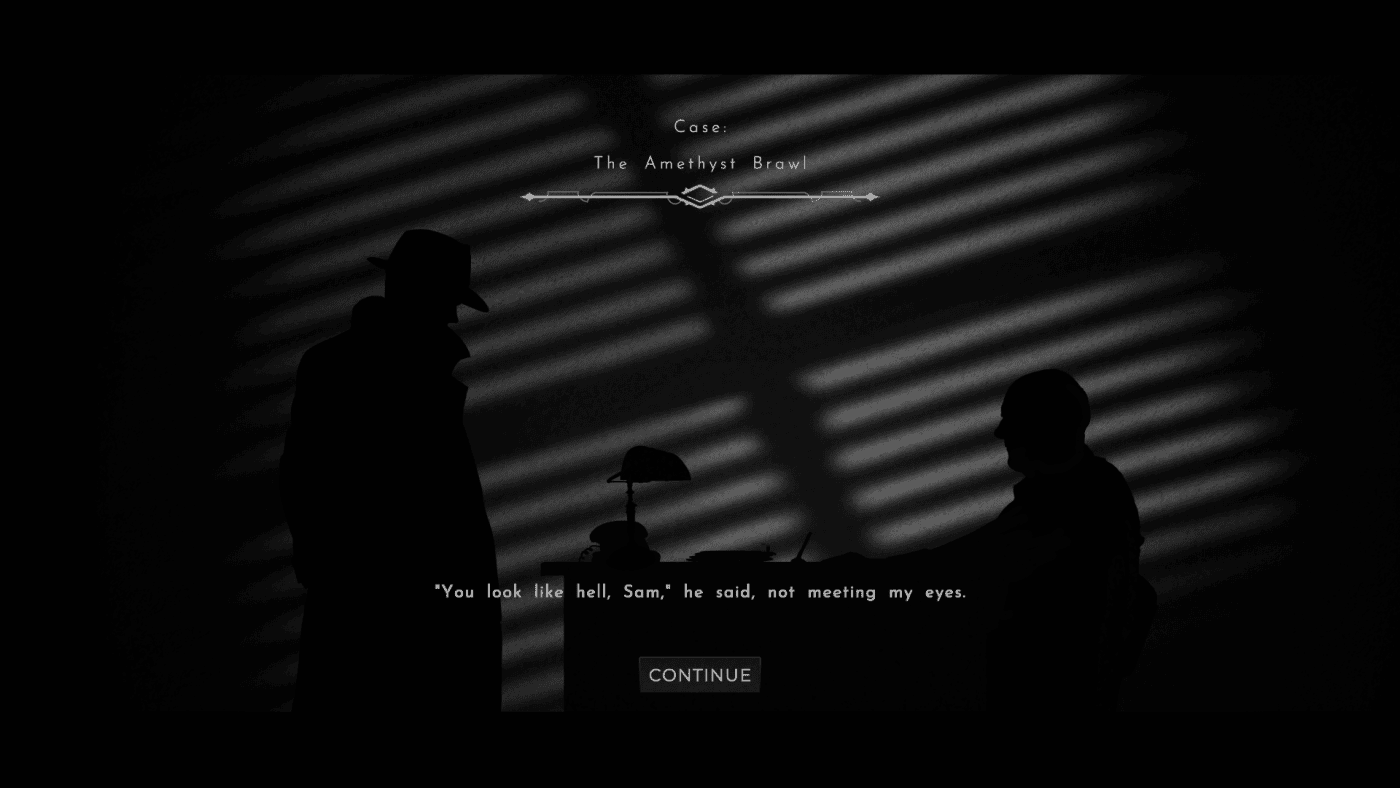
Developed by Lost Cabinet Games, an independent studio based in Athens, Obsidian Moon is a noir investigative game set in Obsidian City, a metropolis rotten to its core, where we step into the shoes of Carter, a former homicide detective marked by personal and professional failure. He does not investigate out of a sense of justice, but because it is the only thing he has left.
From the very first moments, Obsidian Moon makes its intentions clear. The game does not aim to impress through shocking twists or clever solutions, but instead builds a dense, coherent atmosphere, placing storytelling at the center of the entire experience.

Writing an Investigation
In Obsidian Moon, writing stands as the true starting point of the investigative experience. The game relies on text to define the world, its characters, and the tone of the investigation, asking the player to construct their reasoning through careful reading and interpretation of the available information. Every note, description, and fragment of inner monologue helps shape not only what happened, but also how the protagonist perceives the reality around him.
Sam Carter carries a past as heavy as the cases he faces: a former homicide detective worn down by alcohol, failure, and a loss that repeatedly surfaces in his thoughts. Captain Doyle, his superior and an old acquaintance, pulls him back into the field, offering a second chance paired with a far from reassuring warning. From the outset, the investigation feels less like a job and more like a fragile balance between what Carter still controls and what risks slipping out of his hands for good.
The narrative voice reflects this state of mind through dry, disillusioned writing firmly rooted in noir tradition. Descriptions of crime scenes and characters rely on strong sensory imagery, evoking places, smells, and sensations without ever slipping into spectacle. The prose works through subtraction, suggesting more than it states, and in doing so turns Obsidian City into a hostile, oppressive place, riddled with secrets and ambiguity.
This approach makes text an essential component of the investigation. Careful reading, lingering on a phrase, or noticing an apparently marginal detail becomes part of the process of reconstructing events. The writing does not simply recount what happens; it defines how the player observes, interprets, and judges the information in front of them.
The Desk as a Space for Play
The gameplay of Obsidian Moon revolves around a clear and focused idea: investigation emerges through the organization of information. The protagonist’s desk becomes the operational center of the experience, a space where documents, notes, and testimonies take shape under the player’s eyes, inviting them to build connections and maintain an overall view of the case.
Every collected element—whether a crime scene description, a witness statement, or a forensic report—finds its place within a visual system that encourages reorganization, comparison, and interpretation. Interaction feels immediate and intuitive, yet never shallow. The game demands attention, method, and a certain mental discipline, leaving the player responsible for bringing order to the growing flow of information, with the constant awareness that time moves forward and every decision takes up space—mentally before narratively.
This structure strengthens player involvement, as mistakes never register as technical failures but as flawed investigative choices. Closing a case with missing or misinterpreted information does not stop the experience; it reinforces the weight of consequences, making the investigative process feel credible and consistent with the game’s tone.
Within the demo, this system clearly shows its potential, offering a glimpse of how different approaches can lead to different outcomes, without ever pointing toward a single correct solution or a mandatory path.

Choices, Pressure, and Responsibility
Player freedom finds one of its most interesting expressions in the game’s difficulty settings, which do more than simply adjust challenge. Story, Normal, and Gumshoe redefine the relationship between the player and the investigation itself. These modes do not form a traditional accessibility scale, but instead present three distinct ways of experiencing detective work, each with its own priorities and consequences.
Story mode places narrative at the forefront, easing the pressure tied to sanity management and offering more explicit hints when combining clues. This option suits players who want to focus on story, characters, and atmosphere, without letting mistakes or resource management hinder their experience.
Normal mode, which the developers describe as the intended way to play, introduces a more balanced relationship between investigation and management. Investigative choices start to carry tangible consequences, the economy affects the protagonist’s mental state, and hints grow subtler, leaving more room for interpretation and player attention.
Gumshoe mode reveals Obsidian Moon’s vision most clearly. Here, the investigation turns into a no-safety-net experience: no combination hints, no ability to pause time, and loss of progress upon death. This setup turns failure into a structural part of the narrative, reinforcing the idea of detective work as a draining process where every decision matters and every misstep can prove final.
Within the demo, these modes outline the project’s ambition with clarity. Rather than adapting the game to the player, Obsidian Moon offers different tools to face the same investigation, allowing the chosen level of pressure to shape the experience.

Interface and Atmosphere
On a visual and auditory level, Obsidian Moon maintains strong coherence with its narrative framework. The interface remains minimal and centers on the desk and investigative documents, stripping away any unnecessary elements to support clear and functional reading of information. Every screen conveys the feeling of facing a real case, made of scattered notes, clippings, and details that require patient reconstruction.
Sound design plays a significant role in reinforcing immersion. From the start, the game suggests using headphones, a recommendation that makes sense given the care devoted to its soundscape. The soundtrack, built around jazz pieces that recall the game’s historical inspirations, accompanies the investigation with restraint, never overpowering it. The music creates a melancholic, suspended backdrop that blends seamlessly with the noir tone.
Visuals and sound work in synergy with the writing, not to draw attention to themselves, but to consistently support the atmosphere and rhythm of the investigation. This measured approach strengthens immersion and helps make the world of Obsidian City feel believable.

First Impressions
The Obsidian Moon demo clearly defines the project’s identity, offering a compact yet meaningful experience that highlights its priorities without relying on simplifications or shortcuts. The focus on writing, investigative organization, and the weight of player choices presents an investigative game that does not aim to please, but to engage through method, attention, and responsibility.
Some broader systems—such as time management, economy, and sanity—remain deliberately in the background, suggested rather than fully explored. Within the context of the demo, this choice feels coherent, as it presents the core of the experience without overwhelming it, while hinting at potentially tenser and more layered developments in the full release.
Overall, Obsidian Moon presents itself as a title deeply aware of the tradition it draws from, while attempting to reinterpret it through solid and coherent narrative design. It is a game that asks for time, focus, and active participation—and for that very reason, it manages to stand out within the contemporary investigative landscape.

If you wanto to try the demo: