In short
With Dog in the Machine, Studio Chahut delivers a turn-based tactical roguelite in which a robotic dog tries to escape a dystopian city by exploiting chain reactions, environmental obstacles and friendly fire. The review highlights a stimulating combat system, with action preview, synergies between Tricks and chipsets and good replayability, while noting an occasionally frustrating random component and a permanent upgrade hub that is not particularly generous: overall a solid experience, capable of standing out in a crowded genre.
With Dog in the Machine, Studio Chahut offers a tactical roguelite where players take on the role of a robotic dog in a dystopian city. An apparently simple strategy that gradually evolves. Chain reactions and customizable abilities form the foundation of an experience that aims to stand out through a path made of choices and foresight.
I won’t deny that Dog in the Machine initially left me perplexed. It’s not every day that you get to play as a robotic dog in an hostile world. All of this is then framed in a turn-based tactical-strategic game with roguelite elements. This is exactly the premise of Dog in the Machine, a production by Studio Chahut that takes us inside a mechanized dystopian city, from which our AutoDog will need to find a way to escape in order to reunite with humans, now exiled.
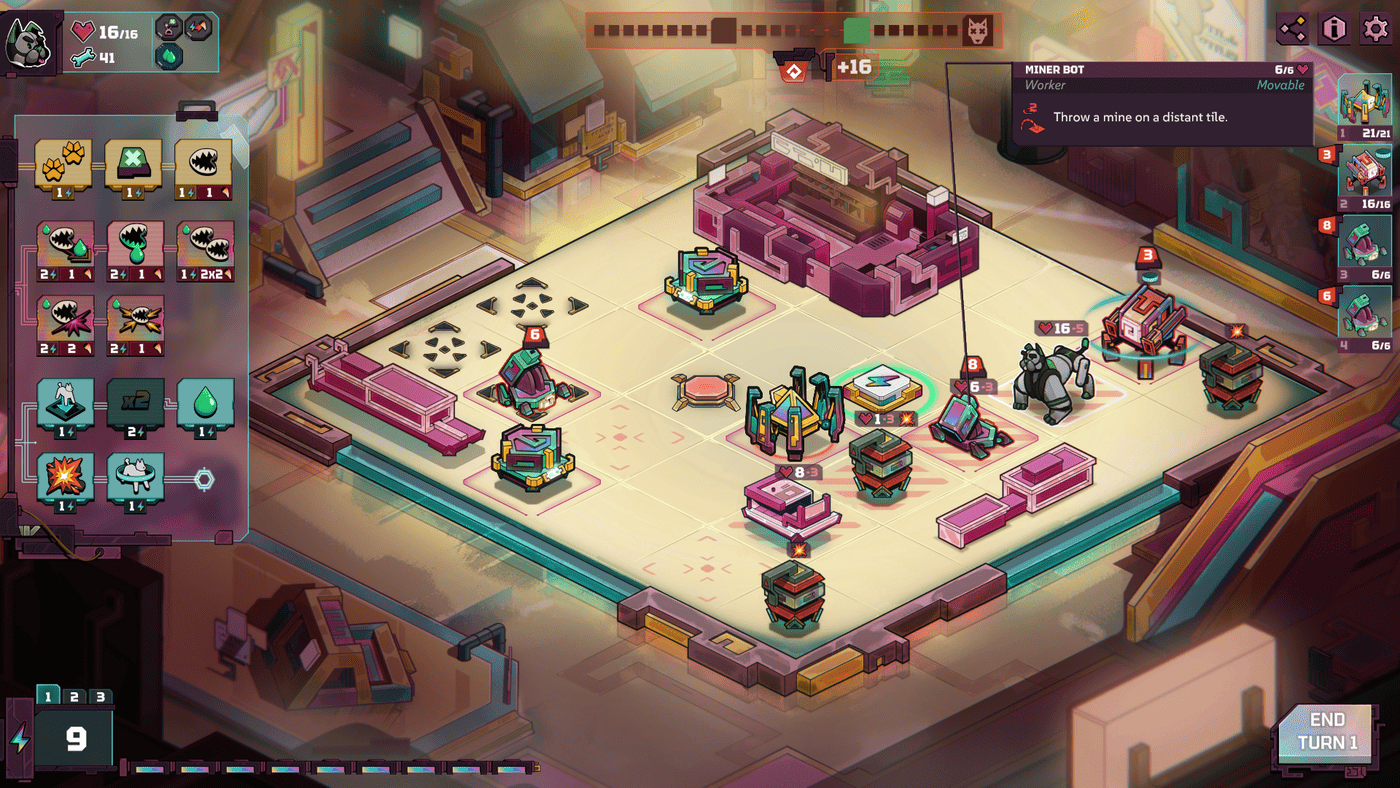
Beyond a decidedly particular concept, the game presents a fairly classic tactical roguelite structure, where combat takes place on compact grids. On this battlefield, enemies, guardians, and numerous interactive environmental elements take center stage. Conveyor belts, buttons, explosive obstacles, and other responsive elements become an integral part of battles, offering various possibilities to exploit the environment to your advantage and trigger spectacular chain reactions. The strategic component therefore plays a central role, requiring players to carefully study each situation and identify the most effective solution.
Setting aside this brief presentation, let’s begin to see what aspects make Dog in the Machine an interesting title and not simply derivative.
Structure and distinctive features of the game
Dog in the Machine builds its mechanics on the classic turn-based tactical system. Each action has its own energy cost, and Dog in the Machine divides actions into three categories: Movement, Trick, and Combat.Some can be repeated, while others, such as Tricks and Combat, have a single use per turn. It’s therefore important to manage them well and use them at the right moment. Once we deplete energy or make the necessary moves, we can end the turn. We can also check on enemies by hovering the cursor over them, to see where and how they will attack during their own turn.
To this is added the procedural component of the roguelite element. Maps, related obstacles, paths, upgrades, and moves are entrusted to the game’s procedural seed generation.
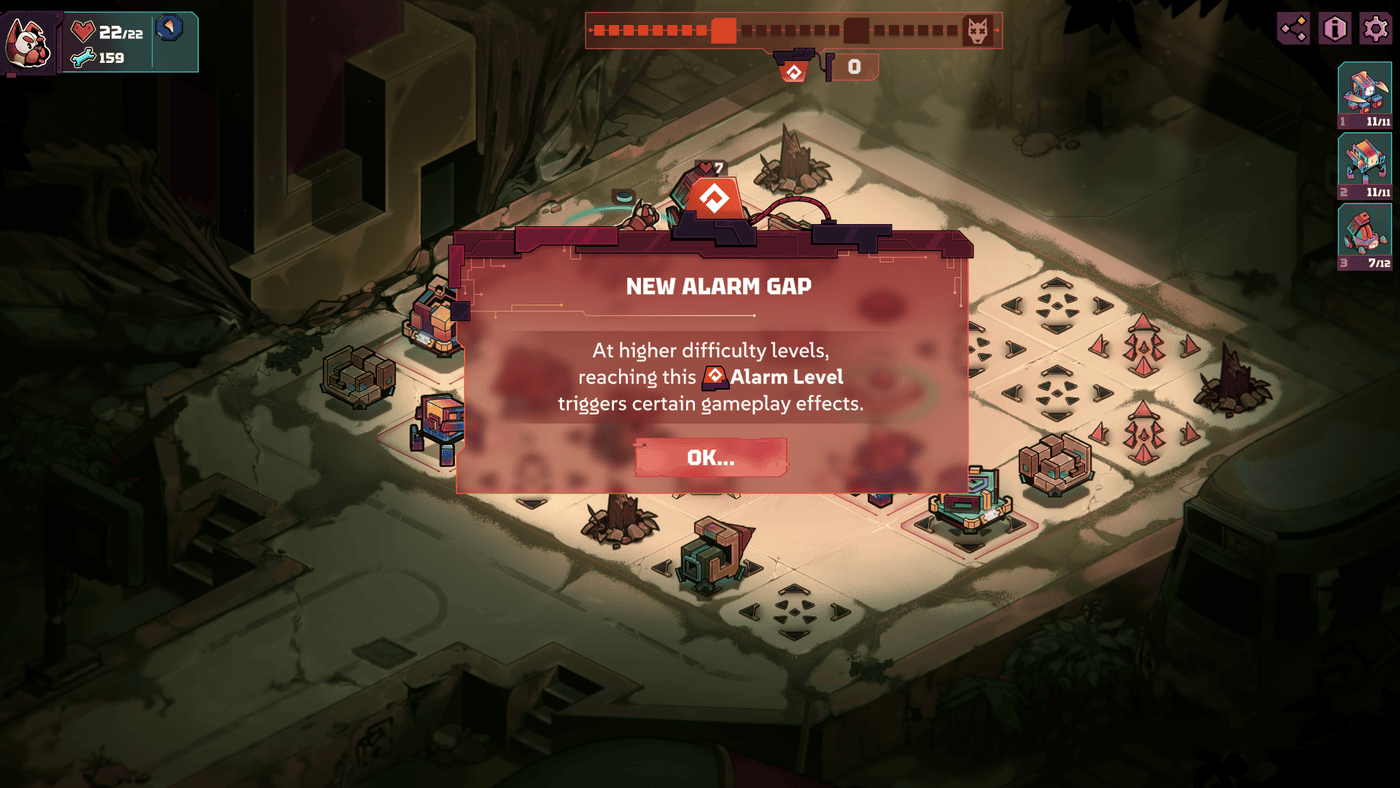
An important feature, despite the “relaxed nature of the game,” is the alarm system. During combat, some enemies will have a red icon with a number above them. If the player fails to lower that number by focusing on them, they will end up filling a bar at the top of the screen. This bar is composed of three checkpoints. Once each is reached, the difficulty of the run will permanently increase, up until the third. Indeed, once the last checkpoint has been reached, it’s game over. It’s therefore essential on our part to jam the alarm level so that it doesn’t rise.

Intelligent use of the environment
The last feature, no less important, is how the game uses environmental obstacles. Traps and structures do not serve as shelter or threat to the player. Players use obstacles as improvised weapons, and the obstacles cause damage when someone collides with them. Dog in the Machine encourages players to make good use of collisions and billiards between enemies and objects, enemies and enemies, enemies and traps. The variety of environmental elements is good, and they must be exploited if you want to reach the end. Their activation is even tied to different actions, further emphasizing the strategic element.
What I cited above gains even more value thanks to the concept of friendly fire. Enemy attacks activate traps and wound their own allies without distinction. The same traps and environmental obstacles are just as dangerous for us as they are for our opponents. Precisely for this reason, sometimes, the chain activation between collisions and traps could backfire on us, with outcomes you can imagine.
Which is exactly why the next chapter comes into play.
The tranquility of error
We are all familiar with the dynamics of turn-based tactical strategy games. In Dog in the Machine we need to make our choices and plan the right ability (with its energy cost) for the right occasion. Anyone familiar with the genre knows how important it is to weigh up decisions and think long term. Indeed, usually, once you have performed an action, you can’t go back, either enjoying the benefits or paying the consequences of a poorly thought-out choice.
Dog in the Machine intervenes on the combat system with a real-time preview function. This feature allows the player to observe the outcome of their actions before confirming them. We can thus experiment with different sequences, cancel moves, and try again until we identify the desired strategy, without an execution error compromising the result. As highlighted by the developers, any defeats should therefore depend on strategic choices and not on simple inaccuracies. With that said, the randomness of certain effects sometimes leaves the player unfairly defeated.
This feature still allows for a more relaxed approach that doesn’t compromise the difficulty. Being able to retry doesn’t mean eliminating challenge. The player still needs to reflect on their best strategy. Knowing how to read the battlefield and enemy positions is essential to progressing through battles.

The protagonists of the adventure
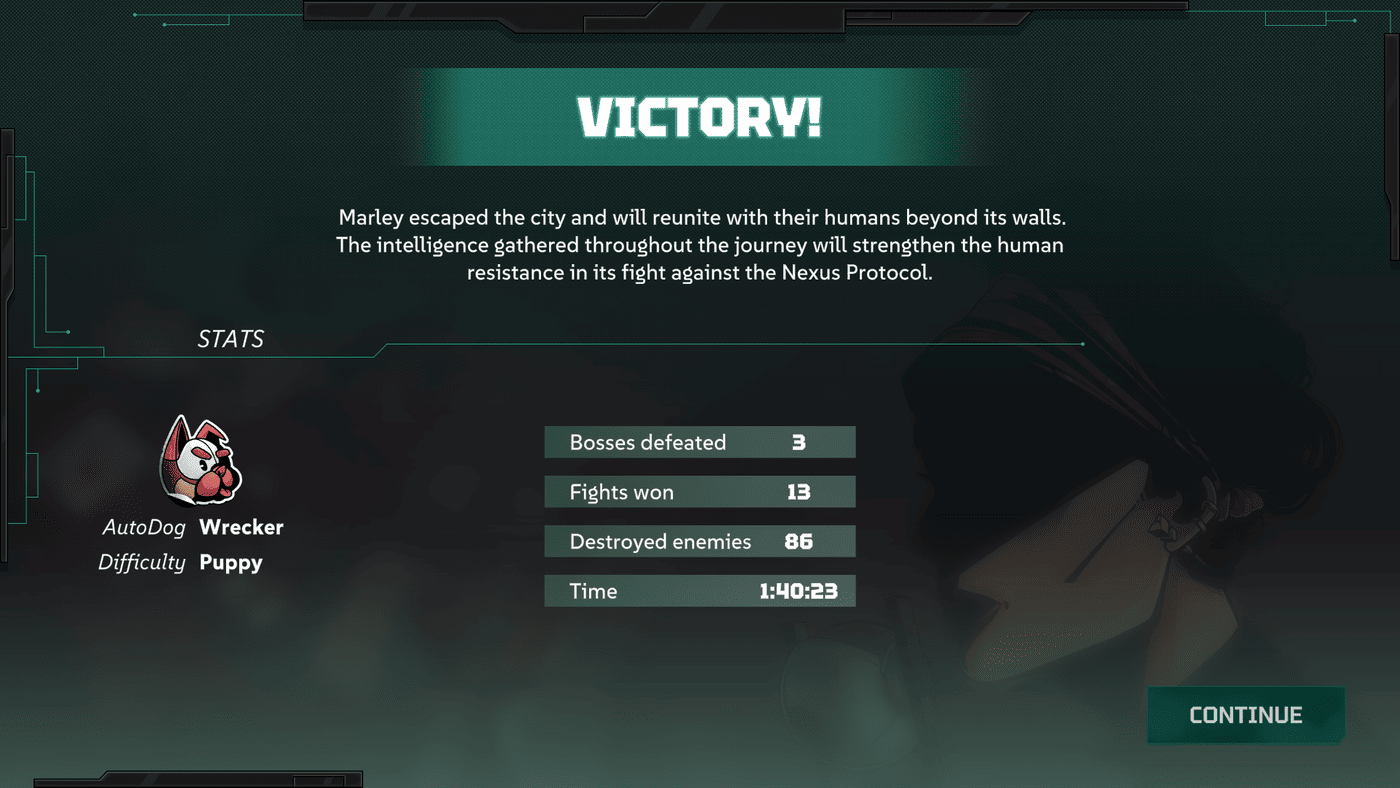
The AutoDog’s progression also seems to carry considerable weight in the economy of the experience. After each battle, the protagonist will learn a new Trick, namely a technique that the player can combine with two other abilities to create more elaborate and personalized moves. You can follow existing patterns or freely experiment with new combinations, progressively building an arsenal based on your favorite synergies.
Basically we have two types of robodogs: one devoted to melee combat, with powerful attacks and additional bonuses such as acid or explosions. The other relies more on their own positioning and that of the enemy, making the best use of the aforementioned collisions and the billiard effect.
After each run, our dog will level up, gradually unlocking new sub-breeds that offer fun variations on the main category. There are eight different selectable dog breeds in total. Having tried both macro types, I didn’t notice any exaggerated differences, except for the acid build which really helps with managing the alarm. The more strategic build is definitely slower, but despite a bit of a struggle at the beginning, with experience and the right choice of chipsets they also become powerful.
In short, both are valid, but the one that isn’t devoted to melee combat needs a bit more experience and reasoning.


Upgrades and replayability
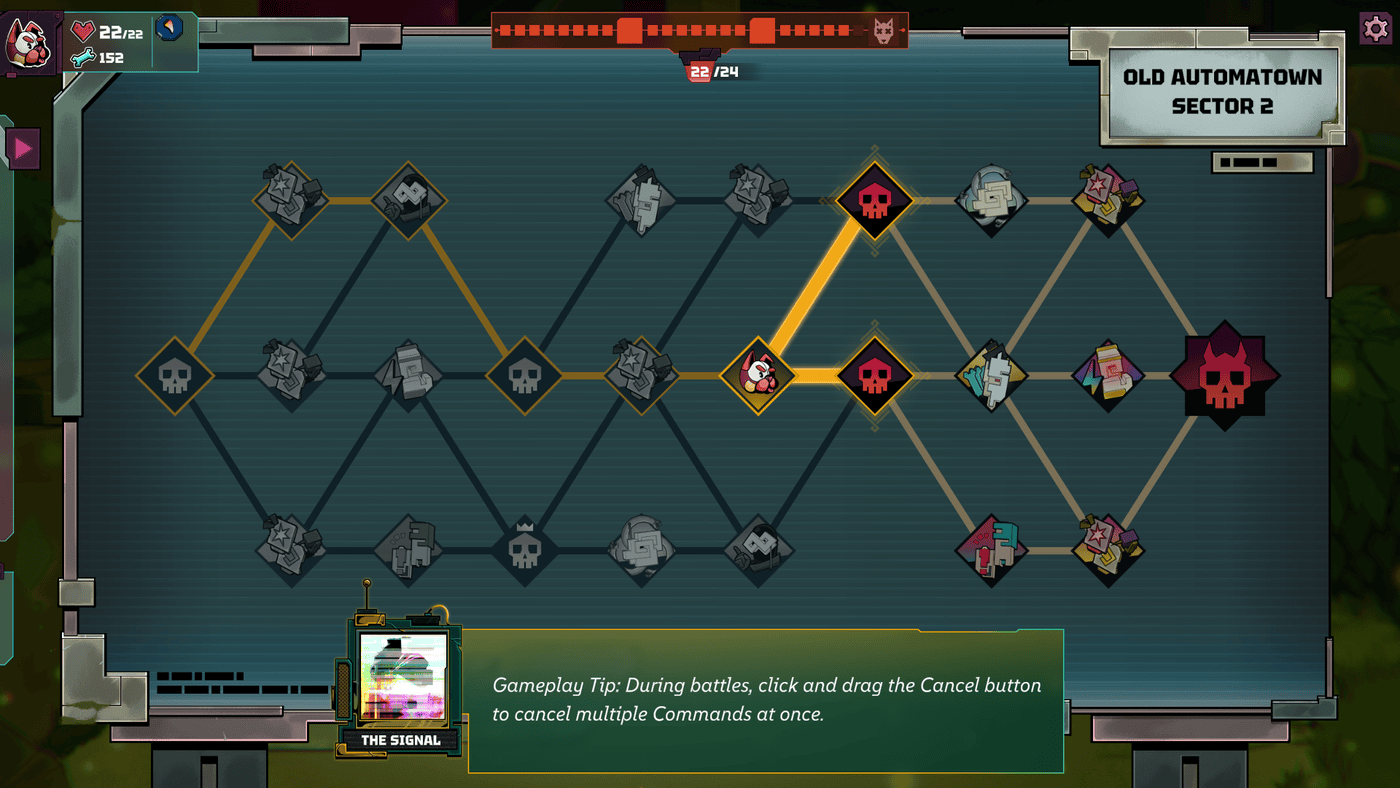
Between one battle and another, we’ll have to choose the path we want to take. An icon marks each tile and represents the type of upgrade we will encounter. Aside from battles, which we’ll always encounter at set points along the route and which we cannot avoid, we’ll meet a series of bizarre characters, each capable of revealing new details about the city’s story and offering different opportunities.
With mecha bones, the currency usable during the run, we can interact through purchases, trades, loot, upgrades, and even theft. All of this allows us to enrich our library of Tricks and to shape a configuration that’s ever closer to our playing style. Experimenting is essential: blending different abilities to create synergies and, above all, reducing ability costs will be fundamental steps to overcoming adversity and reaching our goal.
In this, chipsets play a crucial role. You can acquire and discover them at certain points, and they consist of passive abilities that integrate with active ones. In Dog in the Machine, discovering and leveraging synergies can truly make the difference between victory and defeat. Remember that you don’t just need to defeat the enemy as quickly as possible, but also to keep the alarm level from rising, otherwise you’ll seal your own defeat.


Replayability and central hub
One of the things I found weakest in Dog in the Machine is the management of the central hub. Don’t get me wrong: it’s not ugly or poorly managed. Simply, by using a different currency, it allows the purchase of other permanent upgrades. As understandable as the developers’ desire to not make the game too unbalanced in the long run may be, I would have preferred a few more choices. Perhaps even more impactful on gameplay options that excluded other purchases, so as to avoid imbalances.
In conclusion, the Autodog upgrades are valid options that, in my opinion, deserved more. Some cost a lot and don’t bring improvements adequate to their cost.
Another matter is replayability. Dog in the Machine offers three difficulty levels, unlockable once players have overcome the previous one. Each of the eight dogs can complete the game at any of the three difficulties and, on top of that, there’s the collection of Nexus Intel.
Every time you complete a run, you collect this resource which, once you reach level forty-two, unlocks a subsequent area. This leads to the heart of the adventure. Before reaching it, we’ll have a blocked path, with a forced choice that takes us to a first ending.
My two cents
Dog in the Machine is one of those games that might initially go unnoticed. Yet, behind its rather unusual concept, Studio Chahut has crafted a tactical roguelite that manages to stand out thanks to an intelligent combat system packed with possibilities. The real strength of the experience lies in its ability to turn every arena into a small strategic puzzle, where making use of the environment, chaining attacks, and triggering chain reactions become essential to overcoming your opponents.
The Trick and chipset systems also offer plenty of room for customization, encouraging players to experiment with different combinations and synergies. The alarm system adds another layer of pressure, preventing players from approaching encounters too casually. However, not everything works quite as well. Some random effects can undermine even a carefully planned strategy, while permanent progression and the central hub could have benefited from more attention. Some builds also require a fair amount of experience before they can truly reach their full potential.
Despite these shortcomings, Dog in the Machine is a solid experience that makes the most of its ideas without simply recycling familiar formulas. It doesn’t revolutionize the genre, but it shows how a good concept, supported by well-integrated mechanics, can deliver a surprisingly rewarding gameplay experience. And let’s face it: you don’t get to save the day as a robo-dog every day.
 8/10