
In short
Kalanoro, the action-platformer from Antananarivo-based Red Raketa Studio, draws on Malagasy folklore for a musical quest set in Lemuria, where Kalakely must assemble a lemur band to reach the witch Raneny. The cultural framing and hair-based combat give it a distinct identity, but accessible platforming, shallow combat and a weapon durability system that adds busywork rather than decisions keep it short of the genre’s best. A flawed but personable adventure worth trying with measured expectations.
A charming adventure with enough charm to sell out the show, but not quite enough platforming to earn the encore.

One of the greatest pleasures video games have given me over the years is the chance to step into the unknown: to begin an adventure without knowing where it will take me, what kind of world awaits or which stories I might encounter along the way. There is something special about those first moments of uncertainty, when everything is unfamiliar and even the smallest detail can become a discovery. It is a feeling I have always cherished, and one I hope never to lose.
No matter how many games we have played, how many worlds we have explored or how many stories we have followed to their conclusion, there is still something special about approaching a new experience with an open mind. Allowing curiosity to take the lead.
Setting aside our expectations, at least for a little while, and giving a game the opportunity to surprise us on its own terms. That becomes increasingly important when playing video games is not simply a hobby, but also a profession. Spending so much time playing and writing about the medium inevitably changes the way we experience it. Familiar structures become easier to recognise, design conventions stand out more readily, and the influences behind a creative decision can often be spotted long before a game has had the chance to show us where it might lead.
Experience brings a deeper understanding of the medium, but it can also make us so familiar with its language that we begin to anticipate what it has to say. It means setting aside our expectations, if only for a little while, and allowing a game to surprise us on its own terms.
And perhaps that is one of the things I have learned to be most mindful of. The more familiar we become with something, the easier it is to take it for granted. We begin to anticipate rather than discover, to compare rather than simply experience. It is an understandable consequence of spending so much time with the medium, but one that can gradually distance us from the very feeling that made us fall in love with video games in the first place.
Whenever possible, then, I try to approach a new game without allowing my expectations to get in the way. Not because I believe criticism should be free of standards or that every experience deserves to be judged without scrutiny, but because I think a game should first be given the chance to show us what it is. Before we are reviewers, before we start dissecting mechanics or evaluating design decisions, we are players. And I would never want to forget the simple joy of being one.

It was with this mindset that I approached Kalanoro, the platformer developed by Red Raketa Studio. When I first downloaded and launched the game, I knew very little about what awaited me. I hadn’t spent time studying its mechanics, familiarising myself with its world, or building expectations around what the experience should deliver. I simply wanted to discover what the developers had been working on and see what kind of adventure they wanted to bring to players.
There was, however, one quality I was particularly hoping to find: a genuine sense of originality. Not necessarily a revolutionary mechanic, an entirely new approach to platforming or an attempt to reinvent the genre from the ground up. What I was looking for was something more fundamental: a game with a distinct creative identity, one that could embrace the conventions of the genre without being bound by them, and had something of its own to bring to the table.
I believe that’s one of the qualities that makes certain video games stand out. They don’t necessarily have to be the most ambitious, innovative, or technically accomplished productions on the market. What matters is having a recognisable identity, a clear creative direction, and a personality that comes through in the way their different elements work together. A game doesn’t need to reinvent the wheel to leave an impression. Sometimes, it simply needs the confidence to follow its own path.
That’s an increasingly difficult achievement in an industry as crowded and diverse as today’s. Every year brings an extraordinary number of releases, ranging from ambitious blockbuster productions to smaller indie projects, each competing for an increasingly finite share of players’ attention.
This abundance is one of gaming’s greatest strengths, but it also makes standing out a considerable challenge. A technically competent product is no longer enough, nor is a familiar formula or an interesting premise necessarily sufficient. The real challenge lies in turning promising ideas into a cohesive experience, one that can establish its own identity and give players a reason to remember it. Few genres embody this challenge quite like platformers. Among the oldest and most influential forms of video game design, platforming has come a long way since its earliest days, evolving alongside new technologies, shifting design philosophies and ever-changing creative ambitions.
Its core principles may appear simple, but the possibilities they offer are anything but limited. From finely crafted 2D adventures to sprawling 3D worlds, the genre has continually expanded its horizons, exploring new mechanics, embracing different perspectives and giving rise to some of the most memorable experiences in gaming history.


That legacy, however, also raises the bar for anyone attempting to bring something new to the table. Decades of experimentation have established a wealth of design conventions, mechanics, and creative approaches that are difficult to ignore. This doesn’t mean every new platformer needs to reinvent the genre, nor does it make familiar ideas inherently less valuable. What matters is how those ideas are interpreted, refined, and brought together. A familiar mechanic can still feel fresh when supported by a strong vision and thoughtful execution.
Conversely, even the most promising concept can lose its appeal when the finished product fails to realise what made it interesting in the first place. This is a particularly important consideration when it comes to independent development. Working with limited resources and often considerable financial constraints, smaller studios remain among the industry’s most valuable sources of experimentation and creative diversity. Their games can offer different perspectives, tell stories that might otherwise go untold, draw on less familiar cultural influences or approach well-established genres from unexpected directions. That willingness to take creative risks deserves recognition, even when the final result doesn’t entirely live up to its ambitions.
Of course, good intentions and genuine passion cannot make up for shortcomings in a finished game. Ultimately, what matters is the experience players receive, not simply the ideas that inspired it. But I also believe that recognising a game’s creative identity is an important part of reviewing it fairly. The medium has always benefited from productions willing to look beyond established conventions, embrace different cultural influences, and explore ideas that might otherwise remain outside the mainstream. And that’s precisely where Kalanoro first caught my attention.
Developed by Red Raketa Studio, the game attempts to carve out its own identity through an imaginative world inspired by cultural and folkloric traditions that remain relatively unfamiliar to much of the Western audience. Rather than relying exclusively on settings and references that have become commonplace throughout the industry, it draws upon a different cultural heritage and seeks to translate it into an adventure players can discover for themselves.
I found this particularly appealing. Video games have an extraordinary ability to introduce us to cultures, traditions, and perspectives beyond our own experience. They can transport us to unfamiliar places, encourage us to look at the world differently, and sometimes spark an interest in subjects we might never have considered exploring otherwise. They don’t necessarily need to become educational experiences or provide an exhaustive account of the traditions that inspire them. Sometimes, simply making us curious is enough.

Kalanoro finds much of its appeal in this sense of discovery. Its visual identity, environments, and worldbuilding contribute to an imaginative setting that feels distinct from the outset. The result isn’t always as cohesive or fully developed as it could have been, but there’s a clear intention to make the game’s cultural influences an integral part of its identity rather than a superficial aesthetic choice.
Combined with several interesting gameplay ideas, this gives the adventure a personality that I found genuinely worth appreciating. Unfortunately, a distinctive identity and promising ideas can only take a game so far. As my time with Kalanoro progressed, it became increasingly apparent that the execution doesn’t always match the ambition behind the project.
While its different components occasionally come together in compelling ways, the overall experience lacks the consistency and refinement needed to make the most of its potential.
This is particularly noticeable in the gameplay. Platforming and combat provide a functional foundation for the adventure, but neither consistently develops into something especially distinctive or memorable. Some mechanics feel underutilised, certain ideas could have benefited from greater depth, and a more careful approach to their implementation would have made a meaningful difference. There are moments when it’s easy to recognise what the developers were aiming for, yet the finished experience doesn’t quite deliver the same level of satisfaction.
That’s a significant limitation for a platformer. Responsive controls, well-designed challenges, satisfying movement, and a consistent sense of progression are fundamental to the genre. An intriguing setting and a distinctive art direction can certainly enhance the experience, but they cannot compensate for gameplay that lacks the necessary polish. Kalanoro has ideas worth exploring, but it doesn’t always give them the room or refinement they need to flourish.
I wouldn’t describe it as the platformer you’ve been waiting for, nor would I suggest that it represents a new benchmark for the genre. It doesn’t. There are too many inconsistencies, too many underdeveloped elements, and too many opportunities left unexplored for such a conclusion to be justified. Yet I would also hesitate to dismiss it on those grounds alone. Beneath its shortcomings lies a creative vision that deserves attention, supported by an imaginative setting and a willingness to pursue a direction that feels distinctly its own.

That’s ultimately the balance I want to strike with this review. Acknowledging a game’s ambitions shouldn’t mean overlooking its flaws, just as identifying its shortcomings shouldn’t prevent us from recognising what it manages to accomplish. A fair assessment requires both. It means looking beyond the initial impression, understanding the intentions behind the design, and considering how successfully those intentions translate into the experience itself.
So, I’d encourage you to approach Kalanoro with realistic expectations. This isn’t a genre-defining platformer, nor is it an impeccably polished adventure. Its gameplay shortcomings are difficult to ignore, and some of its most interesting ideas deserved considerably more attention.
Nevertheless, there’s something to be said for a game that attempts to build its own identity through a distinctive cultural backdrop, an imaginative world, and a creative direction that doesn’t simply rely on familiar genre conventions. If you’re primarily looking for precision, depth, and consistently refined mechanics, you may find parts of the experience disappointing. But if you’re willing to look beyond its limitations, there’s a world here that can still capture your curiosity.
Kalanoro won’t rewrite the history of platformers, but it does offer something worth recognising: a genuine attempt to create an adventure with a personality of its own. Not every idea works, not every mechanic reaches its full potential, and the overall experience would undoubtedly have benefited from a more accomplished execution. Even so, I found myself appreciating the ambition behind the project and the creative direction Red Raketa chose to pursue. I would have liked to see more depth, greater mechanical refinement, and a stronger sense of cohesion. But those reservations don’t erase the enjoyment I found in discovering what the game had to offer.
Perhaps that’s the point I keep coming back to. One of the most wonderful things about video games is that there’s always another world waiting to be discovered. We never quite know which adventure will capture our imagination, which character will stay with us, or which unexpected experience will give us something to remember. Not every game needs to become a masterpiece, and not every journey will leave a lasting impression. But that shouldn’t stop us from remaining curious, taking chances on unfamiliar projects, and allowing ourselves to be surprised.
After all these years, that’s still what I look for whenever I start a new game. And I hope it always will be. In its own way, Kalanoro reminded me of why that feeling matters. It isn’t a flawless platformer, nor is it a genre-defining experience. But it has a distinctive personality, an intriguing cultural identity, and a creative vision that deserves to be recognised, even if its execution doesn’t always do it justice. And sometimes, that’s a worthwhile discovery in itself.

A Game Born from the Place Its Creators Call Home
Whenever we start a new game, our attention naturally turns to the adventure ahead. We wonder who we will meet, what stories we will uncover and, above all, how the journey will make us feel. That sense of anticipation is one of the things I have always cherished most about video games: the possibility of stepping into the unknown and discovering something we never quite expected.
But before pressing start, there is sometimes value in taking a step back. Beyond the characters, the mechanics and the worlds waiting to be explored, every game has a story of its own. A story about the people who made it, the ideas that inspired them and the experiences they chose to bring into their work. That is where I would like to begin with Kalanoro. Before getting to the adventure itself, I want to take a closer look at the people behind it and the place that helped shape their creative vision. To do so, we need to travel far beyond our familiar surroundings, to an island whose cultural richness remains largely unfamiliar to much of the gaming world: Madagascar.
Set in the Indian Ocean, off the southeastern coast of Africa, Madagascar is a land of extraordinary natural beauty and remarkable biodiversity. Its unique wildlife, striking landscapes and, above all, its lemurs have made it one of the most recognisable places in the world. Yet there is far more to the island than its natural wonders. Its cultural heritage is just as distinctive, shaped by centuries of traditions, oral storytelling and folklore passed down through generations.
It is this lesser-known side of Madagascar that makes it such a compelling source of inspiration for Kalanoro. Drawing on the island’s folklore and cultural traditions, the game brings a distinctive heritage into a medium where such influences are still rarely explored, grounding its fantastical world in a place with a rich identity of its own.

Madagascar is also the home of Red Raketa Studio, the independent team behind Kalanoro. Founded in 2021 in Antananarivo, the country’s capital, the studio was established by Dina, Luana and Steevie. The three founders brought together their skills, interests and shared ambition to create video games, setting out to build a studio with a distinct creative identity of its own.
Like many independent developers, Red Raketa Studio operates in an industry where resources are often limited and standing out is no easy task. But the team’s ambitions extend beyond simply making games and reaching a wider audience. There is a more personal purpose behind its work: to draw on its own roots, celebrate Madagascar’s cultural heritage and share a part of that world with players who may never have encountered it before. This is what I find particularly compelling about Red Raketa Studio. Its games are not simply an outlet for creative ideas, but an opportunity to share something deeply connected to the people making them.
Dina, Luana and Steevie have turned to their own cultural background as a source of inspiration, incorporating elements of Malagasy traditions and folklore into their creative work. This is not just about choosing an unusual setting or adding a few distinctive references to stand out in a crowded market. It is about drawing from a world they know firsthand and finding a way to make it accessible to people whose experiences may be entirely different.
In that sense, Kalanoro feels like an invitation to look beyond the familiar. It encourages players to encounter a culture that may be far removed from their everyday lives, discover traditions they might never have come across and explore a fictional world shaped by a very real place.
And that, to me, is one of the most fascinating things video games can do. They can entertain, challenge and immerse us, but they can also introduce us to perspectives we might otherwise never encounter. They can bring people together through shared experiences, even when those people come from different parts of the world and have little in common beyond their love of games.

We do not always think about this when approaching a new release. More often than not, we focus on what a game has to offer in terms of gameplay, presentation and entertainment. Yet some of the most memorable experiences come from the things we discover along the way: an unfamiliar setting, a different cultural perspective or a story that gives us a glimpse into someone else’s world.
This is one of the reasons independent games continue to hold such a special place in the industry. They often provide room for creative voices and personal perspectives that might otherwise struggle to find an audience. That does not mean every independent game needs to reinvent its genre, nor that a compelling idea is enough to guarantee a successful experience.
But it does mean that there is value in a medium where developers from different backgrounds can bring their own stories, influences and sensibilities to the table. Sometimes, the most interesting thing about a game is not immediately apparent. It may be found in an artistic choice, a character inspired by local folklore or a detail that reveals something about the people who created it. In the case of Kalanoro, understanding the project’s origins gives us a different way of looking at the adventure, allowing us to appreciate the significance of Madagascar to the team behind it.
That cultural connection does not necessarily call for a serious or overtly educational approach. In fact, one of the more interesting aspects of Kalanoro is the way it embraces a playful, colourful and decidedly eccentric tone. Rather than presenting its inspirations through a formal retelling of traditional stories, the game draws on them to create an adventure filled with unusual characters, exaggerated situations and a world that encourages curiosity.
There is something refreshing about that approach. A game does not need to explain every reference or turn every cultural influence into a lesson. Sometimes, a distinctive creature, an unexpected character or a curious detail is enough to spark an interest in the world behind it.
Fantasy can be a powerful way of sharing something real. It allows developers to reinterpret their own heritage while giving players the freedom to explore, imagine and simply enjoy the adventure. With Kalanoro, Red Raketa Studio appears to have embraced that possibility, using the language of video games to bring its own cultural influences into a colourful and accessible experience.
The game itself is an action-platformer with a strong musical identity, set in the fantastical land of Lemuria. Its world brings together elements of Malagasy folklore, eccentric characters and a distinctly playful sense of humour. At its heart is Kalakely, a creature inspired by Madagascar’s folk traditions, who sets out to confront the witch Raneny and challenge her rule.
To achieve his goal, Kalakely must assemble a band of unlikely lemur musicians, rescue fellow artists and travel through a variety of environments. Along the way, players will face enemies, boss encounters and challenges that blend platforming, exploration and combat. Music is woven into the game’s identity, serving not only as a backdrop to the adventure but also as an important part of its characters and overall presentation. A colourful art style, an expressive cast and a series of unusual ideas complete the picture of a game that clearly wants to stand out through its personality.

On paper, Kalanoro brings together several ambitions: to deliver a platforming adventure, to build an experience around music and to introduce players to a cultural heritage that remains relatively unexplored in the medium. These elements give the project a distinctive starting point, even if their success ultimately depends on how well they come together in practice. Lemuria becomes the space in which Red Raketa Studio can reinterpret its own influences through the freedom of fantasy, creating a world that reflects both the developers’ roots and their creative aspirations. Rather than treating its origins as a footnote, Kalanoro places them at the heart of its identity.
Of course, a game’s background and creative intentions can only tell us so much. What matters just as much is how those ideas translate into the experience itself: the quality of its mechanics, the precision of its controls, the design of its levels and its ability to sustain the player’s interest.
That is what I want to find out in this review. How successfully has Red Raketa Studio turned its vision into a compelling adventure? Does Kalanoro manage to make its distinctive identity felt throughout the experience? And, perhaps most importantly, does the game deliver on the promise of its ideas once we finally take the controller in our hands?
Because while the story behind a game can certainly enrich our understanding of it, the experience itself is what ultimately determines whether that story becomes something we remember.
A Fantasy Adventure with a Different Cultural Voice
Before turning to Kalanoro‘s gameplay, I think it is worth taking a moment to consider the story behind our journey through Lemuria. Not to reveal its major events or give away the surprises that await us, but to establish the premise and the circumstances that set our protagonist on her way.
After all, part of the pleasure of an adventure lies in the things we discover along the way. The unexpected encounters, peculiar characters and little moments that give a world its personality are best experienced without knowing what comes next.
At the heart of Kalanoro is a premise that is both simple and refreshingly unconventional. We play as Kalakely, a creature inspired by Malagasy folklore, who sets out to challenge the rule of Raneny, a witch who has seized control of Lemuria and its inhabitants. Getting close to her, however, requires a rather unusual approach. Rather than confronting her head-on, Kalakely must first assemble a band popular enough to earn a place at a concert held in the witch’s honour.
Before she can take on her nemesis, then, our protagonist has to find the right musicians, bring them together and win over an audience. What begins as a mission to free Lemuria soon turns into an unlikely pursuit of musical fame. It is an amusing premise, but also one that gives Kalanoro a clear identity from the outset. The game takes the familiar framework of a fantasy adventure and gives it a musical twist, making the band more than a quirky addition to the cast.
Music becomes the means through which Kalakely hopes to reach her goal, shaping the direction of the story and giving the journey a purpose beyond the usual quest to defeat a powerful enemy. This is not the familiar tale of a chosen hero following an ancient prophecy, retrieving a legendary artefact or fulfilling a destiny written in the stars. Kalakely’s path is decidedly less conventional. To reach Raneny, she must first build a band, find common ground with its members and prove that they have what it takes to win over an audience.
That premise also informs the structure of the adventure. Kalakely travels across the different regions of Lemuria, meets a colourful cast of characters and seeks out legendary musicians who might be willing to join her group. Each new destination brings another potential recruit and another opportunity to explore the world, gradually bringing her closer to the concert that could finally put her within reach of Raneny. It is a straightforward narrative progression, but one that gives the journey a clear sense of direction and a reason to venture beyond the beaten path.
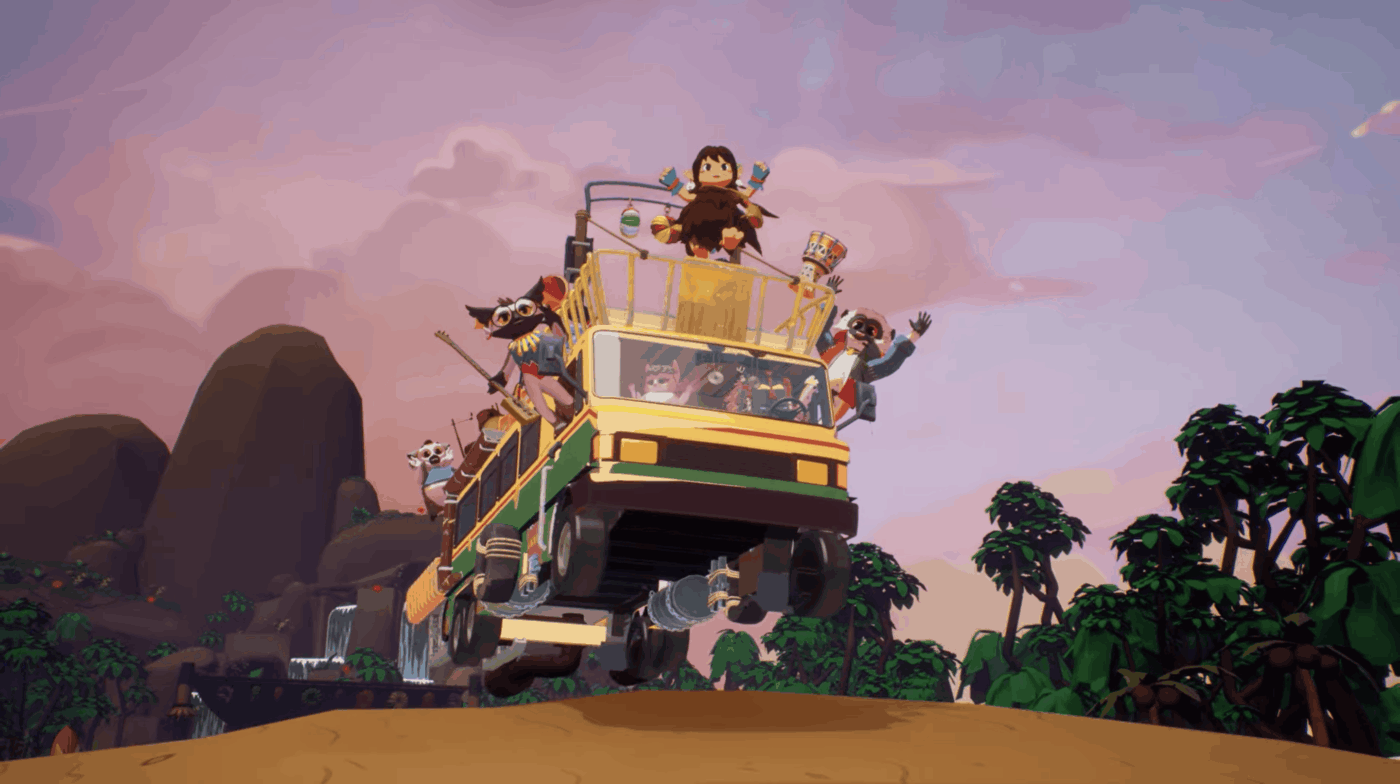
What makes the idea particularly interesting, however, is the role music plays in the story. In Kalanoro, it is not simply a matter of having a lively soundtrack or a band to lend the adventure some personality. Music sits at the centre of the game’s premise, and the story gives it a purpose that extends beyond the purely decorative. The act of bringing musicians together, giving them a stage and building something through their shared talents touches on ideas of collaboration, self-expression and the freedom to find one’s own voice. These themes take on added significance in a world where Raneny’s rule appears to have curtailed the freedom of its inhabitants.
Against her authority, Kalakely’s band represents a different kind of power: the ability of individuals to come together, express themselves and pursue a common goal. There is a compelling contrast at the heart of this setup. On one side is a ruler seeking to impose her will on an entire world; on the other, a group of artists attempting to make themselves heard.
The story may approach this conflict with a light touch, but its premise leaves room for ideas about freedom and control, individuality and community, and the importance of having a voice of one’s own. I would be careful not to overstate the themes the narrative seeks to explore, especially when part of its appeal lies in discovering its twists and turns firsthand.
Nevertheless, these underlying themes give Kalanoro a degree of depth that its eccentric premise might not immediately suggest. Beneath the humour and colourful spectacle, the story touches on the power of creativity to challenge authority, foster connections, and bring people together around a shared purpose. As mentioned earlier, Kalanoro draws inspiration from Malagasy folklore and traditions that remain relatively unfamiliar to many players.
These influences are woven throughout the adventure, shaping everything from Kalakely and the creatures she encounters to the mythology and distinctive identity of Lemuria itself. This gives the game a flavour of its own, setting it apart from fantasy adventures that tend to draw on more familiar settings, mythologies, and established archetypes. I appreciated the decision to look beyond those conventions. By drawing on a cultural tradition that has rarely been explored in video games, Kalanoro offers a different perspective on fantasy and allows its setting to stand apart from more familiar worlds. It is a reminder that folklore can provide a rich foundation for imaginative storytelling, even when the result is playful rather than particularly ambitious.


That said, Kalanoro does not attempt to tell a particularly complex story. Its narrative follows a largely linear path, maintaining a light-hearted, fairy-tale tone and occasionally embracing the absurd. There are no elaborate subplots or extensive character arcs, and the game rarely pauses to develop its ideas beyond what is needed to keep the adventure moving. Instead, it relies on the world, its inhabitants and the situations Kalakely encounters to sustain the player’s interest.
I do not necessarily see this as a shortcoming in itself. Not every adventure needs a complicated plot to be enjoyable, just as not every game needs to approach its themes with a sense of solemnity. A straightforward story can be perfectly suited to an experience built around exploration, humour and a colourful cast of characters. And cultural inspiration does not have to come wrapped in an overtly educational message to be meaningful.
In many ways, Kalanoro understands the kind of adventure it wants to be. Lemuria is bright, eccentric and full of characters who seem to have stepped out of a particularly unusual fairy tale. The story embraces that spirit, choosing immediacy and playful invention over dramatic weight. It does not attempt to turn every encounter into a major revelation or every cultural reference into an extended explanation. Instead, it lets the journey speak for itself.
Even so, I found myself wishing that some of the ideas introduced along the way had been explored more fully. The folklore behind Kalakely, the creatures of Lemuria and the place of music within this society all offer opportunities for a richer narrative. The musicians Kalakely encounters could have provided a deeper understanding of the world and its inhabitants, while the process of bringing such different characters together might have given the story greater emotional resonance.
This isn’t to say that every new recruit needed a detailed backstory, or that the game should have paused to explain every detail of its mythology. Rather, Kalanoro repeatedly hints at a world with far more to offer than its narrative ultimately explores. Its ideas are compelling, but the game doesn’t always give them the attention they deserve, leaving some of their potential untapped.
Even so, there’s a certain appeal to the restraint with which Kalanoro approaches its storytelling. It doesn’t overcomplicate an already unusual premise or try to give its narrative a weight that would feel at odds with the adventure’s light-hearted tone. Instead, it keeps things moving, maintains a clear focus on the journey, and allows the characters, colourful environments, and cultural influences to do much of the work. It’s a straightforward approach, but one that suits the game’s personality, even if I would have liked to see some of its more promising ideas developed further.
Ultimately, the narrative serves Kalanoro best as the foundation for its journey rather than as a particularly memorable story in its own right. Its strongest qualities lie in the world it introduces, the cultural perspective it brings to the genre and the central role it gives music. The game may not make the most of every idea it puts forward, but it has a distinctive premise and a setting worth exploring: qualities that give the adventure a personality of its own.

A Musical Adventure That Doesn’t Always Keep the Beat
It’s when we move beyond the premise and get our hands on the actual gameplay that Kalanoro begins to show its true colours. Beneath its vibrant presentation and charming narrative setup lies an adventure built around a surprisingly broad range of activities, weaving together exploration, combat, platforming, and a series of mechanics centred on managing our band.
From the outset, there’s a clear sense that Kalanoro wants to experiment. Rather than committing to a single gameplay formula, it continually introduces new activities, gradually expanding the range of things we can do as the adventure progresses. One moment we’re exploring the surrounding environments or figuring out how to reach an otherwise inaccessible platform; the next, we’re fighting off groups of enemies, gathering resources, preparing meals for our fellow musicians, or tackling one of the various tasks that punctuate our journey.
This variety is one of the game’s most immediately appealing qualities. The constant shifts between different activities help maintain a lively pace, ensuring that the adventure rarely settles into an entirely predictable routine. There’s an evident desire to keep players engaged by offering something new to do, and that creative ambition deserves recognition. However, the more Kalanoro expands its collection of mechanics, the clearer it becomes that having plenty of ideas isn’t necessarily the same as knowing how to make them work together.
Variety alone cannot guarantee a well-rounded experience. For a game built around several distinct systems to feel cohesive, each component needs to serve a clear purpose, develop at an appropriate pace, and complement the others. Unfortunately, Kalanoro doesn’t always strike that balance. Some of its ideas are introduced with considerable promise, only to receive relatively little attention as the adventure moves on. At times, the emphasis seems to be on adding another activity rather than exploring the possibilities of the ones already available.

A Platforming Routine with Plenty of Bounce, but Little Bite
Let’s start with Kalakely herself and the movement mechanics that underpin Kalanoro‘s platforming. Agility and accessibility are the two defining principles here. Our protagonist can dash, double jump, and perform melee attacks, giving her the basic tools needed to navigate the environments, overcome obstacles, and fend off the creatures she encounters along the way. The controls are intuitive, and it takes very little time to become familiar with her abilities. From the opening stages, moving between platforms feels natural and, for the most part, enjoyable.
Rather than placing an emphasis on technical execution, Kalanoro keeps its platforming firmly within accessible territory. It doesn’t expect every jump to become a demanding test of precision, nor does it ask players to master an extensive set of traversal techniques.
Instead, movement is designed to keep the adventure flowing, allowing us to progress through each environment at a relaxed pace while taking in its various activities, obstacles, and secrets. The result is a straightforward platforming system that rarely gets in the way, but equally seldom offers anything particularly memorable. Kalanoro is not a technically demanding platformer, nor does it distinguish itself through intricate level design or particularly elaborate movement mechanics. Its approach is uncomplicated, and it generally does what it needs to do without making a fuss.
There is a certain logic to this design choice, especially in an adventure that already has several different elements competing for the player’s attention. Keeping movement accessible makes it easier to shift between exploration, combat, and the various activities that make up the experience, without one aspect becoming an obstacle to another. Even so, I would have liked to see the game make more ambitious use of Kalakely’s abilities. As the journey unfolds, there is room for the platforming to become more inventive, introducing situations that encourage players to engage more creatively with the protagonist’s moveset. Instead, the mechanics remain largely consistent throughout, making traversal pleasant enough but leaving some of its potential untapped.

A Combat System with a Short Shelf Life
Combat has a more distinctive feature up its sleeve. As we become familiar with Kalakely’s abilities, one detail in particular stands out: her most recognisable weapon isn’t a sword, a staff, or any of the conventional tools we’d expect to find in a fantasy adventure. It’s her own hair. She can use it to strike enemies from a distance, briefly stun them, and interact with certain elements of the environment. It’s an inventive touch that immediately gives the protagonist a recognisable identity.
There’s something particularly enjoyable about discovering how such an unconventional feature can become an integral part of the gameplay. It’s also one of the clearest examples of the creative thinking behind Kalanoro: taking something unexpected and turning it into a defining characteristic of the adventure. The novelty of the idea, however, isn’t always matched by the depth of its implementation. Kalakely’s hair-based abilities expand her offensive options and introduce a handful of interesting interactions, but their applications remain relatively straightforward.
We’re rarely encouraged to experiment with elaborate combinations or substantially change our approach according to the enemies we face. These abilities give the combat a distinctive flavour and add personality to Kalakely’s repertoire, but they never quite evolve into a particularly sophisticated system. The weapons we discover throughout our travels follow a similar philosophy.
Rather than relying on the traditional arsenal of a fantasy adventure, Kalanoro equips us with decidedly more unconventional implements. Sandals and frying pans, for instance, can become makeshift weapons, allowing us to fend off enemies with objects that are considerably more amusing than intimidating. It’s a playful idea that fits the game’s personality and makes for some entertaining encounters, if only because of the unlikely tools we find ourselves wielding.
There’s also a durability system to consider. The weapons we collect aren’t designed to last indefinitely: each has a limited amount of durability that decreases with use until the item eventually breaks. This encourages us to rotate our equipment, make the most of whatever we find, and avoid becoming too reliant on a single weapon. It’s a simple mechanic, but one that fits naturally with the game’s improvised arsenal, while giving us an additional reason to pay attention to the resources scattered throughout Lemuria.
We can’t simply find a weapon we like and rely on it for the remainder of the adventure. Sooner or later, it’ll break, and we’ll have to make do with something else. In principle, this adds a light resource-management element to combat and encourages us to adapt to the tools at our disposal.
In practice, though, the need to replace our equipment doesn’t always lead to particularly interesting decisions. The eccentricity of the available weapons makes experimenting with different options enjoyable, but their individual characteristics don’t consistently have a meaningful impact on how we approach encounters. Consequently, durability can feel less like a mechanic that encourages tactical flexibility and more like an additional requirement to keep replacing our current weapon.


This is particularly noticeable when considering the relatively accessible nature of combat as a whole. Most enemies pose little difficulty, and once we’ve familiarised ourselves with the basic mechanics, a fairly straightforward combination of attacks and abilities is usually enough to deal with them. There are occasions when we need to pay attention to enemy movements, choose the right moment to close the distance, and make effective use of Kalakely’s abilities. However, the game rarely presents encounters that demand a substantial change in strategy.
Boss fights offer a natural opportunity to break away from the more routine skirmishes, but they don’t always make the most of the combat system’s potential either. There are a few encounters that stand out, yet the overall impression is that fighting remains a supporting component of the adventure rather than one of its defining strengths. This isn’t a matter of wanting the game to be more difficult for the sake of it. An accessible combat system can be perfectly enjoyable without demanding pinpoint precision or an especially punishing level of challenge.
What I would have liked to see was greater variety in enemy behaviour and more inventive ways of putting Kalakely’s abilities to use. Encounters built around different approaches and more interesting interactions between the protagonist’s skills and her opponents could have given combat a much stronger identity.
A Charming Management System That Doesn’t Quite Hit the High Notes
Combat, however, is only part of what makes Kalanoro an unusual adventure. A substantial portion of the gameplay revolves around assembling our band, turning an important part of the narrative premise into a fully fledged gameplay component. Kalakely must seek out new musicians, convince them to join her group, and put together a band popular enough to secure a place at the concert organised in Raneny’s honour.
This gives the developers an opportunity to move beyond the more familiar conventions of the platforming genre, introducing management mechanics that tie into both exploration and progression. Recruiting a musician isn’t simply a matter of meeting a new character and adding them to our growing group. Each recruit has their own needs and preferences, which we’re expected to take into consideration once they become part of the band.
This is an aspect of the game I particularly appreciate, as it gives the central premise a more tangible role in the experience. After all, putting a band together involves more than simply bringing a group of musicians under the same name. Its members need to find common ground, learn to work alongside one another, and come together around a shared goal. Kalanoro seeks to bring that idea into the gameplay itself, building a series of mechanics around resource gathering and cooking that make looking after the group an integral part of the adventure.
As we explore Lemuria, we’ll come across ingredients and materials that can be taken back and used to prepare meals for our fellow musicians. Each member has their own tastes and preferences, and learning what they enjoy becomes part of looking after the group. The resources we collect therefore serve a purpose beyond providing upgrades or contributing to our general progression: certain ingredients can prove particularly useful when it comes to meeting the needs of our companions.
This gives us an additional reason to pay attention to what we pick up during our travels, keep hold of ingredients that might come in handy later, and remember which dishes our bandmates would like us to prepare. It’s a modest layer of planning, but one that initially gives resource gathering a welcome sense of purpose. Instead of collecting everything simply because it’s available, we’re encouraged to consider how individual ingredients might contribute to the well-being of the group.
Looking after our musicians also has tangible consequences. Neglecting their needs for too long can cause them to temporarily leave the band, forcing us to win them back before we can move forward. It’s a way of giving our responsibilities a little more weight and reminding us that our companions still require attention, even when we’re busy with other activities.
I like the thinking behind this mechanic. Recruiting musicians is only the first step; we also need to make sure they have a reason to stay. It creates a modest sense of interdependence between the characters and the player, while reinforcing the idea that putting a band together involves more than simply collecting enough members to fill a stage.
In this respect, band management is one of Kalanoro‘s most distinctive features. It takes an element that could easily have remained a narrative device and gives it a practical role in the gameplay. Unfortunately, the execution doesn’t always live up to the promise. Once we’ve learned our companions’ preferences and become familiar with the cooking system, gathering ingredients and preparing meals can quickly turn into a predictable routine. The repetition gradually takes some of the pleasure out of the process, while having to attend to our musicians can occasionally interrupt the flow of the adventure.
What initially feels like a charming way of looking after our companions can eventually become another list of tasks to complete before getting back to the activities we actually want to pursue. The underlying idea remains appealing, but the system could have benefited from greater variety and a more substantial evolution as the band grew.

A Game with Too Many Tricks Up Its Sleeve
This tension between variety and repetition goes a long way towards defining Kalanoro‘s approach to gameplay. There is always something to do, with the adventure moving between exploration, combat, resource gathering, cooking, band management, and the various activities tied to progression. Upgrades and purchases from the merchant offer further ways to put the resources we collect to use, adding another layer to the experience. On paper, this should make for an adventure that constantly changes pace, giving players plenty of reasons to keep moving forward.
For a while, it does. Having a steady stream of objectives to pursue gives the adventure a welcome sense of momentum, particularly during the opening hours, when each new activity brings something different to the table. Rather than relying on a single gameplay loop, Kalanoro continually introduces new ways to engage with its world, and this willingness to explore different ideas is among its greatest strengths. As the initial excitement of discovery begins to wear off, however, the limitations of this approach become harder to ignore.
Some activities struggle to retain their appeal, while others increasingly rely on routines we have already encountered several times. What initially feels like an abundance of possibilities gradually begins to resemble a collection of familiar tasks, with fewer surprises to keep us engaged.
The problem is that Kalanoro is often more interested in introducing new ideas than in exploring the potential of those it already has. Its various systems give the adventure considerable breadth, but don’t always receive the attention needed to make them truly engaging over time. Resource gathering serves a clear purpose, yet rarely offers fresh incentives as we progress. Cooking gives band management a practical dimension, but its repetitive nature eventually becomes difficult to overlook. Combat, meanwhile, has some genuinely inventive touches, although it never quite develops the depth needed to become a consistently rewarding part of the experience.
Exploration is not entirely immune to these shortcomings either. It provides an enjoyable framework for the adventure, but rarely makes the most of Kalakely’s movement abilities or encourages us to experiment with them in particularly interesting ways. The issue, then, is not simply that Kalanoro tries to do too much. Rather, its different components don’t always come together as naturally as they should, nor do they build upon one another in ways that make our progress feel increasingly meaningful.
There are moments when the game seems almost too eager to move on to the next idea. Instead of taking an interesting mechanic and finding new ways to develop it, Kalanoro often introduces another activity, another system, or another objective. Yet I can’t help feeling that a more focused approach, with greater emphasis on expanding the mechanics already in place, would have made for a considerably more satisfying experience.
This should not be mistaken for a lack of creativity. Quite the opposite: some of Kalanoro‘s most appealing ideas reflect a distinctive identity and a genuine desire to move beyond familiar genre conventions. The difficulty lies in translating that creative ambition into consistently engaging gameplay. The foundations are there, but the refinement and mechanical depth needed to make these ideas truly resonate are not always present.
That’s a shame, particularly because the game’s playful personality offers plenty of room for further experimentation. I would have liked to see Kalakely’s abilities put to use in more elaborate platforming sequences, combat encounters that encouraged a wider range of approaches, and band management that grew more involved as our group expanded. Kalanoro didn’t necessarily need more mechanics; it needed to make better use of the ones it had already placed at the heart of the experience.
That said, Kalanoro remains an entertaining adventure throughout. Its variety of activities and willingness to shift between different types of gameplay help maintain a steady sense of momentum, keeping the experience from becoming little more than a repetitive cycle of platforming and combat.
There are still moments when Kalanoro‘s creativity shines through, whether in the smaller details that bring a welcome sense of levity to the journey or in those situations that remind us how enjoyable it can be to play something unafraid of embracing its own eccentricity. That willingness to be different is worth appreciating, especially in a medium where so many games struggle to establish a personality of their own. Some of Kalanoro‘s ideas may not be developed as fully as they deserve, but that doesn’t make them any less interesting in concept. It simply leaves us with the feeling that an adventure so eager to surprise us could have done more to keep that sense of discovery alive.

 7.2/10