

An atmospheric FPS built on sharp light-and-shadow contrast, high-speed bullet-hell action, and meaningful world interaction.

There are experiences that make their presence felt from the very first moment. It is not about technical showcase, production scale or deliberately forced spectacle. Rather, it is something more restrained and intimate – the feeling that every visual, audio and gameplay decision is guided by a clear and purposeful creative vision.
The game does not feel compelled to explain itself; its identity emerges naturally through interaction, atmosphere and design consistency, allowing direction and personality to reveal themselves organically as the player engages with the experience.
This is the impression left by Luna Abyss, the ambitious first-person shooter with bullet-hell elements developed by Kwalee Labs. Even within the short hands-on demo we experienced, the game does not simply showcase mechanics or provide fragmented glimpses of its world. Instead, it gradually reveals the structural foundation of a larger project, built around a coherent visual and gameplay language that already feels remarkably polished and mature at its core.
What stands out most is not ambition alone, but the confidence with which it is delivered. Every element feels deliberately calibrated and integrated into a cohesive creative framework. For an independent studio, this goes beyond technical proficiency; it reflects a deliberate artistic direction – a clear declaration of intent that looks toward 2026 with the quiet assurance of a team that believes it has something genuinely meaningful to say.
The Duality of Darkness
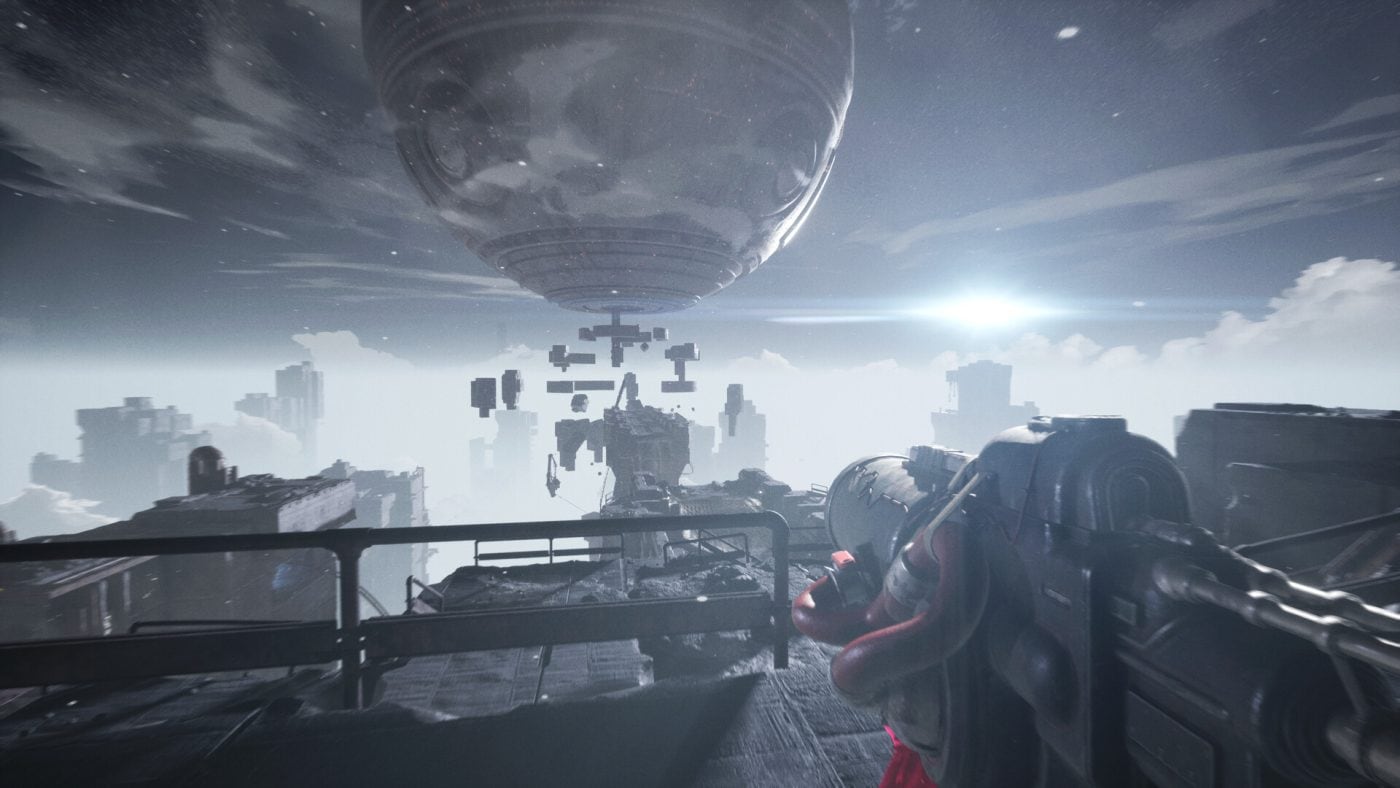
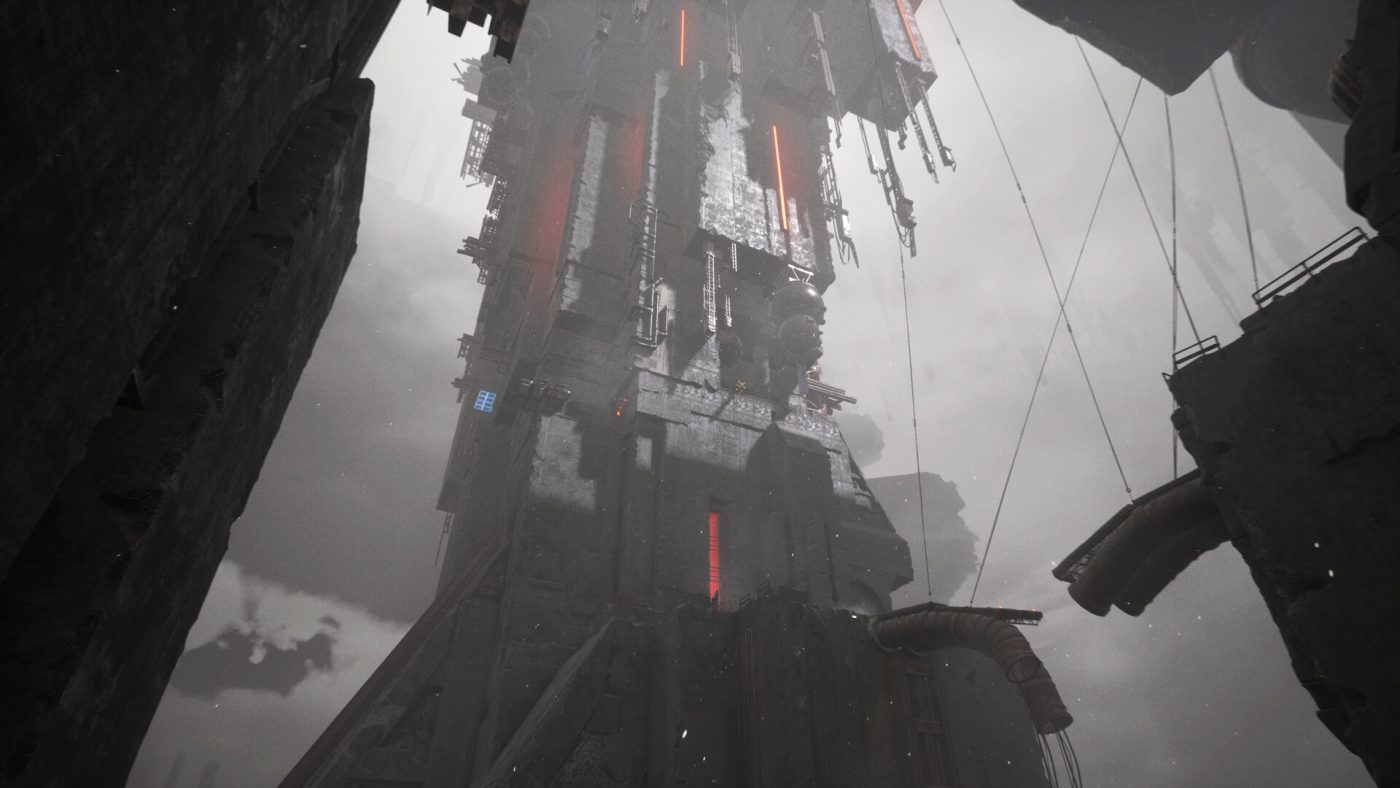
The first encounter with Luna Abyss is profoundly visceral. The player finds themselves confined within a colossal structure that feels less like a traditional level and more like an architectural abyss extending well beyond immediate visual perception. Verticality defines the space: towering constructions, suspended pathways and interconnected corridors form a labyrinth that is both industrial in nature and almost ritualistic in atmosphere.
The stylistic influences are recognizable without becoming derivative. The visual design reflects the brutal monumentality often associated with Warhammer 40,000, particularly in its portrayal of hive-like urban structures and oppressive industrial architecture. At the same time, the world explores the unsettling biomechanical ambiguity seen in Prey, where organic and mechanical forms coexist in a way that serves both visual identity and environmental storytelling.
The result is not imitation but reinterpretation. Metallic surfaces seem to possess a subtle sense of presence, almost as if they were breathing, while structural shapes retain a strangely organic quality despite their unmistakably artificial construction.
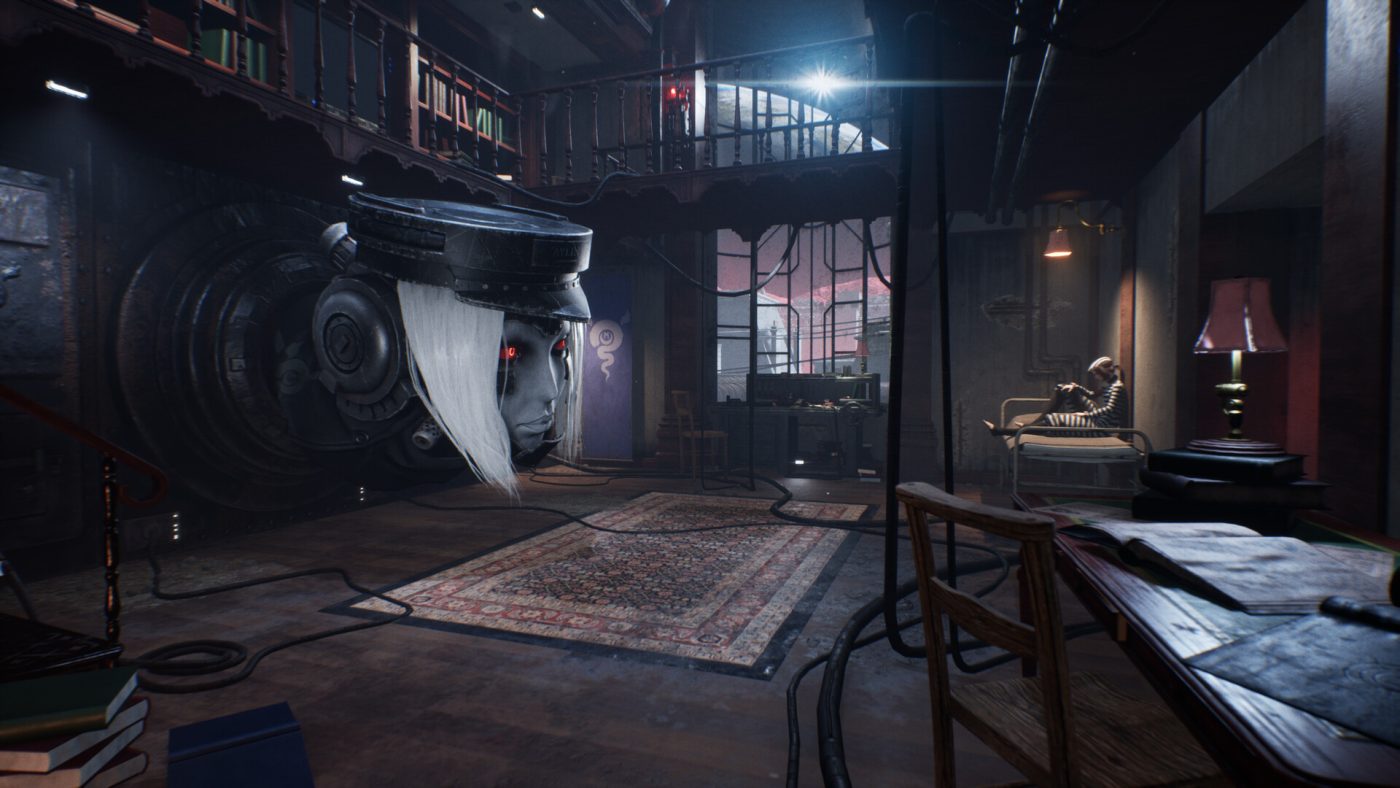
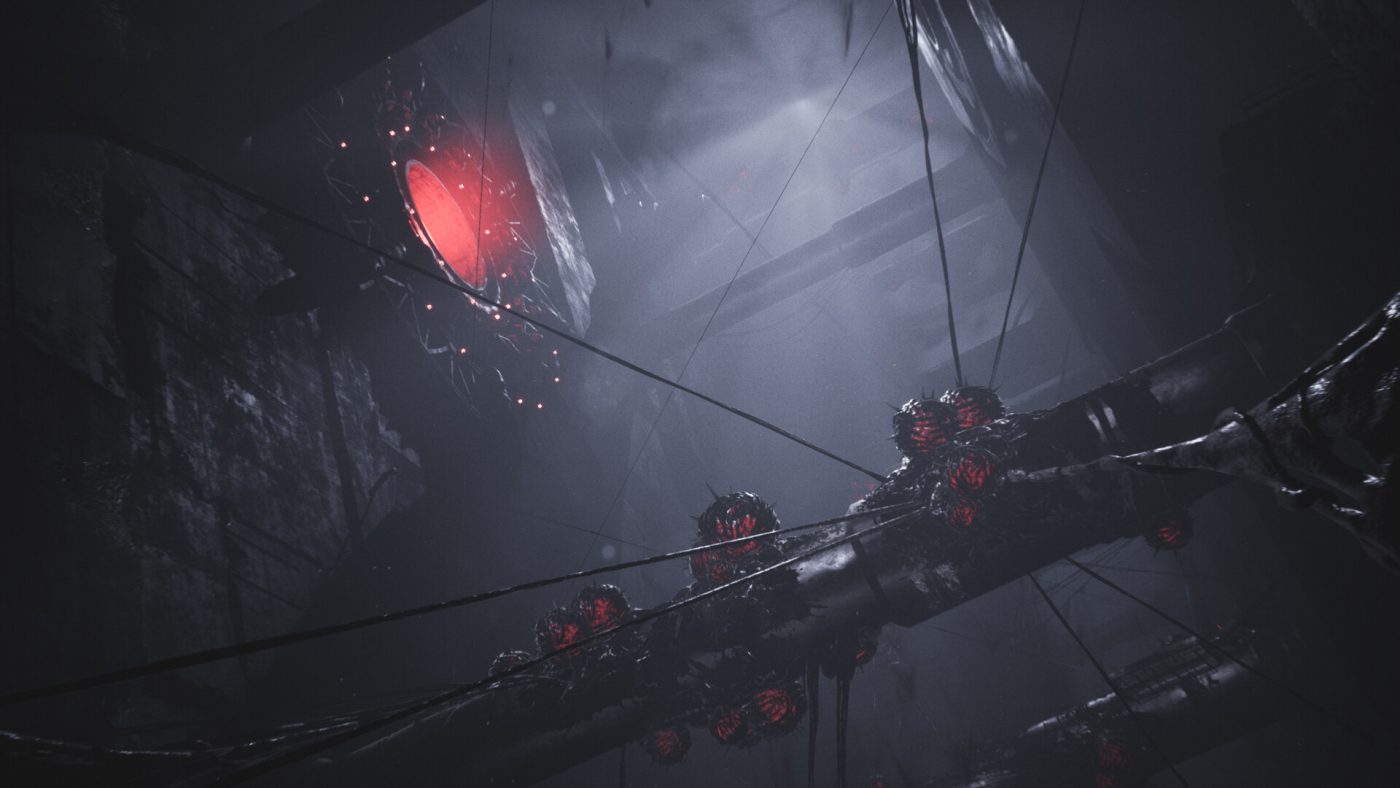
The visual composition follows a well-defined aesthetic logic in which lighting, shadow placement and environmental reflection work naturally to establish spatial depth and atmospheric presence. Nothing feels random or excessive. High-contrast illumination, obscured zones and subtle intermittent light sources guide the player’s attention in an almost intuitive manner.
Lighting as Design Language
The lighting system stands as one of the central pillars of the experience in Luna Abyss. It goes beyond simple illumination, functioning as a design instrument that helps shape spatial perception, manage visual tension and subtly guide player movement throughout the environment. The contrast architecture is carefully tuned – sharp light sources piercing through darkness, faint glows marking points of interest, and volumetric atmospheric layers softening structural contours – creating a coherent visual language that reinforces architectural depth without overloading the screen with unnecessary detail.
On the technical side, performance remains impressively balanced. The demo reflects the careful optimisation work carried out by Kwalee Labs, successfully translating visual quality into practical gameplay fluidity. Frame rate stability holds firm even during more chaotic combat sequences, while loading transitions are quick and unobtrusive – essential qualities for a first-person shooter that places rhythm and responsiveness at the core of its design philosophy.
Gunplay as Core Experience
The demo’s greatest strength lies in its ability to elevate shooting mechanics from a simple test of precision into a core pillar of design identity. In Luna Abyss, weapon handling never feels shallow or purely functional. The three weapons available in the preview build are clearly differentiated in behaviour and purpose, encouraging players to carefully read combat situations and choose the most suitable tool for each encounter rather than relying on generic or interchangeable firepower.
These are not cosmetic variations. Each firearm is intentionally designed with its own firing cadence, recoil behaviour and optimal engagement window, ensuring that weapon switching becomes a considered tactical choice rather than a purely stylistic action.
Key strengths of the gunplay system include:
- Aural feedback and firing presence. Sound design plays a significant role in reinforcing the physical presence of each shot. The audio response gives firing actions perceptible weight and substance, helping ensure that every successful hit carries a satisfying sense of impact.
- Control responsiveness. Input-to-action latency appears tightly optimized, a critical requirement for a pressure-oriented combat system influenced by bullet-hell design principles.
- Visual clarity. Projectile trajectories and different projectile types remain clearly readable even during densely populated combat sequences. The design is carefully oriented toward maintaining spatial readability, ensuring that high-intensity encounters remain visually manageable and do not disrupt player orientation even under sustained pressure.
Areas that could benefit from further refinement include:
- Damage impact visuals. Stronger particle effects, localized deformation and richer enemy hit reactions would make each successful strike feel more satisfying.
- Context-sensitive weapon behaviours. Environmental and module-driven variations (penetrating rounds in open arenas, tighter spread in confined spaces) could add meaningful depth to weapon choice.
- Expanded tactile and audio layers. Dynamic sound layering and calibrated visual feedback – subtle screen shake, brief impact flashes – would increase perceived weapon weight without compromising readability.
Precision Under Pressure: The Language of Control
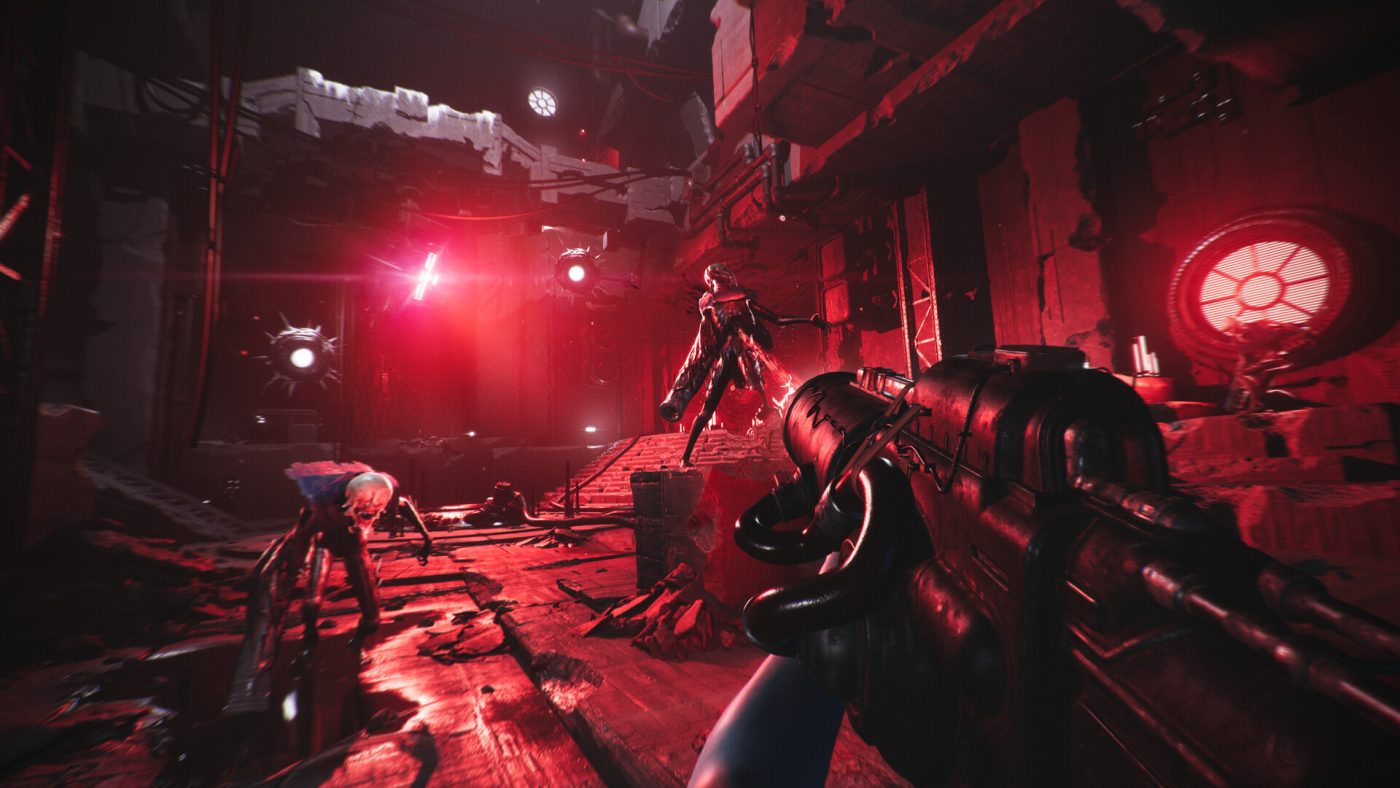
One of the most compelling design choices in Luna Abyss is the focus system, which allows players to lock onto a single enemy during combat. Rather than simplifying encounters, this mechanic enhances battlefield readability and promotes more deliberate engagement. It enables precise reading of attack patterns, anticipation of incoming projectiles and controlled movement responses, transforming apparent disorder into a structured sequence of tactical decisions.
Within the combat spaces of Luna Abyss, chaos is carefully structured rather than left overwhelming. Even in densely populated encounters, the design provides sufficient clarity to allow players to gradually analyze enemy behavior and establish meaningful control over the battlefield. Each enemy follows a distinct firing cadence, attack rhythm, and recognizable behavioral pattern, transforming combat into a system that rewards observation, timing, and pattern recognition over indiscriminate shooting.
The Philosophy of Boss Fight Design
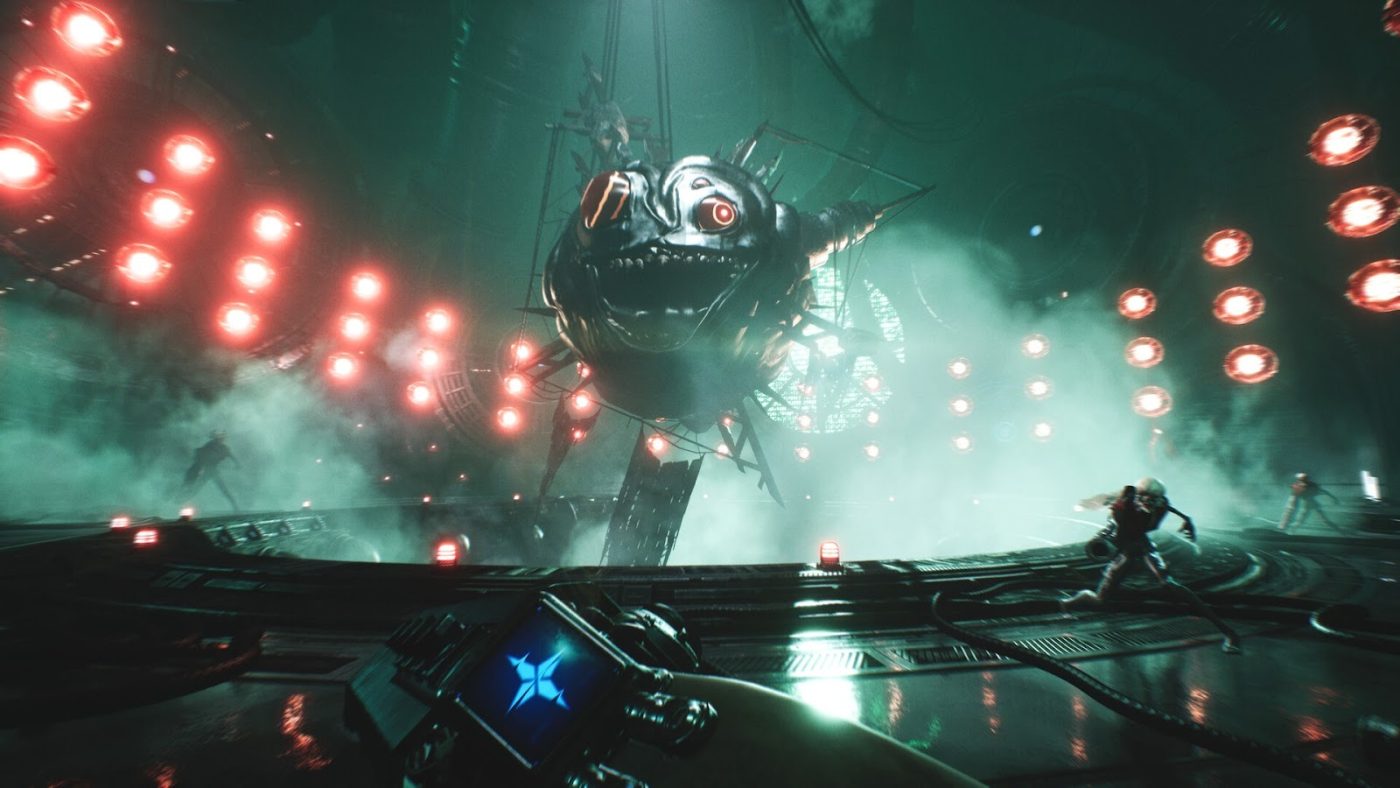
Boss encounters stand as the moments in which the game’s design philosophy is expressed with particular clarity and creative confidence. Rather than serving as straightforward tests of player strength, these sequences are structured as purposefully designed set-piece experiences that integrate worldbuilding, gameplay depth, and progression mechanics into a cohesive framework. Production quality is immediately reflected in the scale and fluidity of encounter choreography, the technical precision of animation implementation, and the careful engineering of attack patterns.
The second boss showcased in the demo offers a particularly clear demonstration of this design philosophy. The encounter is carefully structured in multiple layers to maintain a controlled sense of unpredictability, transitioning between phases that demand tactical flexibility, precise interpretation of visual and auditory cues, and disciplined spatial awareness. The challenge is not derived from difficulty alone, but from the overall consistency and internal logic of the encounter design.
Every offensive action is clearly preceded by recognizable audiovisual cues, requiring players to identify timing signals before committing to an attack. Damage opportunities are earned through an understanding of combat rhythm and encounter pacing. The design prioritizes observation, precise timing, and disciplined execution, encouraging strategic decision-making and spatial awareness over purely reflex-driven gameplay.
Additional refinement in the clarity of phase transitions, coupled with a broader range of visual feedback responses, could further enhance encounter readability and strengthen the distinctive character of boss sequences.
The Beating Bullet-Hell Heart of Luna Abyss
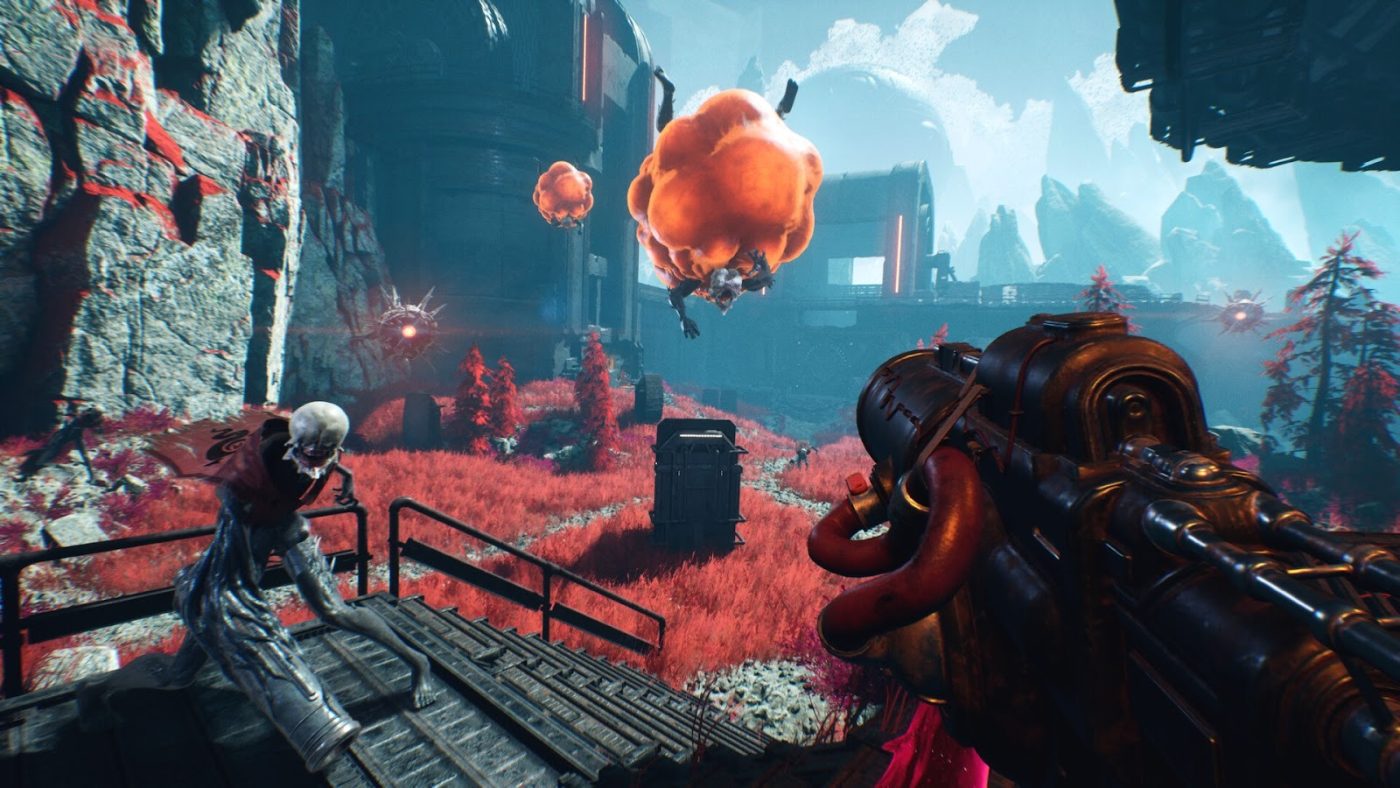
In recent years, the convergence of first-person shooters and bullet-hell mechanics has significantly reshaped the genre’s expressive vocabulary, as demonstrated by prominent titles such as Returnal. Within this evolving landscape, Luna Abyss offers its own interpretation of the hybrid formula, defined by a clearly defined stylistic identity.
The demo highlights the development team’s commitment to carefully calibrated intensity. Combat unfolds at a sustained pace and with notable visual density, yet it never tips into disarray. Projectile volume is deliberately measured to challenge player responsiveness while maintaining clear encounter readability. Rather than relying on excessive visual saturation for impact, the design shapes trajectories and spatial geometries in a way that allows the seeming chaos of bullet patterns to be interpreted, anticipated, and gradually brought under control.
Level design is crafted in close harmony with the combat mechanics. Combat arenas are shaped through deliberate vertical composition, organically distributed cover opportunities, and movement pathways that encourage fluid navigation, strategic positioning, and conscious management of combat space. Enemy attack patterns are sufficiently distinct to enable progressive threat recognition, prioritizing tactical adaptation over impulsive reaction.
The result is an experience built upon a carefully sustained balance between speed and control. Players are consistently provided with the tools required to maintain spatial awareness within the arena, preserving combat tension while ensuring that visual and gameplay clarity are not compromised.
Should You Step Into the Abyss?
After completing the demo, the answer is a confident and largely unreserved yes. Luna Abyss is an experience that feels worth trying even in its early, developmental stage, demonstrating a level of design intention that is uncommon for a project still in progress. The strength of the title lies not only in its atmospheric world-building – carefully crafted and visually distinctive – but also in the underlying gameplay foundation, which gives the experience the quality of a refined, high-intensity FPS.
For those seeking a thoughtfully designed, atmospheric shooter, the recommendation is clear: head to Steam, download the demo, and venture into the depths of the abyss.


