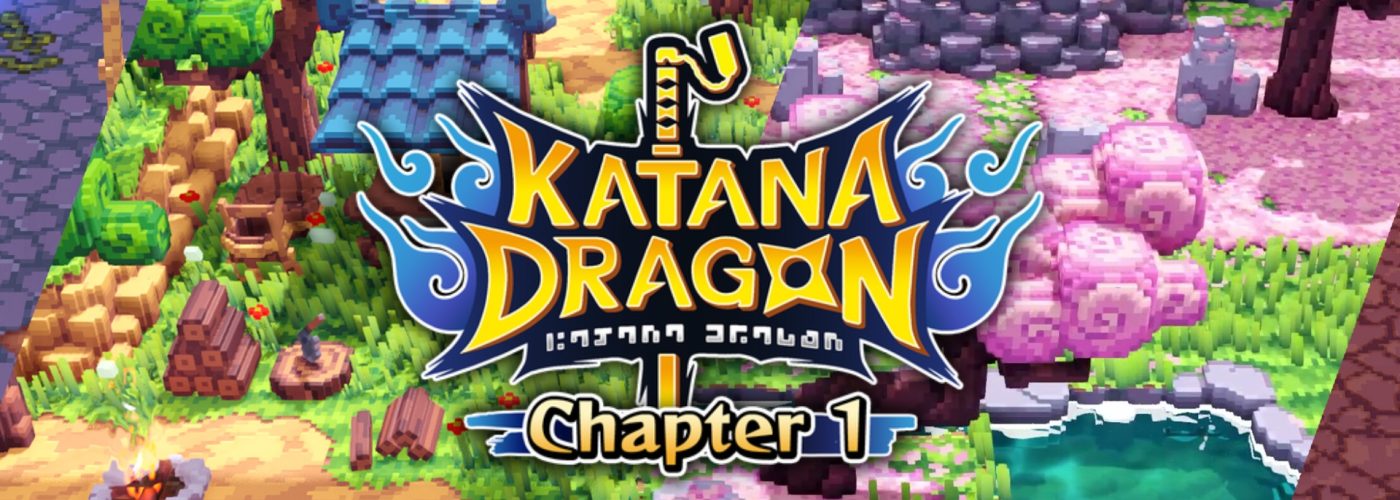
Katana Dragon, a project from Tsunoa Games, shows a clear sense of personality and style, along with a few early stumbles.
Currently available in early access, the game lets players explore its first chapter. Inspired heavily by the 16-bit era of classic Zelda titles, Katana Dragon offers a familiar mix of puzzles, dungeons, and fantastical creatures. Along the way, players will encounter optional mini-dungeons, traps, labyrinths, and well-hidden secret areas that reward careful exploration.
Before this project, Tsunoa Games released only one other title: Sengodai, a tactical roguelite deck builder. Interestingly, the two games share a similar aesthetic identity, suggesting a kind of stylistic continuity between the studio’s projects.
A retro aesthetic with a distinct twist
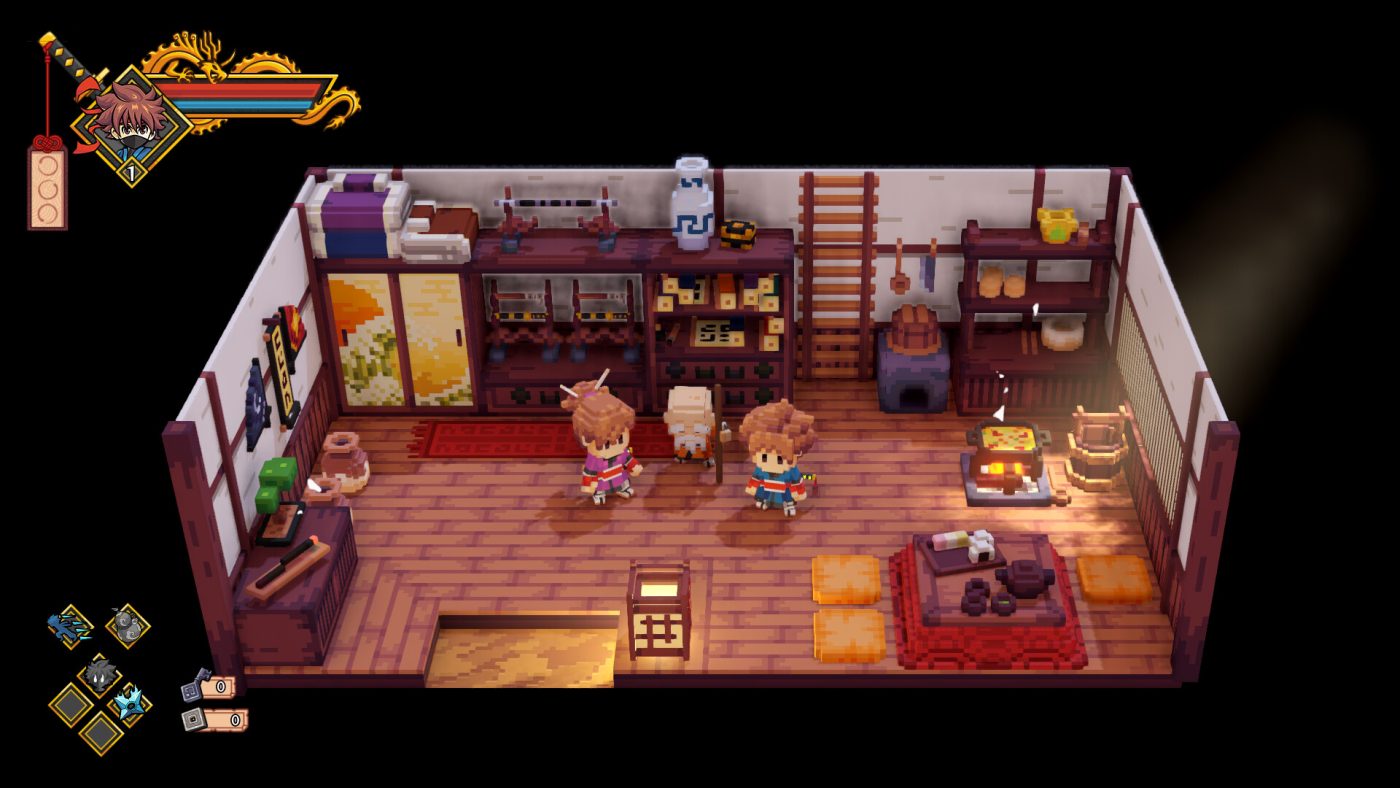
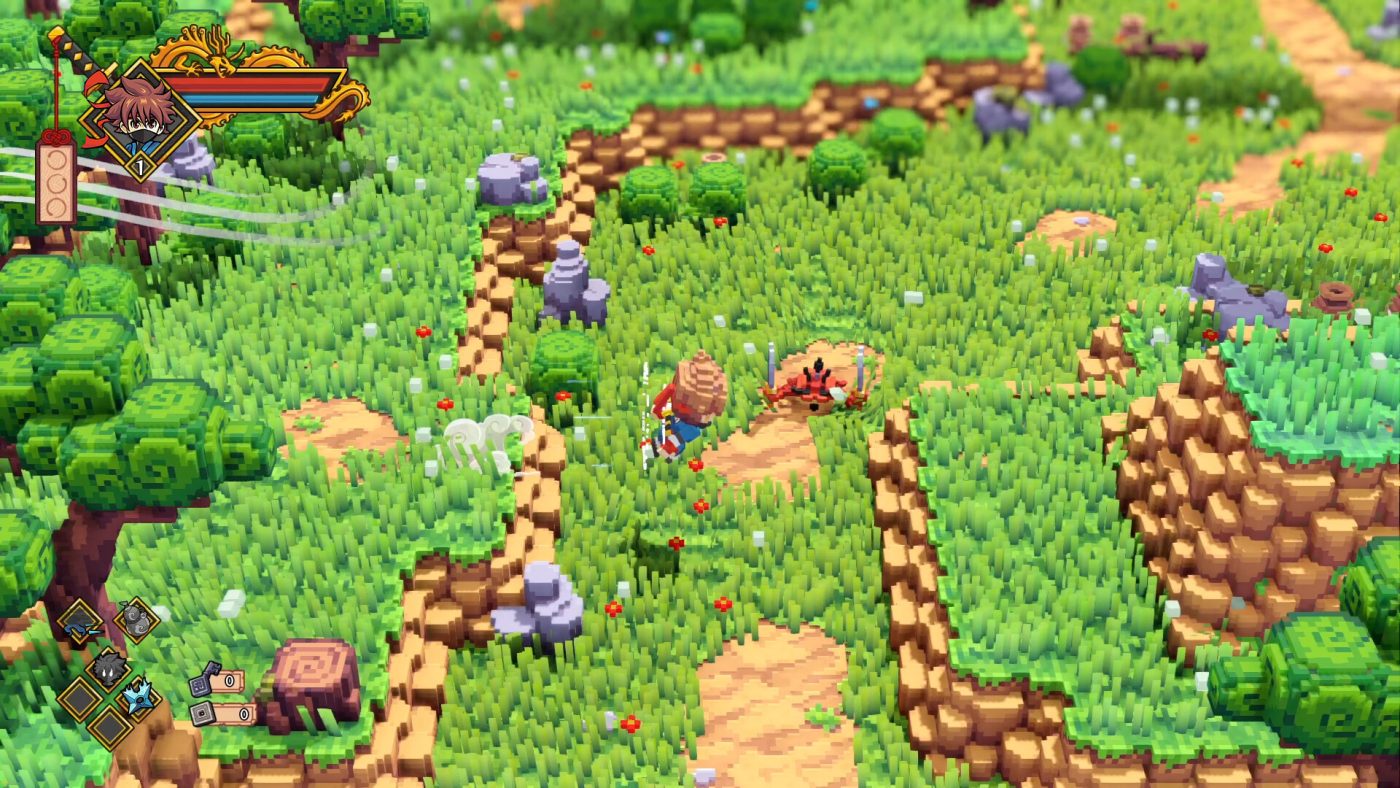
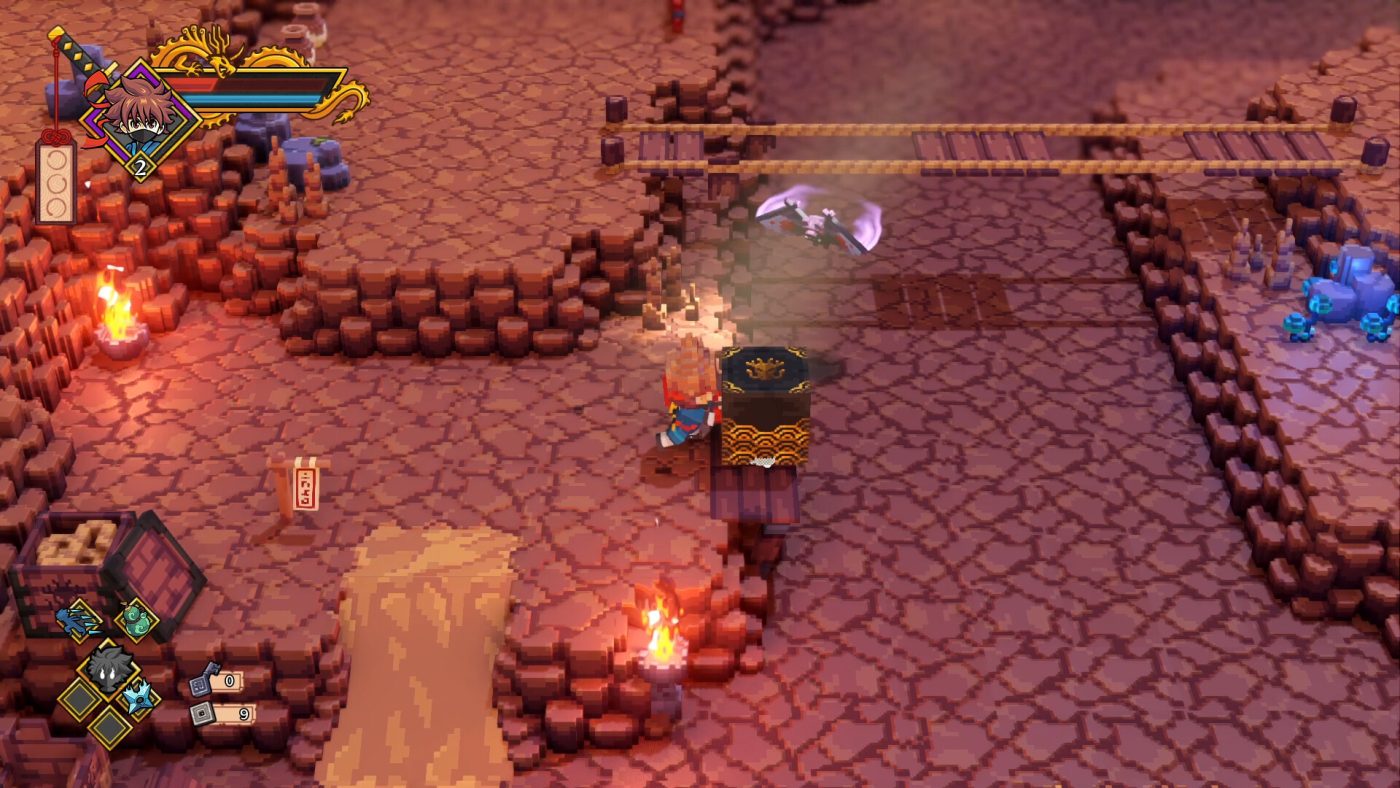
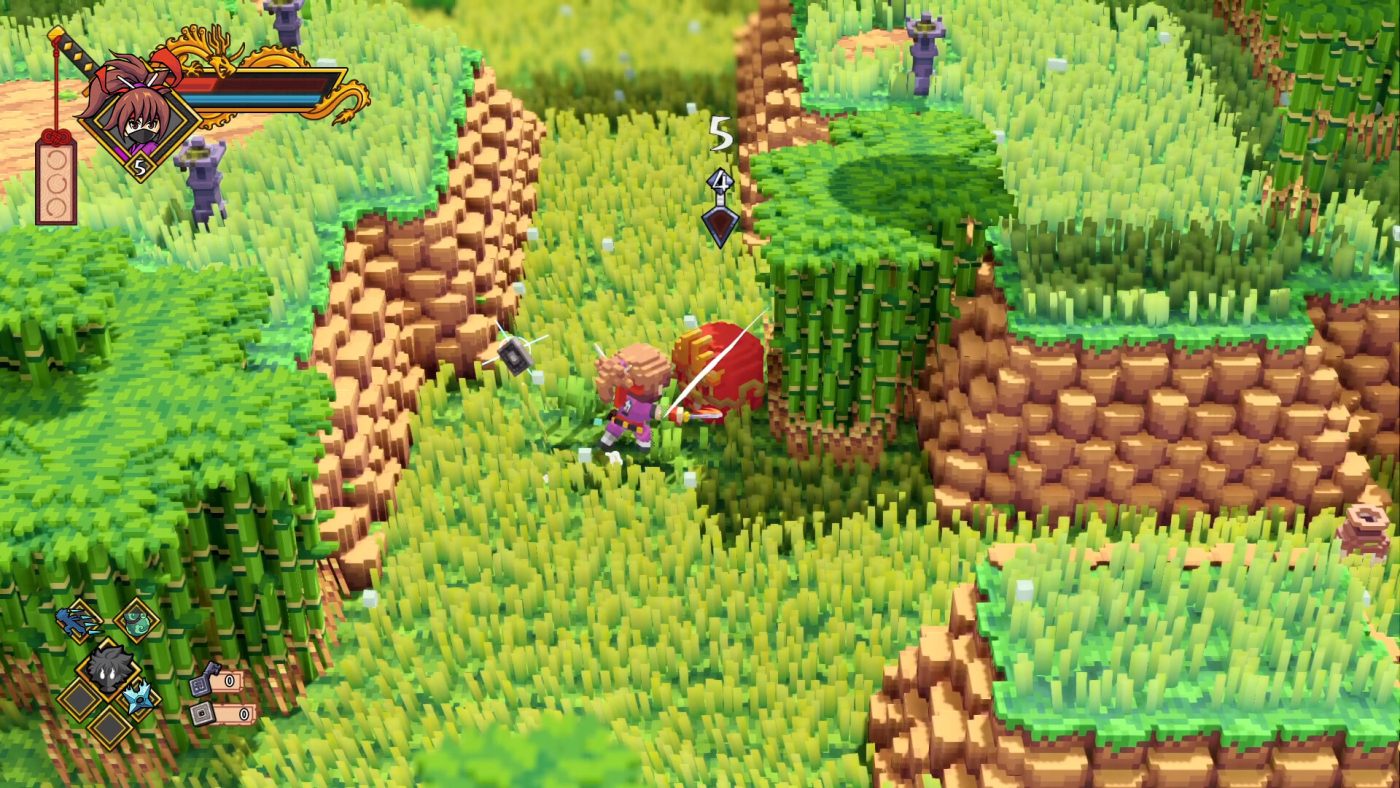
While Katana Dragon clearly draws inspiration from the visual style of 16-bit Zelda games, it also embraces a more specific artistic direction built around voxel pixel art. The game blends 3D cube modeling (volumetric pixels) with traditional pixel art elements.
Lighting plays a surprisingly important role as well, helping to build atmosphere throughout the environments. The soundtrack, while not particularly memorable, fits the game well and supports the overall mood without overstaying its welcome.
That said, the visual style occasionally feels a bit too dense. At times the screen can become cluttered, slightly undermining the elegant simplicity typical of the genre. As a result, players need to pay close attention to their surroundings to avoid missing secrets hidden in the environment.
A simple but classic narrative setup
Katana Dragon’s story begins with a straightforward but effective prologue.
Long ago, an evil dragon devastated the lands of Sogen until five great monks managed to imprison it within a glass barrier using their Ki. After a thousand years, the dragon finally shattered its prison and once again spread chaos across the land.
In response, the Daimyo ordered his greatest swordsmith, Katamune, to forge the legendary Dragon Katana from fragments of the broken barrier. Wielding this blade, the young samurai Cideyasu confronted the dragon and ended its reign of terror.
Peace returned to Sogen, but only temporarily.
On the very day when two young ninjas, Shin and Nobi, are about to embark on their first mission, unexpected events begin to unfold.
Ninja abilities and classic Zelda influences
At its core, Katana Dragon is a Zelda-like adventure with light RPG elements.
Naturally, the first instinct many players will have is to test the environment and yes, you can cut grass and bushes. Pots can also be smashed, just as tradition demands.
The protagonist fights with a katana and gains access to several ninja abilities:
- Ninja Dash allows players to quickly dash forward and even cross small gaps. When timed correctly against an incoming attack, it briefly slows down time.
- Shadow Clone creates a stationary shadow double that can activate switches or assist during combat. While the clone cannot move, it attacks alongside the player and draws enemy attention.
- Gourd acts as the main healing item. It restores health and can be used indefinitely, but it comes with a cooldown between uses.
Using these abilities consumes Ki, which can be restored most efficiently through meditation. Meditation can be performed at any time, but it leaves the player completely vulnerable.
Exploration, dungeons, and progression
One of the game’s strongest aspects is its world design, particularly when it comes to optional dungeons. These compact challenges are filled with traps and puzzles and typically reward players with cosmetic items such as new armor sets.
The design language of classic Zelda games is clearly present: chests, levers, hidden passages, traps, and roaming enemies.
However, some dungeons assume a level of familiarity with certain gameplay mechanics, occasionally making the experience less intuitive. In short, Katana Dragon doesn’t always hold the player’s hand.
Character progression is currently tied mostly to Dragon Gems, which can be inserted into the hilt of the protagonist’s katana. These gems drop from enemies or appear in chests, and players can currently equip up to three at a time.
Another interesting system involves Cursed Seals powerful items that grant significant bonuses, but only at the cost of certain drawbacks.
My two cents
As an early access title, Katana Dragon still shows some rough edges, especially in the later stages of the available content.
One of the more noticeable issues is the lack of certain quality-of-life features. For instance, the absence of an autosave when entering the final dungeon can make repeated attempts frustrating, forcing players to replay the opening puzzle and early sections multiple times.
Some of the combat system’s quirks may also stem from the game’s origins as a mobile project. Controls designed for touchscreen inputs don’t always translate perfectly to a keyboard or controller, which can lead to moments where the responsiveness feels slightly off.
Enemy behavior also leans toward high aggression, sometimes clashing with the slower, more methodical rhythm typical of classic Zelda titles. Getting stun-locked by enemies can happen more often than expected.
There are also areas that could benefit from technical polish. Hitboxes occasionally feel inconsistent, crates sometimes get stuck when pushed, and abilities like Shadow Clone or Ninja Dash can behave unpredictably in certain situations.
Despite these criticisms, it’s important to highlight that the early portion of the game flows surprisingly well, and its minor flaws rarely undermine the overall experience. If Tsunoa Games manages to refine the quality-of-life aspects (something the earlier mini-dungeons already hint at) the game could improve significantly.
For all its imperfections, Katana Dragon already demonstrates a clear sense of potential. And that alone makes it a project worth keeping an eye on.
Game key granted by the developers