A first-person experience focused on exploration, atmosphere, and environmental storytelling, still leaving some questions open about its structure
Inner Voice presents itself as a first-person adventure developed by solo developer X Interactive and published by Dionous Games.
The premise is straightforward: reduce explicit interaction to leave room for atmosphere, memory, and perception. The game clearly positions itself within a group of narrative experiences that slow the pace and ask the player to observe rather than act.
The demo, available on Steam, does not try to showcase a full gameplay loop. Instead, it introduces a tone and a way of moving through space. It sets expectations more than it explains systems.

Empty spaces and implied presence
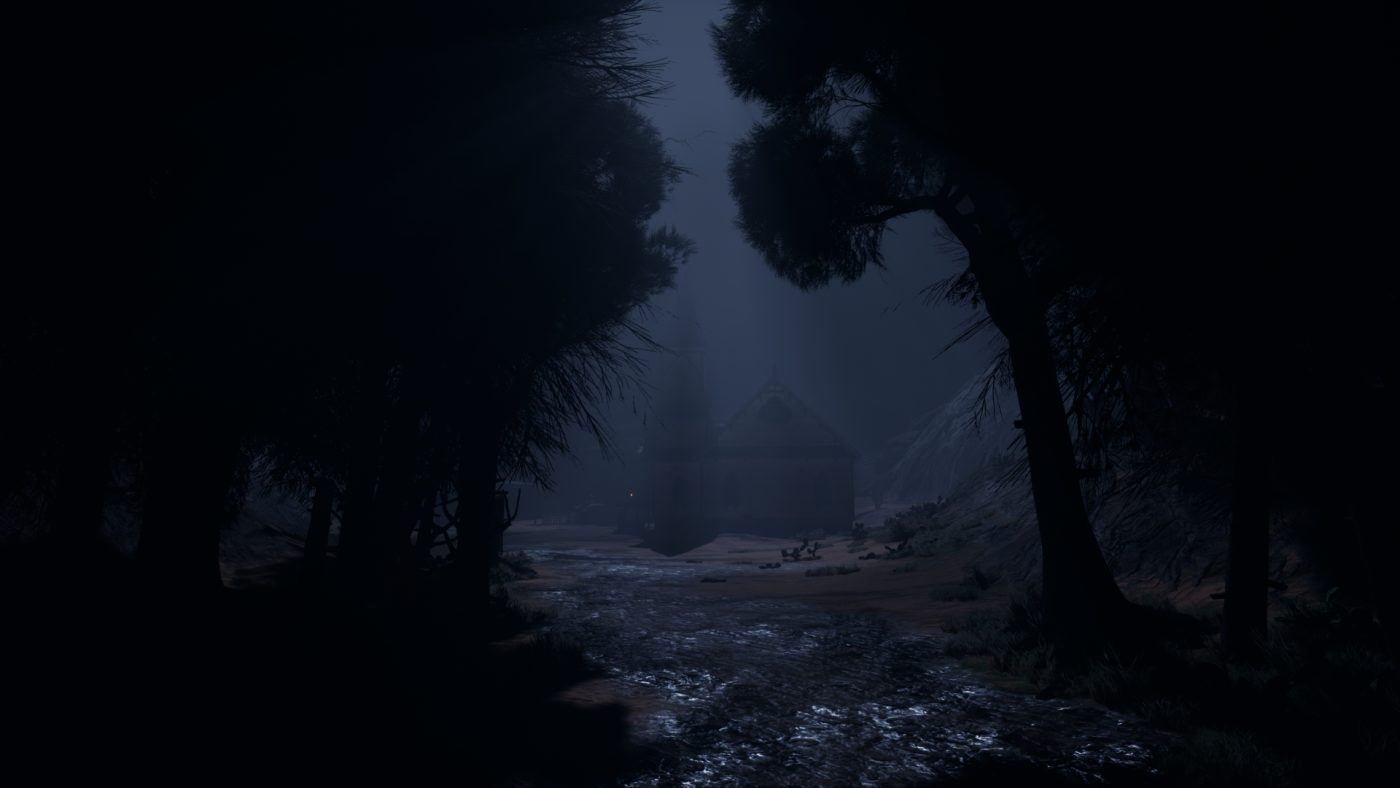
Inner Voice builds its identity through environments. It avoids direct explanations and refuses to frame the experience upfront. Instead, it relies on what the player sees — and on what remains absent.
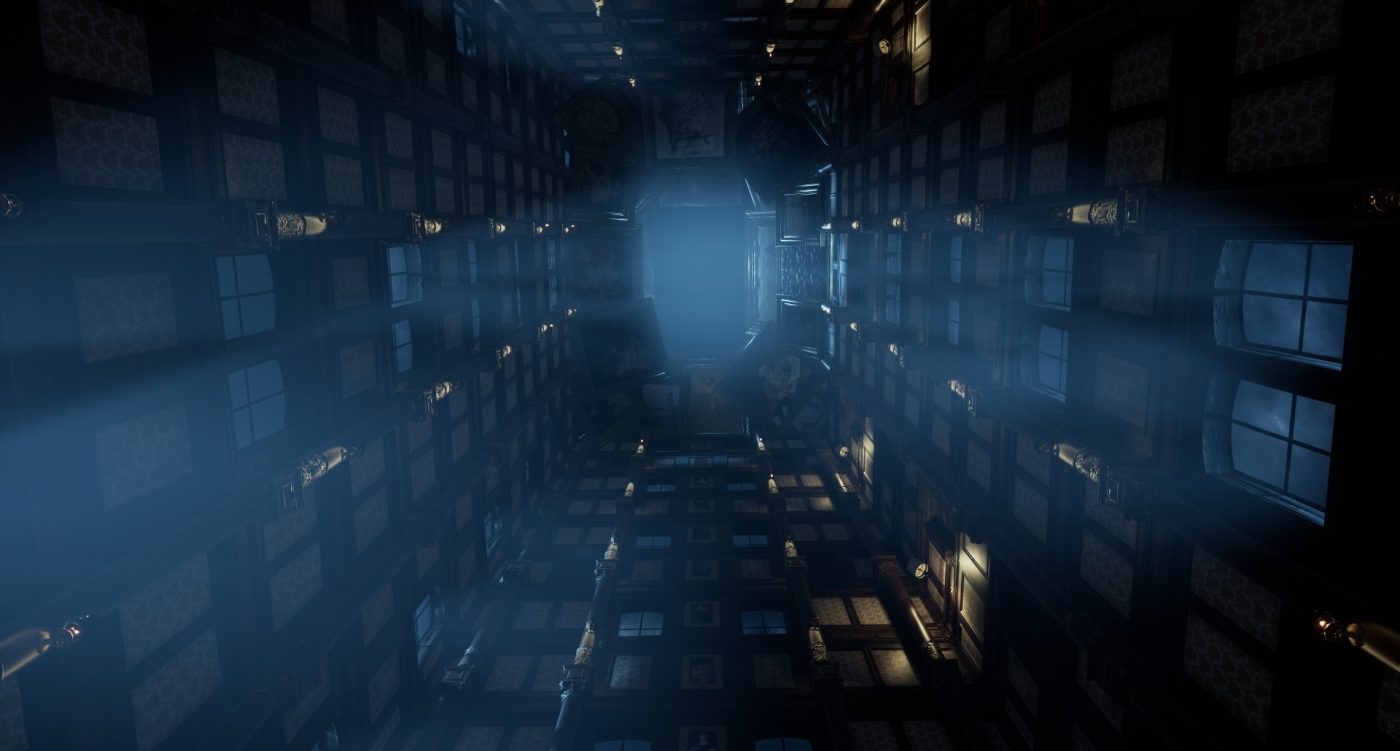
Spaces feel wide, quiet, and almost suspended. You move through illuminated but empty houses, domestic interiors that suggest an interrupted life rather than simple abandonment. Light never reassures. It creates a constant tension, as if something has already happened or is about to happen, without ever taking shape.
The visual direction blends Victorian and Western elements into a setting that feels more psychological than physical. Unreal Engine 5 supports this approach without turning it into spectacle. The environments do not try to impress. They ask you to look.


Between memory and interpretation
You play as Booker, a man dealing with the loss of his wife, Diana, drawn into a reality that follows the logic of memory rather than that of the real world. A voice accompanies him throughout the experience.
This voice does not simply guide. It questions, suggests, and occasionally feels intrusive. It creates a relationship that never fully settles, leaving room for doubt about its role.
The game does not explain its story directly. It spreads fragments across spaces: objects, sounds, visual details. Meaning does not arrive as a sequence. It takes shape through attention and interpretation.
Inner Voice clearly moves in the same territory as experiences like Dear Esther or Amnesia: A Machine for Pigs, where the player does not receive the story, but has to reconstruct it.

Exploration, disorientation, and lack of direction
In its current state, the demo revolves almost entirely around exploration. A faint whisper acts as the only guide, pushing the player forward without clear instructions.
Progression often feels unclear. You move from one building to another, entering rooms without a defined objective. The game does not point you in a direction. It expects you to find one.
At times, this creates a genuine sense of disorientation. It can also feel like a lack of structure. The two aspects overlap, and the demo never fully clarifies where intention ends and limitation begins.
As a result, this early version works more as a statement of intent than as a fully representative slice of gameplay. Puzzle design and narrative progression remain mostly in the background.
When unease takes shape
For most of the experience, tension builds through absence. Empty spaces, long silences, and visual hints never lead to a clear event. The game relies on what it withholds.
Then something changes.
In the later stages of exploration, a figure appears: a humanoid mannequin placed inside a domestic space. It does not move. It does not interact. It simply stands there.
That alone is enough.
Until that moment, the environment offers no real presence. The mannequin breaks that balance. It turns observation into caution. You start to question the space, not just look at it.
This shift matters. Earlier, unease came from what you could not see. Here, it takes a form, even if it remains still. It suggests that the game might move toward a more concrete tension without abandoning its restraint.

A project shaped by a personal vision
Inner Voice comes from a single developer, Nick Chronopoulos, working under X Interactive. This shows in the game’s structure and priorities.
The focus on atmosphere, the attention to environmental detail, and the decision to build meaning through space and sound point to a clear direction. The project does not try to fit into a broader production model. It follows its own logic.
According to the developer, parts of the environments draw from real locations connected to his personal experience, reworked into a surreal setting. This gives the world a sense of coherence. Spaces feel intentional, even when their meaning stays unclear.
Between intention and execution
The full version of Inner Voice plans to include environmental puzzles, narrative choices, and multiple endings, including a hidden one.
The key issue will be integration. A slow, atmospheric experience needs structure to sustain itself. Without it, exploration risks losing purpose.
Right now, the demo leans heavily on tone. It establishes mood and direction, but it does not yet show how the game will maintain engagement over time.
That balance — between atmosphere and structure — will define the final result.

First impressions
Inner Voice shows a clear direction. It builds tension through absence, uses space carefully, and avoids over-explaining.
At the same time, the demo leaves several open questions. Progression remains unclear, and core systems stay mostly in the background.
There is potential here, but it depends on execution. If the full game manages to support its atmosphere with a solid structure, Inner Voice could become a focused and coherent experience — one that relies less on action and more on perception, asking the player to participate rather than simply proceed.

If you want to know more: