We examine this early experience, which immediately immerses players in a disturbing atmosphere.
Presented at Steam Next Fest, Dread Neighbor, developed by Ghostcase Studio and currently available as a demo on PC, takes the form of a first-person psychological horror experience built around a constant balance between anticipation and impact. The demo alternates moments of latent tension with sudden accelerations, moving between perceptual unease and more explicit sequences where danger takes shape.

Building Tension
From the very first minutes, the atmosphere sets the tone of the experience. The protagonist’s apartment sits in an unnatural stillness, illuminated almost exclusively by the glow of a television. The spaces feel familiar, yet they convey a persistent sense of instability, as if something lurks just outside the frame. Tension grows through anticipation, through the feeling that any corner might reveal something unexpected, giving the impression of stepping into the middle of an ongoing nightmare.
This sensation also appears in the environmental details: worn surfaces, marked tiles, and everyday objects placed slightly out of context help shape a space that feels both familiar and unstable.
The initial tension develops through gradual construction, built from details, variations, and subtle deviations from normality. Environments repeat, yet each return introduces new elements—traces, marks, faint presences that progressively transform the domestic space into something unstable. The game relies on perception more than on events, keeping the player in a constant state of alert.


In this sense, Dread Neighbor echoes several dynamics typical of contemporary Asian horror. Fear emerges from familiarity breaking apart, from the feeling of being watched, from a presence that rarely reveals itself directly. Corridors, rooms, and everyday objects lose their neutrality and become active elements of the mise-en-scène, slowly building an atmosphere that lingers even in the quietest moments.
This approach connects to spatial perception and to the persistent sensation of being observed, a theme already explored in a previous analysis of the title, where the game appeared as an expression of urban solitude gradually turning into unease.
Within the demo, these ideas also shape the structure of the experience itself.
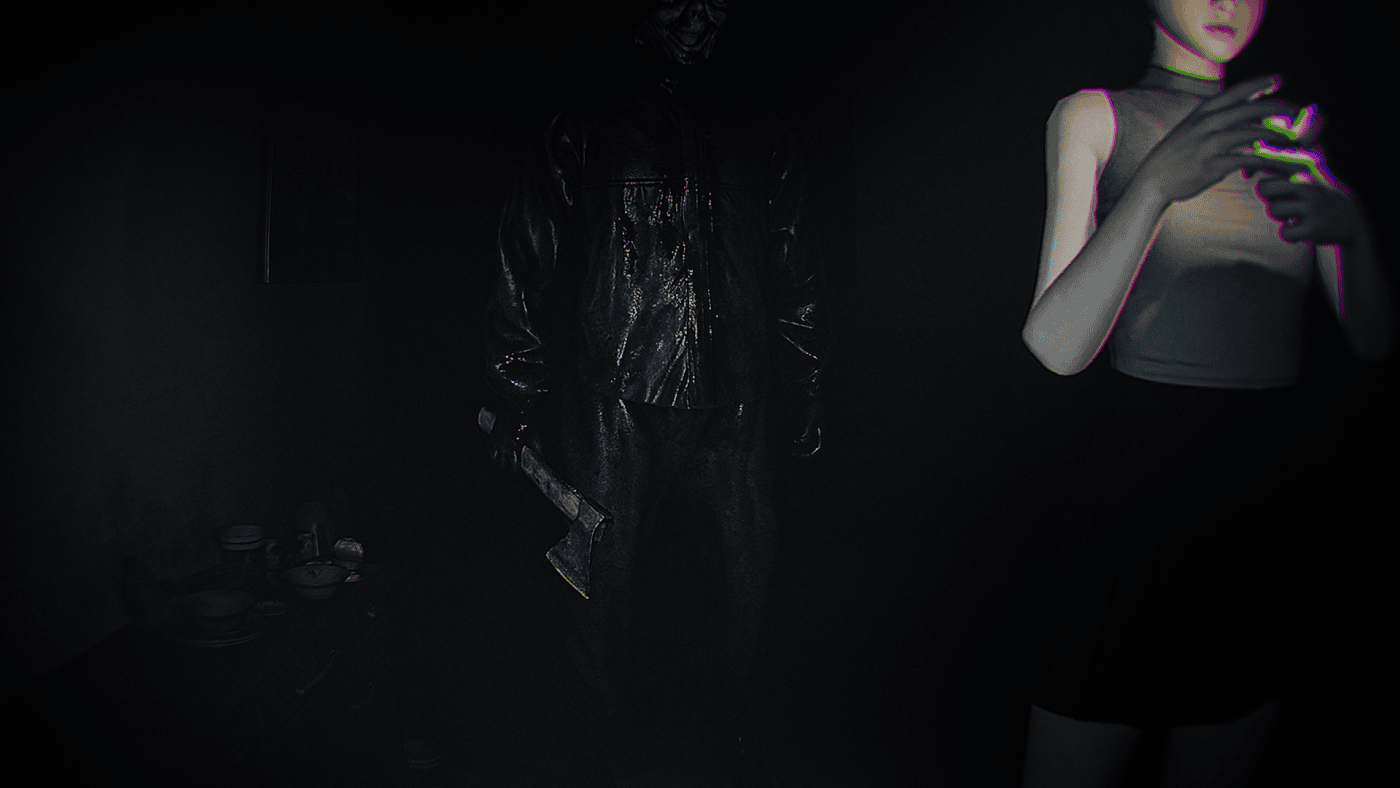
More explicit sequences interrupt this gradual construction. Sudden jumpscares, chases, and direct moments of danger release the accumulated tension. The encounter with the masked figure marks one of these turning points: the threat materializes, the rhythm accelerates, and the space shifts from ambiguous to openly hostile. Waking up later in a confined area beside another victim pushes the experience onto a more physical and immediate level.
The alternation between buildup and release defines the demo’s rhythm, keeping the player in a constant state of instability. Each moment of apparent control prepares the ground for another rupture, making it difficult to find a stable balance within the game’s space.

Between Exploration and Disorientation
From a gameplay perspective, Dread Neighbor revolves around guided exploration. Players move through contained spaces along a largely linear progression. Actions remain simple—interacting with objects, observing the environment, moving through rooms—and keep the focus on perception and atmosphere rather than on complex systems.
The pacing alternates between observation and pressure. Slower sequences encourage exploration and attention to environmental changes, while more direct moments—such as chase sequences—demand quicker reactions and shift attention toward movement and spatial awareness.
In certain moments, disorientation becomes a core part of the experience. One particularly striking sequence forces the protagonist to wake up in complete darkness, leaving the player without visual reference points and relying instead on sound cues such as the noise of rain. The sequence fits the game’s sensory approach and reinforces feelings of vulnerability and loss of control.


At the same time, this choice exposes a balance that does not always remain stable between intention and readability. The lack of clear reference points can lead to operational uncertainty, making it harder to understand how to proceed and slowing the pace in ways that do not always feel intentional.
A similar sensation emerges during the more intense sequences. When the rhythm accelerates, the control system can feel somewhat rigid, reducing fluidity precisely in situations that demand quicker reactions. This aspect becomes especially noticeable during escape sequences, where pressure increases and the margin for error shrinks.
Overall, progression remains strongly guided. Spaces offer limited room for free exploration and lead the player along a defined path, prioritizing the construction of the experience over individual initiative.

Mise-en-Scène and Visual Design
Visually, Dread Neighbor relies on a believable representation of domestic spaces, avoiding stylized or overly exaggerated solutions. The apartment setting feels recognizable, built through the arrangement of objects and spaces that evoke everyday life and reinforce the sense of familiarity underlying the experience.
The graphics do not aim for spectacle but remain solid and effective. Lighting plays a central role, shaping volume and depth while influencing how players perceive the environment. Limited and often partial light sources leave large areas in shadow, maintaining a delicate balance between the visible and the hidden.


Sound design follows the same philosophy. Ambient sounds—from rain to less identifiable noises—become active components of the experience, offering orientation cues while reinforcing tension. In certain moments, darkness shifts the player’s attention toward listening, turning sound into both a navigational tool and a source of unease.
Overall, the mise-en-scène prioritizes coherence and continuity, supporting the rhythm of the experience and accompanying gameplay variations without overwhelming the player’s perception.


Ghostcase Studio
Ghostcase, the Chinese indie studio behind Dread Neighbor, previously developed Dread Flats, a title that attracted attention among horror fans thanks to its first-person perspective and its focus on building discomfort through atmosphere.
With this new project, the studio appears to continue along the same path. The design focuses on psychological experience and spatial tension while refining the presentation and narrative structure. A strong emphasis on perception and observation once again defines the studio’s approach, exploring forms of horror rooted more in everyday life than in extraordinary events.
Participation in Steam Next Fest with a playable demo represents an important step for the project, especially considering the feedback that may influence the final development phase.

Conclusions
The Dread Neighbor demo offers a first look at an experience built around the balance between perceptual tension and more explicit moments of rupture. The alternation between observation and action, anticipation and release, shapes a rhythm that maintains a constant sense of instability, supported by careful staging and coherent design.
At the same time, several elements still require refinement—particularly the pacing during more intense sequences and the balance between disorientation and readability. These aspects appear to remain in development and may reach a more solid form in the final release.
Overall, the demo points toward a clear direction. The game builds fear through space, perception, and experiential progression. The final version will reveal how fully these elements evolve, but the foundations already suggest a project with a strong and deliberate identity.
If you want to try Dread Neighbor demo: Steam page