
In short
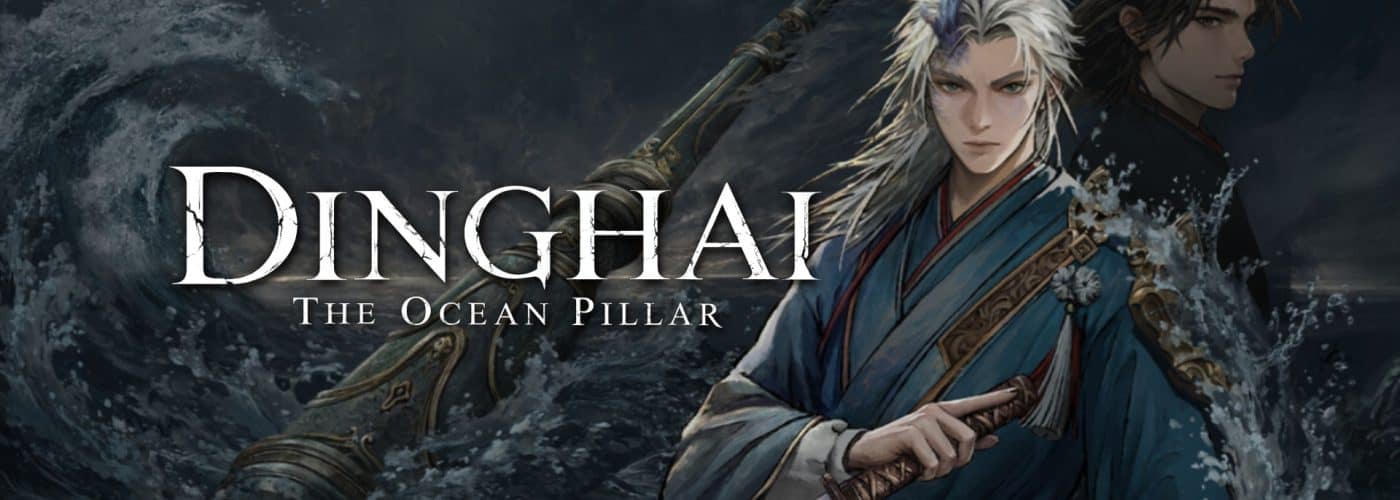
Justdan has released a free demo of Dinghai: The Ocean Pillar on Steam, offering an early look at its action RPG with roguelike elements built on Chinese mythology and the Shanhai Jing. The demo covers a tutorial, two stages, three elite enemies, two main bosses, two hidden bosses, and a five-weapon arsenal designed around its dual-weapon combat system. The game follows the Abyssal Dragon, a fallen general reborn through a forbidden curse four centuries after a great flood, with death and repetition woven directly into the narrative rather than treated as a simple progress reset.
The flood buried an entire age beneath the waters. Four centuries later, one of its forgotten legends rises again.

First came the water. Then the world as people knew it came to an end.
A great flood swept across the land, swallowing kingdoms, reshaping entire regions, and bringing an ancient age to its knees. What survived was not simply a landscape of ruins, but the remnants of a world built around gods, mythical creatures, and heroes whose stories had endured for generations. In Dinghai: The Ocean Pillar, those stories are far from forgotten. They remain part of the world itself, and, centuries after the waters rose, their influence has not faded.
Developed by Justdan, Dinghai: The Ocean Pillar is an action RPG with roguelike elements that draws heavily from Chinese mythology, with the Classic of Mountains and Seas (Shanhai Jing) serving as one of its key sources of inspiration. At its core is a world where myth is not merely something remembered, but something that continues to shape the lives of those who inhabit it. Ancient powers linger beneath the surface, creatures from old legends still roam the land, and the remains of a civilization lost to the flood hold clues to a history that refuses to stay buried.
What makes Dinghai compelling, however, is the way it treats mythology not as a relic of a forgotten age, but as a living force shaped by the catastrophe that came before. The flood may have brought an ancient civilization to its end, yet its legacy remains deeply embedded in the world that survived it. Ruined settlements, forgotten legends, and creatures drawn from centuries-old tales all point towards a history that predates the player’s journey by generations. Rather than existing as background lore, that history becomes an essential part of the adventure, one that gradually reveals how the remnants of a lost age continue to influence the world that came after.
We recently had the opportunity to step into this world through the free demo now available on Steam, offering an early look at Dinghai: The Ocean Pillar’s combat system and introducing the story of the Abyssal Dragon. While the demo offers only a brief glimpse of the experience as a whole, it is enough to raise a question at the heart of Justdan’s ambitious project: can Dinghai: The Ocean Pillar translate the depth of its mythological influences into an adventure capable of matching its ambitions? We ventured into its flooded world to find out.
A Legend Buried by Time, Reborn by a Forbidden Curse
At the heart of Dinghai: The Ocean Pillar is the Abyssal Dragon, a legendary general who once served under Emperor Yan. His rise comes to an abrupt end when exile strips him of his position and, ultimately, his name, before he is killed in battle. Only a fragment of his soul survives, lingering for four centuries. For the Abyssal Dragon, however, death is not the conclusion of his story.
Through a forbidden curse, he eventually takes over the body of Yi, the godson of Yu, the legendary hero associated with the Great Flood. The act gives the fallen general a new vessel and a second chance at life, but it also places him in a world that has changed beyond recognition since his death.
Yi’s rebirth sets him on a search for Yu, but what begins as a search for one man soon draws him into the mysteries that have defined the world since the Great Flood. As he moves through lands still marked by the catastrophe, long-buried fragments of the past begin to resurface, revealing the forces that shaped this new era, and the truth behind the life the Abyssal Dragon once knew.
This is where Dinghai makes its most interesting use of the roguelike format. Death is not simply a mechanic that resets the player’s progress; it is part of the narrative itself. Each return gives the protagonist another chance to uncover fragments of his past, piece together the events surrounding the catastrophe, and move closer to the truth. Failure therefore carries meaning beyond the loss of progress, becoming another step in a story shaped by memory, fate, and redemption.
This is where Dinghai makes one of its most compelling uses of the roguelike formula. Death is not simply a mechanic that resets the player’s progress; it is part of the narrative itself. Each return gives the protagonist another opportunity to recover fragments of his past, uncover the truth behind the catastrophe, and venture deeper into a world still shaped by its aftermath.
Rather than treating repetition as an unavoidable feature of the genre, Dinghai: The Ocean Pillar gives it a clear narrative purpose. Every death leads to another return, and every return brings the Abyssal Dragon closer to understanding what was lost, and why.
The mythology at the heart of Dinghai extends far beyond the story of the Abyssal Dragon. Drawing from the Classic of Mountains and Seas and the broader traditions of Chinese mythology and folklore, the game builds a world inhabited by gods, demons, and mythical creatures, where ancient floods and supernatural conflicts have left an indelible mark on the land. Mountains emerge from territories swallowed by the waters, celestial islands loom over the horizon, and landscapes scarred by the catastrophe still bear the remnants of an age that vanished centuries ago.
That foundation allows Dinghai to establish an identity distinctly its own, drawing from a mythological tradition far removed from the familiar conventions of Western fantasy. Chinese mythology is not treated as mere aesthetic decoration, but woven into the very fabric of the world: its history, its conflicts, and the forces that continue to shape its future. The result is a world defined not only by the destruction left in the flood’s wake, but by what survived it: the ruins, the legends, and the ancient forces that refused to disappear with the waters.

Two Weapons, Endless Ways to Fight
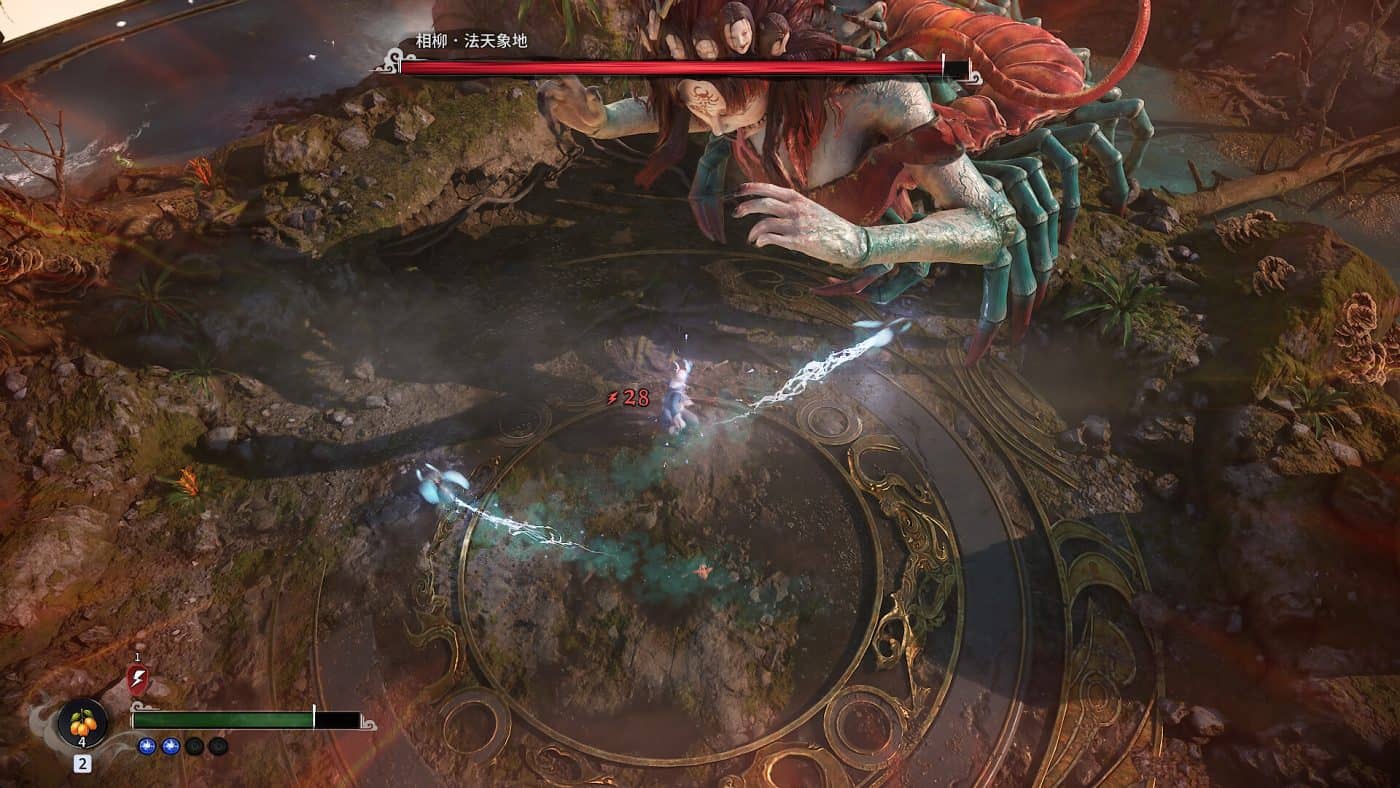
If the setting gives Dinghai: The Ocean Pillar much of its identity, combat is the beating heart of the experience. The game is built around a dual-weapon system, allowing players to equip two different offensive weapons and switch between them on the fly. More than simply broadening the available arsenal, this system encourages players to experiment with different combinations and find approaches that can fundamentally alter the flow of an encounter.
It is a philosophy that works particularly well alongside Dinghai’s roguelike structure. Every run becomes an opportunity to experiment: to try a different weapon combination, uncover new synergies, and adapt your playstyle to the challenges encountered along the way. Rather than asking players to commit to a single approach, the game encourages them to constantly reassess what works, turning experimentation into an integral part of its progression.
That philosophy extends to death itself. A failed run is not simply a setback, but another opportunity to learn and come back stronger. Each return offers a deeper understanding of the game’s systems, a chance to experiment with new possibilities, and another opportunity to refine your approach. Repetition therefore becomes part of the progression, with every cycle bringing the player one step closer to overcoming tougher threats and pushing further into the world of Dinghai.
What’s Included in the Demo
The free demo currently available on Steam offers a substantial first look at Dinghai: The Ocean Pillar and the ambitions behind Justdan’s project. Across a tutorial level and two complete stages, it gives players an early opportunity to experience the game’s core structure, get a feel for its combat, and begin to understand how its progression systems fit together.
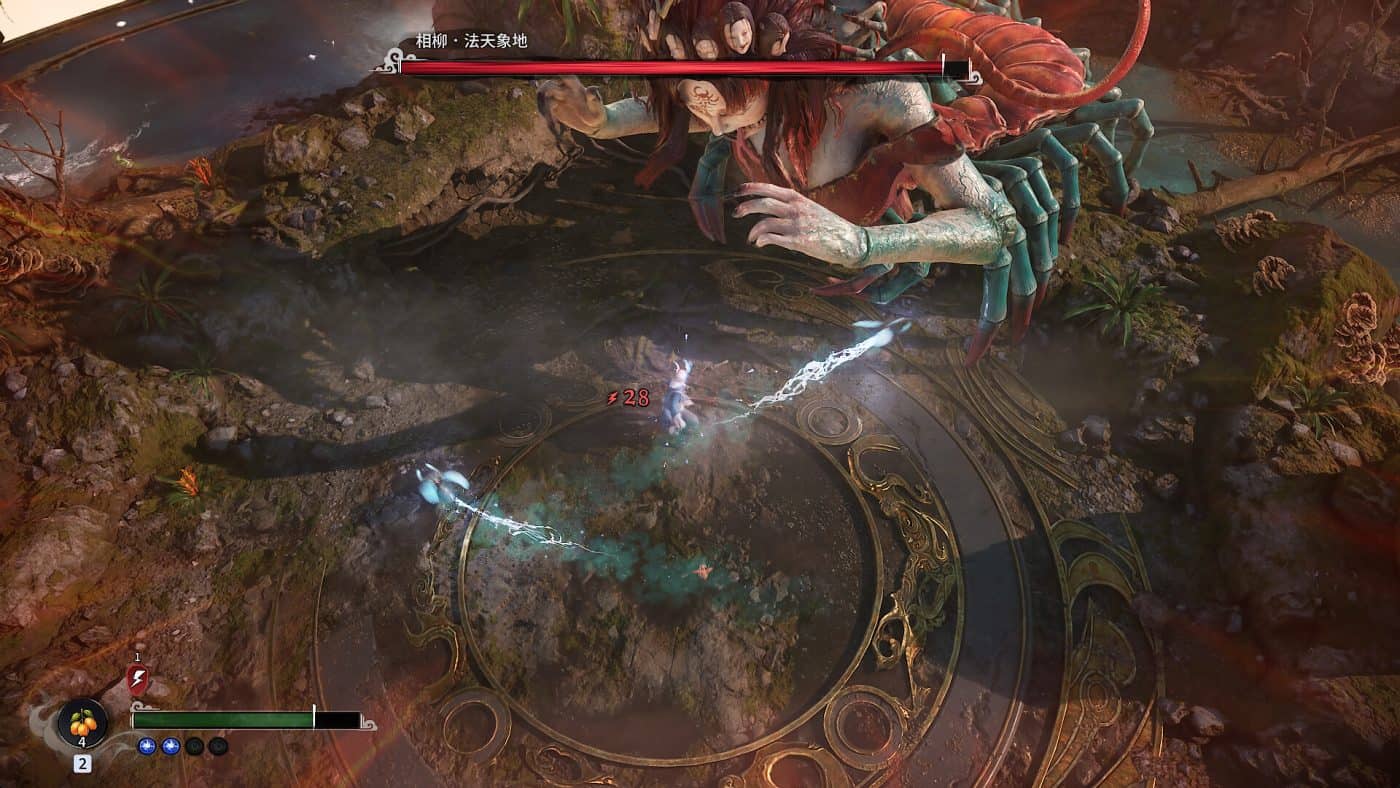
There is more to discover beyond the most direct route, however. The demo features three elite enemies, two main bosses, and two hidden bosses, with the latter reserved for players willing to venture off the beaten path and explore the available stages more thoroughly.
The demo features a five-weapon arsenal, with each weapon designed to work within the game’s dual-weapon system and combine with different Adornments and Vessels. Even within the relatively contained scope of the demo, the available options leave plenty of room for experimentation, encouraging players to mix and match their equipment and discover how different combinations can shape their approach to each run.
Where to Play the Dinghai Demo
The demo for Dinghai: The Ocean Pillar is now available to play for free on PC via Steam.
We have already had the opportunity to experience the demo ahead of its release, and we will be returning in the coming days with a closer look at our first hands-on experience and the early impressions it left on us.
For now, our first look comes to an end. But beneath the waters of Dinghai, there is still much more waiting to be uncovered.