
In short
Blizzard is bringing back two of the most recognisable names in its history, but Diablo V and the new StarCraft are not simply attempts to return to the company’s glory days. They represent two very different experiments in what those franchises can become next. One begins in a Sanctuary where Diablo has already won; the other leaves the RTS behind to turn the Koprulu Sector into an open-world battlefield. Beneath both announcements lies the same question: how far can Blizzard reinvent its legacy without losing the identity that made it matter in the first place?
The worlds that once defined Blizzard are being asked to define something else: what comes next.

There was a time when Blizzard did not need to explain why its games were worth waiting for. The company had built that certainty over decades. Development could stretch for years. Announcements could be followed by prolonged silence. Release dates could disappear from calendars altogether. Yet, for a remarkably long time, players were willing to wait because Blizzard had established a simple understanding with its audience: take the time you need, and make it count. That understanding was reinforced by the games themselves.
Warcraft, StarCraft, and Diablo became more than successful franchises. They helped define genres, shaped the culture of PC gaming, and created worlds that continued to exist long after the release window had passed. Their importance was not measured solely in sales or review scores. They became reference points: games that influenced what came after them and remained part of the conversation long after their original audiences had moved on.
That kind of reputation creates an unusual relationship between a studio and its audience. Players do not simply expect the next game. They develop an idea of what the studio should be. And that is precisely where Blizzard’s relationship with its audience began to change.
It did not happen with one announcement, one release, or one mistake. The shift was cumulative: projects were cancelled, others were delayed, communication became increasingly difficult to navigate, and some of the company’s decisions appeared increasingly distant from the expectations attached to its most established franchises. Over time, the gap between the Blizzard players had spent years believing in and the Blizzard they felt they were seeing became harder to ignore.
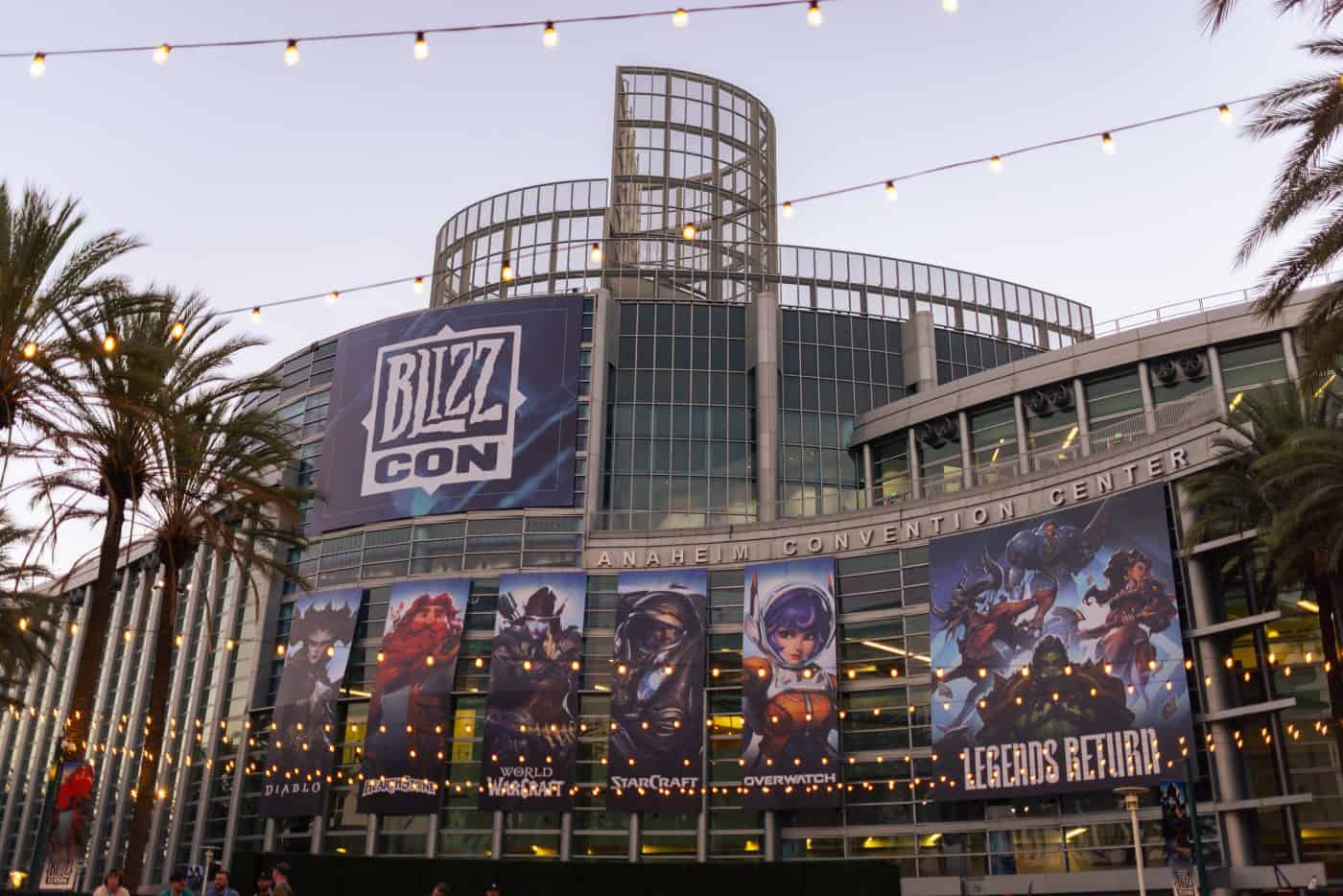
Few moments captured that tension more clearly than BlizzCon 2018. The announcement of Diablo Immortal was, on paper, a straightforward expansion of one of Blizzard’s flagship franchises into the mobile market. Blizzard presented it as a new Diablo experience for Android and iOS.
But the audience had come expecting something else, and the reveal became one of the most awkward moments in the convention’s history. During the ensuing Q&A, a question about a possible PC version was met with boos from the crowd, prompting the now-famous response: “Do you guys not have phones?” The line would go on to define the moment, not because it was simply a clash over platforms, but because it exposed the deeper disconnect between what Blizzard was presenting and what a significant part of its audience had expected from the company.
For a significant part of the audience, Diablo represented a particular kind of Blizzard game: one rooted in the company’s PC heritage and in the expectations that had accumulated around it over the years. Diablo Immortal challenged those expectations at exactly the moment when players were already questioning where Blizzard was heading. The friction was therefore not simply between PC and mobile. It was between expectation and direction.
What followed was not a clean break. Blizzard remained one of the industry’s most recognisable names, and its major franchises retained much of their cultural weight. But the company entered a prolonged period of transition, as its internal structure, development strategy, projects, and long-term priorities continued to change. The legacy remained. What had changed was the certainty surrounding it. For a company that had spent decades building an almost unquestioned relationship of trust with its audience, that distinction was significant. Then, in 2026, BlizzCon returned.
What made the event notable was not simply the return itself, but the way Blizzard used the stage. At the opening ceremony, the company officially revealed Diablo V, due in spring 2029, and announced a new StarCraft game conceived as an original open-world shooter, scheduled for spring 2030. Blizzard’s own description of Diablo V takes the franchise into a radically altered Sanctuary, where Diablo has already won, while the StarCraft announcement moves the series into a genre far removed from the real-time strategy games with which it is traditionally associated.
Those announcements matter not simply because two major Blizzard franchises are returning. They matter because of how differently they are returning. Diablo V is a continuation that begins from a deliberately unfamiliar premise. StarCraft, meanwhile, is being rebuilt around a form the franchise has never previously occupied in this way. Neither announcement is simply an exercise in reproducing a familiar formula for an audience that already knows what to expect.
And perhaps that is the most revealing thing about Blizzard’s current moment. For years, the company’s greatest strength was its ability to make its audience wait. Later, that patience became part of the burden of its own legacy. Now, with Diablo V and StarCraft once again pointing towards very different futures, Blizzard appears to be confronting a more fundamental question:
What happens when a studio whose identity was built on defining genres decides that its legacy should be a starting point rather than a boundary? There is no answer yet.
But for the first time in a long while, Blizzard is not simply asking its audience to remember what came before. It is asking them to imagine what comes next.
A Different Blizzard for a Different Era
It would be tempting, however, to frame Blizzard’s current moment as a simple return to former glory. It is an appealing narrative, but ultimately an incomplete one – one that risks reducing a far more complicated transformation to a story of nostalgia. The Blizzard of 2026 is not the Blizzard that defined the industry at the height of its influence, just as the industry itself has changed dramatically over the past two decades. The players are different. The market is different. The way games are conceived, developed, launched, and supported has changed with them.
Development is increasingly shaped by longer post-launch roadmaps, live-service expectations, and an audience that can engage with studios more directly than ever before. The relationship between developers and their communities has become faster, closer, and consequently far more demanding. For Blizzard, that shift is not simply part of the landscape: it is central to understanding the choices the company is making today. Diablo IV provides perhaps the clearest example.
Blizzard has continued to expand and support the game while steadily reassessing some of the decisions made during its early years and establishing a more coherent vision for what comes next.
New systems, seasonal content, and a consistent flow of updates have steadily reshaped Diablo IV. Rather than simply putting its early shortcomings behind it, Blizzard has increasingly used them as a foundation for refinement, allowing what the game has learned since launch to shape a clearer direction for the years ahead. At BlizzCon 2026, that shift was particularly apparent.
The Amazon is set to return to Diablo IV in 2027, while the franchise marked its 30th anniversary with a new season and a series of initiatives celebrating its history. Blizzard has also announced a new animated Diablo series in development with Netflix, taking Sanctuary beyond the boundaries of the games and broadening the reach of one of the company’s most enduring franchises.
Elsewhere, Blizzard’s other major franchises remain central to its long-term plans. World of Warcraft, Overwatch, Hearthstone, and Warcraft III: Reforged continue to receive new content, updates, and projects, ensuring that the company’s existing portfolio remains an active part of its future rather than simply a monument to its past. But that alone is not enough to explain where Blizzard is heading. The company’s challenge has never been merely to keep its games running or to extend the lifespan of its biggest franchises. The more fundamental question is what Blizzard wants those franchises to become, and what Blizzard itself wants to become alongside them.
That means confronting the weight of its own history without allowing nostalgia to dictate what comes next. The company can draw from the ideas, worlds, and characters that built its reputation, but it cannot simply recreate the conditions that made them resonate in the first place.
The audience has moved on. The industry has moved on. Blizzard has, too. What matters now is how the company turns that legacy into something that belongs to the present rather than merely reminding players of the past. And that is precisely where Diablo V and StarCraft enter the picture.
After the Fall of Sanctuary
What struck me most about Diablo V is how deceptively simple its premise is, and how radically that simplicity could reshape the series. Blizzard has taken one of the most familiar narrative foundations in Diablo and fundamentally reversed it. This time, we are not trying to prevent the end of the world. The end of the world has already happened.
Set for release in spring 2029, Diablo V opens in a Sanctuary where Diablo has already won. The heroes who carried the previous chapters have failed, leaving this new story to unfold in the aftermath of their defeat. The world is no longer moving toward an impending apocalypse; it is already living with the consequences of one. To me, that is far more compelling than simply bringing back the Lord of Terror for another climactic confrontation. Diablo is no longer merely the enemy waiting at the end of the journey. He has become the reality the player must navigate.
It is a small change in premise with potentially enormous consequences for the story Blizzard wants to tell. The traditional Diablo formula has always revolved around resisting the forces of Hell before they can consume Sanctuary. Diablo V begins from the opposite perspective: the resistance has failed, the old heroes are gone, and the world must now exist with the consequences.
That opens the door to a very different kind of Diablo story. Instead of asking whether Sanctuary can be saved, the game can ask what survives after its defeat, what remains worth fighting for, and what it means to build a future in a world where evil has already won.

The Scars Diablo Left Behind
Think back to the worlds of the previous Diablo games. They were already places in turmoil, ravaged by demonic forces but still recognisable as living worlds. Villages remained standing, communities endured, and ordinary people continued their lives despite the darkness closing in around them. There were still places to defend and lives worth saving. The struggle was desperate, but hope remained possible. Diablo V begins from an entirely different premise.
The forces of Hell have already won. Sanctuary has been profoundly transformed by Diablo’s rule. Its people are no longer fighting to prevent an approaching catastrophe; they are fighting to survive in the aftermath of one that has already taken place. That makes for a considerably darker starting point, but the real significance lies elsewhere. For all its apocalyptic storytelling, Diablo has never truly been able to explore what happens after the forces of Hell actually prevail.
Previous games have always been driven by the possibility of stopping the darkness before it consumes the world. Diablo V removes that possibility from the equation from the very beginning. Sanctuary, then, cannot simply be a more oppressive or visually darker version of the worlds we already know. It has to feel fundamentally altered by what happened.
The consequences of Diablo’s victory should exist not only in the ruins and battlefields, but in the communities that survived, the people who inhabit them, and the very way life continues in this new reality. What came before should no longer feel like distant history or background lore. It should feel like a wound that Sanctuary has been forced to carry.
That is where Diablo V could find its most distinctive identity. Rather than making the apocalypse another event to overcome, Blizzard has the opportunity to make its aftermath the world itself: a living reminder that, this time, the heroes did not arrive in time.
The Long Road Home
It is against this backdrop that Diablo V introduces its new protagonist, placing the Heir to Westmarch at the heart of a story shaped by the aftermath of Sanctuary’s fall.
Travelling alongside them is a caravan of survivors, a community that will grow, change, and forge its own identity along the way. Of everything Blizzard has revealed so far, it is one of the ideas I find most compelling, not simply because Diablo has brought groups of characters together before, but because a caravan feels uniquely suited to a world shaped by loss.
A caravan is more than a collection of people moving from one place to another. It is a community without a fixed home, constantly searching for somewhere safe enough to stop. Along the way, it loses people, meets other survivors, crosses unfamiliar territory, and forms new bonds. Most importantly, it carries what cannot be rebuilt simply by putting walls back up: the stories, memories, and scars of a world that no longer exists.
That gives the concept a significance that extends well beyond its narrative premise. If Blizzard can weave the caravan naturally into both the story and the broader gameplay experience, Diablo V could establish a more intimate relationship between the player and Sanctuary than previous entries have managed. The world would no longer exist merely as a backdrop for another struggle between Heaven and Hell, or as a series of locations to pass through on the way to the next objective. It could become a place where relationships matter, where people begin rebuilding their lives, and where the instinct to survive gradually evolves into the desire to belong.
That, to me, is what makes the caravan such an intriguing idea for Diablo V. In a Sanctuary that has already lost so much, home is no longer something the player can simply return to. It is something they will have to find, or perhaps build, along the way.

What Makes a Build Feel Like Your Own?
Blizzard has confirmed three classes for Diablo V: the Demon Hunter, Monk, and Plague Knight. The last of them is entirely new to the series, but the more interesting part of the reveal lies in what these classes might tell us about Blizzard’s broader approach to progression. The number of classes, after all, is only the beginning. The real question is what Blizzard wants each of them to feel like, and how much freedom players will have to shape them into something distinctly their own.
That is where the studio’s emphasis on depth, clarity, and item identity becomes particularly important. These may sound like simple design principles, but in an action RPG such as Diablo, they underpin almost everything. Combat, skills, gear, and builds are locked into a constant conversation with one another, with each new piece of equipment capable of altering the way a character fights, moves, or approaches an encounter. And that is why loot has always been at the heart of Diablo.
A fight does not necessarily end when the enemy dies. Sometimes, that is when the next question begins: what did it drop? It is the possibility of finding something that keeps us running another dungeon or taking on another pack of enemies. Not because the next item might simply carry a larger number, but because it might change what our character is capable of becoming.
That distinction matters. There is a difference between progression that asks us to replace a weaker item with a stronger one and progression that makes us stop and reconsider the build we have spent hours creating. The former keeps the numbers moving. The latter gives the loot meaning.
For Diablo V, that could be one of the defining challenges. Every class needs a clear identity, but every build also needs enough room to become personal. Every meaningful drop should offer more than incremental power; it should open a possibility. If Blizzard can strike that balance, the hunt for loot becomes more than an endless pursuit of higher stats. It becomes the reason to keep experimenting and keep wondering what the next version of your character might look like.
StarCraft, Seen From the Ground
If Diablo V is about evolving what Blizzard already knows, the new StarCraft project is about testing how far that identity can be pushed without losing what made it distinctive in the first place.
This is not simply another sequel. Blizzard is taking one of its defining franchises and reimagining it in a genre it has never traditionally occupied, challenging the very perspective through which StarCraft has been experienced for decades. Targeted for spring 2030, the project is an open-world shooter set in the Koprulu Sector, with Dan Hay leading development. For a franchise so closely identified with real-time strategy, the choice is striking.
StarCraft has always approached warfare from above, giving players control over armies rather than individual soldiers: managing resources, positioning units, anticipating enemy movements, and reading the battlefield as a constantly evolving strategic system. That perspective has been fundamental to the series for decades. Now, Blizzard is turning it around.
The battlefield will no longer sit beneath the player as something to survey and command. It becomes a place to enter. A place to move through, fight within, and experience at ground level. The shift goes far beyond changing the camera. It changes the player’s relationship with the entire world, moving StarCraft from the perspective of the commander to that of the combatant.
And that is where the project becomes genuinely intriguing. The challenge is not simply proving that StarCraft can function as a shooter. A familiar universe can be adapted to almost any genre. The difficult part is determining how much of its identity can survive the transition.
Because StarCraft has always been more than its factions, its setting, or its lore. Its identity was built on scale, strategy, asymmetry, and the constant tension of trying to understand a battlefield before it has the chance to overwhelm you. Translating those qualities into an open-world, first-person experience will require Blizzard to find new ways of expressing ideas that were originally conceived from a distant, commanding perspective. That makes the new project one of the clearest tests of Blizzard’s willingness to challenge its own history. For decades, StarCraft asked players to command the battlefield. Now it is asking what happens when they step inside it.
What If StarCraft Became a Place You Could Actually Get Lost In?
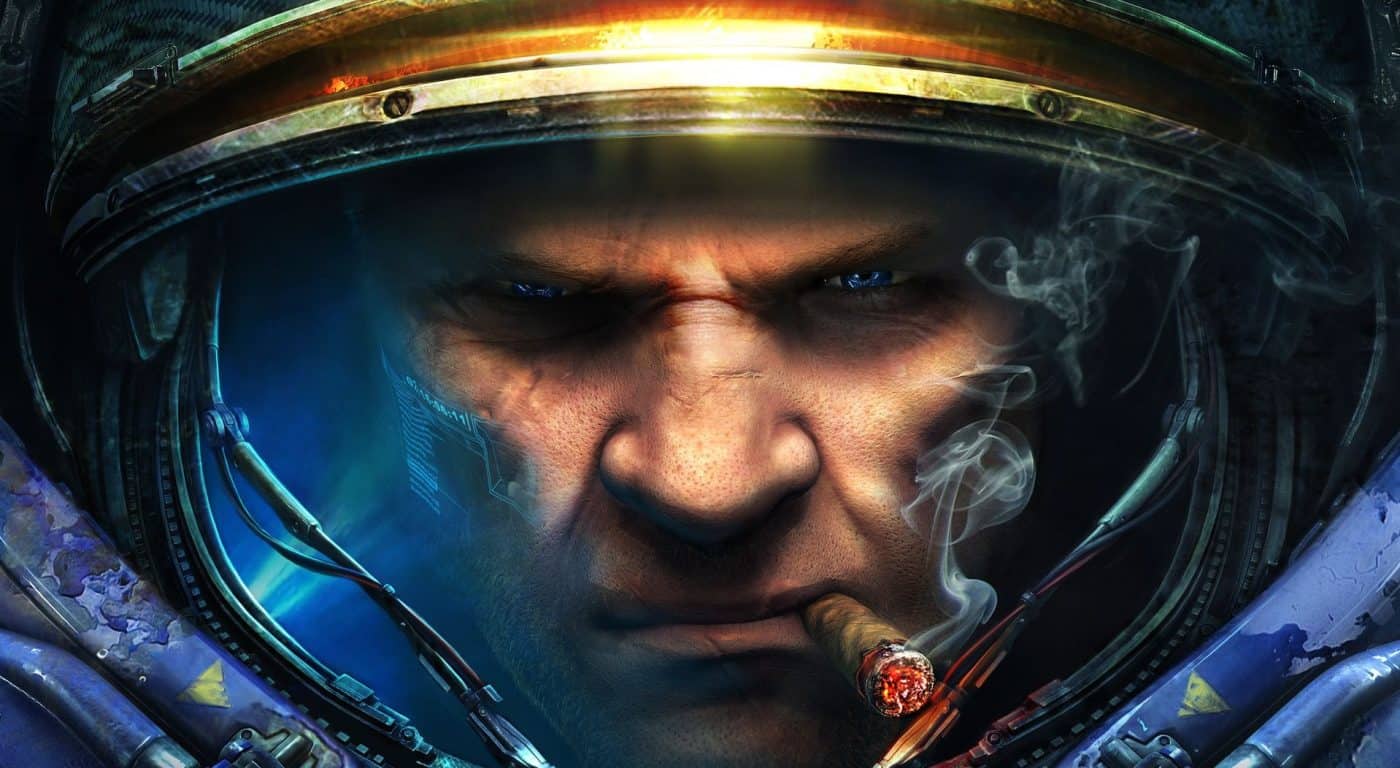
More than anything else, this is the question I keep coming back to. Not simply what kind of shooter StarCraft might become, but what happens to the franchise when we are finally allowed to experience its universe from the other side of the screen. How does StarCraft feel when we stop looking down and start looking around? For decades, the Terrans, Zerg, and Protoss have existed within the player’s field of view as forces to command. We built bases, gathered resources, moved armies across the battlefield, and made decisions capable of determining the fate of entire worlds.
StarCraft taught us to understand its universe through scale, to see conflicts as vast strategic systems in which individual lives were inevitably reduced to pieces on a much larger board.
An open-world shooter has the potential to reverse that relationship entirely. Instead of surveying the war from above, we could walk into it. The Koprulu Sector could become more than a collection of battlefields and strategic locations; it could become a world to inhabit, filled with places that were previously little more than details within a much larger conflict. An abandoned colony. A Terran settlement on the edge of the war. A planet consumed by the Zerg. A Protoss structure left behind. A remote military outpost still holding its ground. From a strategic perspective, these places have always been part of the bigger picture. From the ground, they could become the picture itself.
That distinction could fundamentally change the way StarCraft tells its stories. The war would no longer exist solely in the movement of armies or the clash of hundreds of units across a battlefield. It could be experienced through the perspective of a single person moving through its aftermath, witnessing the consequences of conflicts that, until now, we have understood from a distance.
And this is where Blizzard’s approach becomes particularly interesting. The studio does not need to invent a new universe to make StarCraft feel unfamiliar. It already has the Koprulu Sector, decades of history, three iconic factions, and countless worlds shaped by their conflicts. The opportunity lies elsewhere: not in creating a different StarCraft, but in revealing the StarCraft we already know from a perspective we have never been given before.
For a series built around seeing the whole battlefield, perhaps its most interesting future begins with finally seeing what happens when you are standing inside it.
The Identity StarCraft Cannot Afford to Lose
And this is where the most difficult question surrounding the project begins: can StarCraft change genres without losing what makes it StarCraft? There is a particular risk in reinventing an established franchise this radically. A familiar name can carry decades of history, a recognisable visual identity can survive almost any change in format, and an expansive body of lore can provide endless material to draw from. But none of those things, on their own, guarantees continuity of identity. The games industry has repeatedly shown how easily a new genre can begin to dictate the terms of a franchise rather than simply provide it with a new way to express itself.
For StarCraft, that makes the transition less a question of preserving mechanics than of identifying what cannot be lost. The RTS formula may not be one of those things. The foundations beneath it might be: the perpetual conflict between Terran, Zerg, and Protoss; the uneasy relationship between technology and biology; the sheer scale of its wars; and a distinct vision of science fiction that has defined the franchise far beyond the mechanics of commanding an army. That is the balance Blizzard now has to find. The new StarCraft needs to be different enough to justify its existence, yet familiar enough to feel like a natural extension of the universe that came before it.
If Blizzard can carry those defining ideas into an open-world shooter without reducing them to little more than aesthetic references, the move away from RTS does not have to mean turning its back on the series’ history. It could mean something considerably more difficult, and potentially more meaningful: finding a new language for StarCraft without losing the voice that made it distinctive in the first place.
What Kind of Blizzard Comes Next?
In the end, the question is not whether Blizzard can become the company it was twenty years ago. That version of Blizzard belonged to a different era: to a different industry, a different audience, and a fundamentally different relationship between developers, games, and the communities that grew around them. Trying to recreate that world today would mean looking backward when the real challenge is deciding what comes next. The past can shape the future, but it cannot be used to design it.
What matters now is how much of Blizzard’s legacy can be carried forward while still allowing the company to become something new. That tension is at the heart of both Diablo V and the new StarCraft. They are very different projects, but they are asking Blizzard to solve essentially the same problem: how do you evolve an identity without reducing it to nostalgia? That may be the most significant idea to emerge from BlizzCon 2026.
Blizzard is not simply bringing its most recognisable franchises back because they are familiar. It is using them as foundations: worlds with enough history and identity to support experiments that would be difficult to build from scratch. That is an appealing proposition, but also a demanding one. With a legacy franchise, the audience already knows what it believes that name should mean. The difficult part is not changing it. The difficult part is making the change feel earned.
For Diablo V, that means showing that a Sanctuary already conquered by Diablo can become the foundation for a story unlike anything the series has attempted before. It means making the caravan of survivors matter beyond the premise, and evolving progression without losing the depth and experimentation that have always made the search for better gear and stronger builds such a fundamental part of Diablo.
For StarCraft, the proposition is even more radical. An open-world shooter does not simply alter the mechanics; it changes the perspective through which the entire universe is understood. The Koprulu Sector will no longer be something the player primarily observes from above, but somewhere they are expected to inhabit. The real test, then, is not whether StarCraft can become a shooter. It is whether Blizzard can make it one without losing the identity that made the franchise matter in the first place.
We will not know the answer at BlizzCon, and we will not know it from another trailer. Diablo V is scheduled for spring 2029, while the new StarCraft project is targeted for spring 2030. Until then, there will be years of development, new information, changing expectations, and inevitable debate. Eventually, all of that will give way to the only test that ultimately matters: the games themselves.
That is why a new golden age of Blizzard would be premature to declare. But calling these announcements a simple exercise in nostalgia would miss what makes them interesting in the first place. Blizzard is not trying to recreate its past. It is trying to find out what its past can become.
Diablo V and StarCraft are two very different answers to that question. Whether either one provides a convincing answer remains to be seen. And perhaps that uncertainty is exactly where Blizzard stands today. The company no longer has to prove that its old names still carry weight. It has to show us what those names can mean next. The past is already written. The next chapter is still waiting to be told.