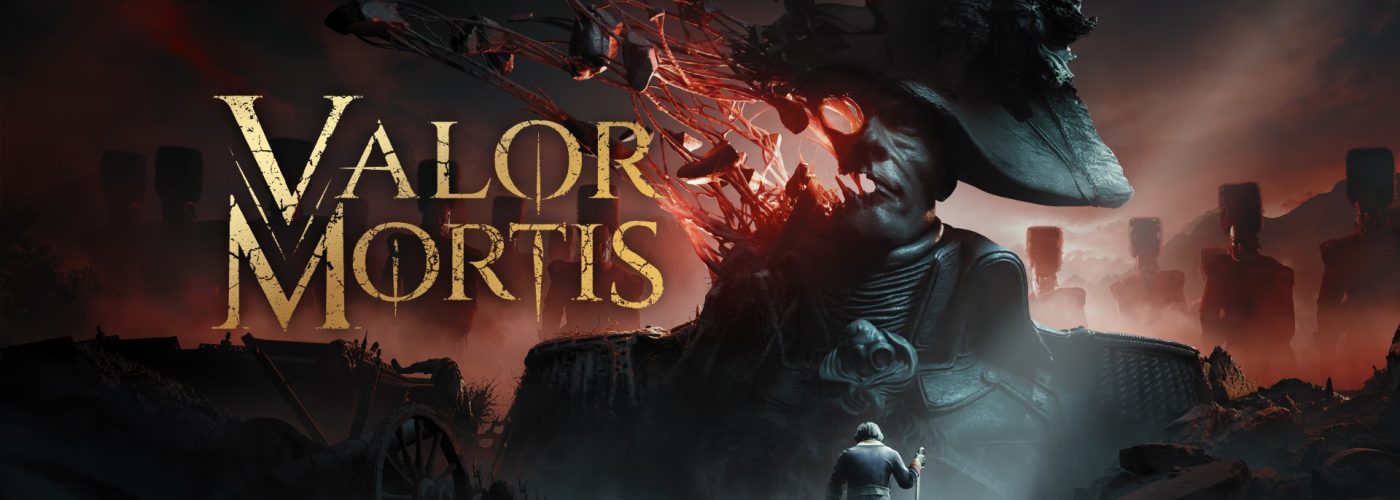
Valor Mortis has the makings of something special: an unusual setting, a compelling combat system and a world worth exploring. Yet, beneath its distinctive surface, not everything works as well as it should.

Valor Mortis takes the soulslike formula somewhere it rarely goes. Set against an alternate version of the Napoleonic Wars, this first-person action RPG turns 19th-century Europe into a supernatural nightmare, where the violence of the battlefield has given way to something far more terrifying. Developed by One More Level, the studio behind the Ghostrunner series, and published by Lyrical Games, the game pairs demanding combat with horror and a historical backdrop warped by a mysterious epidemic. Released on October 13, 2026, for PC, PlayStation 5 and Xbox Series X|S, Valor Mortis sets out to build a world where survival depends as much on careful exploration as it does on the ability to face down its deadliest inhabitants.
Its most striking idea is also the one that immediately sets it apart from much of the genre: the first-person perspective. This is not simply a soulslike viewed from a different angle. By placing every confrontation directly in the player’s line of sight, Valor Mortis gives its combat a physicality and immediacy that shape the entire experience. Attacks, parries, dodges and counterattacks demand precision, while swords, firearms and supernatural abilities offer different ways to approach each encounter. Enemies, in turn, reward patience and observation, making an understanding of their movements and attack patterns essential to survival. The familiar rhythms of the soulslike remain intact, but they take on a different character when experienced from behind the protagonist’s eyes.
The same sense of identity runs through the game’s setting. Napoleonic Europe is not recreated so much as reshaped into something altogether darker. Battlefields, ruined settlements and contaminated landscapes tell the story of a continent pushed beyond the limits of war, where military uniforms and period weaponry now exist alongside grotesque creatures and forces that defy explanation. Historical references give this nightmare a recognisable foundation, while its horror elements steadily pull it away from reality. It is an uneasy collision of history and the supernatural, and one that gives Valor Mortis much of its personality.
There is more to the journey than combat, too. Exploration opens up alternative routes, shortcuts and environmental secrets, encouraging players to pay attention to the spaces between battles rather than simply rushing towards the next encounter.
Moments of discovery and mobility-focused sections help break up the action, creating a pace that shifts between tension and curiosity. Taken as a whole, Valor Mortis is an ambitious attempt to bring together the intensity of first-person combat, the discipline of the soulslike genre and the unsettling possibilities of an alternate history. The foundations may be familiar, but One More Level has given them a setting and perspective that feel distinctly its own.


Against the Odds: The Long Road to Valor Mortis
Behind Valor Mortis is One More Level, the independent Polish studio that made its name with the Ghostrunner series. Founded in 2014 and based in Kraków, the developer has built a reputation for fast-paced action games that place a strong emphasis on precision, movement and demanding combat. Those qualities are still central to its latest release, but Valor Mortis takes the studio into unfamiliar territory, trading the futuristic landscapes of its previous games for an alternative vision of Napoleonic Europe, steeped in historical fiction and supernatural horror.
It is a considerable departure in terms of setting, but not an abandonment of the design principles that have defined One More Level’s work. The studio once again builds its experience around first-person action, responsive movement and combat that demands both precision and quick reflexes. This time, however, those familiar ingredients serve a different kind of experience, one that combines the intensity of a first-person action game with the exploration and progression systems associated with the soulslike genre.
The game’s development stretches back to 2020, when it was first conceived under the working title Cyber Slash. Private Division, the publishing label associated with Take-Two Interactive, was involved during the project’s early stages, but the partnership eventually came to an end. The separation left One More Level facing the challenge of securing new backing for a project that had already been in development for several years. Finding the right publishing partner was therefore crucial not only to the game’s commercial prospects, but also to its ability to reach completion.
That support eventually came from Lyrical Games, an independent publisher based in Los Angeles. The agreement, formalised in October 2025, saw the company step in to support the project’s development budget while taking charge of its global marketing. Importantly, the partnership did not mean giving up ownership of the game: the Valor Mortis intellectual property remains entirely in One More Level’s hands. The arrangement gave the studio the additional backing it needed while allowing it to retain control over the property and the creative work behind it.
That detail is particularly significant when considering what the game represents for its developer. Valor Mortis is One More Level’s first fully owned intellectual property, making it an important milestone in the studio’s history. After establishing itself through the Ghostrunner franchise, the team now has the opportunity to build an original universe of its own, rather than working within an established property. It is a meaningful step forward for a studio looking to expand its creative horizons and demonstrate that its strengths extend beyond the series that first brought it recognition.
The result is a project that draws on the team’s established expertise while attempting something considerably more ambitious in scope and identity. Its first-person combat and emphasis on mobility reflect the developer’s previous work, but the addition of exploration, character progression and a distinctive historical setting gives the experience a different sense of scale. For One More Level, Valor Mortis is both a departure from the familiar and a statement of creative independence: a new intellectual property shaped by the studio’s experience, but ultimately intended to stand on its own.


A Twisted Take on the Napoleonic Wars
Valor Mortis is set in an alternate 19th-century Europe, where Napoleon Bonaparte has triumphed at Waterloo and continues his military campaign to bring the continent under French rule.
Driven by the ambition of uniting Europe under a single empire and putting an end to the monarchies that have long divided it, the Emperor’s conquests provide the backdrop for William Dowsett, a young British soldier who voluntarily enlists in the Grande Armée. Drawn by the promise of a united Europe and the prospect of liberating the continent from its traditional rulers, William believes he is fighting for a cause that transcends the battlefield.
His ideals, however, are soon put to the ultimate test. Sent to the Eastern Front, William is killed during one of Napoleon’s military campaigns, seemingly bringing his story to an untimely end. Instead, he awakens on a battlefield littered with corpses, surrounded by fallen soldiers and grotesque creatures that bear little resemblance to their former selves. Stripped of much of his memory, he gradually comes to terms with an unsettling reality: he has returned from the dead, and his resurrection has granted him abilities that go far beyond anything he could have possessed in his previous life.
As William makes his way through the devastated countryside, he begins to uncover the source of the catastrophe. A mysterious plague has spread through Napoleon’s ranks and beyond, turning the dead into abominations and corrupting those who remain alive. Its cause is linked to Nephtoglobin, a strange substance whose effects have transformed the battlefield into a landscape of death and mutation. William is infected, too, but his condition is markedly different from that of the creatures he encounters: he has retained his memories, his consciousness and, above all, his free will.
There are other forces at work, however, and not all of them have William’s best interests at heart. Napoleon begins communicating with him directly, his voice echoing inside the soldier’s mind as he attempts to guide him through the ravaged territories. A second, seemingly opposing presence also makes contact: the Shrike, a mysterious figure connected to the resistance against the Empire. As these competing voices attempt to influence his decisions, William encounters Lucjan Skawiński, an enigmatic individual who directs him towards a group of survivors and helps him make sense of the situation.
Following his guidance, William is eventually reunited with two former comrades, James Stewart and Louis Moreau, who have survived the outbreak. Louis, a physician and researcher, gives him a series of assignments that lead to a salt mine. Deep within its tunnels, William discovers a sealed doorway, though its purpose and the means of opening it remain unknown. To find answers, Louis sends him to a university in a nearby city, now devastated by the war.
The journey through its deserted streets and ruined buildings reveals the full extent of the destruction wrought by Napoleon’s campaigns. More importantly, the university’s underground laboratories hold evidence of the Empire’s experiments with Nephtoglobin. The documents William uncovers expose a deeply troubling truth: the research was conducted under Louis’s direction, while Napoleon had the substance forcibly administered to his own soldiers, William included. The plague is therefore not merely an unexplained calamity. It is also the result of deliberate experimentation, carried out at the expense of the very men who were supposed to serve the Empire.
When William returns with the documents, Louis explains that the sealed doorway in the mine can only be opened with an ancient relic, an artefact endowed with a power of its own. Retrieving it takes William to a fortress occupied by Napoleon’s forces. He eventually succeeds in securing the object, but his victory is short-lived: after absorbing its power, he loses consciousness and is captured. Brought before the Emperor, William initially faces the prospect of execution. Napoleon ultimately spares him, at least for the moment, following the intervention of his emissary, Mary.
It is Mary who then changes the course of William’s journey. After freeing him from captivity, she reveals that she is the Shrike, the mysterious figure who has been communicating with him throughout his ordeal. She urges him to stand against Napoleon and put an end to the Emperor’s ambitions. William subsequently attempts to reunite with James and Louis, only to discover that both have abandoned him and fled. Once again, he is left to face the consequences of the unfolding catastrophe on his own.
With no one else to turn to, William returns to the salt mine and the doorway he has spent much of his journey trying to unlock. Now in possession of the necessary power, he finally opens it and steps into a supernatural dimension beyond the boundaries of the known world. There, he encounters a creature that takes his own likeness: the Entity. The ensuing confrontation pits William against a sinister reflection of himself, and defeating it allows him to absorb its power, bringing the final stage of his journey to a close.
In the aftermath, William remains determined to fight for peace, even if he knows that any victory may offer little more than a temporary reprieve. Napoleon, meanwhile, continues his march across Europe, leading his army of the undead towards further conquest. The immediate conflict may have reached its conclusion, but the larger war is still unfolding. With the Emperor’s ambitions undiminished, Valor Mortis leaves its world on the brink of another chapter, suggesting that the nightmare consuming Europe is anything but over.


A War Against Humanity, Within and Without
One of Valor Mortis‘s greatest strengths is the way it blends supernatural horror with a dark reimagining of the Napoleonic era. Rather than using its historical setting as little more than a backdrop for the action, One More Level makes the conflict an integral part of the game’s identity, portraying a Europe where the pursuit of conquest has given rise to something far more sinister. By imagining a continent devastated by Napoleon’s victory at Waterloo, the studio takes a recognisable period of European history and reshapes it into a nightmarish vision of war, corruption and human decay.
At the heart of this world is the plague spreading through Napoleon’s armies and the territories under his control. Nephtoglobin is more than the source of the game’s supernatural horrors: it is also a reflection of an empire willing to consume its own people in pursuit of its ambitions.
Soldiers are reduced to expendable instruments of an endless campaign, their bodies transformed into grotesque manifestations of the violence they were sent to inflict. This is where the game’s body horror finds much of its thematic weight. The mutations and deformities that define its enemies are not merely designed to unsettle; they also reflect a world in which the boundaries of humanity have been steadily eroded by the machinery of war.
This idea feeds into one of the narrative’s central concerns: the relationship between power, obedience and manipulation. Following his resurrection, William finds himself caught between two competing influences. Napoleon speaks directly into his mind, apparently guiding him through the devastated territories, while the Shrike, a mysterious figure connected to the resistance, urges him to question the Emperor’s intentions. As the two attempt to shape his actions, William is left to navigate a conflict in which information is incomplete, motives are difficult to discern and trust is in increasingly short supply.
What makes this dynamic particularly interesting is the way it turns the protagonist’s journey into a struggle for autonomy. William is not simply trying to determine which side is right; he must also learn to trust his own judgement in a situation where even his thoughts seem vulnerable to outside influence. His fragmented memories only deepen that uncertainty, leaving him with little understanding of his past or the circumstances that brought him back from the dead. It is a promising foundation for a story about free will and manipulation, although the game does not always explore the psychological consequences of this predicament as thoroughly as its premise might suggest.
Napoleon, meanwhile, embodies the darker side of the game’s exploration of authority and ambition. This reimagining of the French Emperor goes beyond historical revisionism, presenting a ruler whose vision of a united Europe has become increasingly difficult to separate from his pursuit of absolute power. The narrative draws an interesting contrast between the ideals used to justify his campaign and the suffering inflicted in their name. What is initially presented as a promise of continental unity ultimately exposes the brutal cost of imposing a single vision upon an entire population. The fate of his soldiers provides the clearest illustration of this contradiction: transformed into monstrous beings and stripped of their individuality, they become living symbols of an empire that has come to regard its own people as disposable.
For all its grand historical and supernatural ambitions, however, Valor Mortis also has a more personal side. Loneliness, trust and the fragility of human relationships run beneath the larger conflict, giving William’s journey a more intimate dimension. He is not a conventional hero with a clearly established identity and a detailed personal history. Instead, he is a man forced to piece together what remains of himself while trying to understand the world he has returned to. His amnesia is an effective device for sustaining the mystery surrounding his resurrection, but its narrative potential is not always fully realised. Given how central memory and identity are to the game’s broader themes, William’s internal struggle could have benefited from considerably more attention.
The supporting characters help give this otherwise desolate world a sense of humanity, even as their stories reveal how readily fear and desperation can undermine personal bonds. The Mice, a group of orphaned children featured in optional content, are particularly effective in this respect. Their stories shift the perspective away from soldiers and military leaders, focusing instead on those left to endure the consequences of a conflict they had no part in creating. Their search for protection and stability introduces a more vulnerable perspective on the devastation, while underlining a fundamental aspect of the game’s portrayal of war: its heaviest burden often falls on those with the least power to resist it. These moments add welcome emotional depth to the experience and broaden the narrative beyond its central struggle against Napoleon.
The relationship between life, death and identity is another recurring thread. William’s resurrection and his connection to Nephtoglobin blur the distinction between survival and damnation, raising the question of what it actually means to remain human when the body itself has been fundamentally altered. His ability to harness the infection’s power makes this contradiction particularly compelling. The very corruption that has brought him back from the dead also provides the means to fight against the forces responsible for his condition.
It is an effective extension of the game’s wider themes, turning William’s physical transformation into a reflection of his struggle to reclaim control over his own existence. His newfound abilities, however, offer no simple resolution: the more he learns to use them, the more complicated his relationship with the forces that have shaped him becomes.
From a storytelling perspective, Valor Mortis combines dialogue, written documents, narrative revelations and environmental storytelling to gradually flesh out its world. Notes and records scattered throughout the environments provide additional context for the events unfolding around William, while optional missions and the stories attached to particular locations offer glimpses of the society that existed before the outbreak. These elements give the setting a reasonably cohesive history without relying too heavily on fragmented lore or expecting players to reconstruct every important development themselves. The world is at its most convincing when its environments and inhabitants reveal the consequences of the catastrophe without needing to spell everything out.
Still, the narrative does not always live up to the potential of its ideas. Some of its most intriguing premises are introduced without receiving the development they warrant, while certain revelations and character developments feel rushed. Several questions raised throughout the adventure are addressed only briefly, leaving important aspects of the story less fully explored than they could have been. The ending is particularly underwhelming in this regard, offering a sense of incompleteness when measured against the expectations established by the game’s world-building and central mysteries. It is not enough to undermine the entire narrative, but it does leave the impression that the story has more to say than it ultimately manages to deliver.


A Canvas of Ruin, Blood and Gothic Horror
From a technical perspective, Valor Mortis is built on Unreal Engine 5, which One More Level uses to bring its reimagined 19th-century Europe to life. The continent depicted here is one ravaged by war and the spread of Nephtoglobin, and the visual presentation does a convincing job of communicating the scale of its devastation. Battlefields littered with fallen soldiers and discarded military equipment give way to flooded villages, religious buildings, imposing fortifications and sprawling underground complexes. University facilities, once devoted to academic research, have been repurposed as laboratories for increasingly disturbing experiments. The environments consistently reinforce the sense of a civilisation in decline, with the remnants of its former order gradually disappearing beneath the devastation.
The engine’s capabilities are put to good use throughout, with technologies such as Nanite, Lumen and Niagara contributing to environmental detail, lighting and particle effects. The results are particularly effective in the handling of light and shadow, while volumetric effects lend atmosphere and depth to enclosed interiors and fog-laden areas. Material rendering is another strong point. Mud, stone, timber, metal and deteriorating architectural surfaces generally have a convincing physical presence, helping the environments feel grounded despite the supernatural events unfolding within them. Ray tracing adds further refinements to reflections and lighting, although its visual contribution is not consistently significant enough to make the additional performance cost worthwhile.
It is the art direction, however, that ultimately gives Valor Mortis its strongest visual identity. One More Level brings together Napoleonic iconography, Gothic architecture and grotesque body horror to create a world that feels both historically recognisable and unmistakably distorted. Period uniforms, weapons and buildings establish a convincing connection to the early 19th century, while the spread of Nephtoglobin gradually corrupts this familiar imagery. The creatures encountered throughout the adventure are particularly effective in this respect. Their contorted anatomy, exposed wounds and unnatural mutations give physical form to the plague’s effects, making the horror feel like an extension of the world rather than an aesthetic layer imposed upon it. The juxtaposition of Napoleonic elegance and visceral grotesquery is one of the game’s most distinctive visual qualities, and helps it avoid the more predictable conventions of the genre.
The colour palette further strengthens this identity. Desaturated tones, earthy colours and weathered surfaces dominate the environments, establishing an atmosphere of decay that runs throughout the adventure. More vivid supernatural effects occasionally break through this subdued palette, providing striking visual contrasts and drawing attention to the forces at work.
The changing locations also help sustain the sense of discovery. Open battlefields, flooded settlements, elaborate architectural interiors and subterranean facilities each bring a different visual character to the journey, while the increasing presence of supernatural elements gradually shifts the atmosphere towards something more nightmarish.
The presentation is not equally polished across the board, though. Character models and facial animation are noticeably less impressive than the surrounding environments, with some secondary characters lacking the detail and expressiveness found elsewhere. Certain textures and animations also feel inconsistent with the overall quality of the visual design. The enemy roster, while featuring several memorable creations, could likewise have benefited from greater variety in both appearance and silhouette. These shortcomings are not enough to undermine the game’s broader aesthetic, but they do expose some unevenness in its execution.
Performance is a more significant concern, particularly on PC. Optimisation varies depending on the hardware configuration, and the experience can be affected by frame-rate fluctuations, stuttering and occasional stability issues. Support for upscaling and frame-generation technologies, including DLSS, FSR and XeSS, offers additional ways to balance performance and image quality, but does not necessarily resolve every inconsistency. The console versions appear to be less affected by the problems reported on PC, although the overall technical experience still warrants consideration. This is especially relevant given the demands of the combat system: parries, dodges and counterattacks all depend on precise timing, and even intermittent performance drops can interfere with the responsiveness these encounters require. In a game where a fraction of a second can determine the outcome of a fight, technical consistency is an essential part of the experience.
Ultimately, Valor Mortis makes a stronger impression through the coherence of its visual identity than through technical showmanship alone. Its environments convey the scale of a continent in collapse, while its combination of Napoleonic imagery, Gothic influences and body horror gives the world a distinctive aesthetic. Unreal Engine 5 provides a solid foundation for this vision, but inconsistencies in asset quality and PC optimisation prevent the technical presentation from being entirely convincing. These limitations are worth acknowledging, particularly in a combat-focused game, yet they do little to diminish the impact of its strongest visual work.


A Symphony of Steel and Shadows
The audio design is an important part of what makes Valor Mortis‘s world so atmospheric, reinforcing the sense of a Europe ravaged by war and consumed by the spread of Nephtoglobin. The original soundtrack, composed by Arkadiusz Reikowski and Oskar Bała, draws on orchestral music, dark ambient passages and heavier metal and electronic influences.
These contrasting elements reflect the game’s collision of historical fiction and supernatural horror, lending its setting a sound of its own. Rather than relying solely on bombastic compositions to accompany combat, the score frequently adopts a more restrained approach, allowing tension to build through atmosphere and carefully controlled changes in intensity.
The music often favours somber, unsettling arrangements, built around strings, brass and percussion. Certain passages have an almost funereal quality, their deliberate rhythms and weighty orchestration evoking the image of an army condemned to march onwards long after losing its humanity. During more demanding encounters, the arrangements become considerably heavier, introducing sharper rhythms and more aggressive instrumentation.
The metal influences are particularly effective in these moments, complementing the brutality of the fighting and the grotesque nature of the creatures William encounters. Yet the soundtrack is at its best when it knows when to hold back. In several areas, the music gives way to quieter ambient passages, leaving environmental sounds to sustain the tension and making the surrounding world feel all the more threatening. Not every composition is equally memorable, and some tracks fade into the background without leaving much of an impression, but the overall musical direction remains consistent with the game’s distinctive tone.
The sound effects provide a similarly convincing sense of physicality. The clash of blades, the impact of successful attacks and the distinctive audio cues accompanying William’s corruption-based abilities give combat an appropriate sense of weight. The creatures are also brought to life through unsettling vocalisations and distorted sounds, which help establish their presence and, in certain situations, offer useful indications of their behaviour.
Away from combat, environmental audio adds another layer to the experience. Creaking structures, metallic echoes and distant noises make abandoned buildings and deserted locations feel less static, reinforcing the impression of a world that has not entirely fallen silent. There are occasional inconsistencies, however. Some sounds are not sufficiently distinguishable from one another, and certain enemy-related cues can be mistaken for environmental effects, sometimes drawing attention to threats that are not actually there.
The English-language voice performances are among the more convincing elements of the audio package. Vincent Cassel brings an imposing authority to Napoleon, balancing the character’s commanding presence with an underlying sense of menace and ambiguity. Jennifer English is equally effective as the Shrike, lending the mysterious figure an appropriate degree of restraint and intrigue. James Alexander provides a fitting interpretation of William, while the supporting cast helps give the other survivors encountered throughout the adventure a more credible presence.
The performances generally lend weight to the narrative’s most important exchanges, although the implementation of dialogue is not always as polished. Some conversations suffer from awkward timing, with lines occasionally overlapping or ending abruptly, disrupting the natural flow of otherwise well-delivered performances.
Taken as a whole, Valor Mortis boasts a well-crafted audio presentation that complements its setting and strengthens its overall identity. Reikowski and Bała’s compositions capture the uneasy relationship between Napoleonic grandeur and supernatural decay, the sound effects give encounters a visceral edge, and the voice cast lends credibility to the characters at the heart of the story. The soundtrack does not maintain the same level of impact throughout, while occasional inconsistencies in the sound design and dialogue delivery prevent the experience from being entirely seamless. Nevertheless, its strengths are clear: the audio rarely competes with the world for attention, but consistently helps make that world feel more oppressive, dangerous and unsettling.


A First-Person Twist on the Soulslike Formula
The world of Valor Mortis is one of its most compelling achievements. One More Level’s reimagining of Napoleonic Europe is not simply a backdrop for its combat encounters, but a war-torn continent whose history and gradual collapse are reflected in every corner of its environments.
The devastation left by the army’s advance and the spread of Nephtoglobin is impossible to overlook. Abandoned villages, military fortifications, dense forests and religious buildings paint a picture of a civilisation on the verge of extinction. There is a strong sense of history beneath the surface, too. Scattered documents, personal belongings and environmental details offer glimpses of the lives that once occupied these places, gradually revealing the scale of the catastrophe.
Some of the game’s most interesting storytelling takes place away from the main narrative. Conversations, environmental clues and optional quests flesh out the conflict from different perspectives, bringing attention to the people whose lives have been consumed by it. Several side quests, in particular, tell smaller, self-contained stories that give individual characters room to emerge from the wider devastation. These moments add a human dimension to the setting, making its suffering feel more tangible than the spectacle of its ruined landscapes alone could achieve.
The level design is structured around a largely linear progression, but rarely feels restrictive. Valor Mortis has no pretensions of being an open-world game. Its environments are designed around a clear progression through the adventure, yet leave enough room for players to venture off the beaten path. Hidden passages, alternative routes, shortcuts and optional areas reward those willing to look beyond the most obvious way forward, giving exploration a meaningful place within the overall structure.
Verticality is another defining feature of the game’s level design. Elevated walkways, concealed passages and inaccessible areas encourage players to examine their surroundings, while abilities acquired later in the adventure open up routes through locations they have already visited. The result is a light Metroidvania influence, with certain areas revealing additional layers as William’s capabilities expand. Revisiting familiar locations can lead to new discoveries, resources and optional encounters, giving backtracking a clear purpose rather than making it feel like an obligation.
Combat is where Valor Mortis makes its most distinctive design choice. Built around a first-person perspective, its Soulslike foundations take on a different character, bringing the player closer to the brutality of each encounter. William can wield a combination of melee weapons and firearms, but success depends on much more than the strength of his arsenal. Stamina management is central to the experience, requiring players to consider the cost of every attack, dodge and defensive manoeuvre. Reckless aggression is quickly punished, making it essential to read enemy movements and recognise when to press an advantage or wait for a better opening.
Parrying is the cornerstone of the combat system. Timing a deflection correctly can disrupt an enemy’s stance and leave them vulnerable to a counterattack or a particularly brutal finisher. The emphasis is therefore on learning attack patterns and responding with precision, rather than simply overwhelming opponents with a succession of blows. There is a learning curve, especially when facing unfamiliar enemies, but the system becomes considerably more rewarding once its timing and underlying rhythm begin to make sense.
Firearms provide a useful complement to close-quarters combat, allowing William to target weak points and interrupt certain enemy attacks. Their limited ammunition prevents them from becoming an easy way out of difficult encounters, instead encouraging players to treat ranged attacks as a tactical resource. Transmutations, supernatural abilities powered by corruption, further expand William’s offensive capabilities, adding another layer to the interplay between weapons and special attacks.
Taken together, blades, firearms and Transmutations give encounters a degree of flexibility that helps distinguish Valor Mortis from more conventional melee-focused Soulslikes. The different tools can be combined to adapt to changing situations, while character progression gradually broadens the player’s options. Catalysts found during exploration and obtained through combat can be invested in improving William’s attributes and abilities, allowing for a degree of personalisation as the adventure unfolds.
The familiar conventions of the genre are also present. Lanterns serve as checkpoints and places to recover, replenish resources and upgrade William’s abilities. Resting causes defeated enemies to respawn, while death results in the loss of accumulated Catalysts. These can be retrieved by returning to the location of the previous defeat, adding another layer of risk to exploration and combat. It is a well-established Soulslike loop, and Valor Mortis makes effective use of it to maintain tension between encounters.
The challenge also finds expression in its demanding boss battles, distinctive enemy attack patterns and traversal sections that ask players to combine movement with combat. The latter are a particularly clear reminder of One More Level’s work on Ghostrunner. Wall-running, jumps and movement abilities give William additional ways to navigate the environment, overcome obstacles and reach otherwise inaccessible areas. They also provide a welcome change of pace, although the execution is not always as polished as the underlying ideas.
The experience is less consistent when its mechanics demand absolute precision. Some platforming sequences feel awkward, particularly when progression depends on synchronising jumps and movement with environmental events. Certain encounters are similarly undermined by enemy placement and ambushes, which can make difficulty feel more frustrating than challenging. The range of weapons and opportunities for customisation also leave room for improvement, while some progression systems lose their impact towards the latter stages of the adventure.
Despite these shortcomings, Valor Mortis brings its core gameplay systems together into a cohesive and engaging experience. Exploration, combat and character progression are closely intertwined, with each contributing to a sense of forward momentum and giving players compelling reasons to engage with the world beyond the main path. Its greatest strength, however, lies in how it reworks familiar Soulslike conventions through a first-person perspective. The result is a combat experience with a distinct sense of immediacy and physicality, while retaining the deliberate pacing, tactical demands and unforgiving difficulty that define the genre. Valor Mortis may not reinvent the Soulslike formula, but it gives it a distinctive identity of its own.


A Different Take on the Genre, for Better and Worse
With Valor Mortis, One More Level takes a notable step beyond the design territory of its previous games, venturing into the fiercely competitive Soulslike genre with a concept that is very much its own. Its greatest asset is a distinctive identity, shaped by the unusual combination of first-person combat, Napoleonic history and supernatural horror. While it draws heavily on established genre conventions, the game finds enough room to put its own stamp on the formula, bringing together combat, exploration and progression in a largely cohesive adventure.
The combat system is the strongest argument in its favour. The emphasis on parrying, dodging and counterattacks gives encounters a satisfying sense of immediacy, while the interplay between melee weapons, firearms and supernatural abilities creates opportunities to adapt to different threats. Exploration is equally well served by a level design built around hidden routes, interconnected areas and optional discoveries, giving the world a sense of depth beyond its main objectives. Above all, the reimagining of Napoleonic Europe provides a striking backdrop for these systems, blending recognisable historical imagery with a particularly unsettling vision of supernatural horror.
The execution, however, is not always as assured as the underlying ideas. Difficulty balancing and mechanical consistency remain the game’s most noticeable weaknesses. Some enemy attack patterns rely on delayed strikes and deceptive animations that make it difficult to judge the right moment to respond, occasionally turning otherwise demanding encounters into exercises in frustration.
Traversal also falls short of the precision expected from a studio with One More Level’s experience. Although the movement sequences recall the developer’s work on Ghostrunner, platforming can feel awkward, particularly when a mistimed jump carries an excessive penalty. The first-person perspective, meanwhile, is not without its drawbacks, sometimes making distances difficult to judge and surrounding threats harder to track. A broader selection of weapons and more substantial customisation options would have given the combat and progression systems greater depth.
The narrative and technical presentation are similarly uneven. The alternate-history premise, Napoleon’s ambitions and the mystery surrounding Nephtoglobin establish the foundations for an intriguing story, but several of its ideas remain underdeveloped, preventing the plot from delivering on its initial promise. Technical issues also detract from the experience, with stability problems and bugs, particularly around the PC launch, undermining the consistency expected of a game so dependent on precise inputs and responsive combat. None of these shortcomings completely derails the adventure, but together they reveal a degree of roughness that a more thorough level of refinement could have addressed.
Ultimately, Valor Mortis is more successful as a distinctive interpretation of the Soulslike formula than as a fully realised genre standout. Its uneven difficulty, occasionally awkward traversal and underdeveloped narrative keep it from fulfilling the promise of its strongest ideas.
Yet its first-person combat, rewarding exploration and striking alternate-history setting give it a character that extends beyond the novelty of its premise. One More Level may not have reinvented the genre, but it has demonstrated that there is still room to approach its conventions from a different angle. For all its imperfections, Valor Mortis is a worthwhile creative departure for the studio, and one that leaves considerable potential for whatever comes next.


 7.9/10