Inside the machine that reshaped the open world: the hidden pipelines, design doctrines, and technical risks that define Rockstar’s unmistakable imprint on modern game design.

Rockstar Games is not simply the studio behind Grand Theft Auto and Red Dead Redemption, nor merely a commercial juggernaut with hundreds of millions of units sold. It is the developer that elevated the “open world” from a technical milestone to a fully fledged expressive language – a way of designing, orchestrating and thinking about interactive space.
In an AAA industry increasingly defined by stylistic convergence, standardised production pipelines and the gravitational pull of live-service monetisation, Rockstar stands almost anomalous. Its games are the product of obsessive iteration, prolonged phases of controlled experimentation and a design philosophy that treats interactive systems not as neutral vessels for content, but as engines of intention, tone and meaning. From the shockwave of GTA III to the fully realised authorial maturity of RDR2, the studio’s trajectory illustrates how technology, narrative vision, organisational structure and player psychology continually converge – and reconverge – to define and redefine the boundaries of the medium.
To understand this evolution is to look beyond the finished products and into the mindset,workflows, and production ecosystems that made them possible – the often-invisible scaffolding underpinning Rockstar’s philosophy.
GTA III: The Open World as Systemic Structure
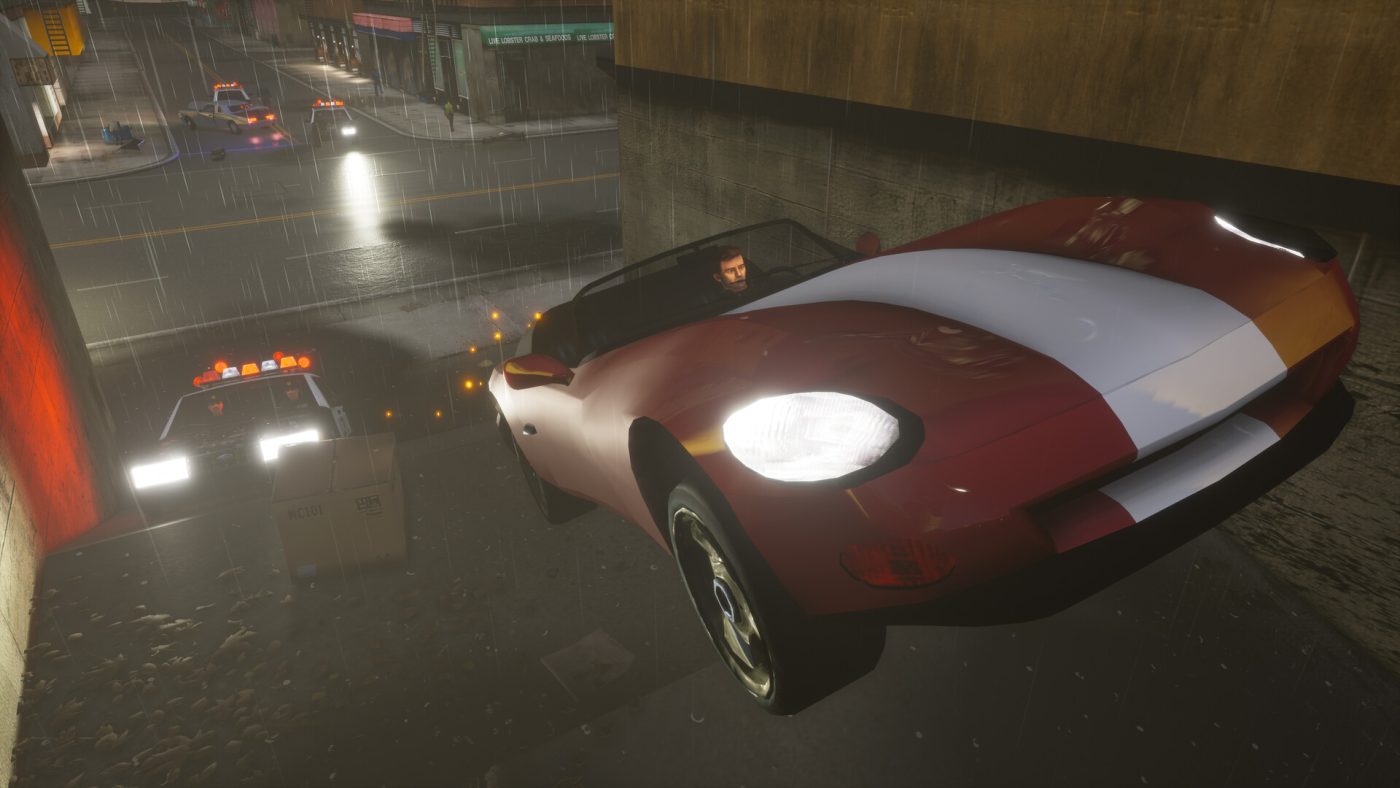
When GTA III arrived on PlayStation 2 it did more than bring three-dimensionality to a previously 2D series: it introduced a new interaction logic. For the first time, a virtual city ceased to be merely a container for missions and became a reactive organism composed of routines, social collisions, micro-events and emergent dynamics.
Two innovations were defining:
- The world as a behavioural machine: Traffic flows, AI routines, police escalation, gang territories, pedestrian reactions, environmental triggers – these components interacted dynamically. They did not wait for the player; they happened, generating incidents, opportunities, distractions and emergent stories.
- Freedom as systemic grammar, not as marketing rhetoric: The openness of the map translated directly into openness of approach. Missions could be entered from multiple angles, subverted, interrupted or recontextualised by systemic collisions. For the first time, the gameplay spoke back.
This was the foundation of the so-called “Rockstar Method”: build the world first, then build the story – and let systemic pressure shape narrative possibility.
The Player-Character-System Triad
If the game world operates as a living organism, the protagonist serves as its primary sensor. Rockstar’s approach to character design has evolved in tandem with the growing complexity of these systems, progressing from minimalist avatars to fully realized “simulated bodies” intricately embedded within systemic gameplay.
- Phase 1 – The functional avatar (GTA III): Claude is a cipher. His silence and simplicity are design decisions that foreground the environment. His role is to conduct the world, not to characterise it.
- Phase 2 – The narrative axis (Vice City): Tommy Vercetti introduces a tonal shift: personality becomes a structuring force. Mission design bends toward character identity – pacing, stakes, mission types, and even geography reflect who Tommy is.
- Phase 3 – The malleable body (San Andreas): CJ converts the avatar into a systemic instrument. Physiological and statistical variables – weight, strength, stamina, diet – alongside social ties and territorial influence, feed back into gameplay. Here the fiction is not just authored: it is produced through player behaviour.
- Phase 4 – The simulated human (Red Dead Redemption 2): Arthur Morgan is the paradigm’s culmination. Interlocking systems – hunger and stamina, temperature and hygiene, reputation and relationships, weapon maintenance and contextual animation – converge to render a protagonist who truly exists in the world rather than merely traversing it.

Weaponry, Feedback, and Player Agency
Rockstar’s approach to combat design exemplifies a meticulous, incremental evolution, punctuated by decisive innovations that balance mechanical depth, narrative coherence, and player experience. Far from a linear progression, the studio’s gunplay systems have consistently reflected a dialogue between technological capability, narrative intent, and emergent gameplay.
- From basic mechanics to articulated systems: In the transition from GTA III to San Andreas, shooting mechanics evolved from rudimentary, arcade-like interactions to more dynamic systems incorporating aim assist, weapon handling differentiation, and environmental responsiveness. Combat began to reflect the complexity of the world itself, allowing emergent encounters to feel meaningful rather than scripted.
- Red Dead as a ballistic realism laboratory: With Red Dead Redemption and especially Red Dead Redemption 2, Rockstar implemented nuanced ballistic simulations. Cover mechanics, the Dead Eye targeting system, and localized damage models enhanced both tactical depth and narrative verisimilitude, making combat an extension of the world’s systemic logic. Weapons now interact with environmental conditions, player posture, and timing, creating a layered, proceduralized engagement.
- The Max Payne 3 legacy: Lessons from Max Payne 3 – precise hitboxes, responsive animations, and sophisticated ballistic feedback – were not confined to that title. They were reinterpreted for open-world contexts, raising internal benchmarks for how shooting feels, responds, and communicates narrative weight. This cross-franchise knowledge transfer exemplifies Rockstar’s method of iterative refinement.
- Balancing multiple protagonists in GTA V: The introduction of three playable characters required recalibration of combat dynamics to maintain consistency, accessibility, and cinematic rhythm. Weapon behavior, aim sensitivity, and encounter pacing were adapted to ensure each character maintained a distinctive, yet coherent, gameplay identity.

Stealth: Deep Roots, Integrated Purposefully
Stealth has never been the centerpiece of Rockstar’s design, yet its legacy – particularly from Manhunt – continues to shape the studio’s approach. Rather than constructing stealth as a standalone genre, Rockstar distills a set of core design principles that enrich its open worlds: visibility and sound function as primary detection signals; environmental layout creates spatial tension, turning space itself into a strategic instrument; and AI is tuned to interpret and react plausibly to player behaviour.
These principles appear selectively throughout missions, not as fully fleshed-out stealth levels, but as embedded moments that enhance immersion and reinforce narrative logic. Rockstar’s approach to stealth is deliberately pragmatic and context-sensitive: it emphasizes verisimilitude and narrative consequences over mechanical virtuosity, allowing tension and risk to arise organically from the systemic interplay of the world and its inhabitants.
Key elements inherited from that school:
- Visibility and noise management as core signals;
- Spatial tension: the environment as a control tool;
- Reactive AI capable of drawing plausible conclusions from player behaviour.
Rockstar’s approach to stealth rarely seeks genre-level perfection; rather, it prioritizes verisimilitude, integrating seamlessly into the broader narrative and systemic ecology of the world.

Worldbuilding: The World as Co-Author
Rockstar’s most distinctive strength lies in its philosophy of worldbuilding, which treats geography not as a static backdrop but as an active narrative agent. Unlike conventional open worlds, where environments primarily frame gameplay, Rockstar designs spaces as interlocking systems whose emergent behaviors generate meaning. A drunk spilling onto the sidewalk, a robbery in progress, two townsfolk arguing that escalates into violence – these are not scripted set pieces but spontaneous vignettes arising from systemic interactions. In this sense, the world tells its own story.
Landscape functions as a vehicle for social and thematic storytelling. In Red Dead Redemption 2, each biome conveys ideology and context: the industrial devastation of the Heartlands, the lawlessness of the frontier, the entrenched inequalities of the South, and the mythic solitude of the wilderness. Topography, architecture, and ambient activity collectively encode history, politics, class, and moral texture, guiding player interpretation as effectively as narrative scripting.
Equally critical is Rockstar’s focus on density over sheer scale. While other studios emphasize vast maps, Rockstar emphasizes “thickness” – the concentration of systemic interactions per square meter. This approach ensures that exploration consistently yields meaningful consequences rather than hollow spectacle, producing worlds that feel authored yet convincingly organic.
None of this emerges by chance. An invisible yet essential backbone of tooling – mission editors, NPC schedulers, dynamic event systems, and robust asset-streaming/LOD pipelines – allows large, interdisciplinary teams to synchronize content and systems at scale. Those tools are invisible to players, but they are the mechanical heart of Rockstar’s signature systemic depth: the technical means by which the world becomes a co-author of the game’s story.
GTA VI: What to Expect
With Rockstar, anticipation is never merely about a new installment; it embodies the genuine potential to redefine the standards of urban open-world design. In light of all the elements considered above, here is what players can reasonably expect:
- Integration of RDR2’s systemic depth in a denser, more reactive cityscape: NPC behaviors, environmental interactions, and object physics could be fully embedded in a multilayered urban environment, transforming the city into a living, coherent organism rather than a backdrop.
- Enhanced social complexity: relationships, reputation systems, micro-economies, and community dynamics could shape missions, emergent opportunities, and narrative outcomes, amplifying the player’s sense of agency.
- Advanced narrative AI: NPCs could react consistently and contextually to player choices, generating unexpected incidents, conflicts, and organically emergent story moments.
- Granular, interactive routines: daily cycles, environmental behaviors, and micro-events could turn the urban landscape into a dynamic, self-expressive system, where the world itself tells stories.
- Expanded environmental interactivity and physicality: dynamic weather, reactive materials, and emergent phenomena would deepen immersion, providing tactile and spatial credibility to the city as a lived-in space.
Yet a critical unknown remains: authorship. The departure of key creative figures, including Dan Houser, could significantly shape the tone, pacing, and narrative ambition of the game, ultimately determining whether – and how – the next installment will preserve, reinterpret, or evolve the distinctive stylistic and design identity that has long defined Rockstar’s signature approach.