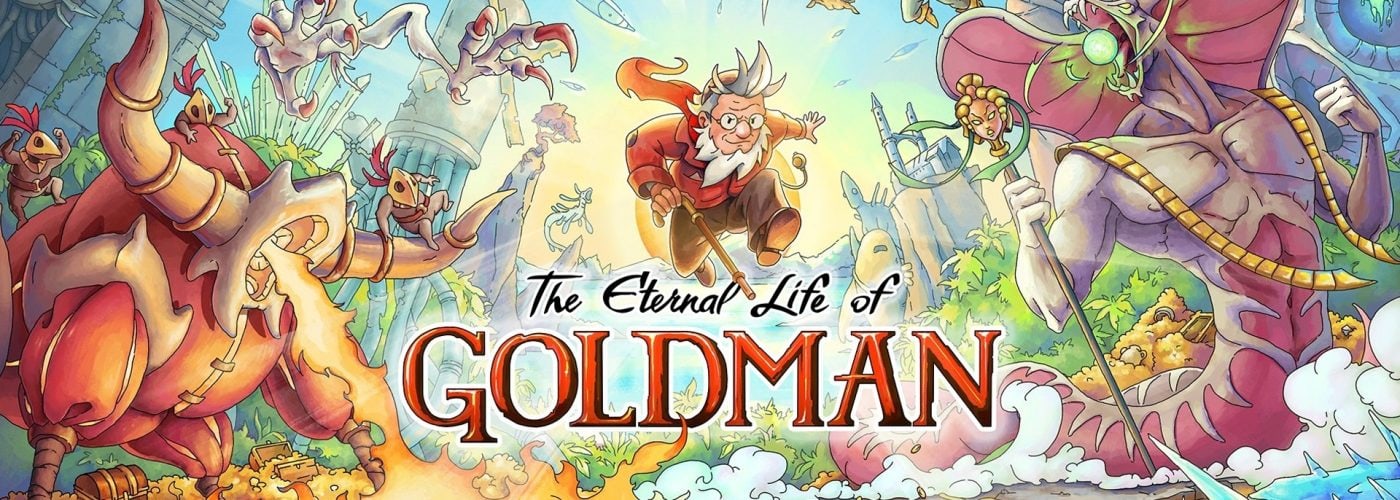
Some games pass through your hands and fade from memory almost instantly. And then there is The Eternal Life of Goldman: a rare kind of experience that goes far beyond simple entertainment, leaving behind an unmistakable feeling that its strange and beautiful world is a place you will want to return to, time and time again.
We fell head over heels for The Eternal Life of Goldman. And no – despite how emphatic that statement may sound at first glance, perhaps even bordering on exaggeration – we assure you with complete sincerity that there is no gratuitous hyperbole behind it. If anything, those words only begin to convey the depth of what we experienced. Because sometimes, when a video game truly resonates – when it manages to establish a quiet yet deeply powerful dialogue with the player – language suddenly feels inadequate. And yet it is precisely from that genuine, heartfelt emotion that the desire to share this experience arises.
So allow us a moment. Let us slow down for a second and give this story the space it deserves. Settle in, because what follows is not merely the account of a hands-on preview, nor simply the analysis of a demo experienced during an event. First and foremost, it is the story of an encounter – one of those rare and precious moments when a video game quietly reminds you why, years ago, you first fell in love with this medium.
But before we delve into the heart of the matter, let us ask you a question – one that sounds simple, yet proves surprisingly difficult to answer with precision. Have you ever stepped into an imaginary world and, almost without realizing it, left everything else behind? Have you ever experienced that curious sensation in which time seems to slow, the noise of everyday life fades away, and for a brief moment reality itself feels suspended?
It is a curious, almost ineffable feeling: the moment when a work of art – whether a film, a novel, or a video game – manages to capture your attention so completely that you are no longer merely observing it from the outside. Instead, you find yourself inside it. Suddenly, you are not just playing a game. You are living a story.
You walk beside the protagonist, sharing in their discoveries and uncertainties. You begin to observe the world through their eyes. Small details in the environment start to take on a new weight: the soft rustle of grass beneath each step, the quiet murmur of water flowing between stones, the wind brushing gently across the landscape with an almost tangible presence. These elements are no longer simple decorative touches placed within a virtual space – they become fragments of a world that feels alive, a place that seems to breathe around you.
Then there are the characters – their voices, their emotions, their place within the unfolding narrative. Dialogue ceases to feel like scripted exchanges and instead becomes something more intimate: moments of genuine emotional connection with the world you are traversing. At times, you may even find yourself instinctively responding in your mind to their words, reacting to their questions or their humor as though you were truly standing beside them. It is a rare sensation. And for that very reason, an immensely precious one.
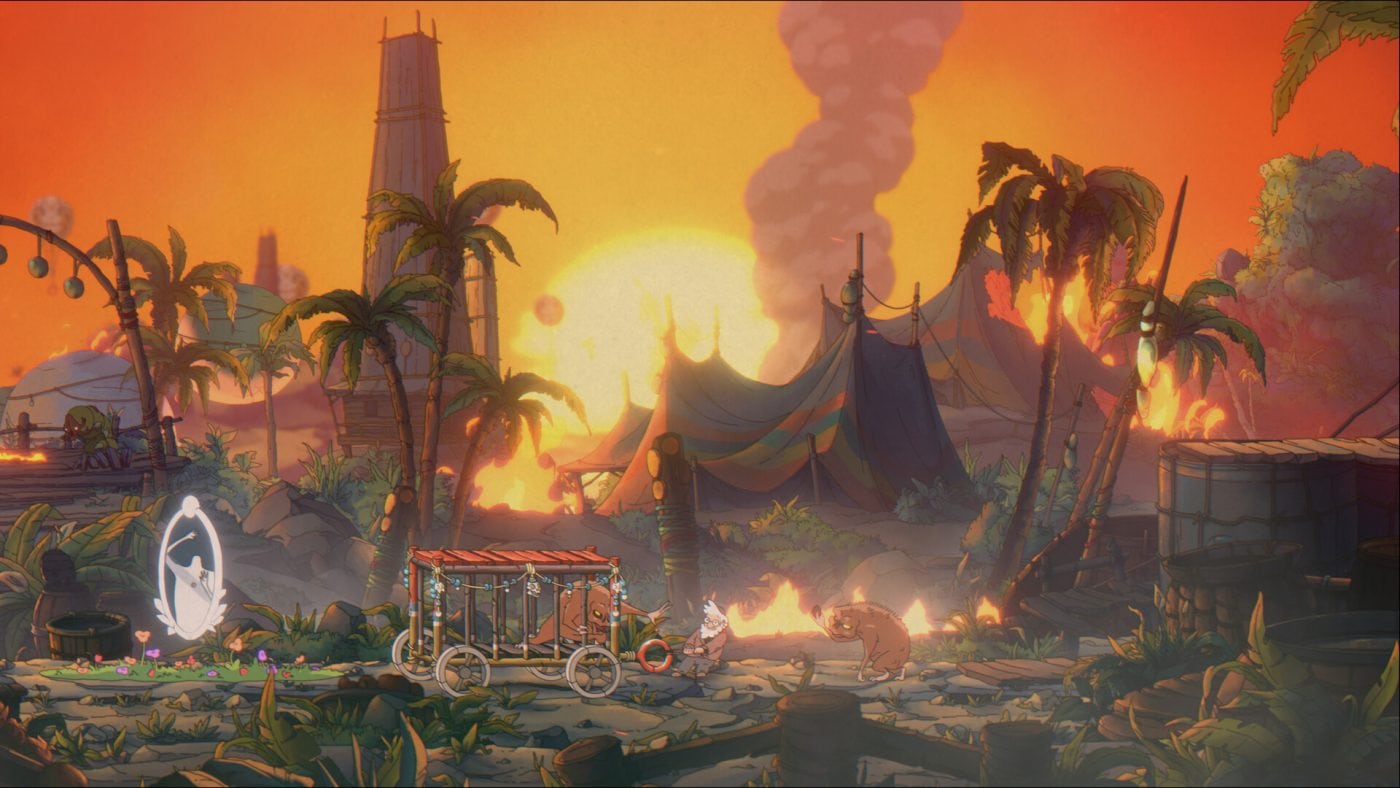
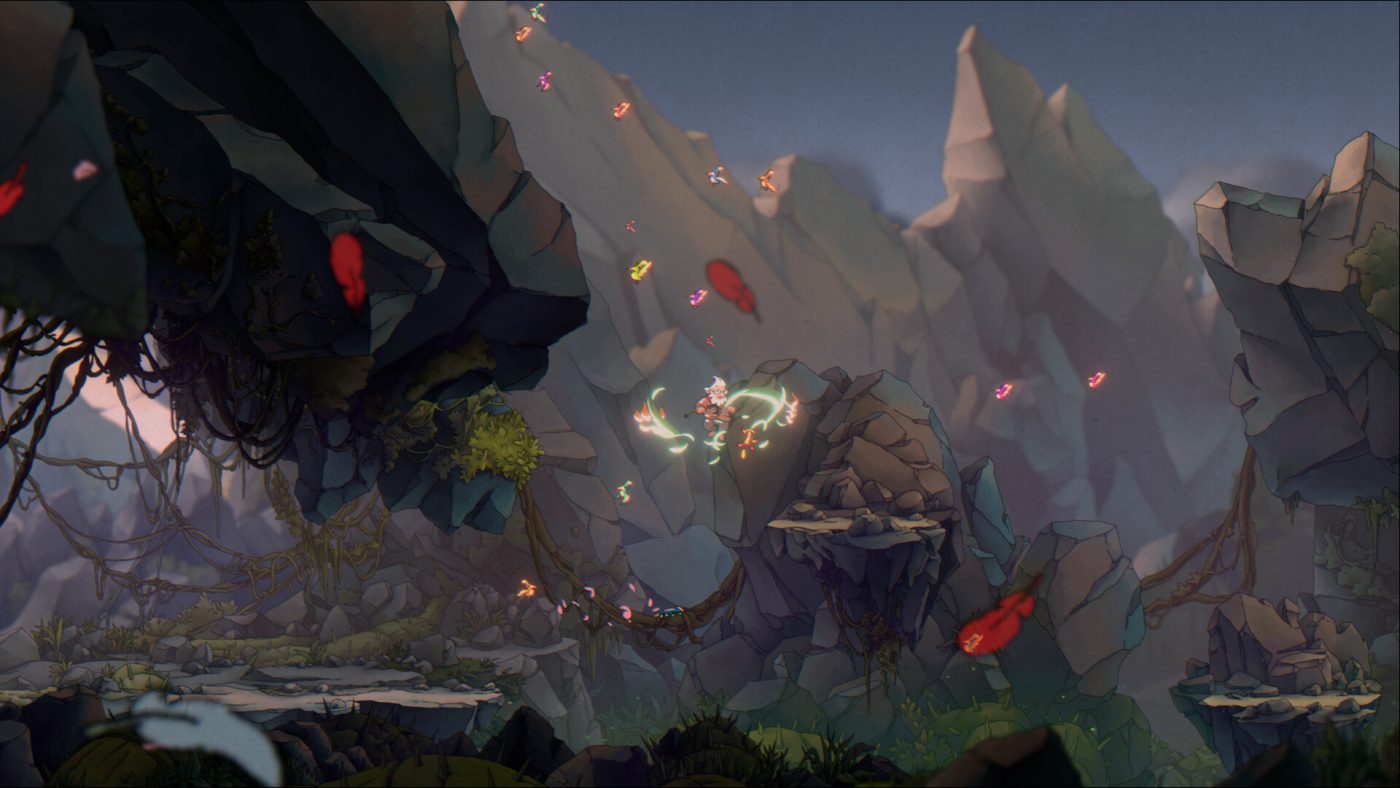
This, in essence, is the kind of magic The Eternal Life of Goldman managed to awaken in us.
From the very first minutes of our hands-on preview, something quietly began to take shape beneath the surface. A subtle yet persistent feeling – an almost childlike curiosity that urges you to keep moving forward, to look a little closer, to discover what might be waiting just beyond the next corner. The world crafted by the developers possesses a rare, almost magnetic allure. It is not merely a backdrop presented to the player; it is a living space that extends a quiet invitation, encouraging exploration at your own pace, rewarding careful observation, and leaving room for moments of genuine surprise.
And it is precisely here that one of the most striking aspects of the experience emerges.
Because it had been a long time since a game had made us feel this way.
It had been quite a while since a video game managed to entertain us in such a genuine and disarmingly natural way. The kind of joy that emerges not from spectacle alone, but from a deeper, quieter form of engagement. It had been even longer since we approached a game with the same sense of pure curiosity that often accompanies the most vivid moments of childhood.
While playing The Eternal Life of Goldman, more than once I found myself experiencing a familiar yet long-dormant sensation: the same feeling you might recall when, as a child, you opened an illustrated book for the very first time. Those pages seemed to hold entire universes within them – small, carefully drawn worlds waiting patiently to be discovered. Turning each page meant surrendering to wonder, observing every detail with attention, and imagining what might unfold on the next one.
It is a type of wonder that, as we grow older, we often set aside. Not because it disappears entirely, but because it becomes buried beneath routine, expectations, and the many distractions of everyday life.
And yet, every now and then, something manages to bring it back.
During our time with The Eternal Life of Goldman, that is exactly what happened. On several occasions I caught myself realizing that this sense of wonder was slowly resurfacing. I was no longer looking at the game solely through the analytical lens of someone who writes about video games – someone accustomed to evaluating systems, dissecting mechanics, and weighing every creative decision with critical distance.
I was simply playing. And perhaps more importantly, I was rediscovering the pure joy of discovery.

It is a feeling that can be difficult to articulate, yet unmistakable when it appears: the moment when you realize that a work has managed to establish an authentic emotional connection with you – something that extends beyond mechanics, beyond structure, beyond the act of play itself. In a way, The Eternal Life of Goldman seems capable of awakening that “inner child” that often lies quietly dormant within us: the part that still looks at the world with curiosity, with wonder, and with an unfiltered desire to explore.
But let us proceed step by step.
As you may have already gathered from the title of this article and from the reflections shared so far, during Steam Next Fest we had the opportunity to spend more than ninety minutes with The Eternal Life of Goldman, the upcoming game developed by Weappy Studio.
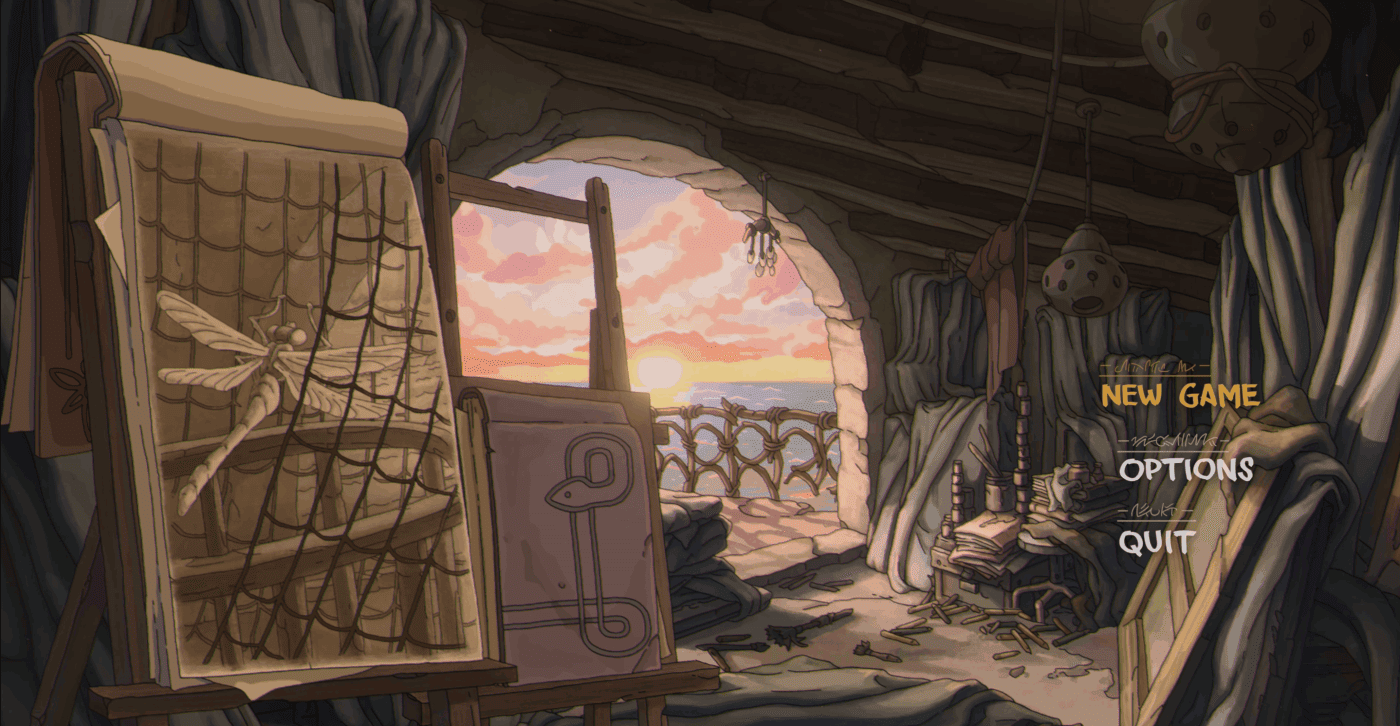
At its core, the game is a hand-drawn platformer adventure – a small artistic gem that impresses with the exceptional level of care woven into every element of its design. Every animation, environment, and visual detail is executed with painstaking precision, as if the developers’ goal was not simply to create a game, but to breathe life into an entire, living world.
And it is a world that, in a remarkably short time, managed to capture our full attention.
Ninety minutes may not sound like much, particularly when discussing video games. Yet in the case of The Eternal Life of Goldman, that brief window proved more than sufficient to reveal the remarkable potential of this production.
Ninety minutes during which we explored, observed, jumped, discovered – and above all, dreamed.
Because if there is a word that best encapsulates the experience, it might very well be that: dreaming. Dreaming through its environments, through its art direction, through the delicate atmosphere that seems to envelop every moment of the journey.
And when our session eventually came to an end, one feeling stood out above all the others. We did not want to leave that world. Not yet. And perhaps that, more than anything else, is the clearest sign that we may be looking at something truly special.
But of course, this is only the beginning. And believe us: we cannot wait to share what comes next.
Stay with us. Our journey into the world of The Eternal Life of Goldman has only just begun.

Nine Years Chasing a Dream Worth Fighting For
The Eternal Life of Goldman is not simply another entry destined to join the long and storied tradition of the platforming genre. Rather, it stands as the culmination of a deeply human and remarkably intimate creative journey – one rooted in a sincere, almost reverential love for the video game medium itself. At its heart lies a deceptively simple yet profoundly ambitious aspiration: to approach game development not merely as the production of a commercial product, but as a form of artistic craftsmanship – an act of creation capable of embodying passion, identity, and personal vision.
Indeed, the origins of the project could hardly be further removed from the fast-paced, trend-driven production cycles that often define today’s industry. The Eternal Life of Goldman was not conceived to follow market tendencies nor to capitalize on the shifting currents of contemporary gaming culture. Instead, it emerged from a slow and deliberate process shaped by early inspiration, prolonged reflection, and years of quiet creative maturation.
The project’s earliest spark can be traced back to 2016, when the team produced its very first prototype – an experimental and still embryonic version of the game that bore little resemblance to the title we see today, yet already contained the seeds of the vision that would continue to evolve over the years.
This origin becomes even more meaningful when one considers that the studio responsible for the project had itself been founded only shortly before, in 2014. In many respects, The Eternal Life of Goldman mirrors the growth and evolution of the team that conceived it. The idea matured alongside the studio’s own development, evolving in tandem with its expanding ambitions, its growing technical capabilities, and its increasingly refined artistic awareness.
Yet what makes the story of this project particularly compelling is the way it unfolded over time. Following that early prototype in 2016, the game did not immediately enter full-scale production.
Instead, the concept lingered quietly in the background – alive, yet patiently waiting – while the team continued working on other projects, gaining experience and gradually strengthening its creative identity. Only several years later, roughly five years after that initial spark of inspiration, would the project finally transition into active development.
This extended gestation period speaks volumes about the philosophy guiding the team. Rather than succumbing to the relentless pace that often defines the contemporary games industry, the developers chose to allow the idea the time and space it needed to mature organically. It is an approach that demands patience, conviction, and above all a profound trust in one’s own creative instincts.

At the heart of this journey stands Weappy Studio, an independent developer based in Cyprus that has gradually carved out a recognizable place within the industry thanks to the critically acclaimed This Is the Police series and its spin-off Rebel Cops. While those projects differ significantly from the platforming adventure discussed here, they share a defining quality that has long defined the studio’s work: a strong authorial voice paired with a clear and deliberate creative direction.
Compared to the major powerhouses of the industry, Weappy remains a relatively small studio. Yet it is precisely this scale that appears to be one of its greatest strengths. The team brings together developers, artists, and collaborators from various parts of the world, each contributing their own cultural perspectives, artistic influences, and interpretations of what video games can be. Rather than fragmenting the studio’s vision, this diversity enriches it, creating fertile ground for experimentation, dialogue, and creative exchange.
Despite this plurality of voices, a shared conviction unites the team: a belief in the enduring expressive potential of video games as a medium. The developers themselves describe their goal in remarkably straightforward terms, explaining that they simply aim to create games that are “fantastic, interesting, and fun.” At first glance, the statement might seem modest, even understated. Yet beneath that simplicity lies a far more nuanced philosophy.
For the team at Weappy, a video game is not merely a mechanical system or a carefully balanced set of gameplay rules. It is an experience – an imaginative space capable of inviting players into a world that feels alive and emotionally resonant. It is where narrative, visual artistry, and interactivity converge to create something that transcends simple entertainment.
This philosophy becomes even clearer in the studio’s guiding motto: “We create things, and we truly love what we do.” What might otherwise appear as a simple expression of enthusiasm takes on a deeper resonance when viewed through the lens of The Eternal Life of Goldman. Observing the project as a whole, it becomes increasingly evident that this love for the creative process is not merely rhetorical – it is the driving force behind the work itself.
The developers frequently describe the game as a profoundly handcrafted endeavor. One shaped slowly and deliberately, with meticulous attention devoted to every detail. It is a project brought to life frame by frame, line by line, animation by animation – an approach that evokes the traditions of classical animation and hand-drawn illustration, where every element originates from a human gesture before finding its final form on the screen.
Much of the game’s identity emerges from this painstaking manual process. Characters, environments, and animations are conceived first as artistic creations before being translated into the digital language of the game. Such an approach inevitably demands time and patience, yet it also allows the project to develop a distinctive visual personality and an unmistakable sense of authorship.
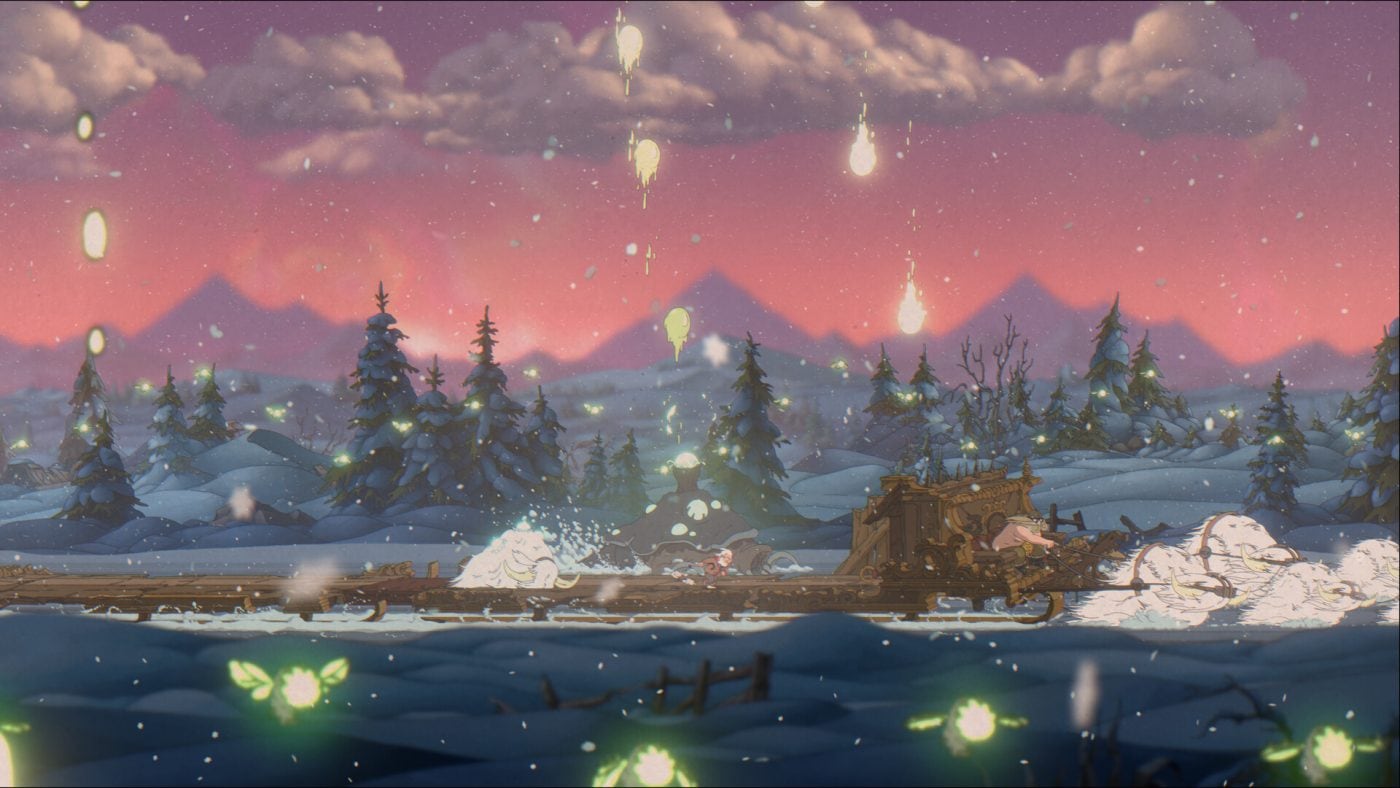
This is perhaps one of the most fascinating aspects of the entire endeavor. The Eternal Life of Goldman does not appear interested in shortcuts. It does not seek to accelerate production at the expense of artistic integrity. On the contrary, it deliberately embraces the more demanding path – that of craftsmanship.
It is a path that requires persistence, dedication, and a certain creative stubbornness. Yet it is also the path that grants the game its unique sensitivity. Watching it in motion, one cannot help but notice the care embedded within every element: each animation, each environment, each visual nuance quietly testifying to the time and attention invested in its creation.
In this sense, the game reveals itself as deeply aware of its own identity. It knows precisely what it wants to be – and just as importantly, what it does not wish to become. Rather than adapting itself to dominant production models or pursuing fleeting industry trends, it remains firmly committed to its artistic vision.
Perhaps that is what ultimately makes The Eternal Life of Goldman such a compelling project. It is not simply a video game, but an attempt to create something sincere – something capable of speaking to players not only through its mechanics, but also through its creative spirit.
It feels like a work addressed to those who still look to video games for genuine emotion. To those who delight in discovering unexpected worlds. To those who believe that the medium still possesses the power to inspire imagination, wonder, and curiosity.
And when one reflects on the long road that led to the creation of this project, it becomes easy to understand why nearly nine years were required to reach this point. Those nine years represent far more than a development timeline – they are the time it took for an idea to grow, to evolve, and ultimately to find its own voice.
Nine years of quiet dedication. Nine years of experiments, revisions, missteps, and renewed inspiration. Nine years during which a simple intuition gradually transformed into a fully realized world.
After learning even a small portion of that story, one cannot help but feel that perhaps it could not have unfolded in any other way. Because some works, in order to truly exist, require time – time to mature, time to breathe, and time to become what they were always meant to be.
The Call of the Archipelago
Welcome to the Archipelago. Or perhaps, more precisely, to the first cautious glimpse of it – the narrow opening through which the demo briefly allowed us to peer. What we experienced was only a small fragment, a sliver seemingly carved out of something far larger. And yet, even within those limits, it proved more than sufficient to suggest the scale of a world that clearly extends far beyond the boundaries of what we were able to explore during our session.
Despite that inevitable limitation, one impression became unmistakably clear within the first few minutes: the Archipelago is not a place designed merely to be crossed or completed. It is a place meant to be inhabited – to be observed, absorbed, and experienced. It is a world that quietly encourages the player to slow down, to pause, and to look around before rushing forward, allowing its atmosphere to reveal itself long before its systems fully come into focus.
Almost instinctively, during our time with the demo we began referring to it among ourselves as the “Archipelago of Wonders.” The name was coined lightly, almost playfully, yet with every passing minute it began to feel increasingly appropriate. From the moment one steps onto its shores, the Archipelago conveys precisely that sensation: the impression of a world suspended somewhere between dream and reality, where myth, fantasy, and the rhythms of everyday life coexist with striking natural ease. The islands that compose it rise from the sea like fragments of a larger story, each defined by its own identity, pace, and atmosphere – places that appear to breathe and exist independently of the player’s presence.
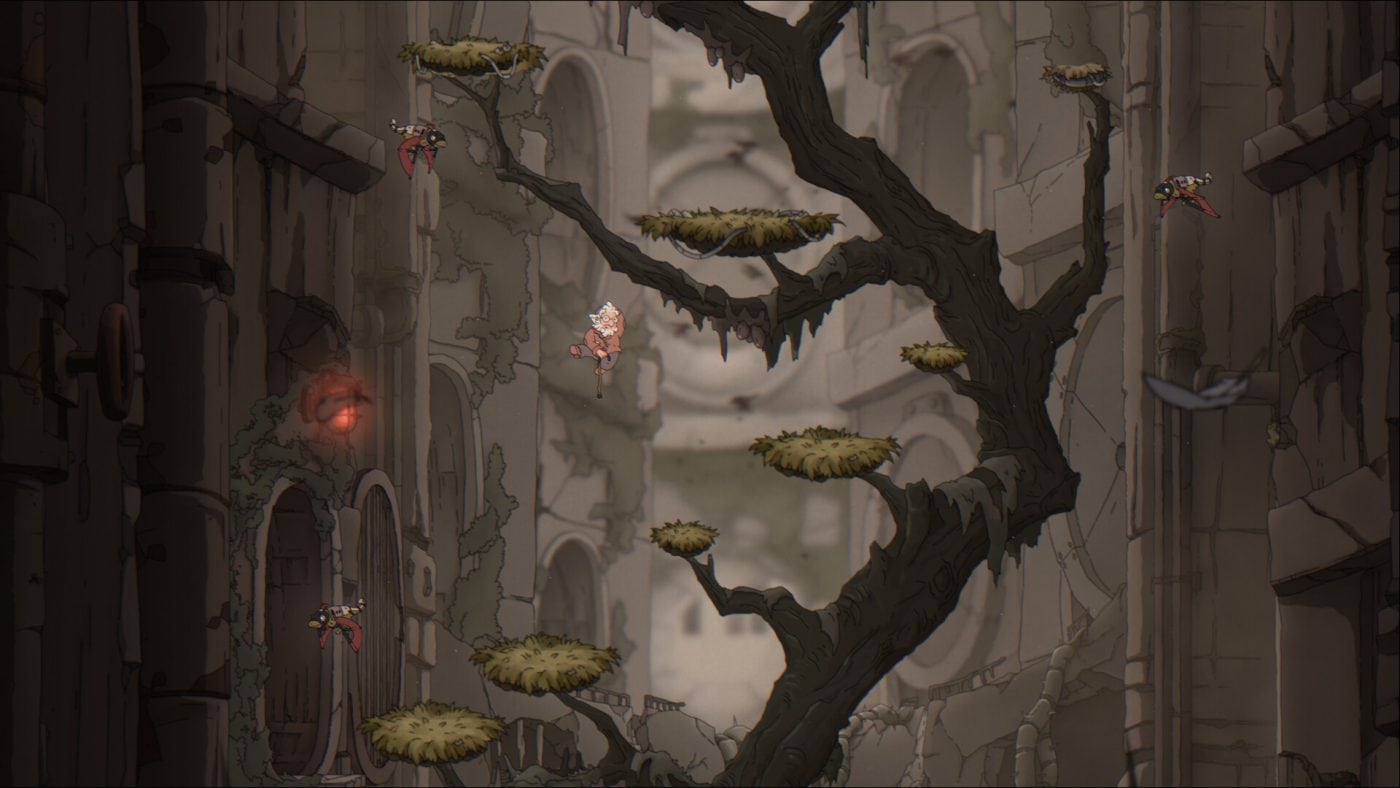
This sense of quiet autonomy is perhaps one of the elements that impressed us most during our time with the demo. The Archipelago never simply presents itself; it constantly hints at something beyond what lies immediately before the player. Every jagged coastline, every narrow path disappearing into dense vegetation, every abandoned structure or seemingly tranquil settlement appears to hold a fragment of history. The world feels deliberately constructed to suggest that something unfolded long before our arrival – and that something will continue long after we leave.
As we moved between these islands, we often found ourselves slowing our pace almost unconsciously. Not because the game demanded it, but because the environment itself seems to invite contemplation. There are moments when objectives and quests quietly fade into the background, replaced by the simple desire to observe the world: the shifting reflections of sunlight across the ocean’s surface, the slow sway of vegetation in the wind, the countless environmental details scattered across the landscape.
It evokes the peculiar feeling of stepping into an unfamiliar place that somehow feels strangely familiar – as though something beneath the surface quietly speaks to our curiosity.
Central to this impression is the development team’s remarkable attention to detail. The game’s artistic direction reflects a distinctly handcrafted philosophy, with environments that appear carefully shaped rather than procedurally assembled. From expansive natural vistas to modest buildings and everyday objects, each element feels deliberately placed. Sound design plays an equally important role in reinforcing this atmosphere. The musical score – composed by Kevin Penkin, Mason Lieberman, Yasunori Nishiki, and Pete Lepley – accompanies exploration with notable restraint. Rather than dominating the experience, the soundtrack operates as a subtle atmospheric layer that gently enhances the emotional tone of the environment.
At times it recedes almost entirely, allowing the Archipelago’s natural soundscape to take centre stage: the wind brushing against coastal cliffs, waves breaking along the shoreline, the quiet rustle of foliage carried by the breeze. At other moments the music gradually emerges, underscoring the sense of discovery that accompanies exploration. The balance between silence, ambience, and composition results in a soundscape that feels carefully measured and consistently immersive.

While the aesthetic qualities of the world immediately capture attention, it is through its worldbuilding that the project reveals one of its most compelling strengths. The Archipelago never feels like a mere sequence of visually attractive locations assembled for variety’s sake. Each island appears to possess its own internal logic, cultural identity, and rhythm of life – almost as though it were a small community with which the player must gradually learn to engage.
A subtle coherence binds these environments together, an invisible thread connecting landscapes, inhabitants, and creatures into a unified ecosystem. This is not simply a decorative backdrop for gameplay, but a world designed to feel believable and inhabited. Even the smallest environmental elements appear to carry a sense of purpose, hinting at stories and relationships that extend beyond what is explicitly presented.
This vitality is reflected in the inhabitants of the Archipelago as well. The environments themselves feel layered and dynamic, filled with small animated details that bring depth and movement to every scene. Animations – often understated yet highly expressive – transform even minor environmental elements into active components of the landscape.
Character design, meanwhile, displays a notable degree of creativity and variety. Islanders, mysterious creatures, and the numerous enemies encountered throughout the adventure often feature unusual – occasionally even surreal – forms, yet they remain immediately recognizable and distinctive.
All of this ultimately leads to a clear and compelling impression: the Archipelago is not only visually striking, but genuinely alive to explore. Beneath its enchanting aesthetic lies a world dense with interactions, encounters, and small narrative moments that seem to emerge organically during exploration.
Even within the relatively short duration of the demo, the experience proved surprisingly generous. Distinctive characters with strong personalities, unexpected events woven naturally into exploration, memorable enemy encounters, and a range of quests hinting at deeper narrative developments all appeared within this limited slice of gameplay.

During our session, we had the opportunity to visit four distinct islands, each defined by its own atmosphere and defining traits. Among them, one location stood out in particular: the island set to function as the adventure’s central hub – a small fishing village overlooking the sea. From the moment you arrive, it conveys an immediate sense of familiarity and quiet reassurance, a haven of calm within a world that otherwise feels vast and full of mystery.
Here, the pace of the journey naturally slows, offering players a moment to pause, gather their thoughts, and prepare before venturing once again into the wider reaches of the Archipelago.
And speaking of the wider world, it would be impossible to overlook the narrative thread that underpins the entire experience. While the demo deliberately leaves many questions unanswered, it already becomes clear that beneath the Archipelago’s serene beauty lies a story shrouded in mystery – one woven from secrets, unanswered questions, and long-buried truths waiting patiently to be uncovered.
It is precisely this contrast – between the breathtaking beauty of the world and the subtle suggestion of something more enigmatic hidden beneath its surface – that makes the experience so compelling.
Is the Demo Worth Playing?
At this stage of our demo preview – after examining the game’s world, its striking art direction, the evocative sound design, and the remarkable level of care that defines the Archipelago’s worldbuilding – one question inevitably comes to the forefront: what does The Eternal Life of Goldman actually feel like to play?
Beyond its aesthetic charm and narrative intrigue, does the experience truly hold up moment to moment? And perhaps just as importantly: is the current demo, brief though it may be, already worth a player’s time?
These questions lie at the heart of any serious evaluation. A game may captivate through atmosphere, visual identity, or narrative promise, but ultimately its true value reveals itself only when the player takes control. It is in that direct, tactile encounter – controller in hand – that the success of a design truly emerges.
To answer honestly, however, it is necessary to step back once more and examine the nature of the experience that The Eternal Life of Goldman sets out to deliver, as well as the design philosophy guiding the work of Weappy Studio.
At first glance, the game might appear to follow the familiar structure of a traditional adventure platformer: precise jumps, carefully timed sequences, and enemies that must be overcome through movement and spatial awareness. Yet within minutes it becomes clear that beneath this recognizable framework lies a project of far greater deliberation and ambition.
The identity of The Eternal Life of Goldman is built upon the interplay between two complementary design approaches.
On one side stands a form of platforming that is unexpectedly demanding – constructed around a philosophy of precision that borders on the meticulous. On the other, there is a broader exploratory structure that recalls some of the most compelling characteristics of the Metroidvania genre. Players are encouraged to observe environments closely, to memorize routes and landmarks, and to revisit earlier areas once new tools or abilities reveal paths that were previously inaccessible.
In this way, the world gradually unfolds not as a linear sequence of challenges, but as a living space – one that responds to curiosity, patience, and careful attention.

Indeed, one of the most distinctive qualities of The Eternal Life of Goldman is its willingness to slow the player down. Rather than pushing forward with relentless urgency, the game often invites moments of reflection: time to observe the surrounding environment, to consider its layout, and to understand how its elements might interact.
Exploration becomes an active process, almost a dialogue between player and world. One does not simply move through the Archipelago; one learns to read it. Gradually, the player begins to recognize its underlying logic, its hidden pathways, and the subtle cues embedded within its design.
This careful balance between challenge and understanding becomes evident almost immediately.
From the outset, it is clear that The Eternal Life of Goldman is not designed as a forgiving platformer. Its jumps demand precision, timing, and an increasing familiarity with the physics governing the protagonist’s movement.
Yet what makes the experience compelling is the way this difficulty rarely feels punitive. Each segment appears crafted with meticulous care. Platforms, obstacles, and environmental elements seem positioned with a specific pedagogical intent – to teach the player something about the system.
Failure, when it occurs, rarely produces frustration. Instead, it tends to reveal a missed rhythm, an overlooked possibility, or a moment of hesitation where confidence was required. The result is a form of challenge that rewards understanding and adaptation, rather than repetition alone.
At the center of this design philosophy lies perhaps the game’s most intriguing mechanic: Goldman’s cane.
When the adventure begins, Goldman hardly resembles a traditional video game hero. He is an elderly man with white hair and a weary gaze, moving cautiously through the world with the support of a simple walking cane. In another context he might appear fragile, even vulnerable. Yet this modest object soon reveals itself to be the core of the entire gameplay system.
Throughout the demo, the cane can be dismantled and reassembled using different interchangeable components. Each of these parts alters the way Goldman interacts with the environment, subtly reshaping the player’s relationship with the space around them. Crucially, these modifications are not simple upgrades in a linear progression. Each configuration introduces new possibilities while preserving the usefulness of previous ones, encouraging players to experiment and adapt rather than simply replacing old tools with stronger alternatives.

During our session, for example, we discovered a curved handle that allowed the cane to function as a grappling device. In one particularly memorable section, Goldman was able to hook onto rings suspended beneath hot air balloons, creating a vertical traversal sequence that felt both elegant and demanding.
In another moment, the cane became a tool for environmental manipulation. Objects could be moved, pieces of scenery repurposed into makeshift platforms, and the surrounding space used creatively to uncover new routes.
A further modification introduced a shaft made from a more elastic material than the original wood, enabling Goldman to perform higher, longer jumps. Yet even this new capability did not invalidate earlier configurations. Certain challenges later in the demo encouraged a return to the original wooden cane, demonstrating how each variation retains its own strategic value.
This design choice reinforces a central theme: the game rewards experimentation and awareness, not merely progression.
The cane also serves as Goldman’s only means of defense. Enemies are defeated by jumping on their heads, seamlessly integrating combat into the same movement-based mechanics that define exploration and traversal.
The result is an experience that feels strikingly cohesive. There are no disconnected systems competing for attention – everything revolves around movement, spatial awareness, and the player’s growing mastery of the environment.
The boss encounters included in the demo follow the same philosophy. Across roughly ninety minutes of gameplay, we encountered three distinct boss battles, each structured less as a conventional fight and more as a complex environmental challenge. Rather than relying on direct confrontation, these encounters ask players to study patterns, observe the surrounding space, and apply previously learned mechanics in creative ways. In this sense, each boss functions almost as a final exam for the skills acquired up to that point.

While gameplay provides the structural backbone of the experience, it is the narrative layer that gives the demo its most unexpected emotional weight.
Goldman’s mission appears deceptively simple: travel to the Archipelago and kill the Deity, a mysterious being spoken of in whispers yet never truly seen. It is a premise that feels almost mythological, evoking the tone of classic adventure fables.
Yet throughout the demo, subtle narrative hints suggest that the story may be far more layered than it initially appears.
At several moments, the game interrupts the action with brief conversations between a child and his mother. Their dialogue seems to recount Goldman’s story itself, as though the events unfolding on screen are part of a tale being told elsewhere.
Within these exchanges lie small but intriguing details – including the curious mention of a visiting clown – that raise questions about the deeper meaning behind Goldman’s journey. Where this narrative thread ultimately leads remains unclear. Yet the impression is unmistakable: beneath the surface of this fantastical quest lies a story that may prove far more personal – and perhaps more melancholic – than it first appears.
And it is precisely here that The Eternal Life of Goldman reveals one of its most compelling qualities: a profound sense of humanity. Playing the demo often feels less like controlling a hero and more like accompanying an aging man on a quiet, uncertain journey. Goldman’s movements carry a deliberate weight; his presence evokes vulnerability rather than invincibility.
In that contrast – between the fragility of the protagonist and the demanding challenges he faces – something quietly powerful begins to emerge. Each jump becomes, in its own small way, an act of persistence. A refusal to yield to time, to age, or perhaps to something more intangible.
By the time the demo concludes, after roughly ninety minutes of exploration and challenge, the lingering sensation is that we have witnessed only the beginning of a much larger story.
Even in this early form, The Eternal Life of Goldman displays a remarkable degree of design confidence, a distinctive creative identity, and a narrative sensitivity rarely seen in games of this kind. It does not attempt to overwhelm the player with spectacle or excess. Instead, it relies on craftsmanship, restraint, and personality.
And perhaps because of that, it leaves a lasting impression.
With 2026 shaping up to be one of the most crowded and exciting years for video game releases in recent memory, the competition for players’ attention will be fierce.
And yet, for precisely that reason, our advice is simple: keep a close eye on The Eternal Life of Goldman.
If the full game manages to sustain the same level of care, identity, and emotional nuance glimpsed in this demo, Goldman’s journey may prove to be far more than a promising indie.
It could very well become one of the year’s most memorable surprises.