A personal investigation that weaves through war, archaeology, and cultural memory, turning the search for truth into an act of responsibility
My Father Lied did not appear out of nowhere. Before reaching Steam, Lunar Games carried the project through a long and openly independent journey, moving from a Kickstarter campaign to a significant milestone at the end of 2025: the Best Arab Game award at the Grand Game Awards.

This recognition does more than confirm the project’s success; it validates its ambition. My Father Lied is a narrative mystery built around puzzles that deliberately follows an uncommon path. It intertwines a personal, family-driven story with seven thousand years of Mesopotamian history, archaeology, language, and collective memory. The game prioritizes conceptual density and layered meaning, placing content at the center of the experience from the very beginning.
Ahmed Alameen leads the project with a strong authorial vision, and this direction becomes clear within the first minutes. A minimalist interface, a linear structure, and a narrative shaped through documents, museum installations, and decipherable texts define the experience. The pacing remains measured and reflective, built around observation and understanding.
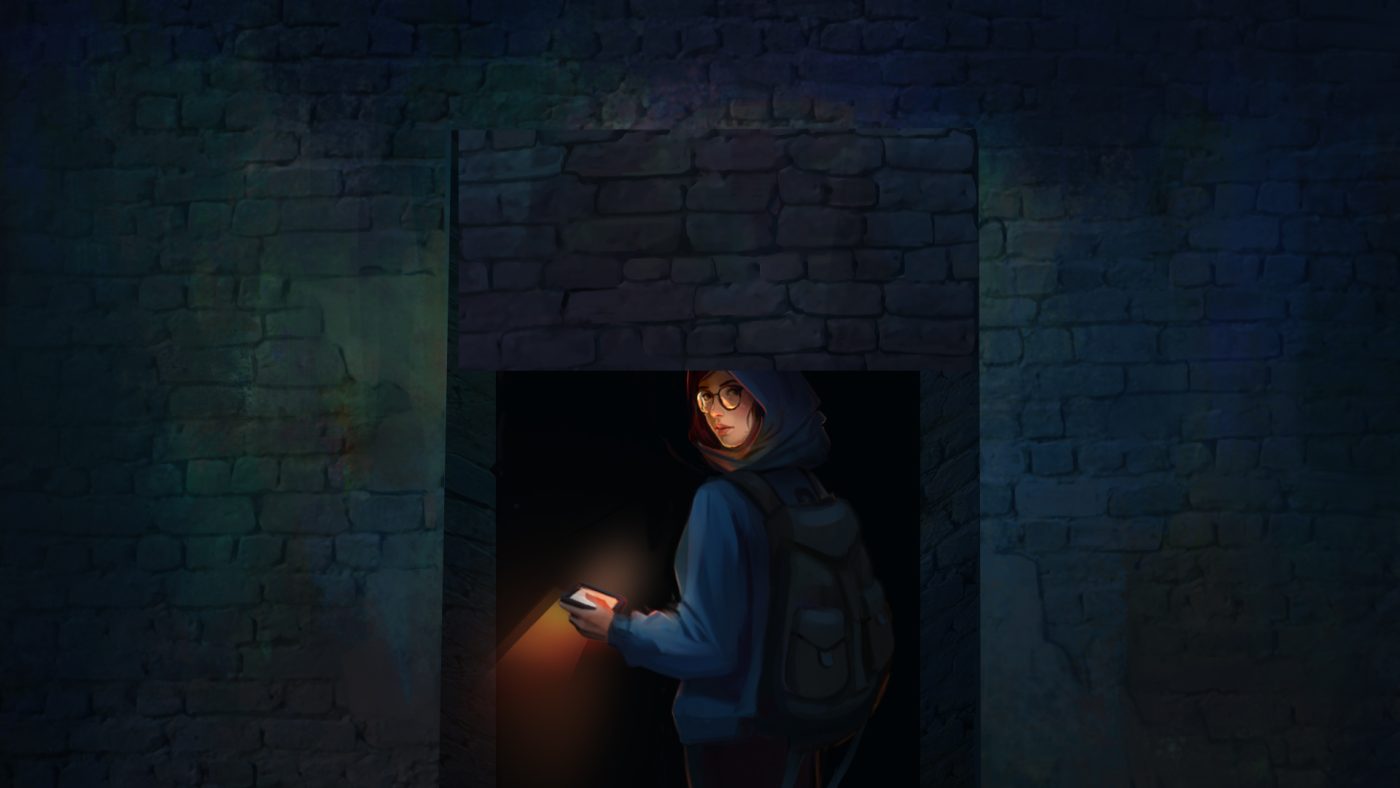
Huda, an archaeologist like her father, stands at the center of the story. Her father disappeared twenty years earlier under circumstances that never found clear answers. Huda’s investigation quickly moves beyond a private search and turns into a direct confrontation with how societies preserve, interpret, and direct knowledge. The museum where much of the game unfolds takes on a precise role: not a backdrop, but a narrative device that selects, orders, and filters memory.
Narrative and Setting: Archaeology, Identity, and Contested Memory
In My Father Lied, narrative forms the backbone of the experience. The story follows Huda’s return to the Middle East as she investigates her father’s disappearance during an archaeological excavation, but it soon evolves into a broader reflection on who controls history and the power embedded in telling it.
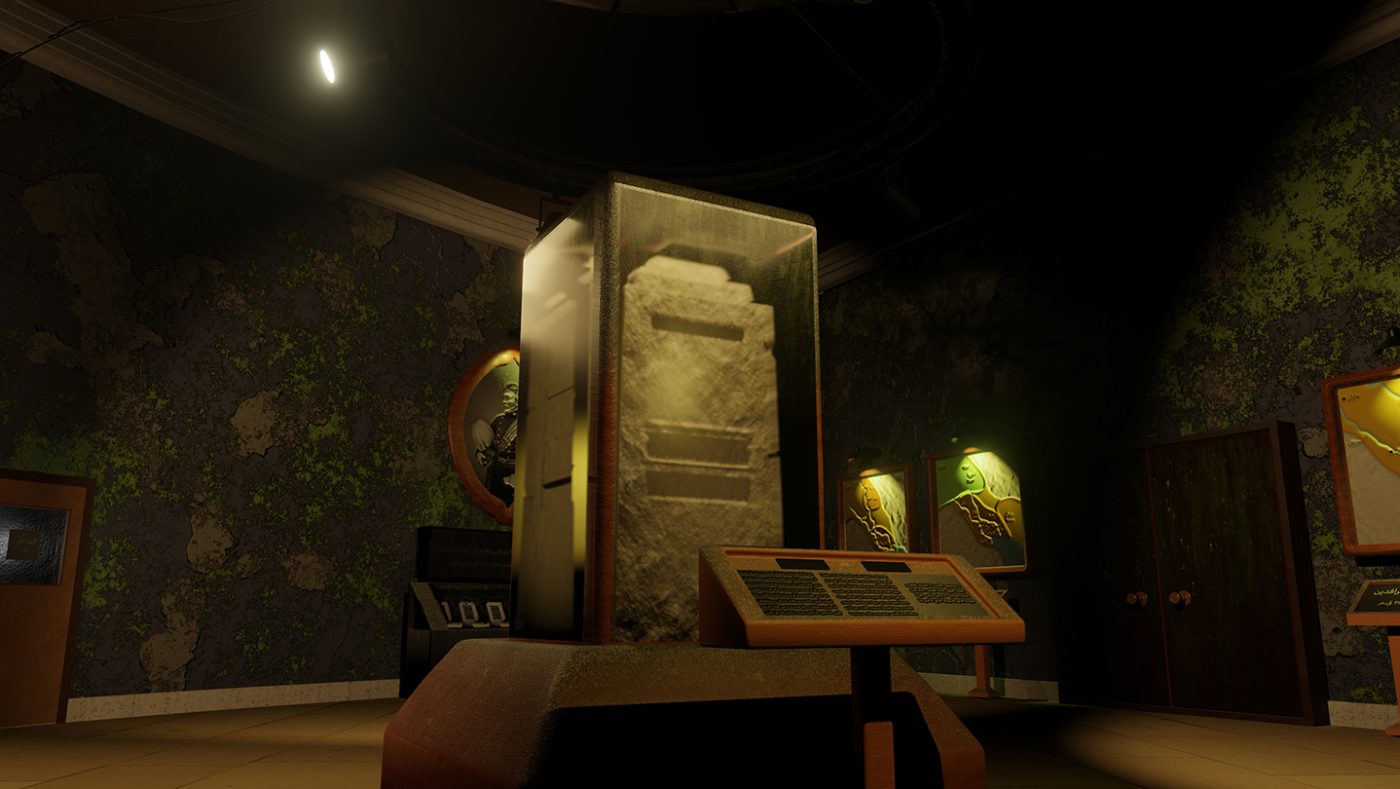
The archaeological museum that serves as the main setting carries strong political and symbolic weight. Every artifact, informational panel, and document presents a partial truth, creating constant tension between official narratives and buried memory, academic knowledge and local tradition, preservation and systematic exclusion.
The game draws deeply from Mesopotamian history—from cuneiform writing to Assyrian and Babylonian civilizations—while adopting a firmly contemporary perspective. References to real figures from Western archaeology, such as Henry Rawlinson or Leonard Woolley, avoid didactic intent. Instead, they introduce a central question: who holds the right to interpret the past, and through which tools?
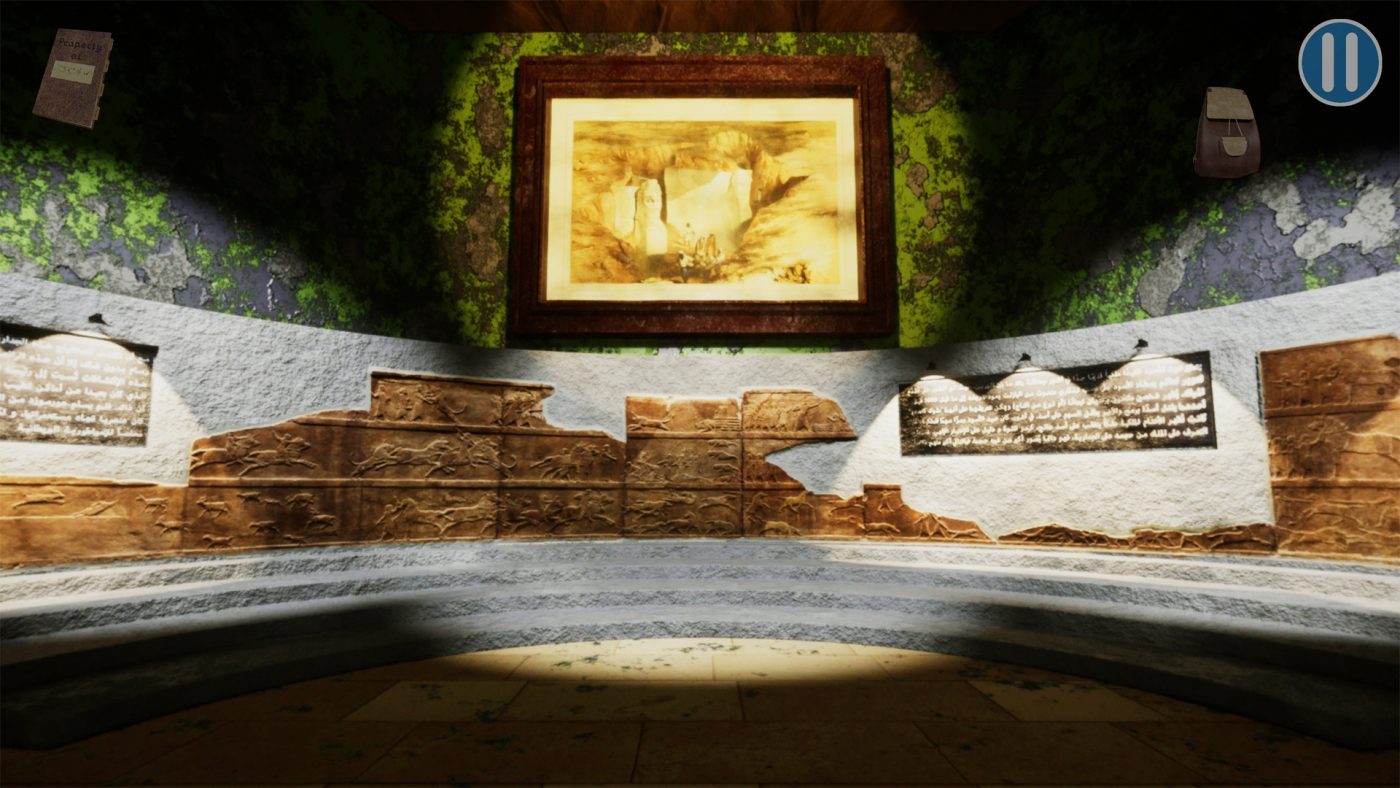
From this angle, My Father Lied takes on an explicitly political dimension. Cultural colonialism runs through the entire narrative, showing how knowledge often gets extracted, catalogued, and rewritten far from the human and symbolic contexts it comes from. The contrast between a Western, analytical, archival approach and a more layered, symbolic local perspective appears in dialogue, documents, and even in the structure of the experience itself.
The Anshar, an ancient and mysterious entity, represents the point where myth, science, and metaphysics converge. Rather than serving as a simple narrative device, it embodies a form of non-linear knowledge that escapes traditional interpretative systems. Tablets, three-dimensional symbols, and the idea of a script that maps concepts instead of translating words suggest a vision of history as a living organism shaped by those who observe it.
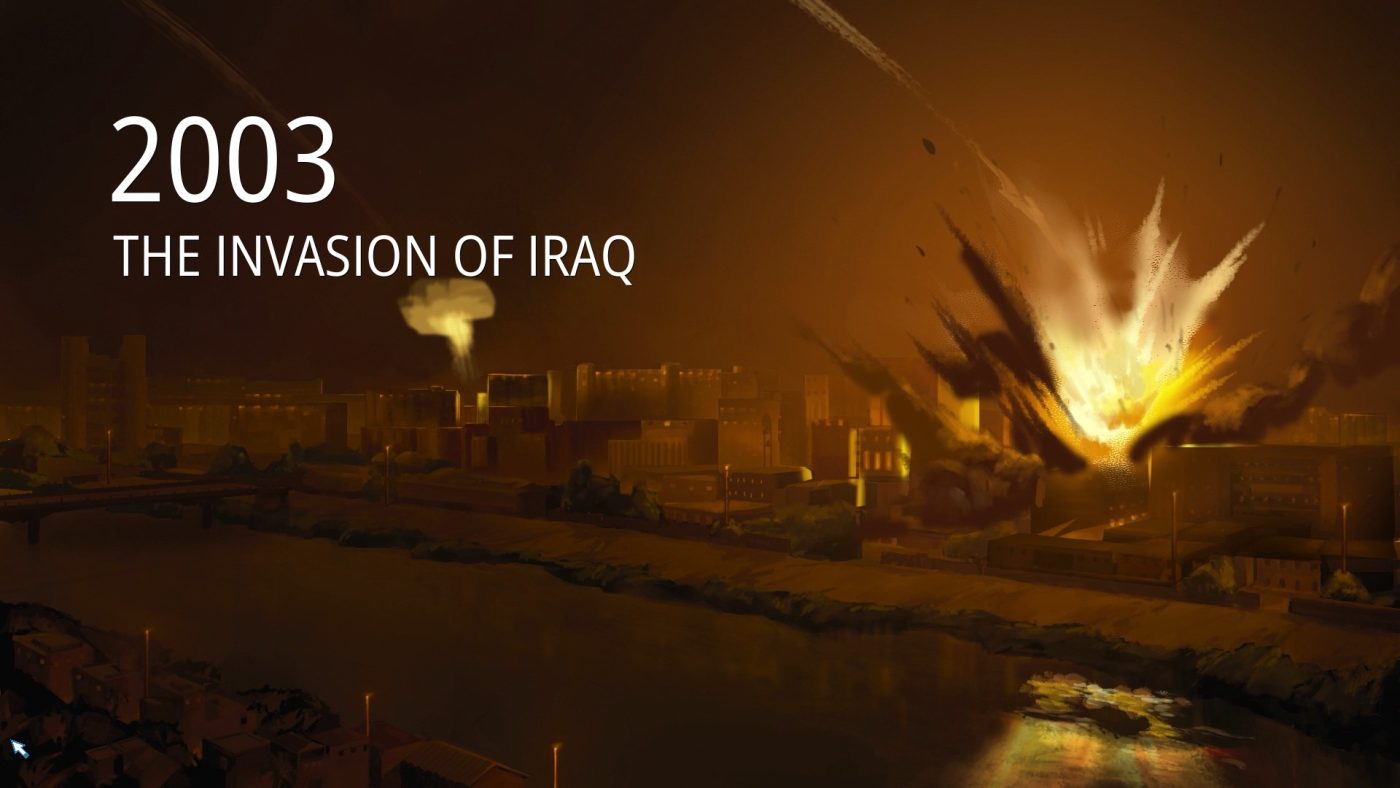
The story does not remain confined to a theoretical level. References to the 2003 invasion and the bombings that mark Huda’s childhood anchor the narrative in a specific historical trauma. War and personal loss intertwine in a defining event that transforms her search into something existential rather than purely investigative.
Overall, My Father Lied uses mystery to question cultural identity, historical inheritance, and the responsibility that comes with knowledge. It asks players for attention, time, and a genuine willingness to challenge established certainties.
Gameplay: Logic, Observation, and Meaning-Making
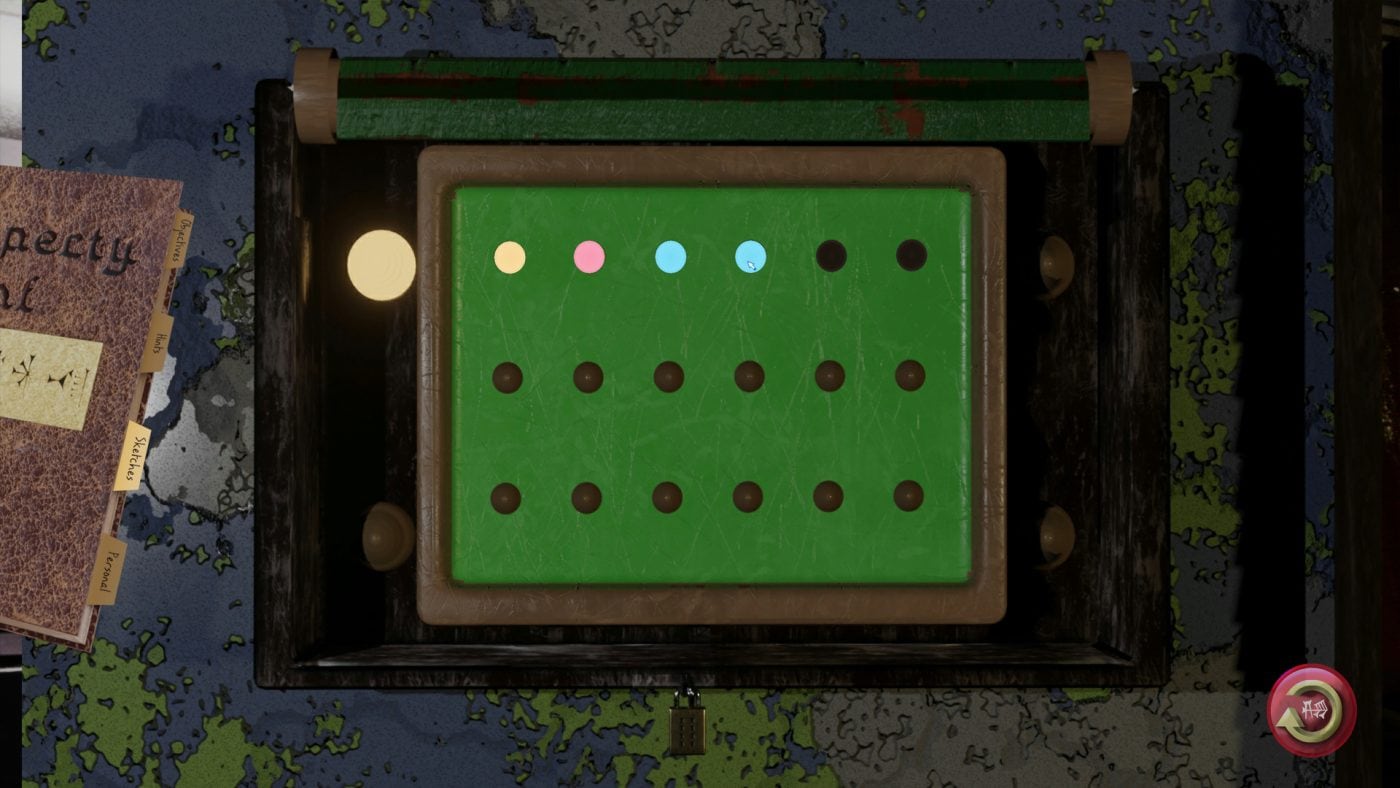
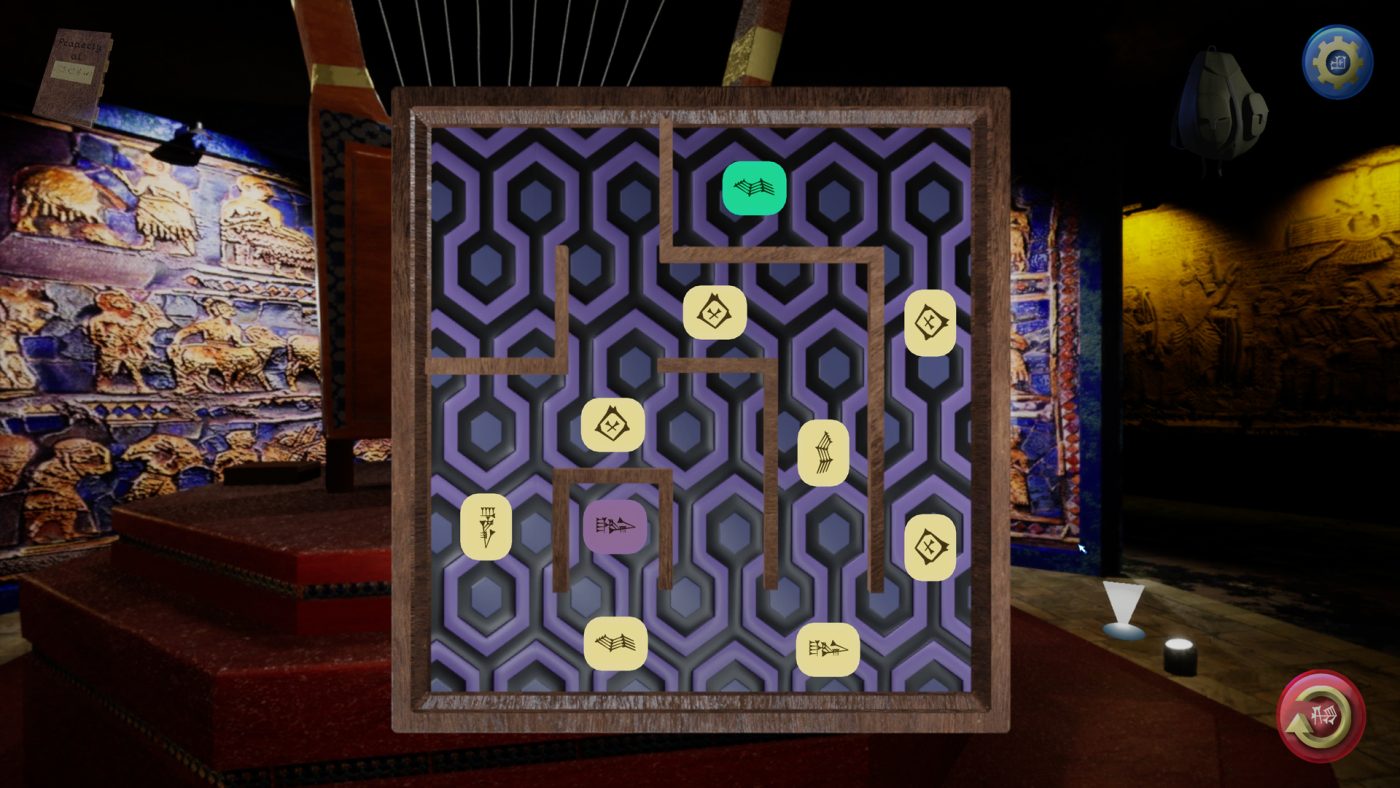
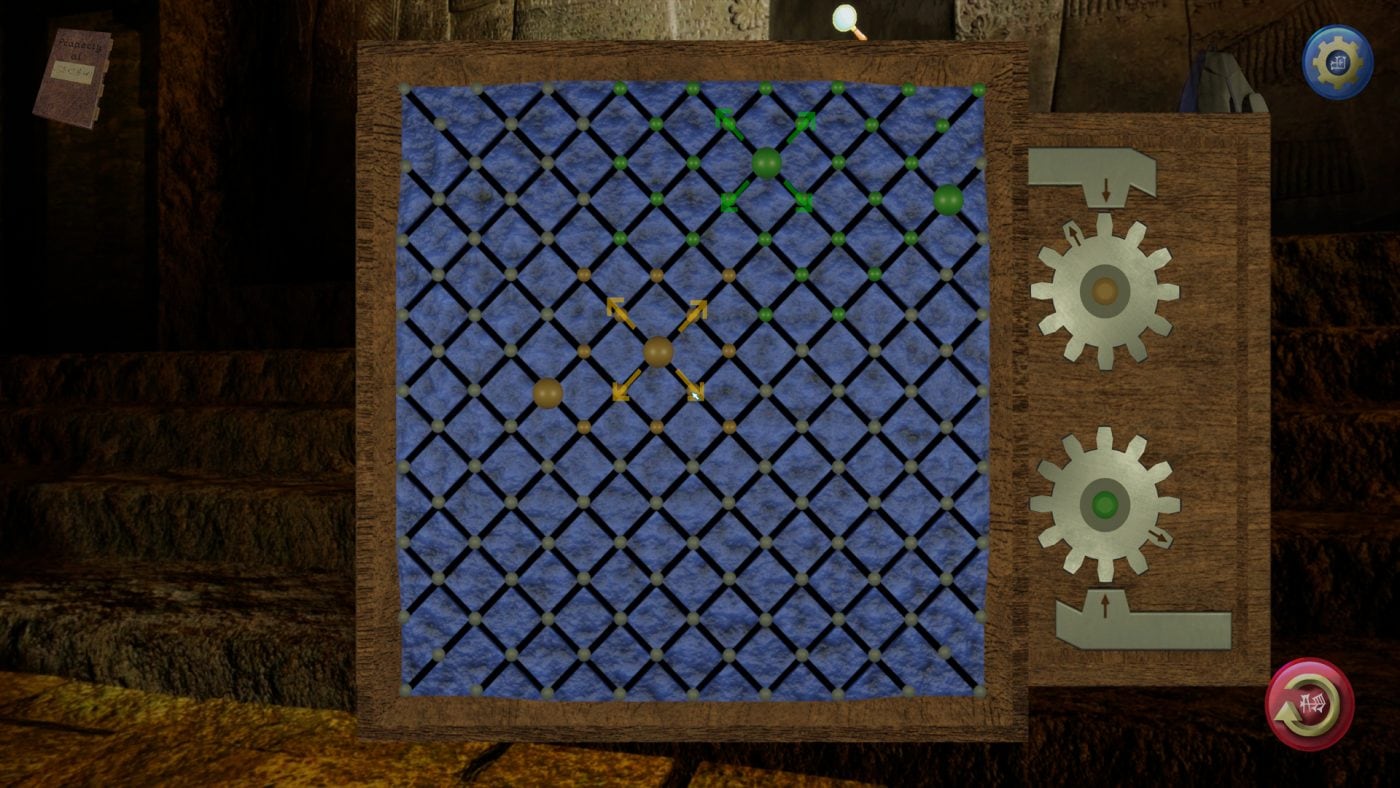
The gameplay of My Father Lied relies on deliberate, essential interaction built around exploration, observation, and logical puzzle-solving. The progression follows a linear path and guides players through environments designed as nodes of knowledge to interpret before overcoming.
Each puzzle emerges from textual, symbolic, or spatial information delivered through documents, panels, and installations. Players read, connect, and remember details that often span long stretches of the experience, gradually building a coherent mental map. Solutions come from contextual understanding rather than immediate intuition.
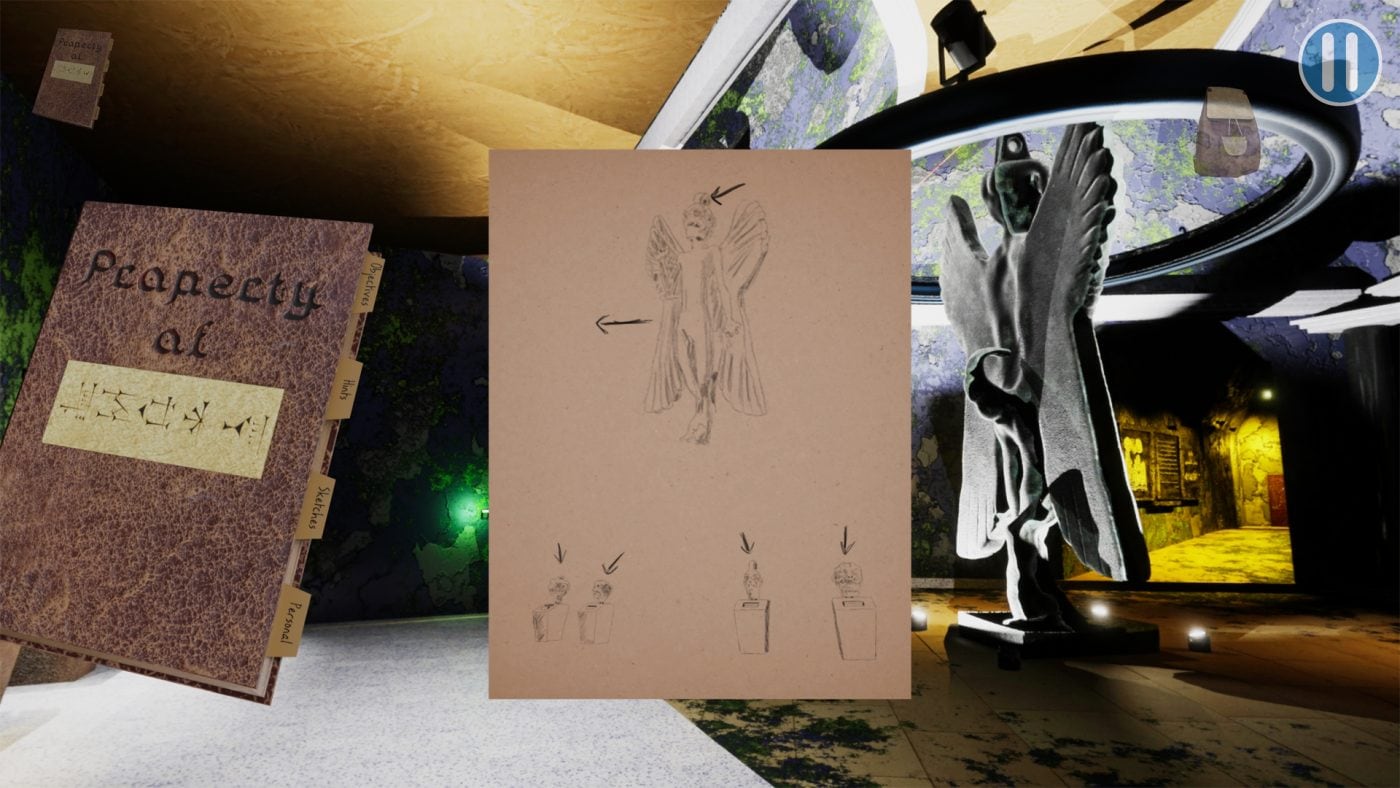
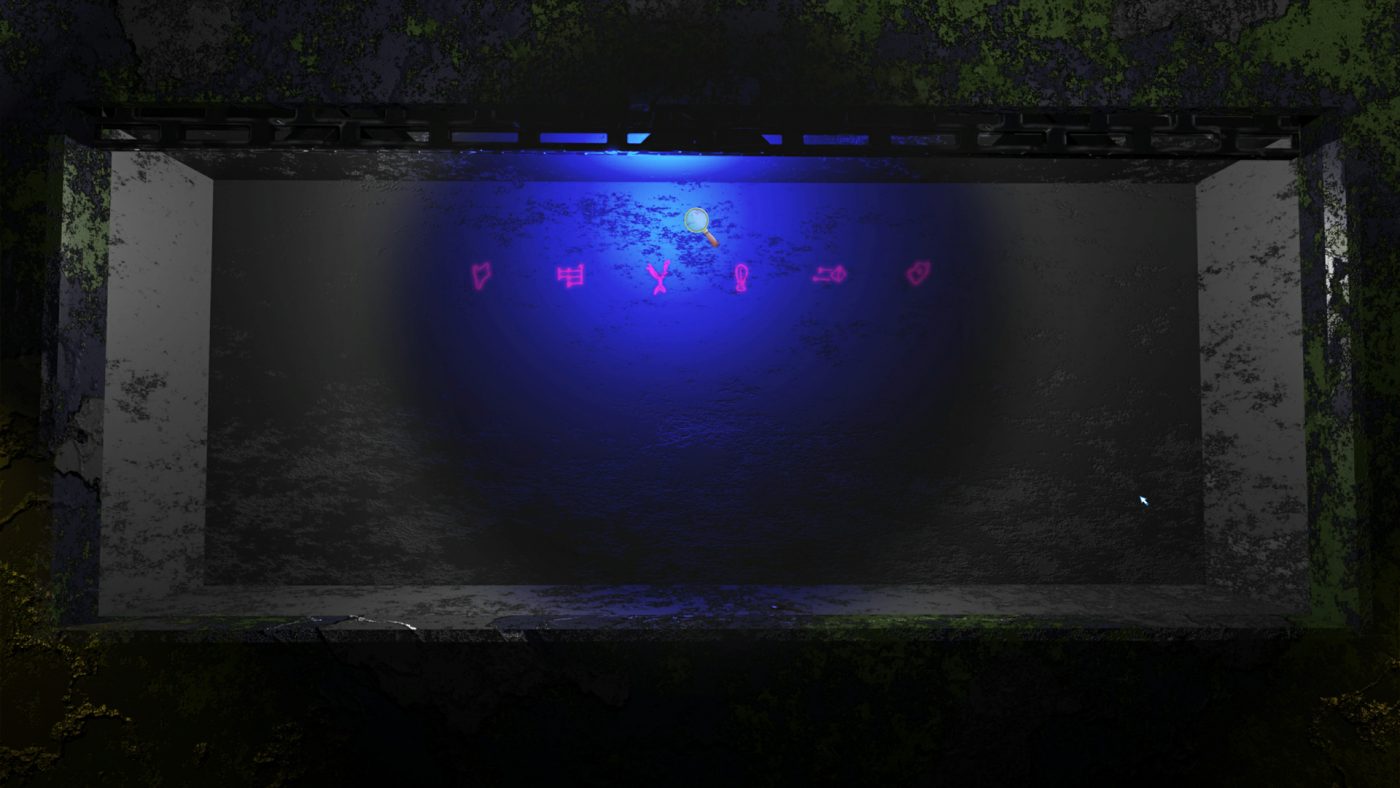
Difficulty increases steadily, demanding greater synthesis skills and attention to detail. The puzzles reward reasoning and memory, offering deep satisfaction when solutions arise naturally from reflection.
A minimalist interface supports this approach by keeping focus on clues and logical thinking. Clear, consistent interactions reinforce immersion and strengthen the direct relationship between player and content.
Themes: Knowledge, Power, and the Weight of Memory
My Father Lied offers a layered reflection on knowledge and shows how societies can turn it into a tool of power. Archaeological and scientific research appears as an act that redefines value, deciding what deserves preservation and what becomes expendable.
Cultural colonialism emerges through the inherent ambiguity of research itself. Understanding often requires extraction, translation, and simplification, and these processes always involve loss. Every interpretation implies a choice, and every choice carries responsibility.
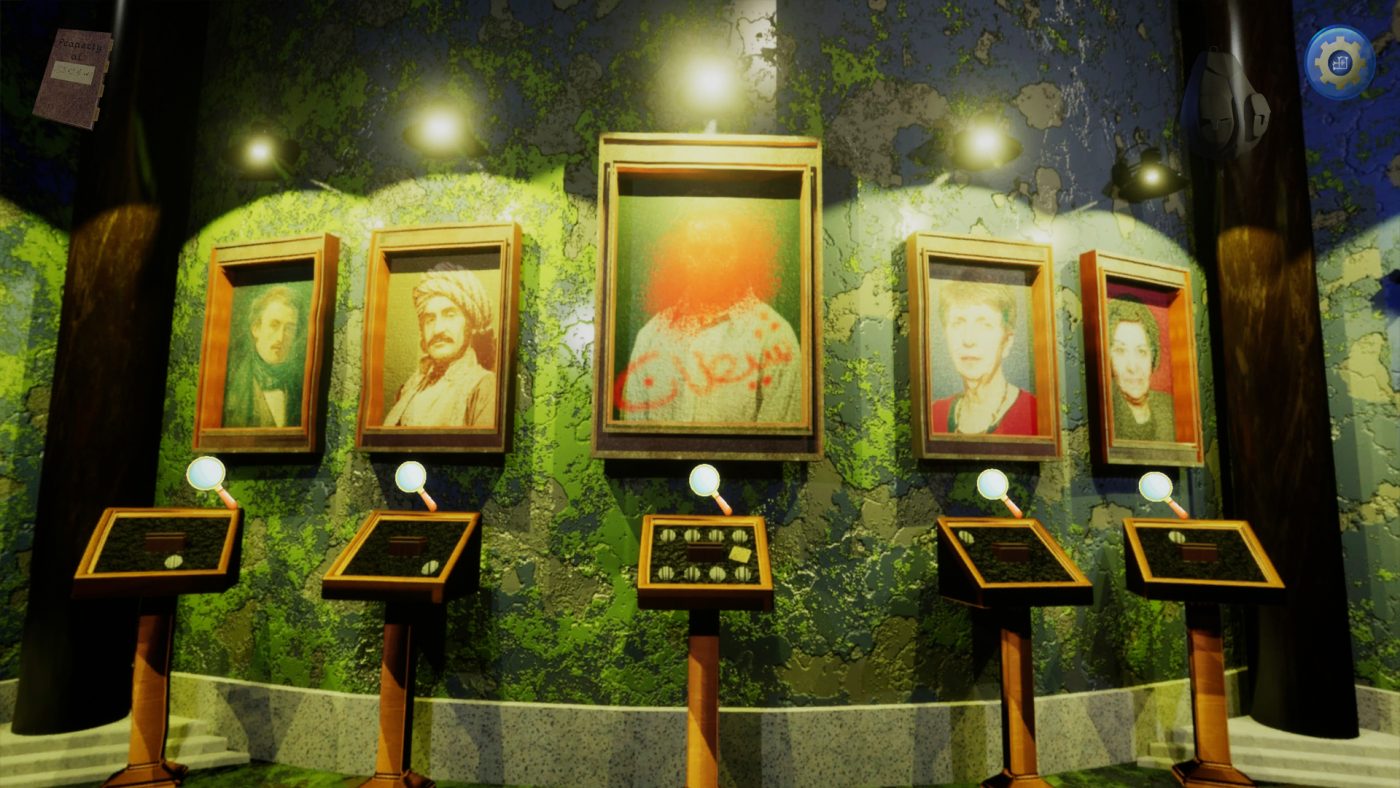
Language plays a central role in this reflection. The game stages the limits of human communication systems when they face non-linear structures of thought. Language organizes reality while simultaneously reducing it. Understanding becomes a transformative act that reshapes those who learn.
From this perspective, knowledge behaves like a contagion. Information spreads, alters perception, and produces consequences. Memory—both individual and collective—appears fragile and subject to selection and reinterpretation. Remembering and forgetting take on political meaning.
The game also addresses guilt, showing how personal trauma can overlap with collective memory. For Huda, the search for truth becomes an attempt to impose meaning on a wound shaped by war, turning historical investigation into a process of emotional reckoning.
Taken together, My Father Lied presents knowledge as responsibility and invites players to accept ambiguity and incompleteness as integral parts of understanding.
Art Direction and Technical Presentation: Essential Form in Service of Meaning
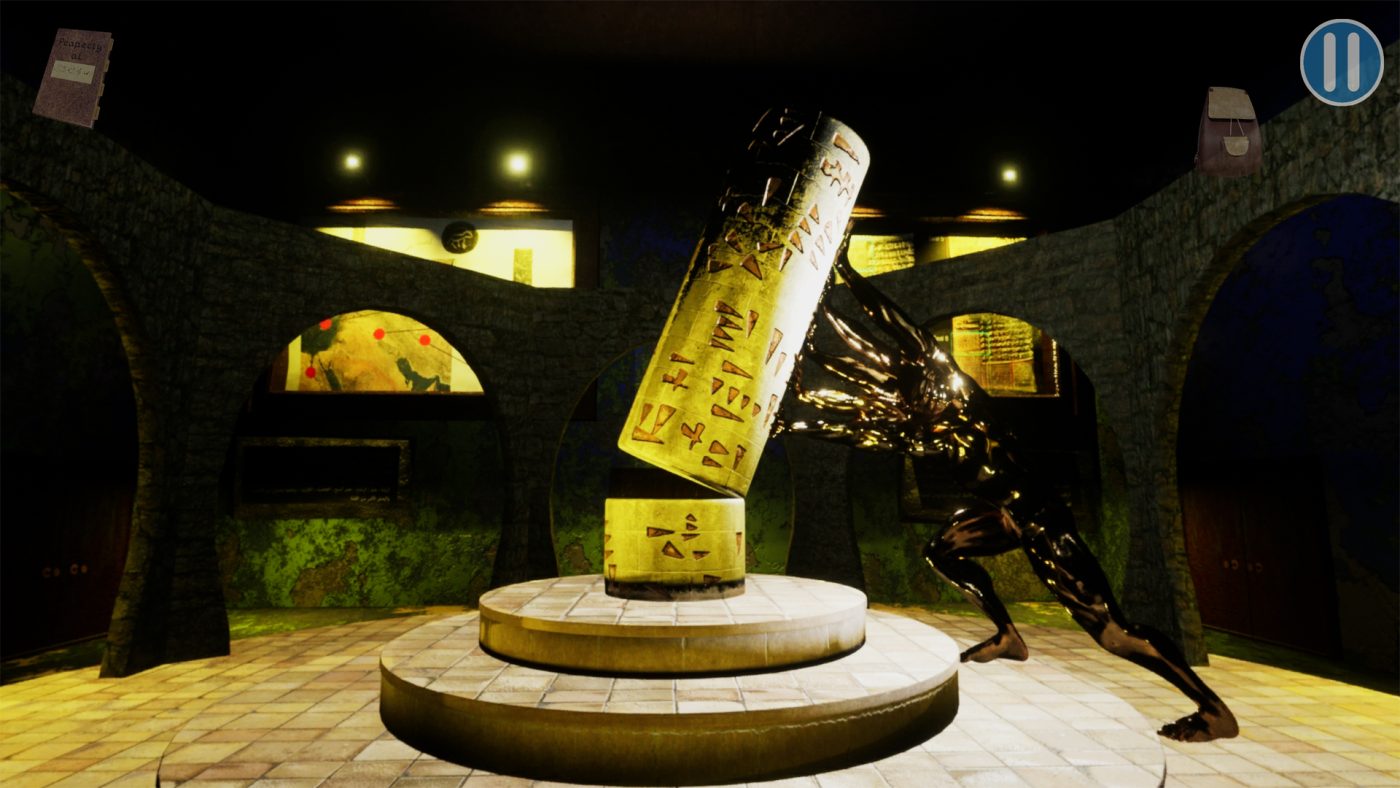
The art direction of My Father Lied follows a rigorously coherent line, placing every visual choice in service of the game’s tone and content. The artistic vision developed in collaboration with Studiocupcakes, under the direction of Art Director Arati Puranik and Senior Illustrator and Art Director Alisha Mahapatra. Their work defines a restrained, measured aesthetic that supports interpretation rather than visual spectacle.
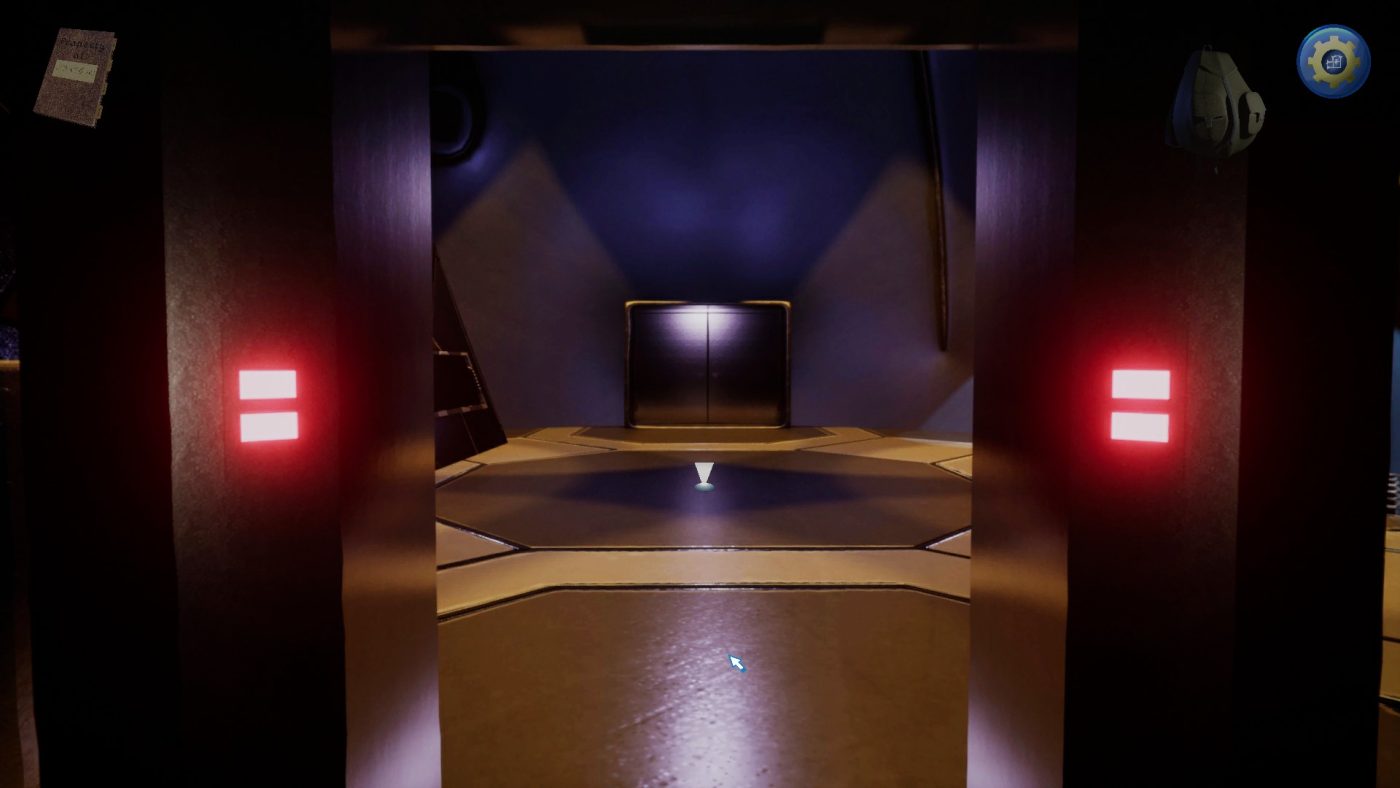
The three-dimensional environments adopt a sober, functional style designed for observation and decoding rather than traditional exploration. Technical execution favors structural clarity and spatial readability, supporting the experience without pulling attention away from reasoning and narrative.
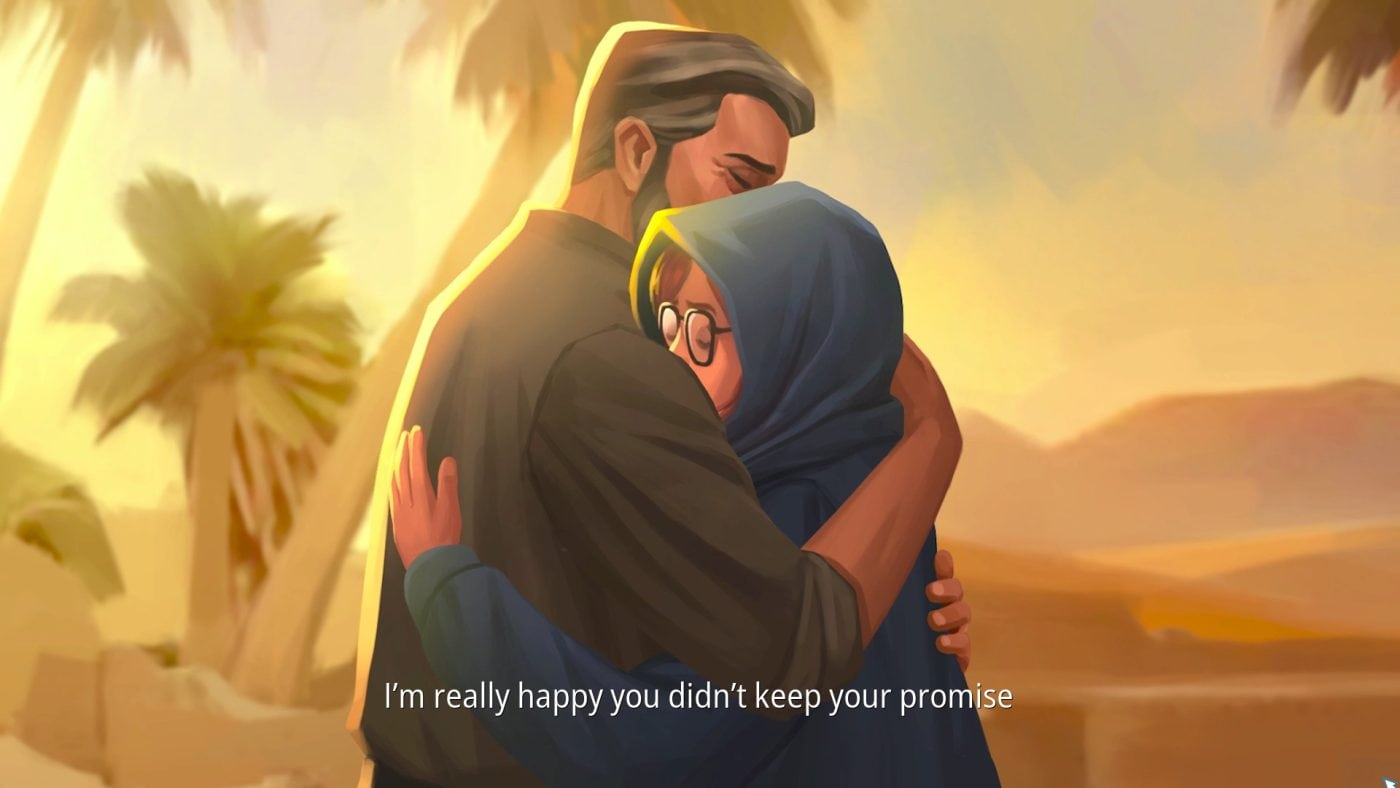
The 2D illustrated sequences stand out most strongly. The Studiocupcakes illustration and rendering team—including Kshitija Kulkarni, Aditya Permana, Anurag Biswas, and Sai Sankar—crafted these static, painterly images to introduce a more intimate emotional dimension. These sequences mark key narrative moments and strengthen the personal bond between Huda and her father. The contrast between restrained 3D spaces and evocative illustrations shapes the game’s visual identity.


Ahmed Alameen personally handled the sound design and music, which accompany the experience with restraint and precision. Ancient-inspired soundscapes and the inclusion of Inanna’s Descent to the Underworld deepen the connection to the game’s historical and symbolic context, reinforcing its focus on language, memory, and myth.
From a technical standpoint, My Father Lied integrates the limitations typical of an independent production into a compact and coherent whole. The minimalist interface, already central to gameplay, keeps the experience clean and readable, while the overall structure remains stable from beginning to end.
The art direction never aims to impress through excess. Instead, it supports meaning and coherence, aligning fully with the project’s narrative ambition. My Father Lied places content at the center and allows aesthetics to guide rather than overshadow it.

Conclusion
My Father Lied draws players in through persistence rather than immediacy. Even when puzzles grow more demanding and require greater effort, the experience encourages reflection and careful reconstruction rather than frustration. Each solution opens new understanding, not just new spaces.
The ending provides a measured and deeply emotional conclusion to this journey. Without relying on forced twists, it closes Huda’s personal story with delicacy, giving weight to relationships, choices, and sacrifices that shape the narrative. The epilogue leaves room for emotional resonance and reflection.
What ultimately sets My Father Lied apart lies in its ability to extend beyond the story it tells. Its themes—cultural identity, historical memory, colonialism of knowledge, and language as power—remain present long after the credits roll. The game avoids definitive answers and instead sparks questions that continue to unfold over time, expanding the experience beyond a single playthrough.
Within the narrative puzzle genre, My Father Lied stands out for its ambition and coherence. It demands attention and patience, but rewards them with rare depth and genuine engagement. The game demonstrates how video games can serve as spaces for cultural and political inquiry without sacrificing emotion or human storytelling.
If you want to know more:
My Father Lied
PRO
- Ambitious and layered narrative that blends personal storytelling with archaeology and political reflection
- Strong cultural and historical themes handled with coherence and maturity
- Logic-based puzzles tightly integrated into the narrative structure
- Restrained yet coherent art direction, with impactful 2D illustrated sequences
- Measured and emotionally resonant ending that gives weight to characters and choices
- Clear authorial vision that shapes the entire experience
CON
- Deliberately slow pacing that may challenge players seeking immediate engagement
- Occasionally demanding puzzles that require sustained focus and patience
- Technically modest presentation compared to higher-budget productions
- Experience tailored to a niche audience rather than a broad mainstream appeal


8/10