Urban solitude, stigmatized spaces, and perceptual horror in ghostcase studio’s new game
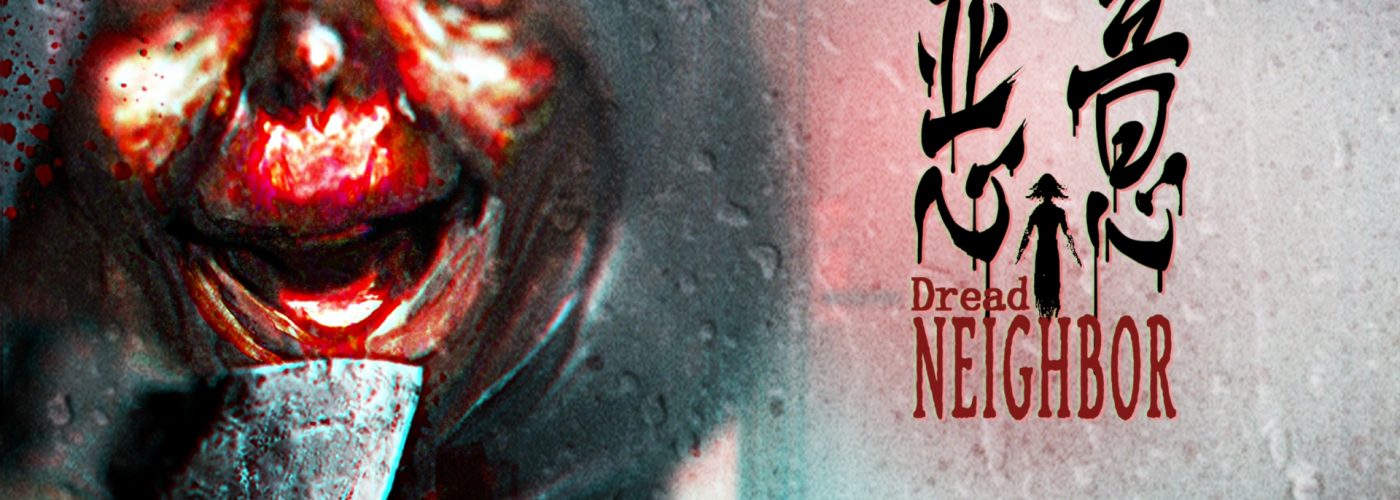
Within the independent psychological horror landscape, Dread Neighbor positions itself as a project strongly focused on building tension through everyday life. Developed by ghostcase studio, the game continues and refines an authorial direction already established with Dread Flats, delivering a first-person experience that uses repetition, environmental variation, and subjective perception as its primary narrative tools.
Dread Neighbor presents itself as a slow, layered horror experience, more interested in destabilizing the player over time than in relying on immediate or aggressive solutions. This approach aligns closely with the game’s central theme: the fear of urban solitude and of being watched, inspired by real incidents and reworked through a cyclical structure that progressively alters the game space.

Urban Solitude and the Construction of Tension
Dread Neighbor places the player in the role of a young woman who lives and works alone in the city. For financial reasons, the protagonist rents a room in an old residential building—a pragmatic decision that quickly becomes the starting point for a disturbing experience. The early stages of the game deliberately emphasize ordinariness: repetitive tasks, anonymous spaces, and daily routines that contribute to a sense of apparent normality.
On this foundation, Dread Neighbor builds its horror. The repetition of actions and environments never remains neutral: each return to the same space introduces micro-variations, anomalous details, and elements out of place that create constant doubt in the player’s perception. As a result, the domestic space gradually loses its reliability, shifting from a familiar environment into something hostile and unpredictable.
The theme of being watched runs through the entire experience. Suggested gazes, presences that never fully take shape, cracks in the walls, and shadowed areas act as carriers of continuous tension. Horror does not emerge from an explicit threat, but from the persistent sensation of an invisible presence—always outside the frame, yet constantly perceived.

“Haunted” Homes and Housing Stigma: The Cultural Context Behind the “Too Cheap” Apartment
In the Chinese context—and more broadly across many Sinophone societies—the idea of the haunted home does not belong solely to folklore or horror imagery. It represents a concept that directly affects housing choices and the perception of domestic spaces, especially when a property becomes associated with traumatic events such as violent deaths, suicides, or particularly dramatic accidents.
In these situations, the property often carries a form of cultural stigma. This stigma does not stem purely from a belief in the supernatural, but rather from the idea that the space has absorbed something negative: an unresolved history, a lingering memory, or a presence that refuses to disappear.
In Hong Kong, people often refer to these dwellings as hongza (凶宅), but the concept extends well beyond formal definitions, spreading through word of mouth, neighborhood stories, and informal knowledge.

As a result, people tend to view these homes as less desirable. Not because they differ physically from other apartments, but because symbolic meaning reshapes the relationship between the inhabitant and the space itself. Living in a “marked” apartment can feel like a social burden, an uncomfortable choice, or a source of latent unease that influences not only everyday life but also how others perceive that home from the outside.
Within this framework, the idea of the “too cheap” apartment takes shape. On paper, such a space offers a practical and rational solution, yet it carries an invisible cost. People often choose it out of necessity, implicitly accepting a compromise that involves not just comfort or location, but also the emotional and symbolic weight of the space.
Dread Neighbor fits precisely into this cultural imaginary. The protagonist’s decision to rent a low-cost apartment does not serve as a random narrative device, but instead reflects a real and culturally recognizable mechanism. The apartment does not function merely as a setting, but as a social and mental device—one that transforms the ordinary into a threat.

Repetition and Variation as a Design Language
From a structural perspective, Dread Neighbor adopts a system of progressive loops that openly recalls the tradition established by P.T., the well-known playable teaser for Silent Hills released in 2014. In P.T., horror emerged from the obsessive repetition of an apparently unchanging domestic space, where each traversal introduced minimal yet destabilizing variations, shifting tension away from action and toward perception.
Dread Neighbor draws on this design grammar and reworks it within an urban, everyday context, using environmental repetition to explore psychological discomfort tied to isolation, implicit surveillance, and the gradual loss of control over living space.
Environmental elements such as liquid seeping from the ceiling, objects that change position, or traces that suggest violent events from the past appear gradually, without direct explanations. The game entrusts much of its narrative to player observation and interpretation, avoiding didactic solutions and favoring fragmented environmental storytelling.
This design choice reinforces the sense of alienation and helps sustain psychological tension, turning every return to a previously visited location into a potentially destabilizing experience.


Authorial Continuity and the Identity of ghostcase studio
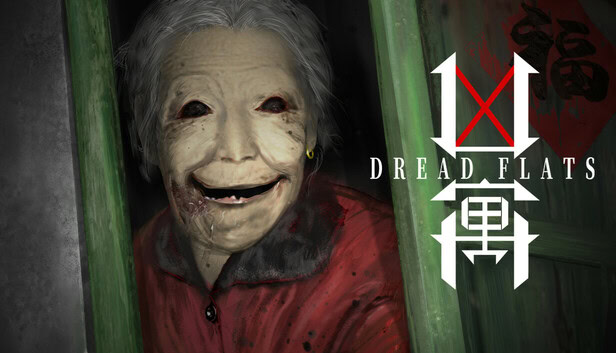
To fully understand Dread Neighbor, one must place it within the broader trajectory of ghostcase studio. The team had already demonstrated a strong focus on psychological horror with Dread Flats, a title praised for its ability to transform ordinary living spaces into oppressive environments through a careful use of sound, lighting, and pacing.
Dread Neighbor does not represent a rupture, but an evolution. The developers refine mechanics and narrative solutions while clearly increasing production ambition. The project continues to prioritize an immersive experience built around subjective perception and progressive discomfort, rather than survival mechanics or combat-driven gameplay.
Once again, Dajishi plays a key role as core concept designer. His contribution reflects a distinct sensitivity toward contemporary urban horror, where social unease and the fear of isolation become central elements of the game’s presentation.
Technical Improvements and Visual Presentation
Compared to Dread Flats, Dread Neighbor shows a clear step forward on a technical level. The environments appear more detailed, the lighting system feels more complex, and the use of shadows plays a functional role in shaping tension. Visual presentation does not exist for its own sake, but directly supports narrative and psychological progression.
The first-person perspective further strengthens player involvement by minimizing distance between the player and the game space. The absence of an intrusive interface and the centrality of observation keep the experience tightly focused on exploration and the interpretation of environmental signals.

Production and Publishing Support
Erabit, an independent publisher based in Singapore, supports the project. The company has built a reputation for backing small teams and emerging developers, with an approach that emphasizes strong authorial identity. Erabit aims to provide production and distribution support without interfering with the creative vision of the developers.
Final Considerations
Currently visible on Steam, with a demo on the way, Dread Neighbor shapes itself as a psychological horror experience that prioritizes the gradual construction of discomfort and the thematic exploration of urban solitude. The game fits coherently within ghostcase studio’s creative path and, if it maintains its premises, may further confirm the team’s growing maturity in handling contemporary narrative horror.