
In short
What happens when a world born from the pages of an independent webcomic finds a new home in video games? War of the Western Deep is the next chapter in a story years in the making, bringing together a fascinating fantasy universe, an experienced team of artists and developers, and a passion for the timeless charm of traditional animation.
What if the stories we grew up watching could finally become worlds we could call our own?

There is something about video games that has always fascinated me. Something that, despite all the years I have spent exploring countless worlds and experiencing stories of every kind, has never quite lost its hold on me. Perhaps it is also one of the reasons I fell in love with this medium in the first place: its extraordinary ability to take us somewhere else, to make us see things from a different perspective, and, sometimes, to remind us of feelings we did not even realise we had forgotten.
I have always been drawn to the idea that a video game can open a door between our everyday lives and places that exist only in someone’s imagination. All it takes is a screen, a controller, and a little curiosity. Before long, we might find ourselves wandering through ancient kingdoms, crossing unfamiliar landscapes, uncovering forgotten histories, or meeting characters whose lives become intertwined with our own. What makes this experience so special, however, is not simply the possibility of visiting these places. It is the way they can make us feel, and the unexpected connections we sometimes form with the stories they have to tell.
Few other mediums offer quite the same relationship between an audience and a fictional world. We are not merely watching events unfold or following a character from one chapter to the next. We are there, making decisions, overcoming obstacles, and discovering things at our own pace. We become part of the experience, and in doing so, we can develop a connection with it that goes well beyond what happens on screen. A particular place, a musical passage, a conversation, or even a seemingly insignificant moment can stay with us long after we have put the controller down. Sometimes, all it takes is a familiar melody or a passing reference to bring those memories rushing back.
That, to me, is one of the most remarkable things about video games. Their ability to create experiences that do not simply entertain us in the moment, but leave something behind. They can rekindle old dreams, bring forgotten emotions to the surface, and give us a reason to reconnect with parts of ourselves that everyday life might otherwise leave unexplored. They remind us of the pleasure of discovering something for the first time, of approaching the unfamiliar with an open mind, and of allowing ourselves to be carried away by a story without constantly thinking about what comes next.
Perhaps this is what I value most about the medium. There is a particular kind of freedom in being able to leave the familiar behind for a few hours and immerse ourselves in an experience that asks nothing more of us than our curiosity. Not because the world outside the screen ceases to matter, or because games can somehow make our problems disappear, but because sometimes we all need a little room to breathe. A chance to slow down, put our responsibilities aside, and rediscover the simple pleasure of doing something purely because it makes us happy.

As we grow older, finding that kind of space can become increasingly difficult. Our days fill up with commitments, expectations, deadlines, and responsibilities, until even our free time can begin to feel like another item on an endless to-do list. Somewhere along the way, we may also lose some of the spontaneity with which we once approached the world. As children, we could turn almost anything into an adventure. An ordinary afternoon could become an expedition, a few toys could give rise to an entire kingdom, and the simplest of objects could inspire stories that seemed to have no limits.
Growing up does not mean losing our imagination, of course. But it can mean becoming less accustomed to using it, or simply finding fewer opportunities to let it run free. And I think that is something worth holding on to. The ability to dream should not be something we associate exclusively with childhood, nor should fantasy be dismissed as little more than a way of escaping reality. Imagination is part of how we understand the world around us, how we make sense of our experiences, and how we continue to find possibilities beyond what we already know.
It is perhaps with this in mind that I approached War of the Western Deep, the upcoming adventure from Sunsgrove Studios. From the moment I first encountered the project, I felt there was something about it that deserved a closer look. Its visual presentation immediately caught my attention, but the impression it left went beyond its artwork. There was a familiarity to it, an almost nostalgic quality that brought back memories of classic animated films, illustrated fairy tales, and those stories that once seemed capable of transporting us anywhere.
It reminded me of finding an old storybook on a shelf after years of leaving it untouched. You open it, turn a few pages, and suddenly find yourself looking at illustrations that seem to have lost none of their charm. Perhaps you remember the story, perhaps you only recall the feeling it gave you, but something about it remains. It is a small encounter with the past, one that can bring back a sense of curiosity and excitement you might not have realised you missed. That was, in many ways, my first impression of War of the Western Deep. And the more I learned about the project, the clearer it became that this connection to traditional storytelling was not merely an incidental feature of its presentation. It is an important part of the creative vision behind the game.
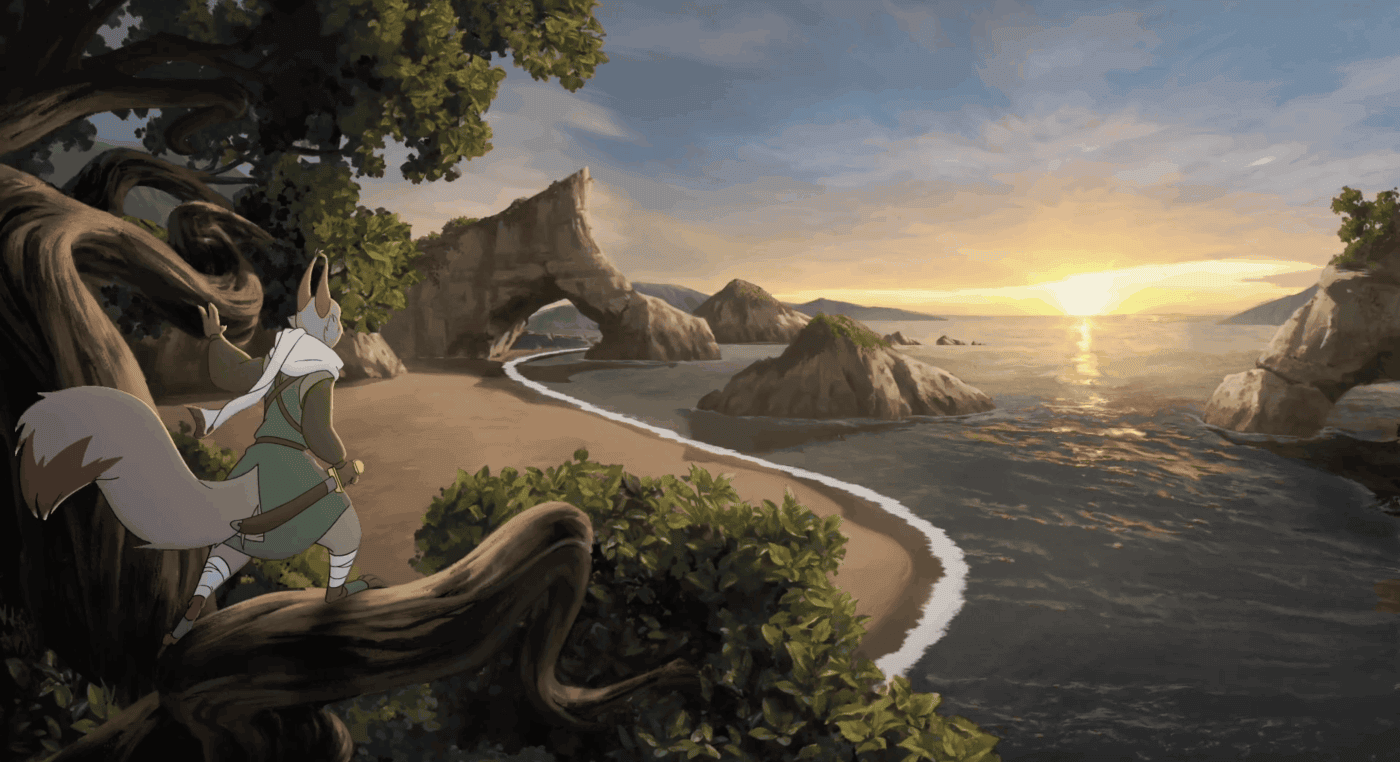
Sunsgrove Studios is building an adventure that draws heavily on the visual language of classic animation and the imaginative traditions of fantasy storytelling. Its hand-drawn aesthetic, expressive characters, and richly illustrated environments evoke an artistic sensibility that feels increasingly distinctive in today’s videogame landscape.
There is something immediately appealing about the prospect of exploring a place that seems to have emerged from the pages of an illustrated book, where every landscape has its own character and even the smallest details contribute to the atmosphere.


What interests me most, however, is the ambition to bring that sensibility into an interactive experience. Traditional animation and video games may share a natural affinity, but translating the qualities of one medium into the other is no small undertaking. It requires more than reproducing a particular visual style. It means finding a way to preserve the expressiveness, timing, and sense of artistic intention associated with hand-drawn animation while allowing players to move freely through the world and shape their own experience of it.
This is where War of the Western Deep begins to establish its own identity. Rather than treating its artistic direction as a decorative layer, the project appears to place it at the heart of its creative ambitions. Its handcrafted approach is not simply a nostalgic nod to an earlier era of animation, but an attempt to build an experience around the qualities that make that tradition so enduring: expressive movement, carefully composed imagery, distinctive characters, and a strong sense of visual personality.
There is also something refreshing about a project that chooses to pursue this direction at a time when technological progress is so often at the forefront of conversations about the medium. The videogame industry continues to push towards increasingly realistic graphics, more elaborate technical systems, and ever-greater production values. Those advances can be remarkable, and there is no reason to regard them as incompatible with more traditional forms of artistic expression. But they are not the only way to make a game memorable. Sometimes, what stays with us is not the number of polygons on screen or the technical complexity of an environment, but the care with which it has been imagined and brought to life.
I find that particularly interesting in the case of War of the Western Deep. Its artistic direction suggests a project that wants to celebrate the work behind every frame, every character, and every animated movement. It is an approach that places considerable emphasis on craftsmanship, while recognising that the medium’s interactive nature can offer new possibilities for a visual tradition with a long history of its own.

And perhaps that is why the project has resonated with me on a more personal level. It has brought me back to a simple thought: we never really outgrow our need for stories. We may approach them differently as adults, and our tastes may change, but the desire to discover unfamiliar places, become attached to fictional characters, and lose ourselves in an imagined adventure never quite disappears. Nor should it. There is still room in our lives for fairy tales, for fantastical journeys, and for the kind of stories that remind us how much there is left to discover.
Naturally, an appealing artistic vision and a promising premise are only the beginning. What ultimately matters is how successfully a game translates its ambitions into an experience of its own. The world, the characters, the narrative, and the gameplay will all have to work together if War of the Western Deep is to fulfil the promise of its initial impression.
These are aspects that can only be properly assessed once we have had the opportunity to spend time with the finished game. It would be premature to draw conclusions before then, but I would be lying if I said the project had not already made me curious.
On the contrary, it has become one of those games whose development I am particularly keen to follow. Not simply because of the promise of its hand-drawn animation or the appeal of its fantasy setting, but because of the creative intentions behind it and the possibility of experiencing something that draws on a tradition I have always held close. There is something genuinely exciting about the prospect of seeing how Sunsgrove Studios will bring all these elements together, and I am looking forward to discovering just how far that vision can go.
So, for a little while, let us leave the everyday behind. Make yourselves comfortable, take a moment to slow down, and come with me as we explore the world that Sunsgrove Studios is bringing to life. There is a story waiting to be discovered, a kingdom to explore, and perhaps a little of that familiar sense of wonder to rediscover along the way.
Because we are never too old for a good story. And we should never be too old to dream.
The Team, the Craft and the Vision Behind War of the Western Deep
Before venturing further into the world of War of the Western Deep, it is worth taking a step back and looking at the journey that made this project possible. In covering independent games over the years, I have come to appreciate that the most interesting productions are rarely defined by a single idea, however original, or by an artistic direction, however striking.
More often than not, what makes a game genuinely distinctive is the creative history behind it: the people who conceived it, the experiences that shaped their vision, and the years of work that brought an initially modest idea to a point where it could become something much greater. That history is not always immediately visible. We see the finished artwork, meet the characters, experience the mechanics, and judge the result as a complete product.
Yet behind every carefully constructed world lies a much longer process, shaped by countless decisions, creative exchanges, professional experiences, and, above all, the commitment of people who believe in what they are making. It is this combination of individual talent and shared purpose that often gives independent productions their most compelling qualities.
War of the Western Deep is a particularly interesting case in point. To understand what makes the project stand out, we need to look beyond the adventure itself and examine the creative foundations upon which it has been built. That means getting to know the people behind its development, revisiting the origins of its fictional universe, and tracing the evolution of a story that began as a comic book before finding a new creative outlet in video games.
It is a journey that says as much about the ambitions of Sunsgrove Studios as it does about the enduring appeal of the world its creators have spent years bringing to life.
The People and Expertise Behind Sunsgrove’s Creative Ambitions
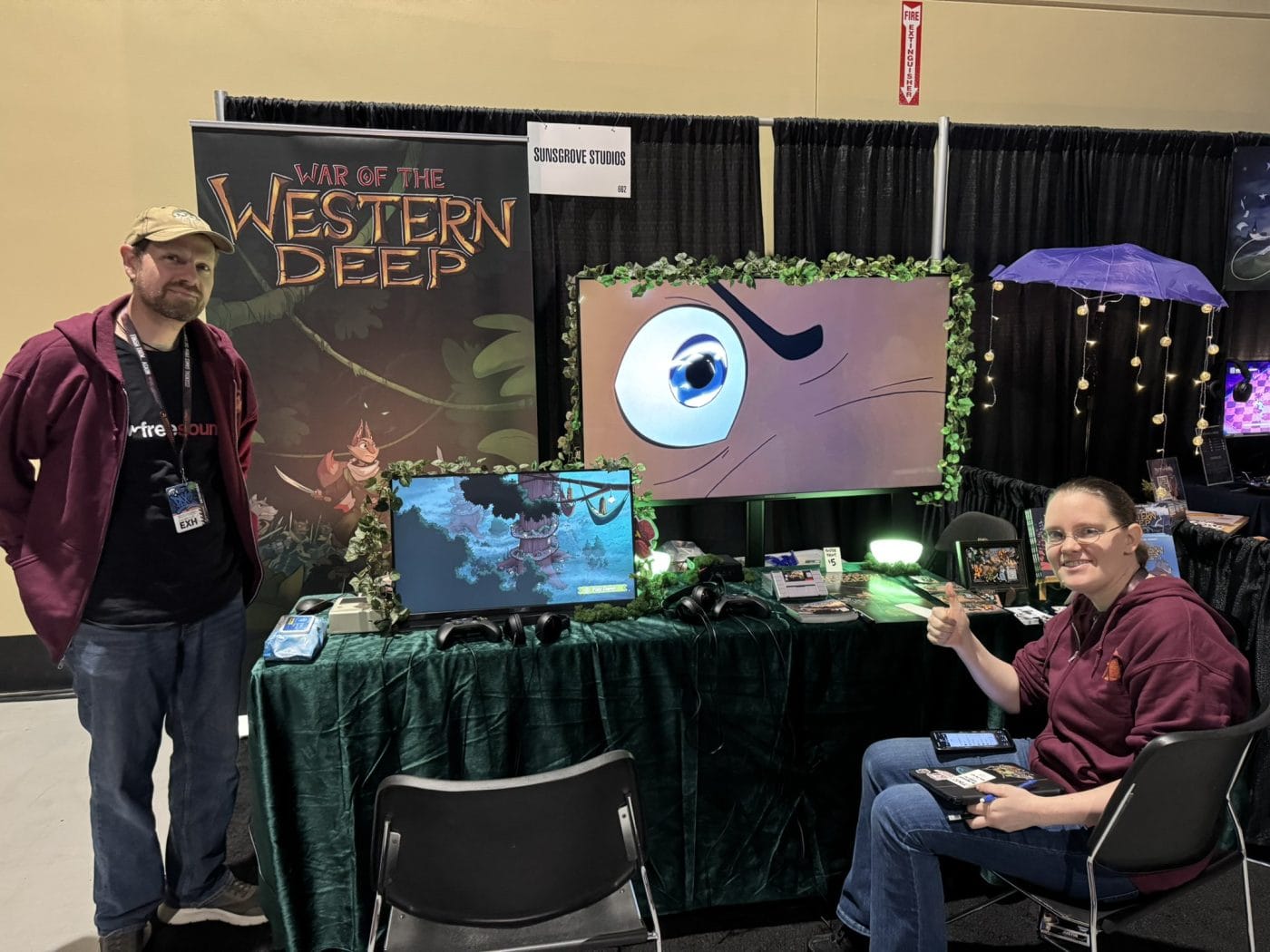
The studio behind the project is Sunsgrove Studios, an independent US-based developer bringing together professionals with experience across the video game and animation industries. Describing itself as a boutique indie studio, Sunsgrove has embraced a focused approach to production, drawing on a wealth of specialised expertise and years of industry experience to bring its creative vision to life. At the heart of the project are Alex Kain, the studio’s founder and Game Director, and Rachel Bennett, its Art Director and co-creator of the Beyond the Western Deep universe. They are joined by Mike Smith, who serves as Technical Director; Lucas Fehring, as Audio Director; and composer Nolan Markey.
It is a relatively compact team, but one whose collective experience covers several key areas of game production. This breadth of expertise is particularly important for a project like War of the Western Deep, whose identity depends on bringing together disciplines with very different creative and technical demands. Traditional illustration, character animation, interactive design, engineering, music and sound production must all come together to form a coherent whole.
Achieving that kind of consistency requires more than technical proficiency: it demands a shared understanding of what the game is ultimately trying to achieve. And to understand where that vision comes from, there is no better place to begin than with Alex Kain.
Alex Kain: The Many Stories Behind a Game Designer
Kain’s professional journey in the video game industry began in 2007, when he started working as a game designer and writer. Since then, he has contributed to more than thirty titles, building a portfolio that reflects a considerable range of creative experiences and production environments.
His credits include BAFTA-nominated Ninjatown, Game of the Year winner Space Miner: Space Ore Bust, as well as Guild Wars 2, Dust: An Elysian Tail, Tooth and Tail, and Salt & Sanctuary.
Taken together, these projects illustrate a career spent working across different genres, artistic approaches, and design philosophies. They also offer some insight into the breadth of experience Kain brings to his current role, where narrative construction and interactive design must work hand in hand. Yet, among the many productions associated with his career, one stands out as particularly relevant to the story of War of the Western Deep: Beyond the Western Deep.
Kain is one of the webcomic’s co-creators and writers, having helped establish the fictional universe that now provides the foundation for Sunsgrove’s upcoming game. His involvement therefore extends well beyond adapting an existing property or revisiting a familiar creative concept.
He is returning to a world he helped build, this time with the opportunity to expand its boundaries through an entirely different medium. That distinction is important. Bringing an established fictional universe into video games involves more than transferring its characters and locations into a new format. It means reconsidering how audiences experience that world, how its stories unfold, and how its defining characteristics can be translated into something interactive. Kain’s dual perspective as both the creator of the original universe and the Game Director of its video game adaptation places him in a particularly interesting position to oversee that transition.

Rachel Bennett: The Artistic Vision Behind the Western Deep
If Kain has been instrumental in establishing the narrative foundations of the Western Deep, Rachel Bennett has played an equally important role in defining what that world looks like.
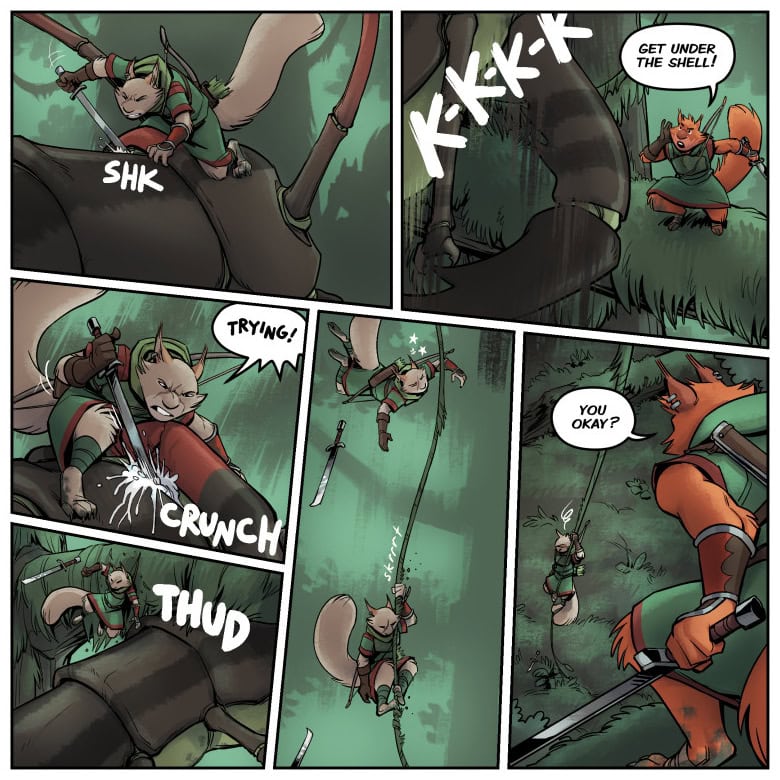
As Art Director of War of the Western Deep, Bennett brings an intimate understanding of the universe and its artistic foundations to the project. As co-creator and lead illustrator of Beyond the Western Deep, she has been instrumental in shaping its visual identity since its earliest days.
Her work on the property spans more than twelve years and encompasses over 350 illustrated pages, two collected hardcover editions, and dozens of additional illustrations created for promotional materials, related projects, and merchandise. Those numbers offer a useful indication of the scale of the undertaking, but their real significance lies elsewhere. They represent more than a decade of artistic development during which the Western Deep has gradually acquired its own visual language. Its characters, environments, and atmosphere have evolved over time, shaped by a sustained creative process rather than a series of isolated aesthetic decisions.
Having Bennett oversee the artistic direction of the video game is therefore a particularly meaningful choice. The transition from comic book to interactive entertainment is not being entrusted entirely to a new team tasked with reconstructing an existing visual identity. Instead, one of the people responsible for creating that identity is directly involved in determining how it will evolve. Personally, I find this aspect of the project especially compelling.
We often admire the visual identity of a game without considering the amount of work required to establish it in the first place. A recognisable character is not simply the result of a successful design; it is the product of a consistent artistic language that extends to their movements, proportions, and relationship with the world around them. The same applies to environments, whose architecture, colours, and visual composition must all contribute to a convincing sense of place.
In the case of Beyond the Western Deep, these foundations have been developed over many years through the combined efforts of its creators. The game consequently inherits something far more valuable than a collection of illustrations waiting to be animated: it draws upon an established visual identity, an extensive artistic history, and the sensibilities of the person who helped create them.

The Work Behind What Players See, Hear and Experience
An artistic vision, however distinctive, must be supported by a production process capable of translating it into a functional interactive experience. This becomes particularly important when a game places traditional hand-drawn animation at the heart of its identity, as doing so introduces a series of technical considerations that extend well beyond the visual presentation.
This is where Mike Smith‘s contribution becomes especially relevant. As Technical Director, Smith brings more than twenty years of experience in game engineering. His previous work includes Electronic Arts’ Tiger Woods series, Counter-Strike: Global Offensive at Hidden Path Entertainment, and a subsequent position as rendering engineer on Amazon Game Studios’ New World.
His professional background also encompasses independent development. Through Elecorn LLC, which he founded, Smith has worked on several video games and tools related to animation, further expanding his experience across both the creative and technical sides of production.
For War of the Western Deep, his expertise is particularly valuable in addressing one of the project’s central production challenges: bringing the principles of traditional animation into a contemporary video game. Character movement must preserve the qualities and nuances of the original artistic vision while remaining responsive to player input. Animations need to feel fluid and convincing without compromising gameplay responsiveness, and the technology supporting them must accommodate the creative process rather than place unnecessary constraints upon it. The same level of attention extends to the audio department, where Sunsgrove has brought together professionals with extensive experience across film, television and interactive entertainment.
Lucas Fehring, the game’s Audio Director, is a Grammy-winning sound engineer with a degree in Media Composition from California State University, Northridge. He currently works as lead engineer at MB Gordy’s recording studio in Tarzana, California, and has contributed to hundreds of recording sessions for film, television, and video game productions.
The musical score, meanwhile, is being composed by Nolan Markey. Having begun his career as an intern under composer Bear McCreary, Markey subsequently established himself in the fields of composition. His credits include several productions from the Star Wars universe, among them Rebels, The Bad Batch, and Ahsoka, alongside The Legend of Vox Machina and League of Legends.
Their respective backgrounds are particularly significant to a project whose atmosphere depends so heavily on the relationship between its visual and auditory elements. Music and sound design are not simply there to accompany the action. They help establish the character of a location, give emotional weight to a particular encounter, and create the sense that the world continues to exist beyond what the player can immediately see.
A carefully composed musical theme can make a character more memorable; an understated ambient soundscape can give an unfamiliar environment a distinctive personality. When these elements are integrated successfully, they become an essential part of the storytelling itself, reinforcing the atmosphere established through the artwork and narrative.


Beyond Illustration: Knights of the Light Table and the Art of Animation
Another important contributor to the production is Knights of the Light Table, an animation studio based in Austin, Texas, which is collaborating with Sunsgrove Studios on War of the Western Deep.
Founded in 2017 and led by Patrick Stannard, known for his work on Netflix’s animated series Castlevania, the studio has grown into an international collective of artists. Its involvement is particularly significant given the project’s commitment to hand-drawn animation, where the quality of character movement, expression, and visual continuity is central to the overall experience.
There is, however, another detail that makes this collaboration especially noteworthy: the relationship between Knights of the Light Table and the creators of Beyond the Western Deep predates the development of the video game.
The studio previously worked alongside the creative team on the Kickstarter campaigns for the comic’s collected editions, producing animated content inspired by its universe. This is therefore not a partnership established solely to meet the demands of a new production. It is the continuation of an existing creative relationship, built around a shared familiarity with the source material.
That familiarity could prove particularly valuable. Working with an established fictional universe requires more than the ability to reproduce a particular artistic style. It demands an understanding of the visual conventions, character identities, and atmosphere that make the original work recognisable. Having artists who are already acquainted with those foundations offers a degree of continuity that could help preserve the identity of the Western Deep as it moves into a new medium.

Beyond the Western Deep: Where It All Began
Having explored the people and professional experience behind the game, we can now turn our attention to the world itself. War of the Western Deep is not an entirely original fictional universe conceived specifically for video games. Its foundations lie in Beyond the Western Deep, a fantasy webcomic created by Alex Kain and Rachel Bennett and first published online in 2012. What began as a web-based comic gradually developed into a much broader fictional setting, populated by distinctive characters, kingdoms, cultures, and interconnected narratives.
The project’s origins, however, go back further than its eventual publication. Before becoming a webcomic, it was conceived as a prose narrative and subsequently underwent several rounds of revision and creative transformation. One of its earliest incarnations was known as The Four Kingdoms, before the concept eventually evolved into Beyond the Western Deep.
This early history offers an interesting insight into the creative relationship between Kain and Bennett. The Western Deep was not an idea developed for a particular production opportunity, nor was it a fictional setting assembled around the requirements of a future video game. It was a story that gradually found its identity through years of experimentation and artistic development.
That lengthy creative journey is perhaps one of the most interesting aspects of the property’s eventual arrival in video games. A fictional universe becomes memorable not simply through the amount of background information or mythology attached to it, but through the consistency of its atmosphere, the credibility of its inhabitants, and the sense that its world extends beyond the immediate boundaries of the narrative.
The most compelling fictional settings always leave something unexplored. Their inhabitants appear to have lives beyond the scenes in which we encounter them; their locations suggest a history of their own; and their conflicts hint at events that extend beyond the immediate concerns of the protagonists. Over more than a decade, Beyond the Western Deep has had the opportunity to develop precisely these foundations, gradually establishing an identity through the combined creative efforts of its two original authors. The influences behind the series are equally revealing. Its creators have drawn inspiration from fantasy works such as Game of Thrones, Robin Hood, and Redwall, alongside the distinctive tradition of 1980s animated cinema, particularly films such as The Secret of NIMH and The Black Cauldron.
These references span different approaches to fantasy storytelling, but they share an appreciation for imaginative world-building, memorable characters, and adventures willing to explore darker emotional territory. Their influence helps explain the particular sensibility of the Western Deep: a fictional world in which wonder and danger exist side by side, where moments of light-hearted adventure can give way to uncertainty and melancholy, and where fantasy is not simply an escape from reality but a means of approaching familiar themes from a different perspective.
It is an interesting combination of influences, and one that provides the creative foundations for a universe that has continued to evolve well beyond its original medium.

The Western Deep Beyond the Pages
Although War of the Western Deep draws upon the world established by the original comic, it is important to distinguish the game from a straightforward adaptation.
Rather than retelling the events of Beyond the Western Deep, Sunsgrove Studios is developing a parallel story set within the same fictional universe, one that introduces new characters and circumstances while expanding upon the foundations laid by its creators.
At the heart of the narrative is Mirren, a royal courier serving King Dabheid. Entrusted with delivering a letter of considerable importance, she must cross the border and travel to Aisling. Her mission begins at a particularly precarious moment for the kingdom of Sunsgrove, as the Canid prepare to declare war and the region’s political and military balance begins to deteriorate.
This narrative approach offers the developers an opportunity to explore the Western Deep from a different perspective without abandoning the elements that define it. Mirren’s journey provides a new entry point into an established universe, allowing the game to introduce its own conflicts and characters while remaining connected to the history and mythology of the original work.
It is also a potentially effective way of welcoming new audiences. Readers already familiar with the comic will have an opportunity to revisit a world they know while discovering previously unexplored aspects of its history. Those encountering the Western Deep for the first time through the video game, meanwhile, should be able to follow Mirren’s story without having to familiarise themselves with more than a decade of previous material. In that sense, the game has the opportunity to appeal to two different audiences: long-standing readers interested in seeing an established fictional universe develop further, and newcomers drawn to an original fantasy adventure.
The Craft of Traditional Animation
There is one aspect of War of the Western Deep that deserves particular attention, not least because it represents one of the project’s most distinctive creative decisions: its commitment to traditional hand-drawn animation. At a time when the video game industry continues to embrace increasingly sophisticated technologies and production techniques, Sunsgrove has chosen to pursue a markedly different approach, drawing inspiration from the principles of classic animation.
I find this particularly interesting because the decision appears to go beyond the desire to recreate the look of an older animated film. The intention is not simply to evoke nostalgia or reproduce an aesthetic associated with another era. Rather, the team seems interested in embracing a particular philosophy of visual storytelling, one in which every movement, expression, and gesture is shaped by deliberate artistic work. Drawing a character is only the beginning.
Bringing that character to life requires an understanding of movement, timing, proportions, and expression, ensuring that every gesture remains consistent with their personality. The same attention must be given to the environments, which need to do more than provide attractive backdrops. They must establish a sense of place, support exploration, and contribute to the impression that the world exists beyond the immediate frame.
The team has also adopted a 24-frames-per-second animation cadence for its characters, drawing directly upon the conventions of traditional cinematic animation. This approach demands careful planning and coordination, with every sequence requiring attention to the timing and construction of individual movements. The challenge becomes considerably more complex when these animations must respond to player input. Unlike an animated film, in which every movement follows a predetermined sequence, a video game must accommodate a degree of unpredictability. Characters need to react to different situations, actions must remain responsive, and the visual integrity of the animation must be preserved even when the player determines what happens next.
This is where the relationship between art direction and game design becomes particularly important. As Alex Kain has explained, the team has sought to accommodate the characteristics and timing of traditional animation when developing certain gameplay systems, rather than forcing the artistic approach to adapt to mechanics designed independently of it. Combat, for example, has been conceived around more deliberate and readable movements, rather than relying exclusively on the speed and frantic pacing often associated with action games.
It is a decision that reveals something important about the project’s overall philosophy. Making a game look like an animated film is one challenge; ensuring that the experience of playing it remains true to that same artistic vision is quite another. These two aspects cannot simply exist alongside one another as separate elements. They must be conceived as parts of the same creative process, with the visual direction shaping the design of the mechanics and the interactive systems making full use of the possibilities offered by the animation. If Sunsgrove succeeds in bringing these aspects together, the result could be an experience whose identity extends well beyond its presentation.


The Same World, a Whole New Way to Experience It
Of course, a distinctive artistic direction and an experienced development team are not, in themselves, guarantees of a successful game. Ultimately, the real test will be whether Sunsgrove Studios can translate its ambitions into a cohesive experience, balancing narrative, exploration, combat, and presentation without allowing any one component to overshadow the others.
Nevertheless, understanding the project’s origins and the people involved in its development already offers a much clearer picture of what makes War of the Western Deep worth following.
This is not simply a production looking to capitalise on a particular industry trend, nor does traditional animation appear to have been chosen merely as a visual selling point. Everything surrounding the project suggests a more considered approach, one in which the visual language, narrative foundations, and interactive design are intended to support a common creative vision. A vision, moreover, that has been taking shape for considerably longer than the video game itself. And perhaps this is what I find most compelling about the story behind War of the Western Deep.
Before becoming a video game, the Western Deep was a world imagined by two creators. It was a story that evolved through different forms, hundreds of illustrated pages, and more than a decade of creative work. It grew through the dedication of people who continued to develop its characters, refine its visual identity, and expand its fictional history long before the prospect of an interactive adaptation became a reality.
Now, that same world is preparing to take another step forward. What readers once experienced through illustrations is being reimagined as an environment they can actually inhabit, explore, and interact with. Its landscapes will no longer exist solely within the boundaries of a page, and its characters will no longer be confined to the illustrations that first introduced them to the world.
There is something genuinely fascinating about that transformation. Video games have a unique ability to turn imagination into a space that can be experienced rather than simply observed. They allow us to step inside worlds conceived by others, discover their hidden corners, interact with their inhabitants, and, in the process, establish our own relationship with them.
For War of the Western Deep, this is more than a change of medium. It is the continuation of a creative journey that began years ago and is now opening its doors to an entirely new audience.
And perhaps that is one of the most wonderful things this medium can do: take a world that once existed only in the minds and drawings of its creators and give the rest of us the opportunity to call it our own, if only for a little while.
A World of Wonder Beneath the Shadow of War
Having traced the origins of this universe, explored the stories that have shaped it and met the people behind its creation, we can now turn our attention to the game itself. What does War of the Western Deep bring to the table, and what kind of experience can players expect from this new adventure?
The creative foundations of Sunsgrove Studios’ project are certainly worth examining, but they only tell part of the story. Beyond its influences, artistic ambitions and the considerable work involved in bringing this universe to life lies the experience itself. What does it mean to step into Mirren’s shoes and journey across the Western Deep? Who will we encounter along the way, what dangers will stand in our path, and what discoveries await beyond the familiar? Just as importantly, what kind of adventure do its creators want us to remember once the journey is over?
There is considerably more to War of the Western Deep than another fantasy adventure set in an original fictional universe. What lies at the heart of the project is the ambition to bring three closely intertwined disciplines into a coherent creative whole: storytelling, visual art and game design. Rather than treating them as separate elements that simply happen to coexist, Sunsgrove seeks to create a relationship in which each shapes, complements and ultimately enhances the others.
That philosophy is perhaps most immediately evident in the game’s visual identity. Sunsgrove Studios draws on the warmth, expressiveness and painstaking craftsmanship of traditional animation, seeking to translate its distinctive qualities into a medium that offers something a film or illustrated story cannot: the freedom to actively inhabit the world being portrayed. Rather than simply watching events unfold, players are invited to explore these landscapes, encounter the characters who call them home and become part of the stories that shape their world. It is a crucial distinction. The aim is not merely to present an adventure for an audience to follow, but to create a world in which players can find their own place and experience that adventure first-hand.
This meeting of cinematic craftsmanship and interactivity is among the project’s most distinctive propositions. On its official website, Sunsgrove Studios describes War of the Western Deep as the first fully playable adventure game to employ traditional animation at a visual standard comparable to that of an animated feature film. It is an ambitious undertaking, and one that places the studio’s artistic direction firmly at the heart of the conversation. The aim is to create something recognisable not only for the world it depicts, but also for the craftsmanship through which that world is realised.

The animation itself is a particularly important part of this approach. Characters are animated at 24 frames per second, adhering to the traditional standard of animated cinema rather than the lower frame rates frequently used in video game production. The decision reflects a desire to preserve the fluidity and expressive detail associated with hand-crafted animation. Yet the numbers alone tell us relatively little about what makes this approach interesting. Its real significance lies in the relationship between movement, characterisation and the player’s perception of the world.
In animation, movement is rarely incidental. A slight tilt of the head, a pause before a reply or an involuntary reaction to an unexpected event can reveal as much about a character as an entire exchange of dialogue. These gestures may last only a fraction of a second, but they help establish personality, convey emotion and make fictional figures feel individual. Much of animation’s expressive power resides in precisely these details: the subtle decisions that transform movement into performance.
For War of the Western Deep, the challenge is to preserve that quality within an interactive framework. This goes beyond adopting the visual language of classic animated films. It requires a dialogue between two mediums with different strengths and different demands. Traditional animation offers a carefully controlled visual performance, capable of conveying emotion through composition, timing and movement. Video games introduce another dimension: the player’s ability to influence the pace of discovery and engage directly with the world being presented.
It is this combination that makes the prospect particularly appealing to me. There is a meaningful difference between looking at a beautifully realised world and having the freedom to move through it. A landscape may be striking in a static image, but it takes on a different character when we can explore it at our own pace, linger over an intriguing detail or abandon the obvious route simply to see what lies beyond it. The freedom to act on such impulses is one of the medium’s defining qualities. If War of the Western Deep can marry that freedom with the visual language it is working so carefully to establish, it could offer a distinctive take on the adventure genre.
A compelling visual presentation, however, is only the beginning. A world needs more than carefully crafted scenery to hold our attention. It needs inhabitants with their own stories, places with a sense of history and encounters that give exploration a purpose beyond simply reaching the next destination. These are the ingredients that make a fictional setting feel inhabited rather than constructed, and they are central to the experience Sunsgrove Studios is looking to create.


War of the Western Deep is presented as an open-world action-adventure centred on three core pillars: exploration, investigation and combat. These elements come together within a narrative-driven experience, further complemented by environmental puzzles and an RPG-inspired progression system.
The developers are bringing together established adventure-game conventions within an interconnected world, where these different activities are intended to complement one another. Exploring new territories leads to encounters and discoveries; dialogue and investigation provide further insight into the people and circumstances encountered along the way; and real-time combat introduces a more immediate response to the threats that inhabit the region. What interests me most about this approach is the importance it appears to place on curiosity.
Some of the most memorable moments in an adventure are not necessarily those dictated by the main objective. They happen when something unexpected catches our attention and we decide, almost instinctively, to investigate. A trail disappearing beneath the trees, an unfamiliar structure on the horizon or a stranger who seems to know more than they let on can be enough to draw us away from the path ahead. The appeal lies not always in knowing what we might find, but in having a reason to look.
Exploration, then, has the potential to become one of the defining aspects of Mirren’s journey. Rather than simply moving from one objective to the next, players will gradually become acquainted with the territories, settlements and communities that make up the Border Coast. New locations, environmental puzzles, characters and individual stories will shape the journey, with the developers aiming to leave room for discovery without losing sight of the central narrative. It is an especially interesting proposition given the foundations on which the game is built. Beyond the Western Deep has been developing its fictional universe for more than a decade, providing Sunsgrove Studios with an established body of settings, characters and narrative material from which to draw.
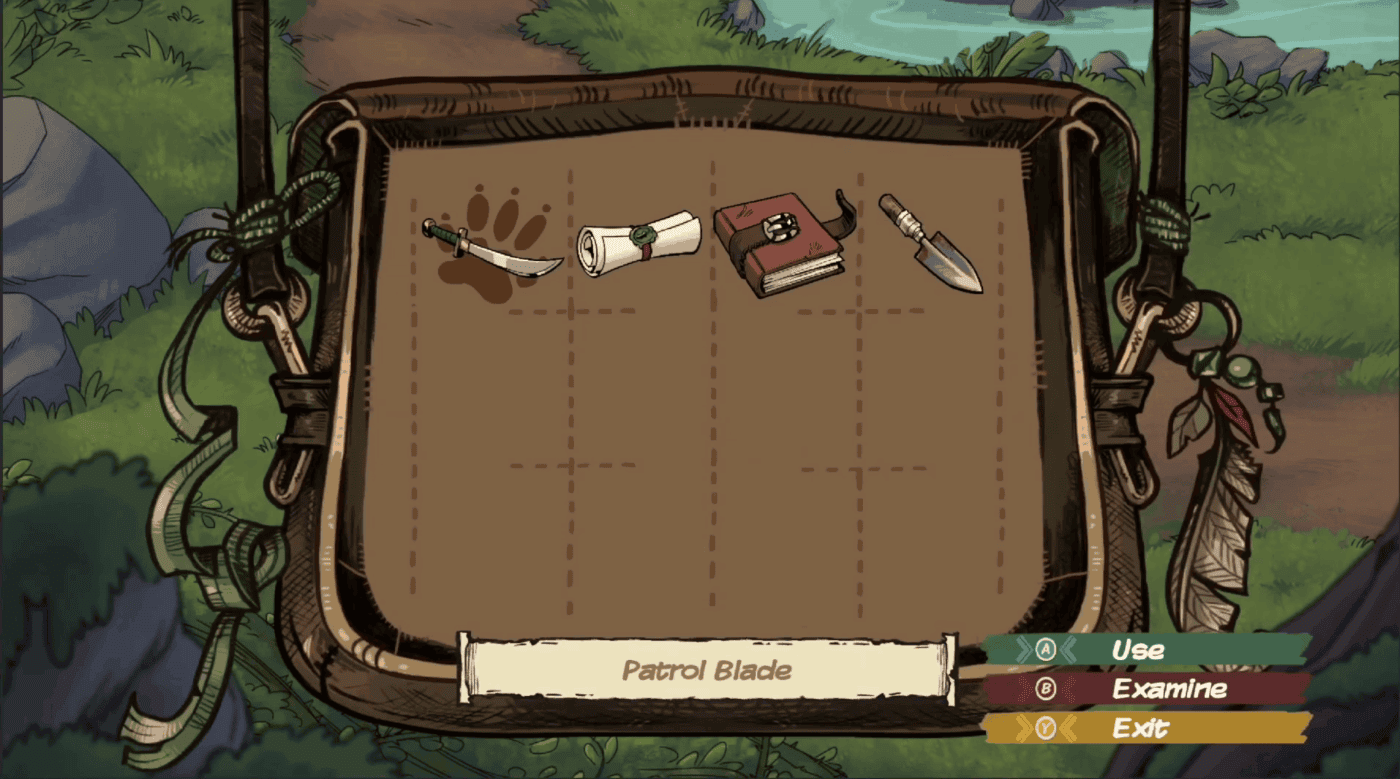
The story itself begins with a relatively modest assignment. Players take on the role of Mirren, a royal courier in the service of King Dabheid, who is tasked with crossing the border to deliver a letter of considerable importance. On paper, it is an unremarkable duty, hardly the sort of undertaking one would associate with the beginning of a grand adventure.
The circumstances surrounding the delivery, however, are anything but ordinary. Sunsgrove is on the brink of war, while its northern neighbour is secretly preparing an invasion. What initially appears to be a routine assignment therefore unfolds against a backdrop of growing political tension, setting Mirren on a journey that will take her far beyond the familiar confines of her life.
Her destination is the Border Coast, an unfamiliar region where the journey itself presents a considerable challenge. Dense forests and ancient ruins conceal dangers of their own, while bandits and hostile creatures make travelling through these lands a potentially hazardous undertaking. Yet the physical threats are only part of the problem. Mirren must also contend with the distrust of local inhabitants, whose attitude towards an outsider from a neighbouring kingdom is unlikely to be particularly welcoming at a time of mounting political uncertainty.
She will consequently find herself in a society governed by unfamiliar customs, delicate relationships and tensions she cannot afford to ignore. Understanding the people she encounters and finding her place among them may prove just as important as reaching her destination.

The decision to centre the story on a character like Mirren is one of its more intriguing aspects. Fantasy adventures have long gravitated towards legendary warriors, chosen heroes and extraordinary figures whose abilities set them apart from the outset. War of the Western Deep, at least as far as its premise suggests, takes a more understated approach.
Mirren is neither a battle-hardened warrior nor a hero whose destiny has already been foretold. She is a royal courier entrusted with an important responsibility, an otherwise ordinary individual who finds herself caught up in events far beyond her control. Her journey does not begin with the ambition to change the fate of a kingdom, nor does she set out with any particular expectation of the extraordinary circumstances that will come to shape her path.
Instead, she must adapt to a situation she could never have anticipated, drawing on her resourcefulness, her abilities and, when circumstances leave her little choice, the sword she carries. There is something compelling about this departure from the familiar fantasy archetype. Rather than beginning with a hero already equipped to confront the world, the story follows someone who must first learn to navigate it.
That distinction could shape much of the experience. Mirren’s journey is not solely about overcoming physical obstacles; it is also about understanding a place to which she does not belong, engaging with people whose perspectives have been shaped by different cultural and political circumstances, and gradually finding her bearings in unfamiliar surroundings. Her position as an outsider offers a natural point of entry into the Border Coast, allowing players to discover the region alongside her rather than approaching it as a setting whose history and customs they already know.

We do not yet know the full extent of the relationships between its inhabitants, the tensions dividing their communities or the events that have shaped their attitudes towards Sunsgrove. Nor should we assume that Mirren will be met with open arms. She will have to pay attention, listen and understand before she can expect to earn anyone’s trust.
It is a perspective that could lend the narrative a welcome sense of discovery, shifting the focus away from the familiar figure of the destined hero and towards an individual gradually coming to terms with a world larger and more complicated than her own.
The Border Coast itself is expected to feature a varied collection of environments, from dense woodland and ancient ruins to settlements shaped by their own histories and traditions. Its more remote reaches will present their own dangers, with bandits and hostile creatures capable of turning an otherwise uneventful stretch of the journey into a fight for survival. Yet the more interesting question is how these different elements will contribute to the region’s identity.
A convincing fictional world cannot be built on scenery alone. It needs to feel as though it exists beyond the player’s immediate concerns, sustained by the people who inhabit it, the traditions they preserve and the events that continue to shape their lives. The history of a place is reflected not only in its architecture or landscape, but also in the relationships between its inhabitants and the circumstances that have brought them to where they are. It is this wider context that gives a setting depth and makes it feel like somewhere worth getting to know.
One of the locations players will encounter is Ardmoor, a village whose inhabitants will play an important role in Mirren’s time in the region. Earning their trust will be one of her challenges, particularly given her origins and the political tensions separating the neighbouring kingdoms. Not every obstacle, therefore, can be overcome with a sword. There will be situations in which understanding another person’s motivations, choosing the right words and demonstrating one’s intentions matter considerably more than the ability to fight.
The dialogue system appears designed to give this aspect of the adventure room to develop. War of the Western Deep will feature fully voiced dialogue trees, allowing players to interact with its cast, learn more about individual characters and gain a deeper understanding of the forces shaping the Border Coast. Quests and puzzles will complement these exchanges, helping to establish an experience in which exploration and interaction carry as much narrative weight as combat.
It is worth remembering just how important supporting characters can be to the success of a fictional world. The people who stay with us after an adventure are not always its central figures.
Sometimes, a brief conversation with a seemingly insignificant character or a passing glimpse into someone’s circumstances can reveal more about a setting than an elaborate exposition sequence. These encounters give a community texture, turning its inhabitants into individuals with their own concerns, motivations and histories rather than simply another part of the scenery.

With more than a decade of world-building behind Beyond the Western Deep, there is considerable material for Sunsgrove Studios to draw upon. The question is how effectively that narrative heritage can be translated into a game without weighing down the experience. A rich fictional history is valuable, but it must be allowed to emerge naturally through the people, places and events players encounter. If the studio can strike that balance, the Border Coast may prove compelling not merely as the backdrop to Mirren’s mission, but as a world worth exploring in its own right.
Of course, not every encounter will be settled through conversation. When circumstances turn hostile, Mirren will have to defend herself, and combat provides the more immediate counterpart to the game’s exploration and dialogue systems. The action takes place in real time, with players expected to evade incoming attacks, recognise opportunities to counter and manage their stamina carefully.
The developers appear to favour a combat system built around responsiveness and timing rather than sheer spectacle. Based on the details shared so far, the emphasis is on readable encounters in which observation, positioning and resource management all have a part to play, rather than an uninterrupted succession of elaborate attacks. This approach would also make sense for Mirren as a character. She is not presented as an invincible warrior, and the limitations of her abilities could give greater significance to the occasions when she has no choice but to draw her sword.
Combat also brings the game’s animation philosophy into sharper focus. The attention devoted to traditional animation is not merely a matter of visual presentation; it has implications for the way characters move and how their actions are communicated to the player.
The anticipation before an attack, the timing of an evasive manoeuvre and the reaction to a successful hit all contribute to the readability and overall feel of an encounter. For a game so invested in expressive movement, the developers face a particularly interesting challenge: preserving the qualities of cinematic animation while ensuring that combat remains sufficiently responsive to player input. How successfully Sunsgrove Studios reconciles these demands will be one of the more important aspects to assess when the game is in players’ hands.
A relatively streamlined RPG progression system will provide another means of developing Mirren throughout the adventure. Completing quests will allow players to improve several of her core attributes, including health, stamina and weapon proficiency. Rather than pursuing the complexity of a traditional role-playing game, the system appears to favour a more focused approach, offering a straightforward way to strengthen the protagonist as the challenges become more demanding.
There is a potentially satisfying connection here between character development and the broader narrative. As Mirren travels through the Border Coast, she will gain more than familiarity with its inhabitants and the circumstances surrounding her mission. She will also have opportunities to improve her abilities and become better equipped to face the dangers ahead. Her development will thus find a practical expression in the gameplay, giving the player’s progression a tangible connection to the journey itself.
For an adventure so closely associated with the traditions of animated cinema, though, the visual presentation is only part of the picture. Voice acting, music and sound design will be crucial in establishing the atmosphere of the Border Coast and giving its inhabitants a convincing presence. Sunsgrove Studios appears to have invested considerable attention in this side of the production, bringing together performers and composers with experience across several prominent entertainment projects.
The voice cast includes Samantha Béart, whose credits include Baldur’s Gate 3, 007: First Light and The Excavation of Hob’s Barrow; Maggie Robertson, known for her performance in Resident Evil Village; Jonah Scott, whose work includes Beastars; and Lucien Dodge, who previously lent his voice to Dust: An Elysian Tail. Their involvement is an interesting addition to a project whose storytelling ambitions place such emphasis on character and expression. Voice acting, after all, is about much more than delivering scripted dialogue. Tone, pacing, inflection and the smallest hesitation can reveal something about a character that the written word alone might struggle to convey.
The score is being composed by Nolan Markey, whose previous credits include League of Legends, Star Wars: The Bad Batch, Ahsoka and The Legend of Vox Machina. His contribution could be particularly significant given the game’s connection to the visual and narrative traditions of animated fantasy. Music has a unique ability to shape our perception of a fictional world: it can lend grandeur to a landscape, heighten the anticipation surrounding an unfamiliar discovery or give emotional resonance to a moment of uncertainty. At its best, a soundtrack becomes inseparable from the experience, capable of bringing an entire journey back to mind long after it has ended.
Ultimately, the aspect of War of the Western Deep I am most interested in seeing realised is the relationship between all these different elements. An unfamiliar forest, a conversation with one of its inhabitants or an unexpected encounter with a hostile creature can become memorable only when the game’s visual direction, soundscape and mechanics work together to give each moment the appropriate weight. Strong individual components are a promising starting point, but the success of the experience will depend on how effectively they are brought together. The real test for Sunsgrove Studios will be turning its considerable artistic and narrative ambitions into a cohesive adventure, one whose identity is felt not simply in how it looks, but in how it plays, unfolds and ultimately stays with the player.
When Will War of the Western Deep Be Released?
War of the Western Deep does not yet have a confirmed release date. Sunsgrove Studios is still working on the project, which is currently scheduled to launch in 2027, initially on PC. The developer has yet to announce a more specific release window or confirm whether the game will also be available on other platforms.
Players eager to experience the game ahead of its full release can already download a free demo on Steam. It offers an early opportunity to step into the world of War of the Western Deep and get a better sense of the creative vision and design approach behind Sunsgrove Studios’ project.
Further information and future announcements can be found on the official War of the Western Deep website, as well as on Sunsgrove Studios’ X account, where the developer shares news and updates on the game’s progress.
With its release still some way off, War of the Western Deep has already given us plenty of reasons to follow its progress with interest. We will be keeping a close watch on the project in the months ahead, keen to see how Sunsgrove Studios’ vision continues to evolve and what the finished adventure ultimately has in store for Mirren and the world of the Western Deep.