A survival horror that drops the spectacle to build a direct, grinding relationship between player and environment
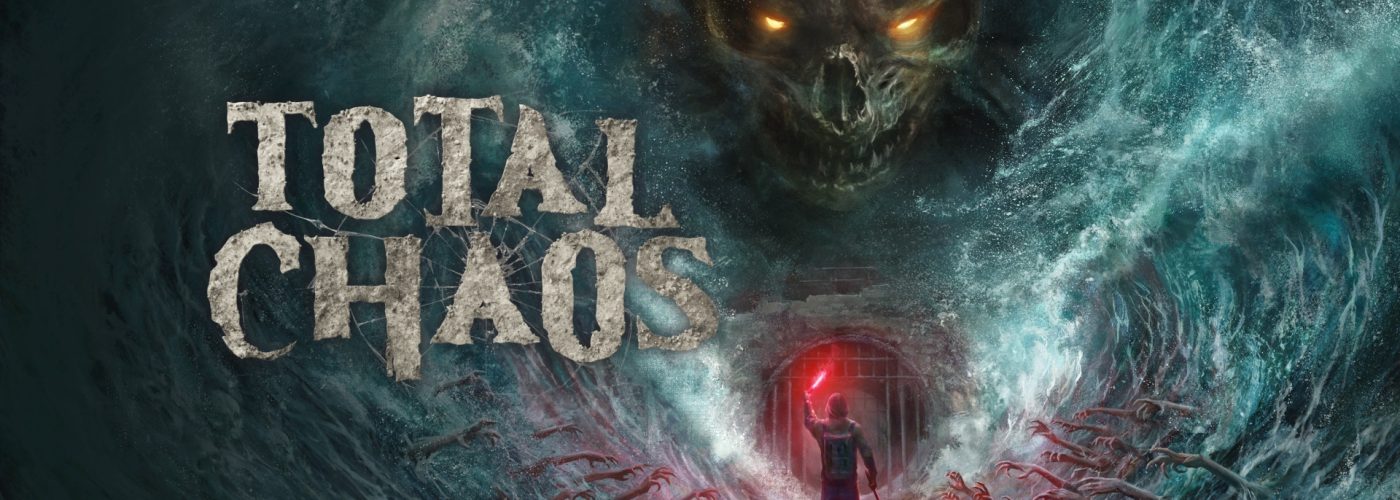
Total Chaos feels like one of those works that grow on the fringes of the videogame scene, far from the loudest spotlights and big-budget production lines, and yet—precisely because of that—it manages to express a brutally powerful identity, almost unsettling, rooted in a very specific idea of horror: handmade, dirty, tactile. It started out as an extreme mod for the old Doom II engine, then quickly turned into a self-contained, complete, complex experience, moving along the border between survival horror, narrative experimentation, and an audiovisual architecture that aims—openly—to destabilize.

In the heart of chaos
To truly understand Total Chaos, you need to step inside its design philosophy: an obsession with urban decay, forgotten places, and that oppressive sense of entropy that floods spaces that look as if a silent, nameless epidemic devoured them. This game doesn’t tell a traditional story. It charts a progression of mental states, a slow sink into an abyss that turns psychological before it ever turns physical. Fort Oasis, the island where the adventure unfolds, doesn’t work merely as a location: it behaves like an organism that breathes, rots, degenerates as you push forward. Every mold-covered wall, every corridor lit by faulty neon, every layer of dust and debris sits there with a clear purpose: to erase any feeling of familiarity or safety.
Total Chaos grows out of a love for 90s atmospheric horror and old-school underground mod culture, but it uses modern techniques and ideas to make tension vibrate in unexpected ways. The intentionally filtered low resolution, the grimy image treatment, the sensation of watching a battered VHS tape—everything feeds an aesthetic that avoids clarity and goes for abrasion. The developer seems to want you to live in a constant state of perceptual misalignment, a kind of sensory uncertainty that makes it impossible to trust your eyes. Horror doesn’t arrive only through hostile creatures or darkness swallowing entire spaces; it arrives through the feeling that something sits irreparably wrong, even when nothing explicitly threatening shows up.
Total Chaos explores dehumanization, isolation, abandonment with real effectiveness. It offers no clean answers and no linear narrative: it prefers to insinuate, to suggest, to layer clues through documents, radio recordings, and spaces that tell their own story. Fort Oasis looks like a victim of an experiment, a contagion, an organic degeneration, but what scares you most isn’t the cause—it’s the awareness that you arrived too late, in a place where decomposition still hasn’t finished. Walking through abandoned buildings, crossing ruined factories, descending into damp and violent underground corridors means feeling, constantly, an invisible threat saturating the air. Horror here doesn’t build by stacking events; it builds by stripping away certainty: you never know if the sound you heard comes from a creature, an imminent collapse, or your own breath, amplified by anxiety.
This game doesn’t settle for scaring you. It wants you to inhabit fear, to absorb it slowly. Its atmosphere never “pops”—it seeps. That aesthetic and rhythmic choice pushes Total Chaos closer to a lucid nightmare than to a conventional survival horror. No invasive interface, scarce resources, a constant sense of vulnerability: every step forward becomes a deliberate, risky decision. Unlike many modern horror games that bet on speed or heavily guided storytelling, Total Chaos embraces something far more melancholic, slower, more decadent, where progression itself feels like an act of resistance against a world that doesn’t want exploration.
That’s why talking about Total Chaos means talking not only about a game, but about an experience that refuses commercial compromise. It’s a journey into desolation, a love letter to the most immersive survival horror and the suffocating atmospheres of underground mod culture, and at the same time it belongs to the present through how it uses audio, vertical spaces, a filmic aesthetic, and the brutality of its most disturbing sequences. It’s niche, absolutely, but it carries such a sharp creative force and such a marked identity that it can stick in your head for days. Total Chaos stands as a warning against order, cleanliness, predictability: total chaos, yes, but shaped with surgical precision.


From mod to stand-alone
Trigger Happy Interactive sits at the creative core of Total Chaos, a studio led by its founder and the project’s original author, Sam Prebble—an essential figure if you want to grasp the game’s identity. What you now play as a stand-alone survival horror began as a Doom II total-conversion mod signed by Prebble himself, and the jump from cult mod to commercial product mirrors a deeply personal and consistent authorial vision, one that magnifies the original ideas through resources, collaboration, and broader production. Throughout development, Prebble and the team kept that modder sensibility alive: obsessive attention to level-design detail, the urge to push the engine toward unsettling atmospheres, and a taste for bold visual and gameplay pairings. On top of that original core, they built a professional structure that let them reshape, expand, and modernize Fort Oasis—the island at the center of the experience—through new survival systems, crafting, resource management, and more layered storytelling.
On the production side, the title reached the market through an editorial synergy that includes Apogee Entertainment—active today as a publisher often supporting indie projects with “retro” or cult DNA—together with historical partners associated with the brand, such as Infogrames and Atari, handling distribution and multi-platform visibility. That combination helped Total Chaos move from the mod scene to a global storefront presence on Steam, consoles, and digital shops, with a release date shaped around quality and optimization. This publishing collaboration gave Trigger Happy Interactive technical resources, multi-platform support, and a promotional channel capable of reaching both the original fanbase and the modern survival-horror audience, easing the typical limitations of a small studio without stripping away the creator’s voice.
On a human and creative level, the project pulled in high-profile contributions that raised the artistic bar: the soundtrack includes notable names in horror music (including contributions from composer Akira Yamaoka), which adds emotional weight to key sequences while also signaling an intent to place Total Chaos within the great tradition of survival psychological horror. Production then blended the team’s experimental approach with modern development and publishing practices, including localization, next-gen console optimization, feedback management through demos and pre-launch patches, and a release strategy that keeps the original work’s rough soul while aiming for technical stability and international commercial compatibility.
Organizationally, Trigger Happy Interactive stayed central in creative direction and level design, while the Apogee / Infogrames / Atari trio handled key executive-production aspects, from supervising console ports to securing music and marketing resources that amplified the release’s reach. You can read that balance—artistic freedom on one side, editorial responsibility on the other—even in the game’s pitch and positioning: Total Chaos presents itself as an experience that merges the brutality and immediacy of retro-shooter roots with survival mechanics and a more reflective psychological narrative, and team plus publisher worked together to communicate that dual nature without sacrificing stylistic coherence.
Finally, the author’s trajectory matters: from the cult mod project in 2018 to the full 2025 reissue, Sam Prebble and his studio showed revision skill, technical ambition, and respect for the community that followed the title from the start—qualities that show up in the game’s final structure and in how the product reached the market with partners able to support its transition from independent project to global commercial release.


A dark plot
Total Chaos unfolds like a gradual descent into the abyss of perception and memory, framing a narrative that mixes survival, psychological uncertainty, and episodic discovery. The opening sees the protagonist reaching the shores of an abandoned mining island called Fort Oasis, forced to piece together fragments of truth among industrial ruins, shafts, and decrepit construction sites, while a cryptic voice over a walkie-talkie feeds tasks, hints, and—often—false leads. From the start, the game establishes that not everything you see counts as “real” in any common sense, and it builds its story through accumulating clues, testimonies, and broken memories. You read environments like pages from a collective diary, you connect notes, recordings, artifacts, and symbols scattered through the world.
Chapter by chapter, progression sketches a community that once lived and worked on the island, then got consumed by a dark event whose nature drifts between environmental catastrophe, social collapse, and psychological contamination. What remains behind—family letters, technical reports, emergency tapes, monitor graphics—outlines secondary characters who never exist merely to support the plot. They act as reflections of a collective horror: people with fears, guilt, contradictions, revealed in fragments, so Fort Oasis turns into a lived-in place where the past keeps pressing into the present.
The story avoids systematic explanations and lets the locations do the talking: crumbling mining tunnels, workshops with frozen machinery, barracks marked by the frantic speed of abandonment, all suggest causes and consequences. Some documents point to corporate experiments aimed at exploiting resources, others reveal tension between workers and management, others hint at desperate survival practices, while supernatural flashes creep in through visions, deformed creatures, and dreamlike sequences that challenge the protagonist’s sanity. The narrative gains force through ambiguity: no single route leads to “the” truth, and many discoveries depend on the order you visit certain places, or on how much attention you give to seemingly marginal details. The plot forms in backlight, built from implications rather than neat statements, pushing you to interpret instead of passively receiving answers.
Survival mechanics—resource management, crafting, inventory limits, clashes with hostile beings born from the island’s degeneration—also carry narrative weight. Ammo scarcity, gear deterioration, the need to choose whether exploration risks make sense for a potential clue: these choices turn into moral statements, amplifying themes of guilt, loss, and self-preservation.
Emotionally, Total Chaos leans hard into the unreliability of memory: scenes of everyday life appear next to moments of collective madness, and clarity never arrives about whether certain visions come from real memories, the protagonist’s projections, or tricks played by the place itself. That ambiguity sits at the core of the plot, and it explores how fragile identity becomes when social and physical context collapses. Twists widen the story’s scope, bringing in human, institutional, and partly metaphysical factors, but the script keeps restraint: instead of explaining everything, it suggests connections and leaves you to complete the picture, with deliberately open endings that invite multiple readings.
Ultimately, the plot works like a mosaic of fears and memories: an investigation into collective and individual trauma, built through exploration, fragmented discovery, and mechanics that tie survival tightly to understanding truth, offering a narrative experience that prioritizes atmosphere, introspection, and interpretive responsibility over any single reassuring explanation.


Complex and layered
Total Chaos’ narrative stands as one of the game’s most complex and layered components, where the main plot interweaves with secondary stories and the socio-political context of its universe, creating an immersive experience that challenges you to interpret events, motivations, and consequences. The central thread follows a protagonist trapped in a spiral of conflict and disorder, forced to navigate unstable alliances, betrayal, and constant threats that test not only physical survival, but moral integrity and strategic decision-making under pressure, injecting every choice with responsibility and emotional urgency. Themes range from social and political chaos to survival in extreme conditions, moving through guilt, redemption, resilience, and the ethics of individual action in a hostile context. The game refuses to stay on the surface of action and keeps inviting reflection on consequences, motivations, and moral dilemmas. Every mission, encounter, and environmental event aims to reinforce these themes, encouraging critical interpretation and personal meaning-making.
The narrative develops through dialogue, cutscenes, and environmental interaction, alternating immediate tension with character-deepening sequences that reveal histories, fears, internal conflicts, and evolution over time. Fragmentation, combined with scattered clues and documents, encourages exploration and deduction, turning play into an investigative and reflective path that rewards attention. Total Chaos also tackles universal themes tied to human nature—fear, survival, power, corruption—while grounding them in a coherent world where events and character actions stay logically connected to the broader story, strengthening credibility and emotional involvement. The result merges entertainment and reflection, offering analysis angles on social dynamics, conflict, and moral choice that go beyond gameplay.
Finally, careful character construction—dialogue, relationships, and the consequences of decisions—together with consistent thematic handling, helps Total Chaos stand as a complete, layered, immersive narrative work, capable of stirring emotion, thought, and involvement, turning each moment into something meaningful and memorable, where story and themes don’t act as decorative frames for action, but as engines that drive the experience.


A visual surprise
Total Chaos’ technical side ranks among the most surprising aspects of the entire project, not only for what it shows aesthetically, but for how it exploits—creatively, almost visionarily—the limits and potential of its engine: a heavily modified version of old GZDoom. That choice sounds unthinkable for a modern title, yet it fits the game’s artistic identity with startling precision. This technical peculiarity becomes a strength, turning what could look like an obstacle into a unique, recognizable, disturbing visual language, perfectly coherent with the oppressive and psychologically tense atmosphere Total Chaos aims to transmit.
The rendering work goes through a full overhaul via custom shaders, advanced filters, and ad hoc dynamic lighting systems, generating a dark, grain-heavy world with deliberately dirty, corrupted, distorted textures that give a strong sense of entrapment inside a degraded, hostile place—one that seems to respond to your presence. Rough surfaces, corroded walls, the material feel of objects, reduced color saturation: all of it builds a raw, analog aesthetic that deliberately recalls a disturbing experimental imagery, intensifying instability, anxiety, and insecurity step after step. Art design draws openly from an industrial decadent world, mixing abandoned architecture, decaying machinery, collapsing infrastructure, and environments that seem to breathe, groan, react to narrative tension. The world communicates, constantly, through its look, a sense of inexorable decline—ruin not only physical, but mental—almost as if the environment acts as both victim and vehicle of the corruption running through the whole experience.
Detail work shows up not only in level creation, but also in lighting management, often built on harsh contrasts that shape space through deep shadow, strobing light, isolated points of brightness that serve as the only visual anchor in a world ruled by darkness. This drastic lighting doesn’t happen by accident: it forms part of the game’s visual language, because every light cone, every reflection, every sudden flare aims to guide perception and emotion, defining not only what you see, but what you fear you might see. The engine also enables an interesting fusion between retro aesthetics and modern techniques: high-definition textures coexist with intentionally blurred traits; 3D models keep a slight lack of detail to emphasize incompleteness and decay; and the refusal to adopt a more contemporary engine lets the team intensify the claustrophobic, grimy atmosphere, turning graphical limitations into expressive weapons.
You also feel the team’s heavy investment in optimization: despite the engine’s experimental nature, the game runs with surprising fluidity, keeping stability even in more chaotic sequences rich with visual elements. Environments guide your gaze through perspective, layered planes, and camera movement, maintaining a constant sense of tension and hostile presence. Art direction extends into creature design, fully aligned with the overall aesthetic: deformed figures, organic forms grafted onto mechanical elements, twisted bodies that reflect the world’s sickness itself, with intentionally irregular and unpredictable animation that boosts the disturbing effect. Each creature acts as a visual symbol of decline and chaos, embodying the final fusion between environment, malfunctioning technology, and suffering.
So the technical side doesn’t serve as a mere functional development tool. It acts as a conscious, coherent, powerful artistic choice that lets the game stand sharply apart from contemporary productions, offering a visual and technical experience that sticks in memory. In the end, Total Chaos reaches its goal of creating a dark, oppressive, immersive world, and it does so through technical solutions and aesthetic choices that show courage, originality, and a clear artistic vision, turning the technical component into one of the fundamental pillars of the game’s atmosphere and identity.


Sound design that matches the visuals
Total Chaos’ audio stands as one of the most surprising and defining elements of the experience, acting as a foundational pillar for how the game transmits tension, vulnerability, disorientation, and a constant sense of suspense that follows you through every phase. Visual impact and sound work together in tight synergy to build an immersive, persistent atmosphere, where every explored zone, every scenario shift, every perceived presence becomes part of a meticulous tension management, supported by impressive technical optimization, dynamic sound processing, and environmental direction. Inside a visual context already powerful, audio reaches an equally high level, becoming a silent protagonist that accompanies the play experience in a pervasive, continuous way.
Ambient sounds, built with near-obsessive care, move from distant, undefined noises suggesting unidentifiable presences to sudden, violent sounds that shatter quiet, creating psychological tension that never lets go. The world reacts to movement credibly: creaks, metallic resonance, rustling, environmental signals that describe the place more effectively than many visual elements. Reverbs, echoes, distortion, Doppler: they give the space dimensionality.
Enemy, object, and interaction effects show surprising depth too. Each hostile presence carries a distinctive audio set that lets you read distance, direction, and behavior, shaping your strategy directly, since survival often depends more on listening and interpreting than on reflex speed. Sounds during fights, escapes, or stealth movement stay coherent and weighted, generating authenticity and physical impact that adds substance to actions and to the protagonist’s reactions.
Music appears with restraint and intelligence. It favors minimal atmospheres and underlying sonic tension, often closer to pure sound design than to traditional melody, using dissonance, deep bass, electronic textures, and near-imperceptible tones to modulate emotion, intensify key moments, and amplify disorientation. Music turns into a narrative tool rather than decoration, stepping in only when needed, letting silence, ambient noise, and the echo of abandoned structures build a psychological vulnerability that rarely appears in comparable productions.
Mixing and spatialization complete the picture: they feel surprisingly advanced and able to deliver a believable, unsettling sense of space, where every noise seems to come from a precise direction and often decides whether you walk into an ambush or avoid it. In this way, audio and tech don’t just enhance atmosphere: they become gameplay tools, turning you into a sensor in constant alert, forced to interpret sonic stimuli that might warn of danger or reveal an alternate path.
Ultimately, Total Chaos’ sound design acts as an essential component of the game’s identity, a complex and cohesive system that constantly feeds tension, unease, and involvement, showing surprising care and maturity, and helping turn the experience into something not only playable, but deeply perceivable—tangible, memorable—on an emotional and sensory level.


Rich, stimulating gameplay
World building stands as one of the most surprising and best-built elements of the entire experience. From the very first minutes on Fort Oasis, the game drops you into an environment that doesn’t merely look hostile and corrupted, but seems to “breathe,” to shift, to react subtly to the explorer’s presence. You don’t move through a world that acts as background. You move through a decaying narrative ecosystem, built through disorderly architecture, industrial corridors collapsing into themselves, abandoned neighborhoods, and infrastructure that testifies to the collapse of a civilization trapped between degenerating scientific experiments and supernatural phenomena. The island, as a whole, aims to disorient and unsettle, with an attention to environmental arrangement that suggests intent in every detail: leaking pipes, rusted machinery, flickering lights carving jagged shadows, and a constant oppressive pressure that turns almost physical.
World building also develops in a highly immersive way through environmental documents, audio recordings, graffiti, and messages left by people who slowly watched the island change and the creatures appear. You reconstruct events without narrative interruptions breaking exploration rhythm, keeping thematic coherence intact. Every area carries its own identity, nothing feels generic: industrial zones reflect concrete and iron coldness; residential spaces radiate suspended despair; heavily contaminated areas evoke the feeling of crossing a threshold into something deeply unnatural. This variety doesn’t stay aesthetic. It influences gameplay, encouraging cautious, attentive exploration.
Gameplay moves in pure survival-horror territory, maintaining a successful balance between psychological tension, resource management, and exploration. The game avoids frantic action mechanics; it intentionally limits ammo, tools, and defensive means, forcing you to treat every fight as a potential risk. This slower, more reasoned approach intensifies vulnerability, turning each confrontation into real danger. Combat supports that tension too: it feels harsh, heavy, deliberately not fluid, delivering the sensation of surviving inside a hostile place where nothing guarantees safety. Even the animation for drawing a weapon or treating a wound strengthens the emotional weight behind every decision.
Exploration forms the game’s heart. Advancing through districts often means dealing with labyrinthine spaces, dark zones with minimal visibility, and claustrophobic corridors that amplify anxiety. More open sections never offer true relief, because danger still saturates them. Lighting management deserves special mention, not only as a technical element but as part of gameplay: light sources become essential tools that reveal hidden details while also making you more visible to the island’s creatures. That balance between visibility and vulnerability creates dynamic tension where each step can lead you toward safety or into a sudden attack.
Verticality matters too. Fort Oasis doesn’t develop only horizontally: stairs, suspended walkways, industrial elevators, and tight ducts add variety to exploration and turn the world three-dimensional and unpredictable. The game often uses verticality to generate environmental shocks: a noise from above, a figure glimpsed in the distance on a walkway, a sudden collapse forcing a route change.
Level design supports the experience with strong coherence. Despite its chapter structure, the game creates the impression of a semi-open world where each environment carries narrative function and emotional weight. Paths guide you without on-screen markers, through intelligent use of color, light, and object placement. Unlike many modern horror games relying on prepackaged jump scares, Total Chaos builds tension through environment first. Creatures—disturbing, deformed, silent or screaming—often appear in unpredictable ways, emphasizing the protagonist’s vulnerability and pushing you toward caution over aggression.
Overall, world building and gameplay show surprising care for atmosphere and player involvement. Every area, every sound, every encounter seems designed to feed the constant tension ruling the experience. The fusion between oppressive setting and methodical exploration creates a unique rhythm in the indie landscape, offering an adventure that doesn’t simply scare, but gradually builds a total immersion, one that stays with you long after the credits.


Powerful, but controversial
Critics recognize the project’s peculiar nature and its off-industry origin. Since it began as a mod and expanded into something comparable to a full experience, it inevitably carries a double soul: on one side, extreme creative freedom, typical of independent projects not bound to commercial logic; on the other, technical and structural limitations tied to a small team and resources far from traditional productions. Total Chaos lives on that border constantly, and that limbo contains both its artistic strength and some of its weaknesses.
One of the clearest points in broader evaluation concerns pacing. Total Chaos moves deliberately slow, oppressive, almost stagnant in how it forces you to move, explore, survive.
That rhythm supports the game’s identity, but it can feel excessively stretched for some players, especially in sections where environmental progression demands long stretches of darkness, extended walks, or routes that don’t always read intuitively. The game keeps on-screen aids to the bare minimum and never openly guides the player. For those who crave full immersion, that choice reads as a virtue; for those who want a smoother, more structured experience, it turns into an obstacle. The design philosophy stays clear, bold, and divisive.
On the technical side, reviewers point out stiff animations, interactions that don’t always respond cleanly, and bugs or glitches that appeared frequently at launch and sometimes forced a restart from the last checkpoint. Many players also reported motion sickness tied to the camera, an issue that you can address by narrowing the field of view to 80 in the menu. At the same time, you can’t ignore how these imperfections coexist with a surprisingly effective overall result, one that transmits constant anxiety, grime, decay, and claustrophobia—feelings many modern titles, even with more advanced technology, struggle to generate. Art direction overtakes technology, turning limitation into style.
Combat also draws recurring criticism. On one hand, it stays perfectly coherent with the work’s identity, making every fight feel like a real, stressful threat. On the other, it can feel clunky and unsatisfying in hit response or enemy AI management. Some enemies don’t always calibrate well, swinging between extreme danger and moments where they get stuck in predictable routines. Still, that imbalance doesn’t break the experience, because the game’s goal doesn’t revolve around delivering a refined, frenetic combat system—it revolves around vulnerability, tension, and constant danger.
Player orientation forms another critical point. Total Chaos deliberately refuses maps, indicators, guiding lights, or signals that push progression forward. This choice heightens the sense of being lost, but it can slip into frustration when complex environments or labyrinthine structures fail to communicate clearly where to go or what to do. The lack of explicit direction fits the game’s theme, but part of the audience will inevitably read it as a barrier rather than a value.
Narratively, critiques turn more nuanced. The story stays cryptic by design, told through visual detail, documents, recordings, and personal interpretation. Some players will love this free, fragmented storytelling; others will want more concreteness or a more defined structure.
In the end, Total Chaos aims to make you uncomfortable: slow, heavy, oppressive, psychologically exhausting, built for those who seek a kind of horror that avoids jump scares and spectacle, and instead chases total immersion, atmosphere, and the persistent sense of being trapped in a place that breathes and wants the protagonist’s ruin. In that sense, many criticisms overlap with its strengths: what looks like a flaw for some becomes exactly what makes it unique for its ideal audience.
So Total Chaos becomes a game you either love or hate. It doesn’t compromise, it doesn’t chase universal approval, it doesn’t adapt to contemporary market rhythms. It feels personal, handmade, intense, visceral. Critically, it isn’t perfect, but its imperfections belong to its identity.


Summary
Reaching the end of Total Chaos means surfacing from a journey that doesn’t work only as survival across a devastated archipelago, but as total immersion into a different way of conceiving fear, desolation, and isolation. You rarely meet a title that can transmit sensations many modern games, even with large budgets, struggle to recover. What sticks most, in fact, is how the game builds tension, keeping you in a constant state of emotional alertness.
Darkness, long corridors without sound, ambient noises erupting from indefinable places: they create a vulnerability that goes beyond jump-scare fear. Total Chaos doesn’t try to scare through surprise, but through the constant presence of something that seems to watch, follow, shape every step without ever fully revealing itself. The game puts emotional weight on your shoulders and forces you to carry it to the final minute.
On a personal level, something particularly notable lies in how the game recovers a retro aesthetic and reinterprets it to build a precise stylistic identity. Visual distortion, the constant grime effect, video noise: everything contributes to a feeling of dirty, rotten, disturbing realism. Fort Oasis doesn’t seem like a simple abandoned place. It feels like a world in decomposition, an environment that breathes toxicity, as if corruption seeped into the walls themselves. I appreciated that immensely.
When I reflect on gameplay, I find a sense of realism in how hard it feels for the character to move quickly, in the need to choose carefully when to fight and when to run, and in the awareness that the smartest option often means not confronting danger head-on. This makes the experience more meditative, but also more visceral: every fight carries weight, every decision matters, every step forward becomes a calculated risk. I also found the weapon-and-item crafting system stimulating, and I appreciated the breadth of the arsenal available.
Another element I found noteworthy—and perfectly aligned with the game’s name—lies in the darkness, ambiguity, and lack of detail saturating the title. That choice likely fuels the strong emotional impact behind the alienation Total Chaos manages to transmit. The island doesn’t welcome you, it doesn’t open up, it doesn’t invite you in: it rejects, confuses, disorients. Yet it does so with coherence, slowly building the sense that something far larger and incomprehensible moves beneath the surface. This constant perception of being an intruder in a hostile environment gives the game a depth that goes beyond horror surface-level thrills.
So, even with bugs, glitches, and launch defects—some of which the first patch already addressed—I can’t help but consider Total Chaos an extremely particular experience, not for everyone, but incredibly effective in its meticulous work on atmosphere, tension, and disturbing sensations. It still has a lot to prove, and it has the potential to do it. It hits hard, visually and sonically, and it can win over those who love games that build tension slowly, that evoke rather than explain, and that explore deeper emotional territory. For them, Total Chaos becomes a surprisingly intense, claustrophobic, memorable experience—one of those games that stays in your memory not for what it shows, but for what it makes you imagine. And that, in my view, is its greatest success.
If you want to know more:
Total Chaos
PRO
- A unique atmosphere within the indie horror landscape
- Surprising artistic and technical presentation
- Masterful sound design
- Tense, deliberate gameplay that highlights survival
- Surprisingly deep environmental storytelling
- Varied, stimulating gameplay
CON
- Difficulty that doesn’t always feel well-calibrated
- A certain slowness in progression
- Animations that can feel stiff
- Few orientation aids in some scenarios
- Frequent launch bugs that can sometimes compromise progress


7.5/10