A journey that rewards patience and attention, unfolding across decaying structures and traces of a lost past.

In the crowded landscape of contemporary metroidvanias – often defined by familiar conventions – MIO: Memories in Orbit immediately stands out, thanks to its masterfully balanced blend of visual identity, immersive atmosphere, and narrative design.
The game builds on the core pillars of exploration and non-linear progression, yet it immediately sets itself apart with a strong authorial vision evident from the very first moments. The opening sequences evoke a sense of suspension: the world feels frozen between past and present, caught in a delicate, unstable stillness.
There is no instant explanation, no hand-holding to guide the player. Instead, the experience is built through gradual discovery, rewarding careful observation and thoughtful interpretation.
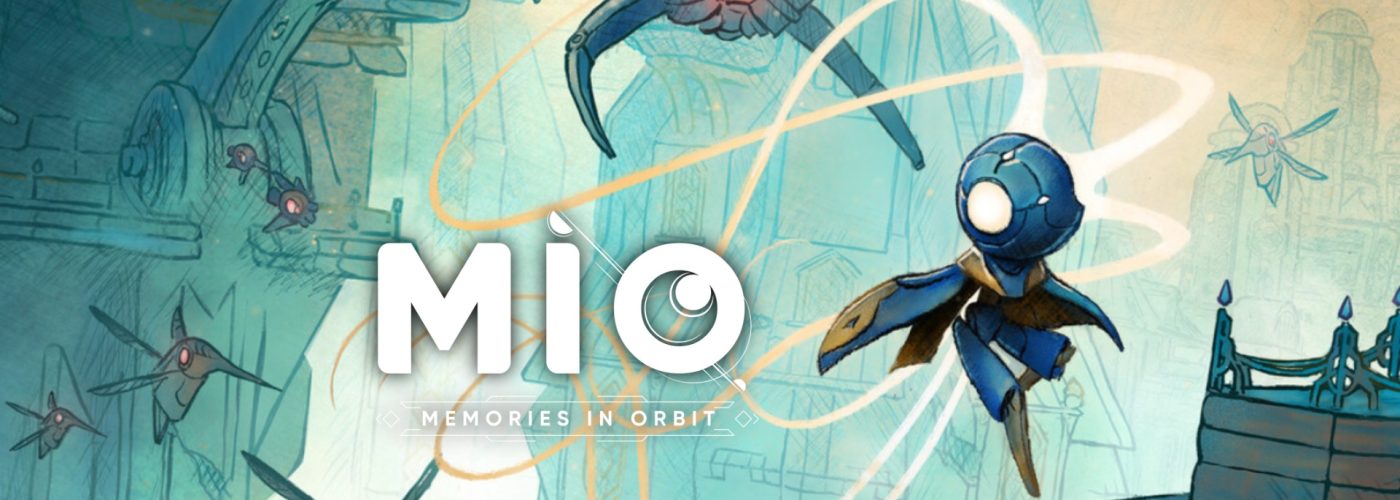
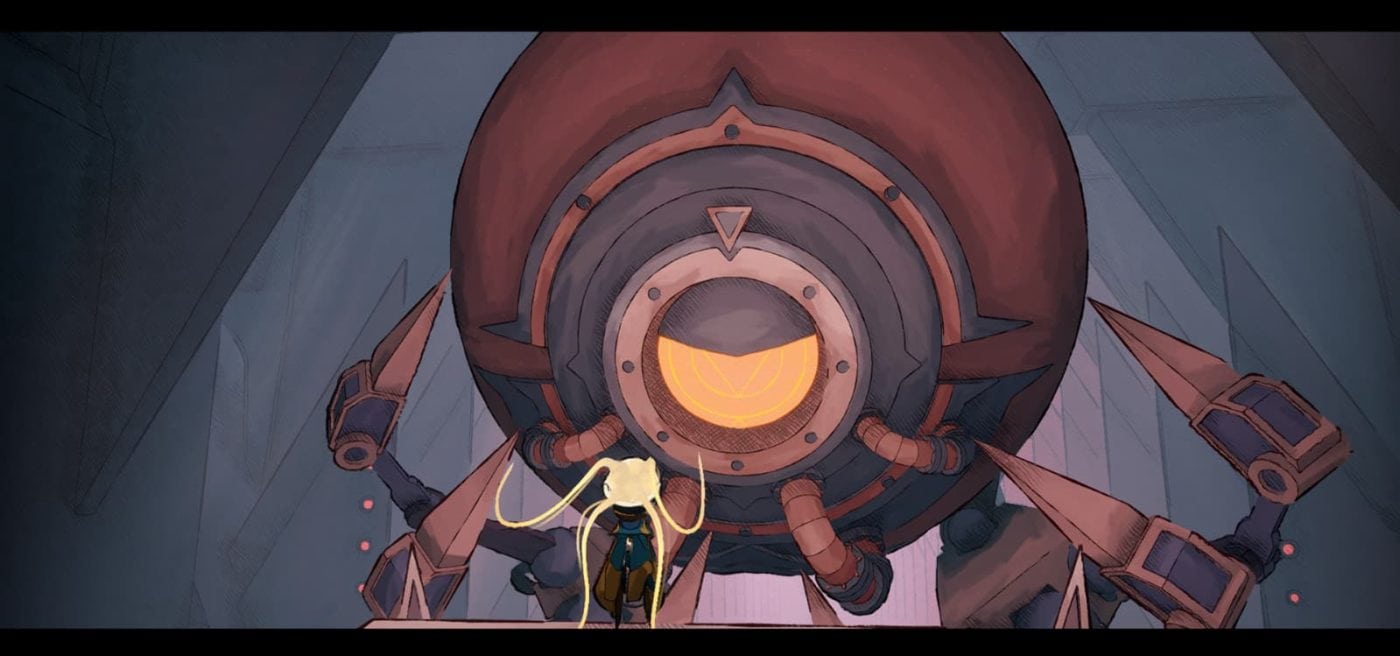
The protagonist – a small robotic entity – navigates a massive, decaying orbital structure, which quickly becomes the heart of the experience. This is not mere backdrop; it is a complex, layered, interconnected environment that hints at a larger story without ever fully revealing it. This narrative approach extends directly into gameplay: exploration is not just a way to progress, but the primary means by which players interpret and understand the world.
One of the game’s most notable features is its pacing. There is no rush, no immediate external pressure – time seems to stretch, giving players space to familiarize themselves with movement, spaces, and core mechanics. This deliberate slowness is a conscious design choice, fostering immersion and encouraging a more intimate relationship with the environment. It is an invitation to observe, explore, and follow curiosity rather than imposed objectives. Mechanics are introduced gradually, ensuring the player is never overwhelmed. Movement, interaction, and early progression systems integrate seamlessly with exploration, preserving flow and accessibility while leaving room for depth to emerge as the adventure unfolds.
The game’s tone strikes a delicate balance between melancholy and wonder. The decaying environments, together with the protagonist’s quiet presence, evoke a world that once thrived but now lingers in contemplative stillness. This pervasive mood threads through the entire introduction, reinforcing the game’s cohesive identity.
MIO: Memories in Orbit places sensory immersion above immediate spectacle. Its opening lays a solid foundation, drawing players into a journey of discovery, interpretation, and connection with a world that, while seemingly simple, hides intricate layers of complexity waiting to be uncovered.
No Limits, Just Creation
Behind MIO: Memories in Orbit is Douze Dixièmes, a French independent studio that reflects a new wave of developers combining strong artistic sensibility with confident, deliberate game design. Though without an extensive track record or major mainstream releases, the studio brings a clear, confident vision to the project – one that runs through every aspect of the experience, from art direction to mechanical design.
That independent identity is most evident in the game’s cohesion. Where larger productions often feel segmented – shaped by multiple departments and tighter commercial constraints – MIO: Memories in Orbit maintains a consistent creative throughline. Each element feels intentional and interconnected, contributing to a unified whole rather than a collection of disparate parts.
Publishing support comes from Focus Entertainment, a well-established presence in the European market known for backing mid-tier productions and distinctive independent titles. Its involvement provides the project with greater visibility and production stability, while preserving the studio’s creative voice. Balancing industrial support with artistic autonomy is rarely straightforward, but here it is handled with notable restraint and precision.
From a production standpoint, the game reflects a measured, resource-conscious approach. It does not pursue photorealism or technical spectacle; instead, it prioritises clarity of vision, strength of art direction, and precision in design. This philosophy is typical of many independent studios, where coherence and identity take precedence over scale or technological excess.
Equally telling is the studio’s approach to the genre. Rather than merely replicating established metroidvania conventions, Douze Dixièmes reinterprets them through a contemporary lens, placing atmosphere and environmental storytelling at the core. This approach reflects a confident design maturity – acknowledging the genre’s roots while charting its own path.
The partnership with Focus Entertainment positions the project within a broader production framework, where distribution and communication are pivotal. This support enhances the game’s reach while preserving its identity as a distinctly authored work.
Ultimately, the collaboration between Douze Dixièmes and Focus Entertainment exemplifies how creative independence and editorial structure can coexist. The result is a game that delivers a clear, confident vision without compromising production solidity – demonstrating how emerging studios, when supported by the right partners, can deliver work of real substance.


A Journey Through Unknown Memories
The narrative of MIO: Memories in Orbit unfolds through a deliberately fragmented and evocative structure, forgoing direct exposition in favor of storytelling through exploration and discovery. The protagonist, a small robotic entity named MIO, awakens within a vast, decaying orbital station – a space etched with the traces of a complex, long-lost past. From the very first moments, the game avoids explicit explanation, instead immersing players in an environment that must be carefully interpreted.
The opening sequences cultivate a deliberate sense of disorientation. MIO possesses no memory – or at least none that is immediately accessible – and this state of amnesia serves as the foundation for a journey that is as much inward as it is physical. Answers are never presented as linear objectives; instead, they unfold gradually through fragmented information, indirect encounters, and, most importantly, through the environment itself. Each discovery acts as a piece of a larger puzzle, transforming the narrative into an ongoing process of reconstruction.
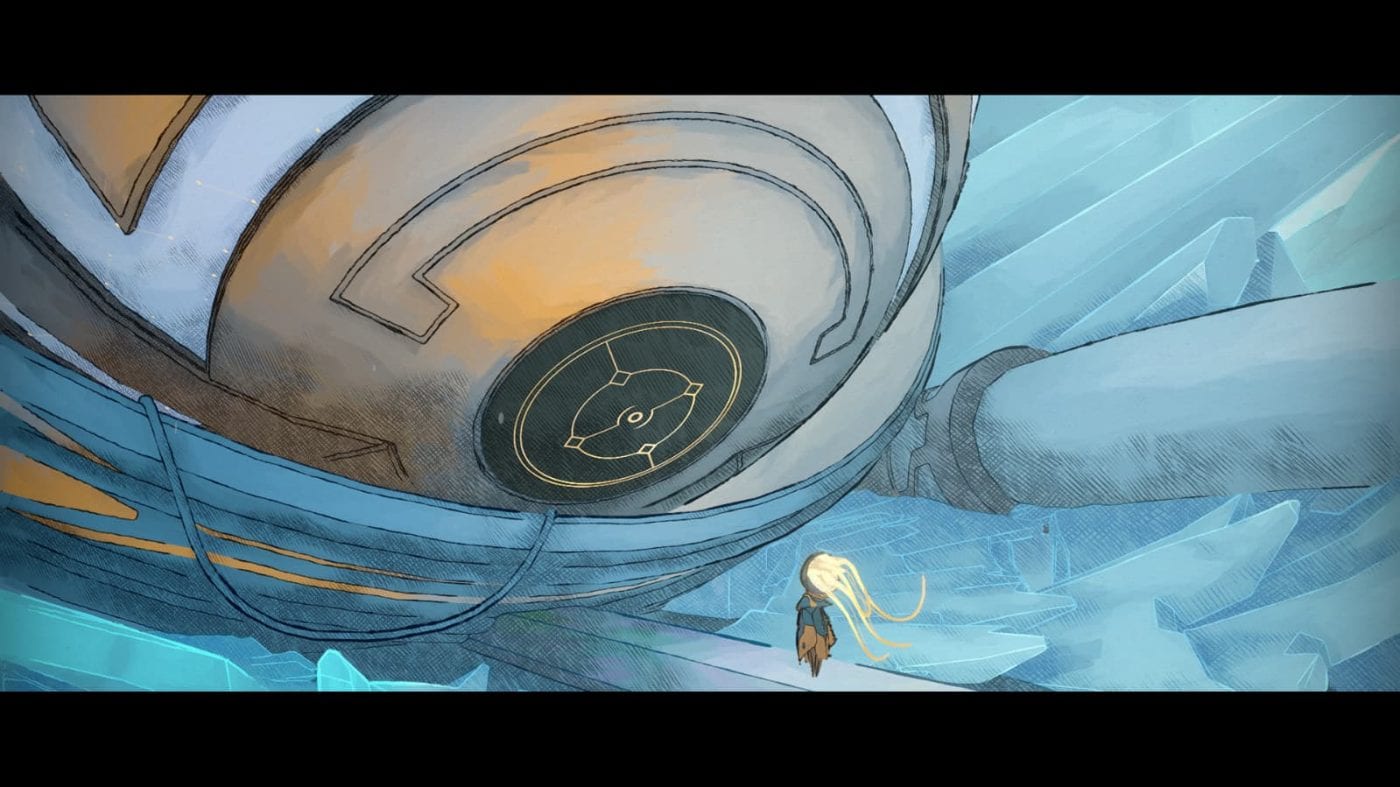
The orbital station is far more than mere backdrop – it is the very heart of the story. Its sprawling structure is divided into distinct zones, each suggesting different functions and bearing silent witness to a once-technologically advanced civilization now in decline. Signs of decay are everywhere: dormant machinery, damaged frameworks, spaces that seem suspended in time. This setting delivers highly effective environmental storytelling, evoking the past rather than spelling it out.
As players explore, they encounter traces hinting at other entities, systems, or perhaps even life forms or artificial intelligences that once inhabited the station. These interactions – often indirect, conveyed through signals or lingering technological remnants – enrich the narrative while preserving its sense of mystery. The result is an open-ended story that invites interpretation, encouraging players to piece together meaning for themselves.
Narrative progression does not follow a conventional path of clearly defined missions or explicit goals. Instead, it unfolds alongside gameplay, intertwining with exploration and the gradual acquisition of new abilities. While this approach may make the story less immediately accessible, it rewards players who invest attention and curiosity, offering richer, more layered experience.
Ultimately, the story of MIO: Memories in Orbit masterfully crafts a narrative through absence, allowing spaces, objects, and gameplay mechanics to convey meaning. It is not a story that asserts itself, but one that gradually unfolds, making the act of discovery inseparable from the act of play.


Exploration, Identity, and the Art of Interpretation
The narrative strength of MIO: Memories in Orbit lies in what it leaves unsaid. Rather than relying on dialogue or overt exposition, the game builds meaning through the player’s interaction with its spaces.The story unfolds subtly, a continuous stream of evocative cues and fragmented hints, leaving players to piece together an intentionally open-ended tale. This auteur-driven approach is infused with emotional and contemplative depth, setting it apart within the metroidvania genre.
At its core, as the title suggests, is memory – but not as a linear recovery of the past. Instead, the game offers a meditation on memory itself: what is preserved, what fades, and what survives only in fragments.
Memories appear not as absolute truths but as traces demanding interpretation. The orbital station acts as a living archive, its architecture and systems inscribing echoes of a forgotten civilization. MIO’s journey becomes a form of archaeological exploration, each newly discovered area offering glimpses into what has been lost.
Alongside memory, MIO: Memories in Orbit delves into identity. Lacking a clearly defined past, MIO shapes its existence through exploration and action. Identity is presented not as a fixed attribute but as a dynamic, evolving process, molded by interaction with the environment and its lingering remnants. Implicitly, the game suggests that who we are is defined by the marks we leave and the connections we forge along the journey.
Technological decay is another central theme. Once a symbol of advancement and control, the orbital station now exists as a deteriorating organism: its structures remain, yet their original purpose has faded. The game reflects on the fragility of human-made systems and their inevitable transformation over time, depicting technology as vulnerable rather than all-powerful.
Solitude adds another layer to the experience. The absence of human presence or direct interaction creates a pervasive sense of isolation. Yet this is not oppressive; it is contemplative, inviting observation and reflection. The player is never entirely alone, surrounded instead by traces, signals, and remnants of a world that continues to communicate, even indirectly.
The narrative also explores the relationship between individual and environment. The orbital station is not a neutral container but an entity with its own identity, influencing and being influenced by the protagonist. This reciprocal relationship suggests a vision of the world where spaces actively participate in the creation of meaning. Each area explored is more than a location; it is a fragment of history, a piece of a larger system.
Finally, the game reflects on time. It exists in a suspended dimension where past and present continuously overlap. There is no linear timeline – only layers of events coexisting within the same space. This temporal layering imbues the experience with depth and mystery, making it feel more akin to an archaeological exploration than a conventional narrative.


The Visual Identity of MIO: Memories in Orbit
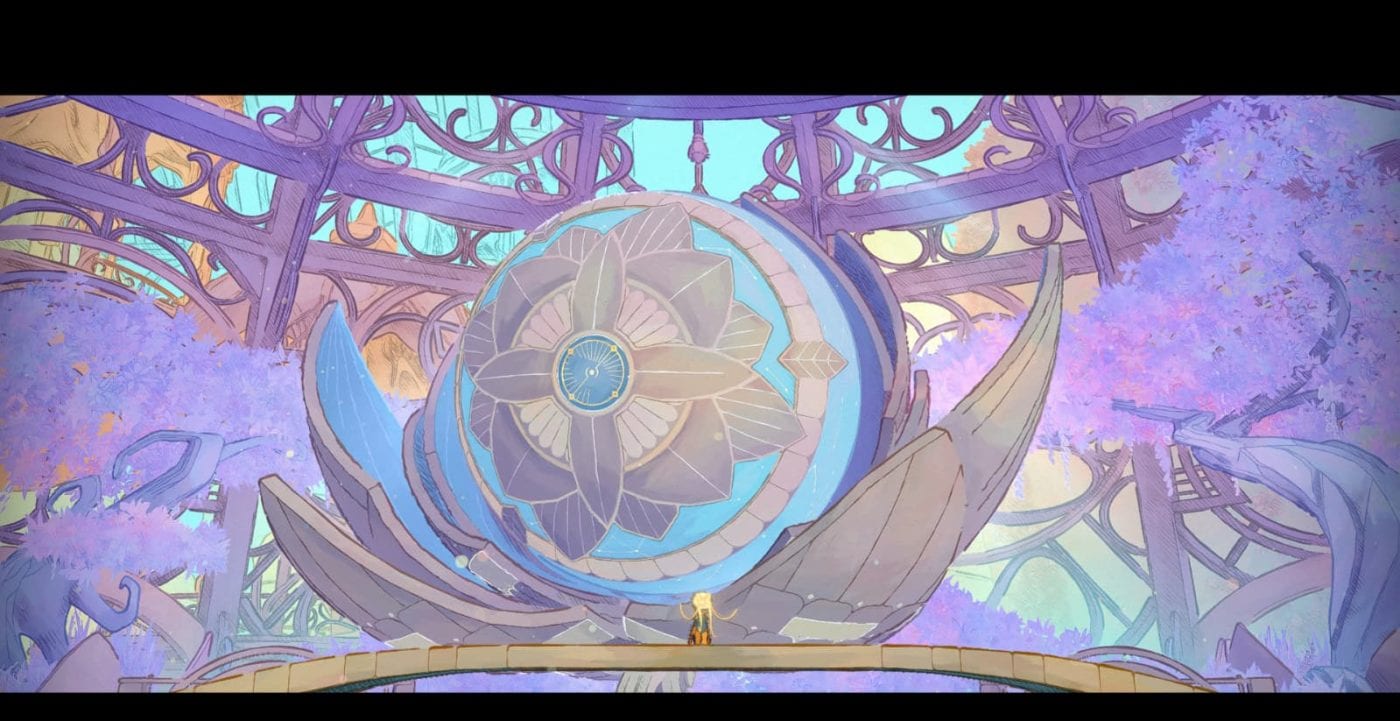
The technical and art design of MIO: Memories in Orbit is among the game’s most distinctive strengths, defining both its atmosphere and identity. From the very first moment, it is evident that the game does not aim for realism. Instead, it embraces a stylized, evocative aesthetic that communicates meaning and mood through shapes, color, and spatial composition.
The art direction is meticulously executed, blending hand-drawn elements with sophisticated use of lighting, shadow, and depth. The orbital station’s environments achieve a sense of three-dimensionality within a 2D framework, using layered backgrounds and foregrounds that move independently to create a rich, intricate space.
Color plays a central role in shaping the experience. Cool metallic blues and grays dominate the palette, punctuated by warmer, brighter tones that highlight interactive elements or key areas. Every choice is deliberate, guiding the player’s eye while preserving visual cohesion and clarity throughout the environment.
The environmental design is equally striking. The orbital station is presented as a complex organism, composed of sections with distinct visual identities yet unified by a common language. Corridors, technical chambers, maintenance zones, and open areas flow seamlessly, suggesting their original functions and reinforcing a sense of exploration. This approach makes the world feel both believable and immersive, even within its stylized, hand-crafted aesthetic.
Technically, the game demonstrates remarkable stability. Animations are smooth and precise – essential in a game built around movement and responsive controls. MIO moves naturally, with every jump, dash, and interaction accompanied by clear visual feedback that reinforces a sense of control. Lighting is employed with remarkable precision to heighten atmosphere. Beams, reflections, and shadows define spaces and imply depth, helping to create a living, dynamic environment. Subtle particle effects – floating dust, drifting technological debris – add texture and detail without overwhelming the scene.
The proprietary engine, while not aimed at traditional technical spectacle, proves perfectly suited to the project’s needs. Prioritizing a strong, recognizable artistic style allows the team to circumvent limitations compared to more technologically ambitious productions, turning potential constraints into strengths – effectively making the game feel like a hand-painted work of art. Overall optimization is solid, with short load times and stable performance even in complex areas.
Another standout feature is the seamless integration of art and gameplay. The environments are not only visually compelling but are meticulously designed to support exploration. Platforms, pathways, and interactive elements are naturally embedded within the visual framework, avoiding the disconnect between aesthetics and function that can occur in less polished productions.
In sum, MIO: Memories in Orbit demonstrates how a clear, well-executed artistic vision, supported by thoughtful technical design, can deliver a rich, coherent, and deeply immersive experience. It stands as a testament to how art can become the driving force of a video game, elevating both its narrative and gameplay.


A Minimalist Soundscape of Space and Silence
The soundscape of MIO: Memories in Orbit is a cornerstone of the game’s identity, shaping its meditative, suspended atmosphere. In a world built on narrative restraint and environmental storytelling, audio fills the spaces deliberately left silent, guiding the player with understated but constant cues.
The soundtrack embraces a minimalist philosophy, emphasizing textures, ambient layers, and subtle tonal shifts over conventional melodies. It supports exploration without ever overwhelming it, blending seamlessly into the environment to enhance the sense of space. Ethereal tones, delicate synthesizers, and meticulously crafted spatial effects convey depth and distance, reinforcing the game’s pervasive feeling of isolation and suspension.
Rather than dictating emotional responses, the music subtly suggests moods, leaving room for personal interpretation. During more intense sequences, compositions introduce nuanced rhythmic or tonal shifts, all while preserving stylistic cohesion and avoiding abrupt changes that could could break immersion.
Ambient sound design is equally essential. The orbital station comes alive through subtle, continuous audio cues – metallic vibrations, distant hums, and flowing energy – that hint at systems still operating amid decay. Together, these elements craft a rich, three-dimensional soundscape, enabling each space to be identified not only visually but also through sound.
Silence plays a powerful narrative role. In many instances, absence of sound emphasizes the protagonist’s solitude and the abandoned nature of the station. This deliberate interplay between sound and silence sustains a steady emotional rhythm, reinforcing the game’s contemplative and introspective tone.
Action-based sound effects are precise and contextually appropriate. MIO’s movements, jumps, and interactions are accompanied by clear auditory feedback, reinforcing control while integrating seamlessly with the surrounding soundscape. Spatial audio further enhances immersion, with environmental sounds carefully placed to convey distance and direction, allowing players to navigate even in the absence of immediate visual cues – a crucial element in an exploration-driven experience.


Discovery as Knowledge: The Philosophy of MIO
At the core of MIO: Memories in Orbit lies a deeply integrated relationship between world-building and gameplay, where exploration, progression, and spatial understanding merge into a cohesive, organic system. The game does more than present a world to traverse – it constructs an environment that must be interpreted, studied, and gradually mastered, turning each advance into an act of knowledge as much as of skill.
The orbital station, the game’s singular and interconnected environment, functions not as a sequence of separate levels but as a living organism. Its areas are connected through hidden passages, shortcuts, and routes that become accessible only as new abilities are acquired. While grounded in classic metroidvania conventions, the design is reimagined with an emphasis on verticality and fluid movement, imbuing the station with a sense of dynamic and engaging exploration.
Each sector of the station possesses its own functional and visual identity, hinting at a long-abandoned operational past that players are invited to reconstruct mentally. Industrial zones, technical corridors, control rooms, and open expanses follow an internally consistent logic, making exploration intuitive without diminishing complexity. The sense of discovery is continuous, amplified by alternative routes and secrets that reward observation and memory.
Gameplay revolves around a fluid, progressively evolving movement system. Newly acquired abilities do more than expand interaction – they redefine how the player perceives space. Longer jumps, dashes, and the capacity to traverse previously inaccessible surfaces transform familiar areas into fresh opportunities for exploration.
Progression is deliberate and natural. Abilities are introduced gradually, smoothly integrated into the gameplay loop, enabling continuous learning without disruption. Challenges never demand undeveloped skills; each obstacle is thoughtfully preceded by experiences that prepare and guide the player, ensuring clarity, mastery, and engagement.
Level design is pivotal to this integrated system. Environments lead players intuitively through visual cues, spatial composition, and subtle environmental hints, rather than explicit markers. This approach deepens immersion, making exploration feel seamless and every discovery a personal achievement.
The game’s pacing further reinforces its design philosophy, alternating calm, contemplative exploration with sequences that demand precision and skill. This measured rhythm prevents monotony while sustaining engagement. Combat, when present, plays a supporting role, punctuating the experience rather than defining it.


The Strength and Cost of Restraint
A critical examination of MIO: Memories in Orbit reveals a game that deliberately prioritizes atmosphere, cohesion, and intricate world-building – choices that firmly define its identity while simultaneously introducing constraints in pacing, variety, and immediacy. Positioned firmly within the auteur-driven side of the metroidvania genre, the game favors contemplation over action, a design choice that is both its greatest strength and its most notable limitation.
One of the game’s standout accomplishments is its unwavering consistency. Every aspect – from art direction and sound design to level design – contributes to a clear and cohesive vision. The experience unfolds seamlessly, without disruptive breaks or inconsistencies. Yet, this meticulous uniformity can occasionally verge on monotony, especially for players accustomed to games that offer sharper contrasts in pacing and encounter variety.
The gameplay centers on a fluid, precisely tuned movement system. Gradual acquisition of new abilities constantly reshapes how players navigate and interpret the world, turning familiar areas into fresh opportunities for exploration. However, the game’s restrained combat may leave those seeking high-octane action wanting. This deliberate choice reinforces exploration and reflection but narrows its appeal for action-oriented players.
The narrative is conveyed through environmental storytelling and fragmented cues, offering subtlety and layers of interpretive depth. This approach enriches the experience for players who enjoy actively piecing together the story, yet it may prove challenging for those who prefer a more direct or linear narrative.
Pacing is meticulously managed, balancing slow, reflective exploration with sequences that demand precision and skill. This measured rhythm sustains engagement and prevents monotony, though occasional lulls – when exploration yields few new discoveries – can subtly temper the initial sense of wonder.
Technically, MIO: Memories in Orbit is stable, optimized, and carefully executed, though it deliberately avoids pursuing spectacle. This restraint aligns with the game’s artistic vision but may feel less visually impressive compared to larger-scale productions.
Ultimately, the game’s subtle limitations are a deliberate reflection of its design philosophy. MIO: Memories in Orbit does not aim for universal appeal; rather, it delivers a meticulously crafted experience for players willing to engage with its measured pace, refined language, and contemplative rhythm. What might be perceived as weaknesses are, in fact, the cost of sustaining a strong, cohesive, and unmistakably distinctive identity.


MIO: Memories in Orbit Review
PRO
- Exceptional artistic direction;
- Immersive, contemplative atmosphere;
- Rich and cohesive world-building;
- Satisfying and rewarding exploration;
- Smooth, precise movement mechanics;
- Subtle, effective environmental storytelling;
- Consistently coherent design vision.
CON
- Deliberately slow pacing;
- Limited combat and action focus;
- Narrative relies on interpretation, not immediacy;
- Minimal player guidance, demanding patience and attentiveness.


7.5/10