A psychological survival horror where sound is both your weapon and your only lifeline.

In an increasingly crowded survival horror landscape, Liminal Point stands out as one of the more intriguing indie projects on the horizon, an ambitious game that has already begun to draw attention despite not yet being available to the public.
Announced with a planned release window set for 2026 and a launch across all major platforms, Liminal Point positions itself as a modern re-interpretation of classic survival horror, while making a clear effort to establish its own identity. Rather than leaning on spectacle or overtly aggressive visual effects, the game appears focused on delivering a slow-burning, atmospheric experience in which tension is built through exploration, environmental storytelling, and a world that gradually reveals its unsettling depth.
According to its official materials, Liminal Point aims to “blur the line between reality and nightmare,” a statement that closely reflects its core design philosophy. The game avoids conventional narrative introductions or heavily guided tutorials, instead placing players directly into a disorienting scenario shaped by mystery and personal tragedy. Story progression is deliberately fragmented, unfolding through environmental clues, scattered remnants of the past, and encounters with hostile entities whose behavior often defies clear explanation. The result is an experience that prioritizes psychological engagement over immediate shock, encouraging players to actively interpret events rather than passively consume them.
The setting plays a central role in establishing the game’s tone. Ashen Point, a fog-enshrouded island scarred by an unspecified catastrophe, serves as both physical location and narrative metaphor. The story follows Lyra, a former rising star in the rock music scene, whose return to the island is tied to a traumatic event that permanently altered both her life and that of her band. As suggested by the game’s promotional descriptions, players will explore abandoned urban spaces, uncover the truth behind a pivotal night, and confront disturbing entities that challenge rational understanding – elements that collectively suggest a narrative equally grounded in psychological horror and the supernatural.
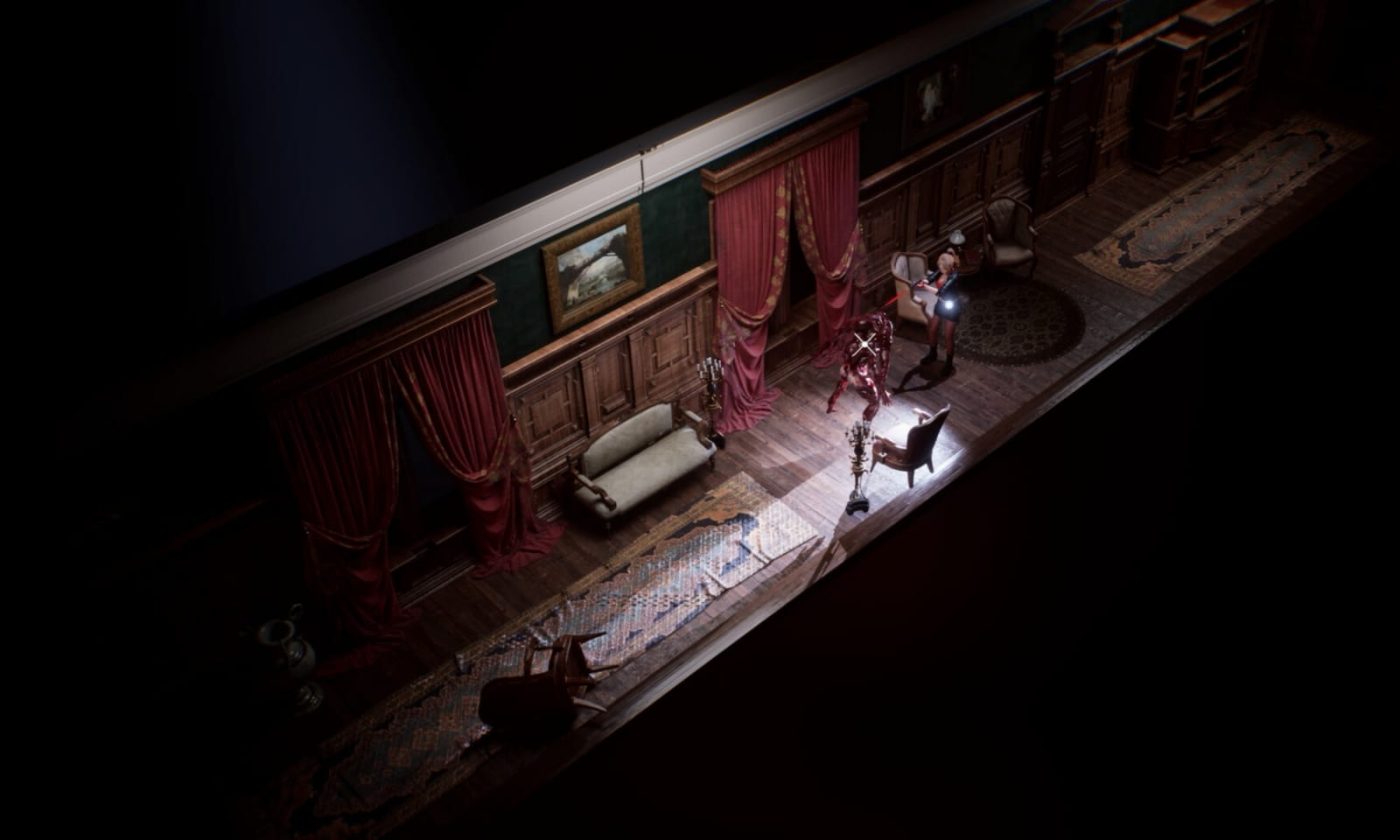
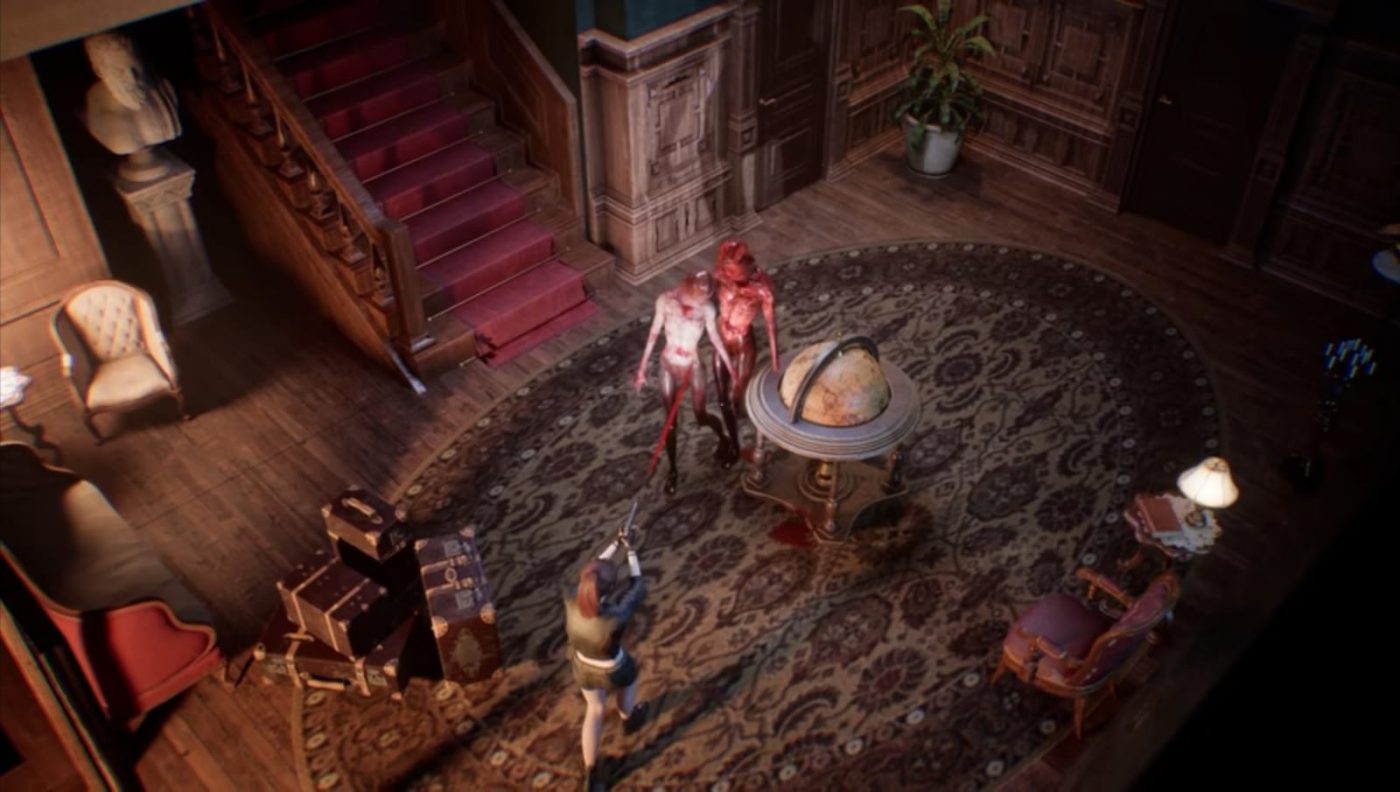
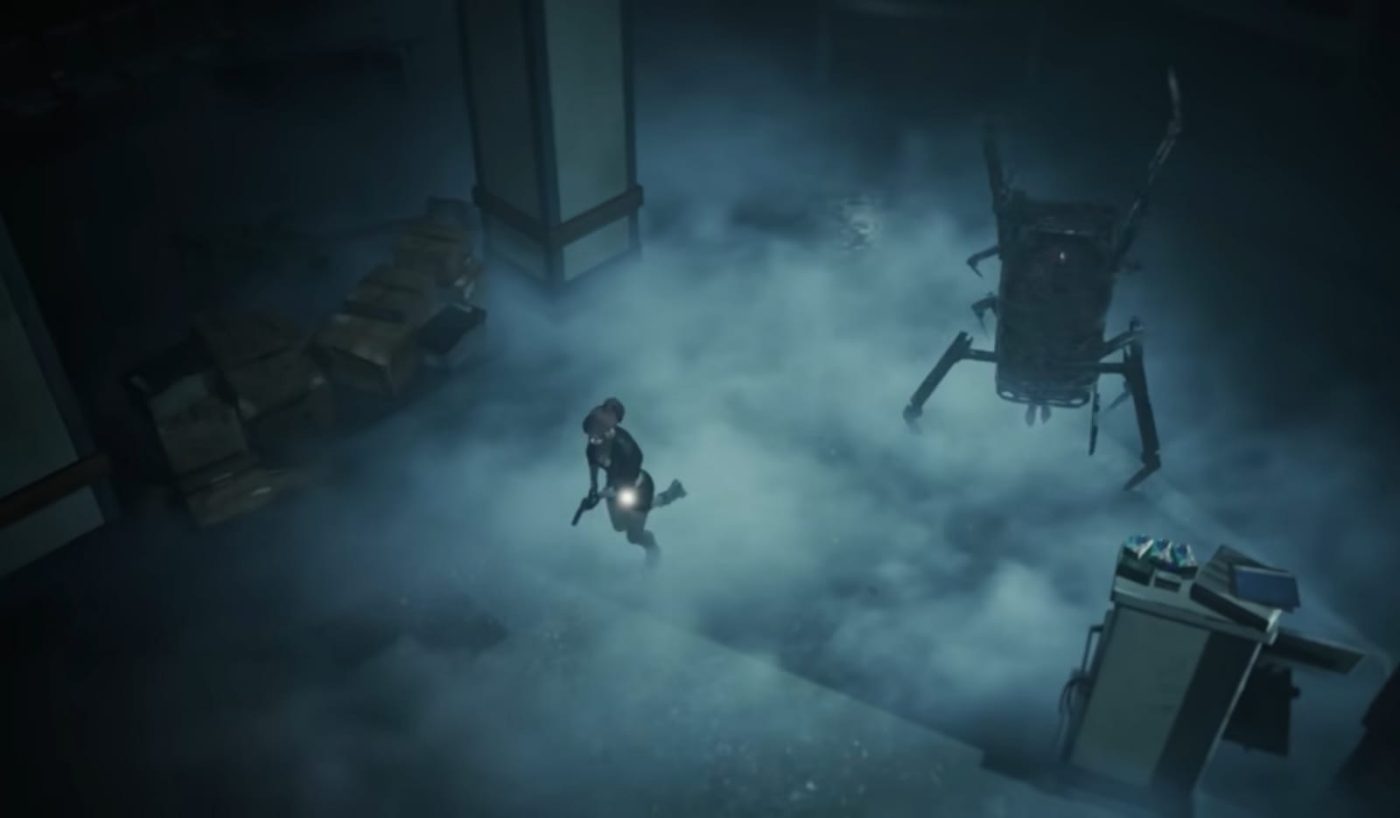
One of Liminal Point’s most distinctive design choices is its use of an isometric camera perspective, a notable departure from the first- and third-person viewpoints commonly associated with contemporary survival horror. This approach appears to support a more deliberate and strategic style of exploration, emphasizing environmental awareness and resource management. At the same time, the fixed perspective introduces a sense of distance that can heighten unease, making encounters feel unpredictable and reinforcing the constant tension that defines the experience.
Taken as a whole, Liminal Point positions itself as a psychological survival horror driven by a clearly defined creative vision – one that moves beyond simply echoing the genre’s classics to expand upon them through a cohesive blend of narrative restraint, atmospheric design, and introspective themes. Rather than pursuing fear for its own sake, the game points toward a slow, deliberate descent into a story shaped by memory, trauma, and deeply unsettling revelations.
In a genre increasingly dominated by high-budget productions and fast-paced combat systems, Liminal Point takes a different approach, prioritizing atmosphere, scarcity, and the persistent sense that every step forward carries consequences. The result is a game that favors sustained tension and immersion over spectacle, and psychological unease over immediate gratification.



HideWorks: The Studio Behind Liminal Point
Liminal Point is the latest project from HideWorks, an ambitious indie studio quickly establishing itself within the horror gaming community. According to official sources, digital storefronts, and press releases, HideWorks functions as a fully independent development workshop, gradually earning recognition by prioritizing psychological depth and the dark, surreal atmospheres that define thoughtful, introspective survival horror.
The studio’s choice to self-publish is a clear expression of its development philosophy: Liminal Point was never designed primarily to appease major publishers or dominate sales charts. Instead, it is built around a carefully defined artistic vision. This vision is reflected in the game’s design, which blends respectful nods to genre classics with a deeply layered psychological narrative, and in its choice of an isometric perspective – a deliberate homage to cult staples like Resident Evil and Silent Hill, reimagined through a contemporary lens.
Though HideWorks is no stranger to indie development, having previously undertaken smaller experimental projects, Liminal Point marks the studio’s first full-scale, fully realized venture into the intricate survival horror genre. Available information suggests a deliberate focus on narrative-driven, atmospheric storytelling over action-heavy or commercially formulaic design. The studio’s reverence for genre touchstones is not mere nostalgia; instead, it serves as the foundation for an experience deliberately crafted to “blur the line between reality and nightmare,” as noted in official Steam pages and digital storefront materials, placing psychological depth and emotional engagement at the very core of the game.
Operating without the oversight of a major publisher, HideWorks retains full creative control, enabling unconventional design choices: an isometric camera in a survival horror setting, scarcity-driven resource management, and world-building conveyed through environmental storytelling rather than explicit exposition. While this independence allows for significant creative freedom, it also demands a disciplined and coherent vision to avoid inconsistency or self-indulgence – a challenge the studio appears well aware of, structuring the narrative to engage players on multiple interpretive levels.
Equally significant is HideWorks’ attentiveness to community feedback. Online commentary and reactions to trailers and gameplay reveals suggest that the studio’s vision is already striking a chord with fans of traditional survival horror, cultivating a dedicated audience invested in the project’s fruition. This approach exemplifies the strengths of successful indie development: acclaim and support are earned not through established developer prestige, but through the promise of a distinctive, meticulously crafted experience that honors the foundations of the genre while pushing it forward.


A Narrative Yet to Be Revealed
Liminal Point unfolds as a haunting psychological tale centered on Lyra, once a rising star of the rock scene, drawn back to the fog-shrouded island of Ashen Point by a cryptic voicemail that forces her to confront a painful past and a lingering mystery: the unsolved tragedy that shattered her former band and the disappearance of her partner, Mira.
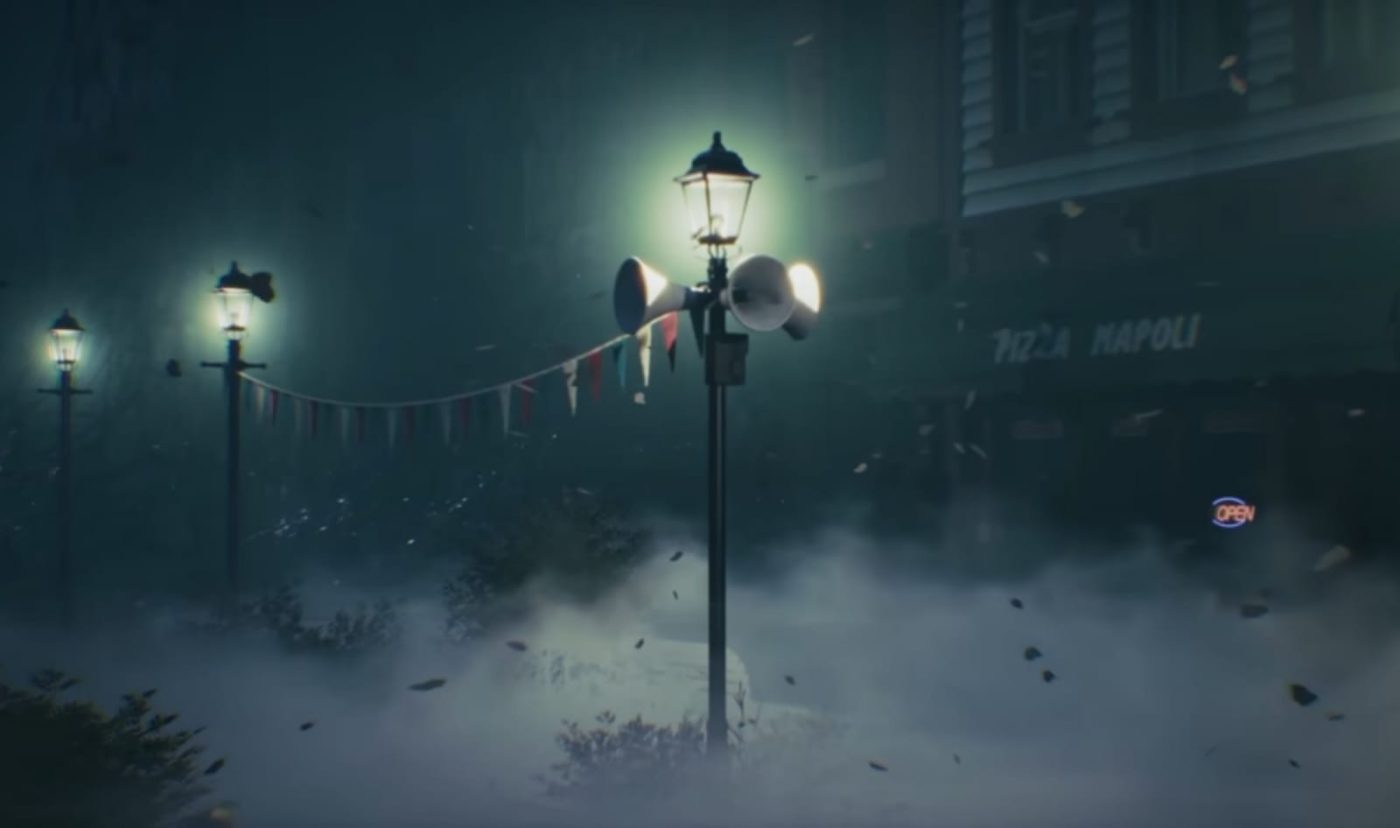
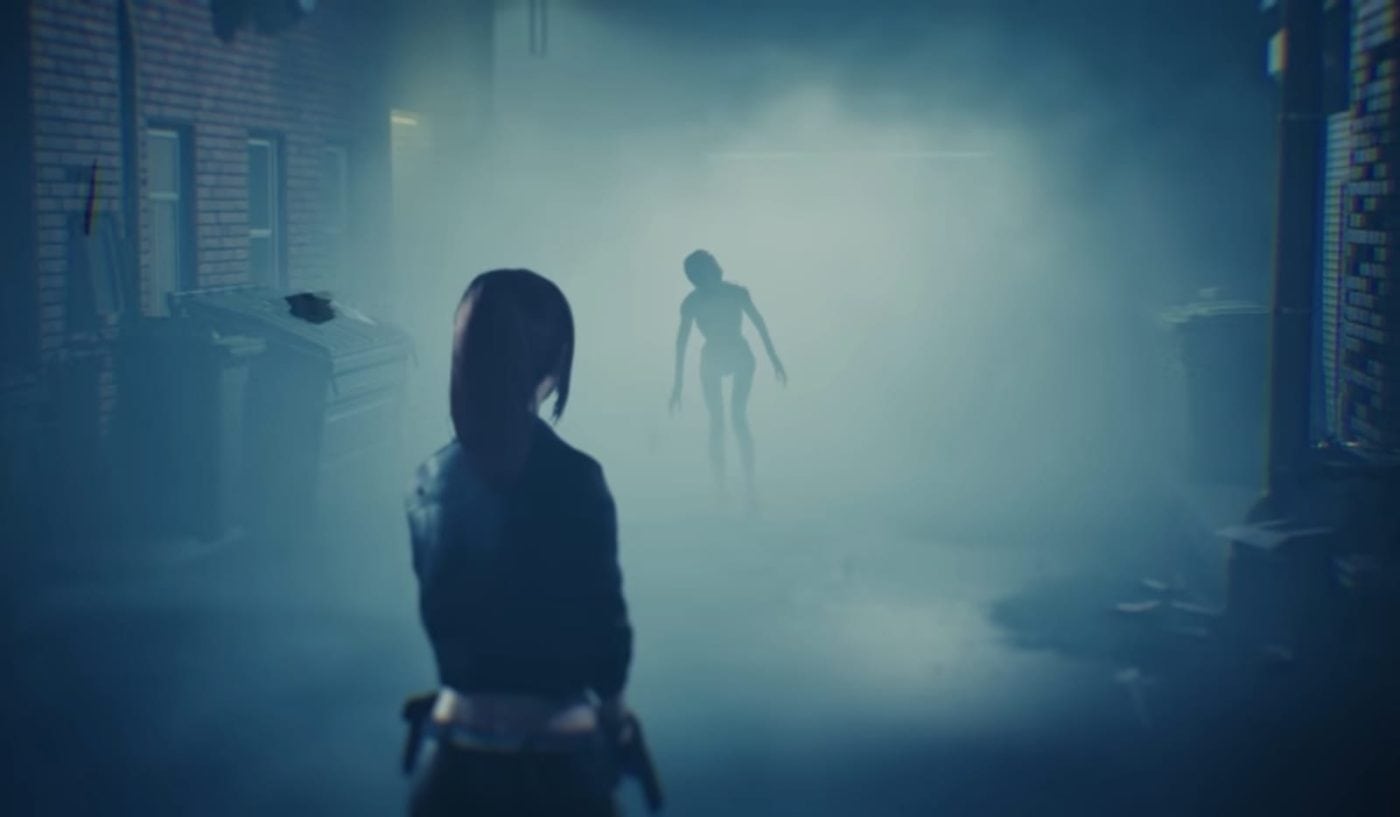
Upon her return, Lyra finds an island cloaked in fog and steeped in desolation: streets swallowed by mist, abandoned buildings, and an oppressive desolation that is far from empty. Ashen Point is more than a backdrop – it is a living narrative, where every shadow and ruin tells its own story.
The story unfolds non-linearly, gradually revealing its truths through exploration, environmental storytelling, and encounters with unsettling entities that embody both Lyra’s personal trauma and the island’s unresolved mysteries. Faded photographs, abandoned documents, and scattered messages weave together into a complex narrative tapestry, compelling players to piece together not only the events that transpired, but also the ways in which Lyra’s emotions and memories intertwine with the island’s distorted reality.
The narrative structure of Liminal Point is built on the tension between what is real and what may be hallucination or psychological distortion. As Lyra ventures deeper into the island, the boundaries between memory and madness, fact and interpretation, grow increasingly blurred. The experience is deliberately intimate and intense: there are no immediate explanations, no narrative guides to provide certainty. Truth must be uncovered slowly, with patience and courage – through confrontation with both tangible horrors and the lingering shadows of one’s own doubts.
The island’s setting – its decaying villas, empty roads, abandoned locations, and sewer systems that run beneath the surface like veins – becomes a narrative entity in its own right. Each new area does more than present a gameplay challenge; it raises new questions about the nature of Ashen Point and Lyra’s experience within it. In this way, narrative and progression become inseparable: uncovering the island’s secrets mirrors Lyra’s descent into her own subconscious, building a crescendo of tension that destabilizes both her sense of self and the very reality around her.
Even in its restrained presentation, Liminal Point unfolds as a richly layered narrative, one that compels the player to confront not only what truly occurred, but the meaning of facing one’s own past, regrets, and deepest fears. This is storytelling beyond shock or spectacle – an experience that forges an emotional connection while challenging the player to piece together a truth that is never singular, but a mosaic of memory, symbolism, and horror.
The truth of Ashen Point does not merely wait to be uncovered – it demands to be faced.



A Story Built on Questions, Not Answers
Liminal Point reveals a narrative that, even in its deliberately cryptic opening, demonstrates a thematic depth far beyond conventional survival horror. It unfolds as both a psychological and investigative journey: Lyra, the protagonist, is not merely a survivor of her band’s tragic past, but a person compelled to confront her own memories, guilt, and the very nature of reality. The game revolves around a persistent tension between what is real and what may be a distortion of the mind – a duality that threads through every element of the story. Ashen Point, shrouded in mist and scattered with cryptic clues, reflects not only the island’s unresolved secrets but also the inner turmoil that continues to haunt Lyra.
Rather than unfolding as a linear narrative with a defined beginning, middle, and end, Liminal Point delivers its story in fragmented, emergent pieces, revealed through exploration and interaction with the environment. Cryptic messages, twisted creatures, and abandoned locations act as mirrors of the mind: each narrative element invites interpretation, encouraging players to ask questions rather than offering ready-made answers.
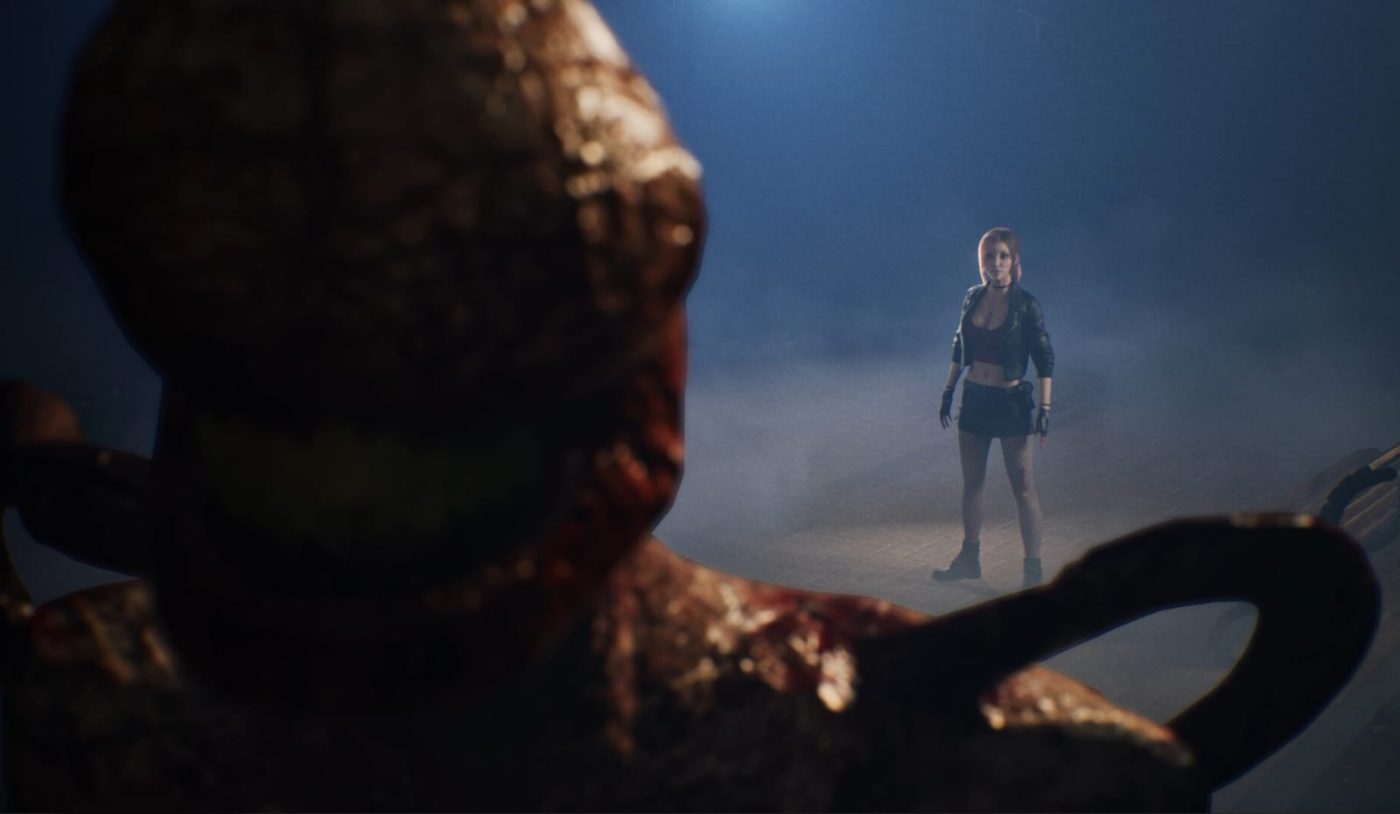
The grotesque creatures and unsettling phenomena are far more than mere shocks – they reinforce the game’s central theme: the fragility of perception and the challenge of discerning memory, recollection, and reality. Even the environment itself mirrors a world distorted by trauma, reinforcing the psychological weight of Lyra’s journey.
Memory plays a central role – not only for Lyra, but for the player’s experience as a whole. Traces scattered across the island serve as anchors to reconstruct events, while highlighting the unreliability of personal memory, which can be warped by trauma. Memory is thus not just a narrative device, but a lens through which players are invited to examine their own relationship with history and truth. The surreal creatures and phenomena that Lyra encounters appear to embody aspects of her psyche, manifesting doubts, regrets, and unresolved fears in physical form.
Another central theme is the unknown and the fragility of human perception when faced with it. As Lyra delves deeper into Ashen Point, the clues she uncovers and the entities she encounters grow increasingly ambiguous, fostering a persistent sense of disorientation. It remains unclear whether these phenomena are tangible or mere projections of Lyra’s fractured psyche. In this way, Liminal Point probes profound existential questions: the struggle to confront truth, the enduring impact of trauma, and the delicate tension between memory and reality.
At the heart of the narrative lies the relationship between Lyra and Mira, her missing friend. The search for Mira’s fate is not merely a mystery to solve – it is a journey toward reconciling with past regrets and personal loss. This emotional core elevates the story beyond conventional horror, encouraging players to engage not only with the unfolding plot but also with the profound weight of the experiences it conveys. By intertwining psychological, symbolic, and horror-driven elements, Liminal Point delivers a richly layered narrative that challenges players to confront fear while navigating a deeply personal act of interpretation.
Ultimately, the narrative and thematic design of Liminal Point positions it as a psychological horror experience that encourages reflection on the human mind, memory, and emotion. The line between reality and nightmare is not merely a storytelling device, but the axis around which the entire game revolves, turning every discovery, encounter, and newly explored location into a mirror of the player’s deepest fears.



Visually Striking, Thoughtfully Designed
From a technical perspective, Liminal Point is clearly a project designed to bridge tradition and modernity, blending aesthetic and technological choices that pay homage to the legacy of survival horror while fully leveraging contemporary tools. The game is built on a robust and flexible engine capable of rendering complex environments and advanced lighting systems – critical for a game whose identity is rooted in atmosphere. By harnessing Epic Games’ engine, HideWorks employs modern shaders, dynamic lighting, and sophisticated particle systems, all essential for faithfully recreating the fog, shadows, and the damp, decayed surfaces that define the haunting world of Ashen Point.
The game’s isometric perspective is perhaps its most immediately striking stylistic choice. Evocative of classic 1990s survival horror, it is reimagined through a modern lens: fixed camera angles are deliberately restrictive, shaping tension, obscuring off-screen threats, and compelling players to navigate spaces that can never be fully surveyed at a glance. This approach recalls the early Resident Evil and Silent Hill games, enhanced here by high-definition textures, volumetric lighting, and environmental detail that make Ashen Point simultaneously immersive and unsettling.
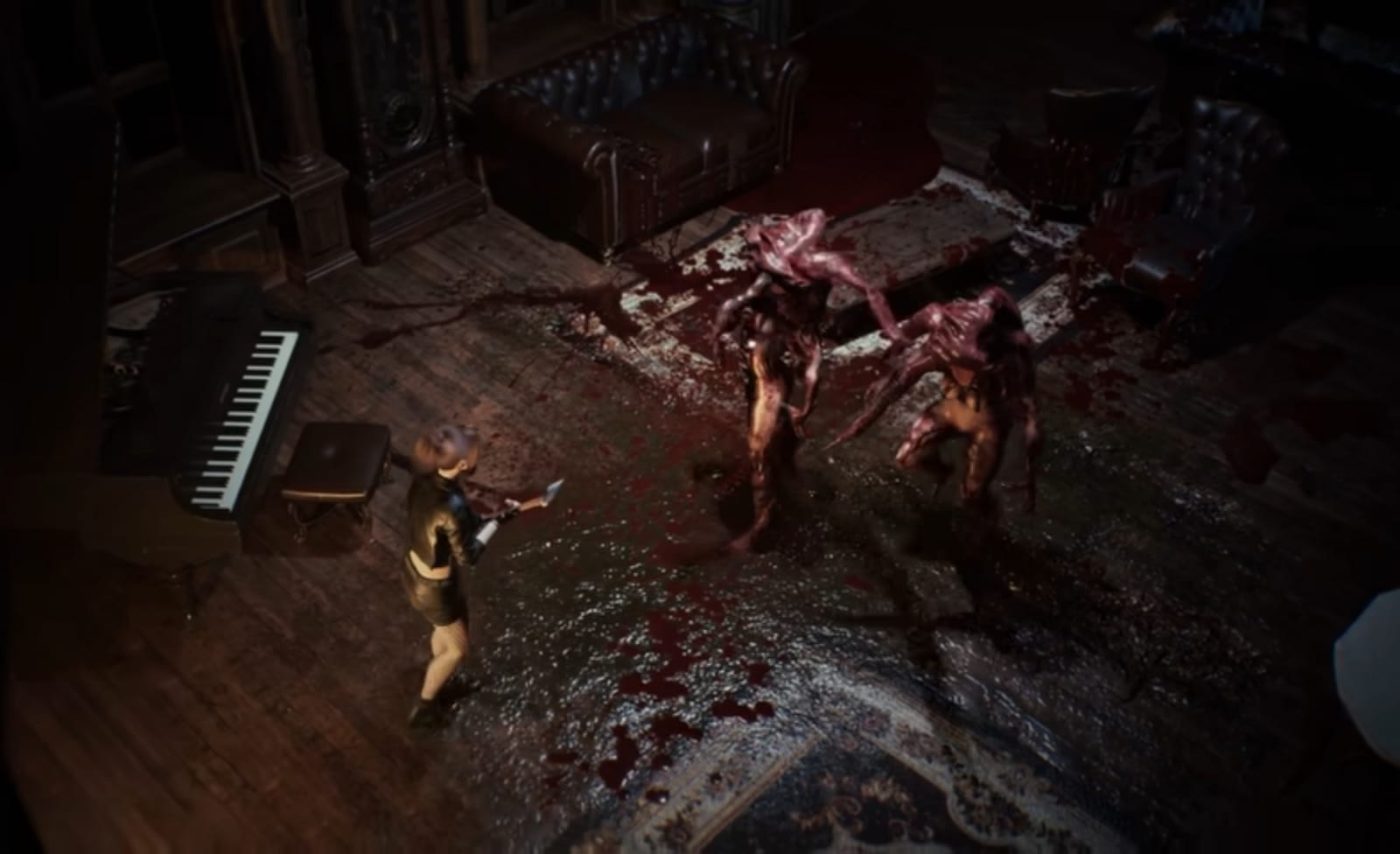
The visual design follows a philosophy of subtraction and decay. Architecture is not monumental, but tells stories of abandonment and neglect. Surfaces are cracked, stained, and corroded by moisture; interiors show traces of interrupted lives, with personal belongings left to rot, overturned furniture, and cluttered hallways.
Each environment conveys narrative without dialogue – a room may hint at a violent argument, a hasty escape, or a sudden tragedy through careful object placement and light. The result is a meticulously crafted visual language, where every element reinforces the story and deepens the player’s immersion.
In Liminal Point, lighting and shadow serve as dynamic narrative instruments rather than mere environmental details. Sources are deliberately unstable – flickering lamps, broken neon signs, or diffused glimmers through dense fog – while shadows obscure crucial elements until the player draws near, heightening a persistent sense of vulnerability. Real-time reflections, ambient occlusion, and volumetric lighting converge to forge an atmosphere brimming with latent tension. Here, illumination is integral to gameplay, shaping what players can perceive and how they navigate threats.
The game employs a muted color palette – dominated by grays, earthy browns, and subdued greens, punctuated sparingly with red accent – that reinforces its melancholic and oppressive tone. Colors are functional, conveying mood rather than mere decoration: the chill of fog-shrouded exteriors, the suffocating intimacy of abandoned interiors, and the enduring sense of entrapment within a world that defies comprehension.
Cinematic sensibilities are central to the game’s camera design. Fixed angles are meticulously composed to frame corridors that vanish into the unknown, stairways leading to unseen areas, and half-open doors that suggest imminent danger. Each shot acts as a carefully constructed visual frame, generating tension even before the player interacts, and highlighting the intricate interplay between environmental design and visual storytelling.
In essence, the technical design and visual philosophy of Liminal Point are not ancillary – they are foundational. Every choice, from lighting and camera placement to creature modeling and environmental detail, serves the narrative, crafting a world that players must interpret, fear, and emotionally navigate.
The Voice of the Island
In survival horror, sound is never merely an accompaniment – it is a primary instrument in crafting fear. In Liminal Point, HideWorks positions audio as a core design system, using it to orient, deceive, and destabilize the player. Footsteps, distant echoes, fractured melodies, and sudden silences are not merely atmospheric flourishes, but active elements that shape perception, warn of unseen threats, or intentionally misdirect. Early footage and trailers suggest that sound will play a central role in sustaining tension – directing perception, signaling danger, and, at times, deliberately leading players astray.
The game’s soundscape is meticulously environmental. Ashen Point is never truly silent; distant echoes, wind whistling through crumbling structures, metallic creaks, and the drip of water from unseen pipes convey a world that feels alive yet precarious. Silence, when it occurs, is never reassuring – it is charged with anticipation, often shattered by sudden, untraceable sounds. Spatial audio heightens immersion: footsteps draw near from beyond walls, muffled breaths emanate from hidden corners, and metallic impacts echo through empty corridors. With the isometric camera deliberately restricting vision, sound becomes the player’s most vital tool for detecting threats, demanding careful, almost hyper-aware attention.
Music follows a philosophy of restraint. Sparse, minimalistic interventions maintain an undercurrent of unease. Exploration is dominated by ambient sound, while danger introduces irregular rhythms, low pulses, and abrupt sonic jolts that signal threats without ever fully revealing them. Sound also serves a narrative function: auditory cues suggest that what Lyra hears may be memory, guilt, or hallucination, blurring the line between reality and perception.
Enemy design relies heavily on sound to establish presence. Creatures are defined as much by their vocalizations, breaths, and movements as by their visual design. Bone creaks, tearing flesh, and distorted organic noises create an immediate sense of revulsion and danger, often alerting players before the creature is seen. Dynamic audio further ties sound to gameplay: opening doors, running, or stepping on different surfaces generates unique responses that can attract or repel threats, making sound a strategic tool rather than mere ambiance.
The game’s audio design is integral to its emotional core. By prioritizing abrasive timbres, organic textures, and tension-filled silences over comforting melodies, Liminal Point maintains a relentless atmosphere of unease. Even in quieter moments, the player is constantly reminded that the island is listening, reacting, and lurking with ever-present threat.
Ultimately, the sound design in Liminal Point is both sophisticated and immersive, deeply entwined with its narrative and gameplay. Fear is crafted not through cheap jump scares, but through a slow, creeping tension that arises from listening, interpreting, and anticipating. HideWorks makes it unmistakably clear: in this game, sound is not an accessory – it is one of the game’s primary languages of terror.

When World-Building and Gameplay Speak the Same Language
The gameplay of Liminal Point reimagines classic survival horror mechanics through a modern lens, prioritizing psychological tension, careful resource management, and the delicate interplay between space, danger, and perception. HideWorks seems committed to crafting an experience in which every decision, movement, and exploration carries real consequence, ensuring that player choices have meaningful consequences on the unfolding adventure.
At its core, the game revolves around three pillars: exploration, survival, and the management of uncertainty. Exploration is never incidental; it is tightly woven into narrative discovery and environmental storytelling. Each area of Ashen Point unfolds as a semi-open space, interconnected through corridors, buildings, subterranean passages, and gradually revealed shortcuts. The level design channels the spirit of classic survival horror, where the world is not a static backdrop but a living organism that the player must map, memorize, and navigate carefully.
Resource scarcity further reinforces tension. Ammunition, healing items, and essential tools are deliberately constrained, compelling players to weigh every decision carefully – whether to confront a threat or avoid it, whether to risk entering a dangerous area in pursuit of a vital item or conserve what little they have.
Combat is never a neutral option; every encounter carries consequences, encouraging a measured, cautious approach that rewards observation, planning, and restraint over impulsive action.
The isometric camera plays a pivotal role in shaping perception. Fixed angles intentionally limit sightlines, transforming every blind corner, closed door, and shadowed stairwell into a potential threat. In Liminal Point, the camera is far more than an aesthetic choice – it is a deliberate design instrument, shaping tension, influencing player decisions, and amplifying immersion.
World-building is almost entirely environmental. Ashen Point is revealed through the layout of spaces, the types of buildings, abandoned objects, and signs of interrupted lives. Residential areas, industrial complexes, public buildings, places of worship, and underground passages each reflect different chapters of the island’s history. This diversity is narrative as well as aesthetic: Ashen Point is a lived-in, tangible community, one that has suffered, decayed, and collapsed.
Progression is rooted in spatial learning. The island initially appears labyrinthine and hostile; gradually, players learn safe routes, temporary refuges, and the likely locations of resources or threats. The world is inhabited, not merely traversed, transforming from an alien landscape into territory imbued with personal stakes and memory.
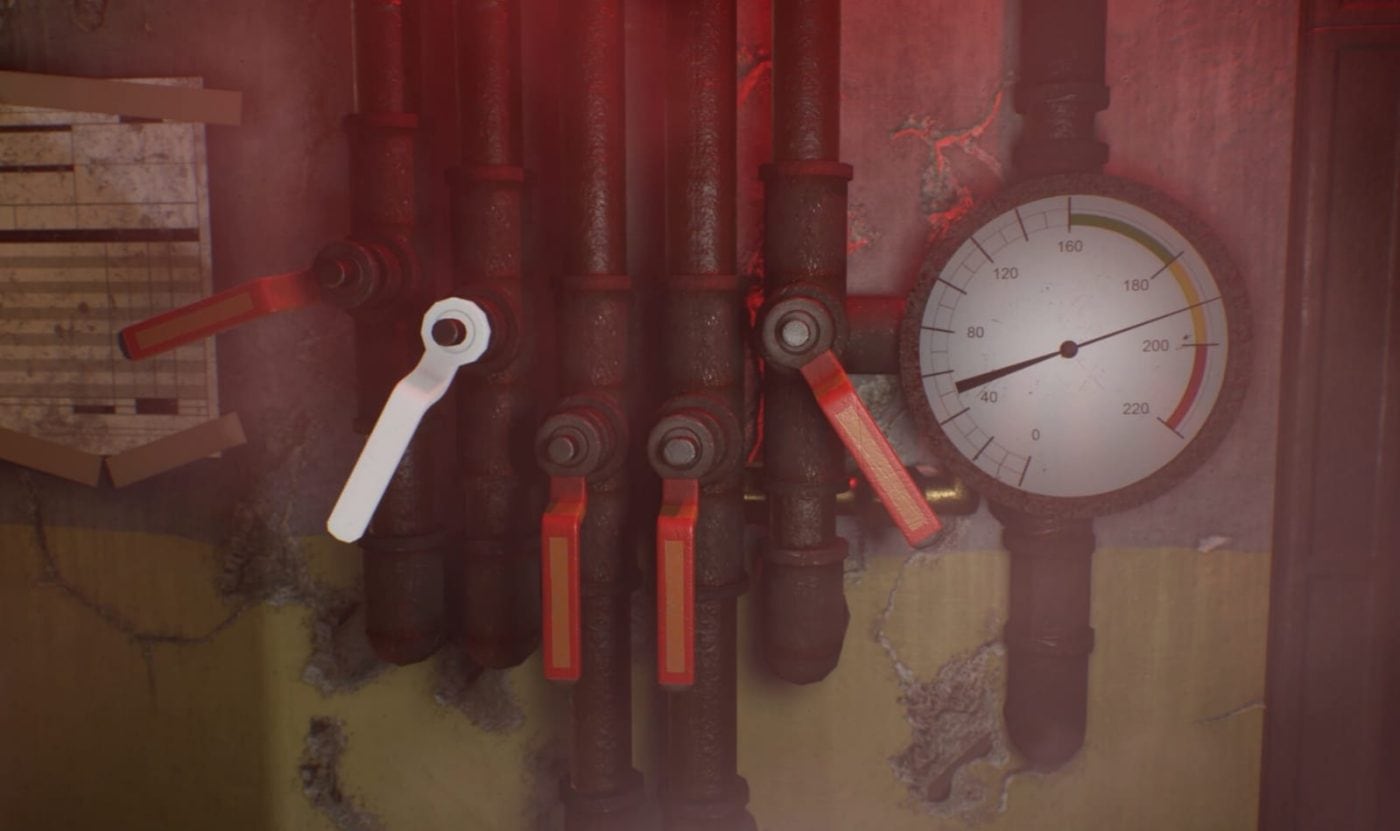
Environmental puzzles further reinforce the integration of gameplay and narrative. Locked doors, mechanisms, and symbolic clues are not obstacles inserted for their own sake – they are keys to understanding the island, revealing story fragments or granting access to significant locations. This careful interweaving ensures that each gameplay challenge enriches the story and deepens engagement.
The overall structure is semi-linear, balancing guided progression with the freedom to explore. While players are nudged toward primary objectives, detours and optional areas offer insights into the island and Lyra’s personal journey, allowing for varied interpretations of events and fostering a sense of emergent narrative.
Ultimately, Liminal Point blends gameplay and world-building into a single, relentless experience. Even in the absence of immediate danger, the island conveys a sense of instability, as though it were a living, hostile entity. Mechanics, spatial design, and narrative intertwine to elevate Ashen Point beyond a mere setting, shaping it into a physical and psychological labyrinth that forces players to confront fear, uncertainty, and the fragility of their own choices.
When Will Liminal Point Be Available?
Liminal Point positions itself as a strikingly ambitious entry in the contemporary survival horror landscape, despite its independent origins and the still-fragmented nature of its communication. This is not a game that leans on shortcuts, cheap thrills, or hollow spectacle. Every detail revealed so far points to a meticulously crafted experience, driven by a clear creative vision and a deliberate commitment to restoring the depth, tension, and psychological resonance that the genre has too often sacrificed to fast-paced action or surface-level visual shocks.
What is most striking about Liminal Point is the consistency of its identity. Every element – from narrative and technical design to sound and gameplay – moves in concert, crafting an experience that is deliberate, oppressive, and grounded in uncertainty and fragility. This is a game that speaks directly to fans of survival horror in its purest form: a genre defined by anticipation, suggested fear, environments that tell stories, and mechanics that punish recklessness.
The game also demonstrates a refined engagement with tradition without being beholden to it. References to the classics are evident – the isometric camera, resource management, and measured pacing – but these nods are never mere nostalgia. Instead, HideWorks uses these conventions as a foundation to construct something distinctly its own: a psychological horror that looks to the past to explore modern themes, including trauma, memory, distorted perception, and the struggle to process loss.
There is a notable degree of creative courage at work here. In a market dominated by high-budget productions and formulaic titles, Liminal Point deliberately embraces a riskier, more auteur-driven path: narrative ambiguity, slowly built tension, and a focus on atmospheric dread. While this approach may limit mainstream appeal, it imbues the game with a strong, unmistakable personality, capable of standing out in a landscape often defined by homogenization.
Of course, questions remain. Will the pacing sustain tension throughout the adventure? Will environmental variety be sufficient to avoid repetition? Can the balance between exploration, combat, and puzzles maintain suspense without veering into frustration? And ultimately, will the narrative deliver a satisfying resolution, or will the ambiguities carefully woven throughout the experience remain intentionally unresolved?
Yet it is precisely this uncertainty that defines the game’s appeal. Liminal Point does not promise easy answers or comfort. Instead, it offers a deliberate, unsettling journey of silence, hostile spaces, and questions without immediate resolution – a game that asks the player to be patient, observant, and willing to lose themselves before understanding the story. If it fulfills the promise suggested by current materials, Liminal Point could become a benchmark for intimate, psychological, and atmospheric horror – lingering not through jump scares, but through its ability to inhabit the player’s mind long after the console is turned off.
In an era where many horror games favor excess, Liminal Point chooses restraint: the power of what is unseen, the tension of the unspoken, the shadow at the edge of the screen. It is in this discipline that the game’s most compelling promise lies.