Hank: Drowning On Dry Land is a prototype video game created by My Next Games. An adventure full of style and good ideas, albeit very short.
Hank: Drowning On Dry Land is not a video game. As absurd as this statement may seem, let me explain. The video game has undergone many changes over the years. Hank: Drowning On Dry Land has many characteristics in common with a modern video game, apart from a few aspects: replayability and the duration of the experience. There is no lack of ludic side, a remarkable artistic concept and interesting design mechanics.
Unfortunately, the title presents a short gaming experience (about 15 minutes to finish) and with little replay value. The developers themselves in a note define the title as a prototype. Born thanks to funds from a government grant to work on a video game prototype.
For this reason I decided not to do a real review, but an analysis without a vote which is my criticism of the work done by My Next Games.
Narrative and great comic look
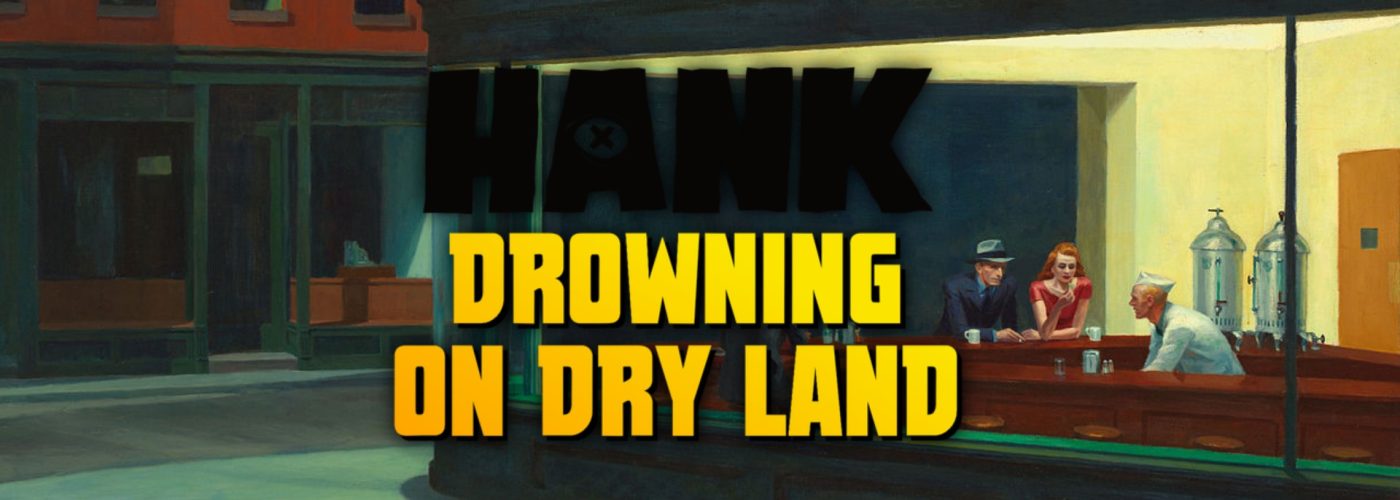
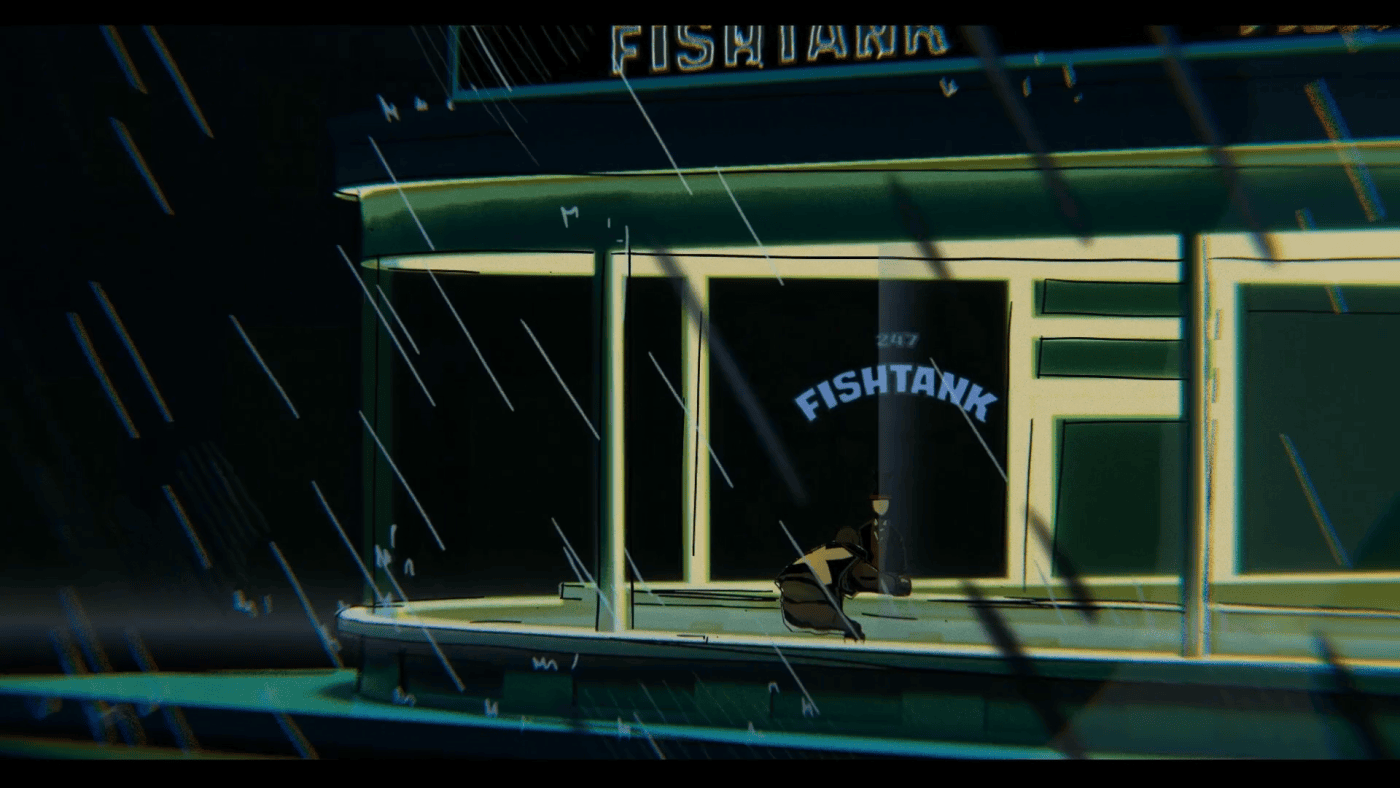
From the first images Hank: Drowning On Dry Land demonstrates great artistic personality. The construction of the world, the character design and the choice of colors with strong contrasts and the great visual impact demonstrate great care on the part of the developers. It’s like seeing the design of a non-anime animated series from the late 90s on MTV. Not to mention the font and stylistic choices that recall the American comics of that period.
Furthermore, the opening scene brought to mind Edward Hopper’s opera The Nighthawks.
In fact, we will meet the protagonist in what looks like an American diner. Here Hank, a vigilante with the power to travel through time, spends his time drinking when one last drink is “fatal” to him. In fact, under the guise of the bartender hides The Unraveler. After poisoning the last dink, he knocks our hero to the ground, sending him deeper into his subconscious.
The narrative also plays a fundamental role in a phase of the game. Without spoiling too much Hank will come face to face with The Unraveler and there will be a dialogue sequence. This phase becomes part of the playful part when the choices made by the player play a key role in moving forward in the story.

Interesting gameplay ideas
Hank: Drowning On Dry Land divides its adventure into two main phases: one more oriented towards solving puzzles and strategy and the other with more action that requires the player to make good use of reflexes.
Hank uses his abilities in several ways. In Hank: Drowning On Dry Land there is no real game over, as the protagonist can rewind time. At a gameplay level it allows us to try again from the point we deem most appropriate, aware of what awaits us. I won’t explain what exactly Hank can do, also because I would risk spoiling an experience that is short. I can say that the character can interact with elements of the surrounding environment to obtain actions such as hiding from dangers or activating mechanisms. Hank’s movement is deliberately “wooden”, precisely to accentuate the puzzle and trial and error element.
In addition to rewind, thanks to disposable mirrors, we can make time jumps to be in multiple places at the same time. This gives rise to the mechanics of the time paradox. As per time-jump tradition, meeting our past selves will cause our demise. Luckily we can rewind time.
Last factor: the timer. We can’t waste time because once a timer expires (in the first part of the game), we will be defeated.


Ingenuity and brevity
Even though Hank: Drowning On Dry Land is only a prototype game, I cannot ignore some of the roughness and naivety committed. At the beginning we are catapulted without knowing what to do. No mini tutorials, or brief descriptions of the commands, I admit that the first few minutes definitely took me by surprise in terms of gameplay. Even if rewind allows you to quickly try a sequence again, especially in the first moments it risks becoming a frustrating procedure precisely because you have no points of reference.
As you progress, the game begins to give suggestions and clues in some of its phases, but continues to not explain the mechanics it puts in front of you. It would be appropriate, in its hypothetical future development, to correct certain rough edges, so as to guarantee better experience.The visual inputs then help the player to juggle, but they are not sufficient without an explanation of the mechanics.
The second part is free from these problems and, although simpler, has a spectacular visual impact.
Another point is brevity. Even though the game costs only 2.99 euros and lasts about 15 minutes, it tries to include replayability in the experience.
A timed mechanism that gives an evaluation as soon as important goals are achieved. This mechanic aims to increase replayability by focusing on repeating the game while being as efficient and fast as possible.
This however leads to showing the nature side of the game which is quite story driven.


My two cents
Hank: Drowning On Dry Land looks like a good prototype with all the potential to become a good game. Anyone wanting to buy this product, priced at 2.99 euros, knows that they will find a short but well-crafted story. A prologue that shows My Next Games’ ability to blend good narrative and an impactful visual style.
Net of the critical issues already mentioned in the previous chapter, Hank: Drowning On Dry Land still represents an enjoyable but improvable experience. I think anyone who has played the game would want the prototype to grow to evolve into a full game.
Personally I hope this is the case
Game key granted by the developers