Why is letting go so painful, why does saying goodbye hurt so deeply, and why is accepting the passage of time such a difficult burden to bear, Lana?

“When things don’t go the way we want, try to see them from another perspective”.
It is in this deceptively simple line of dialogue that Bye Sweet Carole reveals its first true fracture. This is the precise moment in which the story opens, destabilises, and abandons any claim to linear certainty. From here onward, the story abandons familiar paths, reframes its own logic, and compels the player to reassess everything they believed they had understood. Nothing that follows can be read in quite the same way again.
We took our time before beginning this review. We asked ourselves which scene, which passage, which line of dialogue could truly distil not only our experience of the game, but the deeper essence of Bye Sweet Carole and the creative vision of Little Sewing Machine and Chris Darril. Yet no other quotation conveys with comparable clarity and emotional precision the thematic core of Bye Sweet Carole – its message, its sorrow, its intimacy.
This is not a message born by chance. It emerges from a deeply personal – almost confessional – creative vision, shaped by an author who has invested this project with every fragment of his emotional sensitivity and creative energy.
Bye Sweet Carole is a layered, polyphonic work, composed of multiple identities and tonal registers. And when we speak of “colour,” we are not referring merely to visual composition or aesthetic palette, but to a broader spectrum of emotional, psychological, and human tonalities. These are interior colours – emotional frequencies that operate beneath the surface of the image. The colours of memory. Of loss. Of longing. Of silence.
They emerge through absence as much as through presence. Through what is not shown as much as through what is. Through pauses, empty spaces, suspended moments, and narrative ellipses. Chris Darril constructs meaning not only through form, but through restraint – allowing silence to become language, and emptiness to become structure.
The result is a work at once resilient and exposed – determined yet vulnerable, confident in its vision yet unafraid of its own fragility. This fragility is neither hidden nor softened; it is deliberately embraced and placed at the very core of the work’s expressive language, becoming its signature, its texture, its emotional fingerprint.
Fragility. This is the defining word. The one that most accurately distils the soul of Bye Sweet Carole. The term that will recur throughout this review because it contains the work’s contradictions and harmonies alike – its strength and its vulnerability, its ambition and its delicacy, its excess and its restraint, its darkness and its tenderness.
An identity that is simultaneously resilient and fragile – capable of slipping slowly beneath the skin and remaining there, quietly, persistently, long after the experience has ended.
Welcome to our review of Bye Sweet Carole.
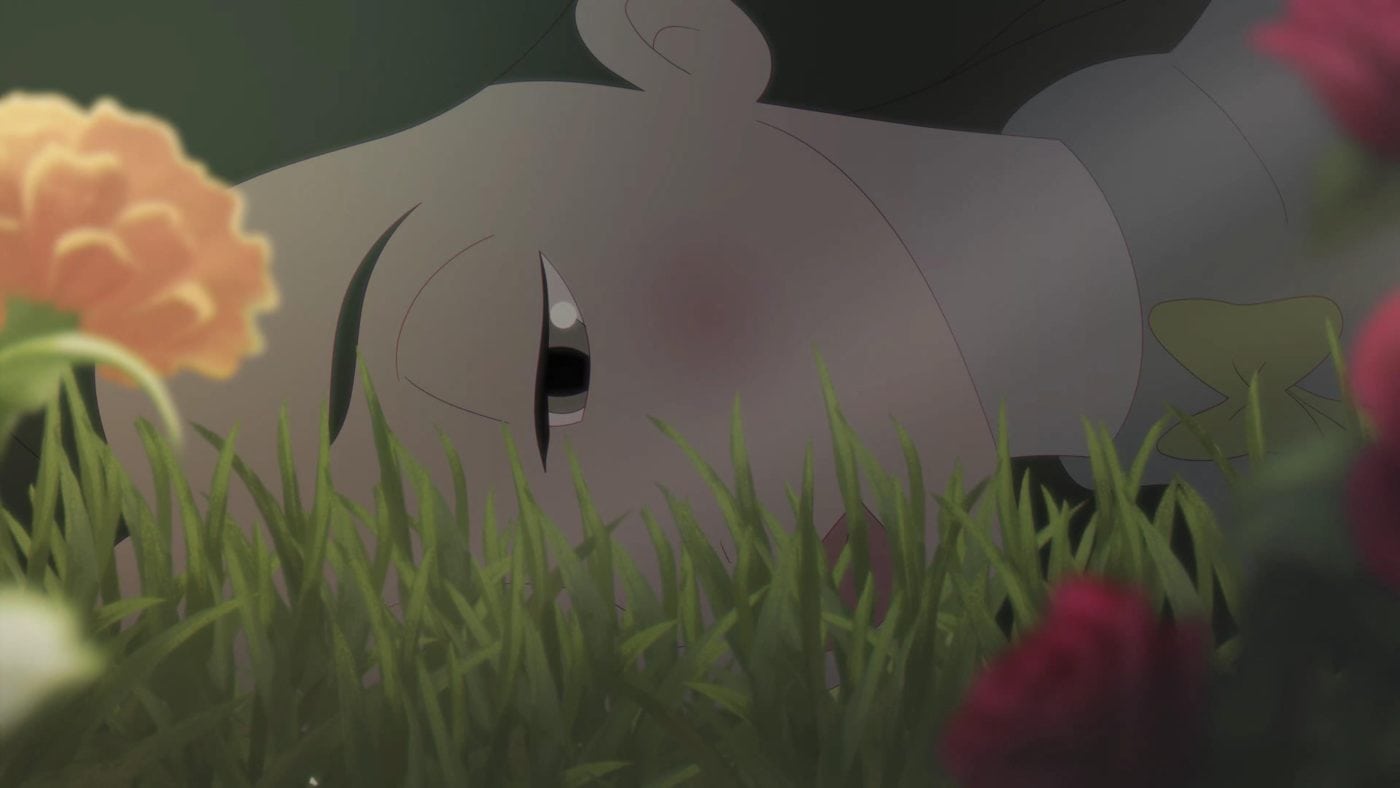
Let the Emotions Speak for Us
We have said it before, and it bears repeating: we paused for a long time before beginning this review. Longer than usual. We questioned how to approach Bye Sweet Carole properly – which voice to adopt, which critical posture to assume when faced with a work that makes one thing immediately clear: it does not ask to be merely analysed, but to be listened to.
We considered a colder, more methodical path. A rigorously technical approach. A precise, detached analysis that would keep emotion neatly compartmentalised, safely removed from the critical discourse. It would have been the easiest route. It would also have been the most sterile. Because Bye Sweet Carole is not an experience that passes through you without consequence. It is not a game that is merely played.It is something that settles, that seeps in slowly, that establishes a continuous dialogue with the player’s inner life. To pretend that this dimension does not exist – to bracket it out in the name of a supposed objectivity – would be to misrepresent the work itself.
From an early age,we are taught – often unconsciously – to regulate emotion. To restrain it. To conceal it. We are told that fragility is dangerous, that exposure creates weakness, that vulnerability and sensitivity are flaws to be corrected rather than values to be cultivated. We grow up building armour, layer by layer, convinced that hardness is the only viable form of protection in a world that rewards emotional distance and mistrusts those who feel too deeply.
We have tried, more than once, to internalise that logic – to separate critical thought from emotional involvement, to write at a distance from what we felt, treating emotion as interference rather than meaning. But here, we knew that such a posture would be a profound mistake – human before it was professional. Because Bye Sweet Carole is born precisely from the rejection of that distance. It is a work that does not fear fragility, that does not hide behind protective structures, that openly exposes its wounds.
Ignoring this dimension would also have meant failing in our responsibility to Chris Darril. An author who has poured everything into this project: heart, memory, pain, love. Bye Sweet Carole is the result of a deeply personal vision, in which every creative choice feels guided by an authentic need to express, to remember, to give form to something that could not remain silent. It is a work that speaks of bonds, of absence, of time that moves forward without waiting for anyone – and it does so with a delicacy rarely encountered, particularly within the contemporary videogame landscape.
For this reason, we want to be clear from the outset. It is not possible to speak about Bye Sweet Carole – at least not from our perspective – by silencing emotion or performing a neutrality the work itself refuses. What follows will not be only a review understood as technical, structural, or artistic analysis. It will also, inevitably, be an account of what this game made us feel. Of what it taught us. Of what it reminded us about the necessity of accepting fragility, making space for it, and recognising it as an essential dimension of our humanity.
Because some works do not simply ask to be understood. They ask to be felt. And the only honest way to speak about them is to allow emotion to have a voice.
A Story Meant to Be Felt Rather Than Explained
Clinging to the past, resisting the inexorable passage of time, and retreating from the responsibilities of the present: Bye Sweet Carole builds its entire narrative architecture around these universal human tensions, transforming them into the emotional, psychological, and philosophical core of the experience. These are not surface-level themes or abstract motifs, but deep structural forces that permeate every chapter, every decision, every pause, and every silence.
The question the game quietly poses – whether it is truly possible to escape without confronting the consequences of one’s actions – begins as an intimate conflict bound to Lana’s journey, before gradually widening in scope, turning outward toward the player and redefining their role: no longer a mere observer, but an active moral subject within the experience.
From its earliest moments, Bye Sweet Carole makes clear that it does not seek to be understood as a videogame in the conventional sense, nor as a product designed primarily for consumption or entertainment. Its expressive grammar is fundamentally different, aligning itself more closely with myth, ritual, and symbolic storytelling than with mechanical progression.
It positions itself as a dark interactive fable – a narrative form that uses interactivity not as spectacle, but as a language of proximity, a way of establishing an intimate emotional dialogue with the player. Interaction here is never intrusive or ornamental; it is restrained, almost reverent, functioning as a means of attunement rather than stimulation. The game does not ask the player to act first, but to attend – to observe, to listen, to remain.
The ten-chapter structure does not guide the player along a linear chain of events, but through a succession of interior states. The experience unfolds emotionally before it unfolds narratively, psychologically before mechanically. Anger, guilt, disorientation, grief, longing, loss, and acceptance do not emerge as isolated moments, but as evolving conditions that reshape perception and engagement. Each chapter meticulously refines the emotional register rather than merely advancing the narrative. The writing consistently avoids overt exposition, favoring suggestion, metaphor, and symbolic resonance. Meaning is never handed to the player – it must be uncovered, pieced together through reflection. Not explained – but discovered, assembled, made one’s own.


This philosophy of restraint defines the narrative language of Bye Sweet Carole. The game builds its depth through subtraction rather than accumulation. While many contemporary titles layer dialogue, lore, and exposition to create density, this work achieves resonance through silence, ellipsis, and absence. Dialogue is sparse and deliberate. Images are meticulously composed, charged with symbolic weight. Narrative gaps are never weaknesses, but purposeful instruments of expression. In this world, absence becomes language, and silence becomes structure.
These empty spaces are not gaps to be filled by design, but invitations extended to the player – acts of trust. Bye Sweet Carole assumes an emotionally literate audience, one capable of bringing memory, experience, vulnerability, and interpretation into the space of play. Meaning emerges not from the text alone, but in the encounter between game and player. Interpretation becomes an integral part of the experience, and emotional engagement transforms into active participation.
The environments themselves function as narrative agents. Corolla and Bunny Hall are neither neutral backdrops nor mere aesthetic constructions; they are emotional geographies – externalizations of Lana’s inner world. Architecture, lighting, spatial composition, sound design, and visual rhythm operate as symbolic extensions of unresolved psychological conflict. The boundary between reality, memory, and imagination gradually dissolves, creating a world suspended between states: melancholic, fragile, and quietly uncanny. Nothing is fixed; everything is permeable. Every space communicates, even in apparent silence. Every silence carries narrative weight.

Symbolism and fragmentation function as the game’s core expressive devices. Scenes often appear as shards – incomplete, refracted, and partial. Conversations unfold elliptically, and events feel dislocated, both temporally and semantically. Yet this fragmentation is not confusion; it is intentional, a method that mirrors the internal logic of trauma, memory, and grief, where experience is rarely linear and meaning is never whole.
What ultimately defines Bye Sweet Carole is the clarity and maturity of its narrative vision. This is a work that refuses compromise – not from obstinacy, but from coherence.It does not dilute its identity for the sake of accessibility, nor does it reshape itself to offer comforting resolutions. It rejects easy answers, and denies narrative reassurance.
The final chapter – and the ending itself – embody this philosophy with unmistakable clarity, offering no definitive answers and leaving interpretation open. Closure is withheld; responsibility is entrusted to the player. Meaning becomes both a burden and a gift, one that must be carried forward.
Fragility, here, is not weakness. It is method. It is voice. It is philosophy. It becomes the grammar through which the game speaks. And it is precisely this fragility – never hidden, never softened, never instrumentalised – that gives Bye Sweet Carole its rare authenticity, its emotional gravity, and its lasting resonance.
Not an experience that seeks to entertain first. But one that seeks to remain.

More Beautiful to Watch Than to Actively Play
Within the fragile balance that Bye Sweet Carole seeks to establish between narrative, symbolism, and interactivity, it is the gameplay layer that most clearly reveals its structural fractures. This is not a matter of conceptual emptiness – the game is rich in ideas, intuitions, and expressive ambition – but rather of a technical and design execution that, at times, proves unable to sustain the expressive weight the work places upon it. The result is an experience that, controller in hand, often feels strained, unable to support with the same elegance the narrative, thematic, and visual force that defines the title’s artistic identity.
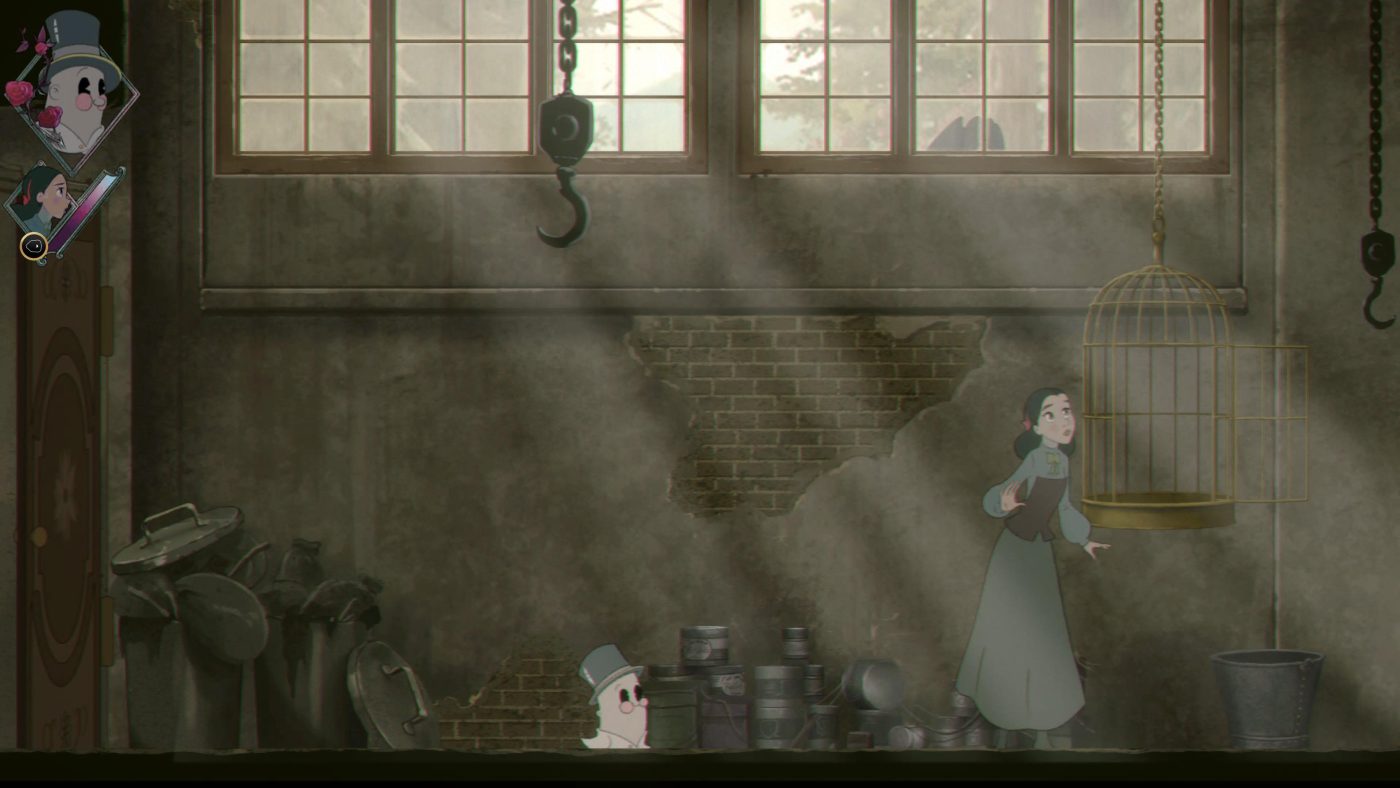
At its core, Bye Sweet Carole sits squarely in the tradition of the graphic adventure, combining exploration, environmental puzzle-solving, and stealth sequences. This design choice aligns with its identity as a dark interactive fable, yet it exposes the work to the unforgiving mechanics of a genre where precision, responsiveness, and clarity are not optional but essential.
The movement system stands out as one of the experience’s most critical weak points. Lana navigates the environments with a persistent rigidity that undermines fluidity and responsiveness. While the animations display undeniable aesthetic refinement, they fail to convey a sense of immediacy and tactile control, creating a perceptible gap between player input and on-screen response. This dissonance erodes the pleasure of exploration, transforming what should be a moment of discovery and immersion into a purely functional act of narrative progression.
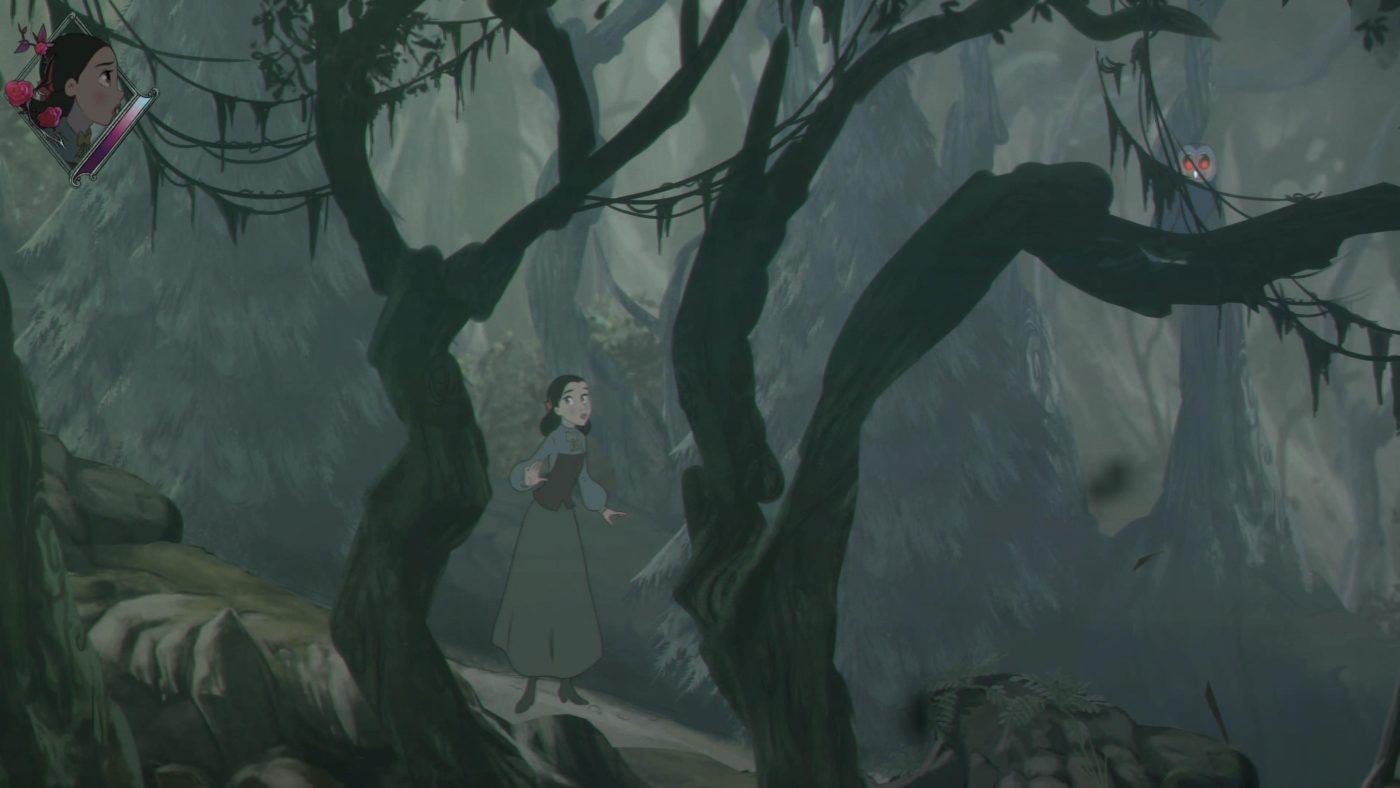
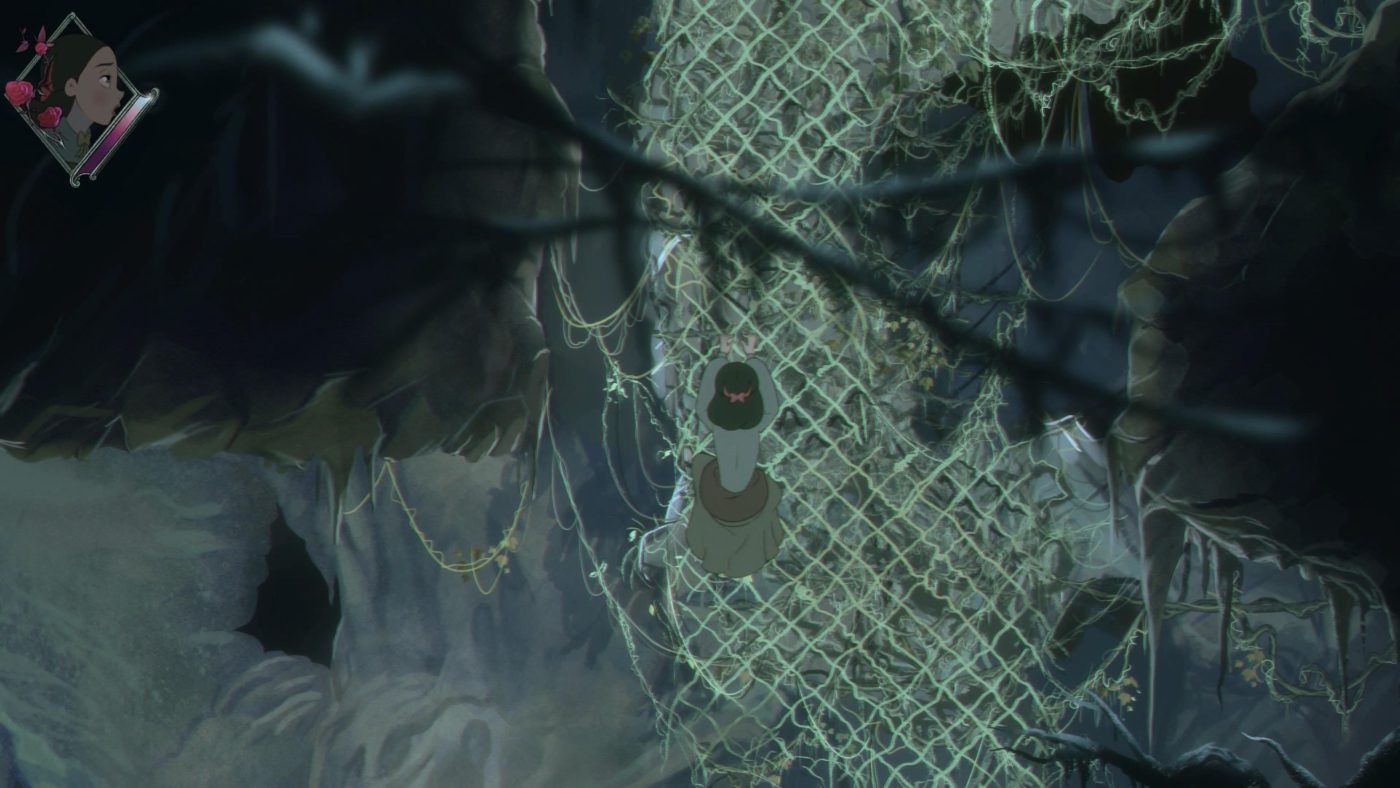
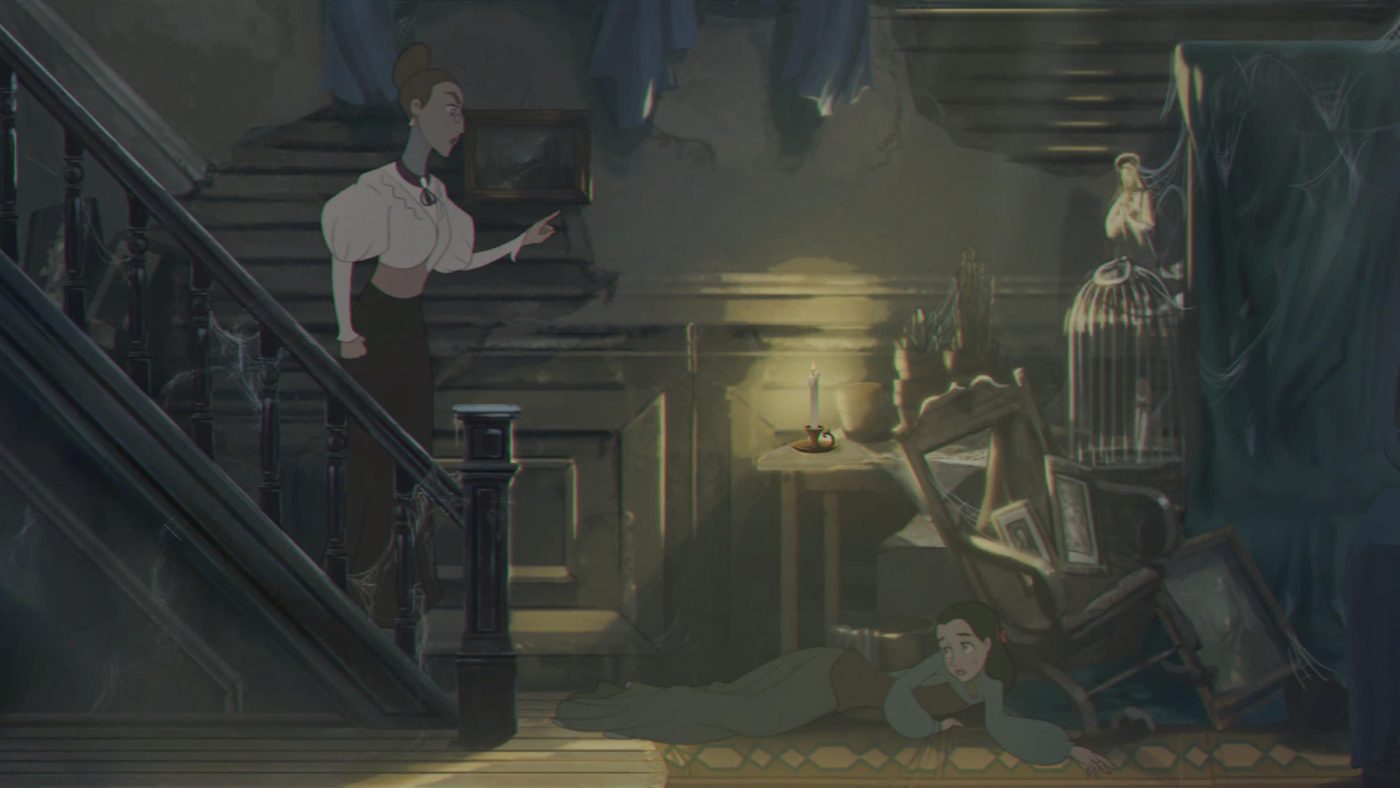
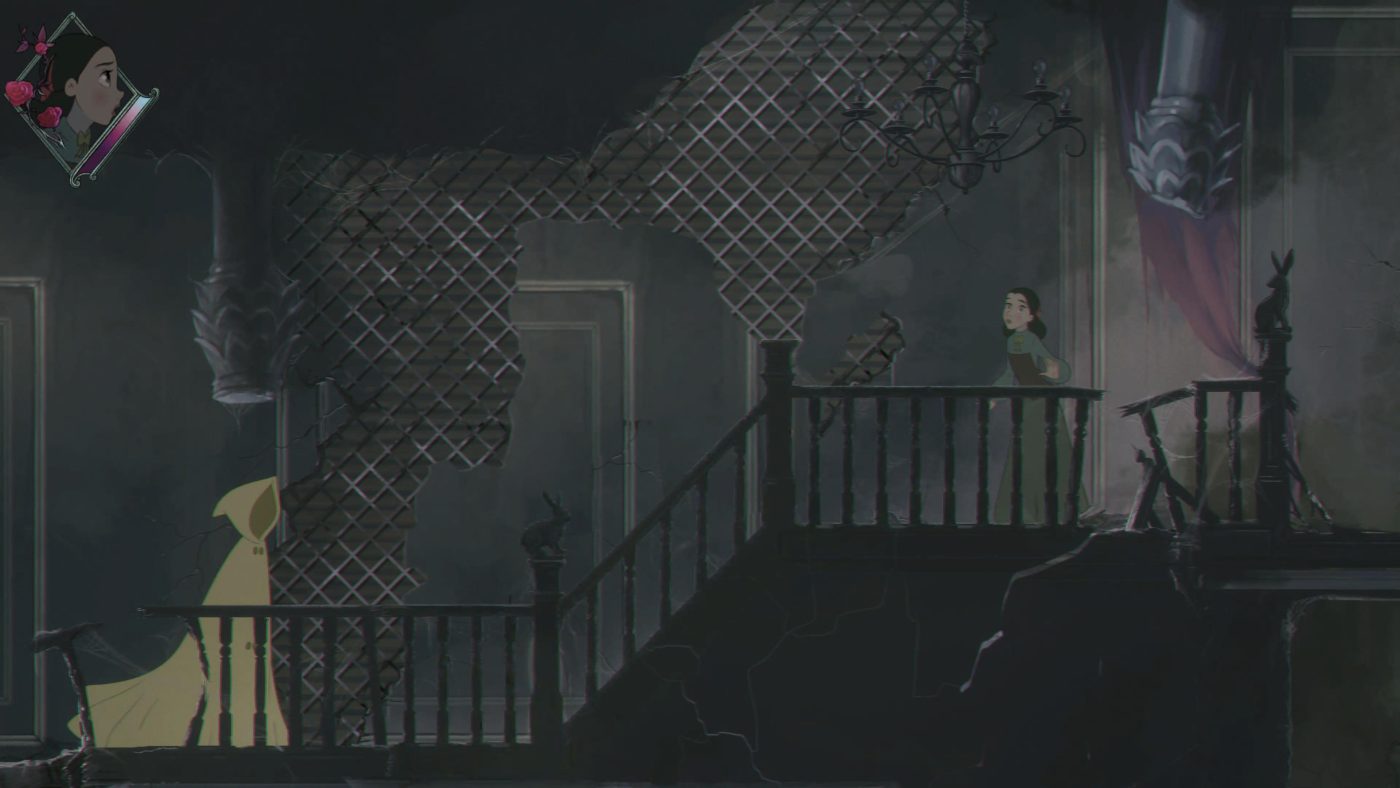
As a consequence, the spaces themselves lose their existential and emotional weight. Rather than being perceived as places to inhabit, absorb, and experience, they are reduced to transitional corridors – passages to be crossed rather than worlds to be lived. This paradox is particularly striking given the extraordinary visual and symbolic richness of the game world, which would instead demand slowness, contemplation, and embodied presence to fully articulate its depth.
Further weakening the experience is a form of backtracking management that, while narratively justified, often becomes frustrating in practice. Retracing one’s steps turns into an exercise in patience, compounded by an interaction system that does not always respond reliably. Inputs may require multiple presses, actions are occasionally misread, and Lana’s reactions can feel delayed or inconsistent. These micro-frictions, accumulated over time, gradually erode emotional continuity and undermine the sense of immersion the game strives to build.
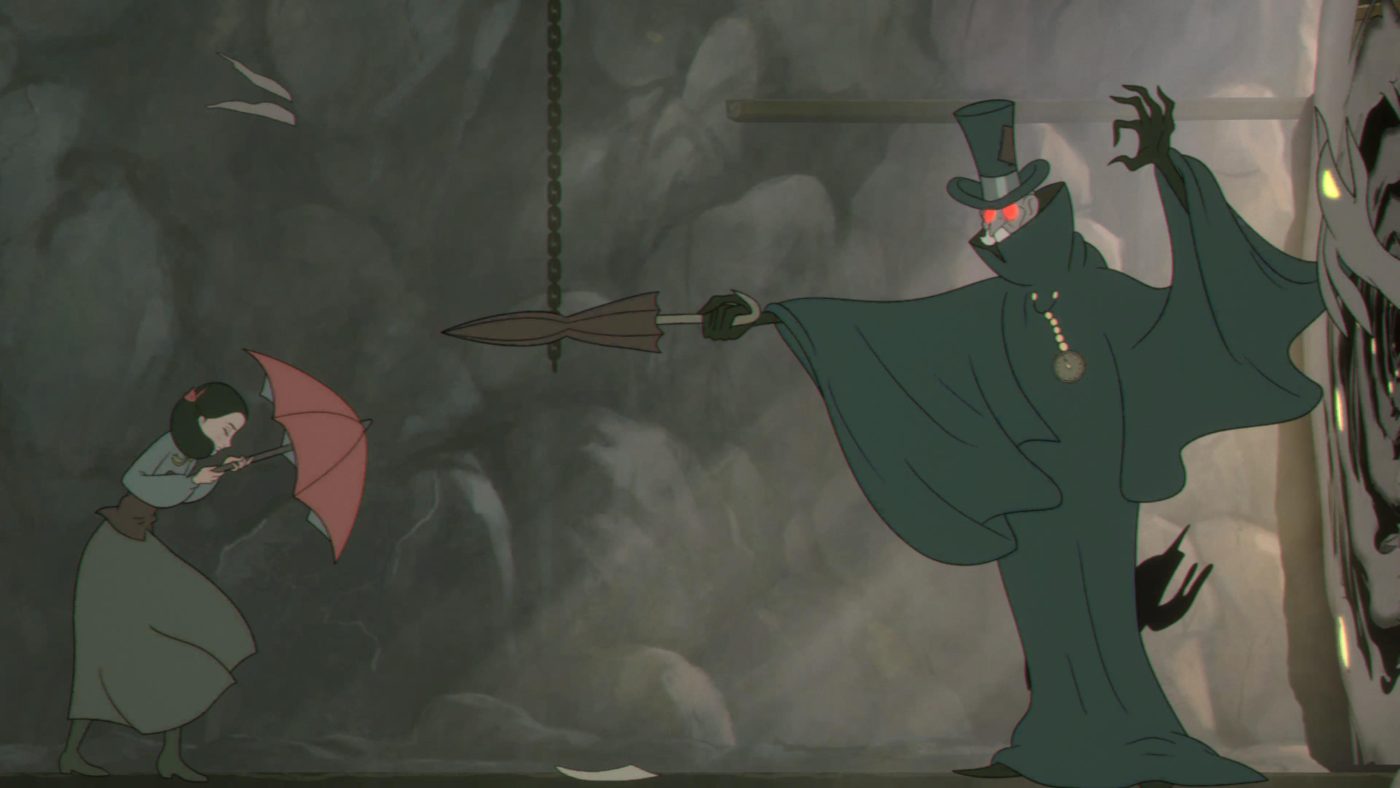
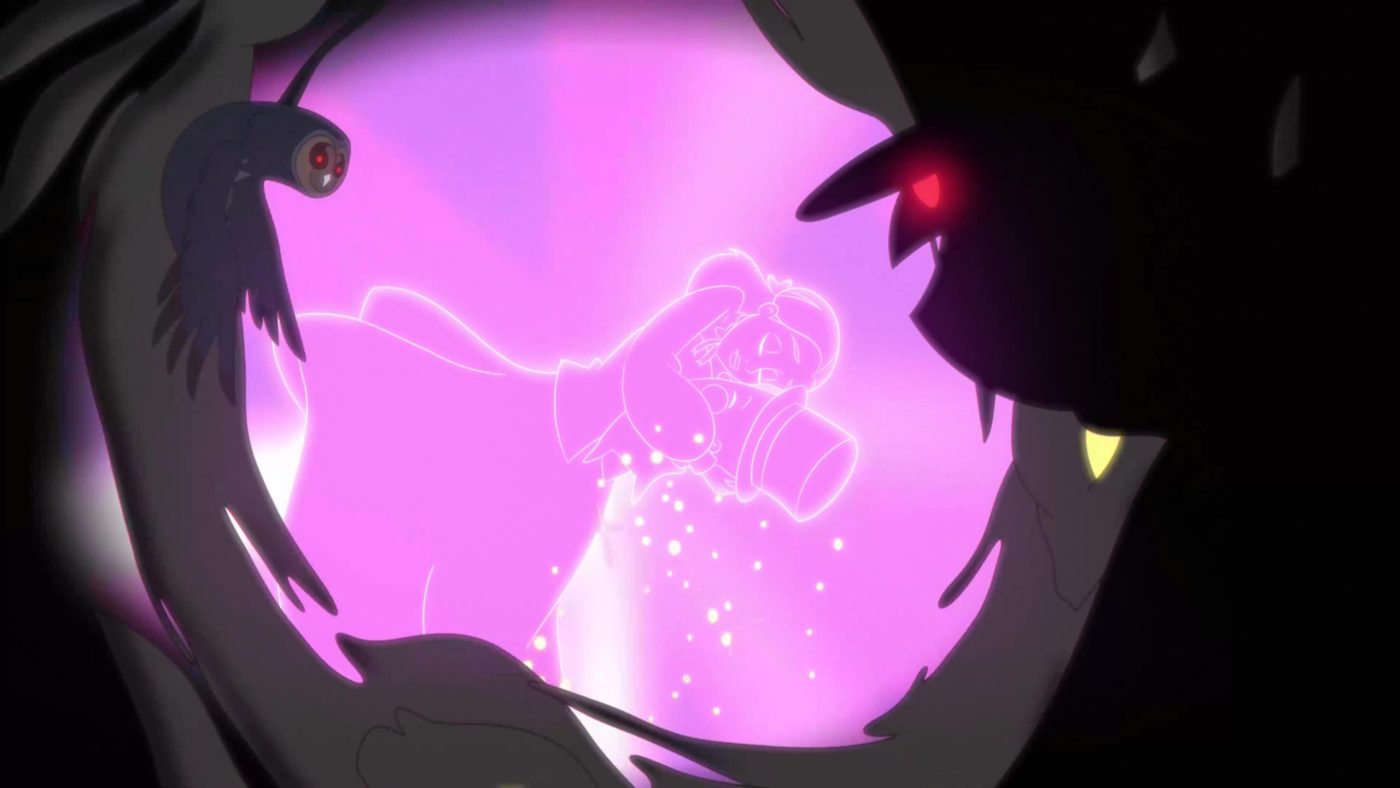
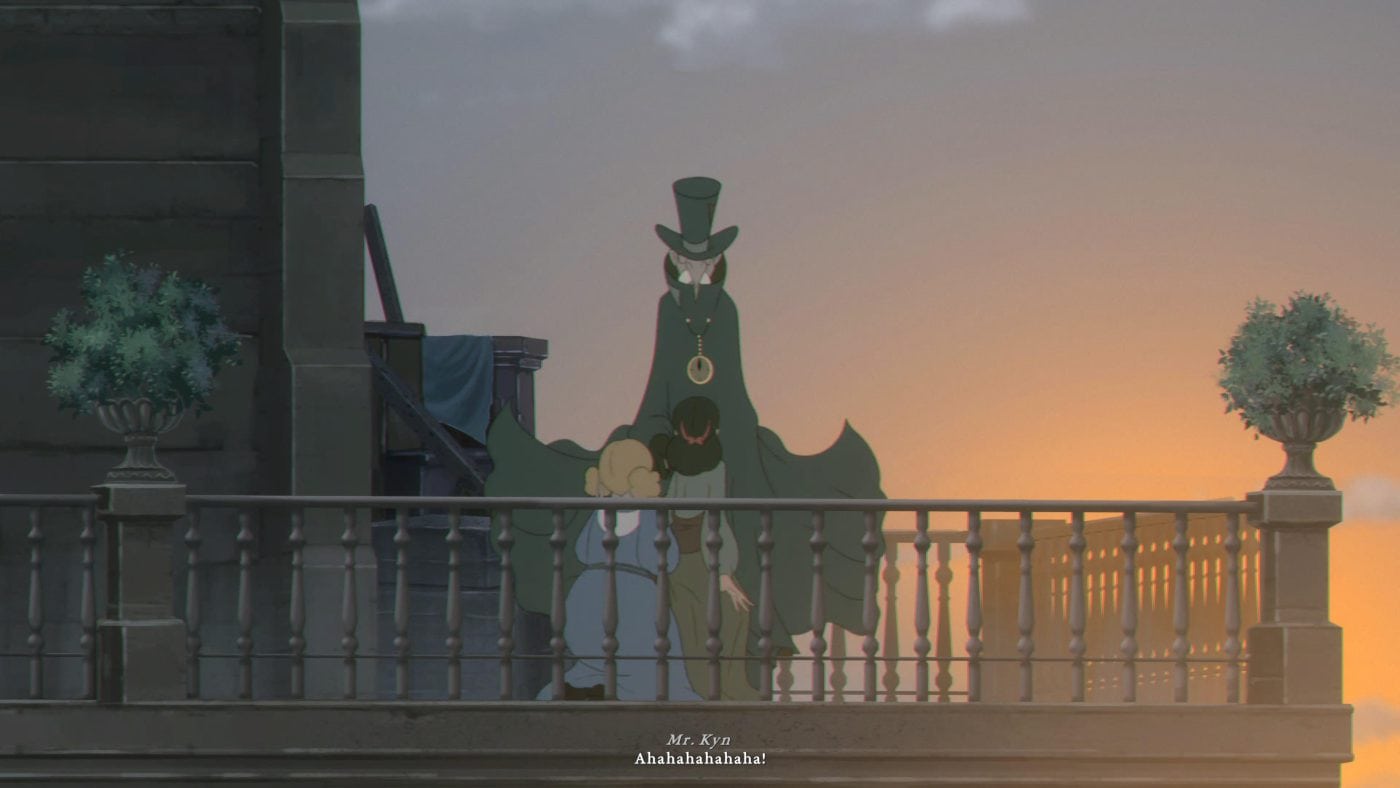
These shortcomings become even more apparent during the chase sequences, one of the most recurring gameplay elements. In theory, these moments should serve as key drivers of tension and danger. In practice, they are where the game’s mechanical fragility is most exposed. Camera management proves inconsistent and insufficiently responsive, often failing to provide a clear view of the environment and its obstacles. This makes it difficult to anticipate routes, judge distances, and react deliberately, causing failure to feel less like the result of player error and more like a consequence of technical limitations. That said, on a conceptual and visual level, the stalkers still manage to leave a strong impression. Their design, symbolism, and characterization make them memorable figures, capable at times of instilling genuine unease.
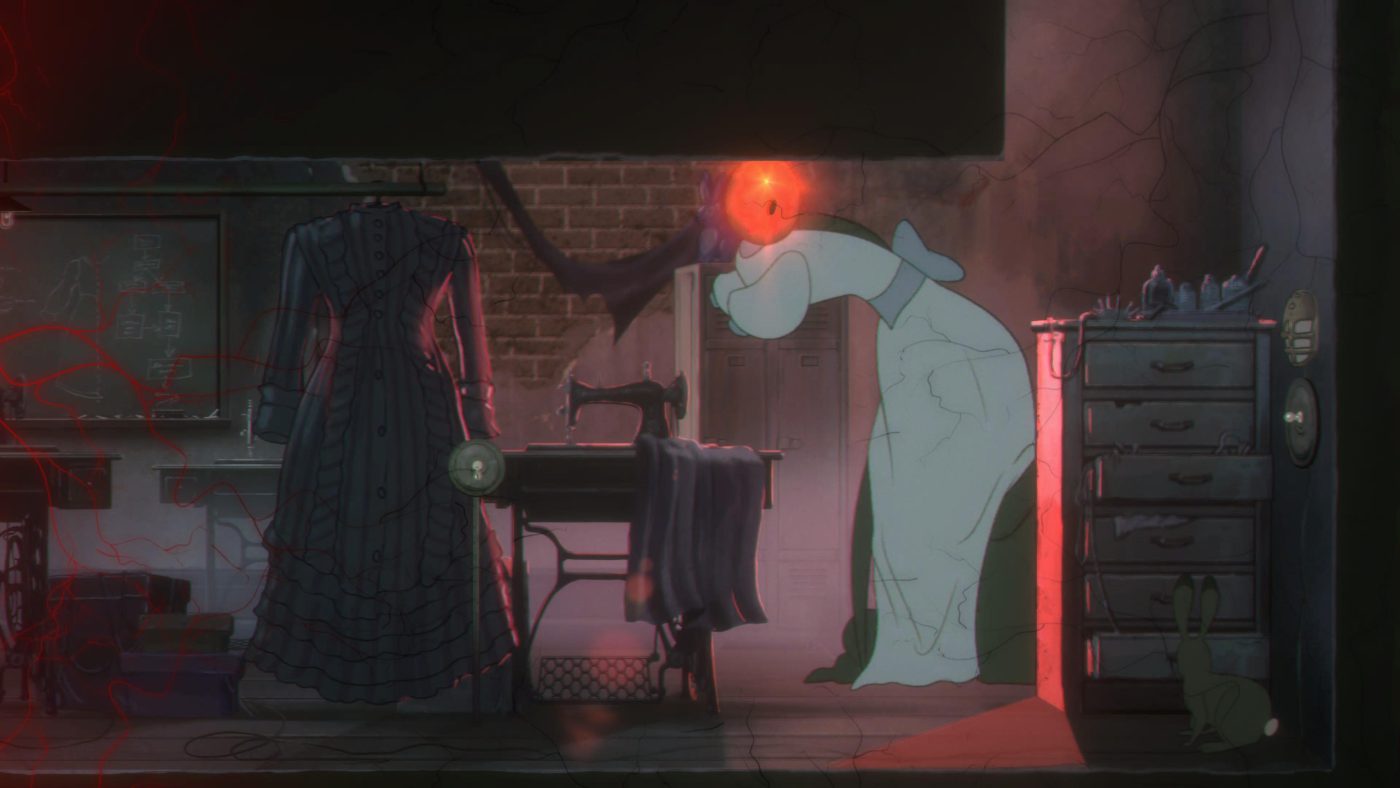
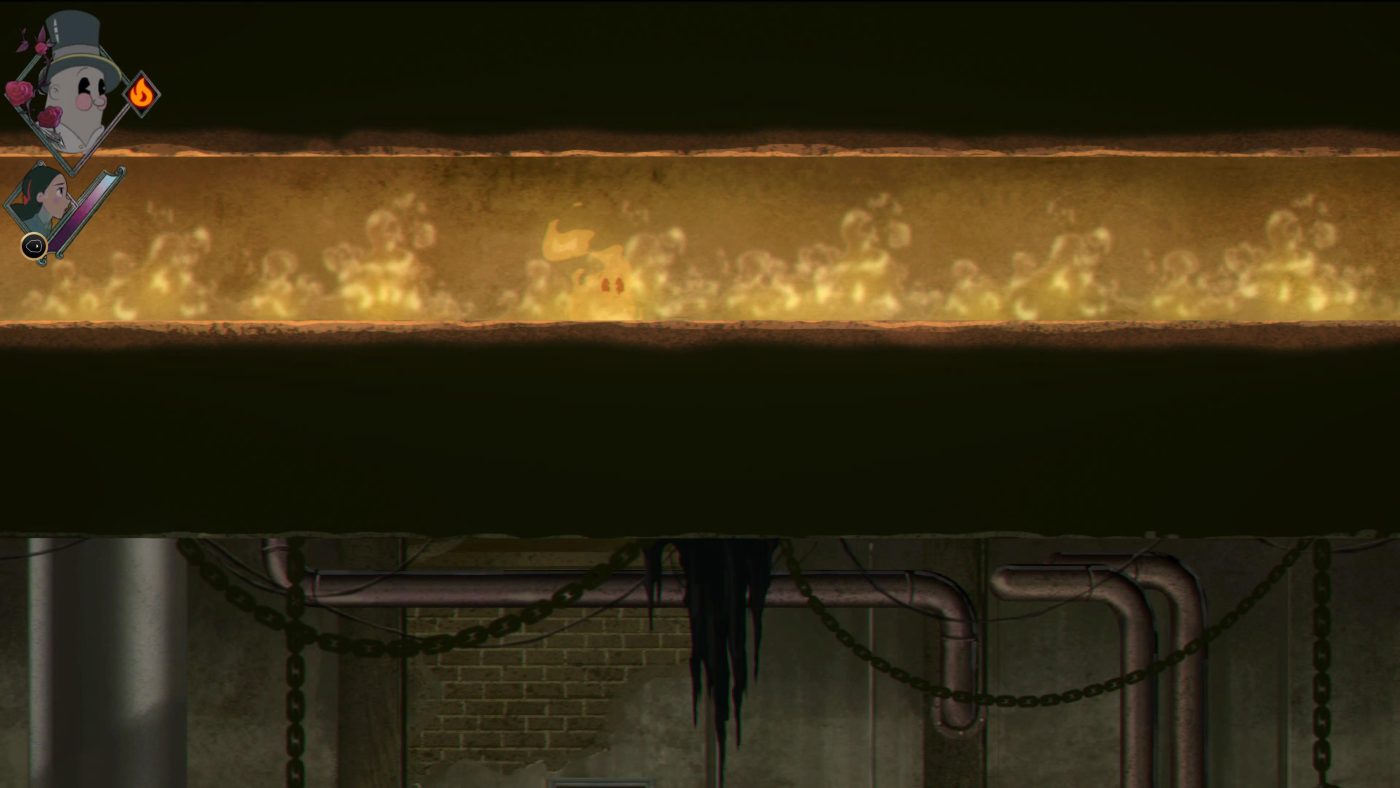
Among the more successful gameplay ideas is Lana’s ability to transform into a rabbit. This mechanic introduces a meaningful shift in pacing, granting greater speed and agility, particularly during escape sequences. Its value, however, extends beyond movement: the alternation between forms becomes central to environmental puzzle-solving, enabling access to otherwise unreachable areas and encouraging a more attentive reading of space.
Puzzle design as a whole, however, remains uneven. Some challenges stand out for their inventiveness and organic integration with the game world – particularly those involving characters such as Mister Baesie, whose unconventional abilities introduce distinctive mechanics that enrich the overall design. Other puzzles, by contrast, rely on more predictable logic or repeated patterns, diminishing their impact and sense of discovery.
The game also features several boss encounters, yet few of them manage to leave a lasting impression. More cinematic than genuinely interactive, these sequences unfold as tightly guided set pieces, built around rudimentary mechanics and visual spectacle rather than serving as genuinely demanding tests of player skill.
A Symphony of Color and Melody
If Bye Sweet Carole manages to resonate so powerfully despite its gameplay shortcomings, it is largely thanks to the extraordinary strength of its visual and sound design. These two pillars form the very backbone of the experience, shaping its identity and sustaining the player’s engagement in ways that gameplay alone cannot.
This is not mere aesthetic decoration or technical competence – it is a deeply felt artistic vision, one that permeates every frame, every movement, every note, transforming the game into an emotional space long before it becomes interactive. In Bye Sweet Carole, art and sound do not accompany the narrative – they embody it, carrying its weight, its emotion, and its meaning.
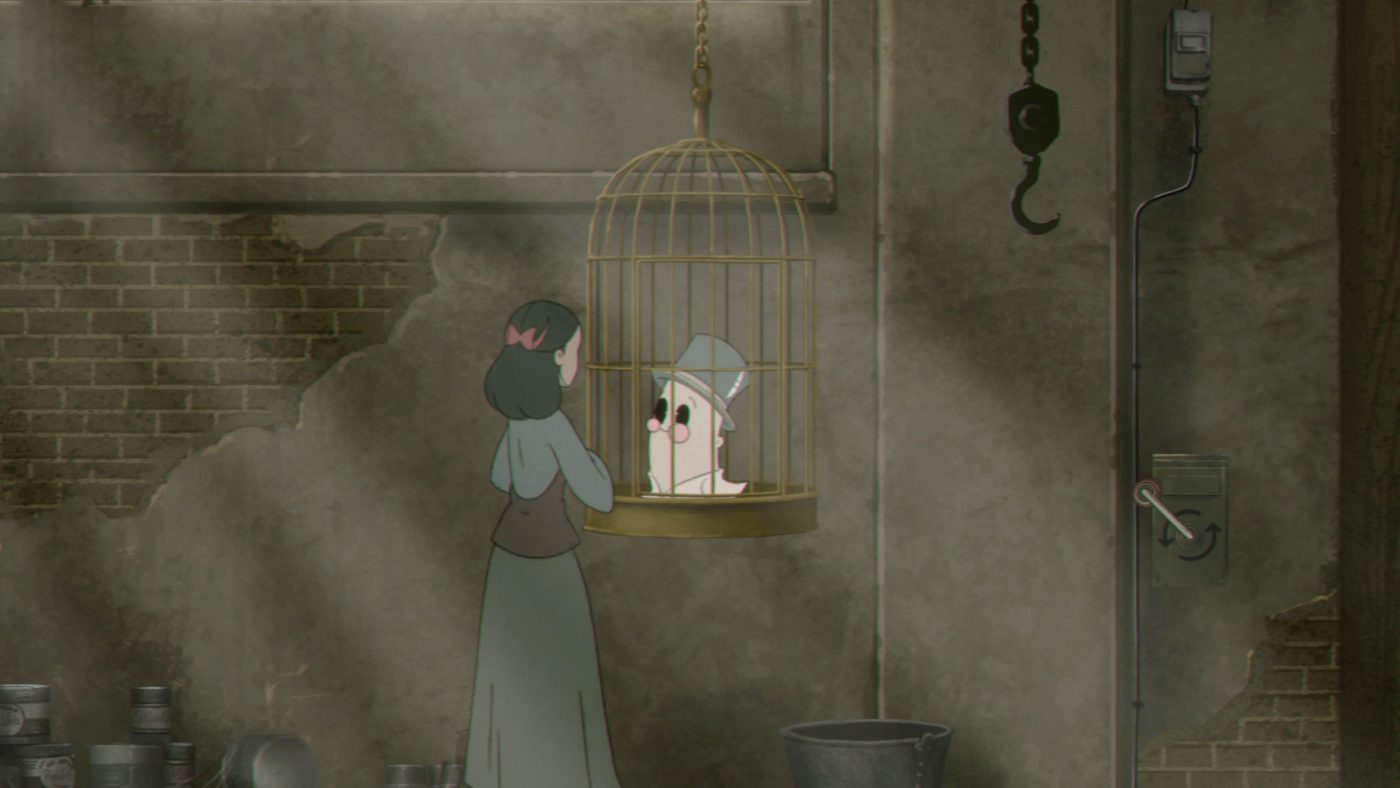
Visually, the game reaches its expressive apex. The world feels hand-crafted, imbued with a sense of artisanal care increasingly rare in contemporary digital media. In an era dominated by polished, sterile, and often impersonal imagery, Bye Sweet Carole deliberately embraces imperfection: jagged edges, irregular strokes, and subtle inconsistencies give each scene an emotional texture that evokes presence, intimacy, and vulnerability. Each environment, character, and animation carries the unmistakable mark of human intention, inviting players into a space that is as tactile and alive as it is narratively and symbolically rich.
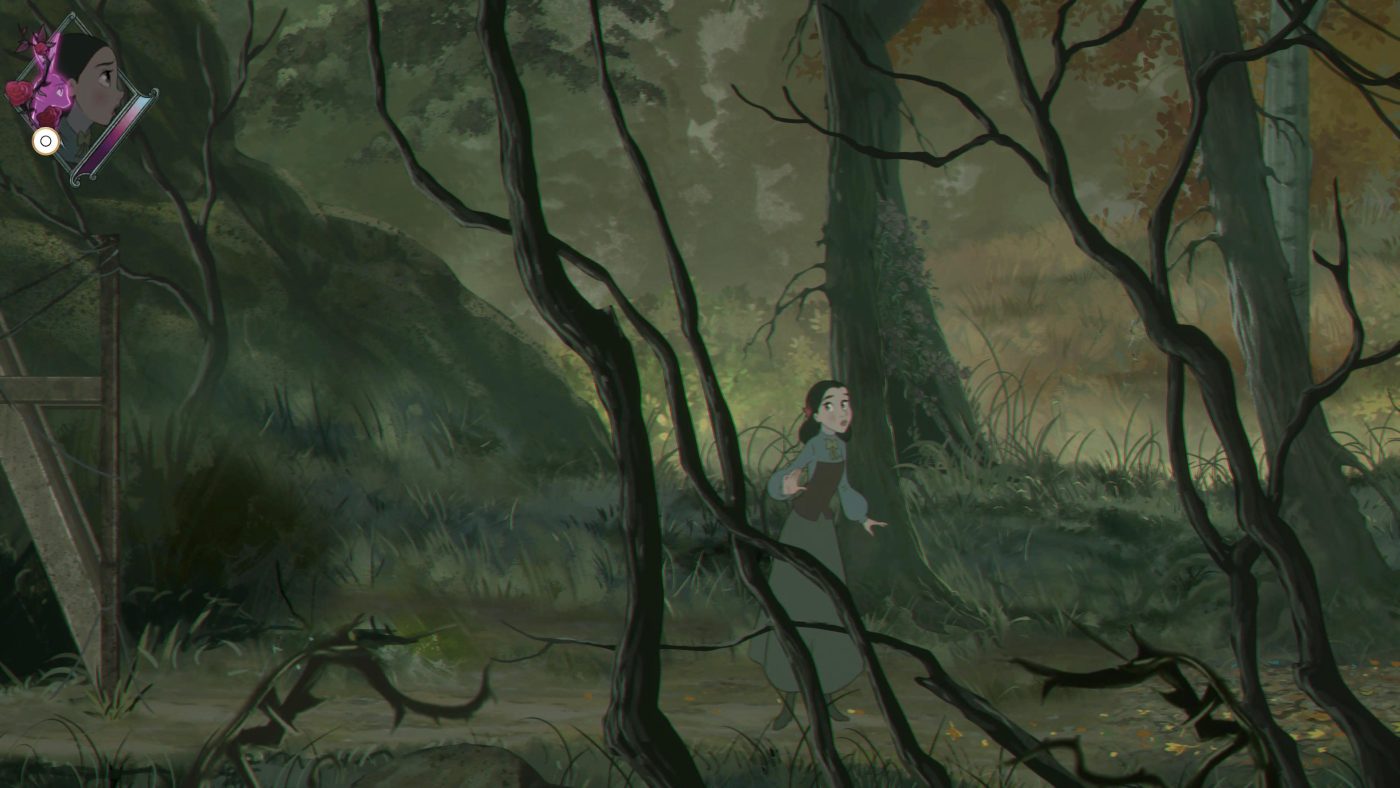
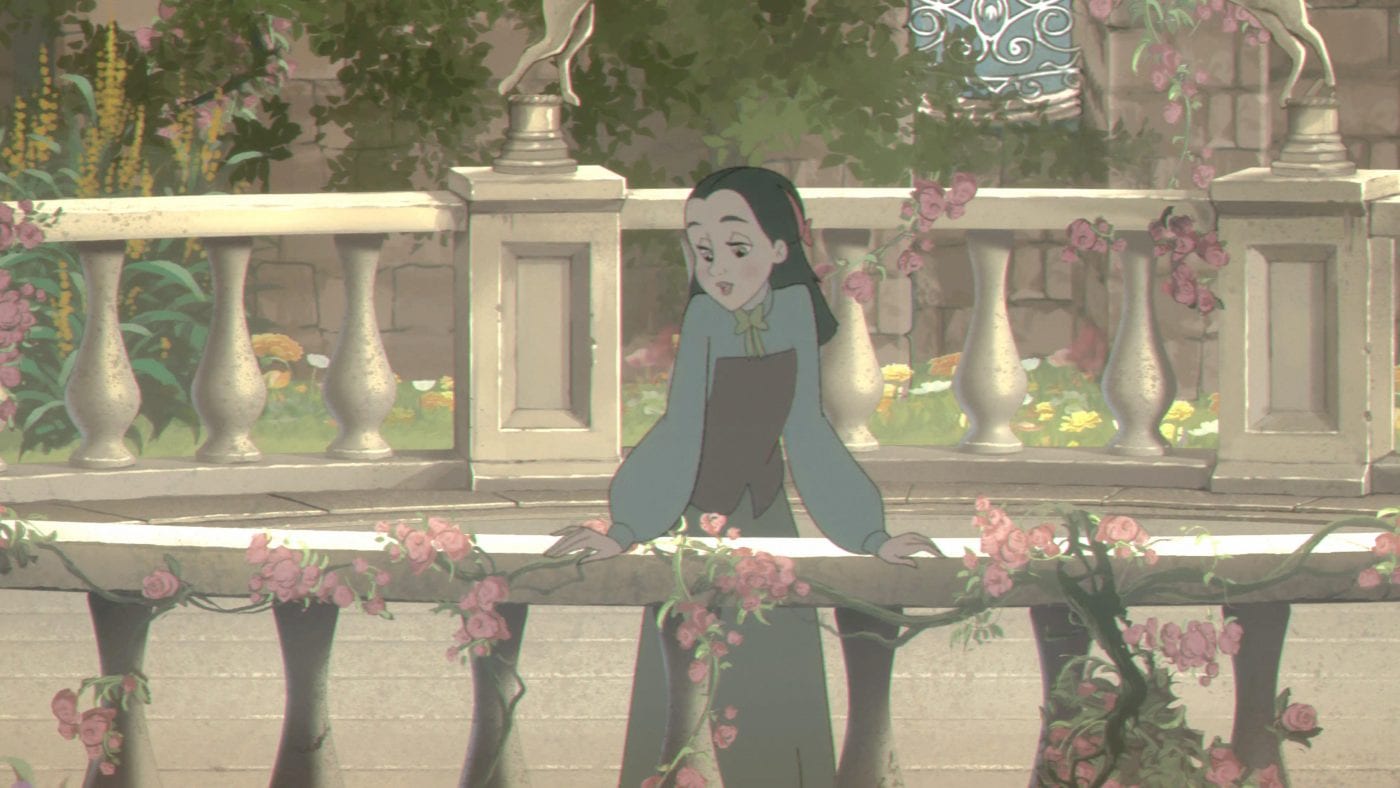
The art direction demonstrates a rare and compelling mastery in navigating the duality at the heart of the game. On one side lie the narrow, decaying corridors of Bunny Hall Orphanage, steeped in shadows, silence, and an ever-present sense of unease; on the other, the radiant, almost sacred expanses of the realm of Corolla, where light and color are imbued with profound symbolic and spiritual significance. This contrast is never merely decorative – it mirrors Lana’s inner turmoil, her fragile psyche, and the oscillation between fear and wonder that defines her journey.
Composition, color palette, and the interplay of silhouettes are meticulously orchestrated to convey emotion, foreshadow events, and evoke memory, creating a narrative that unfolds not just through words, but through visual storytelling.
The auditory design is equally remarkable, operating in perfect harmony with the game’s visual storytelling. Luca Balboni’s score weaves seamlessly into each scene, amplifying emotional resonance without ever dominating it. Sparse, suspended passages alternate with richer, thematically charged motifs, crafting a dynamic soundscape that mirrors Lana’s fractured perception and the delicate instability of her world. Leitmotifs recur in transformed, fragmented, or reassembled forms, reflecting the protagonist’s emotional arc and reinforcing the game’s intimate, disjointed narrative.
Environmental audio further grounds the experience, imbuing spaces with a tactile, almost physical presence, while strategic use of silence functions as a narrative instrument in its own right – heightening suspense, accentuating vulnerability, and cultivating anticipation. Time and again, it is through sound – or its intentional absence – that the game guides the player’s emotional journey, signaling imminent danger, underscoring fragility, or deepening the resonant poignancy of each moment.
The Beauty of Being Fragile
Bye Sweet Carole is a work that lives in its fragility – and it is precisely there, within that fragility, that it finds its most authentic power. Vulnerable, imperfect, fully aware of its limits yet unwavering in its intent, Chris Darril’s creation hides nothing, makes no concessions and refuses easy compromises. Every choice, every flaw, every hesitation becomes part of its identity, contributing to an experience that transcends the label “video game”: it is an emotional journey, a dark fable that slips under the skin, unsettles us and lingers long after the screen goes dark.
Bye Sweet Carole reminds us that beauty is not found in perfection. Its flaws, idiosyncrasies, and vulnerability are far from weaknesses; they are its language – the way it communicates directly with the player. Fragility becomes narrative architecture, an emotional lexicon, and a sign of unflinching authenticity. The game teaches that power can exist without absolute control, that a life can be expressed through its limitations and imperfections, and that the truest strength of an artwork often resides in the courage with which it dares to show itself.
And Chris, we want to speak to you directly, beyond critique or technical analysis. Within your work lies your whole self: the sensitivity of an artist, the perceptiveness of a storyteller, and the honesty of a creator. You have crafted a world that speaks in the most powerful language there is – the language of the heart.
And one final thought, from the depths of our own: your mother would be immeasurably proud of you. Proud of the courage you’ve shown, of the sincerity with which you’ve laid bare fragility and beauty, and of the way you have transformed your emotions into art. She would recognize in Bye Sweet Carole not a flawless product, but an authentic voice – a work that dares to move, to resonate, and to leave a lasting mark. In that, Chris, you have already won.

Bye Sweet Carole
PRO
- Outstanding art direction;
- A strong, mature narrative;
- Exceptional sound design;
- A memorable and distinctive soundtrack.
CON
- Enemy AI is sluggish and often predictable;
- Imprecise controls and a poorly managed camera;
- Gameplay is affected by numerous bugs.


8/10