A sharp, satirical journey through the absurdities, contradictions, and culture of modern gaming.
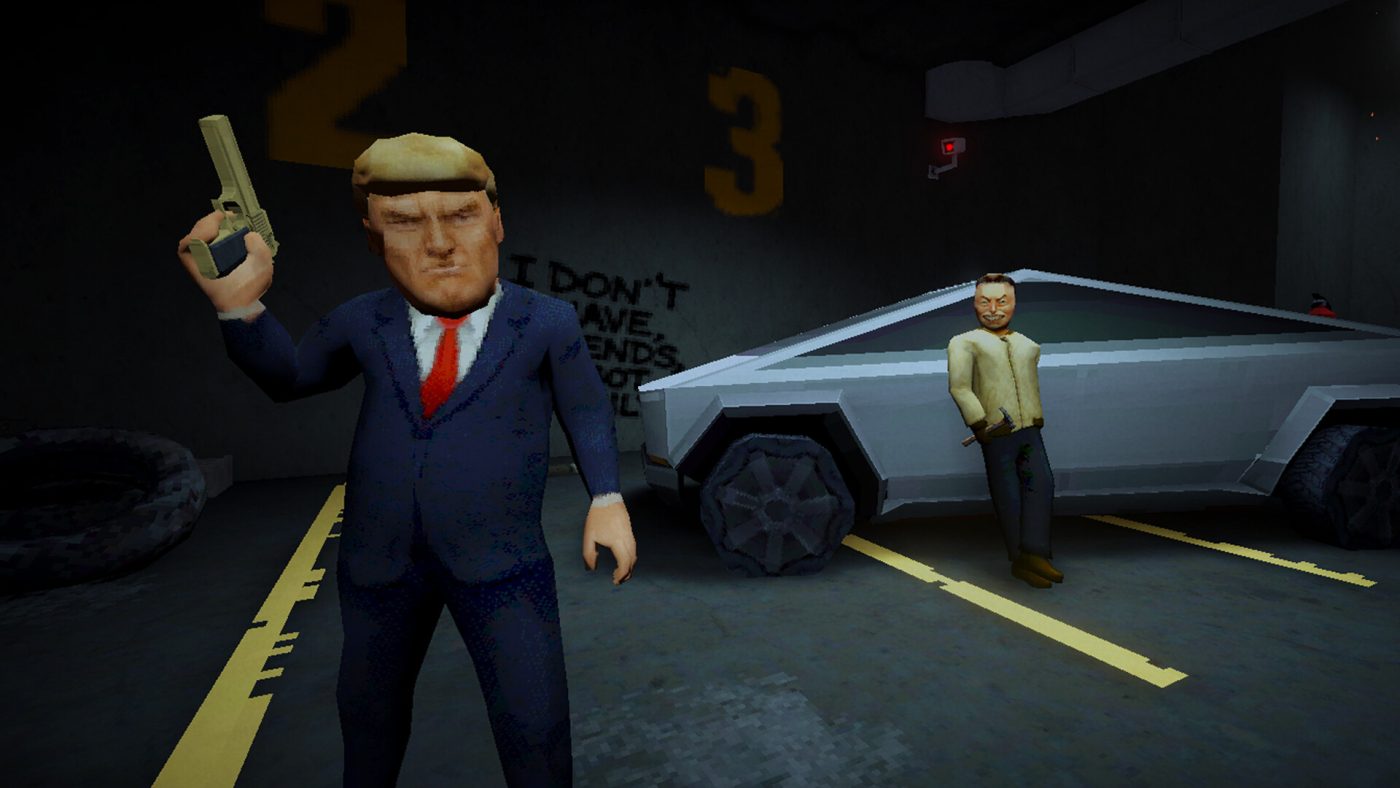
In today’s increasingly saturated FPS market, standing out requires far more than technical proficiency or high production values. True distinction emerges from a clear authorial vision, a coherent and ambitious creative approach, and the courage to embed meaningful commentary within the gameplay itself. MR DONALD, the upcoming indie first-person shooter from RSK Team GG, currently available in demo form on Steam, exemplifies this principle. It is a deliberately unconventional FPS that blends political satire, industry critique, and meta-narrative techniques rarely seen in games of its scope.
From the very first sequences, the demo communicates a deliberate and confident creative vision. Its caricatured visual style and intentionally irreverent tone may suggest a primarily comedic experience, yet as players progress, a more complex thematic layering becomes evident. Beyond mere provocation or superficial humor, MR DONALD uses satire as a lens to interpret the contemporary state of gaming, exploring topics such as aggressive monetization models, evolving cultural identities of the medium, and the increasingly intricate relationships between developers, audiences, and industry stakeholders.
Humor as a Vehicle for Critical Reflection
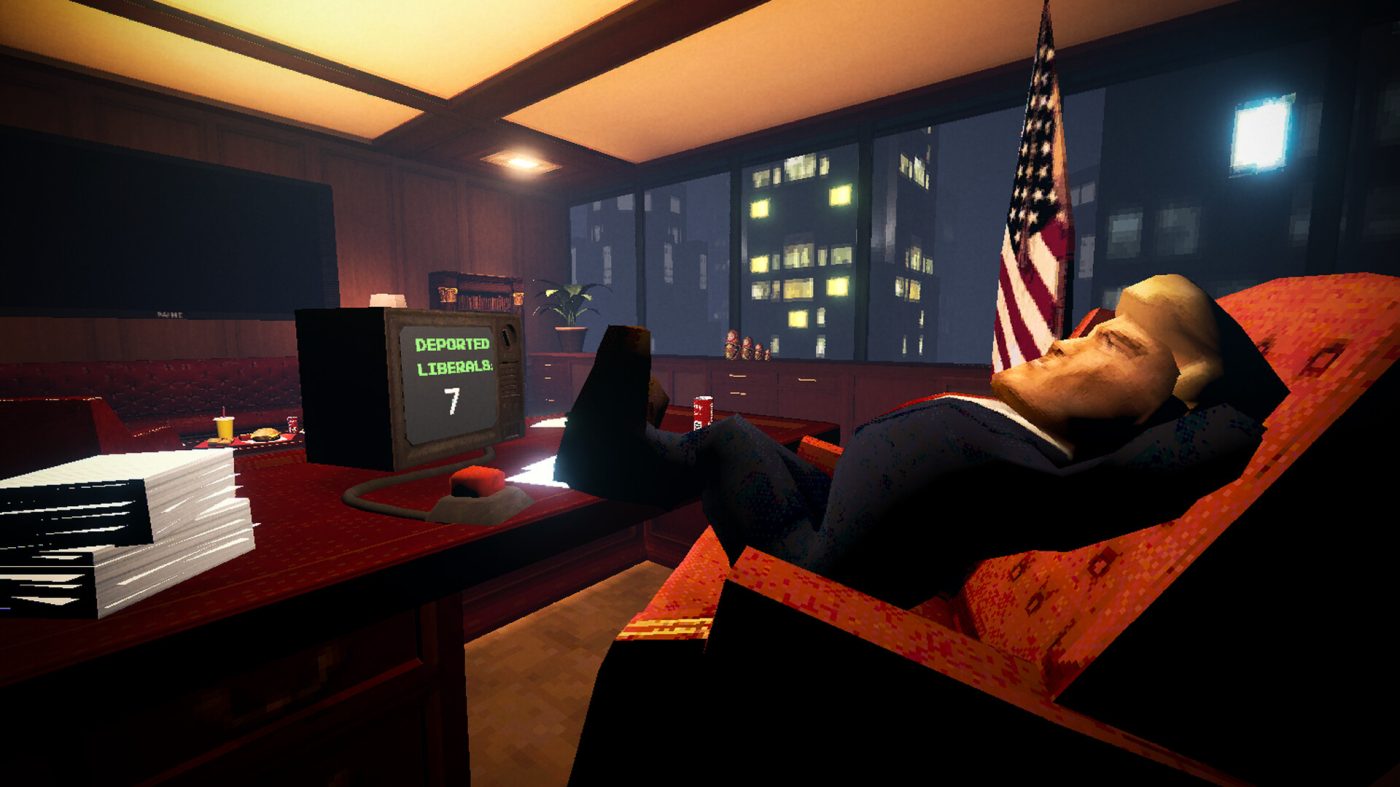
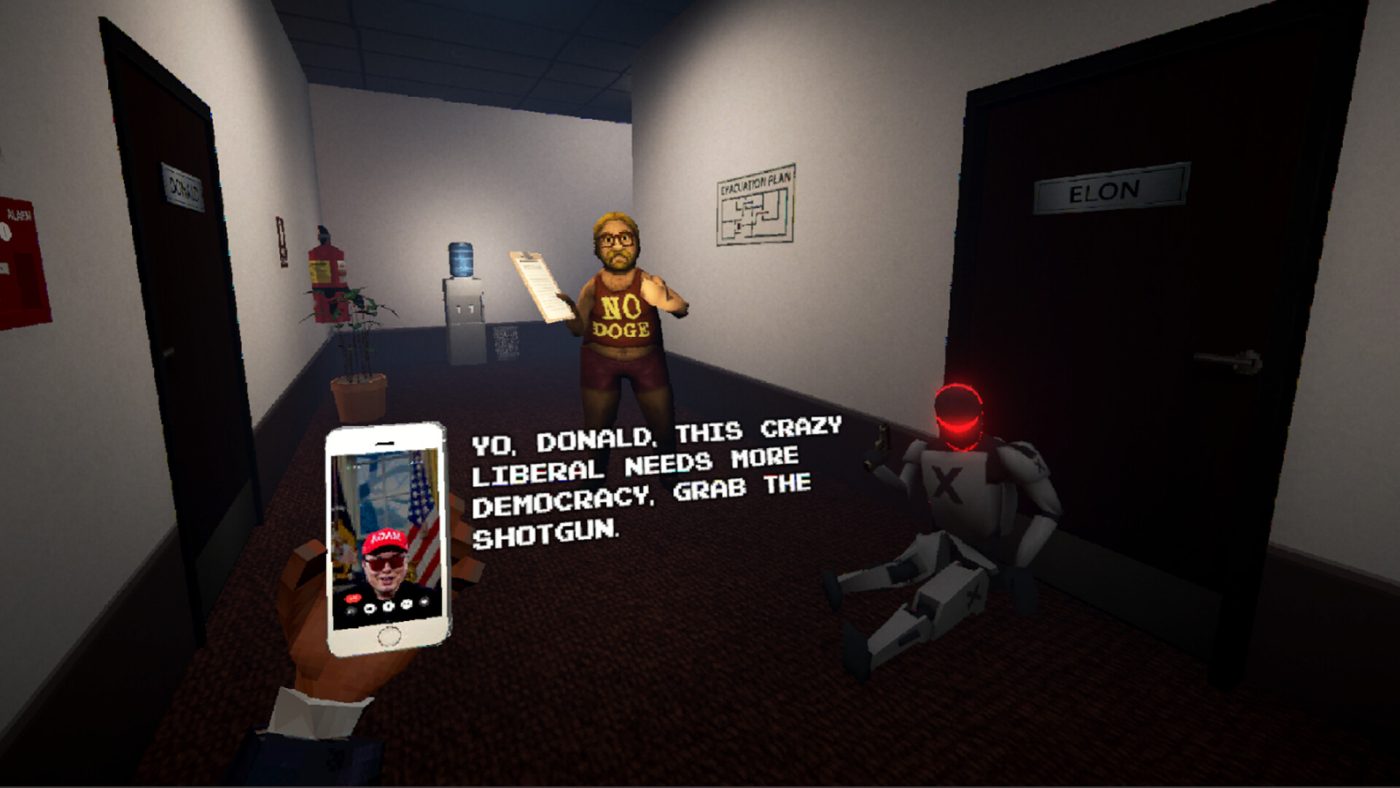
The game begins with players stepping into the role of a hyper-caricatured Donald Trump within the White House. This opening sequence serves a dual function: it introduces core gameplay mechanics while simultaneously establishing the game’s irreverent narrative and satirical tone. The environment is filled with interactive elements that reinforce both the humor and the underlying critique of contemporary gaming culture.
The writing exhibits a sophistication rarely seen in parody-driven games. Humor and gags are never superfluous; instead, they serve as precise instruments for reflecting on industry practices, cultural conventions, and the evolving relationship between developers and players. This delicate balance between wit and critical observation stands out as one of the demo’s most compelling and intellectually engaging strengths.
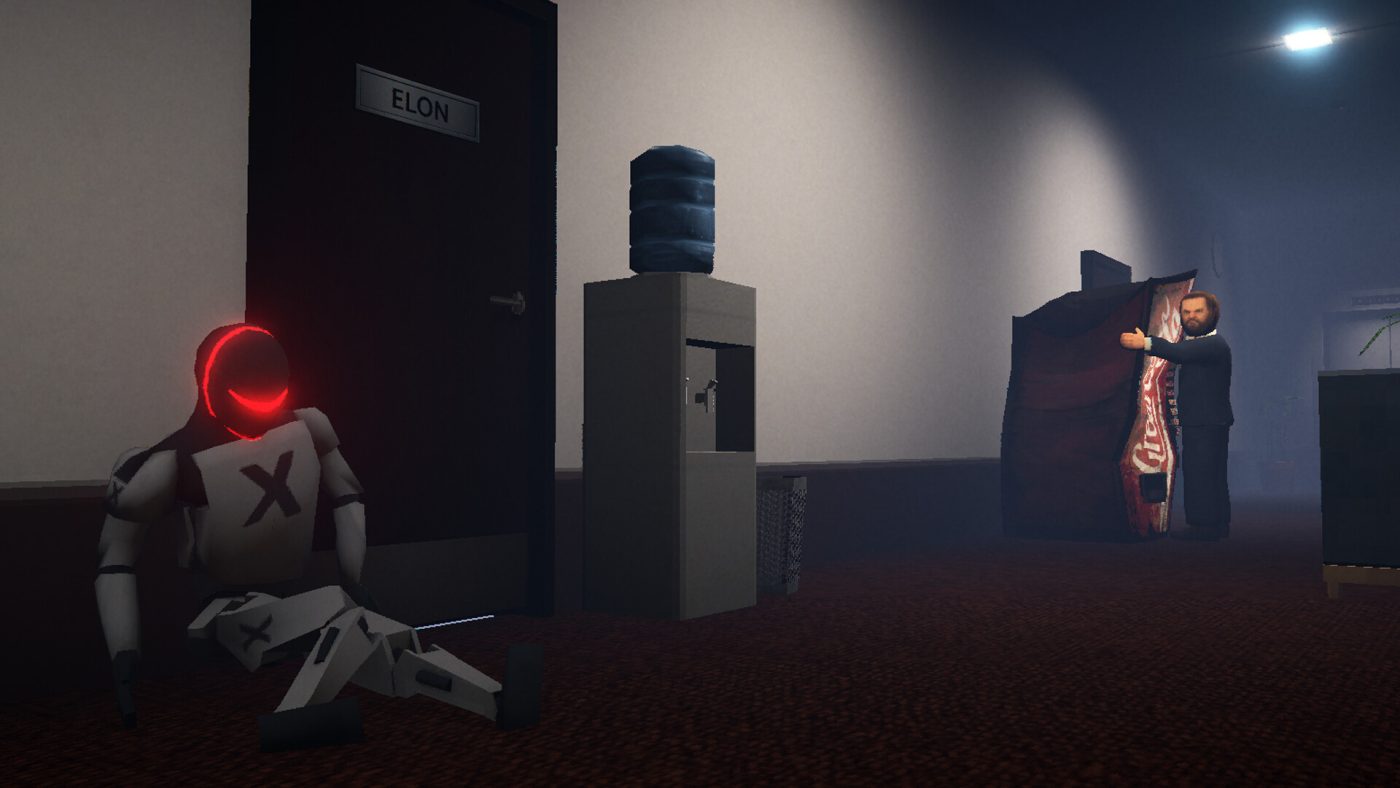
Adding further depth, a fictionalized Elon Musk serves as co-protagonist for much of the experience. Delivered through radio communications and contextual dialogue, he fulfills multiple functions: acting as a guiding presence, providing carefully calibrated moments of comic relief, and serving as a meta-narrative anchor that seamlessly integrates the game’s satirical layers into a coherent whole.
Level Design: Symbolism, References, and Environmental Storytelling
The demo’s central segment takes place in a fictional “Monetization” base concealed beneath the Vatican – a deliberately symbolic setting that delivers a pointed critique of the near-dogmatic reverence for monetization strategies in contemporary gaming culture. From a structural standpoint, the level design is highly intentional, demonstrating clear technical and conceptual awareness.
The influence of early Half-Life is unmistakable: linear progression cleverly masked as organic exploration, environmental storytelling integrated into spatial design, and a measured alternation between combat, exploration, and light puzzles.
Particularly notable sections include:
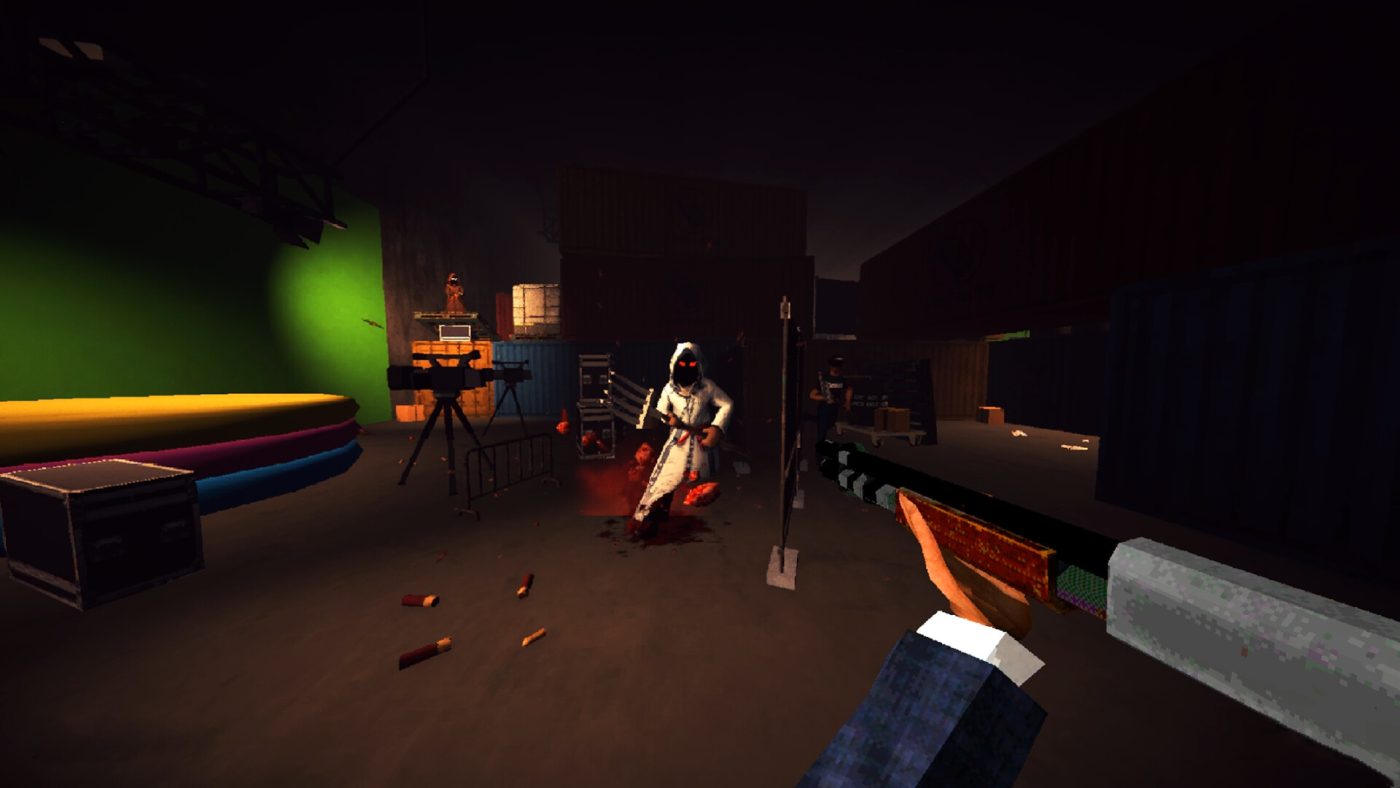
- Caricatured development studios, satirizing European industry stereotypes and common development tropes;
- The “bug zone,” where glitches and crashes are incorporated as both gameplay mechanics and metaphorical commentary on industrial fragility;
- Monetization sequences, forming the demo’s thematic core and delivering its most pointed critique.
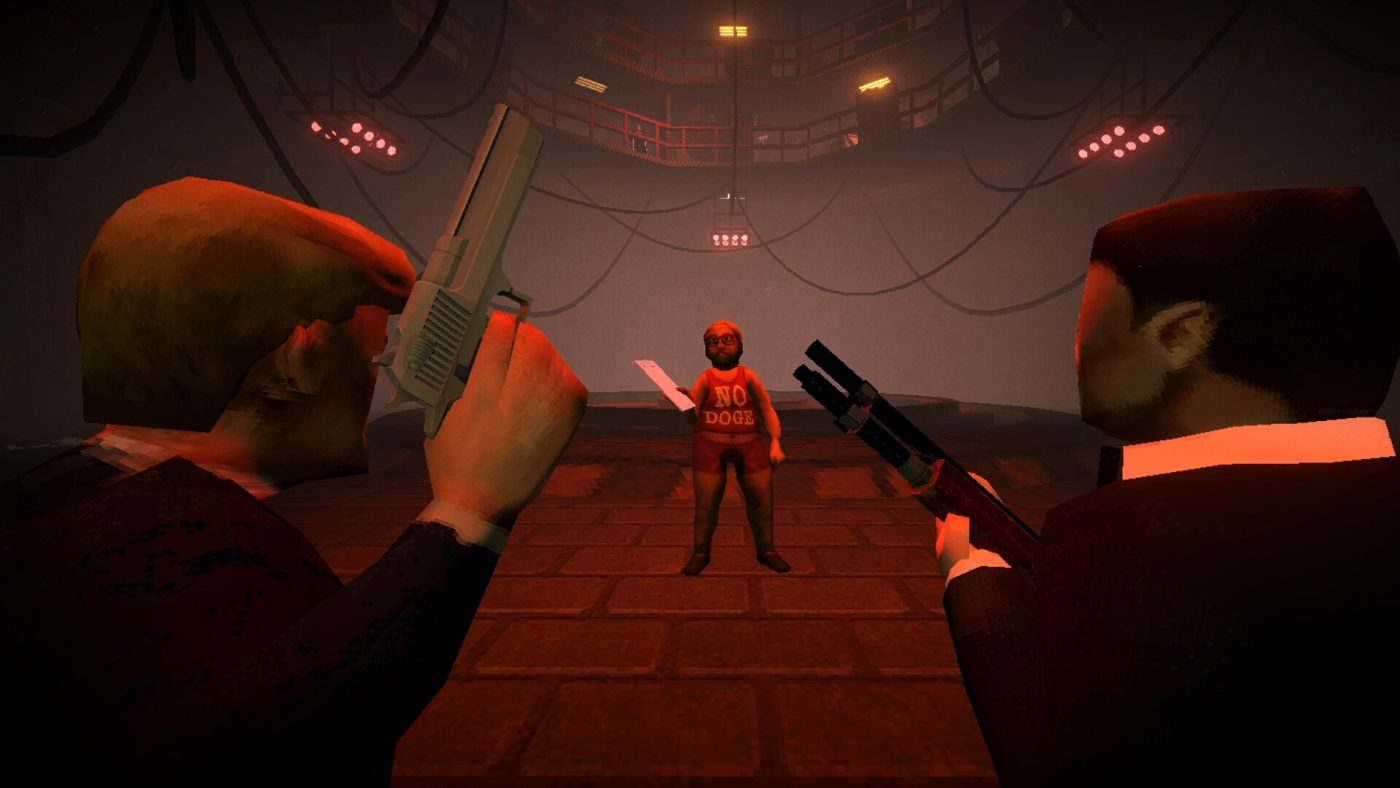
The climax of this segment – a formidable boss encounter – functions on two levels: as a rigorous test of player skill and as a symbolic reflection of the structural complexities and often invisible challenges inherent to contemporary game development.
Gameplay and Gunplay at the Heart of the Experience
Despite its satirical framework, MR DONALD demonstrates a robust and competent FPS core. Gunplay is fluid and responsive, reinforced by precise audiovisual feedback that convincingly conveys weapon weight and impact. While the demo’s arsenal remains limited, combat feels deliberate and satisfying, with each shot carrying palpable consequences.
- Weapon handling: The responsiveness, recoil, and feedback systems suggest potential to rival established genre benchmarks. Soldier of Fortune serves as a reasonable point of comparison for the fidelity of hit detection and impact.
- Enemy AI: Though behaviorally simple, it is sufficient to maintain pacing and tension. Encounters challenge players without feeling unfair or interrupting the flow of gameplay.
- Combat rhythm: The design strikes a balance between immediacy, precision, and strategic engagement, laying the groundwork for deeper tactical variations in the full release.
Audio and Visual Design: Supporting Tone and Readability
Sound design emerges as one of the demo’s strongest assets. The soundtrack dynamically supports gameplay, seamlessly shifting between high-energy combat tracks and more atmospheric passages. The final boss theme stands out for its dramatic intensity, underscoring tension and reinforcing narrative stakes.
Visually, MR DONALD adopts a stylized, caricatured aesthetic rather than pursuing photorealism – a choice that aligns with both its indie production scope and its satirical ambitions. Though modest in technical complexity, the art direction is coherent, enhances the game’s tone, maintains clarity and readability during combat, and complements the narrative voice with precision.
Meta-Narrative and Community Integration
Perhaps the most distinctive element of the demo is its explicit fourth-wall-breaking. Players encounter moments where the game communicates directly with the developer, integrating real-world tools – social media, Discord servers, and feedback forms – seamlessly into the narrative structure.
This approach enriches the overall experience while reflecting a broader trend in indie development: fostering transparency and meaningful engagement between creators and players. By transforming the audience from passive consumers into active participants, the game introduces a surprisingly intimate dimension, adding emotional resonance to its satire without diminishing its humor or irreverent tone.
Areas for Improvement
Despite its many strengths, the demo remains a work in progress, with several areas that could benefit from refinement:
- Weapon Balancing: Certain firearms would benefit from adjustments to damage, recoil, and reload times, allowing for more nuanced tactical options.
- Enemy AI: Opponent behaviors could be diversified and made more reactive, enhancing engagement and maintaining combat tension.
- Technical Optimization: Performance, asset management, and overall fluidity could be further polished in specific sections.
- Encounter Variety: Introducing a wider range of enemy types and scenarios would sustain tension and encourage strategic play.
These limitations are typical for a demo-stage release and do not substantially undermine the overall quality or potential of the experience.
Final Thoughts
MR DONALD’s demo outlines a project that is both ambitious and notably self-aware. While not yet fully polished – particularly in areas such as technical optimization and balancing – the game already demonstrates a clear authorial identity and a willingness to engage critically with the medium it inhabits. Its blend of sharp political and cultural satire, robust FPS mechanics, thoughtful meta-narrative design, and a clear, consistent creative direction positions it among the more intriguing indie shooter projects currently taking shape. Should the full release preserve and refine these elements, the game could move beyond mere parody, transforming into a sharp, thoughtful critique of contemporary gaming.
The demo is currently available on Steam and is highly recommended for players seeking FPS experiences that push boundaries, blend humor with critique, and offer something genuinely unusual in today’s market.