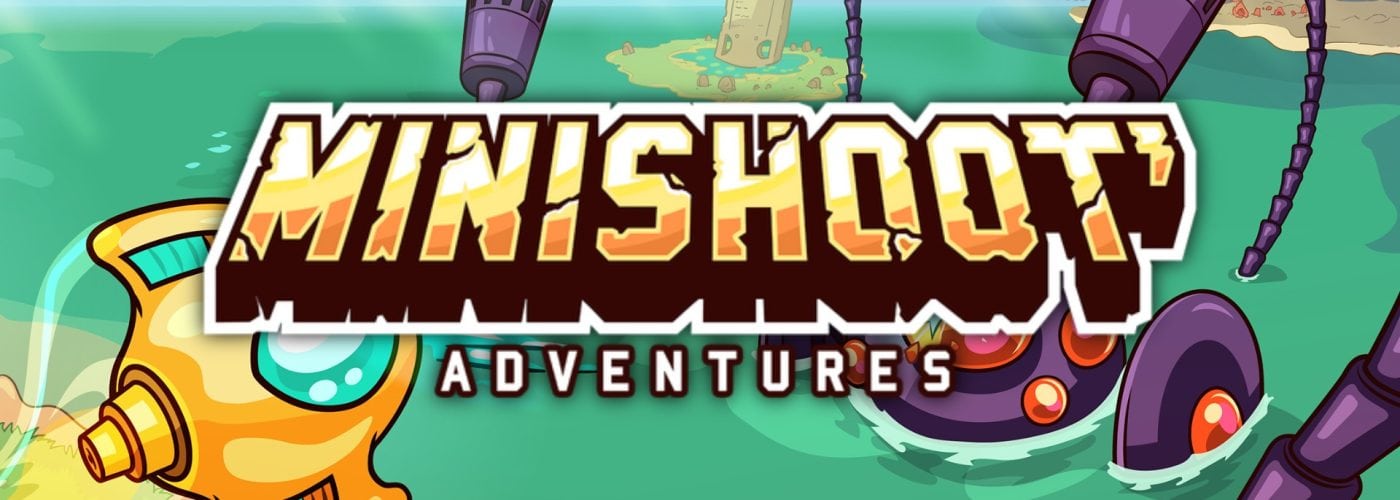
Minishoot’ Adventures delivers a well-balanced mix of bullet-shooter, RPG, and Metroidvania elements within a small but carefully crafted open-ended world. SoulGame presents a mature work that’s far more complex than it initially appears.
Before getting my hands on Minishoot’ Adventures, I thought I was about to play a simple yet well-made adventure. A nice idea inspired by the original The Legend of Zelda on the Nintendo Entertainment System. That very element caught my attention and led me to download it from my Game Pass and give it a try.
Well, once I started playing, I found the saying “never judge a book by its cover” more fitting than ever!
Minishoot’ Adventures showcases remarkable care, style, and depth in both level and game design, crafted in a way that allows it to stand proudly alongside more renowned productions.
We find ourselves alone in a hostile, unknown world filled with secrets and things to discover. No one will hold our hand, aside from a brief but comprehensive tutorial at the beginning. This sense of solitude and discovery, combined with our (initially) limited abilities, forms the core of the experience. SoulGame successfully brought back the vibes of the first Zelda: that feeling of being lost, paired with the freedom to go wherever you want—so long as you accept the consequences.
Before moving on, a few words about the developers.
SoulGame consists of:
- Séverin Larose: Game designer, coder, animator, composer
- Adrien Sele: Artist and UI/UX designer
A team of two French cousins based in Toulouse. Since 2011, they have been carefully crafting all kinds of games using a method driven by pure passion and a desire to create deeply authentic experiences filled with fun, emotion, and a touch of nostalgia.
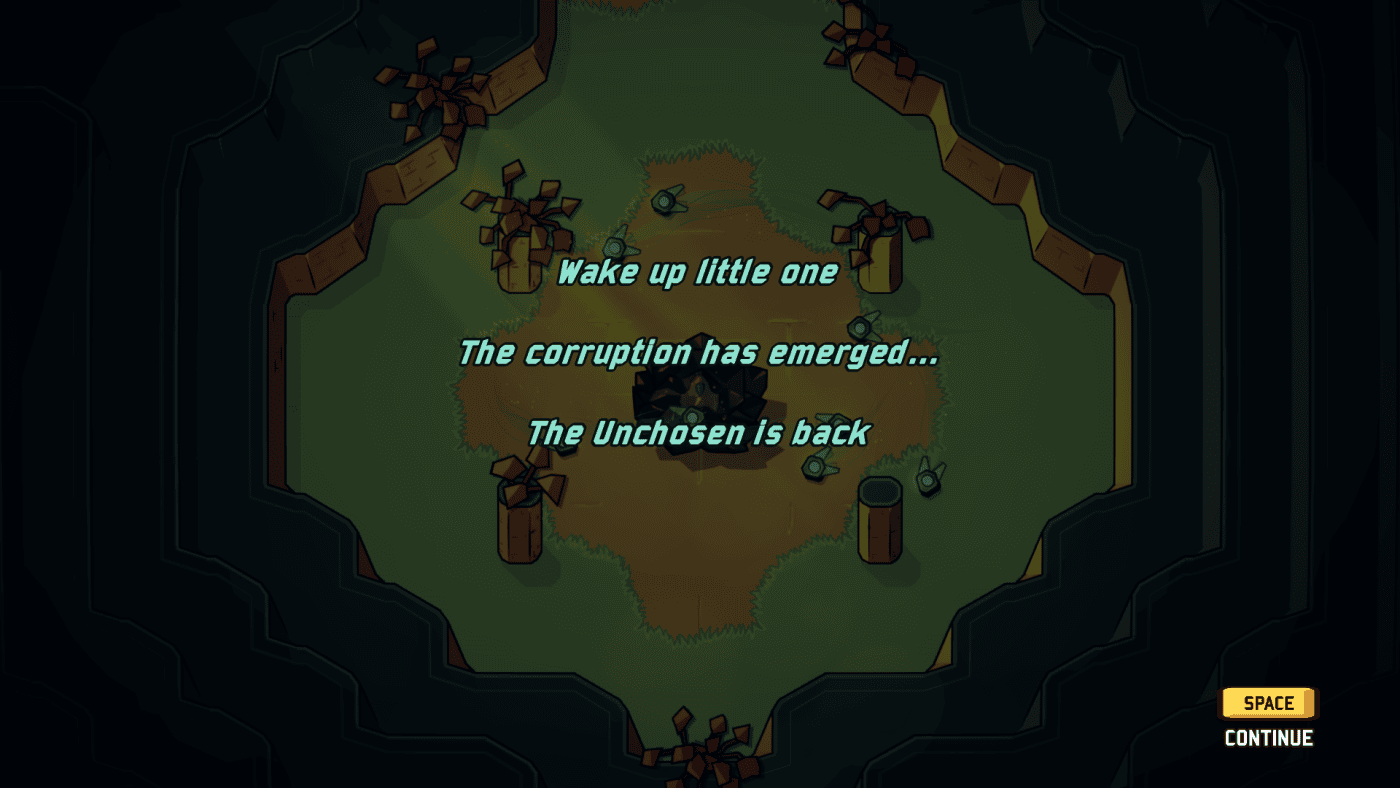
Let’s start with the story of Minishoot’ Adventures. Though presented in a simple way, ties together all the protagonist’s actions.
The Unchosen has returned!
Since ancient times, whenever a crisis arose, the Primordial Beetle would grant extraordinary powers to one of the small Shiplings to face adversity. One such moment occurred when massive ships from the depths attacked the Shipling village. As expected, the Primordial Beetle bestowed immense powers upon a young Shipling, who was naturally called the Chosen One.
After an epic battle, the Chosen One returned victorious and the village celebrated. But soon came the time to return the Primordial Powers to restore balance. Filled with pride and triumph, the Chosen One refused to give them up, forcing the Primordial Beetle to reclaim them by force. Devastated by this loss and humiliation, in a moment of rage, the Chosen One destroyed a blue crystal.
Reprimanded by the deity for this grave offense, the Chosen One was exiled and became the Unchosen, consumed by resentment and frustration, fueled by the corruption of a red crystal. This power brought devastation across the world. The Blue Village was annihilated, and the other Shiplings were trapped inside void crystals and hidden by guardians within dungeons.
Somewhere, in a deep cave, a void crystal trembled with life. Here begins our adventure. A young trapped Shipling has just been called by the Primordial Beetle to rise as the new Chosen One.
Aesthetic
This is one of the aspects that most strongly recalls the original The Legend of Zelda, along with the level design.
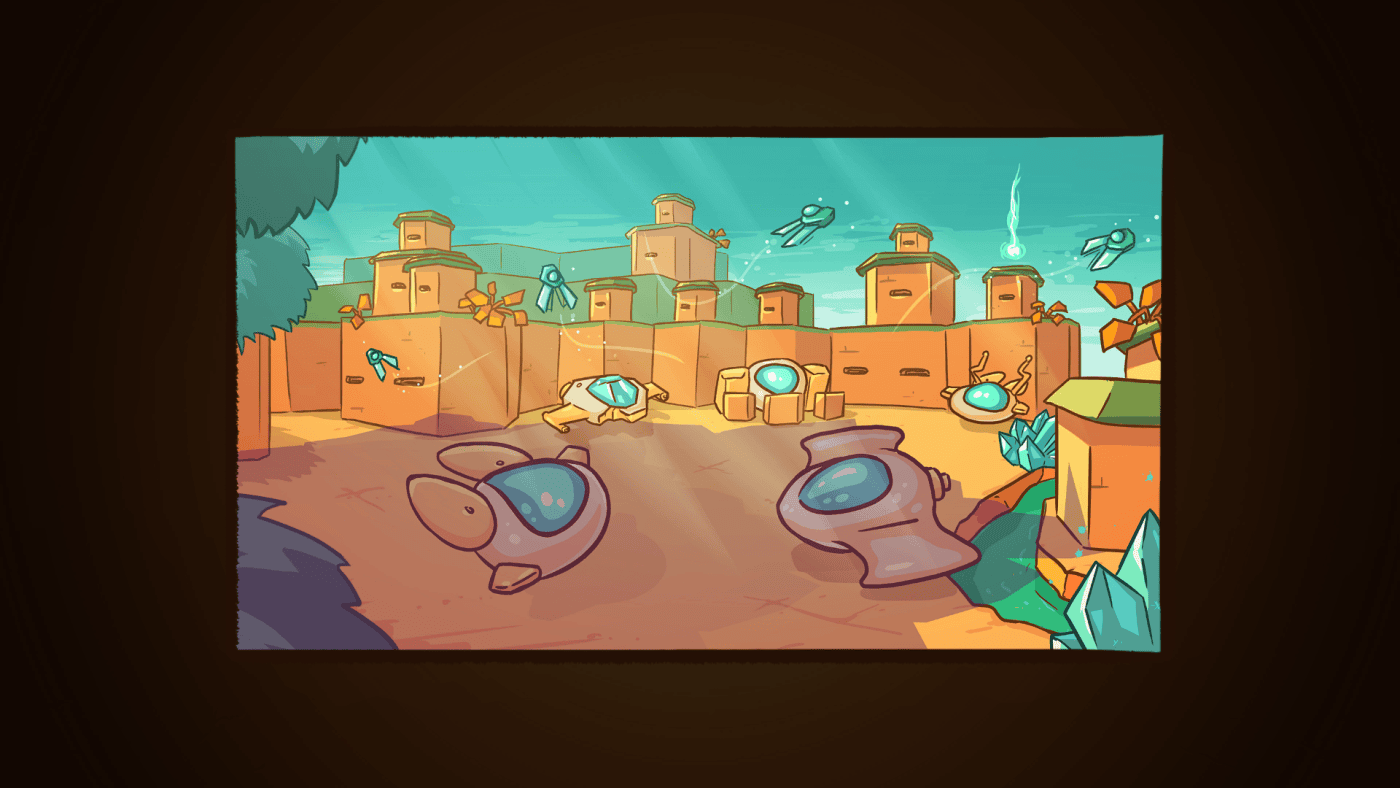
The map feels hand-drawn and thoughtfully designed. Despite the variety of biomes, the chosen style provides a strong sense of unity and coherence across the entire world.
Bright pastel colors, combined with simple geometric shapes carefully arranged in space, evoke the Hyrule of the 8-bit era. Forests, deserts, flooded areas, and ruined cities all seem inspired by classic settings from those older titles.
The addition of a fixed top-down camera enhances the nostalgic feel even further. The camera zooms in and out depending on the environment and events. Another neat touch, partly born from technical necessity, is the transition effect between certain map sections. The view seems to pause and then resume, mimicking classic screen scrolling. This clever trick turns a technical constraint into a retro and familiar effect.
Last but not least is the soundtrack: a mix of relaxing, meditative tracks combined with fast-paced drum beats and retro ‘80s and ‘90s synths. These rhythms amplify the bullet-hell phases and provide the right energy for challenging encounters.
Map and Level Design
The map in Minishoot’ Adventures shines not only aesthetically but also in its world and dungeon design.
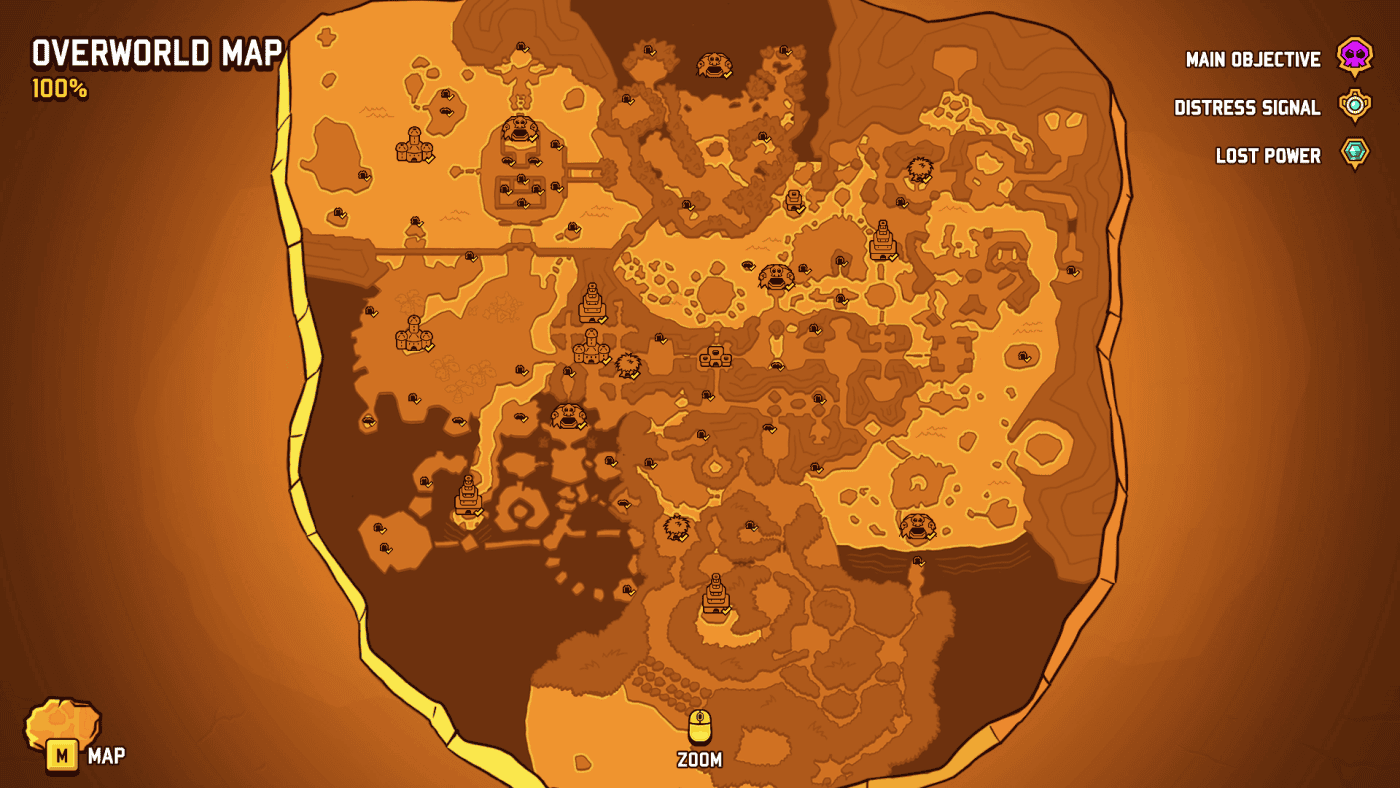
At the beginning, only a small portion is visible, but players can venture beyond known areas. However, exploration alone doesn’t automatically reveal the map. You’ll need to find map fragments to uncover each biome. Even when well hidden or placed as dungeon rewards, the level design subtly guides the player toward them. A clear sign of good design.
The map is very readable and helps players navigate effectively.
As tradition dictates, the world is divided into biomes and filled with dungeons, secrets, and clever shortcuts. Alongside main story dungeons, there are optional ones as well. While the game offers great freedom and doesn’t force full exploration. Do it anyway!
Even the simplest exploration rewards players: secret passages, rare items and trinkets, hidden merchants, and health upgrades make a big difference. The map also indicates where imprisoned ships are located. Go rescue them, you won’t regret it.
You may also encounter open-area boss fights, some of which are quite challenging. Naturally, the rewards match the risk.
The Metroidvania Element
The game becomes even more engaging thanks to its Metroidvania mechanics.
Despite the freedom to explore, environmental obstacles will block your progress. The only way to overcome them is by completing the main dungeons and regaining lost primordial powers.
This system encourages revisiting previously explored areas to access new paths and dungeons. Some dungeons even feel like “nested” structures. Gradually unlocking more sections as the story progresses. For example (without spoilers), one dungeon reveals new areas over time and is essential for achieving the true ending.
Character Progression
Each destroyed ship grants experience. Once enough is collected, a blue crystal appears, allowing you to upgrade your ship’s abilities.
Although there are many abilities with well-balanced costs, not all significantly impact combat. With a bit of experience, it’s easy to identify the most useful ones. While the system doesn’t break the game, it definitely makes things easier.
Stronger enemies, optional bosses, and mid-bosses drop a special currency used to purchase accessories, upgrades, and trinkets from merchants scattered throughout the world. Don’t be discouraged by high prices. If you explore and fight enough, you’ll gather plenty.
Gameplay: Enjoyable Yet Frenetic
Minishoot’ Adventures teaches an important lesson: power is useless if you can’t dodge.
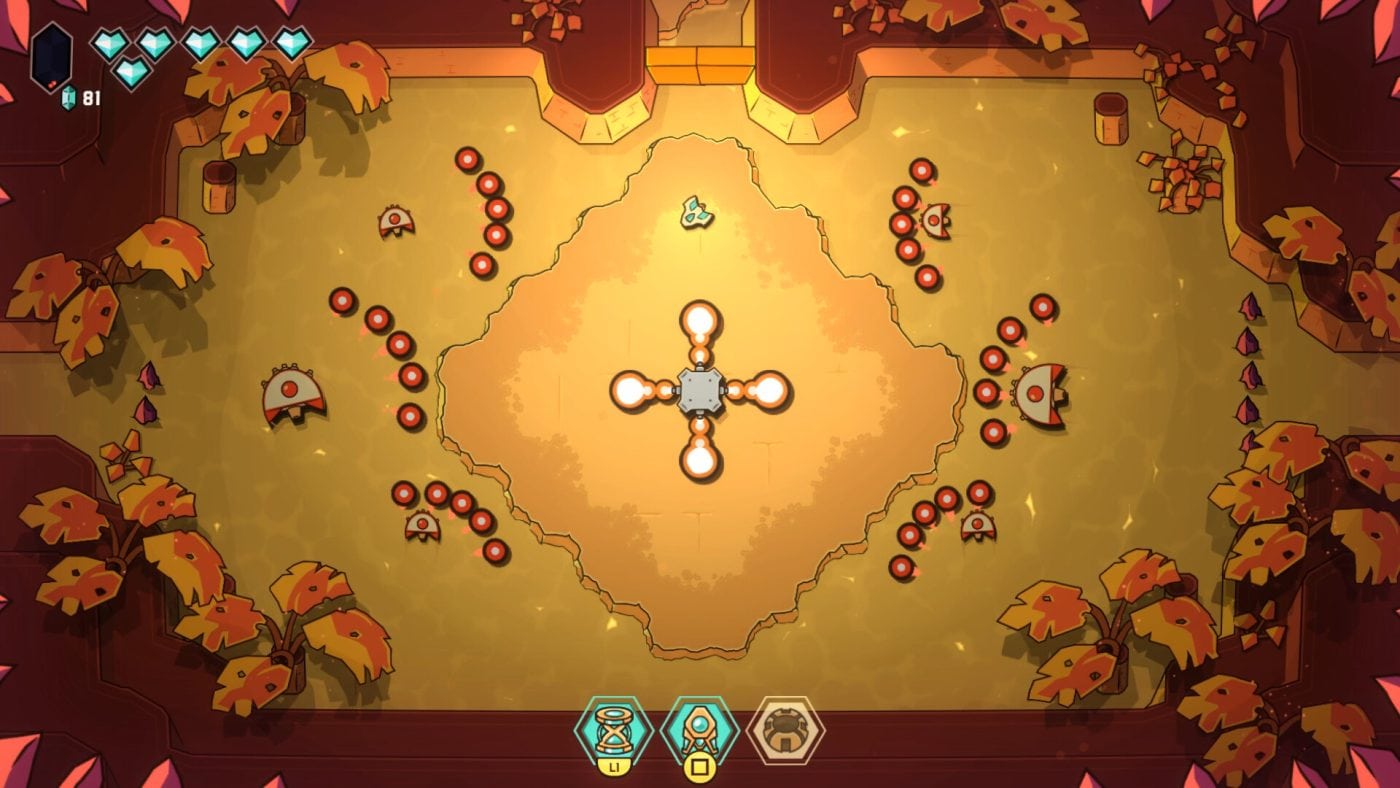
Many situations (and all boss fights) require quick reflexes, sharp observation, and the ability to read bullet patterns. No matter how strong you are, the sheer number of projectiles can become overwhelming.
Boss fights are extremely well-crafted, visually impressive, and multi-layered. They feature more than five phases, each with unique bullet patterns and speeds. The screen fills with projectiles, forcing you to carefully plan every move.
The true final boss, in particular, reaches full bullet-hell intensity. Overall, these encounters are highly satisfying.
There are, however, minor issues during some overworld encounters. While projectiles are generally distinguishable, they can occasionally blend into the environment. In open areas, you might get hit by “stray bullets” or unintentionally aggro enemies without noticing.
That said, the variety of enemies, biome-specific designs, and bullet patterns is impressive and well-executed.


My Two Cents
Minishoot’ Adventures is a game I owe an apology to.
I never expected such depth beneath its surface. Its structure and apparent simplicity lead players to almost unconsciously complete everything. Thanks to a readable map, strong quality-of-life features and good level design.
Its minimalist aesthetic works wonderfully for both environments and enemies. Each ship, even those you rescue, has a unique design, and seeing them communicate in their own language is adorable.
The level design brought me back to the 8-bit Zelda era and that constant sense of discovery, enhanced by the Metroidvania elements. Special mention goes to the excellent soundtrack.
Boss fights are challenging and rewarding, with difficulty sometimes pushing quite high. The camera is well-managed and never becomes an additional obstacle. Which I appreciated.
As mentioned earlier, some open-map encounters can feel visually messy, and unexpected off-screen hits can be frustrating. Another minor flaw is the lack of depth in the ship upgrade system. It’s not bad, but it could have been more refined and less “breakable.” Still, these issues don’t significantly harm the overall experience.
Finally, even after completing the game 100% with the true final boss (it took me about 10 hours), Minishoot’ Adventures still surprises. It unlocks an endgame featuring boss rush challenges and even more complex encounters, adding many more hours of gameplay.
Minishoot’ Adventures is a true surprise that I can’t help but praise.
Minishoot’ Adventures
PRO
- Excellent aesthetic and soundtrack
- A nostalgic journey for veteran players
- Strong level and game design
- Smart blend of bullet-shooter, RPG and Metroidvania
- Much deeper than it appears
CON
- Some overworld encounters suffer from visual clutter
- Limited depth in the ship upgrade system


9/10