We truly didn’t see this coming, and it caught us completely off guard in the most unexpected way.
Have you ever experienced that peculiar feeling that sometimes arises while turning the pages of a book, watching a film or, more often, taking your first steps into a new video game? That almost instinctive certainty – difficult to explain, yet immediately recognisable – that makes you believe you already know what lies ahead. That you have already understood the tone of the experience, the way it will unfold, the emotions it will evoke and the rules that will define it.
It is a curious sensation, one that feels oddly familiar. As though what you are experiencing already belongs to something you have known before, as though those images, sounds and atmospheres had already found a place somewhere in your memory. It is why, so often, it takes very little for us to categorise a game: a camera angle, an art style, a combat system, a particular structure. Within minutes, we convince ourselves that we understand it. We think we know where it is going, what it will demand from us and what kind of language it wants to speak.
And yet, every now and then, something comes along that quietly unsettles those first impressions. Something that, little by little, begins to challenge everything we thought we understood. An experience that does not confirm our expectations, but gently dismantles them. One that approaches with restraint, without spectacle or noise, yet still finds a way to slip beneath the surface almost without us noticing. The more time you spend with it, the deeper you sink into its world, the more those early certainties begin to fall away. What initially felt familiar starts to reveal unexpected shades, harder to define and impossible to ignore. And that is when you realise that no, you did not truly understand what was in front of you. Or at least, not entirely.
That is precisely the feeling I experienced a few days ago during my first hands-on session with Lunarium.
I will admit it: during its opening moments, I thought I had already figured it out. An isometric perspective, demanding combat, precise dodges, a dark and decaying world, the constant sense of vulnerability. All the pieces seemed to point in a very clear direction, leading me almost automatically to place it within an equally familiar category: the souls-like.
It felt like an immediate, almost natural conclusion. And yet, after only a few minutes, something no longer seemed to fit. There was an unusual delicacy in the way Lunarium approached the player. A different kind of sensitivity in its pacing, in the way its atmosphere was constructed, even in the way its world seemed to breathe around me. It was not simply interested in testing reflexes or patience. Beneath the surface, there was something more intimate, more inviting and unmistakably more human.
From the very first steps I took within its world, I had the distinct feeling that Lunarium did not simply want to be played. It wanted to be listened to. Understood. Experienced.
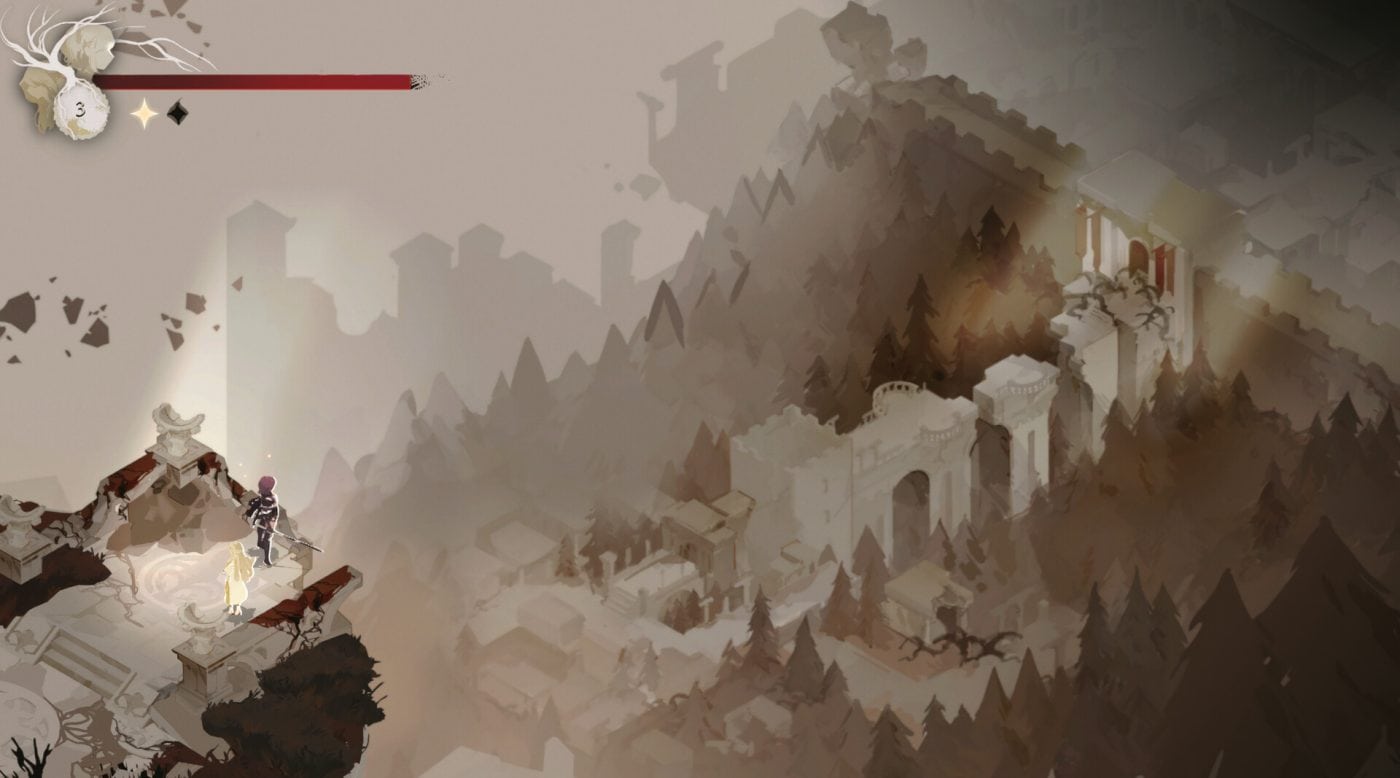
The longer I stayed within that world, the more I was drawn in by its imagery, its silences, its melancholic architecture and its entirely hand-drawn visual identity, the more I realised that what I had in front of me was not the “usual” souls-like. In fact, perhaps it was not even entirely fair to define it in those terms alone.
Because beneath the difficulty, the tension of combat and the constant sense of danger, Lunarium hides something different. Something rarely found in games of this kind. A sincere desire to accompany the player rather than reject them, to reach out rather than push them away, to build a relationship founded not only on challenge, but also on trust, attentiveness and presence.
It is a subtle distinction, but an important one. Some games seek to define themselves through their harshness, while others win you over slowly, quietly, almost in silence. Lunarium clearly belongs to the latter category.
And for that very reason, the more time passed, the stronger the feeling became that I was looking at something genuinely special. Perhaps still rough around the edges in places, but already shaped by a remarkably strong and recognisable identity, one capable of standing out in an increasingly crowded landscape where too many games ultimately end up feeling the same.
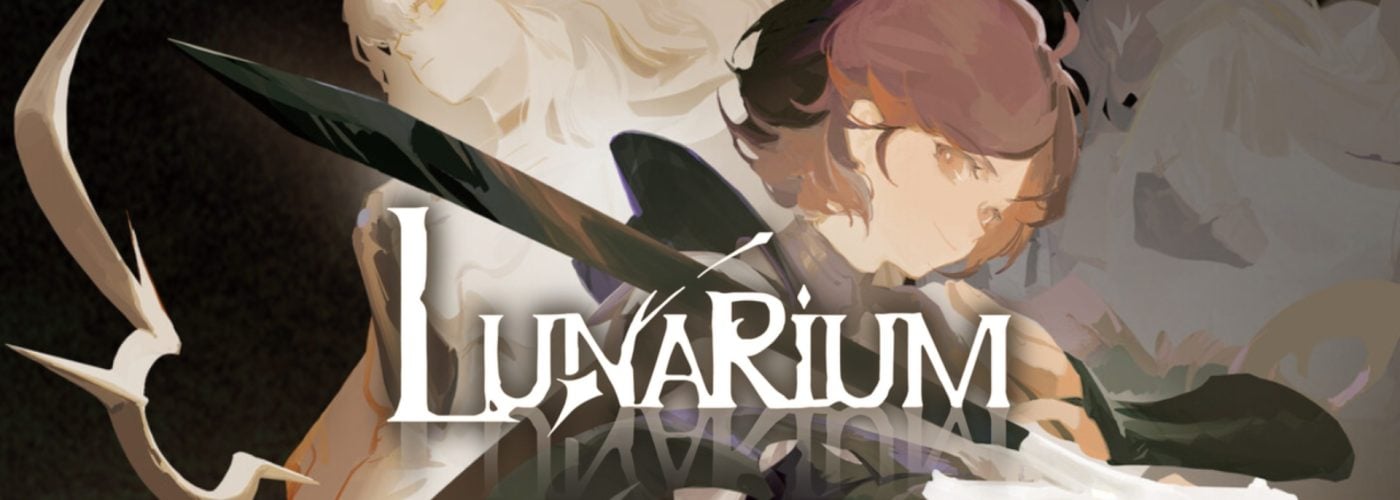
But let us take a step back. In recent days, we had the opportunity to go hands-on with Lunarium, the debut project from Chinese developer Lunarium Studio. An evocative isometric action RPG that, despite our initial scepticism, managed in a very short time to surprise us, captivate us and draw us deep into its world. A world that is melancholic, fragile and full of personality – one that, even after only a few hours, felt surprisingly difficult to leave behind.
And that is exactly why, in the following paragraphs, we want to tell you everything. Because Lunarium is not simply another souls-like. It is something rarer, more personal, more difficult to define and, perhaps for that very reason, far more difficult to forget.
Inside the Making of Lunarium
You probably know this by now: here at indiegamesdevel.com, if there’s one thing that excites us almost as much as the games themselves, it’s everything that lies behind the finished product. The stories, the journeys, the flashes of inspiration, the doubts, the struggles, the sacrifices – and, above all, the people.
Because behind every game – and even more so in the indie scene – there are more than just systems, mechanics, artistic decisions, or design concepts. There are human beings. Long nights spent staring at a screen. Doubts that pile up. Moments when everything seems to collapse. Small setbacks to absorb, rebuild from, and learn through.
Constant restarts that demand patience, resilience, and unwavering determination. And at the very heart of it all lies that stubborn, almost poignant drive to transform an idea – initially nothing more than a fleeting thought or a blurred vision in its creator’s mind – into something tangible, real, and capable of resonating with others.
Perhaps this is one of the most compelling aspects of indie development: behind every project, there’s always a voice. A recognizable sensibility. A personal lens through which the medium is understood and transformed. Sometimes that voice emerges on its own – through striking art direction, a distinctive gameplay loop, or a design choice that immediately sets the experience apart. Other times, it reveals itself subtly, in the smallest details, in the pauses, in the way a world slowly unfolds, or in how a challenge is carefully crafted or a scene meticulously framed.
It is within that delicate space between craft and emotion that you begin to truly understand the people behind a game – their vision, their care, and the heart they pour into every decision. And this time was no exception. We didn’t just want to tell you about Lunarium. We wanted to tell you about the people who made it possible.
From the very beginning, approaching Lunarium meant confronting a mystery. Very little information was available about the team behind the game: no long career histories, no high-profile titles on their resumes, no familiar names. Just a small studio, a debut IP, and a game that immediately grabbed our attention with its striking visual identity, its evocative world, and the instinctive sense that we were encountering something made with genuine care.
That sense of discovery prompted us to go deeper. We reached out to the team – not merely to gather information about the project, but to understand who they were, how they had arrived at this point, and how a game so unique, so identifiable, and so different from typical first-time productions had come to life.
The answer is, in many ways, as surprising as the game itself.
Lunarium Studio is a small collective of nine developers based in Shanghai, the sprawling metropolis on China’s central-eastern coast, long recognized as one of the country’s main cultural, economic, and creative hubs. A young, tight-knit team, still at the start of their journey, yet already driven by a strong sense of identity and a clear, coherent vision of what they want to create.
What makes their story all the more remarkable is that, before embarking on Lunarium, none of them had professional experience in the video game industry. No extensive careers, no polished portfolios, no renowned studios to their names. What they had instead was something far simpler – and perhaps far more genuine: an unwavering, passionate love for games.
Before being developers, they were players. People who grew up with the medium, captivated by its power to craft immersive worlds, evoke deep emotions, tell compelling stories, and leave enduring impressions.
It was from this shared passion that, more than two years ago, Lunarium began to take shape – not merely as a title, but as the very identity of the project, and, in a sense, the studio itself.
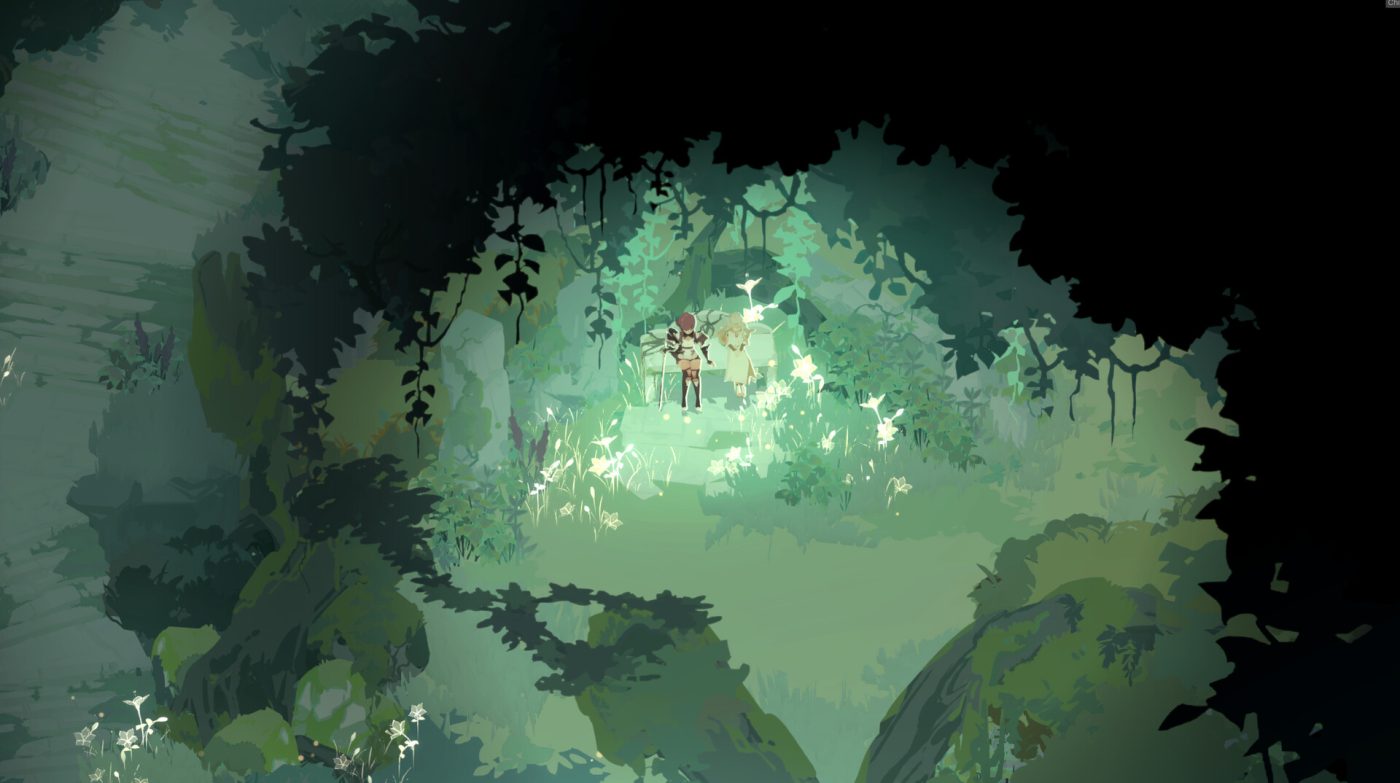
For a first-time team, creating a new IP meant beginning with what they knew best – a style of gameplay they understood intimately, one that made them feel confident and allowed their still-developing skills to shine. But above all, it meant working on something that, even before entertaining an audience, could ignite their own passion and drive.
The choice naturally fell on Lunarium: a demanding, punishing isometric action RPG, shaped by souls-like influences, yet designed from the outset to transcend simple categorization and forge its own distinctive, personal voice.
For the team, Lunarium was never meant to be a game mastered only through reflexes, timing, or muscle memory. It was designed to be experienced, to be felt.It was designed to be experienced, to be truly felt. A world to navigate with intention, a journey that invites players to pause, observe, listen, and allow themselves to be fully immersed in its atmosphere.
A world in which the decaying beauty of ruined architecture, the melancholy of suspended landscapes, the weight of silence, and a persistent sense of solitude are not merely backdrops, but part of the language of the game itself.
This is where Lunarium finds its most distinctive identity: in the union of style, atmosphere, and artistic awareness. For the team, these elements are not mere flourishes – they are the very foundation on which the entire project is built.
Developing something like this has been far from simple. It has been a long, meticulous process, made possible by the creators’ vision, courage, and perseverance – and supported by Imperfect Games, a young independent publisher that chose to stand behind the project with trust and care, without ever diluting its essence or imposing a foreign vision.
This support has been crucial. It allowed the team to move forward with confidence, safeguarding the original identity that now stands as one of the most compelling features of Lunarium.
And this is precisely where we begin: with the people bringing Lunarium to life, the vision that shapes its creation, and the sensibility of a team that, even at the very start of their journey, possesses a strikingly clear understanding of the experience they aim to deliver. Because before we dive into the heart of the game, it’s worth considering who is making that heart beat.
The rest – the part that truly matters – awaits in the following paragraphs.
What We Found in the Build We Had Access To
Before delving into the details of what we experienced during our hour-long time within the world of Lunarium, an important clarification is necessary. It is essential in order to properly frame the impressions that follow and to explain why certain aspects of the experience can be examined with greater precision, while others must, for the time being, remain in the background.
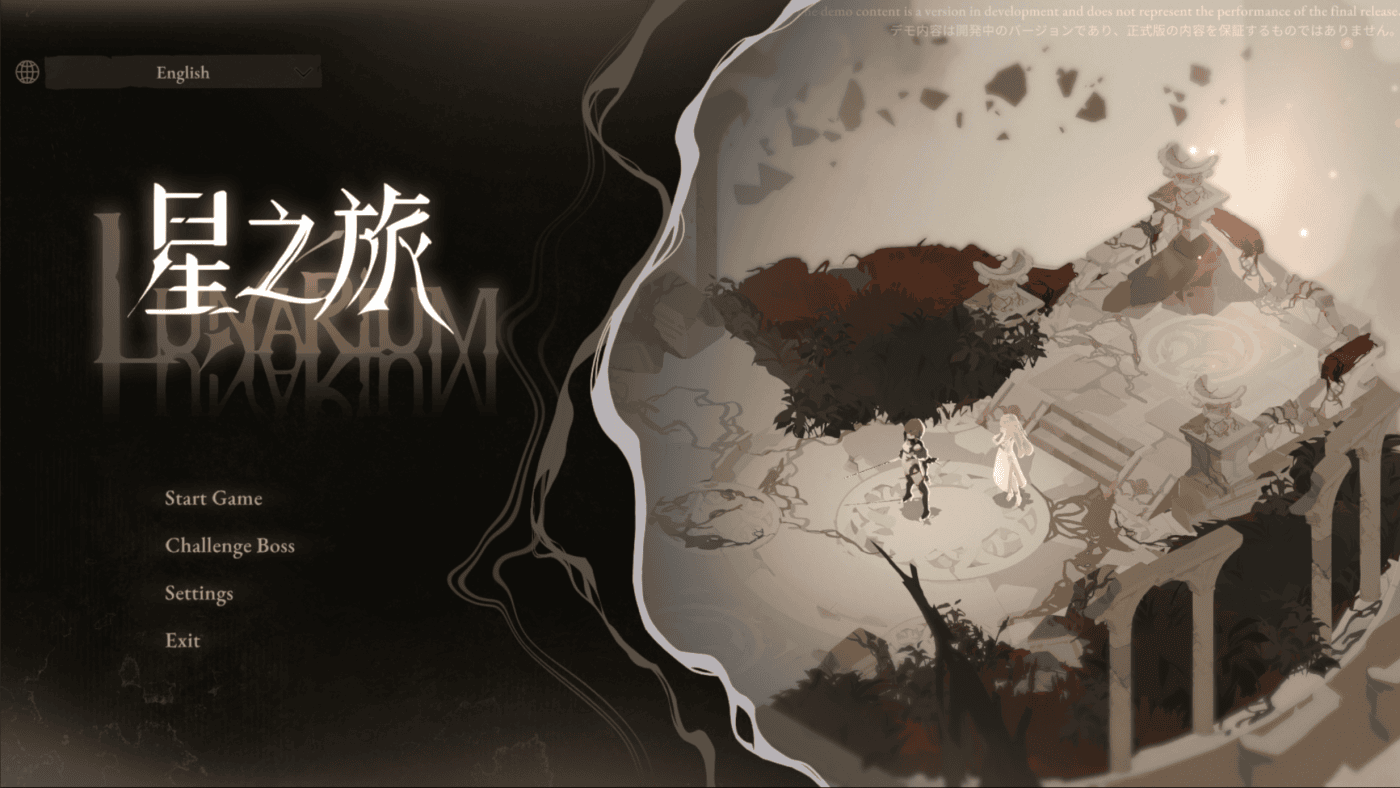
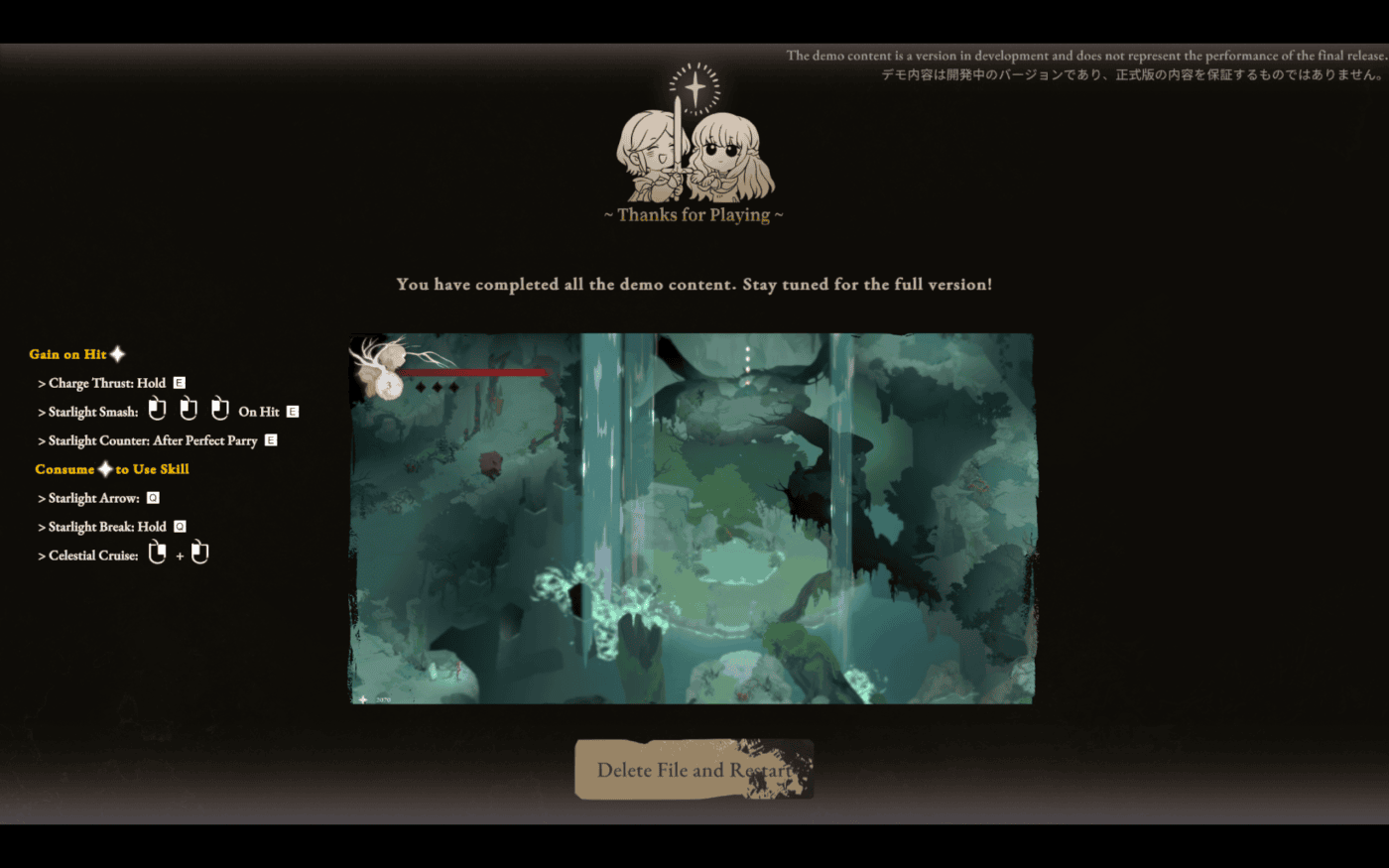
The build provided by the developers for this preview – as shown in the image below – was not taken from the opening hours of the game, but from a self-contained section of its second chapter. While this choice allowed us to engage immediately with the very core of Lunarium’s gameplay systems, it also inevitably exposed the limitations of a hands-on session that, by its very nature, cannot offer a complete view of the finished work.
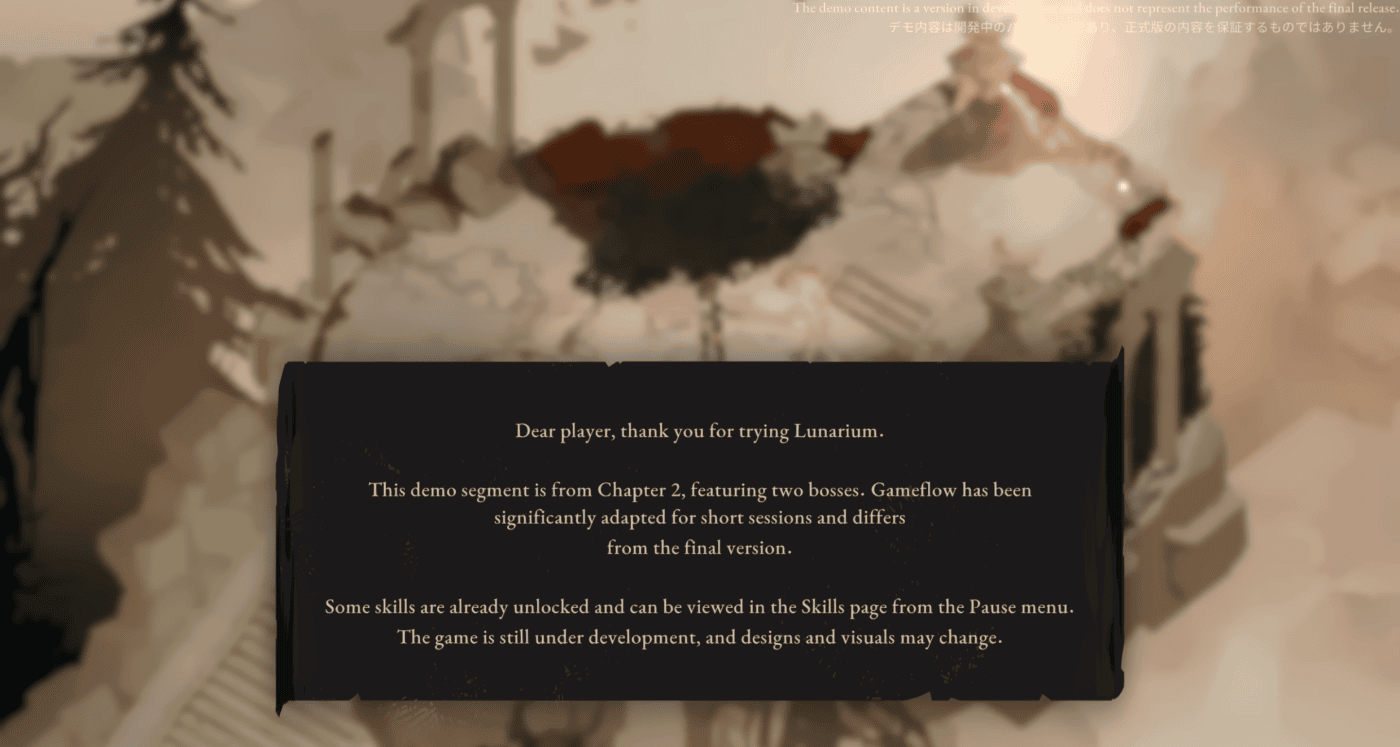
Despite its relatively short duration, however, the demo proved remarkably revealing. In less than an hour, Lunarium succeeded in establishing a strong and distinctive identity, showcasing not only the gameplay foundations upon which the experience is built, but also its tone, pacing, and the unmistakable authorial vision that appear to define the project as a whole.
At the same time, it is equally clear that being dropped “in medias res” into an experience of this kind does not allow for a full appreciation of its narrative structure. As a result, certain elements ranging from the broader narrative framework to core systems such as character progression and the skill tree, both of which had already been unlocked in the preview build – cannot be assessed exhaustively and will therefore remain, for now, outside the scope of this analysis.
For the same reason, we will refrain from discussing in too much detail the two boss encounters featured in the demo, as well as several elements tied to the game world, its environmental storytelling, and the lore threads we uncovered during the session.
The Demo: What Stands Out, What Works, and What Still Needs Refinement
By this point, the question most readers are likely asking is a straightforward one: what is Lunarium’s demo actually like? What does it offer, what kind of experience does it deliver and, perhaps most importantly, is it truly worth your time?
Based on the hour we spent with it, the answer is a confident yes. Even in its current state, Lunarium already feels like a surprisingly assured project, one that communicates its identity with remarkable clarity and leaves a strong impression long before it has revealed all of its secrets. It is still an early build, inevitably rough around the edges and not without a handful of shortcomings, but it is also a game that already possesses something increasingly rare: a clear creative vision.
And in games vision matters more than almost anything else. More than budget, more than content volume and, in some cases, even more than technical polish. A game with a strong sense of identity can afford a few stumbles. It can survive imperfections. What it cannot easily become is forgettable. From what we have seen so far, Lunarium falls firmly into that category.
That said, it is worth making one thing clear from the outset: this is not an experience designed to accommodate everyone immediately. Lunarium asks for patience, attention and a willingness to learn its rhythms. Its difficulty curve, while never unfair or punishing for the sake of it, is not especially forgiving either. Players unfamiliar with the genre may initially find themselves overwhelmed, perhaps even frustrated, but never entirely alienated.
Beneath the weight of its more demanding encounters there is always a sense that the game is trying to teach rather than simply punish – encouraging players to improve, to pay closer attention to their surroundings and to learn from their mistakes.
And perhaps that is where Lunarium truly begins to set itself apart: in the way it frames difficulty not as an obstacle designed to keep players out, but as an integral part of the experience itself.
Before going any further, however, it is worth returning to a more fundamental question: what kind of game is Lunarium?
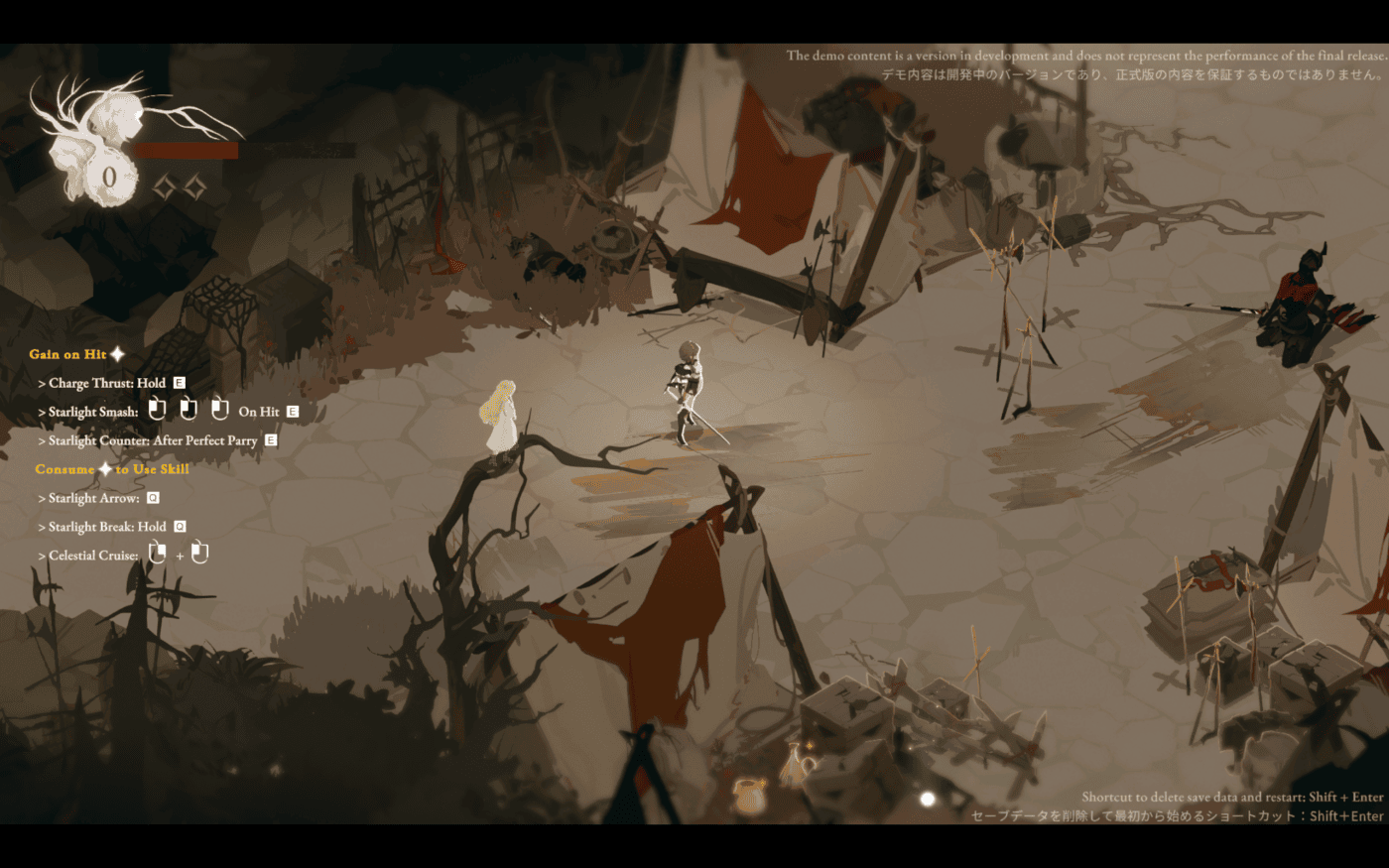
As mentioned throughout this preview, Lunarium is an isometric action RPG heavily influenced by the structure and sensibilities of the soulslike genre. Yet describing it purely in those terms would undersell what makes it interesting. Yes, it features challenging combat, resource management, careful timing, dodges, parries and a constant sense of vulnerability. But what makes Lunarium stand out is the way those familiar ideas are reinterpreted through a slower, more deliberate and almost contemplative lens.
One of the game’s most successful elements is undoubtedly its use of camera perspective. The isometric viewpoint is not simply a stylistic flourish or an attempt to differentiate itself from other games in the genre. Instead, it becomes one of the experience’s most intelligent and functional tools. The camera’s distance and framing give players not only a clearer understanding of the surrounding space, but also a more meaningful relationship with the world itself.
In Lunarium, observation becomes just as important as combat. Spotting a collapsed structure in the distance, noticing a hidden path behind a cluster of ruins or catching sight of an enemy lurking in the shadows a second too late all contribute to a constant sense of tension and discovery. Every step feels deliberate. Every environment feels worth studying.
It is also through this perspective that many of the game’s greatest strengths come into sharper focus: its striking art direction, its subtle environmental storytelling, its careful staging and the way its world is brought to life through subdued lighting, silent ruins and landscapes steeped in decay.
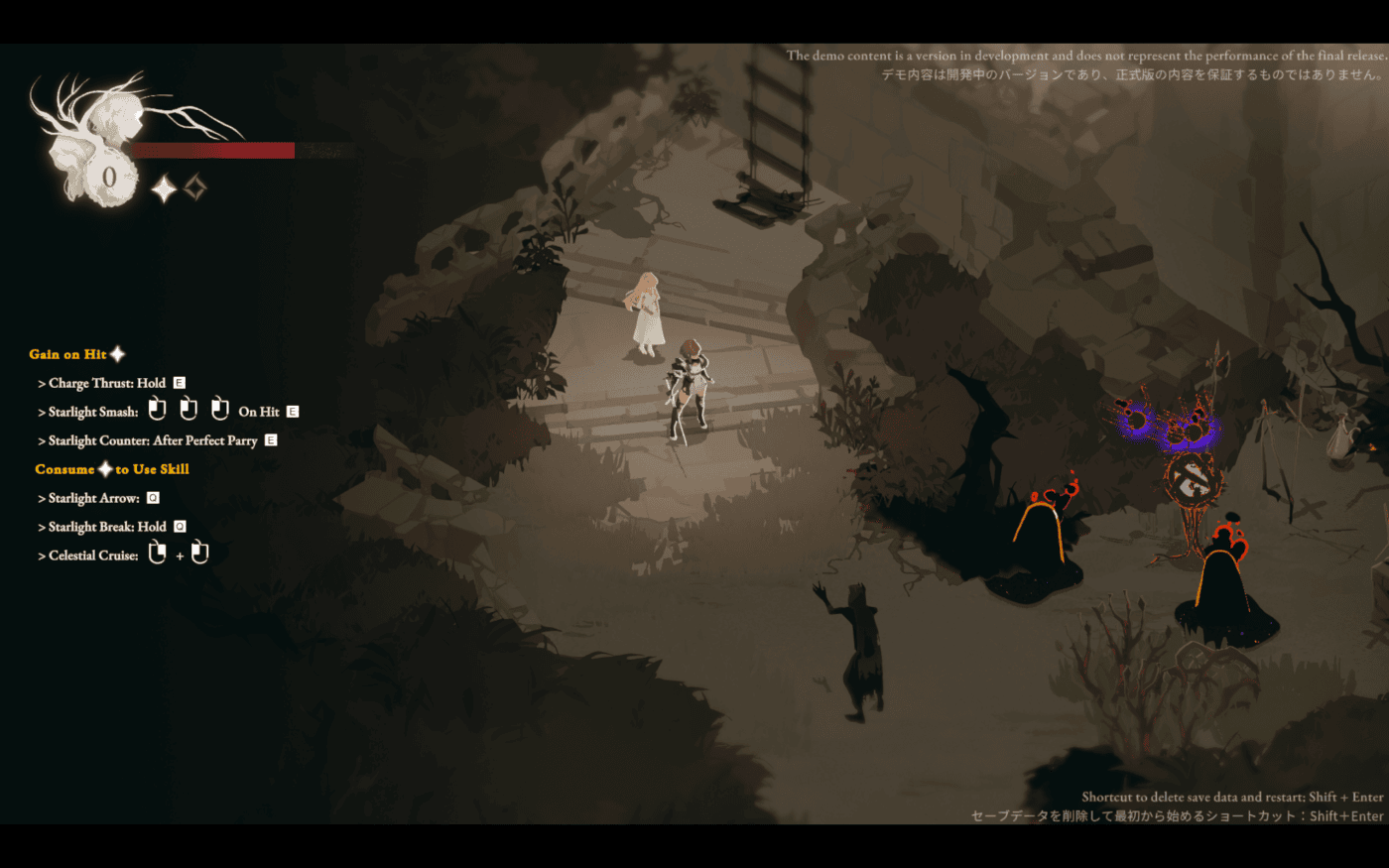
Lunarium is a game that understands the value of restraint. It is visually striking, but never excessive. Every area we explored seemed carefully designed to communicate something specific: melancholy, loneliness, mystery, abandonment. Most impressively of all, it manages to do so with very few words.
During the demo we played as Ave, a young swordswoman who serves as the game’s main protagonist. She is the character through whom players explore the world, confront enemies and overcome environmental obstacles. Alongside her is Lune, a mysterious Starfarer whose presence is closely tied to the game’s narrative and spiritual core.
It is worth clarifying that Lunarium does not allow players to switch freely between its two protagonists. There is no character-swapping system, nor any choice over who to control. Ave remains firmly at the centre of the experience, while Lune takes on a more complementary – though no less important – role.
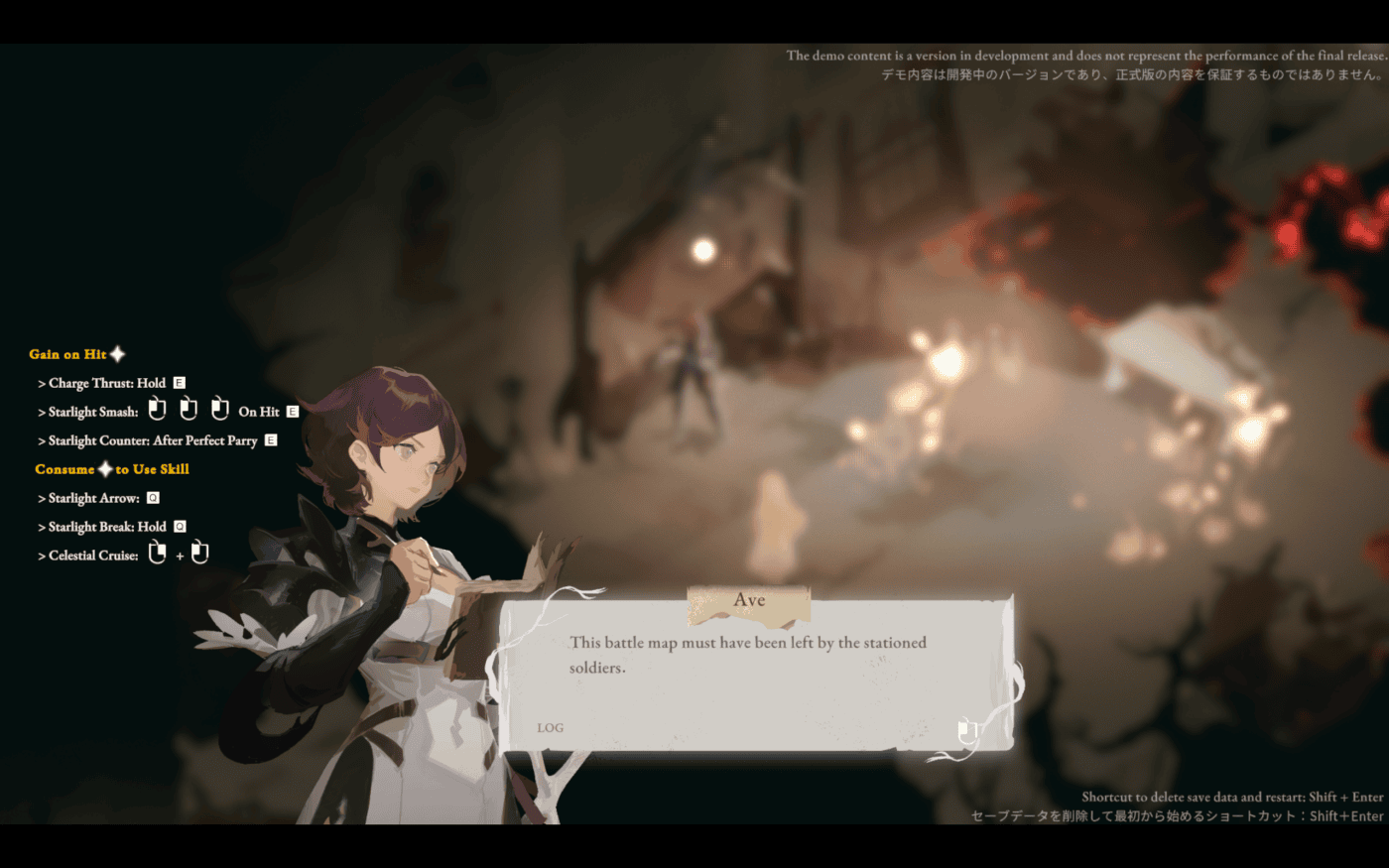
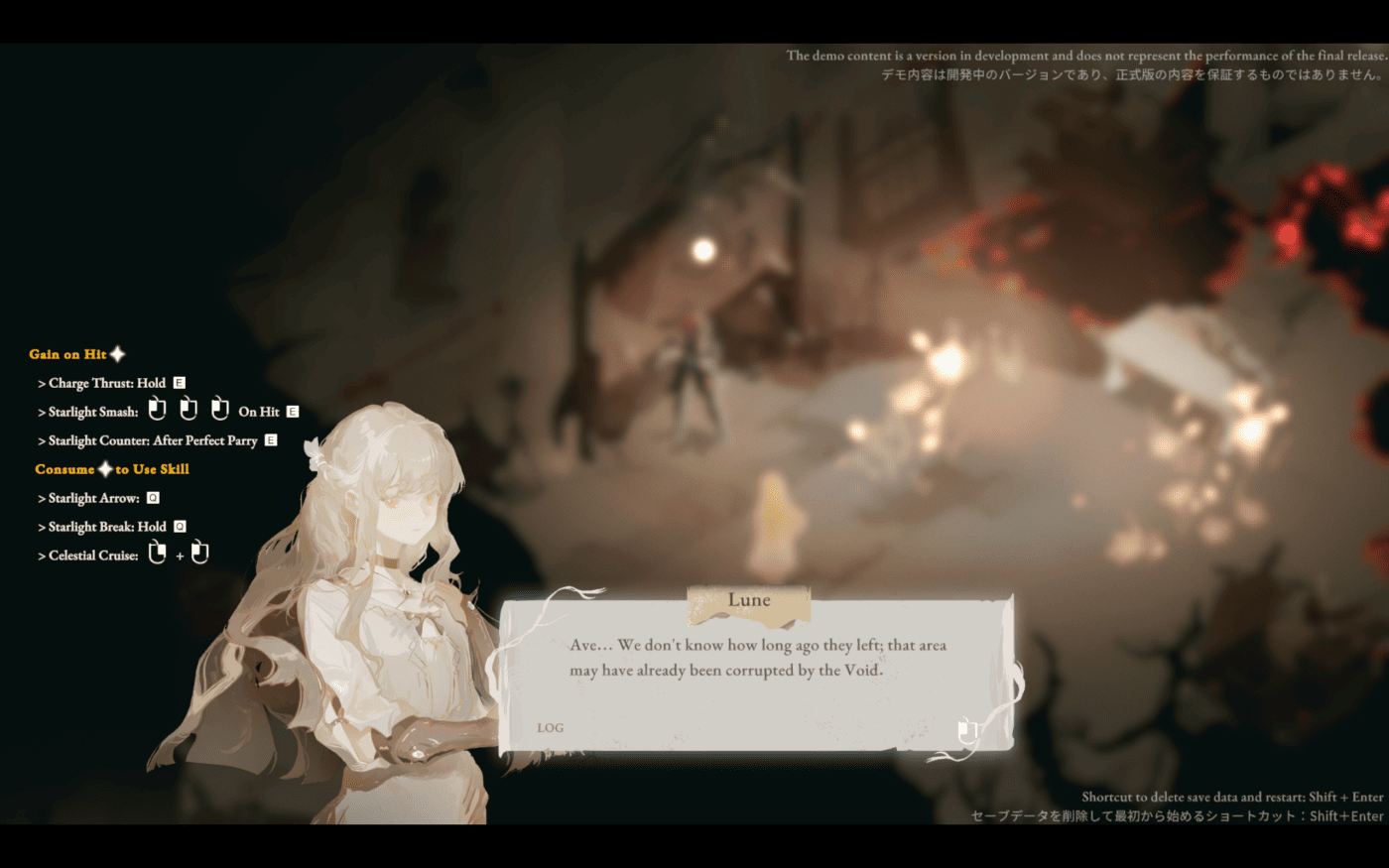
Even so, calling Lune a support character would feel reductive. She is not merely an extension of combat or a means of dealing additional damage. She is a constant presence – a guide, a companion and, in many ways, the emotional anchor of the experience. During the demo, her abilities proved useful not only for weakening enemies and enhancing Ave’s attacks, but also for helping with exploration, collecting resources and subtly guiding the player through more difficult encounters.
The relationship between Ave and Lune is one of the most compelling aspects of the demo. There is a softness to the way they interact, a sense of closeness that goes beyond a purely functional partnership. It is too early to say how fully this dynamic will be explored in the final game, but even these early moments suggest the potential for a relationship that could become one of the story’s emotional pillars.
Combat, meanwhile, already feels promising despite its apparent simplicity. Encounters demand precision, awareness and the ability to read enemy behaviour carefully. Parrying plays a central role, as do positioning and the effective use of Lune’s abilities. While the system does not yet appear especially deep or layered – at least in this early build – what is already there feels coherent, satisfying and more than capable of delivering a genuine sense of reward.
Exploration also leaves a strong impression. Breaking objects, gathering resources, interacting with the environment and uncovering small secrets all help make Lunarium’s world feel tangible and alive. Throughout our time with the demo we discovered flowers, stones, fragments and various other items whose purpose remains unclear for now. Yet it is precisely that lingering sense of mystery that makes the experience all the more intriguing.
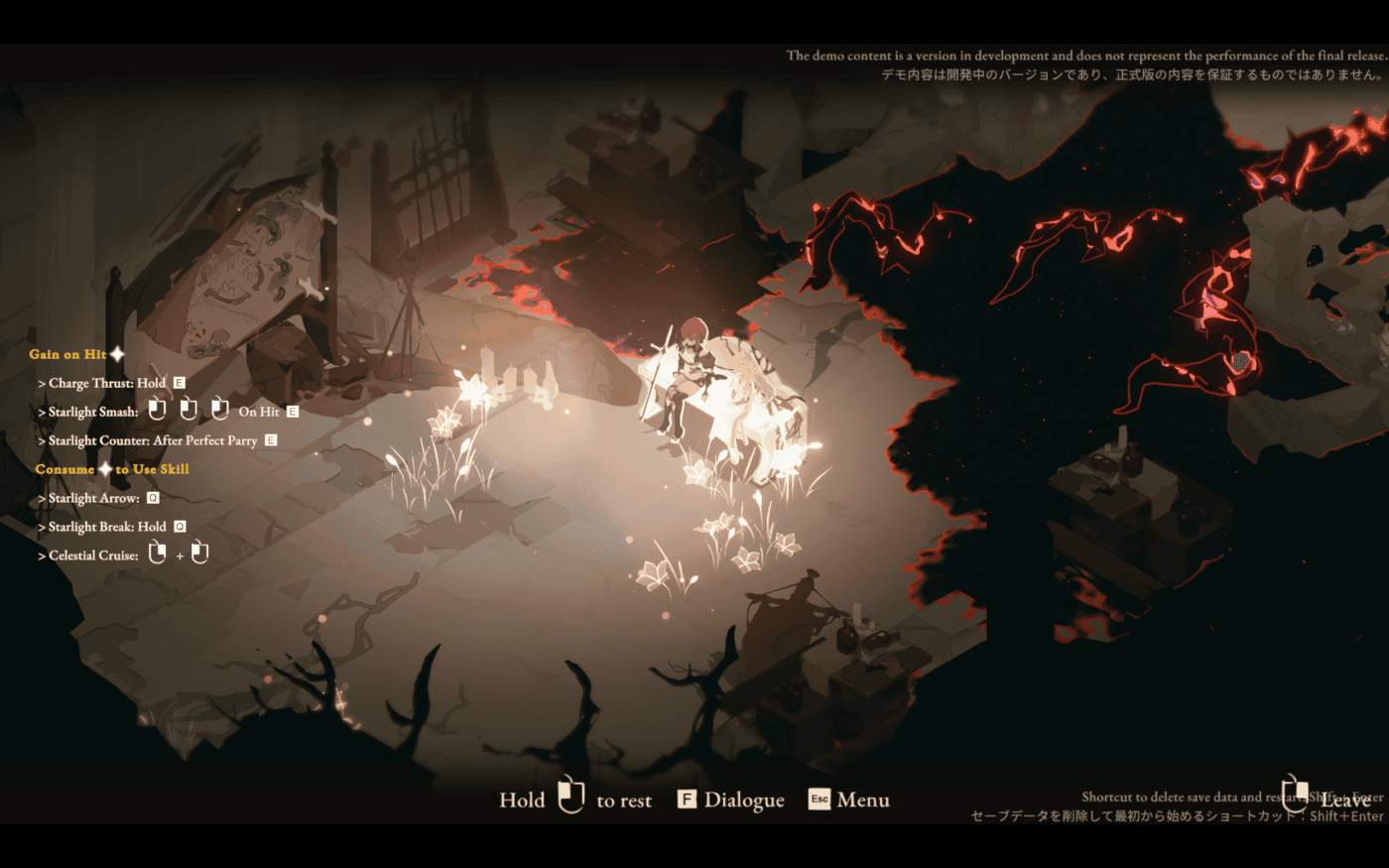
Lunarium also features benches that act as progression hubs, allowing players to restore health, replenish prayers – the game’s take on healing items – equip charms, unlock new abilities, and witness brief exchanges between the two protagonists. While the structure may recall games such as Ender Lilies and Ender Magnolia, Lunarium seems more focused on using these moments to deepen the bond between Ave and Lune and to gradually shape their relationship over time.
Of course, not everything in Lunarium feels fully polished. Enemy variety, at least within the segment we experienced, remained somewhat limited and unremarkable. The soundtrack, while atmospheric and effective at setting the tone, has yet to deliver truly memorable themes. Technically, the build performed well overall, remaining stable and generally smooth, though occasional animation stutters and brief slowdowns did surface during the more intense moments.
Even so, Lunarium leaves behind an overwhelmingly positive impression. Beyond its rough edges and lingering questions, what shines through most is its character – its unmistakable personality. This is a game that refuses to simply imitate familiar formulas, striving instead to carve out a distinct identity all its own.
And perhaps that is the most important thing a demo can do: not convince you that everything will work perfectly, but make you want to return to its world as soon as possible.
When and on Which Platforms Will Lunarium Be Available?
As revealed in the trailer during the recent MIX + Kinda Funny Spring Game Showcase, Lunarium is scheduled to launch on PC via Steam in May, although the official release date has yet to be confirmed.
For the latest updates on Lunarium, be sure to add it to your Steam wishlist and follow the game’s official X account so you do not miss any future news or developments.
That’s all for now. Stay tuned for more updates!