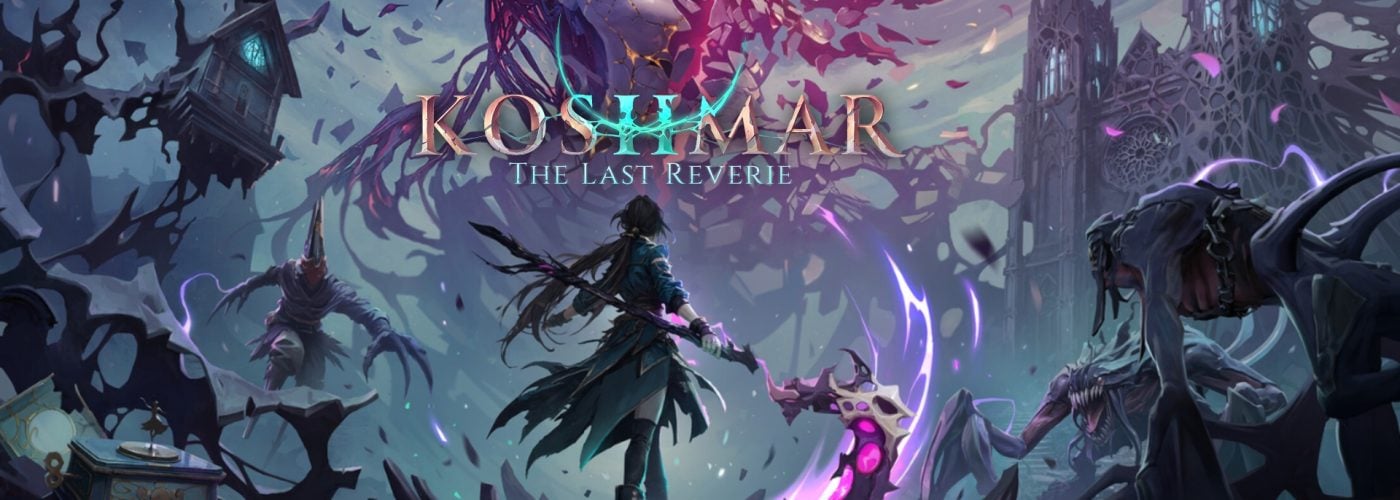
The world around Violet is fading, and with it, her certainty about what is real.

There are moments when a single image, a brief sequence of footage, or even an apparently insignificant detail is enough to suggest that a game may be aiming for something greater. Sometimes it is not a character, a combat mechanic, or even a dramatic reveal that leaves the strongest impression. Sometimes it is simply a mood. A colour palette. The shape of a silhouette in the distance. The way a piece of music lingers beneath a trailer. The way a world feels before it has even begun to explain itself.
Those are often the moments that stay with us the longest. Something beyond immediate visual impact. Beyond an impressive art style. Beyond the fleeting curiosity that surrounds every new announcement. It is a subtle sensation, difficult to fully explain and yet instantly recognisable: the feeling that what is unfolding on screen is not simply a setting, a collection of mechanics, or a familiar genre framework, but a world with its own identity, its own emotional texture, its own voice. A world that seems to exist beyond the boundaries of the trailer itself. A world that feels as though it has something to say.
That is an increasingly rare quality in an industry where countless projects compete for attention every day, often relying on familiar inspirations, safe formulas, or surface-level spectacle to stand out. Yet every so often, a game appears that feels different from the very first moment. A game capable of capturing the imagination before it has even properly introduced itself. A game that leaves behind the sense that there is something deeper waiting beneath the surface.
That is exactly the feeling we had the first time we saw Koshmar: The Last Reverie.
Because there are studios which, despite their relatively young age, already seem to possess an unusually clear understanding of what they want to be. Studios that are not simply trying to carve out a place for themselves in an increasingly crowded and competitive market, but are instead striving to build something recognisable, personal, and unmistakably their own. Studios that do not merely follow trends, but attempt to define an identity through the worlds they create.
Purple Ray Studio is undoubtedly one of them.
Founded in 2021 and based in Warsaw, the Polish developer is made up of a multidisciplinary team of young creatives, artists, and veteran developers whose experience stretches across some of the industry’s most notable productions. Before setting out on this independent path, members of the studio had already worked on projects such as Resident Evil Village, The Witcher 2: Assassins of Kings, Rainbow Six Extraction, S.T.A.L.K.E.R. 2: Heart of Chornobyl, and Outriders.
These are games that differ enormously in tone, scale, genre, and artistic identity, yet they all share one common quality: a desire to build memorable worlds capable of leaving a lasting impression. That same ambition appears to sit at the very centre of Purple Ray Studio’s creative philosophy. It was already visible in Boti: Byteland Overclocked, the studio’s debut title. A colourful, vibrant and surprisingly inventive 3D platformer that, despite lacking the visibility or commercial weight of a major blockbuster, nevertheless revealed many of the qualities that would come to define the team’s work.
There was personality in every corner of its world. There was care in its visual design, confidence in its ideas, and a clear determination to create something with its own identity rather than simply imitate what had come before.


Koshmar: The Last Reverie, however, feels like something else entirely.
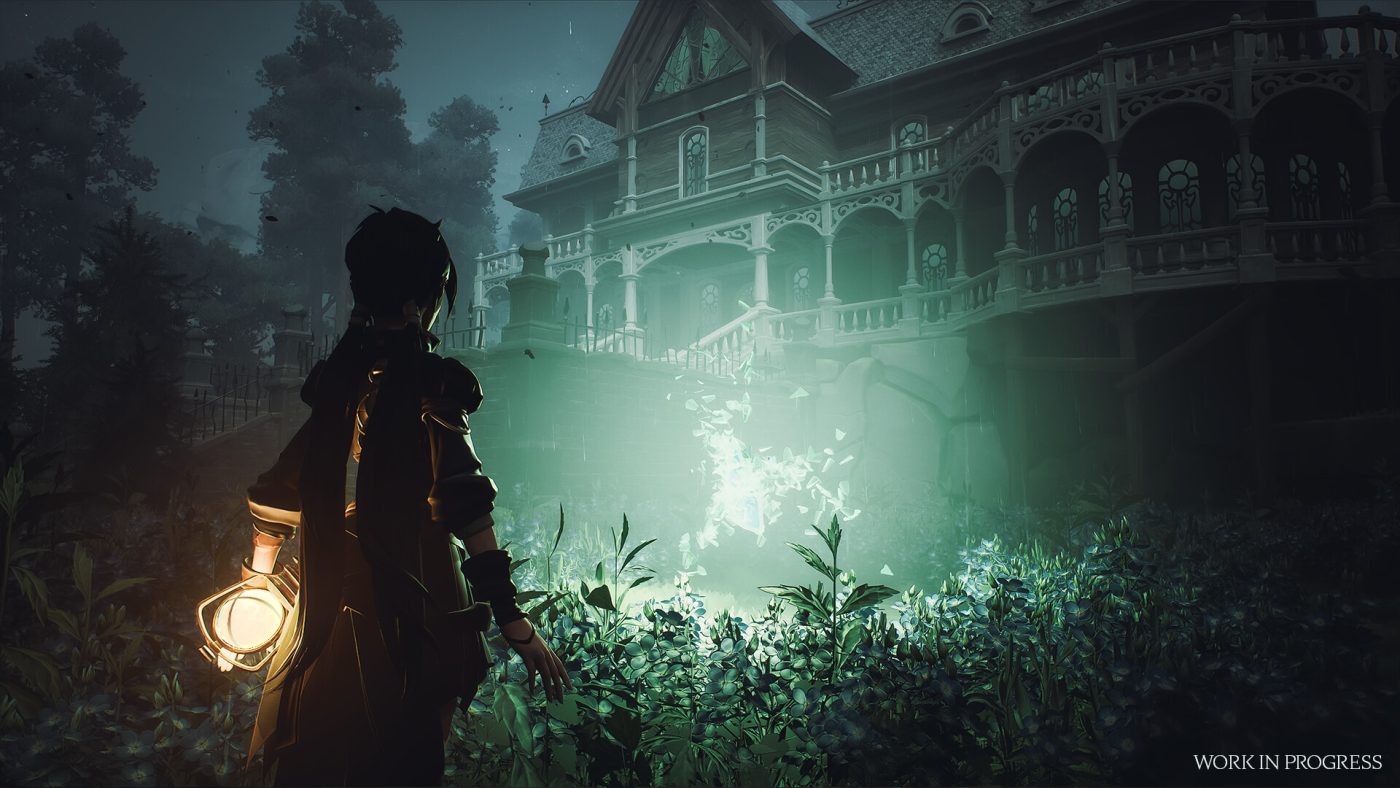
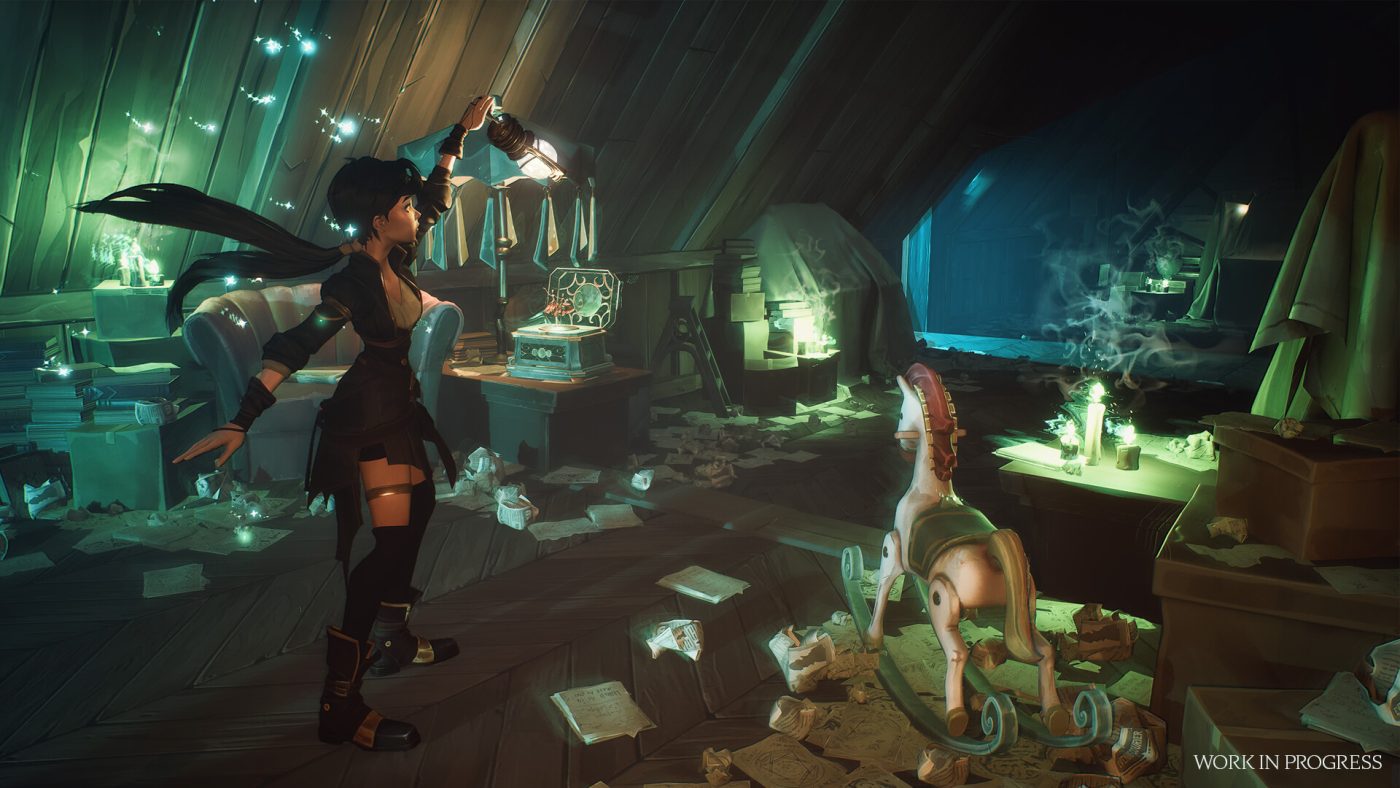
If Boti was bright, energetic and playful, Koshmar appears cold, fragile and deeply unsettling. Where the studio’s previous work embraced colour, humour and a sense of childlike wonder, this new project seems to inhabit a space defined by melancholy, psychological tension and quiet dread. Its world is filled with decaying architecture, distorted environments, muted colours and shadows that seem to linger at the edge of the frame. Even in its earliest footage, there is a haunting quality to the game’s atmosphere, as though every image is hiding something just out of sight.
It is the kind of visual language that immediately invites questions. Who is Violet? What happened to this world? Why does everything feel so fragile, so distant, so painfully suspended between dream and reality? At the centre of it all is Violet herself, a protagonist who appears as vulnerable as the world surrounding her. She does not resemble the traditional image of a hero embarking on an adventure. Instead, she feels like someone carrying the full emotional weight of the story on her shoulders.
Someone shaped by the world around her, but also trapped within it. There is an immediate sense that Violet’s inner turmoil is inseparable from the environments she moves through, as though the crumbling buildings, oppressive silence and shifting nightmares are not merely part of the setting, but reflections of something much deeper.
And that is perhaps where Koshmar: The Last Reverie seems most compelling.
Because this does not appear to be a project interested in simply telling another dark fantasy story. Instead, it seems determined to explore something more intimate and emotionally raw: the fragility of the human mind, the thin boundary between dreams and reality, and the slow, almost imperceptible way fear can begin to bleed into everyday life.
Behind its striking art direction and immediately captivating atmosphere, there are already signs of a game with ambitions that extend far beyond aesthetics alone. The roguelite structure, the RPG elements, the emphasis on player choice, the constant interplay between dream and nightmare, and Violet’s relationship with the world around her all suggest an experience designed not merely to impress, but to leave an emotional mark. To pull players into its world. To make them feel its weight. To leave them carrying something of it long after they have stepped away.
And in a landscape where so many games struggle to assert an identity beyond their premise or genre, that alone is enough to make Koshmar: The Last Reverie quietly, but unmistakably, worth paying attention to.
Because what Purple Ray Studio appears to be building is not simply another independent release with an intriguing concept. It feels like a project that could mark a genuine turning point for the team:a more ambitious, more mature, and more self-assured work that reflects a studio increasingly aware of its own strengths and increasingly willing to take creative risks.
Purple Ray Studio may not yet be a name spoken alongside the industry’s largest developers, but it has already demonstrated qualities that many emerging studios spend years trying to find: a clear creative vision, a recognisable identity, and the ability to create worlds that linger in the imagination. And after seeing what the team has managed to achieve so far, it is difficult not to feel a genuine sense of curiosity about how far that ambition may ultimately take them.
Because in an industry that often rewards familiarity, repetition and safe creative choices, there is something undeniably refreshing about a studio willing to take a risk on something stranger, darker and more personal. There is something exciting about seeing a team step so far outside the boundaries of its previous work and still retain such a strong sense of identity.
Most of all, there is something deeply compelling about a game that appears less interested in simply entertaining players and more interested in making them feel something. Fear, melancholy, vulnerability, uncertainty, wonder.
Koshmar: The Last Reverie may still be in the early stages of revealing itself, but even now it already carries the kind of atmosphere, conviction and emotional weight that many games spend their entire runtime searching for. And if Purple Ray Studio can translate that early promise into the full experience, it may well have something truly special on its hands.

A City Slowly Fading in Its Sleep
At this point, the questions begin to surface almost inevitably: what kind of story is Koshmar: The Last Reverie really telling? Who is Violet, at the heart of it all? And what lies beneath this dark, fragile, and distorted world that seems to hover somewhere between dream, nightmare, and reality – never fully belonging to any of them?
According to the material shared by Purple Ray Studio alongside the reveal trailer, Koshmar: The Last Reverie places players in the role of Violet, a young girl and the daughter of a gravedigger. She is a protagonist shaped by hardship from the very beginning: lonely, isolated and deeply misunderstood. Violet is not merely an outcast in the ordinary sense of the word.
She is someone who has grown up at the very margins of life, rejected, overlooked and regarded with suspicion by those around her. From childhood, she has lived among the silence of cemeteries, the smell of damp earth and the constant weight of death. More than that, she has lived with the persistent feeling of being unwanted, out of place and fundamentally different.
That, perhaps, is one of the most compelling elements of Koshmar: The Last Reverie. Violet does not seem to be the kind of hero who arrives with certainty, strength and a clear destiny. She is not built around confidence or the traditional promise of salvation. Instead, she feels fragile, vulnerable, almost broken by the life she has been forced to endure. She is a girl who appears to have learned the meaning of solitude far too early.
Even her relationship with her father, who should have been her only refuge, seems marked by emotional distance and a profound absence of warmth. The one person who ought to have protected her, guided her and helped her find her place in the world instead appears unable to offer the comfort she so desperately needs. As a result, Violet grows up in isolation, invisible to those around her and trapped in a life that seems to have rejected her before it ever truly began.
And when someone has never really found a place among the living, what remains? For Violet, the answer appears to be dreams.

Yet the dream world is not simply an escape. It is something more intimate, more essential, almost sacred. It is the only place where the noise of reality fades, where pain loosens its grip, and where the wounds left by rejection and loneliness seem, if only for a moment, capable of healing. In that world, Violet is no longer the daughter of the gravedigger. She is no longer the girl others avoid, fear or pity. She is simply herself, free to move, free to breathe, free to exist without the burden of the outside gaze.
It is there that she shares her most precious moments with her closest friend, the only person who seems to have truly seen her for who she is. The only one who has never judged her, never made her feel wrong, never treated her as something to be feared. That relationship feels central not only to Violet as a character, but to the emotional core of the entire narrative. In a life defined by rejection and emotional absence, that bond appears to be her only real anchor. The last light still burning in the dark.
Which is precisely why the so-called “sleeping plague” feels so devastatingly personal. It is not just another external threat, nor merely a supernatural device. It is an invasion of her inner world. It corrupts her refuge, fractures her dreams, severs the one bond that gives her meaning and turns what was once a place of comfort into something hostile, alien and deeply unsettling. What had once been a sanctuary begins to unravel into a labyrinth of fear, distorted memories, shadows and presences that should not exist. The line between dream and reality starts to collapse, until it disappears entirely, dragging Violet into a space where nothing feels stable, safe or fully comprehensible.
This is where Koshmar: The Last Reverie begins to reveal its most compelling and mature ambitions. The dream world does not function merely as a setting to be explored, but as a direct reflection of Violet’s psyche. Every environment, every fractured landscape, and every deliberately placed detail seems to carry fragments of her inner life – her fears, her desires, her grief, and her trauma. The decaying architecture, warped spaces, muted colour palette, cold, unnatural lighting, and shadows lingering at the edge of perception all contribute to a world that does not simply surround Violet, but appears to emerge from within her.
The boundary between landscape and emotion begins to blur. Every corridor, every empty room, every suspended space and every disturbing figure appears to carry some trace of what she can no longer contain: the fear of being forgotten, the weight of guilt, repressed anger, the desperate need to be loved, and the terror of losing what little remains.

In that sense, Koshmar: The Last Reverie appears to employ dark fantasy not merely as an atmospheric framework, but as a means of exploring profoundly human emotions: loneliness, alienation, trauma, fragility, and the fear of abandonment. These themes seem deeply intertwined with Violet’s journey, potentially transforming her story into something far more intimate – and far more emotionally resonant – than a conventional struggle between good and evil.
Because Violet does not seem to be asked to save the world.She seems to be trying to save herself. To find meaning amid chaos. To understand who she is. To decide whether to surrender to the weight of her pain, or to confront it, endure it, and perhaps build something new from the ruins of her life. This is where the emotional potential of Koshmar: The Last Reverie truly begins to emerge. Every player choice seems poised to carry weight far beyond simple progression. It will not merely be a question of selecting a path, but of shaping who Violet becomes as she descends deeper into the nightmare.
Will she endure her suffering and transform it into strength? Or will she be consumed by it – by fear, illusion, and trauma? Will she emerge as the saviour of her city, or will she slowly be swallowed by that distorted world until she becomes something else entirely: colder, darker, and perhaps the very Queen of Nightmares?
As ever, the answer will lie in the player’s hands.
Enter Nightmares. Break Reality. And Build Something New
Two years. More than 730 days of sustained development, research, experimentation, iteration, and quiet, relentless refinement. Two years in which Purple Ray Studio has taken what was once a fragile, embryonic idea and gradually shaped it into a world that feels remarkably cohesive, layered, and unmistakably its own.
For a young studio, this is not merely a production timeline – it reads as a statement of intent. A commitment to patience over speed, to vision over compromise, and to a creative identity that refuses to be rushed into form. And in Koshmar: The Last Reverie, that commitment is immediately visible. The scope of ambition, the depth of its world-building, and the coherence of its artistic direction all begin to explain why such a long development cycle was not only justified, but arguably essential.
Because what lies beneath the game’s dark allure is not just an evocative aesthetic or a carefully composed gothic mood. It is the sense of a world built with rare consistency. From its narrative scaffolding to its gameplay formula, from the decaying city of Radwan to the moral and psychological framework that defines Violet’s journey, everything seems designed around a single idea: a world that must be felt as much as it is played.
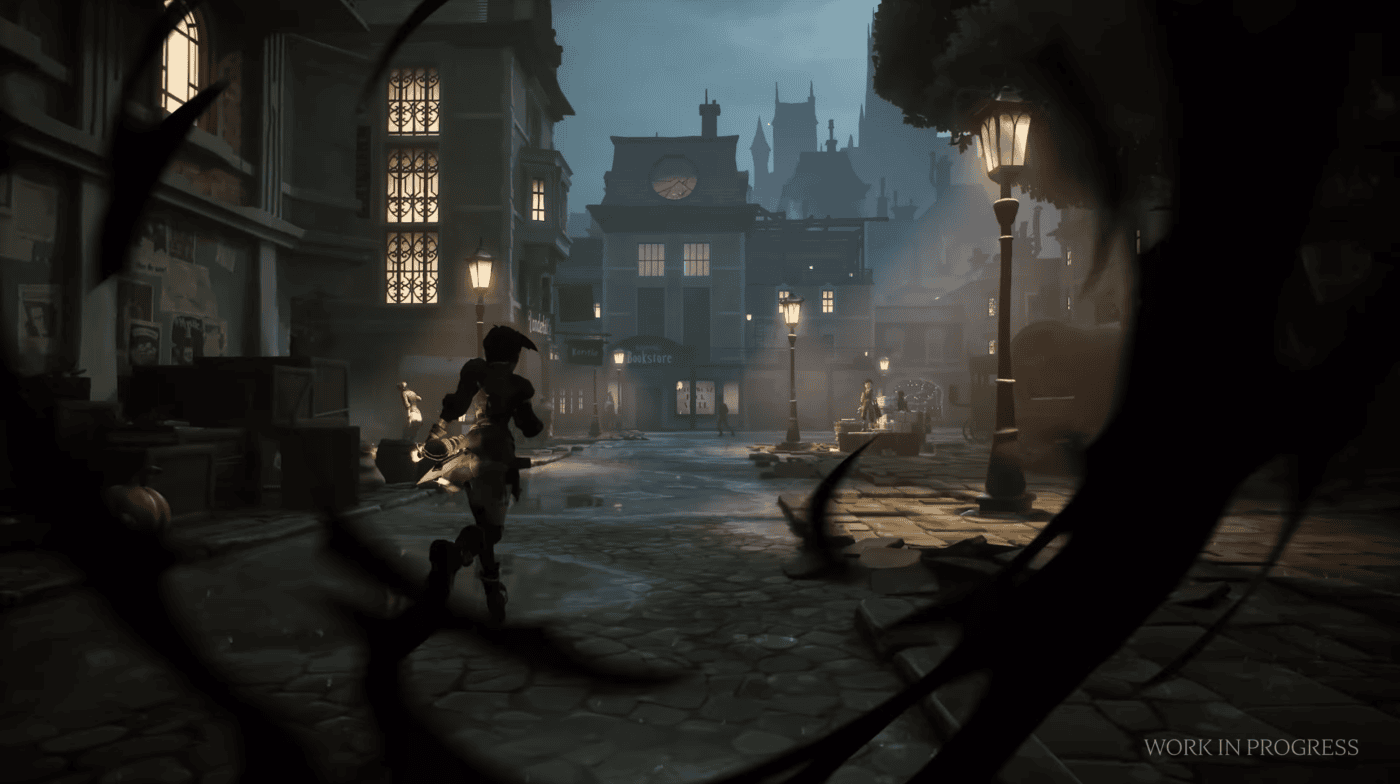
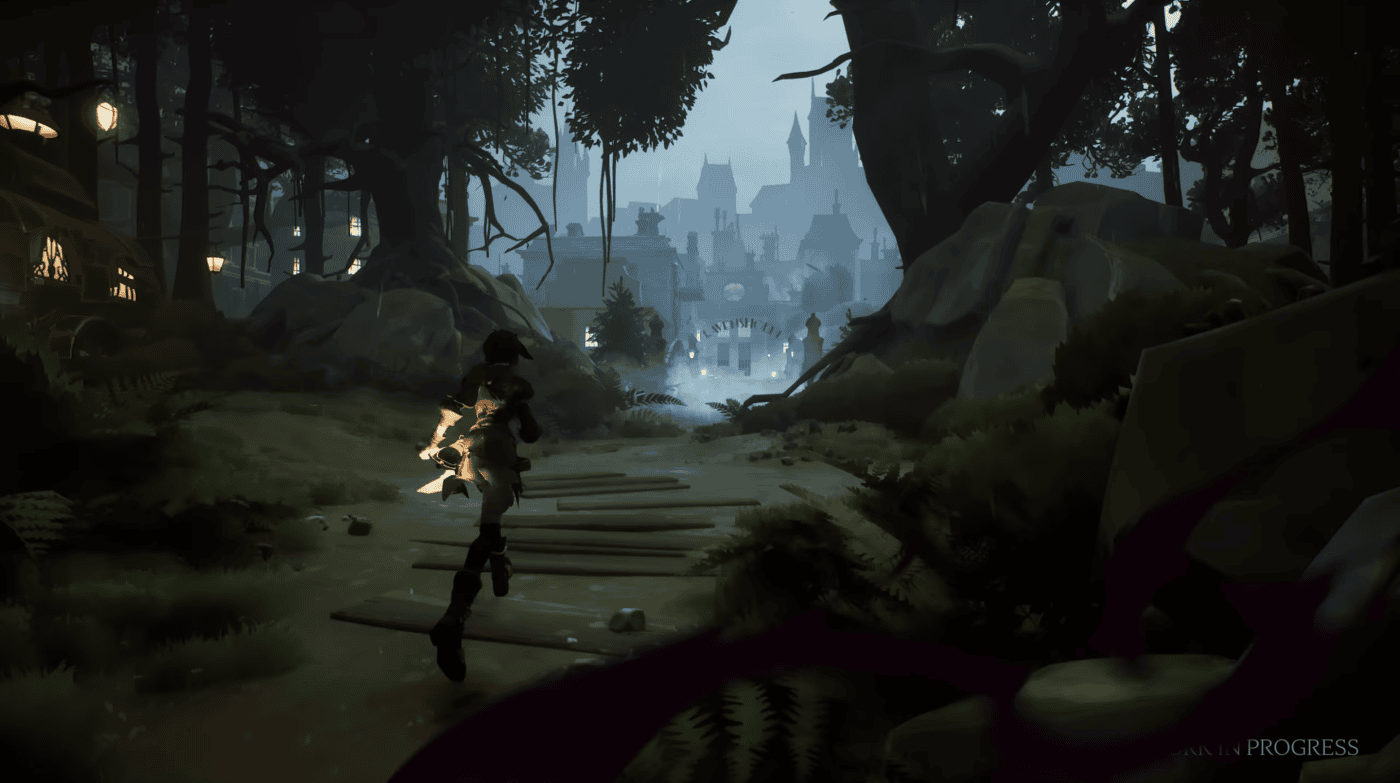
Radwan stands at the very heart of this ambition. It refuses the role of a conventional setting, and it does not exist as a neutral backdrop against which events simply unfold. Instead, it feels closer to a living organism – breathing unevenly, collapsing in slow motion, and quietly observing those who move through its decaying streets. Gradually consumed, district by district, by the enigmatic Sleeping Plague, the city emerges as a shifting gothic presence – an entity perpetually in flux, continually reshaping and reasserting its own identity depending on where the player happens to stand within its fractured, deteriorating body.
Every district carries its own emotional gravity. Industrial zones suffocate under layers of rust, smoke, and exhaustion; peripheral neighbourhoods speak of neglect so prolonged it has become structural; quieter interiors, by contrast, are defined by absence – spaces where silence feels heavier than sound. Even the smallest fragments of the city – a broken staircase, a dim corridor, an abandoned threshold – seem charged with implication.
Radwan is not designed merely to be navigated. It is designed to be read, interpreted, and slowly deciphered, as if every surface, every shadow, and every void carries traces of a truth that remains deliberately out of reach.
There is an unmistakable lineage here, most notably in the way it recalls American McGee’s Alice and its ability to distort familiarity into psychological unease. Yet Koshmar does not appear interested in repetition. It absorbs such influences and refines them into something more personal, less referential, and more emotionally grounded. The result is not a collage of inspirations, but a coherent identity that feels deliberately authored.
That identity extends through every layer of presentation. Architecture bends under invisible pressure. Creatures feel less like inventions and more like manifestations of memory and fear. Objects, clothing, and environmental fragments all seem governed by the same aesthetic logic: a world eroded, but not emptied; decayed, but still meaningfully alive.
It is, however, within its gameplay structure that Koshmar begins to reveal the true scale of its ambition. Beneath the surface atmosphere lies a tightly interwoven system – an action-adventure foundation enriched by RPG progression, layered roguelite mechanics, and a combat philosophy that seeks immediacy and responsiveness without sacrificing strategic depth.
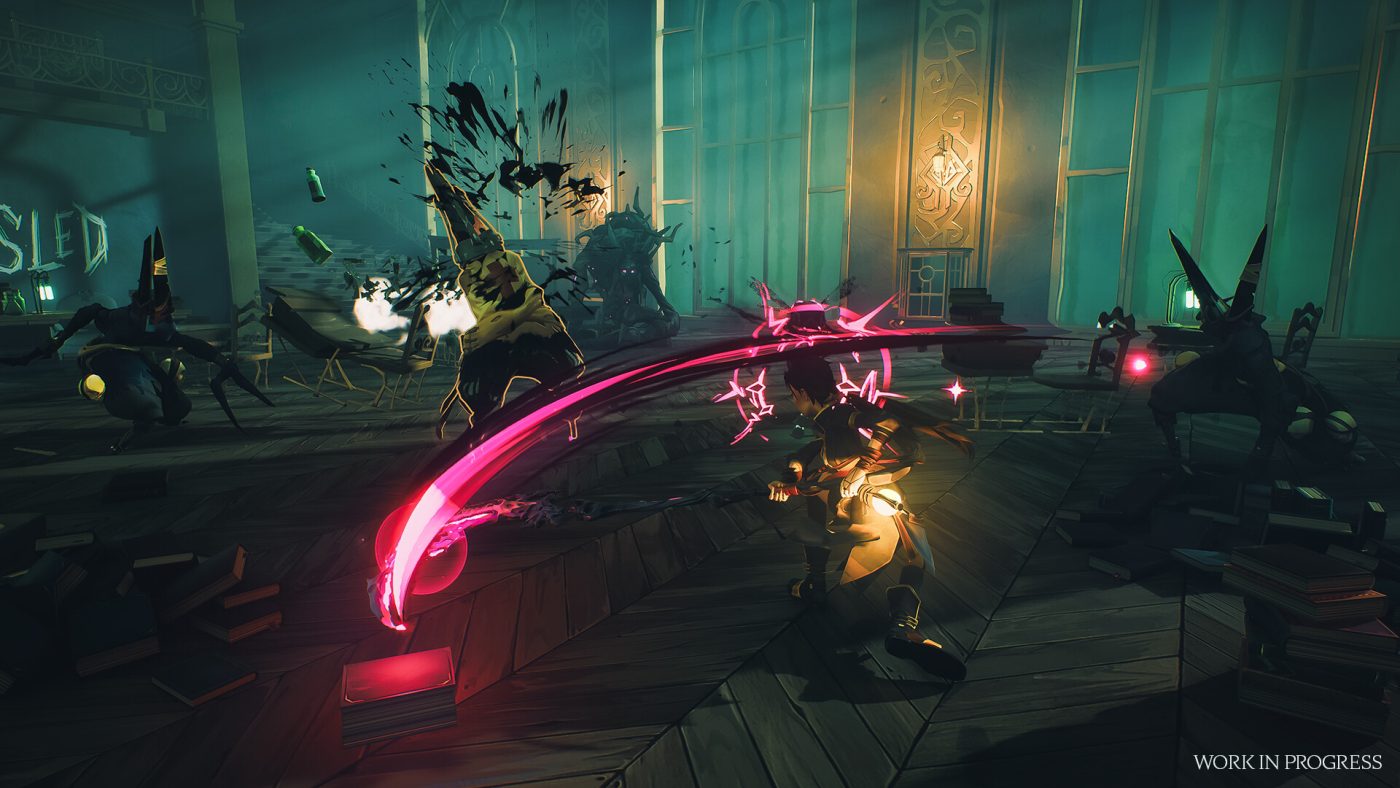
What is most striking is the underlying discipline of its design. No single system appears intended to dominate the experience. Instead, exploration, combat, narrative progression, and character development are carefully positioned as reflections of one another, forming a continuous loop in which mechanics are never separated from meaning. Everything is designed to feed back into the same emotional and structural core, reinforcing the coherence of the whole.
Exploration reinforces this philosophy. Radwan is not laid out as a sequence of objectives, but as an urban fabric that unfolds gradually, almost reluctantly. Its districts are defined less by geography than by condition: industrial wastelands choked by mechanical decay, impoverished edges shaped by long erosion, and quieter zones where emptiness itself becomes oppressive.
The design leans heavily on implication. Rather than presenting its history directly, the city allows it to emerge through architecture, environmental fragments, and spatial storytelling. Radwan feels less like a conventional map and more like a text written in absence – one that demands attention not only to what is revealed, but, more importantly, to what is withheld.
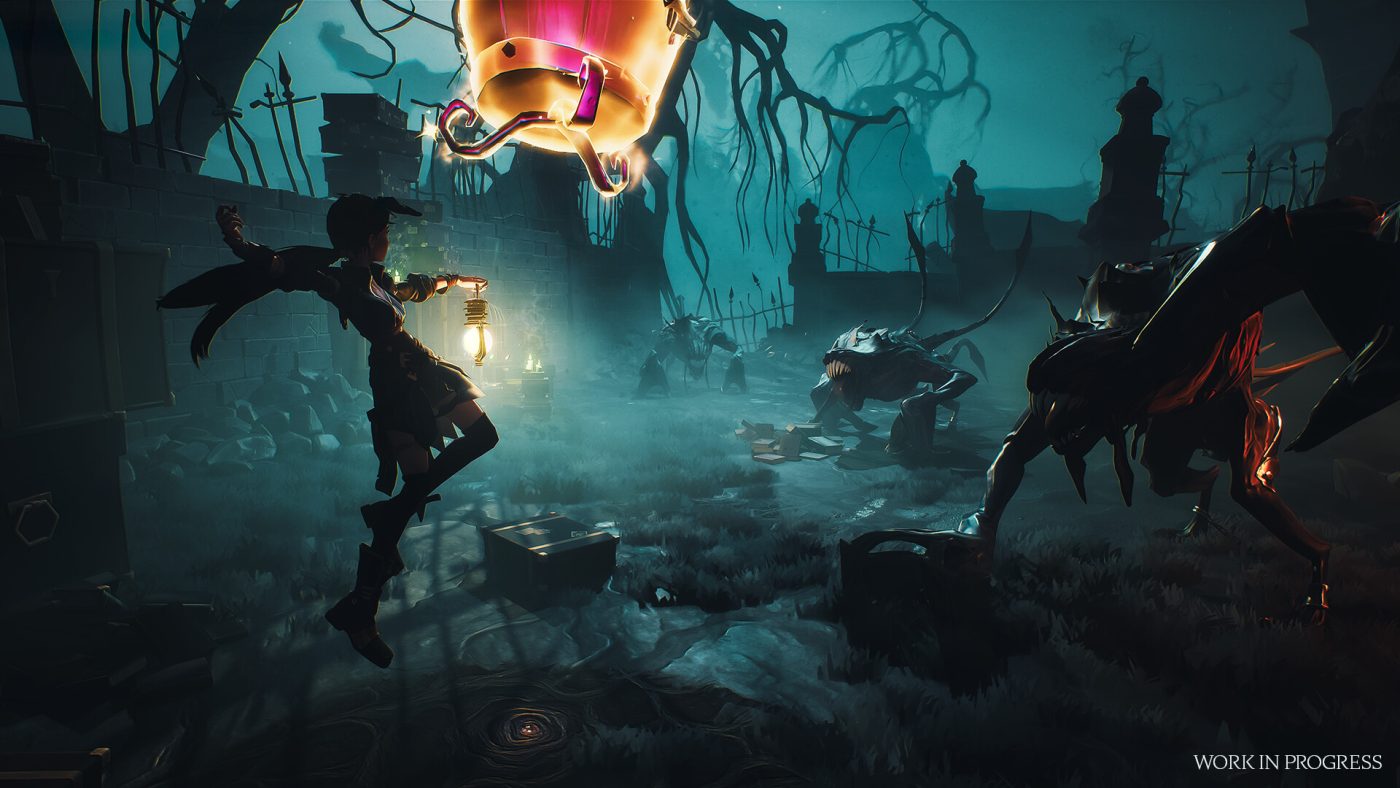
Combat follows a similar intent. Early indications point to a system built around clarity and responsiveness, but one that still demands observation, timing, and adaptation. It avoids both rigidity and excess, instead seeking a controlled fluidity where movement, decision-making, and awareness remain tightly connected.
Enemies are not presented as simple obstacles, but as behavioural systems in their own right – entities defined by readable patterns, exploitable weaknesses, and rhythms that must be understood and disrupted rather than merely overwhelmed.
Skill progression, evolving weapon states, and a progression framework tied to Violet’s psychological condition all point toward a design philosophy that prioritises identity over statistics: not just how strong Violet becomes, but what kind of Violet the player is actively shaping through every choice and encounter.
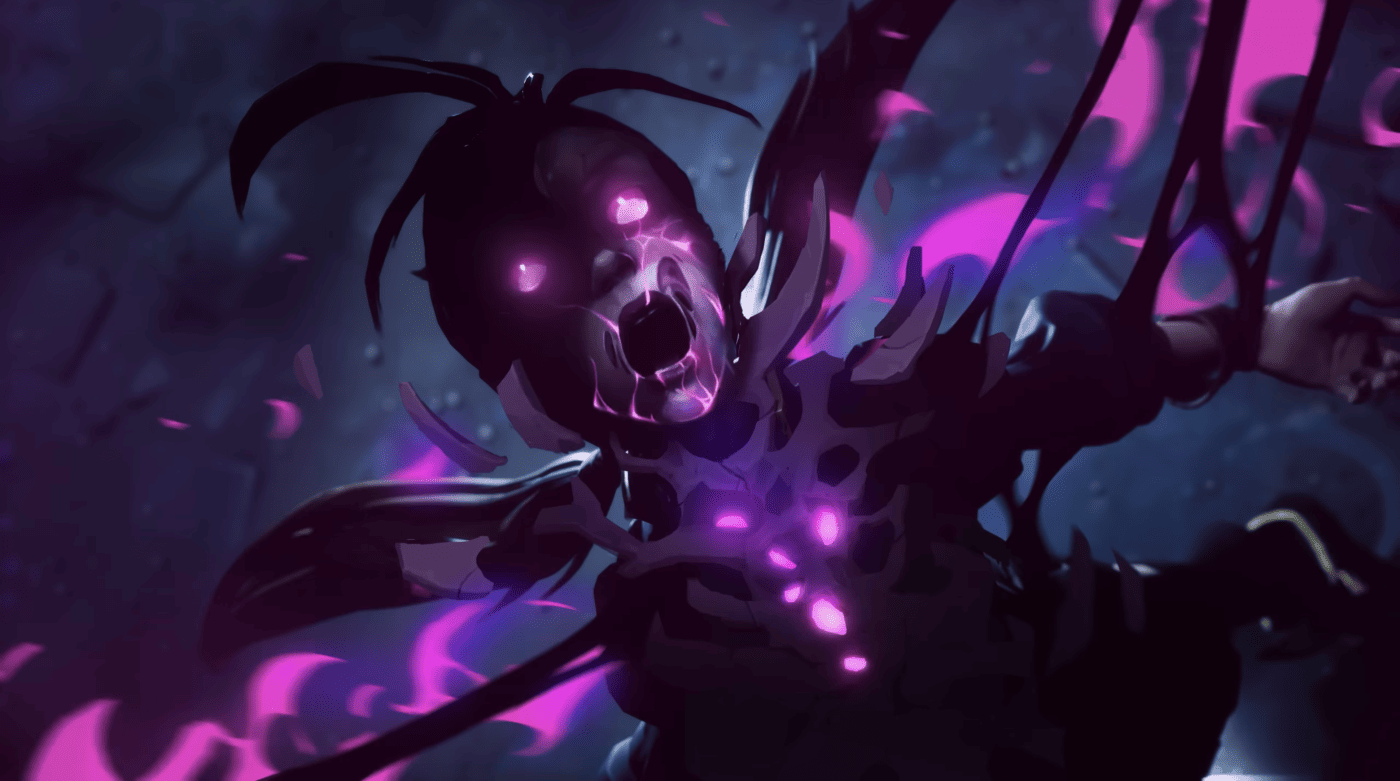
This duality between dream and nightmare sits at the core of everything. It is not just narrative texture, but a structural principle. Dream-based abilities suggest control, fluidity, and perception; nightmare-driven powers lean toward volatility, aggression, and psychological cost. Progression becomes less about optimisation and more about alignment – choosing what kind of inner state to inhabit. At the core of this system lies Koshmar’s most distinctive idea: its morality and sanity framework. Player choices do not simply branch the narrative or alter dialogue outcomes. They reshape Violet herself – her mental stability, her perception of reality, and the way the world responds to her presence.
As she descends further into instability, change becomes visible and persistent. Her appearance shifts. Her equipment evolves. Her lantern, posture, and even her presence within the world begin to alter. The city itself reacts in kind – becoming more distorted, more hostile, more fragmented. Certain characters withdraw or respond differently. Entire routes may open or disappear. The world is not merely reacting to choice; it is absorbing it.
What makes this approach compelling is its refusal of abstraction. Morality is not measured – it is embodied. It accumulates, erodes, and becomes visible in every layer of the experience.
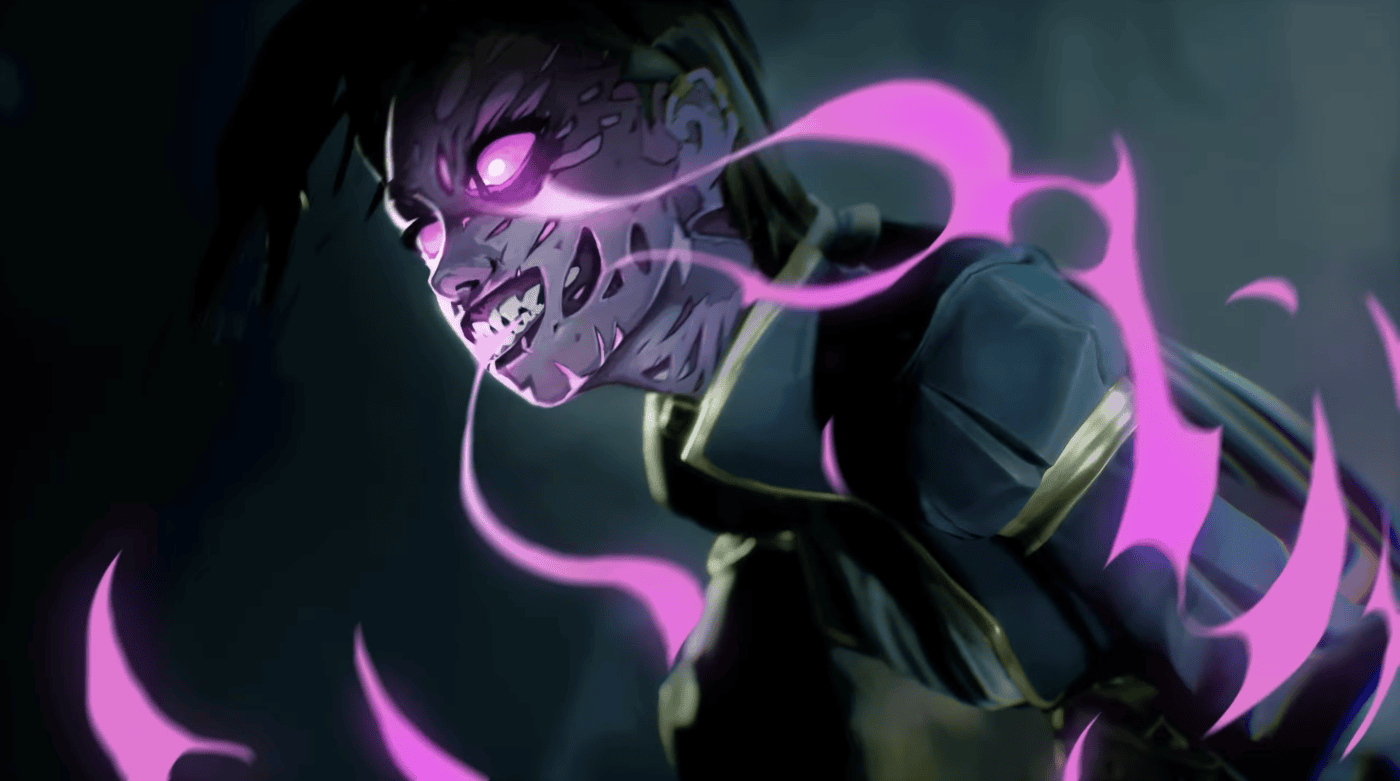
Extending this structure are the Nightmare Rifts: fractured gateways scattered across Radwan that lead into corrupted dreamscapes born from both collective and individual trauma. These spaces form the game’s roguelite layer, shifting and reconfiguring to ensure variety while remaining firmly anchored to the world above. Yet their significance is not primarily mechanical – it is profoundly symbolic. Each Rift feels like an intrusion into Radwan’s psychological residue, where fear, memory, and grief are not merely represented but given tangible form. They do not exist as isolated detours from reality, but as its distortions and extensions – fractured projections of the city’s inner life, translated into playable space.
And it is here, in the convergence of systems, spaces, and psychological framing, that Koshmar begins to reveal what it ultimately aspires to be. Not merely another dark fantasy action-adventure, but a cohesive emotional structure – one in which mechanics and meaning are inseparable, and where every step forward is also a step deeper into Violet’s fragile inner world.
The question it leaves behind is simple, but difficult to ignore: what remains of her, once the dream finally begins to break?
When and on Which Platforms Will Koshmar: The Last Reverie Be Released?
Koshmar: The Last Reverie does not yet have an official release date, but is currently scheduled for no earlier than 2027, with a planned launch on PC via Steam and on consoles.
For further information and the latest updates on the project, readers are invited to follow the game’s official channels and those of the studio, including Purple Ray Studio’s official website, the game’s Steam page – where it is already available to add to your wishlist – the official Discord server, and the development team’s official accounts on X and YouTube.
That’s all for today. Stay tuned for further updates.