A slow-burning, introspective psychological horror that turns memory into punishment, guilt into an ever-present shadow, and the game world into a chilling reflection of the characters’ inner turmoil, delivering an experience both unsettling and unforgettable.

KARMA: The Dark World positions itself from the very first moment as an experience that rejects immediacy and superficial thrills. It pulls the player into a dark, unsettling, and deeply introspective world – one where the boundary between reality and perception is constantly blurred. This is not a game that relies on flashy mechanics or action-packed sequences to captivate; its power emerges through meticulously crafted atmosphere, suggestive imagery, and a deliberately fragmented narrative that demands focus, reflection, and interpretive engagement.
Set in a suffocating dystopia, KARMA: The Dark World speaks in the language of psychological thrillers and existential horror. It explores control, memory, identity, and guilt with a tone that is relentlessly unsettling and never consoling. Here, gameplay exists not as an end in itself, but as a tool to serve narrative immersion and emotional depth, positioning the title squarely in the liminal space between interactive storytelling and traditional gameplay.
From the opening moments, certainty is stripped away. Spaces shift, characters remain ambiguous, and information comes in fragments, each element amplifying a pervasive sense of unease and suspense. The game does not immediately explain its world. Instead, it suggests it – through haunting imagery, recurring symbolism, and scenarios governed by a dark, elusive internal logic. This approach makes the introduction remarkably compelling, inviting players to observe, interpret, and reflect, rather than passively follow a conventional, linear narrative.
The game’s opening is deliberately disorienting. KARMA: The Dark World offers no comfort; from the very first moment, it cultivates an emotional distance that mirrors its core theme of alienation. This is an experience crafted for players prepared to engage with a slow, intense, and psychologically demanding journey – those drawn to thematic depth and immersive atmosphere rather than immediate thrills or superficial gratification.
Ultimately, the introduction establishes the stage with precision and authority. It unfolds a narrative that is unsettling rather than comforting, inquisitive rather than conclusive, and demands more than passive engagement: it challenges players to confront, experience, and interpret every element the game unveils.


The Creative Minds Behind KARMA: The Dark World
KARMA: The Dark World is the product of a development team determined to chart its own course in the contemporary gaming landscape. From the very beginning, the project asserts a clear auteur vision, placing thematic depth, atmospheric intensity, and narrative sophistication above conventional commercial considerations. Operating without the vast resources of major studios, the team has applied meticulous care – crafting a distinctive artistic identity, preserving narrative cohesion, and refining every detail – strengths that are immediately evident in the game’s opening hours.
POLLARD STUDIO LLC exhibits a refined understanding of video games as a medium, approaching the experience not merely as entertainment but as a vehicle for complex psychological and emotional storytelling. Every creative choice – from the oppressive environmental design to the deliberately measured gameplay mechanics, from the fragmented narrative structure to the rigorously controlled pacing – serves a deliberate purpose: to immerse players in a world defined by tension, unease, and the inexorable erosion of control.
Publisher Wired Productions has been instrumental in safeguarding KARMA: The Dark World’s uncompromising vision. In a gaming landscape increasingly dominated by formulaic franchises and risk-averse strategies, their support allows the game to flourish as a slow-burning, conceptually ambitious experience. This is a game that places faith in its audience, inviting them to engage with discomfort, ambiguity, and introspection, rather than yielding to the allure of instant gratification.
The partnership between developer and publisher demonstrates a rare commitment to artistic integrity. KARMA: The Dark World never feels “adjusted” for accessibility; its narrative remains intricate, often intentionally opaque, while every design choice reinforces the game’s core themes of alienation and psychological tension. Drawing on influences from cinema, literature, and visual art, the project embraces a multidisciplinary approach, elevating the experience from conventional gameplay into a compelling work of expressive, immersive art.
Ultimately, KARMA: The Dark World serves as a compelling testament to the creative potential of independent and semi-independent game development. It defies expectations, stretches the boundaries of the medium, and demonstrates that video games can still deliver bold, provocative, and deeply personal experiences – even if they risk alienating some players. For those willing to immerse themselves, it offers a journey that is as haunting as it is unforgettable.
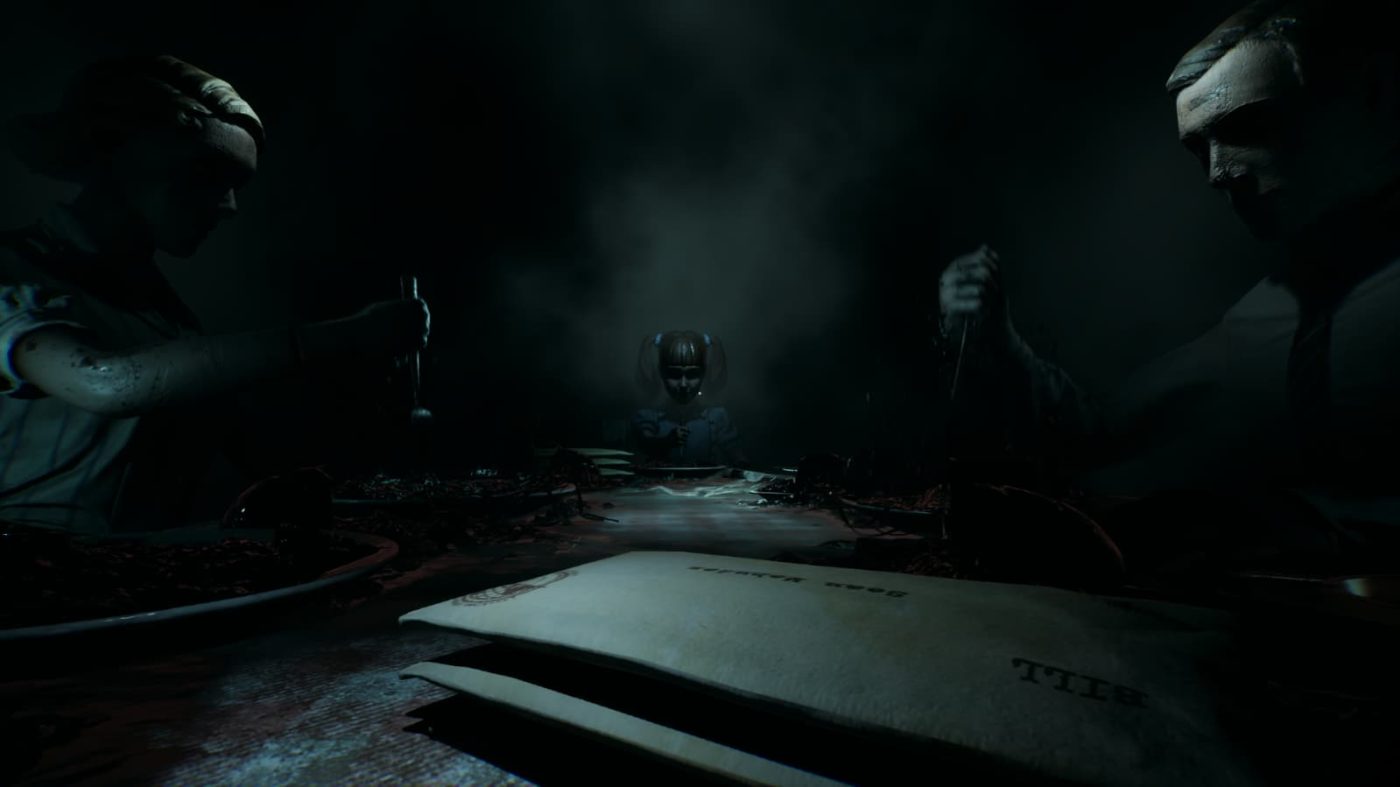
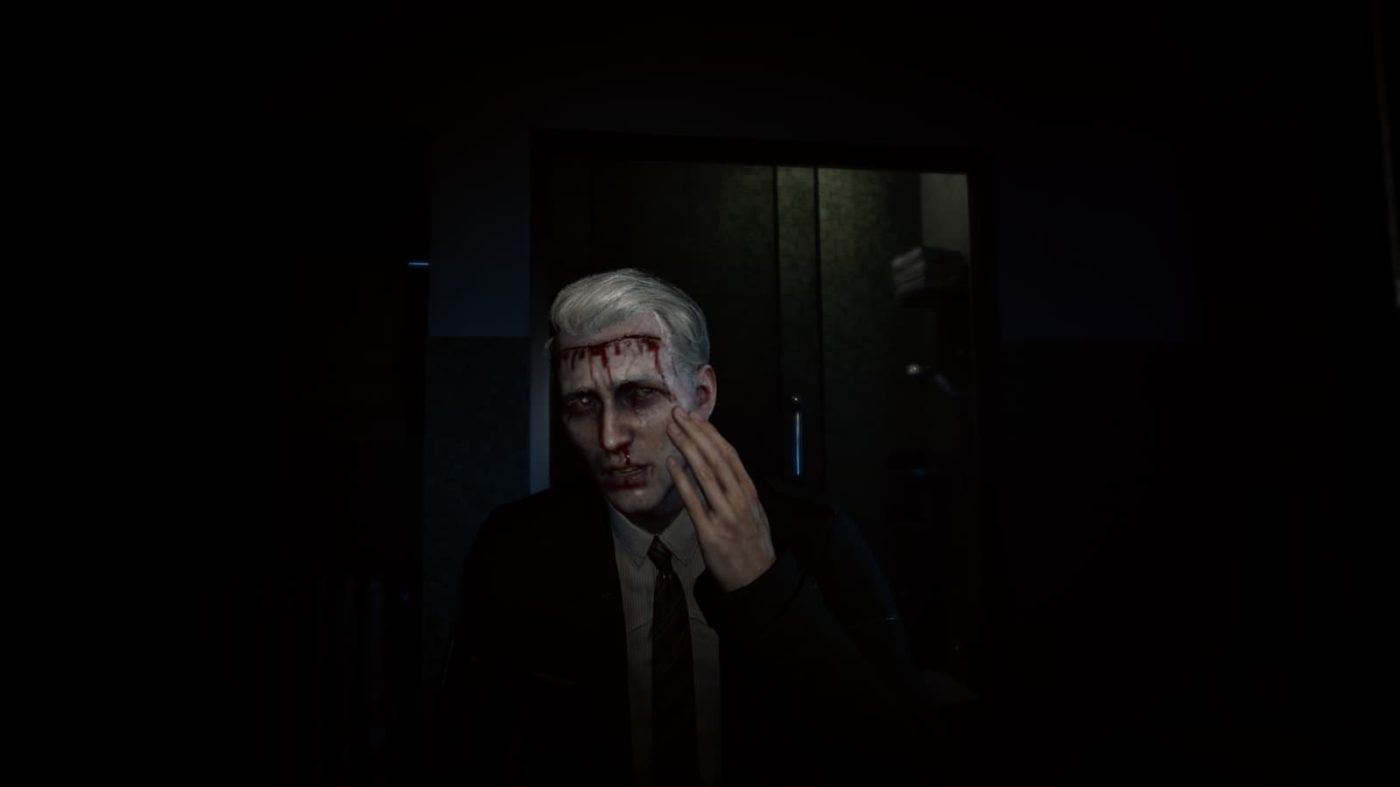
Cryptic, Ambiguous, and Disturbing
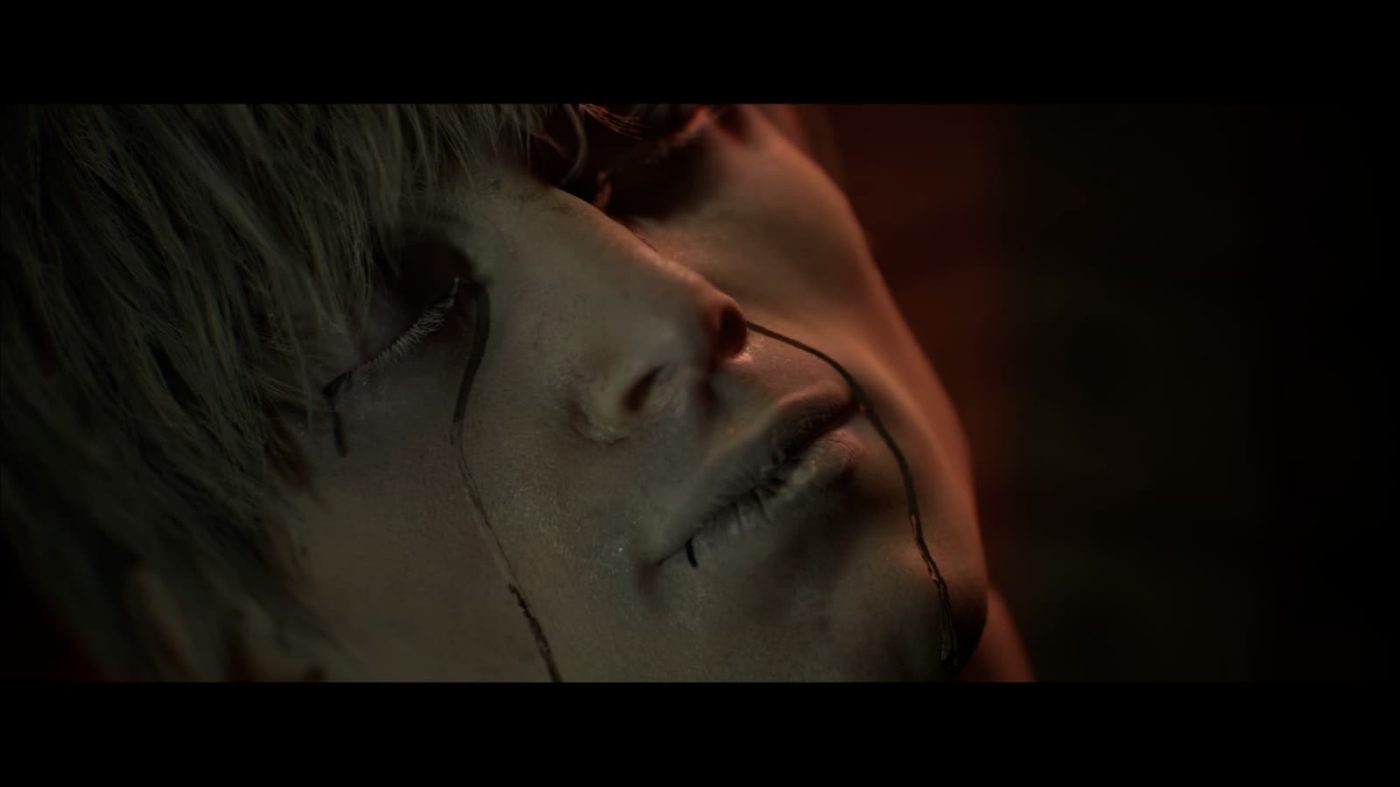
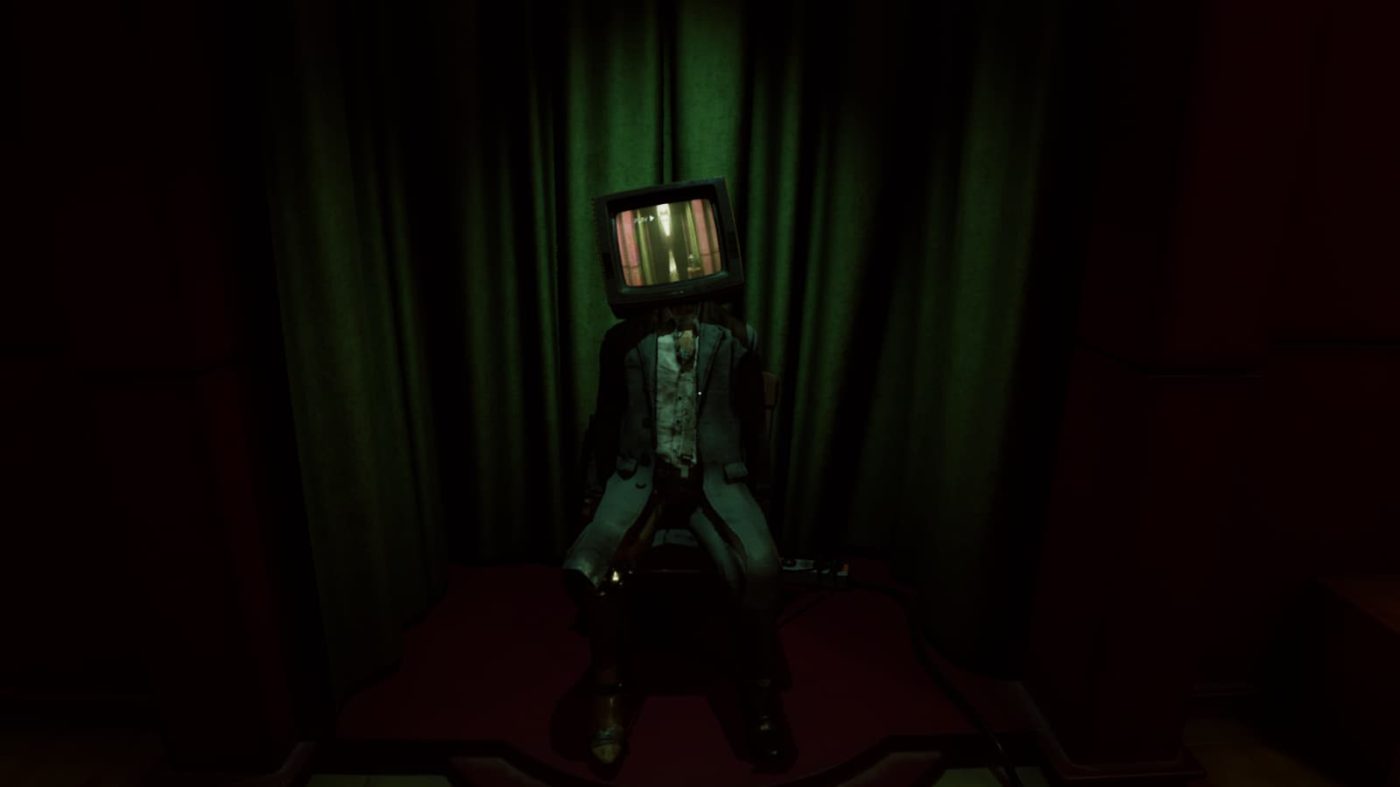
KARMA: The Dark World unfolds as a chilling, fragmented descent into a reality perpetually on the brink of collapse. Rejecting conventional narrative linearity, the game crafts its story through fractured perceptions, shattered memories, and scenarios that constantly challenge the player’s sense of what is real.
From the very first moments, it is clear that this is not a story meant to comfort. Daniel, the protagonist – a field agent of the omnipresent Leviathan Corporation in a dystopian East Germany of 1984 – is plunged into a claustrophobic, oppressive world where authoritarian power reaches beyond the physical, seeping into minds and warping reality itself. Central to the narrative are guilt and responsibility: “karma” is neither mystical nor abstract, but the unavoidable consequence of past actions, manifesting through nightmares, visions, and reality-bending distortions.
The game world serves as a mental prison before it ever becomes a physical one. Memories blur into the present, environments mirror psychological states, and every encounter brims with ambiguity and symbolic weight. KARMA: The Dark World does not hand-hold; it demands that players piece together the story themselves, interpreting environmental clues, narrative fragments, and disturbing imagery to uncover the layers of meaning hidden within the world.
Tension in KARMA: The Dark World arises not from action, but from uncertainty and psychological strain. An ever-present, impersonal authority strips the individual of power and identity, forcing them to confront the consequences of their choices within a system that offers no redemption. Memory itself becomes a tool of control and punishment – often more harrowing than forgetting – and the truth, when revealed, is as inevitable as it is unbearable.
This is not traditional storytelling. It is a deliberately slow, immersive experience that asks players to feel the weight of alienation, confusion, and emotional strain, rather than merely follow a plot. Silence, ambiguity, and reflection dominate, and the narrative’s power lies in its ability to provoke, unsettle, and challenge perception, transforming the game into a deeply psychological, often disturbing journey that lingers long after the screen goes dark.
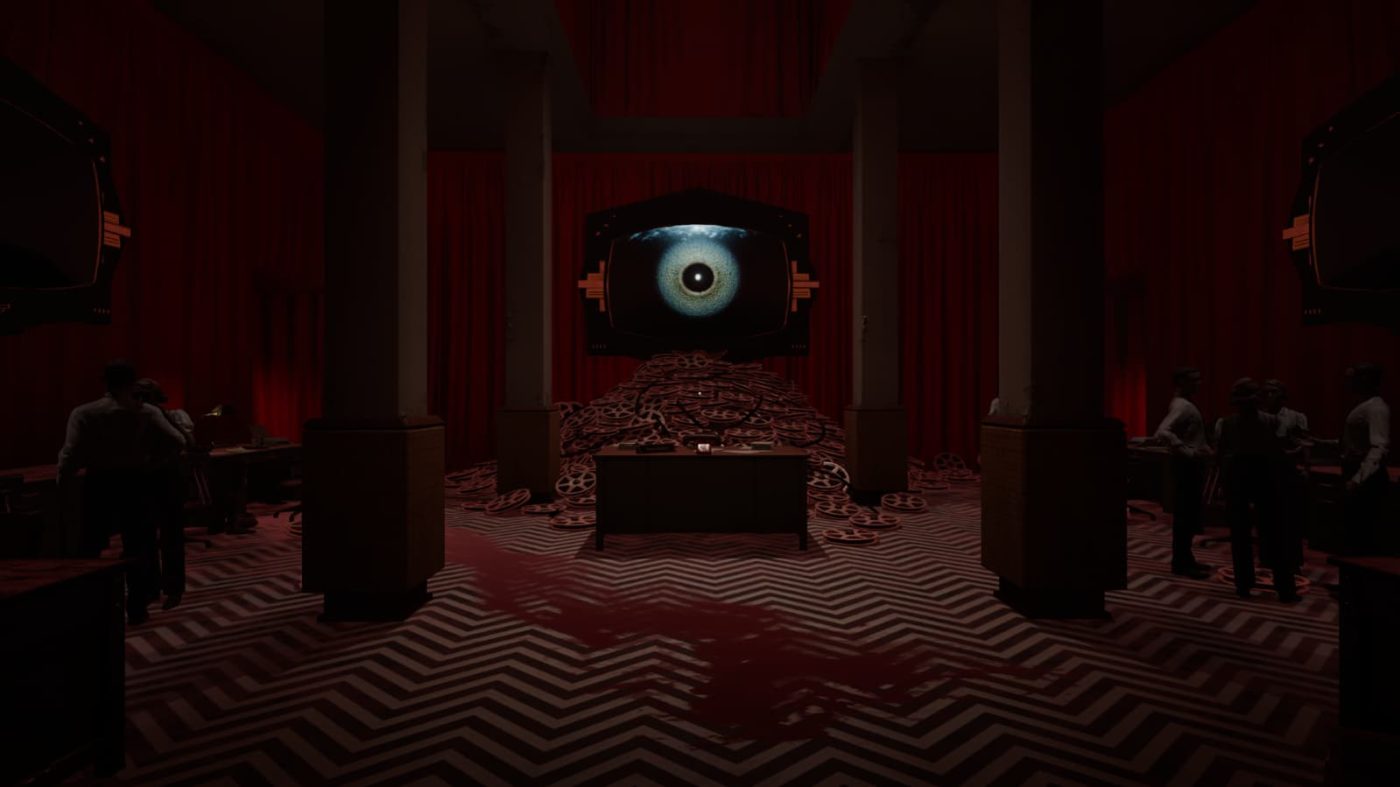
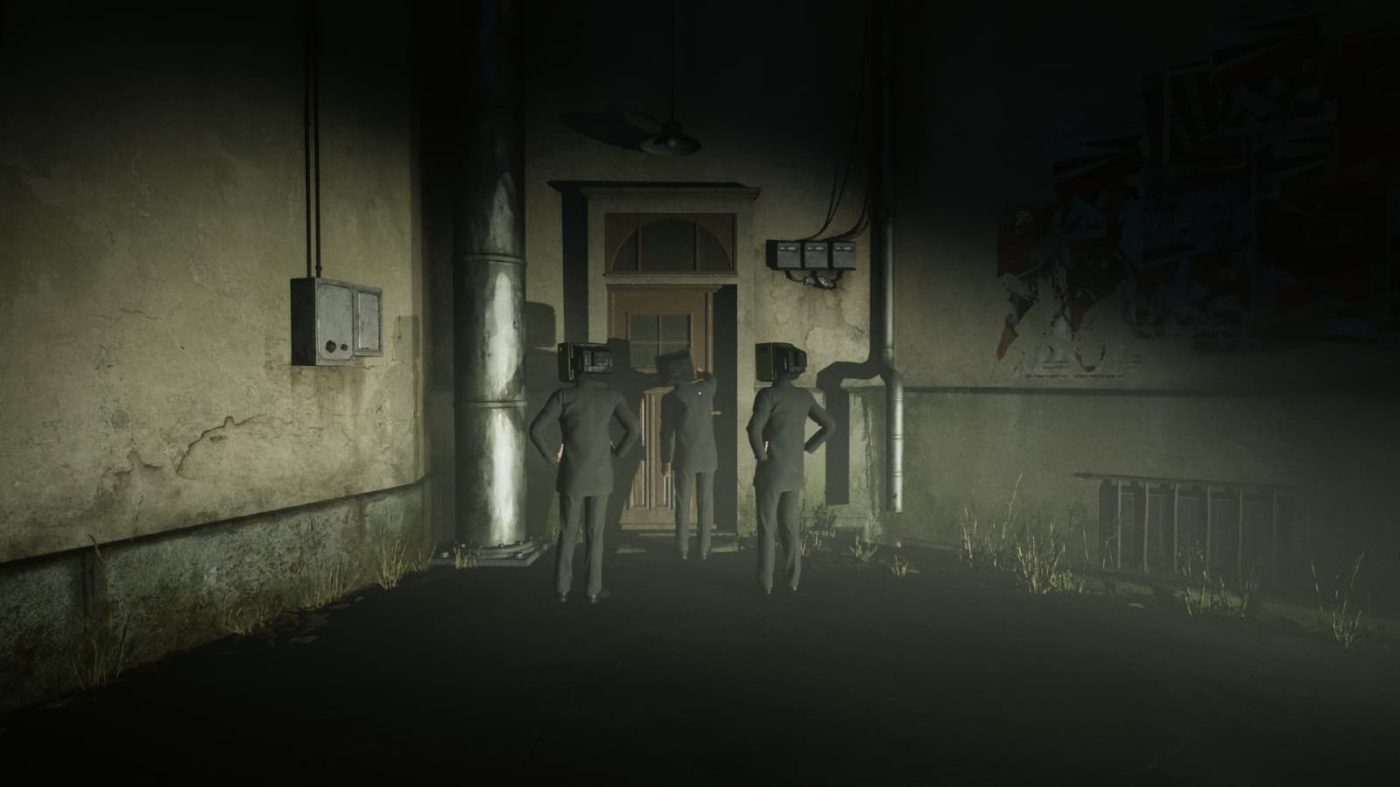
Raw, Timely, and Thought-Provoking Themes
KARMA: The Dark World wields its narrative as a deliberate instrument of psychological and emotional provocation. From the outset, it destabilizes the player, forcing engagement with themes that are as unsettling as they are profound. The story is never straightforward; it unfolds through ambiguity, symbolism, and the fractured perspectives of its characters, set in a world dominated by guilt, control, and the gradual erosion of personal identity.
Here, karma is not a mystical or redemptive principle – it is a relentless mechanism of consequence, a moral weight that accumulates and manifests in the very distortion of reality. Past actions linger, festering in the mind, materializing as intrusive memories, nightmarish visions, and environments that seem to respond emotionally to the protagonist’s presence.
The game confronts institutional power with surgical precision, depicting a system that exerts control not only over bodies but over thought, memory, and perception. Within this oppressive framework, identity is fragile and perpetually threatened, continually destabilized by the rewriting of past events, leaving self-recognition an uncertain and psychologically taxing endeavor.
Guilt acts as a relentless, corrosive force, eating away from within and turning remorse into a psychological prison. KARMA: The Dark World deliberately blurs the line between personal and collective responsibility, revealing how oppression endures not only through systemic enforcement but also through the quiet complicity of individuals.
Reality itself is presented as unstable and manipulable. Truth is fragmented, perception unreliable, and certainty perpetually out of reach. This relentless ambiguity generates tension that is psychological rather than physical, compelling players to question every narrative fragment and visual cue. Explanations are intentionally sparse; meaning arises through symbolic imagery, charged encounters, and interpretive engagement, placing the burden – and the intrigue – squarely on the player to reconstruct the story and confront its unsettling truths.
A World Shaped by Light, Shadow, and Symbolism
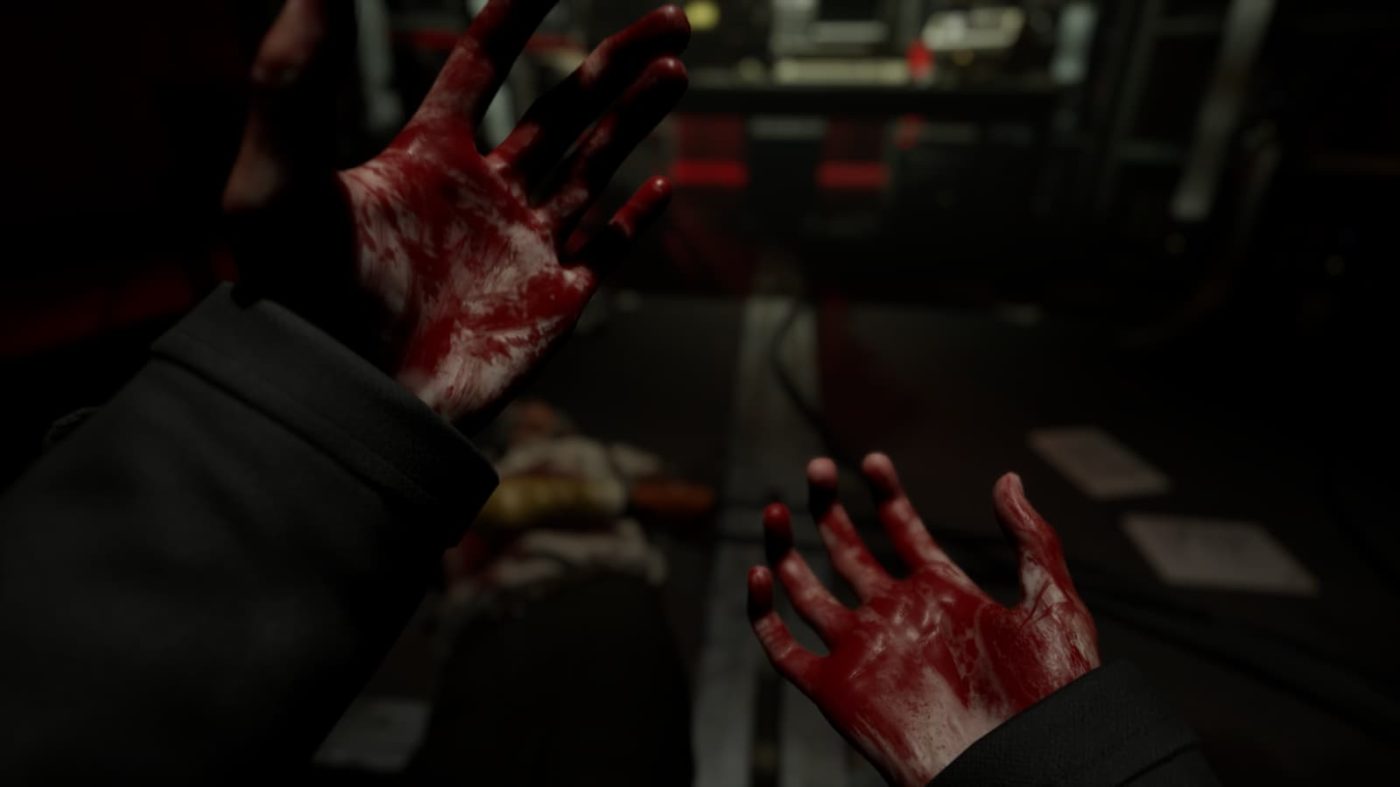
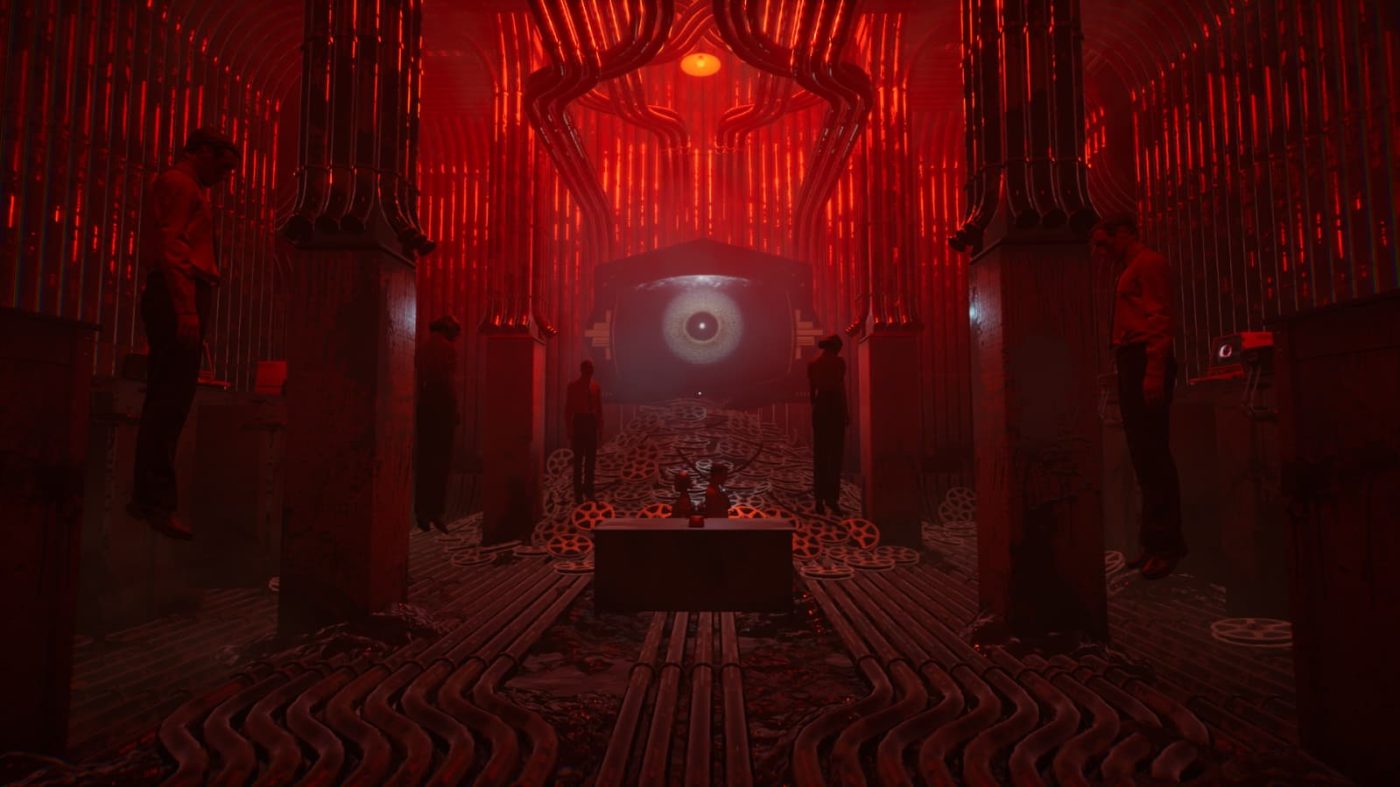
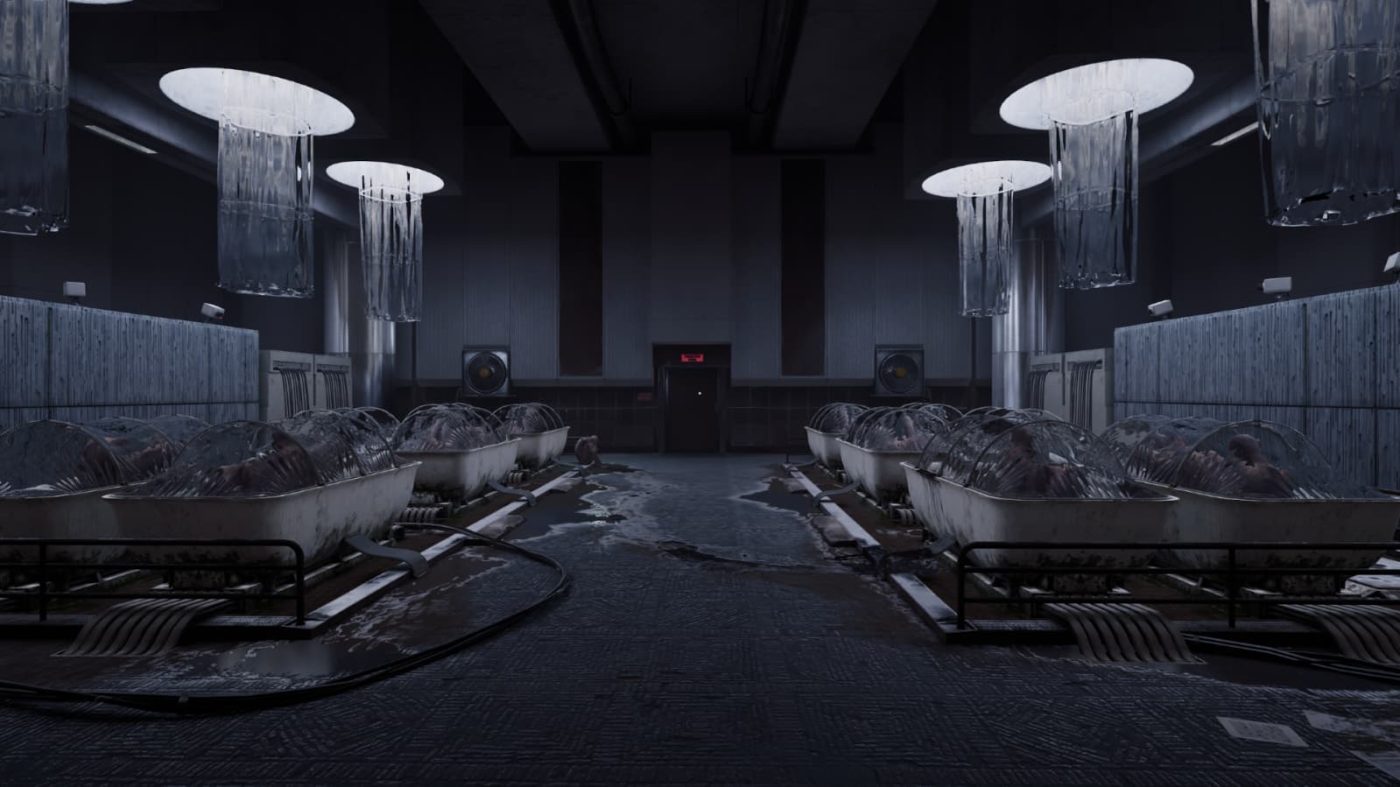
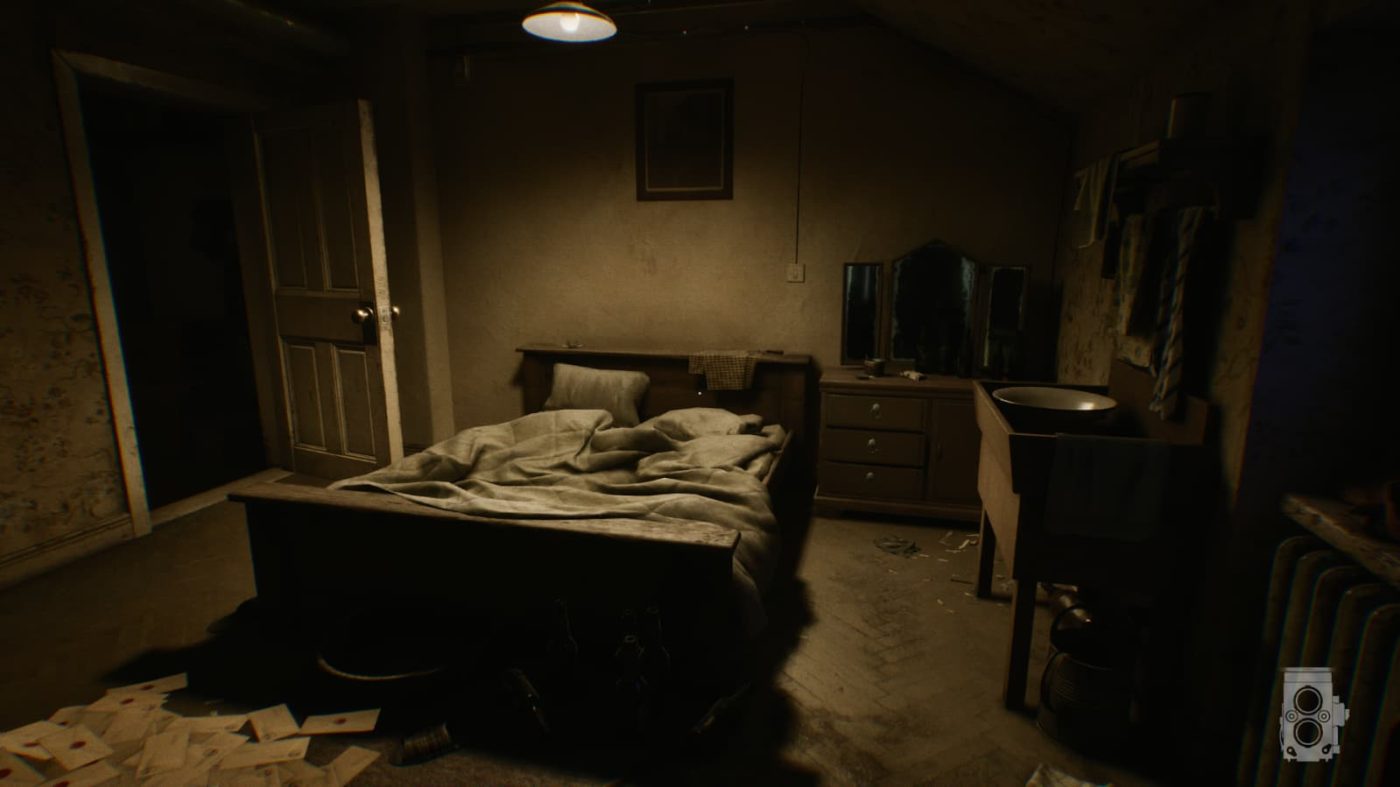
In KARMA: The Dark World, technical execution and art direction are not mere support elements – they are the backbone of the experience, inseparable from the game’s oppressive atmosphere and narrative ambition. Powered by Unreal Engine 5, the game leverages the engine not for spectacle alone, but to craft environments dense with meaning, tension, and symbolic weight. The artistic vision is uncompromisingly dark: cold, muted palettes of grays, blacks, and desaturated tones become expressive instruments, conveying alienation, decay, and the erosion of identity.
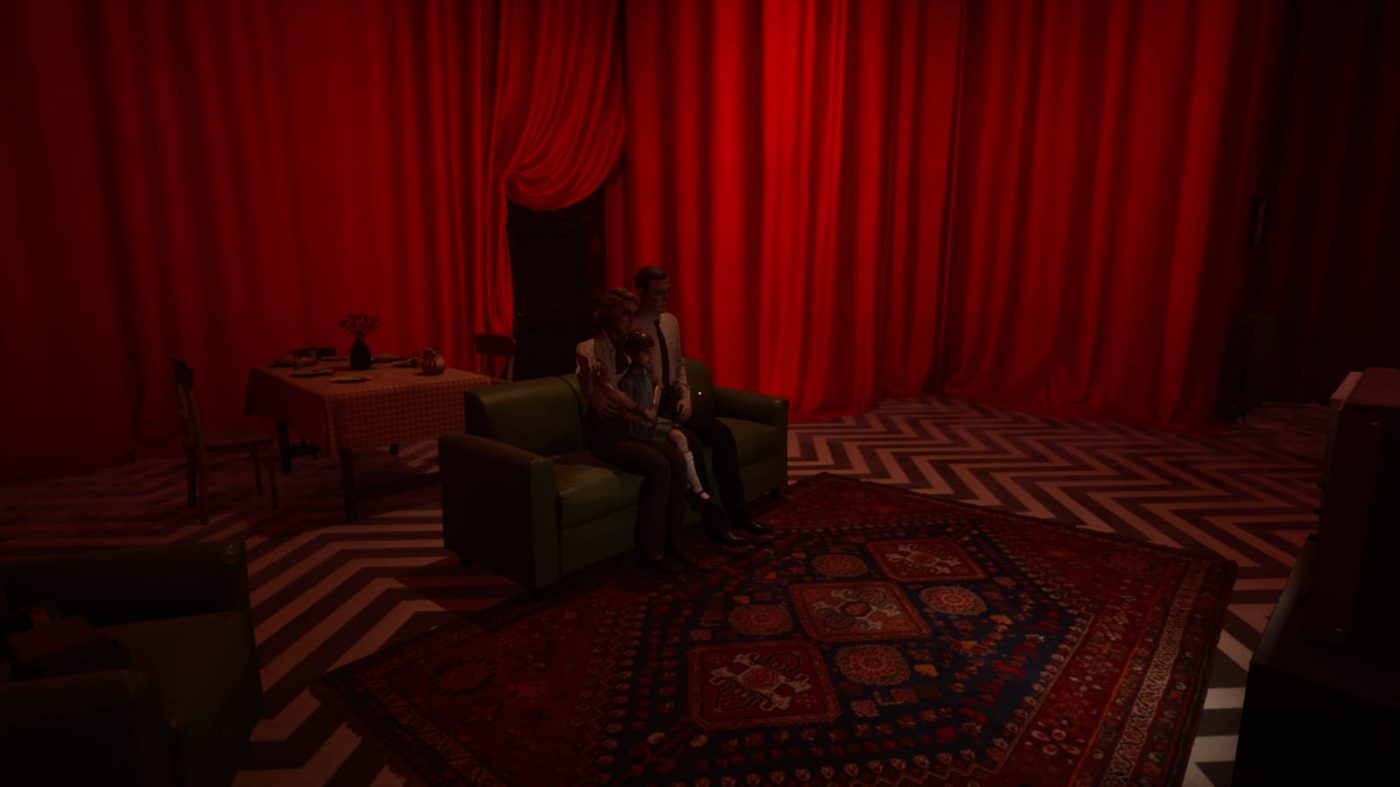
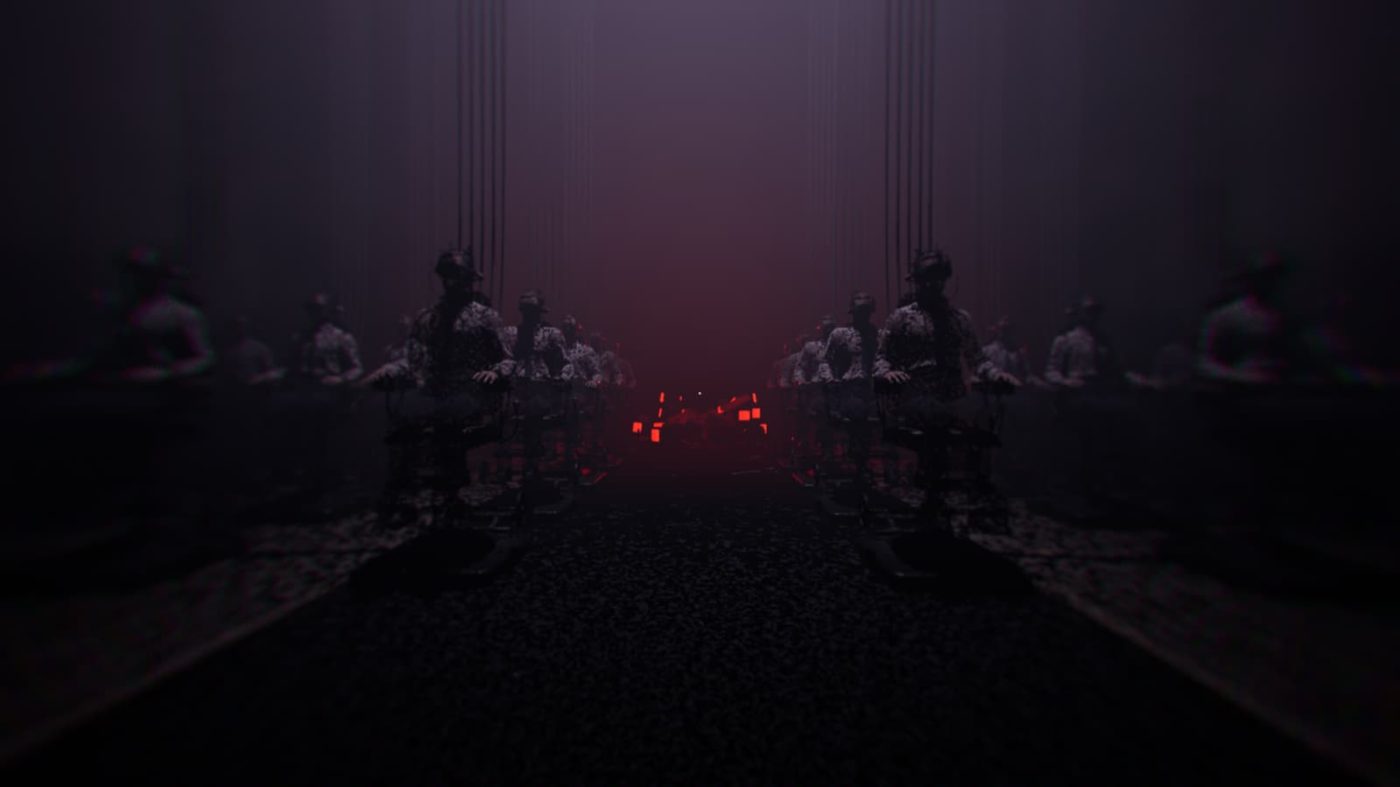
Environments are tightly constricted and painstakingly crafted, with architecture and object placement that amplify a pervasive sense of unease and instability, as though the world itself actively resists the player’s presence. Lighting serves as a crucial narrative tool: stark artificial illumination, impenetrable shadows, and dramatic contrasts warp perception, rendering every space both ambiguous and menacing.
From a technical standpoint, KARMA: The Dark World showcases remarkable stability and precision. Its environments are painstakingly detailed, resource management is executed with efficiency, and advanced visual effects – from volumetric lighting to complex particle systems – align seamlessly with the game’s overarching artistic vision. Every texture is meticulously crafted, amplifying the unsettling realism of a world that feels viscerally alive in its distortions.
The art direction excels in merging industrial motifs, brutalist architecture, and abstract symbolism, crafting environments that feel less like physical spaces and more like projections of fractured psyches. Every element – abandoned objects, decaying structures, and seemingly incidental props – carries narrative weight. Character models embody the same philosophy: rigid postures, restrained expressions, and deliberate animation rhythms amplify emotional distance, intentionally eschewing comforting empathy to reinforce a pervasive sense of alienation.
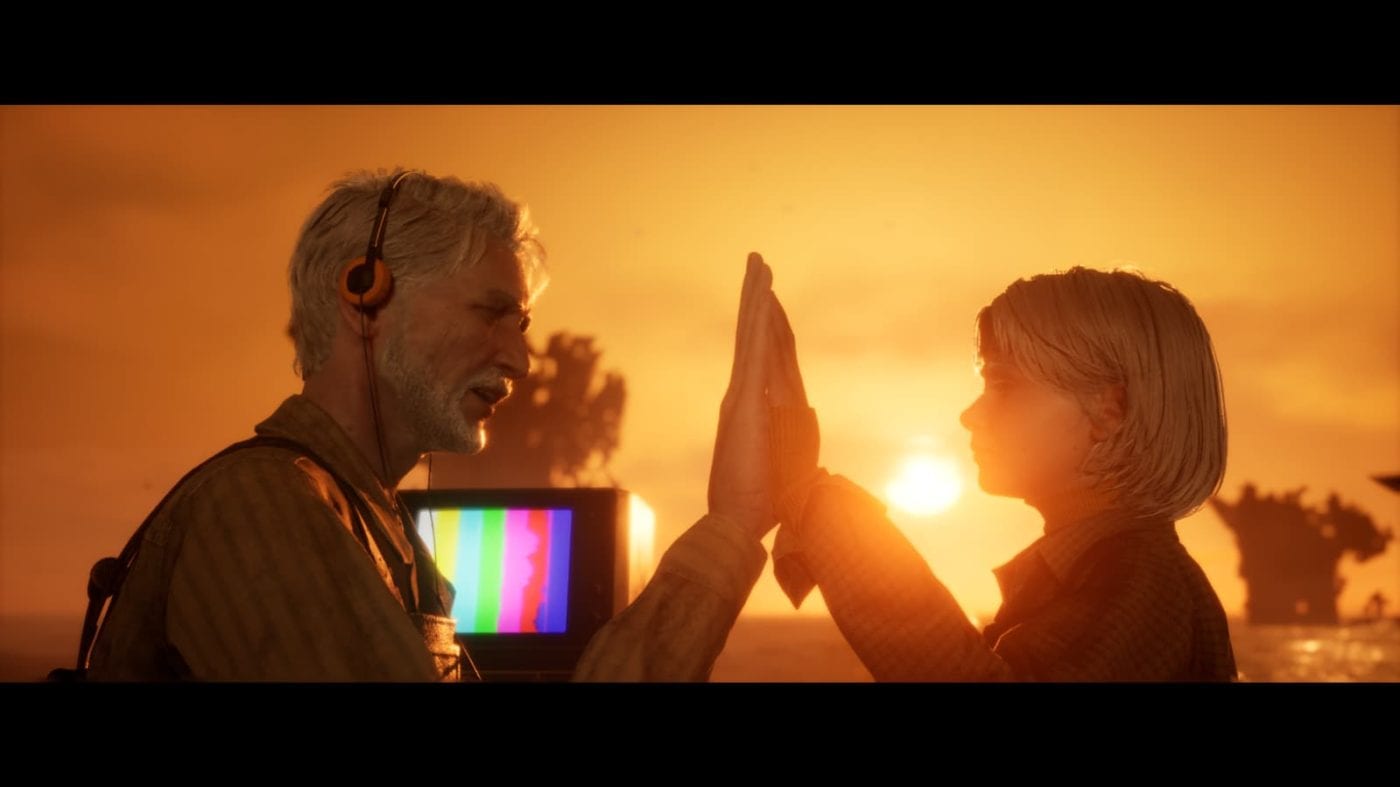
Cinematically, the game employs precise camera movements and carefully composed shots to heighten disorientation and psychological tension, clearly drawing from cinematic techniques. Minor technical imperfections – such as occasional stiffness in secondary animations – do little to detract from the experience; if anything, they reinforce the game’s unsettling and oppressive atmosphere.
Ultimately, KARMA: The Dark World exemplifies how a rigorous, purposeful artistic vision can elevate technical execution into a narrative language of its own. Every environment, shadow, and visual detail works in concert to amplify the game’s emotional and thematic resonance, turning graphics into a tool for storytelling and immersion rather than mere decoration.
A Soundscape That Breathes With the Game
The sound design of KARMA: The Dark World is not merely an accompaniment – it is a central pillar of the game’s oppressive, psychologically charged atmosphere. Every auditory element is carefully calibrated to unsettle, disorient, and immerse the player, demonstrating a rare mastery of sound as a narrative instrument.
The soundtrack is deliberately sparse, eschewing conventional melodies or thematic cues in favor of abstract, unsettling textures. Low-frequency drones seep into the subconscious, generating a persistent tension that refuses resolution. Silence itself becomes a weapon: unnatural stillness is abruptly shattered by distorted or sudden noises, keeping the player on edge and cultivating a constant state of alertness.
Ambient sounds are crafted with meticulous precision, bringing the world to life while imbuing it with a persistent sense of instability. Echoing footsteps in deserted corridors, distant metallic clangs, and muffled industrial drones form a sonic landscape that is as psychologically oppressive as it is convincingly tangible. Often, sounds emerge without a clear source, hinting at invisible presences and deliberately blurring the boundary between reality and hallucination.
Vocal work follows the same disciplined philosophy. Dialogue is often filtered, distorted, or spatially ambiguous, as if emanating from the protagonist’s mind or another dimension entirely. Performances are restrained and detached, reinforcing themes of alienation, dehumanization, and identity erosion – perfectly aligning with the game’s dystopian vision.
Technically, the audio exhibits precise spatial awareness. Directional cues subtly guide the player, signaling threats or hidden presences and deepening immersion. Sound here is as vital as sight, shaping both perception and emotional response.
Ultimately, KARMA: The Dark World transforms audio from a supporting element into a narrative force. Sound becomes an expressive language of its own, amplifying the game’s themes of anxiety, isolation, and psychological disquiet.
World Building as the Core Experience
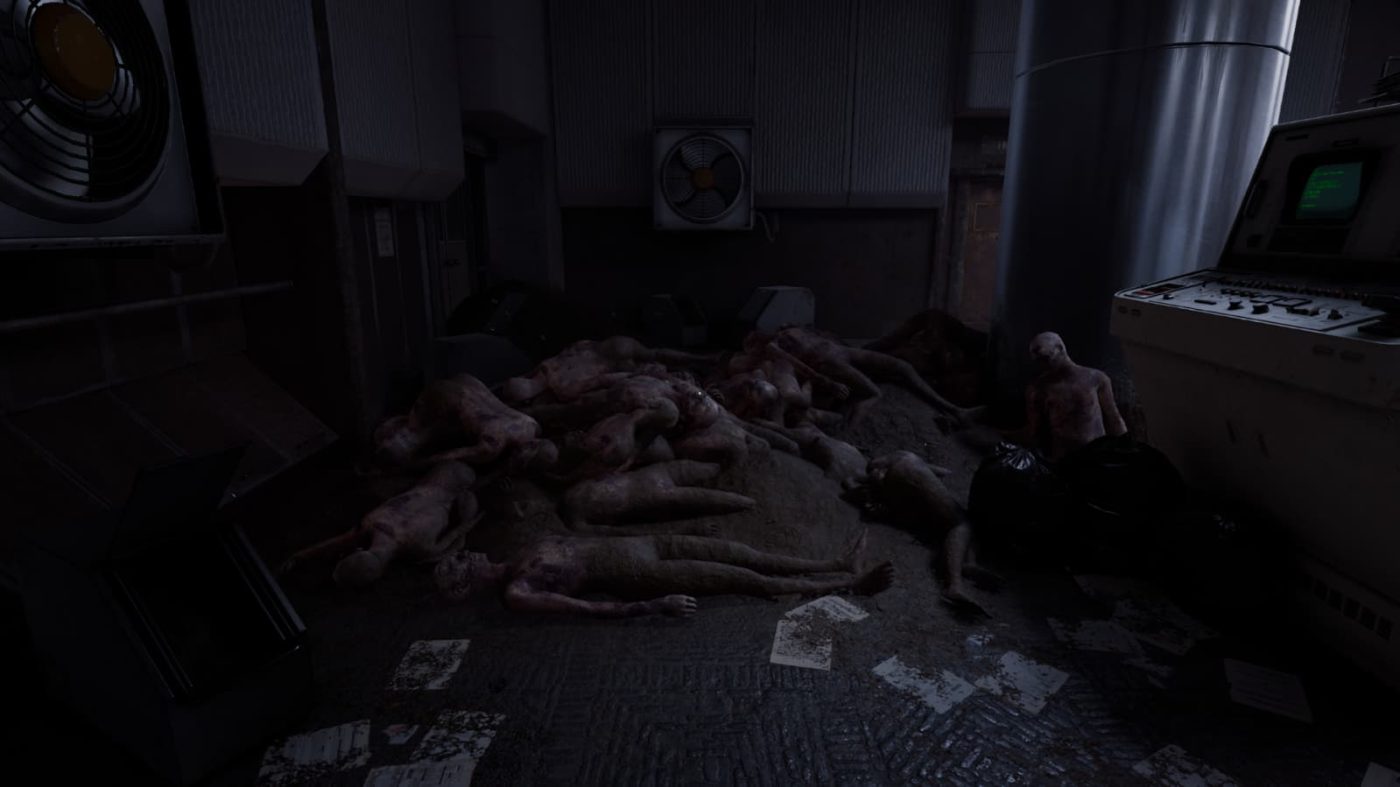
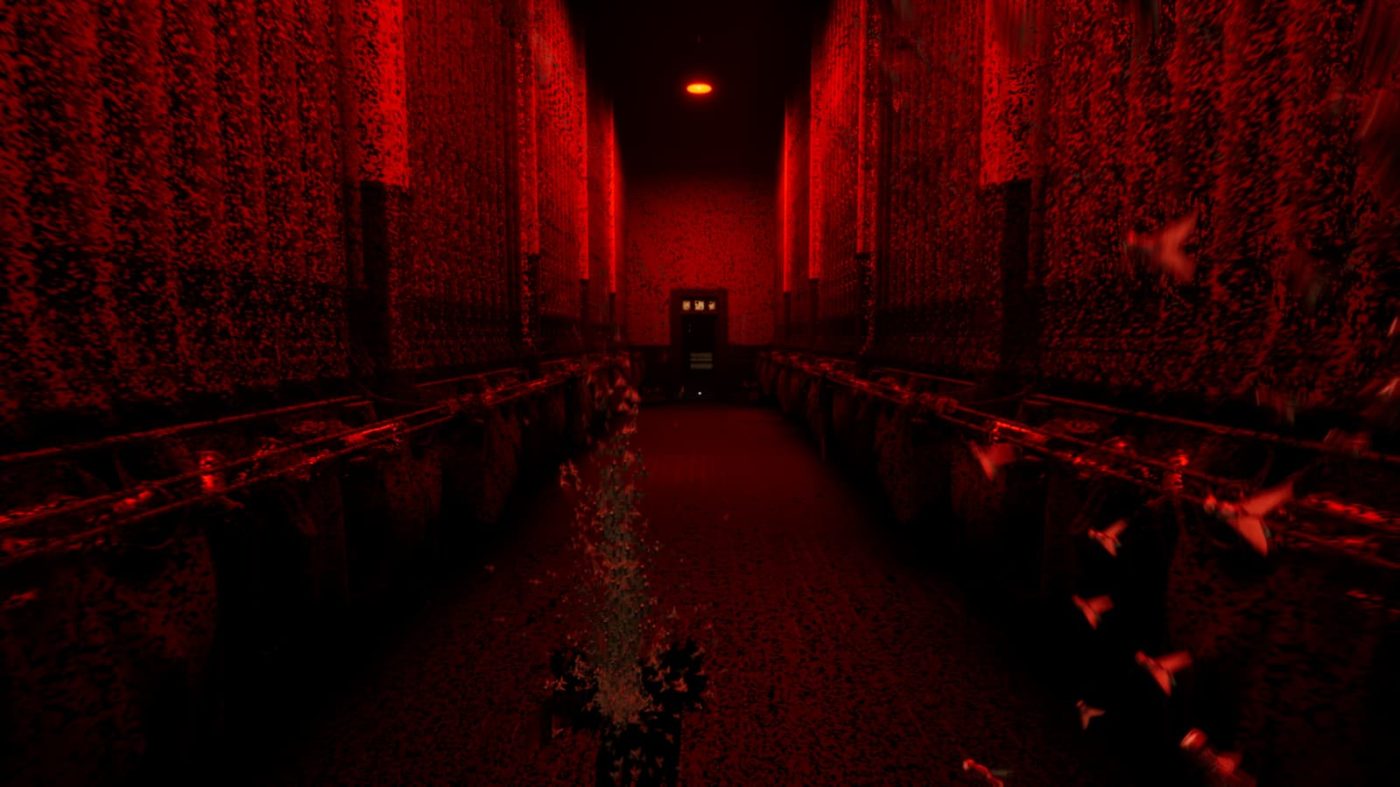
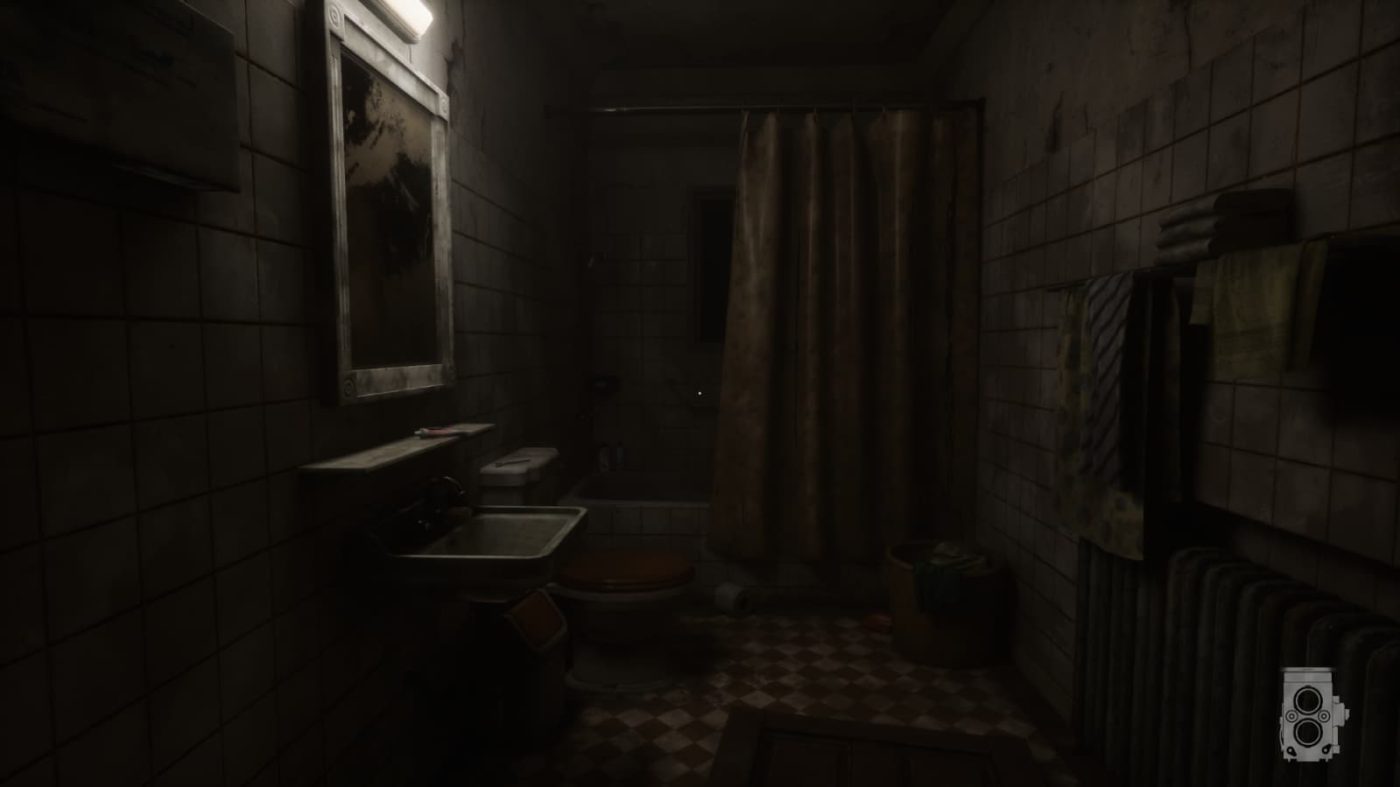
The worldbuilding in KARMA: The Dark World is shaped by meticulous thematic and atmospheric consistency, creating a narrative universe that avoids explicit exposition and instead unfolds organically through exploration, observation, and environmental interaction. The result is a suffocating dystopian reality defined by oppressive architecture and a pervasive sense of surveillance, where spaces appear designed not to accommodate individuals but to monitor, regulate, and ultimately contain them.
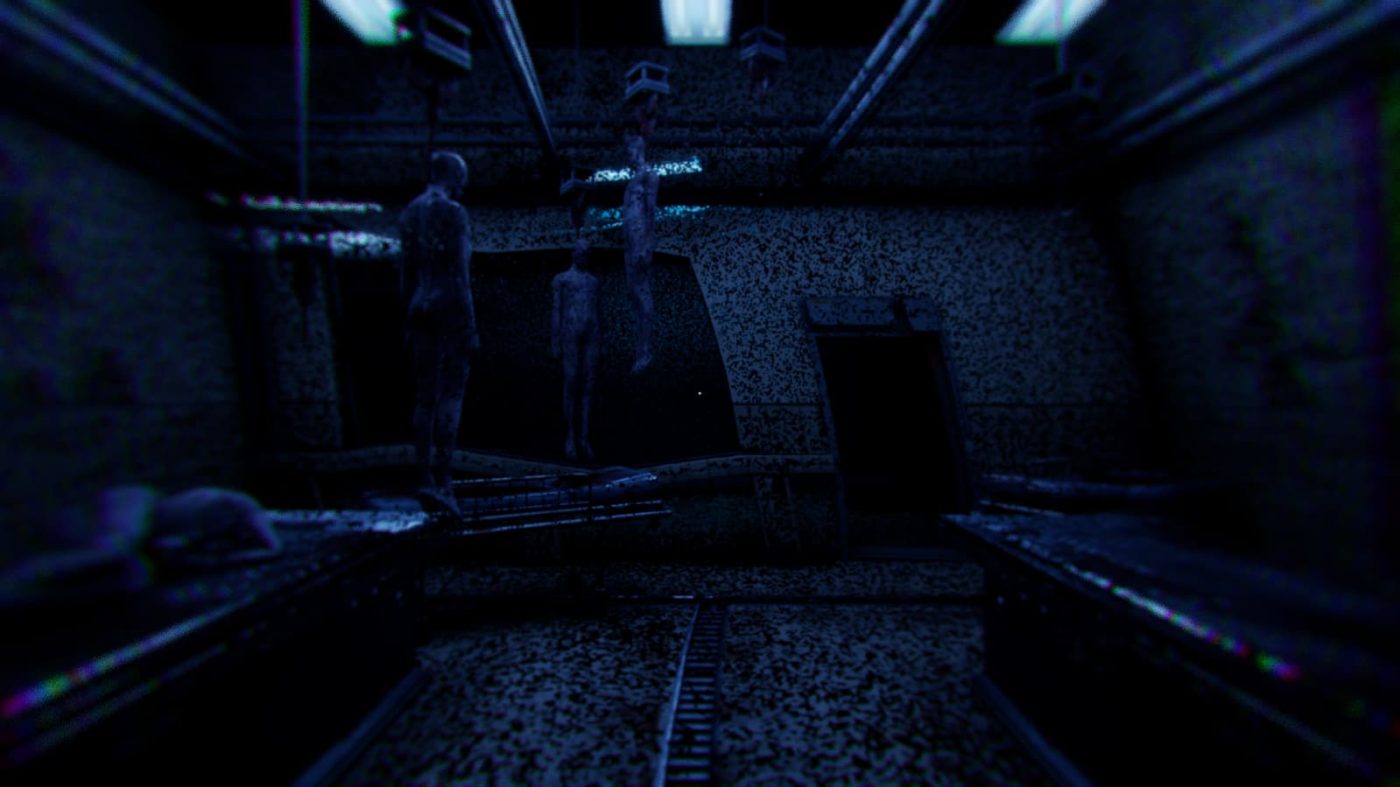
Environments function as narrative instruments in their own right, communicating decay, abandonment, and systemic repression while suggesting a society that has grown estranged from human identity, reducing individuals to anonymous, interchangeable presences. Environmental storytelling plays a central role: architectural choices, scattered objects, and subtle visual cues hint at past events, power hierarchies, and social dynamics without resorting to explicit exposition. This approach encourages active interpretation, positioning the player not as a passive observer but as an engaged reader of the world.
From a gameplay standpoint, KARMA: The Dark World adopts a deliberately restrained approach. Action is minimal, with emphasis placed on exploration, puzzle-solving, and narrative interaction. Mechanics are straightforward and accessible, yet contextualized in ways that lend them symbolic resonance, ensuring that each interaction contributes meaningfully to the narrative fabric. The pacing is intentionally slow and contemplative, structured around silence, observation, and exploratory sequences that favor immersion and reflection over conventional, adrenaline-driven tension.
Traditional gameplay conventions – including combat systems and complex progression mechanics – are largely absent, reflecting a deliberate design philosophy aimed at fostering emotional engagement rather than mechanical challenge. This choice strengthens the game’s thematic coherence, though it may unsettle players anticipating a more conventional interactive structure. Environmental interactions frequently retain a degree of ambiguity, with their purpose not always immediately clear, reinforcing the overarching sense of instability and loss of control.

Not for Everyone
KARMA: The Dark World positions itself deliberately at the margins of conventional videogame design, embracing an auteur-driven philosophy that prioritizes atmosphere, introspection, and psychological tension over immediate gratification or mainstream accessibility. This intentional stance is both the game’s defining strength and its most divisive trait, creating an experience that demands full engagement while offering no shortcuts or concessions.
The title demonstrates a rare artistic cohesion: every aspect – from its fragmented narrative and deliberate, measured pacing to its meticulously crafted soundscape and immersive environmental design – contributes to a singular, unmistakable identity. By leaving interpretive space for the player and deliberately withholding explicit explanations, the game cultivates depth, reflection, and resonance, extending its impact well beyond the end credits. Ambiguity is not a limitation but a tool, transforming play into an active exercise in observation, deduction, and emotional immersion.
Yet this uncompromising rigor can alienate players approaching the game with conventional expectations. Its deliberate pacing, minimal interactions, and contemplative focus may feel inert or even frustrating to those seeking immediate tension, clear objectives, or narrative resolution. The story’s intentional opacity – while thematically rich – risks disorienting players unaccustomed to interpretive, ambiguous storytelling.
From a technical standpoint, the game is solid, with high-quality visuals and stable performance. That said, repeated environmental motifs and a limited variety of interactive sequences underline the project’s narrow, focused scope – an artistic choice that reinforces the oppressive, introspective tone rather than diluting it with conventional gameplay diversity.
In essence, KARMA: The Dark World exemplifies videogames as an expressive medium, closer to interactive art than commercial entertainment. Its value lies not in conventional measures of “fun” or accessibility but in its coherence, audacity, and thematic ambition. The game demands attentiveness, sensitivity, and interpretive engagement, yet rewards those who submit to its world with a profoundly unsettling, emotionally charged, and singularly personal experience.
Ultimately, KARMA: The Dark World stands as a testament to the potential of videogames as expressive, interactive art rather than conventional commercial entertainment. Its strength lies not in accessibility or traditional notions of “fun,” but in its uncompromising coherence, artistic vision, and thematic ambition. The game demands attentiveness, emotional sensitivity, and interpretive engagement – but for those willing to immerse themselves fully, it delivers a deeply unsettling, emotionally resonant, and profoundly personal experience.


KARMA: The Dark World
PRO
- Cohesive and distinctive art direction, giving the game a strong, unmistakable identity;
- Deeply immersive atmosphere that lingers with the player;
- Exceptional sound design, crucial in building tension and emotional engagement;
- Sophisticated environmental storytelling, rewarding exploration and interpretation;
- Clear auteur vision with consistent thematic coherence;
- Contemplative pacing, thoughtfully calibrated to encourage reflection;
- Detailed, stylistically coherent graphics that reinforce the narrative experience.
CON
- Minimalistic gameplay, with limited interactions and low variety;
- Slow pacing, which may frustrate players seeking immediacy or action;
- Deliberately cryptic narrative, demanding focus and interpretive engagement;
- Some visual repetition in areas, potentially emphasizing a sense of monotony.


7.5/10