A contemporary take on the genre’s roots, built around tension, atmosphere, and fear.
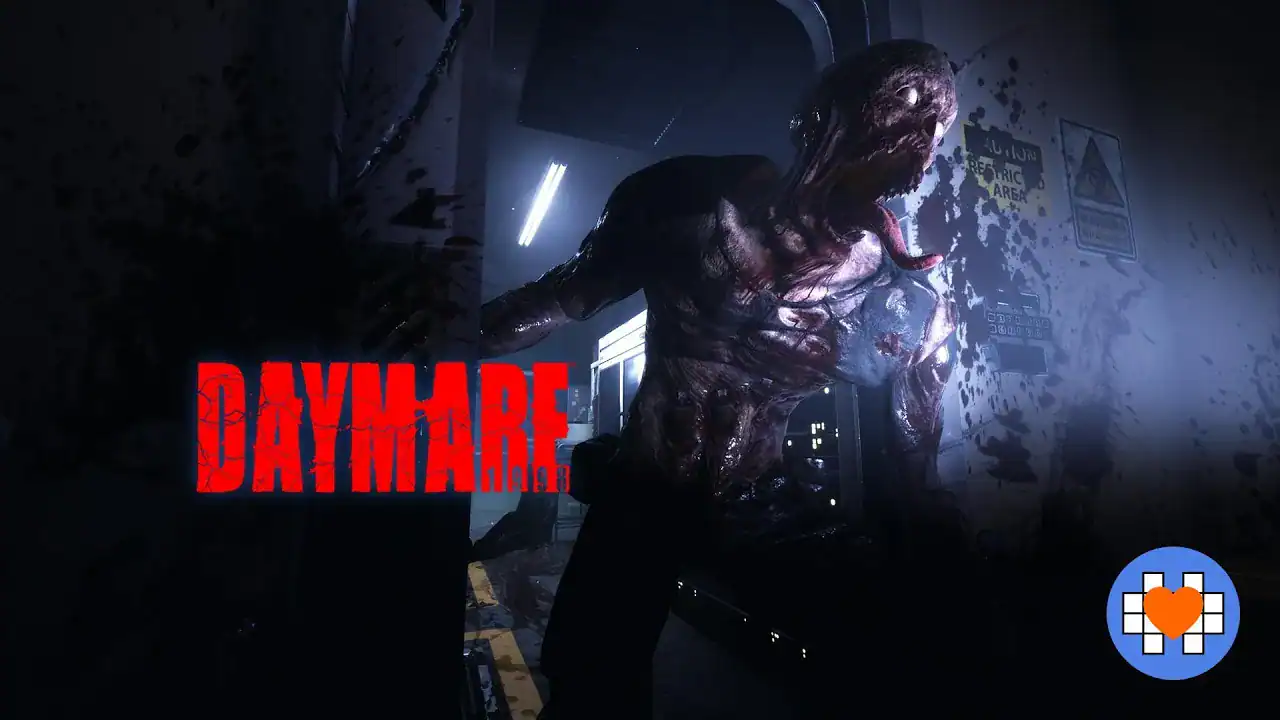
Daymare: 1998 is conceived from the ground up as a deliberate attempt to capture a precise atmosphere, aesthetic, and identity: that of 1990s survival horror. Constant tension, limited resources, claustrophobic environments, and a narrative language shaped by mystery, biotechnology, military conspiracies, and biological terror form its core. Describing the game as a mere homage, however, would undersell the scope of its ambitions.
Developed by Invader Studios, Daymare: 1998 reflects a deep understanding of a genre that helped define videogame history, and attempts to reinterpret its core principles through a contemporary lens. Nostalgic influences are fused with modern mechanics designed to keep the player engaged, under pressure, and continuously alert. What emerges is not a straightforward return to the past, but a deliberate bridge between eras, built by a studio clearly fluent in the unspoken language of survival horror and intent on reshaping it with modern technology and a more layered narrative structure than the classics it consciously evokes.
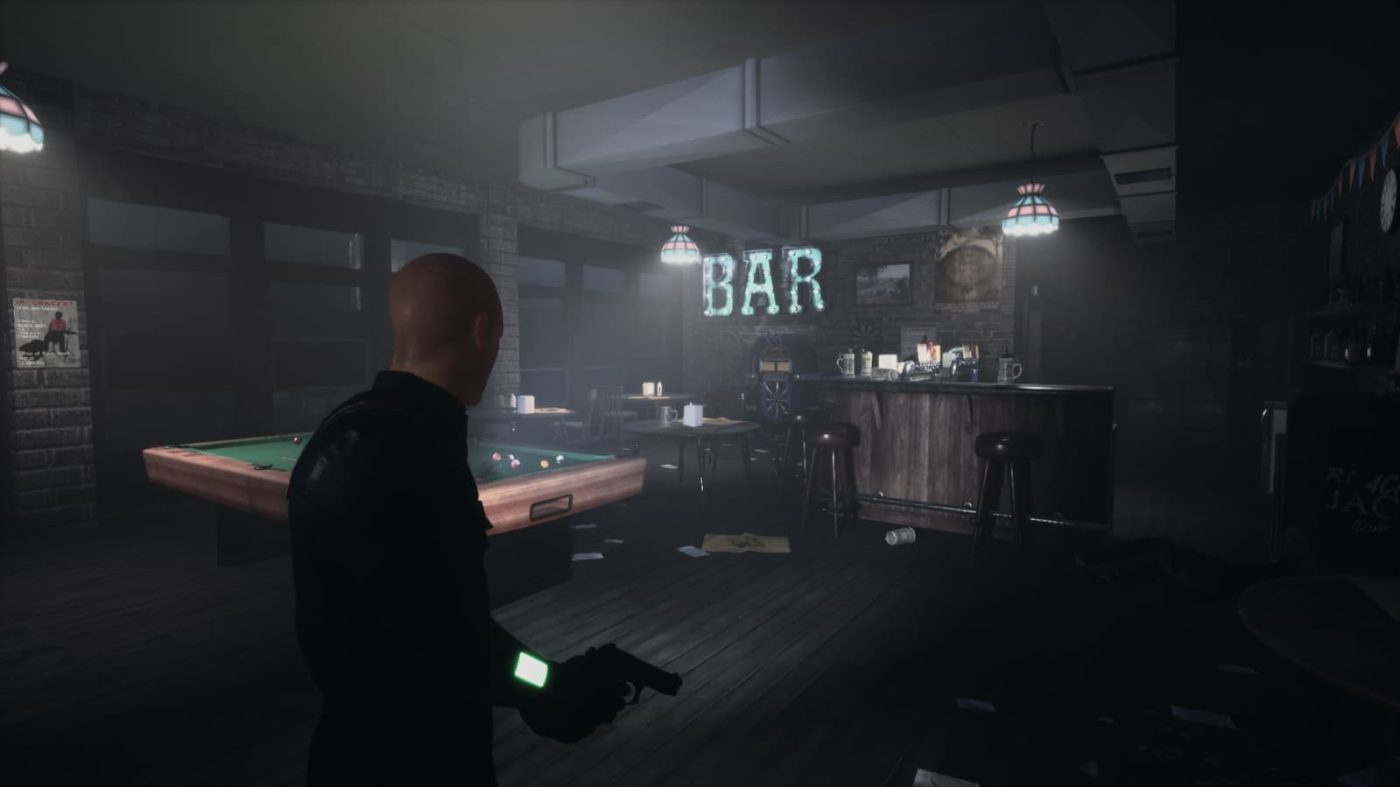
From its opening moments, the game places a clear emphasis on dark, oppressive atmosphere, where unpredictability and a constant sense of imminent danger dictate the rhythm of the experience. The setting – initially an isolated research facility, later an entire city ravaged by a catastrophic event – is introduced at a measured pace, ensuring the player immediately feels the weight of the situation, the mystery surrounding the contamination, and the slow emergence of an unseen threat. Environmental storytelling plays a central role, with audio logs, documents, visual details, and sudden, unsettling encounters gradually revealing the scale of what has occurred. This opening does more than establish a location; it lays the groundwork for a broader narrative in which secret organizations, apparent accidents, and morally ambiguous figures converge into a layered narrative mosaic.
One of the most striking aspects of Daymare: 1998’s opening is the way it builds tension. The early narrative rhythm avoids shortcuts such as excessive cinematics or forced exposition, opting instead for atmospheric storytelling that allows the player to perceive the gravity of events through exploration, observation, and direct interaction with limited resources.
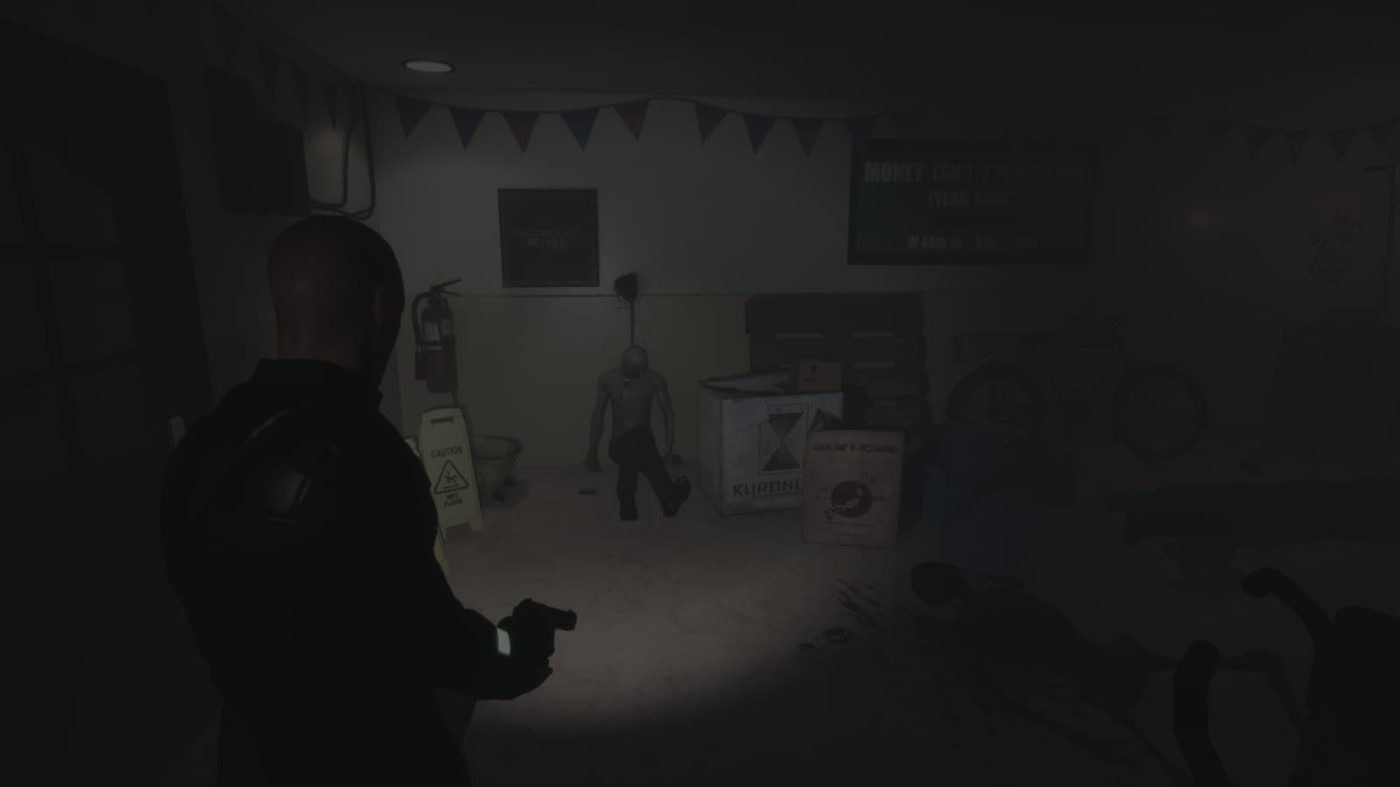
The approach is intentionally minimalist during the opening hours, relying on a restrained soundtrack, richly detailed environments, and a careful use of light and shadow to evoke unease and mystery. The game immediately establishes its rules: ammunition is scarce, action must be considered rather than impulsive, inventory management is critical, and threats can emerge without warning from narrow corridors, sealed doors, or poorly lit spaces.
By placing the player in the role of a military operative from the outset, the game skips any illusion of safety. There is no slow descent into chaos – Daymare: 1998 begins in the middle of an emergency, asking the player to react, adapt, and survive while piecing together what went wrong. The result is an opening that feels urgent but controlled, balancing exploration with sudden spikes of threat while clearly defining the game’s identity.
At its core, Daymare: 1998 aims to deliver a cinematic experience without sacrificing interactivity. Its early environments – crowded with malfunctioning technology, flickering monitors, rooms scarred by recent disasters, and grotesquely mutated organisms – are not passive backdrops but narrative devices in their own right. Each space bears witness to catastrophic decisions already made, inviting the player to reconstruct the chain of events that led to collapse. The introduction firmly situates the game within a bleak science-fiction framework defined by runaway viruses, genetic manipulation, and biological weapons, echoing long-standing anxieties surrounding scientific ethics and the limits of human ambition. Even when stepping into the role of a trained soldier, the message remains clear: no one is truly prepared for what has been unleashed inside the facility.
Invader Studios
The team behind Daymare: 1998, Invader Studios, is a prime example of how a small Italian independent studio can turn a focused passion for survival horror into a project with genuine international reach. At the heart of the studio’s identity lies a deep respect for the genre’s classics, paired with an almost obsessive commitment to atmosphere and world-building.
The team first drew wider attention with Resident Evil 2 Reborn, an unofficial fan project that impressed Capcom not only for its technical quality but for its thoughtful, faithful reimagining of classic survival-horror design. Members of Invader Studios were subsequently invited to Capcom’s offices. While the project was ultimately discontinued following the announcement of Capcom’s official Resident Evil 2 remake, the experience proved formative. Encouraged by Capcom, the team chose to pivot toward an original property, carrying forward the structural DNA of 1990s horror while stepping away from licensed material.
Invader Studios is a small but highly driven team, and Daymare: 1998 was developed under conditions that left little room for compromise. Without the financial or technical backing of a major publisher during development, the studio relied on a clear creative vision: to deliver a modern survival horror experience that remained faithful to the genre’s core principles. Scarce resources, deliberate pacing, methodical backtracking, oppressive atmosphere, and fragmented environmental storytelling were treated not as nostalgic affectations, but as essential design pillars.
Publisher Destructive Creations, alongside All in! Games for international distribution, recognised the project’s potential early on. Their support played a key role in both production and visibility, allowing the game to reach a far broader audience than an independent Italian studio could realistically achieve alone. Despite the limitations typical of an indie production, Invader Studios handled the full creative pipeline with notable professionalism. Environmental design, character work, control systems, lighting, and sound design were all approached with the same care and consistency expected of larger-scale productions, reinforcing the studio’s credibility.
The end result reflects a team that never lost sight of its identity while willingly stepping into a genre defined by demanding standards. With Daymare: 1998, Invader Studios secured a credible position on the international stage, contributing visibility to the Italian game development scene. Supported by a stable publishing framework, the game successfully launched on PC and consoles, consolidating the studio’s reputation and laying the groundwork for its follow-up project, Daymare 1994: Sandcastle.
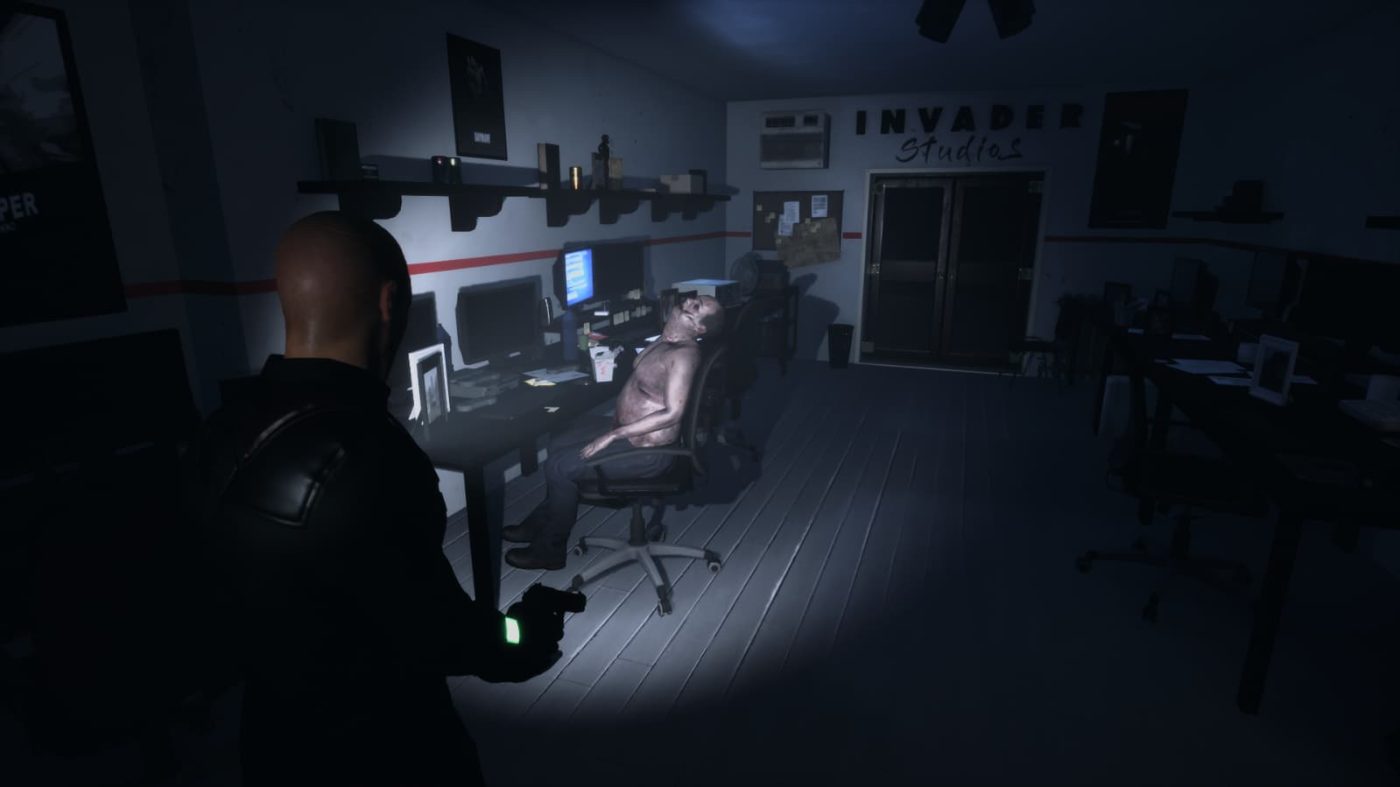
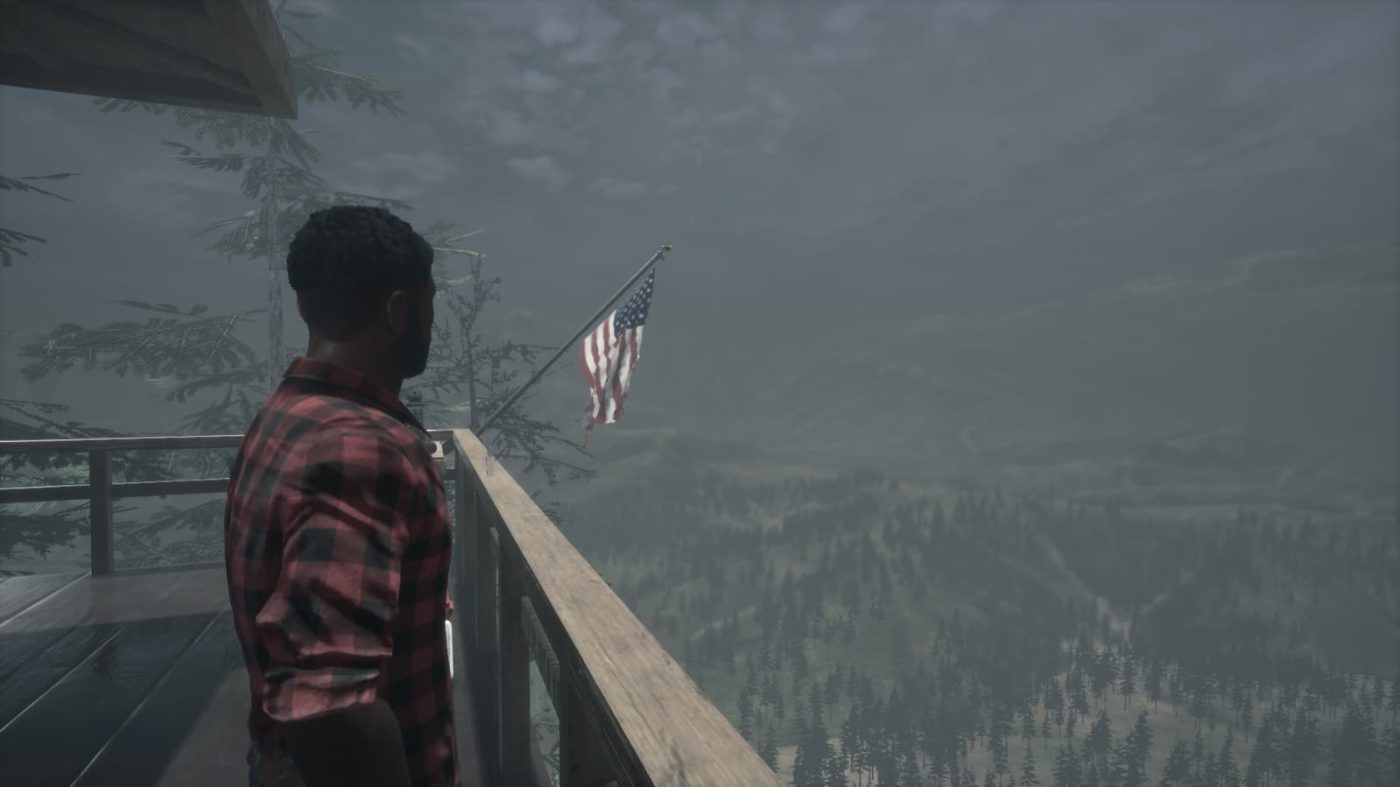
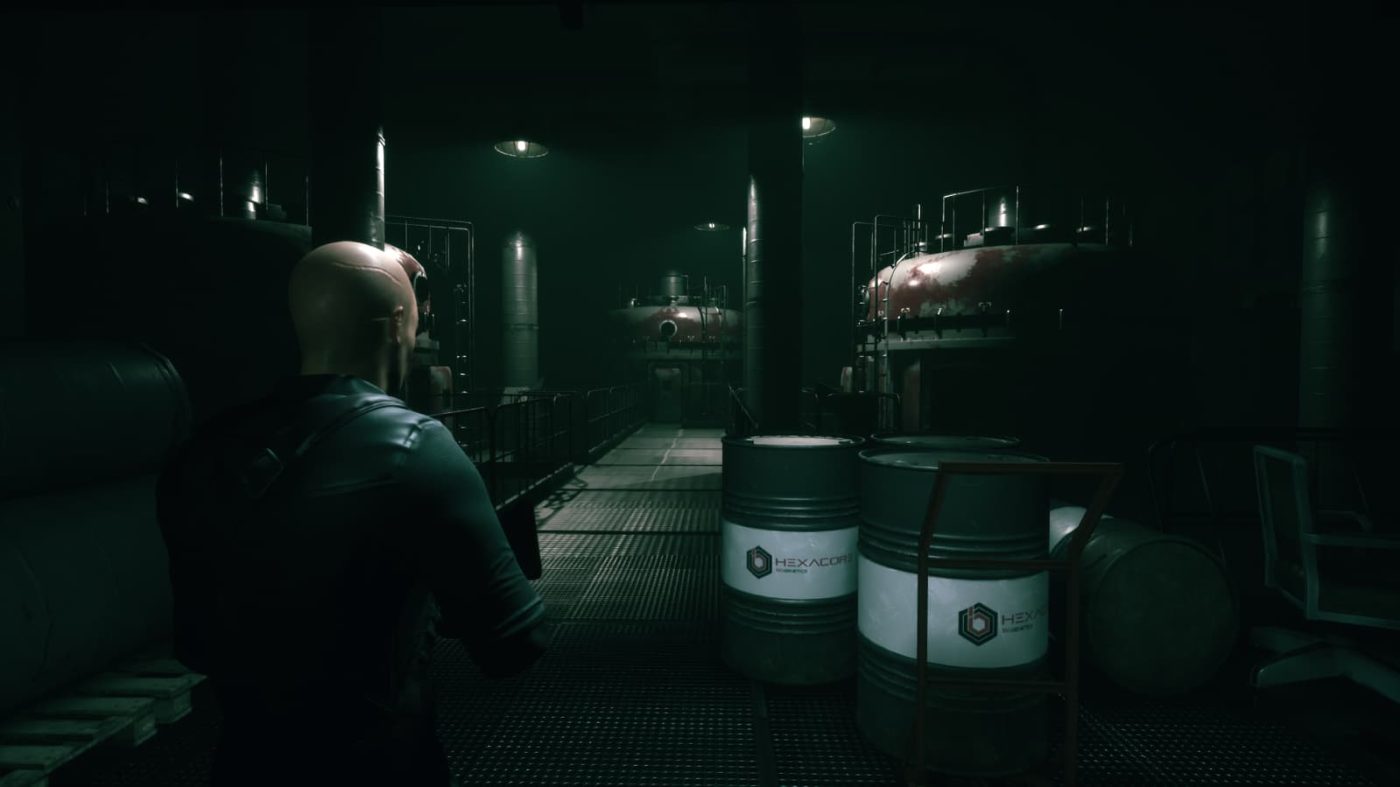
Three Perspectives, One Catastrophe
Daymare: 1998 unfolds through a deliberately fractured, multi-perspective narrative, weaving tension, intrigue, and a slow-burning sense of dread. Players are drawn into a biological nightmare where nothing is as it seems, and every environmental detail, recovered document, and intercepted conversation pieces together a larger, darker mosaic than the opening ever suggests.
The story begins with a catastrophic accident at Hexacore Biogenetics, a corporation that has spent decades conducting secret research in bioengineering, viral agents, cellular manipulation, and the militarization of pathogens. When these clandestine experiments spiral violently out of control, they unleash a devastating biological disaster, transforming the surrounding area into a macabre theater of panic, death, and uncontrollable mutation.
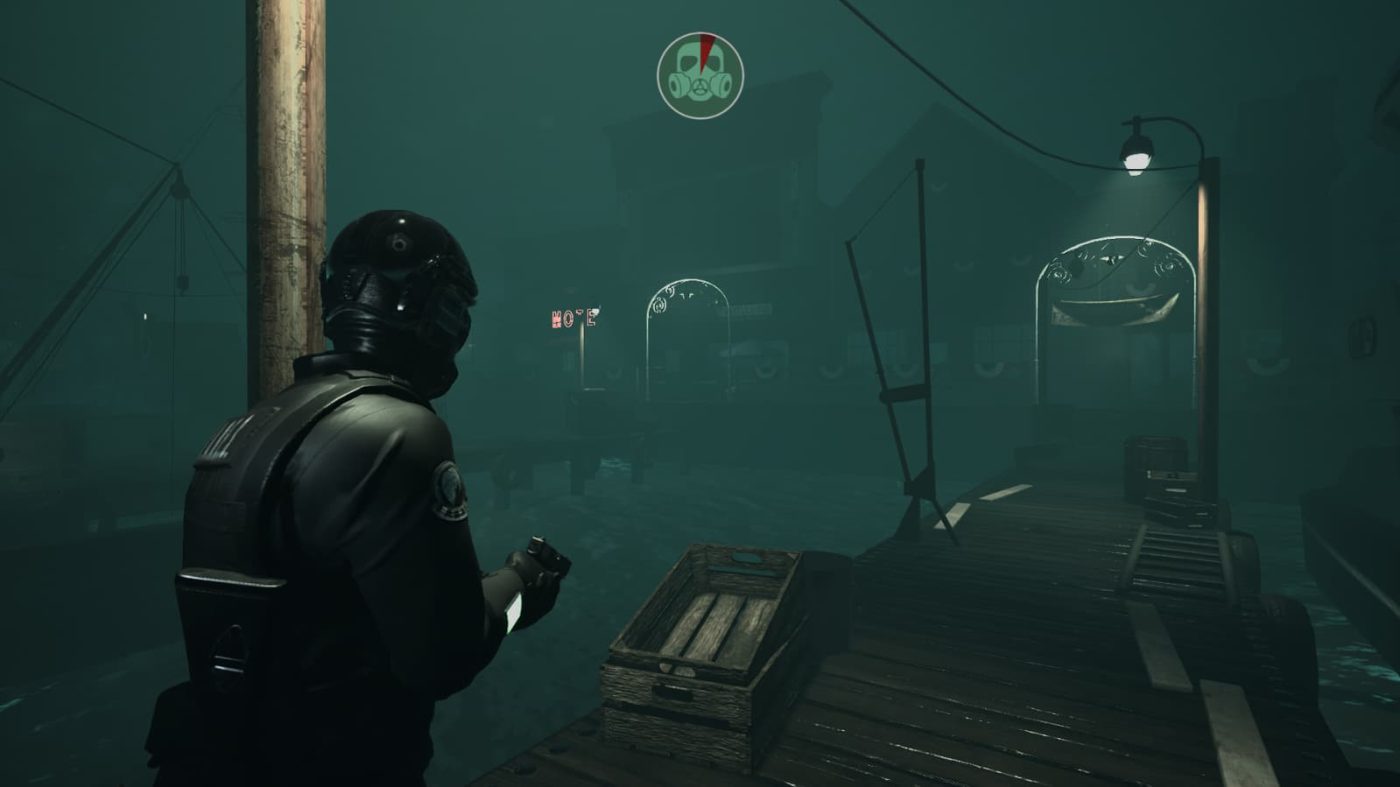
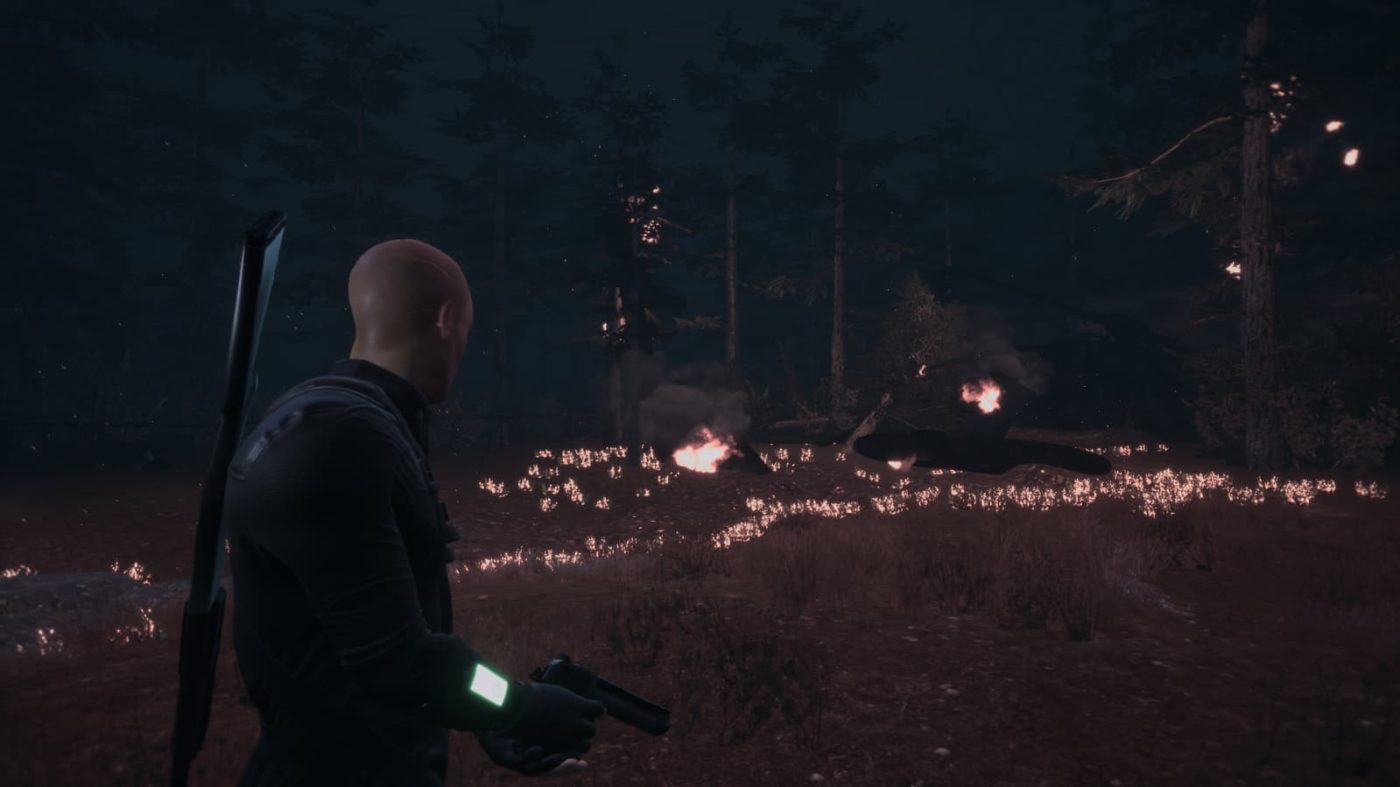
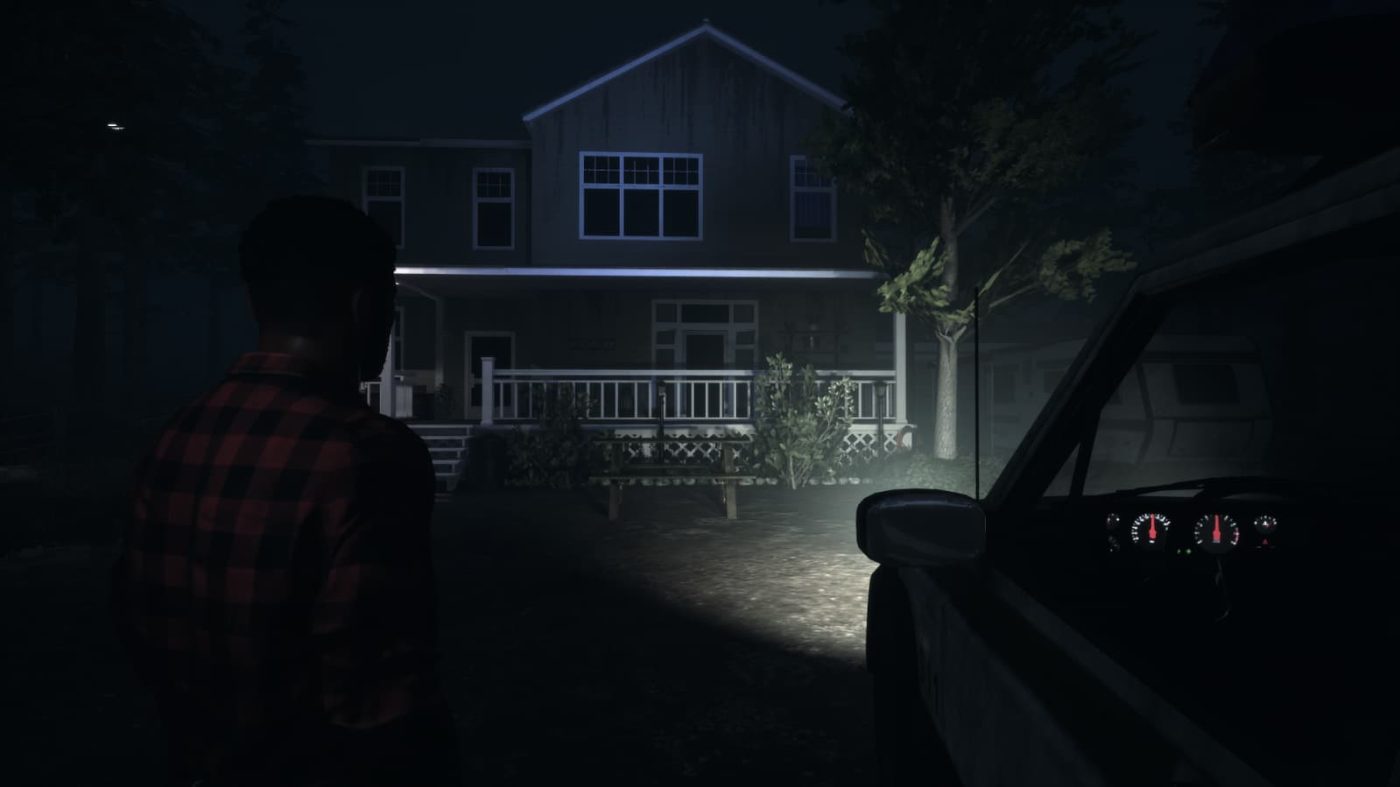
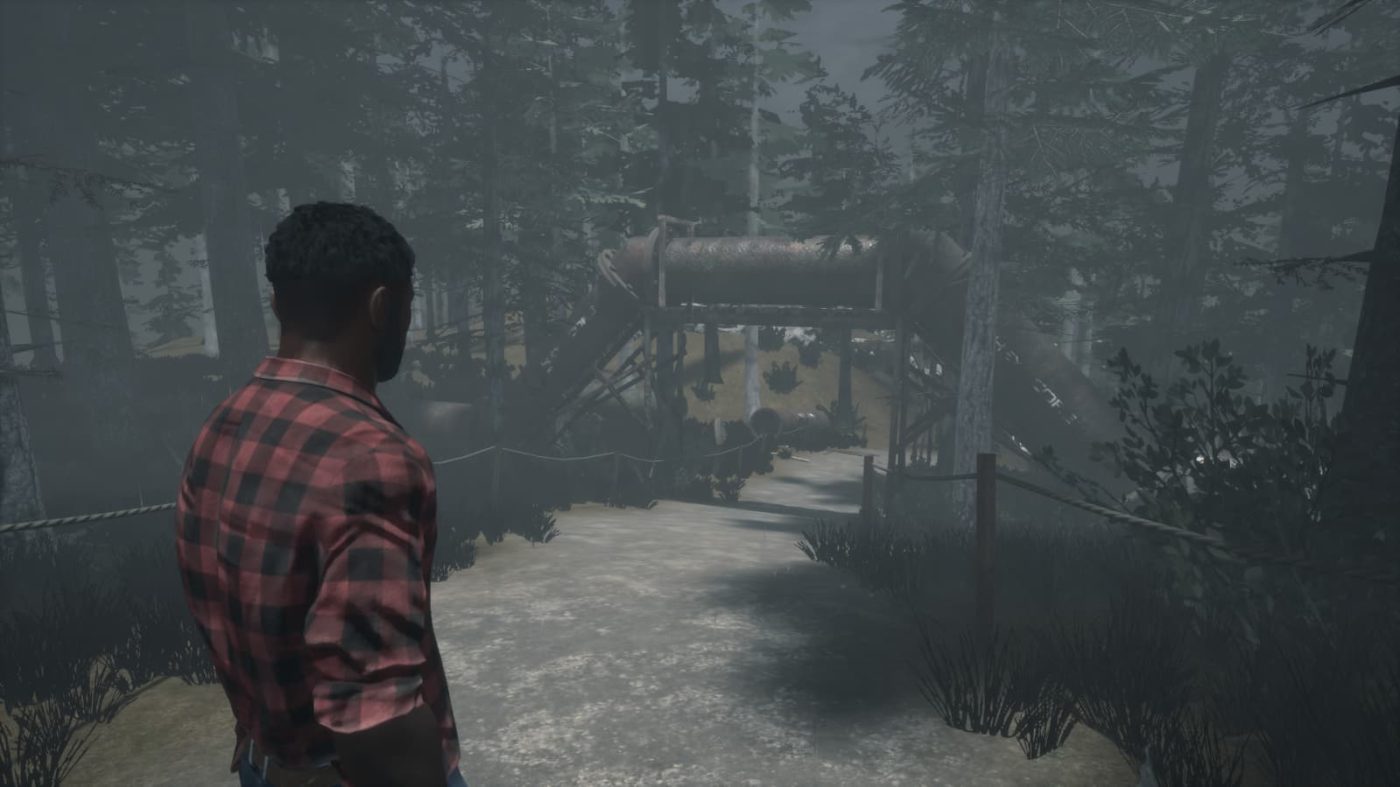
Rather than following a single linear path, the narrative shifts between three protagonists, each offering a distinct and partial perspective on the unfolding events. Liev, an operative of the elite H.A.D.E.S. unit, is tasked with recovering sensitive samples and “cleaning up” the scene by erasing any compromising evidence. Sam, a troubled forest ranger, is drawn unwillingly into the horror as he struggles to make sense of the chaos engulfing the town of Keen Sight. Raven, a Hexacore technician, witnesses the catastrophe from within, providing a technical, human, and deeply vulnerable perspective on the disaster.
This shifting perspective transforms the story into a complex narrative puzzle:: each chapter adds new pieces that gradually reveal hidden connections, buried responsibilities, unexpected betrayals, and emerging moral dilemmas. As players advance, it becomes clear that the disaster is far more than a failed experiment – it is the result of a sprawling web of governmental conspiracies and corrupt scientific agendas, stretching back years and implicating unlikely actors, from institutional insiders to the protagonists themselves.
The depiction of Keen Sight adds further narrative depth: an ostensibly peaceful town built on unstable foundations, populated by residents oblivious to the invisible threat encroaching around them. In this claustrophobic, decaying urban environment, social order collapses, infection spreads, and characters unravel psychologically. Fear, paranoia, and the instinct to survive expose their fragilities and contradictions.
Liev evolves from a cold, efficient soldier into a man forced to confront the morality of his missions. Sam grapples with hallucinations, distorted memories, and inner torment that challenge his grasp on reality. Raven is torn between duty, scientific responsibility, and pure terror as she watches colleagues succumb to the disaster they helped create.
The narrative is further enriched by scattered documents – scientific reports, emails, notes, medical files, press clippings, and classified materials – that expand the lore, clarify Hexacore’s objectives, and paint a chilling picture of genetic manipulation, illicit experiments, and deliberately concealed failures. Exploration rewards players with a deeper understanding of the disaster’s scale and scope.
High-stakes sequences – the outbreak, civilian mutations, military confrontations, revelations about the virus’s true purpose, and desperate containment operations – escalate the tension, driving the story toward a climactic finale. Here, the fate of the town and its characters converges in a final, desperate struggle against an unstoppable threat, compelling players to confront the full magnitude of the catastrophe and the roles each protagonist played. The conclusion leaves space for reflection on human accountability, the ethical perils of science under pressure, and the fragility of morality when confronted with unspeakable horror.
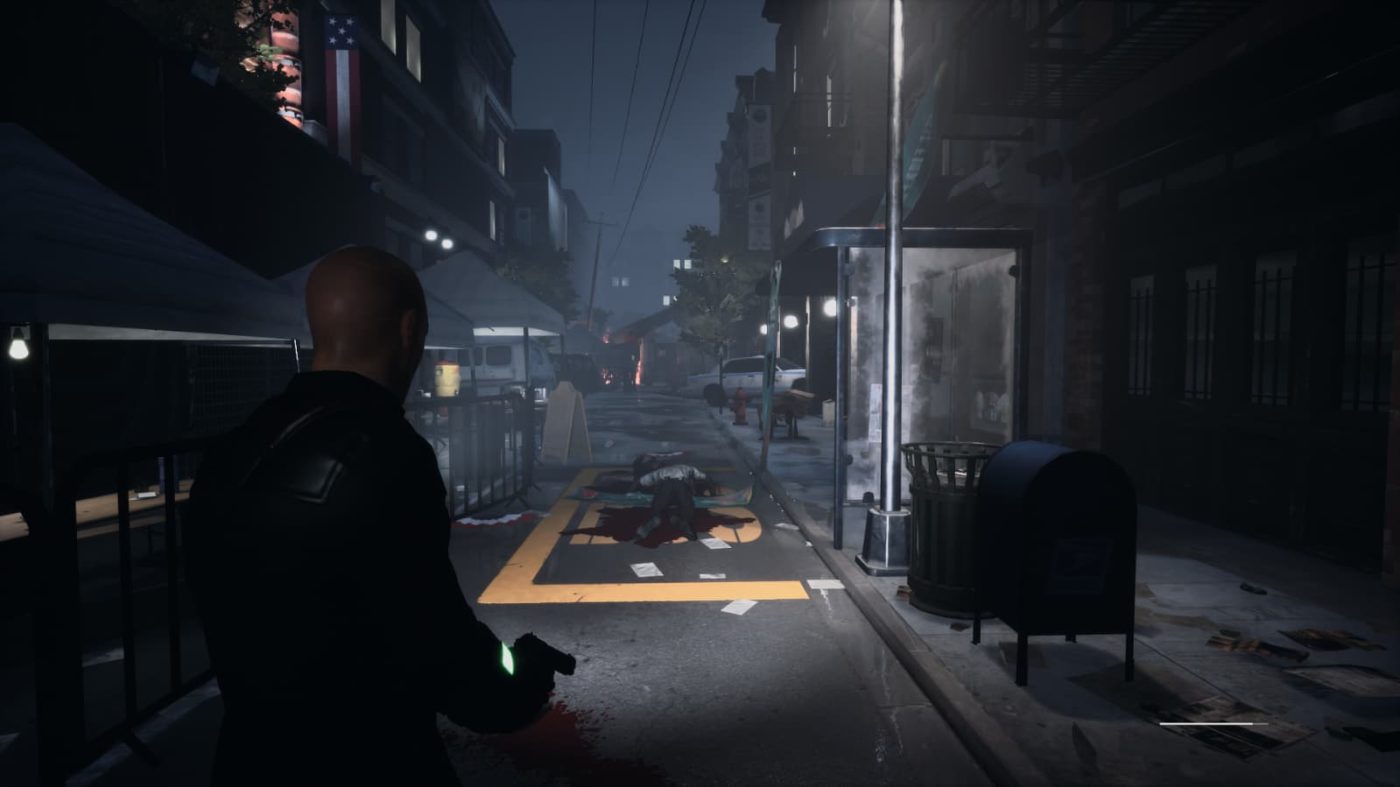
The Layers of Keen Sight
The narrative of Daymare: 1998 is one of its defining pillars, a deliberately layered and multi-faceted tapestry that transcends typical conventional survival-horror tropes. Rather than relying solely on jump scares or action set pieces, it delves into the human, political, and moral forces underlying the catastrophe that overtakes the town of Keen Sight. Told through three distinct perspectives – each with its own psychological, professional, and personal lens – the story gradually expands, revealing not only the immediate events but also the deeper motivations, conflicts, and hidden agendas connecting the elite paramilitary unit H.A.D.E.S. and the bioindustrial powerhouse Hexacore, whose experiments unleashed the virus at the heart of the disaster.
While grounded in classic survival-horror conventions, the narrative stands out for its exploration of human fragility. The protagonists are never mere action heroes; they are individuals constantly balancing duty, fear, and guilt, caught within systems far larger than themselves. This moral ambiguity imbues the story with a reflective, mature tone, setting it apart from more action-driven horror experiences.
Thematically, the game interrogates the devastating consequences of scientific overreach. It examines the tension between personal responsibility and institutional accountability, showing how ambition, military secrecy, and profit-driven motives can erode ethical boundaries. Through scattered documents, intercepted communications, and internal reports, players discover that the outbreak was no mere accident – it was the result of a chain of questionable decisions and internal power struggles within Hexacore, whose relentless pursuit of technological supremacy becomes a metaphor for moral decay.
Dehumanization is a recurring motif. The virus’s mutations are the visible manifestation of a deeper societal depersonalization: individuals are treated as expendable resources, experimental subjects, or data points. This is reinforced by the game’s cold, clinical documentation, which catalogs human lives as biological variables, heightening the player’s sense of unease and helplessness.
Guilt and memory further shape the narrative. Each protagonist carries a psychological burden that informs their actions: Liev’s unquestioning loyalty fractures under the moral weight of his orders; Sam, psychologically unstable and infected, struggles with hallucinations and a fragile grip on reality; Raven, the H.A.D.E.S. pilot and Hexacore insider, represents the most human and vulnerable perspective, forced to confront the system’s collapse and her own impotence in its wake.
Keen Sight itself is depicted as a microcosm of provincial America – a seemingly peaceful town masking clandestine laboratories, secret experiments, and military operations. This duality lends the story a sociological depth, showing how ordinary lives are swept aside by forces beyond their comprehension.
The narrative also experiments with temporality and fragmented testimony. Events unfold non-linearly, alternating perspectives and contexts to form a dossier-like puzzle that the player must reconstruct. This approach rewards careful attention, memory, and active interpretation, transforming each discovery into a meaningful piece of the overarching story.
Finally, identity and transformation are central to the experience. The virus alters more than bodies; it distorts perception, behavior, and conscience. In Sam’s chapters especially, the game ventures into psychological horror, where the threat is as much internal as external – the mind itself becomes a site of terror.
Building a Living, Breathing Nightmare
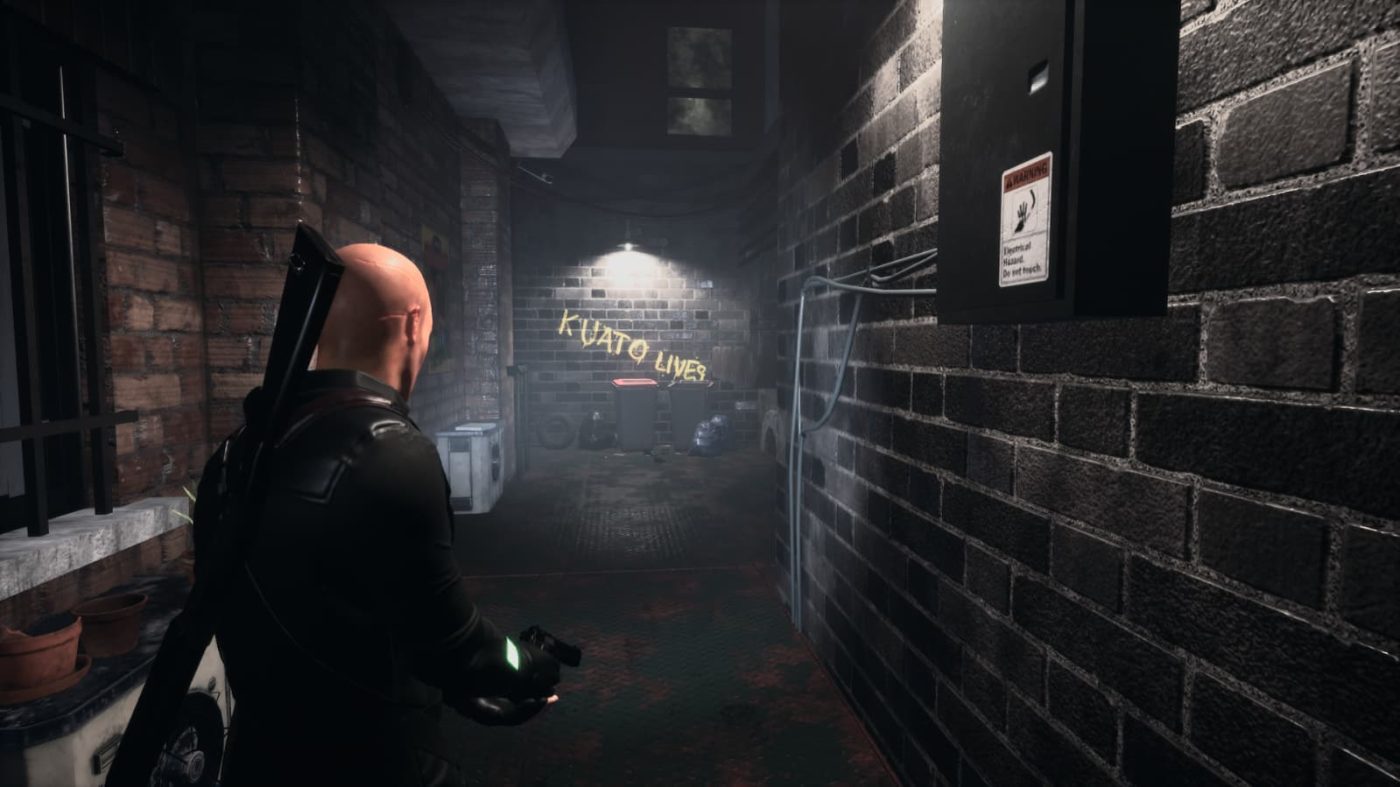
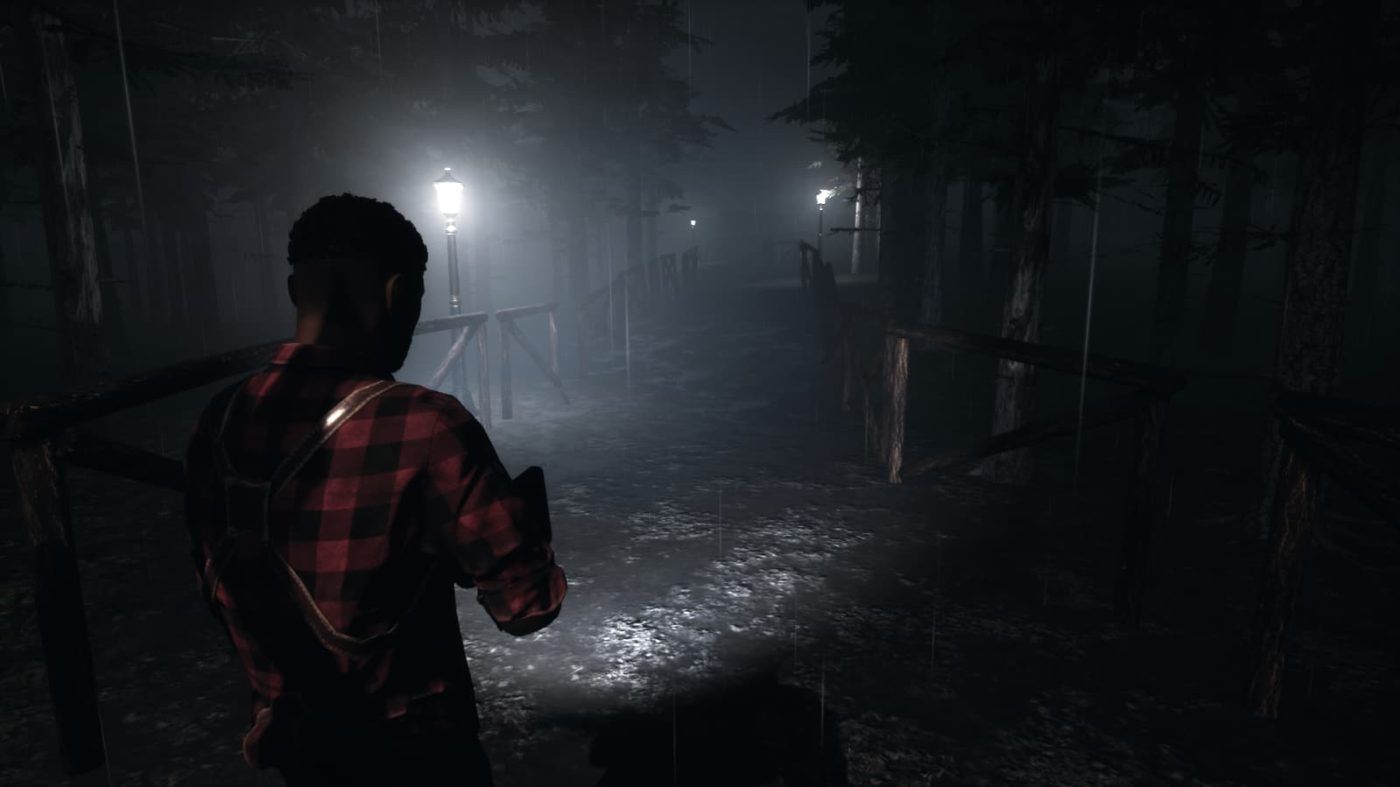
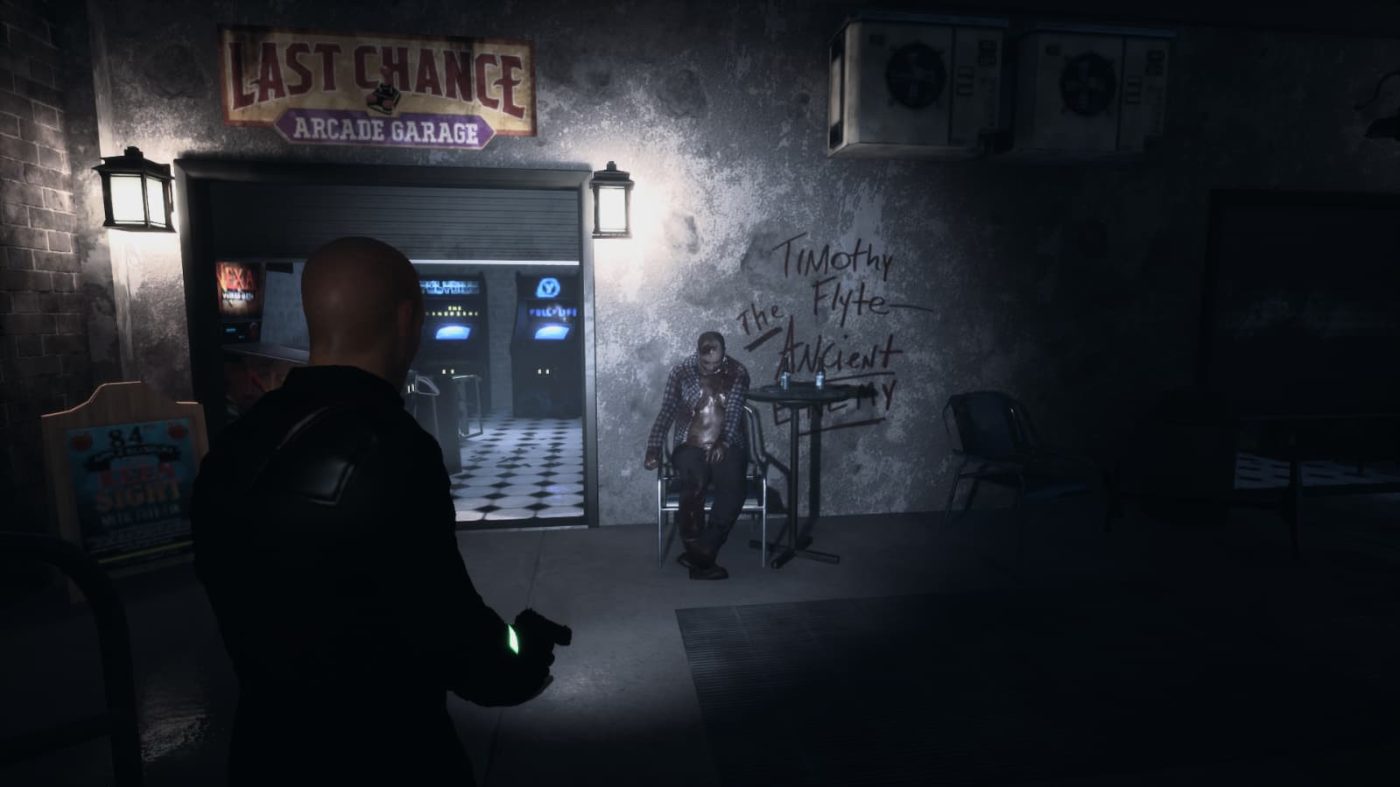
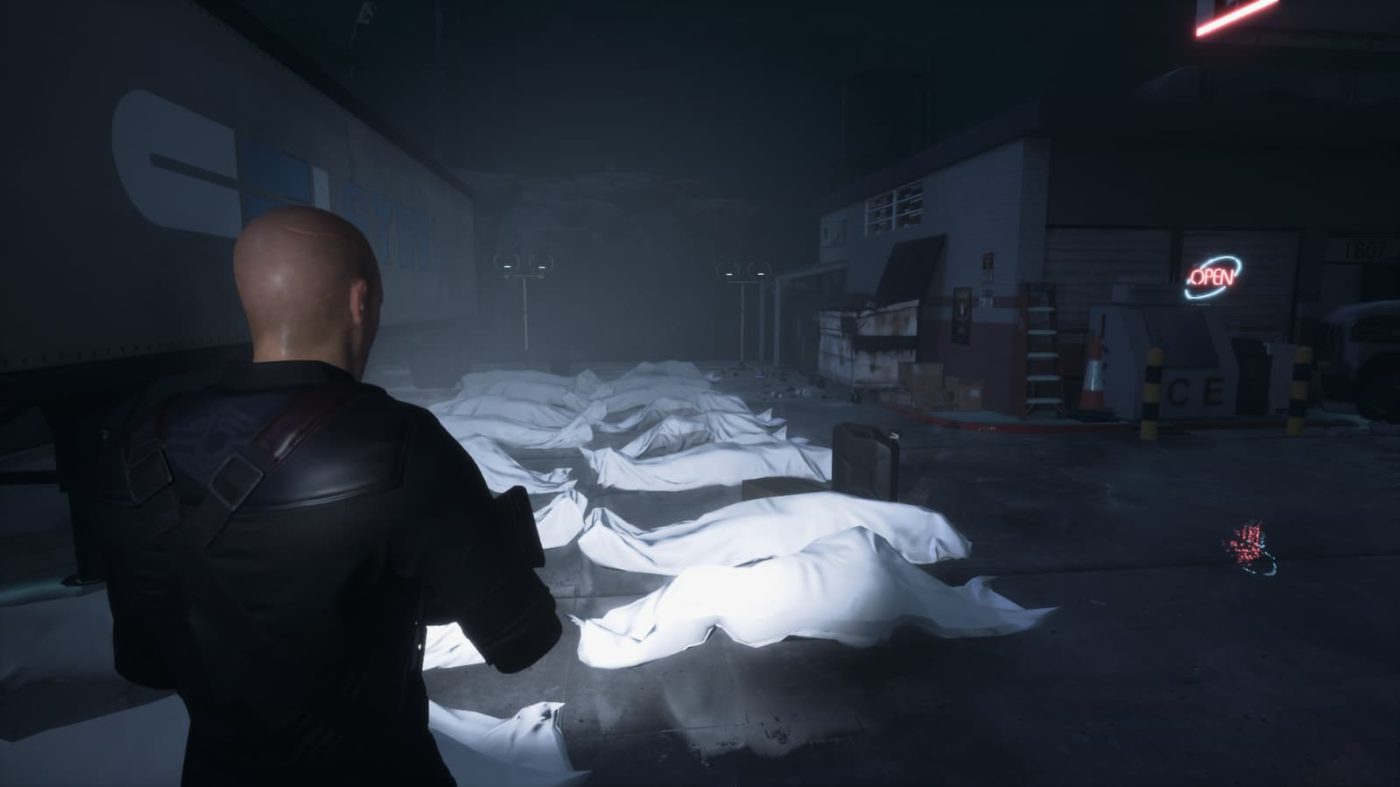
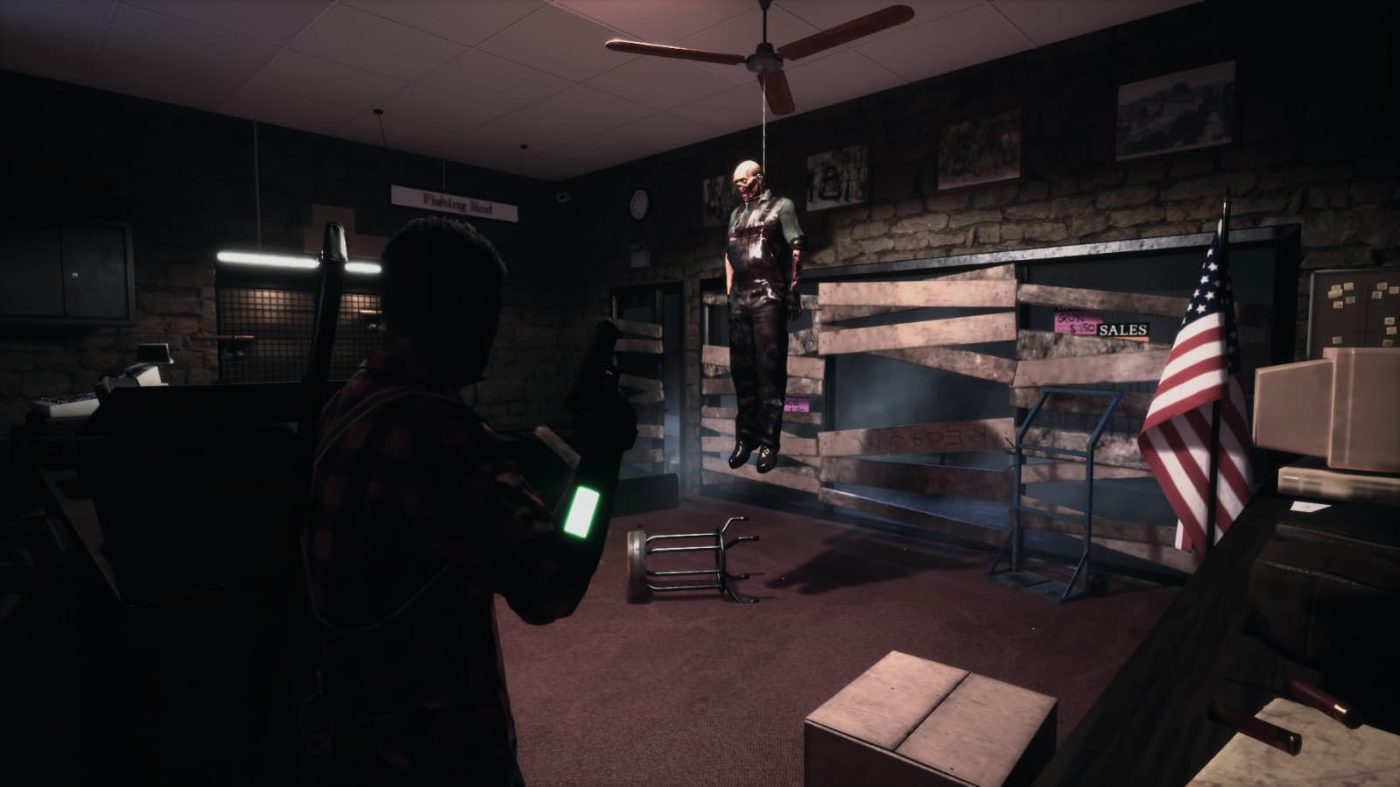
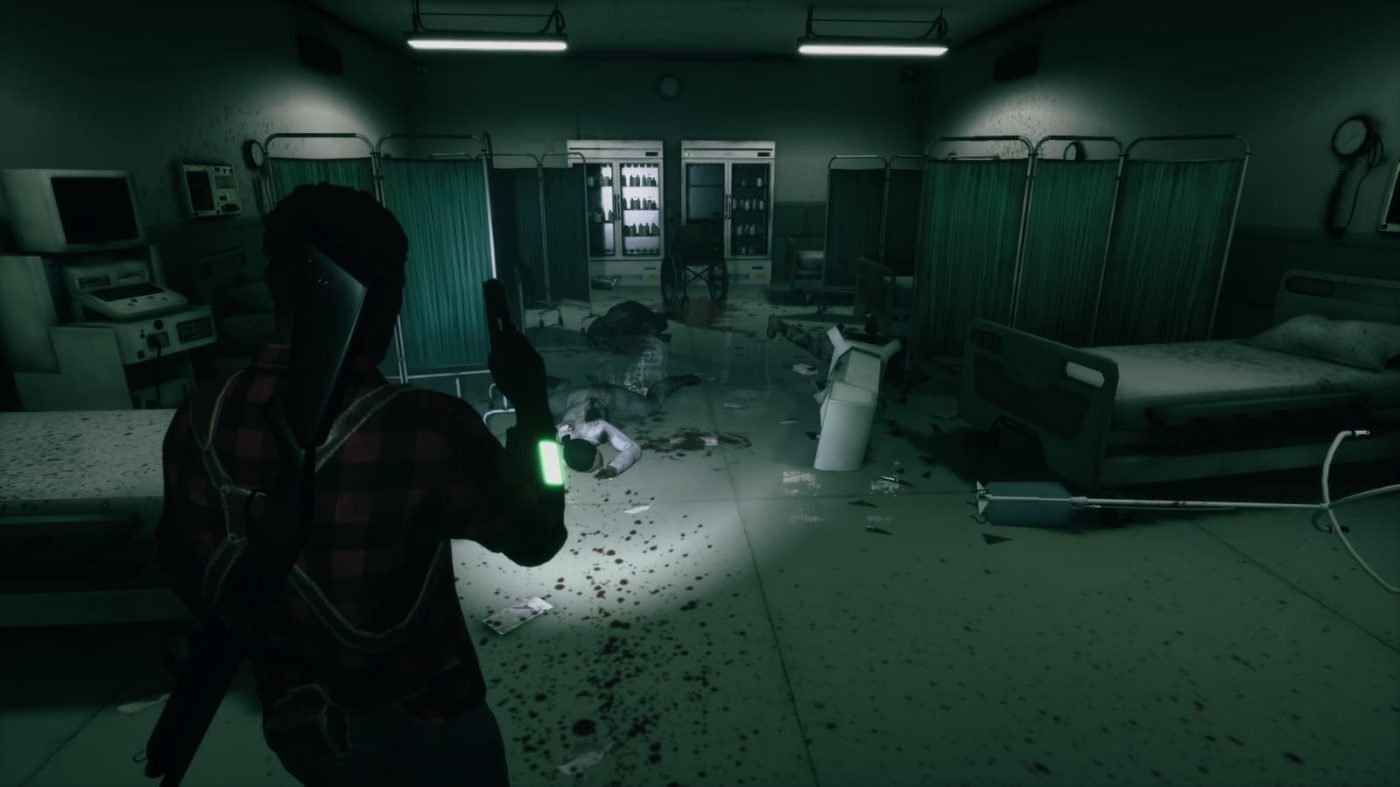
The technical and artistic direction of Daymare: 1998 stands as a cornerstone of the experience, elevating the game beyond mere aesthetics into a fully immersive narrative tool. Every corner, architectural detail, prop, and carefully positioned light serves to generate tension, realism, and unease. Powered by Unreal Engine 4, the game brings its environments to life with exceptional fidelity, boasting high-resolution textures, dynamic lighting, volumetric shadows, and micro-ambient details – dust, grime, overturned objects – that make every space feel simultaneously lived-in and perilously unstable.
The art direction perfectly reflects the psychological horror at the story’s core. Environments evoke past events and hidden dangers, employing color, contrast, and lighting to shape mood and subtly guide the player toward clues or concealed puzzles. Dimly lit corridors, shadowed rooms, and meticulously cluttered spaces create a gradual, mounting sense of discovery and unease, favoring atmospheric tension over predictable jump scares.
Animations are smooth and weighty, lending both characters and interactive objects believable physicality. Level design strikes a careful balance between freedom and direction: spaces invite exploration without becoming aimless, encouraging players to observe, deduce and interact with the world while maintaining a controlled sense of progression.
Stylistic consistency is a clear priority. Every building, room, and object follows a unified visual language that ties narrative, gameplay and atmosphere together – so technical and artistic choices reinforce rather than contradict the story. Quality 3D models, realistic material work, and convincing handling of reflections, transparency and surface decay all contribute to environments that are convincing and unsettling.
Object placement and scene composition are used as subtle signposting: narrow corridors, abandoned laboratories, and shadowed rooms are arranged to evoke emotion, build suspense, and guide the player without disrupting immersion. The result is a visual experience that reinforces both gameplay and narrative in perfect harmony.
Immersive Soundscapes: The Heart of Fear
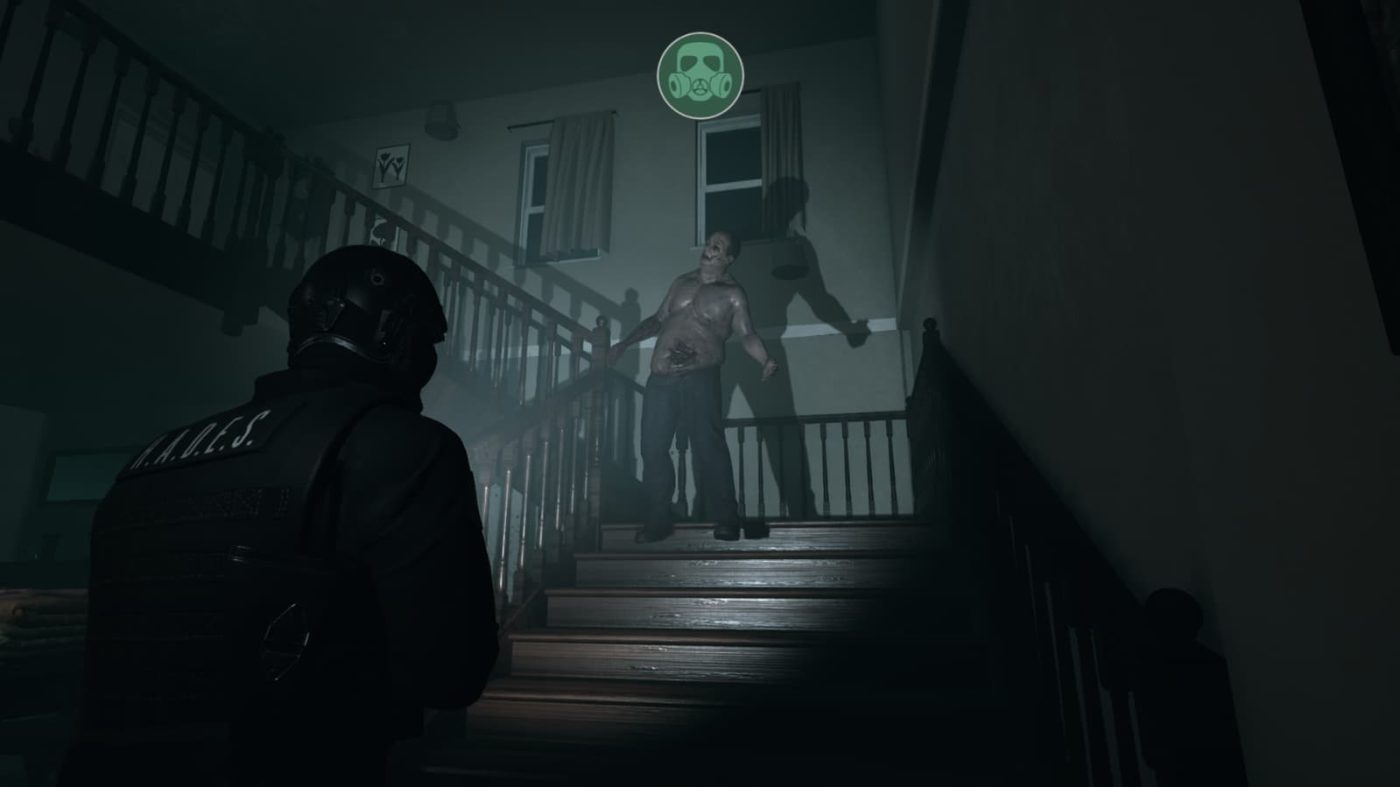
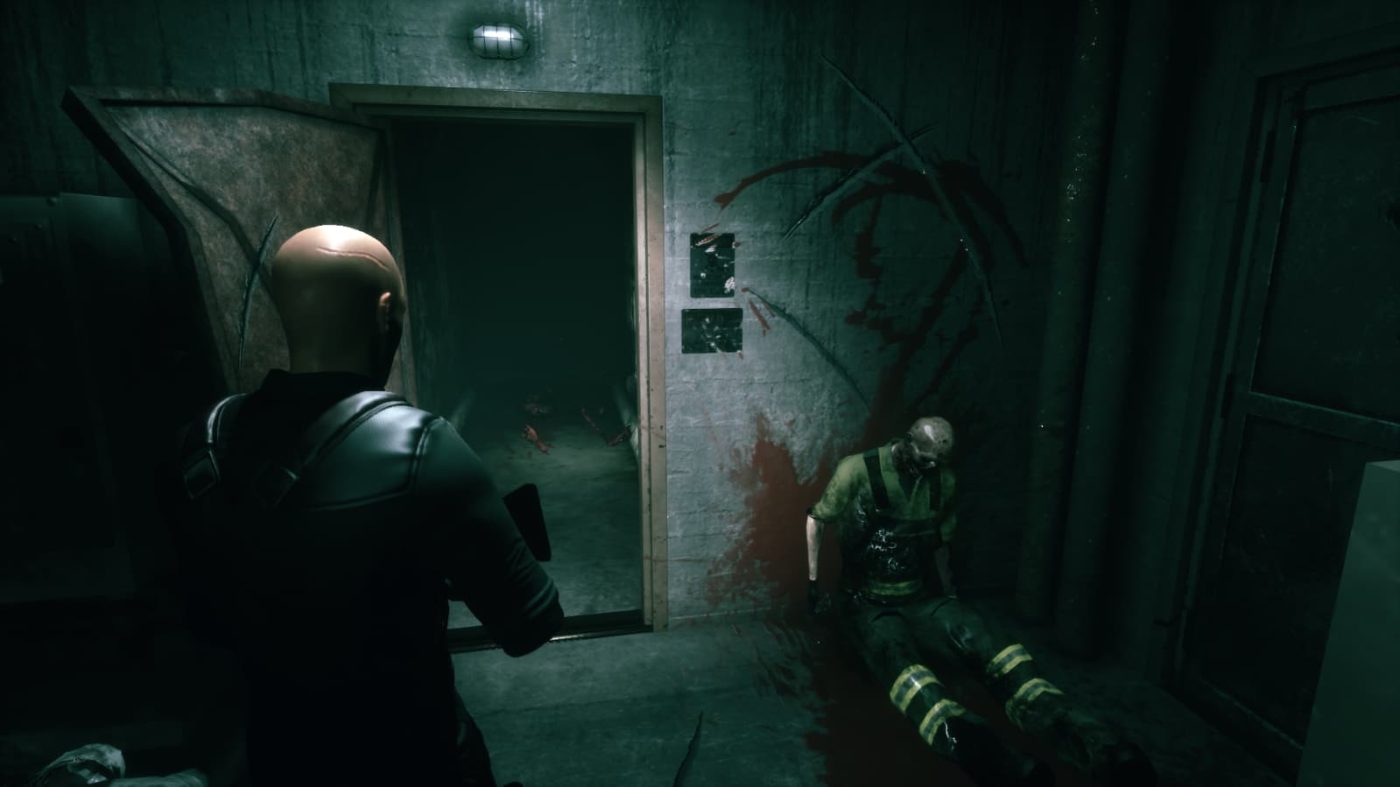
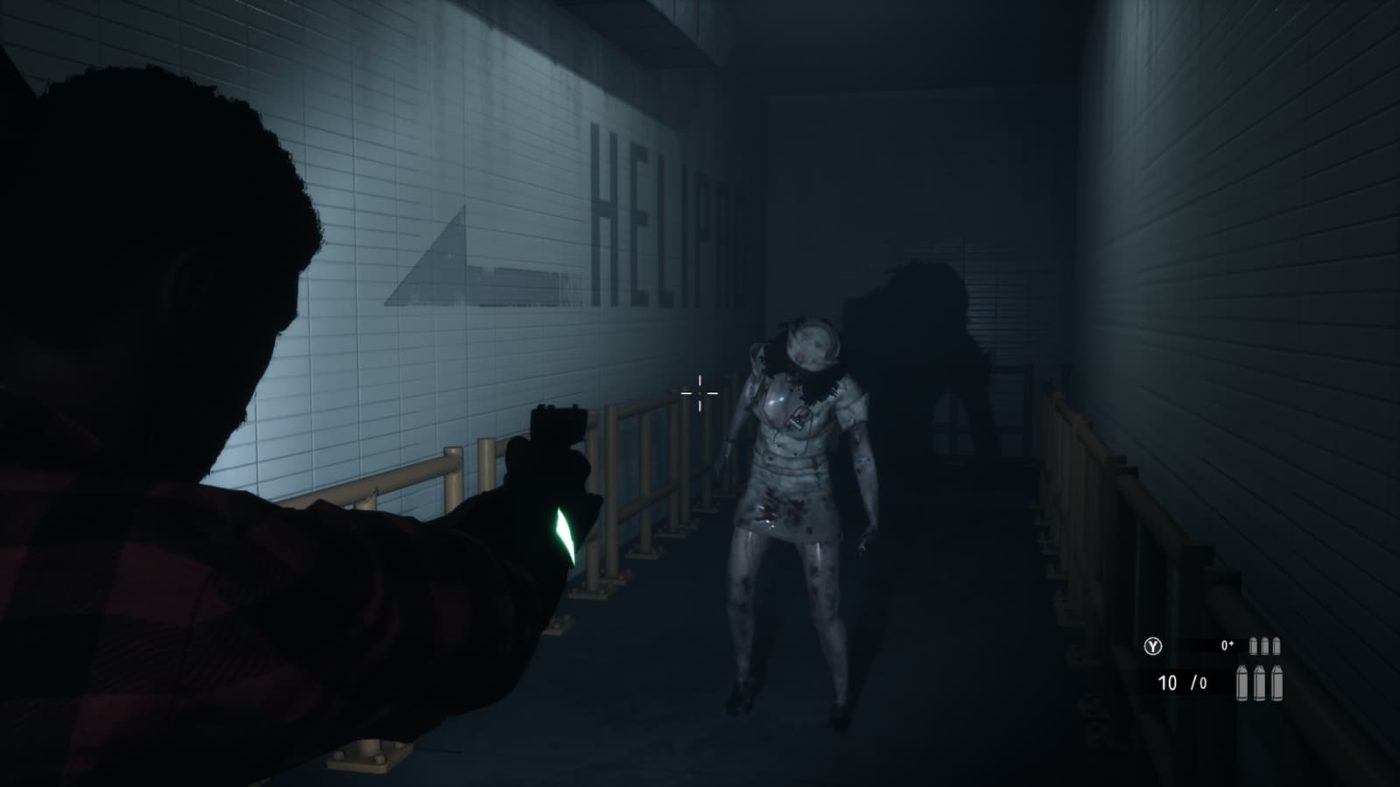
Sound design is at the very core of Daymare: 1998’s immersion: it doesn’t merely embellish the world—it creates it. Every creak, distant slam, and mechanical hum functions as a narrative instrument, carefully composed and positioned to generate tension, guide the player, and deepen psychological engagement. Footsteps on rotting floorboards, the hollow echo of a closing door, the clank of abandoned laboratory equipment, and faint distant human noises all converge to sustain a pervasive, low-grade anxiety that primes players for moments of discovery – or sudden shock.
The score complements rather than competes with this soundscape. Dark, restrained compositions and meticulously tuned tension cues underscore moments of threat, revelation, or reflection without overwhelming the scene. Alternating between extended silence and sudden audio peaks amplifies suspense and keeps players perpetually alert. Here, silence is as much a gameplay mechanic as sound itself: listening becomes active, a skill players must master.
Technically, the audio is seamlessly integrated with the engine and animation systems. Spatialized 3D audio provides clear directional cues, allowing players to locate threats and respond tactically; realistic reverbs, occlusion, and dynamic filtering adapt naturally to each environment, rendering every footstep, object drop, or distant movement tangibly present. Dynamic audio layers respond in real time to player actions and in-game events, heightening tension or providing subtle relief as needed.
Sound in Daymare: 1998 serves both a functional and atmospheric purpose. It drives investigation, stealth, and survival: the faint whine of failing machinery, a distant lab alarm, or the subtle direction of a groan can mean the difference between life and death. Players are encouraged to interpret every sound, weigh the context, and make strategic decisions, making audio an active, integral part of gameplay.
In short, Daymare: 1998 wields sound as a storytelling instrument. The result is an audio landscape that is emotionally nuanced, technically refined, and seamlessly integrated with the game’s visuals and mechanics – transforming exploration into a fully immersive, psychologically charged sensory experience.
World Building and Gameplay as One
In Daymare: 1998, worldbuilding and gameplay function as a single, seamless system. Every environment is crafted with meticulous attention: space, objects, lighting, and architectural details are not mere backdrops – they are narrative instruments. Each corridor, building, and stretch of forest tells a story through the remnants of past events: broken machinery, hastily abandoned notes, overturned lockers, scattered documents, and unnatural lighting all contribute to a world that doesn’t just host the narrative – it is the narrative, inviting players to explore, observe, and infer.
That design philosophy makes each area more than a level to traverse: it’s a fragment of a larger story, a piece of history to decode. Laboratories frozen in chaos, rooms cluttered with traces of sudden disaster, and streets bathed in eerie light all work together to create a coherent, believable, and emotionally charged world. Players don’t simply move through space; they interpret it, building a mental map of events, links and suspicions that connects gameplay to narrative in an organic way.
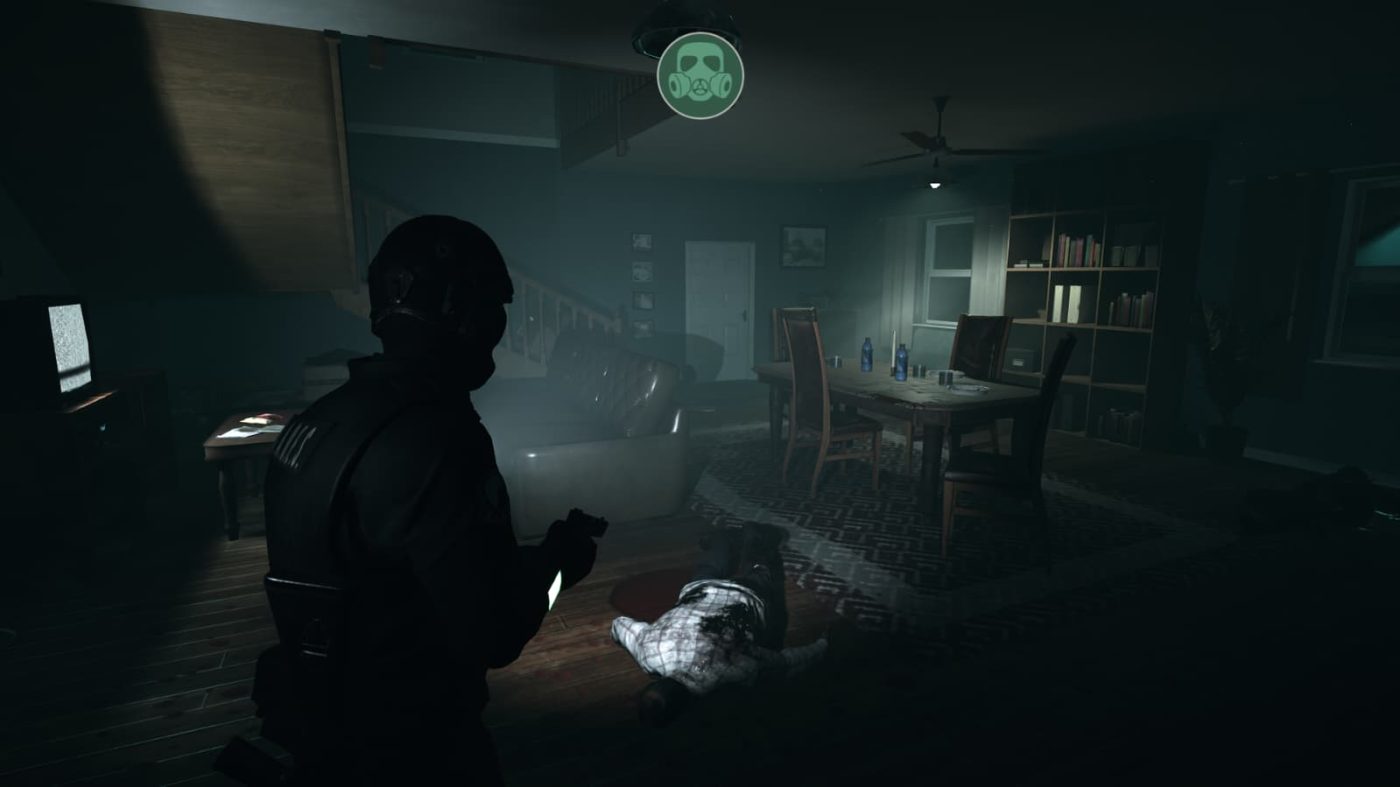
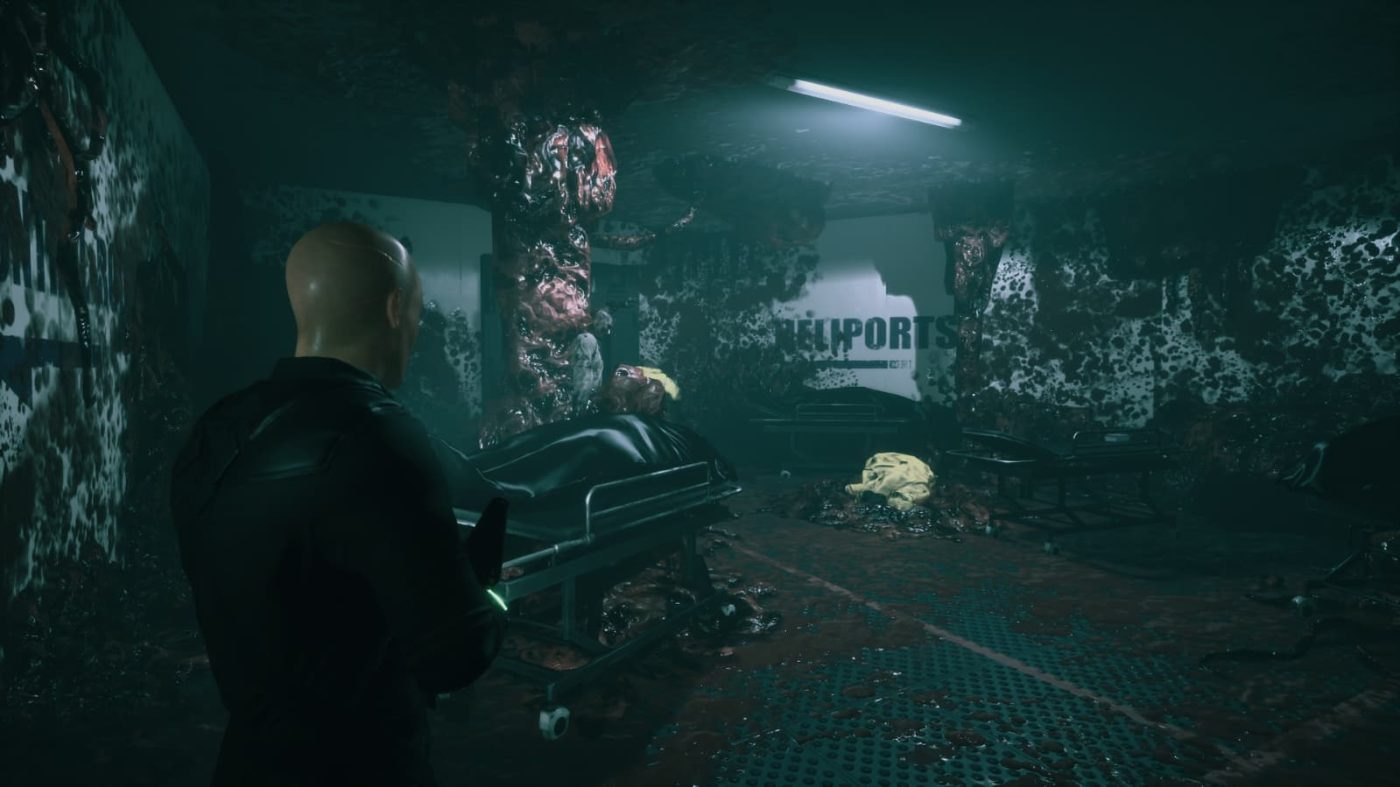
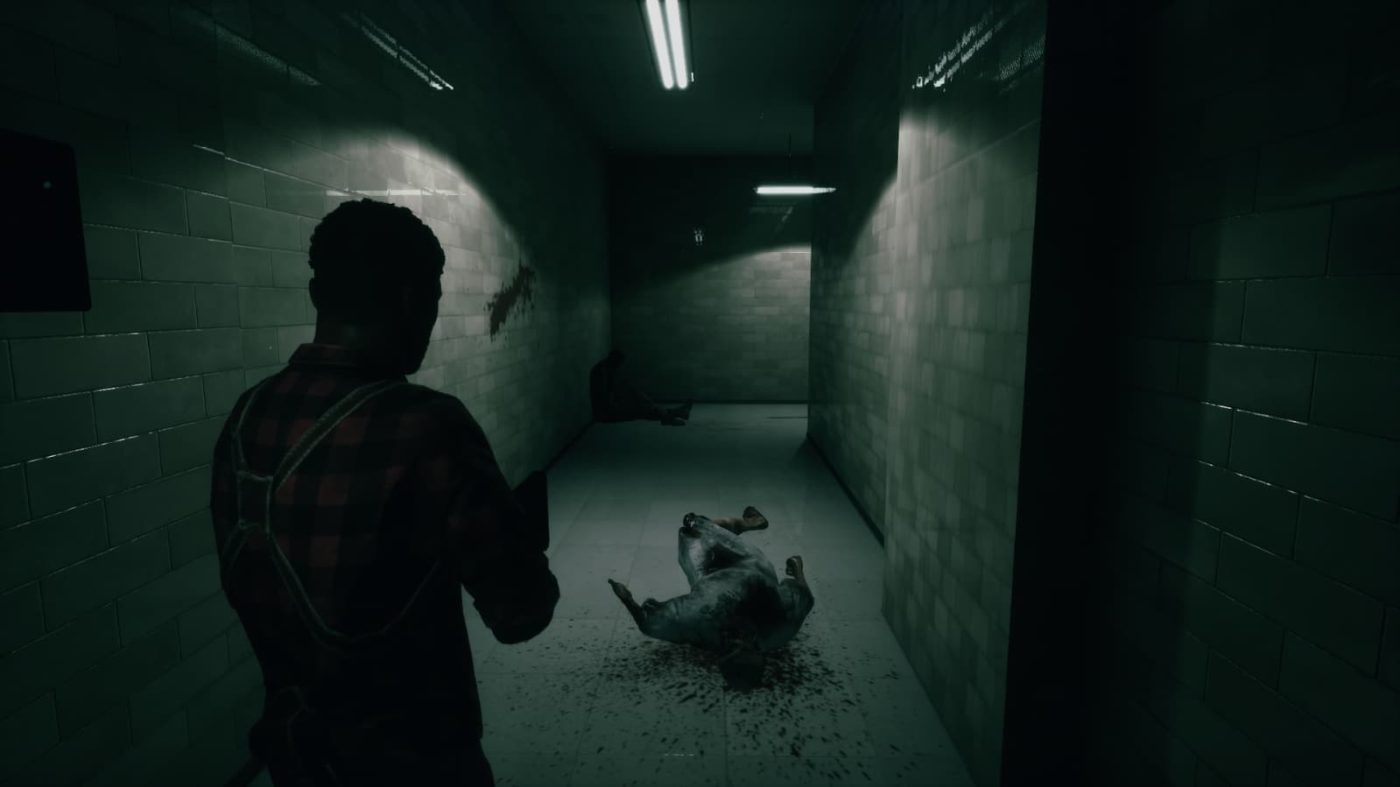
Gameplay is intricately interwoven with the worldbuilding. Mechanics reward careful observation, strategic resource management, and methodical exploration over impulsive action. The inventory system is deliberately demanding: every bullet, medkit, and item carries weight. Decisions have real consequences, forcing players to plan and prioritise under pressure. The manual reloading system – slow and risky – turns combat into a tense, tactical affair, where panic can be fatal and timing is everything.
Environmental puzzles are seamlessly integrated, enhancing rather than interrupting the flow. Solving them feels like uncovering another layer of the story, providing a meaningful alternative to combat while broadening the game’s rhythm. Enemy placement and behavior follow a clear narrative logic: foes are positioned to generate tension, surprise, and a persistent sense of threat, ensuring every encounter is both memorable and narratively consistent.
The result is a world designed for interpretation, where spatial consistency and storytelling reinforce each other. Progression is less about moving from point A to B and more about immersion: players advance physically while piecing together a devastated reality and its human consequences. Daymare: 1998 transforms the player into investigator, survivor, and witness; here, worldbuilding and gameplay do not exist side by side – they operate as one living, breathing system, crafted to provoke anxiety, curiosity, and an unrelenting drive to understand.


Daymare: 1998
PRO
- Deeply immersive and atmospheric world;
- Rich, detailed environments with strong world-building;
- Exceptional sound design that enhances tension and immersion;
- Layered, investigative narrative with psychological depth;
- Well-balanced mix of exploration and survival mechanics;
- Solid technical execution and visual design;
- Carefully calibrated pacing that builds tension effectively.
CON
- Pacing may feel slow for players seeking constant action;
- Resource management can feel punishing at times;
- Minor technical limitations (e.g., occasional frame-rate dips);
- Narrative requires focus and patience to fully appreciate.


7.5/10