A thoughtful and emotionally resonant journey about the ties that bind a community together and the hope that grows from them.
In recent years, action role-playing games have flourished, yet few manage to carve out a truly distinctive identity within the genre. Ashen is one of those rare exceptions. While it shares familiar structural and pacing conventions with its peers, it quickly reveals a more intimate, contemplative, and almost minimalist approach.
The world players step into is not defined by legendary heroes or grandiose epics. Rather, it is fragile and unfinished – a civilization gradually emerging from the ruins of a long-lost past. This perspective shapes the game’s tone, emphasizing the steady rhythm of journey, endurance, and reconstruction over spectacle or grandeur.
From the outset, Ashen centers the relationship between the individual and the world, rather than celebrating heroic feats. Players are not tasked with saving the universe in a single dramatic act but are invited to understand, traverse, and gradually restore it. The narrative unfolds implicitly: environments, ruins, and encounters tell a story of cycles of destruction and hope. The game is designed to be experienced rather than simply told.
The introduction fosters a deliberate sense of disorientation. Clear guidance is minimal, inviting players to observe, navigate thoughtfully, and attune themselves to spaces that are silent yet rich with meaning. Immersion unfolds organically, through exploration and discovery rather than explicit exposition. Players come to understand the world not because it is told to them, but because they inhabit it.
A defining feature is the sense of an emerging community. Unlike many games in the genre, Ashen is never entirely solitary. The world hints at other survivors navigating the same struggle for survival and reconstruction, cultivating an atmosphere that balances collaboration and tension while maintaining the ever-present fragility of its environments.
Gameplay strikes an immediate balance between caution and exploration. Each encounter, path, and choice demands careful consideration without ever feeling forced or exaggerated. The game gives space for time, distance, and silence – core elements that shape its measured rhythm. Rather than relying on spectacle, Ashen eases players into a world that rewards patience and attentiveness to its subtle, understated beauty.
Ultimately, Ashen emphasizes atmosphere over spectacle, exploration over exposition, and the patient construction of meaning over instant impact. The game does not rely on flashy moments to impress; instead, it fosters a lasting connection with the player, crafting a journey that is as emotionally resonant as it is physically immersive.

Originality as a Core Principle
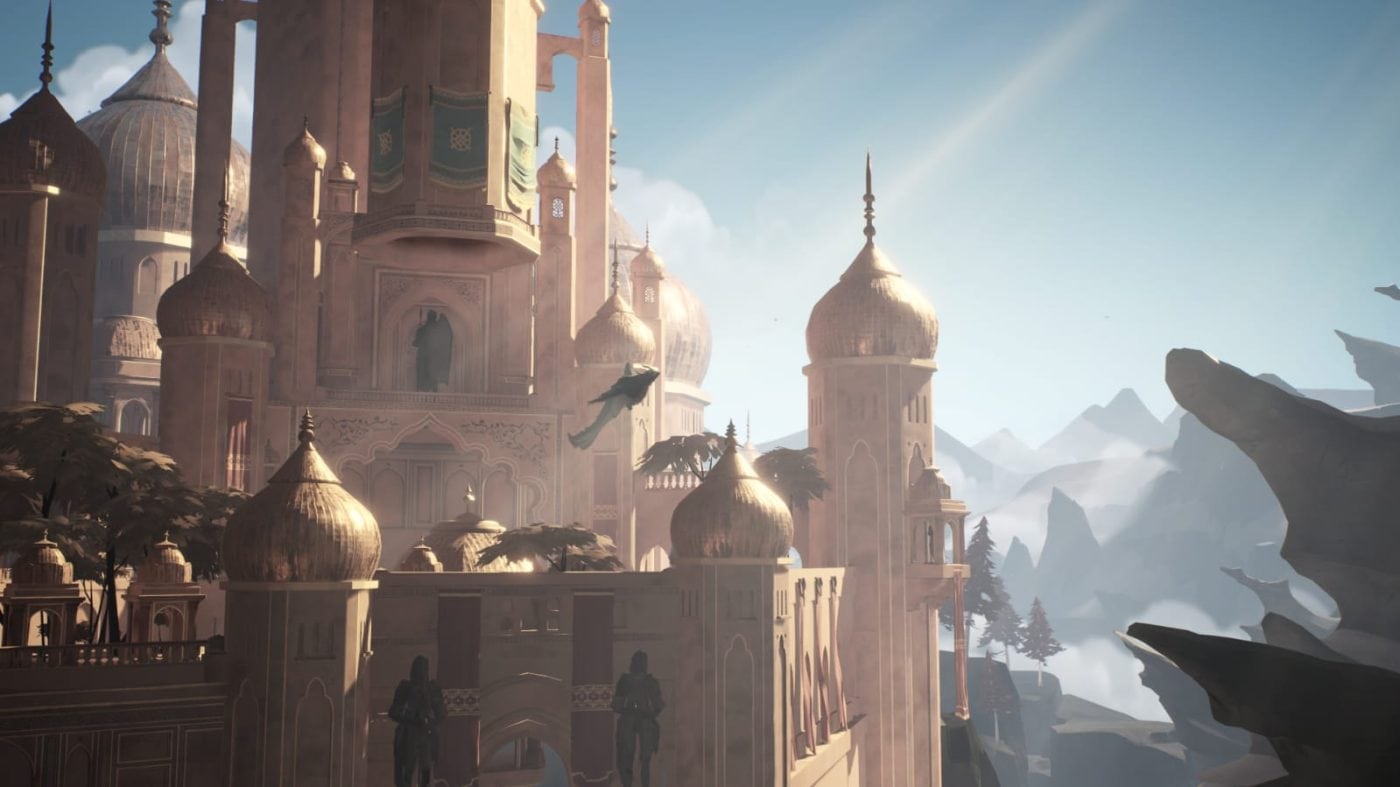
To fully appreciate Ashen, one must first understand the studio behind it. Developed by A44 Games, a relatively young independent studio from New Zealand, the project reflects a remarkably clear creative vision. Working far from the pressures of big-budget productions, the team embraced a design philosophy that prioritized artistic coherence and a strong sense of identity over sheer content volume or technical spectacle. This creative independence empowered them to make bold, unconventional choices, resulting in a game with a distinctive personality and lasting impact.
A44 approached development with near-artisanal precision, crafting a world that feels lived-in and mechanics that encourage reflective, cooperative gameplay. The studio’s compact size allowed for meticulous attention to detail rather than overstuffing the game with systems or assets. Every element was deliberately designed to reinforce the game’s atmosphere, avoiding unnecessary clutter or distraction. This focused approach ensured that a single, cohesive creative vision guided the project from start to finish, sidestepping the fragmentation that can emerge in larger productions.
Key to this endeavor is publisher Annapurna Interactive, renowned for supporting auteur-driven games with distinctive narrative and visual identities. Annapurna has built a reputation for championing projects that explore unconventional storytelling and artistic experimentation, often straddling the line between art and gameplay.
Their collaboration with A44 Games is a natural fit: both share a commitment to creating experiences that emphasize atmosphere, meaning, and emotional resonance rather than spectacle or competition.
Annapurna’s involvement goes far beyond conventional publishing. The company was instrumental in in positioning Ashen within a unique creative and cultural framework, emphasizing its contemplative tone and unconventional design philosophy. This collaboration enabled the game to preserve its distinct identity, avoiding the commercial standardization that often threatens independent projects when integrated into broader production pipelines.
From a production standpoint, Ashen stands as a testament to the power of a shared creative vision between an emerging studio and a publisher committed to fostering originality. The game is not the product of industrialized processes, but a meticulously crafted experience that emphasizes atmosphere, exploration, and the slow-building sense of community. Seen in this light, many of the game’s stylistic and structural choices reveal themselves not as compromises, but as deliberate expressions of the developers’ distinctive artistic identity.
Through the Ashes, We Rise
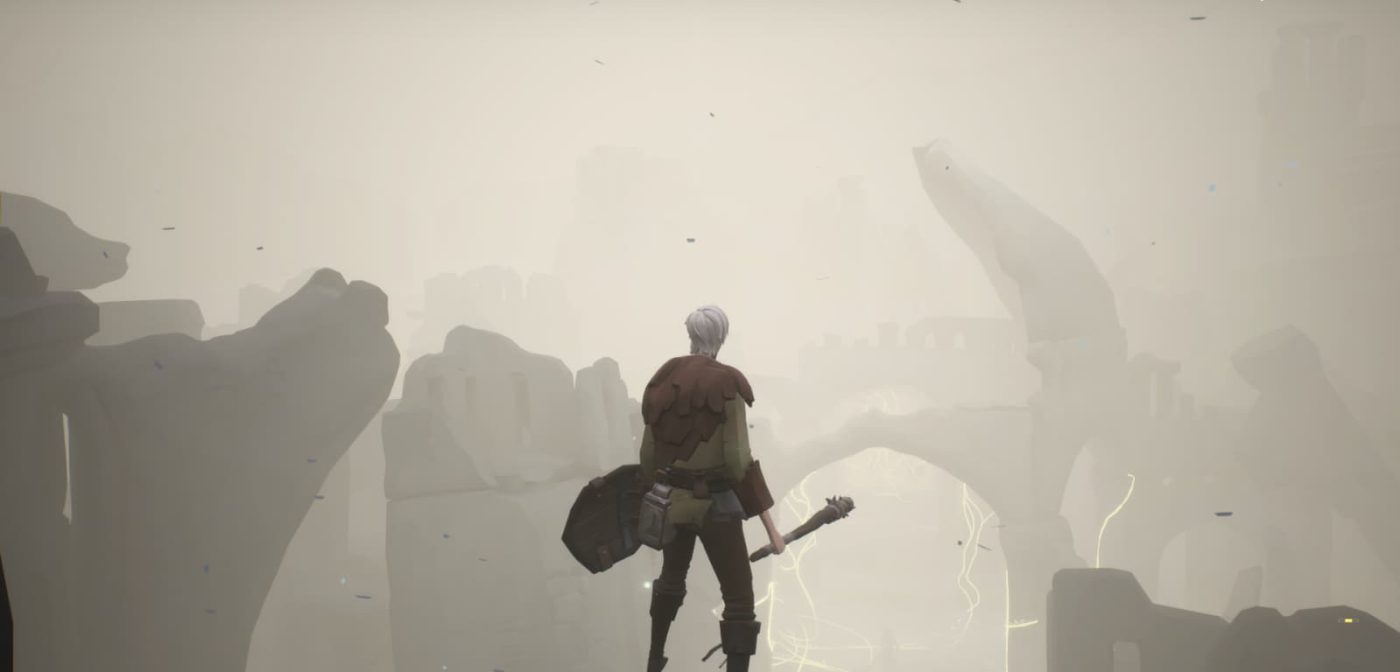
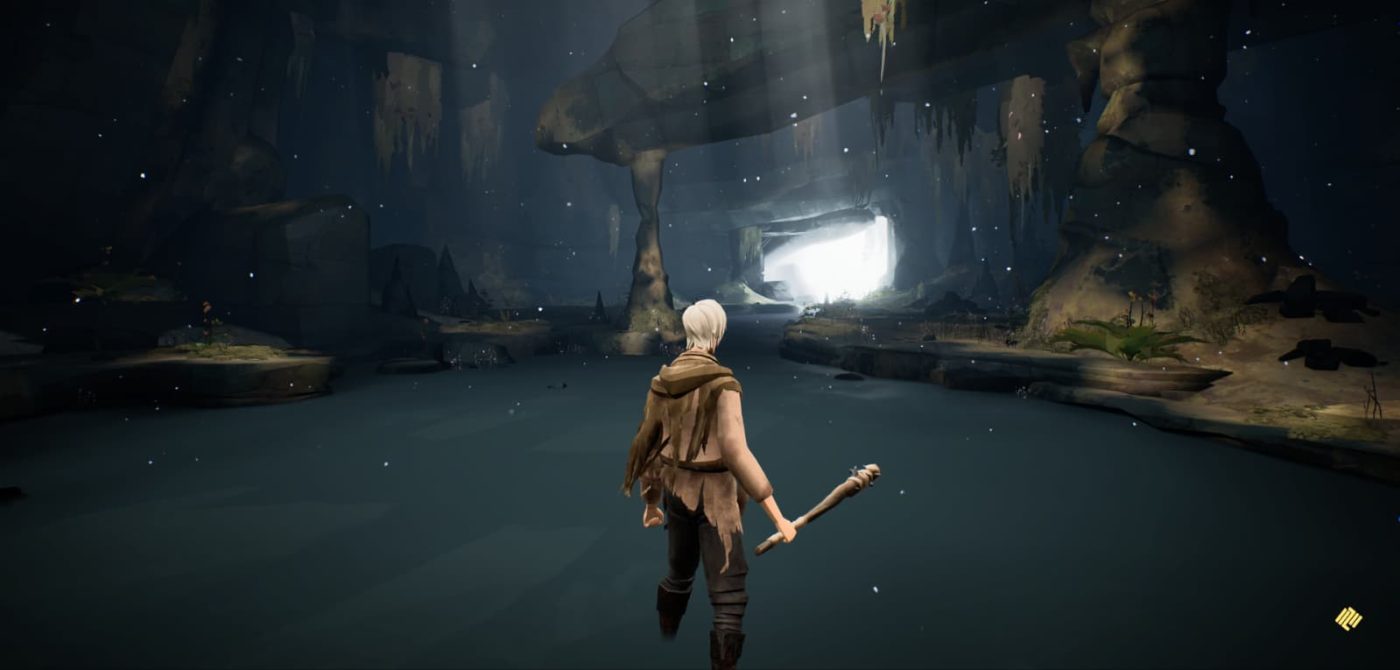
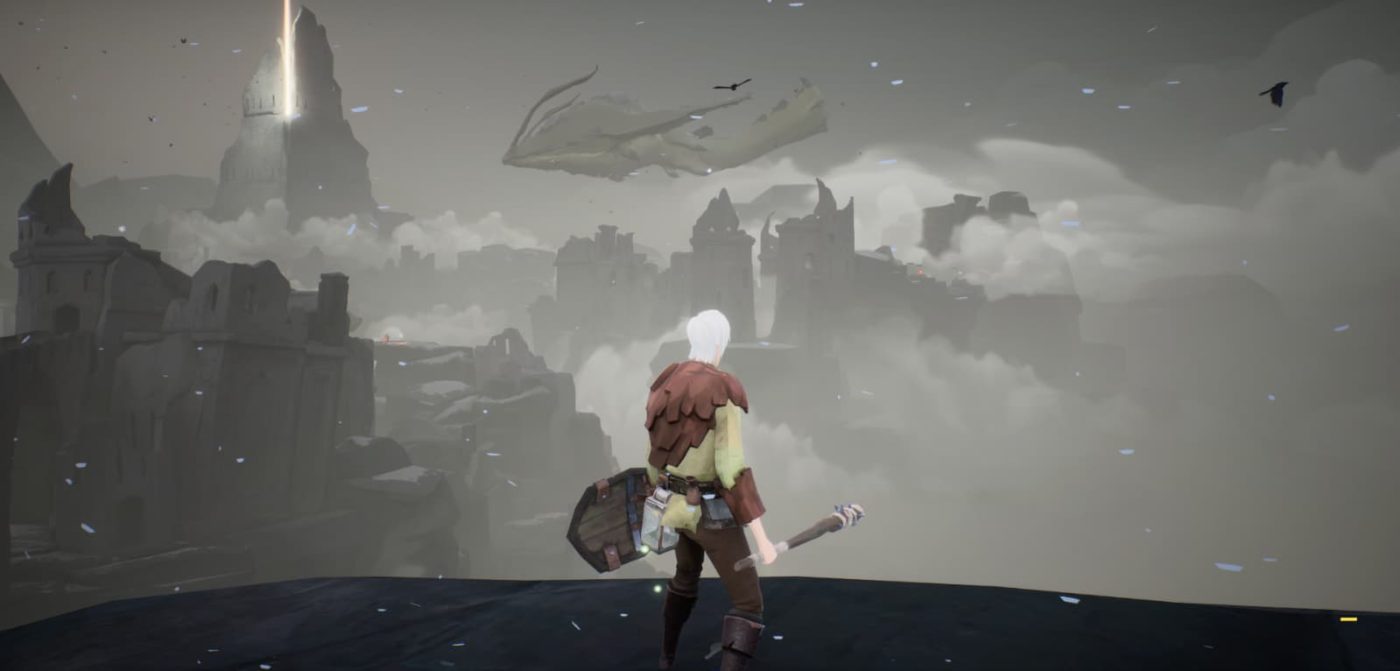
Ashen unfolds in a world poised between creation and decay – a land where light is rare, almost miraculous, and darkness is not merely physical but existential. Players awaken in a sunless, silent expanse, where past civilizations have fallen, leaving behind only fragments: ruined structures, forgotten paths, shattered architecture. These remnants hint at a larger history, never spelled out, inviting players to piece together the story themselves. Here, the goal is not to defeat a clearly defined evil, but to bear witness to – and guide – the slow return of light, nurturing the fragile promise of renewal.
The narrative revolves around a journey that is as much emotional as it is physical. Players traverse harsh, unforgiving landscapes and encounter other survivors of a collapsed world, navigating a story that defies traditional linearity. Meaning emerges gradually – through shared missions, through exploration of spaces imbued with quiet memory, and through piecing together the scattered remnants of a lost civilization. Each new area reads like an unwritten chapter, inviting players to piece together the story of near-extinction through observation, reflection, and intuition.
At its core, Ashen is about searching – not for absolute truths, but for meaning and purpose. The characters players encounter are not heroic archetypes or omniscient guides, but ordinary individuals striving to rebuild something lost: a home, a connection, or knowledge. Survival is never solitary; it is inherently collaborative. In this way, the journey becomes a shared pilgrimage, a quiet yet resonant quest for renewal.
The world itself seems to awaken in response to the players’ journey. As they move forward, the landscape shifts subtly, as if their awakens long-dormant forces. Light – scarce yet deeply symbolic – stands as a metaphor for knowledge, hope, and the fragile restoration of human connection. The narrative attains a quietly mythic resonance without relying on spectacle, sustaining a tone that is contemplative, restrained, and profoundly evocative.
By eschewing direct exposition, Ashen invites players to actively interpret and engage with its world, making the narrative an experience that is both personal and universal. There is no single reading; instead, the game conveys meaning through suggestion, atmosphere, and discovery. Its story speaks to loss, renewal, and belonging, cultivating a fragile hope that emerges subtly rather than declaring itself.
Ashen is not the story of a lone hero’s triumph, but of a fragile community striving to endure in a world that has nearly forgotten what it means to live. It is a journey of measured steps, quiet discoveries, and a hope that glimmers gently on the horizon.
Echoes in the Dark
While Ashen’s narrative provides the backbone of the journey, its true strength lies in the subtle craftsmanship of its story and the themes that thread through the entire experience. The game embraces a sparse, almost minimalist narrative style, eschewing direct exposition in favor of a language composed of environments, silences, distances, and gestures. It is a storytelling that suggests rather than tells, evoking meaning through interaction with the world instead of explanation. This approach places the game in a profoundly contemplative space, where the player’s interpretation becomes an essential part of the narrative itself.
At the heart of Ashen is the theme of renewal – not as a sudden miracle, but as a slow, fragile, and deeply collective process. The world does not witness a triumphant restoration; it offers a tentative attempt to reemerge from collapse. Rebuilt structures, reunited companions, and reopened paths evoke the feeling of contributing to the foundations of a new beginning rather than claiming a victory. This narrative choice conveys shared responsibility: every step forward grows out of quiet acts of cooperation, never from the exploits of a solitary hero.
Closely entwined with this is the theme of community. Unlike many comparable experiences defined by isolation, Ashen consistently suggests the presence of others as vital. Encounters are never merely functional; they carry symbolic weight, representing trust, collaboration, and collective creation in a world stripped of certainty. Even without explicit dialogue, these ideas emerge through mission design and the mechanics of accompaniment.
Equally central is the interplay of light and darkness, which transcends conventional moral binaries to assume an almost cosmological significance. Darkness is not simply evil to be vanquished but a primordial state, a cyclical condition with which the world coexists. Light, by contrast, is rare and precious, something to nurture and protect. This duality evokes myths of creation and destruction without ever stating them outright, letting the game’s atmospheres convey these resonances subtly.
Ashen also frames the journey as a process of transformation. Traversing its landscapes is not simply a matter of reaching new locations, but of gradually reshaping one’s understanding of the world and one’s place within it. The path forward becomes a quiet metaphor for growth, adaptation, and the slow comprehension of a complex reality. There is no singular moment of narrative empowerment; instead, players deepen their awareness and connection to a fragile world struggling to recover.
Ultimately, the narrative unfolds as a quiet meditation on memory and loss. The ruins scattered across the landscape are not mere set dressing but enduring traces of a past that continues to shape the present. Rather than depicting what once existed, the game allows its echoes to linger, inviting players to reflect on what remains when a civilization fades. In doing so, Ashen explores the human capacity to move forward without erasing the past, embracing the fragile continuity that binds destruction to renewal.
Altogether, Ashen’s narrative demonstrates a rare maturity, choosing subtlety and suggestion to explore universal themes such as cooperation, hope, memory, and reconstruction. It is a story that does not seek to impress through spectacle but to settle gradually, guiding players through an experience that is as emotionally resonant as it is interactive.
A Style All Its Own
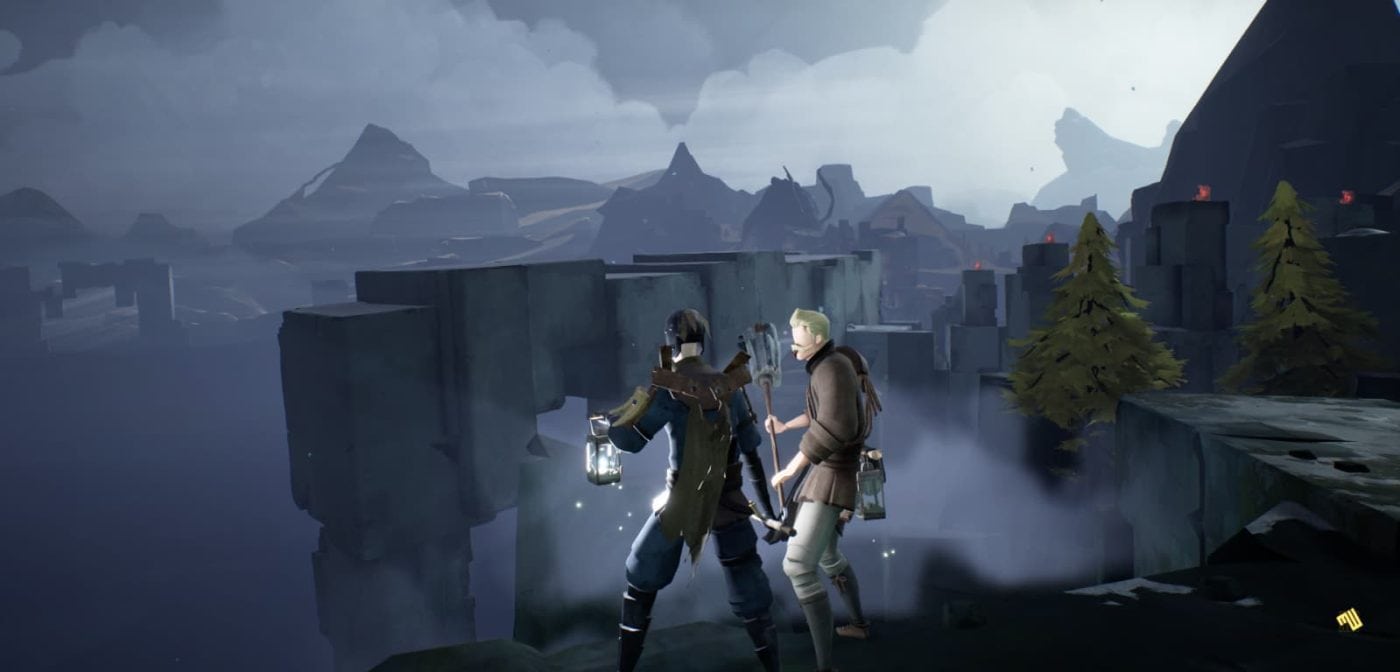
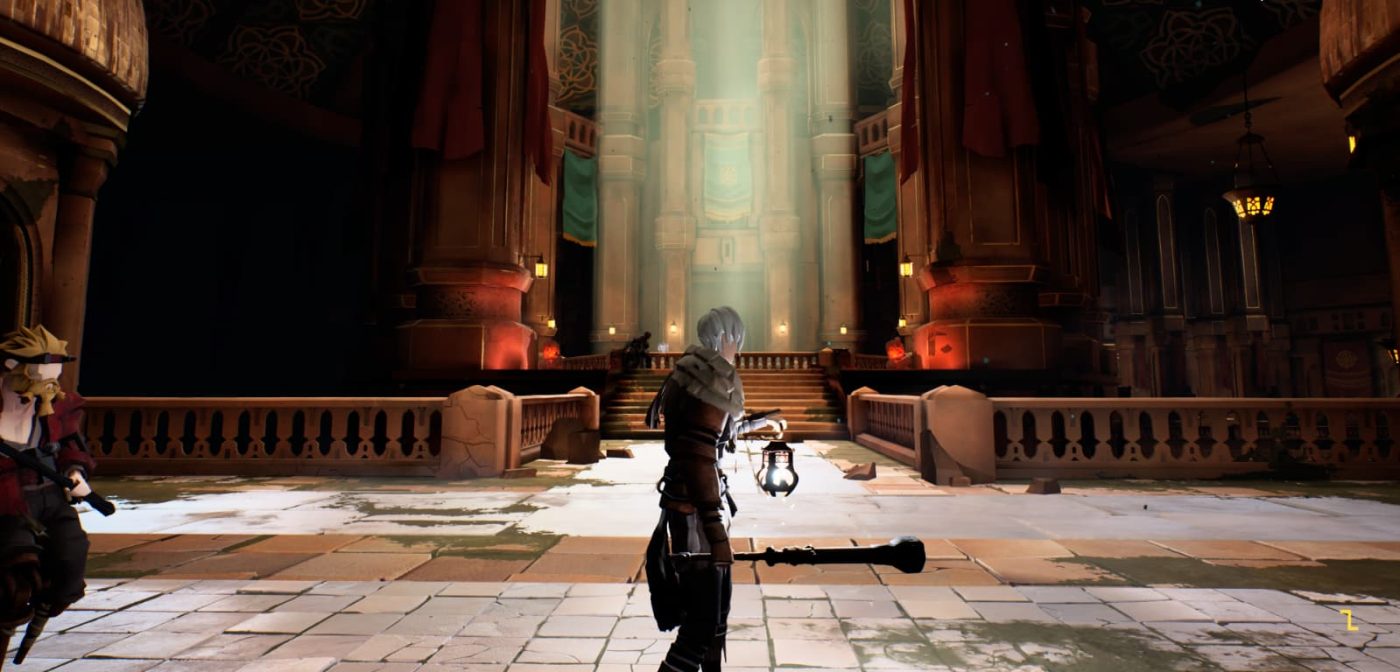
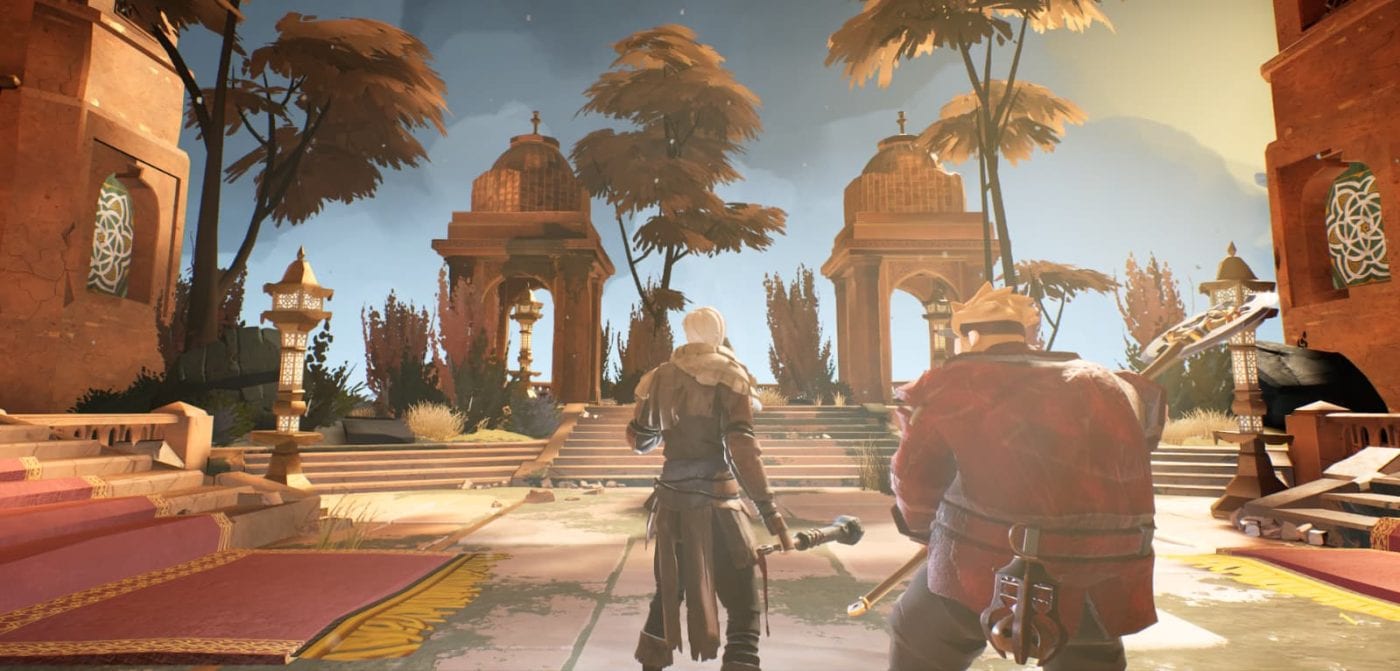
The technical presentation of Ashen is defined by a highly deliberate stylistic vision. Rather than pursuing photorealism, the game embraces a distinctive visual identity that aligns closely with its thematic core.
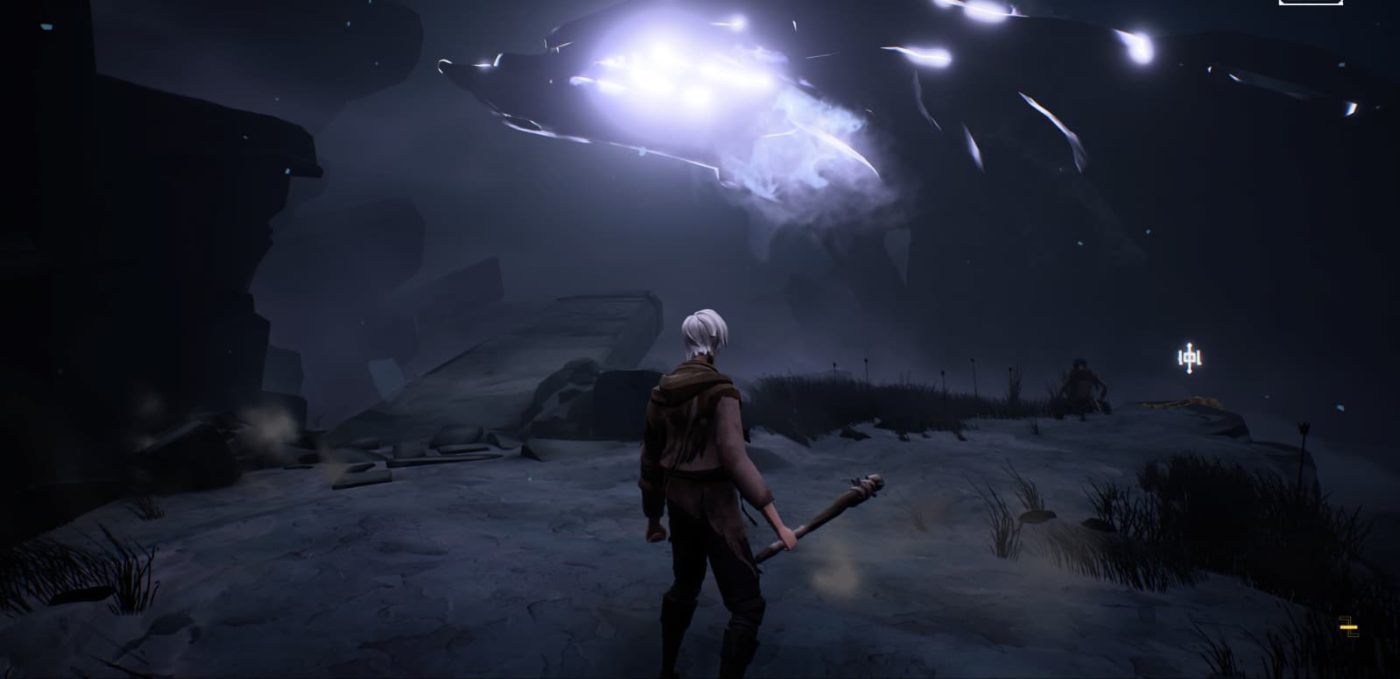
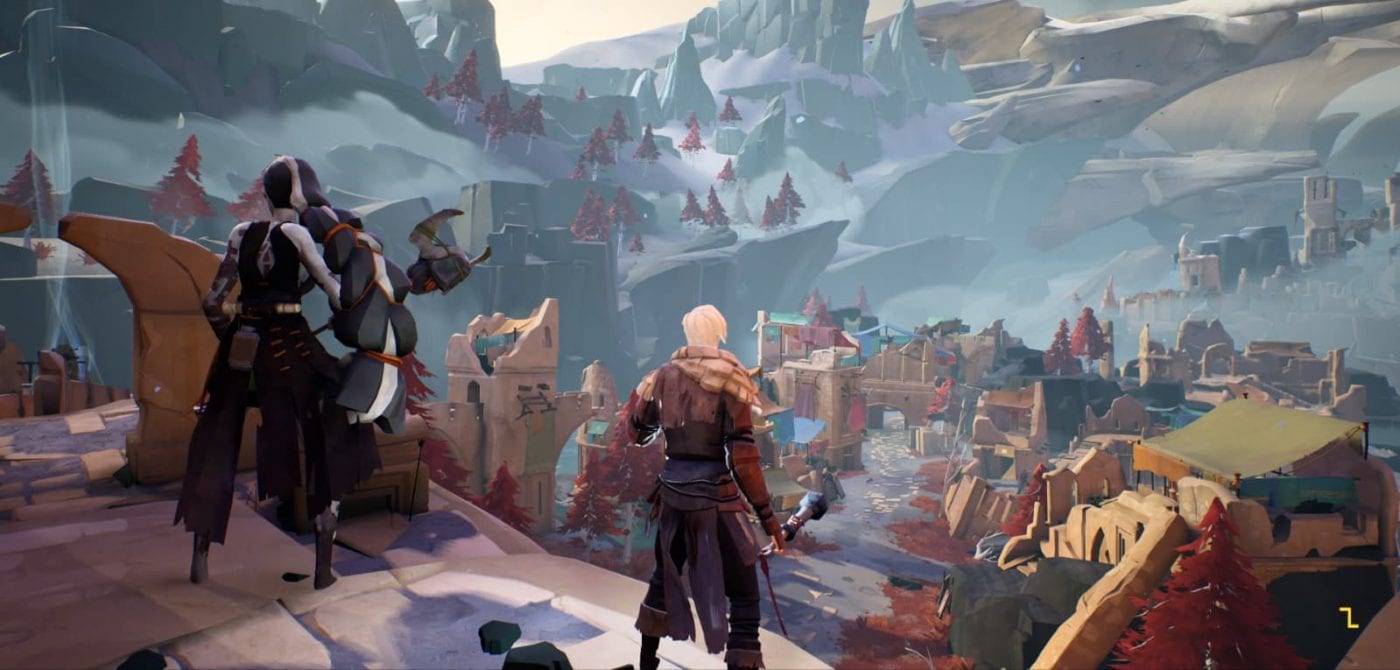
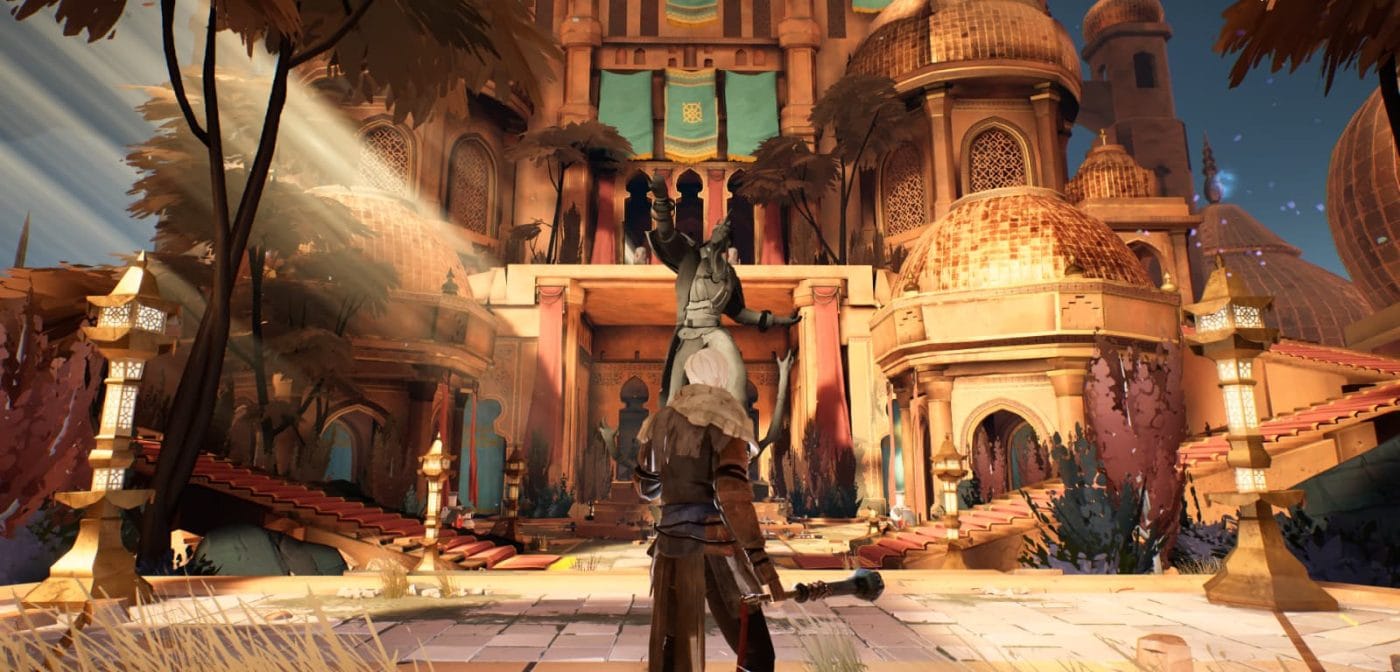
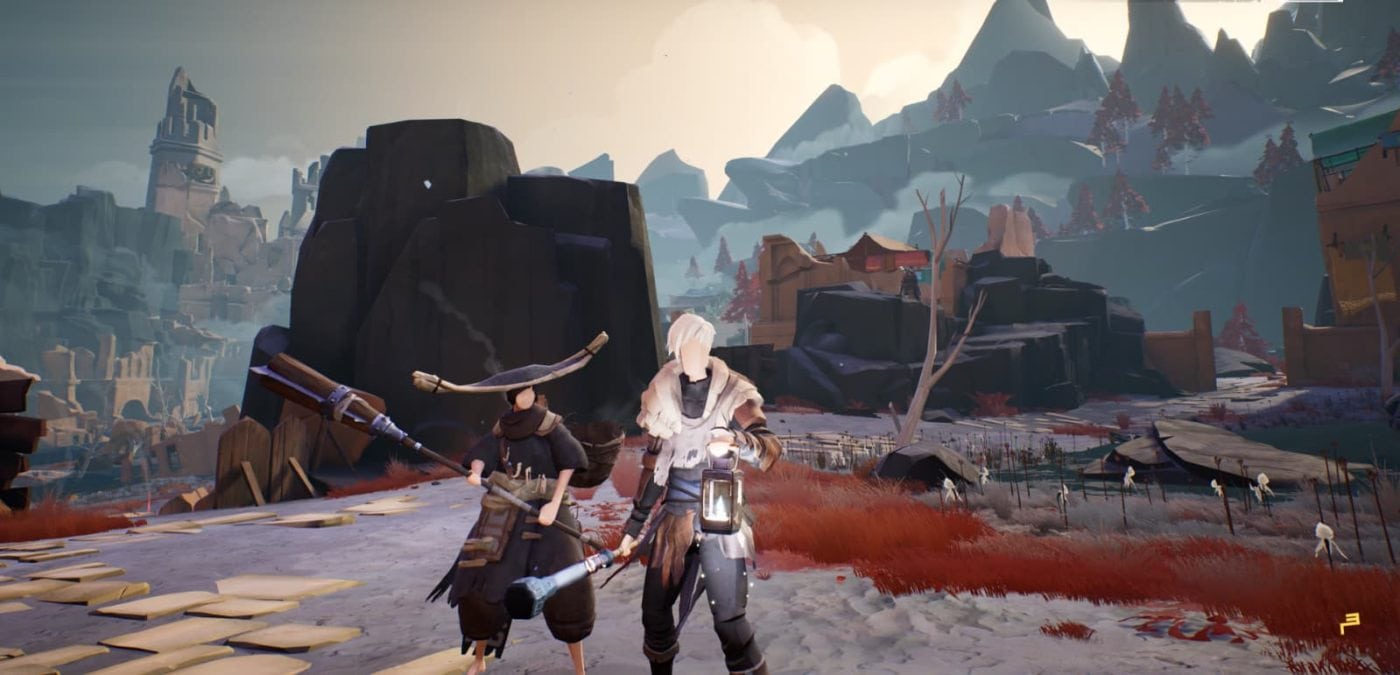
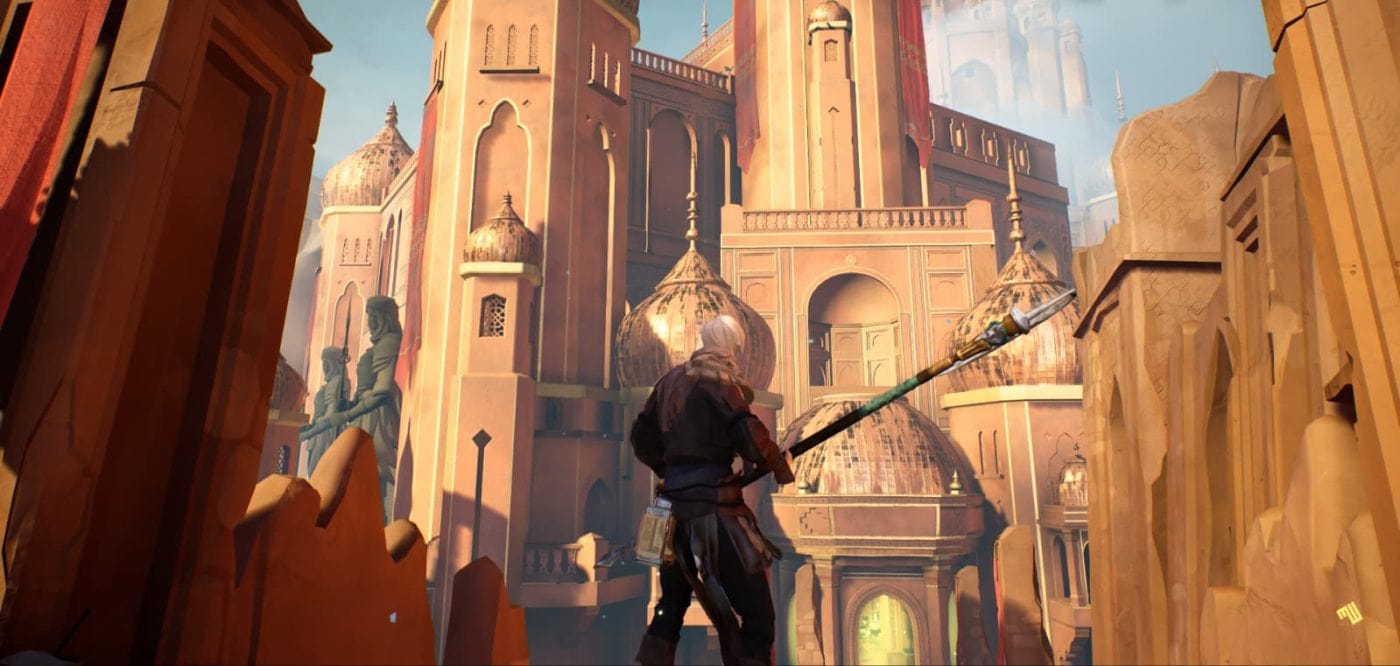
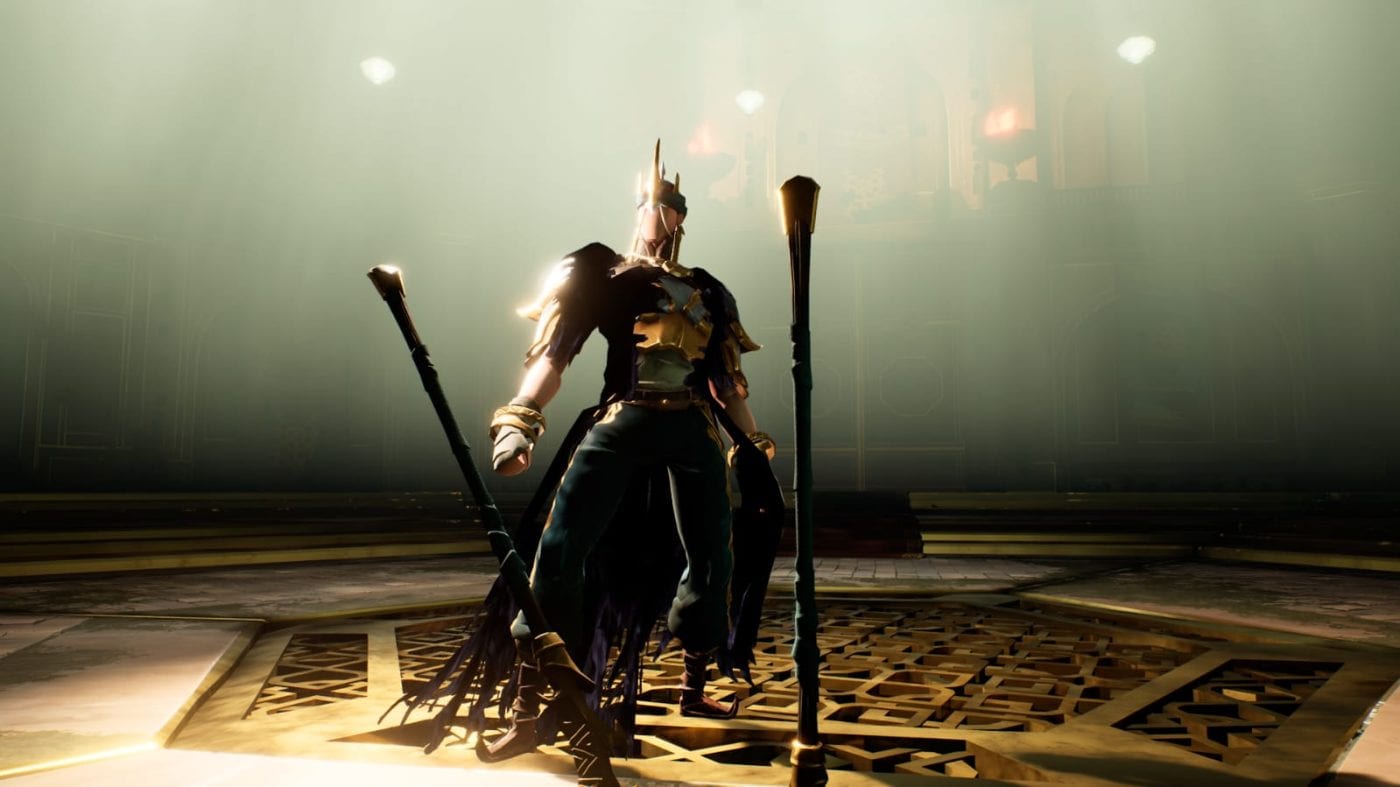
The developers’ approach avoids the pursuit of immediate spectacle, instead crafting an aesthetic language capable of conveying isolation, mystery, and a deep sense of antiquity through restrained forms and tightly controlled art direction. The result is a world that feels almost sculpted rather than constructed, characterized by clean geometries, matte surfaces, and a color palette dominated by natural, dusty tones reminiscent of stone and earth.
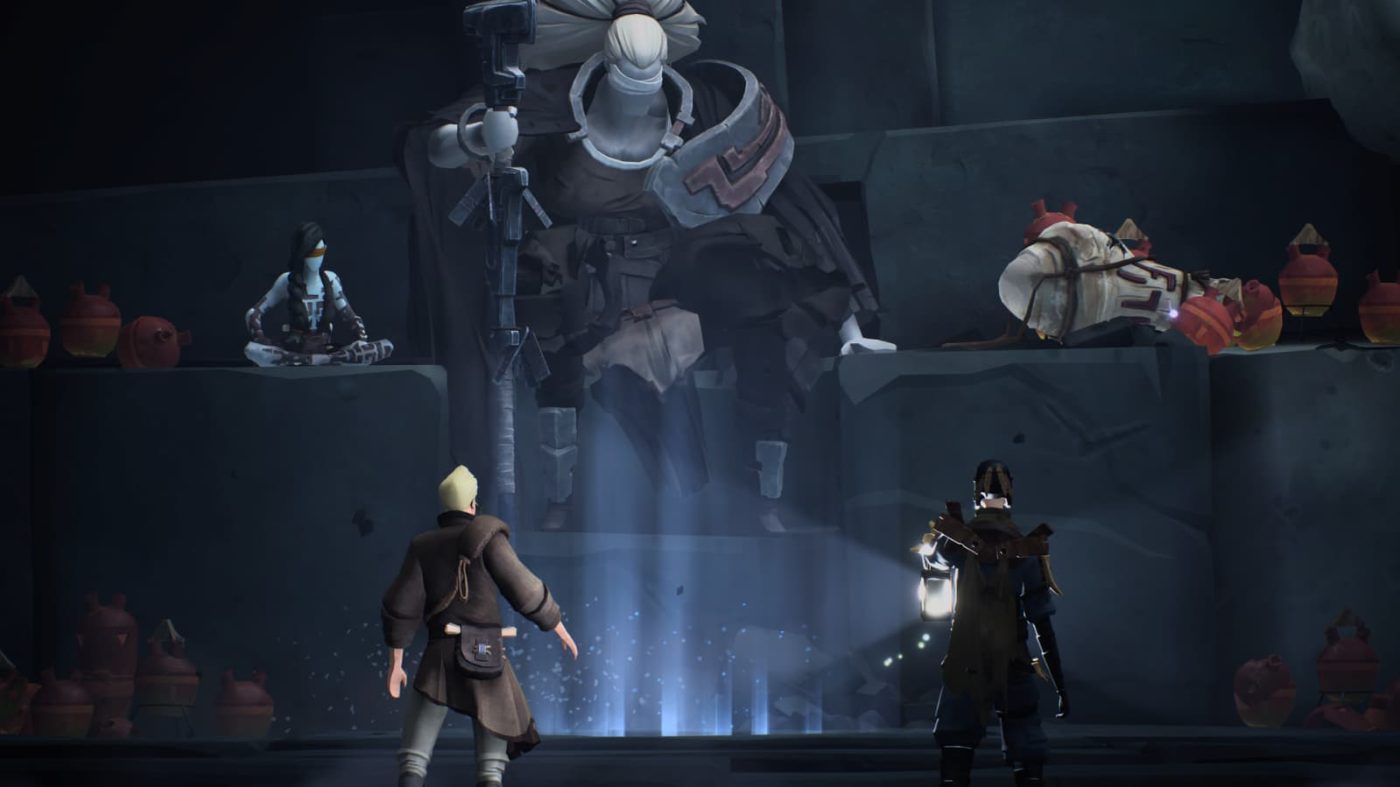
Among the game’s most striking artistic choices is the stylization of its characters, who appear without defined facial features. While such minimalism might seem restrictive in other contexts, here it becomes a powerful expressive device. By removing detailed faces, the game shifts emphasis away from individual identity and toward the universality of the experience.
The characters inhabiting this world are not easily identifiable heroes but human presences bound by a shared and fragile fate. From a technical perspective, this decision also reinforces visual cohesion between characters and their environment, preventing stylistic dissonance between human models and the surrounding landscape.
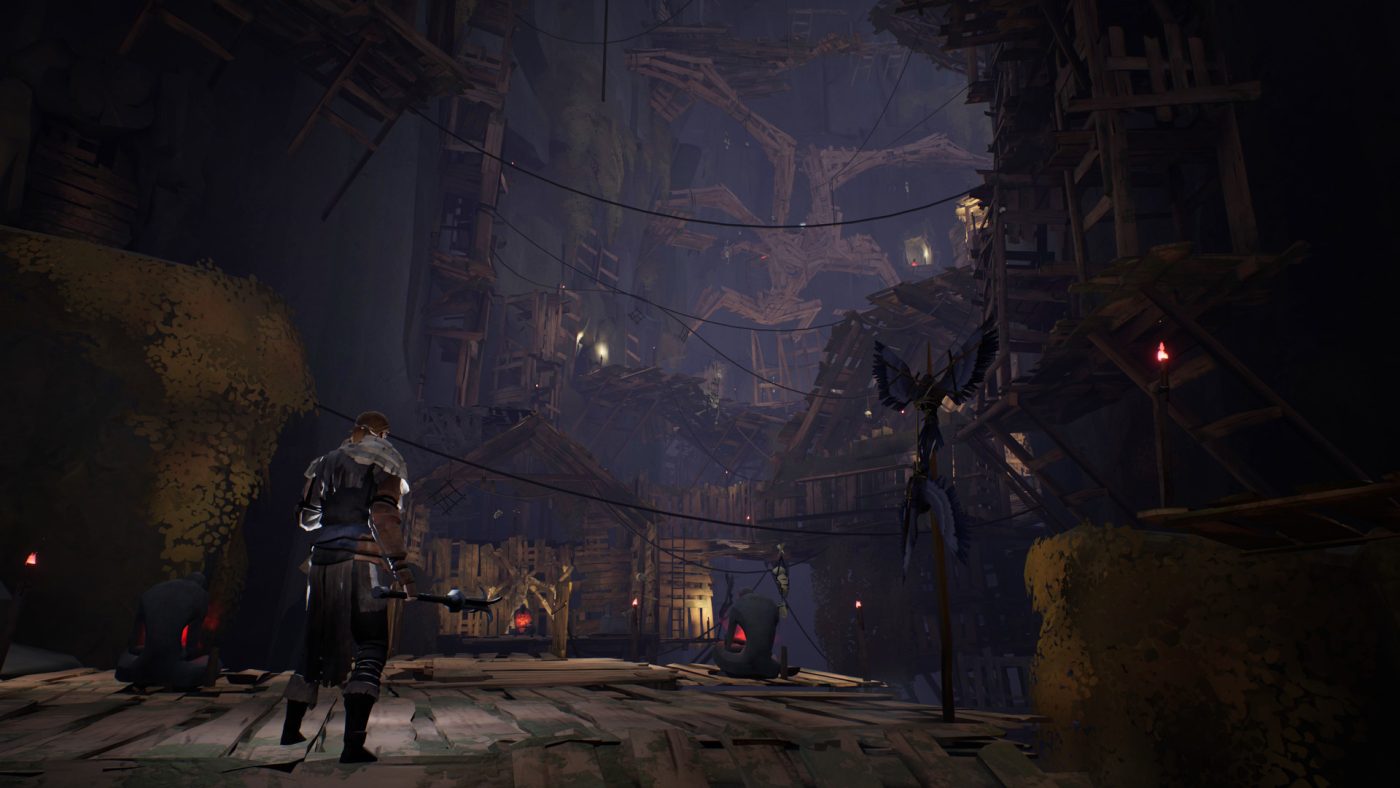
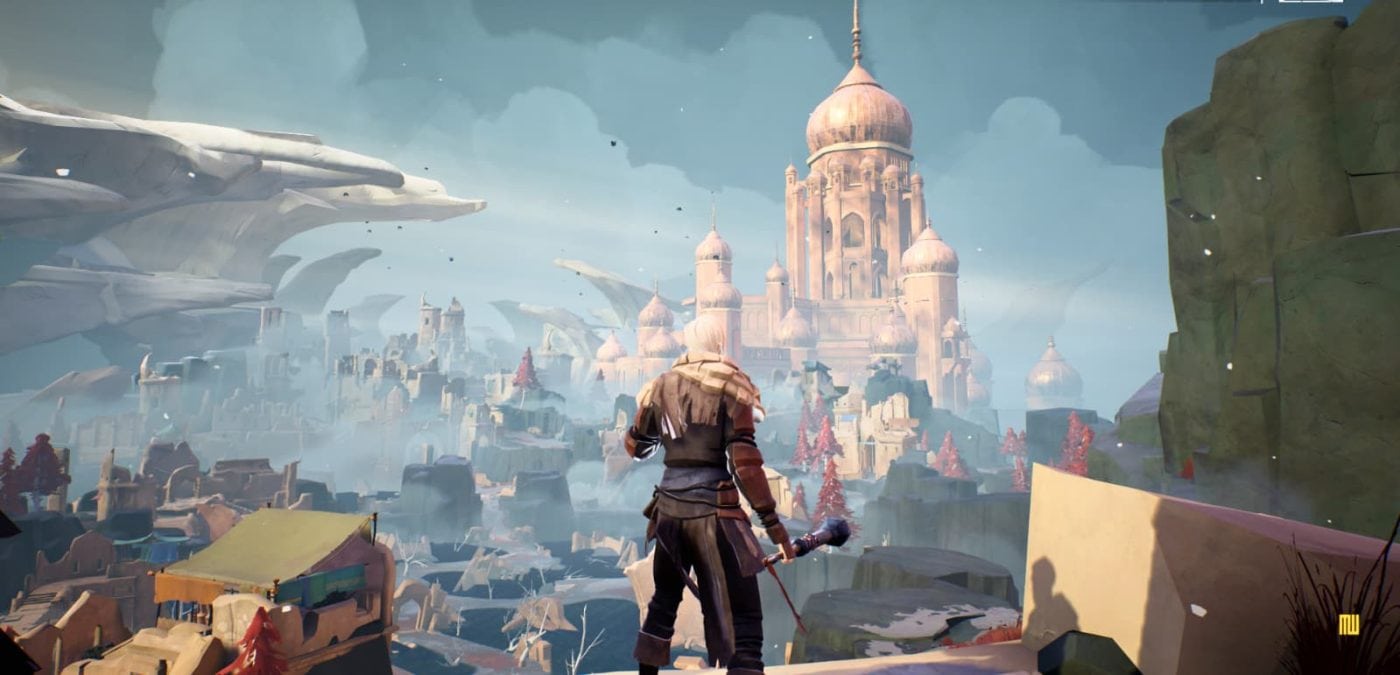
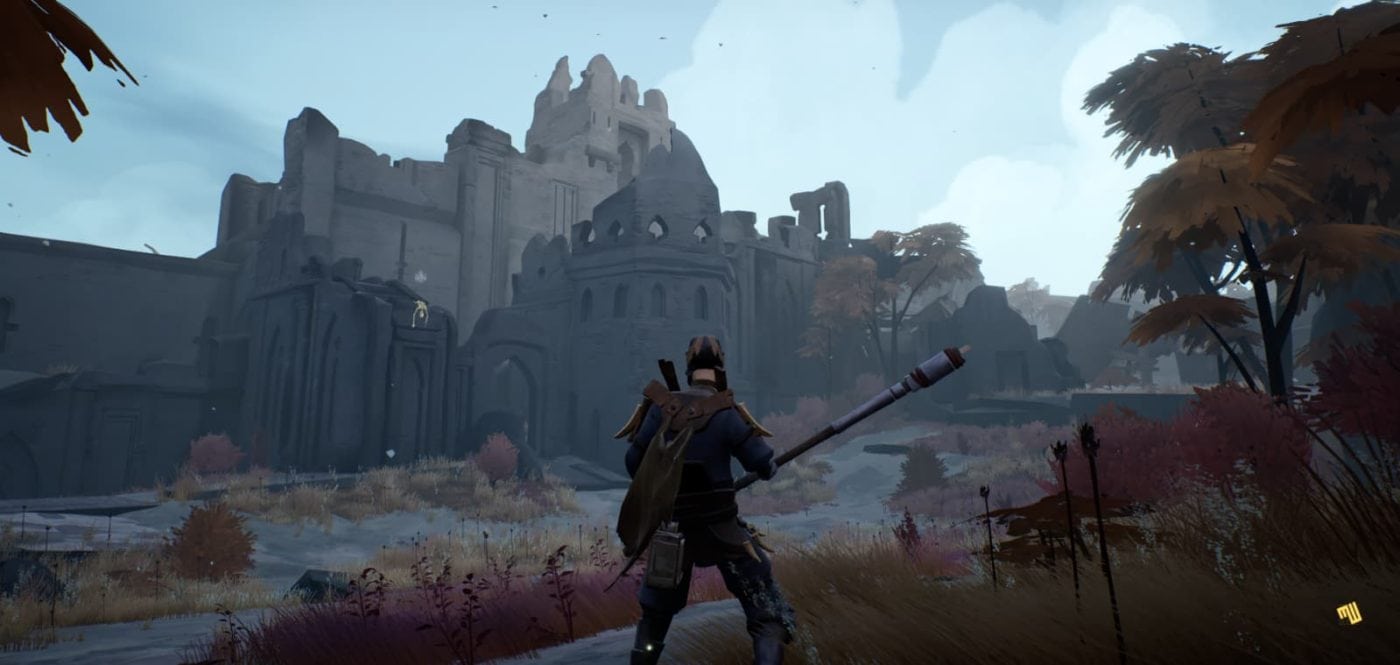
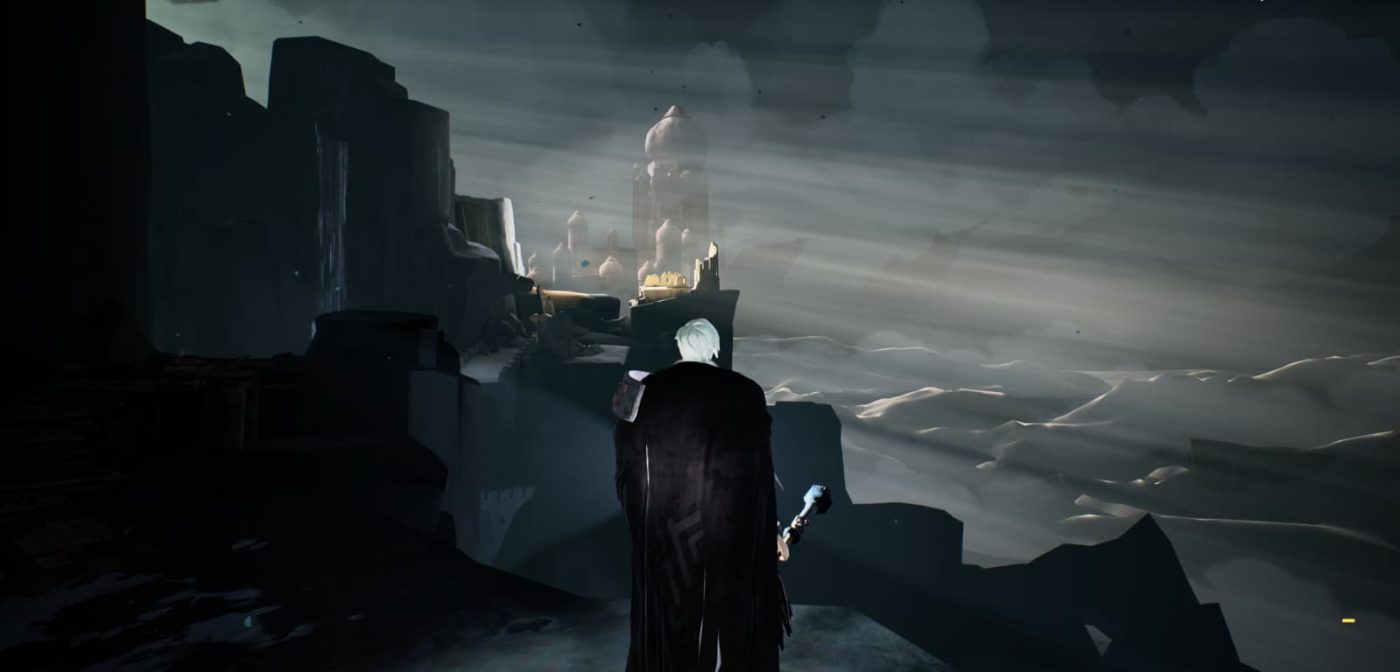
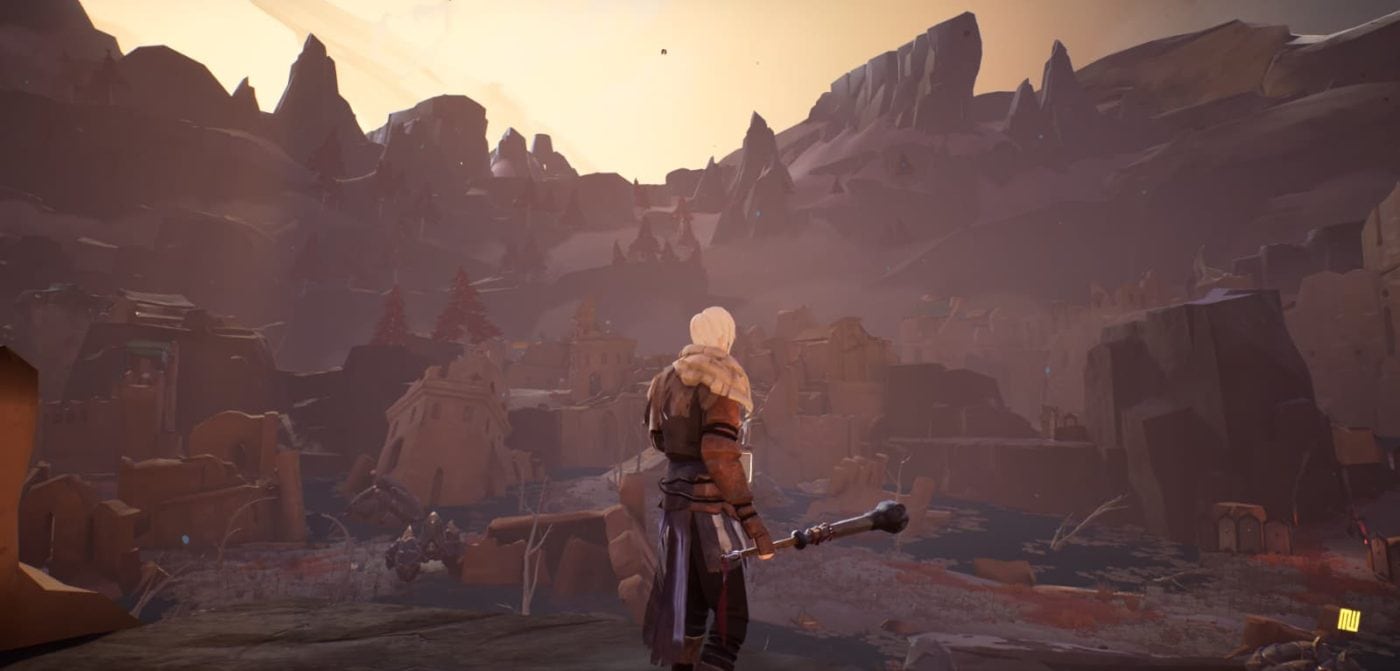
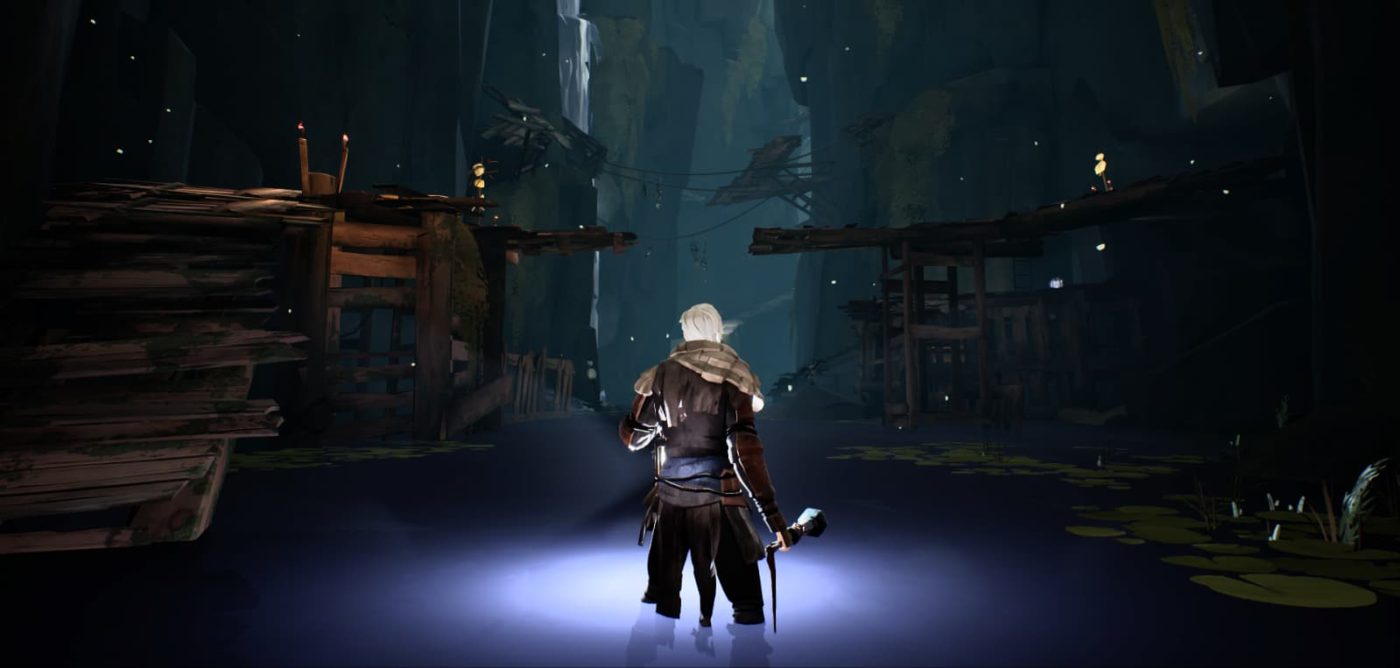
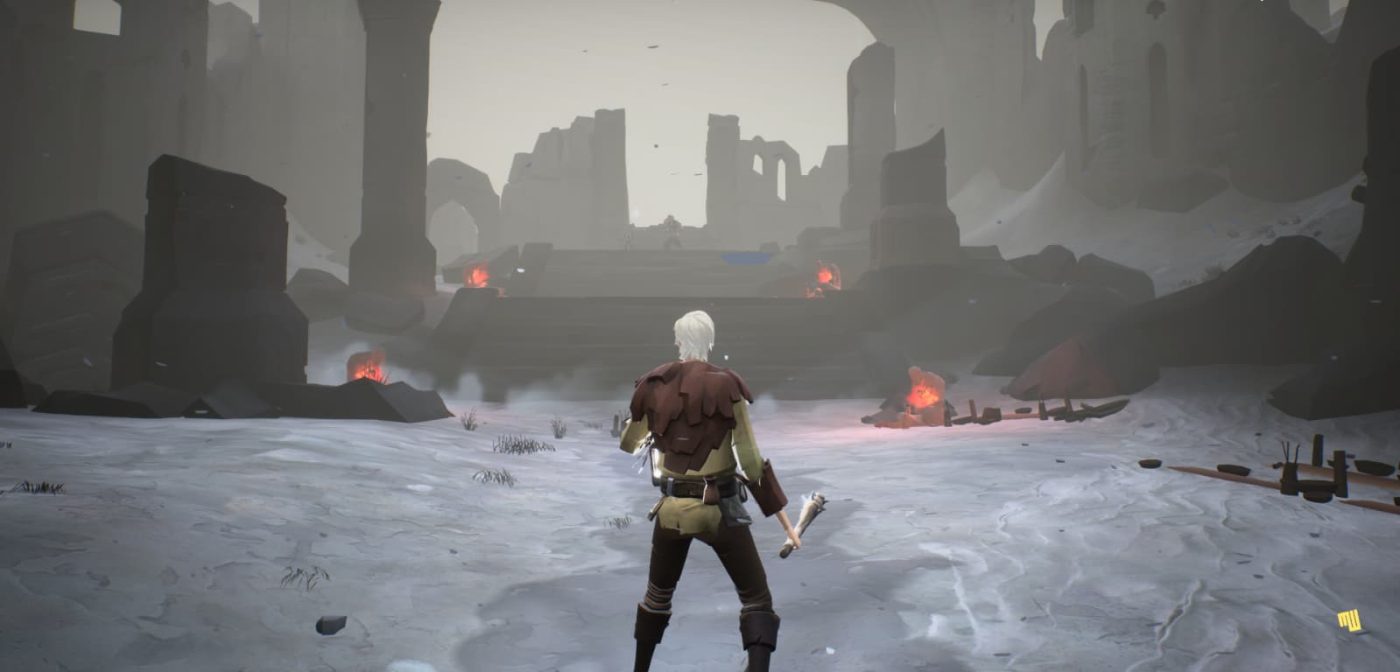
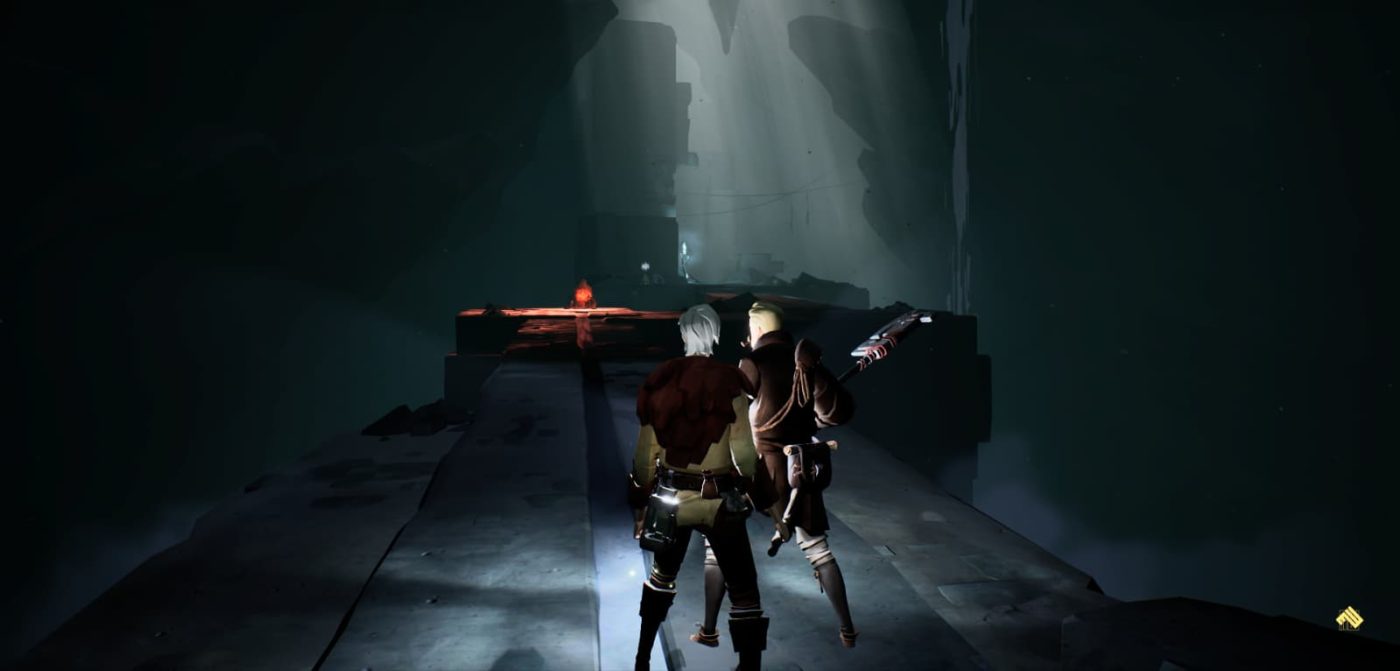
The architecture of the world is built around vast rock formations, silent valleys, megalithic structures, and settlements that appear to rise organically from the terrain itself. Environments never feel decorative; each element conveys weight, history, and layers of time. Surfaces are intentionally restrained, relying less on intricate textures and more on the clarity of form and volume. This design philosophy places particular emphasis on lighting, which becomes one of the game’s most expressive tools. Light shapes the environment, defines spatial depth, and lends certain locations an almost sacred atmosphere.
From a technological standpoint, the game is built using Unreal Engine 4, though it employs the engine in a manner that diverges from many contemporary high-budget productions. Rather than focusing on extreme polygon counts or elaborate visual effects, the technology is used to ensure stability, expansive environments, and convincing dynamic lighting. In this sense, technical capabilities serve the artistic vision rather than overshadow it. The result demonstrates how modern technology can be used to support restraint rather than excess, producing a visual experience that feels purposeful in every detail.
Animation follows the same disciplined philosophy. Movements are restrained and deliberate, crafted to convey physicality rather than spectacle. The motion of characters, creatures, and environmental elements contributes to a tangible sense of weight, reinforcing the sense of a grounded, living world. Even the user interface follows this ethos, remaining minimal and unobtrusive, seamlessly integrated to preserve the game’s visual and atmospheric immersion.
Especially striking is the handling of open spaces. Ashen’s vast landscapes are deliberately uncluttered, allowing players to appreciate the sheer scale of the environment and their own smallness within it. This thoughtful environmental design aligns closely with the narrative tone, evoking a world that feels ancient, expansive, and profoundly indifferent to human presence.
Taken together, Ashen’s technical design and art direction demonstrate how a clear creative vision can guide technological choices rather than simply showcase them. Every visual choice – from environmental modeling to the nuanced handling of light- reinforces a cohesive aesthetic identity that mirrors the game’s central themes of journey, solitude, and gradual reconstruction. In this way, Ashen demonstrates that the true power of visual design lies not in technical complexity, but in the clarity and conviction of the artistic vision behind it.
A Symphony of Silence
The sound design in Ashen is central to the game’s identity, subtly shaping its atmosphere, rhythm, and sense of space. Unlike many contemporary titles, which rely on music to deliver overt emotional cues or punctuate action, here sound behaves as an organic, living presence – emerging, fading, and flowing naturally. Its purpose is not to guide the player, but to immerse them in a world that feels alive, autonomous, and quietly breathing.
The soundtrack is minimalist and restrained, composed of delicate textures, sustained tones, and rare musical flourishes. It avoids conventional motifs or catchy melodies, instead leaving generous spaces for silence. This careful balance creates a sense of suspension, as though the world is holding its breath. Music appears selectively, often accompanying moments of exploration or the discovery of new, memory-laden spaces, reinforcing the impression of a living world rich with untold histories.
Silence is elevated to a narrative and emotional tool. Gaps in sound are not voids but invitations to listen: the wind rustling across rocks, footsteps on uneven terrain, distant echoes across empty valleys. These moments amplify the game’s contemplative nature, encouraging patience and careful observation. The result is a sound design that conveys isolation without despair, blending melancholy with a quiet, persistent serenity.
Environmental sound is crafted with exquisite attention to detail. The whisper of air through canyons, the muted impact of footsteps across different surfaces, and subtle acoustic shifts between open plains and enclosed spaces give the world a palpable sense of physicality. Each area carries its own distinct sonic identity, shaped through subtle modulation rather than overt effects, reinforcing the feeling of moving through authentic, physically grounded environments.
Player interactions follow the same ethos of restraint. Combat, tool use, and environmental interactions are grounded and deliberate, never exaggerated for cinematic flair. Every action produces a clear, unobtrusive audio cue, preserving immersion while reinforcing the tactile, lived-in quality of the game world.
The implementation of 3D spatial audio is equally thoughtful. Directional sound provides cues for off-screen elements, allowing exploration to feel intuitive rather than guided. This approach deepens the player’s connection to the environment, making sound as essential to navigation and spatial awareness as sight itself.
An Immersive, World-Driven Experience
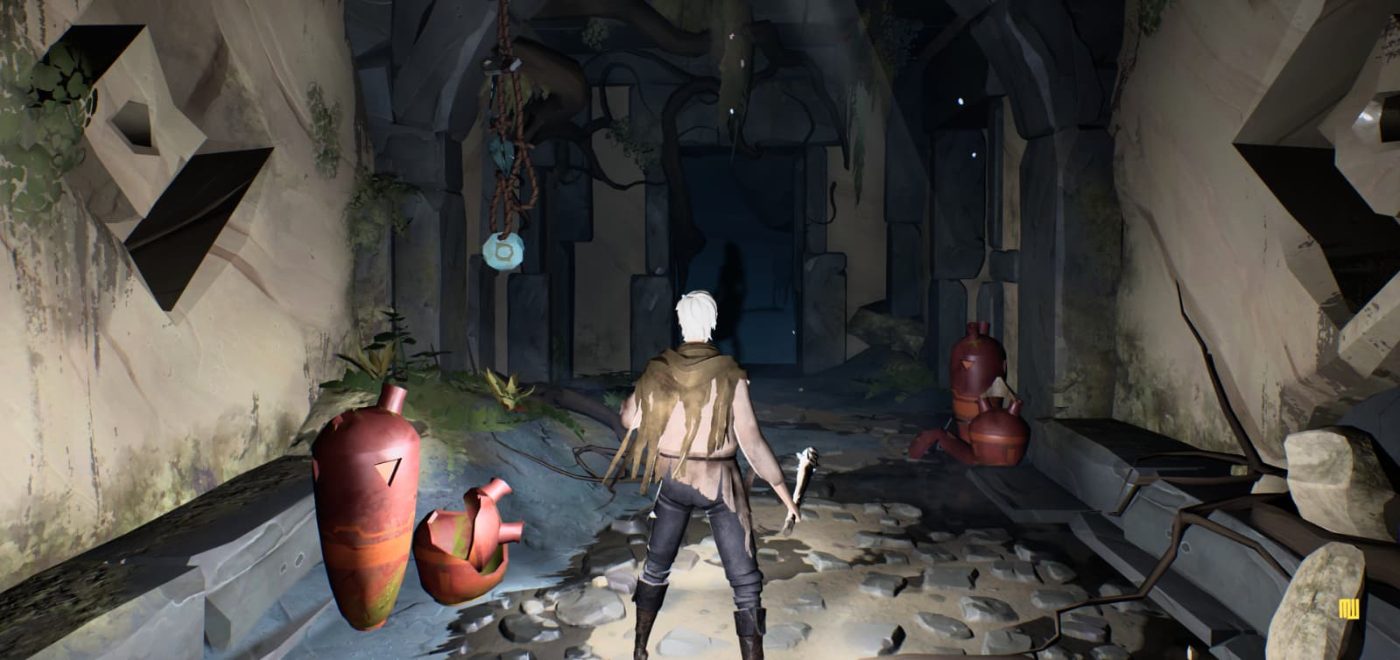
At the heart of Ashen lies a seamless integration of worldbuilding and gameplay – two elements that operate as a single expressive system rather than separate components. The game does not rely on lengthy exposition or direct narrative explanations; instead, the environment tells its own story. Scattered ruins, winding paths connecting isolated areas, and buildings gradually emerging around the central hub all convey a living, evolving world – one that grows and shifts alongside the player.
One of the most compelling aspects is the growth of the main settlement. As players meet new characters and complete key tasks, the village expands: structures evolve, functional spaces appear, and fresh opportunities for interaction emerge. This transformation is more than cosmetic – it reinforces the sense that the player is actively shaping the rebirth of a community. Ashen’s gameplay emphasizes not just individual skill, but a balance of exploration, cooperation, and survival.
Exploration is deliberately unhurried and meditative. Maps are free of cluttered indicators or explicit objectives, inviting players instead to scan the horizon, recognize natural landmarks, and navigate through visual memory. This approach encourages a deeper, more personal engagement with the environment: players do not merely consume content – they inhabit it, gradually understanding the geography and connections between different areas.
Combat, while drawing on familiar action-RPG conventions, is carefully tuned to complement this reflective pace. Encounters demand careful attention, strategic positioning, and close observation of enemy behavior, yet they avoid reducing combat to purely mechanical exercises. The difficulty is carefully balanced, sustaining tension without disrupting the flow of exploration, ensuring that each confrontation feels like an integral part of the journey rather than an isolated obstacle.
A defining feature of Ashen is the dynamic presence of companions, whether AI-controlled or other players in passive co-op. These encounters foster collaboration and a subtle feeling of shared experience without demanding direct communication. Companions never intrude; rather, they provide measured support that reinforces Ashen’s core theme of collective rebuilding, turning gameplay mechanics into narrative tools.
Character progression follows a streamlined, minimalist approach. Equipment, skills, and resources are carefully balanced to encourage experimentation, without overwhelming the player with unnecessary statistical complexity. Each improvement carries real weight – a meaningful step toward survival in a hostile world, rather than a mere numerical optimization.
In Ashen, world-building and gameplay converge to deliver an experience defined by the interplay between player and environment, effort and discovery, solitude and collaboration. The game crafts a believable, evolving world not through sheer content volume, but through the richness of connections that bind space, action, and meaning – offering a journey that unfolds as much across the landscape as it does within the player’s perception.

Restraint as a Creative Force
Ashen demonstrates a clear ambition: to engage with the modern action-RPG genre without merely replicating its conventions. The game draws on familiar elements – carefully measured difficulty, interconnected exploration, central resource management, and climactic boss encounters – but reframes them through a contemplative lens, standing in deliberate contrast to the relentless tension typical of other titles in the genre. This approach is both the game’s greatest strength and its potential point of misunderstanding: players expecting a challenge-driven experience may perceive a certain sparsity, while those willing to embrace a more introspective pace will find a surprisingly coherent and deliberate design.
One of Ashen’s most notable achievements lies in its integration of minimalist aesthetics with systemic design. Visual restraint is never employed as a mere production shortcut; rather, it is a deliberate, poetic choice that shapes how the world is experienced, interpreted, and inhabited. Yet this very coherence can, at times, give rise to a sense of uniformity, subtly tempering the initial sense of wonder. While the game’s environments are structurally robust, they do not always leave as enduring an impression as the immersive atmosphere they cultivate.
The combat system is equally refined – effective, yet deliberately stripped of technical excess. Ashen eschews spectacle and overly complex mechanics, favoring clarity, tangible physicality, and immediate readability. This considered accessibility broadens the game’s appeal, though it may feel less demanding for players seeking deeply layered mechanical systems. Overall, the design prioritizes the holistic experience over mastery of any single element.
Perhaps the most compelling aspect of Ashen is its subtle meditation on community – a deliberate and considered departure in a genre often dominated by solitary heroism. The growth of the settlement, the presence of fellow travelers, and the quiet, emergent collaboration they foster all point to a vision of adventure that is strikingly less individualistic. It is an understated, almost implicit message, yet one that firmly sets Ashen apart within the contemporary landscape of action-RPGs.
Ultimately, Ashen fulfills its authorial vision, even if doing so demands some compromise in immediacy or spectacle. It is not a game built for grandeur; it favors coherence over flash and substance over ostentation. And it is precisely in this measured restraint – this deliberate avoidance of excess – that its identity shines most clearly: an experience meant to be savored thoughtfully, rather than simply consumed.
Ashen
PRO
- Distinctive and immediately recognizable art direction;
- Melancholic, contemplative, and immersive atmosphere;
- Subtle yet evocative worldbuilding;
- Exploration that feels meaningful and rewarding;
- Cooperative mechanics seamlessly integrated into gameplay;
- Measured, meditative, and consistent pacing;
- Understated yet effective soundtrack.
CON
- Deliberately minimalist gameplay;
- Combat system remains relatively simple and unpolished;
- Narrative is understated, requiring players to actively interpret the story;
- Character progression can feel measured or slow-paced;
- Not tailored to players seeking flashy, immediate spectacle.


7/10