A dreamlike, cross-media adventure that blurs the line between reading and play.
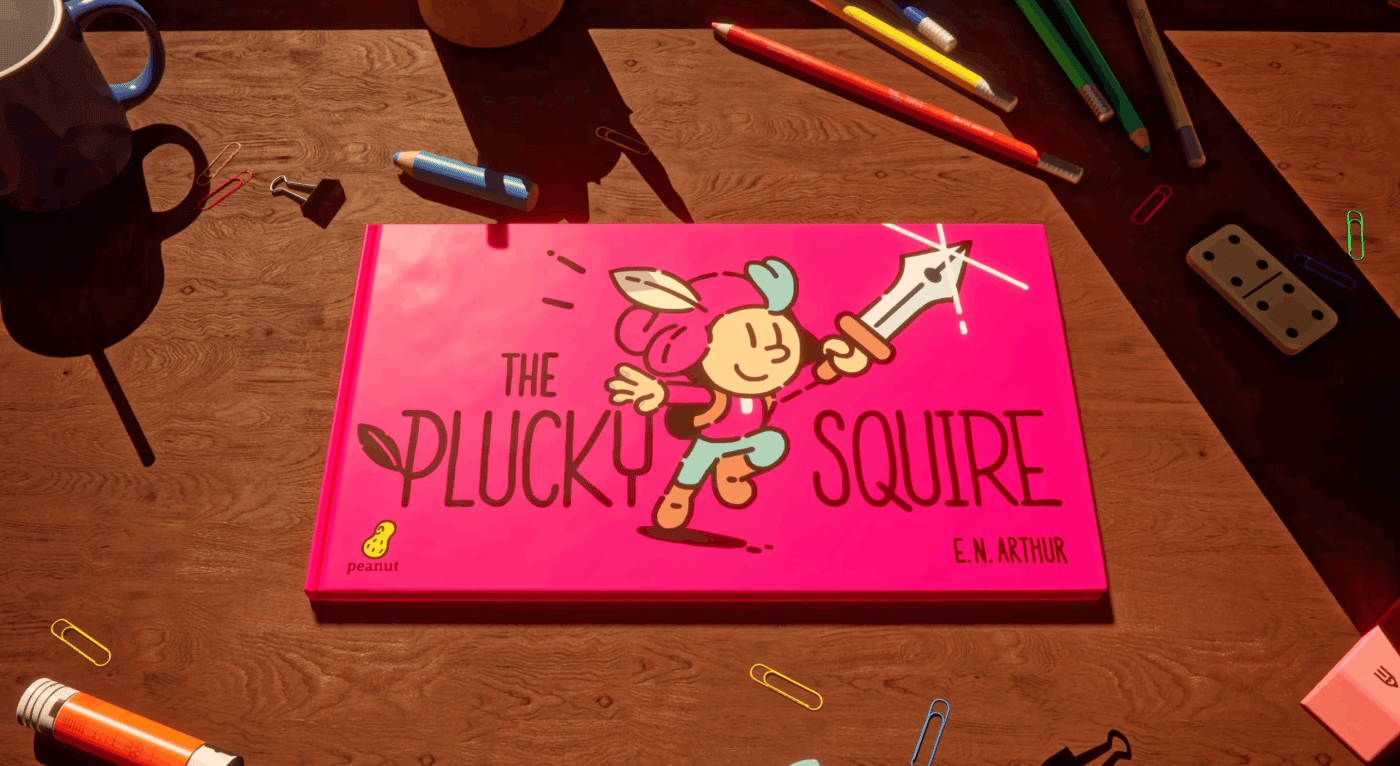
The Plucky Squire positions itself as a game fully conscious of its dual nature – playful yet narratively ambitious. It is far more than a story to be told; it is a reflection on the power of imagination, the language of fairy tales, and the subtle interplay between player and fantastical world. At its core lies a concept as simple as it is enchanting: an illustrated story brought to life, literally unfolding before the player’s eyes. The book’s pages transform into a dynamic, interactive, and often surprising space.
While comfortably rooted in the action-adventure genre, the game’s identity transcends conventional labels. It seamlessly blends exploration, environmental puzzles, platforming sequences, and meta-narrative moments with a creative lightness reminiscent of children’s literature – never simplistic, always deliberate. Its aim is not just to entertain, but to capture that rare sense of wonder that comes from opening an illustrated book and discovering the characters can truly step off the page.
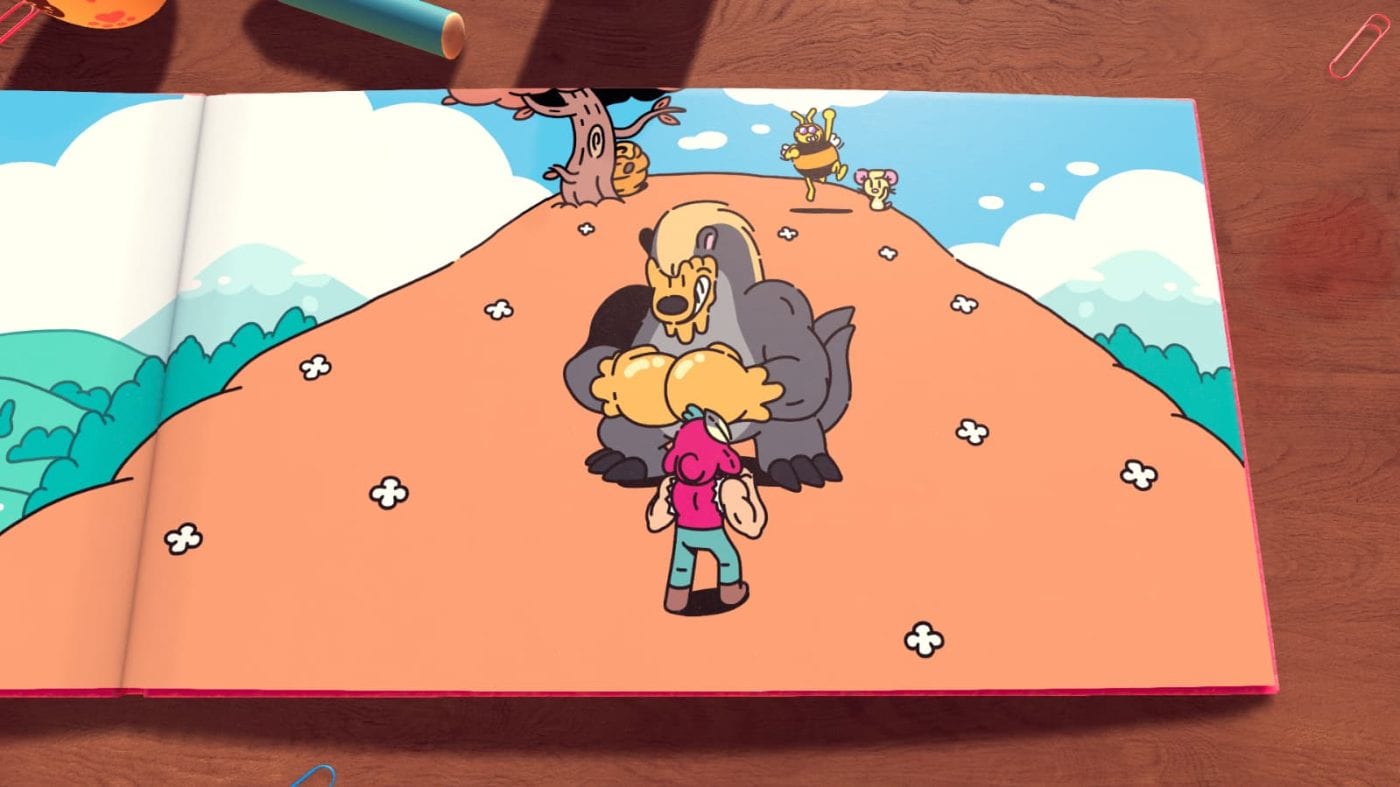
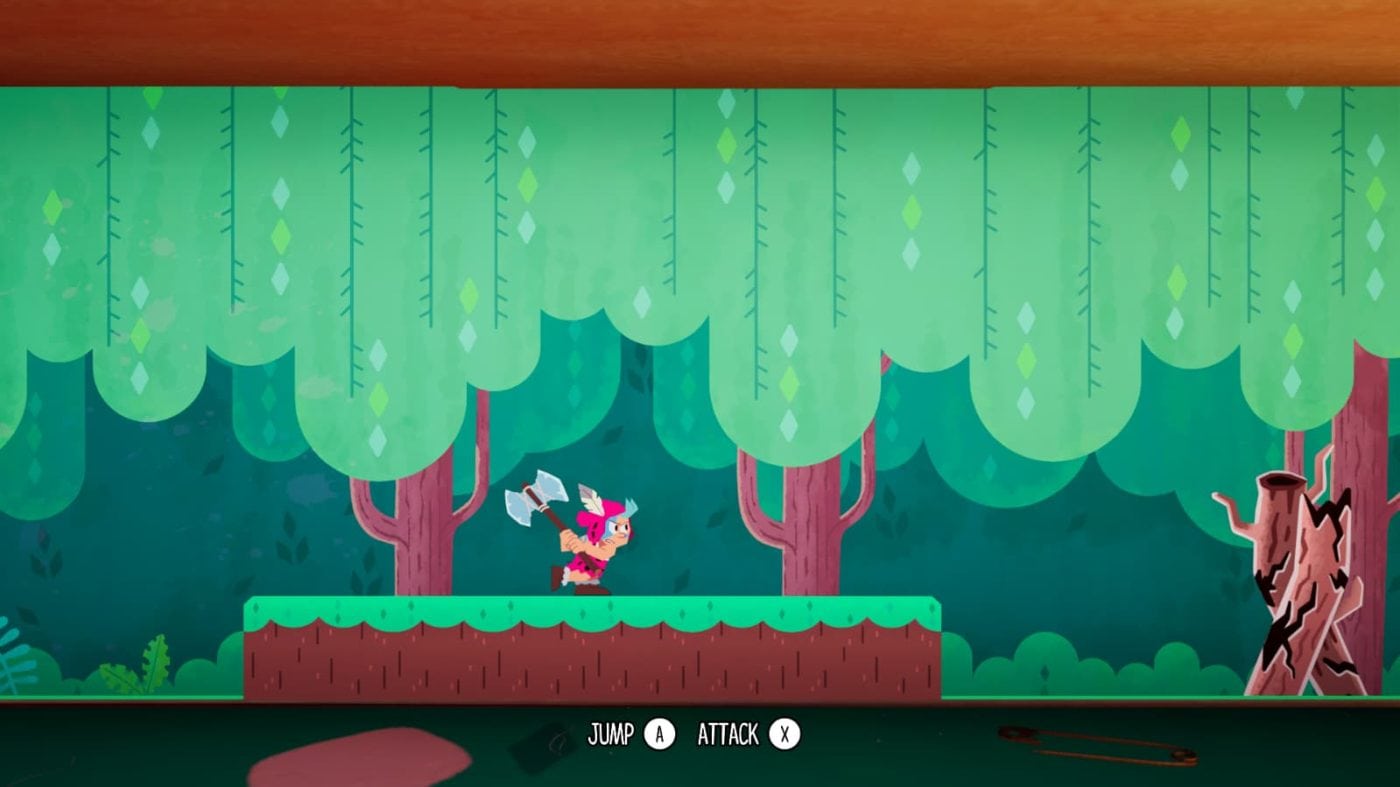
From the very first sequences, the game’s artistic direction establishes a distinctive “animated fairy tale” aesthetic. Vibrant colours, soft, organic shapes, and a deliberately illustrative style intertwine with a remarkable range of visual techniques. The constant interplay between two-dimensional and three-dimensional space is never mere spectacle; it is a conscious, purposeful statement. At every turn, the game reminds players that they are navigating a living narrative – a book that bends, folds, transforms, and occasionally rebels against its own structure.
The introduction strikes a tone that is at once inviting and richly nuanced, speaking to a wide and discerning audience. On one level, it evokes the charm and vivid imagery of illustrated children’s tales, brought to life through expressive characters and captivating set-pieces; on another, it seamlessly weaves in a meta-textual awareness that will resonate with seasoned players.
Innovation Over Conformity
Behind The Plucky Squire is All Possible Futures, a relatively young independent studio comprised of seasoned professionals with a substantial creative pedigree in the video game industry. The studio’s formation reflects a broader trend in recent years: developers stepping away from large-scale production environments to pursue projects with a more authorial, experimental ethos – games where narrative innovation and formal experimentation can flourish unbound by the commercial imperatives of high-budget productions. From the very outset, The Plucky Squire positions itself as a work defined by a clear, distinctive vision, rather than a product shaped by prevailing industry trends. The studio’s approach is particularly notable for its development of a personal visual and interactive language, seamlessly blending traditional illustration with contemporary design.
Devolver Digital has played a crucial role in bringing this vision to life. Renowned for its support of independent games with strong, distinctive stylistic identities, the publisher offers a framework that naturally embraces experimental approaches. The collaboration proves remarkably harmonious: a studio driven to push the boundaries of interactive storytelling partners with a publisher renowned for championing originality and bold creative vision. This collaboration has enabled the project to retain its expressive essence, avoiding excessive compromise while preserving an almost artisanal quality evident in the animation, environment design, and the rhythm with which new ideas are introduced.
The production approach reflects an increasingly common philosophy within the indie scene: small, tightly-knit teams; a strong integration of artistic and technical disciplines; and creative processes that prioritize collaboration and internal dialogue over rigid hierarchies. In The Plucky Squire, gameplay, art direction, and narrative seem to emerge simultaneously, conceived in constant interplay rather than in isolation. The result is an organic, cohesive work in which technical execution supports rather than overshadows imagination, allowing ideas to surface with clarity and precision.
This synergy places The Plucky Squire in a distinctive position within the market: accessible enough to appeal to a wide audience, yet original enough to retain a singular creative identity. This duality resonates throughout the game, seamlessly blending imaginative freedom with rigorous attention to detail. The collaboration between developer and publisher serves as a striking testament to the independent games scene’s enduring capacity for innovation – propelled as much by the strength of its ideas as by the precision with which they are executed.

A Living, Self-Aware Narrative
The Plucky Squire unfolds around a narrative concept that is at once enchanting and exceptionally fertile from an interactive standpoint: a story that is self-aware, capable of being altered, rewritten, and even interrogated from within. The protagonist, Jot, is a fairytale hero living inside an illustrated book, fully conscious of his role in a classic adventure tale – complete with quests, antagonists, and the inevitable trials of heroism. What begins as a linear, reassuring, almost archetypal narrative gradually fractures when the book’s delicate balance is threatened by a malevolent force, Humgrump, determined to rewrite the fates of its characters, reshaping events and altering the very architecture of the story. In doing so, the plot evolves into a living, dynamic space, where the rules of narrative themselves become an integral element of the conflict.
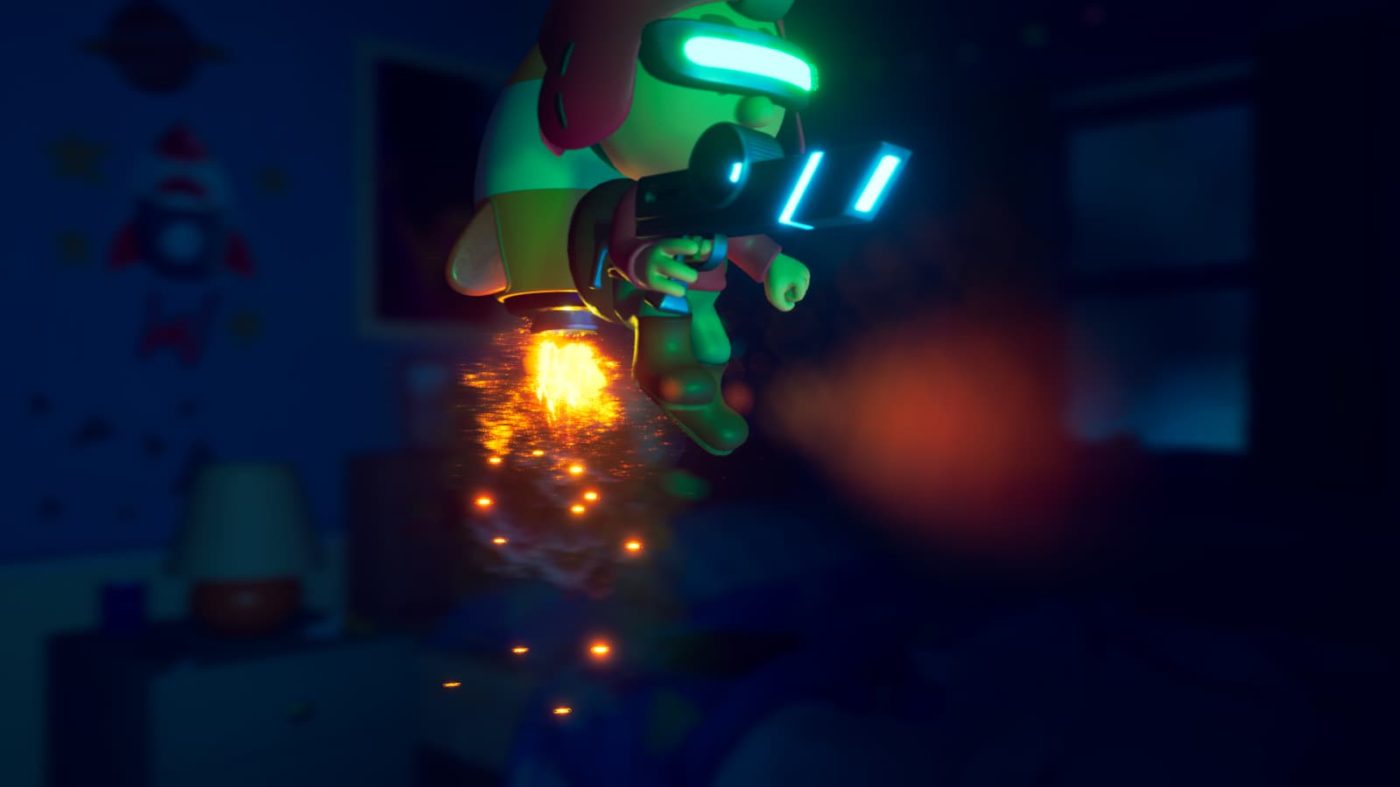
Jot’s journey is more than a traditional heroic quest; it is a traversal across the layers of the story itself. From the illustrated pages that define the “official” world of the tale to the spaces beyond the book, where reality takes on a tangible, three-dimensional form, the game continually shifts between interior and exterior worlds. This dynamic interplay lies at the heart of the narrative, reflecting the characters’ struggle to break free from the constraints of their own written existence. The plot hinges on a subtle, compelling tension between fate and freedom – between what has been predetermined and what remains yet to be written.
One of the narrative’s most striking features lies in its foundation on children’s literature, which is then reimagined through a meta-narrative lens. Classic fairytale elements – the courageous hero, the disruptive antagonist, and the companions who accompany the journey – are preserved, yet reinterpreted to imbue the characters with a self-awareness of their own roles. They do not simply act within the story; they observe it, experience it, and seek to understand it, fostering a subtle sense of alienation that enriches the narrative without burdening it. This approach allows the game to remain playful and approachable while weaving in thoughtful reflections on storytelling and imagination as a space of creative possibility.
The narrative unfolds with a deliberately varied rhythm, alternating between moments of open exploration and discovery and more structured, theatrical sequences in which the presentation itself takes centre stage. Each chapter introduces not only new challenges but also inventive ways of conveying the story – visually, mechanically, and narratively – as if the book were continually reinventing itself. The result is a journey that is both unpredictable and captivating: the player is engaged not merely in discovering what happens next, but in witnessing how the story chooses to unfold.
The Art of Stepping Beyond the Page
The narrative scope of The Plucky Squire reaches well beyond the contours of a conventional adventure. Beneath its playful exterior lies a considered exploration of imagination, authorship, and character agency, transforming the experience into a layered reflection on the nature of storytelling itself. What begins as a straightforward premise – a fairytale hero striving to save his world – gradually reveals greater complexity, challenging the permanence of written destiny and proposing that even fictional characters might aspire to step beyond the confines of their assigned roles.
At the heart of the game lies a sustained tension between determinism and creative freedom. This thematic thread is articulated through a tone that remains accessible without sacrificing sophistication, allowing the narrative to resonate with younger players while offering richer interpretative layers for those attuned to its meta-fictional nuances.
Identity emerges as a central theme, conceived not as a fixed trait but as something forged through choice and possibility. Jot, initially at ease in his role as the quintessential picture-book hero, is compelled to reassess his sense of self when he realises that the story shaping his existence can be revised, erased, or rewritten. What follows is more than a plot device; it becomes a measured allegory for personal growth. To step beyond the page is to confront uncertainty, to accept instability as part of becoming, and ultimately to assume responsibility for one’s own direction.
This thematic evolution is reinforced by the game’s shifting aesthetic language. The reassuring two-dimensional charm of the illustrated book gradually gives way to more tactile, three-dimensional environments, mirroring a movement from narrative certainty toward experiential complexity. The transition feels purposeful rather than ornamental, embedding thematic progression within the very structure of play.
The game also serves as a reflection on the expressive potential of the video game medium. The ability to manipulate text, reshape scenes, and physically exit the confines of the page is not merely a clever mechanical flourish; it functions as a statement about interactivity itself. Here, storytelling becomes participatory and fluid, shaped as much by engagement as by authorship. In doing so, the game reimagines the tradition of illustrated children’s literature for a contemporary audience – one in which the reader, now recast as player, assumes an active role in shaping meaning.
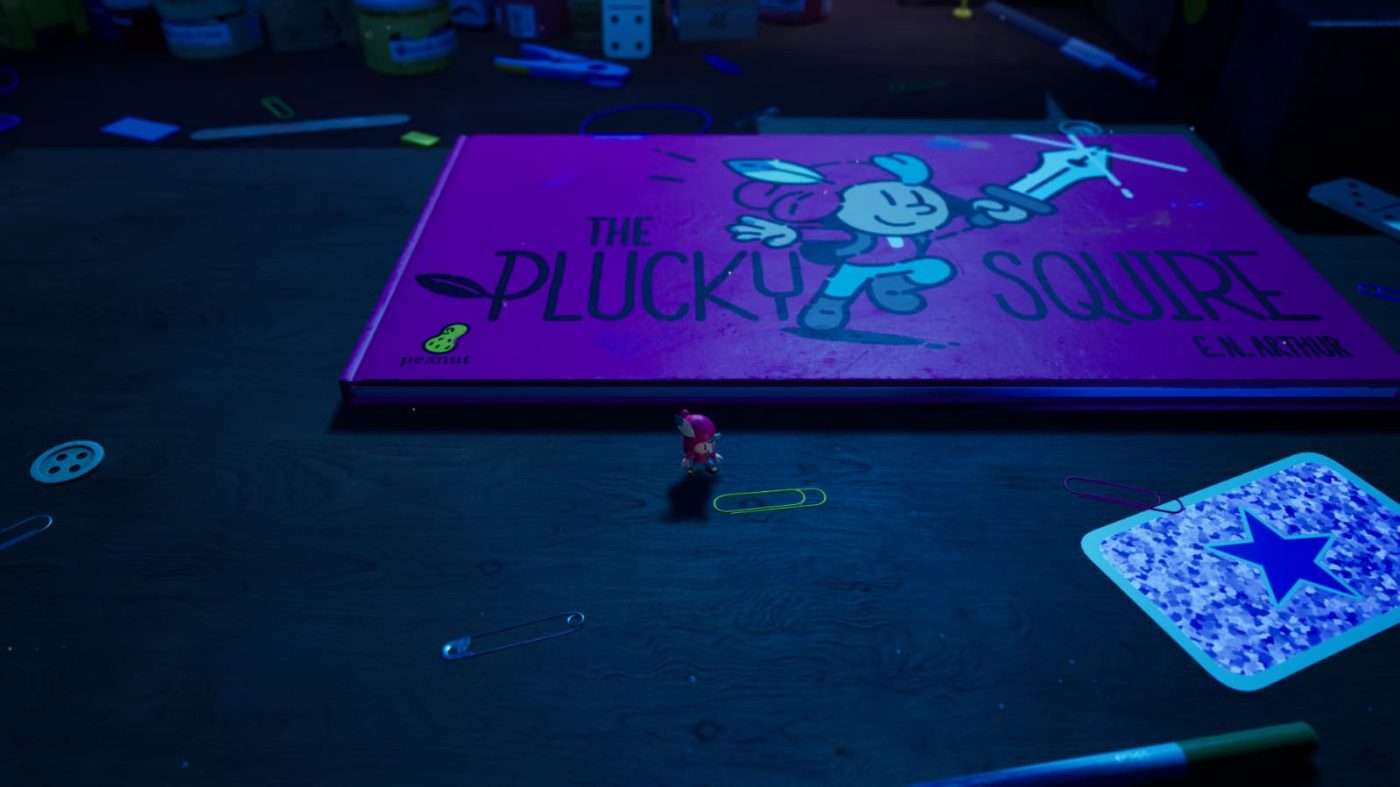
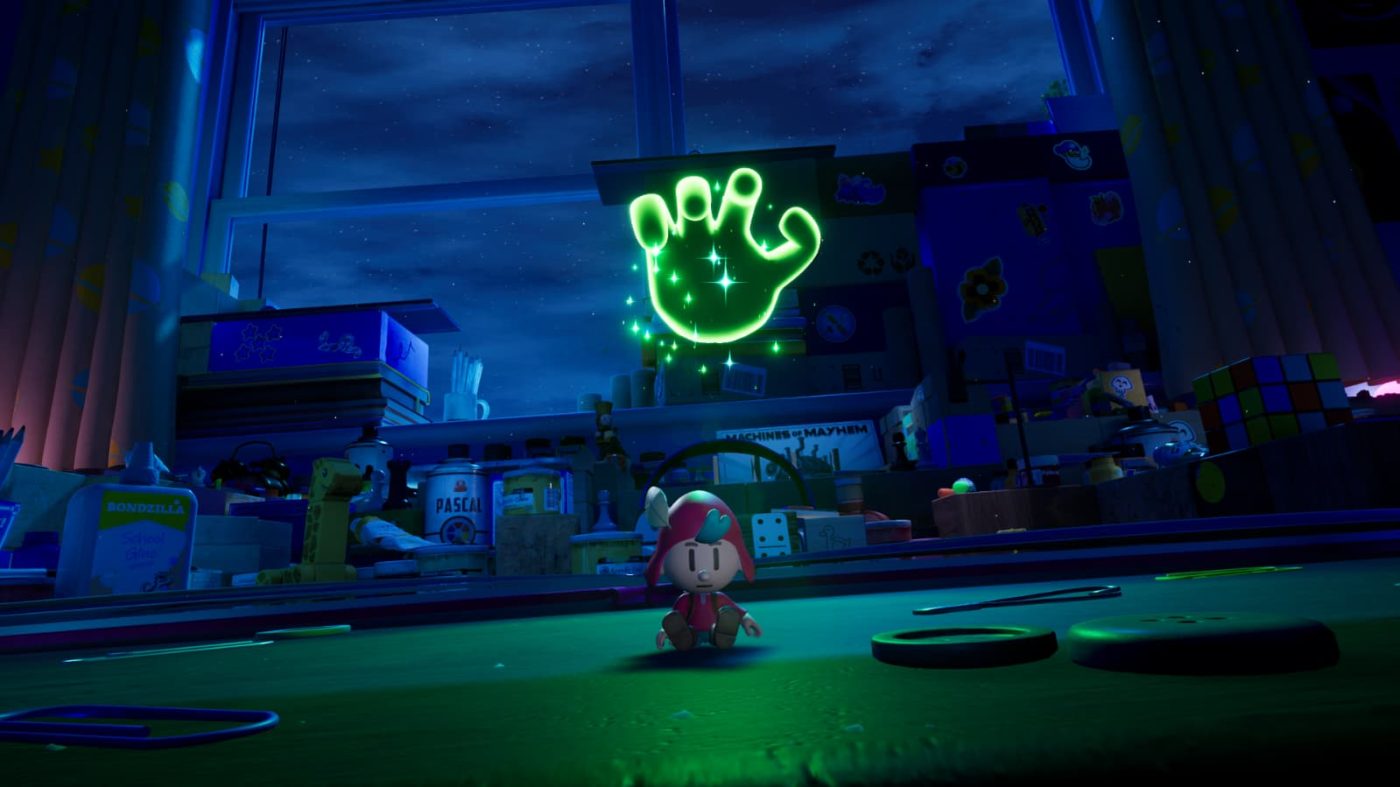
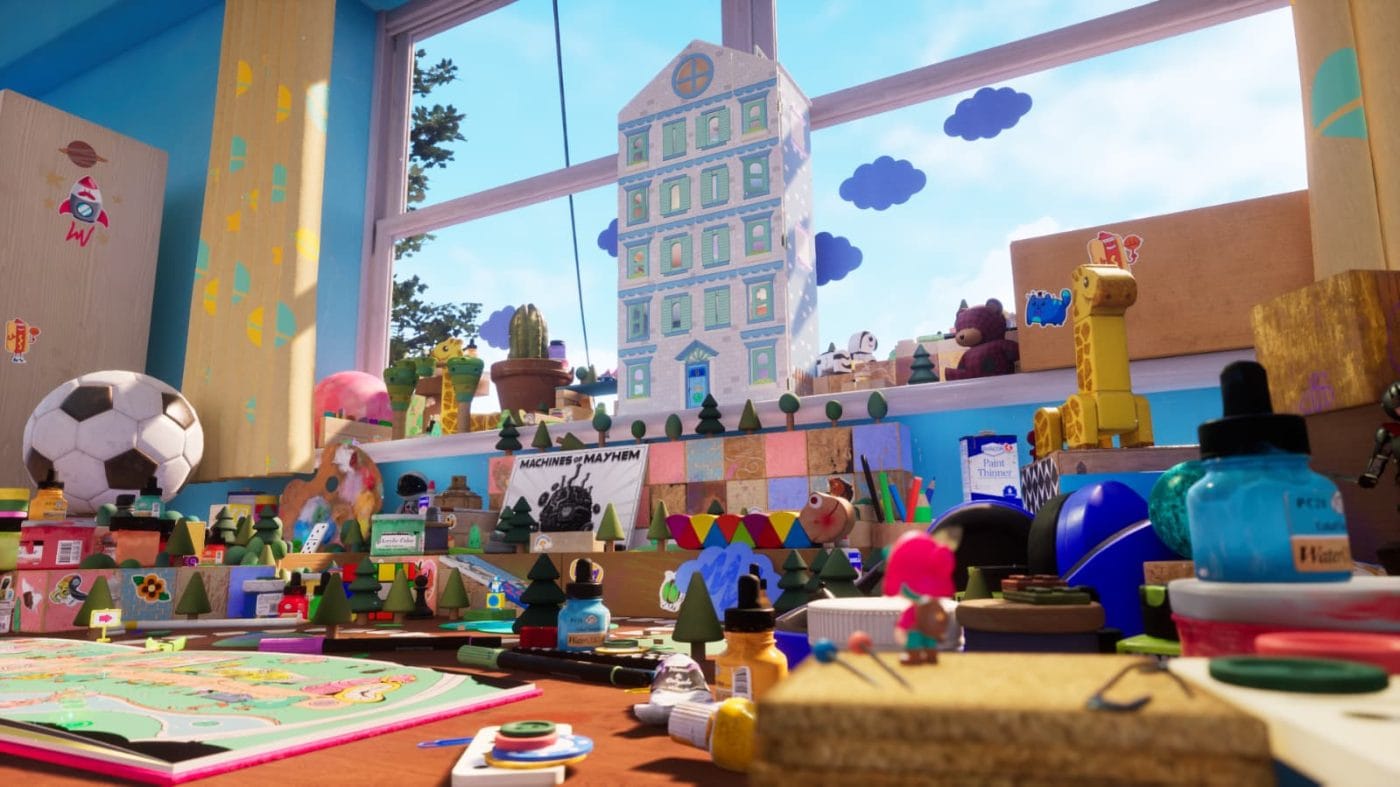
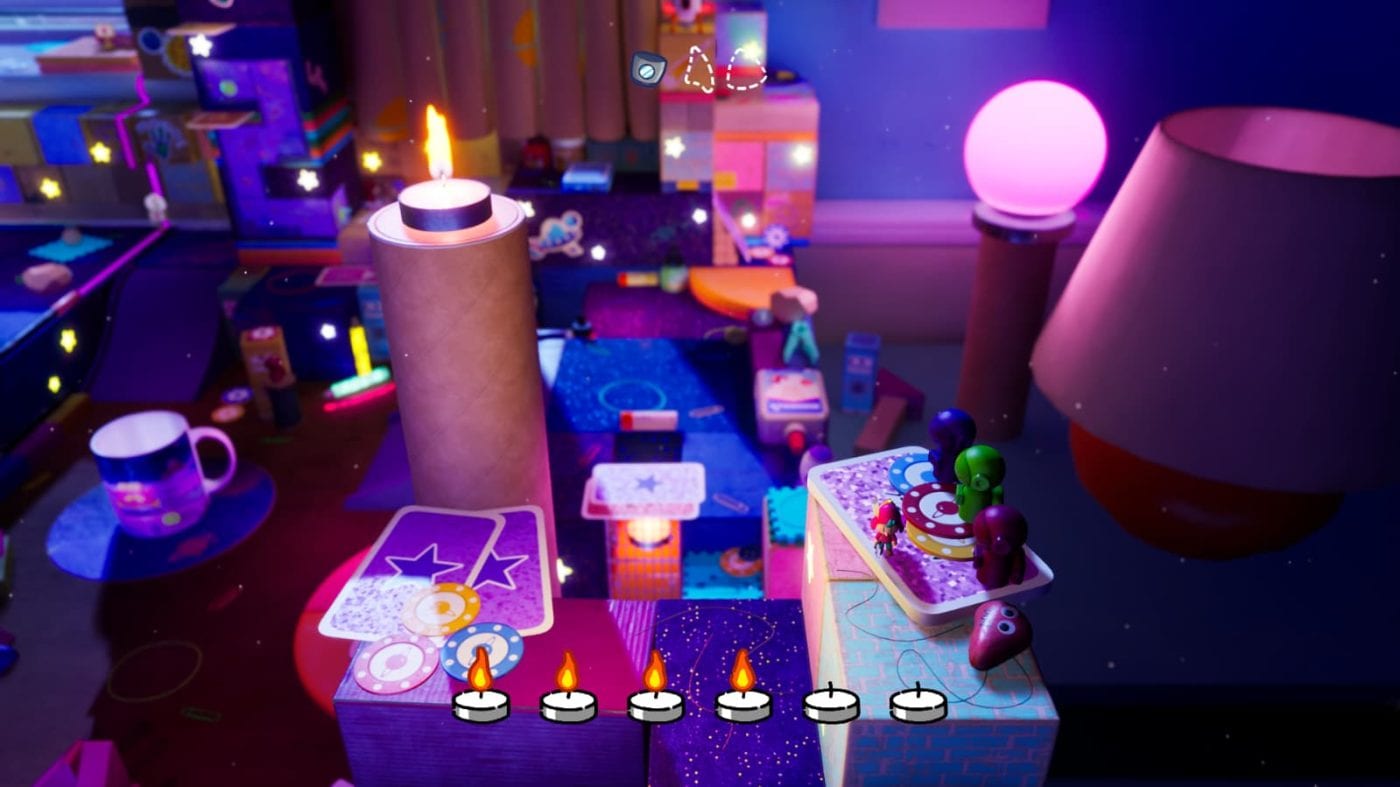
Creativity is portrayed as a transformative force, particularly in moments when the world beyond the book comes into focus. Everyday objects – desk surfaces, art tools, tangible materials – are absorbed into the narrative framework, dissolving the boundary between fiction and reality. The distinction between what is “drawn” and what is “real” grows increasingly porous, cultivating a poetics of imagination in which any space can become narrative terrain.
Ultimately, The Plucky Squire engages with profound themes – creative autonomy, the interplay between creator and creation, and the shaping of identity – with a subtlety that never feels heavy-handed. Beneath its playful surface lies a carefully orchestrated reflection on change, growth, and the boundless possibilities of storytelling. Rather than abandoning its fairytale roots, the game expands upon them, posing not only the question of what it means to write a story, but also what occurs when that story refuses to remain confined to the page.

A Feast for the Eyes
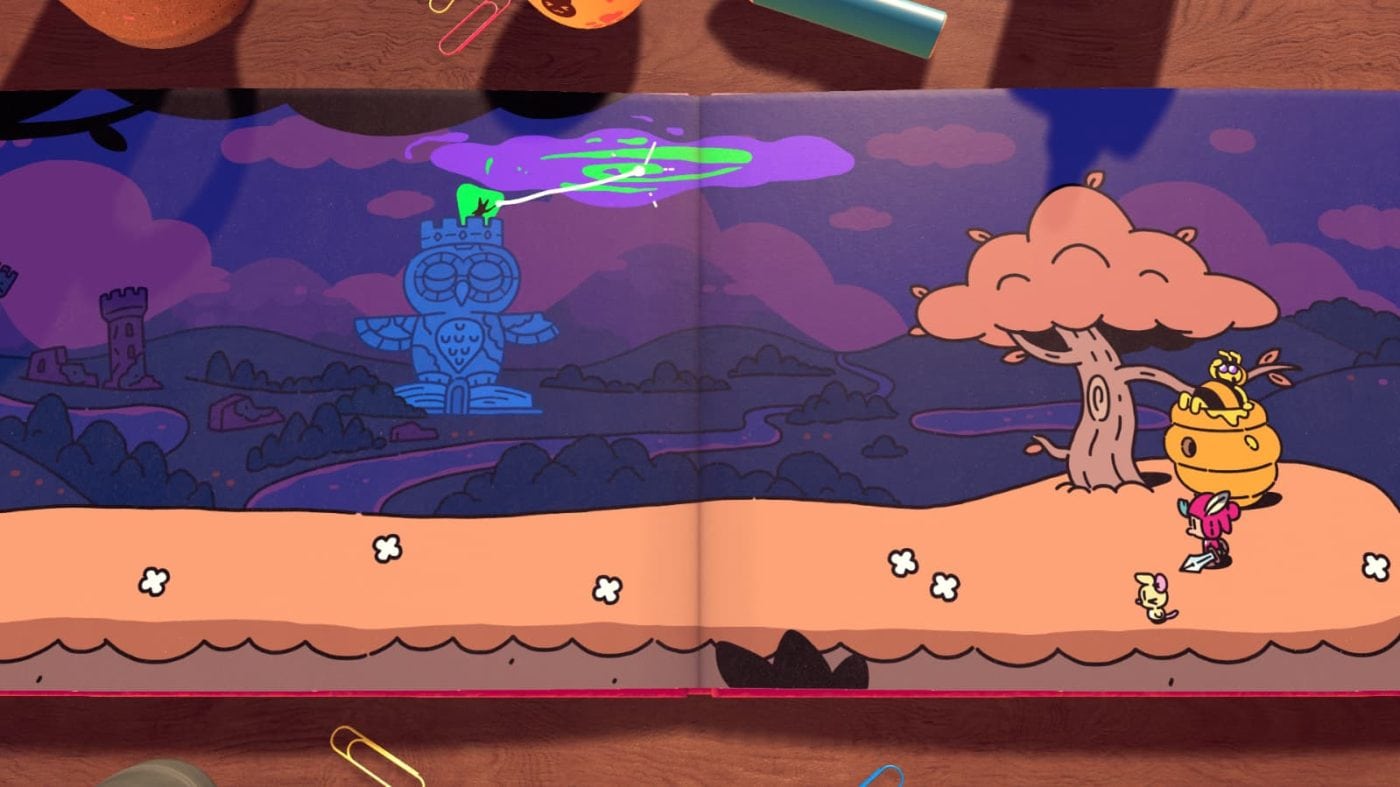
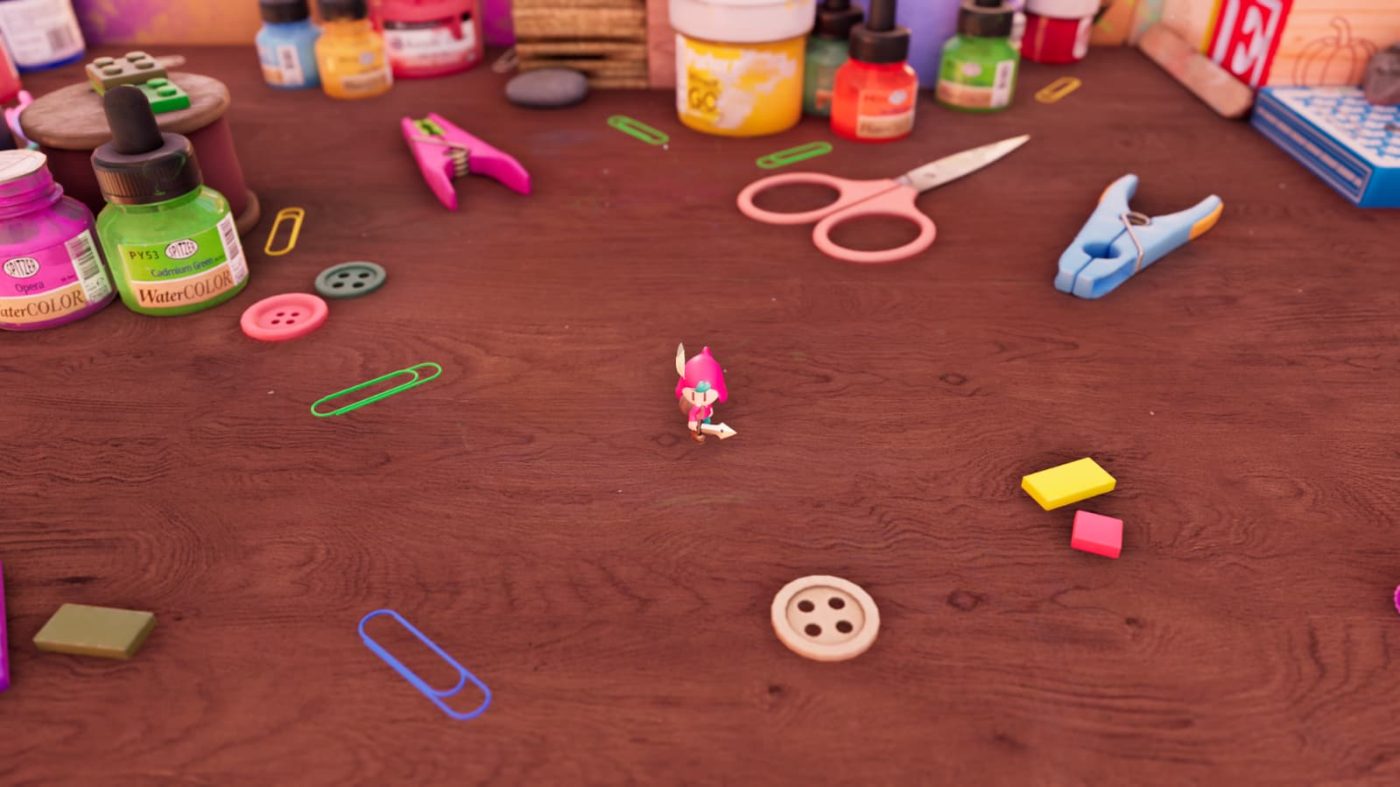
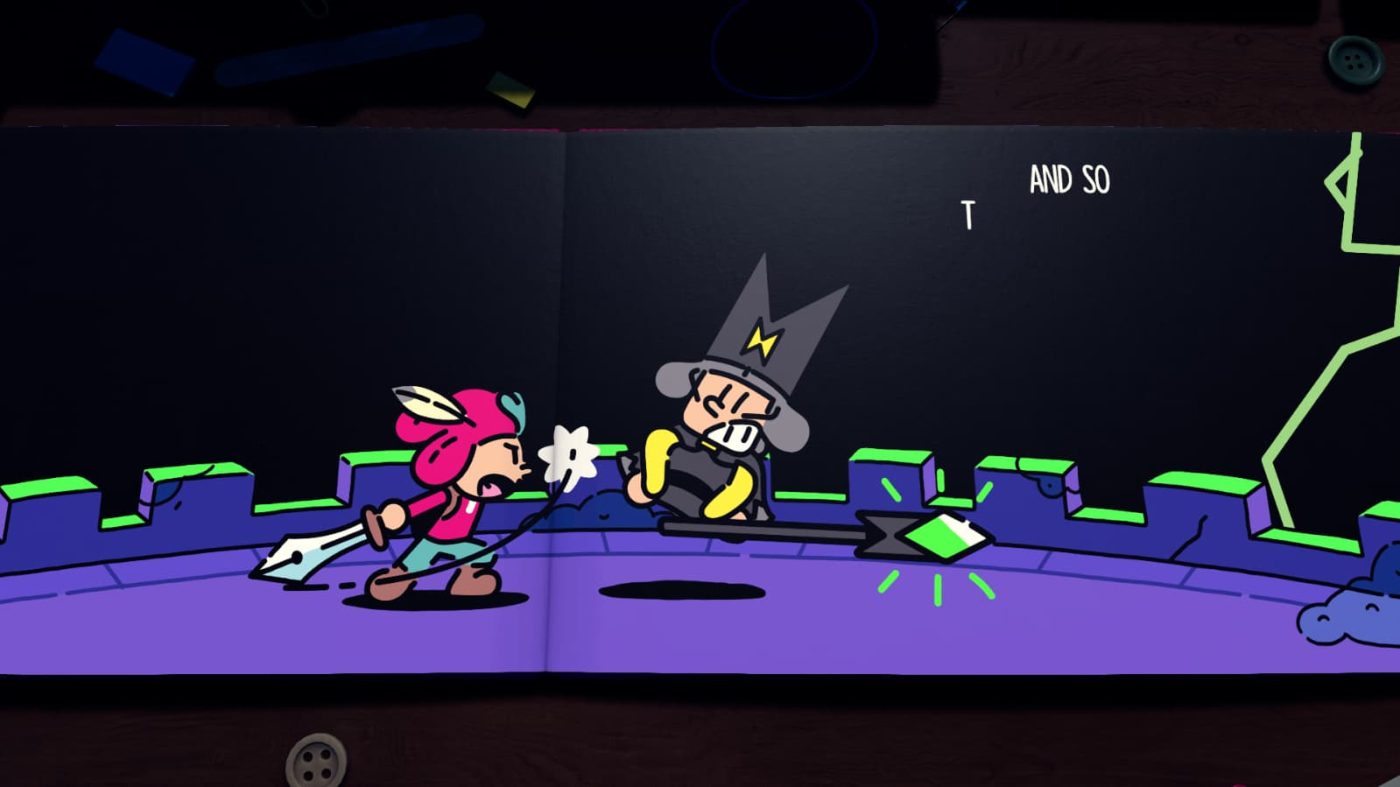
From both a technical and artistic standpoint, The Plucky Squire defines its identity through a striking and immediately recognisable visual philosophy: the translation of the illustrated children’s book aesthetic into a dynamic language that shifts seamlessly between the flatness of the printed page and the depth of three-dimensional space. This interplay between two distinct visual grammars transcends mere stylistic flourish; it serves as the conceptual and structural bedrock of the game’s art direction, shaping not only how it looks, but how it communicates.
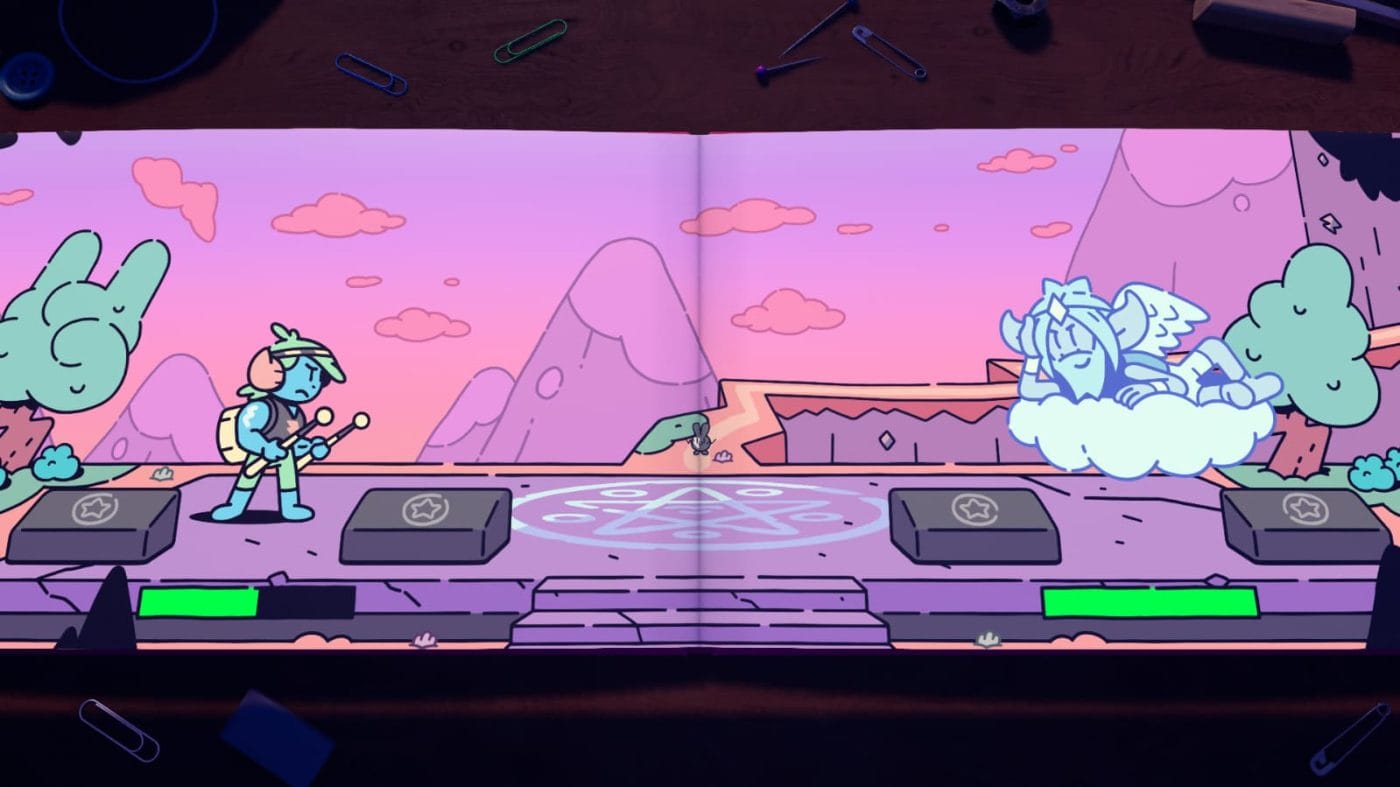
Within the book’s pages, the visual language remains purposefully planar, embracing the aesthetics of classic illustration. Crisp outlines, richly saturated colours, and textures reminiscent of ink on paper combine to create the convincing illusion of stepping into a living storybook. Animation amplifies this effect, employing elastic, expressive movements that evoke the charm and rhythm of traditional hand-drawn cartoons. Even in the most frenetic sequences, visual clarity is meticulously preserved, ensuring that stylistic elegance never comes at the expense of readability.
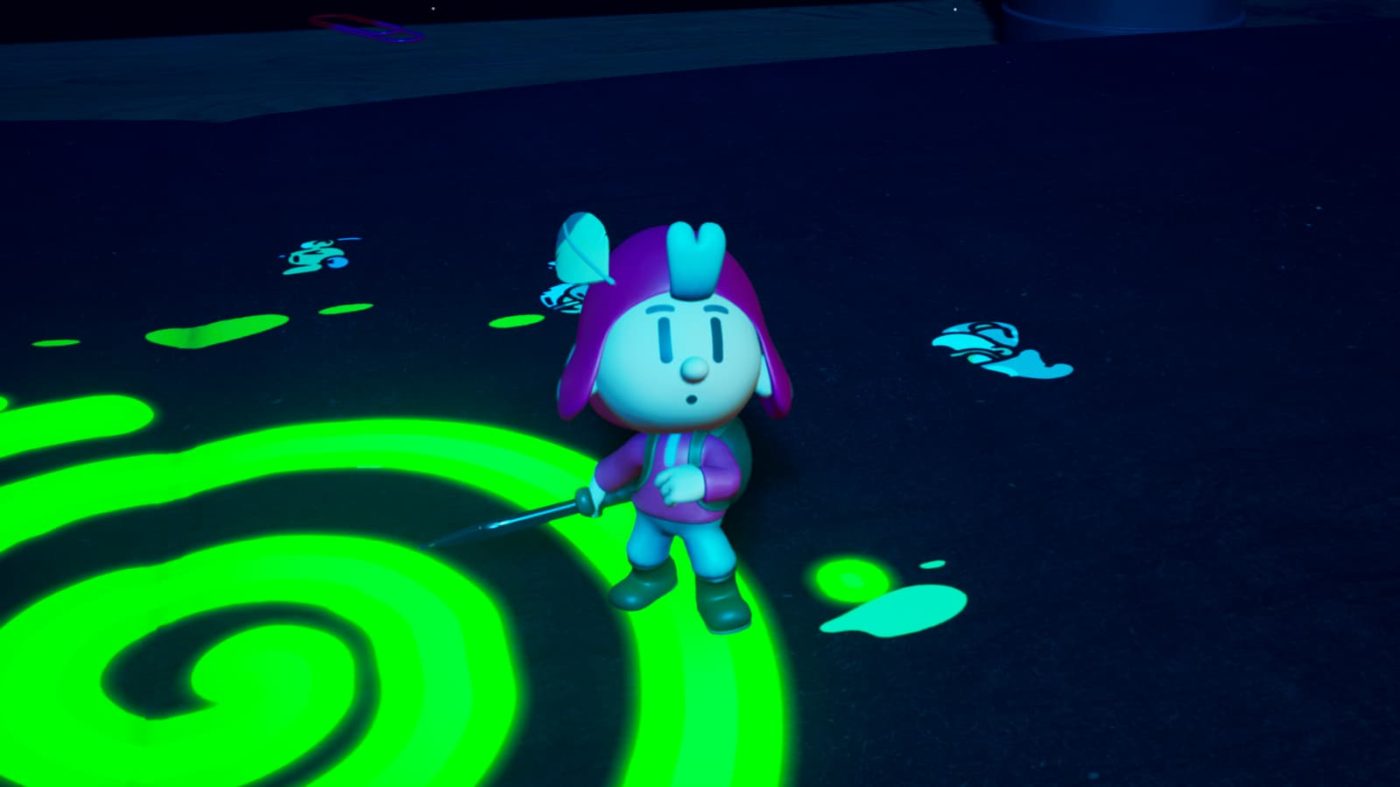
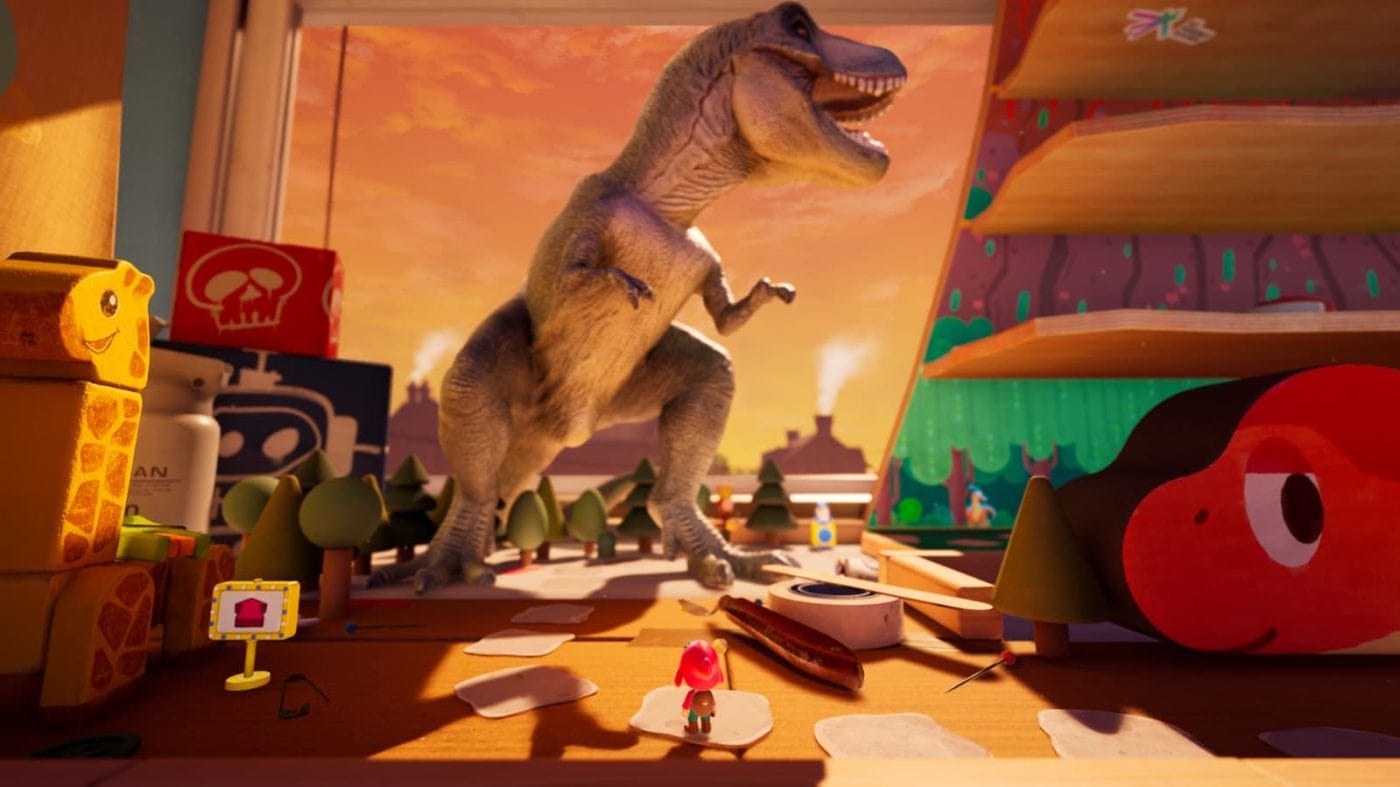
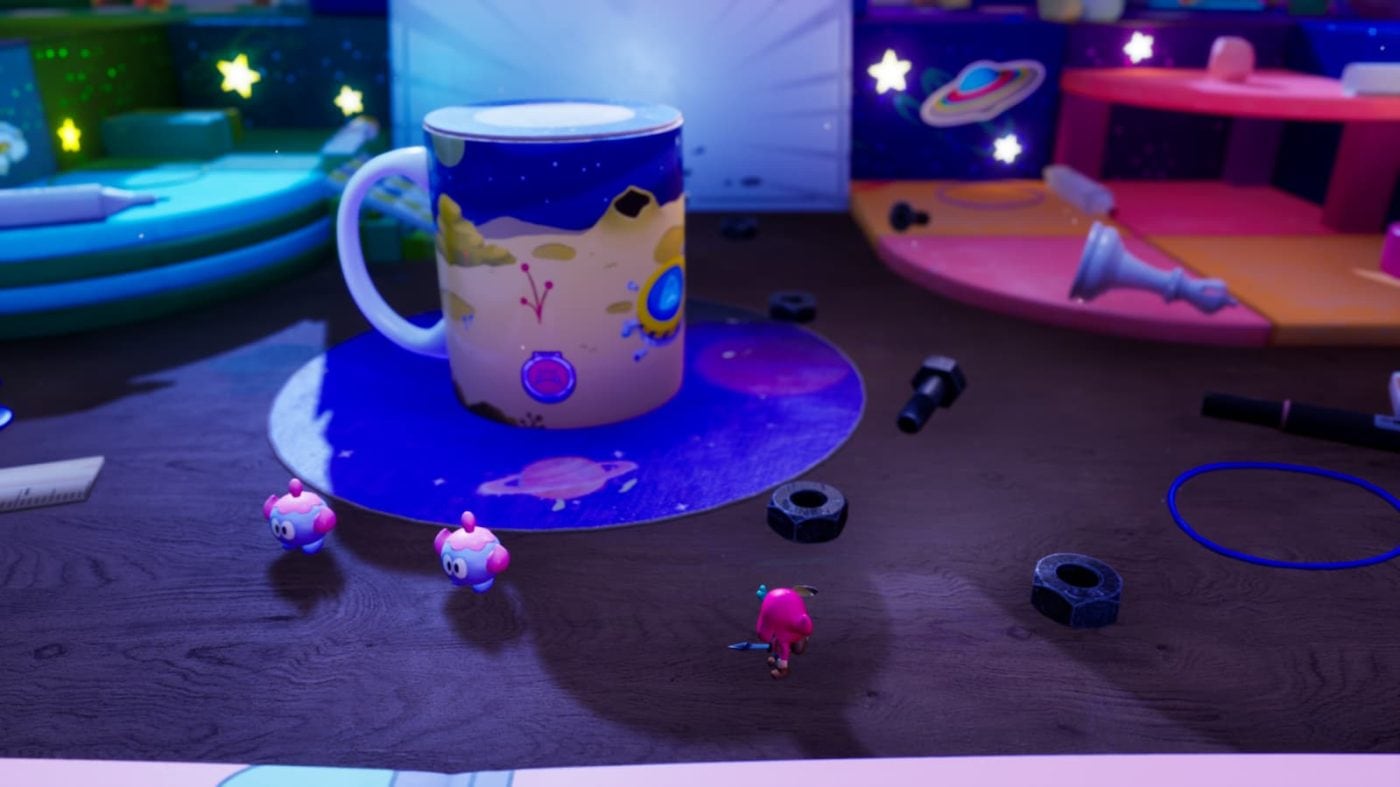
When the action spills beyond the confines of the page, the aesthetic shifts decisively yet without dissonance. The illustrated characters are transposed into three-dimensional environments while retaining their graphic integrity, deliberately avoiding photorealism in favour of a stylised presence reminiscent of articulated figurines or carefully crafted cut-outs. This creates a striking dialogue between the materiality of the “real-world” setting – wood grain, paper fibres, plastic surfaces, scattered art tools – and the graphic abstraction of the protagonists. Rather than smoothing over these contrasts, the game foregrounds them, allowing each spatial transition to function as an expressive device within the broader visual narrative.
Lighting and colour further reinforce this duality. Within the book, illumination is soft and even, evoking the balanced neutrality of printed illustrations. In the three-dimensional environments, lighting becomes more nuanced, with gentle shadows and subtle reflections that convey depth while maintaining the stylised aesthetic. Throughout, the colour palette remains vivid and cohesive, deliberately avoiding realism to preserve the playful, fairytale-inspired tone of the world.
From a technical standpoint, the seamless transition between 2D and 3D spaces showcases meticulous optimisation and deliberate design. Shifts occur without intrusive loading screens, creating the impression that the world is dynamically reconfiguring itself in real time. Achieving this level of fluidity requires precise coordination of animation systems, collision detection, and camera behaviour, each calibrated to accommodate radically different spatial logics without disorienting the player. The technical direction is disciplined and purposeful: visual spectacle is consistently balanced with clarity, ensuring that inventive presentation enhances gameplay rather than compromising it.
Even the user interface reflects this integrated design philosophy. Menus, text elements, and indicators are seamlessly embedded within the material logic of the world, functioning as natural extensions of the book-object or its surrounding environment. This harmony between visual design and technical execution underscores a deliberate commitment to unifying form and function, erasing any distinction between aesthetic presentation and interactive experience.

Beautiful to Hear
The audio design of The Plucky Squire is integral to the game’s expressive identity, accompanying its constantly shifting spaces with a soundscape that transcends mere background, becoming a fully realized narrative instrument. The soundtrack is dynamic and responsive, modulating instrumentation, rhythm, and orchestration to align with both visual and interactive contexts. Within the book’s pages, the music is light, whimsical, and evocative of classic fairy tales, built on clear, memorable melodies, acoustic textures, and arrangements that recall illustrated stories and children’s theatre. These motifs are intentionally simple yet instantly recognizable, instantly immersing the player in a world of wonder, curiosity, and playful imagination.
As the action moves beyond the book’s two-dimensional confines, the audio evolves in harmony. Compositions gain depth, layered harmonies, and spatial nuance, marking a transition into a fully immersive, three-dimensional world. The shift is seamless: familiar melodies are reimagined with fresh timbres, giving the sense that the soundscape itself grows alongside the protagonist.
Ambient sound design is equally meticulous, working in concert with the visual language to make every interaction feel convincing. Within the book, sounds are soft, almost muffled – evoking the rustle of pages, the scratch of a pencil, or subtle noises that feel drawn as much as illustrated. In the three-dimensional world, effects acquire weight: footsteps resonate, objects react with palpable vibrations, and the environment conveys a tangible sense of space. This contrast sharpens the distinction between narrative layers, allowing players to perceive the shift through sound even before they fully notice it visually.
The game also wields silence with remarkable precision, using deliberate pauses as a rhythmic device. Moments without music are never empty; they focus attention on the player’s actions or emphasize the intimate scale of exploration, as if the world itself pauses to be rewritten. This meticulous control of auditory pacing reflects a rare sensitivity, leaving room for curiosity, observation, and active engagement.
Interactive sounds – whether movements, transformations, or perspective shifts – are equally refined, providing clear, stylized feedback that reinforces the tactile yet fantastical quality of the game. The overall effect is a soundscape that guides the player with subtlety, adding depth, rhythm, and personality without ever overwhelming the experience.

A Fairy Tale You Can Touch
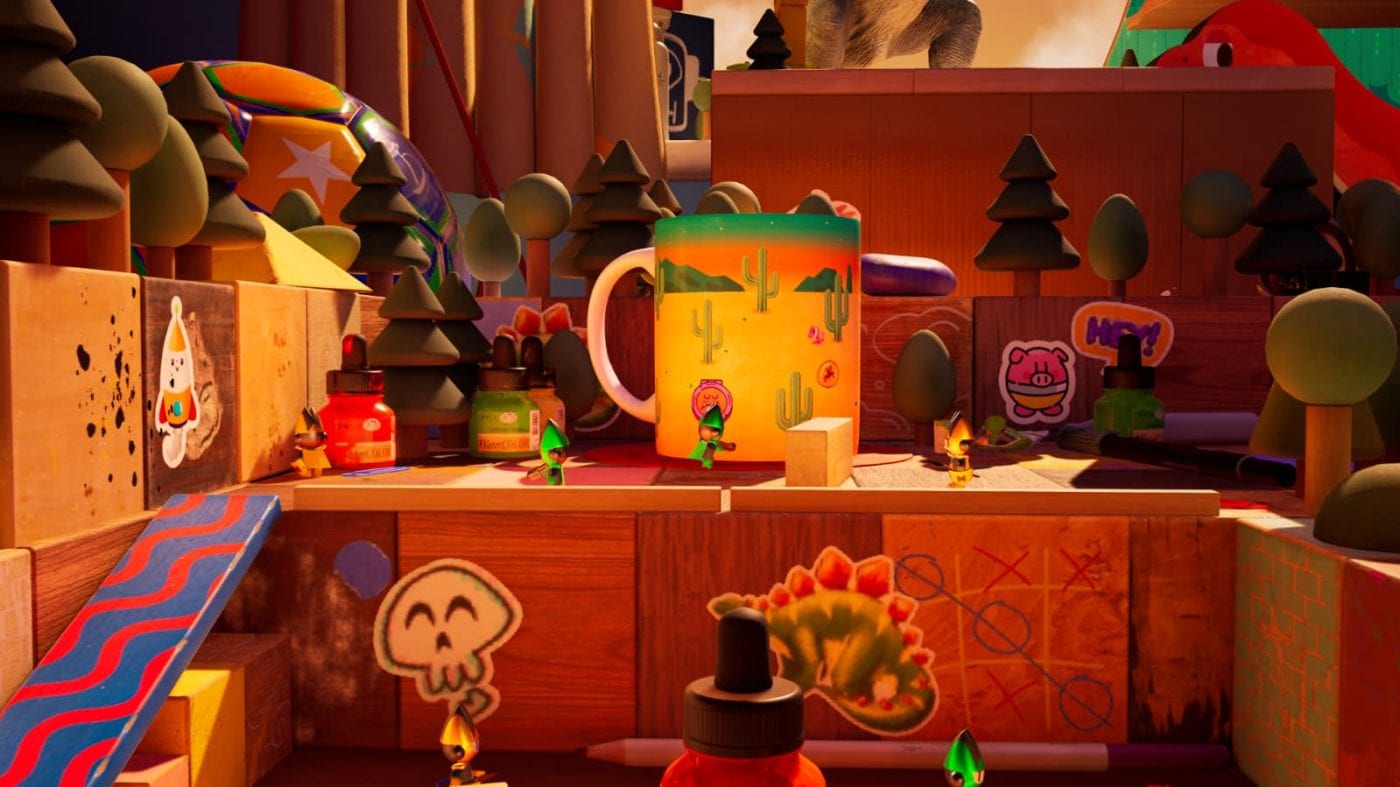
In The Plucky Squire, world-building is far more than a static backdrop – it is a living, interactive dialogue between layers of narrative, with each space continuously reshaped by the player’s choices. Rejecting conventional, fixed environments, the game presents a meta-narrative universe – one that exists because it is read, imagined, and actively transformed.
The book’s pages are more than levels – they are narrative constructs that can be explored laterally, manipulated, or physically transcended, giving the impression that the geography of the game is governed by the logic of the story itself. Throughout the adventure, each environment evolves, serving not merely as a setting but as a dynamic storytelling instrument.
The interplay between the book’s two-dimensional illustrations and their three-dimensional counterparts deepens this concept, layering realities in ways that are integral to gameplay. Players must consider the relationships between these spaces, observing how elements from the book influence the external world and vice versa. Exploration thus becomes both spatial and conceptual: the player navigates not just the environments themselves, but the evolving logic of the story, uncovering the inner workings of its narrative architecture.
Gameplay flows seamlessly between action, environmental puzzles, and reflective sequences, maintaining a deliberately varied rhythm that mirrors the story’s tonal shifts. The mechanics are intuitive and immediately readable, designed to foster emergent surprises rather than complexity for its own sake. New ideas are introduced thoughtfully, never repeated to the point of predictability, sustaining a constant sense of discovery and engagement.
Puzzle design reinforces the interplay between form and content. Solutions rely on perceptual insight rather than technical skill, prompting players to reconsider the rules of the illustrated world as they intersect with the three-dimensional environment. This constant recalibration fosters a sense of playful exploration, inviting players to inhabit the story rather than simply “complete” it.
Narrative and interaction are seamlessly intertwined at the core of The Plucky Squire’s world-building. Every aspect – the structure of chapters, the placement of environmental elements – reflects the concept of the book as a living object, immersing the player in a story that actively constructs itself in real time. This approach sustains a tone of wonder and playfulness while delivering a layered, accessible adventure that rewards curiosity and engagement.


The Critics’ Verdict
The Plucky Squire stands out for its rare ability to balance accessibility with experimentation, achieving originality without sacrificing clarity or playability. The game reflects on the medium itself – its language and expressive potential – without ever tipping into overly abstract conceptualism. The fusion of illustrated book and three-dimensional space is not a mere aesthetic flourish; it constitutes a coherent grammar of experience, inviting players to explore the interplay between imagination, narrative, and interaction. Where many experimental games risk obscuring rhythm or readability in the pursuit of novelty, here innovation is always guided by intuitive, carefully calibrated design.
Design choices prioritize variety over systemic complexity. While some players may crave deeper mechanics or more demanding progression, the game emphasizes a continuous flow of inventive ideas that evolve organically. It unfolds like an interactive anthology, with each chapter exploring a distinct facet of the relationship between the narrated world and the player’s engagement. Repetition is deliberately avoided, ensuring that every discovery feels both fresh and meaningful.
The game’s layered design enables it to engage multiple audiences simultaneously. Its strikingly clear visuals and intuitive interactions make it immediately approachable for newcomers, while its subtle meta-narrative layers offer richer insight for players interested in reflecting on the very nature of storytelling.
Some structural rigidity is inevitable, shaped by the game’s strong authorial vision. The experience is carefully orchestrated, offering less room for improvisation than more open-ended games, but deliberately favouring a controlled narrative rhythm. While this may temper the sense of unfettered exploration, it is an intentional design choice that maintains the story’s pacing and ensures that each new idea is introduced with precision and clarity.
Ultimately, The Plucky Squire exemplifies how the video game medium can become a meeting point for literary, illustrative, and interactive languages – without ever losing sight of the playful core. It goes beyond merely telling a story, exploring how narratives take shape and how players can actively influence them. It is this combination of formal self-awareness and meticulous, coherent execution that elevates the game to a distinctive achievement in contemporary gaming.


The Plucky Squire
PRO
- Exceptionally original concept;
- Stunning, storybook-inspired art direction;
- Varied and engaging gameplay;
- Strong balance between accessibility and creativity:
- Light but meaningful narrative;
- Smooth, well-paced progression;
- Polished, cohesive presentation.
CON
- Relatively low difficulty;
- Linear, guided structure;
- Limited replayability.


8/10